







生物技术通报 ›› 2026, Vol. 42 ›› Issue (7): 81-96.doi: 10.13560/j.cnki.biotech.bull.1985.2025-1171
王婷, 徐少钦, 明庭红( ), 徐嘉杰()
收稿日期:2025-10-28
出版日期:2026-07-26
发布日期:2026-07-20
通讯作者:
明庭红mingtinghong@nbu.edu.cn基金资助:
WANG Ting, XU Shao-qin, MING Ting-hong(), XU Jia-jie()
Received:2025-10-28
Published:2026-07-26
Online:2026-07-20
摘要:
中链羧酸(medium chain carboxylic acids, MCCAs)作为高附加值化学品,凭借其独特的理化性质,在食品、化工、医药及生物材料等领域都展现出广阔的应用前景。传统化学合成法生产MCCAs,存在高度依赖石化资源且产品产率与纯度低、能耗高以及植物性油脂原料供应链稳定性差等诸多技术瓶颈,现有产能已无法满足快速增长的市场需求。鉴于此,利用微生物碳链延长技术将废弃生物质转化为高附加值的MCCAs,不仅推动了有机碳源的循环利用,而且降低了对化石资源的依赖,兼具环保效益、经济可行性与应用潜力,在绿色生物制造领域备受关注。然而,微生物碳链延长合成MCCAs的高效分离技术,仍是制约其规模化生产的关键瓶颈之一。在众多分离技术中,液-液萃取凭借其显著优势脱颖而出,已被证实在MCCAs原位提取与纯化方面展现出巨大的应用潜力。本文以微生物碳链延长合成MCCAs的代谢途径为切入点,在对比分析几种现有MCCAs原位提取技术的基础上,系统综述了原位液-液萃取MCCAs的技术原理、工艺参数、关键影响因素以及规模化应用瓶颈。未来,可通过萃取剂剂型创新与在线提取数字化升级等手段,推动MCCAs生产技术的规模化应用,助力“双碳”目标实现。
王婷, 徐少钦, 明庭红, 徐嘉杰. 液-液萃取技术在中链羧酸原位提取中的研究进展[J]. 生物技术通报, 2026, 42(7): 81-96.
WANG Ting, XU Shao-qin, MING Ting-hong, XU Jia-jie. Research Progress in Liquid-liquid Extraction Technology for In Situ Extraction of Medium Chain Carboxylic Acids[J]. Biotechnology Bulletin, 2026, 42(7): 81-96.
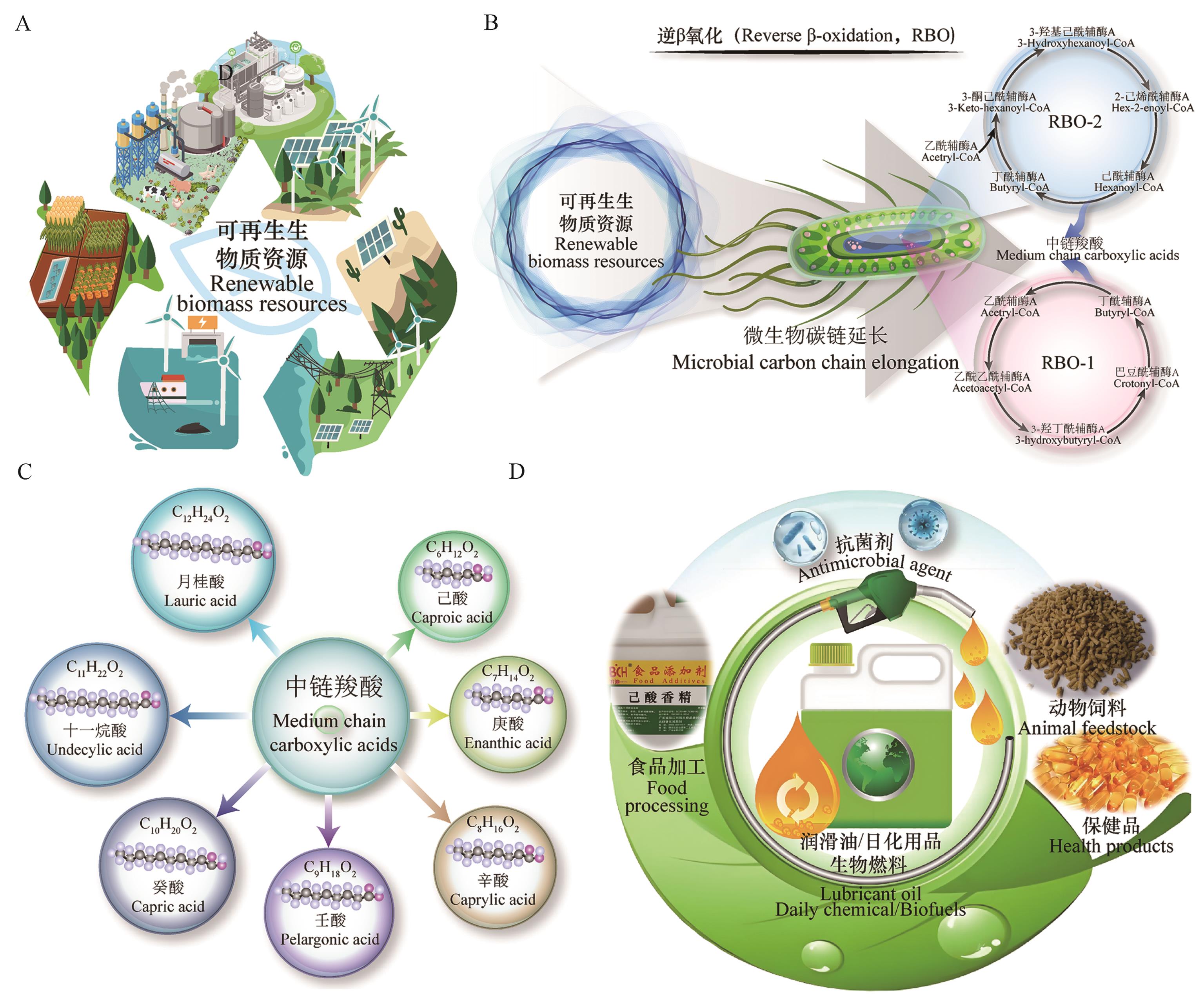
图1 可再生生物质资源(A)通过微生物碳链延长途径(B)合成中链羧酸(C)及其潜在的应用价值(D)
Fig. 1 Renewable biomass resources (A) via microbial carbon chain elongation pathway (B) to synthesize medium chain carboxylic acids (C) and their potential applications (D)
类别 Category | 化合物 Compound | 碳原子数 Number of carbon atoms | 溶解度 Solubility (mg/L) a | 电子密度 Electron density (g COD/g) b | 酸度系数 Acidity coefficient (pKa) |
|---|---|---|---|---|---|
| 短链羧酸 | 乙酸 | 2 | 互溶 | 1.07 | 4.76 |
| 丙酸 | 3 | 互溶 | 1.51 | 4.88 | |
| 丁酸 | 4 | 60 000 | 1.82 | 4.82 | |
| 戊酸 | 5 | 24 000 | 2.04 | 4.84 | |
| 中链羧酸 | 己酸 | 6 | 10 300 | 2.20 | 4.80 |
| 庚酸 | 7 | 2 820 | 2.34 | 4.80 | |
| 辛酸 | 8 | 735 c | 2.44 | 4.89 | |
| 壬酸 | 9 | 284 d | 2.53 | 4.95 | |
| 癸酸 | 10 | 62 | 2.60 | 4.90 | |
| 十一烷酸 | 11 | 52 | 2.66 | 4.95 | |
| 月桂酸 | 12 | 4.8 | 2.72 | 5.30 |
表1 短链和中链羧酸的理化性质
Table 1 Physicochemical characteristics of short and medium chain carboxylic acids
类别 Category | 化合物 Compound | 碳原子数 Number of carbon atoms | 溶解度 Solubility (mg/L) a | 电子密度 Electron density (g COD/g) b | 酸度系数 Acidity coefficient (pKa) |
|---|---|---|---|---|---|
| 短链羧酸 | 乙酸 | 2 | 互溶 | 1.07 | 4.76 |
| 丙酸 | 3 | 互溶 | 1.51 | 4.88 | |
| 丁酸 | 4 | 60 000 | 1.82 | 4.82 | |
| 戊酸 | 5 | 24 000 | 2.04 | 4.84 | |
| 中链羧酸 | 己酸 | 6 | 10 300 | 2.20 | 4.80 |
| 庚酸 | 7 | 2 820 | 2.34 | 4.80 | |
| 辛酸 | 8 | 735 c | 2.44 | 4.89 | |
| 壬酸 | 9 | 284 d | 2.53 | 4.95 | |
| 癸酸 | 10 | 62 | 2.60 | 4.90 | |
| 十一烷酸 | 11 | 52 | 2.66 | 4.95 | |
| 月桂酸 | 12 | 4.8 | 2.72 | 5.30 |
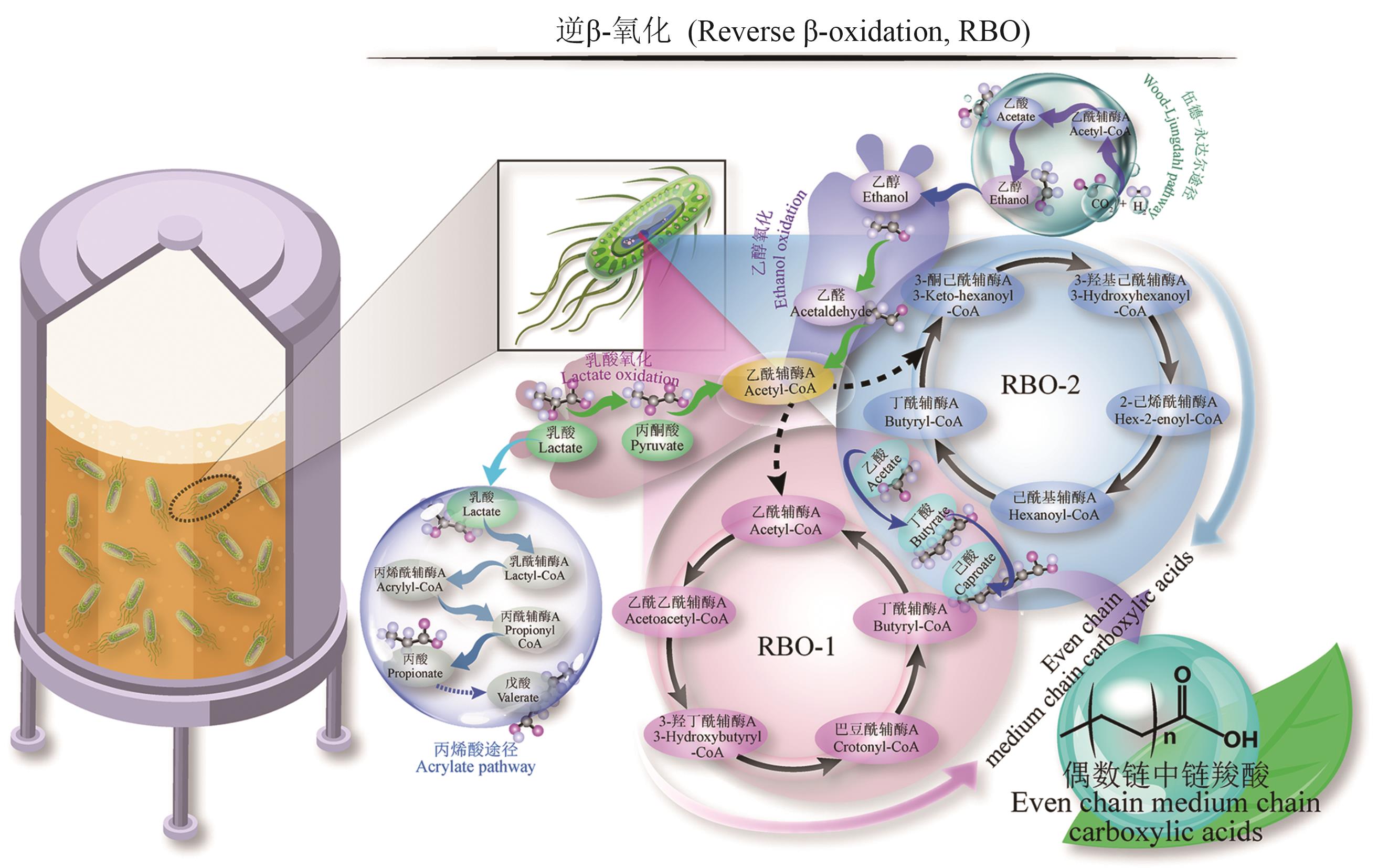
图2 以乙醇和乳酸作为碳链延长电子供体通过逆β氧化(RBO)途径生产MCCAs示意图
Fig. 2 Schematic diagram of MCCAs production through reverse β-oxidation (RBO) pathway using ethanol and lactate as carbon chain elongation electron donors
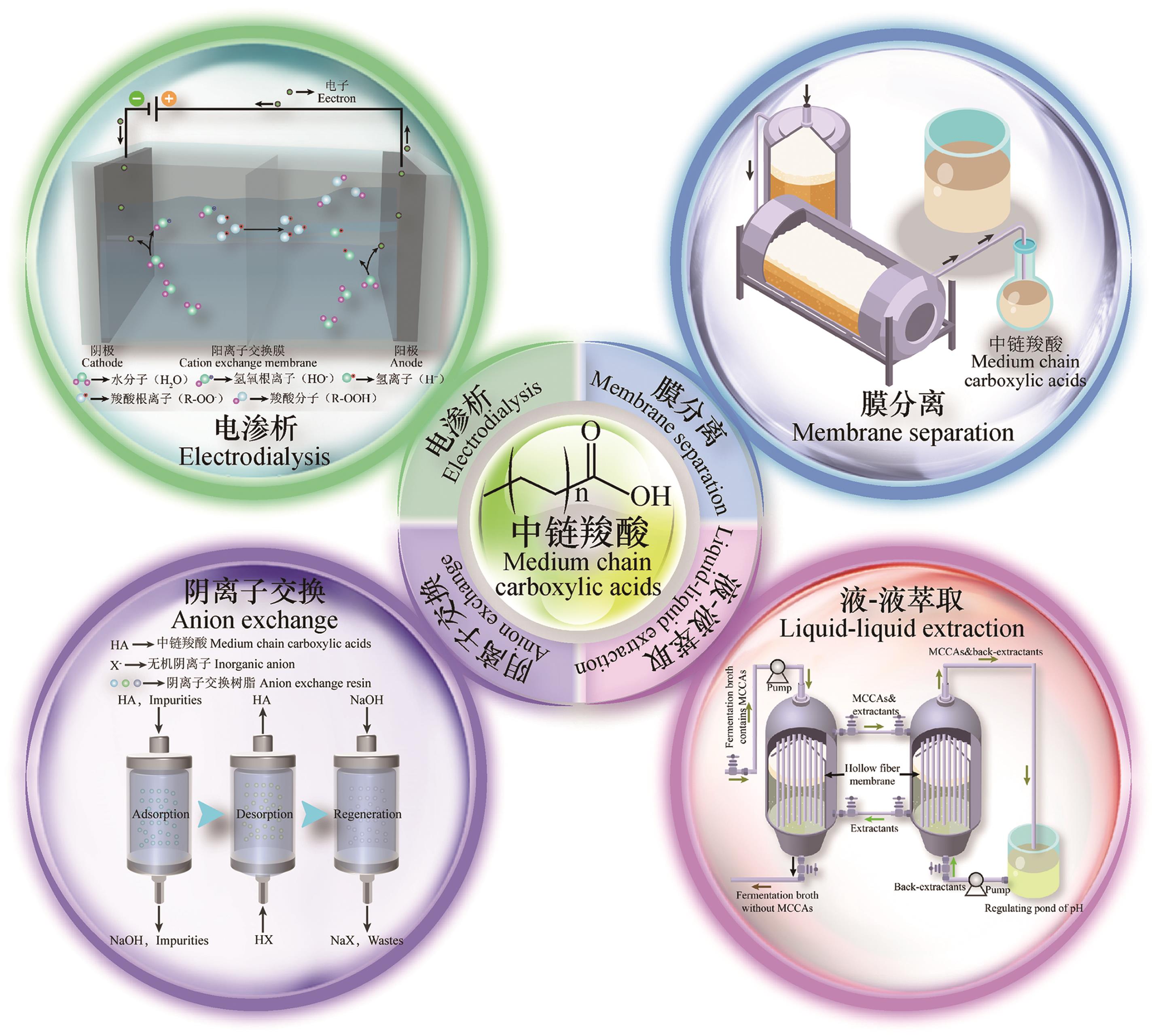
图3 几种原位提取MCCAs技术的示意图
Fig. 3 Schematic diagram of several in-situ extraction technologies used for MCCAs
类别 Category | 萃取机理 Extraction mechanism | 代表性萃取剂 Representative extractant | 萃取的羧酸 Extracted carboxylic acids | 参考文献 Reference |
|---|---|---|---|---|
| 非极性萃取剂 | 主要通过范德华力与MCCAs分子发生疏水性缔合 | 正己烷 | 己酸 | [ |
| 磷基萃取剂 | 通过磷氧基(P=O)上的孤对电子与MCCAs的羧基形成配位键或氢键 | 磷酸三丁酯(TBP) | 己酸 | [ |
| 三辛基氧膦(TOPO) | 乙酸、丁酸、丙酸、己酸、辛酸 | [ | ||
| Cyanex 923 | 己酸、辛酸 | [ | ||
| 胺基萃取剂 | 与MCCAs形成氢键或离子对(酸碱反应) | 三辛胺(TOA) | 己酸、辛酸 | [ |
| Aliquat 336 | 己酸 | [ | ||
| 三月桂胺(TDA)、三己胺(THA)、三丙胺(TPA)、三辛胺(TOA) | 己酸 | [ |
表2 非极性萃取剂、磷基萃取剂及胺基萃取剂分类汇总
Table 2 Summary and classification of non-polar extractants, phosphorus-based extractants, and amine-based extractants
类别 Category | 萃取机理 Extraction mechanism | 代表性萃取剂 Representative extractant | 萃取的羧酸 Extracted carboxylic acids | 参考文献 Reference |
|---|---|---|---|---|
| 非极性萃取剂 | 主要通过范德华力与MCCAs分子发生疏水性缔合 | 正己烷 | 己酸 | [ |
| 磷基萃取剂 | 通过磷氧基(P=O)上的孤对电子与MCCAs的羧基形成配位键或氢键 | 磷酸三丁酯(TBP) | 己酸 | [ |
| 三辛基氧膦(TOPO) | 乙酸、丁酸、丙酸、己酸、辛酸 | [ | ||
| Cyanex 923 | 己酸、辛酸 | [ | ||
| 胺基萃取剂 | 与MCCAs形成氢键或离子对(酸碱反应) | 三辛胺(TOA) | 己酸、辛酸 | [ |
| Aliquat 336 | 己酸 | [ | ||
| 三月桂胺(TDA)、三己胺(THA)、三丙胺(TPA)、三辛胺(TOA) | 己酸 | [ |
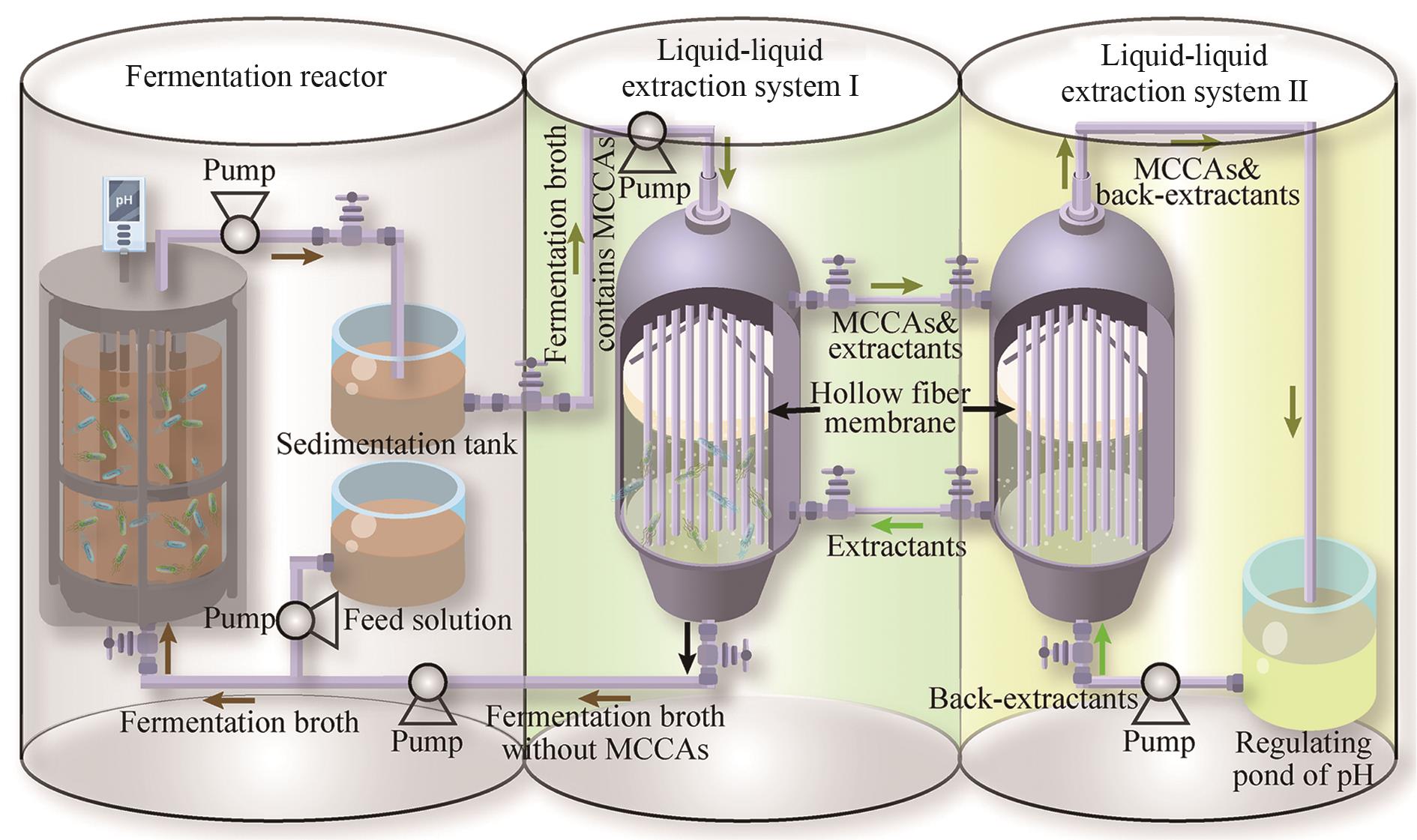
图4 MCCAs原位液-液萃取技术的示意图
Fig. 4 Schematic diagram of in-situ liquid-liquid extraction technology for MCCAs
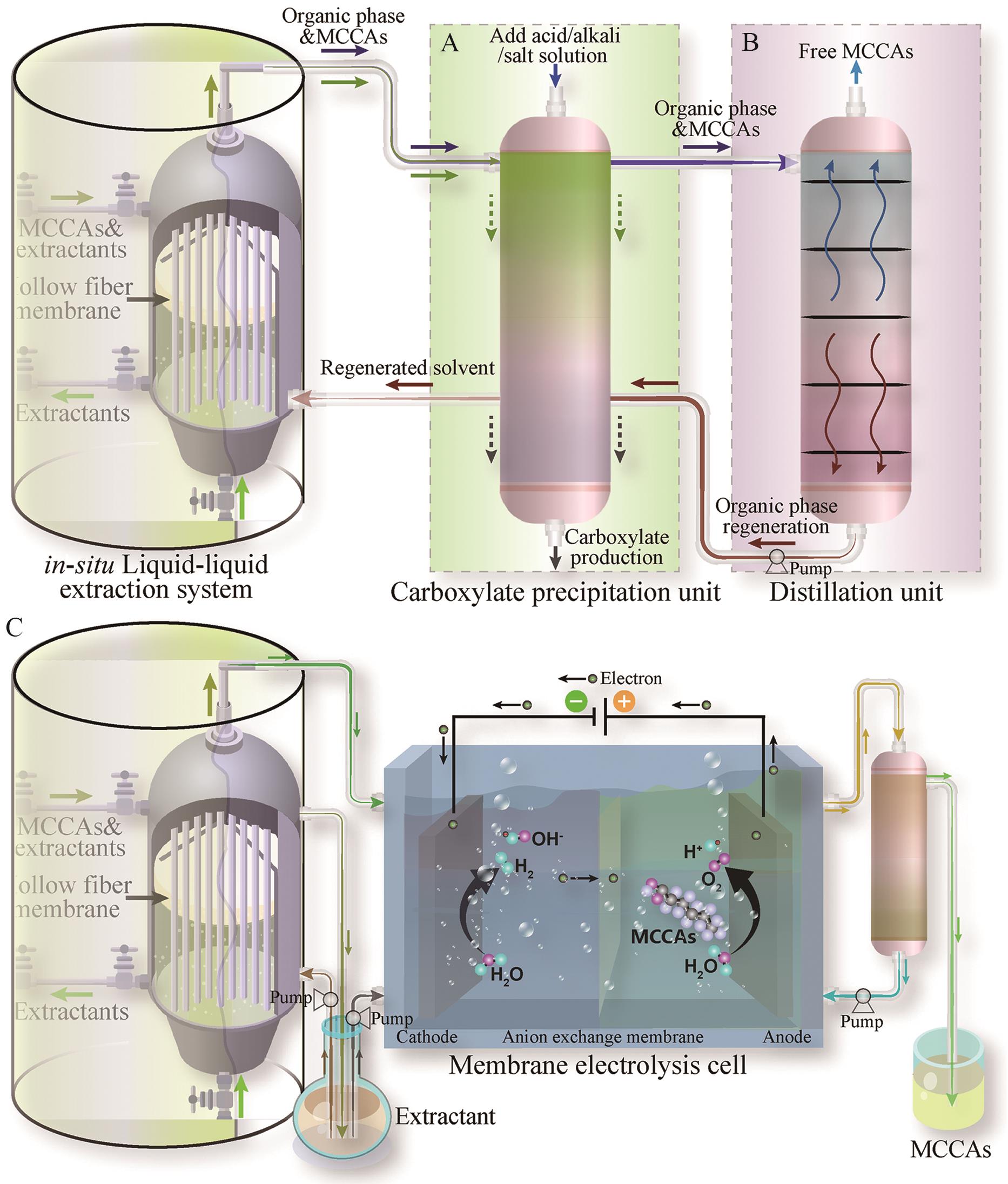
图5 MCCAs原位液-液萃取后端回收示意图,包括酸/碱或盐添加法(A)[60, 63]、蒸馏法(B)[47, 63]和膜电解法(C)[28, 65]
Fig. 5 Schematic diagram of in-situ liquid-liquid extraction for MCCAs backward recovery, including addition of acid/base, or salt (A)[60, 63], distillation (B)[47, 63], and membrane electrolysis (C)[28, 65]
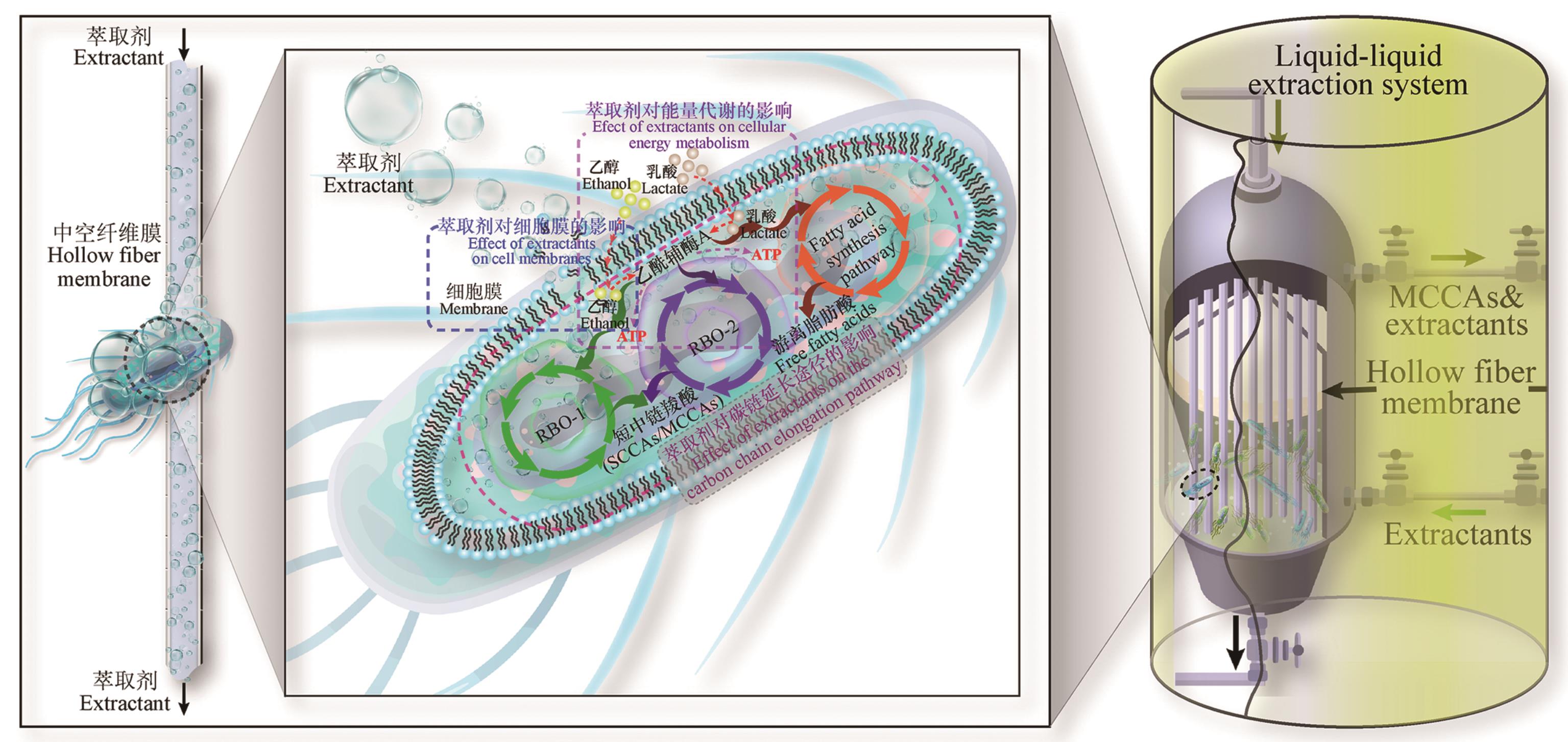
图6 萃取剂对发酵液中碳链延长微生物的细胞毒性效应
Fig. 6 Cytotoxicity of extractants on carbon chain elongation microorganisms in fermentation broth
| [1] | Zhao JH, Ma HZ, Gao M, et al. Advancements in medium chain fatty acids production through chain elongation: Key mechanisms and innovative solutions for overcoming rate-limiting steps [J]. Bioresour Technol, 2024, 408: 131133. |
| [2] | 石川, 刘越, 马金元, 等. 碳链延长技术在有机资源回收领域的研究进展 [J]. 中国环境科学, 2020, 40(10): 4439-4448. |
| Shi C, Liu Y, Ma JY, et al. Review on research progress of anaerobic microbial chain elongation in organic waste treatment [J]. China Environ Sci, 2020, 40(10): 4439-4448. | |
| [3] | Angenent LT, Richter H, Buckel W, et al. Chain elongation with reactor microbiomes: open-culture biotechnology to produce biochemicals [J]. Environ Sci Technol, 2016, 50(6): 2796-2810. |
| [4] | 吴清莲, 邓琳, 任韦同, 等. 微生物碳链延长技术转化废弃生物质合成中链脂肪酸 [J]. 环境工程学报, 2023, 17(7): 2099-2108. |
| Wu QL, Deng L, Ren WT, et al. Medium chain fatty acids biosynthesis from waste biomass by microbial chain elongation technology [J]. Chin J Environ Eng, 2023, 17(7): 2099-2108. | |
| [5] | De Groof V, Coma M, Arnot T, et al. Medium chain carboxylic acids from complex organic feedstocks by mixed culture fermentation [J]. Molecules, 2019, 24(3): 398. |
| [6] | Menon A, Lyng JG. Circular bioeconomy solutions: driving anaerobic digestion of waste streams towards production of high value medium chain fatty acids [J]. Rev Environ Sci Biotechnol, 2021, 20(1): 189-208. |
| [7] | Kucek LA, Xu JJ, Nguyen M, et al. Waste conversion into n-caprylate and n-caproate: resource recovery from wine lees using anaerobic reactor microbiomes and in-line extraction [J]. Front Microbiol, 2016, 7: 1892. |
| [8] | Bian B, Bajracharya S, Xu JJ, et al. Microbial electrosynthesis from CO2: Challenges, opportunities and perspectives in the context of circular bioeconomy [J]. Bioresour Technol, 2020, 302: 122863. |
| [9] | Shi XD, Wu L, Wei W, et al. Insights into the microbiomes for medium-chain carboxylic acids production from biowastes through chain elongation [J]. Crit Rev Environ Sci Technol, 2022, 52(21): 3787-3812. |
| [10] | Li J, Luo X, Liu H, et al. Carbon chain elongation microorganism stimulates caproate production from ethanol and acetate under applied voltage regulation [J]. Front Microbiol, 2025, 16: 1597990. |
| [11] | Jeon BS, Choi O, Um Y, et al. Production of medium-chain carboxylic acids by Megasphaera sp. MH with supplemental electron acceptors [J]. Biotechnol Biofuels, 2016, 9: 129. |
| [12] | Gao M, Lin YJ, Wang P, et al. Production of medium-chain fatty acid caproate from Chinese liquor distillers’ grain using pit mud as the fermentation microbes [J]. J Hazard Mater, 2021, 417: 126037. |
| [13] | Zhang WQ, Wang SL, Yin FB, et al. Medium-chain carboxylates production from co-fermentation of swine manure and corn stalk silage via lactic acid: Without external electron donors [J]. Chem Eng J, 2022, 439: 135751. |
| [14] | Zhang WQ, Yin FB, Dong HM, et al. Bioconversion of swine manure into high-value products of medium chain fatty acids [J]. Waste Manag, 2020, 113: 478-487. |
| [15] | Zhu XY, Zhou Y, Wang Y, et al. Production of high-concentration n-caproic acid from lactate through fermentation using a newly isolated Ruminococcaceae bacterium CPB6 [J]. Biotechnol Biofuels, 2017, 10: 102. |
| [16] | Ren WT, He ZL, Lv Y, et al. Carbon chain elongation characterizations of electrode-biofilm microbes in electro-fermentation [J]. Water Res, 2024, 267: 122417. |
| [17] | Wu QL, Bao X, Guo WQ, et al. Medium chain carboxylic acids production from waste biomass: Current advances and perspectives [J]. Biotechnol Adv, 2019, 37(5): 599-615. |
| [18] | Steen EJ, Kang YS, Bokinsky G, et al. Microbial production of fatty-acid-derived fuels and chemicals from plant biomass [J]. Nature, 2010, 463(7280): 559-562. |
| [19] | de Araújo Cavalcante W, Leitão RC, Gehring TA, et al. Anaerobic fermentation for n-caproic acid production: a review [J]. Process Biochem, 2017, 54: 106-119. |
| [20] | Liu C, Yin Y, Chen C, et al. Advances in electricity-steering organic waste bio-valorization for medium chain carboxylic acids production [J]. Energies, 2023, 16(6): 2571. |
| [21] | 何子琳, 任韦同, 吴清莲, 等. 有机固废生物转化制备高附加值中链脂肪酸研究进展 [J]. 能源环境保护, 2024, 38(5): 45-57. |
| He ZL, Ren WT, Wu QL, et al. Advances in bioconversion of organic solid wastes for the preparationof high-value medium-chain fatty acids [J]. Energy Environ Prot, 2024, 38(5): 45-57. | |
| [22] | 禹伟, 高教琪, 周雍进. 一碳生物转化合成有机酸的研究进展 [J]. 合成生物学, 2024, 5(5): 1169-1188. |
| Yu W, Gao JQ, Zhou YJ. Bioconversion of one carbon feedstocks for producing organic acids [J]. Synth Biol J, 2024, 5(5): 1169-1188. | |
| [23] | 王玉洁, 仇俊杰, 吕凡, 等. 乳酸介导碳链延长产己酸规模化应用瓶颈 [J]. 环境卫生工程, 2025, 33(3): 27-36, 48. |
| Wang YJ, Qiu JJ, Lyu F, et al. Bottlenecks in scaling up lactate-mediated carbon chain elongation for caproate production [J]. Environ Sanit Eng, 2025, 33(3): 27-36, 48. | |
| [24] | Cheng MH, Qu GF, Xu R, et al. Research on the conversion of biowaste to MCCAs: a review of recent advances in the electrochemical synergistic anaerobic pathway [J]. Chemosphere, 2024, 366: 143430. |
| [25] | Yu JN, Liao JL, Huang ZX, et al. Enhanced anaerobic mixed culture fermentation with anion-exchange resin for caproate production [J]. Processes, 2019, 7(7): 404. |
| [26] | Vertova A, Aricci G, Rondinini S, et al. Electrodialytic recovery of light carboxylic acids from industrial aqueous wastes [J]. J Appl Electrochem, 2009, 39(11): 2051-2059. |
| [27] | Ge SJ, Usack JG, Spirito CM, et al. Long-term n-caproic acid production from yeast-fermentation beer in an anaerobic bioreactor with continuous product extraction [J]. Environ Sci Technol, 2015, 49(13): 8012-8021. |
| [28] | Carvajal-Arroyo JM, Andersen SJ, Ganigué R, et al. Production and extraction of medium chain carboxylic acids at a semi-pilot scale [J]. Chem Eng J, 2021, 416: 127886. |
| [29] | Xu JJ, Hao JX, Guzman JJL, et al. Temperature-phased conversion of acid whey waste into medium-chain carboxylic acids via lactic acid: No external e-donor [J]. Joule, 2019, 3(3): 885-888. |
| [30] | Andersen SJ, Candry P, Basadre T, et al. Electrolytic extraction drives volatile fatty acid chain elongation through lactic acid and replaces chemical pH control in thin stillage fermentation [J]. Biotechnol Biofuels, 2015, 8: 221. |
| [31] | Hernandez PA, Zhou MM, Vassilev I, et al. Selective extraction of medium-chain carboxylic acids by electrodialysis and phase separation [J]. ACS Omega, 2021, 6(11): 7841-7850. |
| [32] | Xu JJ, Guzman JJL, Angenent LT. Direct medium-chain carboxylic acid oil separation from a bioreactor by an electrodialysis/phase separation cell [J]. Environ Sci Technol, 2021, 55(1): 634-644. |
| [33] | Aghapour Aktij S, Zirehpour A, Mollahosseini A, et al. Feasibility of membrane processes for the recovery and purification of bio-based volatile fatty acids: a comprehensive review [J]. J Ind Eng Chem, 2020, 81: 24-40. |
| [34] | McDowall SC, Braune M, Nitzsche R. Recovery of bio-based medium-chain fatty acids with membrane filtration [J]. Sep Purif Technol, 2022, 286: 120430. |
| [35] | De Sitter K, Garcia-Gonzalez L, Matassa C, et al. The use of membrane based reactive extraction for the recovery of carboxylic acids from thin stillage [J]. Sep Purif Technol, 2018, 206: 177-185. |
| [36] | Wang JL, Yin YN. Biological production of medium-chain carboxylates through chain elongation: an overview [J]. Biotechnol Adv, 2022, 55: 107882. |
| [37] | Elhami V, Antunes EC, Temmink H, et al. Recovery techniques enabling circular chemistry from wastewater [J]. Molecules, 2022, 27(4): 1389. |
| [38] | López-Garzón CS, Straathof AJJ. Recovery of carboxylic acids produced by fermentation [J]. Biotechnol Adv, 2014, 32(5): 873-904. |
| [39] | Beschkov VN. Ion exchange in downstream processing in biotechnology [J]. Phys Sci Rev, 2020, 5(7): 1-11. |
| [40] | Fernando-Foncillas C, Cabrera-Rodríguez CI, Caparrós-Salvador F, et al. Highly selective recovery of medium chain carboxylates from co-fermented organic wastes using anion exchange with carbon dioxide expanded methanol desorption [J]. Bioresour Technol, 2021, 319: 124178. |
| [41] | Taiwo KJ, Nguyen H, Usack JG. Continuous liquid-liquid extraction of medium-chain fatty acids from fermentation broth using hollow-fiber membranes [J]. JoVE, 2024, (210): 1-17. |
| [42] | Gadekar-Shinde S, Bhashkar Kumar R, Gaikwad S. Reactive extraction of caproic acid using tri n-octylamine+2 octanol system [J]. Mater Today Proc, 2023, 72: 260-267. |
| [43] | Bokhary A, Leitch M, Liao BQ. Liquid-liquid extraction technology for resource recovery: Applications, potential, and perspectives [J]. J Water Process Eng, 2021, 40: 101762. |
| [44] | Wasewar KL, Shende DZ. Reactive extraction of caproic acid using tri-n-butyl phosphate in hexanol, octanol, and decanol [J]. J Chem Eng Data, 2011, 56(2): 288-297. |
| [45] | Khasanov VV, Makarycheva AI, Slizhov YG. Determination of trace amounts of aliphatic acids in natural waters using liquid-liquid extraction [J]. J Anal Chem, 2020, 75(2): 161-166. |
| [46] | Mukherjee S, Munshi B. Experimental and theoretical analysis of reactive extraction of caproic acid by using TBP in green diluents [J]. Chem Eng Process Process Intensif, 2020, 153: 107926. |
| [47] | Saboe PO, Manker LP, Michener WE, et al. In situ recovery of bio-based carboxylic acids [J]. Green Chem, 2018, 20(8): 1791-1804. |
| [48] | Van Hecke W, Kaur G, De Wever H. Advances in in-situ product recovery (ISPR) in whole cell biotechnology during the last decade [J]. Biotechnol Adv, 2014, 32(7): 1245-1255. |
| [49] | Gössi A, Burgener F, Kohler D, et al. In-situ recovery of carboxylic acids from fermentation broths through membrane supported reactive extraction using membrane modules with improved stability [J]. Sep Purif Technol, 2020, 241: 116694. |
| [50] | Wasewar KL, Shende DZ. Equilibrium study for reactive extraction of caproic acid in mibk and xylene [J]. Engineering, 2011, 3(8): 829-835. |
| [51] | Mishra P. Reactive extraction of caproic acid using mixed tertiary extractant in non-toxic diluents [J]. Int J Res Appl Sci Eng Technol, 2019, 7(10): 82-86. |
| [52] | Datta D, Kumar S, Uslu H. Status of the reactive extraction as a method of separation [J]. J Chem, 2015, 2015: 853789. |
| [53] | Sprakel LMJ, Schuur B. Solvent developments for liquid-liquid extraction of carboxylic acids in perspective [J]. Sep Purif Technol, 2019, 211: 935-957. |
| [54] | Contreras-Dávila CA, Zuidema N, Buisman CJN, et al. Reactor microbiome enriches vegetable oil with n-caproate and n-caprylate for potential functionalized feed additive production via extractive lactate-based chain elongation [J]. Biotechnol Biofuels, 2021, 14(1): 232. |
| [55] | Yuan BM, Braune M, Gröngröft A. Liquid-liquid extraction of caproic and caprylic acid: solvent properties and pH [J]. Chem Ing Tech, 2023, 95(10): 1573-1579. |
| [56] | Choi K, Jeon BS, Kim BC, et al. In situ biphasic extractive fermentation for hexanoic acid production from sucrose by Megasphaera elsdenii NCIMB 702410 [J]. Appl Biochem Biotechnol, 2013, 171(5): 1094-1107. |
| [57] | Santos AG, de Albuquerque TL, Ribeiro BD, et al. In situ product recovery techniques aiming to obtain biotechnological products: a glance to current knowledge [J]. Biotech And App Biochem, 2021, 68(5): 1044-1057. |
| [58] | Wasewar KL, Shende DZ. Extraction of caproic acid using tri-n-butyl phosphate in benzene and toluene at 301 K [J]. J Chem Eng Data, 2010, 55(9): 4121-4125. |
| [59] | Gildemyn S, Molitor B, Usack JG, et al. Upgrading syngas fermentation effluent using Clostridium kluyveri in a continuous fermentation [J]. Biotechnol Biofuels, 2017, 10: 83. |
| [60] | Kumar S, Pandey S, Wasewar KL, et al. Reactive extraction as an intensifying approach for the recovery of organic acids from aqueous solution: a comprehensive review on experimental and theoretical studies [J]. J Chem Eng Data, 2021, 66(4): 1557-1573. |
| [61] | Cho EJ, Trinh LTP, Song Y, et al. Bioconversion of biomass waste into high value chemicals [J]. Bioresour Technol, 2020, 298: 122386. |
| [62] | Fernández-Blanco C, Sabbe K, Veiga MC, et al. Characterization of solvents and extractants for selective recovery of n-caproic acid [J]. Sep Purif Technol, 2025, 361: 131411. |
| [63] | Tönjes S, Uitterhaegen E, De Winter K, et al. Reactive extraction technologies for organic acids in industrial fermentation processes-A review [J]. Sep Purif Technol, 2025, 356: 129881. |
| [64] | Agler MT, Spirito CM, Usack JG, et al. Chain elongation with reactor microbiomes: upgrading dilute ethanol to medium-chain carboxylates [J]. Energy Environ Sci, 2012, 5(8): 8189. |
| [65] | Xu JJ, Guzman JJL, Andersen SJ, et al. In-line and selective phase separation of medium-chain carboxylic acids using membrane electrolysis [J]. Chem Commun, 2015, 51(31): 6847-6850. |
| [66] | Fu HX, Sun YQ, Teng H, et al. Salting-out extraction of carboxylic acids [J]. Sep Purif Technol, 2015, 139: 36-42. |
| [67] | Yesil H, Taner H, Ugur Nigiz F, et al. Pervaporative separation of mixed volatile fatty acids: a study towards integrated VFA production and separation [J]. Waste Biomass Valor, 2020, 11(5): 1737-1753. |
| [68] | Villegas-Rodríguez SB, Arreola-Vargas J, Buitrón G. Influence of pH and temperature on the performance and microbial community during the production of medium-chain carboxylic acids using winery effluents as substrate [J]. Environ Sci Pollut Res, 2025, 32(28): 16617-16626. |
| [69] | Gehring TA, Cavalcante WA, Colares AS, et al. Optimal pH set point for simultaneous production and pertraction of n-caproic acid: an experimental and simulation study [J]. J Chemical Tech & Biotech, 2020, 95(12): 3105-3116. |
| [70] | Marti ME. Solvent modification effect on the physical and chemical extraction of acetic acid [J]. Sep Sci Technol, 2016, 51(11): 1806-1816. |
| [71] | Kaur G, Garcia-Gonzalez L, Elst K, et al. Reactive extraction for in-situ carboxylate recovery from mixed culture fermentation [J]. Biochem Eng J, 2020, 160: 107641. |
| [72] | Blaga AC, Tucaliuc A, Kloetzer L. Applications of ionic liquids in carboxylic acids separation [J]. Membranes, 2022, 12(8): 771. |
| [73] | Urban C, Xu JJ, Sträuber H, et al. Production of drop-in fuels from biomass at high selectivity by combined microbial and electrochemical conversion [J]. Energy Environ Sci, 2017, 10(10): 2231-2244. |
| [74] | Xu JJ, Bian B, Angenent LT, et al. Long-term continuous extraction of medium-chain carboxylates by pertraction with submerged hollow-fiber membranes [J]. Front Bioeng Biotechnol, 2021, 9: 726946. |
| [75] | Chen YA, Saboe PO, Kruger JS, et al. Liquid-liquid extraction for in situ carboxylic acid recovery via continuous membrane-based emulsion separations [J]. Green Chem, 2024, 26(17): 9398-9414. |
| [76] | Wasewar KL. Reactive extraction: an intensifying approach for carboxylic acid separation [J]. Int J Chem Eng Appl, 2012: 249-255. |
| [77] | De Brabander P, Uitterhaegen E, Verhoeven E, et al. In situ product recovery of bio-based industrial platform chemicals: a guideline to solvent selection [J]. Fermentation, 2021, 7(1): 26. |
| [78] | Marták J, Rosenberg M, Schlosser Š, et al. Toxicity of organic solvents used in situ in microbial fermentation [J]. Biotechnol Tech, 1995, 9(4): 247-252. |
| [79] | Wu QL, Jiang Y, Chen Y, et al. Opportunities and challenges in microbial medium chain fatty acids production from waste biomass [J]. Bioresour Technol, 2021, 340: 125633. |
| [80] | 房立霞, 冯雪茹, 刘夺, 等. 大肠杆菌合成中链脂肪酸研究进展 [J]. 科学通报, 2022, 67(25): 3014-3023. |
| Fang LX, Feng XR, Liu D, et al. Advances on medium-chain fatty acids synthesis in Escherichia coli [J]. Chin Sci Bull, 2022, 67(25): 3014-3023. | |
| [81] | Gu X, Sun J, Wang T, et al. Comprehensive review of microbial production of medium-chain fatty acids from waste activated sludge and enhancement strategy [J]. Bioresour Technol, 2024, 402: 130782. |
| [82] | Prat D, Wells A, Hayler J, et al. CHEM21 selection guide of classical- and less classical-solvents [J]. Green Chem, 2016, 18(1): 288-296. |
| No related articles found! |
| 阅读次数 | ||||||
|
全文 |
|
|||||
|
摘要 |
|
|||||
