







生物技术通报 ›› 2026, Vol. 42 ›› Issue (1): 251-261.doi: 10.13560/j.cnki.biotech.bull.1985.2025-0902
杨丹( ), 靳雅荣(), 毛春力, 王碧娴, 张雅宁, 杨智怡, 周芷瑶, 杨锐鸣, 范恒睿, 黄琳凯(), 严海东()
收稿日期:2025-08-20
出版日期:2026-01-26
发布日期:2026-02-04
通讯作者:
严海东,男,教授,博士生导师,研究方向 :牧草种质资源发掘与育种;E-mail: yanhaidong1991@163.com;作者简介:杨丹,女,硕士,研究方向 :牧草种质资源创新及育种;E-mail: yangdan5@stu.sicau.edu.cn基金资助:
YANG Dan(), JIN Ya-rong(), MAO Chun-li, WANG Bi-xian, ZHANG Ya-ning, YANG Zhi-yi, ZHOU Zhi-yao, YANG Rui-ming, FAN Heng-rui, HUANG Lin-kai(), YAN Hai-dong()
Received:2025-08-20
Published:2026-01-26
Online:2026-02-04
摘要:
目的 鉴定象草(Cenchrus purpureus)C2H2型锌指蛋白基因家族成员,探究其在低温胁迫下的调控作用,为解析C2H2转录因子的功能机制奠定基础。 方法 基于象草全基因组数据,利用生物信息学方法系统鉴定C2H2基因家族成员,结合转录组数据及RT-qPCR分析了象草C2H2在低温胁迫下的表达情况,并通过酿酒酵母异源表达验证关键基因功能。 结果 在象草中鉴定出144个CpC2H2基因,同时通过系统进化分析发现其可以分为10个亚组。基因结构与保守基序分析表明,同亚组成员的基因结构与保守基序呈现高度保守性;顺式作用元件分析表明,CpC2H2成员的启动子区域有65个携带低温应答相关顺式调控元件。CpC2H2基因家族的表达分析表明,该家族基因在象草中展现出显著的组织表达特异性,其中CpC2H2-33、CpC2H2-107、CpC2H2-108和CpC2H2-131在低温胁迫下显著上调,且通过酿酒酵母异源表达发现这些基因可显著增强酵母的低温耐受性。 结论 共鉴定出144个象草C2H2基因,该家族成员具有显著的组织特异性和低温胁迫表达差异性,其中CpC2H2-33/107/108/131可增强酵母的低温耐受性,暗示其可能在象草低温胁迫响应中发挥关键作用,为深入探讨C2H2家族基因的功能提供有价值的信息。
杨丹, 靳雅荣, 毛春力, 王碧娴, 张雅宁, 杨智怡, 周芷瑶, 杨锐鸣, 范恒睿, 黄琳凯, 严海东. 象草C2H2基因家族鉴定及表达分析[J]. 生物技术通报, 2026, 42(1): 251-261.
YANG Dan, JIN Ya-rong, MAO Chun-li, WANG Bi-xian, ZHANG Ya-ning, YANG Zhi-yi, ZHOU Zhi-yao, YANG Rui-ming, FAN Heng-rui, HUANG Lin-kai, YAN Hai-dong. Identification and Expression Analysis of C2H2 Gene Family in Cenchrus purpureus[J]. Biotechnology Bulletin, 2026, 42(1): 251-261.
| 基因名称 Gene name | orward primer (5′-3′) 上游引物 F | everse primer (5′-3′) 下游引物 R |
|---|---|---|
| CpC2H2-33 | CCACAGGTGCTCCATCTGCC | CGTCCTCCTCCCACATCTTGC |
| CpC2H2-107 | TCGTGCTGCGGCTTGCTGTC | GGCAACAACGTCCAACAAGCG |
| CpC2H2-108 | CAGCGGTCGGAGGAGGAGAA | CGCAGACGGAGCACCTGAACT |
| CpC2H2-131 | GGCGCACTACCCGATGTGGA | AGGGCGACGAGGACAGCAAG |
| CpEE1a | ACTACGAGCAAGAGTTGGAA | CAGGAGAAGGTCGGTAGGT |
表1 荧光定量PCR所用引物
Table 1 Primers used for quantitative real-time PCR (qPCR)
| 基因名称 Gene name | orward primer (5′-3′) 上游引物 F | everse primer (5′-3′) 下游引物 R |
|---|---|---|
| CpC2H2-33 | CCACAGGTGCTCCATCTGCC | CGTCCTCCTCCCACATCTTGC |
| CpC2H2-107 | TCGTGCTGCGGCTTGCTGTC | GGCAACAACGTCCAACAAGCG |
| CpC2H2-108 | CAGCGGTCGGAGGAGGAGAA | CGCAGACGGAGCACCTGAACT |
| CpC2H2-131 | GGCGCACTACCCGATGTGGA | AGGGCGACGAGGACAGCAAG |
| CpEE1a | ACTACGAGCAAGAGTTGGAA | CAGGAGAAGGTCGGTAGGT |
| 基因名称 Gene name | orward primer (5′-3′) 上游引物 F | everse primer (5′-3′) 下游引物 R |
|---|---|---|
| CpC2H2-33 | ATGTCTTCCATGGAGCTGC | CTCCTGATGACCGCGTGA |
| CpC2H2-107 | ATGAAGCACCCGAGAGACAA | TGCTCGAGCTCTTCGCCTAG |
| CpC2H2-108 | ATGTCTTCCATGGAGCTCCTCC | GCCAGGGCGTTCGACCTGA |
| CpC2H2-131 | ATGGCGAAGCCGCAGGAG | AGCTTGGACCTCCATTTGTAG |
表2 载体构建所用引物
Table 2 Primers used for vector construction
| 基因名称 Gene name | orward primer (5′-3′) 上游引物 F | everse primer (5′-3′) 下游引物 R |
|---|---|---|
| CpC2H2-33 | ATGTCTTCCATGGAGCTGC | CTCCTGATGACCGCGTGA |
| CpC2H2-107 | ATGAAGCACCCGAGAGACAA | TGCTCGAGCTCTTCGCCTAG |
| CpC2H2-108 | ATGTCTTCCATGGAGCTCCTCC | GCCAGGGCGTTCGACCTGA |
| CpC2H2-131 | ATGGCGAAGCCGCAGGAG | AGCTTGGACCTCCATTTGTAG |
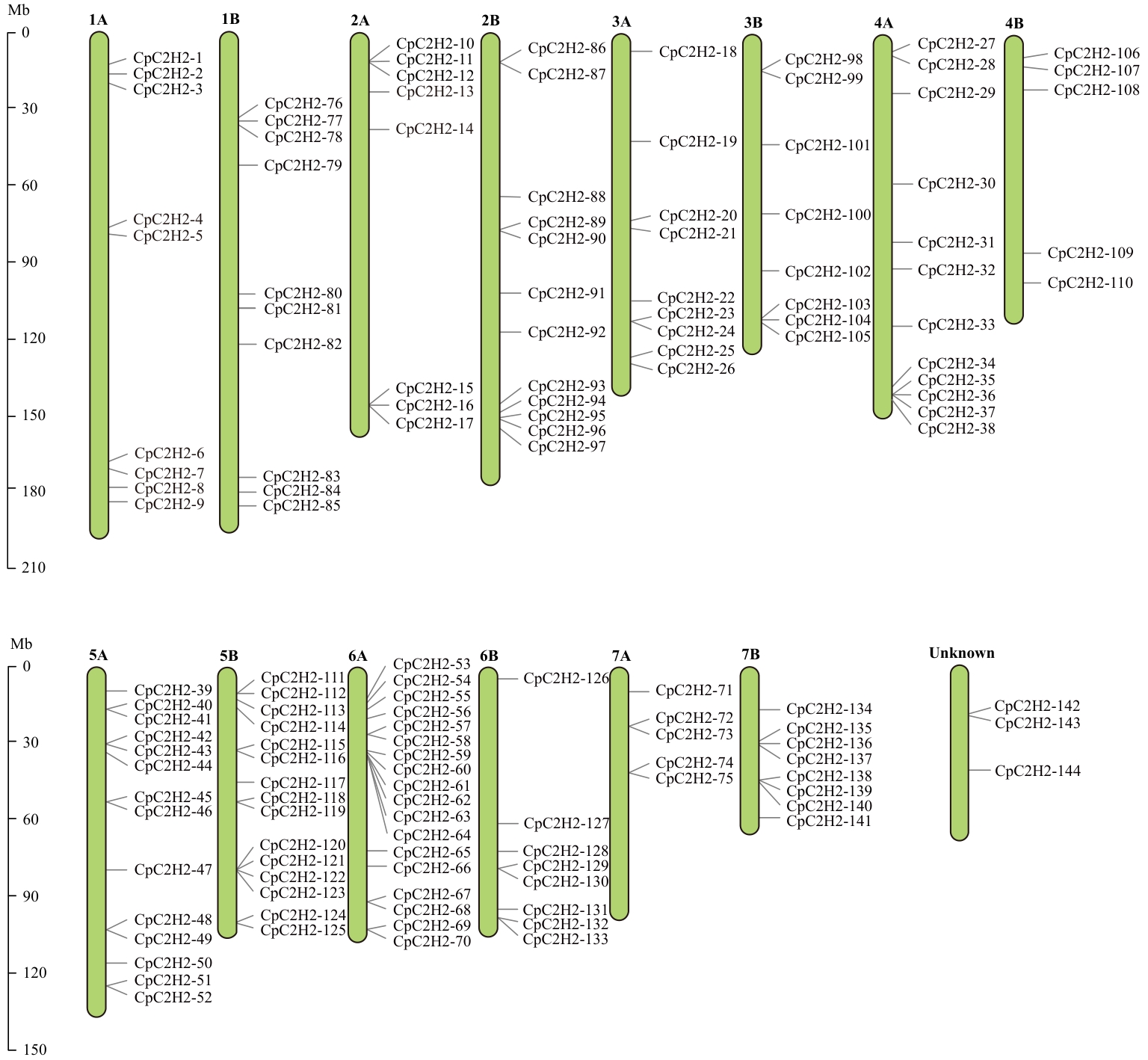
图1 象草C2H2基因家族染色体定位及分布
Fig. 1 Chromosomal location and distribution of C2H2 genes in C. purpureus
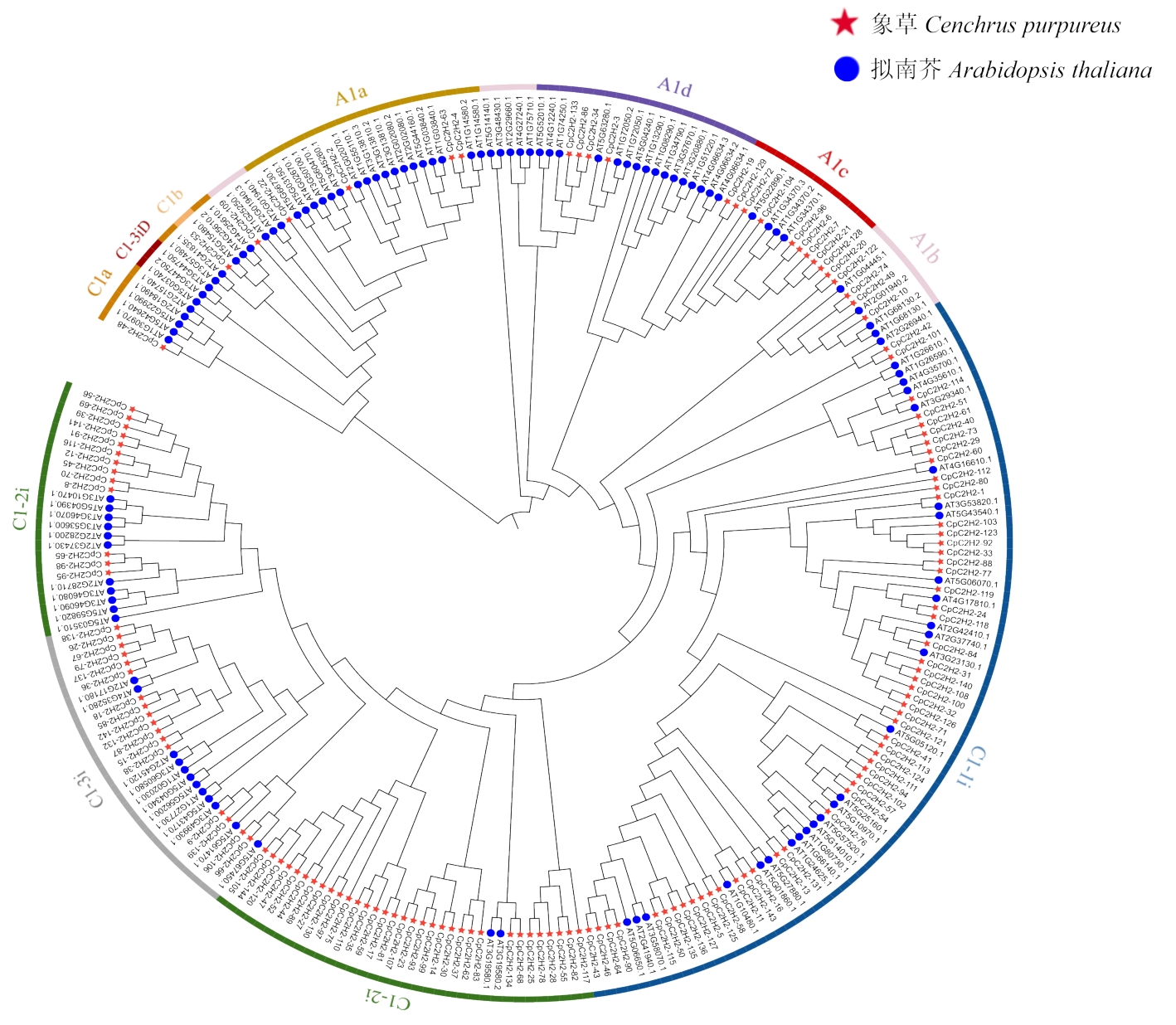
图2 象草C2H2基因家族系统进化树分析
Fig. 2 Phylogenetic tree analysis of the C2H2 gene family in C. purpureus
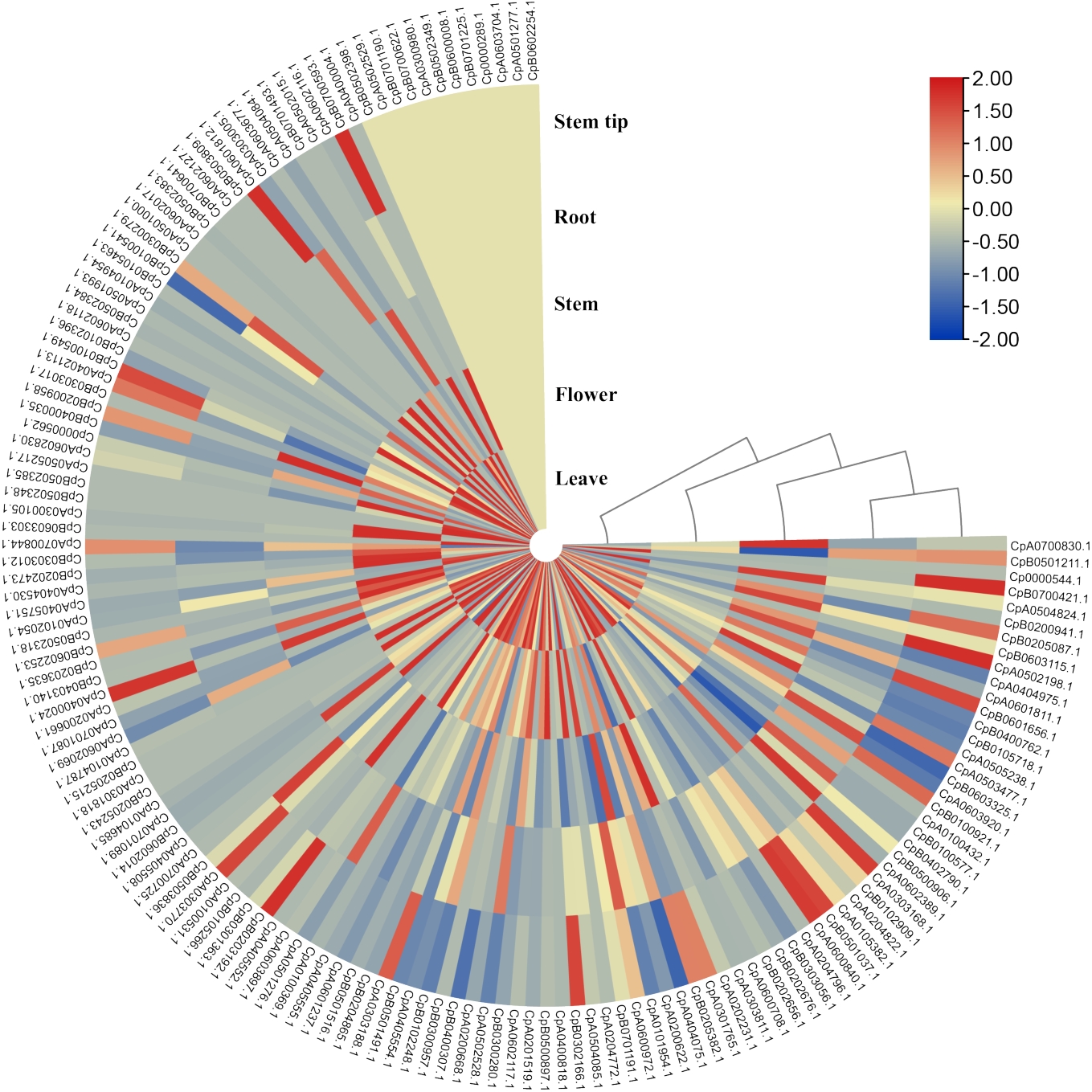
图3 象草C2H2基因家族在不同组织表达水平
Fig. 3 Tissue-specific expression profiling of the C2H2 gene family in C. purpureus
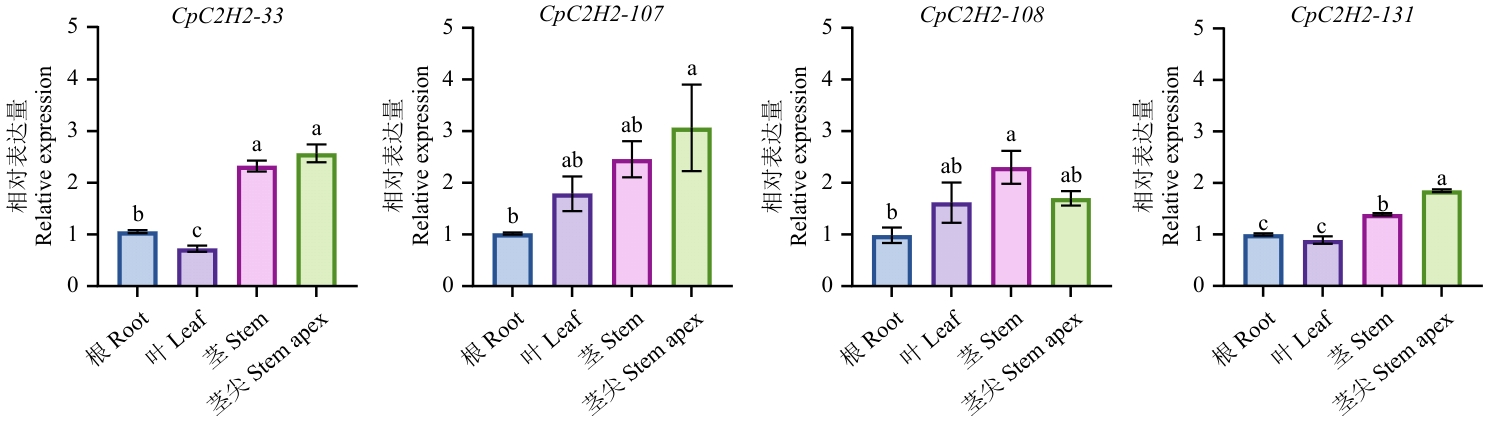
图4 候选CpC2H2基因在象草不同组织中的定量表达分析小写字母代表显著性差异(P<0.05)
Fig. 4 Quantitative expression analysis of candidate CpC2H2 genes in different tissues of C. purpureusLower letters indicate significant difference (P<0.05)
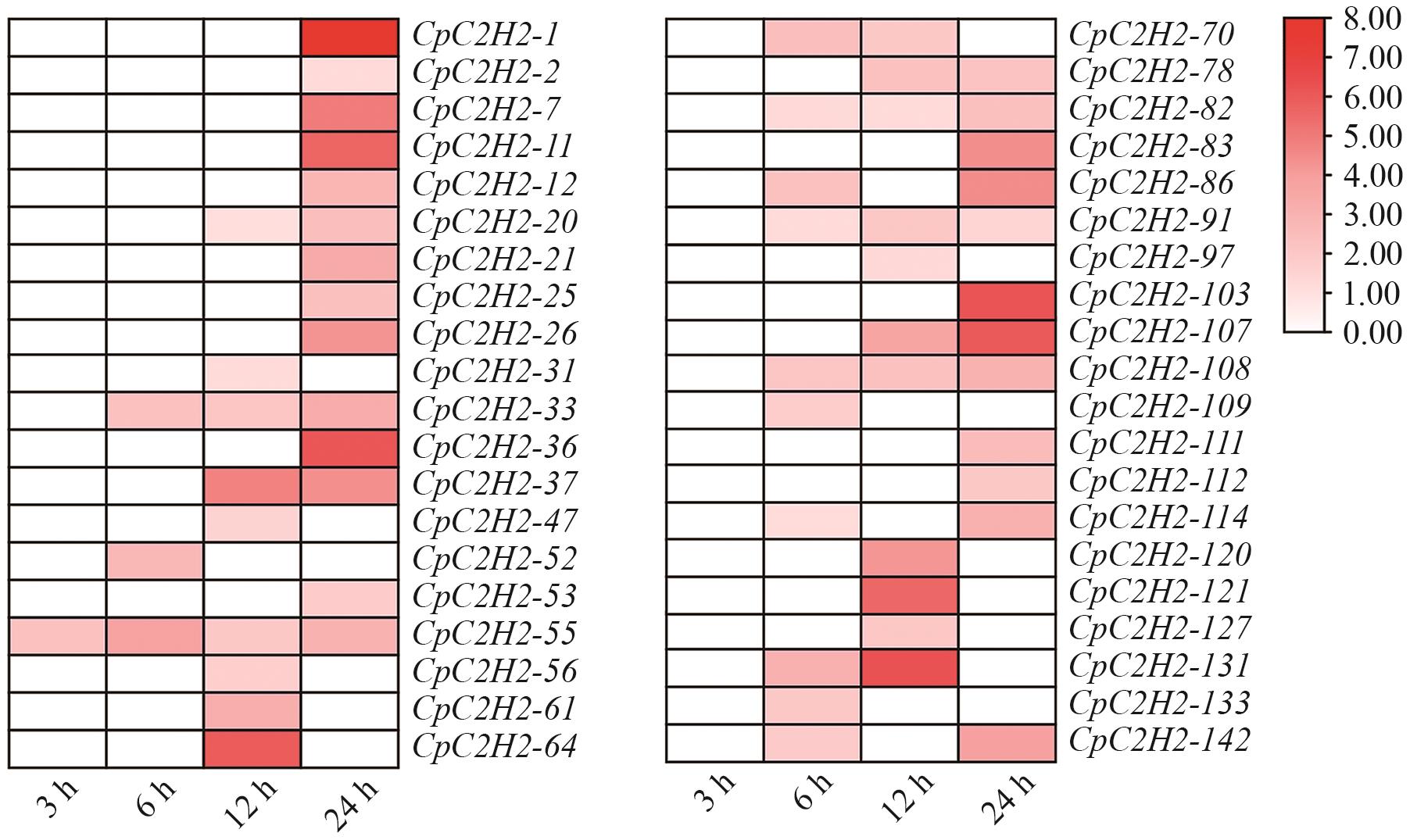
图5 象草C2H2基因家族在低温胁迫下表达水平基于RNA-seq数据的log2(fold change)差异倍数(log2FC)构建热图,颜色深浅表示基因相对表达强度
Fig. 5 Expression profiling of C2H2 genes in C. purpureus under cold stressHeat map visualization of RNA-seq data depicting log2 (fold change) values, with color gradients indicating relative gene expression levels

图6 候选CpC2H2基因在低温胁迫下的表达模式分析
Fig. 6 Expression dynamics of candidate CpC2H2 genes in C. purpureus under cold stress
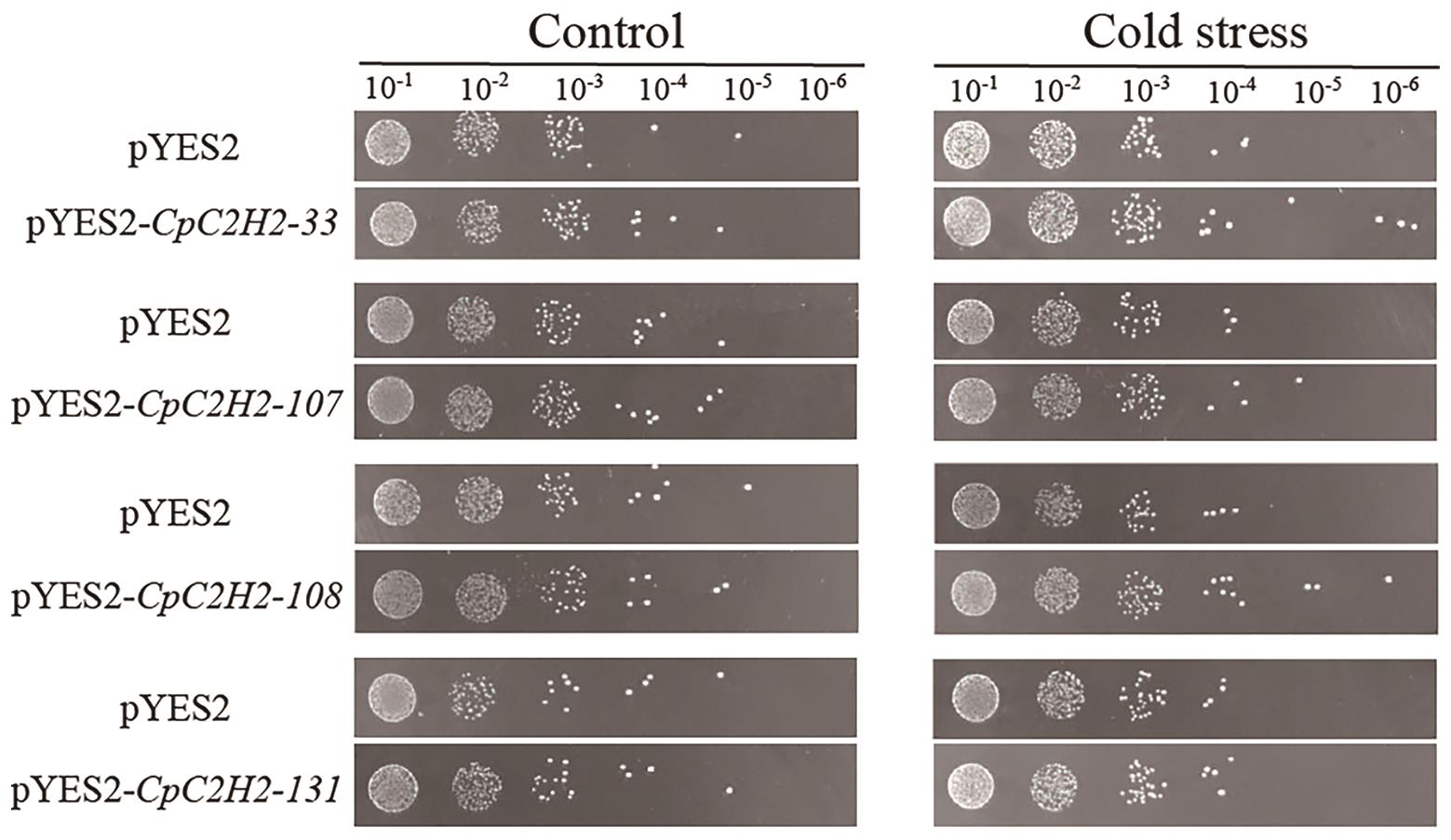
图7 过表达候选基因的酵母细胞菌株对低温胁迫的耐受性
Fig. 7 Cold stress tolerance of yeast strains overexpressing candidate genes
| [1] | 焦文静. 紫象草花色苷的提取纯化、结构分析及特性研究 [D]. 福州: 福建农林大学, 2015. |
| Jiao WJ. Extraction, purification, structure analysis and characterization of anthocyanins from Echinacea purpurea [D]. Fuzhou: Fujian Agriculture and Forestry University, 2015. | |
| [2] | Daud Z, Mohd Hatta MZ, Mohd Kassim AS, et al. Analysis of Napier grass (Pennisetum purpureum) as a potential alternative fibre in paper industry [J]. Mater Res Innov, 2014, 18(sup6): S6-18-S6-20. |
| [3] | 黄其芬. 不同添加剂对杂交象草青贮品质的影响 [D]. 福州: 福建农林大学, 2012. |
| Huang QF. Effects of different additives on silage quality of hybrid elephant grass [D]. Fuzhou: Fujian Agriculture and Forestry University, 2012. | |
| [4] | 王庆斌. 象草辐照芽变选育耐寒植株的初步研究 [J]. 贵州农业科学, 2003, 31(6): 17-19. |
| Wang QB. Selection and breeding of hardy plant of P. purpureum schumach by bud radiation [J]. Guizhou Agric Sci, 2003, 31(6): 17-19. | |
| [5] | Zhang X, Gu HR, Ding CL, et al. Path coefficient and cluster analyses of yield and morphological traits in Pennisetum purpureum [J]. Trop Grasslands, 2010, 44(2): 95-102. |
| [6] | 易显凤, 赖志强, 蔡小艳, 等. 紫色象草的高产栽培与开发利用 [J]. 草业与畜牧, 2012(1): 22-23, 27. |
| Yi XF, Lai ZQ, Cai XY, et al. High-yield cultivation and development and utilization of purple elephant grass [J]. Prataculture Anim Husb, 2012(1): 22-23, 27. | |
| [7] | Negawo AT, Teshome A, Kumar A, et al. Opportunities for Napier grass (Pennisetum purpureum) improvement using molecular genetics [J]. Agronomy, 2017, 7(2): 28. |
| [8] | Muktar MS, Teshome A, Hanson J, et al. Genotyping by sequencing provides new insights into the diversity of Napier grass (Cenchrus purpureus) and reveals variation in genome-wide LD patterns between collections [J]. Sci Rep, 2019, 9(1): 6936. |
| [9] | 温晓娜, 简有志, 解新明. 象草资源的综合开发利用 [J]. 草业科学, 2009, 26(9): 108-112. |
| Wen XN, Jian YZ, Xie XM. The comprehensive exploitation and utilization of Pennisetum purpureum [J]. Pratacultural Sci, 2009, 26(9): 108-112. | |
| [10] | 丁迪云, 陈卫东, 陈杰雄, 等. 狼尾草属牧草品种比较试验 [J]. 广东农业科学, 2019, 46(8): 8-13. |
| Ding DY, Chen WD, Chen JX, et al. Comparative test on forage grass cultivars of Pennisetum [J]. Guangdong Agric Sci, 2019, 46(8): 8-13. | |
| [11] | 马姗姗, 杨静静, 曲德辉, 等. 过表达C2H2型锌指蛋白基因PdbZFP26提高山新杨耐盐性 [J]. 林业科学, 2023, 59(1): 110-118. |
| Ma SS, Yang JJ, Qu DH, et al. Overexpression of PdbZFP26, a gene encoding C2H2 zinc finger protein, improves salt tolerance of transgenic Populus davidiana × P. bolleana [J]. Sci Silvae Sin, 2023, 59(1): 110-118. | |
| [12] | 钟婵娟, 彭伟业, 王冰, 等. 植物逆境响应相关的C2H2型锌指蛋白研究进展 [J]. 植物生理学报, 2020, 56(11): 2356-2366. |
| Zhong CJ, Peng WY, Wang B, et al. Research progress of C2H2 zinc finger protein related to plant stress response [J]. Plant Physiol Commun, 2020, 56(11): 2356-2366. | |
| [13] | 张佳. 番茄C2H2型锌指蛋白生物信息学分析及抗逆相关基因鉴定 [D]. 哈尔滨: 东北农业大学, 2018. |
| Zhang J. Bioinformatic analysis and identification of some resistance-associated genes of C2H2 type zinc finger gene family in tomato [D]. Harbin: Northeast Agricultural University, 2018. | |
| [14] | 高莉娟, 张正社, 文裕, 等. 象草全基因组bHLH转录因子家族鉴定及表达分析 [J]. 草业学报, 2022, 31(3): 47-59. |
| Gao LJ, Zhang ZS, Wen Y, et al. Identification and expression analysis of bHLH transcription factor family in elephant grass genome [J]. Acta Prataculturae Sin, 2022, 31(3): 47-59. | |
| [15] | 刘美琦, 孙伟, 孟祥霄, 等. 药用植物大麻C2H2基因家族鉴定与表达分析 [J]. 药学学报, 2021, 56(5): 1486-1496. |
| Liu MQ, Sun W, Meng XX, et al. Identification and expression analysis of the C2H2 gene family in Cannabis sativa L [J]. Acta Pharm Sin, 2021, 56(5): 1486-1496. | |
| [16] | 陈宗新, 陈俊飞, 王亚琴. 水稻C2H2型锌指蛋白OsZAT12转化拟南芥功能的初步研究 [J]. 华南师范大学学报: 自然科学版, 2019, 51(1): 63-68. |
| Chen ZX, Chen JF, Wang YQ. A preliminary study of OsZAT12 with C2H2-type zinc finger transforming Arabidopsis [J]. J South China Norm Univ Nat Sci Ed, 2019, 51(1): 63-68. | |
| [17] | 邱添. 拟南芥C2H2锌指蛋白AtZFP03功能研究 [D]. 长沙: 湖南农业大学, 2021. |
| Qiu T. The function of Arabidopsis C2H2 zinc finger protein AtZFP03 [D]. Changsha: Hunan Agricultural University, 2021. | |
| [18] | 徐晓东, 张国斌, 李林倩, 等. 拟南芥C2H2型转录因子AtIDD5结构和功能的生物信息学分析 [J]. 西南农业学报, 2023, 36(11): 2319-2328. |
| Xu XD, Zhang GB, Li LQ, et al. Bioinformatic analysis of structure and function of type C2H2 transcription factor AtIDD5 in Arabidopsis [J]. Southwest China J Agric Sci, 2023, 36(11): 2319-2328. | |
| [19] | 黄骥. 水稻非生物胁迫相关锌指蛋白基因的克隆与功能分析 [D]. 南京: 南京农业大学, 2005. |
| Huang J. Cloning and functional analysis of abiotic stress-related zinc finger protein genes from rice (Oryza sativa L.) [D]. Nanjing: Nanjing Agricultural University, 2005. | |
| [20] | 黄凯. 水稻C2H2型转录因子OsZFP151在低温胁迫中的功能研究 [D]. 长春: 吉林大学, 2017. |
| Huang K. Functional analysis of C2H2 transcription factor OsZFP151 in rice (Oryza sativa L.) under low temperature stress [D]. Changchun: Jilin University, 2017. | |
| [21] | 胡军华, 王大伟, 杨明磊, 等. 番茄C2H2型锌指蛋白的鉴定及生物信息学分析 [J]. 江苏农业科学, 2018, 46(12): 23-27. |
| Hu JH, Wang DW, Yang ML, et al. Identification and bioinformatics analysis of C2H2 zinc finger protein in tomato [J]. Jiangsu Agric Sci, 2018, 46(12): 23-27. | |
| [22] | 包雨芳. 番茄C2H2型锌指蛋白家族基因在干旱和盐胁迫下的表达特性分析及重要基因功能验证 [D]. 哈尔滨: 东北农业大学, 2020. |
| Bao YF. Expression characteristics analysis and functional verification of important genes of tomato C2H2 zinc finger protein family under drought and salt stress [D]. Harbin: Northeast Agricultural University, 2020. | |
| [23] | 顾倩, 丁维维, 蒋明月, 等. 过表达小麦锌指型转录因子基因TaZAT8烟草根系差异蛋白的鉴定 [J]. 华北农学报, 2019, 34(5): 45-51. |
| Gu Q, Ding WW, Jiang MY, et al. Identification of differential proteins in roots of tobacco with overexpressing TaZAT8, a zinc finger type transcription factor gene from wheat [J]. Acta Agric Boreali Sin, 2019, 34(5): 45-51. | |
| [24] | 李学然. 玉米大斑病菌C2H2型锌指蛋白家族生物信息学分析及其基因表达研究 [D]. 保定: 河北农业大学, 2019. |
| Li XR. Bioinformatics analysis and gene expression pattern of C2H2-type zinc finger protein family in Setosphaeria Turcica [D]. Baoding: Hebei Agricultural University, 2019. | |
| [25] | 孟繁君, 陈明, 徐长营, 等. 玉米C2H2型锌指蛋白基因ZFP225的鉴定、生物信息学分析与克隆 [J]. 作物杂志, 2014(1): 49-53. |
| Meng FJ, Chen M, Xu CY, et al. Cloning and sequence analysis of ZFP225 encoding a C2H2-type zinc finger protein in Zea mays [J]. Crops, 2014(1): 49-53. | |
| [26] | 孙亚男, 林茹, 潘晓阳, 等. 紫花苜蓿MsZAT10基因的克隆及其在烟草中的功能验证 [J]. 草业学报, 2019, 28(12): 94-102. |
| Sun YN, Lin R, Pan XY, et al. Cloning and function analysis in tobacco of MsZAT10 from alfalfa [J]. Acta Prataculturae Sin, 2019, 28(12): 94-102. | |
| [27] | Liu Z, Coulter JA, Li YM, et al. Genome-wide identification and analysis of the Q-type C2H2 gene family in potato (Solanum tuberosum L.) [J]. Int J Biol Macromol, 2020, 153: 327-340. |
| [28] | 杨明磊, 晁江涛, 王大伟, 等. 烟草C2H2锌指蛋白转录因子家族成员的鉴定与表达分析 [J]. 遗传, 2016, 38(4): 337-349. |
| Yang ML, Chao JT, Wang DW, et al. Genome-wide identification and expression profiling of the C2H2-type zinc finger protein transcription factor family in tobacco [J]. Hereditas, 2016, 38(4): 337-349. | |
| [29] | Yuan SL, Li XY, Li R, et al. Genome-wide identification and classification of soybean C2H2 zinc finger proteins and their expression analysis in legume-Rhizobium symbiosis [J]. Front Microbiol, 2018, 9: 126. |
| [30] | 唐玉萍, 彭凡嘉, 郭莉莉, 等. 陆地棉C2H2型锌指蛋白全基因组鉴定及表达分析 [J]. 分子植物育种, 2025, 23(15): 4947-4968. |
| Tang YP, Peng FJ, Guo LL, et al. Genome-wide identification and stress expression analysis of C2H2-type zinc finger protein family in Gossypium hirsutum [J]. Mol Plant Breed, 2025, 23(15): 4947-4968. | |
| [31] | Chen Y, Wang G, Pan J, et al. Comprehensive genomic analysis and expression profiling of the C2H2 zinc finger protein family under abiotic stresses in cucumber (Cucumis sativus L.) [J]. Genes, 2020, 11(2): 171. |
| [32] | Hu YB, Sun M, Luo D, et al. Transcriptome profiling the response of elephant grass(Cenchrus purpureus) root to cold stress [J]. Grass Res, 2025, 5(1): e014. |
| [33] | 李建阳, 熊思微, 李贺勤, 等. 银杏C2H2型锌指蛋白家族的全基因组鉴定及生物信息学分析 [J]. 基因组学与应用生物学, 2024, 43(Z2): 1723-1734. |
| Li JY, Xiong SW, Li HQ, et al. Genome-wide identification of C2H2-type zinc finger proteins of Ginkgo biloba and bioinformatics analysis [J]. Genom Appl Biol, 2024, 43(Z2): 1723-1734. | |
| [34] | Chen CJ, Wu Y, Li JW, et al. TBtools-II: a “one for all, all for one” bioinformatics platform for biological big-data mining [J]. Mol Plant, 2023, 16(11): 1733-1742. |
| [35] | Yan Q, Wu F, Xu P, et al. The elephant grass (Cenchrus purpureus) genome provides insights into anthocyanidin accumulation and fast growth [J]. Mol Ecol Resour, 2021, 21(2): 526-542. |
| [36] | Gabriela Toledo-Ortiz EH. The Arabidopsis basic /helix-loop-helix/helix-loop-helix transcription factor family [J]. Plant Cell, 2003, 15(8): 1749-1770. |
| [37] | 朱婷. 大麦bHLH转录因子家族的鉴定及系统进化和表达分析 [D]. 杨凌: 西北农林科技大学, 2019. |
| Zhu T. Identification, phylogeny and expression profiling of bHLH transcription factor family in barley [D]. Yangling: Northwest A & F University, 2019. | |
| [38] | 俞键烽, 洪家都, 赵爽, 等. 巨桉C2H2锌指蛋白基因家族EgrZFP-EARs鉴定及其在非生物逆境下的表达模式分析 [J]. 农业生物技术学报, 2024, 32(8): 1792-1808. |
| Yu JF, Hong JD, Zhao S, et al. Identification of egr ZFP-EARs of the C2H2 zinc finger protein gene family in Eucalyptus grandis and analysis of their expression pattern under abiotic stresses [J]. J Agric Biotechnol, 2024, 32(8): 1792-1808. | |
| [39] | 陈璐路. 小麦C2H2锌指蛋白转录因子TaZAT8通过促进根系生长提高抗旱性的机制研究 [D]. 郑州: 河南农业大学, 2024. |
| Chen LL. The mechanism research of C2H2 finger protein transcription factor TaZAT8 in wheat enhancing drought resistance by promoting root growth [D]. Zhengzhou: Henan Agricultural University, 2024. | |
| [40] | 张尚宏, 屈良鹄. 基因组的进化与内含子中的基因的进化 [J]. 中山大学学报: 自然科学版, 1999, 38(1): 49-53. |
| Zhang SH, Qu LH. Genome evolution and the evolution of genes in introns [J]. Acta Sci Nat Univ Sunyatseni, 1999, 38(1): 49-53. | |
| [41] | Xu GX, Guo CC, Shan HY, et al. Divergence of duplicate genes in exon-intron structure [J]. Proc Natl Acad Sci U S A, 2012, 109(4): 1187-1192. |
| [42] | Lee BH, Kapoor A, Zhu JH, et al. STABILIZED1, a stress-upregulated nuclear protein, is required for pre-mRNA splicing, mRNA turnover, and stress tolerance in Arabidopsis [J]. Plant Cell, 2006, 18(7): 1736-1749. |
| [43] | Guan QM, Wu JM, Zhang YY, et al. A DEAD box RNA helicase is critical for pre-mRNA splicing, cold-responsive gene regulation, and cold tolerance in Arabidopsis [J]. Plant Cell, 2013, 25(1): 342-356. |
| [44] | 李昌满, 李朝闯, 王志敏, 等. 拟南芥和芥菜开花抑制因子AGL18花期调控机制研究进展 [J]. 园艺学报, 2017, 44(9): 1717-1728. |
| Li CM, Li ZC, Wang ZM, et al. Progress in mechanisms of floral inhibiting factor AGL18 in regulating flowering time of Arabidopsis and mustard [J]. Acta Hortic Sin, 2017, 44(9): 1717-1728. | |
| [45] | 崔旭昕. 转OsC2H2-12基因水稻分子鉴定及耐冷性分析 [D]. 长春: 吉林大学, 2016. |
| Cui XX. Molecular identification and cold tolerance analysis of OsC2H2-12 transcription factor transgenic rice [D]. Changchun: Jilin University, 2016. |
| [1] | 吕呈聪, 衡蒙, 陈思琪, 金雪花. 彩色马蹄莲花青素苷转运相关ZhGSTF的克隆及功能分析[J]. 生物技术通报, 2026, 42(1): 161-169. |
| [2] | 任云儿, 伍国强, 成斌, 魏明. 甜菜BvATGs基因家族全基因组鉴定及盐胁迫下表达模式分析[J]. 生物技术通报, 2026, 42(1): 184-197. |
| [3] | 杨娟, 冯慧, 吉乃喆, 孙丽萍, 王赟, 张佳楠, 赵世伟. 月季AP2/ERF转录因子RcERF4和RcRAP2-12的克隆及功能分析[J]. 生物技术通报, 2026, 42(1): 150-160. |
| [4] | 吴翠翠, 陈登科, 兰刚, 夏芝, 李朋波. 花生转录因子AhHDZ70的生物信息学分析及耐盐耐旱性研究[J]. 生物技术通报, 2026, 42(1): 198-207. |
| [5] | 刘佳丽, 宋经荣, 赵文宇, 张馨元, 赵子洋, 曹一博, 张凌云. 蓝莓R2R3-MYB基因鉴定及类黄酮调控基因表达分析[J]. 生物技术通报, 2025, 41(9): 124-138. |
| [6] | 程婷婷, 刘俊, 王利丽, 练从龙, 魏文君, 郭辉, 吴尧琳, 杨晶凡, 兰金旭, 陈随清. 杜仲查尔酮异构酶基因家族全基因组鉴定及其表达模式分析[J]. 生物技术通报, 2025, 41(9): 242-255. |
| [7] | 徐小萍, 杨成龙, 和兴, 郭文杰, 吴健, 方少忠. 百合LoAPS1克隆及其在休眠解除过程的功能分析[J]. 生物技术通报, 2025, 41(9): 195-206. |
| [8] | 董向向, 缪百灵, 许贺娟, 陈娟娟, 李亮杰, 龚守富, 朱庆松. 森林草莓FveBBX20基因的生物信息学分析及开花调控功能[J]. 生物技术通报, 2025, 41(9): 115-123. |
| [9] | 李珊, 马登辉, 马红义, 姚文孔, 尹晓. 葡萄SKP1基因家族鉴定与表达分析[J]. 生物技术通报, 2025, 41(9): 147-158. |
| [10] | 黄国栋, 邓宇星, 程宏伟, 但焱南, 周会汶, 吴兰花. 大豆ZIP基因家族鉴定及响应铝胁迫的表达分析[J]. 生物技术通报, 2025, 41(9): 71-81. |
| [11] | 巩慧玲, 邢玉洁, 马俊贤, 蔡霞, 冯再平. 马铃薯LAC基因家族的鉴定及盐胁迫下表达分析[J]. 生物技术通报, 2025, 41(9): 82-93. |
| [12] | 腊贵晓, 赵玉龙, 代丹丹, 余永亮, 郭红霞, 史贵霞, 贾慧, 杨铁钢. 红花质膜H+-ATPase基因家族成员鉴定及响应低氮低磷胁迫的表达分析[J]. 生物技术通报, 2025, 41(8): 220-233. |
| [13] | 赖诗雨, 梁巧兰, 魏列新, 牛二波, 陈应娥, 周鑫, 杨思正, 王博. NbJAZ3在苜蓿花叶病毒侵染本氏烟过程中的作用[J]. 生物技术通报, 2025, 41(8): 186-196. |
| [14] | 林佳怡, 陈强, 张磊, 刘宏鑫, 郑晓明, 逄洪波. 褪黑素在植物低温胁迫中的研究进展[J]. 生物技术通报, 2025, 41(7): 37-48. |
| [15] | 李新妮, 李俊怡, 马雪华, 何卫, 李佳丽, 于佳, 曹晓宁, 乔治军, 刘思辰. 谷子果胶甲酯酶抑制子PMEI基因家族鉴定及其对非生物胁迫的响应分析[J]. 生物技术通报, 2025, 41(7): 150-163. |
| 阅读次数 | ||||||
|
全文 |
|
|||||
|
摘要 |
|
|||||
