







生物技术通报 ›› 2026, Vol. 42 ›› Issue (7): 11-21.doi: 10.13560/j.cnki.biotech.bull.1985.2025-1029
王丹1, 黄泓杰1, 曹随忠1, 黄逸馨1,2( )
)
收稿日期:2025-09-26
出版日期:2026-07-26
发布日期:2026-07-20
通讯作者:
黄逸馨yxhuang@sicau.edu.cn基金资助:
WANG Dan1, HUANG Hong-jie1, CAO Sui-zhong1, HUANG Yi-xin1,2()
Received:2025-09-26
Published:2026-07-26
Online:2026-07-20
摘要:
色氨酸是一种必需氨基酸,可经犬尿氨酸途径、5-羟色胺途径和吲哚途径产生多种具有生物活性的代谢产物,广泛参与氧化应激、炎症反应和免疫应答等生理过程。近来研究表明,色氨酸代谢不仅是维持宿主健康与肠道微生态平衡的重要枢纽,其代谢紊乱还与肥胖、2型糖尿病、高脂血症以及代谢相关脂肪性肝病等一系列代谢性疾病的发生和发展密切相关。色氨酸代谢可通过调节糖脂代谢、胰岛素信号转导和免疫稳态等途径影响疾病进程。靶向调控色氨酸代谢限速酶的活性,如色氨酸-2,3-双加氧酶、吲哚胺-2,3-双加氧酶和犬尿氨酸单加氧酶,能够干预关键代谢物的生成,从而纠正代谢失衡、减轻炎症或改善细胞功能,有望为多种疾病的治疗提供新策略。本文聚焦于色氨酸关键代谢产物的病理生理功能,系统综述了色氨酸代谢在肝脏、肠道、脂肪组织和胰腺中的器官特异性调控机制,阐释了犬尿氨酸的促炎作用和胰岛素抵抗效应、5-羟色胺对糖脂代谢的双重调节作用,并强调了吲哚丙酸等肠道菌群产生的吲哚类衍生物通过抗炎、抗氧化和保护肠道屏障等功能缓解机体代谢紊乱的作用。此外,本文进一步探讨了色氨酸代谢产物作为信号分子,通过“肠-肝轴”调节肝脏脂质代谢与炎症反应,以及通过“肠-脑轴”调控食欲与能量平衡的跨器官通讯机制,旨在为色氨酸及其代谢物在糖脂代谢紊乱相关疾病的诊断和治疗方面提供理论依据。
王丹, 黄泓杰, 曹随忠, 黄逸馨. 色氨酸及其代谢物调控糖脂代谢的研究进展[J]. 生物技术通报, 2026, 42(7): 11-21.
WANG Dan, HUANG Hong-jie, CAO Sui-zhong, HUANG Yi-xin. Advances in the Regulation of Glucose and Lipid Metabolism by Tryptophan and Its Metabolites[J]. Biotechnology Bulletin, 2026, 42(7): 11-21.
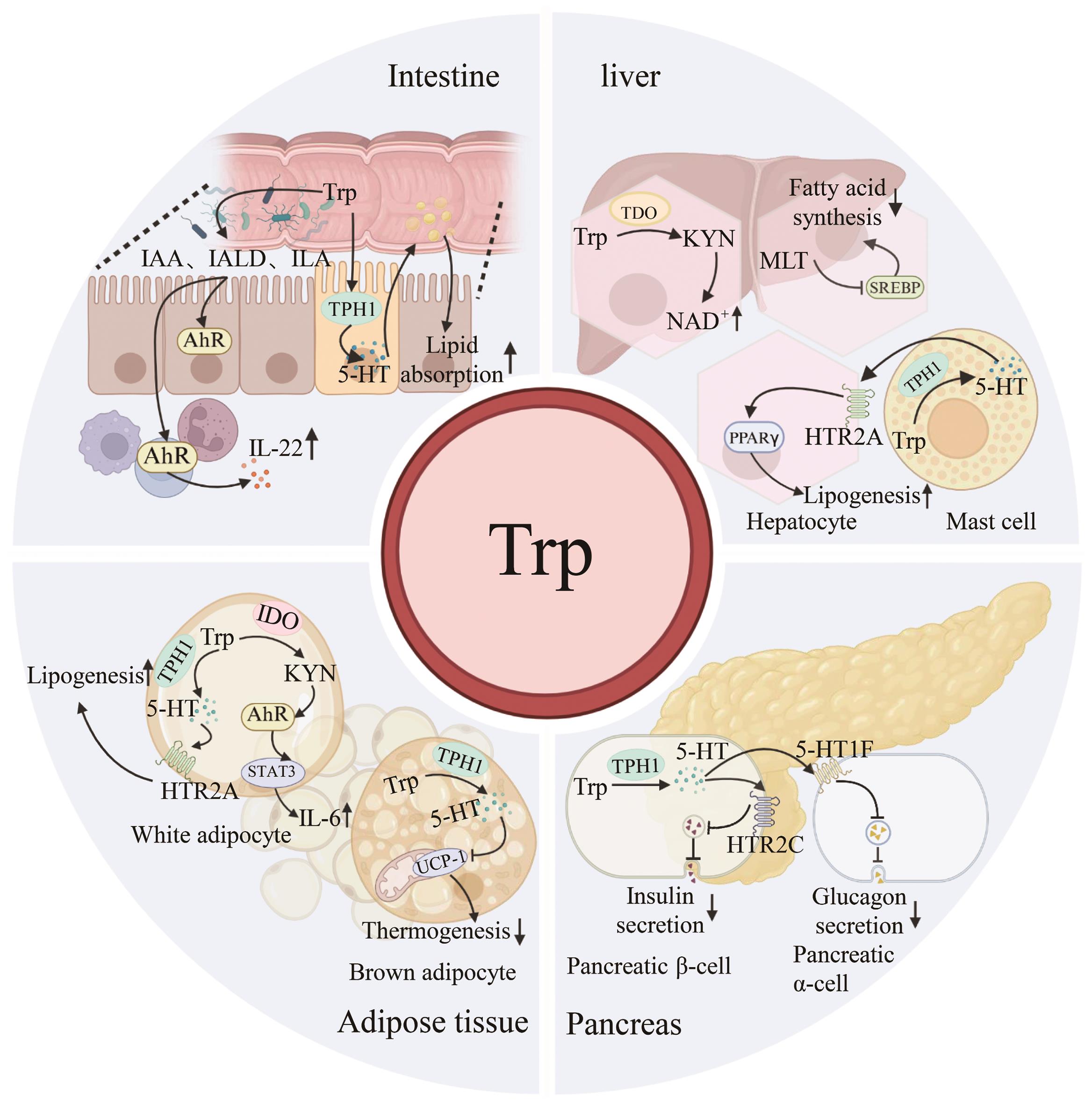
图1 色氨酸代谢在各器官中的调控作用Intestine:肠道;liver:肝脏;Fatty acid synthesis:脂肪酸合成;Lipid absorption:脂质吸收;Hepatocyte:肝细胞;Lipogenesis:脂肪生成;Mast cell:肥大细胞;White adipocyte:白色脂肪细胞;Thermogenesis:产热;Brown adipocyte:棕色脂肪细胞;Adipose tissue:脂肪组织;Insulin secretion:胰岛素分泌;Pancreatic β-cell:胰腺β细胞;Glucagon secretion:胰高血糖素分泌;Pancreatic α-cell:胰腺α细胞;Pancreas:胰腺;Trp:色氨酸;5-HT:5-羟色胺(血清素);IAA:吲哚-3-乙酸;IALD:吲哚-3-甲醛;ILA:吲哚-3-乳酸;AhR:芳香烃受体;IL-22:白细胞介素-22;TPH1:色氨酸羟化酶1;TDO:色氨酸-2,3-双加氧酶;KYN:犬尿氨酸;NAD⁺:烟酰胺腺嘌呤二核苷酸;MLT:褪黑素;SREBP:固醇调节元件结合蛋白;PPARγ:过氧化物酶体增殖物激活受体γ;HTR2A:5-羟色胺受体2A;IDO:吲哚胺-2,3-双加氧酶;STAT3:信号转导及转录激活蛋白3;IL-6:白细胞介素-6;UCP-1:解偶联蛋白1;HTR2C:5-羟色胺受体2C;5-HT1F:5-羟色胺受体1F。图片基于BioRender网站生成
Fig. 1 Regulatory role of tryptophan metabolism in various organsTrp: Tryptophan. 5-HT: 5-Hydroxytryptamine. IAA: Indole-3-acetic acid. IALD: Indole-3-aldehyde. ILA: Indole-3-lactic acid. Ahr: Aryl hydrocarbon receptor. IL-22: Interleukin-22. TPH1: Tryptophan hydroxylase 1. TDO: Tryptophan 2,3-dioxygenase. KYN: Kynurenine. NAD⁺: Nicotinamide adenine dinucleotide. MLT: Melatonin. SREBP: Sterol regulatory element-binding protein. PPARγ: Peroxisome proliferator-activated receptor gamma. HTR2A: 5-Hydroxytryptamine receptor 2A. IDO: Indoleamine 2,3-dioxygenase. STAT3: Signal transducer and activator of transcription 3. IL-6: Interleukin-6. UCP-1: Uncoupling protein 1. HTR2C: 5-Hydroxytryptamine receptor 2C. 5-HT1F: 5-Hydroxytryptamine receptor 1F. Figure was created with BioRender
色氨酸代谢产物 Tryptophan metabolites | 关键酶 Key enzymes | 代谢物来源 Source | 代谢调控作用 Metabolic regulatory function | 作用靶点 Action target | 参考文献 Reference |
|---|---|---|---|---|---|
| KYN | IDO | 脂肪细胞 | 诱导肥胖和胰岛素抵抗 | AhR-STAT3-IL-6 | [ |
| 3-HK | KMO | 胰岛β细胞 | 诱导胰岛素抵抗 | - | [ |
| KYNA | KAT | 肝细胞 | 改善肝脏脂肪变性 | AMPK/ORP150 | [ |
| NAD+ | ACMSD | 肝细胞 | 减轻脂肪肝 | - | [ |
| 5-HT | TPH1 | 肠道嗜铬细胞 | 促进肠道蠕动 | - | [ |
| - | 产芽孢细菌 | 促进肠道脂质吸收 | - | [ | |
| TPH1 | 肥大细胞 | 诱导肝脏脂质累积 | HTR2A-PPARγ | [ | |
| TPH1 | 白色脂肪细胞 | 促进脂肪生成 | HTR2A | [ | |
| TPH1 | 棕色脂肪细胞 | 抑制脂肪分解 | UCP1 | [ | |
| TPH1 | 胰岛β细胞 | 抑制胰岛α细胞释放胰高血糖素 | 5-HT1F受体 | [ | |
| 抑制胰岛β细胞分泌胰岛素 | HTR2C | [ | |||
| MLT | AANAT | 肝细胞 | 减轻肝脏脂质累积 | SREBP-1c | [ |
| IPA | ACD | 肠道菌群 | 改善胰岛素敏感性,减少脂质累积 | FFAR3-IL-25、NFκB | [ |
| IAlD | - | 肠道菌群 | 改善胰岛素敏感性,抗肥胖 | AhR、Nrf2 | [ |
表1 色氨酸代谢产物的调节作用及靶点
Table 1 Regulatory roles and targets of tryptophan metabolites
色氨酸代谢产物 Tryptophan metabolites | 关键酶 Key enzymes | 代谢物来源 Source | 代谢调控作用 Metabolic regulatory function | 作用靶点 Action target | 参考文献 Reference |
|---|---|---|---|---|---|
| KYN | IDO | 脂肪细胞 | 诱导肥胖和胰岛素抵抗 | AhR-STAT3-IL-6 | [ |
| 3-HK | KMO | 胰岛β细胞 | 诱导胰岛素抵抗 | - | [ |
| KYNA | KAT | 肝细胞 | 改善肝脏脂肪变性 | AMPK/ORP150 | [ |
| NAD+ | ACMSD | 肝细胞 | 减轻脂肪肝 | - | [ |
| 5-HT | TPH1 | 肠道嗜铬细胞 | 促进肠道蠕动 | - | [ |
| - | 产芽孢细菌 | 促进肠道脂质吸收 | - | [ | |
| TPH1 | 肥大细胞 | 诱导肝脏脂质累积 | HTR2A-PPARγ | [ | |
| TPH1 | 白色脂肪细胞 | 促进脂肪生成 | HTR2A | [ | |
| TPH1 | 棕色脂肪细胞 | 抑制脂肪分解 | UCP1 | [ | |
| TPH1 | 胰岛β细胞 | 抑制胰岛α细胞释放胰高血糖素 | 5-HT1F受体 | [ | |
| 抑制胰岛β细胞分泌胰岛素 | HTR2C | [ | |||
| MLT | AANAT | 肝细胞 | 减轻肝脏脂质累积 | SREBP-1c | [ |
| IPA | ACD | 肠道菌群 | 改善胰岛素敏感性,减少脂质累积 | FFAR3-IL-25、NFκB | [ |
| IAlD | - | 肠道菌群 | 改善胰岛素敏感性,抗肥胖 | AhR、Nrf2 | [ |
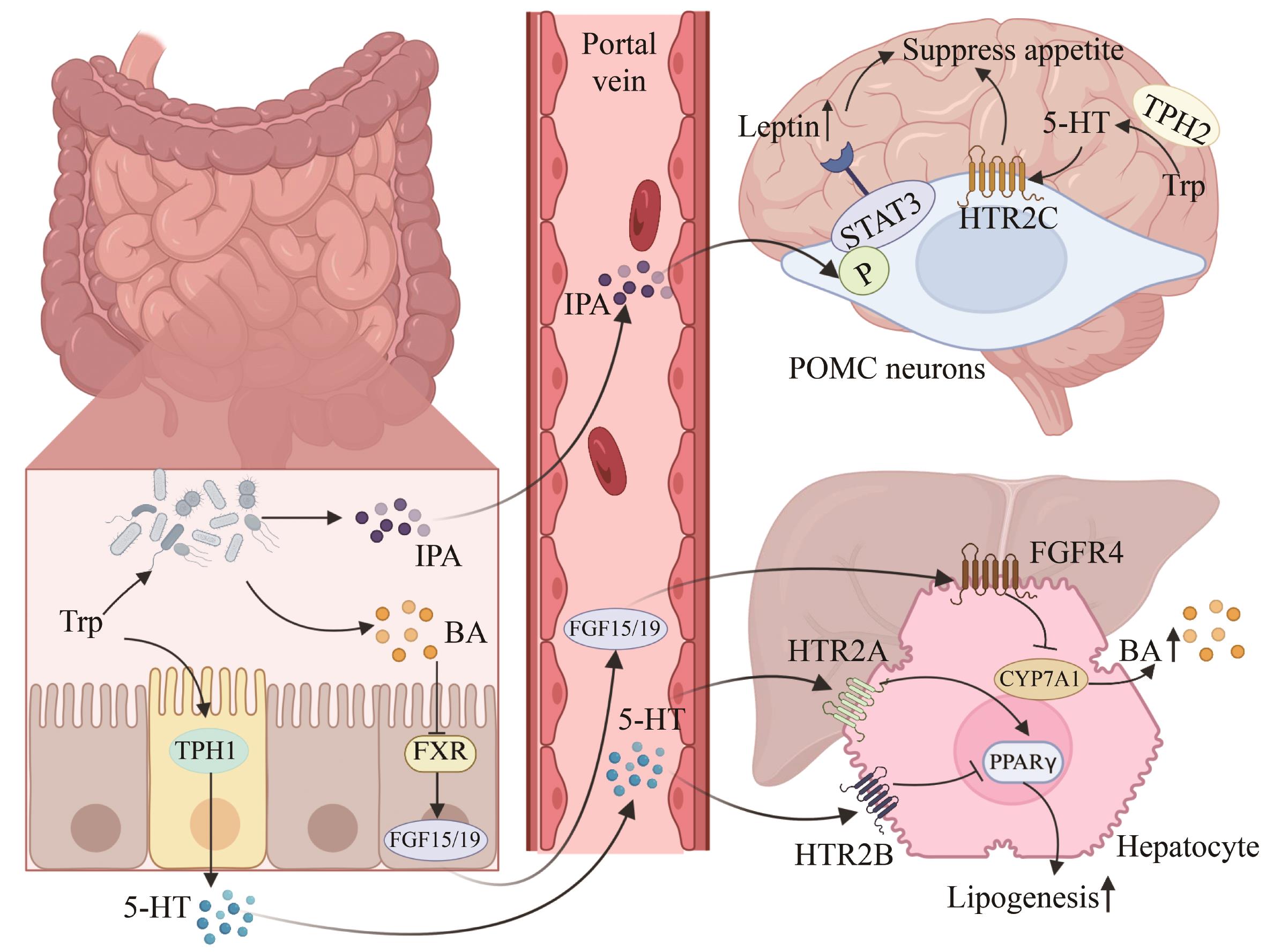
图2 色氨酸代谢在器官间的互作Portal vein:门静脉;Suppress appetite:抑制食欲;Leptin:瘦素;STAT3:信号转导及转录激活蛋白3;HTR2C:5-羟色胺受体2C;5-HT:5-羟色胺(血清素);TPH2:色氨酸羟化酶2;Trp:色氨酸;POMC neurons:阿片黑素皮质素原神经元;IPA:吲哚-3-丙酸;BA:胆汁酸;TPH1:色氨酸羟化酶1;FXR:法尼醇X受体;FGF15/19:成纤维细胞生长因子15/19;FGFR4:成纤维细胞生长因子受体4;CYP7A1:胆固醇7α-羟化酶;HTR2A:5-羟色胺受体2A;HTR2B:5-羟色胺受体2B;PPARγ:过氧化物酶体增殖物激活受体γ;Hepatocyte:肝细胞;Lipogenesis:脂肪生成。图片基于BioRender网站生成
Fig. 2 Tryptophan metabolism in inter-organ crosstalkSTAT3: Signal transducer and activator of transcription 3. HTR2C: 5-Hydroxytryptamine receptor 2C. 5-HT: 5-Hydroxytryptamine. TPH2: Tryptophan hydroxylase 2. Trp: Tryptophan. POMC Neurons: Pro-opiomelanocortin neurons. IPA: Indole-3-propionic acid. BA: Bile acids. TPH1: Tryptophan hydroxylase 1. FXR: Farnesoid X receptor. FGF15/19: Fibroblast growth factor 15/19. FGFR4: Fibroblast growth factor receptor 4. CYP7A1: Cholesterol 7 alpha-hydroxylase (Cytochrome P450 Family 7 Subfamily A Member 1). HTR2A: 5-Hydroxytryptamine receptor 2A. HTR2B: 5-Hydroxytryptamine receptor 2B. PPARγ: Peroxisome proliferator-activated receptor gamma. Hepatocyte: Hepatocyte. Lipogenesis: Lipogenesis. Figure was created with BioRender
| [1] | Fiore A, Murray PJ. Tryptophan and indole metabolism in immune regulation [J]. Curr Opin Immunol, 2021, 70: 7-14. |
| [2] | Platten M, Nollen EAA, Röhrig UF, et al. Tryptophan metabolism as a common therapeutic target in cancer, neurodegeneration and beyond [J]. Nat Rev Drug Discov, 2019, 18(5): 379-401. |
| [3] | Banskota S, Khan WI. Gut-derived serotonin and its emerging roles in immune function, inflammation, metabolism and the gut-brain axis [J]. Curr Opin Endocrinol Diabetes Obes, 2022, 29(2): 177-182. |
| [4] | Xue C, Li GL, Zheng QX, et al. Tryptophan metabolism in health and disease [J]. Cell Metab, 2023, 35(8): 1304-1326. |
| [5] | Agudelo LZ, Ferreira DMS, Cervenka I, et al. Kynurenic acid and Gpr35 regulate adipose tissue energy homeostasis and inflammation [J]. Cell Metab, 2018, 27(2): 378-392.e5. |
| [6] | Castro-Portuguez R, Sutphin GL. Kynurenine pathway, NAD(+) synthesis, and mitochondrial function: Targeting tryptophan metabolism to promote longevity and healthspan [J]. Exp Gerontol, 2020, 132: 110841. |
| [7] | Berglund ED, Liu C, Sohn JW, et al. Serotonin 2C receptors in pro-opiomelanocortin neurons regulate energy and glucose homeostasis [J]. J Clin Invest, 2013, 123(12): 5061-5070. |
| [8] | Yabut JM, Crane JD, Green AE, et al. Emerging roles for serotonin in regulating metabolism: new implications for an ancient molecule [J]. Endocr Rev, 2019, 40(4): 1092-1107. |
| [9] | Roth W, Zadeh K, Vekariya R, et al. Tryptophan metabolism and gut-brain homeostasis [J]. Int J Mol Sci, 2021, 22(6): 2973. |
| [10] | Luo ZZ, Yong K, Luo Q, et al. Altered fecal microbiome and correlations of the metabolome with plasma metabolites in dairy cows with left displaced abomasum [J]. Microbiol Spectr, 2022, 10(6): e01972-e01922. |
| [11] | Roager HM, Licht TR. Microbial tryptophan catabolites in health and disease [J]. Nat Commun, 2018, 9(1): 3294. |
| [12] | Chimerel C, Emery E, Summers DK, et al. Bacterial metabolite indole modulates incretin secretion from intestinal enteroendocrine L cells [J]. Cell Rep, 2014, 9(4): 1202-1208. |
| [13] | Abildgaard A, Elfving B, Hokland M, et al. The microbial metabolite indole-3-propionic acid improves glucose metabolism in rats, but does not affect behaviour [J]. Arch Physiol Biochem, 2018, 124(4): 306-312. |
| [14] | Hubbard TD, Murray IA, Perdew GH. Indole and tryptophan metabolism: endogenous and dietary routes to ah receptor activation [J]. Drug Metab Dispos, 2015, 43(10): 1522-1535. |
| [15] | Natividad JM, Agus A, Planchais J, et al. Impaired aryl hydrocarbon receptor ligand production by the gut microbiota is a key factor in metabolic syndrome [J]. Cell Metab, 2018, 28(5): 737-749.e4. |
| [16] | Dong FC, Perdew GH. The aryl hydrocarbon receptor as a mediator of host-microbiota interplay [J]. Gut Microbes, 2020, 12(1): 1859812. |
| [17] | Murray IA, Perdew GH. Ligand activation of the Ah receptor contributes to gastrointestinal homeostasis [J]. Curr Opin Toxicol, 2017, 2: 15-23. |
| [18] | Chen L, Yang YX, Sun SY, et al. Indolepropionic acid reduces obesity-induced metabolic dysfunction through colonic barrier restoration mediated via tuft cell-derived IL-25 [J]. FEBS J, 2022, 289(19): 5985-6004. |
| [19] | Zhao ZH, Xin FZ, Xue YQ, et al. Indole-3-propionic acid inhibits gut dysbiosis and endotoxin leakage to attenuate steatohepatitis in rats [J]. Exp Mol Med, 2019, 51(9): 1-14. |
| [20] | Puccetti M, Pariano M, Borghi M, et al. Enteric formulated indole-3-carboxaldehyde targets the aryl hydrocarbon receptor for protection in a murine model of metabolic syndrome [J]. Int J Pharm, 2021, 602: 120610. |
| [21] | Scott SA, Fu JJ, Chang PV. Microbial tryptophan metabolites regulate gut barrier function via the aryl hydrocarbon receptor [J]. Proc Natl Acad Sci USA, 2020, 117(32): 19376-19387. |
| [22] | Aron-Wisnewsky J, Warmbrunn MV, Nieuwdorp M, et al. Metabolism and metabolic disorders and the microbiome: the intestinal microbiota associated with obesity, lipid metabolism, and metabolic health—pathophysiology and therapeutic strategies [J]. Gastroenterology, 2021, 160(2): 573-599. |
| [23] | Dong YX, Dong JL, Xiao HW, et al. A gut microbial metabolite cocktail fights against obesity through modulating the gut microbiota and hepatic leptin signaling [J]. J Sci Food Agric, 2024, 104(15): 9356-9367. |
| [24] | Yano JM, Yu K, Donaldson GP, et al. Indigenous bacteria from the gut microbiota regulate host serotonin biosynthesis [J]. Cell, 2015, 161(2): 264-276. |
| [25] | Young RL, Lumsden AL, Martin AM, et al. Augmented capacity for peripheral serotonin release in human obesity [J]. Int J Obes, 2018, 42(11): 1880-1889. |
| [26] | Mandić AD, Woting A, Jaenicke T, et al. Clostridium ramosum regulates enterochromaffin cell development and serotonin release [J]. Sci Rep, 2019, 9(1): 1177. |
| [27] | Badawy AA. Kynurenine pathway of tryptophan metabolism: regulatory and functional aspects [J]. Int J Tryptophan Res, 2017, 10: 1178646917691938. |
| [28] | Matsuda H, Sato M, Yakushiji M, et al. Regulation of rat hepatic α-amino-β-carboxymuconate-ε-semialdehyde decarboxylase, a key enzyme in the tryptophan- NAD pathway, by dietary cholesterol and sterol regulatory element-binding protein-2 [J]. Eur J Nutr, 2014, 53(2): 469-477. |
| [29] | Eslam M, Newsome PN, Sarin SK, et al. A new definition for metabolic dysfunction-associated fatty liver disease: an international expert consensus statement [J]. J Hepatol, 2020, 73(1): 202-209. |
| [30] | Liu YJ, Kimura M, Li XX, et al. ACMSD inhibition corrects fibrosis, inflammation, and DNA damage in MASLD/MASH [J]. J Hepatol, 2025, 82(2): 174-188. |
| [31] | Berge RK, Cacabelos D, Señarís R, et al. Hepatic steatosis induced in C57BL/6 mice by a non-ß oxidizable fatty acid analogue is associated with reduced plasma kynurenine metabolites and a modified hepatic NAD(+)/NADH ratio [J]. Lipids Health Dis, 2020, 19(1): 94. |
| [32] | Pyun DH, Kim TJ, Kim MJ, et al. Endogenous metabolite, kynurenic acid, attenuates nonalcoholic fatty liver disease via AMPK/autophagy- and AMPK/ORP150-mediated signaling [J]. J Cell Physiol, 2021, 236(7): 4902-4912. |
| [33] | Xu J, Yuan X, Ni W, et al. Associations between residential greenness and blood lipids in Chinese elderly population [J]. J Endocrinol Invest, 2022, 45(12): 2329-2339. |
| [34] | Wang LL, Fan XC, Han JC, et al. Gut-derived serotonin contributes to the progression of non-alcoholic steatohepatitis via the liver HTR2A/PPARγ2 pathway [J]. Front Pharmacol, 2020, 11: 553. |
| [35] | Namkung J, Shong KE, Kim H, et al. Inhibition of serotonin synthesis induces negative hepatic lipid balance [J]. Diabetes Metab J, 2018, 42(3): 233-243. |
| [36] | Celinski K, Konturek PC, Slomka M, et al. Effects of treatment with melatonin and tryptophan on liver enzymes, parameters of fat metabolism and plasma levels of cytokines in patients with non-alcoholic fatty liver disease—14 months follow up [J]. J Physiol Pharmacol, 2014, 65(1): 75-82. |
| [37] | Chen X, Zhang C, Zhao M, et al. Melatonin alleviates lipopolysaccharide-induced hepatic SREBP-1c activation and lipid accumulation in mice [J]. J Pineal Res, 2011, 51(4): 416-425. |
| [38] | Heo JI, Yoon DW, Yu JH, et al. Melatonin improves insulin resistance and hepatic steatosis through attenuation of alpha-2-HS-glycoprotein [J]. J Pineal Res, 2018, 65(2): e12493. |
| [39] | Stacchiotti A, Favero G, Lavazza A, et al. Hepatic macrosteatosis is partially converted to microsteatosis by melatonin supplementation in ob/ob mice non-alcoholic fatty liver disease [J]. PLoS One, 2016, 11(1): e0148115. |
| [40] | Oh CM, Namkung J, Go Y, et al. Regulation of systemic energy homeostasis by serotonin in adipose tissues [J]. Nat Commun, 2015, 6: 6794. |
| [41] | Hansson B, Medina A, Fryklund C, et al. Serotonin (5-HT) and 5-HT2A receptor agonists suppress lipolysis in primary rat adipose cells [J]. Biochem Biophys Res Commun, 2016, 474(2): 357-363. |
| [42] | Yabut JM, Desjardins EM, Chan EJ, et al. Genetic deletion of mast cell serotonin synthesis prevents the development of obesity and insulin resistance [J]. Nat Commun, 2020, 11(1): 463. |
| [43] | Crane JD, Palanivel R, Mottillo EP, et al. Inhibiting peripheral serotonin synthesis reduces obesity and metabolic dysfunction by promoting brown adipose tissue thermogenesis [J]. Nat Med, 2015, 21(2): 166-172. |
| [44] | Cussotto S, Delgado I, Anesi A, et al. Tryptophan metabolic pathways are altered in obesity and are associated with systemic inflammation [J]. Front Immunol, 2020, 11: 557. |
| [45] | Mondanelli G, Albini E, Orecchini E, et al. Pathogenetic interplay between IL-6 and tryptophan metabolism in an experimental model of obesity [J]. Front Immunol, 2021, 12: 713989. |
| [46] | Huang T, Song J, Gao J, et al. Adipocyte-derived kynurenine promotes obesity and insulin resistance by activating the AhR/STAT3/IL-6 signaling [J]. Nat Commun, 2022, 13(1): 3489. |
| [47] | Li J, Zhang YQ, Yang S, et al. The beneficial effects of edible kynurenic acid from marine horseshoe crab (Tachypleus tridentatus) on obesity, hyperlipidemia, and gut microbiota in high-fat diet-fed mice [J]. Oxid Med Cell Longev, 2021, 2021(1): 8874503. |
| [48] | Inubushi T, Kamemura N, Oda M, et al. L-tryptophan suppresses rise in blood glucose and preserves insulin secretion in type-2 diabetes mellitus rats [J]. J Nutr Sci Vitaminol, 2012, 58(6): 415-422. |
| [49] | Alqudah A, Wedyan M, Qnais E, et al. Plasma amino acids metabolomics’ important in glucose management in type 2 diabetes [J]. Front Pharmacol, 2021, 12: 695418. |
| [50] | Liu ZN, Ma ZJ, Jin LZ, et al. Altered neopterin and IDO in kynurenine metabolism based on LC-MS/MS metabolomics study: Novel therapeutic checkpoints for type 2 diabetes mellitus [J]. Clin Chim Acta, 2024, 557: 117859. |
| [51] | Oxenkrug GF. Increased plasma levels of xanthurenic and kynurenic acids in type 2 diabetes [J]. Mol Neurobiol, 2015, 52(2): 805-810. |
| [52] | Liu JJ, Bailbé D, Raynal S, et al. Kynurenine-3-monooxygenase expression is activated in the pancreatic endocrine cells by diabetes and its blockade improves glucose-stimulated insulin secretion [J]. Biochim Biophys Acta Mol Basis Dis, 2022, 1868(11): 166509. |
| [53] | Almaça J, Molina J, Menegaz D, et al. Human beta cells produce and release serotonin to inhibit glucagon secretion from alpha cells [J]. Cell Rep, 2016, 17(12): 3281-3291. |
| [54] | Zahn D, Petrak F, Franke L, et al. Cortisol, platelet serotonin content, and platelet activity in patients with major depression and type 2 diabetes: an exploratory investigation [J]. Psychosom Med, 2015, 77(2): 145-155. |
| [55] | Zhang Q, Zhu YX, Zhou WB, et al. Serotonin receptor 2C and insulin secretion [J]. PLoS One, 2013, 8(1): e54250. |
| [56] | Chen JY, Yang H, Qin YJ, et al. Tryptophan ameliorates metabolic syndrome by inhibiting intestinal farnesoid X receptor signaling: the role of gut microbiota-bile acid crosstalk [J]. Research, 2024, 7: 0515. |
| [57] | Ye ZX, Yue LX, Shi JC, et al. Role of IDO and TDO in cancers and related diseases and the therapeutic implications [J]. J Cancer, 2019, 10(12): 2771-2782. |
| [58] | Reshetova M, Markin P, Appolonova S, et al. Tryptophan metabolites in the progression of liver diseases [J]. Biomolecules, 2024, 14(11): 1449. |
| [59] | Sui GY, Jia LQ, Quan DM, et al. Activation of the gut microbiota-kynurenine-liver axis contributes to the development of nonalcoholic hepatic steatosis in nondiabetic adults [J]. Aging, 2021, 13(17): 21309-21324. |
| [60] | Ma LQ, Li HG, Hu JB, et al. Indole alleviates diet-induced hepatic steatosis and inflammation in a manner involving myeloid cell 6-phosphofructo-2-kinase/fructose-2,6-biphosphatase 3 [J]. Hepatology, 2020, 72(4): 1191-1203. |
| [61] | Krishnan S, Ding YF, Saedi N, et al. Gut microbiota-derived tryptophan metabolites modulate inflammatory response in hepatocytes and macrophages [J]. Cell Rep, 2018, 23(4): 1099-1111. |
| [62] | Ji Y, Gao Y, Chen H, et al. Indole-3-acetic acid alleviates nonalcoholic fatty liver disease in mice via attenuation of hepatic lipogenesis, and oxidative and inflammatory stress [J]. Nutrients, 2019, 11(9): 2062. |
| [63] | Zhang C, Fu QS, Shao K, et al. Indole-3-acetic acid improves the hepatic mitochondrial respiration defects by PGC1a up-regulation [J]. Cell Signal, 2022, 99: 110442. |
| [64] | Ko M, Kamimura K, Owaki T, et al. Modulation of serotonin in the gut-liver neural axis ameliorates the fatty and fibrotic changes in non-alcoholic fatty liver [J]. Dis Model Mech, 2021, 14(3): dmm048922. |
| [65] | Choi W, Namkung J, Hwang I, et al. Serotonin signals through a gut-liver axis to regulate hepatic steatosis [J]. Nat Commun, 2018, 9(1): 4824. |
| [66] | Choi WG, Choi W, Oh TJ, et al. Inhibiting serotonin signaling through HTR2B in visceral adipose tissue improves obesity-related insulin resistance [J]. J Clin Invest, 2021, 131(23): e145331. |
| [67] | Paley EL. Chapter 5 - vagus nerve circuit: Microbiome—tryptophan metabolites—receptors and synapses [M]//Paley EL. Microbiome metabolome brain vagus nerve circuit in disease and recovery. Academic Press. 2023: 83-114. |
| [68] | van Galen KA, ter Horst KW, Serlie MJ. Serotonin, food intake, and obesity [J]. Obes Rev, 2021, 22(7): e13210. |
| [69] | van Galen KA, ter Horst KW, Booij J, et al. The role of central dopamine and serotonin in human obesity: lessons learned from molecular neuroimaging studies [J]. Metabolism, 2018, 85: 325-339. |
| [70] | Morrison SF, Madden CJ, Tupone D. Central neural regulation of brown adipose tissue thermogenesis and energy expenditure [J]. Cell Metab, 2014, 19(5): 741-756. |
| [71] | Wang ZW, Yang SY, Liu LJ, et al. The gut microbiota-derived metabolite indole-3-propionic acid enhances leptin sensitivity by targeting STAT3 against diet-induced obesity [J]. Clin Transl Med, 2024, 14(12): e70053. |
| [1] | 曹园园, 周舒浩, 张海荣, 崔晓娜. 未折叠蛋白反应通过调控色氨酸代谢提高植物抗病性[J]. 生物技术通报, 2025, 41(8): 155-164. |
| [2] | 李仁瀚, 张乐乐, 刘春立, 刘秀霞, 白仲虎, 杨艳坤, 李业. 基于紫色杆菌素生物合成途径的L-色氨酸生物传感器的构建[J]. 生物技术通报, 2023, 39(10): 80-92. |
| [3] | 孟帅帅, 黄钦耿, 吴松刚, 刘峰. 丙氨酸转氨酶修饰对大肠杆菌L-色氨酸合成的影响[J]. 生物技术通报, 2020, 36(1): 66-72. |
| [4] | 李智涛;伍展红;郑穗平;. 谷氨酸棒杆菌aroⅡ、trpEGD基因的过量表达及其对色氨酸合成的影响[J]. , 2011, 0(05): 151-156. |
| [5] | 马艳玲;邓海;魏菁菁;郭秀红;刘中来;邓灵福;刘艳丽;郭建军;姚汉超;熊国梅;祁超;. 稀有海洋放线菌Salinispora arenicola非核糖体肽合成酶和卤代酶生物合成基因簇核心区的克隆及序列分析[J]. , 2011, 0(02): 157-162. |
| [6] | . 农业其它[J]. , 1994, 0(03): 99-100. |
| [7] | . 农业其它[J]. , 1993, 0(05): 82-84. |
| [8] | 孙国凤. 美、英公司合作用动物工场生产医药[J]. , 1993, 0(04): 16-17. |
| [9] | . 食品上的应用[J]. , 1991, 0(10): 97-102. |
| [10] | . 食品上的应用[J]. , 1991, 0(08): 100-106. |
| [11] | 孙国凤;. 科研制药公司收回添加有L-色氨酸的保健食品[J]. , 1990, 0(12): 24-24. |
| [12] | 孙国凤;. 脑内L-色氨酸浓度与吸收形态有关[J]. , 1990, 0(11): 15-15. |
| [13] | 孙国凤;. 用LCR法生产L-Trp[J]. , 1990, 0(11): 24-25. |
| [14] | 孙国凤;. FDA忧虑色氨酸的安全性[J]. , 1990, 0(09): 26-26. |
| [15] | 王璋瑜;. Archer Daniels公司获得柯达公司的氨基酸技术的专有允许[J]. , 1990, 0(03): 18-19. |
| 阅读次数 | ||||||
|
全文 |
|
|||||
|
摘要 |
|
|||||
