







Biotechnology Bulletin ›› 2025, Vol. 41 ›› Issue (3): 330-342.doi: 10.13560/j.cnki.biotech.bull.1985.2024-0801
REN Xin-ru1( ), ZHAO Hong-lu1, LI Ya-jing1, LIU Rong-jun2, ZENG Fan-li3, WANG Qin-hong4, WANG Zhen1()
Received:2024-08-21
Online:2025-03-26
Published:2025-03-20
Contact:
WANG Zhen
E-mail:renxinru2022@163.com;wangzhen@hebau.edu.cn
REN Xin-ru, ZHAO Hong-lu, LI Ya-jing, LIU Rong-jun, ZENG Fan-li, WANG Qin-hong, WANG Zhen. Impact of Low-temperature Fermentation with Mixed Microbial Agent on the Quality of Corn Straw Yellow Silage Feeds[J]. Biotechnology Bulletin, 2025, 41(3): 330-342.
| 组成成分Composition | 含量Content |
|---|---|
| 玉米秸秆 | 100 g |
| 糖蜜 | 5%(以玉米秸秆重量计) |
| 硫酸铵 | 2.5%(以玉米秸秆重量计) |
| 水 | 65%(占总质量) |
Table 1 Composition of fermented base material
| 组成成分Composition | 含量Content |
|---|---|
| 玉米秸秆 | 100 g |
| 糖蜜 | 5%(以玉米秸秆重量计) |
| 硫酸铵 | 2.5%(以玉米秸秆重量计) |
| 水 | 65%(占总质量) |
试验号 Experiment No. | 菌种名称Name of strain | ||
|---|---|---|---|
| W6-Evo20 | LAB1 | JY3242 | |
| 1 | 1 | 1 | 1 |
| 2 | 1 | 2 | 2 |
| 3 | 1 | 3 | 3 |
| 4 | 2 | 1 | 2 |
| 5 | 2 | 2 | 3 |
| 6 | 2 | 3 | 1 |
| 7 | 3 | 1 | 3 |
| 8 | 3 | 2 | 1 |
| 9 | 3 | 3 | 2 |
| 对照 | 0 | 0 | 0 |
Table 2 Compounding ratio of cold-resistant S. cerevisiae, lactic acid bacteria and Bacillus subtilis
试验号 Experiment No. | 菌种名称Name of strain | ||
|---|---|---|---|
| W6-Evo20 | LAB1 | JY3242 | |
| 1 | 1 | 1 | 1 |
| 2 | 1 | 2 | 2 |
| 3 | 1 | 3 | 3 |
| 4 | 2 | 1 | 2 |
| 5 | 2 | 2 | 3 |
| 6 | 2 | 3 | 1 |
| 7 | 3 | 1 | 3 |
| 8 | 3 | 2 | 1 |
| 9 | 3 | 3 | 2 |
| 对照 | 0 | 0 | 0 |
水平 Level | 因素Factor | ||
|---|---|---|---|
A 复配菌剂接种量 Inoculation amount of compound microbial agent A/% | B发酵时间 Fermentation time B/d | C硫酸铵添加量 Addition amount of ammonium sulfate C/% | |
| -1 | 10 | 15 | 2 |
| 0 | 15 | 20 | 2.5 |
| 1 | 20 | 25 | 3 |
Table 3 Levels of factors in Box-Behnken design
水平 Level | 因素Factor | ||
|---|---|---|---|
A 复配菌剂接种量 Inoculation amount of compound microbial agent A/% | B发酵时间 Fermentation time B/d | C硫酸铵添加量 Addition amount of ammonium sulfate C/% | |
| -1 | 10 | 15 | 2 |
| 0 | 15 | 20 | 2.5 |
| 1 | 20 | 25 | 3 |
| 等级Grade | 优良 Excellent | 中等 Medium | 差等 Inferior quality |
|---|---|---|---|
| 颜色 | 比较接近原料颜色, 一般呈黄绿或青绿色 | 与原料颜色相差较大, 呈黄褐色或暗绿色 | 黑色或墨绿色 |
| 香气 | 芳香、酒酸味 | 芳香味弱,稍有酒精或醋酸味 | 刺鼻腐臭味、霉味或其他怪味 |
| 酸味 | 酸味较浓 | 酸味中 | 酸味淡,味苦 |
| 质地 | 柔软湿润,原料茎、叶、花保持原状, 叶脉清晰、松散 | 柔软,水分稍多,原料茎、叶、 花基本保持原状 | 腐烂、黏结成块或滴水, 原料茎、叶、花保持极差 |
Table 4 Sensory evaluation standards
| 等级Grade | 优良 Excellent | 中等 Medium | 差等 Inferior quality |
|---|---|---|---|
| 颜色 | 比较接近原料颜色, 一般呈黄绿或青绿色 | 与原料颜色相差较大, 呈黄褐色或暗绿色 | 黑色或墨绿色 |
| 香气 | 芳香、酒酸味 | 芳香味弱,稍有酒精或醋酸味 | 刺鼻腐臭味、霉味或其他怪味 |
| 酸味 | 酸味较浓 | 酸味中 | 酸味淡,味苦 |
| 质地 | 柔软湿润,原料茎、叶、花保持原状, 叶脉清晰、松散 | 柔软,水分稍多,原料茎、叶、 花基本保持原状 | 腐烂、黏结成块或滴水, 原料茎、叶、花保持极差 |
| 得分Score | 10-72 | 71-37 | 36-11 | 10-0 |
|---|---|---|---|---|
| 等级 | 优等 | 良好 | 一般 | 劣质 |
Table 5 Comprehensive scoring grade for feed quality
| 得分Score | 10-72 | 71-37 | 36-11 | 10-0 |
|---|---|---|---|---|
| 等级 | 优等 | 良好 | 一般 | 劣质 |

Fig. 1 Effects of different factors on the crude protein contents of low-temperature fermented feedDifferent lowercase letters indicated significant difference (P<0.05). The same below
试验组 No. | 复配菌剂接种量 Inoculation amount of compound microbial agent/% | 发酵时间 Fermentation time/d | 硫酸铵添加量 Addition amount of ammonium sulfate/% | 粗蛋白含量 Contents of crude protein/% |
|---|---|---|---|---|
| 1 | 15 | 25 | 3 | 17.85 |
| 2 | 15 | 15 | 2 | 17.28 |
| 3 | 20 | 20 | 2 | 17.22 |
| 4 | 10 | 15 | 2.5 | 15.36 |
| 5 | 20 | 25 | 2.5 | 16.92 |
| 6 | 15 | 25 | 2 | 17.65 |
| 7 | 10 | 20 | 3 | 16.37 |
| 8 | 10 | 20 | 2 | 17.36 |
| 9 | 10 | 25 | 2.5 | 17.07 |
| 10 | 15 | 20 | 2.5 | 19.96 |
| 11 | 15 | 20 | 2.5 | 20.14 |
| 12 | 15 | 20 | 2 | 20.00 |
| 13 | 20 | 20 | 3 | 17.69 |
| 14 | 20 | 15 | 2.5 | 16.52 |
| 15 | 15 | 15 | 3 | 16.47 |
| 16 | 15 | 20 | 2.5 | 20.01 |
| 17 | 15 | 20 | 2.5 | 20.22 |
Table 6 Crude protein content of corn straw yellow silage at low-temperature fermentation via response surface optimization
试验组 No. | 复配菌剂接种量 Inoculation amount of compound microbial agent/% | 发酵时间 Fermentation time/d | 硫酸铵添加量 Addition amount of ammonium sulfate/% | 粗蛋白含量 Contents of crude protein/% |
|---|---|---|---|---|
| 1 | 15 | 25 | 3 | 17.85 |
| 2 | 15 | 15 | 2 | 17.28 |
| 3 | 20 | 20 | 2 | 17.22 |
| 4 | 10 | 15 | 2.5 | 15.36 |
| 5 | 20 | 25 | 2.5 | 16.92 |
| 6 | 15 | 25 | 2 | 17.65 |
| 7 | 10 | 20 | 3 | 16.37 |
| 8 | 10 | 20 | 2 | 17.36 |
| 9 | 10 | 25 | 2.5 | 17.07 |
| 10 | 15 | 20 | 2.5 | 19.96 |
| 11 | 15 | 20 | 2.5 | 20.14 |
| 12 | 15 | 20 | 2 | 20.00 |
| 13 | 20 | 20 | 3 | 17.69 |
| 14 | 20 | 15 | 2.5 | 16.52 |
| 15 | 15 | 15 | 3 | 16.47 |
| 16 | 15 | 20 | 2.5 | 20.01 |
| 17 | 15 | 20 | 2.5 | 20.22 |
变异来源 Source of variation | 平方和 Sum of squares | 自由度 df | 均方 Mean square | F值 F value | P值 P value | 显著性 Significance |
|---|---|---|---|---|---|---|
| Model | 39.05 | 9 | 4.34 | 436.46 | <0.000 1 | ** |
| A-复配菌剂接种量 | 0.607 6 | 1 | 0.607 6 | 61.12 | 0.000 1 | ** |
| B-发酵时间 | 1.86 | 1 | 1.86 | 186.81 | <0.000 1 | ** |
| C-硫酸铵添加量 | 0.161 | 1 | 0.161 | 16.2 | 0.005 0 | * |
| AB | 0.423 8 | 1 | 0.423 8 | 42.63 | 0.000 3 | ** |
| AC | 0.531 4 | 1 | 0.531 4 | 53.44 | 0.000 2 | ** |
| BC | 0.257 8 | 1 | 0.257 8 | 25.92 | 0.001 4 | ** |
| A² | 14.8 | 1 | 14.8 | 1 489.01 | <0.000 1 | ** |
| B² | 12.48 | 1 | 12.48 | 1 255.1 | <0.000 1 | ** |
| C² | 4.48 | 1 | 4.48 | 450.68 | <0.000 1 | ** |
| 残值 | 0.069 6 | 7 | 0.009 9 | |||
| 失拟项 | 0.021 6 | 3 | 0.007 2 | 0.600 1 | 0.648 2 | Not significant |
| 离差 | 0.048 | 4 | 0.012 | |||
| 总误差 | 39.12 | 16 |
Table 7 Analysis of variance of condition optimization for low-temperature fermentation corn straw yellow silage feed
变异来源 Source of variation | 平方和 Sum of squares | 自由度 df | 均方 Mean square | F值 F value | P值 P value | 显著性 Significance |
|---|---|---|---|---|---|---|
| Model | 39.05 | 9 | 4.34 | 436.46 | <0.000 1 | ** |
| A-复配菌剂接种量 | 0.607 6 | 1 | 0.607 6 | 61.12 | 0.000 1 | ** |
| B-发酵时间 | 1.86 | 1 | 1.86 | 186.81 | <0.000 1 | ** |
| C-硫酸铵添加量 | 0.161 | 1 | 0.161 | 16.2 | 0.005 0 | * |
| AB | 0.423 8 | 1 | 0.423 8 | 42.63 | 0.000 3 | ** |
| AC | 0.531 4 | 1 | 0.531 4 | 53.44 | 0.000 2 | ** |
| BC | 0.257 8 | 1 | 0.257 8 | 25.92 | 0.001 4 | ** |
| A² | 14.8 | 1 | 14.8 | 1 489.01 | <0.000 1 | ** |
| B² | 12.48 | 1 | 12.48 | 1 255.1 | <0.000 1 | ** |
| C² | 4.48 | 1 | 4.48 | 450.68 | <0.000 1 | ** |
| 残值 | 0.069 6 | 7 | 0.009 9 | |||
| 失拟项 | 0.021 6 | 3 | 0.007 2 | 0.600 1 | 0.648 2 | Not significant |
| 离差 | 0.048 | 4 | 0.012 | |||
| 总误差 | 39.12 | 16 |

Fig. 2 Interaction of three factors on the crude protein content of low-temperature fermented corn straw yellow silage feed

Fig. 3 Radar chart for the sensory evaluation of corn straw yellow silage feed
样品名称 Description of sample | 10℃未加菌剂发酵饲料 Fermented feed without microbial agent at 10℃ | 30℃未加菌剂发酵饲料 Fermented feed without microbial agent at 30℃ | 10℃加菌剂发酵饲料 Fermented feed with microbial agent at 10℃ | 30℃加菌剂发酵饲料 Fermented feed with microbial agent at 30℃ | 未发酵基料 Unfermented base material |
|---|---|---|---|---|---|
| 含量 Content | 2.85±0.85c | 4.91±1.13a | 2.63±0.74c | 3.41±0.99b | 3.63±0.38b |
Table 8 Mycotoxin content of corn straw yellow silage feed
样品名称 Description of sample | 10℃未加菌剂发酵饲料 Fermented feed without microbial agent at 10℃ | 30℃未加菌剂发酵饲料 Fermented feed without microbial agent at 30℃ | 10℃加菌剂发酵饲料 Fermented feed with microbial agent at 10℃ | 30℃加菌剂发酵饲料 Fermented feed with microbial agent at 30℃ | 未发酵基料 Unfermented base material |
|---|---|---|---|---|---|
| 含量 Content | 2.85±0.85c | 4.91±1.13a | 2.63±0.74c | 3.41±0.99b | 3.63±0.38b |
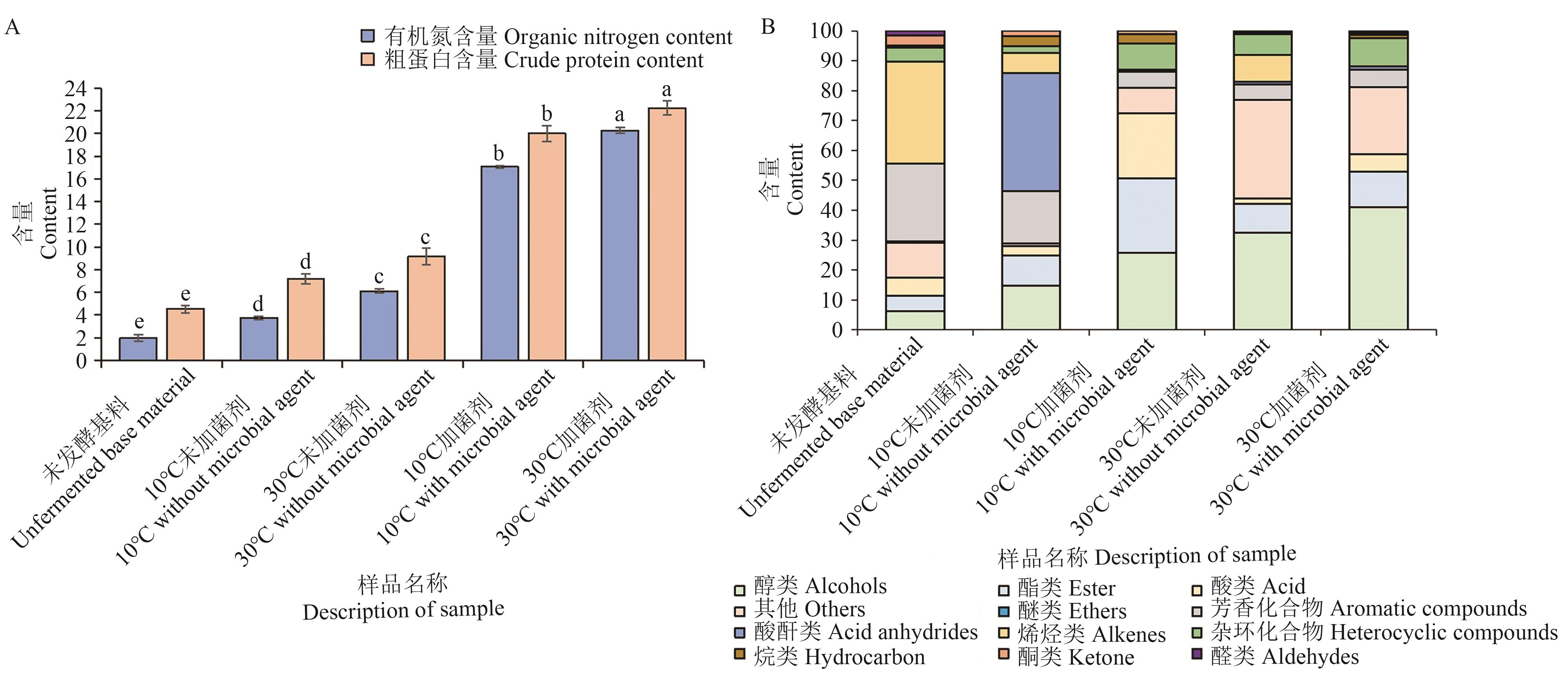
Fig. 4 Fermentation changes of corn straw yellow silage feedA: Variation of organic nitrogen and crude protein content in corn straw yellow silage feeds. B: Analysis of volatile matter content in corn straw yellow silage feeds
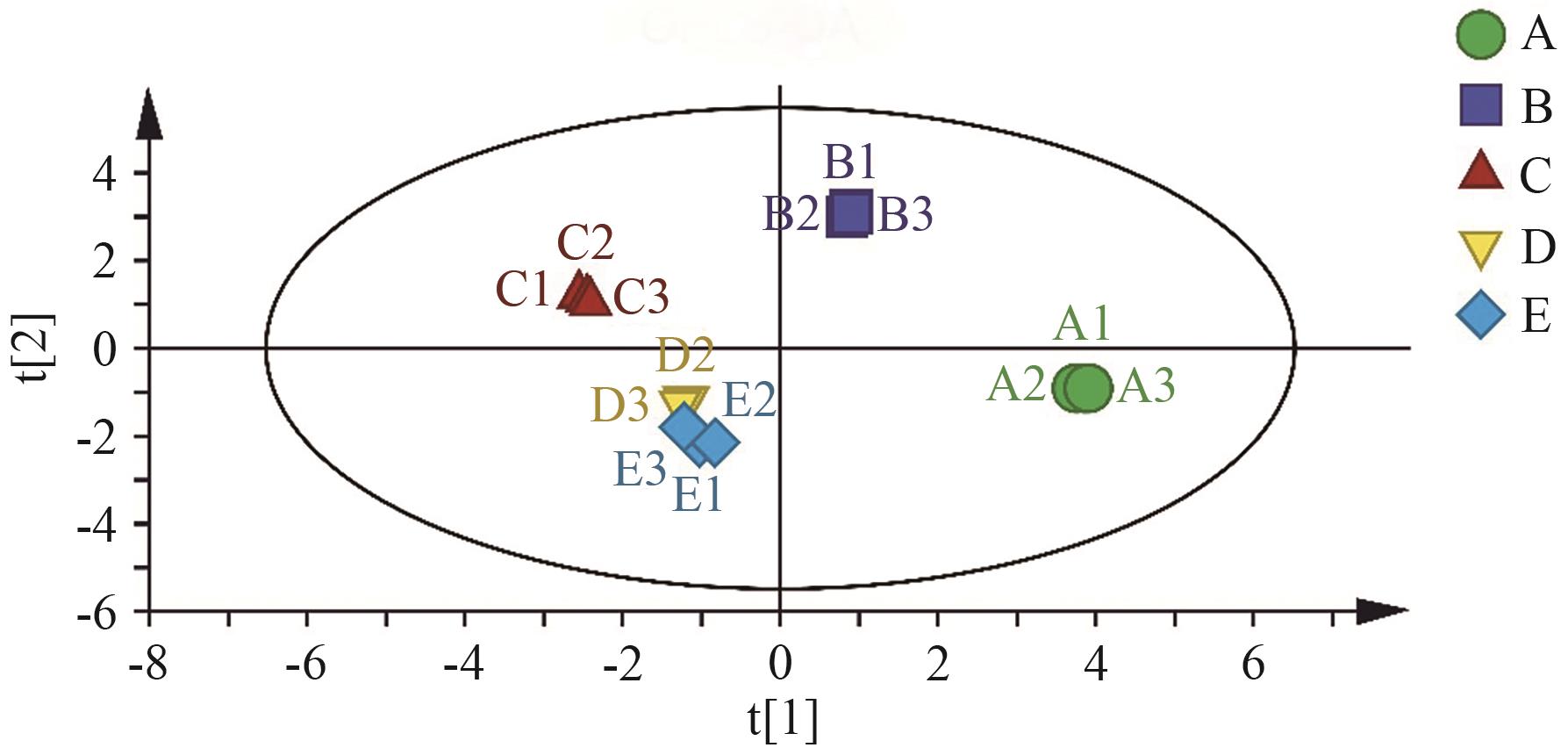
Fig. 5 OPLS-DA of five kinds of corn straw yellow silage feedsA: Unfermented base material. B: 10℃ without microbial agent. C: 10℃ with microbial agent. D: 30℃ without microbial agent. E: 30℃ with microbial agent.
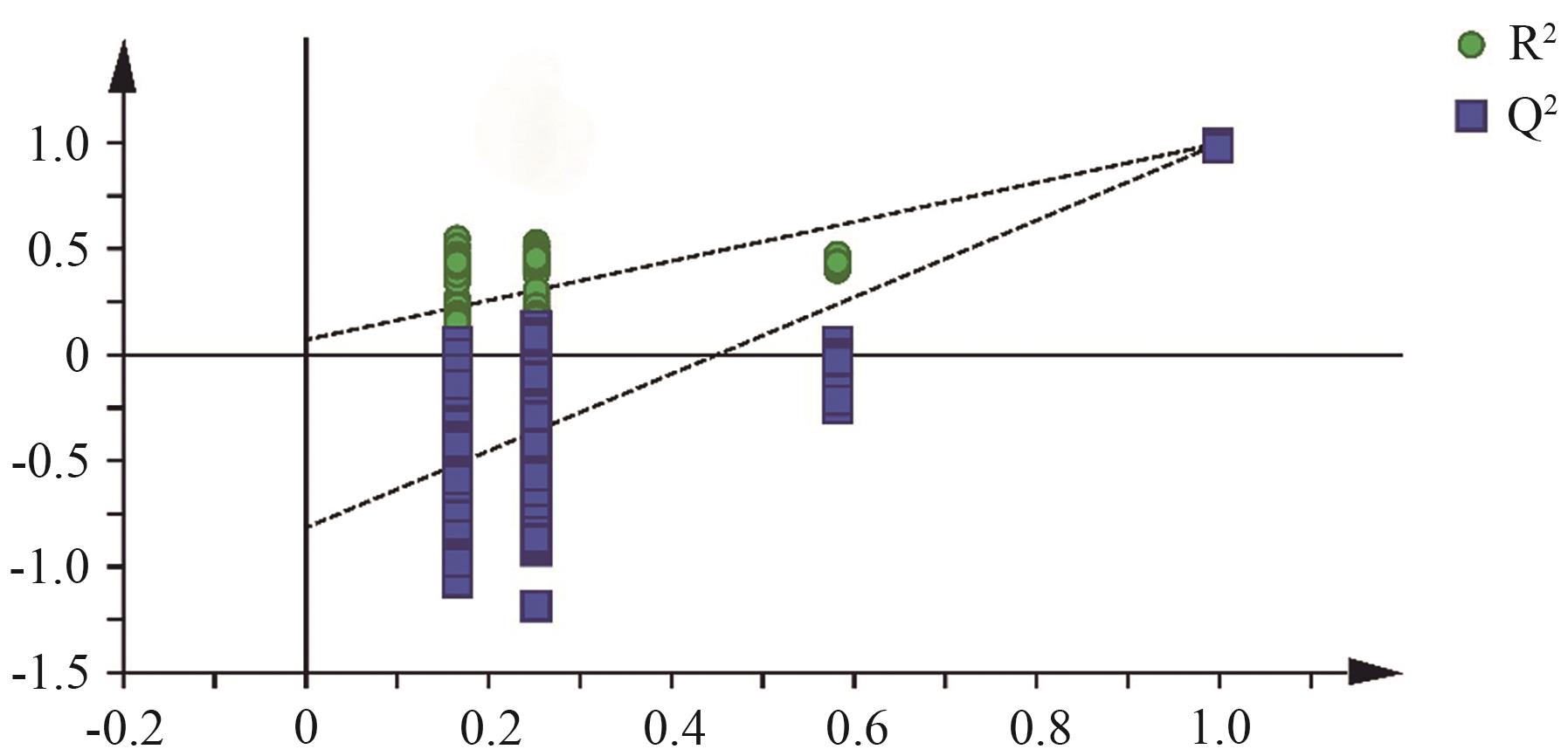
Fig. 6 Model cross-validation results
| 香气成分Odorous constituent | P | VIP |
|---|---|---|
| 醚类 | 0.000 3 | 1.323 16 |
| 酯类 | 0.040 8 | 1.140 23 |
| 醇类 | 0.030 1 | 1.135 96 |
| 酸酐类 | 0.000 2 | 1.135 20 |
| 其他 | 0.328 5 | 0.991 53 |
| 烯烃类 | 0.000 0 | 0.986 77 |
| 酸类 | 0.091 1 | 0.952 78 |
| 芳香化合物 | 0.000 0 | 0.948 47 |
| 杂环化合物 | 0.000 3 | 0.894 22 |
| 烷类 | 0.048 1 | 0.856 07 |
| 醛类 | 0.154 0 | 0.801 85 |
| 酮类 | 0.117 7 | 0.471 21 |
Table 9 P value and VIP value of 12 kinds of volatile components
| 香气成分Odorous constituent | P | VIP |
|---|---|---|
| 醚类 | 0.000 3 | 1.323 16 |
| 酯类 | 0.040 8 | 1.140 23 |
| 醇类 | 0.030 1 | 1.135 96 |
| 酸酐类 | 0.000 2 | 1.135 20 |
| 其他 | 0.328 5 | 0.991 53 |
| 烯烃类 | 0.000 0 | 0.986 77 |
| 酸类 | 0.091 1 | 0.952 78 |
| 芳香化合物 | 0.000 0 | 0.948 47 |
| 杂环化合物 | 0.000 3 | 0.894 22 |
| 烷类 | 0.048 1 | 0.856 07 |
| 醛类 | 0.154 0 | 0.801 85 |
| 酮类 | 0.117 7 | 0.471 21 |
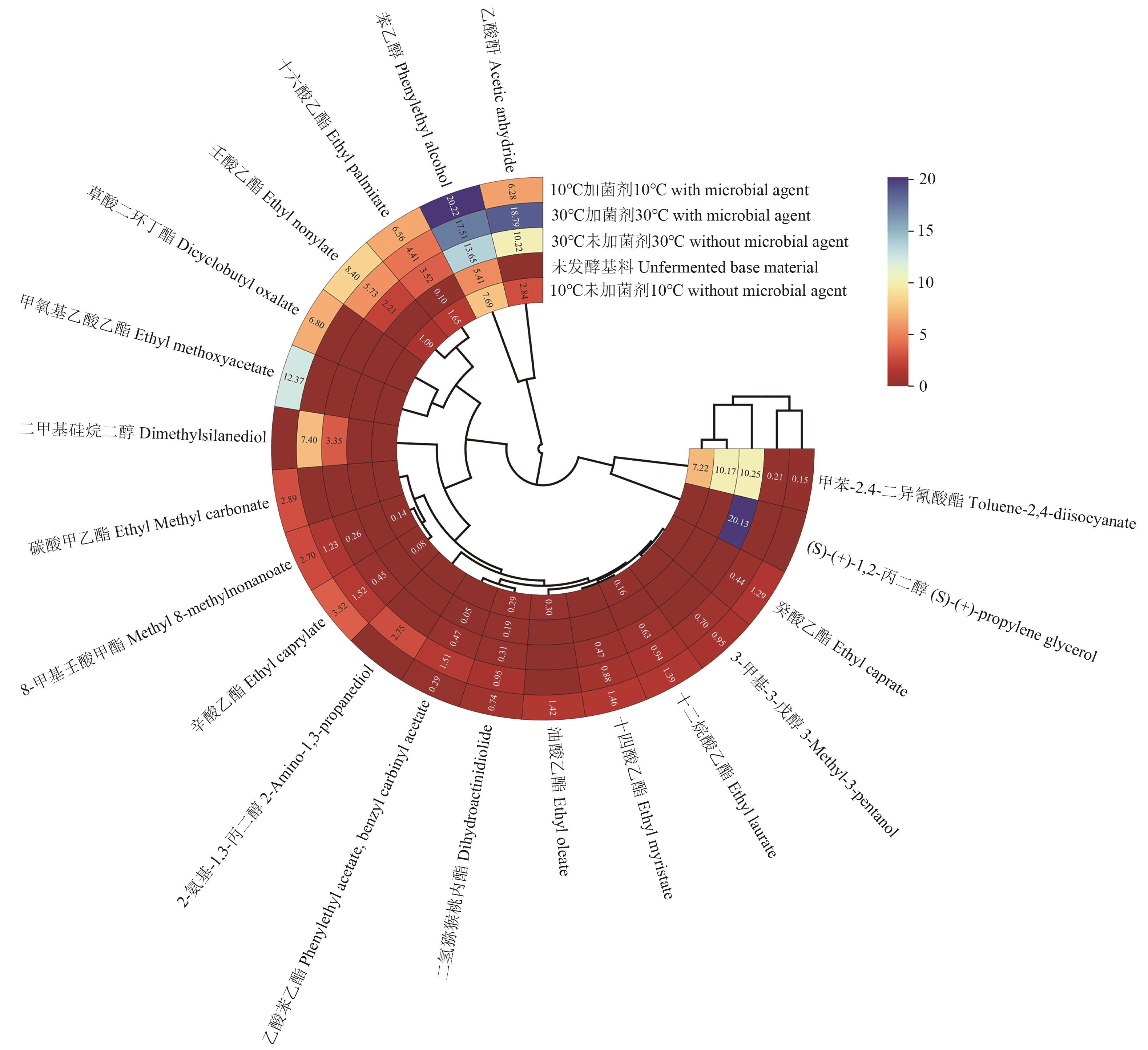
Fig. 7 Cluster heat map of different aroma components in different corn straw yellow silage feeds
| 1 | Fu YL, Zhang J, Guan TZ. High-value utilization of corn straw: from waste to wealth [J]. Sustainability, 2023, 15(19): 14618. |
| 2 | Li H, Dai MW, Dai SL, et al. Current status and environment impact of direct straw return in China's cropland-A review [J]. Ecotoxicology and Environmental Safety, 2018, 159: 293-300. |
| 3 | Ma YQ, Shen YQ, Liu Y. State of the art of straw treatment technology: challenges and solutions forward [J]. Bioresource Technology, 2020, 313: 123656. |
| 4 | 杨傅歆怡, 刘晓倩, 任鑫茹, 等. 酿酒酵母在秸秆发酵饲料中的研究和应用进展 [J]. 饲料研究, 2023, 46(15): 128-131. |
| Yang F, Liu XQ, Ren XR, et al. Research and application progress of Saccharomyces cerevisiae in straw fermented feed [J]. Feed Research, 2023, 46(15): 128-131. | |
| 5 | Watzlawick H, Altenbuchner J. Multiple integration of the gene ganA into the Bacillus subtilis chromosome for enhanced β- galactosidase production using the CRISPR/Cas9 system [J]. AMB Express, 2019, 9(1): 158. |
| 6 | Li M, Zi XJ, Zhou HL, et al. Silage fermentation and ruminal degradation of cassava foliage prepared with microbial additive [J]. AMB Express, 2019, 9(1): 180. |
| 7 | 田亚东. 秸秆饲料发酵菌剂生产工艺的优化研究 [D]. 天津: 天津科技大学, 2020. |
| Tian YD. Study on optimization of production technology of straw feed fermentation agent [D]. Tianjin: Tianjin University of Science & Technology, 2020. | |
| 8 | Bernardes TF, Daniel JLP, Adesogan AT, et al. Silage review: Unique challenges of silages made in hot and cold regions [J]. Journal of Dairy Science, 2018, 101(5): 4001-4019. |
| 9 | Bai J, Ding ZT, Su RN, et al. Storage temperature is more effective than lactic acid bacteria inoculations in manipulating fermentation and bacterial community diversity, co-occurrence and functionality of the whole-plant corn silage [J]. Microbiology Spectrum, 2022, 10(2): e0010122. |
| 10 | Xu DM, Ke WC, Zhang P, et al. Characteristics of Pediococcus pentosaceus Q6 isolated from Elymus nutans growing on the Tibetan Plateau and its application for silage preparation at low temperature [J]. Journal of Applied Microbiology, 2019, 126(1): 40-48. |
| 11 | 韩雅慧. 不同乳酸菌对低温下黄贮玉米秸秆发酵品质及饲料特性的影响 [D]. 大庆: 黑龙江八一农垦大学, 2016. |
| Han YH. Effects of different lactic acid bacteria on fermentation quality and feed characteristics of yellow-stored corn stalks at low temperature [D]. Daqing: Heilongjiang Bayi Agricultural University, 2016. | |
| 12 | Du Q, Ye DQ, Zang XM, et al. Effect of low temperature on the shaping of yeast-derived metabolite compositions during wine fermentation [J]. Food Research International, 2022, 162(Pt A): 112016. |
| 13 | Zhao YZ, Liu SP, Han X, et al. Combined effects of fermentation temperature and Saccharomyces cerevisiae strains on free amino acids, flavor substances, and undesirable secondary metabolites in Huangjiu fermentation [J]. Food Microbiology, 2022, 108: 104091. |
| 14 | 张淼. 高寒地区低温青贮优良乳酸菌的筛选及低温青贮体系的优化 [D]. 郑州: 郑州大学, 2018. |
| Zhang M. Screening of excellent lactic acid bacteria for low-temperature silage in cold region and optimization of low-temperature silage system [D]. Zhengzhou: Zhengzhou University, 2018. | |
| 15 | 杨永婧, 任静怡, 李政达, 等. 基于定量描述性分析法和GC-MS对低温发酵面包特征香味物质的分析[J]. 食品与发酵工业, 2024:1-9. |
| Yang YJ, Ren JY, Li ZD, et al. Analysis of characteristic aroma substances in low temperature fermentedbread by quantitative descriptive analysis and gas chromatography-mass spectrometry [J]. Food and Fermentation Industries, 2024: 1-9 | |
| 16 | 郭萌萌. 复合益生菌发酵全株玉米、玉米秸秆及豆粕的效果研究 [D]. 杨凌: 西北农林科技大学, 2019. |
| Guo MM. Effect of compound probiotics on fermentation of whole corn, corn stalk and soybean meal [D]. Yangling: Northwest A & F University, 2019. | |
| 17 | 吴逸飞, 孙宏, 李园成, 等. 微生物固态发酵对饲料营养特性的影响 [J]. 浙江农业学报, 2016, 28(12): 2014-2020. |
| Wu YF, Sun H, Li YC, et al. Effects of microbial solid-state fermentation on nutritional value of feeds [J]. Acta Agriculturae Zhejiangensis, 2016, 28(12): 2014-2020. | |
| 18 | 姚志芳, 冯宇哲, 王磊, 等. 酵母菌和乳酸菌在生物发酵饲料中的应用研究进展 [J]. 饲料研究, 2020, 43(10): 154-158. |
| Yao ZF, Feng YZ, Wang L, et al. Application and research progress of yeast and lactic acid bacteria on bio-fermented feed [J]. Feed Research, 2020, 43(10): 154-158. | |
| 19 | 陈诗宇, 茶光辉, 李吉琴, 等. 固态发酵饲料工艺优化及抗营养因子降解效果研究 [J]. 动物营养学报, 2023, 35(10): 6787-6800. |
| Chen SY, Cha GH, Li JQ, et al. Study on optimization of solid-state fermentation feed process and degradation effects of anti-nutritional factor [J]. Chinese Journal of Animal Nutrition, 2023, 35(10): 6787-6800. | |
| 20 | 申瑞瑞. 微生物发酵剂对马铃薯渣与玉米秸秆和大豆秸秆混贮效果的研究 [D]. 保定: 河北农业大学, 2018. |
| Shen RR. Study on the effect of microbial starter on mixed storage of potato residue, corn straw and soybean straw [D]. Baoding: Hebei Agricultural University, 2018. | |
| 21 | 郭如意. 综合利用玉米深加工副产物固态发酵饲料的研究 [D]. 大连: 大连理工大学, 2021. |
| Guo RY. Study on comprehensive utilization of solid-state fermented feed by-products of corn deep processing [D]. Dalian: Dalian University of Technology, 2021. | |
| 22 | 李雨桐. 马铃薯薯渣固态发酵蛋白饲料及微生物菌剂的开发 [D]. 天津: 天津科技大学, 2022. |
| Li YT. Development of solid-state fermented protein feed and microbial inoculum from potato residue [D]. Tianjin: Tianjin University of Science & Technology, 2022. | |
| 23 | 李梦瑶, 朱庆淞, 周杨, 等. 青贮饲料发酵工艺及应用研究现状 [J]. 现代畜牧兽医, 2024(6): 86-91. |
| Li MY, Zhu QS, Zhou Y, et al. Research progress on the fermentation technology and application of silage [J]. Modern Journal of Animal Husbandry and Veterinary Medicine, 2024(6): 86-91. | |
| 24 | Ni KK, Zhao JY, Zhu BG, et al. Assessing the fermentation quality and microbial community of the mixed silage of forage soybean with crop corn or Sorghum [J]. Bioresour Technol, 2018, 265: 563-567. |
| 25 | Asghar A, Sairash S, Hussain N, et al. Current challenges of biomass refinery and prospects of emerging technologies for sustainable bioproducts and bioeconomy [J]. Biofuels, Bioproducts and Biorefining, 2022, 16(6): 1478-1494. |
| 26 | 温学飞, 杨国峰, 李浩霞. 霉菌毒素在发酵全混合日粮中的动态变化研究 [J]. 饲料研究, 2023, 46(22): 141-144. |
| Wen XF, Yang GF, Li HX. Study on dynamic change of mycotoxins in fermented total mixed diet [J]. Feed Research, 2023, 46(22): 141-144. | |
| 27 | Fang QA, Du MR, Chen JW, et al. Degradation and detoxification of aflatoxin B1 by tea-derived Aspergillus niger RAF106 [J]. Toxins, 2020, 12(12): 777. |
| 28 | Gregori R, Meriggi P, Pietri A, et al. Dynamics of fungi and related mycotoxins during cereal storage in Silo bags [J]. Food Control, 2013, 30(1): 280-287. |
| 29 | Richard E, Heutte N, Sage L, et al. Toxigenic fungi and mycotoxins in mature corn silage [J]. Food and Chemical Toxicology, 2007, 45(12): 2420-2425. |
| 30 | González Flores M, Rodríguez ME, Origone AC, et al. Saccharomyces uvarum isolated from Patagonian ciders shows excellent fermentative performance for low temperature cidermaking [J]. Food Research International, 2019, 126: 108656. |
| 31 | Su RN, Ke WC, Bai J, et al. Comprehensive profiling of the metabolome in corn silage inoculated with or without Lactiplantibacillus plantarum using different untargeted metabolomics analyses [J]. Archives of Animal Nutrition, 2023, 77(5): 323-341. |
| 32 | Borreani G, Tabacco E, Schmidt RJ, et al. Silage review: Factors affecting dry matter and quality losses in silages [J]. Journal of Dairy Science, 2018, 101(5): 3952-3979. |
| [1] | WANG Xin-guang, TIAN Lei, WANG En-ze, ZHONG Cheng, TIAN Chun-jie. Construction of Microbial Consortium for Efficient Degradation of Corn Straw and Evaluation of Its Degradation Effect [J]. Biotechnology Bulletin, 2022, 38(4): 217-229. |
| Viewed | ||||||
|
Full text |
|
|||||
|
Abstract |
|
|||||
