







Biotechnology Bulletin ›› 2025, Vol. 41 ›› Issue (12): 168-176.doi: 10.13560/j.cnki.biotech.bull.1985.2025-0459
Previous Articles Next Articles
XUE Xiao-bin1( ), NING Lin2, ZHOU Yu2, LIU Hong-jun2, GAO Zhao-zu2, WANG Zhen-ping1,2(), LI Dong-mei2()
Received:2025-05-05
Online:2025-12-26
Published:2026-01-06
Contact:
WANG Zhen-ping, LI Dong-mei
E-mail:18135995009@163.com;wangzhp@nxu.edu.cn;ldm2022068@nxu.edu.cn
XUE Xiao-bin, NING Lin, ZHOU Yu, LIU Hong-jun, GAO Zhao-zu, WANG Zhen-ping, LI Dong-mei. Identification of VvOMTs Gene Families and Functional Analysis of Promoters in Wine Grapes[J]. Biotechnology Bulletin, 2025, 41(12): 168-176.
| 基因名称 Gene name | 上游引物序列 Forward primer (5′-3′) | 下游引物序列 Reverse primer (5′-3′) |
|---|---|---|
| pC2301-ProVvOMT2 | gctatgaccatgattacgaattcGACACAAATTAAGATGCCGG | atggggtcgactctagaggatcccatTTTCTGCTTCTCTCTTATGGAG |
| pC2301-ProVvOMT3 | gctatgaccatgattacgaattcGGCCCTATACAAATTGCCCAG | atggggtcgactctagaggatcccatCAATGGCACACTTCACTACAG |
| RT-GUS | GCTCTACACCACGCCGAACA | CCACCACCTGCCAGTCAACA |
| RT-Ntactin | TTGCCTGATGGACAAGTTATTACC | TAGGAGCCAAAGCCGTGATT |
Table 1 Amplification and RT-qPCR primer sequences for grape (Vitis vinifera L.) VvOMTs family genes
| 基因名称 Gene name | 上游引物序列 Forward primer (5′-3′) | 下游引物序列 Reverse primer (5′-3′) |
|---|---|---|
| pC2301-ProVvOMT2 | gctatgaccatgattacgaattcGACACAAATTAAGATGCCGG | atggggtcgactctagaggatcccatTTTCTGCTTCTCTCTTATGGAG |
| pC2301-ProVvOMT3 | gctatgaccatgattacgaattcGGCCCTATACAAATTGCCCAG | atggggtcgactctagaggatcccatCAATGGCACACTTCACTACAG |
| RT-GUS | GCTCTACACCACGCCGAACA | CCACCACCTGCCAGTCAACA |
| RT-Ntactin | TTGCCTGATGGACAAGTTATTACC | TAGGAGCCAAAGCCGTGATT |
基因编号 Gene No. | 基因名称 Gene name | 编码序列 CDS sequence (bp) | 氨基酸数量 Number of amino acids (aa) | 分子质量 Molecular weight (kD) | 理论等电点 pI | 亚细胞定位Subcellular localization |
|---|---|---|---|---|---|---|
| KC533532.1 | VvOMT1 | 1 110 | 369 | 40 835.11 | 5.21 | 细胞质 |
| KC533540.1 | VvOMT2 | 1 104 | 367 | 40 312.59 | 5.53 | 细胞质 |
| KC243502.1 | VvOMT3 | 1 062 | 353 | 38 595.60 | 5.70 | 细胞质 |
| KC517476.1 | VvOMT4 | 1 080 | 359 | 39 263.11 | 5.09 | 细胞质 |
Table 2 Analysis of physical and chemical properties of grape VvOMTs family member proteins
基因编号 Gene No. | 基因名称 Gene name | 编码序列 CDS sequence (bp) | 氨基酸数量 Number of amino acids (aa) | 分子质量 Molecular weight (kD) | 理论等电点 pI | 亚细胞定位Subcellular localization |
|---|---|---|---|---|---|---|
| KC533532.1 | VvOMT1 | 1 110 | 369 | 40 835.11 | 5.21 | 细胞质 |
| KC533540.1 | VvOMT2 | 1 104 | 367 | 40 312.59 | 5.53 | 细胞质 |
| KC243502.1 | VvOMT3 | 1 062 | 353 | 38 595.60 | 5.70 | 细胞质 |
| KC517476.1 | VvOMT4 | 1 080 | 359 | 39 263.11 | 5.09 | 细胞质 |
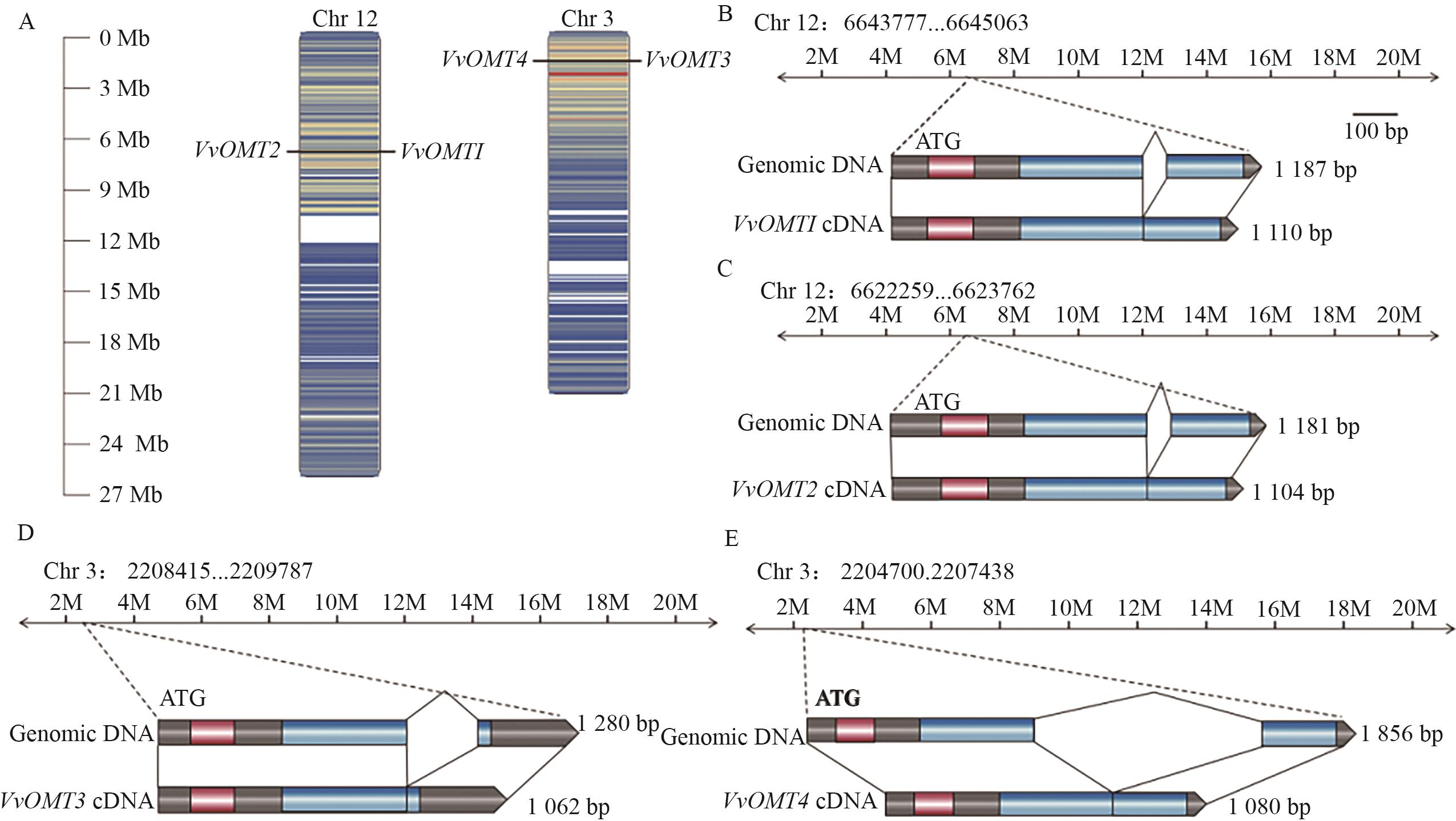
Fig. 1 Chromosome localization (A) and gene structure analysis (B-E) of VvOMTs family members
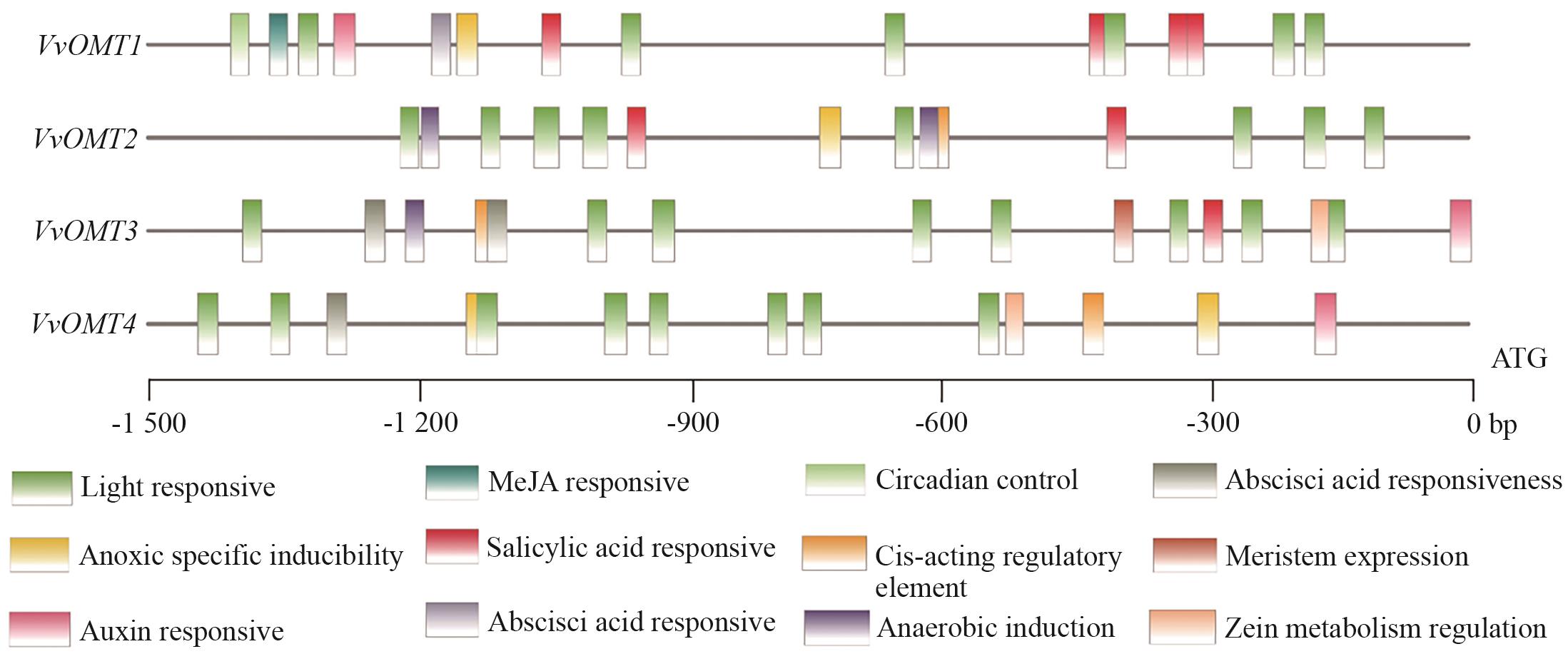
Fig. 2 Analysis of cis-acting elements in the upstream promoters' region of grape VvOMTs family members
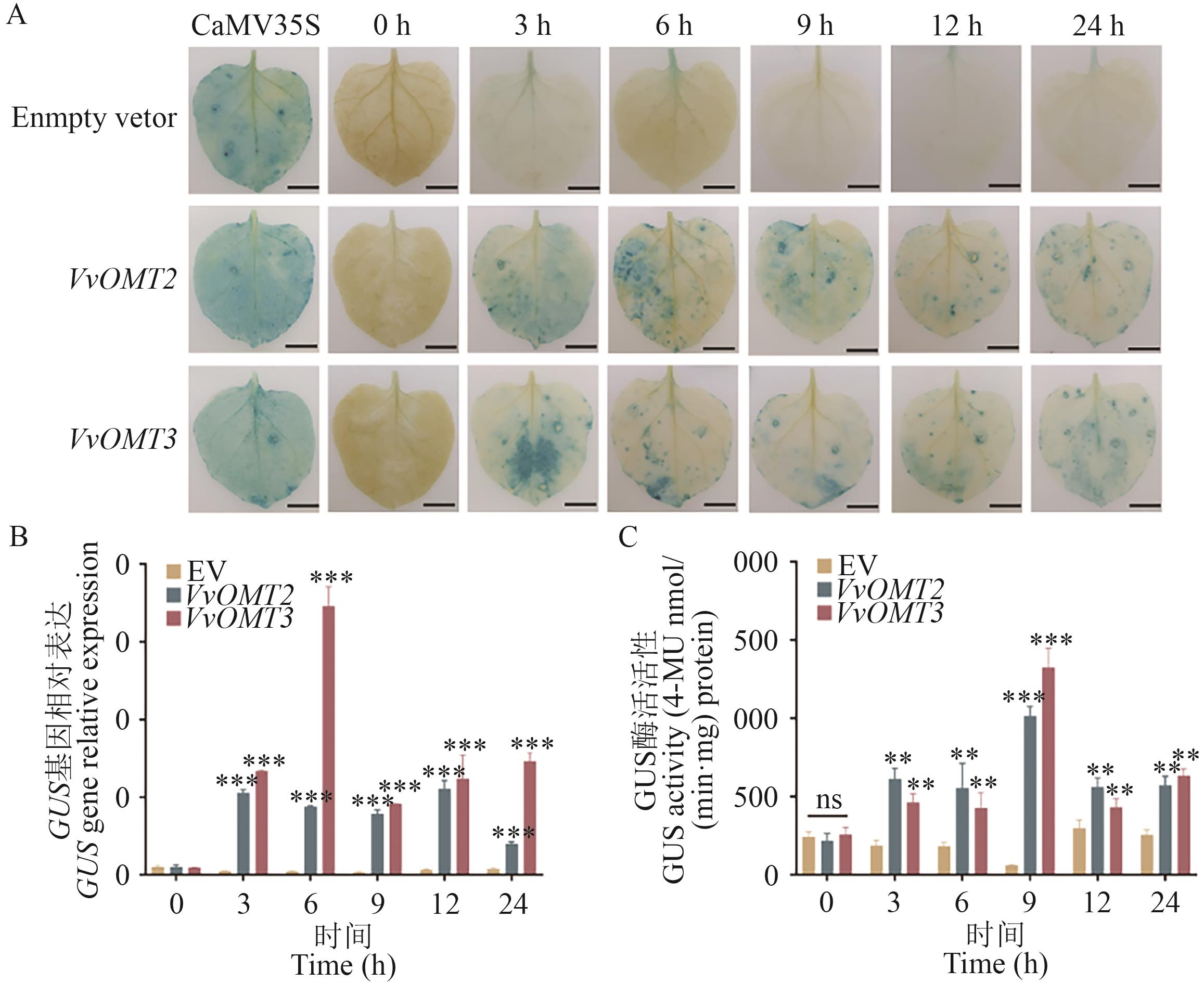
Fig. 3 ‘Marselan’ grape VvOMTs gene promoters' response to ABAA: GUS staining of tobacco leaves after ABA treatment with empty vector, VvOMT2/3 gene promoters, bar=1 cm. B: Relative expression of GUS gene. C: GUS protease activity. ** P≤0.01, *** P≤0.001. The same below
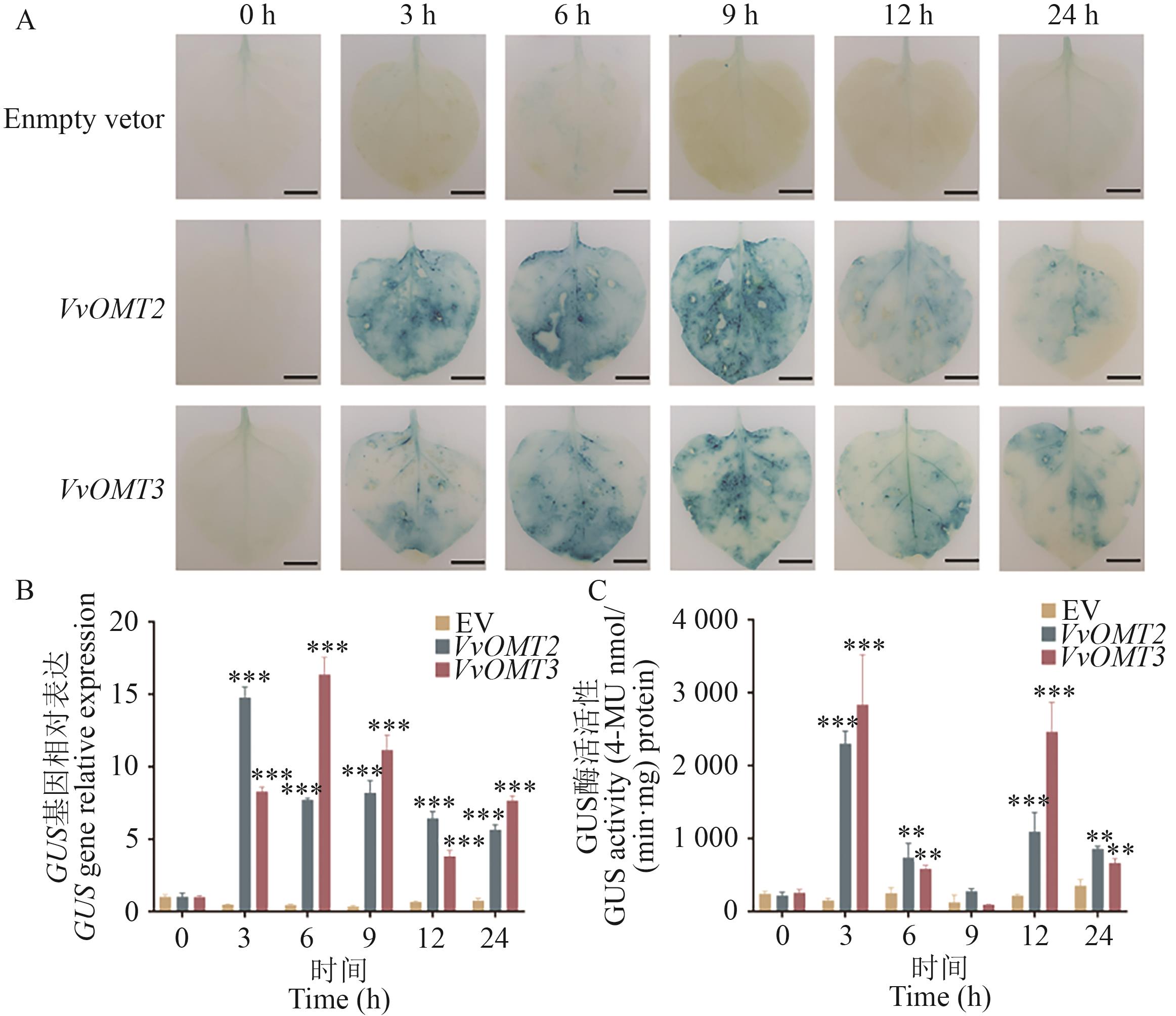
Fig. 4 ‘Marselan’ grape VvOMTs gene promoters' responses to mannitolA: GUS staining of tobacco leaves after mannitol treatment with empty vector, VvOMT2/3 gene promoters, bar=1 cm. B: Relative expression level of GUS gene. C: GUS protease activity
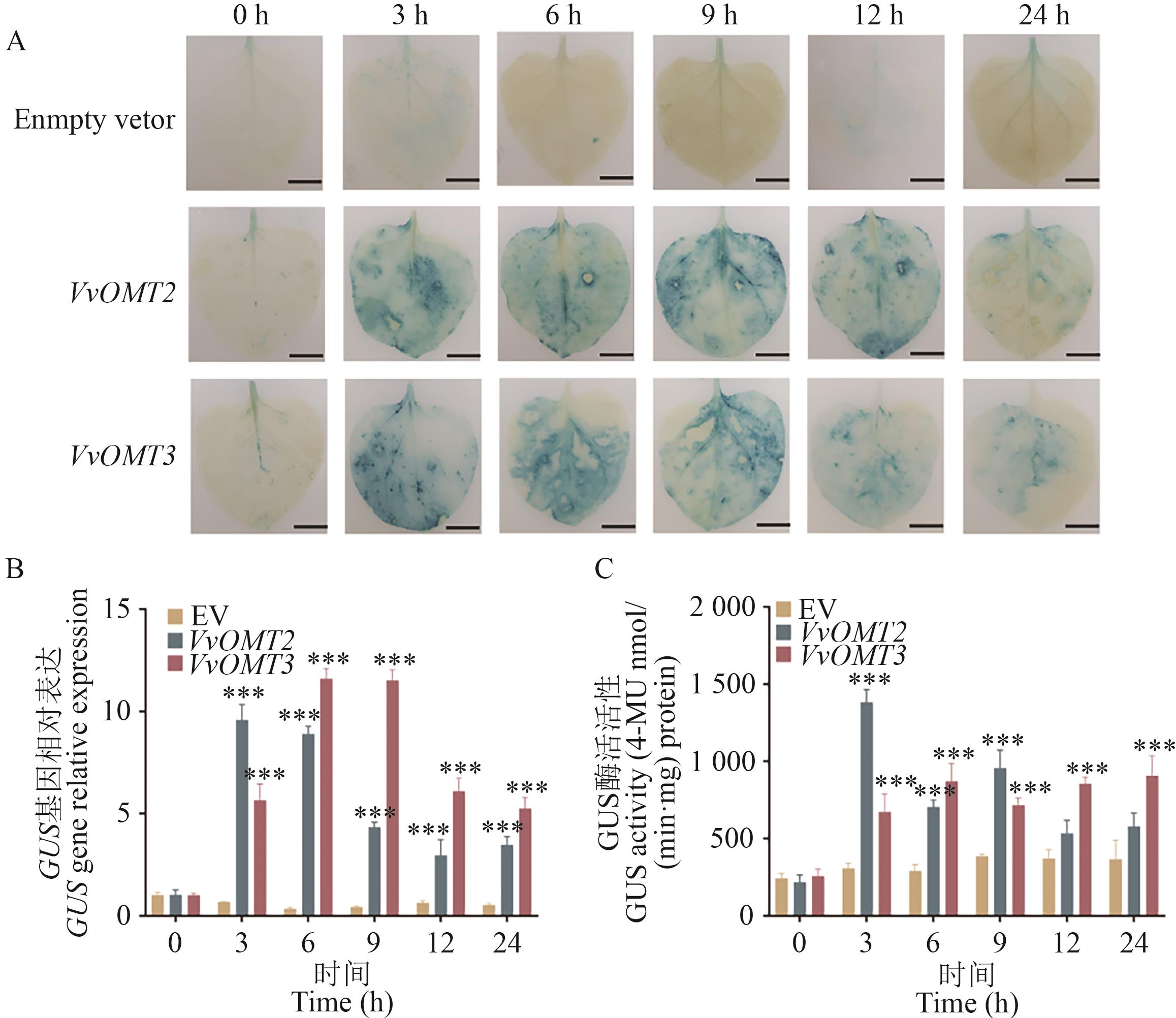
Fig. 5 ‘Marselan’ grape VvOMTs gene promoters' responses to MeJAA: GUS staining of tobacco leaves after MeJA treatment with empty vector, VvOMT2/3 gene promoters, bar=1 cm. B: Relative expression level of GUS gene. C: GUS protease activity
| [1] | Seifert RM, Buttery RG, Guadagni DG, et al. Synthesis of some 2-methoxy-3-alkylpyrazines with strong bell pepper-like odors [J]. J Agric Food Chem, 1970, 18(2): 246-249. |
| [2] | 张艳霞, 吕丹桂, 耿康奇, 等. 水分胁迫对赤霞珠葡萄果实品质和甲氧基吡嗪含量的影响 [J]. 果树学报, 2022, 39(6): 1017-1028. |
| Zhang YX, Lü DG, Geng KQ, et al. Effects of water stress on grape quality and content of methoxypyrazines in Cabernet Sauvignon [J]. J Fruit Sci, 2022, 39(6): 1017-1028. | |
| [3] | Hashizume K, Tozawa K, Endo M, et al. S-Adenosyl-L-methionine-dependent O-methylation of 2-hydroxy-3-alkylpyrazine in wine grapes: a putative final step of methoxypyrazine biosynthesis [J]. Biosci Biotechnol Biochem, 2001, 65(4): 795-801. |
| [4] | Sidhu D, Lund J, Kotseridis Y, et al. Methoxypyrazine analysis and influence of viticultural and enological procedures on their levels in grapes, musts, and wines [J]. Crit Rev Food Sci Nutr, 2015, 55(4): 485-502. |
| [5] | Sala C, Mestres M, Martı́ MP, et al. Headspace solid-phase microextraction analysis of 3-alkyl-2-methoxypyrazines in wines [J]. J Chromatogr A, 2002, 953(1/2): 1-6. |
| [6] | Roujou de Boubée D, Van Leeuwen C, Dubourdieu D. Organoleptic impact of 2-methoxy-3-isobutylpyrazine on red Bordeaux and Loire wines. Effect of environmental conditions on concentrations in grapes during ripening [J]. J Agric Food Chem, 2000, 48(10): 4830-4834. |
| [7] | Zhang YX, Li XY, Guo XF, et al. Comparison of methoxypyrazine content and expression pattern of O-methyltransferase genes in grape berries and wines from six cultivars (Vitis vinifera L.) in the eastern foothill of the Helan Mountain [J]. Plants, 2022, 11(12): 1613. |
| [8] | 来泽森. 拟南芥转录因子bHLH010和bHLH089调控花药和花粉发育的机制研究 [D]. 海口: 海南大学, 2022. |
| Lai ZS. Mechanism of transcription factor bHLH010 and bHLH089 regulating anther and pollen development in Arabidopsis thaliana [D]. Haikou: Hainan University, 2022. | |
| [9] | 戴梦怡, 郑钢, 程少禹, 等. 紫玉兰MlOMT1基因的克隆和表达分析 [J]. 分子植物育种, 2022, 20(16): 5267-5273. |
| Dai MY, Zheng G, Cheng SY, et al. Cloning and expression analysis of MlOMT1 gene in Magnolia liliflora [J]. Mol Plant Breed, 2022, 20(16): 5267-5273. | |
| [10] | Peng ZX, Song LZ, Chen MH, et al. Neofunctionalization of an OMT cluster dominates polymethoxyflavone biosynthesis associated with the domestication of citrus [J]. Proc Natl Acad Sci USA, 2024, 121(14): e2321615121. |
| [11] | 张帆. 连翘苷生物合成途径OMT候选基因功能研究 [D]. 泰安: 山东农业大学, 2024. |
| Zhang F. Functional study of OMT candidate genes in the biosynthetic pathway of forsythoside [D]. Tai’an: Shandong Agricultural University, 2024. | |
| [12] | Chang JJ, Guo YL, Yan JY, et al. The role of watermelon caffeic acid O-methyltransferase (ClCOMT1) in melatonin biosynthesis and abiotic stress tolerance [J]. Hortic Res, 2021, 8(1): 210. |
| [13] | 闫丽. 外源葡萄糖对牡丹品种‘洛阳红’与‘太阳’切花花青素苷合成的影响研究 [D]. 北京: 北京林业大学, 2021. |
| Yan L. Effects of exogenous glucose on anthocyanin glycosides synthesis of peony cultivars ‘Luoyanghong’ and ‘Taiyang’ cut flowers [D]. Beijing: Beijing Forestry University, 2021. | |
| [14] | Li DM, Zhang YX, Geng KQ, et al. Impact of vine water status on 3-alkyl-2-methoxypyrazine content and function verification of VvOMT2/VvOMT3 genes associated with 3-alkyl-2-methoxypyrazine accumulation in marselan grape berries (Vitis vinifera L.) [J]. J Agric Food Chem, 2023, 71(49): 19288-19301. |
| [15] | Guo SH, Yang BH, Wang XW, et al. ABA signaling plays a key role in regulated deficit irrigation-driven anthocyanins accumulation in ‘Cabernet Sauvignon’ grape berries [J]. Environ Exp Bot, 2021, 181: 104290. |
| [16] | Jefferson RA. Assaying chimeric genes in plants: the GUS gene fusion system [J]. Plant Mol Biol Report, 1987, 5(4): 387-405. |
| [17] | 徐伟荣. 中国华东葡萄抗白粉病芪合成酶基因及启动子克隆与功能分析 [D]. 杨凌: 西北农林科技大学, 2010. |
| Xu WR. Cloning and functional analysis of stilbene synthase and its promoter from powdery mildew-resistant Chinese Vitis pseudoreticulata [D]. Yangling: Northwest A & F University, 2010. | |
| [18] | Inoue K, Sewalt VJ, Murray GB, et al. Developmental expression and substrate specificities of alfalfa caffeic acid 3-O-methyltransferase and caffeoyl coenzyme A 3-O-methyltransferase in relation to lignification [J]. Plant Physiol, 1998, 117(3): 761-770. |
| [19] | Kan YB, Xie SY, Sun YW, et al. Substrate and functional characterization of the lysine acetyltransferase MsKat and deacetylase MsCobB in Mycobacterium smegmatis [J]. J Proteom, 2024, 300: 105177. |
| [20] | Li SL, Cai YT, Ma HM, et al. A comprehensive analysis of the O-methyltransferase gene family in the chili pepper (Capsicum annuum) identifies COMT36 involved in capsaicinoids biosynthesis [J]. Int J Biol Macromol, 2025, 312: 144247. |
| [21] | Ke LP, Yu DL, Zheng HL, et al. Function deficiency of GhOMT1 causes anthocyanidins over-accumulation and diversifies fibre colours in cotton (Gossypium hirsutum) [J]. Plant Biotechnol J, 2022, 20(8): 1546-1560. |
| [22] | Torres-Díaz LL, Pérez-Álvarez EP, Parra-Torrejón B, et al. Effects of foliar application of methyl jasmonate and/or urea, conventional or via nanoparticles, on grape volatile composition [J]. J Sci Food Agric, 2024, 104(13): 8248-8262. |
| [23] | 陈祖民. 水分胁迫对‘美乐’葡萄不同组织内源激素和多胺的影响 [D]. 银川: 宁夏大学, 2021. |
| Chen ZM. Effects of water stress on endogenous hormones and polyamines in different tissues of ‘Merlot’ grape [D]. Yinchuan: Ningxia University, 2021. | |
| [24] | Ma JB, Wei LR, Huang KY, et al. Biosynthesis of sakuranetin regulated by OsMPK6-OsWRKY67-OsNOMT cascade enhances resistance to false smut disease [J]. New Phytol, 2025, 245(3): 1216-1231. |
| [25] | 王晓宇. 小麦非生物胁迫相关LEA蛋白WZY1-2与WRAB18的功能研究 [D]. 杨凌: 西北农林科技大学, 2017. |
| Wang XY. Functional research of abiotic stress-related LEA proteins WZY1-2 and WRAB18 in wheat (Triticum aestivum) [D]. Yangling: Northwest A & F University, 2017. | |
| [26] | 李攀. 拟南芥和玉米糖基转移酶基因参与非生物胁迫耐性的功能研究 [D]. 济南: 山东大学, 2017. |
| Li P. Functional analysis of glycosyltransferase genes of Arabidopsis thaliana and Zea mays in tolerance to abiotic stresses [D]. Jinan: Shandong University, 2017. |
| [1] | DONG Xiang-xiang, MIAO Bai-ling, XU He-juan, CHEN Juan-juan, LI Liang-jie, GONG Shou-fu, ZHU Qing-song. Bioinformatics Analysis and Flowering Regulation Function of FveBBX20 Gene in Woodland Strawberry [J]. Biotechnology Bulletin, 2025, 41(9): 115-123. |
| [2] | LI Shan, MA Deng-hui, MA Hong-yi, YAO Wen-kong, YIN Xiao. Identification and Expression Analysis of SKP1 Gene Family in Grapevine (Vitis vinifera L.) [J]. Biotechnology Bulletin, 2025, 41(9): 147-158. |
| [3] | GONG Hui-ling, XING Yu-jie, MA Jun-xian, CAI Xia, FENG Zai-ping. Identification of Laccase (LAC) Gene Family in Potato (Solanum tuberosum L.) and Its Expression Analysis under Salt Stresses [J]. Biotechnology Bulletin, 2025, 41(9): 82-93. |
| [4] | CHENG Ting-ting, LIU Jun, WANG Li-li, LIAN Cong-long, WEI Wen-jun, GUO Hui, WU Yao-lin, YANG Jing-fan, LAN Jin-xu, CHEN Sui-qing. Genome-wide Identification of the Chalcone Isomerase Gene Family in Eucommia ulmoides and Analysis of Their Expression Patterns [J]. Biotechnology Bulletin, 2025, 41(9): 242-255. |
| [5] | XU Xiao-ping, YANG Cheng-long, HE Xing, GUO Wen-jie, WU Jian, FANG Shao-zhong. Cloning of the LoAPS1 and Its Function Analysis during the Process of Dormancy Release in Lilium [J]. Biotechnology Bulletin, 2025, 41(9): 195-206. |
| [6] | CHENG Xue, FU Ying, CHAI Xiao-jiao, WANG Hong-yan, DENG Xin. Identification of LHC Gene Family in Setaria italica and Expression Analysis under Abiotic Stresses [J]. Biotechnology Bulletin, 2025, 41(8): 102-114. |
| [7] | LA Gui-xiao, ZHAO Yu-long, DAI Dan-dan, YU Yong-liang, GUO Hong-xia, SHI Gui-xia, JIA Hui, YANG Tie-gang. Identification of Plasma Membrane H+-ATPase Gene Family in Safflower and Expression Analysis in Response to Low Nitrogen and Low Phosphorus Stress [J]. Biotechnology Bulletin, 2025, 41(8): 220-233. |
| [8] | LI Kai-jie, WU Yao, LI Dan-dan. Cloning of Gene CtbHLH128 in Safflower and Response Function Regulating Drought Stress [J]. Biotechnology Bulletin, 2025, 41(8): 234-241. |
| [9] | LAI Shi-yu, LIANG Qiao-lan, WEI Lie-xin, NIU Er-bo, CHEN Ying-e, ZHOU Xin, YANG Si-zheng, WANG Bo. The Role of NbJAZ3 in the Infection of Nicotiana benthamiana by Alfalfa Mosaic Virus [J]. Biotechnology Bulletin, 2025, 41(8): 186-196. |
| [10] | ZHANG Ze, YANG Xiu-li, NING Dong-xian. Identification of 4CL Gene Family in Arachis hypogaea L. and Expression Analysis in Response to Drought and Salt Stress [J]. Biotechnology Bulletin, 2025, 41(7): 117-127. |
| [11] | LI Xin-ni, LI Jun-yi, MA Xue-hua, HE Wei, LI Jia-li, YU Jia, CAO Xiao-ning, QIAO Zhi-jun, LIU Si-chen. Identification of the PMEI Gene Family of Pectin Methylesterase Inhibitor in Foxtail Millet and Analysis of Its Response to Abiotic Stress [J]. Biotechnology Bulletin, 2025, 41(7): 150-163. |
| [12] | WANG Miao-miao, ZHAO Xiang-long, WANG Zhao-ming, LIU Zhi-peng, YAN Long-feng. Identification of TCP Gene Family in Medicago ruthenica and Their Expression Pattern Analysis under Drought Stress [J]. Biotechnology Bulletin, 2025, 41(6): 179-190. |
| [13] | ZONG Jian-wei, DENG Hai-fang, CAI Yuan-yuan, CHANG Ya-wen, ZHU Ya-qi, YANG Yu-hua. Coupling Effect of AM Fungi on the Root Morphology and Leaf Structure of Xanthoceras sorbifolium Bunge under Drought Stress [J]. Biotechnology Bulletin, 2025, 41(6): 167-178. |
| [14] | HE Wei, LI Jun-yi, LI Xin-ni, MA Xue-hua, XING Yuan, CAO Xiao-ning, QIAO Zhi-ju, LIU Si-chen. Genome-wide Identification of U-box E3 Ubiquitin Ligase Gene Family in Setaria italica and Response Analysis to Abiotic Stress [J]. Biotechnology Bulletin, 2025, 41(5): 104-118. |
| [15] | ZHAO Jing, GUO Qian, LI Rui-qi, LEI Ying-yang, YUE Ai-qin, ZHAO Jin-zhong, YIN Cong-cong, DU Wei-jun, NIU Jing-ping. Sequence Analysis and Induced Expression Analysis of GmGST Gene Cluster Genes in Soybean [J]. Biotechnology Bulletin, 2025, 41(5): 129-140. |
| Viewed | ||||||
|
Full text |
|
|||||
|
Abstract |
|
|||||
