







Biotechnology Bulletin ›› 2026, Vol. 42 ›› Issue (8): 90-96.doi: 10.13560/j.cnki.biotech.bull.1985.2025-1257
Previous Articles Next Articles
LU Chun-qiu, LIANG Li-cun, WANG Yuan, HUANG Huo-qing, LUO Hui-ying, YANG Hao-meng( )
)
Received:2025-11-19
Online:2026-08-26
Published:2026-08-17
Contact:
YANG Hao-meng
E-mail:yhmbjbj@126.com
LU Chun-qiu, LIANG Li-cun, WANG Yuan, HUANG Huo-qing, LUO Hui-ying, YANG Hao-meng. Donor DNA Recruitment Improving the Homology-directed Repair Efficiency in Aspergillus tubingensis[J]. Biotechnology Bulletin, 2026, 42(8): 90-96.
引物名称 Primer name | 序列 Sequence (5′-3′) |
|---|---|
| fwn-up-500-F | TCAACCAAGCTCCGTGTCCCTTACGC |
| fwn-up-R | GTTCTTGAGATCCCACTTGTAGGCTGGG |
| fwn-dw-F | TACTGGATTCCCTATACCAACAACTTCTGC |
| fwn-dw-500-R | CGCAATCAAATAATCGGACAGTGC |
| up-fwn-1k-F | CTCTACCGCAGTTGTTTCCAGTTTCG |
| HPH-F | AAGTGGGATCTCAAGAACTCGACAGAAGATGATATTGAAGGAGCAC |
| HPH-R | CCTCGCCCTTGCTCACCATGTATCTGGAAGAGGTAAACCCGAAACG |
| EGFP-F | GCATGCGGAGAGACGGACGG |
| EGFP-R | TGCATTGCAGATGAGCTGTATCTGG |
| BIO-F | GACTCATGTTGGTATTGTGAAATAGACGCAGATCGGG |
| BIO-R | CTCCGGGAGCTGCATGTGTCAGAGGTTTTCACC |
| BIO-fwn-2.6-F | GGTATTGTGAAATAGACGCAGATCGGGTCAACCAAGCTCCGTGTCCCTTACGC |
| BIO-fwn-2.6-R | GAGCTGCATGTGTCAGAGGTTTTCACCCGCAATCAAATAATCGGACAGTGC |
| EGFP-JC-F | CGGGATCACTCTCGGCATGGAC |
| 500-down-JC-R | GTGCTGTTCACTGTCAAGAATAACCTCGCG |
| HYG-JC-R | GGCGGGAGATGCAATAGGTCAG |
| 2k-up-JC-F | TGAAGCCGGCCTTCATTATCGG |
Table 1 Primer names and sequence information
引物名称 Primer name | 序列 Sequence (5′-3′) |
|---|---|
| fwn-up-500-F | TCAACCAAGCTCCGTGTCCCTTACGC |
| fwn-up-R | GTTCTTGAGATCCCACTTGTAGGCTGGG |
| fwn-dw-F | TACTGGATTCCCTATACCAACAACTTCTGC |
| fwn-dw-500-R | CGCAATCAAATAATCGGACAGTGC |
| up-fwn-1k-F | CTCTACCGCAGTTGTTTCCAGTTTCG |
| HPH-F | AAGTGGGATCTCAAGAACTCGACAGAAGATGATATTGAAGGAGCAC |
| HPH-R | CCTCGCCCTTGCTCACCATGTATCTGGAAGAGGTAAACCCGAAACG |
| EGFP-F | GCATGCGGAGAGACGGACGG |
| EGFP-R | TGCATTGCAGATGAGCTGTATCTGG |
| BIO-F | GACTCATGTTGGTATTGTGAAATAGACGCAGATCGGG |
| BIO-R | CTCCGGGAGCTGCATGTGTCAGAGGTTTTCACC |
| BIO-fwn-2.6-F | GGTATTGTGAAATAGACGCAGATCGGGTCAACCAAGCTCCGTGTCCCTTACGC |
| BIO-fwn-2.6-R | GAGCTGCATGTGTCAGAGGTTTTCACCCGCAATCAAATAATCGGACAGTGC |
| EGFP-JC-F | CGGGATCACTCTCGGCATGGAC |
| 500-down-JC-R | GTGCTGTTCACTGTCAAGAATAACCTCGCG |
| HYG-JC-R | GGCGGGAGATGCAATAGGTCAG |
| 2k-up-JC-F | TGAAGCCGGCCTTCATTATCGG |
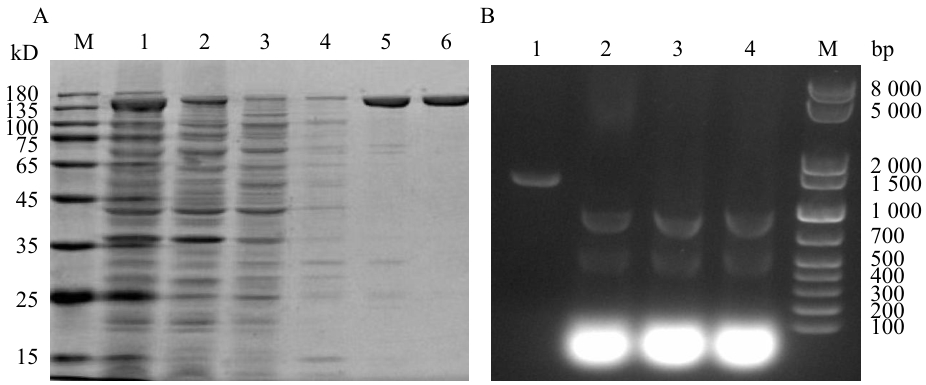
Fig. 1 SDS-PAGE analysis of purified recombinant Cas9-mSA protein (A) and in vitro activity assay of RNP complexes (B)A: M: Marker protein; 1: supernatant of cell lysate after induction; 2: wash with 10 mmol/L imidazole; 3: wash with 20 mmol/L imidazole; 4: wash with 40 mmol/L imidazole; 5: elution with 100 mmol/L imidazole; 6: elution with 500 mmol/L imidazole. B: 1: Control DNA; 2-4: three kinds of RNP complex in vitro activity verification
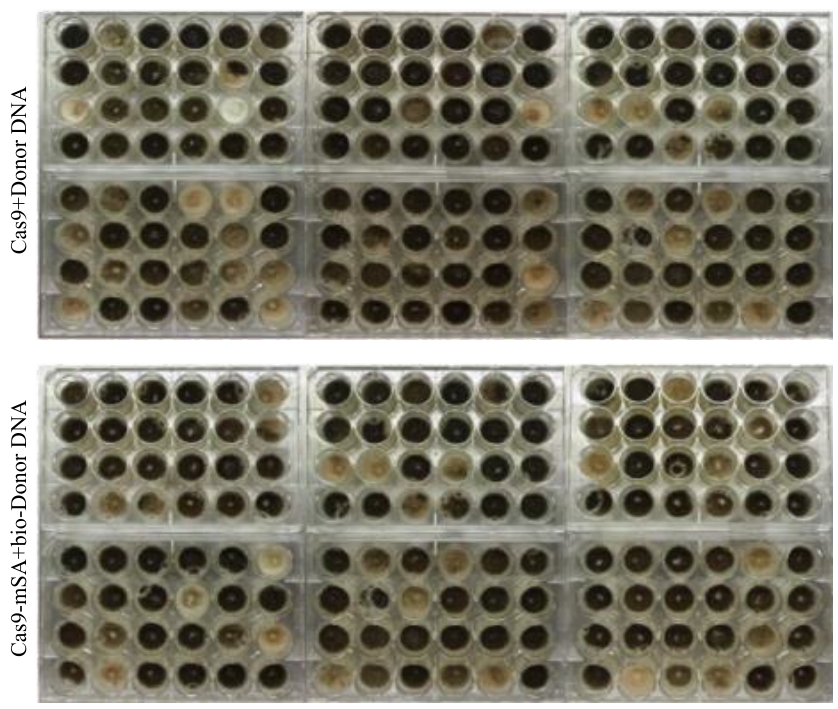
Fig. 2 Color change of transformants in the experimental group and control group
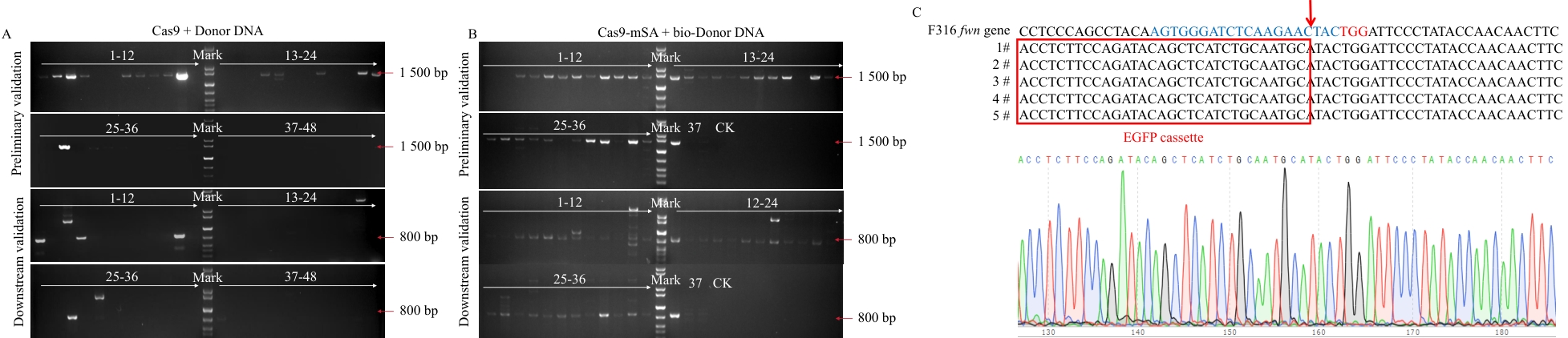
Fig. 3 PCR verification and sequencing results of homologous recombination positive transformantsA: Results of PCR detection of HDR transformants of control Cas9 group. B: The result of PCR detection of HDR efficiency of Cas9-mSA transformants. C: Sequencing result. The blue base sequence is the specific recognition sequence of gRNA, and 1#-5# are the positive gene edited sequences
组别 Treatment | 被编辑菌株/总数 Edited strain/Total | 基因敲除效率 Gene-knockout efficiency (%) | 外源基因同源重组效率 HDR efficiency of exogenous genes (%) |
|---|---|---|---|
| Cas9+Donor | 48/144 | 33.33±3.87 | 8.33 |
| Cas9-mSA+bio-Donor | 37/144 | 25.69±3.72 | 64.86 |
Table 2 Efficiency statistics of experimental group and control group
组别 Treatment | 被编辑菌株/总数 Edited strain/Total | 基因敲除效率 Gene-knockout efficiency (%) | 外源基因同源重组效率 HDR efficiency of exogenous genes (%) |
|---|---|---|---|
| Cas9+Donor | 48/144 | 33.33±3.87 | 8.33 |
| Cas9-mSA+bio-Donor | 37/144 | 25.69±3.72 | 64.86 |
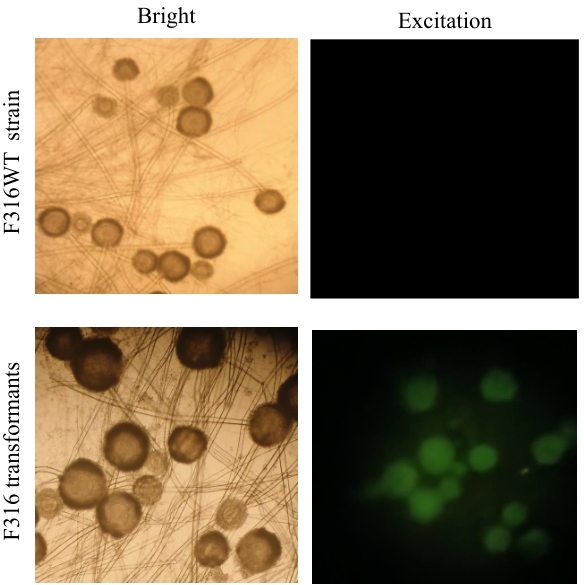
Fig. 4 Strains in the bright and excitation vision of fluorescence microscope
| [1] | Deng HX, Gao RJ, Liao XR, et al. CRISPR system in filamentous fungi: Current achievements and future directions [J]. Gene, 2017, 627: 212-221. |
| [2] | Jin FJ, Wang BT, Wang ZD, et al. CRISPR/Cas9-based genome editing and its application in Aspergillus species [J]. JoF, 2022, 8(5): 467. |
| [3] | Scully R, Panday A, Elango R, et al. DNA double-strand break repair-pathway choice in somatic mammalian cells [J]. Nat Rev Mol Cell Biol, 2019, 20(11): 698-714. |
| [4] | Fuller KK, Chen S, Loros JJ, et al. Development of the CRISPR/Cas9 system for targeted gene disruption in Aspergillus fumigatus [J]. Eukaryot Cell, 2015, 14(11): 1073-1080. |
| [5] | Meyer V, Arentshorst M, El-Ghezal A, et al. Highly efficient gene targeting in the Aspergillus niger kusA mutant [J]. J Biotechnol, 2007, 128(4): 770-775. |
| [6] | Ran FA, Hsu PD, Wright J, et al. Genome engineering using the CRISPR-Cas9 system [J]. Nat Protoc, 2013, 8(11): 2281-2308. |
| [7] | 梁丽存, 刘文龙, 刘晓青, 等. 化学试剂对塔宾曲霉同源重组效率的影响 [J]. 生物技术进展, 2024, 14(4): 586-593. |
| Liang LC, Liu WL, Liu XQ, et al. The effect of chemical reagents on the efficiency of gene editing in Aspergillus tubingensis [J]. Curr Biotechnol, 2024, 14(4): 586-593. | |
| [8] | Gandía M, Xu SM, Font C, et al. Disruption of Ku70 involved in non-homologous end-joining facilitates homologous recombination but increases temperature sensitivity in the phytopathogenic fungus Penicillium digitatum [J]. Fungal Biol, 2016, 120(3): 317-323. |
| [9] | Fang Z, Zhang Y, Cai MH, et al. Improved gene targeting frequency in marine-derived filamentous fungus Aspergillus glaucus by disrupting ligD [J]. J Appl Genetics, 2012, 53(3): 355-362. |
| [10] | 杨浩萌, 梁丽存, 宋祖洹, 等. 提高丝状真菌精准基因编辑效率的策略 [J]. 微生物学通报, 2024, 51(5): 1425-1440. |
| Yang HM, Liang LC, Song ZH, et al. Strategies for improving the efficiency of precise gene editing in filamentous fungi [J]. Microbiol China, 2024, 51(5): 1425-1440. | |
| [11] | Laitinen OH, Hytönen VP, Nordlund HR, et al. Genetically engineered avidins and streptavidins [J]. Cell Mol Life Sci, 2006, 63(24): 2992-3017. |
| [12] | Kuntz ID, Chen K, Sharp KA, et al. The maximal affinity of ligands [J]. Proc Natl Acad Sci U S A, 1999, 96(18): 9997-10002. |
| [13] | Wilchek M, Bayer EA, Livnah O. Essentials of biorecognition: The (strept)avidin-biotin system as a model for protein-protein and protein-ligand interaction [J]. Immunol Lett, 2006, 103(1): 27-32. |
| [14] | Pähler A, Hendrickson WA, Kolks MA, et al. Characterization and crystallization of core streptavidin [J]. J Biol Chem, 1987, 262(29): 13933-13937. |
| [15] | Le Q, Nguyen V, Park S. Recent advances in the engineering and application of streptavidin-like molecules [J]. Appl Microbiol Biotechnol, 2019, 103(18): 7355-7365. |
| [16] | 冯爽, 王春伟, 苏小虎. 动物基因组编辑中提升CRISPR/Cas9介导的同源重组效率研究进展 [J]. 中国生物工程杂志, 2022, 42(9): 83-92. |
| Feng S, Wang CW, Su XH. Research advancement of CRISPR/Cas9 directed homologous recombination efficiency improvements in mammal genome editing [J]. China Biotechnol, 2022, 42(9): 83-92. | |
| [17] | Roche PJR, Gytz H, Hussain F, et al. Double-stranded biotinylated donor enhances homology-directed repair in combination with Cas9 monoavidin in mammalian cells [J]. CRISPR J, 2018, 1(6): 414-430. |
| [18] | Carlson-Stevermer J, Abdeen AA, Kohlenberg L, et al. Assembly of CRISPR ribonucleoproteins with biotinylated oligonucleotides via an RNA aptamer for precise gene editing [J]. Nat Commun, 2017, 8: 1711. |
| [19] | Shechner DM, Hacisuleyman E, Younger ST, et al. Multiplexable, locus-specific targeting of long RNAs with CRISPR-display [J]. Nat Methods, 2015, 12(7): 664-670. |
| [20] | Leppek K, Stoecklin G. An optimized streptavidin-binding RNA aptamer for purification of ribonucleoprotein complexes identifies novel ARE-binding proteins [J]. Nucleic Acids Res, 2014, 42(2): e13. |
| [21] | Kheirandish MH, Rahmani B, Zarei Jaliani H, et al. Efficient site-specific integration in CHO-K1 cells using CRISPR/Cas9-modified donors [J]. Mol Biol Rep, 2023, 50(7): 5889-5899. |
| [22] | 梁丽存, 于会民, 管晓晨, 等. 塔宾曲霉的鉴定及基因编辑方法对其同源重组效率的影响 [J]. 中国农业科技导报, 2025, 27(6): 83-92. |
| Liang LC, Yu HM, Guan XC, et al. Identification of Aspergillus tubingensis and the effect of gene editing methods on its homologous recombination efficiency [J]. J Agric Sci Technol, 2025, 27(6): 83-92. | |
| [23] | Huang DM, Song YY, Liu YL, et al. A new strain of Aspergillus tubingensis for high-activity pectinase production [J]. Braz J Microbiol, 2019, 50(1): 53-65. |
| [24] | Okado N, Sugi M, Kasamoto S, et al. Safety evaluation of arabinase (arabinan endo-1, 5-α-L-arabinanase) from Aspergillus tubingensis [J]. Food Sci Nutr, 2020, 8(1): 456-478. |
| [25] | Krisnawati R, Cahyanto MN, Sardjono S, et al. RNA-seq data of Aspergillus tubingensis NBRC 31125 in carbon catabolite repressor related to xylanase production [J]. Data Brief, 2022, 45: 108700. |
| [26] | Wu YM, Yang XQ, Zhao TD, et al. Antifeedant and antifungal activities of metabolites isolated from the coculture of endophytic fungus Aspergillus tubingensis S1120 with red ginseng [J]. Chem Biodivers, 2022, 19: e202100608. |
| [27] | 郭雷, 王聪, 郭家才, 等. 海洋来源塔宾曲霉LWG-42菌株的鉴定及其抗氧化活性化合物的分离 [J]. 微生物学杂志, 2017, 37(6): 30-35. |
| Guo L, Wang C, Guo JC, et al. Identification of marine-derived Aspergillus tubingensis LWG-42 and isolation of its antioxidant active compounds [J]. J Microbiol, 2017, 37(6): 30-35. | |
| [28] | 孔华忠, 齐祖同. 曲霉属和散囊菌属的新记录 [J]. 真菌学报, 1995, 14(1): 75-78. |
| Kong HZ, Qi ZT. New records of Aspergillus and Eurotium in Chian [J]. Mycosystema, 1995, 14(1): 75-78. | |
| [29] | 高伟欣, 黄火清, 赵晶, 等. 应用于基因编辑的核糖核蛋白复合体的构建与活性验证 [J]. 生物技术通报, 2022, 38(8): 60-68. |
| Gao WX, Huang HQ, Zhao J, et al. Construction and activity verification of ribonucleoprotein complex for gene editing [J]. Biotechnol Bull, 2022, 38(8): 60-68. | |
| [30] | Ma M, Zhuang FF, Hu XB, et al. Efficient generation of mice carrying homozygous double-floxp alleles using the Cas9-Avidin/Biotin-donor DNA system [J]. Cell Res, 2017, 27(4): 578-581. |
| [31] | Gu B, Posfai E, Rossant J. Efficient generation of targeted large insertions by microinjection into two-cell-stage mouse embryos [J]. Nat Biotechnol, 2018, 36(7): 632-637. |
| No related articles found! |
| Viewed | ||||||
|
Full text |
|
|||||
|
Abstract |
|
|||||
