







Biotechnology Bulletin ›› 2026, Vol. 42 ›› Issue (8): 287-297.doi: 10.13560/j.cnki.biotech.bull.1985.2025-1356
XU Yan, CHEN Ling, HUANG Ling-lin, CHANG Xiao-li( )
)
Received:2025-12-11
Online:2026-08-26
Published:2026-08-17
Contact:
CHANG Xiao-li
E-mail:xl_chang14042@sicau.edu.cn
XU Yan, CHEN Ling, HUANG Ling-lin, CHANG Xiao-li. Regulation of Root Colonization by the Beneficial Bacterium Pseudomonas chlororaphis via Soybean Transcription Factor GmWRKY23a[J]. Biotechnology Bulletin, 2026, 42(8): 287-297.
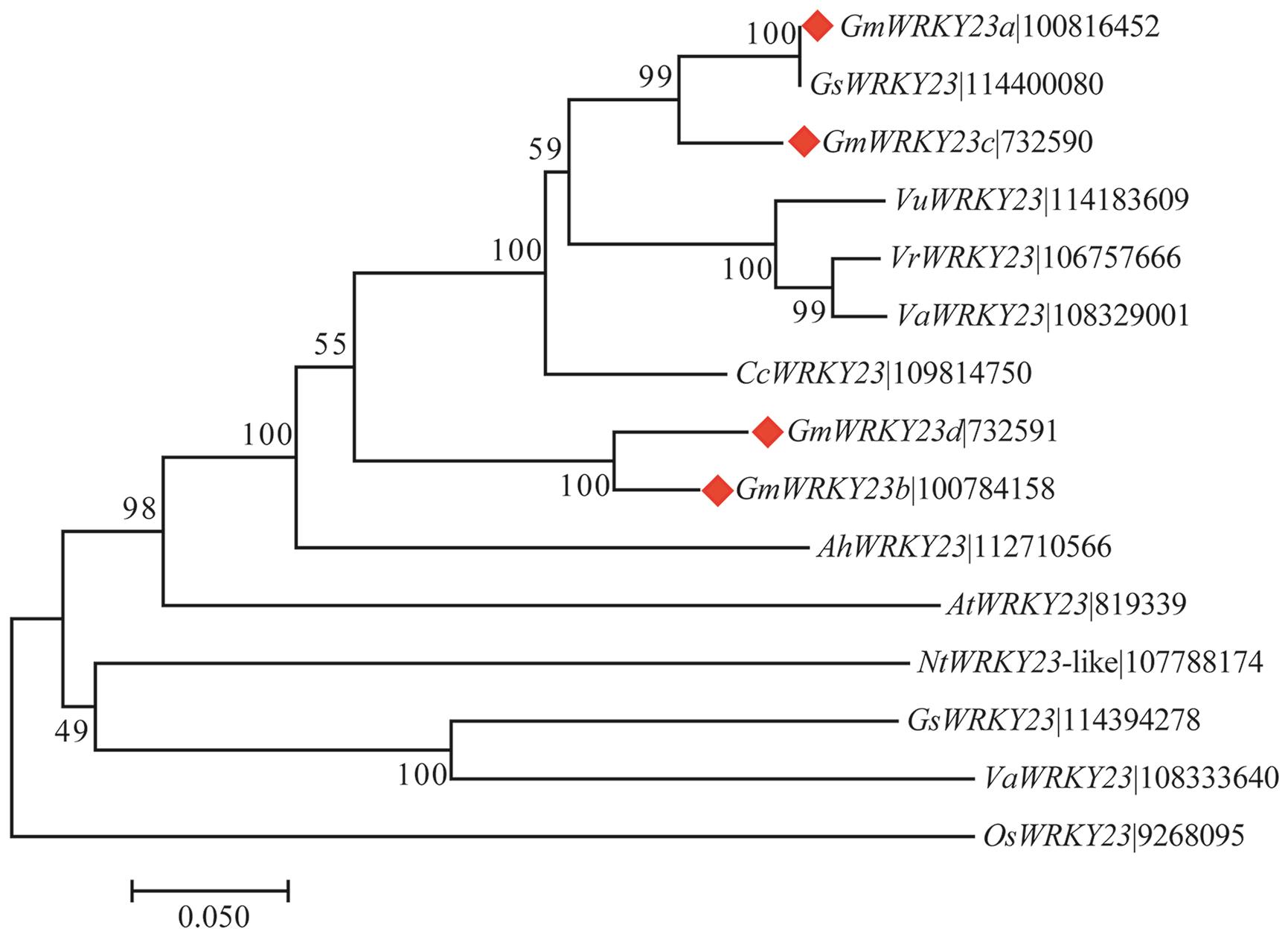
Fig. 1 Phylogenetic tree based on amino acid sequences of soybean GmWRKY23The phylogenetic tree was constructed based on the amino acid sequences of WRKY23 from soybean and other species, including soybean (Glycine max), cowpea (Vigna unguiculata), mung bean (Vigna radiata var. radiata), pigeon pea (Cajanus cajan), adzuki bean (Vigna angularis), wild soybean (Glycine soja), peanut (Arachis hypogaea), Arabidopsis thaliana, tobacco (Nicotiana tabacum), and rice (Oryza sativa)
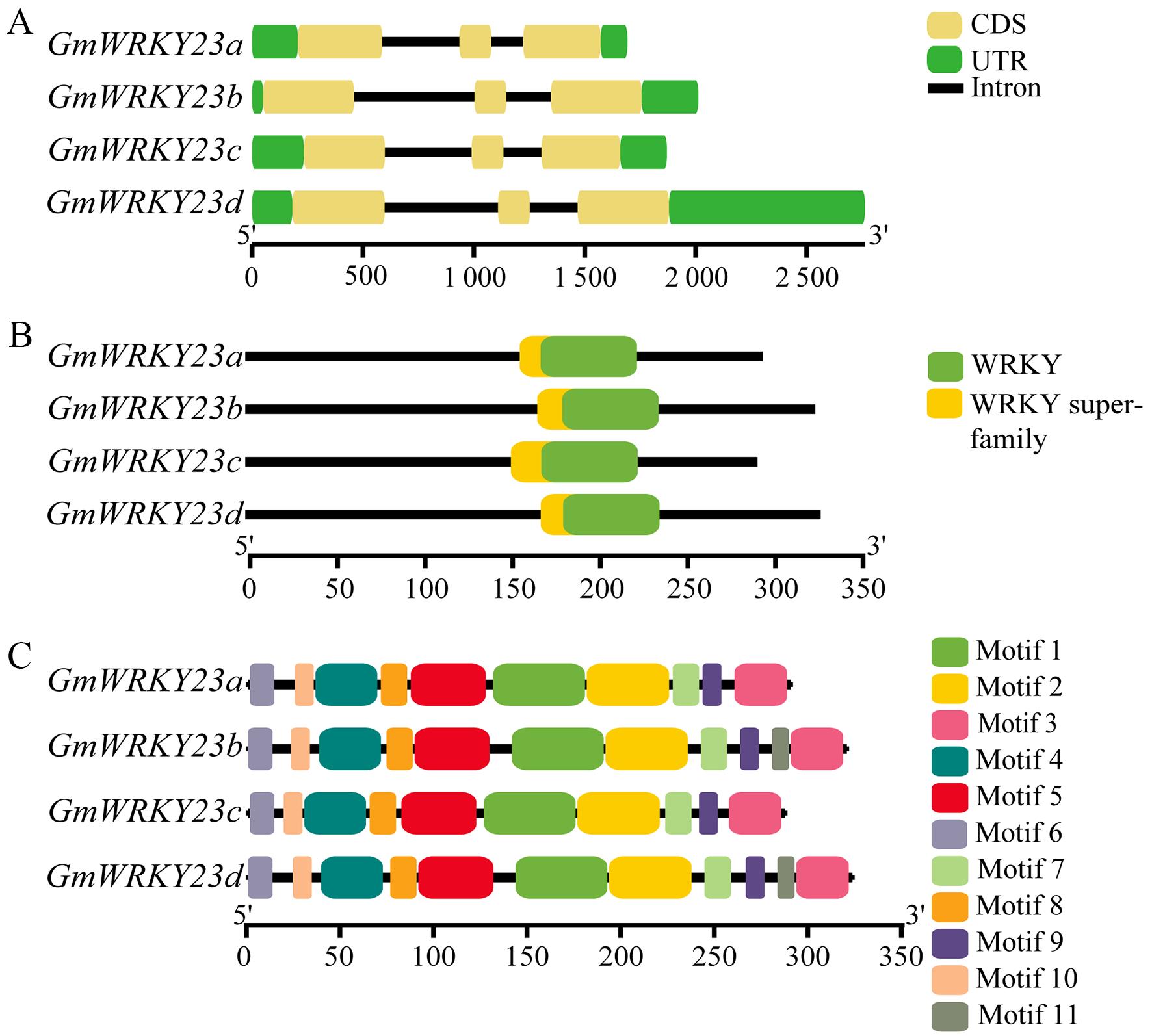
Fig. 2 Analysis of gene structures, conserved domains and motifs of soybean GmWRKY23 genesA: Gene structure of GmWRKY23; B: Conserved structures of GmWRKY23; C: Motif of GmWRKY23 genes
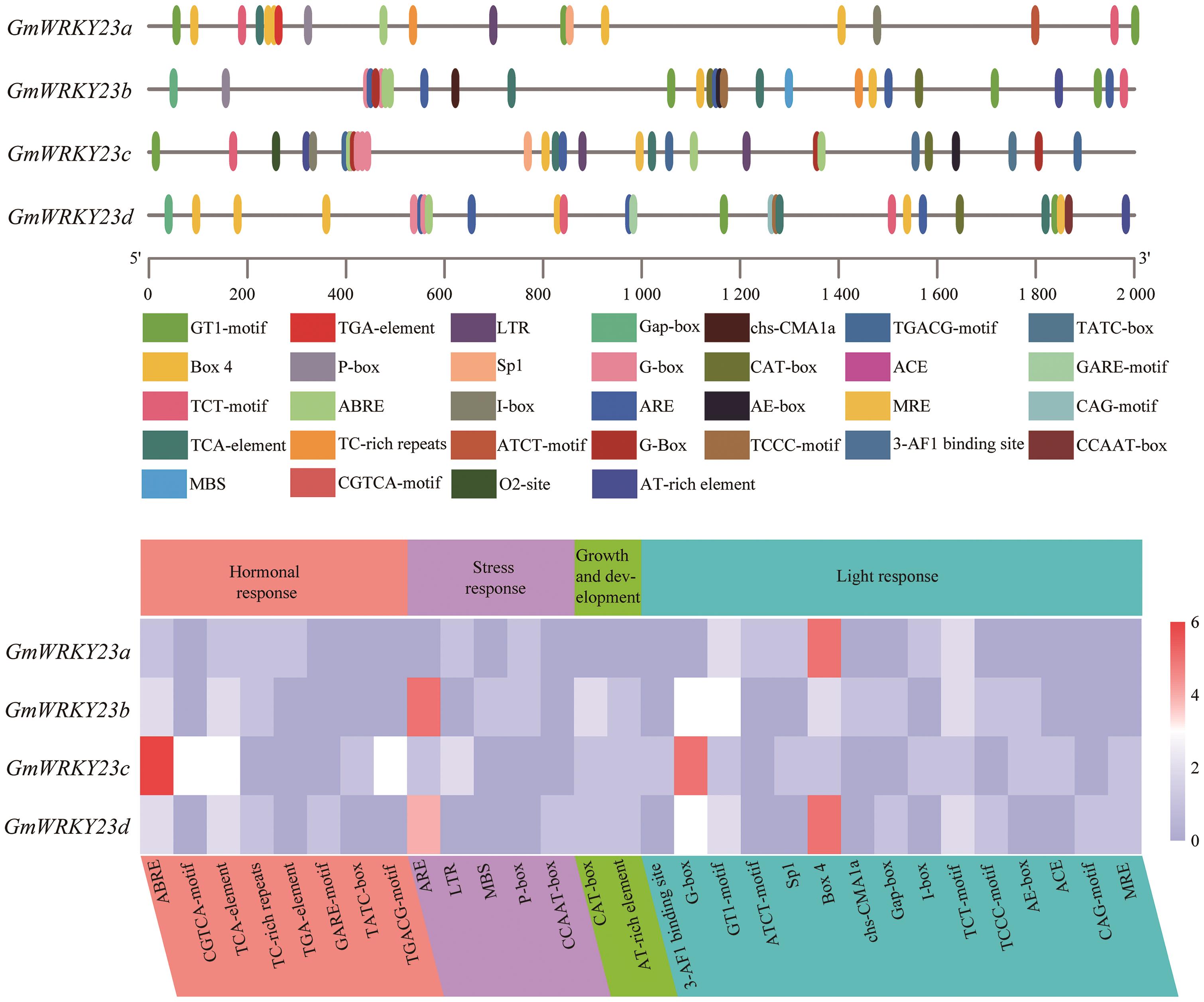
Fig. 3 Analysis of cis-acting elements in the promoters of soybean GmWRKY23 genes
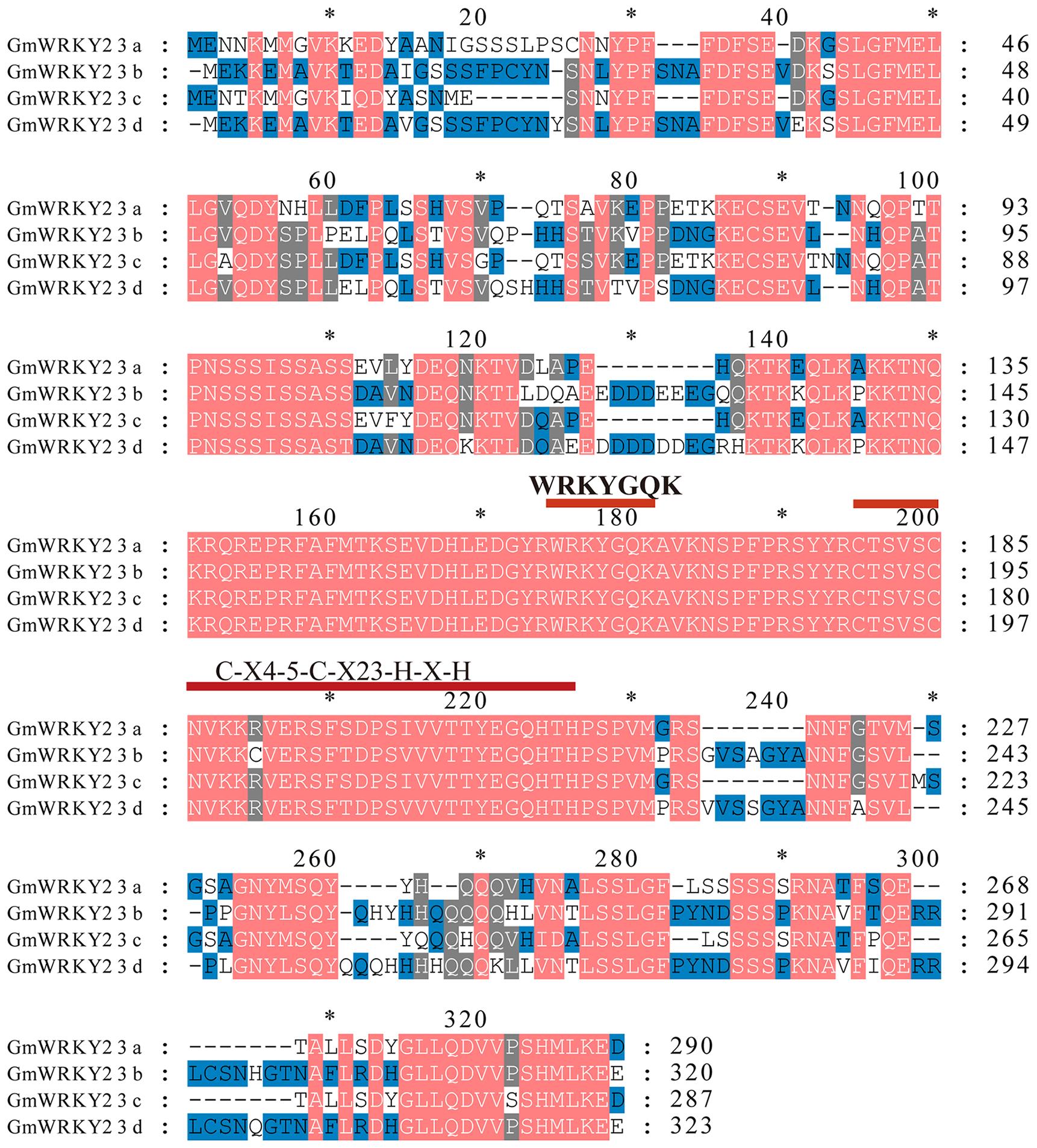
Fig. 4 Sequence alignment of four soybean GmWRKY23 proteins* indicates an interval of 10 amino acids
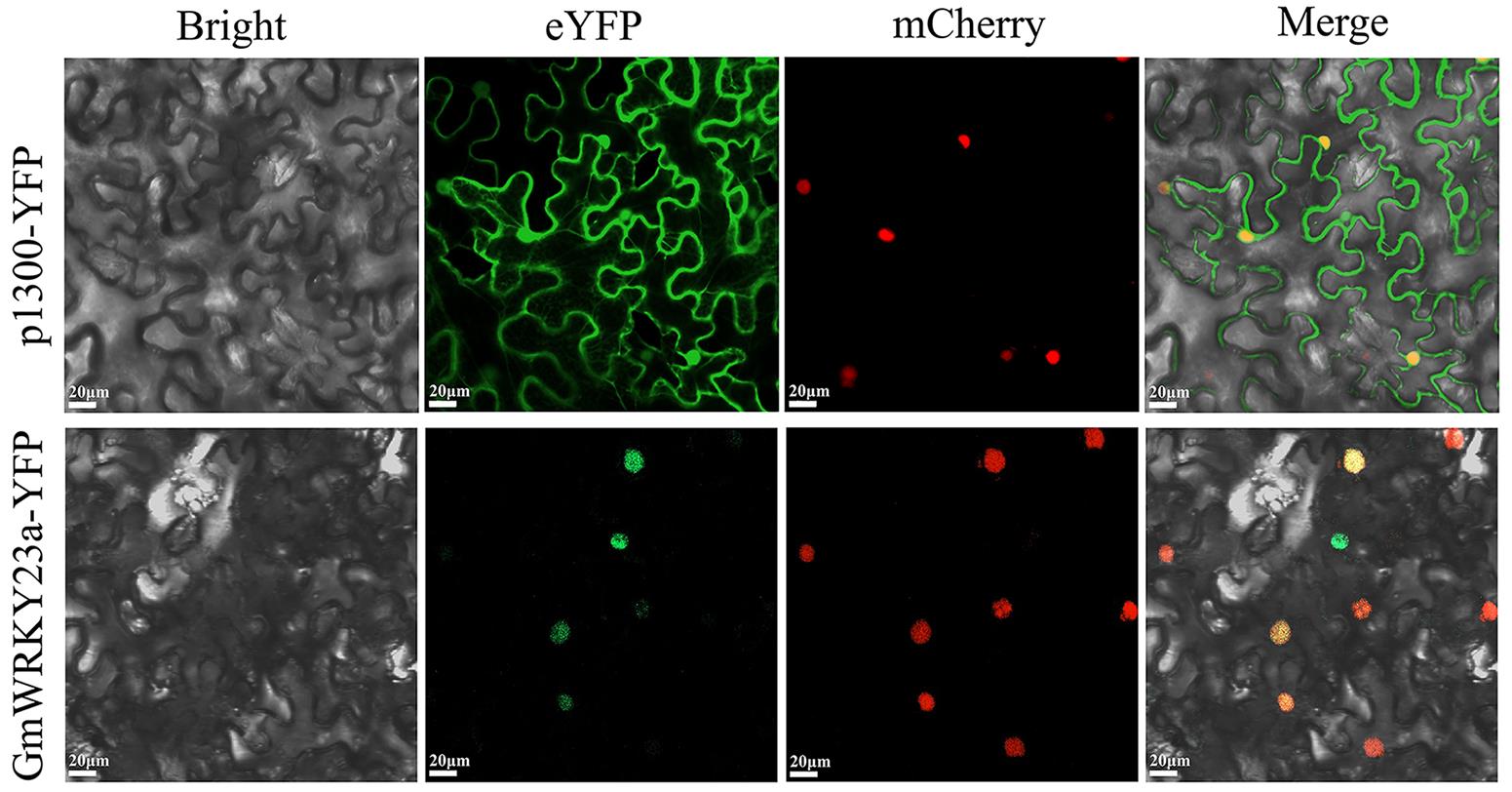
Fig. 5 Subcellular localization ofGmWRKY23a in Nicotiana tabacum leavesBright: bright field; eYFP: enhanced yellow fluorescent protein tag; mCherry: red fluorescent nuclear localization marker; Merge: merged field, where complete overlap of green and red fluorescence appears as orange. p1300-YFP: empty vector control; GmWRKY23a-YFP: fusion protein of GmWRKY23a and YFP
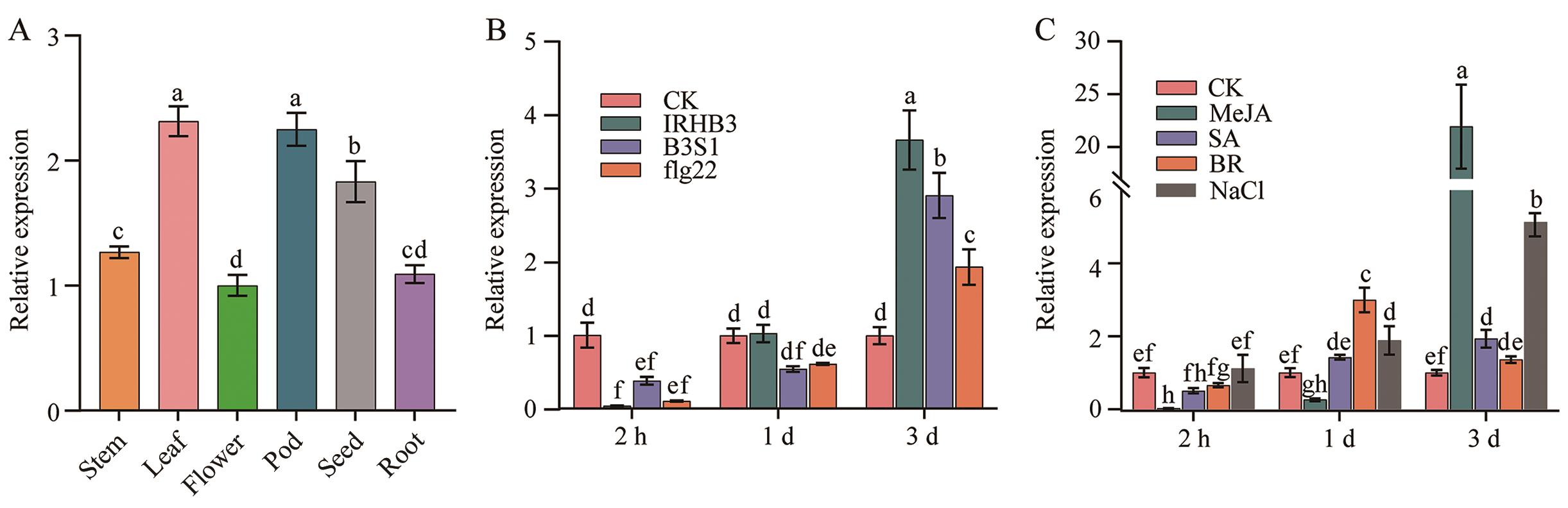
Fig. 6 Expression pattern of GmWRKY23a in soybeanA: Tissue-specific expression. B: Relative expression of GmWRKY23a under biotic stress treatment. C: Relative expression of GmWRKY23a under abiotic stress treatment. Data are presented as mean ± standard deviation (Mean ± SD). Differences between groups were analyzed using one-way ANOVA or two-way ANOVA, and different lowercase letters indicate statistically significant differences (P<0.05)
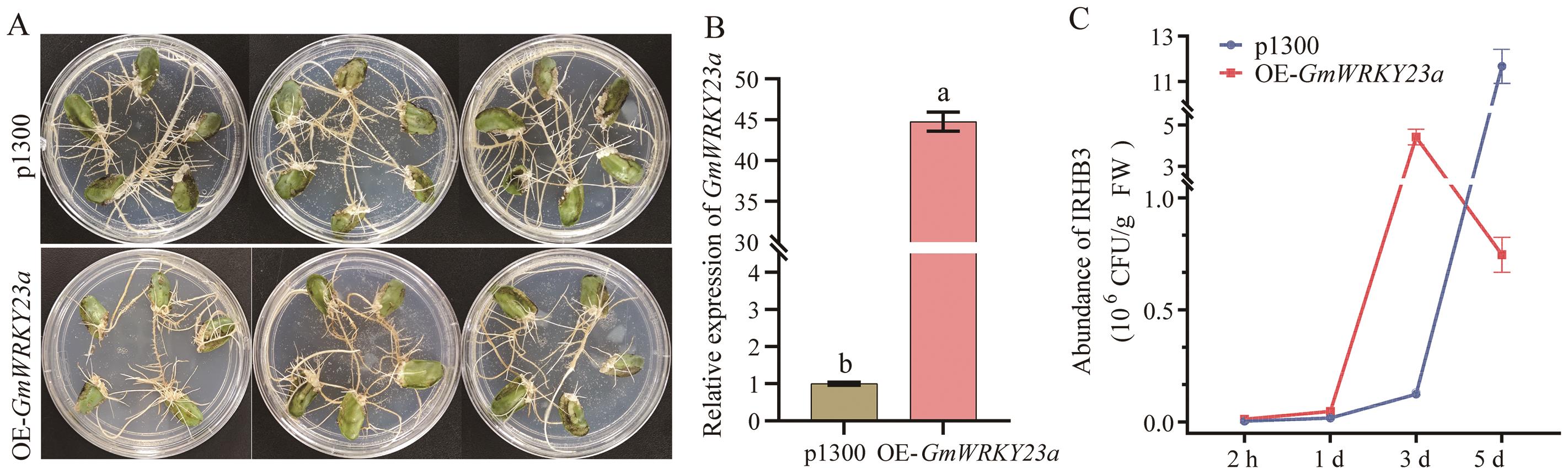
Fig. 7 Construction of soybean hairy roots overexpressing GmWRKY23a and colonization abundance of IRHB3 in hairy rootsA: Soybean hair roots carrying control vector pCAMBIA1300-GFP (p1300) and the overexpression vector pCAMBIA1300-GmWRKY23a-GFP (OE-GmWRKY23a); B: expression levels of GmWRKY23a in the control (p1300) and overexpressed (OE-GmWRKY23a) hairy roots; C: colonization abundance of IRHB3 in control and overexpressing hairy roots. Statistical analysis in Figure B was performed using the t-test, and different lowercase letters indicate statistically significant differences (P<0.05)
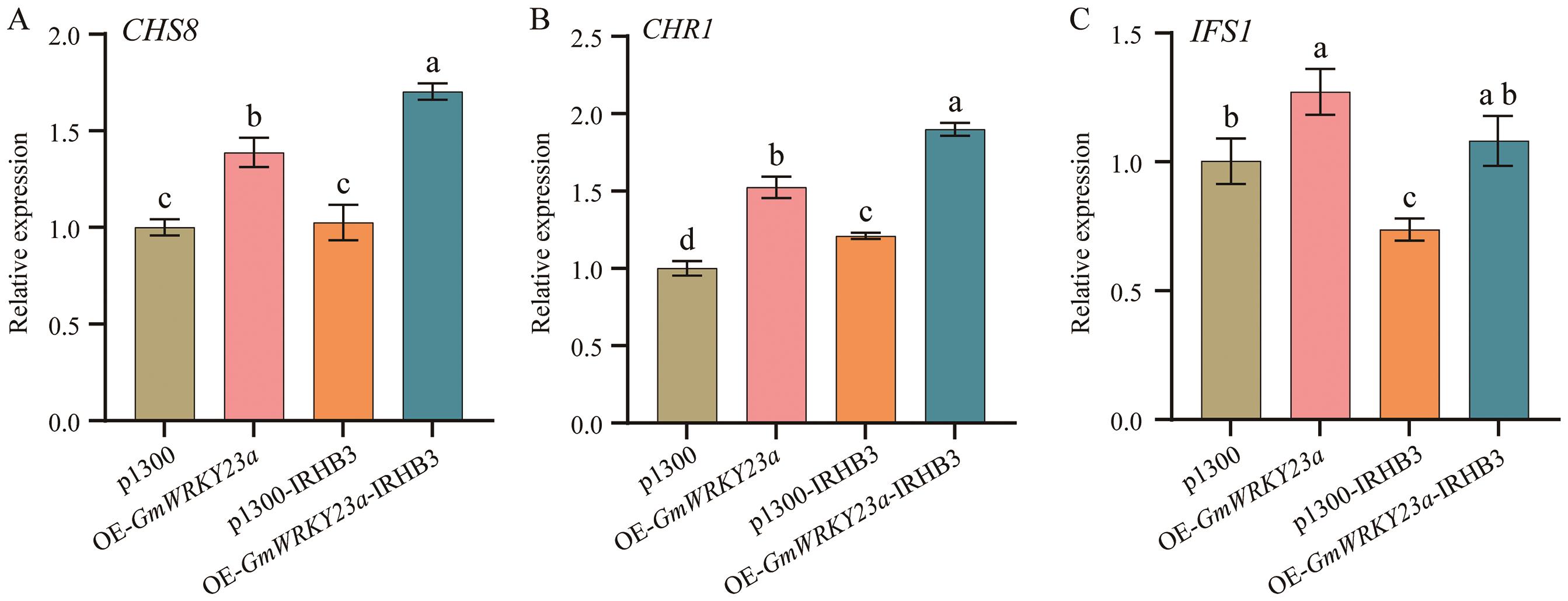
Fig. 8 Expression of genes related to isoflavone biosynthesis and metabolism pathwayDifferences between groups were tested by one-way ANOVA. Different lowercase letters indicate significant differences at P<0.05
| [1] | 刘凯, 王欢, 穆月英. 中国大豆进口风险分散及进口来源结构优化——基于替代性与依赖性视角 [J]. 中国油脂, 2025, 50(2): 1-7, 22. |
| Liu K, Wang H, Mu YY. Risk dispersion and optimization of soybean imports for China: Based on substitution and dependence risks [J]. China Oils Fats, 2025, 50(2): 1-7, 22. | |
| [2] | 叶文武, 刘万才, 王源超. 中国大豆病虫害发生现状及全程绿色防控技术研究进展 [J]. 植物保护学报, 2023, 50(2): 265-273. |
| Ye WW, Liu WC, Wang YC. Occurrence status and whole-process green control technologies for soybean diseases and pests in China [J]. J Plant Prot, 2023, 50(2): 265-273. | |
| [3] | Borowik A, Wyszkowska J, Zaborowska M, et al. The impact of permethrin and cypermethrin on plants, soil enzyme activity, and microbial communities [J]. Int J Mol Sci, 2023, 24(3): 2892. |
| [4] | Wang KY, Liu MY, Wang TT, et al. Occurrence, processing factors, and dietary risk assessment of multi-pesticides in cowpea [J]. Food Control, 2025, 171: 111145. |
| [5] | Saha B, Nayak J, Srivastava R, et al. Unraveling the involvement of WRKY TFs in regulating plant disease defense signaling [J]. Planta, 2024, 259: 7. |
| [6] | Song H, Cao YP, Zhao LG, et al. Review: WRKY transcription factors: Understanding the functional divergence [J]. Plant Sci, 2023, 334: 111770. |
| [7] | Chen LG, Song Y, Li SJ, et al. The role of WRKY transcription factors in plant abiotic stresses [J]. BBA Gene Regul Mech, 2012, 1819(2): 120-128. |
| [8] | Javed T, Gao SJ. WRKY transcription factors in plant defense [J]. Trends Genet, 2023, 39(10): 787-801. |
| [9] | Wang LJ, Guo DZ, Zhao GD, et al. Group IIc WRKY transcription factors regulate cotton resistance to Fusarium oxysporum by promoting GhMKK2-mediated flavonoid biosynthesis [J]. New Phytol, 2022, 236(1): 249-265. |
| [10] | Han PL, Wang CL, Li FD, et al. Valsa mali PR1-like protein modulates an apple valine-glutamine protein to suppress JA signaling-mediated immunity [J]. Plant Physiol, 2024, 194(4): 2755-2770. |
| [11] | Liu DM, He J, Li Q, et al. A WRKY transcription factor confers broad-spectrum resistance to biotic stresses and yield stability in rice [J]. Proc Natl Acad Sci U S A, 2025, 122(10): e2411164122. |
| [12] | Yang L, Fang SY, Liu L, et al. WRKY transcription factors: Hubs for regulating plant growth and stress responses [J]. J Integr Plant Biol, 2025, 67(3): 488-509. |
| [13] | Tang JQ, Tian XJ, Mei EY, et al. WRKY53 negatively regulates rice cold tolerance at the booting stage by fine-tuning anther gibberellin levels [J]. Plant Cell, 2022, 34(11): 4495-4515. |
| [14] | Wang CL, Wei XT, Wang YM, et al. Metabolomics and transcriptomic analysis revealed the response mechanism of maize to saline-alkali stress [J]. Plant Biotechnol J, 2025, 23(12): 5397-5416. |
| [15] | Luo CH, He YJ, Chen YP. Rhizosphere microbiome regulation: Unlocking the potential for plant growth [J]. Curr Res Microb Sci, 2025, 8: 100322. |
| [16] | 勾宇春, 王宗抗, 张志鹏, 等. 植物根际促生菌作用机制研究进展 [J]. 应用与环境生物学报, 2023, 29(2): 495-506. |
| Gou YC, Wang ZK, Zhang ZP, et al. Advance in role mechanisms of plant growth-promoting rhizobacteria [J]. Chin J Appl Environ Biol, 2023, 29(2): 495-506. | |
| [17] | Chen L, Liu YP. The function of root exudates in the root colonization by beneficial soil rhizobacteria [J]. Biology, 2024, 13(2): 95. |
| [18] | Ramos RN, Martin GB, Pombo MA, et al. WRKY22 and WRKY25 transcription factors are positive regulators of defense responses in Nicotiana benthamiana [J]. Plant Mol Biol, 2021, 105(1/2): 65-82. |
| [19] | Ramos RN, Zhang N, Lauff DB, et al. Loss-of-function mutations in WRKY22 and WRKY25 impair stomatal-mediated immunity and PTI and ETI responses against Pseudomonas syringae pv. tomato [J]. Plant Mol Biol, 2023, 112(3): 161-177. |
| [20] | Long Q, Du MX, Long JH, et al. Transcription factor WRKY22 regulates canker susceptibility in sweet orange (Citrus sinensis Osbeck) by enhancing cell enlargement and CsLOB1 expression [J]. Hortic Res, 2021, 8: 50. |
| [21] | Wei DQ, Zhu D, Zhang YF, et al. Characterization of rhizosphere Pseudomonas chlororaphis IRHB3 in the reduction of Fusarium root rot and promotion of soybean growth [J]. Biol Control, 2023, 186: 105349. |
| [22] | Chang XL, Wei DQ, Zeng YH, et al. Maize-soybean relay strip intercropping reshapes the rhizosphere bacterial community and recruits beneficial bacteria to suppress Fusarium root rot of soybean [J]. Front Microbiol, 2022, 13: 1009689. |
| [23] | 何文馨, 陈玲, 黄灵琳, 等. 大豆油菜素内酯信号响应转录因子GmBEE1和GmBEE3的克隆及其表达模式分析 [J]. 生物技术通报, 2025, 41(11): 261-271. |
| He WX, Chen L, Huang LL, et al. Cloning and expression pattern analysis of brassinosteriod signal response transcription factors GmBEE1 and GmBEE3 in soybean [J]. Biotechnol Bull, 2025, 41(11): 261-271. | |
| [24] | Cheng YY, Wang XL, Cao L, et al. Highly efficient Agrobacterium rhizogenes-mediated hairy root transformation for gene functional and gene editing analysis in soybean [J]. Plant Meth, 2021, 17: 73. |
| [25] | Xu CY, Chang PJ, Guo SQ, et al. Transcriptional activation by WRKY23 and derepression by removal of bHLH041 coordinately establish callus pluripotency in Arabidopsis regeneration [J]. Plant Cell, 2023, 36(1): 158-173. |
| [26] | Zhang SY, Ji Z, Jiao W, et al. Natural variation of OsWRKY23 drives difference in nitrate use efficiency between indica and Japonica rice [J]. Nat Commun, 2025, 16: 1420. |
| [27] | Gao ZY, Wang HY, Chen XS, et al. BcVQ11A-BcWRKY23-BcWRKY25 module is involved in thermotolerance by regulating phenylalanine ammonia-lyase activity in non-heading Chinese cabbage [J]. Plant Cell Environ, 2025, 48(3): 2357-2376. |
| [28] | Sun SL, Liu X, Zhang TL, et al. Functional characterisation of the transcription factor GsWRKY23 gene from Glycine soja in overexpressed soybean composite plants and Arabidopsis under salt stress [J]. Plants, 2023, 12(17): 3030. |
| [29] | Sun SL, Yu BJ, Yang JX, et al. The transcription factor GsWRKY23 gene from wild soybean confers enhanced salt tolerance by regulating GsPER3 expression via ROS homeostasis [J]. Plant Physiol Biochem, 2026, 231: 111035. |
| [30] | Levée V, Major I, Levasseur C, et al. Expression profiling and functional analysis of Populus WRKY23 reveals a regulatory role in defense [J]. New Phytol, 2009, 184(1): 48-70. |
| [31] | Khairullina A, Micic N, Jørgensen HJL, et al. Biocontrol effect of Clonostachys rosea on Fusarium graminearum infection and mycotoxin detoxification in oat (Avena sativa) [J]. Plants, 2023, 12(3): 500. |
| [32] | Bencke-Malato M, Cabreira C, Wiebke-Strohm B, et al. Genome-wide annotation of the soybean WRKY family and functional characterization of genes involved in response to Phakopsora pachyrhiziinfection [J]. BMC Plant Biol, 2014, 14: 236. |
| [33] | Zhang ZL, Xie Z, Zou XL, et al. A rice WRKY gene encodes a transcriptional repressor of the gibberellin signaling pathway in aleurone cells [J]. Plant Physiol, 2004, 134(4): 1500-1513. |
| [34] | Zentella R, Zhang ZL, Park M, et al. Global analysis of DELLA direct targets in early gibberellin signaling in Arabidopsis [J]. Plant Cell, 2007, 19(10): 3037-3057. |
| [35] | Aoki N, Shimasaki T, Yazaki W, et al. An isoflavone catabolism gene cluster underlying interKingdom interactions in the soybean rhizosphere [J]. ISME Commun, 2024, 4(1): ycae052. |
| [36] | Pregelj L, McLanders JR, Gresshoff PM, et al. Transcription profiling of the isoflavone phenylpropanoid pathway in soybean in response to Bradyrhizobium japonicum inoculation [J]. Funct Plant Biol, 2010, 38(1): 13-24. |
| [37] | 钟晨丽, 王文絮, 廖莉娜, 等. 沉默大豆GmWRKY33B基因导致大豆抗病性降低 [J]. 生物工程学报, 2024, 40(1): 163-176. |
| Zhong CL, Wang WX, Liao LN, et al. Silencing GmWRKY33B genes leads to reduced disease resistance in soybean [J]. Chin J Biotechnol, 2024, 40(1): 163-176. | |
| [38] | Lin J, Monsalvo I, Kwon H, et al. The WRKY family transcription factor GmWRKY72 represses glyceollin phytoalexin biosynthesis in soybean [J]. Plants, 2024, 13(21): 3036. |
| [39] | Wang JY, Liu XC, Wang XY, et al. Genome-wide transcriptome analysis reveals transcription factors associated with isoflavone content in soybean [J]. Plant Sci, 2026, 364: 112893. |
| [1] | LI Si-bo, QIAN Hong-ping, XU Chang-wen, WANG Xiao, LIN Jin-xing, CUI Ya-ning. Research Progress in the Involvement of Intracellular Transport Regulated by Endogenous Elicitors in Plant Growth and Development and Response to Adverse Stress [J]. Biotechnology Bulletin, 2025, 41(7): 17-27. |
| [2] | JIANG Yan-ke, LU Chong-chong, YIN Zi-yi, LI Yang, DING Xin-hua. Research Progress in Alternative Splicing in Plant Immunity [J]. Biotechnology Bulletin, 2022, 38(1): 215-227. |
| [3] | WU Xin-yuan, WANG Guang-chao, LIN Jin-xing, JING Yan-ping. Correlative Light and Electron Microscopy and Its Application in Botanical Research [J]. Biotechnology Bulletin, 2022, 38(1): 278-288. |
| [4] | WEI Ying, LUO Meng, DAI Liang-ying, PENG De-liang, LIU Jing. Research Advance of Calreticulin from Plant Parasitic Nematode [J]. Biotechnology Bulletin, 2021, 37(7): 81-87. |
| [5] | QIANG Xiao-nan, LI Xin, CHEN Jia, LIAO Hong-dong, YU Feng. Preliminary Analysis of Functional Diversity of RALF Peptide Family in Arabidopsis thaliana [J]. Biotechnology Bulletin, 2019, 35(1): 2-10. |
| Viewed | ||||||
|
Full text |
|
|||||
|
Abstract |
|
|||||
