







Biotechnology Bulletin ›› 2026, Vol. 42 ›› Issue (5): 147-157.doi: 10.13560/j.cnki.biotech.bull.1985.2025-1455
PI Wen-zhi( ), WANG Qun, LIU Xin-yuan, WANG Zhu-jun()
Received:2025-12-31
Online:2026-05-26
Published:2026-06-10
Contact:
WANG Zhu-jun
E-mail:zhiwenpi0207@163.com;zhujunwang@hainanu.edu.cn
PI Wen-zhi, WANG Qun, LIU Xin-yuan, WANG Zhu-jun. Community Assembly Mechanisms and Cross-niche Network Correlation between Robusta Coffee Cherry Surface and Soil Microbiomes[J]. Biotechnology Bulletin, 2026, 42(5): 147-157.
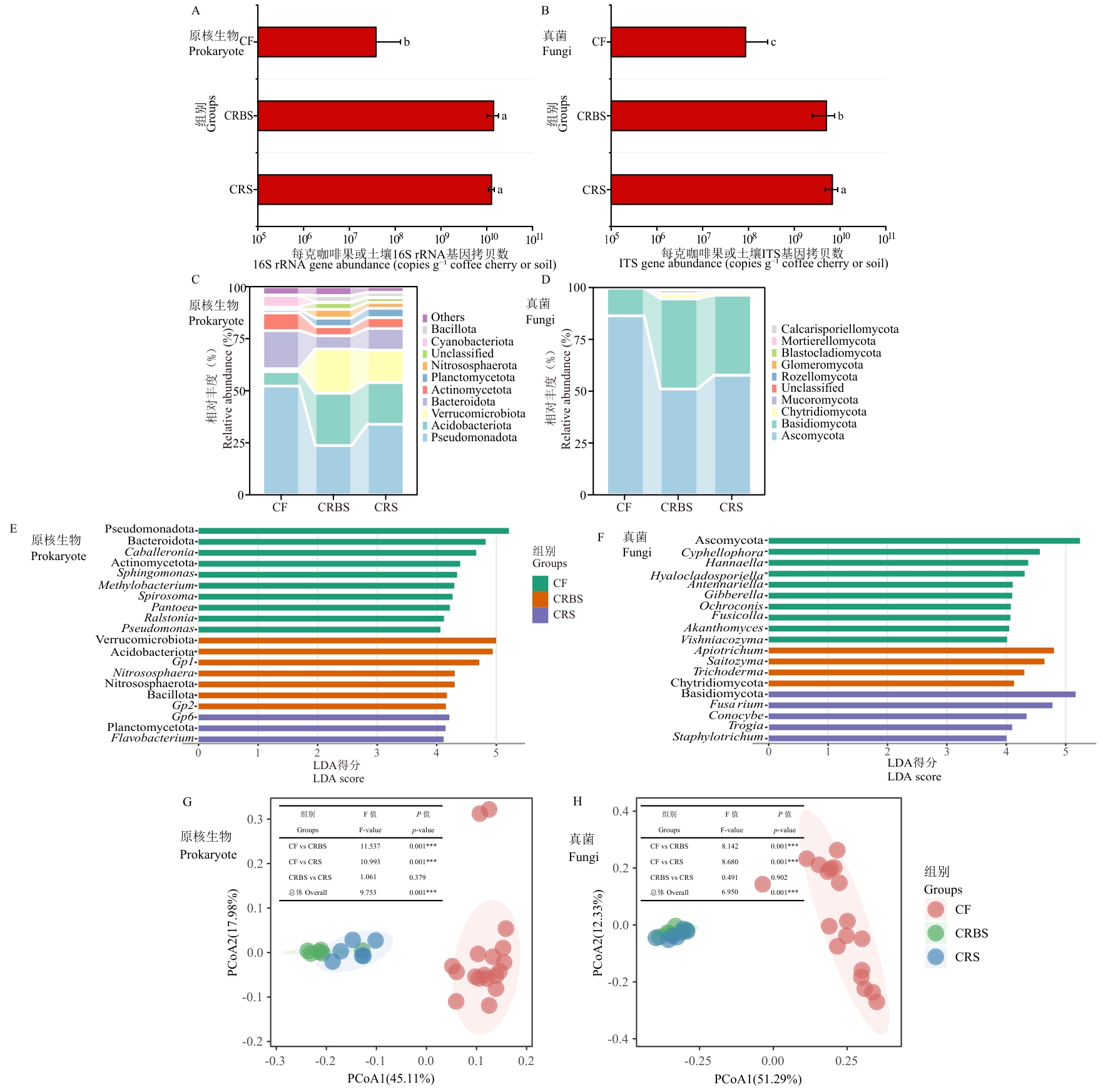
Fig. 1 Diversity and structural differences of coffee cherry and soil microbial communitiesAbundance of prokaryotes (A) and fungi (B) based on qPCR gene copy numbers. Error bars indicate the standard deviation (SD). Different lowercase letters indicate significant differences based on ANOVA (P<0.05). The same below. Microbial community composition of prokaryotes (C) and fungi (D) at the phylum level. LEfSe analysis identifies characteristic biomarkers for prokaryotes (E) and fungi (F) (LDA score>4.0, P<0.05). Principal Coordinate Analysis (PCoA) of prokaryotic (G) and fungal (H) communities based on Bray-Curtis distances. The values displayed in the plots represent F-values and P-values derived from PERMANOVA tests (*** P<0.001). CF, Coffee cherry (n = 18); CRBS, bulk soil (n = 6); CRS, rhizosphere soil (n = 6), the same below
| 组别 Group | 网络属性 Network property | ||||||||
|---|---|---|---|---|---|---|---|---|---|
节点 Nodes | 边 Edges | 正相关边 Positive edges | 平均度 Average degree | 平均路径长度 Average path length | 网络直径 Network diameter | 连通度 Connectivity | 模块化 Modularity | ||
| 原核生物 | CF-CRBS | 679 | 1009 | 625 | 2.97 | 1.65 | 4 | 0.0044 | 0.97 |
| CF-CRS | 661 | 1107 | 652 | 3.35 | 1.94 | 4 | 0.0032 | 0.95 | |
| CRBS-CRS | 795 | 2380 | 1310 | 5.99 | 1.90 | 7 | 0.0075 | 0.92 | |
| 真菌 | CF-CRBS | 602 | 752 | 370 | 2.50 | 1.47 | 2 | 0.0042 | 0.98 |
| CF-CRS | 707 | 1120 | 559 | 3.17 | 2.73 | 8 | 0.0045 | 0.95 | |
| CRBS-CRS | 765 | 1568 | 911 | 4.10 | 2.94 | 8 | 0.0054 | 0.94 | |
Table 1 Properties of the cross-niche correlation networks
| 组别 Group | 网络属性 Network property | ||||||||
|---|---|---|---|---|---|---|---|---|---|
节点 Nodes | 边 Edges | 正相关边 Positive edges | 平均度 Average degree | 平均路径长度 Average path length | 网络直径 Network diameter | 连通度 Connectivity | 模块化 Modularity | ||
| 原核生物 | CF-CRBS | 679 | 1009 | 625 | 2.97 | 1.65 | 4 | 0.0044 | 0.97 |
| CF-CRS | 661 | 1107 | 652 | 3.35 | 1.94 | 4 | 0.0032 | 0.95 | |
| CRBS-CRS | 795 | 2380 | 1310 | 5.99 | 1.90 | 7 | 0.0075 | 0.92 | |
| 真菌 | CF-CRBS | 602 | 752 | 370 | 2.50 | 1.47 | 2 | 0.0042 | 0.98 |
| CF-CRS | 707 | 1120 | 559 | 3.17 | 2.73 | 8 | 0.0045 | 0.95 | |
| CRBS-CRS | 765 | 1568 | 911 | 4.10 | 2.94 | 8 | 0.0054 | 0.94 | |
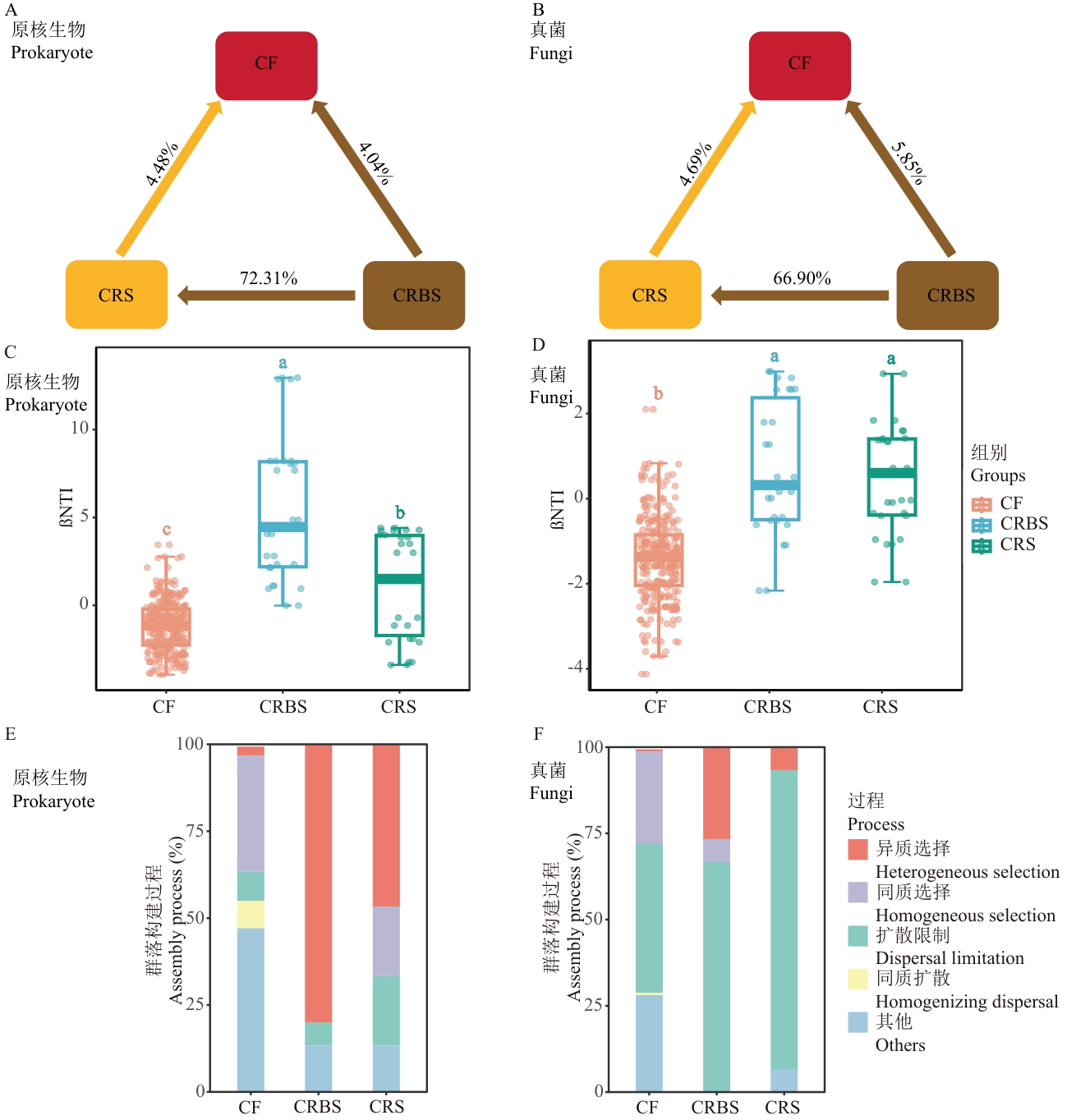
Fig. 2 Microbial source tracking and differences in community assembly based on phylogeny-based null models in coffee cherry and soilFast expectation-maximization for microbial source tracking of prokaryotic (A) and fungal (B) communities. The βNTI values and proportions of community assembly processes for prokaryotes (C, E) and fungi (D, F)
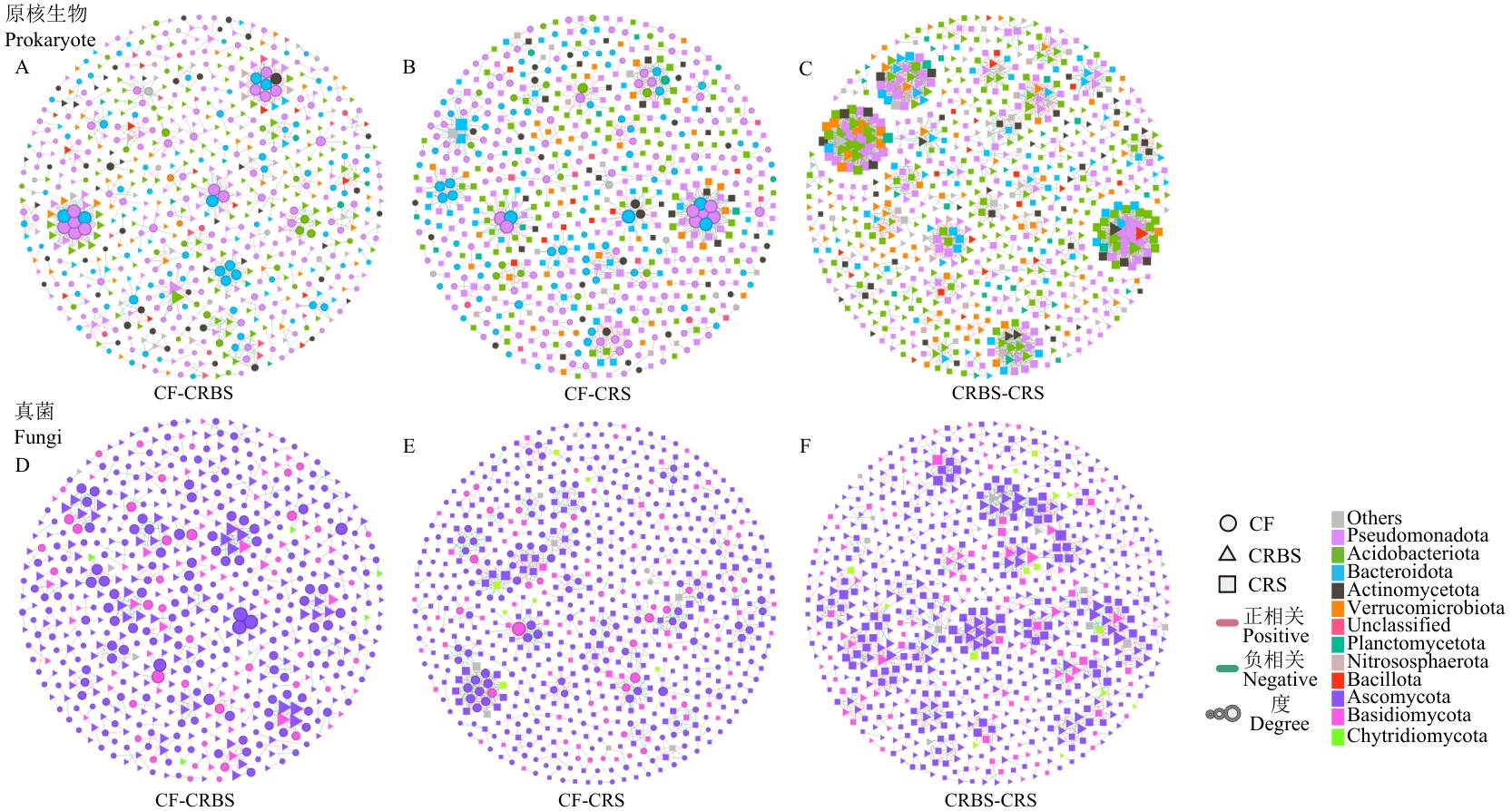
Fig. 3 Cross-niche correlation networks of coffee cherry- soil microbiomesCross-niche correlation networks of prokaryotic (A-C) and fungal (D-F) communities
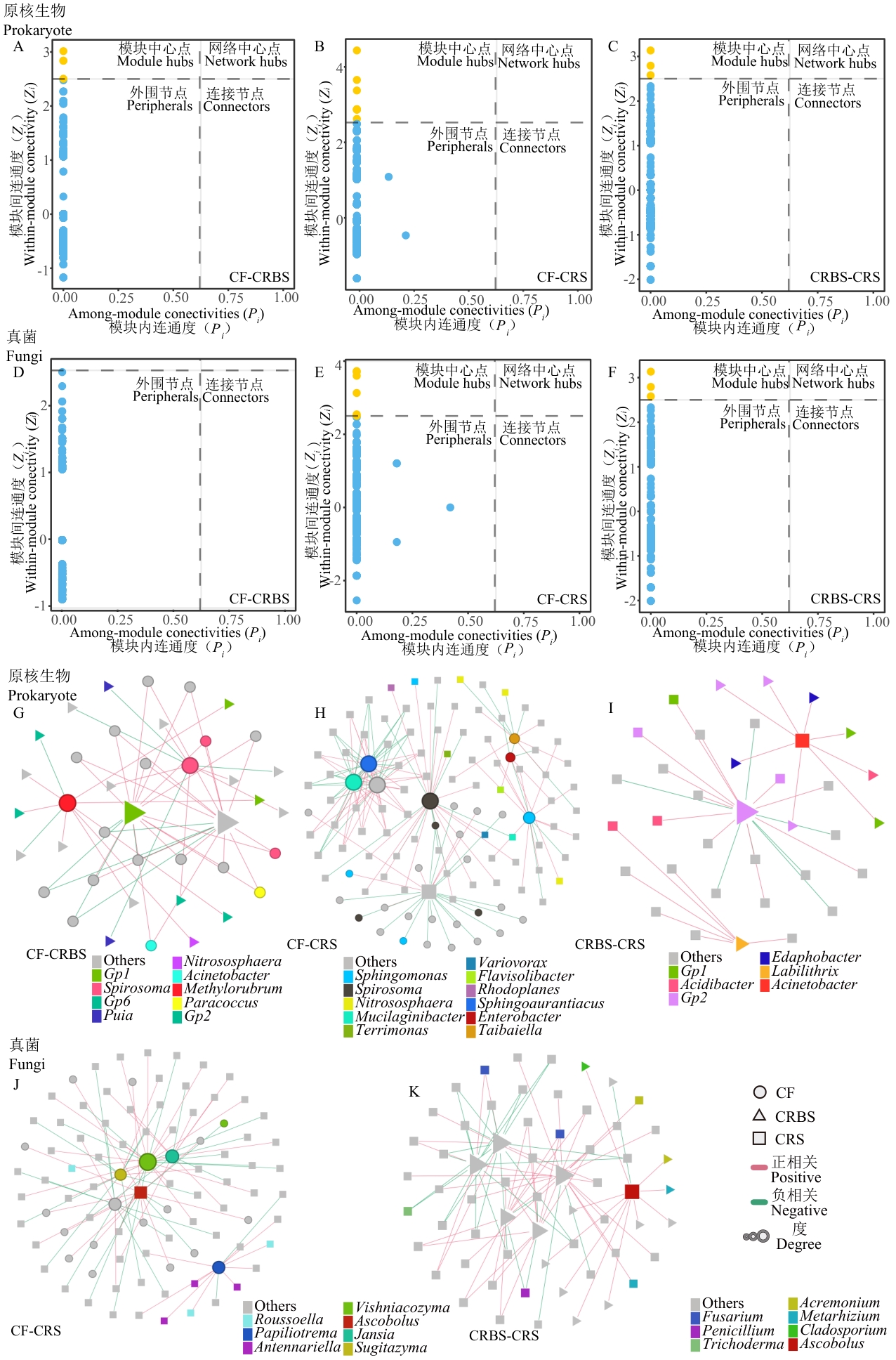
Fig. 4 Keystone nodes and their subnetworks in the coffee cherry-soil microbial cross-niche correlation networkCross-niche keystone nodes for prokaryotes (A-C) and fungi (D-F) in coffee cherry and soil environments. In the cross-domain networks, keystone nodes were identified based on their within-module connectivity (Zi ) and among-module connectivity (Pi ). Module hubs were defined as nodes with Zi >2.5. Subnetworks of these cross-niche keystone nodes are shown for prokaryotes (G-I) and fungi (J-K)
| [1] | Saberian M, Li J, Donnoli A, et al. Recycling of spent coffee grounds in construction materials: a review [J]. J Clean Prod, 2021, 289: 125837. |
| [2] | Bilen C, El Chami D, Mereu V, et al. A systematic review on the impacts of climate change on coffee agrosystems [J]. Plants, 2023, 12(1): 102. |
| [3] | Wang HT, Zhang FJ, Zhang YL, et al. Enrichment of novel entomopathogenic Pseudomonas species enhances willow resistance to leaf beetles [J]. Microbiome, 2024, 12: 169. |
| [4] | Hacquard S, Garrido-Oter R, González A, et al. Microbiota and host nutrition across plant and animal kingdoms [J]. Cell Host Microbe, 2015, 17(5): 603-616. |
| [5] | Ottesen AR, González Peña A, White JR, et al. Baseline survey of the anatomical microbial ecology of an important food plant: Solanum lycopersicum (tomato) [J]. BMC Microbiol, 2013, 13(1): 114. |
| [6] | Trivedi P, Leach JE, Tringe SG, et al. Plant-microbiome interactions: from community assembly to plant health [J]. Nat Rev Microbiol, 2020, 18(11): 607-621. |
| [7] | Fall AF, Nakabonge G, Ssekandi J, et al. Roles of arbuscular mycorrhizal fungi on soil fertility: contribution in the improvement of physical, chemical, and biological properties of the soil [J]. Front Fungal Biol, 2022, 3: 723892. |
| [8] | Prates Júnior P, Veloso TGR, de Cássia Soares da Silva M, et al. Soil microorganisms and quality of the coffee beverage [M]//Louzada Pereira L, Rizzo Moreira T. Quality determinants in coffee production. Cham: Springer International Publishing, 2021: 101-147. |
| [9] | Kutos S, Bennett RE, Santos D, et al. Soil and cherry bacterial communities predict flavor on coffee farms [J]. Sci Rep, 2025, 15: 19387. |
| [10] | Teixeira A, Martins V, Gerós H. From the vineyard soil to the grape berry surface: Unravelling the dynamics of the microbial terroir [J]. Agric Ecosyst Environ, 2024, 374: 109145. |
| [11] | 姚苏航, 周诗晶, 周池, 等. 辣椒不同生态位内生微生物群落差异及关联 [J]. 微生物学报, 2025, 65(1): 169-181. |
| Yao SH, Zhou SJ, Zhou C, et al. Differences and associations of endophytic microbial communities in different ecological niches of chili pepper [J]. Acta Microbiol Sin, 2025, 65(1): 169-181. | |
| [12] | Roy N, Yang S, Lee D, et al. Ecological processes influencing bacterial community assembly across plant niche compartments [J]. mLife, 2025, 4(3): 294-304. |
| [13] | Veloso TGR, de Cássia Soares da Silva M, Moreira TR, et al. Microbiomes associated with Coffea arabica and Coffea canephora in four different floristic domains of Brazil [J]. Sci Rep, 2023, 13: 18477. |
| [14] | Vellend M. The theory of ecological communities (MPB-57) [M]. Princeton: Princeton University Press, 2016. |
| [15] | Louisson Z, Ranjard L, Buckley HL, et al. Soil bacterial community composition is more stable in kiwifruit orchards relative to phyllosphere communities over time [J]. Environ Microbiome, 2023, 18: 71. |
| [16] | Zarraonaindia I, Owens SM, Weisenhorn P, et al. The soil microbiome influences grapevine-associated microbiota [J]. mBio, 2015, 6(2): e02527-e02514. |
| [17] | Brandl MT, Mammel MK, Simko I, et al. Weather factors, soil microbiome, and bacteria-fungi interactions as drivers of the epiphytic phyllosphere communities of romaine lettuce [J]. Food Microbiol, 2023, 113: 104260. |
| [18] | Matchado MS, Lauber M, Reitmeier S, et al. Network analysis methods for studying microbial communities: a mini review [J]. Comput Struct Biotechnol J, 2021, 19: 2687-2698. |
| [19] | Feng K, Peng X, Zhang Z, et al. iNAP: an integrated network analysis pipeline for microbiome studies [J]. iMeta, 2022, 1(2): e13. |
| [20] | Banerjee S, Schlaeppi K, van der Heijden MGA. Keystone taxa as drivers of microbiome structure and functioning [J]. Nat Rev Microbiol, 2018, 16(9): 567-576. |
| [21] | 吴悦妮, 冯凯, 厉舒祯, 等. 16S/18S/ITS扩增子高通量测序引物的生物信息学评估和改进 [J]. 微生物学通报, 2020, 47(9): 2897-2912. |
| Wu YN, Feng K, Li SZ, et al. In-silico evaluation and improvement on 16S/18S/ITS primers for amplicon high-throughput sequencing [J]. Microbiol China, 2020, 47(9): 2897-2912. | |
| [22] | Li SZ, Deng Y, Wang ZJ, et al. Exploring the accuracy of amplicon-based internal transcribed spacer markers for a fungal community [J]. Mol Ecol Resour, 2020, 20(1): 170-184. |
| [23] | Feng K, Zhang ZJ, Cai WW, et al. Biodiversity and species competition regulate the resilience of microbial biofilm community [J]. Mol Ecol, 2017, 26(21): 6170-6182. |
| [24] | Feng K, Wang S, He Q, et al. CoBacFM: Core bacteria forecast model for global grassland pH dynamics under future climate warming scenarios [J]. One Earth, 2024, 7(7): 1275-1287. |
| [25] | Edgar RC. UPARSE: highly accurate OTU sequences from microbial amplicon reads [J]. Nat Methods, 2013, 10(10): 996-998. |
| [26] | Li SZ, Du XF, Feng K, et al. Assessment of microbial α-diversity in one meter squared topsoil [J]. Soil Ecol Lett, 2022, 4(3): 224-236. |
| [27] | Shang LR, Wan LQ, Zhou XX, et al. Effects of organic fertilizer on soil nutrient status, enzyme activity, and bacterial community diversity in Leymus chinensis steppe in Inner Mongolia, China [J]. PLoS One, 2020, 15(10): e0240559. |
| [28] | Stegen JC, Lin XJ, Fredrickson JK, et al. Quantifying community assembly processes and identifying features that impose them [J]. ISME J, 2013, 7(11): 2069-2079. |
| [29] | Ning DL, Yuan MT, Wu LW, et al. A quantitative framework reveals ecological drivers of grassland microbial community assembly in response to warming [J]. Nat Commun, 2020, 11: 4717. |
| [30] | Wen T, Xie PH, Yang SD, et al. ggClusterNet: an R package for microbiome network analysis and modularity-based multiple network layouts [J]. iMeta, 2022, 1(3): e32. |
| [31] | Guttman DS, McHardy AC, Schulze-Lefert P. Microbial genome-enabled insights into plant-microorganism interactions [J]. Nat Rev Genet, 2014, 15(12): 797-813. |
| [32] | Kembel SW, O’Connor TK, Arnold HK, et al. Relationships between phyllosphere bacterial communities and plant functional traits in a neotropical forest [J]. Proc Natl Acad Sci U S A, 2014, 111(38): 13715-13720. |
| [33] | Xiong C, Zhu YG, Wang JT, et al. Host selection shapes crop microbiome assembly and network complexity [J]. New Phytol, 2021, 229(2): 1091-1104. |
| [34] | Qu Z, Li YH, Xu WH, et al. Different genotypes regulate the microbial community structure in the soybean rhizosphere [J]. J Integr Agric, 2023, 22(2): 585-597. |
| [35] | Zhou JZ, Ning DL. Stochastic community assembly: does it matter in microbial ecology? [J]. Microbiol Mol Biol Rev, 2017, 81(4): e00002-e00017. |
| [36] | Wang ZY, Wang HL, Chen ZF, et al. Ecological niche differences regulate the assembly of bacterial community in endophytic and rhizosphere of Eucalyptus [J]. For Ecol Manag, 2022, 524: 120521. |
| [37] | Veloso TGR, de Cássia Soares da Silva M, Cardoso WS, et al. Effects of environmental factors on microbiota of fruits and soil of Coffea arabica in Brazil [J]. Sci Rep, 2020, 10: 14692. |
| [38] | Ruan Y, Wang TT, Guo SW, et al. Plant grafting shapes complexity and co-occurrence of rhizobacterial assemblages [J]. Microb Ecol, 2020, 80(3): 643-655. |
| [39] | Xie MX, Jia JY, Luan DD, et al. Processes of assembly of endophytic prokaryotic and rhizosphere fungal communities in table grape are preponderantly deterministic [J]. Appl Soil Ecol, 2024, 203: 105660. |
| [40] | Philippot L, Raaijmakers JM, Lemanceau P, et al. Going back to the roots: the microbial ecology of the rhizosphere [J]. Nat Rev Microbiol, 2013, 11(11): 789-799. |
| [41] | Ling N, Wang TT, Kuzyakov Y. Rhizosphere bacteriome structure and functions [J]. Nat Commun, 2022, 13: 836. |
| [42] | Mulatu A, Megersa N, Abena T, et al. Biodiversity of the genus Trichoderma in the rhizosphere of coffee (Coffea arabica) plants in Ethiopia and their potential use in biocontrol of coffee wilt disease [J]. Crops, 2022, 2(2): 120-141. |
| [43] | de Sousa LP, Guerreiro-Filho O, Mondego JMC. The rhizosphere microbiomes of five species of coffee trees [J]. Microbiol Spectr, 2022, 10(2): e00444-e00422. |
| [44] | Wan XL, Gao Q, Zhao JS, et al. Biogeographic patterns of microbial association networks in paddy soil within Eastern China [J]. Soil Biol Biochem, 2020, 142: 107696. |
| [45] | Bez C, Esposito A, Musonerimana S, et al. Comparative study of the rhizosphere microbiome of Coffea arabica grown in different countries reveals a small set of prevalent and keystone taxa [J]. Rhizosphere, 2023, 25: 100652. |
| [46] | Duong B, Marraccini P, Maeght JL, et al. Coffee microbiota and its potential use in sustainable crop management. a review [J]. Front Sustain Food Syst, 2020, 4: 607935. |
| [47] | Zhu LH, Li T, Xu XY, et al. Succession of fungal communities at different developmental stages of cabernet sauvignon grapes from an organic vineyard in Xinjiang [J]. Front Microbiol, 2021, 12: 718261. |
| [48] | Martins JLA, Franzin ML, da Silva Ferreira D, et al. Metarhizium-inoculated coffee seeds promote plant growth and biocontrol of coffee leaf miner [J]. Microorganisms, 2024, 12(9): 1845. |
| [49] | Faust K, Raes J. Microbial interactions: from networks to models [J]. Nat Rev Microbiol, 2012, 10(8): 538-550. |
| [50] | Röttjers L, Faust K. From hairballs to hypotheses-biological insights from microbial networks[J]. FEMS Microbiol Rev, 2018, 42(6): 761-780. |
| [1] | XU You-fen, LI Zong, LIU Ru-yin, YU Zhi-sheng, ZHANG Hong-xun, HE Wei, LI Ye. Advances in Research and Application of Microbial Source Tracking Technology in Aquatic Environment [J]. Biotechnology Bulletin, 2019, 35(9): 35-44. |
| Viewed | ||||||
|
Full text |
|
|||||
|
Abstract |
|
|||||
