







Biotechnology Bulletin ›› 2026, Vol. 42 ›› Issue (5): 203-212.doi: 10.13560/j.cnki.biotech.bull.1985.2025-1459
ZHANG Ru-min1( ), ZHANG Bo2, LIN Jie-hao1, QIAO Jing2, ZHAO Hong-yuan1, GUO Xiao-peng1,3, REN Hai-wei1,3()
Received:2025-12-29
Online:2026-05-26
Published:2026-06-10
Contact:
REN Hai-wei
E-mail:zrm1516096994@163.com;rhw52571119@163.com
ZHANG Ru-min, ZHANG Bo, LIN Jie-hao, QIAO Jing, ZHAO Hong-yuan, GUO Xiao-peng, REN Hai-wei. Fungal Community Succession and Assembly Mechanisms during the Post-ripening Process of Nongxiang Daqu[J]. Biotechnology Bulletin, 2026, 42(5): 203-212.
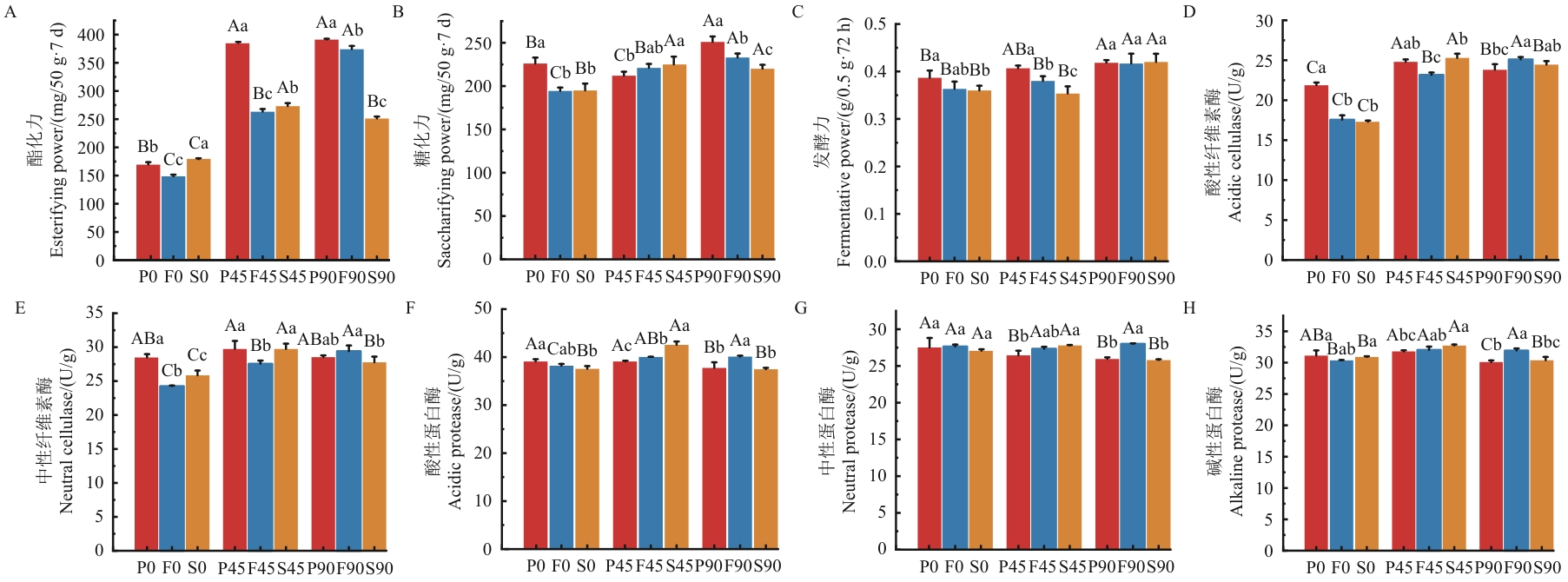
Fig. 1 Biochemical indicators of different grades of Daqu during the post-ripening processP, F, and S refer to premium, first, and second grades of Daqu, respectively. 0, 45, and 90 refer to post-ripening for 0 d, 45 d, and 90 d, respectively. Different capital letters indicate significant differences (P<0.05) between Daqu of the same grade at different post-ripening stages, while different lowercase letters indicate significant differences (P<0.05) between Daqu of different grades at the same post-ripening stage, the same below
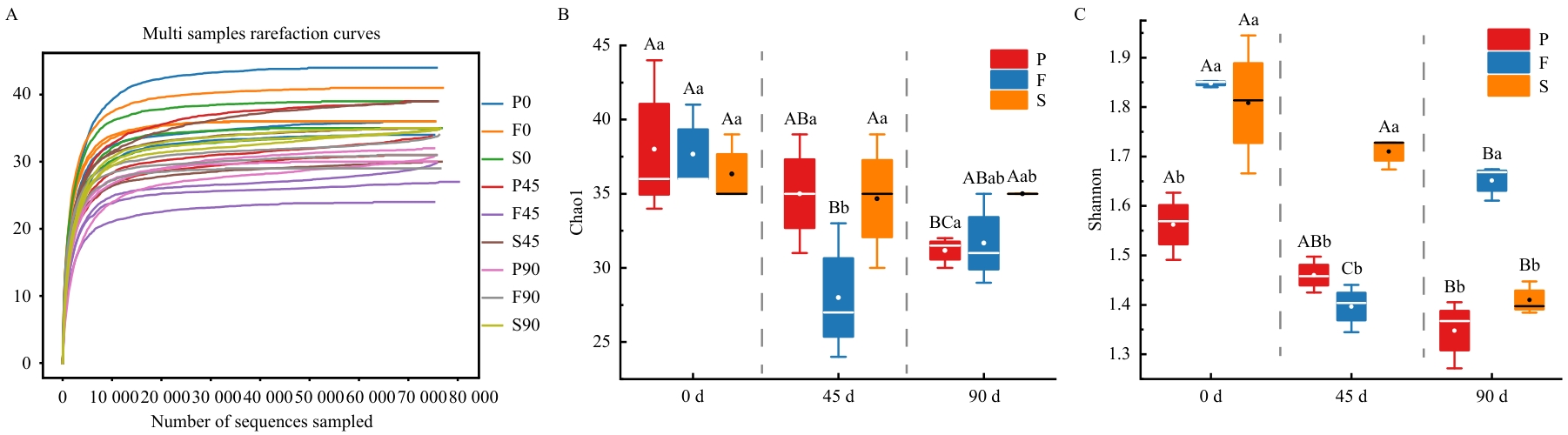
Fig. 2 Analysis of fungal community alpha diversity during the post-ripening process of different grades of Daqu
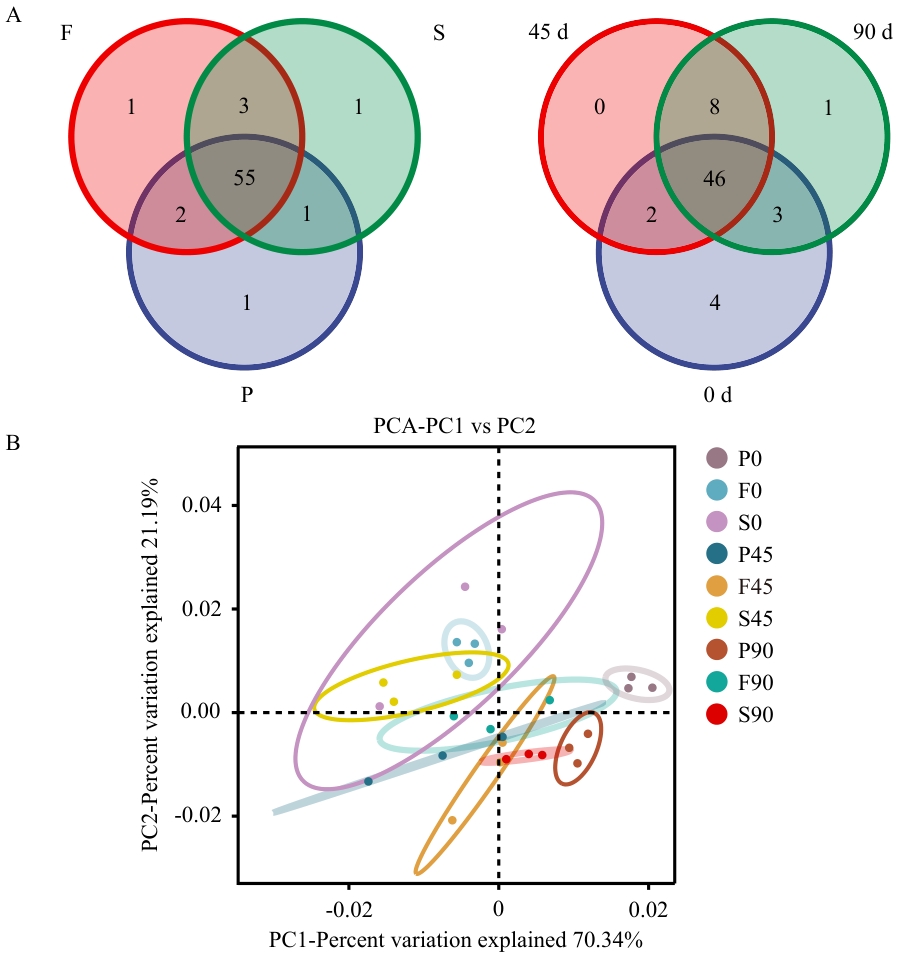
Fig. 3 Similarity of fungal OTU composition (A) and principal component analysis (B) in different grades of Daqu
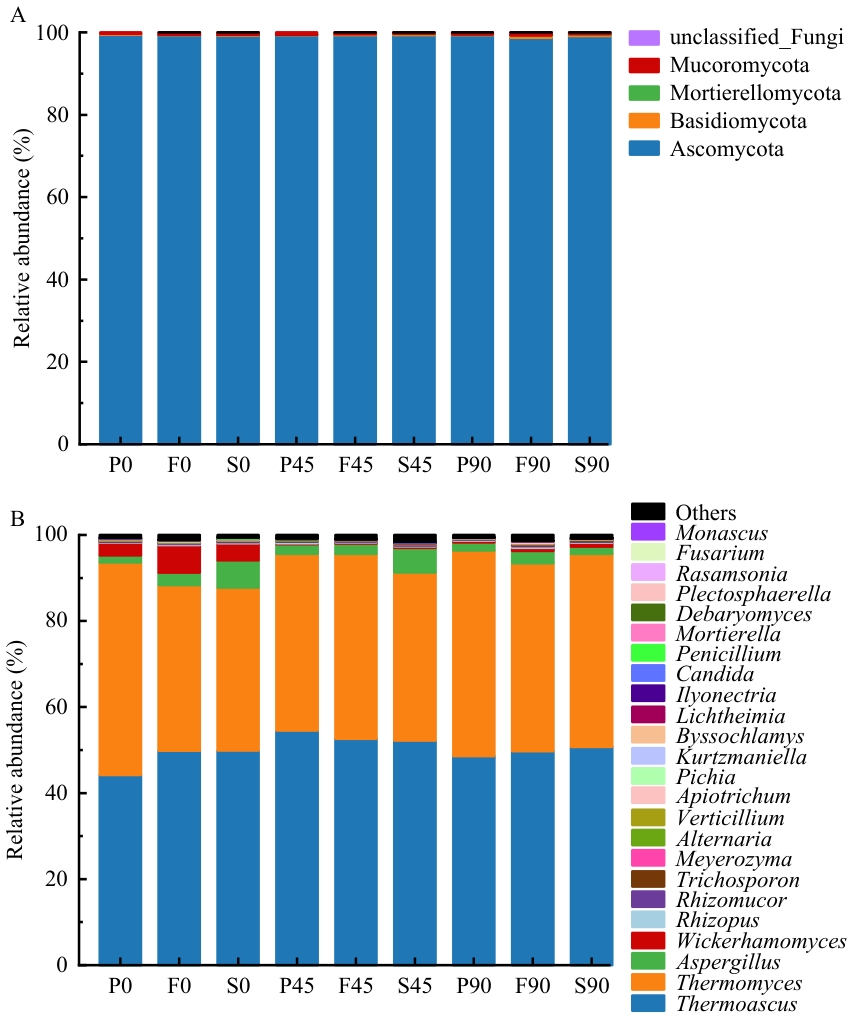
Fig. 4 Species composition of different grades of Daqu during the post-ripening process at phylum(A) and genus (B)
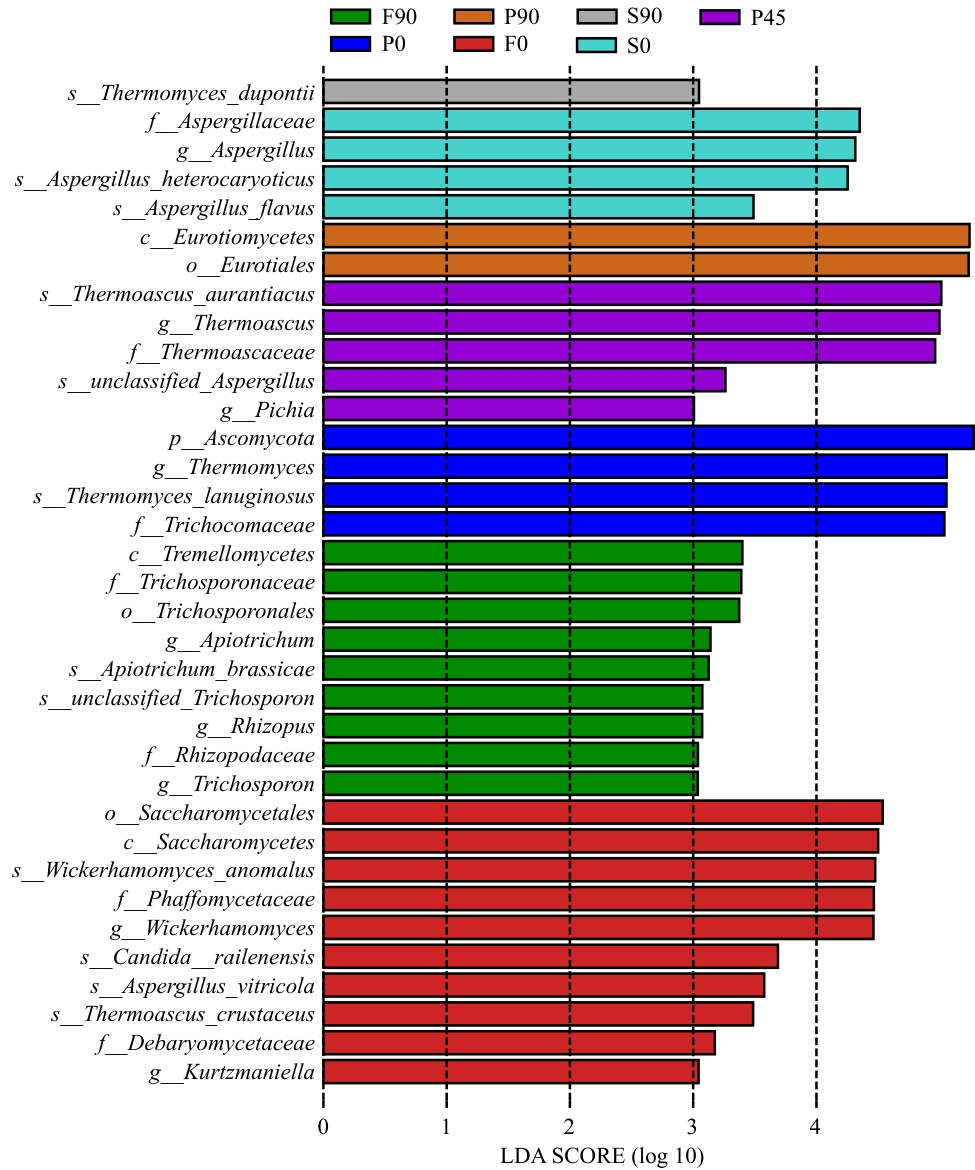
Fig. 5 Bar chart of LDA at the fungi genus level for different grades of Daqu in the post-ripening process
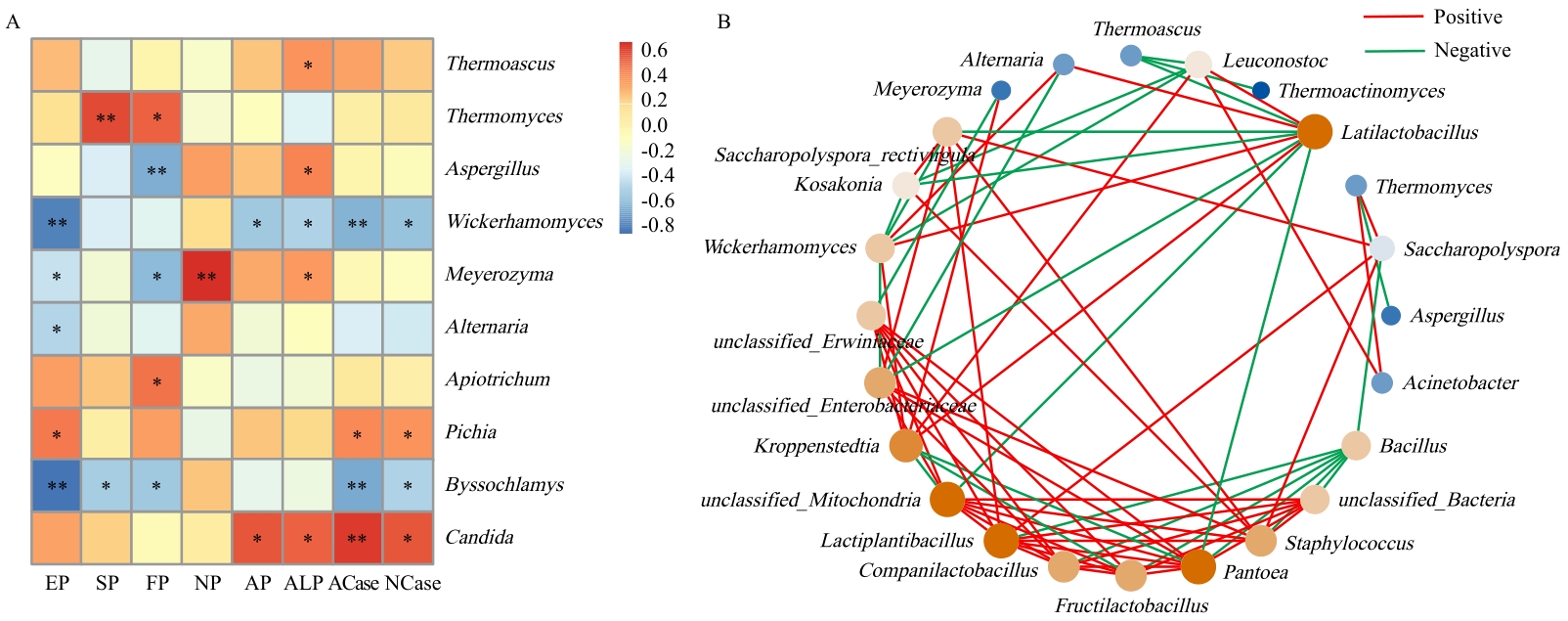
Fig. 6 Correlation of dominant fungal genera with biochemical indicators(A) and dominant bacterial genera(B) in DaquCorrelations were calculated with Pearson’s method, * P<0.05, and ** P<0.01. The bacterial abundance data in Figure B were derived from the published results of our research group [15]
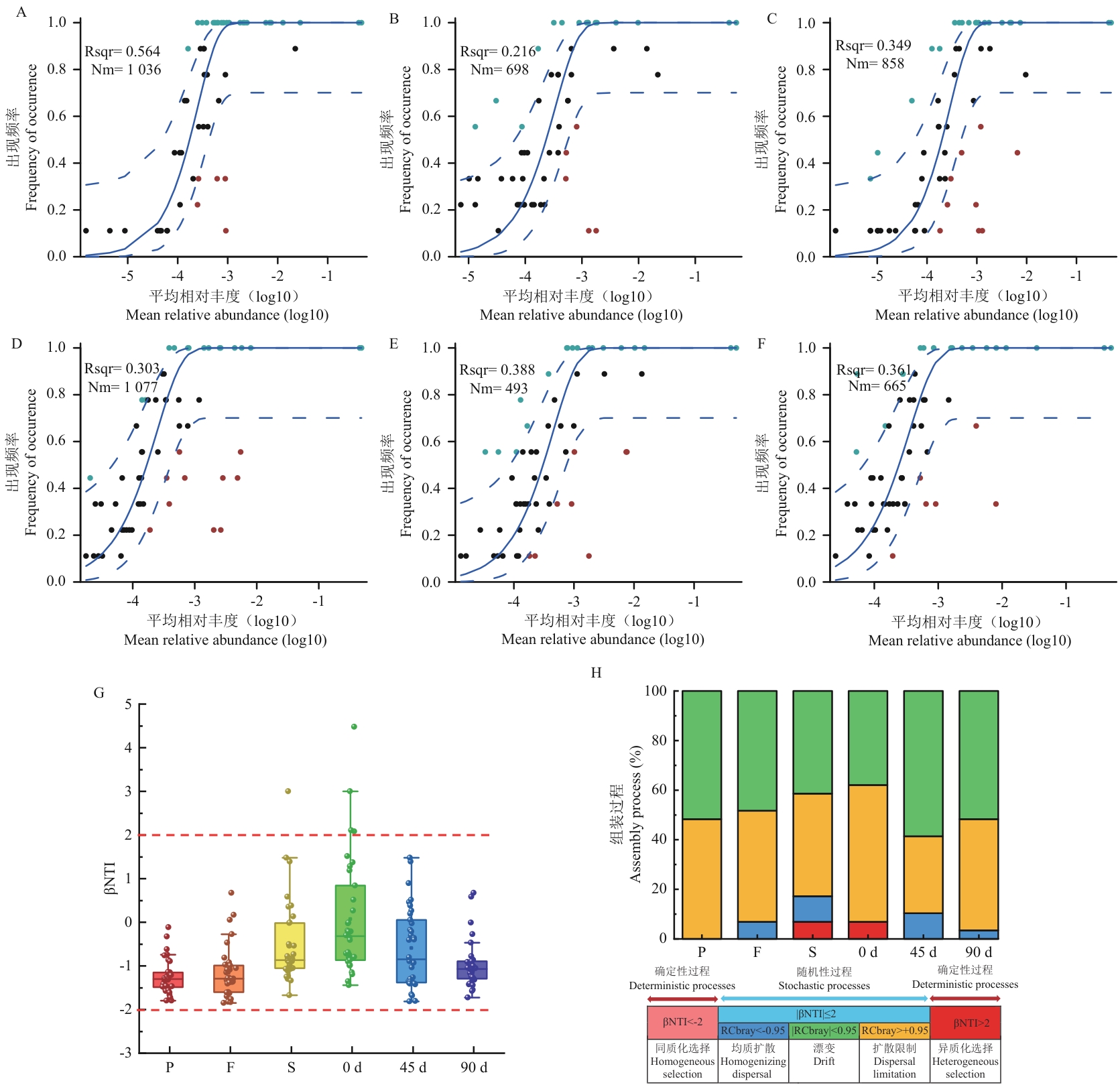
Fig. 7 Neutral models (A-F) and null models (G, H) of fungi in Daqu of different grades and ripening periodsA: 0 d; B: 45 d; C: 90 d; D: premium grade of Daqu; E: first grade of Daqu; F: second grade of Daqu. The solid blue line indicates the best fit of the neutral model, and the dashed lines represent the 95% confidence interval of the model prediction. The Rsqr value represents the overall goodness-of-fit of the neutral community model. A higher Rsqr value indicates a greater influence of stochastic processes and a lesser influence of deterministic processes on the microbial community
| [1] | Deng YK, Huang D, Han BL, et al. Correlation: between autochthonous microbial diversity and volatile metabolites during the fermentation of Nongxiang daqu [J]. Front Microbiol, 2021, 12: 688981. |
| [2] | Ma SY, Luo HB, Zhao D, et al. Environmental factors and interactions among microorganisms drive microbial community succession during fermentation of Nongxiangxing daqu [J]. Bioresour Technol, 2022, 345: 126549. |
| [3] | 王玉荣, 张建辉, 张凯, 等. 泸州和南阳地区中温大曲真菌群落结构和理化品质的差异性及相关性分析 [J]. 食品工业科技, 2026, 47(07): 186-195. |
| Wang YR, Zhang JH, Zhang K, et al. Analysis of the differences and correlations of fungal community structure and physicochemical properties of medium-temperature daqu from Luzhou and Nanyang regions [J]. Sci Technol Food Ind, 2026, 47(07): 186-195. | |
| [4] | 李娜, 张海波, 叶明波, 等. 河套地区中高温大曲真菌类群结构解析 [J]. 中国酿造, 2024, 43(12): 110-115. |
| Li N, Zhang HB, Ye MB, et al. Analysis of fungal community structure of medium-high temperature Daqu in Hetao area [J]. China Brew, 2024, 43(12): 110-115. | |
| [5] | 施思, 彭智辅, 乔宗伟, 等. 浓香型大曲贮藏过程中糖化力发酵力变化及真菌多样性分析 [J]. 食品与发酵工业, 2017, 43(5): 76-79. |
| Shi S, Peng ZF, Qiao ZW, et al. Analysis of the change of saccharifying power and fermenting power for Luzhou-flavor Daqu and their fungal diversity during storage [J]. Food Ferment Ind, 2017, 43(5): 76-79. | |
| [6] | Fan GS, Fu ZL, Sun BG, et al. Roles of aging in the production of light-flavored Daqu [J]. J Biosci Bioeng, 2019, 127(3): 309-317. |
| [7] | 孙亮霞, 王生艳, 林一心, 等. 中高温大曲贮存期间理化指标及微生物群落动态分析 [J]. 食品与发酵工业, 2025, 51(7): 122-128. |
| Sun LX, Wang SY, Lin YX, et al. Analyzing dynamics of microbial community and physicochemical indicators during storage of medium-and high-temperature Daqu [J]. Food Ferment Ind, 2025, 51(7): 122-128. | |
| [8] | Yang L, Fan WL, Xu Y. Effects of storage period and season on the microecological characteristics of Jiangxiangxing high-temperature Daqu [J]. Food Res Int, 2024, 196: 115034. |
| [9] | 冯佳婷, 陆震鸣, 时伟, 等. 不同培养温度对大曲微生物群落结构、酶活及挥发性化合物的影响 [J]. 应用与环境生物学报, 2021, 27(3): 760-767. |
| Feng JT, Lu ZM, Shi W, et al. Effects of different culture temperatures on microbial community structure, enzyme activity, and volatile compounds in Daqu [J]. Chin J Appl Environ Biol, 2021, 27(3): 760-767. | |
| [10] | 张坤坤, 范文来, 徐岩, 等. 基于理化、酶活力和不挥发化合物解析不同等级高温大曲异质性 [J]. 食品与发酵工业, 2026, 52(08): 1-8. |
| Zhang KK, Fan WL, Xu Y, et al. Analysis of heterogeneity of high-temperature Daqu at different grades based on physicochemical properties, enzyme activity, and non-volatile compounds [J]. Food Ferment Ind, 2026, 52(08): 1-8. | |
| [11] | Tang J, Rao JQ, Zou YF, et al. The community assembly patterns determined differences between the surface and the core microbial communities of Nongxiangxing Daqu [J]. LWT, 2023, 183: 114936. |
| [12] | Shi W, Chai LJ, Fang GY, et al. Spatial heterogeneity of the microbiome and metabolome profiles of high-temperature Daqu in the same workshop [J]. Food Res Int, 2022, 156: 111298. |
| [13] | 刘延波, 刘润雨, 赵志军, 等. 赊店老酒大曲质量差异研究 [J]. 食品工业科技, 2019, 40(23): 77-80, 87. |
| Liu YB, Liu RY, Zhao ZJ, et al. Study on quality difference of daqu in SheDianLaoJiu [J]. Sci Technol Food Ind, 2019, 40(23): 77-80, 87. | |
| [14] | Chen LH, Peng QH, Chen YH, et al. Analysis of dominant microorganisms and core enzymes in Qingke Baijiu Daqu by high-throughput sequencing and proteomics [J]. Food Res Int, 2025, 204: 115941. |
| [15] | 任海伟, 李云帆, 阿丽米热·克热穆, 等. 不同等级金徽酒大曲贮藏过程中的细菌群落演替规律和组装机制 [J]. 食品科学, 2025, 46(10): 108-119. |
| Ren HW, Li YF, Alimier·K, et al. Succession and assembly mechanism of bacterial communities in different grades of Jinhui Baijiu daqu during storage [J]. Food Sci, 2025, 46(10): 108-119. | |
| [16] | 张毅, 严伟, 黄钧, 等. 菌群强化对大曲微生物群落结构及代谢影响的研究 [J]. 食品与发酵工业, 2026, 52(06): 317-327. |
| Zhang Y, Yan W, Huang J, et al. Study on the effect of enhanced flora on microbial community structure and metabolism of Daqu [J]. Food Ferment Ind, 2026, 52(06): 317-327. | |
| [17] | Zhang YL, Xu C, Xing G, et al. Evaluation of microbial communities of Chinese Feng-flavor Daqu with effects of environmental factors using traceability analysis [J]. Sci Rep, 2023, 13: 7657. |
| [18] | 叶光斌, 李丹宇, 杨跃寰, 等. PCR-DGGE解析浓香型大曲发酵、储藏过程真菌群落的演替规律 [J]. 四川理工学院学报: 自然科学版, 2013, 26(4): 5-9. |
| Ye GB, Li DY, Yang YH, et al. Study on the succession law of fungal community during the fermentation and storage process of Luzhou-flavor daqu by PCR-DGGE [J]. J Sichuan Univ Sci Eng Nat Sci Ed, 2013, 26(4): 5-9. | |
| [19] | Tan YW, Zhu Y, Wijffels RH, et al. Controlling metabolic stability of food microbiome for stable indigenous liquor fermentation [J]. npj Biofilms Microbiomes, 2025, 11: 124. |
| [20] | 熊连双, 谢丹, 朱安然, 等. 不同储存期人工和机械生产高温大曲微生物群落多样性比较 [J]. 食品工业科技, 2026, 47(08): 221-231 |
| Xiong LS, Xie D, Zhu AR, et al. Comparative of microbial community diversity in artificially and mechanically produced high-temperature daqu across different storage periods [J]. Sci Technol Food Ind, 2026, 47(08): 221-231. | |
| [21] | Zhu M, Zheng J, Xie J, et al. Effects of environmental factors on the microbial community changes during medium-high temperature Daqu manufacturing [J]. Food Res Int, 2022, 153: 110955. |
| [22] | Shi JH, Xiao YP, Li XR, et al. Analyses of microbial consortia in the starter of Fen Liquor [J]. Lett Appl Microbiol, 2009, 48(4): 478-485. |
| [23] | Zhu CT, Cheng YX, Shi QL, et al. Metagenomic analyses reveal microbial communities and functional differences between Daqu from seven provinces [J]. Food Res Int, 2023, 172: 113076. |
| [24] | Xu SS, Hu WQ, Zhou H, et al. Metatranscriptomic insights into the mechanism of ‘Multiple Qu’ utilization in Jian-flavor Baijiu fermentation [J]. Food Res Int, 2025, 200: 115463. |
| [25] | 梁晨, 杜海, 徐岩. 大曲贮存过程中原核微生物群落结构及风味成分演替规律 [J]. 微生物学通报, 2017, 44(2): 384-393. |
| Liang C, Du H, Xu Y. The succession of procaryotic microbial community and the flavor components in the storage process of Daqu [J]. Microbiol China, 2017, 44(2): 384-393. | |
| [26] | 陈晓茹, 黄钧, 周荣清, 等. 强化曲贮存过程中群落与代谢组分的变化规律 [J]. 食品与发酵工业, 2022, 48(3): 63-69. |
| Chen XR, Huang J, Zhou RQ, et al. Changes of community and metabolic components during the storage of fortified Daqu [J]. Food Ferment Ind, 2022, 48(3): 63-69. | |
| [27] | Xiao C, Lu ZM, Zhang XJ, et al. Bio-heat is a key environmental driver shaping the microbial community of medium-temperature daqu [J]. Appl Environ Microbiol, 2017, 83(23): e01550-e01517. |
| [28] | Wang P, Wu Q, Jiang XJ, et al. Bacillus licheniformis affects the microbial community and metabolic profile in the spontaneous fermentation of Daqu starter for Chinese liquor making [J]. Int J Food Microbiol, 2017, 250: 59-67. |
| [29] | Chen ZH, Wang H, Wu CC, et al. Evolution of Jiang-flavor daqu's characteristics during different storage stages and influence on simulated brewing fermentation [J]. Foods, 2026, 15(2): 220. |
| [30] | Burns AR, Stephens WZ, Stagaman K, et al. Contribution of neutral processes to the assembly of gut microbial communities in the zebrafish over host development [J]. ISME J, 2016, 10(3): 655-664. |
| [31] | Xu M, Huang QY, Xiong ZQ, et al. Distinct responses of rare and abundant microbial taxa to in situ chemical stabilization of cadmium-contaminated soil [J]. mSystems, 2021, 6(5): e0104021. |
| [32] | Xiao C, Yang Y, Lu ZM, et al. Daqu microbiota exhibits species-specific and periodic succession features in Chinese Baijiu fermentation process [J]. Food Microbiol, 2021, 98: 103766. |
| [1] | WANG Ya-nan, WEI Li-min, WANG Feng, CHAO Zhe, REN Yu-wei, LIU Hai-long, HUANG Li-li, SUN Rui-ping. A Comparative Study of Metabolomics-based Screening of Differential Metabolites for Fat Deposition in Wuzhishan and DLY Pigs [J]. Biotechnology Bulletin, 2026, 42(2): 325-337. |
| [2] | QIN Tian-yuan, SUN Chao, BI Zhen-zhen, WANG Han, LI Xin, ZENG Wen-jie, BAI Jiang-ping. Responses of PVC-pipe Seedlings and Their Root Tip Microstructures of Different Drought-Resistant Potato Varieties to Drought Stress [J]. Biotechnology Bulletin, 2018, 34(12): 102-109. |
| Viewed | ||||||
|
Full text |
|
|||||
|
Abstract |
|
|||||
