







Biotechnology Bulletin ›› 2025, Vol. 41 ›› Issue (3): 240-254.doi: 10.13560/j.cnki.biotech.bull.1985.2024-0753
LI Bin1,2( ), SU Xiang-ping1,3, LIU Chang1, WANG Yu-bing1, ZHANG Yong-hong4, ZHOU Chao1(), XU Qing2()
Received:2024-08-06
Online:2025-03-26
Published:2025-03-20
Contact:
ZHOU Chao, XU Qing
E-mail:bli@ctgu.edu.cn;zhouchao@ctgu.edu.cn;xuq@ctgu.edu.cn
LI Bin, SU Xiang-ping, LIU Chang, WANG Yu-bing, ZHANG Yong-hong, ZHOU Chao, XU Qing. Chloroplast Genome Characteristics and Phylogenetic Analysis of Scrophulariaceae[J]. Biotechnology Bulletin, 2025, 41(3): 240-254.
属名 Genus | 物种名 Organism | 登录号 Accession | GC含量 GC/% | Size/bp | 基因数量 Gene number | 参考文献 Reference | ||||||
|---|---|---|---|---|---|---|---|---|---|---|---|---|
| Total | LSC | IR | SSC | Total | PCGs | rRNA | tRNA | |||||
| Bontia | B. daphnoides | NC_050952.1 | 37.8 | 153 946 | 85 008 | 25 169 | 18 600 | 113 | 80 | 4 | 29 | [ |
| Buddleja | B. alternifolia | MN395662.1 | 38.0 | 154 357 | 85 405 | 25 441 | 18 070 | 114 | 80 | 4 | 30 | [ |
| B. alternifolia | NC_057238.1 | 38.0 | 154 280 | 85 330 | 25 440 | 18 070 | 115 | 80 | 4 | 31 | [ | |
| B. colvilei | MH411148.1 | 38.1 | 154 228 | 85 203 | 25 553 | 17 919 | 114 | 80 | 4 | 30 | [ | |
| B. colvilei | NC_042766.1 | 38.1 | 154 225 | 85 200 | 25 553 | 17 919 | 114 | 80 | 4 | 30 | [ | |
| B. globosa | NC_068052.1 | 38.1 | 154 034 | 84 909 | 25 524 | 18 077 | 114 | 80 | 4 | 30 | [ | |
| B. sessilifolia | MH411150.1 | 38.1 | 154 204 | 85 181 | 25 559 | 17 905 | 114 | 80 | 4 | 30 | [ | |
| B. sessilifolia | MH411151.1 | 38.1 | 154 710 | 85 687 | 25 559 | 17 905 | 114 | 80 | 4 | 30 | [ | |
| B. sessilifolia | NC_042767.1 | 38.1 | 154 202 | 85 179 | 25 559 | 17 905 | 114 | 80 | 4 | 30 | [ | |
| Diocirea | D. violacea | NC_050957.1 | 37.8 | 151 900 | 87 779 | 22 936 | 18 250 | 112 | 80 | 4 | 28 | [ |
| Eremophila | E. cuneifolia | NC_068053.1 | 37.8 | 151 927 | 87 819 | 22 925 | 18 258 | 114 | 80 | 4 | 30 | [ |
| E. gibbifolia | NC_050954.1 | 37.9 | 148 717 | 90 431 | 20 147 | 17 992 | 112 | 80 | 4 | 28 | [ | |
| E. lanceolata | NC_068054.1 | 37.9 | 151 565 | 87 680 | 22 812 | 18 261 | 114 | 80 | 4 | 30 | [ | |
| E. latrobei subsp. filiformis | OL977700.1 | 37.9 | 151 550 | 87 692 | 22 798 | 18 262 | 114 | 80 | 4 | 30 | [ | |
| E. longifolia | NC_068055.1 | 37.9 | 151 629 | 87 699 | 22 832 | 18 266 | 114 | 80 | 4 | 30 | [ | |
| E. maculata subsp. brevifolia | OL977702.1 | 37.8 | 142 336 | 97 103 | 13 497 | 18 239 | 114 | 80 | 4 | 30 | [ | |
| E. magnifica subsp. magnifica | OL977703.1 | 37.8 | 151 922 | 87 933 | 22 971 | 18 047 | 114 | 80 | 4 | 30 | [ | |
| E. magnifica subsp. velutina | OL977704.1 | 37.8 | 151 919 | 87 929 | 22 971 | 18 048 | 114 | 80 | 4 | 30 | [ | |
| E. oppositifolia | NC_050958.1 | 37.9 | 151 715 | 87 798 | 22 834 | 18 277 | 112 | 80 | 4 | 28 | [ | |
| E. pilosa | NC_068056.1 | 37.9 | 151 541 | 87 684 | 22 798 | 18 261 | 114 | 80 | 4 | 30 | [ | |
| E. platycalyx subsp. pardalota | OL977706.1 | 37.7 | 151 947 | 87 902 | 22 966 | 18 113 | 114 | 80 | 4 | 30 | [ | |
| E. pusilliflora | NC_068057.1 | 37.9 | 151 725 | 87 845 | 22 803 | 18 274 | 114 | 80 | 4 | 30 | [ | |
| E. spongiocarpa | NC_068058.1 | 37.9 | 151 678 | 87 760 | 22 820 | 18 278 | 114 | 80 | 4 | 30 | [ | |
| Leucophyllum | L. frutescens | NC_050953.1 | 37.8 | 154 253 | 85 003 | 25 551 | 18 148 | 113 | 80 | 4 | 29 | [ |
| Mimulicalyx | M. rosulatus | NC_068044.1 | 38.1 | 153 580 | 84 572 | 25 695 | 17 618 | 114 | 80 | 4 | 30 | [ |
| M. rosulatus | OL977687.1 | 38.1 | 153 587 | 84 580 | 25 695 | 17 617 | 114 | 80 | 4 | 30 | [ | |
| Myoporum | M. bontioides | NC_050956.1 | 37.9 | 151 742 | 87 680 | 23 026 | 18 010 | 112 | 80 | 4 | 28 | [ |
| M. laetum | NC_050955.1 | 37.9 | 151 725 | 87 724 | 22 997 | 18 007 | 112 | 80 | 4 | 28 | [ | |
| Scrophularia | S. buergeriana | NC_031437.1 | 38.0 | 153 631 | 84 454 | 25 624 | 17 929 | 114 | 80 | 4 | 30 | [ |
| S. dentata | KT428154.1 | 38.0 | 152 553 | 84 058 | 25 523 | 17 449 | 114 | 80 | 4 | 30 | [ | |
| S. dentata | OP018677.1 | 38.0 | 152 509 | 84 070 | 25 532 | 17 375 | 114 | 80 | 4 | 30 | [ | |
| S. incisa | NC_081995.1 | 38.0 | 152 481 | 83 944 | 25 535 | 17 467 | 114 | 80 | 4 | 30 | [ | |
| S. incisa | OP036429.1 | 38.0 | 152 600 | 84 067 | 25 534 | 17 465 | 113 | 80 | 4 | 29 | [ | |
| S. integrifolia | NC_081997.1 | 38.0 | 152 088 | 83 588 | 25 512 | 17 476 | 114 | 80 | 4 | 30 | [ | |
| S. kiriloviana | NC_081996.1 | 38.0 | 152 554 | 84 008 | 25 512 | 17 522 | 115 | 80 | 4 | 31 | [ | |
| S. kiriloviana | OP036427.1 | 38.0 | 152 365 | 83 891 | 25 500 | 17 474 | 114 | 80 | 4 | 30 | [ | |
| S. kiriloviana | OP036428.1 | 38.0 | 152 528 | 83 857 | 25 610 | 17 454 | 114 | 80 | 4 | 30 | [ | |
| S. ningpoensis | NC_053823.1 | 38.0 | 153 175 | 84 257 | 25 490 | 17 938 | 114 | 80 | 4 | 30 | [ | |
| S. ningpoensis | OR664113.1 | 38.0 | 153 175 | 84 257 | 25 490 | 17 938 | 114 | 80 | 4 | 30 | - | |
| S. ningpoensis | OR664114.1 | 38.0 | 153 175 | 84 257 | 25 490 | 17 938 | 114 | 80 | 4 | 30 | - | |
| S. takesimensis | KP718628.1 | 38.0 | 152 436 | 83 542 | 25 478 | 17 938 | 114 | 80 | 4 | 30 | [ | |
| S. takesimensis | NC_026202.1 | 38.1 | 152 425 | 83 531 | 25 478 | 17 938 | 113 | 80 | 4 | 29 | [ | |
| Verbascum | V. blattaria | NC_085504.1 | 38.0 | 153 014 | 84 263 | 25 440 | 17 871 | 114 | 80 | 4 | 30 | [ |
| V. chaixii | NC_085505.1 | 38.0 | 153 495 | 84 779 | 25 436 | 17 844 | 114 | 80 | 4 | 30 | [ | |
| V. chinense | NC_051533.1 | 38.0 | 153 618 | 84 834 | 25 482 | 17 828 | 114 | 80 | 4 | 30 | [ | |
| V. phoeniceum | NC_050920.1 | 38.0 | 153 348 | 84 601 | 25 430 | 17 887 | 114 | 80 | 4 | 30 | [ | |
| V. phoeniceum | ON121986.1 | 38.0 | 153 273 | 84 571 | 25 426 | 17 850 | 114 | 80 | 4 | 30 | [ | |
| V. songaricum | NC_085506.1 | 38.0 | 153 291 | 84 534 | 25 459 | 17 839 | 114 | 80 | 4 | 30 | [ | |
Table 1 Basic characteristics of Scrophulariaceae chloroplast genomes
属名 Genus | 物种名 Organism | 登录号 Accession | GC含量 GC/% | Size/bp | 基因数量 Gene number | 参考文献 Reference | ||||||
|---|---|---|---|---|---|---|---|---|---|---|---|---|
| Total | LSC | IR | SSC | Total | PCGs | rRNA | tRNA | |||||
| Bontia | B. daphnoides | NC_050952.1 | 37.8 | 153 946 | 85 008 | 25 169 | 18 600 | 113 | 80 | 4 | 29 | [ |
| Buddleja | B. alternifolia | MN395662.1 | 38.0 | 154 357 | 85 405 | 25 441 | 18 070 | 114 | 80 | 4 | 30 | [ |
| B. alternifolia | NC_057238.1 | 38.0 | 154 280 | 85 330 | 25 440 | 18 070 | 115 | 80 | 4 | 31 | [ | |
| B. colvilei | MH411148.1 | 38.1 | 154 228 | 85 203 | 25 553 | 17 919 | 114 | 80 | 4 | 30 | [ | |
| B. colvilei | NC_042766.1 | 38.1 | 154 225 | 85 200 | 25 553 | 17 919 | 114 | 80 | 4 | 30 | [ | |
| B. globosa | NC_068052.1 | 38.1 | 154 034 | 84 909 | 25 524 | 18 077 | 114 | 80 | 4 | 30 | [ | |
| B. sessilifolia | MH411150.1 | 38.1 | 154 204 | 85 181 | 25 559 | 17 905 | 114 | 80 | 4 | 30 | [ | |
| B. sessilifolia | MH411151.1 | 38.1 | 154 710 | 85 687 | 25 559 | 17 905 | 114 | 80 | 4 | 30 | [ | |
| B. sessilifolia | NC_042767.1 | 38.1 | 154 202 | 85 179 | 25 559 | 17 905 | 114 | 80 | 4 | 30 | [ | |
| Diocirea | D. violacea | NC_050957.1 | 37.8 | 151 900 | 87 779 | 22 936 | 18 250 | 112 | 80 | 4 | 28 | [ |
| Eremophila | E. cuneifolia | NC_068053.1 | 37.8 | 151 927 | 87 819 | 22 925 | 18 258 | 114 | 80 | 4 | 30 | [ |
| E. gibbifolia | NC_050954.1 | 37.9 | 148 717 | 90 431 | 20 147 | 17 992 | 112 | 80 | 4 | 28 | [ | |
| E. lanceolata | NC_068054.1 | 37.9 | 151 565 | 87 680 | 22 812 | 18 261 | 114 | 80 | 4 | 30 | [ | |
| E. latrobei subsp. filiformis | OL977700.1 | 37.9 | 151 550 | 87 692 | 22 798 | 18 262 | 114 | 80 | 4 | 30 | [ | |
| E. longifolia | NC_068055.1 | 37.9 | 151 629 | 87 699 | 22 832 | 18 266 | 114 | 80 | 4 | 30 | [ | |
| E. maculata subsp. brevifolia | OL977702.1 | 37.8 | 142 336 | 97 103 | 13 497 | 18 239 | 114 | 80 | 4 | 30 | [ | |
| E. magnifica subsp. magnifica | OL977703.1 | 37.8 | 151 922 | 87 933 | 22 971 | 18 047 | 114 | 80 | 4 | 30 | [ | |
| E. magnifica subsp. velutina | OL977704.1 | 37.8 | 151 919 | 87 929 | 22 971 | 18 048 | 114 | 80 | 4 | 30 | [ | |
| E. oppositifolia | NC_050958.1 | 37.9 | 151 715 | 87 798 | 22 834 | 18 277 | 112 | 80 | 4 | 28 | [ | |
| E. pilosa | NC_068056.1 | 37.9 | 151 541 | 87 684 | 22 798 | 18 261 | 114 | 80 | 4 | 30 | [ | |
| E. platycalyx subsp. pardalota | OL977706.1 | 37.7 | 151 947 | 87 902 | 22 966 | 18 113 | 114 | 80 | 4 | 30 | [ | |
| E. pusilliflora | NC_068057.1 | 37.9 | 151 725 | 87 845 | 22 803 | 18 274 | 114 | 80 | 4 | 30 | [ | |
| E. spongiocarpa | NC_068058.1 | 37.9 | 151 678 | 87 760 | 22 820 | 18 278 | 114 | 80 | 4 | 30 | [ | |
| Leucophyllum | L. frutescens | NC_050953.1 | 37.8 | 154 253 | 85 003 | 25 551 | 18 148 | 113 | 80 | 4 | 29 | [ |
| Mimulicalyx | M. rosulatus | NC_068044.1 | 38.1 | 153 580 | 84 572 | 25 695 | 17 618 | 114 | 80 | 4 | 30 | [ |
| M. rosulatus | OL977687.1 | 38.1 | 153 587 | 84 580 | 25 695 | 17 617 | 114 | 80 | 4 | 30 | [ | |
| Myoporum | M. bontioides | NC_050956.1 | 37.9 | 151 742 | 87 680 | 23 026 | 18 010 | 112 | 80 | 4 | 28 | [ |
| M. laetum | NC_050955.1 | 37.9 | 151 725 | 87 724 | 22 997 | 18 007 | 112 | 80 | 4 | 28 | [ | |
| Scrophularia | S. buergeriana | NC_031437.1 | 38.0 | 153 631 | 84 454 | 25 624 | 17 929 | 114 | 80 | 4 | 30 | [ |
| S. dentata | KT428154.1 | 38.0 | 152 553 | 84 058 | 25 523 | 17 449 | 114 | 80 | 4 | 30 | [ | |
| S. dentata | OP018677.1 | 38.0 | 152 509 | 84 070 | 25 532 | 17 375 | 114 | 80 | 4 | 30 | [ | |
| S. incisa | NC_081995.1 | 38.0 | 152 481 | 83 944 | 25 535 | 17 467 | 114 | 80 | 4 | 30 | [ | |
| S. incisa | OP036429.1 | 38.0 | 152 600 | 84 067 | 25 534 | 17 465 | 113 | 80 | 4 | 29 | [ | |
| S. integrifolia | NC_081997.1 | 38.0 | 152 088 | 83 588 | 25 512 | 17 476 | 114 | 80 | 4 | 30 | [ | |
| S. kiriloviana | NC_081996.1 | 38.0 | 152 554 | 84 008 | 25 512 | 17 522 | 115 | 80 | 4 | 31 | [ | |
| S. kiriloviana | OP036427.1 | 38.0 | 152 365 | 83 891 | 25 500 | 17 474 | 114 | 80 | 4 | 30 | [ | |
| S. kiriloviana | OP036428.1 | 38.0 | 152 528 | 83 857 | 25 610 | 17 454 | 114 | 80 | 4 | 30 | [ | |
| S. ningpoensis | NC_053823.1 | 38.0 | 153 175 | 84 257 | 25 490 | 17 938 | 114 | 80 | 4 | 30 | [ | |
| S. ningpoensis | OR664113.1 | 38.0 | 153 175 | 84 257 | 25 490 | 17 938 | 114 | 80 | 4 | 30 | - | |
| S. ningpoensis | OR664114.1 | 38.0 | 153 175 | 84 257 | 25 490 | 17 938 | 114 | 80 | 4 | 30 | - | |
| S. takesimensis | KP718628.1 | 38.0 | 152 436 | 83 542 | 25 478 | 17 938 | 114 | 80 | 4 | 30 | [ | |
| S. takesimensis | NC_026202.1 | 38.1 | 152 425 | 83 531 | 25 478 | 17 938 | 113 | 80 | 4 | 29 | [ | |
| Verbascum | V. blattaria | NC_085504.1 | 38.0 | 153 014 | 84 263 | 25 440 | 17 871 | 114 | 80 | 4 | 30 | [ |
| V. chaixii | NC_085505.1 | 38.0 | 153 495 | 84 779 | 25 436 | 17 844 | 114 | 80 | 4 | 30 | [ | |
| V. chinense | NC_051533.1 | 38.0 | 153 618 | 84 834 | 25 482 | 17 828 | 114 | 80 | 4 | 30 | [ | |
| V. phoeniceum | NC_050920.1 | 38.0 | 153 348 | 84 601 | 25 430 | 17 887 | 114 | 80 | 4 | 30 | [ | |
| V. phoeniceum | ON121986.1 | 38.0 | 153 273 | 84 571 | 25 426 | 17 850 | 114 | 80 | 4 | 30 | [ | |
| V. songaricum | NC_085506.1 | 38.0 | 153 291 | 84 534 | 25 459 | 17 839 | 114 | 80 | 4 | 30 | [ | |

Fig. 1 Phylogenetic analysis of Scrophulariaceae speciesA: Phylogenetic tree of Scrophulariaceae based on the whole chloroplast genome. The phylogenetic tree based on concatenated amino acid sequences of 94 shared PCGs. Number on the branches indicate bootstrap support. The value on the branch indicates the bootstrap support. If the bootstrap support value is 100, it was not displayed. B-D: Phylogenetic tree of Scrophulariaceae based on single gene molecular markers (atpB, matK and rbcL)

Fig. 2 Evolutionary patterns of loss and gain of genes in Scrophulariaceae species chloroplast genomes

Fig. 3 Synteny relationships and gene arrangements of Scrophulariaceae species chloroplast genomesA: Synteny relationships among Scrophulariaceae chloroplast genomes. B: Gene arrangements of Scrophulariaceae species. Red lines and red arrows indicate areas where genes are arranged differently

Fig. 4 Comparison of IR boundaries in Scrophulariaceae species chloroplast genomes

Fig. 5 Repeat sequences among Scrophulariaceae species chloroplast genomesA: The number of long repeat sequences of Scrophulariaceae species. B: SSR analysis of Scrophulariaceae species
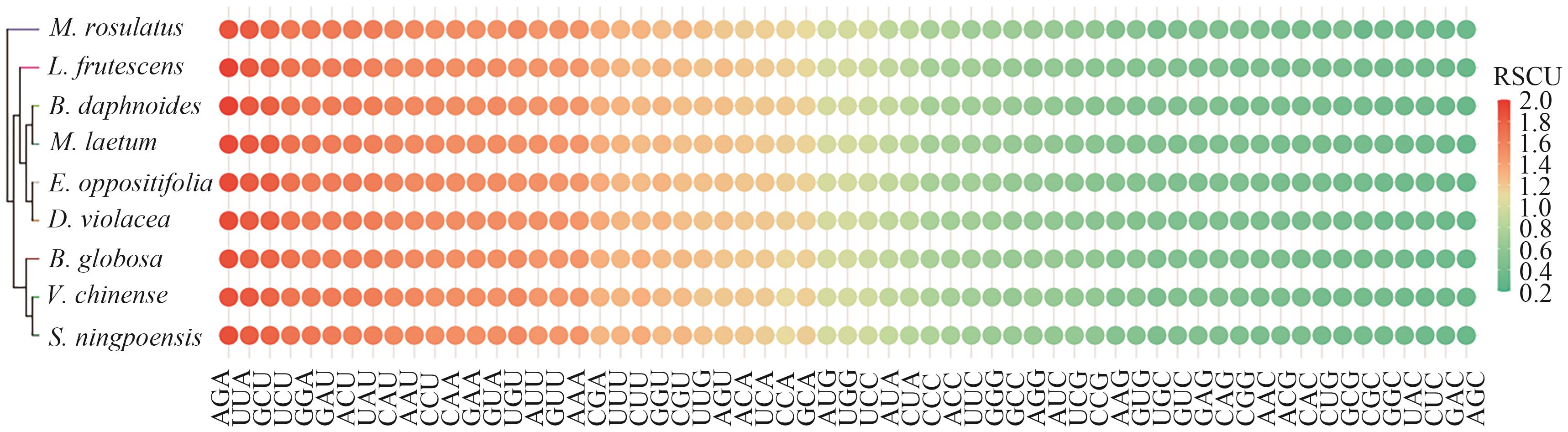
Fig. 6 RSCU values of Scrophulariaceae species chloroplast genomes
| 氨基酸 Amino acid | 密码子 Codon | B. daphnoides | B. globosa | D. violacea | E. oppositifolia | L. frutescens | M. rosulatus | M. laetum | S. ningpoensis | V. chinense |
|---|---|---|---|---|---|---|---|---|---|---|
| Ala | GCC | *** | ** | |||||||
| GCU | * | *** | * | |||||||
| Arg | AGG | ** | ||||||||
| CGA | * | * | *** | ** | * | *** | ** | |||
| CGU | ** | |||||||||
| Asn | AAU | * | ||||||||
| GAU | ** | ** | * | * | ** | ** | ** | |||
| Glu | GAA | ** | * | * | * | * | * | * | ||
| Gly | GGU | ** | * | ** | ** | ** | ** | ** | ||
| GGA | ** | * | *** | * | * | * | ||||
| His | CAU | * | * | ** | ||||||
| Ile | AUA | * | * | * | * | * | ||||
| Leu | UUA | * | * | * | ||||||
| CUA | ** | *** | ||||||||
| UUG | ** | |||||||||
| Pro | CCA | ** | ** | *** | ** | *** | * | ** | * | ** |
| CCU | * | * | * | |||||||
| CCC | *** | *** | * | |||||||
| Ser | UCC | * | * | |||||||
| UCA | * | * | * | * | * | *** | ||||
| AGU | * | * | *** | * | ||||||
| TER | UGA | *** | *** | *** | *** | *** | *** | *** | *** | *** |
| Thr | ACU | * | * | * | ** | * | ||||
| ACC | ** | |||||||||
| Val | GUA | * | * | ** |
Table 2 Analysis of the optimal codons in the Scrophulariaceae species chloroplast genomes
| 氨基酸 Amino acid | 密码子 Codon | B. daphnoides | B. globosa | D. violacea | E. oppositifolia | L. frutescens | M. rosulatus | M. laetum | S. ningpoensis | V. chinense |
|---|---|---|---|---|---|---|---|---|---|---|
| Ala | GCC | *** | ** | |||||||
| GCU | * | *** | * | |||||||
| Arg | AGG | ** | ||||||||
| CGA | * | * | *** | ** | * | *** | ** | |||
| CGU | ** | |||||||||
| Asn | AAU | * | ||||||||
| GAU | ** | ** | * | * | ** | ** | ** | |||
| Glu | GAA | ** | * | * | * | * | * | * | ||
| Gly | GGU | ** | * | ** | ** | ** | ** | ** | ||
| GGA | ** | * | *** | * | * | * | ||||
| His | CAU | * | * | ** | ||||||
| Ile | AUA | * | * | * | * | * | ||||
| Leu | UUA | * | * | * | ||||||
| CUA | ** | *** | ||||||||
| UUG | ** | |||||||||
| Pro | CCA | ** | ** | *** | ** | *** | * | ** | * | ** |
| CCU | * | * | * | |||||||
| CCC | *** | *** | * | |||||||
| Ser | UCC | * | * | |||||||
| UCA | * | * | * | * | * | *** | ||||
| AGU | * | * | *** | * | ||||||
| TER | UGA | *** | *** | *** | *** | *** | *** | *** | *** | *** |
| Thr | ACU | * | * | * | ** | * | ||||
| ACC | ** | |||||||||
| Val | GUA | * | * | ** |

Fig. 7 Scrophulariaceae species time-calibrated phylogenyThe red dots indicate calibration point and the 95% highest posterior density interval for node ages are shown with translucent blue bars
| 1 | Wu ZY, Raven PH. Flora of China, Volume 25: Orchidaceae [M]. Beijing, St. Louis: Missouri Botanical Garden Press, 2009. |
| 2 | 张刘强, 李医明. 近10年玄参属植物化学成分和药理作用研究进展 [J]. 中草药, 2011, 42(11): 2360-2368. |
| Zhang LQ, Li YM. Advances in studies on chemical constituents in plants of Scrophularia L. and their pharmacological effects in recent ten years [J]. Chin Tradit Herb Drugs, 2011, 42(11): 2360-2368. | |
| 3 | Lee HJ, Kim HL, Lee DR, et al. Scrophulariae Radix: an overview of its biological activities and nutraceutical and pharmaceutical applications [J]. Molecules, 2021, 26(17): 5250. |
| 4 | Cock IE, Baghtchedjian L, Cordon ME, et al. Phytochemistry, medicinal properties, bioactive compounds, and therapeutic potential of the genus Eremophila (Scrophulariaceae) [J]. Molecules, 2022, 27(22): 7734. |
| 5 | 王宝庆, 赵雨晴, 杨娜, 等. 醉鱼草属植物化学成分及药理活性研究进展 [J]. 中成药, 2019, 41(7): 1644-1653. |
| Wang BQ, Zhao YQ, Yang N, et al. Research progress on chemical constituents and pharmacological activities of Buddleja [J]. Chin Tradit Pat Med, 2019, 41(7): 1644-1653. | |
| 6 | Zhang PP, Xu WB, Lu X, et al. Analysis of Codon usage bias of chloroplast genomes in Gynostemma species [J]. Physiol Mol Biol Plants, 2021, 27(12): 2727-2737. |
| 7 | Li SF, Su T, Cheng GQ, et al. Chromosome evolution in connection with repetitive sequences and epigenetics in plants [J]. Genes, 2017, 8(10): 290. |
| 8 | 姜汶君, 郭梦月, 庞晓慧. 叶绿体基因组在药用植物鉴定及系统进化研究中的应用 [J]. 世界中医药, 2020, 15(5): 702-708, 716. |
| Jiang WJ, Guo MY, Pang XH. Application of chloroplast genome in identification and phylogenetic analysis of medicinal plants [J]. World Chin Med, 2020, 15(5): 702-708, 716. | |
| 9 | Kwak SY, Lew TTS, Sweeney CJ, et al. Chloroplast-selective gene delivery and expression in planta using chitosan-complexed single-walled carbon nanotube carriers [J]. Nat Nanotechnol, 2019, 14(5): 447-455. |
| 10 | Ruf S, Forner J, Hasse C, et al. High-efficiency generation of fertile transplastomic Arabidopsis plants [J]. Nat Plants, 2019, 5(3): 282-289. |
| 11 | Chen SF. Ultrafast one-pass FASTQ data preprocessing, quality control, and deduplication using fastp [J]. Imeta, 2023, 2(2): e107. |
| 12 | Jin JJ, Yu WB, Yang JB, et al. GetOrganelle: a fast and versatile toolkit for accurate de novo assembly of organelle genomes [J]. Genome Biol, 2020, 21(1): 241. |
| 13 | Li H, Durbin R. Fast and accurate short read alignment with Burrows-Wheeler transform [J]. Bioinformatics, 2009, 25(14): 1754-1760. |
| 14 | Li H, Handsaker B, Wysoker A, et al. The sequence alignment/map format and SAMtools [J]. Bioinformatics, 2009, 25(16): 2078-2079. |
| 15 | Robinson JT, Thorvaldsdóttir H, Winckler W, et al. Integrative genomics viewer [J]. Nat Biotechnol, 2011, 29(1): 24-26. |
| 16 | Tillich M, Lehwark P, Pellizzer T, et al. GeSeq - versatile and accurate annotation of organelle genomes [J]. Nucleic Acids Res, 2017, 45(W1): W6-W11. |
| 17 | Shi LC, Chen HM, Jiang M, et al. CPGAVAS2, an integrated plastome sequence annotator and analyzer [J]. Nucleic Acids Res, 2019, 47(W1): W65-W73. |
| 18 | Rombel IT, Sykes KF, Rayner S, et al. ORF-FINDER a vector for high-throughput gene identification [J]. Gene, 2002, 282(1/2): 33-41. |
| 19 | Zhang D, Gao FL, Jakovlić I, et al. PhyloSuite: an integrated and scalable desktop platform for streamlined molecular sequence data management and evolutionary phylogenetics studies [J]. Mol Ecol Resour, 2020, 20(1): 348-355. |
| 20 | Katoh K, Standley DM. MAFFT multiple sequence alignment software version 7: improvements in performance and usability [J]. Mol Biol Evol, 2013, 30(4): 772-780. |
| 21 | Ranwez V, Douzery EJP, Cambon C, et al. MACSE v2: toolkit for the alignment of coding sequences accounting for frameshifts and stop codons [J]. Mol Biol Evol, 2018, 35(10): 2582-2584. |
| 22 | Talavera G, Castresana J. Improvement of phylogenies after removing divergent and ambiguously aligned blocks from protein sequence alignments [J]. Syst Biol, 2007, 56(4): 564-577. |
| 23 | Nguyen LT, Schmidt HA, von Haeseler A, et al. IQ-TREE: a fast and effective stochastic algorithm for estimating maximum-likelihood phylogenies [J]. Mol Biol Evol, 2015, 32(1): 268-274. |
| 24 | Letunic I, Bork P. Interactive tree of life (iTOL): an online tool for phylogenetic tree display and annotation [J]. Bioinformatics, 2007, 23(1): 127-128. |
| 25 | Darling AE, Mau B, Perna NT. progressiveMauve: multiple genome alignment with gene gain, loss and rearrangement [J]. PLoS One, 2010, 5(6): e11147. |
| 26 | Amiryousefi A, Hyvönen J, Poczai P. IRscope: an online program to visualize the junction sites of chloroplast genomes [J]. Bioinformatics, 2018, 34(17): 3030-3031. |
| 27 | Kurtz S, Choudhuri JV, Ohlebusch E, et al. REPuter: the manifold applications of repeat analysis on a genomic scale [J]. Nucleic Acids Res, 2001, 29(22): 4633-4642. |
| 28 | Jin JJ, Yu WB, Yang JB, et al. GetOrganelle: a fast and versatile toolkit for accurate de novo assembly of organelle genomes [J]. Genome Biol, 2020, 21(1): 241. |
| 29 | Tang DF, Wei F, Cai ZQ, et al. Analysis of Codon usage bias and evolution in the chloroplast genome of Mesona chinensis Benth [J]. Dev Genes Evol, 2021, 231(1-2): 1-9. |
| 30 | Capella-Gutiérrez S, Silla-Martínez JM, Gabaldón T. trimAl: a tool for automated alignment trimming in large-scale phylogenetic analyses [J]. Bioinformatics, 2009, 25(15): 1972-1973. |
| 31 | Yang ZH. PAML 4: phylogenetic analysis by maximum likelihood [J]. Mol Biol Evol, 2007, 24(8): 1586-1591. |
| 32 | Fowler RM, McLay TGB, Schuster TM, et al. Plastid phylogenomic analysis of tribe Myoporeae (Scrophulariaceae) [J]. Plant Syst Evol, 2020, 306(3): 52. |
| 33 | Zheng GQ, Ma J, Yang J, et al. Characterization of the complete chloroplast genome of Buddleja alternifolia (Buddleiaceae) [J]. Mitochondrial DNA B Resour, 2019, 4(2): 3689-3690. |
| 34 | Jia GL, Wang WR, Liang XQ, et al. The complete chloroplast genome of the Buddleja alternifolia (Buddleiaceae), an ornamental plant [J]. Mitochondrial DNA B Resour, 2020, 5(1): 392-393. |
| 35 | Ge J, Cai L, Bi GQ, et al. Characterization of the complete chloroplast genomes of Buddleja colvilei and B. sessilifolia: implications for the taxonomy of Buddleja L [J]. Molecules, 2018, 23(6): 1248. |
| 36 | Zhao F, Liu B, Liu S, et al. Disentangling a 40-year-old taxonomic puzzle: the phylogenetic position of Mimulicalyx (Lamiales) [J]. Bot J Linn Soc, 2023, 201(2): 135-153. |
| 37 | Yi DK, Kim KJ. The two complete plastomes from Scrophularia (Scrophulariaceae): Scrophularia buergeriana and S. takesimensis [J]. Mitochondrial DNA B Resour, 2016, 1(1): 710-712. |
| 38 | Ni LH, Zhao ZL, Dorje G, et al. The complete chloroplast genome of ye-Xing-Ba (Scrophularia dentata; Scrophulariaceae), an alpine Tibetan herb [J]. PLoS One, 2016, 11(7): e0158488. |
| 39 | Wang RH, Gao J, Feng JY, et al. Comparative and phylogenetic analyses of complete chloroplast genomes of Scrophularia incisa complex (Scrophulariaceae) [J]. Genes, 2022, 13(10): 1691. |
| 40 | Ai HL, Qin CL, Ye K, et al. Characterization of the complete chloroplast genome of a well-known Chinese medicinal herb, Scrophularia ningpoensis [J]. Mitochondrial DNA B Resour, 2020, 5(1): 484-485. |
| 41 | Choi KS, Park S. The complete chloroplast genome sequence of the Korean endemic plant Scrophularia takesimensis [J]. Mitochondrial DNA Part A, 2016, 27(3): 2058-2059. |
| 42 | Dong X, Mkala EM, Mutinda ES, et al. Taxonomy, comparative genomics of Mullein (Verbascum, Scrophulariaceae), with implications for the evolution of Verbascum and Lamiales [J]. BMC Genomics, 2022, 23(1): 566. |
| 43 | Bi YQ, Deng P, Liu LX. The complete chloroplast genome sequence of purple mullein (Verbascum phoeniceum L.) [J]. Mitochondrial DNA B Resour, 2020, 5(1): 819-820. |
| 44 | Guo L, Wang X, Wang RH, et al. Characterization and comparative analysis of chloroplast genomes of medicinal herb Scrophularia ningpoensis and its common adulterants (Scrophulariaceae) [J]. Int J Mol Sci, 2023, 24(12): 10034. |
| 45 | Powell W, Morgante M, Andre C, et al. Hypervariable microsatellites provide a general source of polymorphic DNA markers for the chloroplast genome [J]. Curr Biol, 1995, 5(9): 1023-1029. |
| 46 | Zhu AD, Guo WH, Gupta S, et al. Evolutionary dynamics of the plastid inverted repeat: the effects of expansion, contraction, and loss on substitution rates [J]. New Phytol, 2016, 209(4): 1747-1756. |
| 47 | Kane N, Sveinsson S, Dempewolf H, et al. Ultra-barcoding in cacao (Theobroma Spp. ; Malvaceae) using whole chloroplast genomes and nuclear ribosomal DNA [J]. Am J Bot, 2012, 99(2): 320-329. |
| 48 | Hollingsworth PM. Refining the DNA barcode for land plants [J]. Proc Natl Acad Sci U S A, 2011, 108(49): 19451-19452. |
| 49 | Timme RE, Kuehl JV, Boore JL, et al. A comparative analysis of the Lactuca and Helianthus (Asteraceae) plastid genomes: identification of divergent regions and categorization of shared repeats [J]. Am J Bot, 2007, 94(3): 302-312. |
| 50 | Yang HS, Li XP, Liu DJ, et al. Genetic diversity and population structure of the endangered medicinal plant Phellodendron amurense in China revealed by SSR markers [J]. Biochem Syst Ecol, 2016, 66: 286-292. |
| 51 | Wang L, Wuyun TN, Du HY, et al. Complete chloroplast genome sequences of Eucommia ulmoides: genome structure and evolution [J]. Tree Genet Genomes, 2016, 12(1): 12. |
| 52 | Nie XJ, Lv SZ, Zhang YX, et al. Complete chloroplast genome sequence of a major invasive species, crofton weed (Ageratina adenophora) [J]. PLoS One, 2012, 7(5): e36869. |
| 53 | 张文娟. 基于密码子水平的生物信息学分析及进化研究 [D]. 上海: 复旦大学, 2006. |
| Zhang WJ. Bioinformatics analysis and evolution research based on Codon level [D]. Shanghai: Fudan University, 2006. | |
| 54 | 代江鹏, 蔡一鸣, 刘巧珍, 等. 甘草属7种植物叶绿体基因组密码子使用偏好性分析 [J]. 中草药, 2023, 54(9): 2907-2916. |
| Dai JP, Cai YM, Liu QZ, et al. Analysis of Codon usage bias of chloroplast genome in seven Glycyrrhiza species [J]. Chin Tradit Herb Drugs, 2023, 54(9): 2907-2916. |
| [1] | YANG Wei, ZHAO Li-fen, TANG Bing, ZHOU Lin-bi, YANG Juan, MO Chuan-yuan, ZHANG Bao-hui, LI Fei, RUAN Song-lin, DENG Ying. Genome-wide Identification and Expression Analysis of the SRO Gene Family in Brassica juncea L. [J]. Biotechnology Bulletin, 2024, 40(8): 129-141. |
| [2] | YANG Yu-qing, TAN Juan, WANG Fang, PENG Shun-li, CHEN Jie, TAN Ming-yan, LYU Mei-yan, ZHOU Fu-yu, LIU Sheng-chuan. Research and Application Progress in Chloroplast Genome of Tea Plant(Camellia sinensis) [J]. Biotechnology Bulletin, 2024, 40(2): 20-30. |
| [3] | YIN Ming-hua, YU Huan-yuan, XIAO Xin-yi, WANG Yu-ting. Chloroplast Genomic Characterization and Phylogenetic Analysis of Colocasia esculenta L. Schoot var. cormosus cv. ‘Hongyayu’ from Jiangxi Yanshan [J]. Biotechnology Bulletin, 2023, 39(6): 233-247. |
| [4] | LIU Xiong-wei, LIU Chang, ZENG Xian-fa, YANG Xiao-ying, FENG Ting-ting, ZHAO Jie-hong, ZHOU Ying. Comparative and Phylogenetic Analyses of Complete Chloroplast Genomes in Ardisia crenata [J]. Biotechnology Bulletin, 2023, 39(1): 232-242. |
| [5] | QIAN Fang, GAO Zuo-min, HU Li-juan, WANG Hong-cheng. Characteristics of Crambe abyssinica Chloroplast Genome and Its Phylogenetic Relationship in Brassicaceae [J]. Biotechnology Bulletin, 2022, 38(6): 174-186. |
| [6] | ZHU Bin, GAN Chen-chen, WANG Hong-cheng. Characteristics of the Complete Chloroplast Genome of Dendrobium thyrsiflorum and Its Phylogenetic Relationship Analysis [J]. Biotechnology Bulletin, 2021, 37(5): 38-47. |
| [7] | CHEN Wei-min, CHAI Hong-mei, YANG Wei-xian, MA Yuan-hao, ZHAO Yong-chang. Characterization of B Mating Loci Identification and Application in Cyclocybe aegerita and C. salicacola [J]. Biotechnology Bulletin, 2021, 37(11): 57-64. |
| [8] | LI Yu-hua, REN Yong-kang, ZHAO Xing-hua, LIU Jiang, HAN bin, WANG Chang-biao, TANG Zhao-hui. Research Progress on Chloroplast Genome of Major Gramineous Crops [J]. Biotechnology Bulletin, 2020, 36(11): 112-121. |
| [9] | ZHANG Guang-zhi, WANG Jia-ning, WU Xiao-qing, ZHOU Fang-yuan, ZHANG Xin-jian, ZHAO Xiao-yan, XIE Xue-ying, ZHOU Hong-zi. Diversity and Functional Activity of Trichoderma in the Rhizosphere Soil from Facility Tomato Production [J]. Biotechnology Bulletin, 2018, 34(4): 179-185. |
| [10] | LIANG Han-qiao, Dilidaer Kudereti, BAI Fei-rong, MIAO Lei, LI Nan-nan, LIU Su-hui, CHEN Jian-guo, LIU Yang, SUN Yu-ping. Isolation and Identification of Endophytic Fungi from the Rhizomes of Xinjiang-specific Plant Brassica rapa [J]. Biotechnology Bulletin, 2017, 33(2): 131-136. |
| [11] | HU Wen-zhe, TAN Ze-wen, WANG Yong, XU Xian-wei, TAN Zhi-yuan. Isolation,Identification and Phylogenetic Analysis of Endophytic Diazotrophs in Tengxian Medical-use Oryza officinalis [J]. Biotechnology Bulletin, 2016, 32(6): 111-119. |
| [12] | XIAO Jing,ZHA Xing-qin,CHENG Wen-min,HUO Jin-long,PAN Wei-rong,WANG Shu-yan,WANG Pei,LIU Hai-jing,ZHANG Xiu-qiong,ZENG Yang-zhi. Cloning,Sequence and Phylogenetic Analysis of CATSPER3 Gene in Banna Mini-pig Inbred Line [J]. Biotechnology Bulletin, 2016, 32(12): 103-107. |
| [13] | Chen Chunlin, Liu Xiang, Ju Xiong. Expression and Purification of Outer Membrane Lipoprotein OprF in Recombinant Pseudomonas aeruginosa,and Preparation and Identification of Polyclonal Antibody [J]. Biotechnology Bulletin, 2015, 31(8): 213-218. |
| [14] | Wang Fei, Liu Kang, Fan Jiatong, Cheng Shouliang, Wang Ziyuan. Isolation and Identification of a Halotolerant—Vibrio sp. K1-L [J]. Biotechnology Bulletin, 2014, 30(4): 127-131. |
| [15] | Hou Xindong Yin Shuai Sheng Guilian Cheng Dandan Lai Xulong. Study on Phylogenetic Relationships of Ten Urticaceae Species Based on nrDNA ITS Sequences [J]. Biotechnology Bulletin, 2013, 0(8): 68-73. |
| Viewed | ||||||
|
Full text |
|
|||||
|
Abstract |
|
|||||
