







Biotechnology Bulletin ›› 2026, Vol. 42 ›› Issue (5): 134-146.doi: 10.13560/j.cnki.biotech.bull.1985.2025-1093
LIAO Yan-ting( ), WANG Can-qin, WEI Jiao-jun, ZHAO Cheng-gang, HUANG Shi-lyu, LUO Yang-lan(), YAN Yong()
Received:2025-10-16
Online:2026-05-26
Published:2026-06-10
Contact:
LUO Yang-lan, YAN Yong
E-mail:Elinor829@163.com;18509164645@163.com;14544286@qq.com
LIAO Yan-ting, WANG Can-qin, WEI Jiao-jun, ZHAO Cheng-gang, HUANG Shi-lyu, LUO Yang-lan, YAN Yong. Changes in Soil Physicochemical Properties and Microbial Communities under Continuous Cropping of Morchella and Their Associated Mechanisms[J]. Biotechnology Bulletin, 2026, 42(5): 134-146.
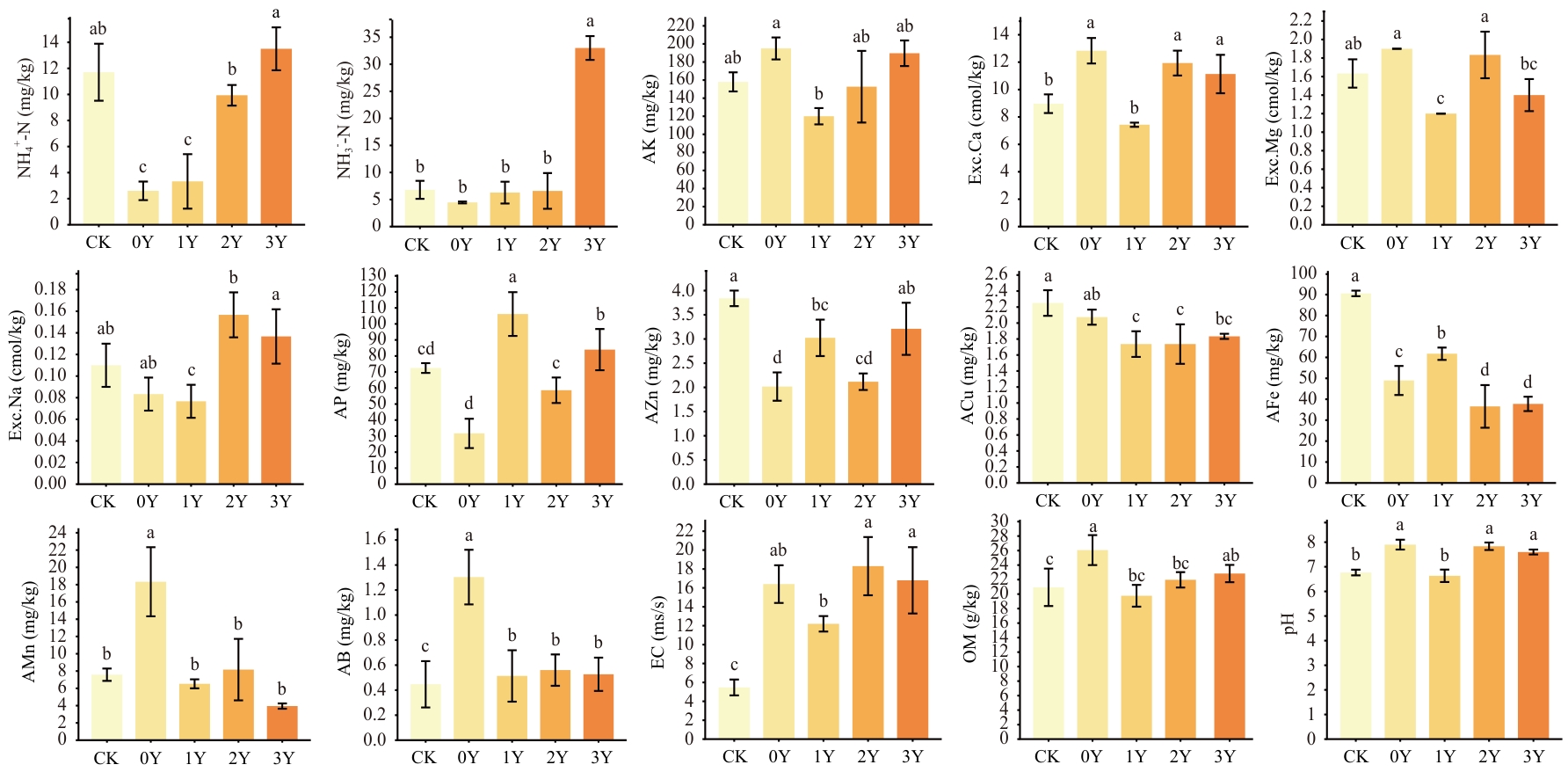
Fig. 1 Changes in soil physicochemical properties after three years of continuous Morchella croppingCK: Unplanted; NH4+-N: ammonium nitrogen; NO3--N: nitrate nitrogen; AK: available potassium; Exc.Ca:exchangeable calcium; Exc.Mg:exchangeable magnesium; Exc.Na: exchangeable sodium; AP: available phosphorus; AZn: available zinc; ACu: effective copper; AFe: available iron; AMn: available manganese; AB: effective boron; EC: electrical conductivity; OM: organic matter. Different lowercase letters indicate significant differences between groups (P<0.05)
| 土壤理化性质变化率 Rate of change in soil physicochemical properties (%) | 连作年限 Continuous cropping period(Year) | |||
|---|---|---|---|---|
| 0 | 1 | 2 | 3 | |
| 铵态氮 NH4+-N | -77.76 | -71.62 | -15.23 | 15.38 |
| 硝态氮 | -34.04 | -7.61 | -3.03 | 385.75 |
| 速效钾 Available potassium | 23.34 | -24.14 | -3.33 | 19.93 |
| 交换性钙 Exchangeable calcium | 40.3 | 13.72 | 24.63 | 23.34 |
| 交换性镁 Exchangeable magnesium | 16.31 | -26.81 | 13.33 | -14.42 |
| 交换性钠 Exchangeable sodium | -20.25 | -28.32 | 46.48 | 28.73 |
| 有效磷 Available phosphorus | -56.3 | 46.54 | -19.14 | 15.88 |
| 有效锌 Available zinc | -47.46 | -21.2 | -44.95 | -16.36 |
| 有效铜 Available copper | -7.84 | -22.64 | -22.92 | -18.4 |
| 有效铁 Available iron | -45.95 | -31.85 | -59.63 | -58.28 |
| 有效锰 Available manganese | 142.2 | -13.89 | 7.96 | -47.94 |
| 有效硼 Effective boron | 192.26 | 15.55 | 25.04 | 17.25 |
| 电导率 Electrical conductivity | 200.56 | 123 | 235.57 | 207.95 |
| 有机质 Organic matter | 24.63 | -5.49 | 5.03 | 9.17 |
| pH | 17.02 | 12.73 | 15.89 | 11.94 |
Table 1 Rate of change in soil physicochemical properties from 0 to 3 years of continuous Morchella cropping
| 土壤理化性质变化率 Rate of change in soil physicochemical properties (%) | 连作年限 Continuous cropping period(Year) | |||
|---|---|---|---|---|
| 0 | 1 | 2 | 3 | |
| 铵态氮 NH4+-N | -77.76 | -71.62 | -15.23 | 15.38 |
| 硝态氮 | -34.04 | -7.61 | -3.03 | 385.75 |
| 速效钾 Available potassium | 23.34 | -24.14 | -3.33 | 19.93 |
| 交换性钙 Exchangeable calcium | 40.3 | 13.72 | 24.63 | 23.34 |
| 交换性镁 Exchangeable magnesium | 16.31 | -26.81 | 13.33 | -14.42 |
| 交换性钠 Exchangeable sodium | -20.25 | -28.32 | 46.48 | 28.73 |
| 有效磷 Available phosphorus | -56.3 | 46.54 | -19.14 | 15.88 |
| 有效锌 Available zinc | -47.46 | -21.2 | -44.95 | -16.36 |
| 有效铜 Available copper | -7.84 | -22.64 | -22.92 | -18.4 |
| 有效铁 Available iron | -45.95 | -31.85 | -59.63 | -58.28 |
| 有效锰 Available manganese | 142.2 | -13.89 | 7.96 | -47.94 |
| 有效硼 Effective boron | 192.26 | 15.55 | 25.04 | 17.25 |
| 电导率 Electrical conductivity | 200.56 | 123 | 235.57 | 207.95 |
| 有机质 Organic matter | 24.63 | -5.49 | 5.03 | 9.17 |
| pH | 17.02 | 12.73 | 15.89 | 11.94 |
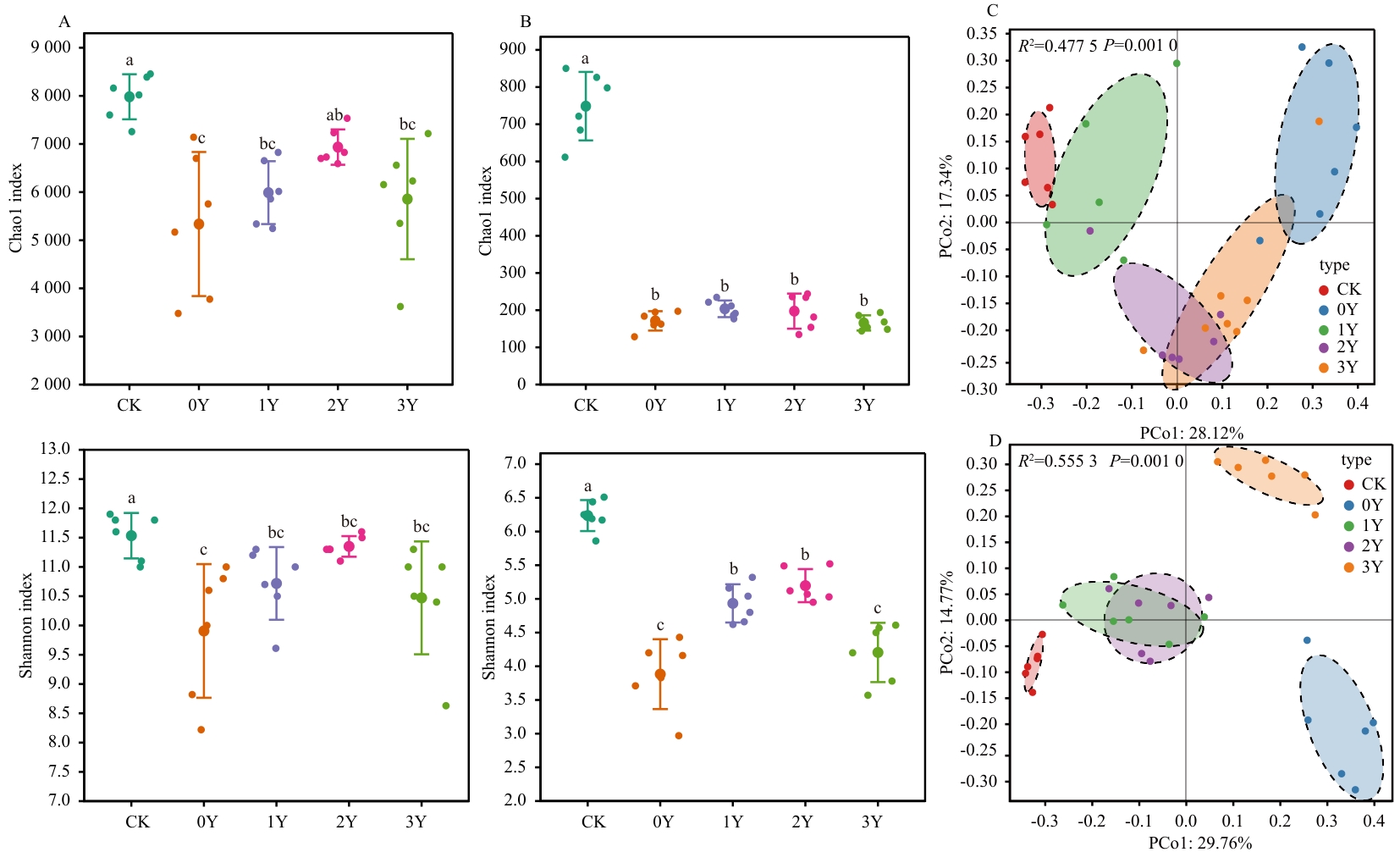
Fig. 2 Changes in the diversity of rhizosphere soil microbial communities after three years of continuous Morchella croppingA: The Chao1 index and Shannon index of bacteria. B: The Chao1 index and Shannon index of fungi. C: The principal coordinate analysis (PCoA) of bacteria. D: The principal coordinate analysis (PCoA) of fungi
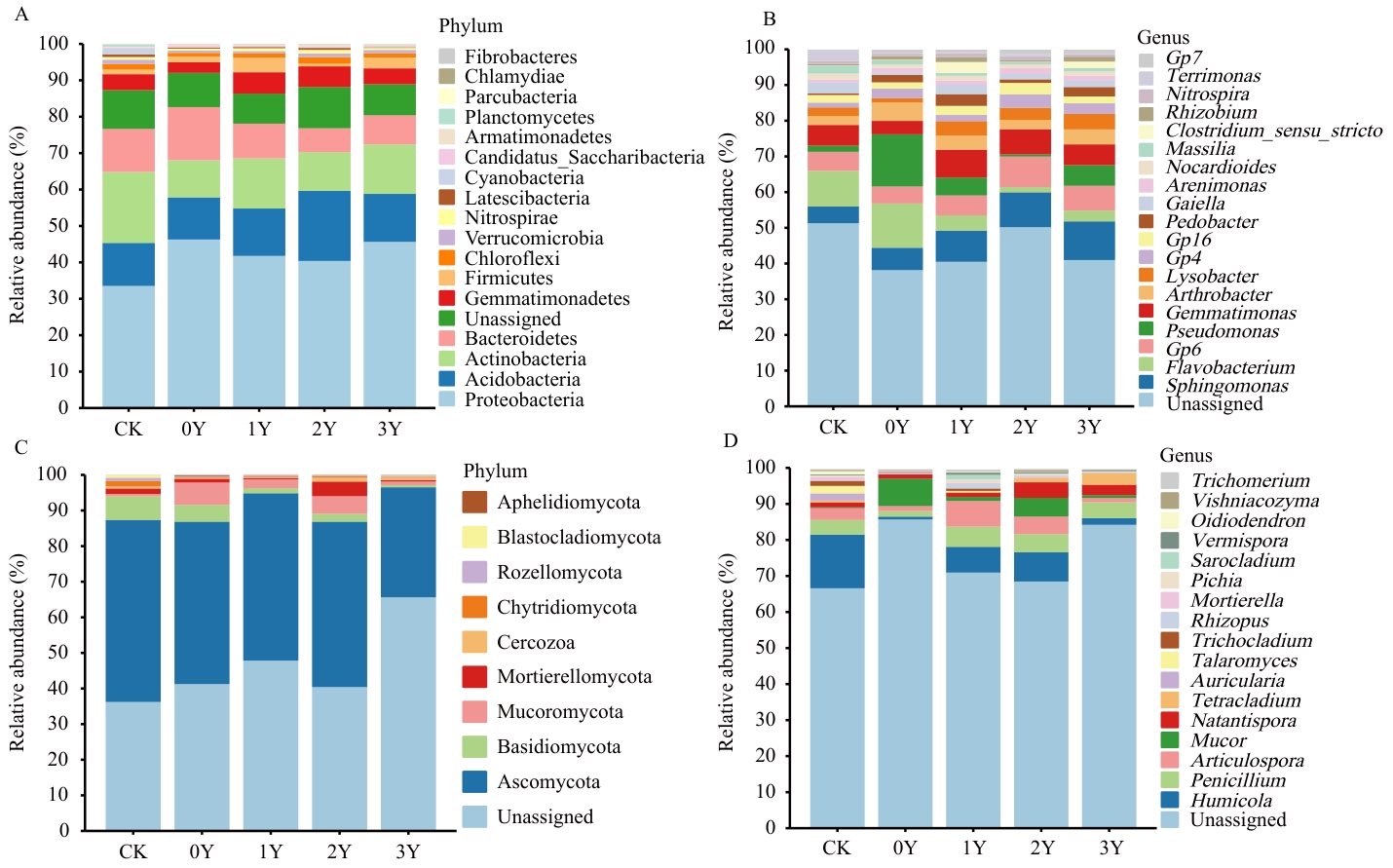
Fig. 3 Column stacking of species abundance of soil rhizosphere microorganisms in 3 years of continuous cropping of MorchellaA: Species distribution of bacteria at the phylum level. B: Species distribution of bacteria at the genus level.C: Species distribution of fungi at the phylum level. D: Species distribution of fungi at the genus level
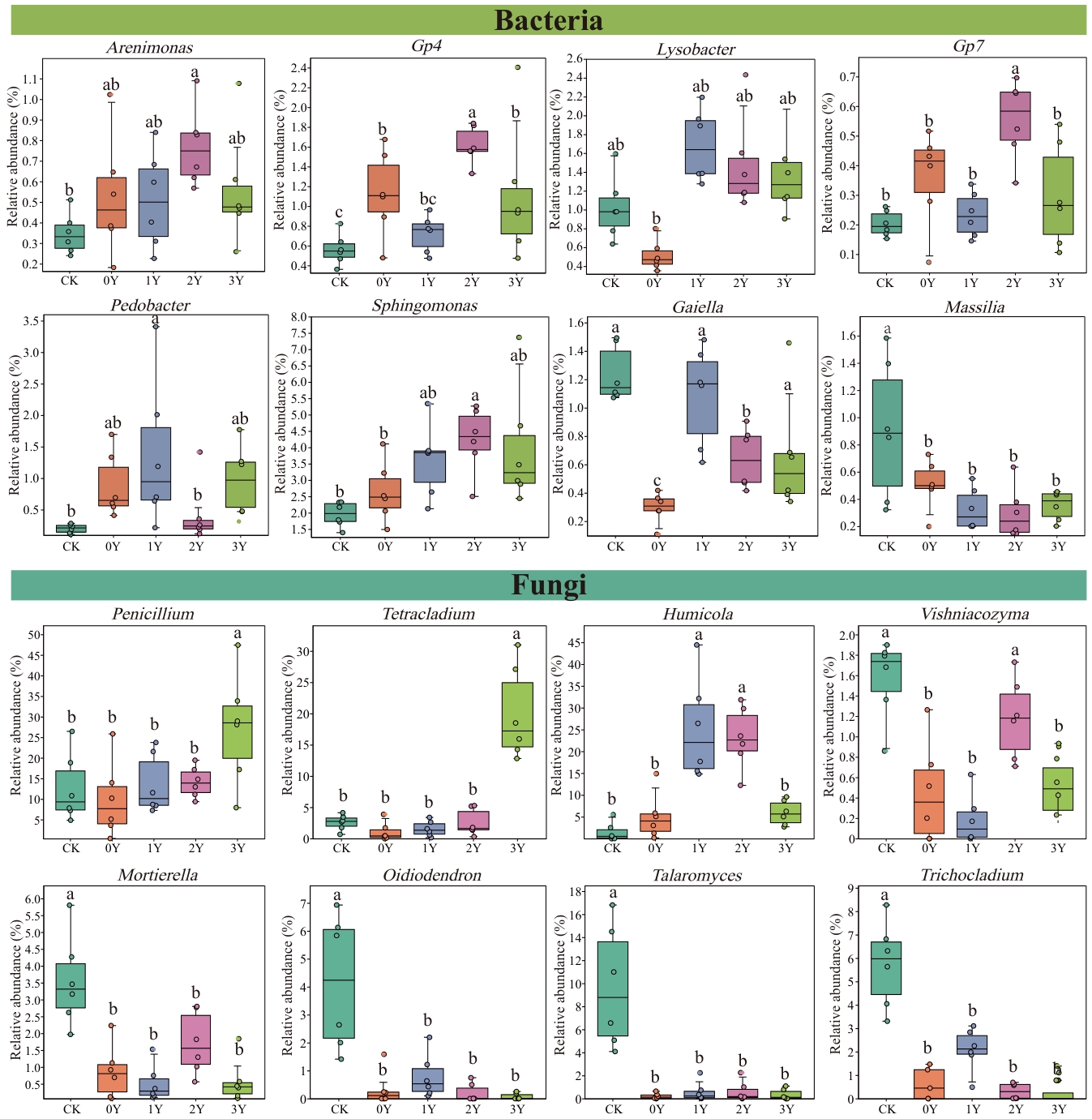
Fig. 4 Differential bacterial and fungal genera in rhizosphere soil under continuous Morchella cropping
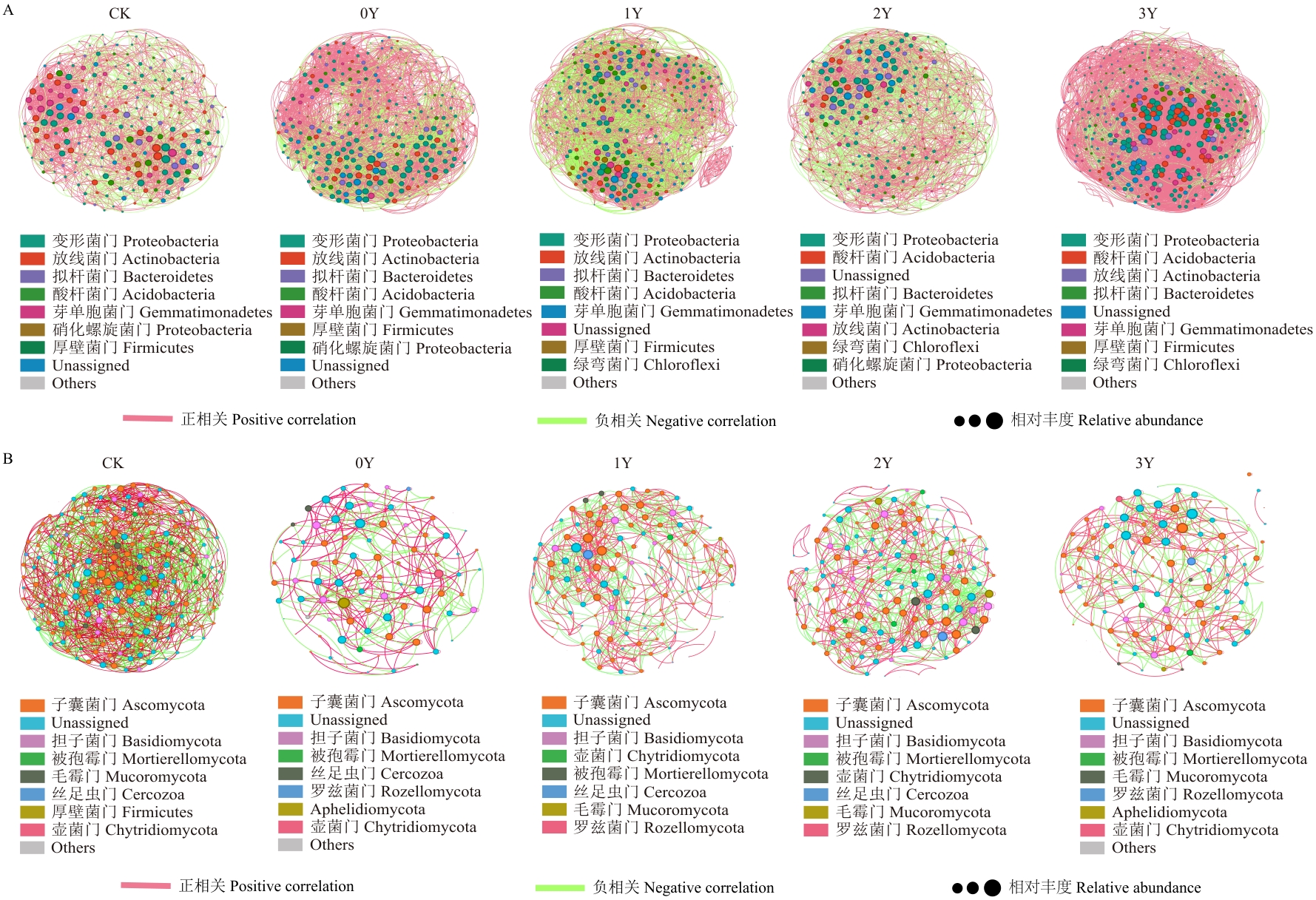
Fig. 5 Co-occurrence network diagram of rhizosphere soil microbial communities under continuous Morchella croppingA: Bacteria. B: Fungi
物种分类 Taxonomy of species | 处理 Treatment | 节点数 Number of nodes | 边数 Number of edges | 平均度 Average degree | 网络密度 Network density | 模块化 Modularity |
|---|---|---|---|---|---|---|
细菌 Bacteria | CK | 241 | 2 654 | 22.025 | 0.092 | 0.518 |
| 0Y | 311 | 4 883 | 31.402 | 0.101 | 0.523 | |
| 1Y | 359 | 6 091 | 33.933 | 0.095 | 0.510 | |
| 2Y | 284 | 3 678 | 25.901 | 0.092 | 0.491 | |
| 3Y | 408 | 9 592 | 47.02 | 0.116 | 0.476 | |
真菌 Fungi | CK | 226 | 1 845 | 16.327 | 0.073 | 0.540 |
| 0Y | 90 | 364 | 8.089 | 0.091 | 0.586 | |
| 1Y | 134 | 785 | 11.716 | 0.088 | 0.582 | |
| 2Y | 155 | 877 | 11.316 | 0.073 | 0.595 | |
| 3Y | 104 | 495 | 9.519 | 0.092 | 0.602 |
Table 2 Effects of different treatments on topological indices of soil microbial community networks
物种分类 Taxonomy of species | 处理 Treatment | 节点数 Number of nodes | 边数 Number of edges | 平均度 Average degree | 网络密度 Network density | 模块化 Modularity |
|---|---|---|---|---|---|---|
细菌 Bacteria | CK | 241 | 2 654 | 22.025 | 0.092 | 0.518 |
| 0Y | 311 | 4 883 | 31.402 | 0.101 | 0.523 | |
| 1Y | 359 | 6 091 | 33.933 | 0.095 | 0.510 | |
| 2Y | 284 | 3 678 | 25.901 | 0.092 | 0.491 | |
| 3Y | 408 | 9 592 | 47.02 | 0.116 | 0.476 | |
真菌 Fungi | CK | 226 | 1 845 | 16.327 | 0.073 | 0.540 |
| 0Y | 90 | 364 | 8.089 | 0.091 | 0.586 | |
| 1Y | 134 | 785 | 11.716 | 0.088 | 0.582 | |
| 2Y | 155 | 877 | 11.316 | 0.073 | 0.595 | |
| 3Y | 104 | 495 | 9.519 | 0.092 | 0.602 |
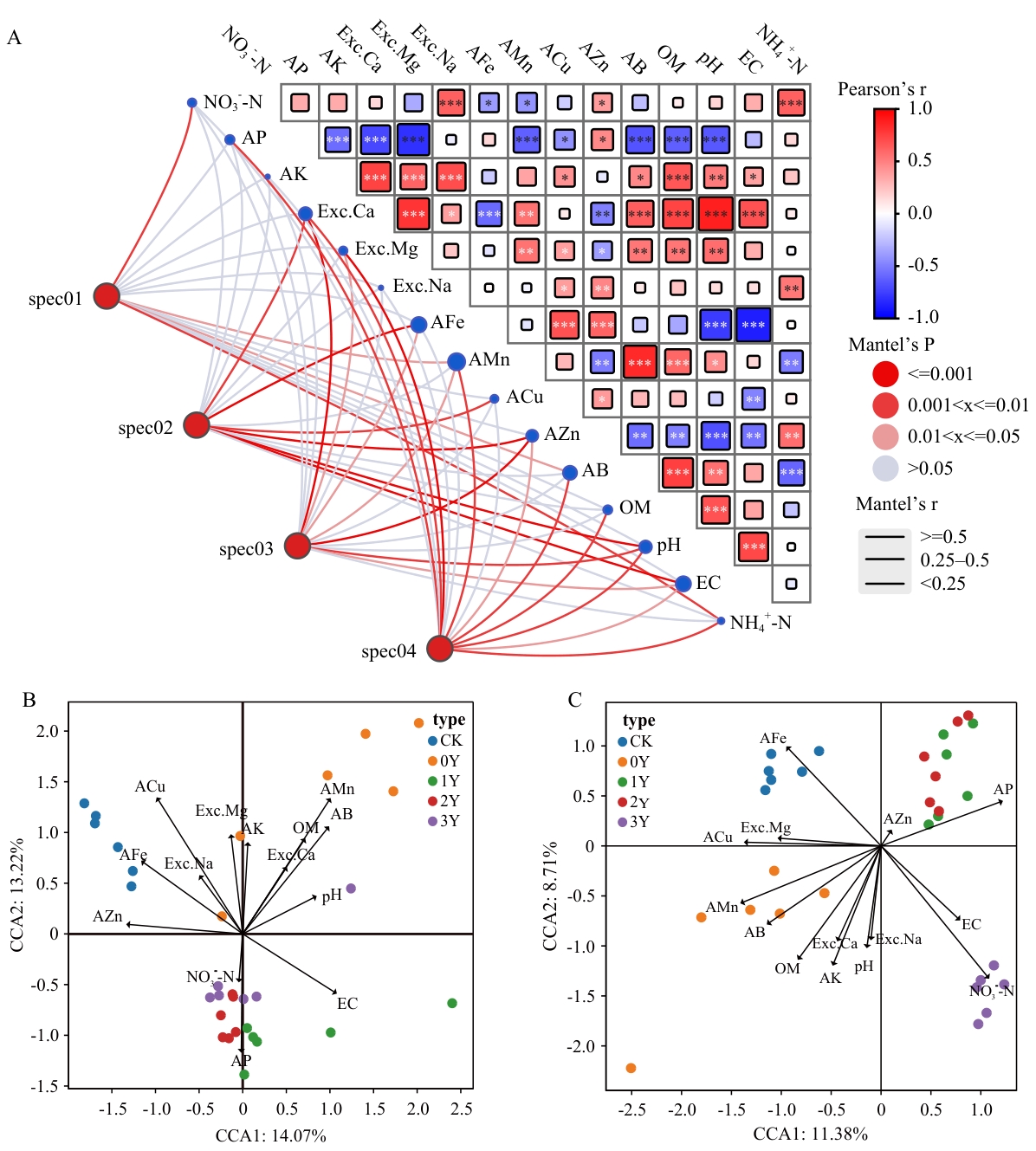
Fig. 6 Correlation analysis between soil microbial communities and physicochemical environmental factors under continuous Morchella croppingA: Matrix plot of pairwise comparisons between differential genera and environmental factors in soils under continuous Morchella cropping. The color intensity of the squares indicates the magnitude of the Pearson correlation coefficient, while the shade and thickness of the lines indicate the strength of the Mantel test correlation between the microbial matrix and environmental factors. Darker colors and thicker lines denote stronger correlations(*P<0.05;**P<0.01;***P<0.001). spec01: Sphingomonas、Pedobacter、Arenimonas、Penicillium and Tetracladium; spec02: Massilia, Trichocladium, Oidiodendron and Talaromyces; spec03: Acidobacteria_Gp4、Acidobacteria_Gp7 and Humicola; spec04: Gaiella, Lysobacter, Vishniacozyma and Mortierella.B: Bacterial redundancy analysis plot. C: Fungal redundancy analysis plot
| [1] | 段丹, 林川, 张宇, 等. 羊肚菌连作障碍成因及防控技术研究进展 [J]. 蔬菜, 2023(11): 30-34. |
| Duan D, Lin C, Zhang Y, et al. Research progress on the causes and technologies of control of continuous cropping obstacle of Morchella [J]. Vegetables, 2023(11): 30-34. | |
| [2] | Sambyal K, Singh RV. A comprehensive review on Morchella importuna: cultivation aspects, phytochemistry, and other significant applications [J]. Folia Microbiol, 2021, 66(2): 147-157. |
| [3] | Yu FM, Jayawardena RS, Thongklang N, et al. Morel production associated with soil nitrogen-fixing and nitrifying microorganisms [J]. JoF, 2022, 8(3): 299. |
| [4] | Du XH, Yang ZL. Mating systems in true morels (Morchella) [J]. Microbiol Mol Biol Rev, 2021, 85(3): e00220. |
| [5] | Wang XY, Alami MM, Gong SQ, et al. Utilizing microbial inoculants to alleviate continuous cropping obstacles: insights into the metabolites and transcriptomic responses of Pinellia ternata [J]. Metabolites, 2025, 15(3): 189. |
| [6] | He Y, Gong B, Liang TB, et al. Effects of reductive soil disinfestation on microbiological and physicochemical properties of continuous cropping soils in karst areas of Guizhou Province [J]. Ann Microbiol, 2025, 75: 6. |
| [7] | 齐会岩. 西瓜连作障碍的土壤微生物学过程及其克服机理 [D]. 上海: 上海交通大学, 2009. |
| Qi HY. Processes and mechanizm of soil microbiology of watermelon continuous cropping obstacle [D]. Shanghai: Shanghai Jiao Tong University, 2009. | |
| [8] | Lalid Kumar SP, Latha MR, Janaki P, et al. Sustainable farming practices enhance bacterial diversity and nutrient levels in sorghum rhizosphere soil [J]. Rhizosphere, 2024, 32: 100967. |
| [9] | Tang JJ, Fei XM, Wu YZ, et al. Impacts of soil environment on the growth and quality of Cynanchum auriculatum mediated by rhizosphere microorganisms [J]. Rhizosphere, 2025, 34: 101078. |
| [10] | 田芳, 高新楼, 李宾, 等. 羊肚菌连作障碍的成因分析及防控 [J]. 乡村科技, 2020, 11(31): 91-92. |
| Tian F, Gao XL, Li B, et al. Cause analysis and control of continuous cropping obstacle of Morchella esculenta [J]. Rural Sci Technol, 2020, 11(31): 91-92. | |
| [11] | 刘志丹, 刘雨艳, 陈金苗, 等. 三七连作土壤细菌、真菌和原生生物群落的差异及驱动因素分析 [J]. 微生物学通报, 2025, 52(3): 1148-1165. |
| Liu ZD, Liu YY, Chen JM, et al. Variation trends and drivers of bacterial, fungal, and protist communities in the soil with continuous cultivation of Panax notoginseng [J]. Microbiol China, 2025, 52(3): 1148-1165. | |
| [12] | 赵春夺, 李玉娥, 刘友杰, 等. 轮作与连作对烟草根际土壤养分、酶活性及微生物群落结构的影响 [J]. 生物技术通报, 2025, 41(4): 312-322. |
| Zhao CD, Li YE, Liu YJ, et al. Effects of rotating cropping and continuous cropping on soil nutrients, enzyme activities and microbial community structure of rhizosphere soil in tobacco [J]. Biotechnol Bull, 2025, 41(4): 312-322. | |
| [13] | 王娟, 王媛媛, 刘力勇, 等. 不同连作年限对番茄设施土壤细菌群落与土壤环境的影响 [J]. 中国蔬菜, 2025(6): 101-109. |
| Wang J, Wang YY, Liu LY, et al. Effect of varying continuous cropping durations on soil bacterial community and environmental conditions in facility-grown tomato soils [J]. China Veg, 2025(6): 101-109. | |
| [14] | Wang X, Yang MH, Gao LX, et al. Continuous cropping obstacles: Insights from the community composition and the imbalance carbon fluxes within soil nematode food web [J]. Geoderma, 2024, 451: 117060. |
| [15] | Yan WP, Liu XF, Cao SJ, et al. Molecular basis of Pogostemon cablin responding to continuous cropping obstacles revealed by integrated transcriptomic, miRNA and metabolomic analyses [J]. Ind Crops Prod, 2023, 200: 116862. |
| [16] | Shen YL, Zhang H, Zhan Y, et al. Transcriptomics and metabolomics of the molecular mechanisms of ginseng’s response to the continuous cropping obstacle [J]. Physiol Mol Plant Pathol, 2024, 133: 102329. |
| [17] | Ma HY, Ren ZT, Luo AH, et al. Self-alleviation of continuous-cropping obstacles in potato via root-exudate-driven recruitment of growth-promoting bacteria [J]. Plant Commun, 2025, 6(7): 101372. |
| [18] | Gan T, Yuan ZF, Gustave W, et al. Challenges of continuous cropping in Rehmannia glutinosa: Mechanisms and mitigation measures [J]. Soil Environ Health, 2025, 3(2): 100144. |
| [19] | Liao JM, Xia PG, Zhang Y. Factors affecting and ameliorating continuous cropping obstacles in P. notoginseng [J]. Appl Soil Ecol, 2025, 214: 106351. |
| [20] | Xu L, Ma L, Wei RN, et al. Effect of continuous cropping on growth and lobetyolin synthesis of the medicinal plant Codonopsis pilosula (Franch.) nannf. based on the integrated analysis of plant-metabolite-soil factors [J]. J Agric Food Chem, 2024, 72(36): 19604-19617. |
| [21] | 戚龙君. 连作对设施羊肚菌土壤特性的影响 [D]. 沈阳: 沈阳农业大学, 2024. |
| Qi LJ. Effects of continuous cropping on soil characteristics of facility morel [D]. Shenyang: Shenyang Agricultural University, 2024. | |
| [22] | Zhao XL, Zhang XQ, Li ZF, et al. Development of root rot in Zanthoxylum bungeanum is closely linked to changes in soil microbial communities, enzyme activities, and physicochemical factors [J]. Glob Ecol Conserv, 2024, 55: e03249. |
| [23] | 谭昊, 刘天海, 闫世杰, 等. 羊肚菌栽培对沙漠砂基质中微生物群落及基质理化性质的影响 [J]. 生物技术通报, 2021, 37(11): 166-177. |
| Tan H, Liu TH, Yan SJ, et al. Impacts of morel cultivation on the microbial community and physiochemical characteristics in a substratum of desert sand [J]. Biotechnol Bull, 2021, 37(11): 166-177. | |
| [24] | 张津京, 高子琼, 杜军华, 等. 栽培梯棱羊肚菌对上海设施蔬菜大棚土壤理化性质和酶活力的影响 [J]. 食用菌学报, 2020, 27(4): 65-71. |
| Zhang JJ, Gao ZQ, Du JH, et al. Effects of Morchella importuna cultivation in greenhouse in Shanghai on soil nutrients and enzyme activities [J]. Acta Edulis Fungi, 2020, 27(4): 65-71. | |
| [25] | 彭博. 六妹羊肚菌连作对土壤性状的影响及病害防控初步研究 [D]. 武汉: 华中农业大学, 2024. |
| Peng B. Preliminary study on the influence of continuous cropping on soil characteristicsand disease control in Morchella sextelata cultivation [D]. Wuhan: Huazhong Agricultural University, 2024. | |
| [26] | Philippot L, Chenu C, Kappler A, et al. The interplay between microbial communities and soil properties [J]. Nat Rev Microbiol, 2024, 22(4): 226-239. |
| [27] | 林蕾, 陈世宝. 土壤中锌的形态转化、影响因素及有效性研究进展 [J]. 农业环境科学学报, 2012, 31(2): 221-229. |
| Lin L, Chen SB. Transformation and influence factors of speciation of zinc in soils and its effect on zinc bioavailability: a review [J]. J Agro Environ Sci, 2012, 31(2): 221-229. | |
| [28] | 索超. 猪粪堆肥过程中腐殖质的生成及其对Cu的吸附作用研究 [D]. 杨凌: 西北农林科技大学, 2009. |
| Suo C. The formation of humic substances during pig manure composting and the adsorption of copper on humic substances [D]. Yangling: Northwest A & F University, 2009. | |
| [29] | Tan H, Kohler A, Miao RY, et al. Multi-omic analyses of exogenous nutrient bag decomposition by the black morel Morchella importuna reveal sustained carbon acquisition and transferring [J]. Environ Microbiol, 2019, 21(10): 3909-3926. |
| [30] | 庄培文, 张恺, 郑平, 等. 深海真菌Chaetomium sp. CS1的木质素降解特征 [J]. 菌物学报, 2023, 42(12): 2442-2453. |
| Zhuang PW, Zhang K, Zheng P, et al. Lignin-degradation characteristics of deep-sea fungus Chaetomium sp. CS1 [J]. Mycosystema, 2023, 42(12): 2442-2453. | |
| [31] | 王光华, 刘俊杰, 于镇华, 等. 土壤酸杆菌门细菌生态学研究进展 [J]. 生物技术通报, 2016, 32(2): 14-20. |
| Wang GH, Liu JJ, Yu ZH, et al. Research progress of Acidobacteria ecology in soils [J]. Biotechnol Bull, 2016, 32(2): 14-20. | |
| [32] | Yang FK, He BL, Dong B, et al. Film-straw dual mulching improves soil fertility and maize yield in dryland farming by increasing straw-degrading bacterial abundance and their positive cooperation [J]. Agric Ecosyst Environ, 2024, 367: 108997. |
| [33] | Wang Y, Guo ZF, Zhang SJ, et al. Foliar application of γ- polyglutamic acid enhances growth, yield, and rhizosphere microbiota of summer maize under varied water regimes [J]. Agronomy, 2025, 15(3): 754. |
| [34] | 沈文浩, 郑丽屏, 周建芹, 等. 子实体伴生菌多样性及其生物活性研究进展 [J]. 微生物学报, 2025, 65(4): 1433-1445. |
| Shen WH, Zheng LP, Zhou JQ, et al. Research progress in the diversity and biological activities of fruiting body-associated microbes [J]. Acta Microbiol Sin, 2025, 65(4): 1433-1445. | |
| [35] | Mousavi B, Costa JM, Botterel F, et al. Occurrence and species distribution of pathogenic Mucorales in unselected soil samples from France [J]. J De Mycol Médicale, 2015, 25(3): 235. |
| [36] | 和国优, 张义杰, 王振充, 等. 根腐病胡椒根际土壤真菌群落与土壤环境因子的关系 [J]. 热带农业科学, 2025, 45(7): 58-67. |
| He GY, Zhang YJ, Wang ZC, et al. Relationships between rhizosphere soil fungal communities and soil environmental factors in pepper (Piper nigrum L.) root rot [J]. Chin J Trop Agric, 2025, 45(7): 58-67. | |
| [37] | Wang YR, Yang QY, Wang KL, et al. The APSES factor PeStuA regulates the growth, conidiation, patulin production, and virulence of the postharvest fungus Penicillium expansum [J]. Food Microbiol, 2025, 132: 104841. |
| [38] | 贾欣, 徐诗涵, 梁志宏, 等. 赭曲霉毒素A的微生物脱毒研究进展 [J]. 生物技术通报, 2014, 30(12): 18-23. |
| Jia X, Xu SH, Liang ZH, et al. Bio-detoxification of ochratoxin a by microorganism [J]. Biotechnol Bull, 2014, 30(12): 18-23. | |
| [39] | 张英英, 吴之涛, 常浩, 等. 不同种植年限对黄芪根际土壤性质及微生物群落结构的影响 [J]. 生物技术通报, 2026, 42(5):174-184. |
| Zhang YY, Wu ZT, Chang H, et al. Effects of different planting years on rhizosphere soil properties and microbial community structure of Astragalus membranaceus var. mongholicus [J]. Biotechnol Bull, 2026, 42(5):174-184. | |
| [40] | Fu YS, Liu YP, Chen Y, et al. A rhizobacterium-secreted protein induces lateral root development through the IAA34-PUCHI pathway [J]. Cell Rep, 2025, 44(3): 115414. |
| [41] | 高丽君, 王增强, 杨向颖, 等. 羊肚菌种植对土壤营养和微生物多样性的影响 [J]. 安徽农业科学, 2025, 53(7): 29-34. |
| Gao LJ, Wang ZQ, Yang XY, et al. The effect of planting Morchella esculenta on soil nutrition and microbial diversity [J]. J Anhui Agric Sci, 2025, 53(7): 29-34. | |
| [42] | 邓莹莲, 赵长林. 基于高通量测序分析云南大理剑川羊肚菌土壤真菌群落结构变化 [J]. 东南园艺, 2022, 10(1): 1-11. |
| Deng YL, Zhao CL. Analysis of soil fungal community structure changes of Morchella sextelata in Jianchuan, Dali, Yunnan based on high-throughput sequencing [J]. Southeast Horticulture, 2022, 10(1): 1-11. | |
| [43] | 许艳俊, 李静媛. pH和Ca2+协同作用对酵母代谢及细胞膜功能的影响 [J]. 生物技术通报, 2018, 34(3): 208-216. |
| Xu YJ, Li JY. Synergetic effects of pH and Ca2+ on yeast metabolism and cell membrane function [J]. Biotechnol Bull, 2018, 34(3): 208-216. | |
| [44] | 赵培, 王雪青, 陈庆森, 等. Zn2+对球等鞭金藻3011细胞膜电位和膜通透性的影响 [J]. 食品科学, 2012, 33(5): 66-70. |
| Zhao P, Wang XQ, Chen QS, et al. Effect of Zn2+ on membrane and membrane permeability of Isochrysis galbana 3011 [J]. Food Sci, 2012, 33(5): 66-70. | |
| [45] | 李凯. 盐分梯度对土壤微生物群落及植物—害虫互作机制的影响 [J]. 盐科学与化工, 2025, 54(8): 39-42, 45. |
| Li K. Effects of salinity gradient on soil microbial communities and plant-pest interaction mechanisms [J]. J Salt Sci Chem Ind, 2025, 54(8): 39-42, 45. |
| [1] | ZHAO Chun-duo, LI Yu-e, LIU You-jie, WANG Xin-hang, ZHAO Wei, HUANG Yong-cheng, LI Hu-lin, JI Wen-xiu. Effects of Rotating Cropping and Continuous Cropping on Soil Nutrients, Enzyme Activities and Microbial Community Structure of Rhizosphere Soil in Tobacco [J]. Biotechnology Bulletin, 2025, 41(4): 312-322. |
| [2] | SONG Fen-fen, DUAN Yan-xue, SANG Yu, WANG Ji-peng, PENG Rui, SUN Nian-xi, LI Yong. Characteristics of the Mycosphere Microbial Community in Diseased and Healthy Morchella spp.Soil [J]. Biotechnology Bulletin, 2025, 41(4): 323-334. |
| [3] | LIU Jia-ning, LI Meng, YANG Xin-sen, WU Wei, PEI Xin-wu, YUAN Qian-hua. Impact of Different Water Management Cultivation Methods on the Rhizosphere Bacteria Community of Shanlan Upland Rice [J]. Biotechnology Bulletin, 2024, 40(3): 242-250. |
| [4] | ZHAO Lin-yan, XU Wu-mei, WANG Hao-ji, WANG Kun-yan, WEI Fu-gang, YANG Shao-zhou, GUAN Hui-lin. Effects of Applying Biochar on the Rhizosphere Fungal Community and Survival Rate of Panax notoginseng Under Continuous Cropping [J]. Biotechnology Bulletin, 2023, 39(7): 219-227. |
| [5] | SUN Hai-hang, GUAN Hui-lin, WANG Xu, WANG Tong, LI Hong-lin, PENG Wen-jie, LIU Bo-zhen, FAN Fang-ling. Effects of Biochar on the Soil Properties and Fungal Community Structure under Continuous Cropping of Panax notoginseng [J]. Biotechnology Bulletin, 2023, 39(2): 221-231. |
| [6] | LIU Tian-hai, YANG Shu-qin, LIU Fu-peng, MIAO Ren-yun, YU Yang, WU Xiang, TANG Jie, WANG Yong, PENG Wei-hong, TAN Hao. Effects of Organic Fertilizers Fermented with Wheat Straw and Chicken Manure on the Continuous Cultivation of Morchella sextelata [J]. Biotechnology Bulletin, 2022, 38(12): 263-273. |
| [7] | JIANG Di, XU Chun-cheng. Research Progress in the Succession of Microbial Communities in Total Mixed Ration Silage [J]. Biotechnology Bulletin, 2021, 37(9): 31-38. |
| [8] | YUAN Yuan, HUANG Hai-chen, LI Lin, LIU Guo-hui, FU Jun-sheng, WU Xiao-ping. Effect of Lime on Preventing and Controlling Continuous Cropping Obstacle of Ganoderma lingzhi and Analysis of Its Microbial Community [J]. Biotechnology Bulletin, 2021, 37(4): 70-84. |
| [9] | HONG Jie, KANG Jian-yi, LIU Yi-qian, GAO Xiu-zhi, YI Xin-xin. Effects of Continuous Cropping of Lettuce and Rotation of Lettuce-Spinach on Soil Bacterial Community Structure [J]. Biotechnology Bulletin, 2019, 35(8): 17-26. |
| [10] | YIN Ji-zhong, LI Liang, JIE Wei-guang, CAI Bai-yan. Effects of Continuous Cropping on Bacterial Flora Structure in Soybean Rhizosphere Soil [J]. Biotechnology Bulletin, 2018, 34(1): 230-238. |
| [11] | Xie Yuxuan, Guan Xiangyu, Yu Lisha, Liu Fei,. The Study of the Structure of Perchlorate(ClO4-)-degrading Bacterial Communities Under Autotrophic Conditions [J]. Biotechnology Bulletin, 2014, 30(4): 169-175. |
| [12] | Ma Shu, Liu Huhu, Tian Yun, Lu Xiangyang . Advances of Metatranscriptomics Technology [J]. Biotechnology Bulletin, 2012, 0(12): 46-50. |
| Viewed | ||||||
|
Full text |
|
|||||
|
Abstract |
|
|||||
