







Biotechnology Bulletin ›› 2026, Vol. 42 ›› Issue (5): 16-26.doi: 10.13560/j.cnki.biotech.bull.1985.2026-0038
ZHANG Li1,2,3( ), LI Kai-xuan1,4, MA Zhi-yuan1, JIANG Mei-tong1, ZHANG Jia-bao1,2,3, LIANG Yu-ting1,2,3()
Received:2026-01-11
Online:2026-05-26
Published:2026-06-10
Contact:
LIANG Yu-ting
E-mail:zhangli@issas.ac.cn;ytliang@issas.ac.cn
ZHANG Li, LI Kai-xuan, MA Zhi-yuan, JIANG Mei-tong, ZHANG Jia-bao, LIANG Yu-ting. Research Progress of Synthetic Microbiome in the Regulation of Agricultural Soil Health[J]. Biotechnology Bulletin, 2026, 42(5): 16-26.
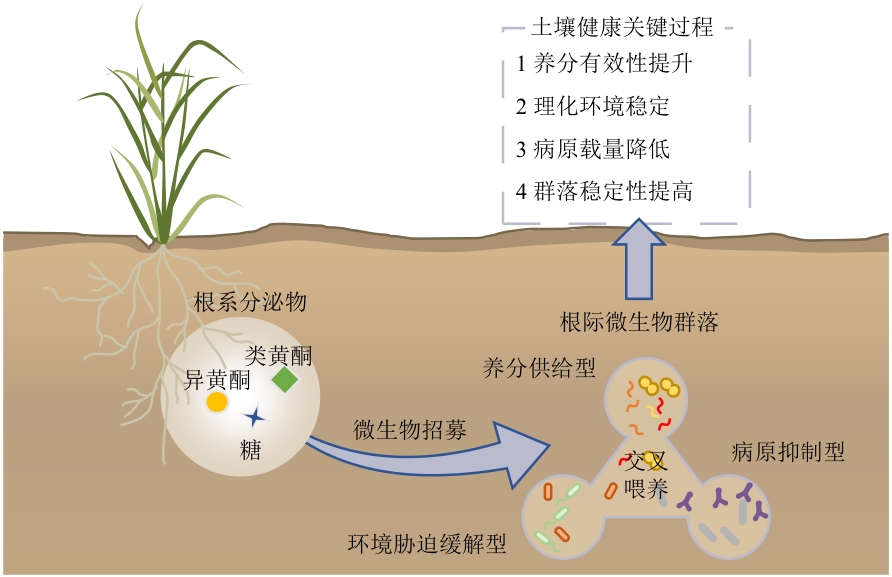
Fig. 1 Rhizosphere interaction process between plants and rhizosphere microorganisms and the targets for improving soil health
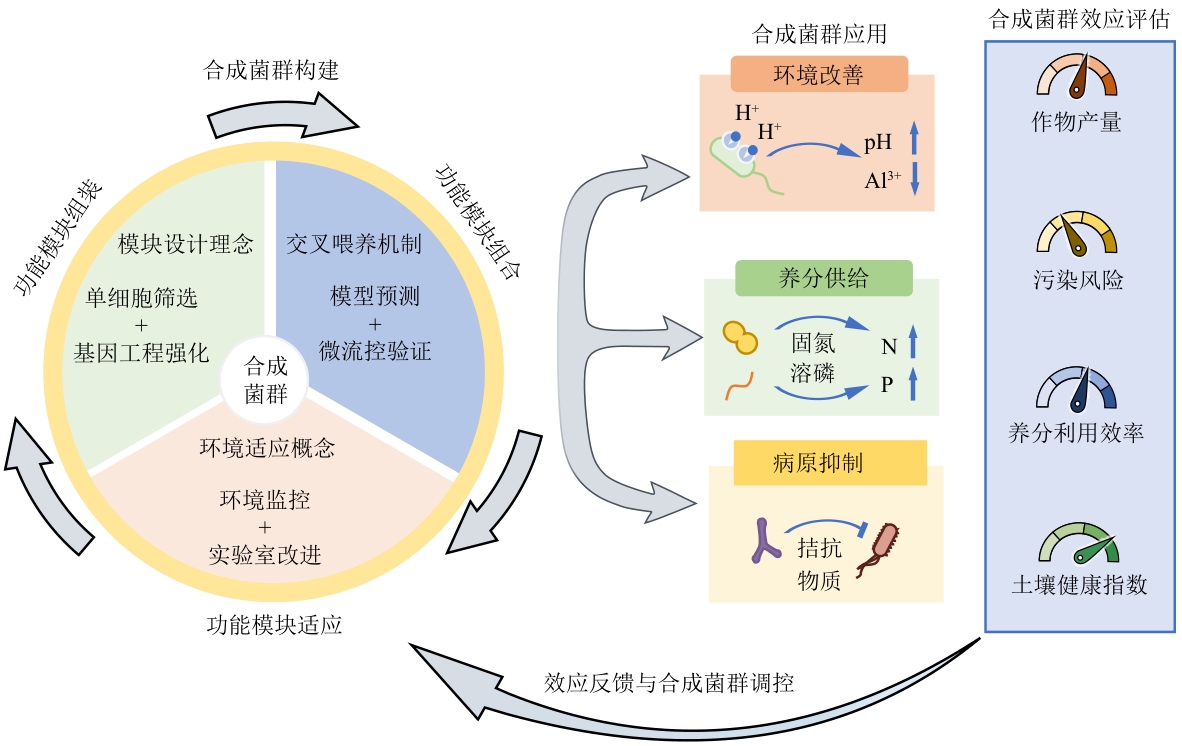
Fig. 2 Construction, application, and feedback pathways of synthetic microbiomes
| [1] | Chen M. Food security or climate action [J]. Nat Clim Chang, 2025, 15(4): 354-355. |
| [2] | Food and Agriculture Organization (FAO). Global assessment of soil pollution [R]. Rome: FAO, 2021. |
| [3] | Montgomery DR. Soil security and global food security [J]. Front Agr Sci Eng, 2024, 11(2): 297-302. |
| [4] | Niu KY, Li MY, Lenzen M, et al. Impacts of global trade on cropland soil-phosphorus depletion and food security [J]. Nat Sustain, 2024, 7(9): 1128-1140. |
| [5] | Zhang X, Zou T, Lassaletta L, et al. Quantification of global and national nitrogen budgets for crop production [J]. Nat Food, 2021, 2(7): 529-540. |
| [6] | Zou T, Zhang X, Davidson EA. Global trends of cropland phosphorus use and sustainability challenges [J]. Nature, 2022, 611(7934): 81-87. |
| [7] | Hartmann M, Six J. Soil structure and microbiome functions in agroecosystems [J]. Nat Rev Earth Environ, 2023, 4(1): 4-18. |
| [8] | Guerrieri E, Rasmann S. Exposing belowground plant communication [J]. Science, 2024, 384(6693): 272-273. |
| [9] | Zhang LY, Zhang ML, Huang SY, et al. A highly conserved core bacterial microbiota with nitrogen-fixation capacity inhabits the xylem sap in maize plants [J]. Nat Commun, 2022, 13: 3361. |
| [10] | Zhou YY, Liu DH, Li FQ, et al. Superiority of native soil core microbiomes in supporting plant growth [J]. Nat Commun, 2024, 15: 6599. |
| [11] | Jiang MT, Delgado-Baquerizo M, Yuan MM, et al. Home-based microbial solution to boost crop growth in low-fertility soil [J]. New Phytol, 2023, 239(2): 752-765. |
| [12] | Yue H, Yue WJ, Jiao S, et al. Plant domestication shapes rhizosphere microbiome assembly and metabolic functions [J]. Microbiome, 2023, 11: 70. |
| [13] | Kuypers MMM, Marchant HK, Kartal B. The microbial nitrogen-cycling network [J]. Nat Rev Microbiol, 2018, 16(5): 263-276. |
| [14] | Bais HP, Weir TL, Perry LG, et al. The role of root exudates in rhizosphere interactions with plants and other organisms [J]. Annu Rev Plant Biol, 2006, 57: 233-266. |
| [15] | Faller L, Leite MFA, Kuramae EE. Enhancing phosphate-solubilising microbial communities through artificial selection [J]. Nat Commun, 2024, 15: 1649. |
| [16] | Yang XR, Yang TJ, Zhang ZR, et al. Substrate utilization and cross-feeding synergistically determine microbiome resistance to pathogen invasion [J]. Nat Ecol Evol, 2026, 10(2): 211-220. |
| [17] | Weller DM, Raaijmakers JM, Gardener BBM, et al. Microbial populations responsible for specific soil suppressiveness to plant pathogens [J]. Annu Rev Phytopathol, 2002, 40: 309-348. |
| [18] | Liu Y, Shi AQ, Chen Y, et al. Beneficial microorganisms: Regulating growth and defense for plant welfare [J]. Plant Biotechnol J, 2025, 23(3): 986-998. |
| [19] | Gu SH, Wei Z, Shao ZY, et al. Competition for iron drives phytopathogen control by natural rhizosphere microbiomes [J]. Nat Microbiol, 2020, 5(8): 1002-1010. |
| [20] | Molina-Santiago C, Pearson JR, Navarro Y, et al. The extracellular matrix protects Bacillus subtilis colonies from Pseudomonas invasion and modulates plant co-colonization [J]. Nat Commun, 2019, 10: 1919. |
| [21] | Lee KS, Landry Z, Pereira FC, et al. Raman microspectroscopy for microbiology [J]. Nat Rev Meth Primers, 2021, 1: 80. |
| [22] | Xie X, Gan LZ, Wang CY, et al. Salt-tolerant plant growth-promoting bacteria as a versatile tool for combating salt stress in crop plants [J]. Arch Microbiol, 2024(8): 21. |
| [23] | Fan XY, Ge AH, Qi SS, et al. Root exudates and microbial metabolites: signals and nutrients in plant-microbe interactions [J]. Sci China Life Sci, 2025, 68(8): 2290-2302. |
| [24] | Ruan YT, Dong SZ, Jiang SY, et al. The molecular basis of the binding and specific activation of rhizobial NodD by flavonoids [J]. Science, 2026, 391(6781): 184-189. |
| [25] | Wu JB, Hu SL, Chen J, et al. Soil microbial legacy mediated by buckwheat flavonoids enhances cabbage resistance to clubroot disease [J]. Microbiome, 2025, 13: 176. |
| [26] | Hu LF, Robert CAM, Cadot S, et al. Root exudate metabolites drive plant-soil feedbacks on growth and defense by shaping the rhizosphere microbiota [J]. Nat Commun, 2018, 9: 2738. |
| [27] | Zhalnina K, Louie KB, Hao Z, et al. Dynamic root exudate chemistry and microbial substrate preferences drive patterns in rhizosphere microbial community assembly [J]. Nat Microbiol, 2018, 3(4): 470-480. |
| [28] | Yang XS, Feng K, Wang S, et al. Unveiling the deterministic dynamics of microbial meta-metabolism: a multi-omics investigation of anaerobic biodegradation [J]. Microbiome, 2024, 12: 166. |
| [29] | Clegg T, Gross T. Cross-feeding creates tipping points in microbiome diversity [J]. Proc Natl Acad Sci U S A, 2025, 122(19): e2425603122. |
| [30] | Ma ZY, Jiang MT, Liu CY, et al. Quinolone-mediated metabolic cross-feeding develops aluminium tolerance in soil microbial consortia [J]. Nat Commun, 2024, 15: 10148. |
| [31] | Niu GQ, Liu WY, Zhang TJ, et al. Deciphering conserved rhizosphere metabolite-microbiome interactions for crop drought resistance [J]. Glob Change Biol, 2025, 31(12): e70652. |
| [32] | Palmieri D, Vitale S, Lima G, et al. A bacterial endophyte exploits chemotropism of a fungal pathogen for plant colonization [J]. Nat Commun, 2020, 11: 5264. |
| [33] | Li B, Li YY, Wu HM, et al. Root exudates drive interspecific facilitation by enhancing nodulation and N2 fixation [J]. Proc Natl Acad Sci U S A, 2016, 113(23): 6496-6501. |
| [34] | Liao JX, Li ZH, Xiong D, et al. Quorum quenching by a type IVA secretion system effector [J]. ISME J, 2023, 17(10): 1564-1577. |
| [35] | Gao YX, Wu YT, Chang PF, et al. Mycorrhizal network and symbiotic N-fixer jointly enhance the interplant nitrogen sharing [J]. Ecol Lett, 2025, 28(9): e70204. |
| [36] | Pang F, Li Q, Solanki MK, et al. Soil phosphorus transformation and plant uptake driven by phosphate-solubilizing microorganisms [J]. Front Microbiol, 2024, 15: 1383813. |
| [37] | Xie JY, Sun XL, Wen T, et al. Metabolite interactions mediate beneficial alliances between Bacillus and Trichoderma for effective Fusarium wilt control [J]. ISME J, 2026, 20(1): wraf283. |
| [38] | Zhang YX, Jing MY, Lyu LH, et al. Principles for rigorous design and application of synthetic microbial communities [J]. Adv Sci, 2026, 13(10): e14750. |
| [39] | Zhang YR, Chang K, Ogunlade B, et al. From genotype to phenotype: Raman spectroscopy and machine learning for label-free single-cell analysis [J]. ACS Nano, 2024, 18(28): 18101-18117. |
| [40] | Liu CY, Jiang MT, Yuan MM, et al. Root microbiota confers rice resistance to aluminium toxicity and phosphorus deficiency in acidic soils [J]. Nat Food, 2023, 4(10): 912-924. |
| [41] | Xu L, Cao HL, Li CN, et al. The importance of rare versus abundant phoD-harboring subcommunities in driving soil alkaline phosphatase activity and available P content in Chinese steppe ecosystems [J]. Soil Biol Biochem, 2022, 164: 108491. |
| [42] | Shivram H, Cress BF, Knott GJ, et al. Controlling and enhancing CRISPR systems [J]. Nat Chem Biol, 2021, 17, 10-19. |
| [43] | Ma Y, Chen SH, Liu S, et al. Phosphate solubilizing fungi enhance insoluble phosphate dissolution via organic acid production: mechanisms and applications [J]. Front Microbiol, 2025, 16: 1600231. |
| [44] | Liu H, Gao XH, Fan WS, et al. Optimizing carbon and nitrogen metabolism in plants: From fundamental principles to practical applications [J]. J Integr Plant Biol, 2025, 67(6): 1447-1466. |
| [45] | Henry LP, Bergelson J. Applying ecological principles to microbiome engineering [J]. Nat Microbiol, 2025, 10(9): 2111-2121. |
| [46] | Peng X, Wang S, Wang MX, et al. Metabolic interdependencies in thermophilic communities are revealed using co-occurrence and complementarity networks [J]. Nat Commun, 2024, 15: 8166. |
| [47] | Amarnath K, Narla AV, Pontrelli S, et al. Stress-induced metabolic exchanges between complementary bacterial types underly a dynamic mechanism of inter-species stress resistance [J]. Nat Commun, 2023, 14: 3165. |
| [48] | Schäfer M, Pacheco AR, Künzler R, et al. Metabolic interaction models recapitulate leaf microbiota ecology [J]. Science, 2023, 381(6653): eadf5121. |
| [49] | Wilken SE, Monk JM, Leggieri PA, et al. Experimentally validated reconstruction and analysis of a genome-scale metabolic model of an anaerobic neocallimastigomycota fungus [J]. mSystems, 2021, 6: e00002-e00021. |
| [50] | Jiang W, Wang SM, Gu F, et al. Advances in synthetic microbial ecosystems approach for studying ecological interactions and their influencing factors [J]. Eng Microbiol, 2025, 5(2): 100205. |
| [51] | Fu LH, Guo EP, Zhang JZ, et al. Towards one sample per second for mass spectrometric screening of engineered microbial strains [J]. Curr Opin Biotechnol, 2022, 76: 102725. |
| [52] | Li HZ, Bi QF, Yang K, et al. D2O-isotope-labeling approach to probing phosphate-solubilizing bacteria in complex soil communities by single-cell Raman spectroscopy [J]. Anal Chem, 2019, 91(3): 2239-2246. |
| [53] | Crowther TW, Rappuoli R, Corinaldesi C, et al. Scientists’ call to action: Microbes, planetary health, and the Sustainable Development Goals [J]. Cell, 2024, 187(19): 5195-5216. |
| [54] | Ge C, Yu Z, Sheng HK, et al. Redesigning regulatory components of quorum-sensing system for diverse metabolic control [J]. Nat Commun, 2022, 13: 2182. |
| [55] | Hewedy OA, Ali MG, El-Meihy RM, et al. The dual role of ethylene in plant growth and abiotic stress: Mechanisms, regulation, and mitigation through ACC deaminase [J]. Plant Sci, 2026, 362: 112858. |
| [56] | Li JY, Liu HW, Wang JT, et al. Drought-induced plant microbiome and metabolic enrichments improve drought resistance [J]. Cell Host Microbe, 2025, 33(6): 882-900.e7. |
| [57] | Hren A, Lollini N, Carper DL, et al. High-density CRISPRi screens reveal diverse routes to improved acclimation in cyanobacteria [J]. Proc Natl Acad Sci U S A, 2025, 122(12): e2412625122. |
| [58] | Abonyi A, Fornberg J, Rasconi S, et al. The chytrid insurance hypothesis: integrating parasitic chytrids into a biodiversity-ecosystem functioning framework for phytoplankton-zooplankton population dynamics [J]. Oecologia, 2024, 204(2): 279-288. |
| [59] | Yu XA, McLean C, Hehemann JH, et al. Low-level resource partitioning supports coexistence among functionally redundant bacteria during successional dynamics [J]. ISME J, 2024, 18(1): wrad013. |
| [60] | Ramond P, Galand PE, Logares R. Microbial functional diversity and redundancy: moving forward [J]. FEMS Microbiol Rev, 2025, 49: fuae031. |
| [61] | Li M, Hu J, Wei Z, et al. Synthetic microbial communities: Sandbox and blueprint for soil health enhancement [J]. iMeta, 2024, 3: e172. |
| [62] | Zhou Q, Gao XS, Wu Q, et al. Cross-Kingdom synthetic microbiota suppresses wheat Fusarium crown rot by remodeling the rhizosphere microbiome and metabolome [J]. J Agric Food Chem, 2026, 74(2): 2418-2437. |
| [63] | Liu Y, Jia BL, Ren Y, et al. Bacterial social interactions in synthetic Bacillus consortia enhance plant growth [J]. iMeta, 2025, 4(4): e70053. |
| [64] | Sveen TR, Viketoft M, Bengtsson J, et al. Functional diversity of soil microbial communities increases with ecosystem development [J]. Nat Commun, 2025, 16: 10408. |
| [65] | Wang MX, Ge AH, Ma XZ, et al. Dynamic root microbiome sustains soybean productivity under unbalanced fertilization [J]. Nat Commun, 2024, 15: 1668. |
| [66] | Li YJ, Li RR, Liu R, et al. A simplified SynCom based on core-helper strain interactions enhances symbiotic nitrogen fixation in soybean [J]. J Integr Plant Biol, 2025, 67(6): 1582-1598. |
| [67] | Chen SS, Liu QM, Li DJ. Engineering the composting microbiome with a synthetic microbial community to accelerate lignocellulose degradation and humus synthesis [J]. J Environ Manag, 2025, 396: 128088. |
| [68] | Zhang L, Jiang MT, Yuan MM, et al. Bacterial modification of the root cell wall facilitates rice aluminum resistance in acidic soils [J]. Cell Rep, 2025, 44(12): 116597. |
| [69] | Schmitz L, Yan ZC, Schneijderberg M, et al. Synthetic bacterial community derived from a desert rhizosphere confers salt stress resilience to tomato in the presence of a soil microbiome [J]. ISME J, 2022, 16(8): 1907-1920. |
| [70] | Li L, Cheng KX, Du Y, et al. Rhizosphere microbes from Populus euphratica conferred salt stress resistance to Populus alba × Populus glandulosa [J]. Plant Cell Environ, 2025, 48(12): 8743-8755. |
| [71] | Ruan ZP, Tan JL, Feng QY, et al. Potentiators empower synthetic microbiomes as silent guardians against co-contamination [J]. Nat Commun, 2026, 17: 1185. |
| [72] | Wang X, Teng Y, Wang XM, et al. Nitrogen transfer and cross-feeding between Azotobacter chroococcum and Paracoccus aminovorans promotes pyrene degradation [J]. ISME J, 2023, 17(12): 2169-2181. |
| [73] | Wang XX, Hou JY, Ling H, et al. Enhancing petroleum hydrocarbon degradation by a synthetic bacterial consortium: Insights into functional complementarity and regulatory coordination [J]. Chem Eng J, 2026, 527: 171992. |
| [74] | Huang LK, Fan ZY, Hu ZP, et al. Synthetic communities derived from the core endophytic microbiome of hyperaccumulators and their role in cadmium phytoremediation [J]. Microbiome, 2024, 12: 236. |
| [75] | Zhang HY, Zhang JQ, Tang SJ, et al. Exopolysaccharide-producing strains alter heavy metal fates and bacterial communities in soil aggregates to reduce metal uptake by pakchoi [J]. Front Microbiol, 2025, 16: 1595142. |
| [76] | Paasch BC, Sohrabi R, Kremer JM, et al. A critical role of a eubiotic microbiota in gating proper immunocompetence in Arabidopsis [J]. Nat Plants, 2023, 9(9): 1468-1480. |
| [77] | La SK, Li JF, Ma S, et al. Protective role of native root-associated bacterial consortium against root-knot nematode infection in susceptible plants [J]. Nat Commun, 2024, 15: 6723. |
| [78] | Cao LH, Shi XT, Li T, et al. Fusaric acid detoxification mediates interspecies interactions for sustainable Fusarium wilt disease management [J]. Cell Rep, 2025, 44(11): 116531. |
| [79] | Zhou X, Wang JT, Liu F, et al. Cross-Kingdom synthetic microbiota supports tomato suppression of Fusarium wilt disease [J]. Nat Commun, 2022, 13: 7890. |
| [80] | Hiis EG, Vick SHW, Molstad L, et al. Unlocking bacterial potential to reduce farmland N2O emissions [J]. Nature, 2024, 630(8016): 421-428. |
| [81] | Vannette RL, Fukami T. Historical contingency in species interactions: towards niche-based predictions [J]. Ecol Lett, 2014, 17(1): 115-124. |
| [82] | Wang W, Xia YW, Zhang PP, et al. Narrow-spectrum resource-utilizing bacteria drive the stability of synthetic communities through enhancing metabolic interactions [J]. Nat Commun, 2025, 16: 6088. |
| [83] | Goh YX, Anupoju SMB, Nguyen A, et al. Evidence of horizontal gene transfer and environmental selection impacting antibiotic resistance evolution in soil-dwelling Listeria [J]. Nat Commun, 2024, 15: 10034. |
| [84] | Junker RR, Farwig N. Microbial conservation is essential for sustaining ecosystem functions and services [J]. Proc Natl Acad Sci U S A, 2025, 122(38): e2503013122. |
| [85] | Singh A, Nair D. Antibiotics production from lignocellulosic waste materials [J]. Int. J. Inn. Eng. Res. Tech., 2021, 8, 1, 45-50 |
| [86] | Jia JY, de Goede R, Li YZ, et al. Unlocking soil health: Are microbial functional genes effective indicators? [J]. Soil Biol Biochem, 2025, 204: 109768. |
| [1] | WANG Ning, LI Hui-xiu, LI Ji, DING Guo-chun. Advances in Compost Regulation of Rhizospheric Microbiome to Suppress Plant Diseases [J]. Biotechnology Bulletin, 2022, 38(5): 4-12. |
| [2] | LU Yu-fang, SHI Wei-ming. Rhizospheric Chemical Signals and Soil Nutrient Transformation [J]. Biotechnology Bulletin, 2020, 36(9): 14-24. |
| [3] | SUN Yu, CHANG Jing-jing, TIAN Chun-jie. Technical Systems of Reorganization and Construction of Crop Rhizosphere Microbiome [J]. Biotechnology Bulletin, 2020, 36(9): 25-30. |
| Viewed | ||||||
|
Full text |
|
|||||
|
Abstract |
|
|||||
