







Biotechnology Bulletin ›› 2026, Vol. 42 ›› Issue (2): 325-337.doi: 10.13560/j.cnki.biotech.bull.1985.2025-0646
Previous Articles Next Articles
WANG Ya-nan1,2( ), WEI Li-min1,2, WANG Feng2, CHAO Zhe2, REN Yu-wei2, LIU Hai-long2, HUANG Li-li2, SUN Rui-ping1,2()
Received:2025-06-19
Online:2026-02-26
Published:2026-03-17
Contact:
SUN Rui-ping
E-mail:wyn001011@163.com;ruiping937@126.com
WANG Ya-nan, WEI Li-min, WANG Feng, CHAO Zhe, REN Yu-wei, LIU Hai-long, HUANG Li-li, SUN Rui-ping. A Comparative Study of Metabolomics-based Screening of Differential Metabolites for Fat Deposition in Wuzhishan and DLY Pigs[J]. Biotechnology Bulletin, 2026, 42(2): 325-337.
血液指标 Blood parameters | 杜长大猪 DLY pigs | 五指山猪 Wuzhishan pigs |
|---|---|---|
| 甘油三酯 Triglyceride TG (mmol/L) | 0.42±0.22 | 0.47±0.12 |
| 血糖 Blood glucose BG (μmol/mL) | 4.53±0.77 | 4.54±0.35 |
| 胰岛素 Insulin INS (mIU/L) | 1.17±0.43 | 1.18±0.43 |
| 高密度脂蛋白胆固醇 High-density lipoprotein cholesterol HDL-C (μmol/dL) | 9.58±2.71 | 8.72±1.24 |
| 低密度脂蛋白胆固醇 Low-density lipoprotein cholesterol LDL-C (μmol/dL) | 356.06±119.32 | 174.47±69.09** |
| 总胆固醇 Total cholesterol TC (mmol/L) | 2.80±0.17 | 2.76±0.80 |
| 总蛋白 Total protein TP (g/L) | 66.03±3.36 | 69.33±4.45 |
| 球蛋白 Globulin GLB (g/L) | 29.60±2.15 | 33.45±4.16 |
| 白蛋白 Albumin ALB (g/L) | 36.43±2.10 | 35.88±4.75 |
| 尿素氮 Blood urea nitrogen BUN (μg/mL) | 91.07±18.67 | 56.72±8.91** |
| 肌酐 Creatinine CREA (μmol/L) | 198.00±6.83 | 96.83±10.11** |
| 乳酸脱氢酶 Lactate dehydrogenase LDH (U/L) | 1138.00±362.94 | 733.40±94.76* |
Table 1 Statistical analysis of serum indicators of Wuzhishan pigs and DLY pigs
血液指标 Blood parameters | 杜长大猪 DLY pigs | 五指山猪 Wuzhishan pigs |
|---|---|---|
| 甘油三酯 Triglyceride TG (mmol/L) | 0.42±0.22 | 0.47±0.12 |
| 血糖 Blood glucose BG (μmol/mL) | 4.53±0.77 | 4.54±0.35 |
| 胰岛素 Insulin INS (mIU/L) | 1.17±0.43 | 1.18±0.43 |
| 高密度脂蛋白胆固醇 High-density lipoprotein cholesterol HDL-C (μmol/dL) | 9.58±2.71 | 8.72±1.24 |
| 低密度脂蛋白胆固醇 Low-density lipoprotein cholesterol LDL-C (μmol/dL) | 356.06±119.32 | 174.47±69.09** |
| 总胆固醇 Total cholesterol TC (mmol/L) | 2.80±0.17 | 2.76±0.80 |
| 总蛋白 Total protein TP (g/L) | 66.03±3.36 | 69.33±4.45 |
| 球蛋白 Globulin GLB (g/L) | 29.60±2.15 | 33.45±4.16 |
| 白蛋白 Albumin ALB (g/L) | 36.43±2.10 | 35.88±4.75 |
| 尿素氮 Blood urea nitrogen BUN (μg/mL) | 91.07±18.67 | 56.72±8.91** |
| 肌酐 Creatinine CREA (μmol/L) | 198.00±6.83 | 96.83±10.11** |
| 乳酸脱氢酶 Lactate dehydrogenase LDH (U/L) | 1138.00±362.94 | 733.40±94.76* |
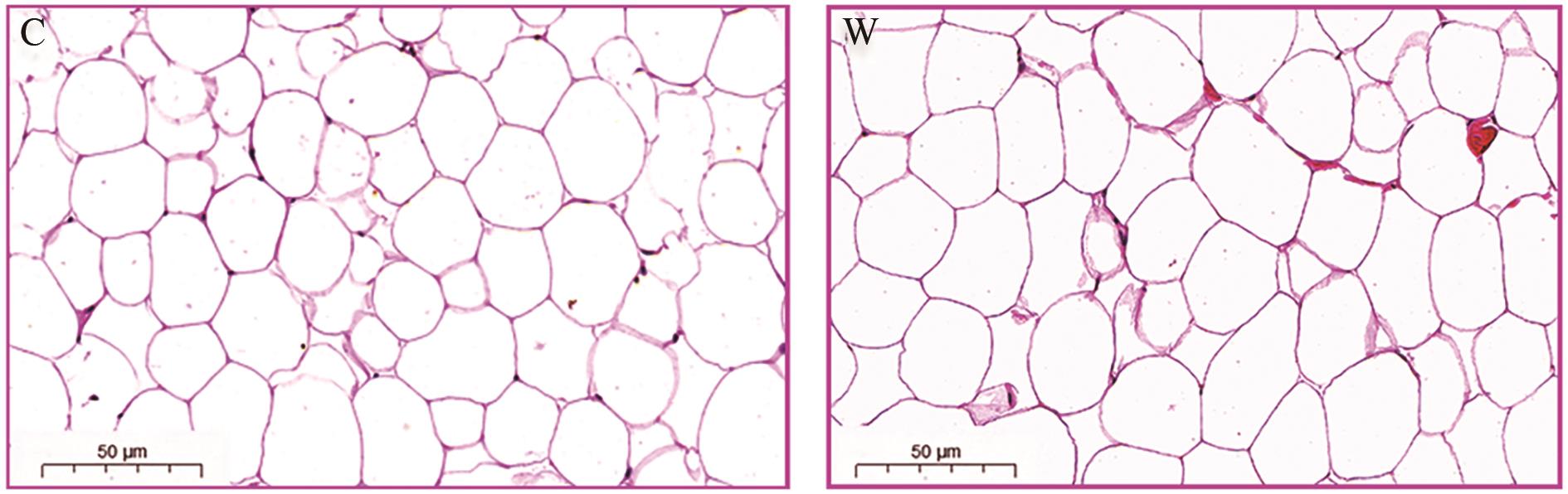
Fig. 1 HE-stained sections of subcutaneous adipose tissue of DLY pigs (C) and Wuzhishan pigs (W)
品种 Breed | 面积 Area (μm²) | 直径 Diameter (μm) | 密度 Density (Number of roots/mm²) | 单位面积内根数 Number of roots per unit area |
|---|---|---|---|---|
| 杜长大猪 DLY pigs | 5 076.21±214.99 | 83.55±1.21 | 142.91±11.41 | 77.00±7.00 |
| 五指山猪 Wuzhishan pigs | 7 035.34±310.98** | 104.97±7.95** | 96.63±8.59** | 48.00±6.00** |
Table 2 Statistical results of fat section of Wuzhishan pigs and DLY pigs
品种 Breed | 面积 Area (μm²) | 直径 Diameter (μm) | 密度 Density (Number of roots/mm²) | 单位面积内根数 Number of roots per unit area |
|---|---|---|---|---|
| 杜长大猪 DLY pigs | 5 076.21±214.99 | 83.55±1.21 | 142.91±11.41 | 77.00±7.00 |
| 五指山猪 Wuzhishan pigs | 7 035.34±310.98** | 104.97±7.95** | 96.63±8.59** | 48.00±6.00** |
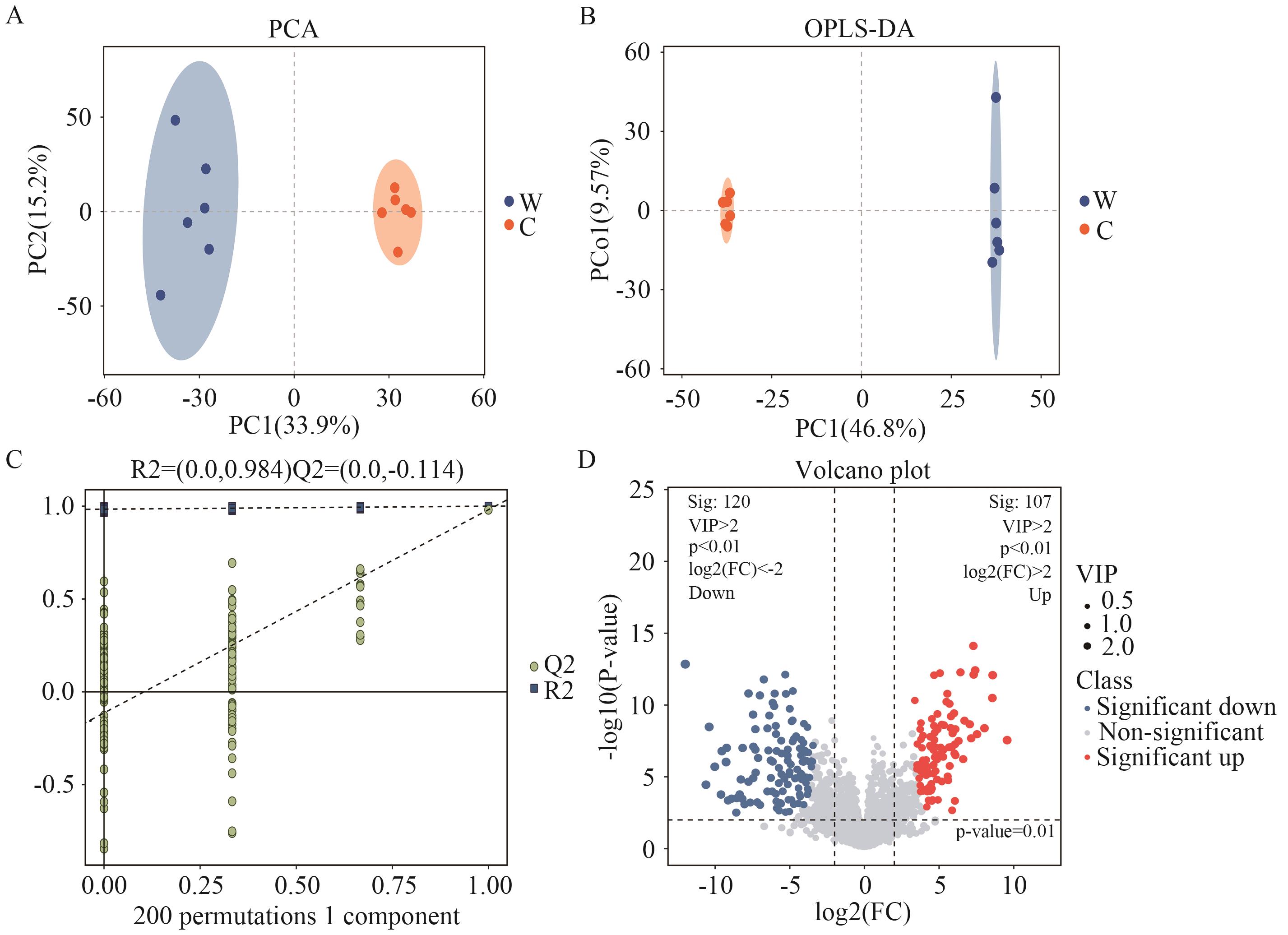
Fig. 2 Serum metabolomics plotsA: PCA score plot. B: OPLS-DA score plot. C: Permutation test result plot of the OPLS-DA model. D: Volcano plot of differential metabolites in serum
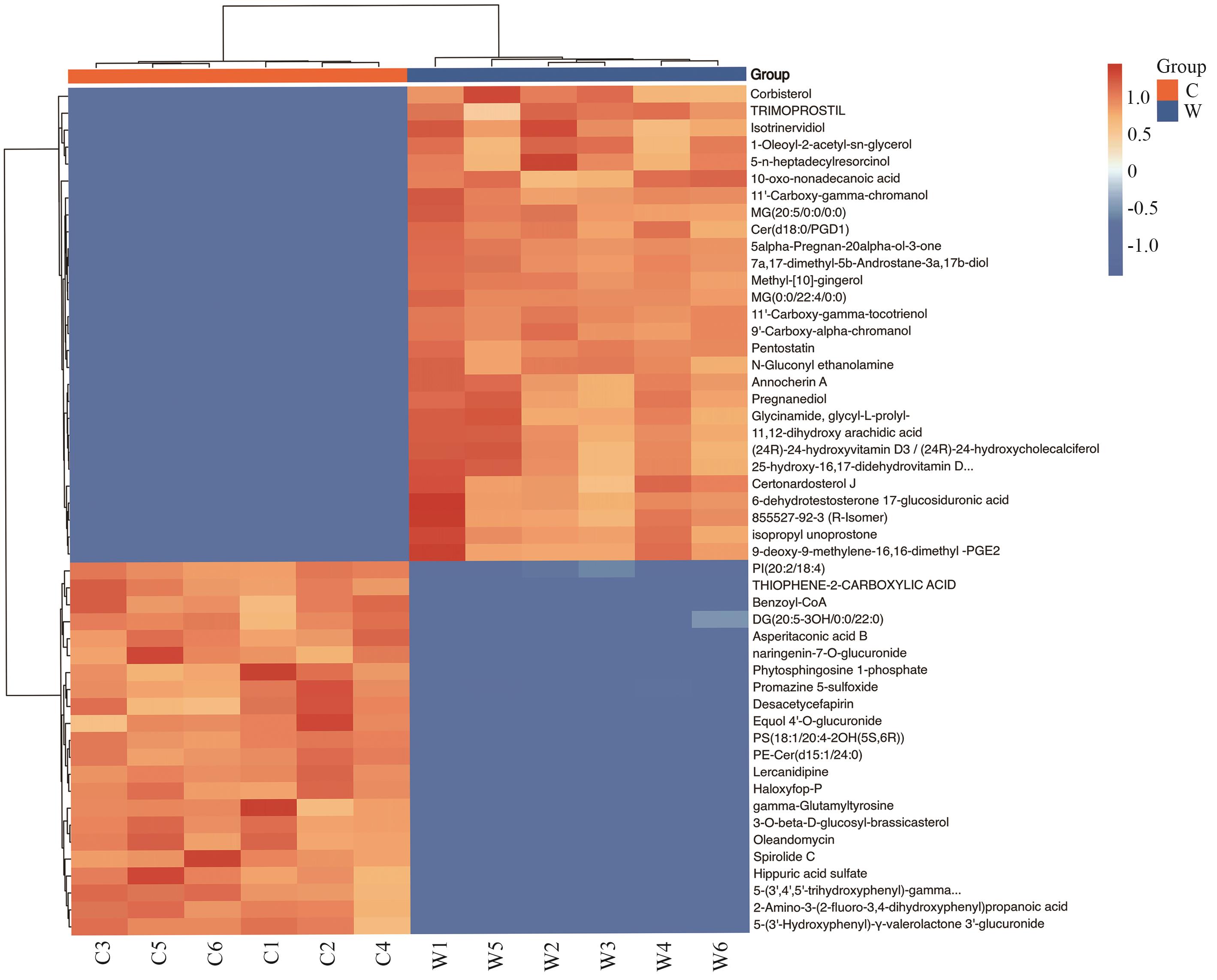
Fig. 3 Cluster heat map of the top 50 differential metabolites
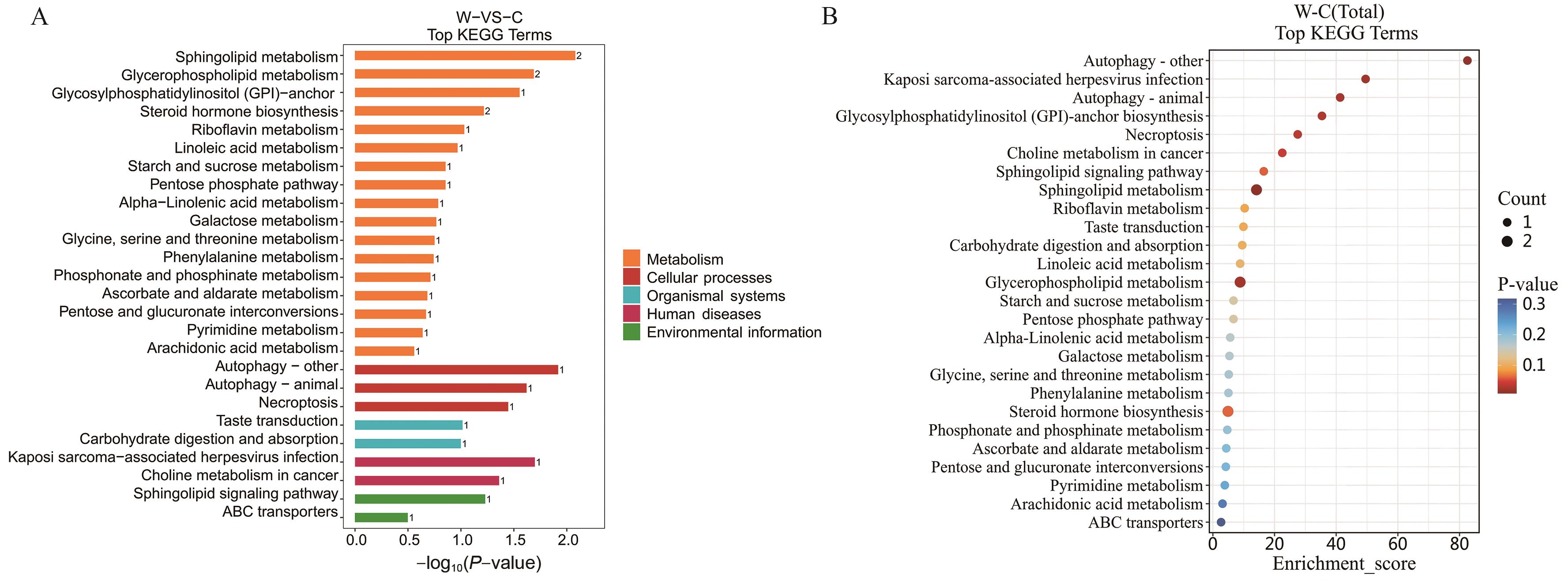
Fig. 4 KEGG enrichment diagram of differential metabolites in serumA: Histogram of KEGG enrichment analysis. B: Pathway enrichment bubble of differential metabolites
代谢类型 Metabolic type | 代谢通路 Metabolic pathway | 代谢物 Metabolites | 结构式 Structural formula | 差异倍数 FoldChange | 变化趋势 Changrtrend |
|---|---|---|---|---|---|
脂质代谢 Lipid metabolism | 类固醇激素的生物合成 | 20α-羟基-5α-孕-3-酮 | C21H34O2 | 171.10 | ↑ |
| 孕甾二醇 | C21H36O2 | 64.02 | ↑ | ||
| 鞘脂代谢 | 鞘磷脂(d18∶0/14∶0) | C37H77N2O6P | 58.60 | ↑ | |
| 鞘氨醇-1-磷酸胆碱 | C23H49N2O5P | 0.05 | ↓ | ||
| 花生四烯酸代谢 | 磷脂酰胆碱(20∶3/18∶2) | C46H82NO8P | 0.02 | ↓ | |
| 磷脂酰胆碱(18∶1/16∶1) | C42H80NO8P | 0.01 | ↓ | ||
| 亚油酸代谢/α-亚麻酸代谢 | 磷脂酰胆碱(20∶3/18∶2) | C46H82NO8P | 0.02 | ↓ | |
| 磷脂酰胆碱(18∶1/16∶1) | C42H80NO8P | 0.01 | ↓ | ||
| 甘油磷脂代谢 | 磷脂酰胆碱(20∶3/18∶2) | C46H82NO8P | 0.02 | ↓ | |
| 磷脂酰乙醇胺(18∶0/18∶1) | C41H80NO8P | 0.02 | ↓ | ||
| 磷脂酰胆碱(18∶1/16∶1) | C42H80NO8P | 0.01 | ↓ | ||
| 磷脂酰乙醇胺(20∶1/18∶1) | C43H82NO8P | 0.00 | ↓ | ||
氨基酸代谢 Amino acid metabolism | 甘氨酸、丝氨酸和苏氨酸的新陈代谢 | 四氢嘧啶 | C6H10N2O2 | 0.07 | ↓ |
| 苯丙氨酸代谢 | 苯甲酰辅酶 | C28H40N7O17P3S | 0.01 | ↓ | |
碳水化合物代谢 Carbohydrate metabolism | 淀粉和蔗糖代谢/半乳糖代谢 | 蔗糖 | C12H22O11 | 4.63 | ↑ |
| 磷酸戊糖途径 | γ-谷氨酰酪氨酸 | C14H18N2O6 | 0.07 | ↓ | |
| 抗坏血酸和醛酸代谢/戊糖和葡萄糖醛酸的相互转化 | 6-羟基-5-甲氧基吲哚葡萄糖醛酸苷 | C15H17NO8 | 0.04 | ↓ | |
| 5-羟基-6-甲氧基吲哚葡萄糖醛酸苷 | C15H17NO8 | 0.02 | ↓ | ||
糖的生物合成 Glycan biosynthesis | 糖基磷脂酰肌醇(GPI)锚生物合成 | 磷脂酰乙醇胺(18∶0/18∶1) | C41H80NO8P | 0.02 | ↓ |
| 磷脂酰乙醇胺(20∶1/18∶1) | C43H82NO8P | 0.00 | ↓ |
Table 3 Analysis of differential metabolites in the serum of Wuzhishan pigs and DLY pigs
代谢类型 Metabolic type | 代谢通路 Metabolic pathway | 代谢物 Metabolites | 结构式 Structural formula | 差异倍数 FoldChange | 变化趋势 Changrtrend |
|---|---|---|---|---|---|
脂质代谢 Lipid metabolism | 类固醇激素的生物合成 | 20α-羟基-5α-孕-3-酮 | C21H34O2 | 171.10 | ↑ |
| 孕甾二醇 | C21H36O2 | 64.02 | ↑ | ||
| 鞘脂代谢 | 鞘磷脂(d18∶0/14∶0) | C37H77N2O6P | 58.60 | ↑ | |
| 鞘氨醇-1-磷酸胆碱 | C23H49N2O5P | 0.05 | ↓ | ||
| 花生四烯酸代谢 | 磷脂酰胆碱(20∶3/18∶2) | C46H82NO8P | 0.02 | ↓ | |
| 磷脂酰胆碱(18∶1/16∶1) | C42H80NO8P | 0.01 | ↓ | ||
| 亚油酸代谢/α-亚麻酸代谢 | 磷脂酰胆碱(20∶3/18∶2) | C46H82NO8P | 0.02 | ↓ | |
| 磷脂酰胆碱(18∶1/16∶1) | C42H80NO8P | 0.01 | ↓ | ||
| 甘油磷脂代谢 | 磷脂酰胆碱(20∶3/18∶2) | C46H82NO8P | 0.02 | ↓ | |
| 磷脂酰乙醇胺(18∶0/18∶1) | C41H80NO8P | 0.02 | ↓ | ||
| 磷脂酰胆碱(18∶1/16∶1) | C42H80NO8P | 0.01 | ↓ | ||
| 磷脂酰乙醇胺(20∶1/18∶1) | C43H82NO8P | 0.00 | ↓ | ||
氨基酸代谢 Amino acid metabolism | 甘氨酸、丝氨酸和苏氨酸的新陈代谢 | 四氢嘧啶 | C6H10N2O2 | 0.07 | ↓ |
| 苯丙氨酸代谢 | 苯甲酰辅酶 | C28H40N7O17P3S | 0.01 | ↓ | |
碳水化合物代谢 Carbohydrate metabolism | 淀粉和蔗糖代谢/半乳糖代谢 | 蔗糖 | C12H22O11 | 4.63 | ↑ |
| 磷酸戊糖途径 | γ-谷氨酰酪氨酸 | C14H18N2O6 | 0.07 | ↓ | |
| 抗坏血酸和醛酸代谢/戊糖和葡萄糖醛酸的相互转化 | 6-羟基-5-甲氧基吲哚葡萄糖醛酸苷 | C15H17NO8 | 0.04 | ↓ | |
| 5-羟基-6-甲氧基吲哚葡萄糖醛酸苷 | C15H17NO8 | 0.02 | ↓ | ||
糖的生物合成 Glycan biosynthesis | 糖基磷脂酰肌醇(GPI)锚生物合成 | 磷脂酰乙醇胺(18∶0/18∶1) | C41H80NO8P | 0.02 | ↓ |
| 磷脂酰乙醇胺(20∶1/18∶1) | C43H82NO8P | 0.00 | ↓ |
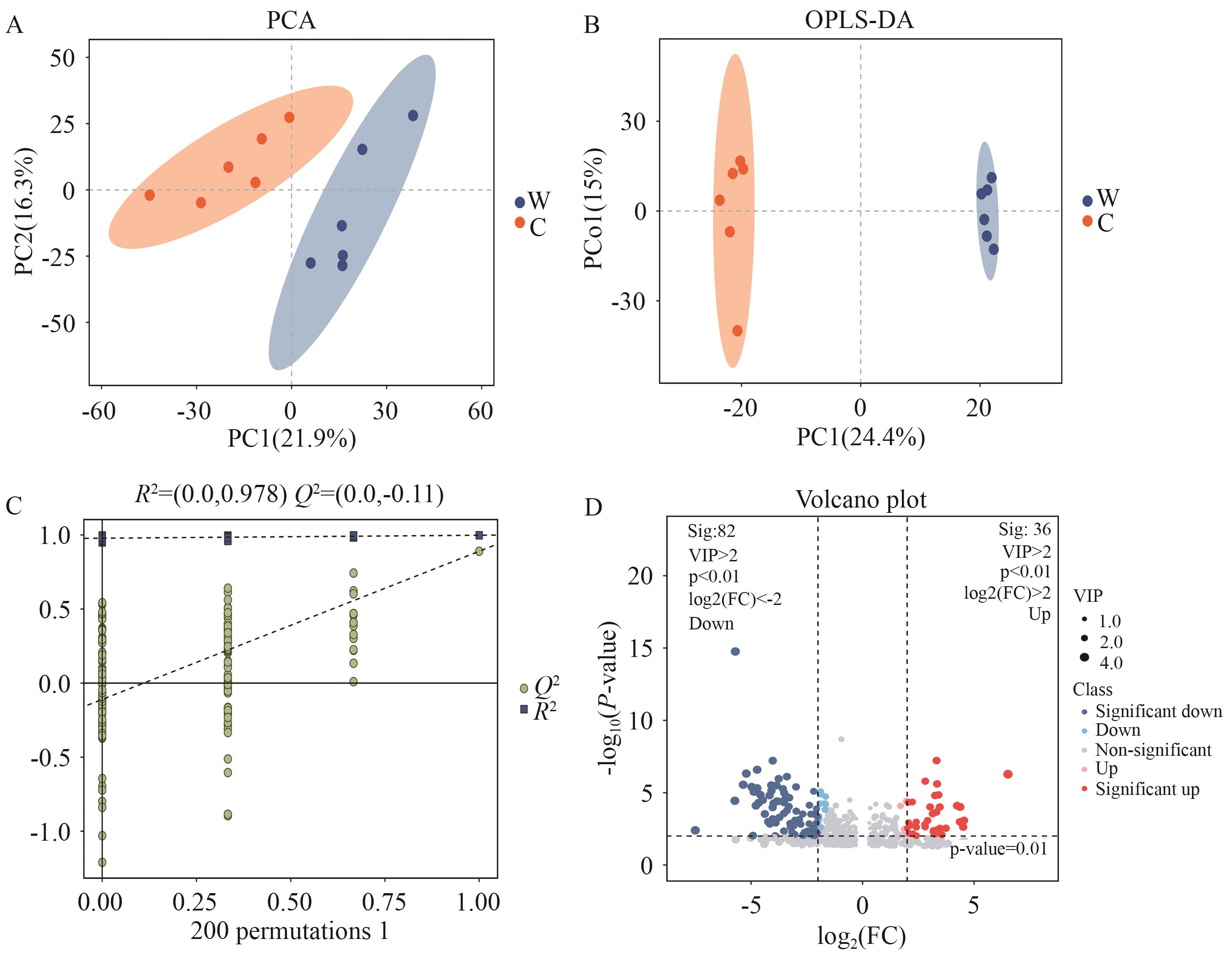
Fig. 5 Diagram of lipid metabolomicsA: PCA score plot. B: OPLS-DA score plot. C: Permutation test result plot of the OPLS-DA model. D: Volcano plot of differential metabolites in sebum
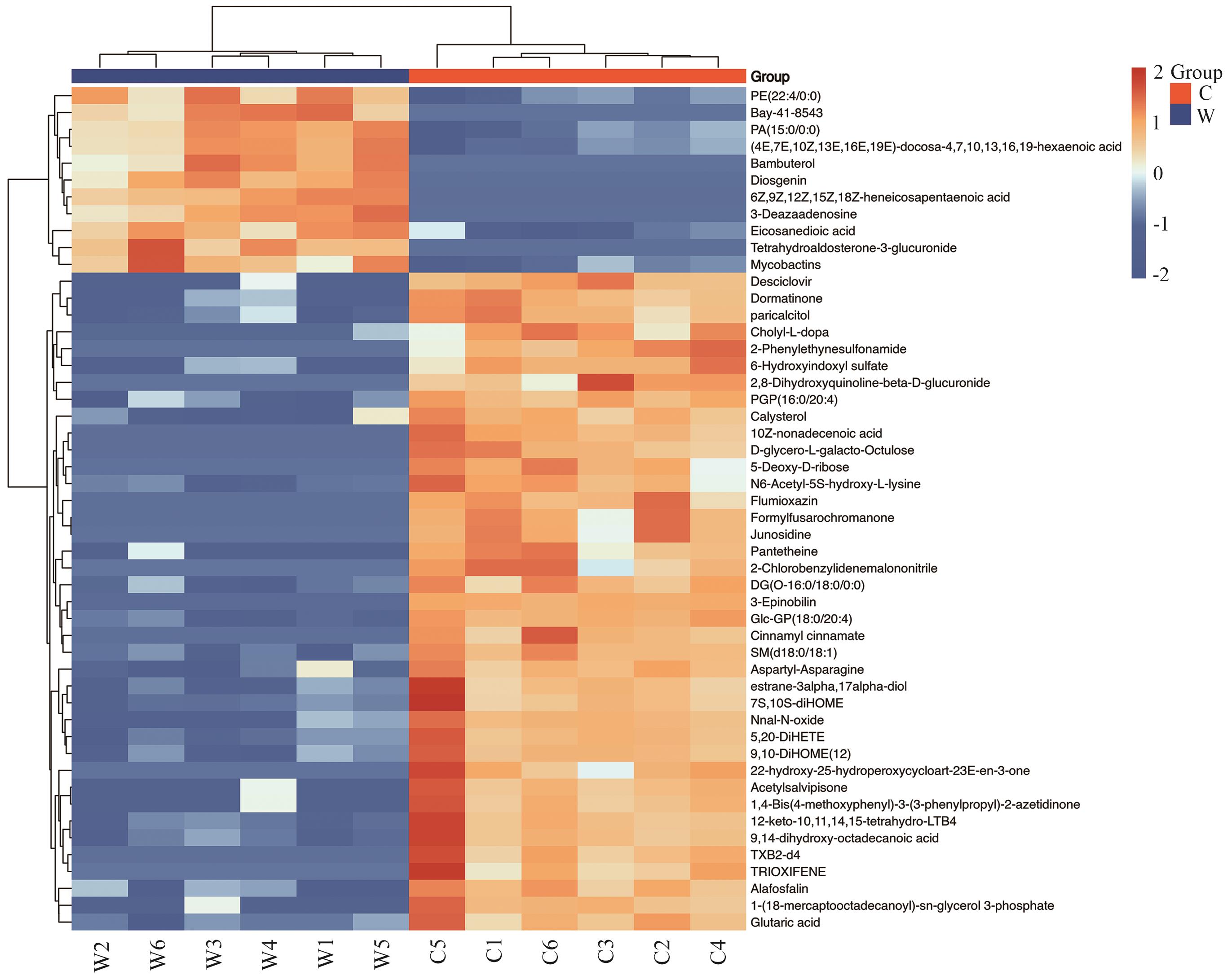
Fig. 6 Cluster heat map of the top 50 differential metabolites
代谢类型 Metabolic type | 代谢通路 Metabolic pathway | 代谢物 Metabolites | 结构式 Structural formula | 差异倍数 FoldChange | 变化趋势 Changrtrend |
|---|---|---|---|---|---|
脂质代谢 Lipid metabolism | 甘油磷脂代谢 | 磷脂酰胆碱(20∶4/0∶0) | C28H50NO7P | 7.54 | ↑ |
| 花生四烯酸代谢 | (+/-)5,6-二羟基二十碳三烯酸 | C20H34O4 | 5.32 | ↑ | |
| 12-酮-10,11,14,15-四氢-白三烯B4 | C20H34O4 | 0.22 | ↓ | ||
| 胞磷胆碱 | C14H27N4O11P2 | 0.09 | ↓ | ||
| TXB2-d4 | C20H30D4O6 | 0.06 | ↓ | ||
| α-亚麻酸代谢 | 13S-HOTrE | C18H30O3 | 0.29 | ↓ | |
| 脂肪酸的生物合成/不饱和脂肪酸的生物合成 | 油酸 | C18H34O2 | 0.26 | ↓ | |
氨基酸代谢 Amino acid metabolism | 甘氨酸、丝氨酸和苏氨酸的新陈代谢 | 四氢嘧啶 | C6H10N2O2 | 4.79 | ↑ |
| 精氨酸的生物合成 | N2-乙酰鸟氨酸 | C7H14N2O3 | 4.18 | ↑ | |
| 组氨酸代谢 | 麦角硫因 | C9H15N3O2S | 0.22 | ↓ | |
| 半胱氨酸和蛋氨酸代谢 | DL-同型半胱氨酸 | C8H16N2O4S2 | 0.19 | ↓ | |
碳水化合物代谢 Carbohydrate metabolism | 氨基酸和核苷酸糖代谢 | 尿苷二磷酸-N-乙酰葡糖胺 | C17H27N3O17P2 | 0.33 | ↓ |
Table 4 Analysis of differential metabolites in the sebum of Wuzhishan pigs and DLY pigs
代谢类型 Metabolic type | 代谢通路 Metabolic pathway | 代谢物 Metabolites | 结构式 Structural formula | 差异倍数 FoldChange | 变化趋势 Changrtrend |
|---|---|---|---|---|---|
脂质代谢 Lipid metabolism | 甘油磷脂代谢 | 磷脂酰胆碱(20∶4/0∶0) | C28H50NO7P | 7.54 | ↑ |
| 花生四烯酸代谢 | (+/-)5,6-二羟基二十碳三烯酸 | C20H34O4 | 5.32 | ↑ | |
| 12-酮-10,11,14,15-四氢-白三烯B4 | C20H34O4 | 0.22 | ↓ | ||
| 胞磷胆碱 | C14H27N4O11P2 | 0.09 | ↓ | ||
| TXB2-d4 | C20H30D4O6 | 0.06 | ↓ | ||
| α-亚麻酸代谢 | 13S-HOTrE | C18H30O3 | 0.29 | ↓ | |
| 脂肪酸的生物合成/不饱和脂肪酸的生物合成 | 油酸 | C18H34O2 | 0.26 | ↓ | |
氨基酸代谢 Amino acid metabolism | 甘氨酸、丝氨酸和苏氨酸的新陈代谢 | 四氢嘧啶 | C6H10N2O2 | 4.79 | ↑ |
| 精氨酸的生物合成 | N2-乙酰鸟氨酸 | C7H14N2O3 | 4.18 | ↑ | |
| 组氨酸代谢 | 麦角硫因 | C9H15N3O2S | 0.22 | ↓ | |
| 半胱氨酸和蛋氨酸代谢 | DL-同型半胱氨酸 | C8H16N2O4S2 | 0.19 | ↓ | |
碳水化合物代谢 Carbohydrate metabolism | 氨基酸和核苷酸糖代谢 | 尿苷二磷酸-N-乙酰葡糖胺 | C17H27N3O17P2 | 0.33 | ↓ |
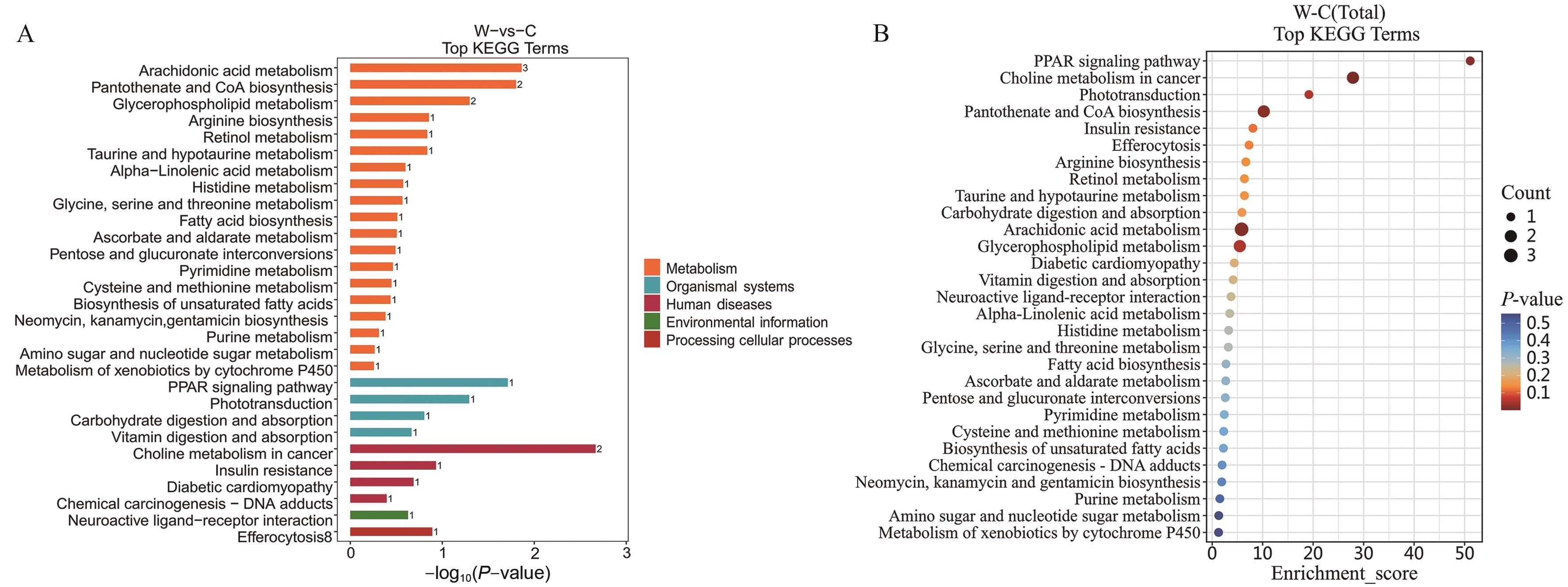
Fig. 7 KEGG enrichment diagram of differential metabolites in sebumA: Histogram of KEGG enrichment analysis. B: Pathway enrichment bubble of differential metabolites
| [31] | 周炎冰. 猪不同部位脂肪组织中脂质组成差异及关键差异脂质调控动物糖脂代谢的机制研究 [D]. 杭州: 浙江大学, 2023. |
| Zhou YB. Lipid composition of different adipose tissues of pig and regulatory mechanisms of key differential lipid on animal glucose and lipid metabolism [D]. Hangzhou: Zhejiang University, 2023. | |
| [32] | Lan Q, Sui LF, Liu XL, et al. Comprehensive analysis of transcriptomic and metabolomic profiles uncovered the age-induced dynamic development pattern of subcutaneous fat in Ningxiang pig [J]. Gene, 2023, 880: 147624. |
| [33] | Deng XX, Zhang YB, Song G, et al. Integrative analysis of transcriptomic and lipidomic profiles reveals a differential subcutaneous adipose tissue mechanism among Ningxiang pig and berkshires, and their offspring [J]. Animals, 2023, 13(21): 3321. |
| [34] | 李优磊. PPAR信号通路在调控猪皮下脂肪与肌内脂肪差异沉积中的作用及机制研究 [D]. 杨凌: 西北农林科技大学, 2018. |
| Li YL. The differential function and mechanism of PPAR signaling in regulation of porcine subcutaneous and intramuscular fat depositon [D]. Yangling: Northwest A & F University, 2018. | |
| [35] | Wang YL, Li CX, Zhang JJ, et al. Polyunsaturated fatty acids promote the rapid fusion of lipid droplets in Caenorhabditis elegans [J]. J Biol Chem, 2022, 298(8): 102179. |
| [1] | 张楠. 三种猪肉食用品质的差异研究 [D]. 太谷: 山西农业大学, 2020. |
| Zhang N. Study on difference of eating quality from three kinds of pork longissimus [D]. Taigu: Shanxi Agricultural University, 2020. | |
| [2] | 葛倩倩, 汤晓艳, 涂婷, 等. 不同品种猪肉鲜味特征比较研究 [J]. 肉类研究, 2020, 34(9): 1-5. |
| Ge QQ, Tang XY, Tu T, et al. Comparative study on the umami characteristics of pork from different breeds [J]. Meat Res, 2020, 34(9): 1-5. | |
| [3] | 李娜, 张琪, 刘洪亮, 等. 松辽黑猪与引入猪种肉品质性状的综合对比分析 [J]. 黑龙江畜牧兽医, 2022(16): 55-59, 65. |
| Li N, Zhang Q, Liu HL, et al. Comprehensive comparative analysis of meat quality traits between Songliao black pigs and introduced pig breeds [J]. Heilongjiang Anim Sci Vet Med, 2022(16): 55-59, 65. | |
| [4] | 袁艳枝, 邓文, 金瑶瑶, 等. 猪肉品质评定指标及影响因素的研究进展 [J]. 黑龙江畜牧兽医: 上半月, 2020(1): 31-35, 40. |
| Yuan YZ, Deng W, Jin YY, et al. Research progress on evaluation indexes and influencing factors of pork quality [J]. Heilongjiang Anim Sci Vet Med, 2020(1): 31-35, 40. | |
| [5] | 李倩. 基于靶向脂质组学分析真空高压处理的羊尾油脂及除膻固态抗氧化油脂的制备 [D]. 呼和浩特: 内蒙古农业大学, 2022. |
| Li Q. Preparation of sheep tail oil and solid antioxidant oil with removal of mutton based on targeted lipidomics analysis [D]. Hohhot: Inner Mongolia Agricultural University, 2022. | |
| [6] | 荀文娟, 施力光, 周汉林, 等. 五指山猪与长白猪胴体性状和肉品质的比较研究 [J]. 中国畜牧兽医, 2013, 40(5): 93-96. |
| Xun WJ, Shi LG, Zhou HL, et al. Comparative study on carcass traits and meat quality of Wuzhishan and Landrace pigs [J]. China Anim Husb Vet Med, 2013, 40(5): 93-96. | |
| [7] | 刘瑞. 猪脂肪沉积和分解代谢过程中的脂质组特征及跨物种比较 [D]. 雅安: 四川农业大学, 2019. |
| Liu R. Lipidomic signature of lipid deposition and lipidolysis metabolism in porcine adipose tissues and cross-species comparison [D]. Yaan: Sichuan Agricultural University, 2019. | |
| [8] | 李洁. 沙子岭猪与大白猪皮下脂肪脂质沉积差异及其血清代谢标志物研究 [D]. 杭州: 浙江大学, 2022. |
| Li J. Differences of subcutaneous lipid deposition and its serum metabol metabolic markers between Shaziling and Largewhite pigs [D]. Hangzhou: Zhejiang University, 2022. | |
| [9] | Song B, Zheng CB, Zheng J, et al. Comparisons of carcass traits, meat quality, and serum metabolome between Shaziling and Yorkshire pigs [J]. Anim Nutr, 2022, 8: 125-134. |
| [10] | 郑婷婷, 翁欣, 陈宗忠, 等. 海南五指山五脚猪肉一般营养成分分析及评价 [J]. 农产品加工, 2020(1): 50-52, 55. |
| Zheng TT, Weng X, Chen ZZ, et al. Analysis and evaluation of general nutritional components of Wujiao pork in Wuzhishan of Hainan [J]. Farm Prod Process, 2020(1): 50-52, 55. | |
| [11] | 鲁绯, 孙君社, 冯书堂, 等. 五指山猪的肉质分析研究 [J]. 肉类研究, 2001, 15(2): 40-42, 39. |
| Lu F, Sun JS, Feng ST, et al. A study on WZSP meat quality [J]. Meat Res, 2001, 15(2): 40-42, 39. | |
| [12] | 王峰, 魏立民, 郑心力, 等. 海南五指山猪生长发育性能测定试验 [J]. 猪业科学, 2009, 26(5): 108-109. |
| Wang F, Wei LM, Zheng XL, et al. Test on growth performance of Wuzhishan pig in Hainan [J]. Swine Ind Sci, 2009, 26(5): 108-109. | |
| [13] | 周佳. 通过LDLR和ApoE双基因敲除制备五指山小型猪动脉粥样硬化模型 [D]. 雅安: 四川农业大学, 2023. |
| Zhou J. Preparation of atherosclerosis model in Wuzhishan minipig by double gene knockout of LDLR and ApoE [D]. Yaan: Sichuan Agricultural University, 2023. | |
| [14] | Wang ZB, Zhang J, Wu P, et al. Effects of oral monosodium glutamate administration on serum metabolomics of suckling piglets [J]. J Anim Physiol Anim Nutr, 2020, 104(1): 269-279. |
| [15] | 李震, 李艳菊. 日粮中添加白头翁皂苷对育肥猪生长性能、血清生化和免疫指标的影响 [J]. 中国饲料, 2024(12): 9-12. |
| Li Z, Li YJ. The effect of adding Baitouweng saponins to the diet on the growth performance, serum biochemical and immune indicators of fattening pigs [J]. China Feed, 2024(12): 9-12. | |
| [16] | 雷雯, 刘克敏, 张克明, 等. 体质量指数与血糖、脂肪、蛋白质代谢生化指标的关系 [J]. 中国临床康复, 2005, 9(39): 64-65. |
| Lei W, Liu KM, Zhang KM, et al. Relations between body mass index and the biochemical indexes of blood glucose, fat and protein metabolisms [J]. Chin J Clin Rehabil, 2005, 9(39): 64-65. | |
| [17] | Kim JS, Ingale SL, Hosseindoust AR, et al. Effects of mannan level and β-mannanase supplementation on growth performance, apparent total tract digestibility and blood metabolites of growing pigs [J]. Animal, 2017, 11(2): 202-208. |
| [18] | 崔艺燕, 彭苏, 李贞明, 等. 发酵桑叶对肥育猪生长性能以及血浆、尿液代谢物的影响 [J]. 动物营养学报, 2022, 34(9): 5620-5629. |
| Cui YY, Peng S, Li ZM, et al. Effects of fermented mulberry leaves on growth performance, plasma and urine metabolites of finishing pigs [J]. Chin J Anim Nutr, 2022, 34(9): 5620-5629. | |
| [19] | 李万军. 复方中草药制剂对肉仔鸡血清生化指标及肉品质的影响研究 [J]. 中国农学通报, 2012, 28(20): 63-66. |
| Li WJ. Effects of Chinese herb feed additives on serum biochemical parameters and meat quality of broilers [J]. Chin Agric Sci Bull, 2012, 28(20): 63-66. | |
| [20] | 李贞明, 马现永, 容庭, 等. 胍基乙酸对育肥猪生长性能、血清生化指标、抗氧化能力和免疫功能的影响 [J]. 中国畜牧兽医, 2024, 51(8): 3311-3319. |
| Li ZM, Ma XY, Rong T, et al. Effects of guanidinoacetic acid on growth performance, serum biochemical indices, antioxidant capacity and immune function of finishing pigs [J]. China Anim Husb Vet Med, 2024, 51(8): 3311-3319. | |
| [21] | 刘笑笑. 大白猪血液生化指标的全基因组关联分析及其与肠道微生物的相关研究 [D]. 南宁: 广西大学, 2022. |
| Liu XX. Genome-wide association analysis of blood biochemical indexes and its correlation with intestinal microflora in large white pigs [D]. Nanning: Guangxi University, 2022. | |
| [22] | 杨烨城, 黄秋艳, 辛海云, 等. 藏猪和杜藏猪生长、肉质性状及脂肪沉积相关基因的表达差异分析 [J]. 南方农业学报, 2022, 53(4): 926-934. |
| Yang YC, Huang QY, Xin HY, et al. Analysis of differences in growth, meat quality traits and expression of genes related to fat deposition between Tibetan and Duzang pigs [J]. J South Agric, 2022, 53(4): 926-934. | |
| [23] | Yu TY, Tian XK, Li D, et al. Transcriptome, proteome and metabolome analysis provide insights on fat deposition and meat quality in pig [J]. Food Res Int, 2023, 166: 112550. |
| [24] | 杨烨城. 甘肃藏猪背部脂肪与肠周脂肪的脂肪特征与代谢组学分析 [D].佛山: 佛山科学技术学院, 2022. |
| Yang YC. Characteristics and metabolomic analysis of the back subcutaneous fat and peri-intestinal fat in Gansu Tibetan pigs [D]. : Foshan: Foshan University, 2022. | |
| [25] | 杨家大, 张欢, 陈庆, 等. 从江香猪与长白猪血清代谢组学比较分析 [J]. 凯里学院学报, 2024, 42(6): 10-14. |
| Yang JD, Zhang H, Chen Q, et al. Comparative analysis of serum metabolomics between Congjiang Xiang and Landrace pigs [J]. J Kaili Univ, 2024, 42(6): 10-14. | |
| [26] | Bovo S, Mazzoni G, Galimberti G, et al. Metabolomics evidences plasma and serum biomarkers differentiating two heavy pig breeds [J]. Animal, 2016, 10(10): 1741-1748. |
| [27] | 李展鑫. 磷脂酰肌醇/磷脂酰丝氨酸对脂滴生成的影响研究 [D]. 武汉: 华中农业大学, 2023. |
| Li ZX. Studies on the effect of phosphatidylinositol/phosphatidylserine on lipid droplet production [D]. Wuhan: Huazhong Agricultural University, 2023. | |
| [28] | Zhu JL, Lam SM, Yang LL, et al. Reduced phosphatidylcholine synthesis suppresses the embryonic lethality of seipin deficiency [J]. Life Metab, 2022, 1(2): 175-189. |
| [29] | 刘亚楠, 王宝维, 葛文华, 等. 鸭油甘油二酯与维生素D3协同对肥胖SD大鼠器官指数、血液25羟基维生素D3含量、胫骨发育指标及肝脏维生素D受体和过氧化酶体增殖物激活受体α基因表达量的影响 [J]. 动物营养学报, 2020, 32(1): 472-480. |
| Liu YN, Wang BW, Ge WH, et al. Effects of combination of duck oil diglyceride and vitamin D3 on organ indexesp, blood 25 hydroxyl vitamin D3 content, Tibia develoment indexes and liver vitamin D receptor and peroxisome proliferators-activated receptors α gene expressions of obese SD Ra [J]. Chin J Anim Nutr, 2020, 32(1): 472-480. | |
| [30] | Hibi M, Takase H, Meguro S, et al. The effects of diacylglycerol oil on fat oxidation and energy expenditure in humans and animals [J]. Biofactors, 2009, 35(2): 175-177. |
| No related articles found! |
| Viewed | ||||||
|
Full text |
|
|||||
|
Abstract |
|
|||||
