






Biotechnology Bulletin ›› 2026, Vol. 42 ›› Issue (11): 240-251.doi: 10.13560/j.cnki.biotech.bull.1985.2026-0073
ZHANG Yu-tian1, WANG Yi2, WANG Zi-yang3, FU Man-qing2, WU Peng-yu2( )
Received:2026-01-18
Online:2026-11-26
Published:2026-11-03
Contact:
WU Peng-yu
E-mail:3131073@nyist.edu.cn
ZHANG Yu-tian, WANG Yi, WANG Zi-yang, FU Man-qing, WU Peng-yu. Identification of Pathogenic Fungi on Rosa chinensis and Biocontrol Potential of Pseudomonas qingdaonensis BYX7[J]. Biotechnology Bulletin, 2026, 42(11): 240-251.
编号 Number | 名称 Name | 保藏编号 Preservation number |
|---|---|---|
| BYXC5 | 日本假黄单胞菌 Pseudoxanthomonas japonensis | 2021060102 |
| BYX7 | 青岛假单胞菌 P. qingdaonensis | 2021060105 |
| BYX1E | 边缘假单胞菌 P. marginalis | 2021060112 |
| BYX5 | 空气芽胞杆菌 Bacillus aerius | 2021060123 |
| BYXB | 海口芽胞杆菌 B. haikouensis | 2021060124 |
| BYXF | 托拉氏假单胞菌 P. tolaasii | 2021060502 |
| BYX1J | 摩氏假单胞菌 P. mosselii | 2021060504 |
| BYXD2 | 克氏假单胞菌 P. knackmussii | 2021060522 |
Table 1 Antagonistic microbial species
编号 Number | 名称 Name | 保藏编号 Preservation number |
|---|---|---|
| BYXC5 | 日本假黄单胞菌 Pseudoxanthomonas japonensis | 2021060102 |
| BYX7 | 青岛假单胞菌 P. qingdaonensis | 2021060105 |
| BYX1E | 边缘假单胞菌 P. marginalis | 2021060112 |
| BYX5 | 空气芽胞杆菌 Bacillus aerius | 2021060123 |
| BYXB | 海口芽胞杆菌 B. haikouensis | 2021060124 |
| BYXF | 托拉氏假单胞菌 P. tolaasii | 2021060502 |
| BYX1J | 摩氏假单胞菌 P. mosselii | 2021060504 |
| BYXD2 | 克氏假单胞菌 P. knackmussii | 2021060522 |
| 编号 Symbol | 因素 Factor | 编码水平 Coded levels | ||
|---|---|---|---|---|
| -1 | 0 | +1 | ||
| A | 温度 Temperature (℃) | 31 | 33 | 35 |
| B | 转速 Speed (r/min) | 160 | 180 | 200 |
| C | pH | 7 | 7.5 | 8 |
Table 2 Box-Behnken experimental design
| 编号 Symbol | 因素 Factor | 编码水平 Coded levels | ||
|---|---|---|---|---|
| -1 | 0 | +1 | ||
| A | 温度 Temperature (℃) | 31 | 33 | 35 |
| B | 转速 Speed (r/min) | 160 | 180 | 200 |
| C | pH | 7 | 7.5 | 8 |
载体种类 Type of adsorption carrier | 载体质量 Carrier quality (g) | 生理盐水 Sodium chloride solution (mL) | 干燥时间 Drying time (min) | 干燥前质量 The mass before drying (g) | 干燥后质量 The mass after drying (g) |
|---|---|---|---|---|---|
| 活性炭 Activated carbon | 5 | 4.7 | 60 | 1.79 | 1 |
| 木屑 Sawdust | 8 | 6.0 | 65 | 1.57 | 1 |
| 硅藻土 Diatomaceous earth | 4 | 5.0 | 50 | 2.00 | 1 |
| 玉米芯粉 Corn cob powder | 2 | 7.0 | 90 | 4.13 | 1 |
| 沸石粉 Zeolite powder | 9 | 4.0 | 45 | 1.32 | 1 |
| 麸皮 Bran | 3 | 5.0 | 65 | 2.52 | 1 |
Table 3 Initial addition ratios of different carriers and their corresponding drying parameters
载体种类 Type of adsorption carrier | 载体质量 Carrier quality (g) | 生理盐水 Sodium chloride solution (mL) | 干燥时间 Drying time (min) | 干燥前质量 The mass before drying (g) | 干燥后质量 The mass after drying (g) |
|---|---|---|---|---|---|
| 活性炭 Activated carbon | 5 | 4.7 | 60 | 1.79 | 1 |
| 木屑 Sawdust | 8 | 6.0 | 65 | 1.57 | 1 |
| 硅藻土 Diatomaceous earth | 4 | 5.0 | 50 | 2.00 | 1 |
| 玉米芯粉 Corn cob powder | 2 | 7.0 | 90 | 4.13 | 1 |
| 沸石粉 Zeolite powder | 9 | 4.0 | 45 | 1.32 | 1 |
| 麸皮 Bran | 3 | 5.0 | 65 | 2.52 | 1 |
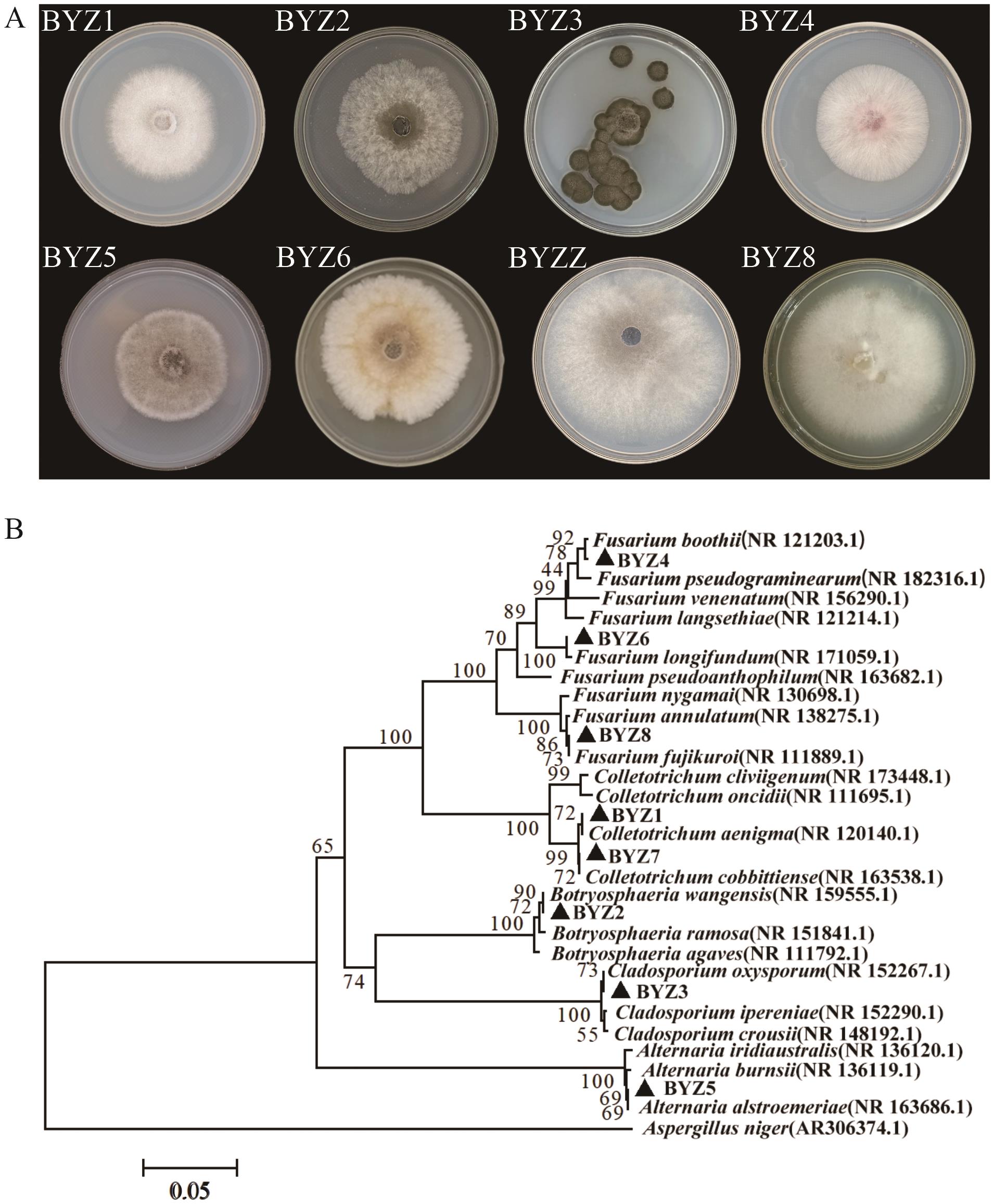
Fig. 1 Colony morphology (A) of the pathogenic fungi and phylogenetic tree (B) based on ITS sequences
编号 Number | 菌株名称 Strain name | 序列相似度 Similarity (%) | GenBank 登录号 Accession number |
|---|---|---|---|
| BYZ1 | Colletotrichum aenigma | 100.00 | NR 120140.1 |
| BYZ2 | Botryosphaeria wangensis | 100.00 | NR 159555.1 |
| BYZ3 | Cladosporium oxysporum | 100.00 | NR 152267.1 |
| BYZ4 | Fusarium boothii | 99.81 | NR 121203.1 |
| BYZ5 | Alternaria alstroemeriae | 99.81 | NR 163686.1 |
| BYZ6 | Fusarium longifundum | 99.81 | NR 171059.1 |
| BYZ7 | Colletotrichum cobbittiense | 100.00 | NR 163538.1 |
| BYZ8 | Fusarium fujikuroi | 99.81 | NR 111889.1 |
Table 4 Identification of pathogenic fungi
编号 Number | 菌株名称 Strain name | 序列相似度 Similarity (%) | GenBank 登录号 Accession number |
|---|---|---|---|
| BYZ1 | Colletotrichum aenigma | 100.00 | NR 120140.1 |
| BYZ2 | Botryosphaeria wangensis | 100.00 | NR 159555.1 |
| BYZ3 | Cladosporium oxysporum | 100.00 | NR 152267.1 |
| BYZ4 | Fusarium boothii | 99.81 | NR 121203.1 |
| BYZ5 | Alternaria alstroemeriae | 99.81 | NR 163686.1 |
| BYZ6 | Fusarium longifundum | 99.81 | NR 171059.1 |
| BYZ7 | Colletotrichum cobbittiense | 100.00 | NR 163538.1 |
| BYZ8 | Fusarium fujikuroi | 99.81 | NR 111889.1 |
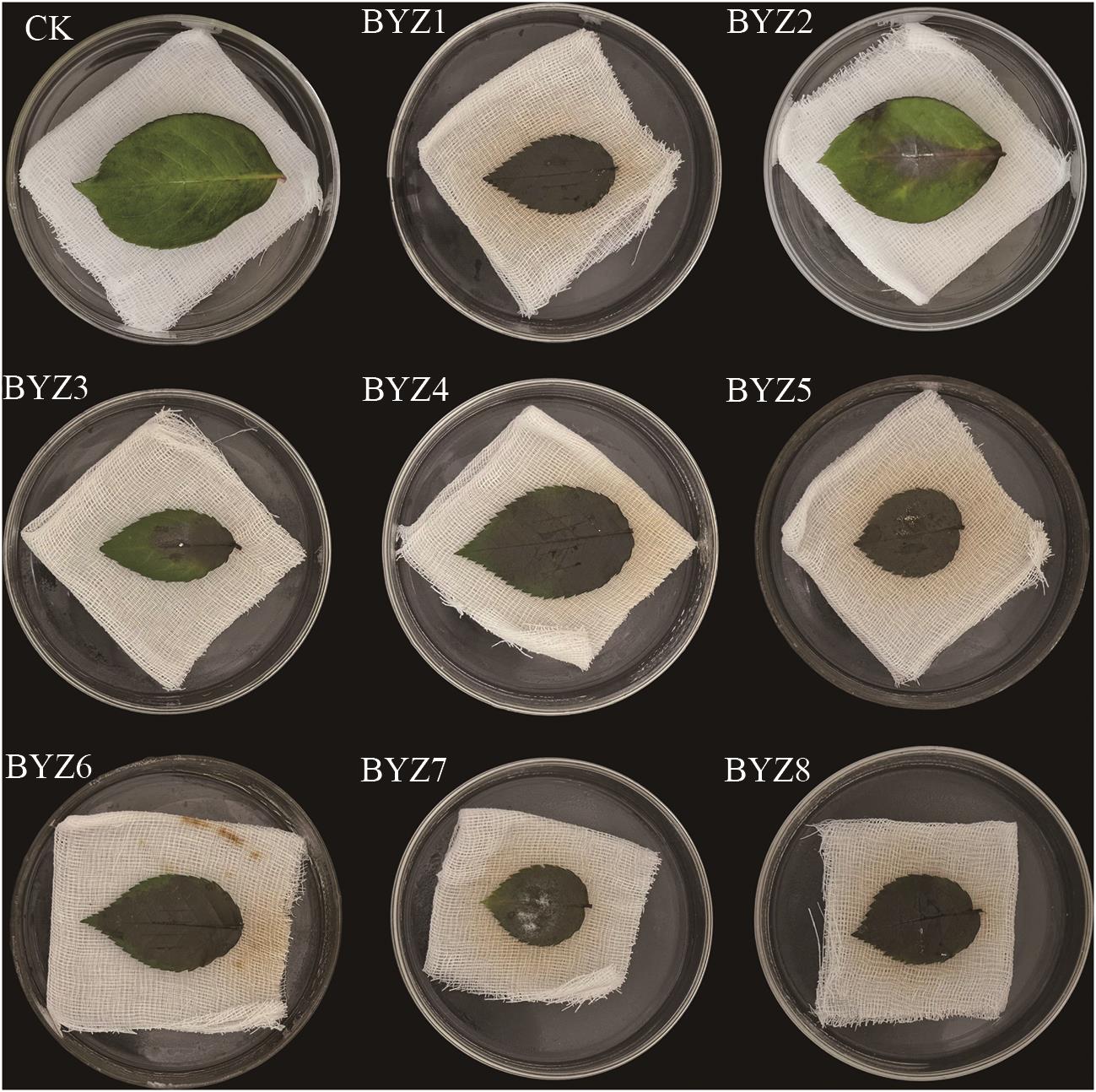
Fig. 2 Pathogenicity test of the eight fungi
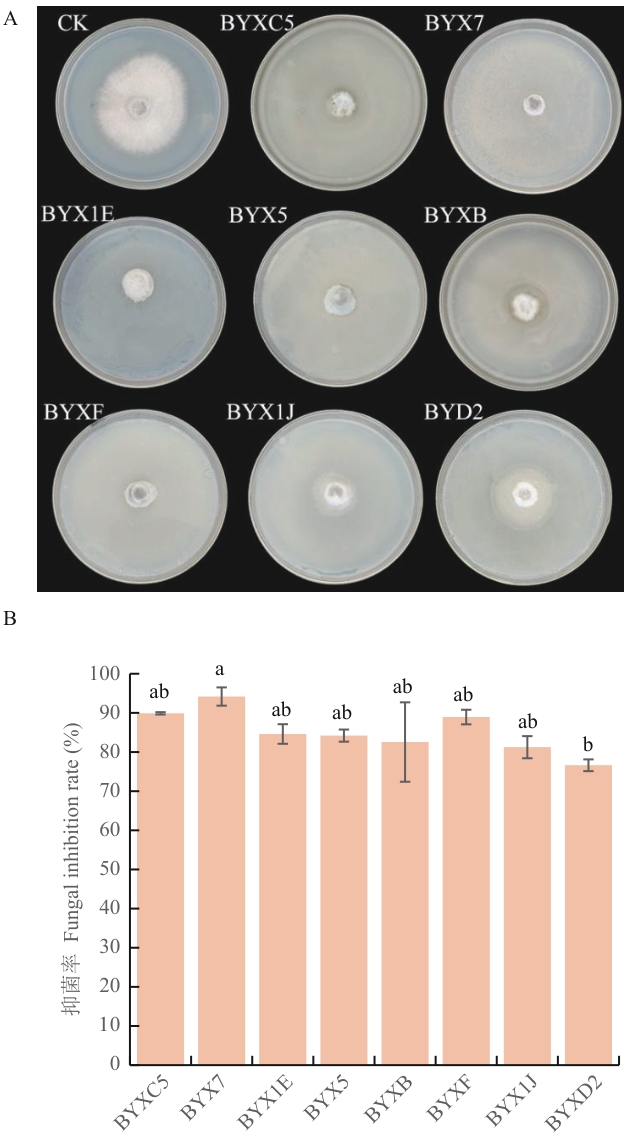
Fig. 3 Antifungal effects (A) and inhibition rates (B) of eight antagonistic bacteria against C. aenigmaDifferent letters indicate significant differences(P<0.05). The same below
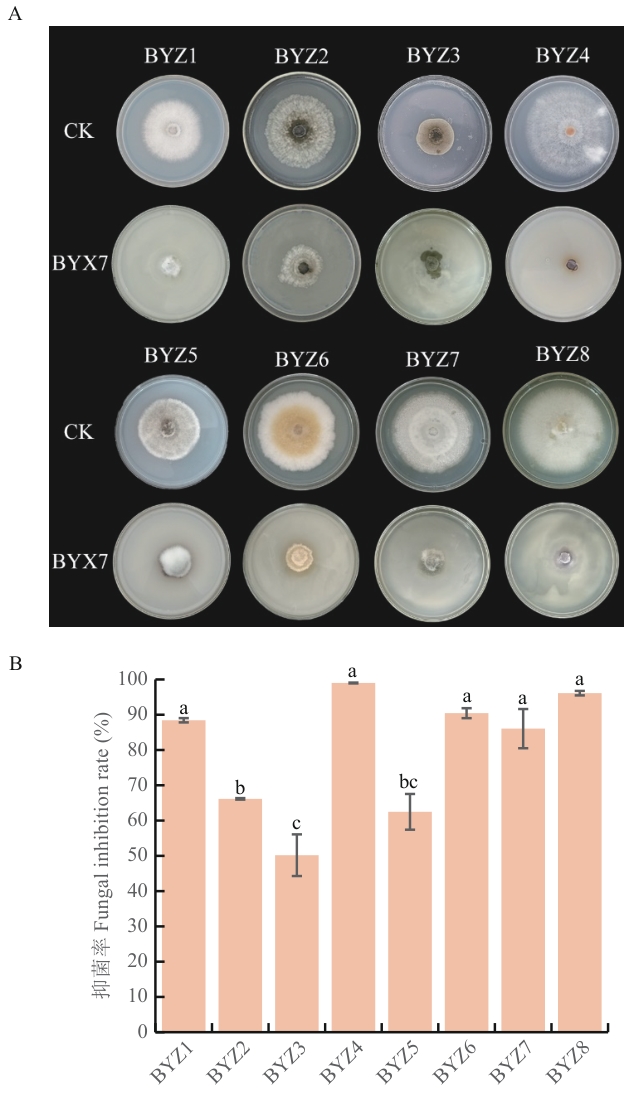
Fig. 4 Antifungal effects (A) and inhibition rates (B) of P. qingdaonensis BYX7 against eight pathogenic fungi
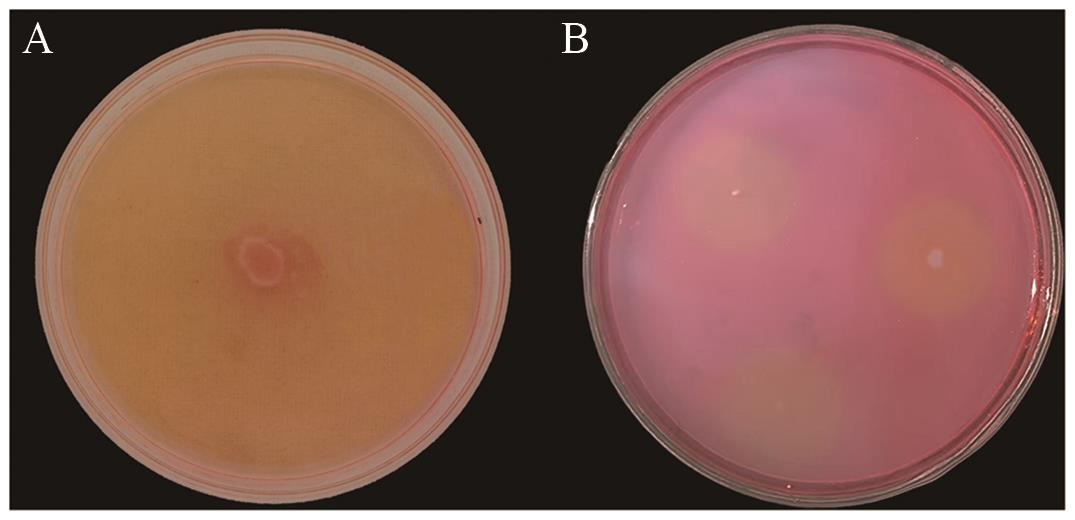
Fig. 5 The enzymatic activity of P. qingdaonensis BYX7A: Urease activity. B: Cellulase activity
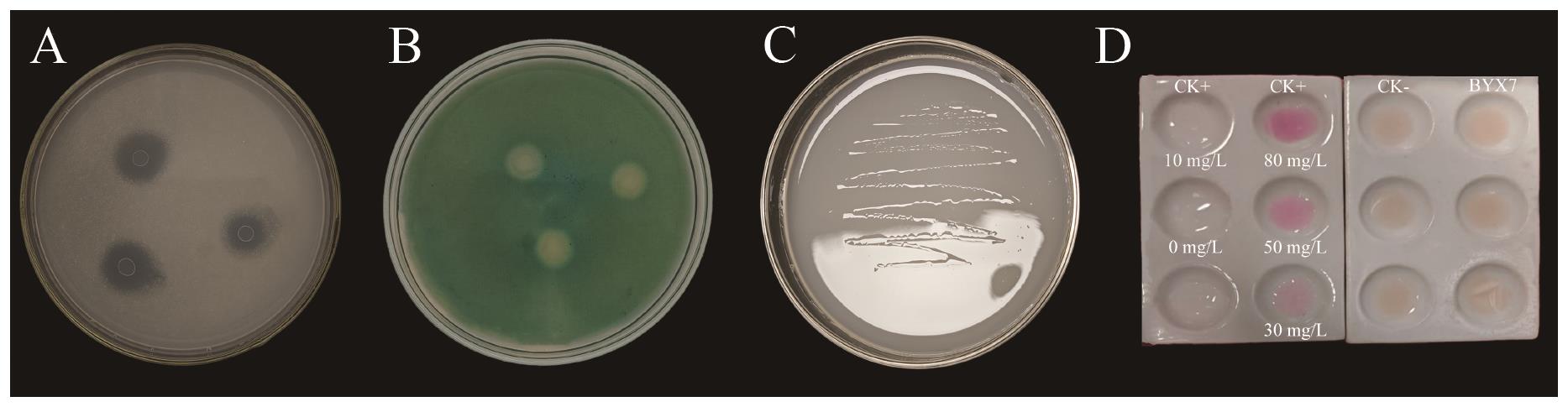
Fig. 6 Determination of the growth-promoting ability of P. qingdaonensis BYX7A: Phosphorus dissolution experiment. B: Determination of siderophores. C: Nitrogen fixation experiment. D: Determination of IAA production
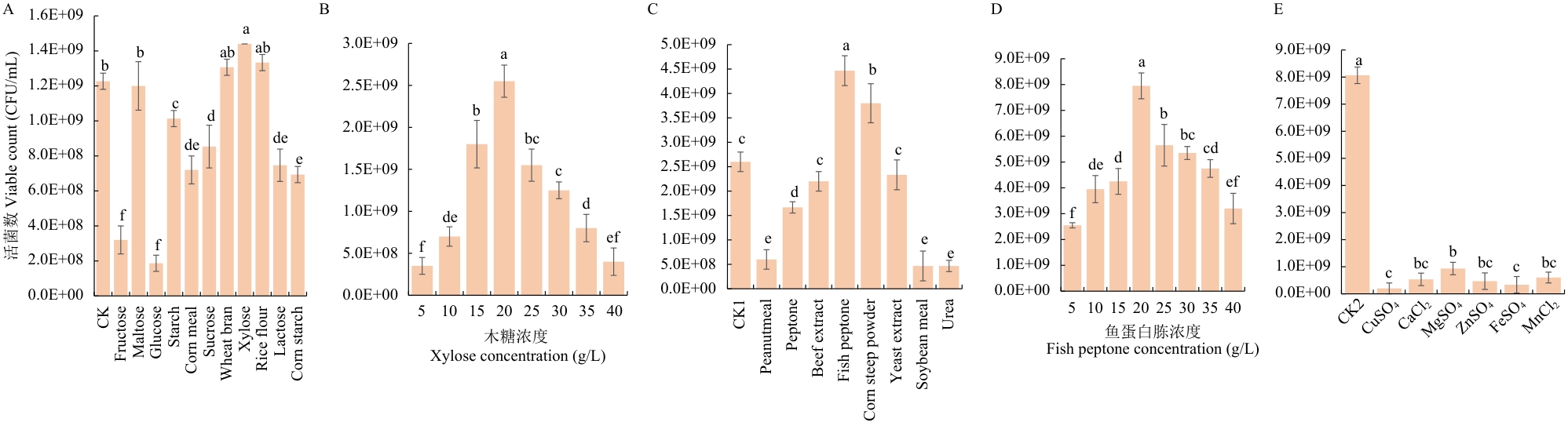
Fig. 7 Optimization of fermentation medium compositionA: Types of carbon sources. B: Addition amount of carbon source. C: Type of nitrogen source. D: Nitrogen source addition amount. E: Types of inorganic salts
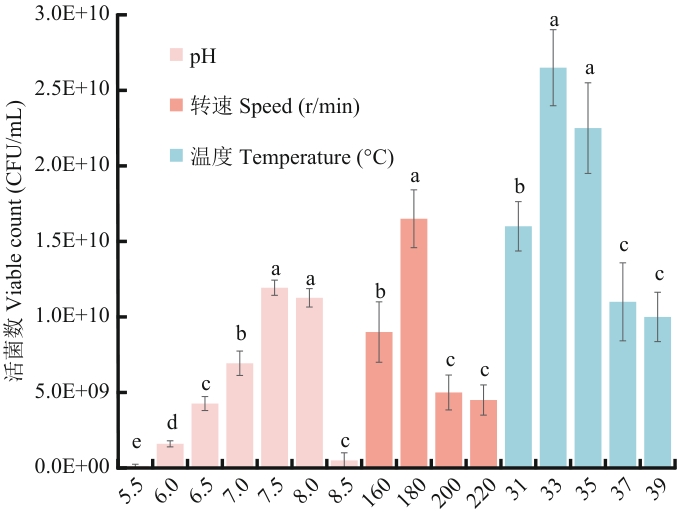
Fig. 8 Optimization of fermentation conditions
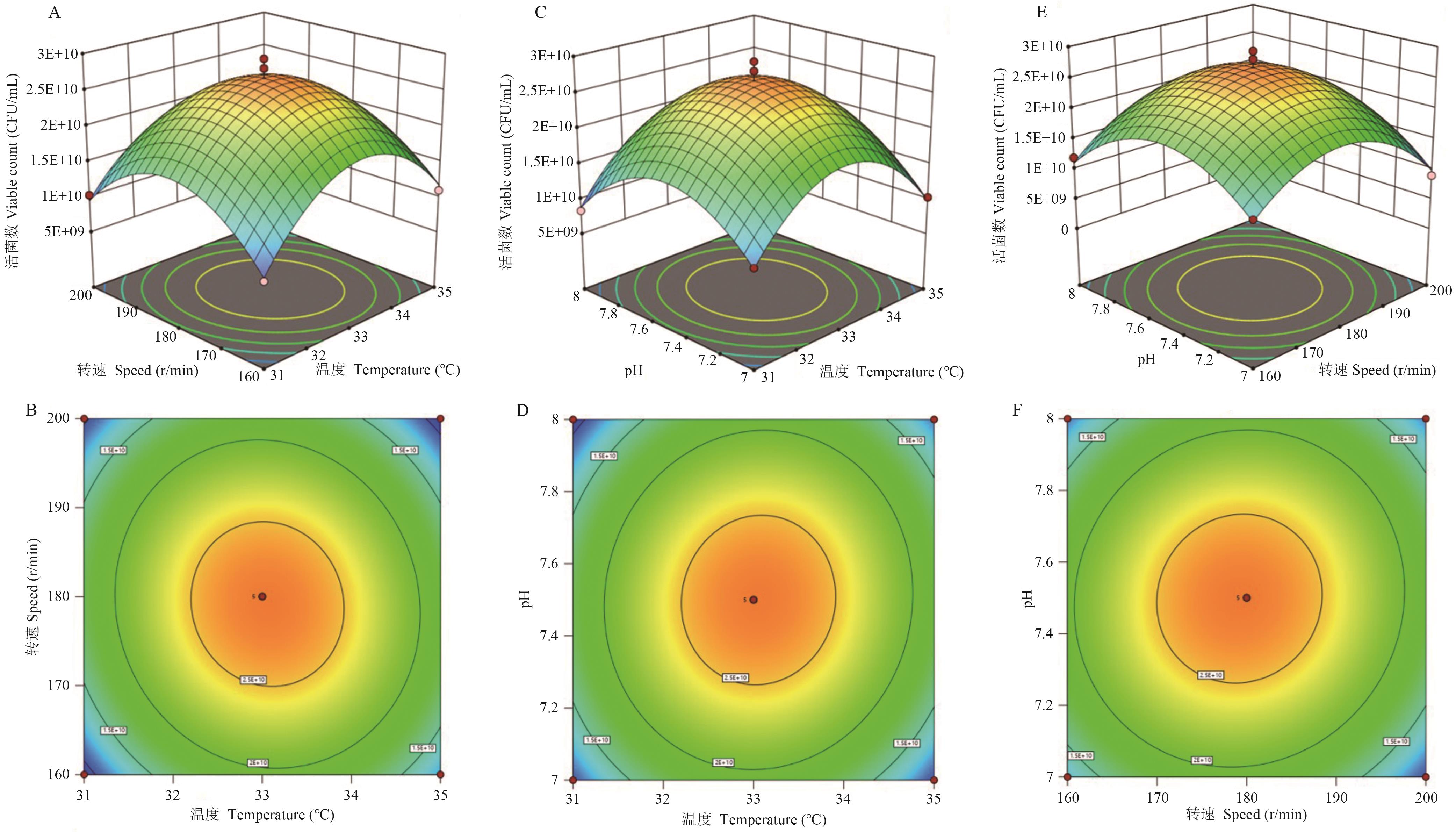
Fig. 9 Response surface (A, C, E) and contour plots (B, D, F) illustrating the effect of fermentation conditions on the viable cell count of P. qingdaonensis BYX7
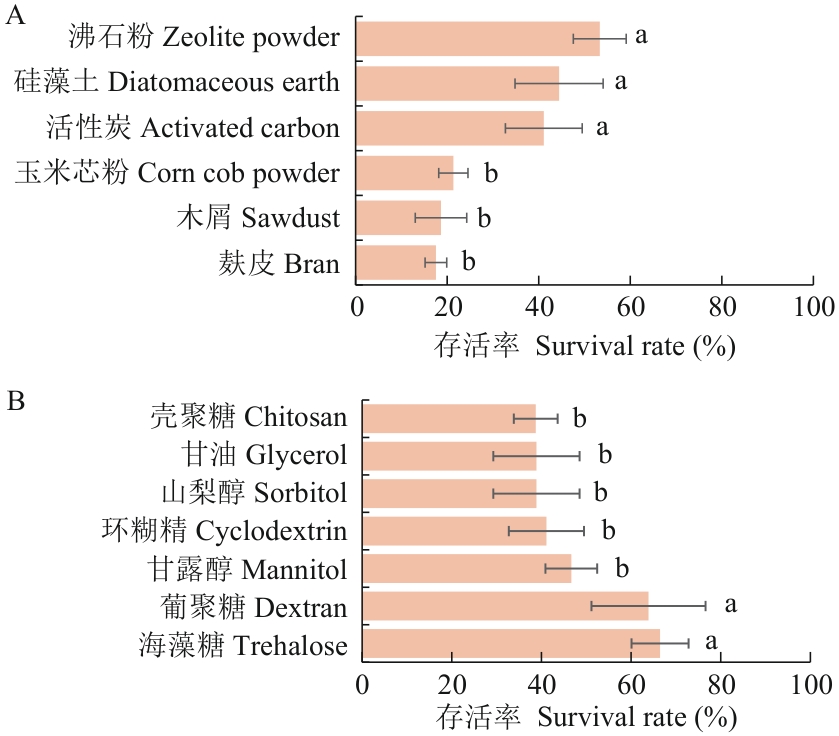
Fig. 10 Optimization of the types of adsorption carriers and protective agents for bacterial powderA: Types of adsorption carriers. B: Types of protective agents
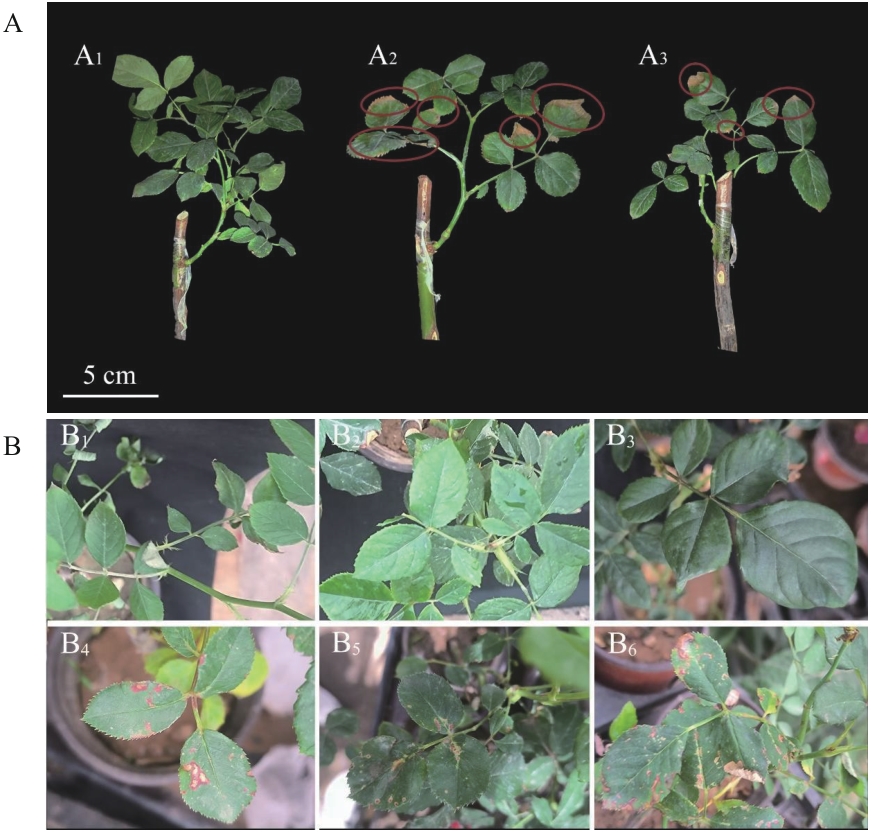
Fig. 11 The re-inoculation experiment of BYX7 on rose potted seedlings (A) and its efficacy in preventing brown spot disease (B)A1: Re-inoculation group. A2: Control group. A3: Experimental group. B1-B3: Healthy leaves. B4-B6: Diseased leaves
组别 Group | 发病率 Incidence rate (%) | 病情指数 Disease index (%) | 防治指数 Prevention and control index (%) |
|---|---|---|---|
对照组 Control group | 72.29±17.28a | 90.50±10.14a | — |
实验组 Experimental group | 32.40±22.08b | 55.56±15.72a | 38.61 |
Table 5 Incidence rate, disease index, and prevention and control index of the pot experiment
组别 Group | 发病率 Incidence rate (%) | 病情指数 Disease index (%) | 防治指数 Prevention and control index (%) |
|---|---|---|---|
对照组 Control group | 72.29±17.28a | 90.50±10.14a | — |
实验组 Experimental group | 32.40±22.08b | 55.56±15.72a | 38.61 |
| [1] | 贾静怡, 孙倩, 张玮, 等. 北京市月季丽赤壳褐斑病病原菌鉴定 [J]. 植物病理学报, 2021, 51(3): 446-450. |
| Jia JY, Sun Q, Zhang W, et al. Identification of pathogen causing Calonectria leaf spot on Rosa chinensis in Beijing [J]. Acta Phytopathol Sin, 2021, 51(3): 446-450. | |
| [2] | 李艳杰. 月季黑斑病病原菌分离鉴定及防治初步研究 [D]. 昆明: 西南林业大学, 2024. |
| Li YJ. Preliminary study on isolation, identification and prevention and control of black spot disease of Rosa chinensis jacq [D]. Kunming: Southwest Forestry University, 2024. | |
| [3] | 杨珊. 绿针假单胞菌zm-1生物防治花生白绢病的作用机理研究 [D]. 开封: 河南大学, 2022. |
| Yang S. Mechanisms of biological control agaist peanut stem rot by Pseudomonas chlororaphis zm-1 [D]. Kaifeng: Henan University, 2022. | |
| [4] | Guzmán-Guzmán P, Santoyo G. Action mechanisms, biodiversity, and omics approaches in biocontrol and plant growth-promoting Pseudomonas: an updated review [J]. Biocontrol Sci Technol, 2022, 32(5): 527-550. |
| [5] | Purtschert-Montenegro G, Cárcamo-Oyarce G, Pinto-Carbó M, et al. Pseudomonas putida mediates bacterial killing, biofilm invasion and biocontrol with a type IVB secretion system [J]. Nat Microbiol, 2022, 7(10): 1547-1557. |
| [6] | 田洁, 唐有林, 王启璋, 等. 植物根际促生菌Pseudomonas putida UW4对菊花扦插苗生长及生理特性的影响 [J]. 植物生理学报, 2023, 59(1): 179-190. |
| Tian J, Tang YL, Wang QZ, et al. Effects of plant growth promoting rhizobacteria Pseudomonas putida UW4 on the growth and physiological characteristics of Chrysanthemum cuttings [J]. Plant Physiol J, 2023, 59(1): 179-190. | |
| [7] | 赵子璇, 李俊辉, 杜公福, 等. 防御假单胞ZF509的分离鉴定及其对甜瓜细菌性果斑病的防治效果研究 [J]. 中国生物防治学报, 2024, 40(3): 690-700. |
| Zhao ZX, Li JH, Du GF, et al. Isolation and identification of Pseudomonas ZF509 and its control effect on bacterial fruit blotch of melon [J]. Chin J Biol Control, 2024, 40(3): 690-700. | |
| [8] | 李潇潇, 师桂英, 张立彭, 等. 荧光假单胞菌(Pseudomonas fluorescens)在植物病害生物防治中的研究及展望 [J]. 草原与草坪, 2021, 41(5): 148-156. |
| Li XX, Shi GY, Zhang LP, et al. Application of Pseudomonas fluorescens in biological control of plant disease and its prospects [J]. Grassland Turf, 2021, 41(5): 148-156. | |
| [9] | 王传琪. 一株托拉氏假单胞菌Pseudomonas tolaasii DL001的物种鉴定及其抑菌活性物质研究 [D]. 大理: 大理大学, 2019. |
| Wang CQ. Study on the identification and antibacterial components from Pseudomonas tolaasii DL001 [D]. Dali: Dali University, 2019. | |
| [10] | Chlebek D, Płociniczak T, Gobetti S, et al. Analysis of the genome of the heavy metal resistant and hydrocarbon-degrading rhizospheric Pseudomonas qingdaonensis ZCR6 strain and assessment of its plant-growth-promoting traits [J]. Int J Mol Sci, 2022, 23(1): 214. |
| [11] | Zainurin N, Imran M, Shaffique S, et al. New insights into the synergistic interaction between Pseudomonas qingdaonensis NZ 1 and silicon to mitigate drought stress in rice [J]. Microorganisms, 2025, 13(5): 1046. |
| [12] | 张晓勇, 李树江, 龙巧芳, 等. 新几内亚凤仙花根腐病病原菌鉴定及杀菌剂室内毒力测定 [J]. 园艺学报, 2023, 50(5): 1130-1140. |
| Zhang XY, Li SJ, Long QF, et al. Identification of Phytopythium helicoides causing root rot of Impatiens hawkeri and toxicity test of different fungicides in laboratory [J]. Acta Hortic Sin, 2023, 50(5): 1130-1140. | |
| [13] | 杨瑾, 高佳欣, 李珍华, 等. 月季黑斑病病原菌的分离及生防菌的筛选 [J]. 运城学院学报, 2025, 43(3): 35-40. |
| Yang J, Gao JX, Li ZH, et al. Isolation of pathogenic bacteria and screening of biocontrol bacteria against rose black spot disease [J]. J Yuncheng Univ, 2025, 43(3): 35-40. | |
| [14] | 黄丽, 陈振民, 闫训博, 等. 一株假蕈状芽胞杆菌及在制备植物病原菌抑菌剂中的应用: CN114703094A [P]. 2022-07-05. |
| Huang L, Chen ZM, Yan XB, et al. A strain of Bacillus pseudomycoides and its application in the preparation of an antimicrobial agent against plant pathogens: CN114703094A [P]. 2022-07-05. | |
| [15] | 张嘉馨. 产氨基糖苷类次级代谢产物链霉菌的筛选及其化合物挖掘 [D]. 阿拉尔: 塔里木大学, 2023. |
| Zhang JX. Screening of Streptomyces producing aminoglycoside secondary metabolites and their compound mining [D]. Ala'er: Tarim University, 2023. | |
| [16] | 贾金姗, 马悦, 张俊杰, 等. 双叉犀金龟肠道纤维素降解菌的筛选及酶活力比较 [J]. 环境昆虫学报, 2025, 47(2): 361-371. |
| Jia JS, Ma Y, Zhang JJ, et al. Screening of intestinal cellulose-degrading bacteria and comparison of enzyme activity in the Allomyrina dichotoma [J]. J Environ Entomol, 2025, 47(2): 361-371. | |
| [17] | 王瑞琪, 赵为民, 魏丽萍, 等. 西藏林芝油菜根际拮抗细菌筛选及其促生特性研究 [J]. 中国植保导刊, 2021, 41(10): 16-23, 37. |
| Wang RQ, Zhao WM, Wei LP, et al. Screening and growth-promoting characterization of antagonistic bacteria in the rhizosphere of oilseed rape on the plateau in Linzhi [J]. China Plant Prot, 2021, 41(10): 16-23, 37. | |
| [18] | Lucero CT, Lorda GS, Anzuay MS, et al. Peanut endophytic phosphate solubilizing bacteria increase growth and P content of soybean and maize plants [J]. Curr Microbiol, 2021, 78(5): 1961-1972. |
| [19] | 聂丽妍. 巨柏根际溶磷菌的筛选与促生特性研究 [D]. 林芝: 西藏农牧学院, 2023. |
| Nie LY. Screening and growth-promoting characteristics of phosphorus solubilizing strains in the of rhizosphere of cypress gigantica [D]. Linzhi: Tibet Agricultural and Animal Husbandry Universi, 2023. | |
| [20] | 蒋鑫. 玉米PGPR筛选、鉴定及其促生作用研究 [D]. 沈阳: 沈阳农业大学, 2024. |
| Jiang X. Screening, identification and growth promoting effect of PGPR in maize [D]. Shenyang: Shenyang Agricultural University, 2024. | |
| [21] | 郑运祥, 刘洋, 郭文霞. 5种复配杀菌剂防治海棠锈病的田间药效试验 [J]. 北方果树, 2024(2): 21-23. |
| Zheng YX, Liu Y, Guo WX. Field efficacy trials of 5 compound fungicides against Malus spectabilis rust disease [J]. North Fruits, 2024(2): 21-23. | |
| [22] | 秦维彩, 闫晓静, 檀根甲, 等. 烯酰吗啉与嘧菌酯对辣椒疫霉病菌生物活性的比较 [J]. 植物保护学报, 2010, 37(1): 42-48. |
| Qin WC, Yan XJ, Tan GJ, et al. Comparative study on the efficacies of dimethomorph and azoxystrobin against Phytophthora capsici [J]. J Plant Prot, 2010, 37(1): 42-48. | |
| [23] | 马小方, 雷纤慧, 向义元, 等. 首次报道藤仓镰刀菌危害柑橘 [J]. 植物病理学报, 2024, 54(5): 1045-1049. |
| Ma XF, Lei XH, Xiang YY, et al. First report of Fusarium fujikuroi causing citrus diseases in China [J]. Acta Phytopathol Sin, 2024, 54(5): 1045-1049. | |
| [24] | 李坤, 洪秀杰, 王欣悦, 等. 贝莱斯芽孢杆菌TC-52的分离鉴定及其对水稻幼苗生长和立枯病的影响 [J]. 江苏农业科学, 2024, 52(10): 129-137. |
| Li K, Hong XJ, Wang XY, et al. Isolation and identification of Bacillus velezensis TC-52 and its effect on rice seedling growth and blight [J]. Jiangsu Agric Sci, 2024, 52(10): 129-137. | |
| [25] | 王飞, 杨瑾, 李雪梦, 等. 2株丹参根内促生细菌的分离鉴定及促生作用评价 [J]. 河南农业科学, 2025, 54(10): 71-80. |
| Wang F, Yang J, Li XM, et al. Isolation, identification and effect evaluation of two growth⁃promoting endophytic bacteria in Salvia miltiorrhiza roots [J]. J Henan Agric Sci, 2025, 54(10): 71-80. | |
| [26] | 戴梅, 宫象辉, 丛蕾, 等. PGPR制剂研发现状与发展趋势 [J]. 山东科学, 2006, 19(6): 45-48. |
| Dai M, Gong XH, Cong L, et al. Recent advances and research trend of PGPR agents [J]. Shandong Sci, 2006, 19(6): 45-48. | |
| [27] | Wang Y, Pruitt RN, Nürnberger T, et al. Evasion of plant immunity by microbial pathogens [J]. Nat Rev Microbiol, 2022, 20(8): 449-464. |
| [28] | Obradović A, Stepanović J, Krnjaja V, et al. First report of maize ear rot caused by Fusarium boothii in Serbia [J]. Plant Dis, 2025, 109(3): 716. |
| [29] | Wegulo SN, Valverde-Bogantes E, Bolanos-Carriel C, et al. First report of Fusarium boothii causing head blight of wheat in the United States [J]. Plant Dis, 2018, 102(12): 2646. |
| [30] | Wang WY, Zhang JH, Chen BZ, et al. Occurrence of Fusarium boothii causing Fusarium head blight and crown rot of wheat in China [J]. Plant Dis, 2025, 109(7): 1590. |
| [31] | 王杰, 王海春, 祁鹤兴, 等. 青海省民和县青贮玉米叶斑病及其病原调查初报 [J]. 植物医学, 2023, 2(1): 44-49. |
| Wang J, Wang HC, Qi HX, et al. Preliminary report on leaf spot and pathogens of silage maize in Minhe County of Qinghai Province [J]. Plant Health Med, 2023, 2(1): 44-49. | |
| [32] | Gao YZ, Zhang ZX, Ji M, et al. Identification and pathogenicity of Fusarium species from herbaceous plants on grassland in Qiaojia county, China [J]. Microorganisms, 2025, 13(1): 113. |
| [33] | 马莹, 曹梦圆, 石孝均, 等. 植物促生菌的功能及在可持续农业中的应用 [J]. 土壤学报, 2023, 60(6): 1555-1568. |
| Ma Y, Cao MY, Shi XJ, et al. Functions of plant growth-promoting bacteria and their application in sustainable agriculture [J]. Acta Pedol Sin, 2023, 60(6): 1555-1568. | |
| [34] | 李雪艳. 棉花内生与根际拮抗菌对黄萎病的防病机理研究 [D]. 乌鲁木齐: 新疆大学, 2019. |
| Li XY. Study on the mechanism of cotton endophytic and rhizosphere antagonism against Verticillium wilt [D]. Urumqi: Xinjiang University, 2019. | |
| [35] | 刘梓豪. 防控玉米种栖镰刀菌的根际菌群构建与菌群内部互作机制研究 [D]. 南京: 南京农业大学, 2021. |
| Liu ZH. The construction and internal interaction mechanism of a synthetic rhizosphere microbiota in inhibiting the seed-borne Fusarium of maize [D]. Nanjing: Nanjing Agricultural University, 2021. | |
| [36] | Lo Cantore P, Giorgio A, Iacobellis NS. Bioactivity of volatile organic compounds produced by Pseudomonas tolaasii [J]. Front Microbiol, 2015, 6: 1082. |
| [37] | 田永强, 张倩男, 薛致成, 等. 一株克氏假单胞菌及其应用: CN120098867B [P]. 2025-09-05. |
| Tian YQ, Zhang QN, Xue ZC, et al. A strain of Pseudomonas knackmussii and its application: CN120098867B [P]. 2025-09-05. | |
| [38] | 张雪岩, 陈雅君, 石延霞, 等. 月季褐斑病病原菌鉴定 [C]//庆祝中国园艺学会创建80周年暨第11次全国会员代表大会论文集. 广州: 《园艺学报》编辑部, 2009: 198. |
| Zhang XY, Chen YJ, Shi YX, et al. Identification of the pathogen causing rose brown spot disease [C]//Proceedings of the 80th Anniversary of the Chinese Society for Horticultural Science and the 11th National Congress. Guangzhou: Editorial Office of Acta Horticulturae Sinica, 2009: 198. |
| [1] | LI Qiong-yao, BAO Rui, LEI Hai-tao, YANG Yuan-xu, HAN Li-zhen. The Effect of Stress-resistant and Growth-promoting Bacteria Pseudomonas putida on Pepper Seed Germination and Seedling Growth [J]. Biotechnology Bulletin, 2026, 42(5): 257-271. |
| [2] | SU Xiu-min, HAN Wen-qing, WANG Jiao, LI Peng, WANG Qiu-lan, LI Wan-xing, CAO Jin-jun. Isolation, Identification, Biological Characteristics and Biocontrol Effects of Trichoderma harzianum M408 against Tomato Early Blight [J]. Biotechnology Bulletin, 2025, 41(9): 277-288. |
| [3] | FANG Lan, LI Yan-yan, JIANG Jian-wei, CHENG Sheng, SUN Zheng-xiang, ZHOU Yi. Isolation, Identification and Growth-promoting Characteristics of Endohyphal Bacterium 7-2H from Endophytic Fungi of Spiranthes sinensis [J]. Biotechnology Bulletin, 2023, 39(8): 272-282. |
| [4] | Zhang Xiaolong, Xiao Jing, Wang Ruiming, Wang Junqing, Wang Xingji, Wang Zhengxiang. Effect of Co-expression of Vitreoscilla Hemoglobin on Expression of Β-mannanase in Pichia pastoris [J]. Biotechnology Bulletin, 2015, 31(12): 193-199. |
| [5] | Min Zhaosheng, Guo Huiming, Yan Xu, Hong Housheng. Progress of Pichia pastorisEngineering Bacteria on High-Density Fermentation [J]. Biotechnology Bulletin, 2014, 30(3): 42-49. |
| [6] | Liu Yang, Li Jingxia, Yao Su, Zhang Mingjuan, Chen Jianguo, Cheng Chi. Identification and Antagonistic Activity of Endophytic Bacterial Strain NG14 Isolated from the Fruits of Paracel Islands Noni(Morinda citrifolia L.) [J]. Biotechnology Bulletin, 2014, 30(3): 100-105. |
| Viewed | ||||||
|
Full text |
|
|||||
|
Abstract |
|
|||||
