






Biotechnology Bulletin ›› 2026, Vol. 42 ›› Issue (11): 230-239.doi: 10.13560/j.cnki.biotech.bull.1985.2026-0097
LI Jin-qi1,2, YAO Jing-wu1, YUAN Qin-feng1, LIU Yu3, CAO Chun-xia1, YIN Fei-hu3( ), HUANG Da-ye1()
Received:2026-01-21
Online:2026-11-26
Published:2026-11-03
Contact:
YIN Fei-hu, HUANG Da-ye
E-mail:nkyyfh@sohu.com;xiaohuangdaye@126.com
LI Jin-qi, YAO Jing-wu, YUAN Qin-feng, LIU Yu, CAO Chun-xia, YIN Fei-hu, HUANG Da-ye. Control of Pepper Blight by Bacillus velezensis MH24 and Induction of Pepper Transcriptomic Responses[J]. Biotechnology Bulletin, 2026, 42(11): 230-239.
处理 Treatments | 病情指数 Disease index | 防效 Control effect (%) |
|---|---|---|
MH24菌剂20倍 MH24 bioagent diluted 20 times | 8.33±0.32c | 88.23a |
MH24菌剂40倍 MH24 bioagent diluted 40 times | 17.50±0.20b | 75.30c |
烯酰吗啉 Dimethomorph (500 μg/mL) | 8.33±0.17c | 88.23a |
| 对照 CK | 70.83±0.51a | — |
Table 1 Efficacy of strain MH24 against Phytophthora capsici in pot experiments
处理 Treatments | 病情指数 Disease index | 防效 Control effect (%) |
|---|---|---|
MH24菌剂20倍 MH24 bioagent diluted 20 times | 8.33±0.32c | 88.23a |
MH24菌剂40倍 MH24 bioagent diluted 40 times | 17.50±0.20b | 75.30c |
烯酰吗啉 Dimethomorph (500 μg/mL) | 8.33±0.17c | 88.23a |
| 对照 CK | 70.83±0.51a | — |
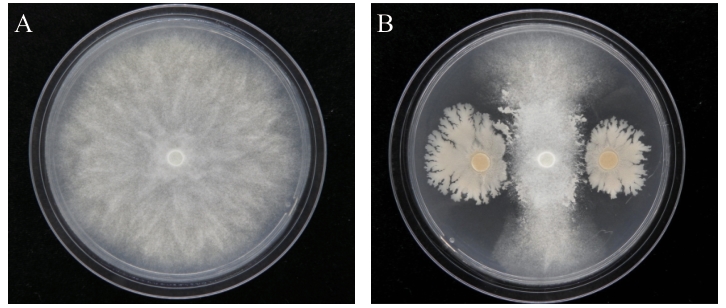
Fig. 1 Single colony of Phytophthora capsici in the CK group (A) and the MH24-treated group (B)
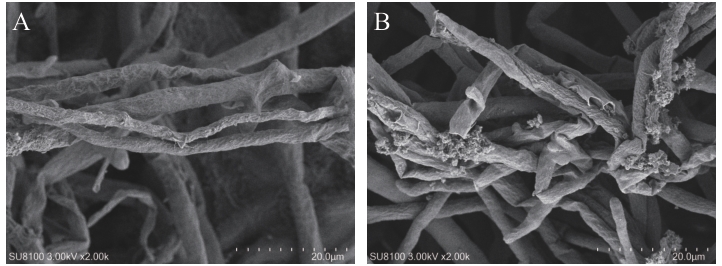
Fig. 2 SEM observation of the effect of MH24 on mycelia of Phytophthora capsiciA: CK group. B: Treatment group
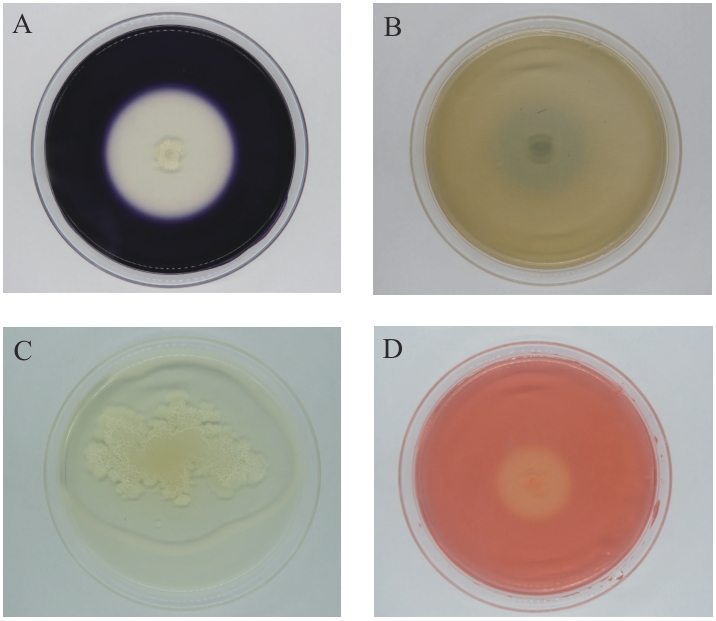
Fig. 3 Assay of hydrolase activity of MH24A: Starch medium. B: β-1,3-glucan medium. C: Protein medium. D: Carboxymethyl cellulose medium
样品 Sample | 原始读长 Raw reads number (bp) | 过滤读长 Clean reads number (bp) | 有效碱基数 Clean bases (G) | Q20 (%) | Q30 (%) | GC含量 GC content (%) | 总读段对数 Total read pairs |
|---|---|---|---|---|---|---|---|
| CK-1 | 41 389 232 | 41 212 371 | 12.19 | 99.34 | 96.45 | 42.81 | 41 212 371 |
| CK-2 | 42 273 359 | 42 085 611 | 12.47 | 99.33 | 96.45 | 42.62 | 42 085 611 |
| CK-3 | 36 156 617 | 35 989 458 | 10.65 | 99.37 | 96.71 | 42.60 | 35 989 458 |
| MH24-1 | 39 076 275 | 38 873 625 | 11.52 | 99.34 | 96.46 | 42.59 | 38 873 625 |
| MH24-2 | 31 481 578 | 31 312 465 | 9.26 | 99.21 | 96.93 | 42.52 | 31 312 465 |
| MH24-3 | 41 502 293 | 41 310 245 | 12.22 | 99.32 | 96.29 | 42.58 | 41 310 245 |
Table 2 Statistics of RNA-seq data quality
样品 Sample | 原始读长 Raw reads number (bp) | 过滤读长 Clean reads number (bp) | 有效碱基数 Clean bases (G) | Q20 (%) | Q30 (%) | GC含量 GC content (%) | 总读段对数 Total read pairs |
|---|---|---|---|---|---|---|---|
| CK-1 | 41 389 232 | 41 212 371 | 12.19 | 99.34 | 96.45 | 42.81 | 41 212 371 |
| CK-2 | 42 273 359 | 42 085 611 | 12.47 | 99.33 | 96.45 | 42.62 | 42 085 611 |
| CK-3 | 36 156 617 | 35 989 458 | 10.65 | 99.37 | 96.71 | 42.60 | 35 989 458 |
| MH24-1 | 39 076 275 | 38 873 625 | 11.52 | 99.34 | 96.46 | 42.59 | 38 873 625 |
| MH24-2 | 31 481 578 | 31 312 465 | 9.26 | 99.21 | 96.93 | 42.52 | 31 312 465 |
| MH24-3 | 41 502 293 | 41 310 245 | 12.22 | 99.32 | 96.29 | 42.58 | 41 310 245 |
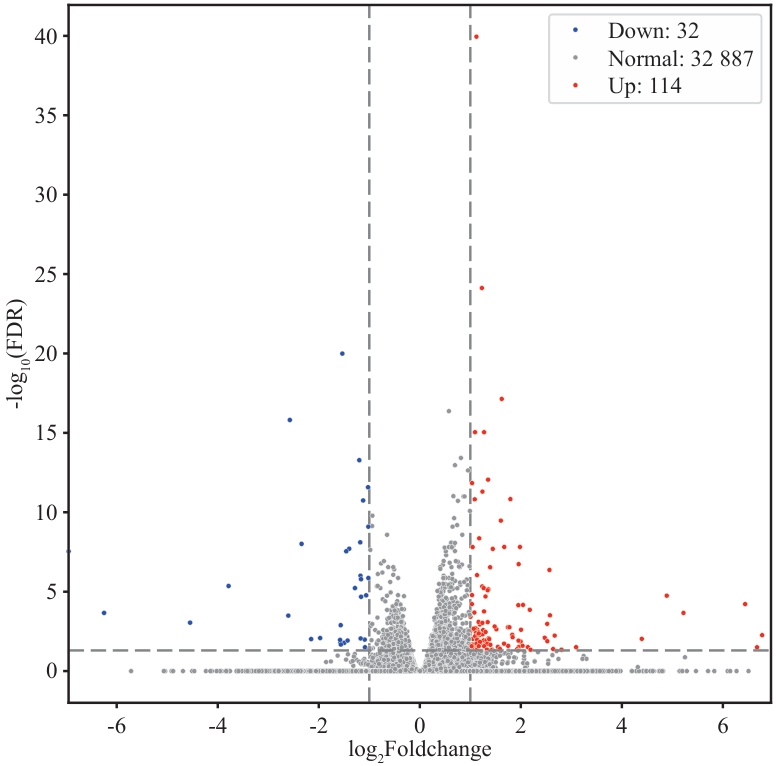
Fig. 4 Volcano plot of differentially expressed genes
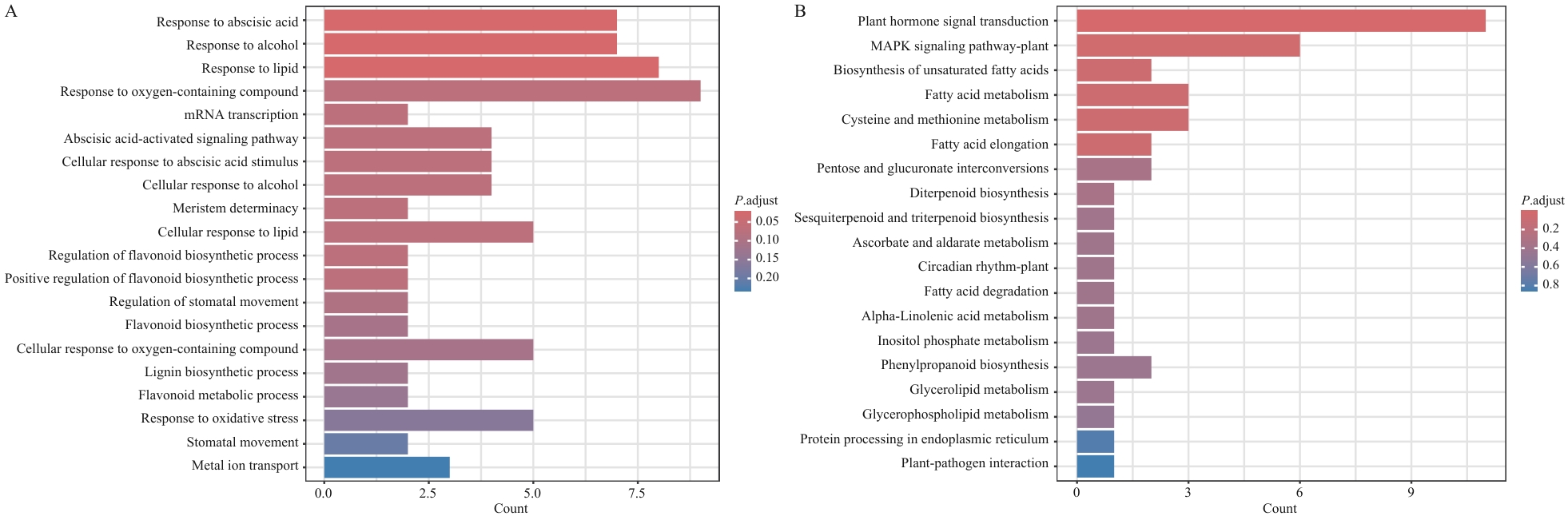
Fig. 5 GO (A) and KEGG (B) enrichment analysis of differentially expressed genes
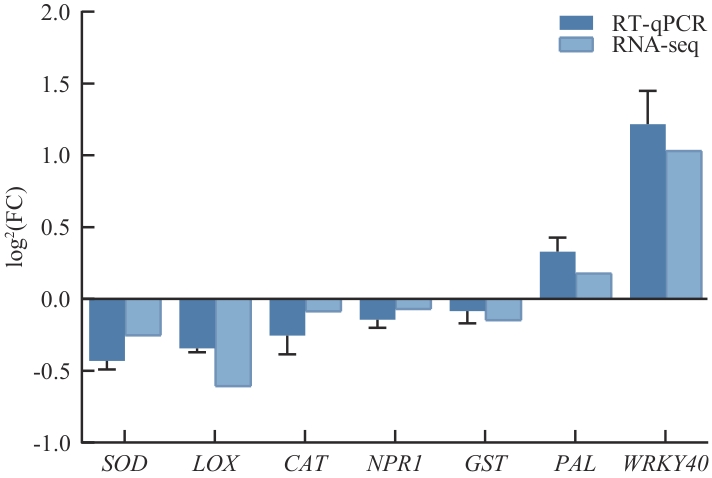
Fig. 6 Comparison of gene expression results between RNA-seq and RT-qPCR
处理 Treatments | 病原菌直径 Diameter of pathogenic bacteria (cm) | 防效 Control effect (%) |
|---|---|---|
MH24 菌剂20倍 MH24 bioagent diluted 20 times | 1.57±0.49c | 41.20 |
MH24 菌剂40倍 MH24 bioagent diluted 40 times | 2.30±0.63b | 13.86 |
| 对照 CK | 2.67±0.71a | — |
Table 3 Potted plant validation of MH24-induced resistance in chili plants
处理 Treatments | 病原菌直径 Diameter of pathogenic bacteria (cm) | 防效 Control effect (%) |
|---|---|---|
MH24 菌剂20倍 MH24 bioagent diluted 20 times | 1.57±0.49c | 41.20 |
MH24 菌剂40倍 MH24 bioagent diluted 40 times | 2.30±0.63b | 13.86 |
| 对照 CK | 2.67±0.71a | — |
| [1] | Quesada-Ocampo LM, Parada-Rojas CH, Hansen Z, et al. Phytophthora capsici: recent progress on fundamental biology and disease management 100 years after its description [J]. Annu Rev Phytopathol, 2023, 61: 185-208. |
| [2] | Tian S, Peng Q, Du XR, et al. Phytophthora effector exploits WY module truncation to manipulate Nt-acetylation-mediated AtMBP-1 turnover and suppress plant immunity [J]. Sci Adv, 2025, 11(50): eady1482. |
| [3] | Bowers JH. Effect of soil temperature and soil-water matric potential on the survival of Phytophthora capsici in natural soil [J]. Plant Dis, 1990, 74(10): 771. |
| [4] | 王锐, 张正海, 曹亚从, 等. 辣椒疫病的发生规律及综合防治技术 [J]. 辣椒杂志, 2025, 23(4): 12-21. |
| Wang R, Zhang ZH, Cao YC, et al. The occurrence pattern and comprehensive control technology of Phytophthora blight in pepper [J]. J China Capsicum, 2025, 23(4): 12-21. | |
| [5] | 黄大野, 余志斌, 杜公福, 等. 淡紫褐链霉菌NBF715防控辣椒疫病研究 [J]. 北方园艺, 2022(17): 51-56. |
| Huang DY, Yu ZB, Du GF, et al. Control effect of Streptomyces enissocaesilis NBF715 on Phytophthora blight of pepper [J]. North Hortic, 2022(17): 51-56. | |
| [6] | Peng YX, Zhou C, Qiu FY, et al. Acid-resistant Bacillus velezensis effectively controls pathogenic Colletotrichum capsiciand improves plant health through metabolic interactions [J]. Appl Environ Microbiol, 2025, 91(7): e00340-e00325. |
| [7] | 穆晓清, 鲁耀雄, 戴良英, 等. 贝莱斯芽孢杆菌YFB3-1对辣椒疫霉的抑菌效果及其抑菌物质 [J]. 农业生物技术学报, 2024, 32(4): 859-872. |
| Mu XQ, Lu YX, Dai LY, et al. Antibacterial effect of Bacillus velezensis YFB3-1 on Phytophthora capsici and its antibacterial substances [J]. J Agric Biotechnol, 2024, 32(4): 859-872. | |
| [8] | Ma S, Wang YJ, Teng W. Bacillus velezensis K-9 as a potential biocontrol agent for managing potato scab [J]. Plant Dis, 2023, 107(12): 3943-3951. |
| [9] | Wang ZQ, Zhao YK, Shao JH, et al. Rhizosphere domestication enhances root colonization and plant growth promotion performance of Bacillus velezensis SQR9 [J]. Front Microbiol, 2025, 16: 1638130. |
| [10] | 司方洁, 任金瑶, 黄涛祥, 等. 贝莱斯芽孢杆菌5YN8生物被膜在防治番茄灰霉病过程中的功能研究 [J]. 中国生物防治学报, 2022, 38(5): 1223-1230. |
| Si FJ, Ren JY, Huang TX, et al. The function of Bacillus velezensis 5YN8 biofilm in controlling of Botrytis cinerea in tomato [J]. Chin J Biol Control, 2022, 38(5): 1223-1230. | |
| [11] | 祝文慧, 秦溥, 赵岩, 等. 两种芽孢杆菌对苗期土传辣椒疫病的防控作用 [J]. 中国生物防治学报, 2023, 39(5): 1235-1243. |
| Zhu WH, Qin P, Zhao Y, et al. Prevention and control effect of two Bacillus strains on soil-borne Phytophthora capsici in seedling stage [J]. Chin J Biol Control, 2023, 39(5): 1235-1243. | |
| [12] | 周池, 周诗晶, 陶禹, 等. 贝莱斯芽孢杆菌XY40-1: 全基因组特征分析及对辣椒疫病的生物防治效果评价 [J]. 微生物学报, 2024, 64(12): 4882-4901. |
| Zhou C, Zhou SJ, Tao Y, et al. Bacillus velezensis XY40-1: whole genomic characteristics and biocontrol effects on pepper Phytophthora blight [J]. Acta Microbiol Sin, 2024, 64(12): 4882-4901. | |
| [13] | 王芳, 宁丽平, 邓稳桥, 等. 贝莱斯芽孢杆菌C1B1生防活性及促生作用研究 [J]. 中国生物防治学报, 2024, 40(4): 948-957. |
| Wang F, Ning LP, Deng WQ, et al. Biocontrol activity and growth promoting effect of Bacillus velezensis C1B1 [J]. Chin J Biol Control, 2024, 40(4): 948-957. | |
| [14] | 王麒, 许婧霞, 张亚妮, 等. 贝莱斯芽孢杆菌 (Bacillus velezensis) JJYY防控土传病害效果评价及其全基因组测序分析和抗菌成分鉴定 [J]. 微生物学通报, 2024, 51(1): 155-171. |
| Wang Q, Xu JX, Zhang YN, et al. Bacillus velezensis JJYY against soil-borne diseases: biocontrol effect, whole genome sequencing, and antimicrobial components [J]. Microbiol China, 2024, 51(1): 155-171. | |
| [15] | 田淼, 彭玉飞, 吕红, 等. 非洲哈茨木霉LMNS-M9的鉴定、生物学特性及其对藜麦的促生作用 [J]. 微生物学通报, 2023, 50(9): 3848-3865. |
| Tian M, Peng YF, Lü H, et al. Trichoderma afroharzianum LMNS-M9: identification, biological characteristics, and growth-promoting effect on quinoa [J]. Microbiol China, 2023, 50(9): 3848-3865. | |
| [16] | Liu Y, Yao SX, Deng LL, et al. Different mechanisms of action of isolated epiphytic yeasts against Penicillium digitatum and Penicillium italicum on Citrus fruit [J]. Postharvest Biol Technol, 2019, 152: 100-110. |
| [17] | Sang MK, Chun SC, Kim KD. Biological control of Phytophthora blight of pepper by antagonistic rhizobacteria selected from a sequential screening procedure [J]. Biol Control, 2008, 46(3): 424-433. |
| [18] | Chemeltorit PP, Mutaqin KH, Widodo W. Combining Trichoderma hamatum THSW13 and Pseudomonas aeruginosa BJ10-86: a synergistic chili pepper seed treatment for Phytophthora capsici infested soil [J]. Eur J Plant Pathol, 2017, 147(1): 157-166. |
| [19] | Yang MM, Xu LP, Xue QY, et al. Screening potential bacterial biocontrol agents towards Phytophthora capsici in pepper [J]. Eur J Plant Pathol, 2012, 134(4): 811-820. |
| [20] | 赵欣, 郝林. 解淀粉芽孢杆菌HRH317对串珠镰孢菌菌丝形态和超微结构的影响 [J]. 植物保护学报, 2020, 47(1): 110-118. |
| Zhao X, Hao L. Effects of Bacillus amyloliquefaciens HRH317 on mycelial morphology and ultrastructure of Fusarium moniliforme [J]. J Plant Prot, 2020, 47(1): 110-118. | |
| [21] | Lu ZY, Chen ML, Long XY, et al. Biological potential of Bacillus subtilis BS45 to inhibit the growth of Fusarium graminearum through oxidative damage and perturbing related protein synthesis [J]. Front Microbiol, 2023, 14: 1064838. |
| [22] | Haq IU, Kennedy P, Schreiner KM, et al. Gene expression by a model fungus in the ascomycota provides insight into the decay of fungal necromass [J]. Environ Microbiol, 2024, 26(12): e70006. |
| [23] | Podder S, Saha D, Ghosh TC. Deciphering the intrinsic properties of fungal proteases in optimizing phytopathogenic interaction [J]. Gene, 2019, 711: 143934. |
| [24] | Xiong XP, Sun SC, Zhang XY, et al. GhWRKY70D13 regulates resistance to Verticillium dahliae in cotton through the ethylene and jasmonic acid signaling pathways [J]. Front Plant Sci, 2020(11): 69. |
| [25] | 韩威山, 张江一, 方菲菲, 等. 辣椒疫霉致病、抗病和生物防治的分子机制研究进展 [J]. 北方园艺, 2025(10): 118-125. |
| Han WS, Zhang JY, Fang FF, et al. Research progress on the molecular mechanism of pathogenesis, disease resistant and biological control of Phytophthora capsici [J]. North Hortic, 2025(10): 118-125. | |
| [26] | Man J, Gallagher JP, Bartlett M. Structural evolution drives diversification of the large LRR-RLK gene family [J]. New Phytol, 2020, 226(5): 1492-1505. |
| [27] | Van der Does D, Boutrot F, Engelsdorf T, et al. The Arabidopsis Leucine-rich repeat receptor kinase MIK2/LRR-KISS connects cell wall integrity sensing, root growth and response to abiotic and biotic stresses [J]. PLoS Genet, 2017, 13(6): e1006832. |
| [28] | Li P, Xie LZ, Li W, et al. An oomycete effector targets host calmodulin to suppress plant immunity [J]. Plant J, 2025, 123(5): e70457. |
| [29] | Bhagat N, Mansotra R, Patel K, et al. Molecular warfare between pathogenic Fusarium oxysporum R1 and host Crocus sativus L. unraveled by dual transcriptomics [J]. Plant Cell Rep, 2024, 43(2): 42. |
| [30] | Jia CP, Guo B, Wang BK, et al. Integrated metabolomic and transcriptomic analysis reveals the role of phenylpropanoid biosynthesis pathway in tomato roots during salt stress [J]. Front Plant Sci, 2022, 13: 1023696. |
| [31] | Lee SH, Park YJ, Park SU, et al. Expression of genes related to phenylpropanoid biosynthesis in different organs of Ixeris dentata var. albiflora [J]. Molecules, 2017, 22(6): 901. |
| [32] | Han Z, Schneiter R. Dual functionality of pathogenesis-related proteins: defensive role in plants versus immunosuppressive role in pathogens [J]. Front Plant Sci, 2024, 15: 1368467. |
| [33] | Kaur A, Kaur S, Kaur A, et al. Pathogenesis-related proteins and their transgenic expression for developing disease-resistant crops: strategies progress and challenges [M]//Case Studies of Breeding Strategies in Major Plant Species. London: IntechOpen, 2023. |
| [34] | Wang F, Shen SS, Zhao CP, et al. TaPR1 interacts with TaTLP1 via the αIV helix to be involved in wheat defense to Puccinia triticina through the CAPE1 motif [J]. Front Plant Sci, 2022, 13: 874654. |
| [35] | Wang Q, Li MG, Lu M, et al. Expression analysis of pathogenesis-related protein genes revealed the key RrPRs involved in SA- and MeJA-mediated top-rot disease resistance in Rosa roxburghii fruit [J]. Physiol Mol Plant Pathol, 2024, 133: 102345. |
| [36] | Guidetti-Gonzalez S, Carrer H. Putative resistance genes in the CitEST database [J]. Genet Mol Biol, 2007, 30(3 ): 931-942. |
| [37] | Tailor A, Bhatla SC. R gene-mediated resistance in the management of plant diseases [J]. J Plant Biochem Biotechnol, 2024, 33(1): 5-23. |
| [38] | Nabi Z, Manzoor S, Nabi SU, et al. Pattern-Triggered Immunity and Effector-Triggered Immunity: crosstalk and cooperation of PRR and NLR-mediated plant defense pathways during host-pathogen interactions [J]. Physiol Mol Biol Plants, 2024, 30(4): 587-604. |
| [1] | ZHANG Wen-jing, MA Xin-rui, XU Zi-lu, LYU Hong, QIN Nan, YIN Hui, ZHAO Xiao-jun, REN Lu. Effects of Combined Application of Trichoderma afroharzianum and Bacillus velezensis on Quinoa Basal Stem Rot and Rhizosphere Microecology [J]. Biotechnology Bulletin, 2026, 42(9): 327-341. |
| [2] | WEI Xiao, LI Yan-yan, YUAN Qin-feng, YAO Jing-wu, CAO Chun-xia, HUANG Da-ye. Identification of a Biocontrol Strain Isolated from Tobacco Rhizosphere and Its Biocontrol Potential Analysis [J]. Biotechnology Bulletin, 2026, 42(7): 279-291. |
| [3] | PENG Hai-yan, LIU Jia-xin, SHI Yu-han, LI Xian-zhen, GUO Xiao-yu, YUAN Yue. Heterologous Expression and Enzymatic Properties of the Processive Endoglucanase BvCel5 [J]. Biotechnology Bulletin, 2026, 42(7): 351-360. |
| [4] | SU Yan-yan, ZUO Qiang, SONG Zhi-shuang, MU Lin-ying, LYU Jia-yin, XIAO Zi-min, LU Zhi-jun, XIE Hua. Identification and Functional Analysis of Disease Prevention and Growth Promotion of Bacillus velezensis BPC37 [J]. Biotechnology Bulletin, 2026, 42(7): 269-279. |
| [5] | LIU Qing-yuan, WU Hong-qi, CHEN Xiu-e, CHEN Jian, JIANG Yuan-ze, HE Yan-zi, YU Qi-wei, LIU Ren-xiang. Function of Transcription Factor NtMYB96a in Regulating the Tolerance of Tobacco to Drought [J]. Biotechnology Bulletin, 2026, 42(4): 239-250. |
| [6] | ZHANG Man, DANG Jing-bo, JIANG Yuan, WEI Jie, XING Jie, WANG Zhe, SUN Li. Screening, Identification and Efficacy Determination of Biocontrol Bacteria against Pear Fire Blight [J]. Biotechnology Bulletin, 2026, 42(1): 279-293. |
| [7] | LYU Zhen, GAN Tian, HUO Si-yu, ZHAO Chen-di, ZHAO Meng-yao, LI Ya-tao, MA Yu-chao, GENG Yu-qing. Identification of Surfactin-producing Bacillus Velezensis C5A-1 and Evaluation of the Plant Growth-promoting Effects of Its Surfactin [J]. Biotechnology Bulletin, 2025, 41(9): 265-276. |
| [8] | REN Rui-bin, SI Er-jing, WAN Guang-you, WANG Jun-cheng, YAO Li-rong, ZHANG Hong, MA Xiao-le, LI Bao-chun, WANG Hua-jun, MENG Ya-xiong. Identification and Expression Analysis of GH17 Gene Family of Pyrenophora graminea [J]. Biotechnology Bulletin, 2025, 41(8): 146-154. |
| [9] | SHI Yan-hua, LI Shuo, GAO Yu-zhu, ZHENG Bao-kun, ZHU Jie-hua, ZHANG Dai, YANG Zhi-hui. Analysis of the Growth-promoting Effects and Active Components of Volatile Organic Compounds Produced by Bacillus velezensis NZ-4 [J]. Biotechnology Bulletin, 2025, 41(8): 300-310. |
| [10] | ZHANG Jin-hao, DENG Hui, ZHANG Qing-zhuang, TAO Yu, ZHOU Chi, LI Xin. Modulation of the Growth, Quality, and Cadmium Content of Lily Bulbs by Bacillus velezensis XY40-1 [J]. Biotechnology Bulletin, 2025, 41(7): 281-291. |
| [11] | LI Cheng-hua, DOU Fei-fei, REN Yu-zhao, LIU Cai-xia, LIU Feng-lou, WANG Zhang-jun, LI Qing-feng. Effect of Exogenous Salicylic Acid on Wheat Infested with Blumeria graminis f. sp. tritici and Its Transcriptome Analysis [J]. Biotechnology Bulletin, 2025, 41(7): 272-280. |
| [12] | LI Yan-wei, YANG Yan-yan, SUN Ya-ling, HUO Yu-meng, WANG Zhen-bao, LIU Bing-jiang. Regulation Mechanism of Plant Hormones Related to Onion Bulb Enlargement and Development Based on Transcriptome Analysis [J]. Biotechnology Bulletin, 2025, 41(2): 187-201. |
| [13] | LYU Ji-min, LIU Wei, SUN Min, LI Hong-shun, PENG Zhen-xing, QIU Peng-fei, ZHU Qi-li. Screening, Identification and Optimization of Fermentation Conditions of Antagonistic Bacteria against Potato Early Blight [J]. Biotechnology Bulletin, 2025, 41(10): 175-185. |
| [14] | LIU Qian, MA Lian-jie, ZHANG Hui, WANG Dong, FAN Mao, LIAO Dun-xiu, ZHAO Zheng-wu, LU Wen-cai. Screening, Identification and Control Effects of Biocontrol Strain TN2 against Pepper Anthracnose [J]. Biotechnology Bulletin, 2025, 41(1): 287-297. |
| [15] | FAN Zong-qiang, FENG Jing-han, ZHENG Li-xue, WANG Shuo, PENG Xiang-qian, CHEN Fang. Study on the Control and Induced Resistance in Cucumber with Bacillus subtilis B579 against Cucumber Fusarium Wilt [J]. Biotechnology Bulletin, 2024, 40(7): 226-234. |
| Viewed | ||||||
|
Full text |
|
|||||
|
Abstract |
|
|||||
