







生物技术通报 ›› 2026, Vol. 42 ›› Issue (2): 89-101.doi: 10.13560/j.cnki.biotech.bull.1985.2025-0169
• 厌氧微生物专题(专题主编:承磊 研究员) • 上一篇 下一篇
安苗苗1( ), 赵国柱1, 徐润2, 许菲1, 国辉1(), 李强3()
收稿日期:2025-02-20
出版日期:2026-02-26
发布日期:2026-03-17
通讯作者:
国辉,女,博士,副教授,研究方向 :微生物环境修复及资源化技术;E-mail: guohuiya@126.com作者简介:安苗苗,女,博士研究生,研究方向 :厌氧消化的生物强化;E-mail: anmiao315418@163.com基金资助:
AN Miao-miao1(), ZHAO Guo-zhu1, XU Run2, XU Fei1, GUO Hui1(), LI Qiang3()
Received:2025-02-20
Published:2026-02-26
Online:2026-03-17
摘要:
目的 为了获得高效的复合菌群,探究不同生物强化组合对厨余垃圾厌氧消化(anaerobic digestion, AD)产气效果的影响,明确复合菌群提升CH4产量的作用机制。 方法 设置添加无菌水(CK)、接种巴氏甲烷八叠球菌(Methanosarcina barkeri)(B)、接种富集的产甲烷菌群(J)、接种复合菌群(M. barkeri与产甲烷菌群按生物量1∶1混合)(BJ)4个处理组,进行序批式AD实验。采用气相色谱及修正的Gompertz模型分析各组的产气特性,随机森林模型分析沼气产量的影响因素。 结果 所有生物强化处理均延长了产气时间,显著提高了产气速率、累积产气量和CH4含量(P<0.05),其中BJ组提升效果最显著。BJ组产甲烷潜力最大,其次为J组和B组。温度、底物TS含量、pH值、微量元素(trace elements, TE)强化剂添加量、底物C/N(P<0.01)以及复合菌群接种量(P<0.05)均显著影响沼气产量,其中温度影响最大。局部加权回归(locally weighted regression, LOESS)模型表明,各因素与沼气产量之间存在非线性关系,且每个因素都有其最佳范围。 结论 复合菌群结合M. barkeri和产甲烷菌群的优势,兼顾功能复杂性与稳定性,同时有效强化上游代谢过程与产甲烷阶段,对AD系统沼气产量和CH4含量提升效果显著。通过优化生物强化组合和调控关键工艺参数,可有效提升AD性能,推动废弃物资源化利用和能源的可持续发展。
安苗苗, 赵国柱, 徐润, 许菲, 国辉, 李强. 复合菌群对厌氧消化强化效果及沼气产量影响因素分析[J]. 生物技术通报, 2026, 42(2): 89-101.
AN Miao-miao, ZHAO Guo-zhu, XU Run, XU Fei, GUO Hui, LI Qiang. Bioaugmentation Effect of Compound Microbial Consortium on Anaerobic Digestion and Factors Influencing Biogas Yield[J]. Biotechnology Bulletin, 2026, 42(2): 89-101.
| 成分Component | 含量Content | 成分Component | 含量Content |
|---|---|---|---|
| NH4Cl | 1 g | FeSO4·7H2O溶液 | 2 mL (0.1 g/mL) |
| MgSO4·7H2O | 0.5 g | Cysteine-HCl | 0.3 g |
| K2HPO4 | 0.4 g | CaCl2·2H2O | 0.2 g |
| KH2PO4 | 0.2 g | Na2S·9H2O | 25.0 mL (0.012 g/mL) |
| HCOONa | 5.0 g | NaHCO3 | 20 mL (0.1 g/mL) |
| CH3COONa | 5.0 g | TE溶液[ | 1.0 mL |
| 50% CH3OH | 4 mL | 维生素溶液[ | 10.0 mL |
| Yeast extract | 1.0 g | 氨苄青霉素 | 4.0 mL (0.1 g/mL) |
| Tryptone | 1.0 g | 刃天青钠溶液 | 0.5 mL (0.001 g/mL) |
| NaCl | 2.3 g | 蒸馏水 | 至1 000 mL |
表1 富集培养基配方
Table 1 Formula of enrichment culture medium
| 成分Component | 含量Content | 成分Component | 含量Content |
|---|---|---|---|
| NH4Cl | 1 g | FeSO4·7H2O溶液 | 2 mL (0.1 g/mL) |
| MgSO4·7H2O | 0.5 g | Cysteine-HCl | 0.3 g |
| K2HPO4 | 0.4 g | CaCl2·2H2O | 0.2 g |
| KH2PO4 | 0.2 g | Na2S·9H2O | 25.0 mL (0.012 g/mL) |
| HCOONa | 5.0 g | NaHCO3 | 20 mL (0.1 g/mL) |
| CH3COONa | 5.0 g | TE溶液[ | 1.0 mL |
| 50% CH3OH | 4 mL | 维生素溶液[ | 10.0 mL |
| Yeast extract | 1.0 g | 氨苄青霉素 | 4.0 mL (0.1 g/mL) |
| Tryptone | 1.0 g | 刃天青钠溶液 | 0.5 mL (0.001 g/mL) |
| NaCl | 2.3 g | 蒸馏水 | 至1 000 mL |
| 参数 Parameter | Mean ± SD (%) |
|---|---|
| TS | 25.94 ± 0.07 |
| VS | 24.21 ± 0.08 |
| VS/TS | 93.33 ± 0.01 |
| C | 47.91 ± 0.79 |
| H | 6.31 ± 0.03 |
| N | 3.70 ± 0.07 |
| S | 0.36 ± 0.05 |
| C/N | 12.96 ± 0.03 |
表2 厨余垃圾特性
Table 2 Characteristics of food waste
| 参数 Parameter | Mean ± SD (%) |
|---|---|
| TS | 25.94 ± 0.07 |
| VS | 24.21 ± 0.08 |
| VS/TS | 93.33 ± 0.01 |
| C | 47.91 ± 0.79 |
| H | 6.31 ± 0.03 |
| N | 3.70 ± 0.07 |
| S | 0.36 ± 0.05 |
| C/N | 12.96 ± 0.03 |
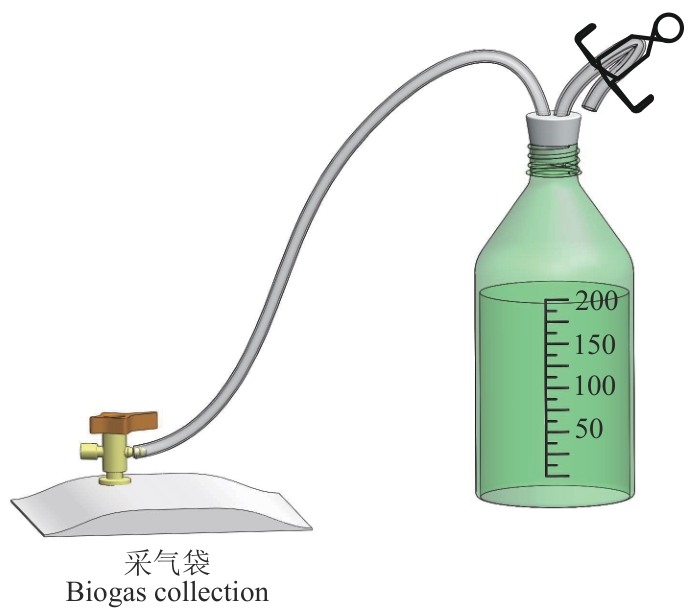
图1 序批式AD反应器示意图
Fig. 1 Diagram of anaerobic digestion (AD) reactor in batch mode
| 成分 Component | 含量 Content(g/L) | 成分 Component | 含量 Content(g/L) |
|---|---|---|---|
| NH4Cl | 20.0 | CoCl2·6H2O | 0.2 |
| K2HPO4 | 4.0 | NiCl2·6H2O | 0.2 |
| KH2PO4 | 2.0 | CaO | 0.2 |
| FeSO4·7H2O | 2.0 | Na2MoO4·2H2O | 0.2 |
| MgCl2 | 2.0 | CuSO4·5H2O | 0.2 |
| KCl | 2.0 | ZnCl2 | 0.2 |
表3 TE强化剂组成
Table 3 Trace elements enhancer composition
| 成分 Component | 含量 Content(g/L) | 成分 Component | 含量 Content(g/L) |
|---|---|---|---|
| NH4Cl | 20.0 | CoCl2·6H2O | 0.2 |
| K2HPO4 | 4.0 | NiCl2·6H2O | 0.2 |
| KH2PO4 | 2.0 | CaO | 0.2 |
| FeSO4·7H2O | 2.0 | Na2MoO4·2H2O | 0.2 |
| MgCl2 | 2.0 | CuSO4·5H2O | 0.2 |
| KCl | 2.0 | ZnCl2 | 0.2 |
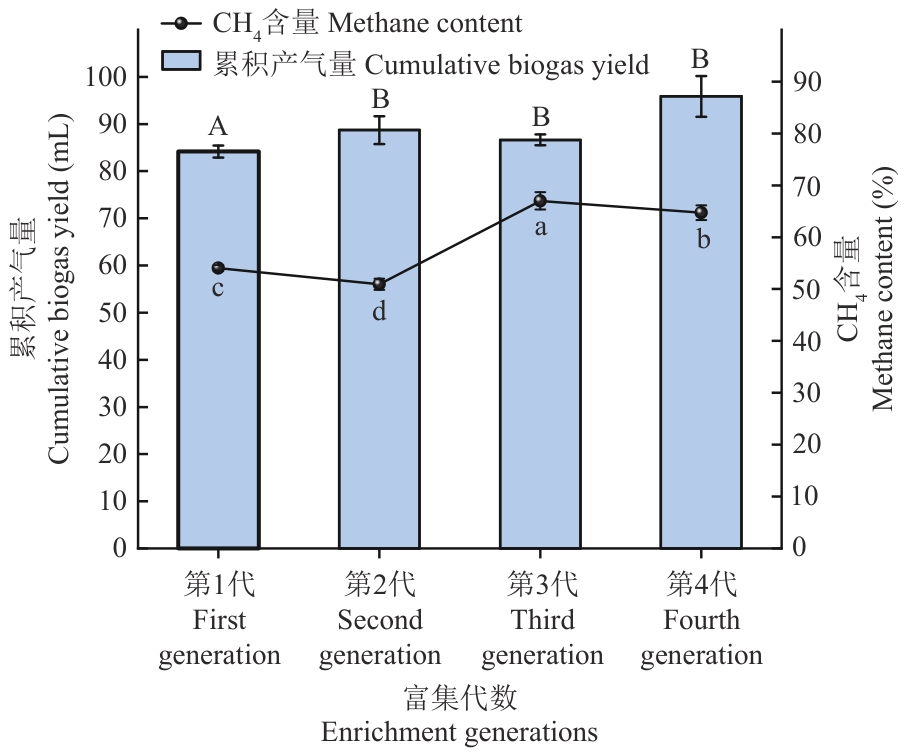
图2 产甲烷菌群的累积产气量及CH4含量不同小写和大写字母表示组间差异显著(P<0.05),下同
Fig. 2 Cumulative gas yield and methane content of the methanogenic communityDifferent lowercase and uppercase letters indicate significant differences between groups, the same below
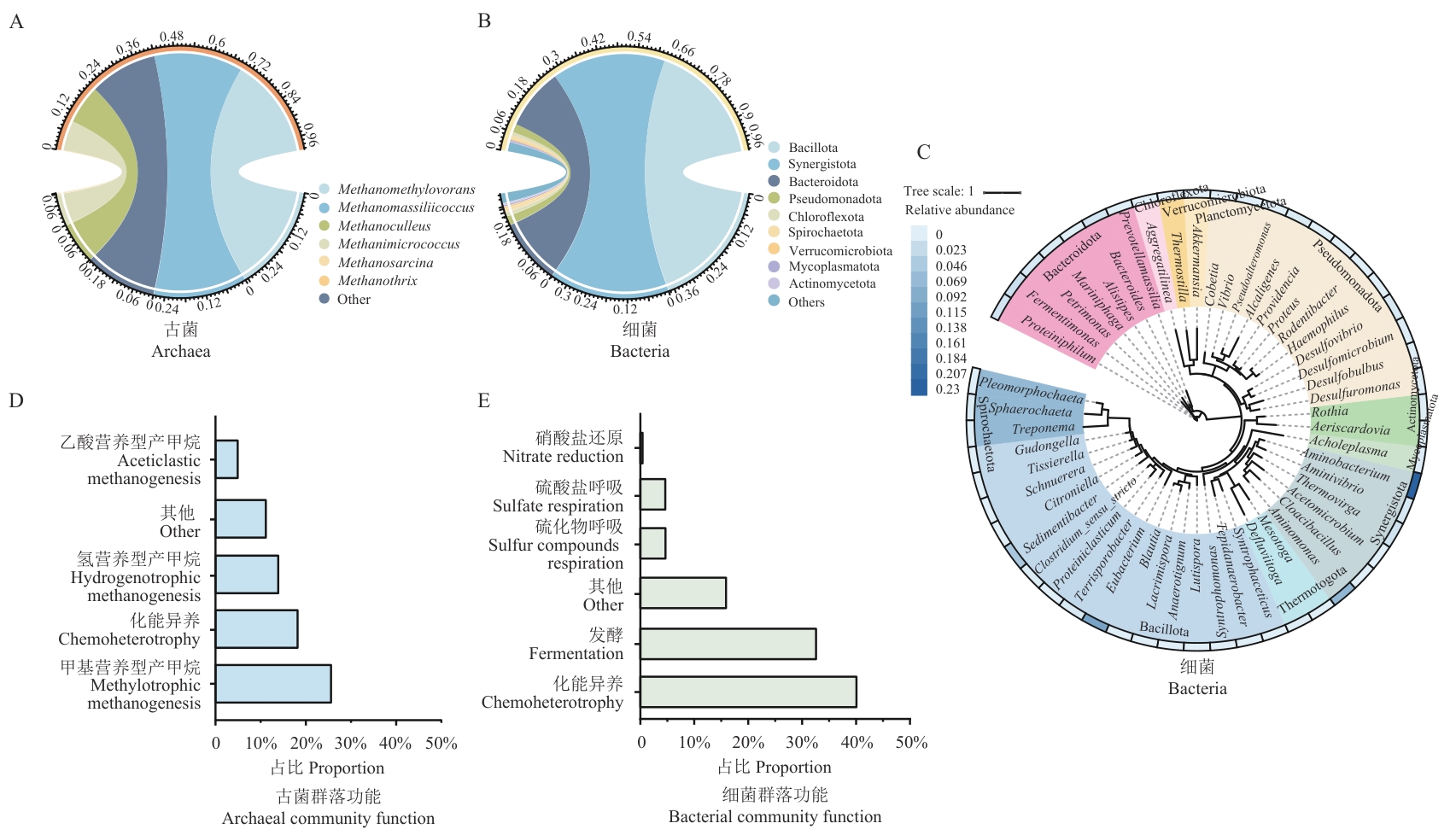
图3 产甲烷菌群的物种组成与功能特征A:古菌在属水平相对丰度;B:细菌在门水平相对丰度;C:细菌属水平物种组成和系统发育树分析;D:古菌群落功能特征;E:细菌群落功能特征
Fig. 3 Species composition and functional characteristics of the methanogenic communityA: Distribution of archaeal at the genus level. B: Distribution of bacterial at the phylum level. C: Composition and cladogram analysis of bacteria at the genus level. D: Function characteristics of archaeal community. E: Function characteristics of bacterial community
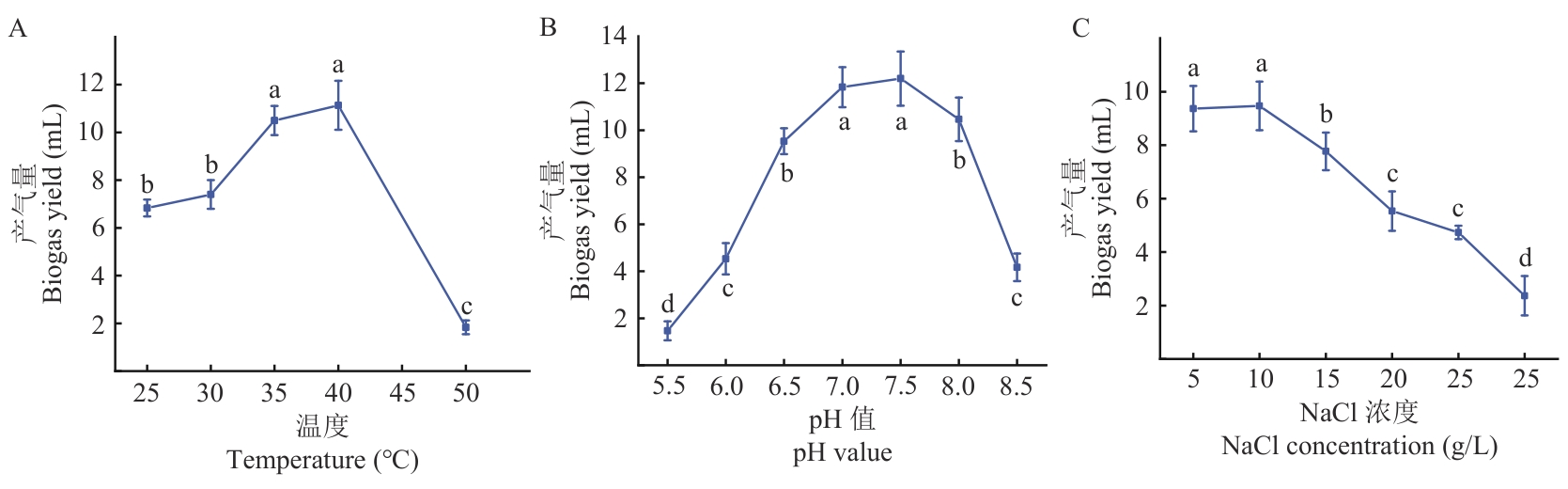
图4 产甲烷菌群的生理特性
Fig. 4 Physiological characteristics of the methanogenic communities
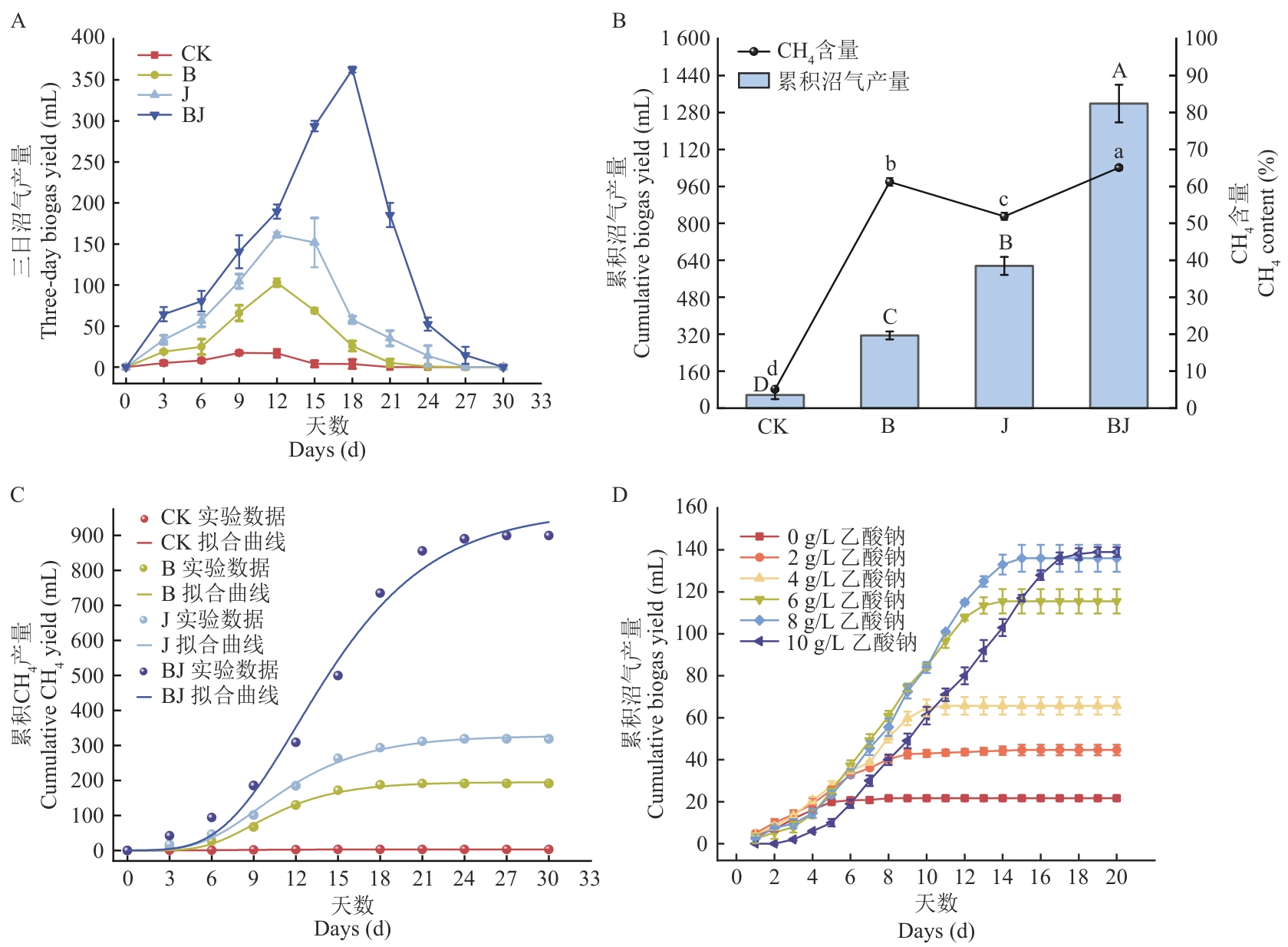
图5 不同生物强化处理组的强化效果A:不同处理组三日沼气产量;B:不同处理组累积沼气产量及CH4含量;C:不同处理组累积CH4产量及修正的Gompertz方程拟合曲线;D:复合菌群的乙酸代谢能力
Fig. 5 Enhancement effects of different bioaugmentation treatment groupsA: Three-day biogas yield of different groups. B: Cumulative biogas yield and methane content of different groups. C: Cumulative methane yield and the modified Gompertz equation fitting curve of different groups. D: Acetic acid metabolic capacity of compound microbial consortium
| 组别Group | 最大产甲烷潜力Maximum methane production potential Mmax (mL) | 最大产甲烷速率Maximum methane production rate Rmax (mL/d) | 延滞期Lag phase λ (d) | 相关系数Correlation coefficient R2 |
|---|---|---|---|---|
| CK | 2.839 ± 0.042 | 0.327 ± 0.026 | 3.917 ± 0.363 | 0.995 5 |
| B | 195.108 ± 3.507 | 21.256 ± 1.820 | 5.499 ± 0.408 | 0.995 0 |
| J | 327.591 ± 6.058 | 28.595 ± 1.989 | 5.124 ± 0.400 | 0.996 1 |
| BJ | 972.266 ± 43.703 | 66.523 ± 7.121 | 6.698 ± 0.732 | 0.989 8 |
表4 修正的Gompertz模型拟合的相关参数
Table 4 Fitting parameters obtained from the modified Gompertz model
| 组别Group | 最大产甲烷潜力Maximum methane production potential Mmax (mL) | 最大产甲烷速率Maximum methane production rate Rmax (mL/d) | 延滞期Lag phase λ (d) | 相关系数Correlation coefficient R2 |
|---|---|---|---|---|
| CK | 2.839 ± 0.042 | 0.327 ± 0.026 | 3.917 ± 0.363 | 0.995 5 |
| B | 195.108 ± 3.507 | 21.256 ± 1.820 | 5.499 ± 0.408 | 0.995 0 |
| J | 327.591 ± 6.058 | 28.595 ± 1.989 | 5.124 ± 0.400 | 0.996 1 |
| BJ | 972.266 ± 43.703 | 66.523 ± 7.121 | 6.698 ± 0.732 | 0.989 8 |
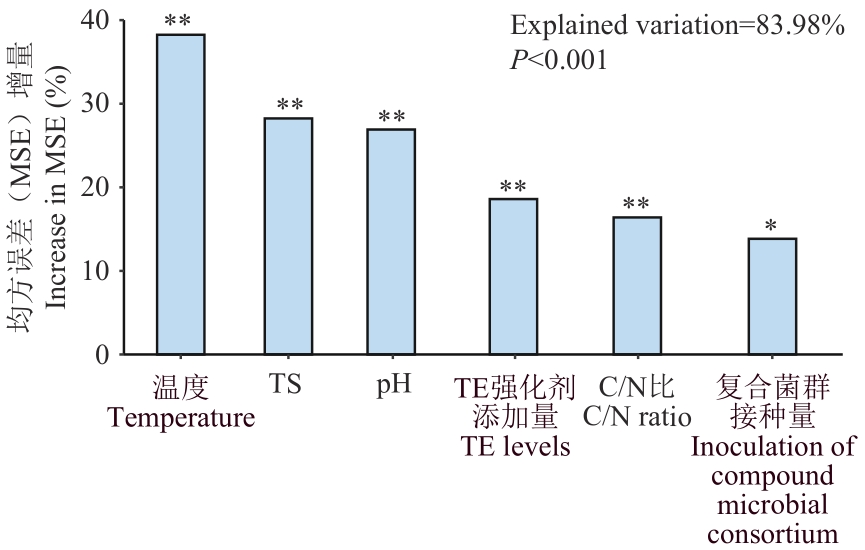
图6 沼气产量影响因素的平均预测重要性*P<0.05, **P<0.01
Fig. 6 Average predictive importance of factors influencing biogas yield
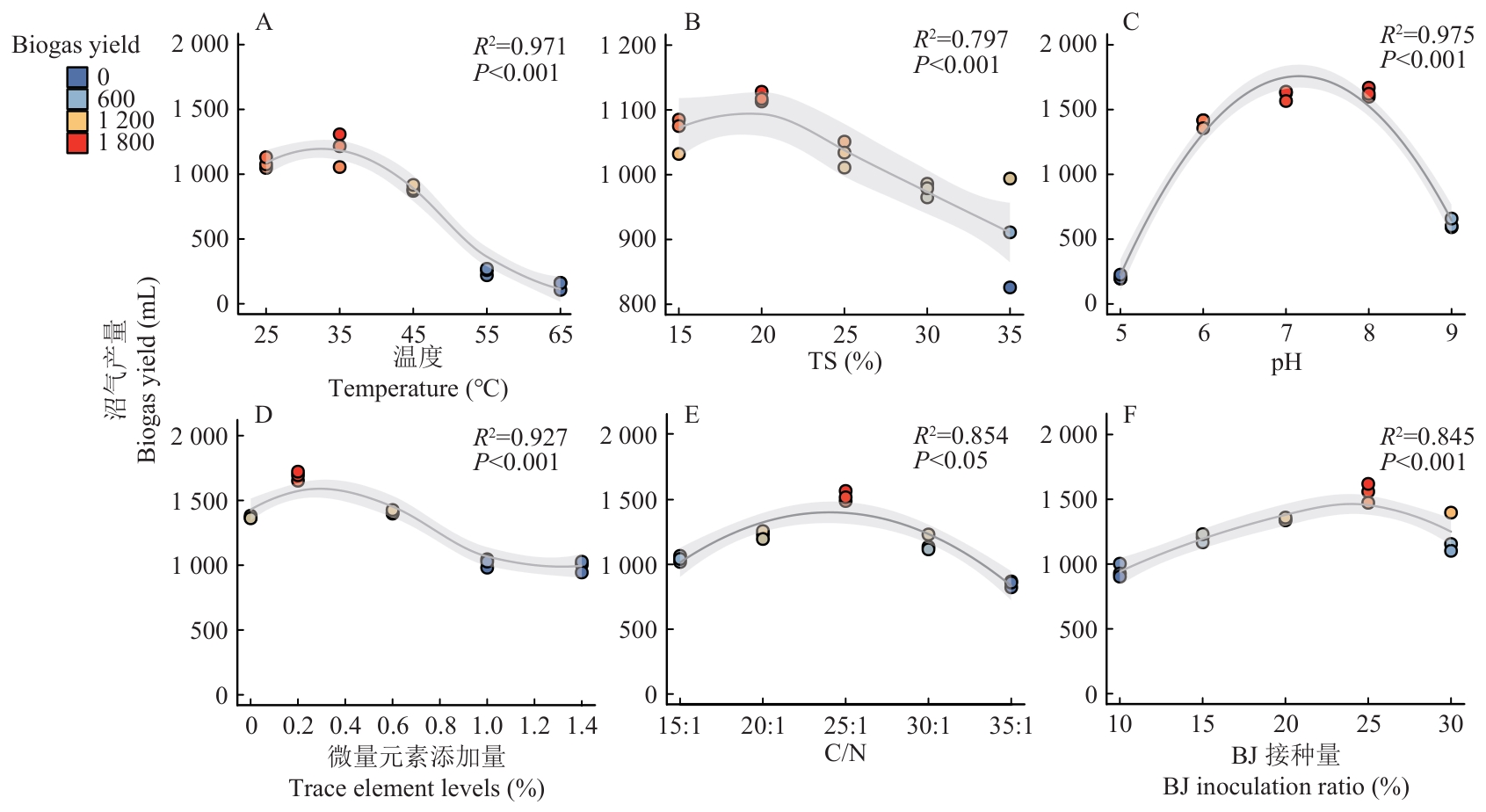
图7 局部加权回归(LOESS)分析沼气产量与显著预测因子之间的关系带有95%置信区间的回归曲线反映了特定因素的预测效果
Fig. 7 Relationships between biogas yield and the significant predictors by locally weighted regression analysisThe regression curve with a 95% confidence interval reflects the predictive effect of specific factors
| [1] | 杨光, 史波芬, 周传斌. 我国厨余垃圾资源化技术的多维绩效评价 [J]. 环境科学, 2023, 44(6): 3024-3033. |
| Yang G, Shi BF, Zhou CB. Assessment of the multidimensional performances of food waste utilization technologies in China [J]. Environmental Science, 2023, 44(6): 3024-3033. | |
| [2] | 杨兴盛, 王尚, 何晴, 等. 典型有机固废厌氧消化微生物研究现状与发展方向 [J]. 生物工程学报, 2021, 37(10): 3425-3438. |
| Yang XS, Wang S, He Q, et al. Microorganisms in the typical anaerobic digestion system of organic solid wastes: a review [J]. Chin J Biotechnol, 2021, 37(10): 3425-3438. | |
| [3] | Yang ZY, Sun HY, Zhou L, et al. Bioaugmentation with well-constructed consortia can effectively alleviate ammonia inhibition of practical manure anaerobic digestion [J]. Water Res, 2022, 215: 118244. |
| [4] | Li Y, Zhao J, Zhang ZH. Implementing metatranscriptomics to unveil the mechanism of bioaugmentation adopted in a continuous anaerobic process treating cow manure [J]. Bioresour Technol, 2021, 330: 124962. |
| [5] | Li C, Lü F, Peng W, et al. Efficacy of bioaugmentation with nondomesticated mixed microbial consortia under ammonia inhibition in anaerobic digestion [J]. Bioresour Technol, 2024, 391: 129954. |
| [6] | Tian HL, Yan M, Treu L, et al. Hydrogenotrophic methanogens are the key for a successful bioaugmentation to alleviate ammonia inhibition in thermophilic anaerobic digesters [J]. Bioresour Technol, 2019, 293: 122070. |
| [7] | Jiang JF, Li LH, Li Y, et al. Bioaugmentation to enhance anaerobic digestion of food waste: Dosage, frequency and economic analysis [J]. Bioresour Technol, 2020, 307: 123256. |
| [8] | Wang N, Xiao MY, Hu PP, et al. Unveiling the bioaugmentation mechanism of Clostridium thermopalmarium HK1 enhancing methane production in thermophilic anaerobic digestion of food waste [J]. J Environ Chem Eng, 2024, 12(3): 112620. |
| [9] | He LS, Li LH, Li Y, et al. Bioaugmentation with methanogenic culture to improve methane production from chicken manure in batch anaerobic digestion [J]. Chemosphere, 2022, 303: 135127. |
| [10] | Xiao MY, Wang N, Zhang SY, et al. Synergistic bioaugmentation with Clostridium thermopalmarium and Caldibacillus thermoamylovorans improved methane production from thermophilic anaerobic digestion of food waste [J]. Chem Eng J, 2024, 480: 148372. |
| [11] | Zhang WL, Kong TQ, Xing WL, et al. Links between carbon/nitrogen ratio, synergy and microbial characteristics of long-term semi-continuous anaerobic co-digestion of food waste, cattle manure and corn straw [J]. Bioresour Technol, 2022, 343: 126094. |
| [12] | Ahmadi-Pirlou M, Ebrahimi-Nik M, Khojastehpour M, et al. Mesophilic co-digestion of municipal solid waste and sewage sludge: Effect of mixing ratio, total solids, and alkaline pretreatment [J]. Int Biodeterior Biodegrad, 2017, 125: 97-104. |
| [13] | Lin Q, De Vrieze J, Li CN, et al. Temperature regulates deterministic processes and the succession of microbial interactions in anaerobic digestion process [J]. Water Res, 2017, 123: 134-143. |
| [14] | Yang SM, Luo F, Yan J, et al. Biogas production of food waste with in situ sulfide control under high organic loading in two-stage anaerobic digestion process: Strategy and response of microbial community [J]. Bioresour Technol, 2023, 373: 128712. |
| [15] | Menon A, Wang JY, Giannis A. Optimization of micronutrient supplement for enhancing biogas production from food waste in two-phase thermophilic anaerobic digestion [J]. Waste Manag, 2017, 59: 465-475. |
| [16] | DSMZ. DSMZ 120 Methanosarcina medium [EB/OL]. [2022-01-12]. . |
| [17] | DSMZ. DSMZ 334 Methanothrix medium [EB/OL]. [2022-09-21]. . |
| [18] | DSMZ. DSMZ 119 Methanobacterium medium [EB/OL]. [2022-09-15]. . |
| [19] | 李莹. 滨海河流沉积物中产甲烷分离物的获得及其电化学特征 [D]. 烟台: 中国科学院烟台海岸带研究所, 2016. |
| Li Y. Acquirement and electrochemical characteristics of methanogenic isolation from coastal riverine sediment [D]. Yantai: Yantai Institute of Coastal Zone Research, Chinese Academy of Sciences, 2016. | |
| [20] | DSMZ. DSMZ 320 Clostridium cellulovorans medium [EB/OL]. [2022-03-31]. . |
| [21] | 张靖雪. 基于不同预处理方式的强化餐厨垃圾厌氧发酵产气性能研究 [D]. 南京: 东南大学, 2023. |
| Zhang JX. Research on gas production of enhanced anaerobic fermentation of kitchen waste based on different pretreatments [D]. Nanjing: Southeast University, 2023. | |
| [22] | Bokulich NA, Subramanian S, Faith JJ, et al. Quality-filtering vastly improves diversity estimates from Illumina amplicon sequencing [J]. Nat Methods, 2013, 10(1): 57-59. |
| [23] | Edgar RC, Haas BJ, Clemente JC, et al. UCHIME improves sensitivity and speed of Chimera detection [J]. Bioinformatics, 2011, 27(16): 2194-2200. |
| [24] | Pardilhó S, Pires JC, Boaventura R, et al. Biogas production from residual marine macroalgae biomass: Kinetic modelling approach [J]. Bioresour Technol, 2022, 359: 127473. |
| [25] | Yin DM, Westerholm M, Qiao W, et al. An explanation of the methanogenic pathway for methane production in anaerobic digestion of nitrogen-rich materials under mesophilic and thermophilic conditions [J]. Bioresour Technol, 2018, 264: 42-50. |
| [26] | 饶玲华. 餐厨垃圾厌氧发酵产沼气规律研究 [D]. 长沙: 中南大学, 2011. |
| Rao LH. Study on the biogas production from kitchen waste by anaerobic digestion [D]. Changsha: Central South University, 2011. | |
| [27] | Qiu LP, Zhang Q, Zhu HS, et al. Erosion reduces soil microbial diversity, network complexity and multifunctionality [J]. ISME J, 2021, 15(8): 2474-2489. |
| [28] | Letunic I, Bork P. Interactive tree of life (iTOL) v5: an online tool for phylogenetic tree display and annotation [J]. Nucleic Acids Res, 2021, 49(W1): W293-W296. |
| [29] | Okonechnikov K, Golosova O, Fursov M, et al. Unipro UGENE: a unified bioinformatics toolkit [J]. Bioinformatics, 2012, 28(8): 1166-1167. |
| [30] | Breiman L. Random forests[J]. Machine Learning, 2001, 45: 5-32. |
| [31] | Sprenger WW, van Belzen MC, Rosenberg J, et al. Methanomicrococcus blatticola gen. nov., sp. nov., a methanol- and methylamine-reducing methanogen from the hindgut of the cockroach Periplaneta americana [J]. Int J Syst Evol Microbiol, 2000, 50 Pt 6: 1989-1999. |
| [32] | Wang P, Wang HT, Qiu YQ, et al. Microbial characteristics in anaerobic digestion process of food waste for methane production-a review [J]. Bioresour Technol, 2018, 248: 29-36. |
| [33] | Shao MS, Zhang C, Wang X, et al. Co-digestion of food waste and hydrothermal liquid digestate: Promotion effect of self-generated hydrochars [J]. Environ Sci Ecotechnol, 2023, 15: 100239. |
| [34] | 唐山青, 谢彦培, 刘智峰, 等. 温度转换对厌氧消化系统连续运行及微生物群落的影响 [J]. 中国环境科学, 2024, 44(8): 4303-4313. |
| Tang SQ, Xie YP, Liu ZF, et al. Effect of temperature conversion on continuous operation and microbial community of anaerobic digestion system [J]. China Environmental Science, 2024, 44(8): 4303-4313. | |
| [35] | 赵铮铮, 吴瑒, 郑雄, 等. 卤代有机污染物对剩余污泥厌氧消化产能的影响及机制研究[J]. 中国环境科学, 2024, 21(2) :1-10. |
| Zhao ZZ, Wu Y, Zheng X, et al. Effect of halogenated organic pollutants on anaerobic digestion capacity of waste activated sludge and its mechanisms[J]. China Environmental Science, 2024, 21(2): 1-10. | |
| [36] | Liu D, Cen RX, Yuan A, et al. Effects of continuous low-speed biogas agitation on anaerobic digestion of high-solids pig manure: Performance and microbial community [J]. J Environ Manag, 2024, 354: 120355. |
| [37] | 乔江涛, 郭荣波, 袁宪正, 等. 玉米秸秆厌氧降解复合菌系的微生物群落结构 [J]. 环境科学, 2013, 34(4): 1531-1539. |
| Qiao JT, Guo RB, Yuan XZ, et al. Phylogenetic analysis of methanogenic corn stalk degrading microbial communities [J]. Environ Sci, 2013, 34(4): 1531-1539. | |
| [38] | Ao ZP, Li Y, Li Y, et al. Facilitating direct interspecies electron transfer in anaerobic digestion via speeding up transmembrane transport of electrons and CO2 reduction in methanogens by Na+ adjustment [J]. Waste Manag, 2023, 170: 252-260. |
| [39] | 俞超. 温度及盐度对产甲烷菌mcrA基因转录和群落结构的影响研究 [D]. 南京: 南京大学, 2017. |
| Yu C. Study on effects of temperature and salinity on the methanogen mcrA gene transcription and community in anaerobic sludge [D]. Nanjing: Nanjing University, 2017. | |
| [40] | Ding P, Wu P, Jie Z, et al. Damage of anodic biofilms by high salinity deteriorates PAHs degradation in single-chamber microbial electrolysis cell reactor [J]. Sci Total Environ, 2021, 777: 145752. |
| [41] | Zhang Y, Li CX, Yuan ZW, et al. Syntrophy mechanism, microbial population, and process optimization for volatile fatty acids metabolism in anaerobic digestion [J]. Chem Eng J, 2023, 452: 139137. |
| [42] | An MM, Shen L, Liang RN, et al. Microbial diagnostics unveil key driver bacteria and methanogens associated with system stability and biogas production in food waste anaerobic digestion systems [J]. J Environ Chem Eng, 2024, 12(6): 114435. |
| [43] | Zhuang GC, Elling FJ, Nigro LM, et al. Multiple evidence for methylotrophic methanogenesis as the dominant methanogenic pathway in hypersaline sediments from the Orca Basin, Gulf of Mexico [J]. Geochim Cosmochim Acta, 2016, 187: 1-20. |
| [44] | Van Duc L, Nagao S, Mojarrad M, et al. Bioaugmentation with marine sediment-derived microbial consortia in mesophilic anaerobic digestion for enhancing methane production under ammonium or salinity stress [J]. Bioresour Technol, 2023, 376: 128853. |
| [45] | 易悦, 周卓, 黄艳, 等. 我国产甲烷古菌研究进展与展望 [J]. 微生物学报, 2023, 63(5): 1796-1814. |
| Yi Y, Zhou Z, Huang Y, et al. Methanogen research in China: current status and prospective [J]. Acta Microbiol Sin, 2023, 63(5): 1796-1814. | |
| [46] | Lee J, Shin SG, Han G, et al. Bacteria and Archaea communities in full-scale thermophilic and mesophilic anaerobic digesters treating food wastewater: Key process parameters and microbial indicators of process instability [J]. Bioresour Technol, 2017, 245: 689-697. |
| [47] | Lin Q, He GH, Rui JP, et al. Microorganism-regulated mechanisms of temperature effects on the performance of anaerobic digestion [J]. Microb Cell Fact, 2016, 15: 96. |
| [48] | Wang MX, Chen XL, Fang Y, et al. The trade-off between individual metabolic specialization and versatility determines the metabolic efficiency of microbial communities [J]. Cell Syst, 2024, 15(1): 63-74.e5. |
| [49] | Abid M, Wu J, Seyedsalehi M, et al. Novel insights of impacts of solid content on high solid anaerobic digestion of cow manure: Kinetics and microbial community dynamics [J]. Bioresour Technol, 2021, 333: 125205. |
| [50] | Wang YY, Zhang JX, Li YY, et al. Methane production from the co-digestion of pig manure and corn stover with the addition of cucumber residue: Role of the total solids content and feedstock-to-inoculum ratio [J]. Bioresour Technol, 2020, 306: 123172. |
| [51] | Yan L, Ye J, Zhang PY, et al. Hydrogen sulfide formation control and microbial competition in batch anaerobic digestion of slaughterhouse wastewater sludge: Effect of initial sludge pH [J]. Bioresour Technol, 2018, 259: 67-74. |
| [52] | Liu YX, Wu ZS, Lv YY, et al. Recovery of an acidified food waste anaerobic digestion reactor via NH4 + -N and trace metals addition: Performance, microbial community response, and mechanisms [J]. J Clean Prod, 2023, 425: 138978. |
| [53] | Yan M, Treu L, Zhu XY, et al. Insights into ammonia adaptation and methanogenic precursor oxidation by genome-centric analysis [J]. Environ Sci Technol, 2020, 54(19): 12568-12582. |
| [54] | Gao CH, Cao H, Cai P, et al. The initial inoculation ratio regulates bacterial coculture interactions and metabolic capacity [J]. ISME J, 2021, 15(1): 29-40. |
| [1] | 王晶, 朱伟民, 张兴泽, 李朋, 邢德峰. 木质纤维素生物质厌氧消化产甲烷强化策略研究进展[J]. 生物技术通报, 2026, 42(2): 30-40. |
| [2] | 安苗苗, 蔺祥淏, 梁瑞娜, 赵国柱. 碳源对产甲烷菌群调控及产甲烷能力的影响[J]. 生物技术通报, 2025, 41(6): 355-366. |
| [3] | 陈海敏, 孙菲, 袁源, 吴佳雯, 江红, 周剑. 紫外诱变选育巴弗洛霉素A1高产菌株及其培养基优化[J]. 生物技术通报, 2025, 41(3): 51-61. |
| [4] | 薛欣月, 于雪然, 刘晓刚, 马嘉欣, 田蕾, 李培富. 水稻锌吸收、转运、累积机理研究进展[J]. 生物技术通报, 2022, 38(4): 29-43. |
| [5] | 章妮, 暴涵, 左弟召, 陈克龙. 降水变化驱动下的高寒湿地产甲烷菌群落特征变化[J]. 生物技术通报, 2021, 37(11): 276-284. |
| [6] | 孙先锋,杨波波,朱欣洁. 不同生物修复技术处理油污土壤的效果研究[J]. 生物技术通报, 2016, 32(3): 68-72. |
| [7] | 王兴文, 王加启, 赵圣国, 李发弟, 卜登攀. 未培养技术在瘤胃产甲烷菌群研究中的应用[J]. 生物技术通报, 2014, 30(6): 67-74. |
| [8] | . 核酸及蛋白质合成、提取、纯化[J]. , 1992, 0(12): 21-21. |
| [9] | . 环境保护上的应用[J]. , 1989, 0(05): 109-113. |
| [10] | . 能源上的应用[J]. , 1988, 0(11): 96-98. |
| [11] | . 能源上的应用[J]. , 1986, 0(04): 114-117. |
| [12] | 郭殿瑞;. 重组细菌可能使生物量甲烷经济生产[J]. , 1985, 0(02): 125-126. |
| 阅读次数 | ||||||
|
全文 |
|
|||||
|
摘要 |
|
|||||
