







生物技术通报 ›› 2026, Vol. 42 ›› Issue (11): 45-57.doi: 10.13560/j.cnki.biotech.bull.1985.2025-1444
• 综述与专论 • 上一篇
李聪1,2, 于濡沄2, 郑菲2( ), 郭玉杰1()
收稿日期:2025-12-28
出版日期:2026-11-26
发布日期:2026-11-03
通讯作者:
郑菲zhengfei0718@bjfu.edu.cn基金资助:
LI Cong1,2, YU Ru-yun2, ZHENG Fei2(), GUO Yu-jie1()
Received:2025-12-28
Published:2026-11-26
Online:2026-11-03
摘要:
裂解性多糖单加氧酶(lytic polysaccharide monooxygenase, LPMO)能通过氧化裂解的方式断裂纤维素等多糖链的糖苷键,与糖苷水解酶协同降解木质纤维素时,可以显著提升产糖效率,在木质纤维素生物质转化中具有重要作用。其中,真菌来源的AA9家族LPMO凭借其优异的氧化活性和广泛的底物谱,在食品、能源及材料等领域展现出广阔的应用前景。本文系统综述了AA9家族LPMO的来源及功能的多样性,指出不同来源的LPMO对糖苷水解酶的协同促进效果、底物降解类型存在显著差异;对其结构进行深入分析发现,催化结构域表面的Loop区对底物的识别、结合以及氧化区域的选择起着核心调控作用;除此之外,在双结构域的LPMO中,CBM结构域也会对LPMO结合底物的过程产生重要影响。同时,本文还对MALDI-TOF-MS、HPAEC-PAD及基于显色反应等多种酶活测定方法的原理与适用范围进行分析比较,发现色谱‒质谱联用策略是目前定量分析LPMO氧化产物的最主要的方法之一。最后,本文详细总结了LPMO在食品加工、生物能源及纳米纤维素制备等领域展现出的应用潜力。因此,通过LPMO酶资源的挖掘或酶分子改良获得更多适合工业生产应用的新型酶制剂是目前研究工作的重要方向。深入剖析了当前AA9家族LPMO研究在酶资源功能表征、底物特异性分子机制解析以及实际应用效率提升等方面存在的关键技术问题,并针对性地提出了结合宏基因组学挖掘新酶、融合结构预测与机器学习解析底物选择性、针对不同预处理工艺开展酶分子定向改造等未来研究方向与策略建议。
李聪, 于濡沄, 郑菲, 郭玉杰. AA9家族裂解性多糖单加氧酶的研究进展[J]. 生物技术通报, 2026, 42(11): 45-57.
LI Cong, YU Ru-yun, ZHENG Fei, GUO Yu-jie. Research Progress of AA9 Family Lytic Polysaccharide Monooxygenases[J]. Biotechnology Bulletin, 2026, 42(11): 45-57.
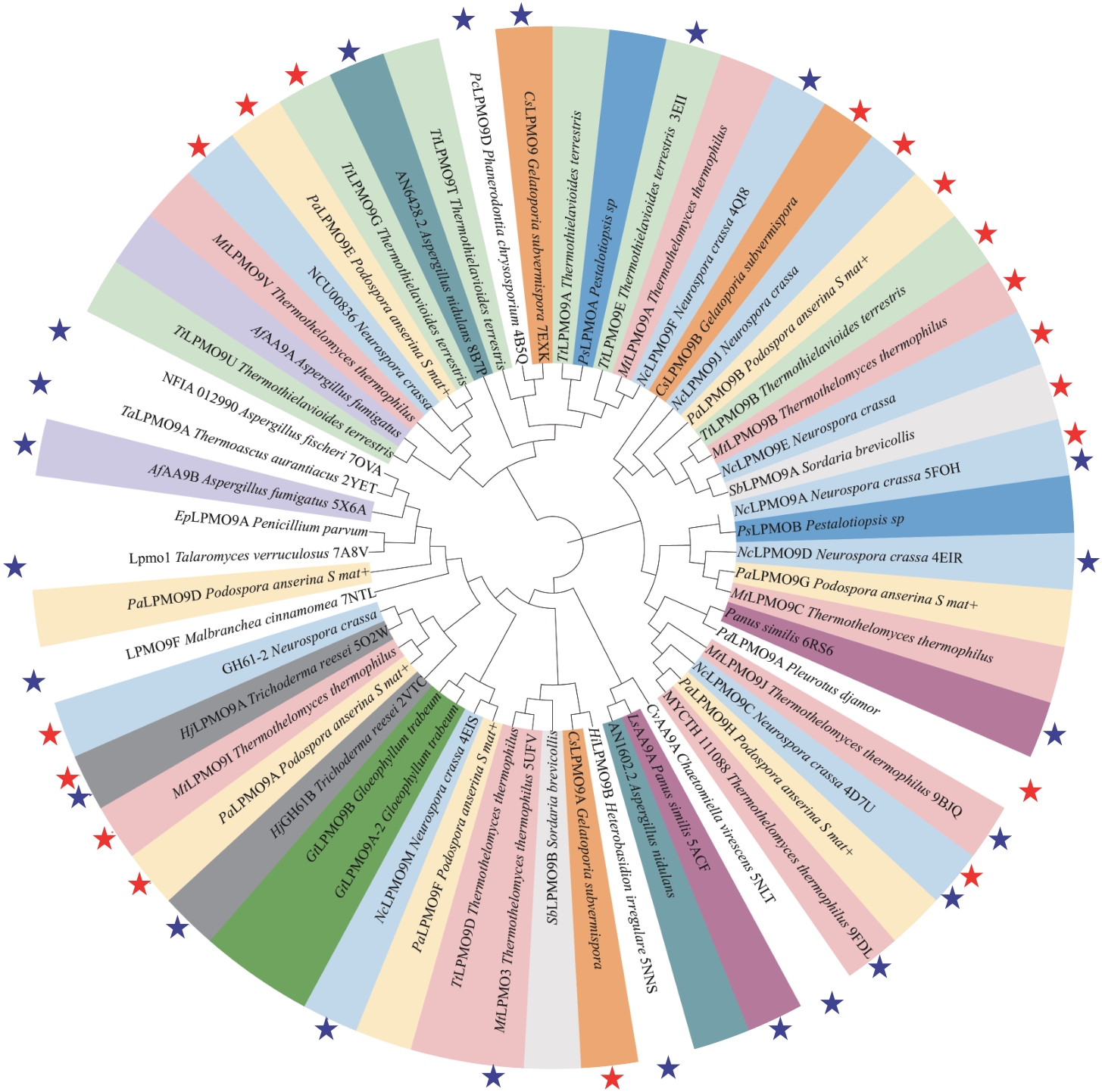
图1 AA9家族代表性LPMO的系统进化树分析红色五角星为含CBM1的成员;蓝色五角星为已解析晶体结构的成员;扇形颜色代表不同物种来源,相同颜色代表该物种包含多条序列,未着色区域为仅含单条序列的物种
Fig. 1 Phylogenetic tree analysis of representative AA9 LPMORed pentagrams represent members containing the CBM1 domain. Blue pentagrams indicate members with resolved crystal structures. Fan segment colors distinguish species sources, with the same color indicating one species with multiple sequences, and uncolored segments representing species with only a single sequence
| 名称 Name | 来源 Source | 功能 Function | 参考文献 Reference |
|---|---|---|---|
| AfAA9B | Aspergillus fumigatus | 与纤维素酶协同作用,使汽爆甘蔗渣的糖化效率提升20% | [ |
| MsLPMO2 | Morchella sextelata | 与纤维素酶联用,使稻草和小麦秸秆的还原糖产量分别提升126.4%和133.5% | [ |
| MtLPMO9A | Thermothelomyces thermophilus | 突变体与木聚糖酶协同作用,使木聚糖的还原糖产量提高57% | [ |
| MtLPMO9G | Thermothelomyces thermophilus | 与纤维素酶联用,使玉米秸秆的还原糖产量提升242% | [ |
| MtLPMO9V | Thermothelomyces thermophilus | 与内切葡聚糖酶协同作用,对微晶纤维素的协同效率可达120% | [ |
| NcLPMO9C | Neurospora crassa | 与纤维二糖水解酶联用,使高结晶纤维素的还原糖产量提升169% | [ |
| PaLPMO9B | Podospora anserina | 与纤维素酶协同,使酸和碱预处理甘蔗渣的还原糖产量分别提升了30%和20% | [ |
| PaLPMO9H | Podospora anserina | 与纤维二糖水解酶协同,使PASC的还原糖产量提升60% | [ |
| PchAA9C | Phanerochaete chrysosporium | 与纤维素酶联用,使玉米秸秆的还原糖产量提升1.34倍 | [ |
| PchAA9F | Phanerochaete chrysosporium | 与纤维素酶联用,使玉米秸秆的还原糖产量提升1.33倍 | [ |
| PdLPMO9A | Pleurotus djamor | 与纤维素酶共同作用,使玉米秸秆还原糖产量提高63.5% | [ |
| SbLPMO9A | Sordaria brevicollis | 与商业纤维素酶协同,使去木质素小麦秸秆的总还原糖产量提升65% | [ |
| SbLPMO9B | Sordaria brevicollis | 与商业纤维素酶协同,使无定形纤维素的总还原糖产量提升101% | [ |
| TaLPMO9A | Thermoascus aurantiacus | 与纤维素酶协同,使微晶纤维素的还原糖产量提升了1.2倍 | [ |
| TtLPMO9E | Thermothielavioides terrestris | 与纤维素酶协同,使微晶纤维素的还原糖产量提升了1.9倍 | [ |
| TtLPMO9G | Thermothielavioides terrestris | 与木聚糖酶联用,使木聚糖的释放量增加42% | [ |
表1 不同来源的AA9家族LPMO及其功能
Table 1 AA9 family LPMO from different sources and their functions
| 名称 Name | 来源 Source | 功能 Function | 参考文献 Reference |
|---|---|---|---|
| AfAA9B | Aspergillus fumigatus | 与纤维素酶协同作用,使汽爆甘蔗渣的糖化效率提升20% | [ |
| MsLPMO2 | Morchella sextelata | 与纤维素酶联用,使稻草和小麦秸秆的还原糖产量分别提升126.4%和133.5% | [ |
| MtLPMO9A | Thermothelomyces thermophilus | 突变体与木聚糖酶协同作用,使木聚糖的还原糖产量提高57% | [ |
| MtLPMO9G | Thermothelomyces thermophilus | 与纤维素酶联用,使玉米秸秆的还原糖产量提升242% | [ |
| MtLPMO9V | Thermothelomyces thermophilus | 与内切葡聚糖酶协同作用,对微晶纤维素的协同效率可达120% | [ |
| NcLPMO9C | Neurospora crassa | 与纤维二糖水解酶联用,使高结晶纤维素的还原糖产量提升169% | [ |
| PaLPMO9B | Podospora anserina | 与纤维素酶协同,使酸和碱预处理甘蔗渣的还原糖产量分别提升了30%和20% | [ |
| PaLPMO9H | Podospora anserina | 与纤维二糖水解酶协同,使PASC的还原糖产量提升60% | [ |
| PchAA9C | Phanerochaete chrysosporium | 与纤维素酶联用,使玉米秸秆的还原糖产量提升1.34倍 | [ |
| PchAA9F | Phanerochaete chrysosporium | 与纤维素酶联用,使玉米秸秆的还原糖产量提升1.33倍 | [ |
| PdLPMO9A | Pleurotus djamor | 与纤维素酶共同作用,使玉米秸秆还原糖产量提高63.5% | [ |
| SbLPMO9A | Sordaria brevicollis | 与商业纤维素酶协同,使去木质素小麦秸秆的总还原糖产量提升65% | [ |
| SbLPMO9B | Sordaria brevicollis | 与商业纤维素酶协同,使无定形纤维素的总还原糖产量提升101% | [ |
| TaLPMO9A | Thermoascus aurantiacus | 与纤维素酶协同,使微晶纤维素的还原糖产量提升了1.2倍 | [ |
| TtLPMO9E | Thermothielavioides terrestris | 与纤维素酶协同,使微晶纤维素的还原糖产量提升了1.9倍 | [ |
| TtLPMO9G | Thermothielavioides terrestris | 与木聚糖酶联用,使木聚糖的释放量增加42% | [ |
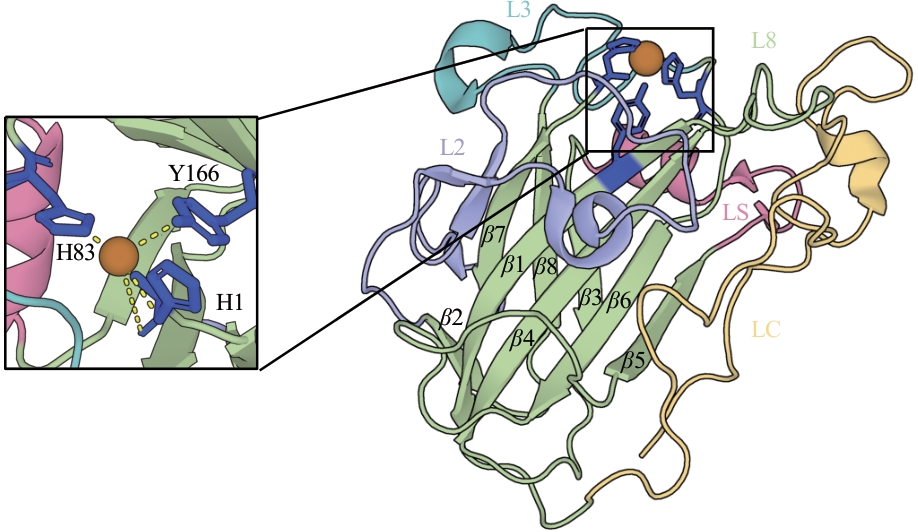
图2 AA9家族LPMO的典型三维结构AA9家族LPMO的结构示意图(PDB ID:4D7U)
Fig. 2 The typical three-dimensional structure of AA9 LPMOStructural schematic diagram of the AA9 family LPMO (PDB ID: 4D7U)
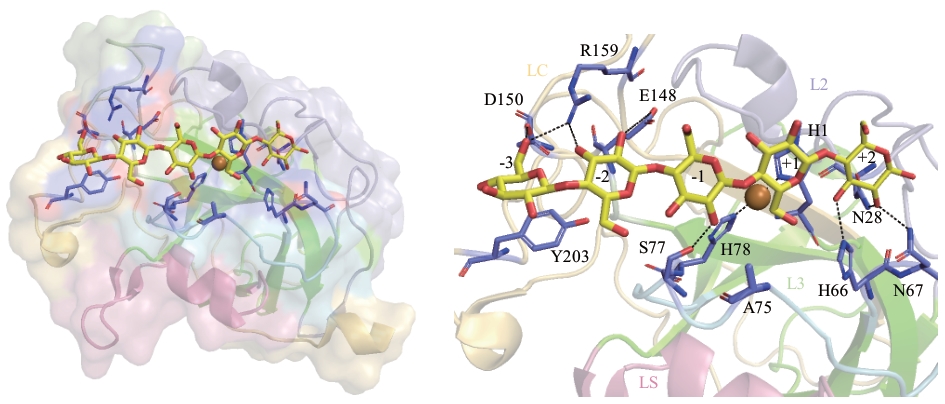
图3 LsAA9A-纤维五糖复合物整体及局部结构图
Fig. 3 Overall and local structural diagrams of the LsAA9A-cellopentaose complex
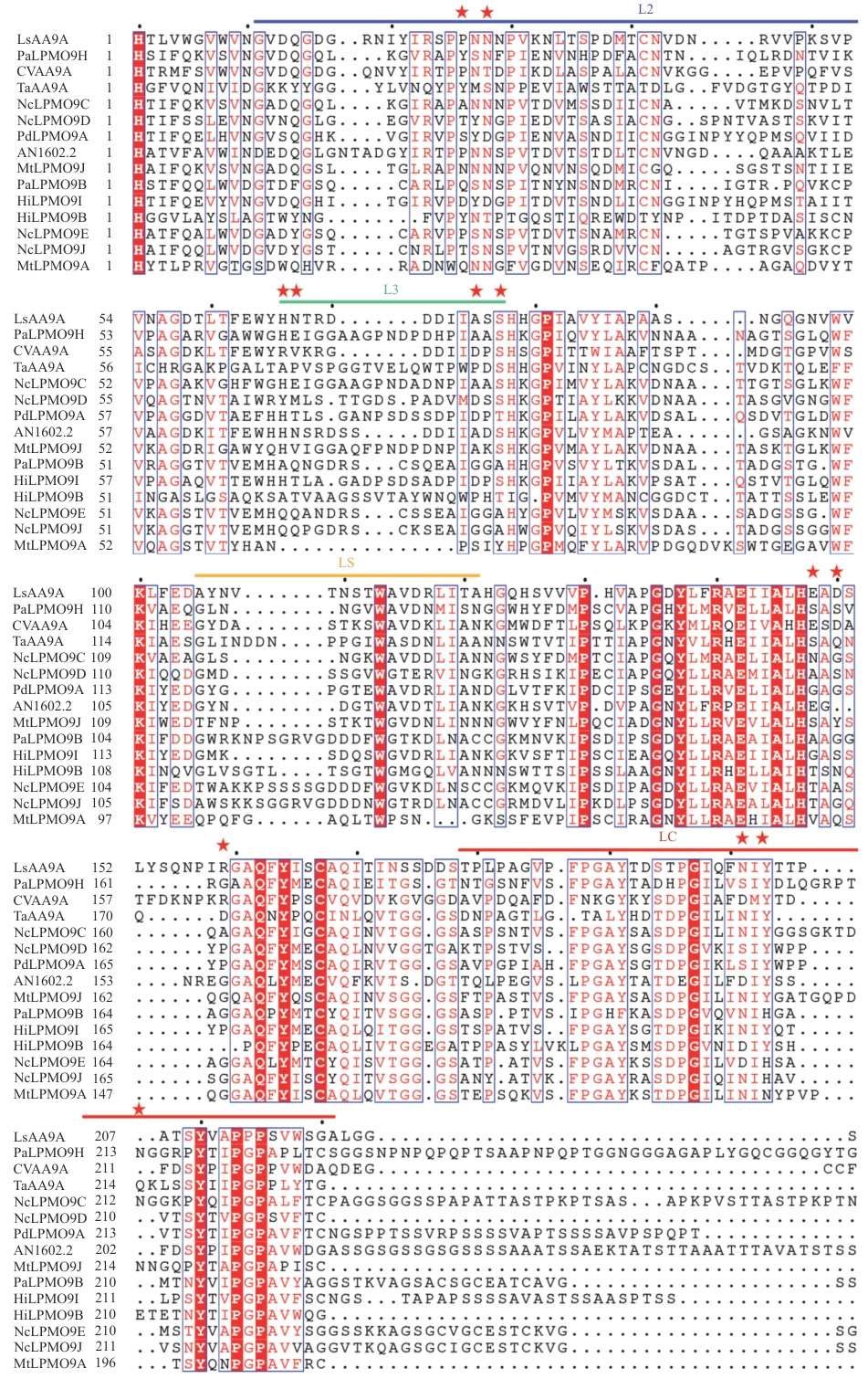
图4 AA9家族LPMO催化结构域序列比对蓝线、绿线、黄线和红线分别对应L2、L3、LS和LC Loop区;红色五角星为文中重点讨论的关键功能残基
Fig. 4 Sequence alignment of catalytic domains of AA9 family LPMOBlue, green, yellow and red lines correspond to the L2, L3, LS, and LC Loop regions, respectively. Red five-pointed stars indicate key functional residues discussed in the text
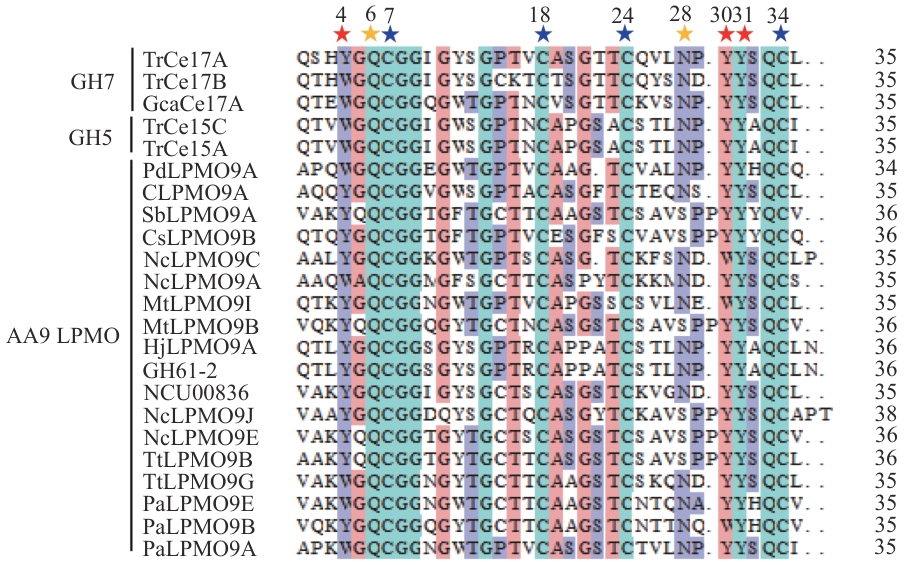
图5 糖苷水解酶与AA9家族LPMO CBM1序列比对红色五角星为芳香族残基;黄色五角星为极性氨基酸残基;蓝色五角星为半胱氨酸残基
Fig. 5 Sequence alignment of CBM1 from glycoside hydrolases and AA9 family LPMORed five-pointed stars represent aromatic residues; yellow five-pointed stars represent polar amino acid residues; blue five-pointed stars represent cysteine residues
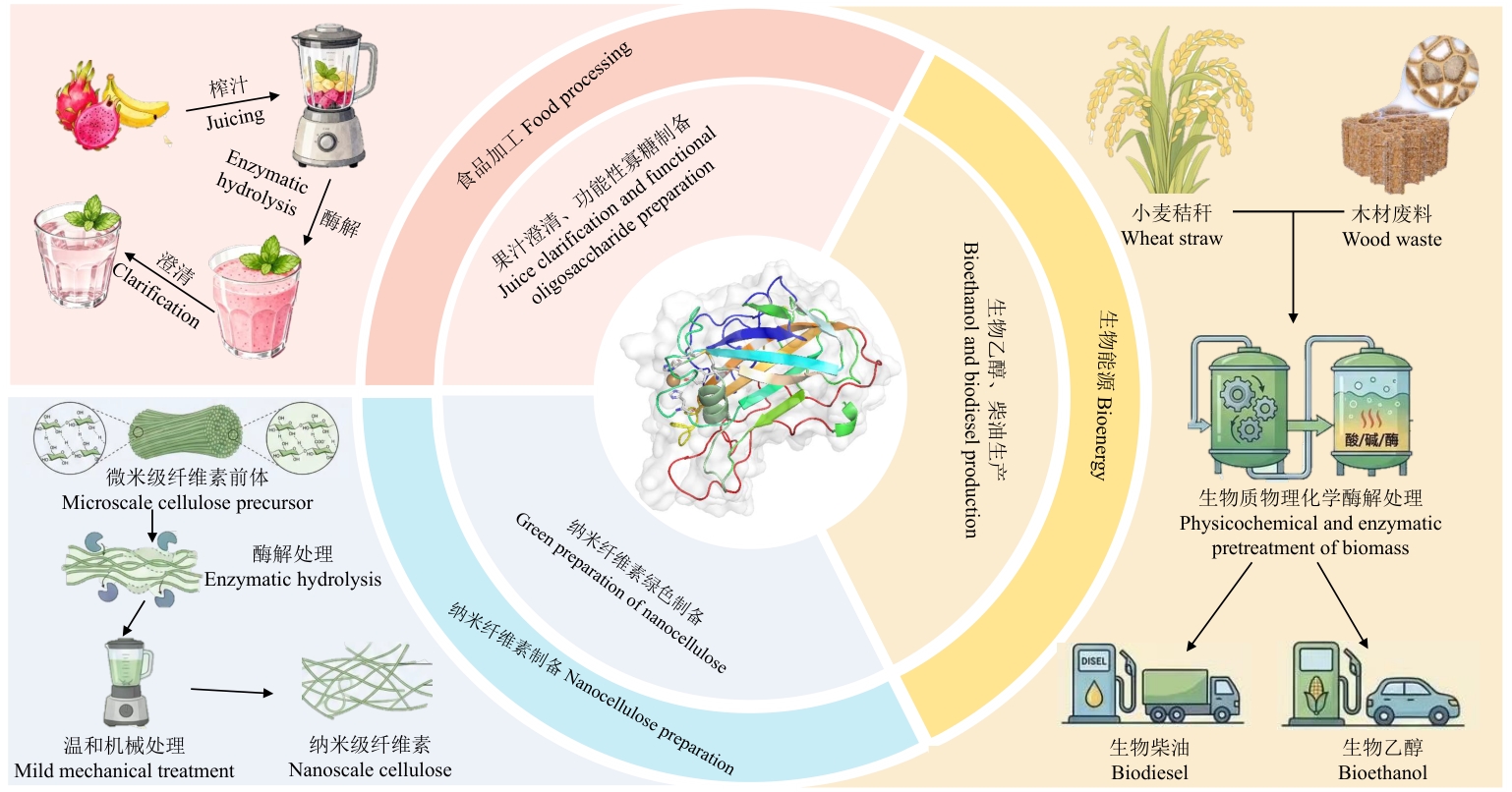
图6 AA9家族LPMO应用示意图
Fig. 6 Schematic diagram of the applications of AA9 family LPMO
| [1] | Yang Z, Bhagia S, O'Neill H, et al. Deconvoluting structures of component plant biopolymers using deuterium labeled Brassica oleracea stems [J]. ACS Sustainable Chem Eng, 2023, 11(49): 17238-17248. |
| [2] | Wang H, Hua Y, Li HP, et al. Comprehensive insights into hydrothermal pretreatment of rice straw from physicochemical structure, organic matter transformation and hydrolysate reuse [J]. Chem Eng J, 2023, 476: 146809. |
| [3] | de Souza TSP, Kawaguti HY. Cellulases, hemicellulases, and pectinases: applications in the food and beverage industry [J]. Food Bioprocess Technol, 2021, 14(8): 1446-1477. |
| [4] | Patel VB, Chatterjee S, Dhoble AS. A review on pectinase properties, application in juice clarification, and membranes as immobilization support [J]. J Food Sci, 2022, 87(8): 3338-3354. |
| [5] | Kumar A, Singh A, Sharma VK, et al. The upsurge of lytic polysaccharide monooxygenases in biomass deconstruction: characteristic functions and sustainable applications [J]. FEBS J, 2024, 291(23): 5081-5101. |
| [6] | 李聪, 牛羽丰, 赵国柱, 等. 裂解性多糖单加氧酶TtLPMO9Y的酶学特性及其在果汁澄清、纤维素降解中的作用 [J]. 食品科学, 2025, 46(17): 101-110. |
| Li C, Niu YF, Zhao GZ, et al. Enzymatic characterization of lytic polysaccharide monooxygenase TtLPMO9Y and its role in juice clarification and cellulose degradation [J]. Food Sci, 2025, 46(17): 101-110. | |
| [7] | Ma L, Zhu CQ, Han Y, et al. Characteristic of a lytic polysaccharide monooxygenase MsLPMO2 from Morchella sextelata exhibiting ability to degrade cellulose by oxidation [J]. Chem Eng J, 2025, 503: 158631. |
| [8] | Karnaouri A, Chorozian K, Zouraris D, et al. Lytic polysaccharide monooxygenases as powerful tools in enzymatically assisted preparation of nano-scaled cellulose from lignocellulose: a review [J]. Bioresour Technol, 2022, 345: 126491. |
| [9] | Müller J, Hagen C, Lange S, et al. Copper-dependent lytic polysaccharide monooxygenases: key players for efficient lignocellulose degradation [J]. Biotechnol Bioeng, 2023, 120 (6): 1899-1915. |
| [10] | Chorozian K, Dimarogona M, Ponjavic M, et al. Characterization of an AA9 LPMO from Fusarium oxysporum and its role in cellulose hydrolysis and functionalization [J]. Biotechnol Biofuels Bioprod, 2026, 19: 27. |
| [11] | Moon M, Lee JP, Park GW, et al. Lytic polysaccharide monooxygenase (LPMO)-derived saccharification of lignocellulosic biomass [J]. Bioresour Technol, 2022, 359: 127501. |
| [12] | Xu XF, Chu CE, Li N, et al. Identification and characterization of two AA9 lytic polysaccharide monooxygenases isolated from the enzymatic arsenal in Phanerochaete chrysosporium [J]. Bioresour Bioprocess, 2025, 12: 112. |
| [13] | Hall KR, Elisa Rønnekleiv S, Gautieri A, et al. Structure-function analysis of an understudied type of LPMO with unique redox properties and substrate specificity [J]. ACS Catal, 2025, 15(12): 10601-10617. |
| [14] | Hüttner S, Várnai A, Petrović DM, et al. Specific xylan activity revealed for AA9 lytic polysaccharide monooxygenases of the thermophilic fungus Malbranchea cinnamomea by functional characterization [J]. Appl Environ Microbiol, 2019, 85(23): e01408-e01419. |
| [15] | Frommhagen M, Sforza S, Westphal AH, et al. Discovery of the combined oxidative cleavage of plant xylan and cellulose by a new fungal polysaccharide monooxygenase [J]. Biotechnol Biofuels, 2015, 8: 101. |
| [16] | Tõlgo M, Hegnar OA, Larsbrink J, et al. Enzymatic debranching is a key determinant of the xylan-degrading activity of family AA9 lytic polysaccharide monooxygenases [J]. Biotechnol Biofuels, 2023, 16: 2. |
| [17] | Hegnar OA, Østby H, Petrović DM, et al. Quantifying oxidation of cellulose-associated glucuronoxylan by two lytic polysaccharide monooxygenases from Neurospora crassa [J]. Appl Environ Microbiol, 2021, 87(24): e01652-e01621. |
| [18] | Sun PC, de Munnik M, van Berkel WJH, et al. Extending the diversity of Myceliophthora thermophila LPMOs: Two different xyloglucan cleavage profiles [J]. Carbohydr Polym, 2022, 288: 119373. |
| [19] | Monclaro AV, Petrović DM, Alves GSC, et al. Characterization of two family AA9 LPMOs from Aspergillus tamarii with distinct activities on xyloglucan reveals structural differences linked to cleavage specificity [J]. PLoS One, 2020, 15(7): e0235642. |
| [20] | Østby H, Christensen IA, Hennum K, et al. Functional characterization of a lytic polysaccharide monooxygenase from Schizophyllum commune that degrades non-crystalline substrates [J]. Sci Rep, 2023, 13: 17373. |
| [21] | Velasco J, de Oliveira Arnoldi Pellegrini V, Sepulchro AGV, et al. Comparative analysis of two recombinant LPMOs from Aspergillus fumigatus and their effects on sugarcane bagasse saccharification [J]. Enzyme Microb Technol, 2021, 144: 109746. |
| [22] | Guo X, An YJ, Chai CC, et al. Construction of the R17L mutant of MtC1LPMO for improved lignocellulosic biomass conversion by rational point mutation and investigation of the mechanism by molecular dynamics simulations [J]. Bioresour Technol, 2020, 317: 124024. |
| [23] | Qin X, Zou JH, Yang K, et al. Discovering functional diversity of lytic polysaccharide monooxygenases from the thermophilic fungus Myceliophthora thermophila and their application in lignocellulosic biomass degradation [J]. ACS Sustainable Chem Eng, 2023, 11(29): 10929-10937. |
| [24] | Li WM, Yuan H, Hu Y, et al. Construction of new thermostable MtLPMO9V in synergism with cellulases for efficient lignocellulosic hydrolysis [J]. Bioresour Technol, 2025, 430: 132594. |
| [25] | Sun PC, Laurent CVFP, Boerkamp VJP, et al. Regioselective C4 and C6 double oxidation of cellulose by lytic polysaccharide monooxygenases [J]. ChemSusChem, 2022, 15(2): e202102203. |
| [26] | Long LF, Yang HM, Ren HY, et al. Synergism of recombinant Podospora anserina PaAA9B with cellulases containing AA9s can boost the enzymatic hydrolysis of cellulosic substrates [J]. ACS Sustainable Chem Eng, 2020, 8(32): 11986-11993. |
| [27] | Forsberg Z, Courtade G. On the impact of carbohydrate-binding modules (CBMs) in lytic polysaccharide monooxygenases (LPMOs) [J]. Essays Biochem, 2023, 67(3): 561-574. |
| [28] | Shi Y, Chen K, Long L, et al. Characterization of a new AA9 LPMO from Pleurotus djamor and its synergism with cellulase[J]. Int J Biol Macromol, 2023, 242: 124988. |
| [29] | Zhang X, Chen KX, Long LK, et al. Two C1-oxidizing AA9 lytic polysaccharide monooxygenases from Sordaria brevicollis differ in thermostability, activity, and synergy with cellulase [J]. Appl Microbiol Biotechnol, 2021, 105(23): 8739-8759. |
| [30] | Kim IJ, Seo N, An HJ, et al. Type-dependent action modes of TtAA9E and TaAA9A acting on cellulose and differently pretreated lignocellulosic substrates [J]. Biotechnol Biofuels, 2017, 10: 46. |
| [31] | Grellier M, Moreau C, Beaugrand J, et al. Action of AA9 lytic polysaccharide monooxygenase enzymes on different cellulose allomorphs [J]. Int J Biol Macromol, 2024, 275: 133429. |
| [32] | Sagarika MS, Parameswaran C, Senapati A, et al. Lytic polysaccharide monooxygenases (LPMOs) producing microbes: a novel approach for rapid recycling of agricultural wastes [J]. Sci Total Environ, 2022, 806: 150451. |
| [33] | Monclaro AV, Filho EXF. Fungal lytic polysaccharide monooxygenases from family AA9: Recent developments and application in lignocelullose breakdown [J]. Int J Biol Macromol, 2017, 102: 771-778. |
| [34] | 郭宵, 安亚静, 柴成程, 等. 来源于真菌AA9家族裂解性多糖单加氧酶的研究进展 [J]. 微生物学通报, 2020, 47(7): 2309-2320. |
| Guo X, An YJ, Chai CC, et al. Research progress in fungal lytic polysaccharide monooxygenases from AA9 family [J]. Microbiol China, 2020, 47(7): 2309-2320. | |
| [35] | Long LF, Hu Y, Sun FB, et al. Advances in lytic polysaccharide monooxygenases with the cellulose-degrading auxiliary activity family 9 to facilitate cellulose degradation for biorefinery [J]. Int J Biol Macromol, 2022, 219: 68-83. |
| [36] | Chen JY, Guo XN, Zhu M, et al. Polysaccharide monooxygenase-catalyzed oxidation of cellulose to glucuronic acid-containing cello-oligosaccharides [J]. Biotechnol Biofuels, 2019, 12: 42. |
| [37] | Tandrup T, Tryfona T, Frandsen KEH, et al. Oligosaccharide binding and thermostability of two related AA9 lytic polysaccharide monooxygenases [J]. Biochemistry, 2020, 59(36): 3347-3358. |
| [38] | Frandsen KEH, Simmons TJ, Dupree P, et al. The molecular basis of polysaccharide cleavage by lytic polysaccharide monooxygenases [J]. Nat Chem Biol, 2016, 12(4): 298-303. |
| [39] | Liu B, Kognole AA, Wu M, et al. Structural and molecular dynamics studies of a C1-oxidizing lytic polysaccharide monooxygenase from Heterobasidion irregulare reveal amino acids important for substrate recognition [J]. FEBS J, 2018, 285(12): 2225-2242. |
| [40] | Isaksen T, Westereng B, Aachmann FL, et al. A C4-oxidizing lytic polysaccharide monooxygenase cleaving both cellulose and cello-oligosaccharides [J]. J Biol Chem, 2014, 289(5): 2632-2642. |
| [41] | Bennati-Granier C, Garajova S, Champion C, et al. Substrate specificity and regioselectivity of fungal AA9 lytic polysaccharide monooxygenases secreted by Podospora anserina [J]. Biotechnol Biofuels, 2015, 8: 90. |
| [42] | Simmons TJ, Frandsen KEH, Ciano L, et al. Structural and electronic determinants of lytic polysaccharide monooxygenase reactivity on polysaccharide substrates [J]. Nat Commun, 2017, 8: 1064. |
| [43] | Liu B, Olson Å, Wu M, et al. Biochemical studies of two lytic polysaccharide monooxygenases from the white-rot fungus Heterobasidion irregulare and their roles in lignocellulose degradation [J]. PLoS One, 2017, 12(12): e0189479. |
| [44] | Kosinas C, Chorozian K, Sandgren M, et al. Mutational study of a lytic polysaccharide monooxygenase from Myceliophthora thermophila (MtLPMO9F): Structural insights into substrate specificity and regioselectivity [J]. Int J Biol Macromol, 2025, 288: 138574. |
| [45] | Chalak A, Villares A, Moreau C, et al. Influence of the carbohydrate-binding module on the activity of a fungal AA9 lytic polysaccharide monooxygenase on cellulosic substrates [J]. Biotechnol Biofuels, 2019, 12: 206. |
| [46] | Stepnov AA, Eijsink VGH, Forsberg Z. Enhanced in situ H2O2 production explains synergy between an LPMO with a cellulose-binding domain and a single-domain LPMO [J]. Sci Rep, 2022, 12: 6129. |
| [47] | Borisova AS, Isaksen T, Dimarogona M, et al. Structural and functional characterization of a lytic polysaccharide monooxygenase with broad substrate specificity [J]. J Biol Chem, 2015, 290(38): 22955-22969. |
| [48] | Petrović DM, Várnai A, Dimarogona M, et al. Comparison of three seemingly similar lytic polysaccharide monooxygenases from Neurospora crassa suggests different roles in plant biomass degradation [J]. J Biol Chem, 2019, 294(41): 15068-15081. |
| [49] | Danneels B, Tanghe M, Desmet T. Structural features on the substrate-binding surface of fungal lytic polysaccharide monooxygenases determine their oxidative regioselectivity [J]. Biotechnol J, 2019, 14(3): 1800211. |
| [50] | Kraulis P J, Clore G M, Nilges M, et al. Structure of the cellulose-binding domain of cellobiohydrolase I from Trichoderma reesei [J]. Biochemistry, 1989, 28(23): 9245-9253 |
| [51] | Gao W, Li T, Zhou HC, et al. Carbohydrate-binding modules enhance H2O2 tolerance by promoting lytic polysaccharide monooxygenase active site H2O2 consumption [J]. J Biol Chem, 2024, 300(1): 105573. |
| [52] | Westereng B, Arntzen MØ, Agger JW, et al. Analyzing activities of lytic polysaccharide monooxygenases by liquid chromatography and mass spectrometry [M]//Abbott DW, Lammerts van Bueren A. Protein-Carbohydrate Interactions: Methods and Protocols. New York: Springer, 2017: 71-92. |
| [53] | Wang DM, Li YP, Zheng YT, et al. Recent advances in screening methods for the functional investigation of lytic polysaccharide monooxygenases [J]. Front Chem, 2021, 9: 653754. |
| [54] | Westereng B, Agger JW, Horn SJ, et al. Efficient separation of oxidized cello-oligosaccharides generated by cellulose degrading lytic polysaccharide monooxygenases [J]. J Chromatogr A, 2013, 1271(1): 144-152. |
| [55] | de Oliveira Gorgulho Silva C, Santos Teixeira T, Rodrigues KB, et al. Combination of MALDI-TOF MS and UHPLC-ESI-MS for the characterization of lytic polysaccharide monooxygenase activity [J]. Anal Methods, 2020, 12(2): 149-161. |
| [56] | 陈凌宇, 李志建, 刁文涛, 等. 裂解多糖单加氧酶的研究进展 [J]. 食品与发酵工业, 2024, 50(8): 393-400. |
| Chen LY, Li ZJ, Diao WT, et al. Research progress on lytic polysaccharide monooxygenases [J]. Food Ferment Ind, 2024, 50(8): 393-400. | |
| [57] | Sørlie M, Keller MB, Westh P. The interplay between lytic polysaccharide monooxygenases and glycoside hydrolases [J]. Essays Biochem, 2023, 67(3): 551-559. |
| [58] | Keller MB, Badino SF, Røjel N, et al. A comparative biochemical investigation of the impeding effect of C1-oxidizing LPMOs on cellobiohydrolases [J]. J Biol Chem, 2021, 296: 100504. |
| [59] | Hamann PRV, Vacilotto MM, Segato F, et al. Aspergillus fumigatus lytic polysaccharide monooxygenase AfLPMO9D: biochemical properties and photoactivation of a multi-domain AA9 enzyme [J]. Processes, 2023, 11(11): 3230. |
| [60] | Nguyen H, Kondo K, Yagi Y, et al. Functional and structural characterizations of lytic polysaccharide monooxygenase, which cooperates synergistically with cellulases, from Ceriporiopsis subvermispora [J]. ACS Sustainable Chem Eng, 2022, 10(2): 923-934. |
| [61] | Ezeilo UR, Zakaria II, Huyop F, et al. Enzymatic breakdown of lignocellulosic biomass: the role of glycosyl hydrolases and lytic polysaccharide monooxygenases [J]. Biotechnol Biotechnol Equip, 2017: 1-16. |
| [62] | Ma L, Li GQ, Xu HM, et al. Structural and functional study of a novel lytic polysaccharide monooxygenase cPMO2 from compost sample in the oxidative degradation of cellulose [J]. Chem Eng J, 2022, 433: 134509. |
| [63] | Yang BX, Xie CY, Xia ZY, et al. The effect of xylose reductase genes on xylitol production by industrial Saccharomyces cerevisiae in fermentation of glucose and xylose [J]. Process Biochem, 2020, 95: 122-130. |
| [64] | Li F, Sun XJ, Yu W, et al. Enhanced konjac glucomannan hydrolysis by lytic polysaccharide monooxygenases and generating prebiotic oligosaccharides [J]. Carbohydr Polym, 2021, 253: 117241. |
| [65] | 何君, 韩育梅, 刘敏, 等. 菊粉和低聚果糖对发酵乳品质的影响 [J]. 中国食品学报, 2019, 19(11): 116-123. |
| He J, Han YM, Liu M, et al. Effect of inulin and oligofructose on the quality of fermented milk [J]. J Chin Inst Food Sci Technol, 2019, 19(11): 116-123. | |
| [66] | Kuhad RC, Gupta R, Singh A. Microbial cellulases and their industrial applications [J]. Enzyme Res, 2011, 2011: 280696. |
| [67] | Zhang QB, Zhai YJ, Yao SQ, et al. Stepwise transform sugarcane bagasse into xylooligosaccharides and fermentable glucose by hydrothermal-xylanase-acid-cellulase hydrolysis [J]. Ind Crops Prod, 2023, 206: 117676. |
| [68] | Zhang B, Zhang J, Wang DM, et al. Simultaneous fermentation of glucose and xylose at elevated temperatures co-produces ethanol and xylitol through overexpression of a xylose-specific transporter in engineered Kluyveromyces marxianus [J]. Bioresour Technol, 2016, 216: 227-237. |
| [69] | Zhang RQ. Functional characterization of cellulose-degrading AA9 lytic polysaccharide monooxygenases and their potential exploitation [J]. Appl Microbiol Biotechnol, 2020, 104(8): 3229-3243. |
| [70] | Liu YZ, Guo BT, Xia QQ, et al. Efficient cleavage of strong hydrogen bonds in cotton by deep eutectic solvents and facile fabrication of cellulose nanocrystals in high yields [J]. ACS Sustainable Chem Eng, 2017, 5(9): 7623-7631. |
| [71] | Surendran G, Sherje AP. Cellulose nanofibers and composites: an insight into basics and biomedical applications [J]. J Drug Deliv Sci Technol, 2022, 75: 103601. |
| [72] | Moreau C, Tapin-Lingua S, Grisel S, et al. Lytic polysaccharide monooxygenases (LPMOs) facilitate cellulose nanofibrils production [J]. Biotechnol Biofuels, 2019, 12: 156. |
| [73] | Koskela S, Wang SN, Xu DF, et al. Lytic polysaccharide monooxygenase (LPMO) mediated production of ultra-fine cellulose nanofibres from delignified softwood fibres [J]. Green Chem, 2019, 21(21): 5924-5933. |
| [74] | Hu J, Tian D, Renneckar S, et al. Enzyme mediated nanofibrillation of cellulose by the synergistic actions of an endoglucanase, lytic polysaccharide monooxygenase (LPMO) and xylanase[J]. Sci Rep, 2018, 8(1): 3195. |
| [75] | Muraleedharan MN, Karnaouri A, Piatkova M, et al. Isolation and modification of nano-scale cellulose from organosolv-treated birch through the synergistic activity of LPMO and endoglucanases[J]. Int J Biol Macromol, 2021, 183: 101-109. |
| [76] | Rossi BR, Pellegrini VOA, Cortez AA, et al. Cellulose nanofibers production using a set of recombinant enzymes [J]. Carbohydr Polym, 2021, 256: 117510. |
| [1] | 韩钟娆, 霍毅欣, 郭淑元. 芽胞杆菌耐受胁迫条件的机制及工业应用[J]. 生物技术通报, 2024, 40(8): 24-38. |
| [2] | 郑菲, 杨俊钊, 牛羽丰, 李蕊麟, 赵国柱. 嗜热毁丝菌裂解性多糖单加氧酶TtLPMO9I的酶学性质及其功能研究[J]. 生物技术通报, 2024, 40(2): 289-299. |
| [3] | 陈晓雨, 张建, 张新亚, 唐雨婷, 邵钰晨, 罗志丹, 卢辰. 一种快速精确测定Tth DNA聚合酶活性的方法[J]. 生物技术通报, 2021, 37(5): 281-286. |
| [4] | 翟旭航, 李霞, 元英进. 木质纤维素预处理及高值化技术研究进展[J]. 生物技术通报, 2021, 37(3): 162-174. |
| [5] | 邓思;罗立新;. 分选酶A(SrtA)的GST融合表达、纯化及活性测定[J]. , 2012, 0(05): 121-125. |
| [6] | 尹建洪;罗立新;王成;. 南极假丝酵母脂肪酶B(CALB)基因在乳酸乳球菌MG1363中的整合及表达[J]. , 2012, 0(05): 105-109. |
| [7] | 贾军会;李慎涛;刘振龙;赵文明;. 重组人IL-17A和IL-17F的制备方法及活性测定[J]. , 2011, 0(04): 137-142. |
| [8] | 胡兵;黄超;李文静;邓柳红;肖苏生;张春发;. hGH-双精氨酸C肽人胰岛素原基因的克隆表达及纯化研究[J]. , 2009, 0(12): 96-101. |
| [9] | 逯京华;孙智杰;. 纳豆激酶的研究现状与展望[J]. , 2009, 0(08): 41-45. |
| [10] | 陈其亮;窦文芳;雷楗勇;王一君;张立操;张文婷;陈蕴;张莲芬;金坚;. 重组胰高糖素样肽-1融合蛋白的纯化及其活性测定[J]. , 2008, 0(06): 147-151. |
| [11] | 王璋瑜;. 欧共体通过重组DNA条例[J]. , 1990, 0(03): 21-21. |
| [12] | 李思经;. 次生代谢物生产又迈进一步[J]. , 1989, 0(07): 22-23. |
| [13] | 邓永鸿;. 美国太阳能研究所发现耐热性纤维素酶[J]. , 1988, 0(04): 10-10. |
| [14] | . 化工上的应用[J]. , 1985, 0(11): 108-111. |
| 阅读次数 | ||||||
|
全文 |
|
|||||
|
摘要 |
|
|||||
