







生物技术通报 ›› 2025, Vol. 41 ›› Issue (9): 195-206.doi: 10.13560/j.cnki.biotech.bull.1985.2025-0231
• 研究报告 • 上一篇
徐小萍1( ), 杨成龙1, 和兴1,2, 郭文杰1, 吴健3, 方少忠1()
收稿日期:2025-03-05
出版日期:2025-09-26
发布日期:2025-09-24
通讯作者:
方少忠,男,研究员,研究方向 :百合栽培生理与生物技术;E-mail: fangshaozhong@faas.cn作者简介:徐小萍,女,博士,助理研究员,研究方向 :观赏植物品质生理与生物技术;E-mail: byxxp310107@163.com
基金资助:
XU Xiao-ping1(), YANG Cheng-long1, HE Xing1,2, GUO Wen-jie1, WU Jian3, FANG Shao-zhong1()
Received:2025-03-05
Published:2025-09-26
Online:2025-09-24
摘要:
目的 ATP硫酸化酶(APS1)是硫酸盐同化过程第一步的关键酶。研究百合鳞茎休眠解除过程APS1的作用,为理解硫代谢途径在百合鳞茎休眠解除中的功能提供参考。 方法 采用TA克隆从百合休眠解除不同阶段中获得LoAPS1基因序列全长,对其进行生物信息学分析,结合兰州百合基因组,分析APS1启动子顺式作用元件;利用百合休眠解除不同阶段及核黄素促进百合休眠解除的转录组数据库,分析APS1及硫代谢途径相关基因表达模式;采用烟草亚细胞定位瞬时转化技术验证LoAPS1蛋白的亚细胞定位;利用VIGS技术验证沉默LoAPS1对百合鳞茎休眠解除过程的作用。 结果 LoAPS1基因的ORF长为1 413 bp,GenBank登录号为WMQ58782.1,编码470个氨基酸;LoAPS1蛋白包含ATP-sulfurylase和PUA-like 2个保守结构域,亚细胞定位在叶绿体,可能与硫代谢通路APR、APK及SIR等发生互作;LoAPS1氨基酸序列与小果野蕉和姜亲缘性较高;百合APS1启动子包含4个转录起始位点,包含光响应元件、MYB结合位点及茉莉酸甲酯、赤霉素及脱落酸信号响应元件;LoAPS1及硫代谢通路相关基因在百合休眠解除过程下调表达;病毒介导的基因沉默技术及RT-qPCR结果表明,抑制LoAPS1表达促进百合鳞茎休眠解除。 结论 LoAPS1定位于叶绿体,可能响应茉莉酸甲酯、赤霉素及脱落酸等激素信号转导,抑制LoAPS1表达能够促进百合鳞茎休眠解除。
徐小萍, 杨成龙, 和兴, 郭文杰, 吴健, 方少忠. 百合LoAPS1克隆及其在休眠解除过程的功能分析[J]. 生物技术通报, 2025, 41(9): 195-206.
XU Xiao-ping, YANG Cheng-long, HE Xing, GUO Wen-jie, WU Jian, FANG Shao-zhong. Cloning of the LoAPS1 and Its Function Analysis during the Process of Dormancy Release in Lilium[J]. Biotechnology Bulletin, 2025, 41(9): 195-206.
引物名称 Primer name | 引物序列 Primer sequence (5′‒3′) | 退火温度 Annealing temperature (℃) | 延伸时间Extended time | 用途 Application |
|---|---|---|---|---|
| LoAPS1-F | ATGGCCACCATGGCTGCCCTC | 61 | 1 min 45 s | LoAPS1 克隆 LoAPS1 cloning |
| LoAPS1-R | TCAAGCTGGCACAGCCTCACGC | |||
| LoAPS1-1 302-F | ggcatggtagatctgACTAGTATGGCCACCATGGCTGCC | 60 | 1 min 45 s | LoAPS1亚细胞定位 LoAPS1 subcellular localization |
| LoAPS1-1 302-R | aagttcttctcctttACTAGTAGCTGGCACAGCCTCACGCA | |||
| TRV2-LoAPS1-F | tgagtaaggttaccgGAATTCCCCGATCTTATTGCTTCACC | 57 | 35 s | LoAPS1沉默片段扩增 LoAPS1 silent segment amplification |
| TRV2-LoAPS1-R | gggacatgcccgggcCTCGAGAGGCAACACTGTCATAGTACTC | |||
| TRV2-Coat protein-F | CTAACAGTGCTCTTGGTGTGATT | 55 | 25 s | TRV2病毒检测 TRV2 virus detection |
| TRV2-Coat protein-R | CAACTCCATGTTCTCTAACGAAGT | |||
| LoAPS1-qF | ATGGGTCCTTCGTCAACATG | 60 | 30 s | LoAPS1 qPCR扩增 LoAPS1 qPCR amplification |
| LoAPS1-qR | CAGCATTGGTGATAGCTTCCT | |||
| Loβ-Actin-qF | CGGTGTCTGGATTGGAGGGTCA | 60 | 30 s | qPCR扩增内参基因 Amplification of internal reference genes by qPCR |
| Loβ-Actin-qR | TTCGCTTTAGGACTTCGGGT |
表1 基因克隆、亚细胞定位及沉默表达引物序列
Table 1 Primer sequences of gene cloning, subcellular localization and gene silence
引物名称 Primer name | 引物序列 Primer sequence (5′‒3′) | 退火温度 Annealing temperature (℃) | 延伸时间Extended time | 用途 Application |
|---|---|---|---|---|
| LoAPS1-F | ATGGCCACCATGGCTGCCCTC | 61 | 1 min 45 s | LoAPS1 克隆 LoAPS1 cloning |
| LoAPS1-R | TCAAGCTGGCACAGCCTCACGC | |||
| LoAPS1-1 302-F | ggcatggtagatctgACTAGTATGGCCACCATGGCTGCC | 60 | 1 min 45 s | LoAPS1亚细胞定位 LoAPS1 subcellular localization |
| LoAPS1-1 302-R | aagttcttctcctttACTAGTAGCTGGCACAGCCTCACGCA | |||
| TRV2-LoAPS1-F | tgagtaaggttaccgGAATTCCCCGATCTTATTGCTTCACC | 57 | 35 s | LoAPS1沉默片段扩增 LoAPS1 silent segment amplification |
| TRV2-LoAPS1-R | gggacatgcccgggcCTCGAGAGGCAACACTGTCATAGTACTC | |||
| TRV2-Coat protein-F | CTAACAGTGCTCTTGGTGTGATT | 55 | 25 s | TRV2病毒检测 TRV2 virus detection |
| TRV2-Coat protein-R | CAACTCCATGTTCTCTAACGAAGT | |||
| LoAPS1-qF | ATGGGTCCTTCGTCAACATG | 60 | 30 s | LoAPS1 qPCR扩增 LoAPS1 qPCR amplification |
| LoAPS1-qR | CAGCATTGGTGATAGCTTCCT | |||
| Loβ-Actin-qF | CGGTGTCTGGATTGGAGGGTCA | 60 | 30 s | qPCR扩增内参基因 Amplification of internal reference genes by qPCR |
| Loβ-Actin-qR | TTCGCTTTAGGACTTCGGGT |
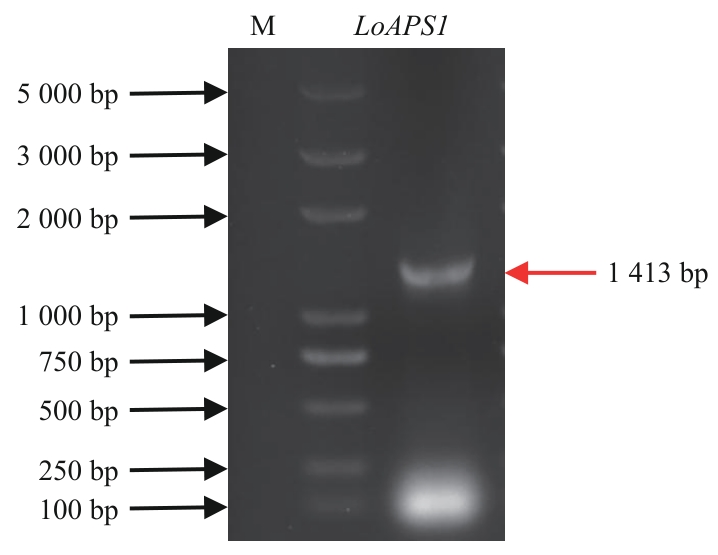
图1 LoAPS1 ORF序列PCR产物电泳检测结果M: DL5000 DNA marker
Fig. 1 Results of PCR product electrophoresis for the LoAPS1 ORF sequence
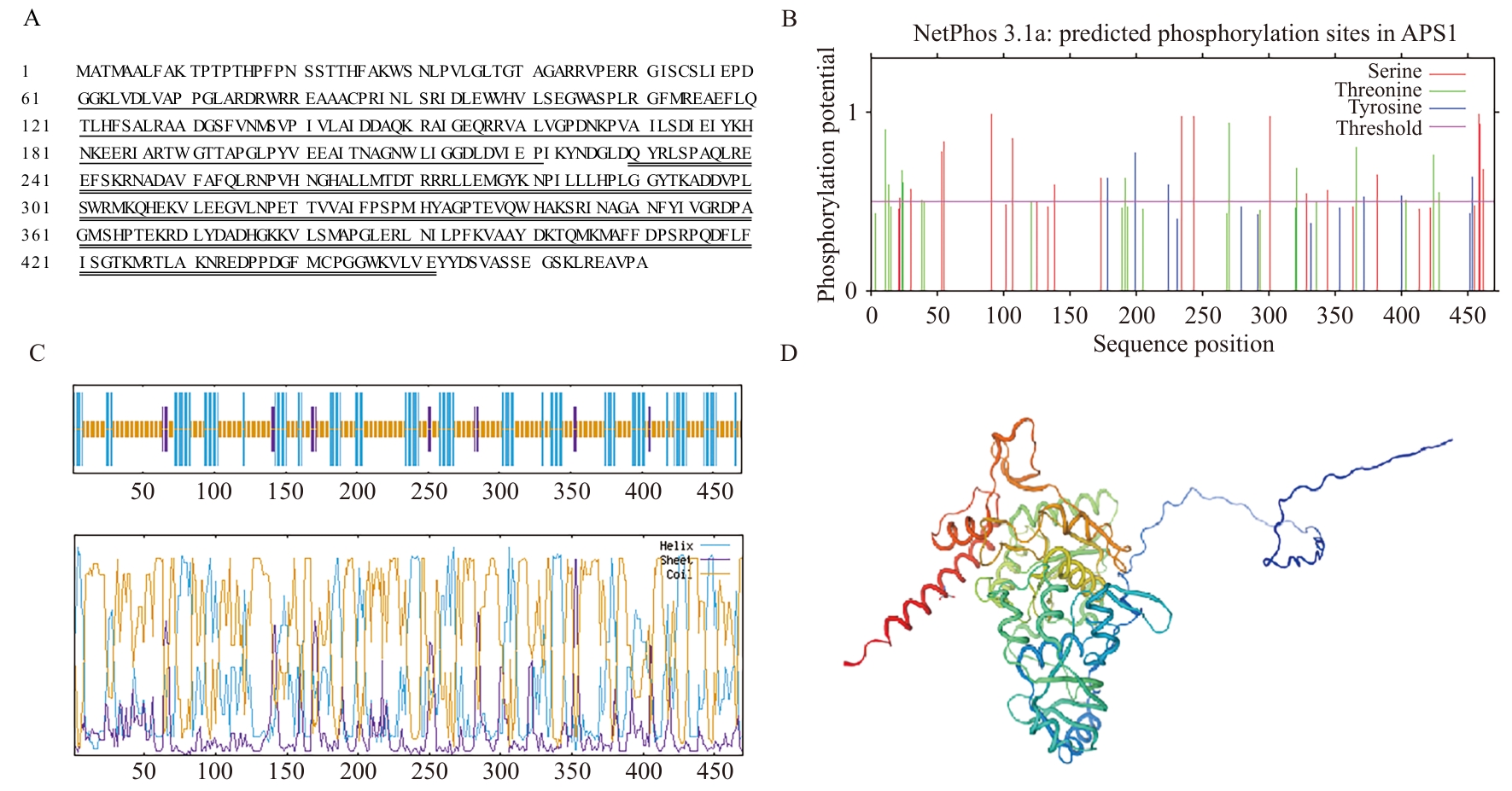
图2 LoAPS1蛋白质结构域氨基酸分布(A)、磷酸化位点预测(B)、蛋白质二级结构(C)与三级结构(D)模型图A中单横线表示第57‒221个氨基酸区域的PUA-like domain,双横线表示第229‒452个氨基酸区域的ATP-sulfurylase保守结构域
Fig. 2 Distribution of amino acids (A) in the LoAPS1 protein domains, prediction of phosphorylation sites (B), and models of secondary (C) and tertiary (D) protein structuresIn Fig. A, the single horizontal line indicates the PUA-like domain in the amino acid region from 57 to 221, while the double horizontal line indicates the ATP-sulfurylase conserved domain in the amino acid region from 229 to 452
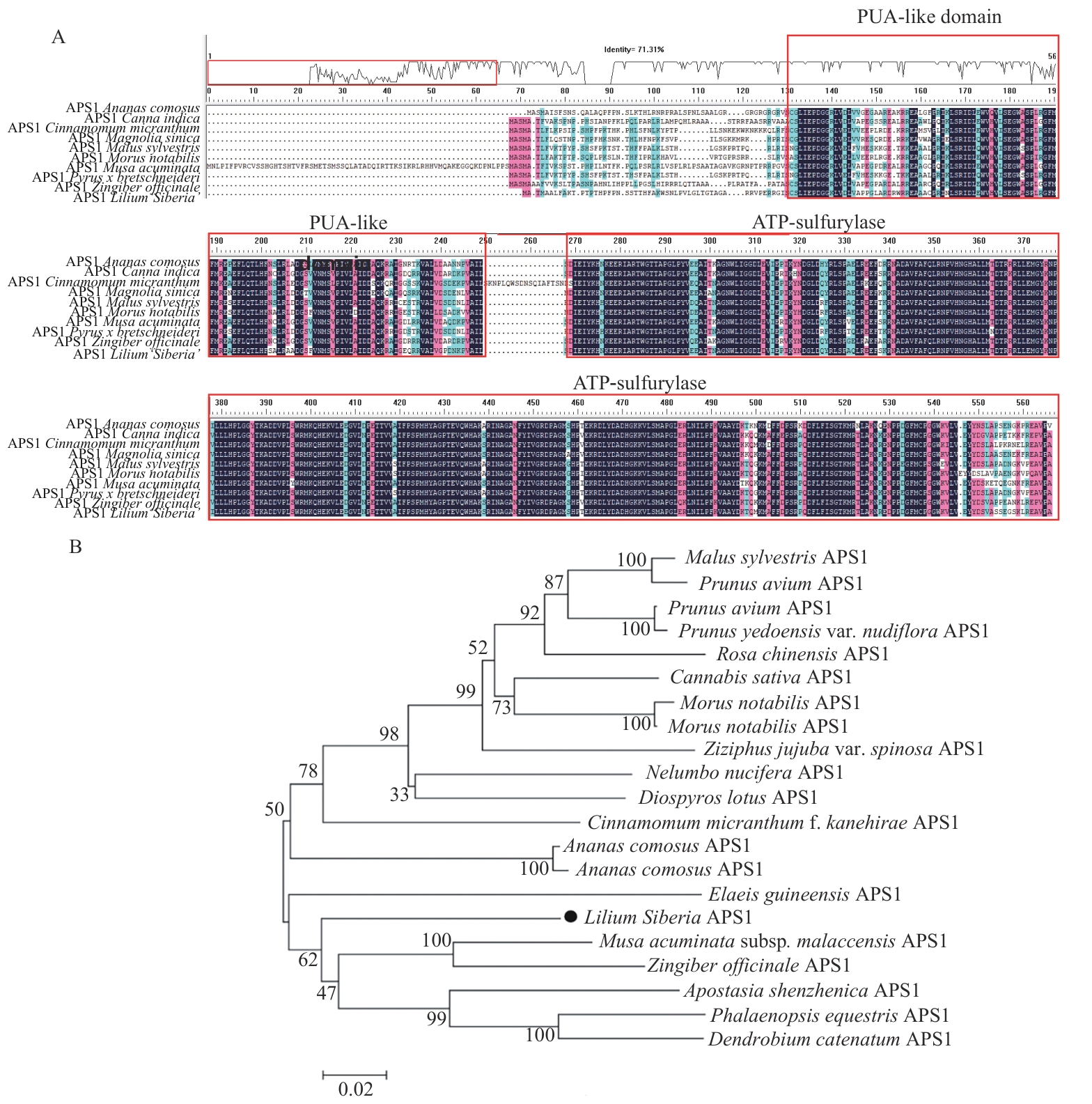
图3 LoAPS1与其他物种APS1氨基酸多序列比对(A)及系统进化树分析(B)图A中红框表示PUA-like domain和ATP-sulfurylase
Fig. 3 Multiple sequence alignment of LoAPS1 with APS1 from other species (A) and phylogenetic tree analysis (B)The red boxes in Fig. A indicate the PUA-like domain and ATP-sulfurylase
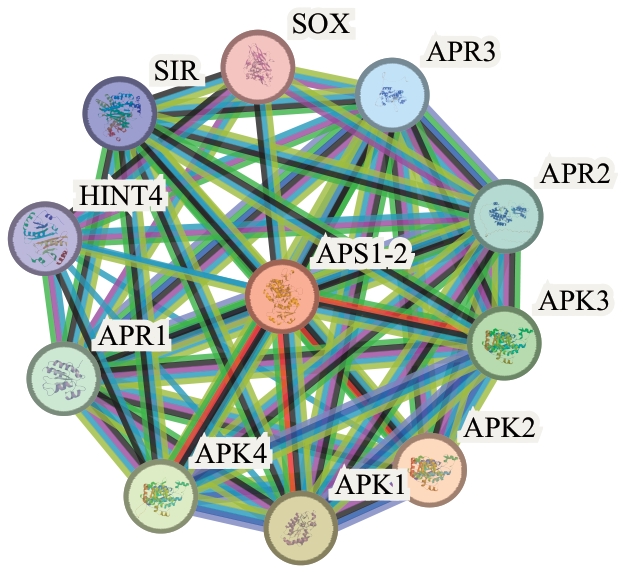
图4 LoAPS1与拟南芥数据库中的蛋白质互作分析
Fig. 4 Interaction analysis of LoAPS1 with proteins in the Arabidopsis database
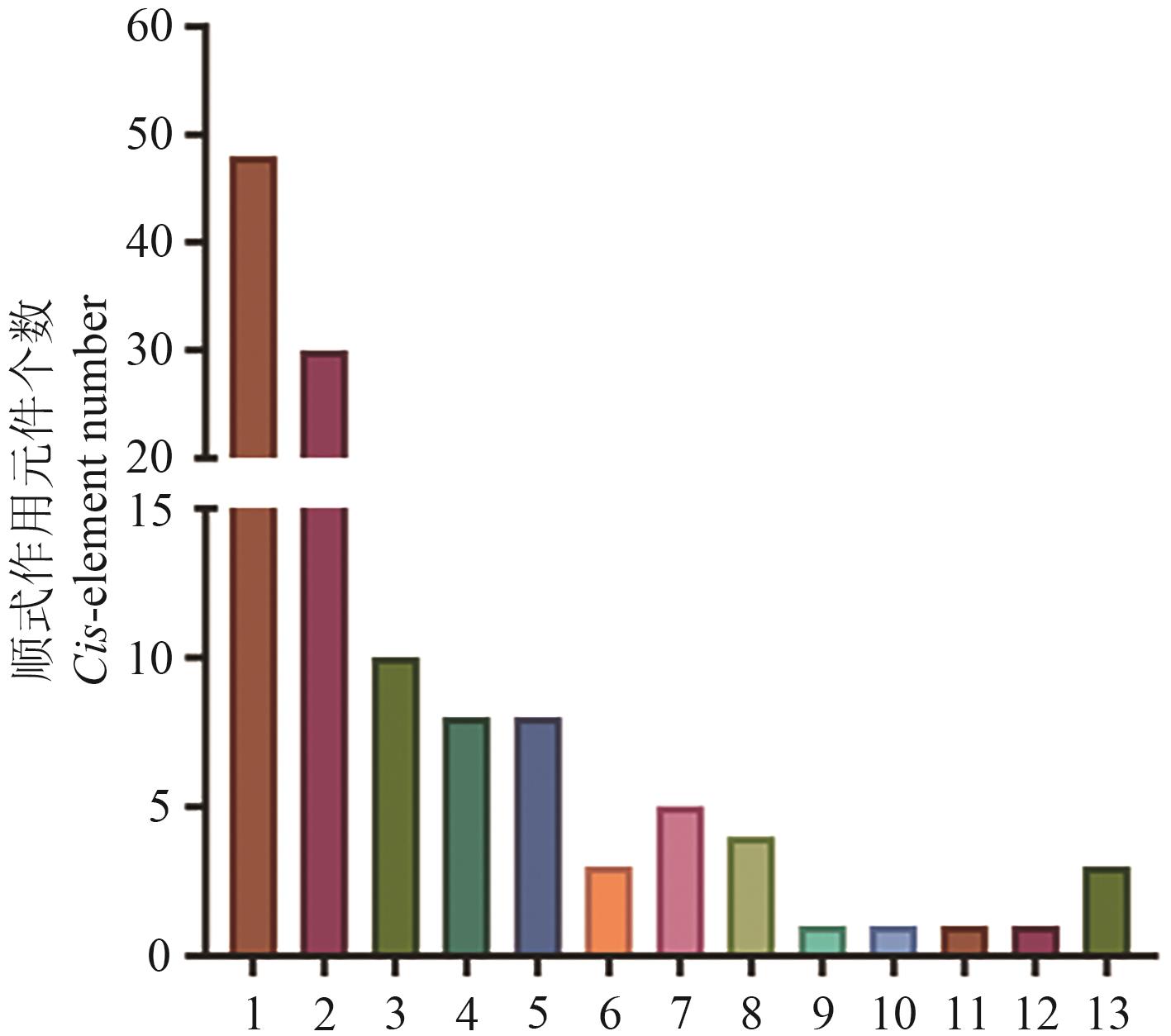
图5 百合APS1启动子顺式作用元件分析1: CAAT-box. 2: TATA-box. 3: Light responsiveness. 4: MYB. 5: MYC. 6: MYB-like sequence. 7: W-box. 8: MeJA responsiveness. 9: Gibberellin responsiveness. 10: Abscisic acid responsiveness. 11: MYB binding site involved in light responsiveness. 12: Myb-binding site. 13: The anaerobic induction responsiveness
Fig. 5 Analysis of cis-regulatory elements in the LiliumAPS1 promoter
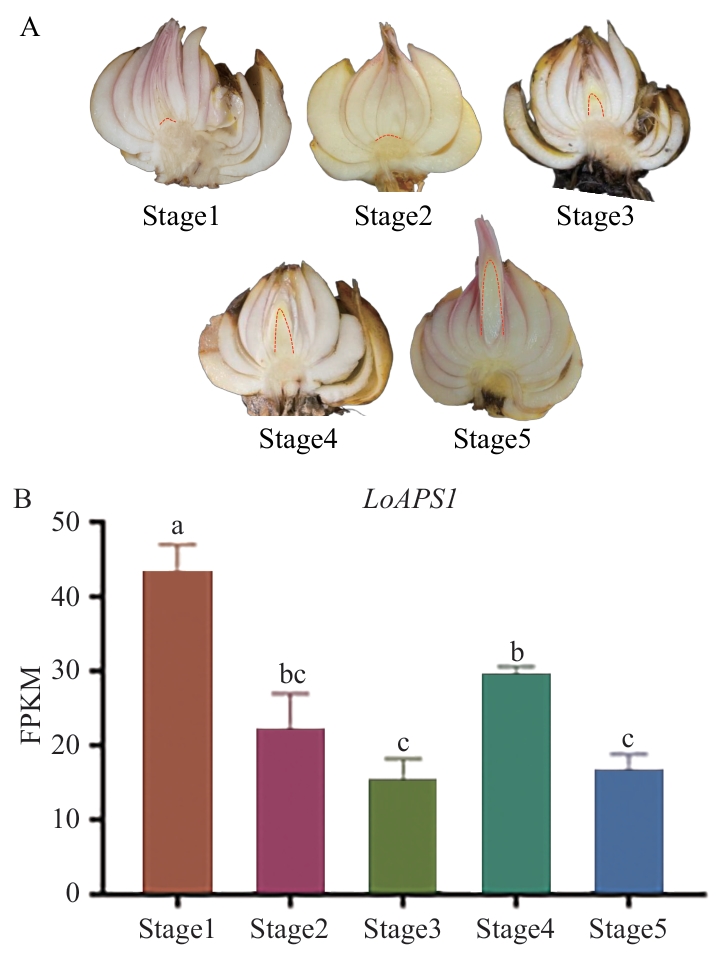
图6 LoAPS1在百合休眠解除不同阶段表达模式分析A:百合休眠解除过程不同阶段鳞茎纵向解剖形态图;B:APS1在百合休眠解除不同阶段转录组FPKM分析;Stage1:收球期;Stage2:休眠维持期;Stage3:顶芽萌动但未达到鳞茎的2/3;Stage4:休眠完全解除阶段;Stage5:顶芽快速生长阶段。小写字母表示在P<0.05水平上存在显著差异
Fig. 6 Analysis of the expression pattern of LoAPS1 during different stages of lily dormancy releaseA: Longitudinal anatomical morphologies of bulbs at different stages in the dormancy release process of lily. B: Transcriptome FPKM analysis of APS1 in different stages of dormancy release of lily. Stage1: Lily bulb collection period. Stage2: Dormancy maintenance period. Stage3: Tip bud break but not reach two-thirds of the bulb. Stage4: Dormancy complete release stage. Stage5: Rapid growth stage of the tip bud. Lowercase letters indicate significant differences at the P<0.05 level

图7 不同浓度核黄素处理促进百合鳞茎休眠解除过程转录组硫代谢显著富集及相关基因表达模式A:0.5 mmol/L riboflavin处理下促进百合鳞茎休眠解除过程硫代谢在KEGG代谢通路中显著富集情况;B:硫代谢相关差异基因FPKM表达模式分析
Fig. 7 Sulfur metabolism and expression patterns of related genes in the transcriptome of lily bulb during different concentrations of riboflavin treatment promoting dormancy releaseA: 0.5 mmol/L riboflavin treatment promoted significant enrichment of sulfur metabolism in KEGG metabolic pathway during dormancy release of lily bulbs. B: FPKM expression pattern analysis of sulfur metabolism-related differential genes

图8 LoAPS1蛋白质亚细胞定位情况
Fig. 8 Subcellular localization of LoAPS1 protein
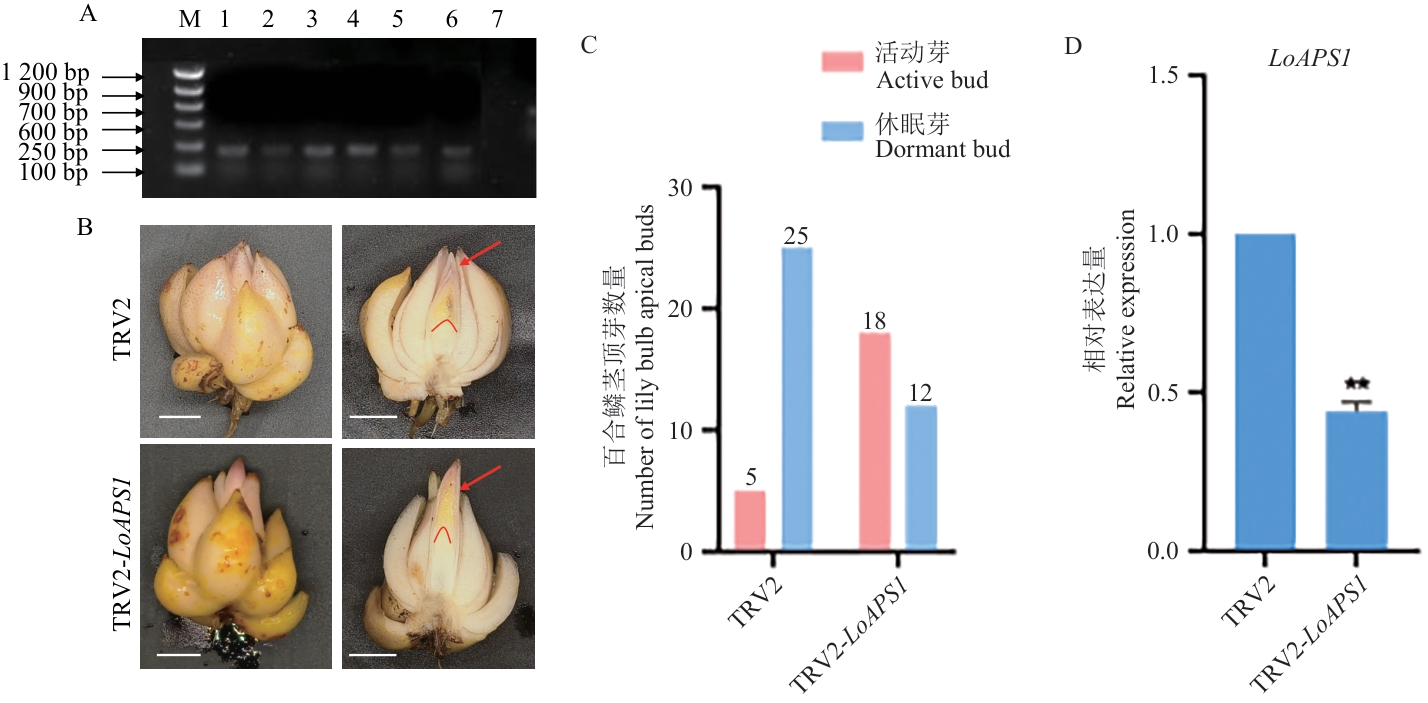
图9 LoAPS1沉默表达对百合鳞茎休眠解除的作用A:TRV2病毒检测(M:DL 1200 DNA maker;1‒3:鳞茎TRV2株系;4‒6:鳞茎TRV2-LoAPS1沉默株系;7:未处理鳞茎);B:TRV2与TRV2-LoAPS1影响百合鳞茎休眠解除的鳞茎表型图,比例尺1 cm,红色箭头为活动芽;C:TRV2-LoAPS1沉默后鳞茎活动芽萌发数量统计;D:LoAPS1在TRV2和TRV2-LoAPS1沉默株系中的相对表达量。**表示与TRV2相比,在P<0.01水平存在显著性差异
Fig. 9 Effects of LoAPS1 silencing on the lily bulb dormancy releaseA: TRV2 virus detection (M: DL 1200 DNA Maker; 1‒3: TRV2 line of bulbs; 4‒6: TRV2-LoAPS1 silenced line; 7: untreated bulb). B: Statistical analysis of the number of sprouts active bulbs after TRV2-LoAPS1 silencing. C: Phenotype diagram of TRV2 and TRV2-LoAPS1 affecting the dormancy release of lily bulbs, scale bar=1 cm, the red arrow indicates active buds. D: Relative expressions of LoAPS1 in the TRV2 and TRV2-LoAPS1 silenced lines. ** indicates significant difference at the P<0.01 level compared to TRV2
| [1] | 于险峰, 张仁军. 百合种球国产化实现新突破 [N]. 农民日报, 2022-12-20(7)[2025-04-16]. DOI:10.28603/n.cnki.nnmrb.2022.005237 . |
| Yu XF, Zhang R J. Lily ball localization achieved a new breakthrough [N] . Farmers Daily China Agricultural Network, 2022-12-20(7)[2025-04-16]. DOI: 10.28603/n.cnki.nnmrb.2022.005237 . | |
| [2] | Kopriva S, Malagoli M, Takahashi H. Sulfur nutrition: impacts on plant development, metabolism, and stress responses [J]. J Exp Bot, 2019, 70(16): 4069-4073. |
| [3] | Sun SK, Chen J, Zhao FJ. Regulatory mechanisms of sulfur metabolism affecting tolerance and accumulation of toxic trace metals and metalloids in plants [J]. J Exp Bot, 2023, 74(11): 3286-3299. |
| [4] | Takahashi H, Marsolais F, Cuypers A, et al. Sulfur metabolism: actions for plant resilience and environmental adaptation [J]. J Exp Bot, 2023, 74(11): 3271-3275. |
| [5] | Kopriva S, Rahimzadeh Karvansara P, Takahashi H. Adaptive modifications in plant sulfur metabolism over evolutionary time [J]. J Exp Bot, 2024, 75(16): 4697-4711. |
| [6] | Rouached H, Wirtz M, Alary R, et al. Differential regulation of the expression of two high-affinity sulfate transporters, SULTR1.1 and SULTR1.2, in Arabidopsis [J]. Plant Physiol, 2008, 147(2): 897-911. |
| [7] | Chen Z, Zhao PX, Miao ZQ, et al. SULTR3s function in chloroplast sulfate uptake and affect ABA biosynthesis and the stress response [J]. Plant Physiol, 2019, 180(1): 593-604. |
| [8] | Takahashi H, Kopriva S, Giordano M, et al. Sulfur assimilation in photosynthetic organisms: molecular functions and regulations of transporters and assimilatory enzymes [J]. Annu Rev Plant Biol, 2011, 62: 157-184. |
| [9] | Saito K. Sulfur assimilatory metabolism. The long and smelling road [J]. Plant Physiol, 2004, 136(1): 2443-2450. |
| [10] | Logan HM, Cathala N, Grignon C, et al. Cloning of a cDNA encoded by a member of the Arabidopsis thaliana ATP sulfurylase multigene family expression studies in yeast and in relation to plant sulfur nutrition [J]. J Biol Chem, 1996, 271(21): 12227-12233. |
| [11] | Hatzfeld Y, Cathala N, Grignon C, et al. Effect of ATP sulfurylase overexpression in bright yellow 2 tobacco cells. Regulation of atp sulfurylase and SO4 2- transport activities [J]. Plant Physiol, 1998, 116(4): 1307-1313. |
| [12] | Klonus D, Höfgen R, Willmitzer L, et al. Isolation and characterization of two cDNA clones encoding ATP-sulfurylases from potato by complementation of a yeast mutant [J]. Plant J, 1994, 6(1): 105-112. |
| [13] | 张毛毛. 水稻OsmtATPS1基因的克隆及功能初步分析 [D]. 杨凌: 西北农林科技大学, 2015. |
| Zhang MM. Cloning and functional preliminary study of OsmtATPS1 in rice [D]. Yangling: Northwest A & F University, 2015. | |
| [14] | 王帮庆. 油菜ATPS基因克隆、原核表达及其活性鉴定 [D]. 杨凌: 西北农林科技大学, 2009. |
| Wang BQ. Cloning, prokaryoyic expression and activity identification of Brassica napus ATPS [D]. Yangling: Northwest A & F University, 2009. | |
| [15] | 朱磊, 杨路明, 孙守如, 等. 辣椒ATP硫酸化酶基因(CaATPS1)的克隆与逆境表达 [J]. 中国生物化学与分子生物学报, 2016, 32(9): 1040-1047. |
| Zhu L, Yang LM, Sun SR, et al. Cloning of a pepper CaATPS1 gene and its expression in response to stresses [J]. Chin J Biochem Mol Biol, 2016, 32(9): 1040-1047. | |
| [16] | Batool S, Uslu VV, Rajab H, et al. Sulfate is incorporated into cysteine to trigger ABA production and stomatal closure [J]. Plant Cell, 2018, 30(12): 2973-2987. |
| [17] | Shen J, Zhang J, Zhou MJ, et al. Persulfidation-based modification of cysteine desulfhydrase and the NADPH oxidase RBOHD controls guard cell abscisic acid signaling [J]. Plant Cell, 2020, 32(4): 1000-1017. |
| [18] | Elferjani R, Pahari S, Soolanayakanahally R, et al. Drought induced metabolic shifts and water loss mechanisms in canola: role of cysteine, phenylalanine and aspartic acid [J]. Front Plant Sci, 2024, 15: 1385414. |
| [19] | Gong L, Liu HQ, Hua Y, et al. ABA-induced active stomatal closure in bulb scales of Lanzhou lily [J]. Plant Signal Behav, 2025, 20(1): e2446865. |
| [20] | Wu J, Jin YJ, Liu C, et al. GhNAC83 inhibits corm dormancy release by regulating ABA signaling and cytokinin biosynthesis in Gladiolus hybridus [J]. J Exp Bot, 2019, 70(4): 1221-1237. |
| [21] | Przybyla-Toscano J, Christ L, Keech O, et al. Iron-sulfur proteins in plant mitochondria: roles and maturation [J]. J Exp Bot, 2021, 72(6): 2014-2044. |
| [22] | Jez JM. Structural biology of plant sulfur metabolism: from sulfate to glutathione [J]. J Exp Bot, 2019, 70(16): 4089-4103. |
| [23] | Tang WL, Zhao YJ, Zeng JJ, et al. Integration of small RNA and transcriptome sequencing reveal the roles of miR395 and ATP sulfurylase in developing seeds of Chinese kale [J]. Front Plant Sci, 2022, 12: 778848. |
| [24] | Xu XP, Yang CL, Zheng YP, et al. Transcriptome-wide identification of miRNAs and their targets during riboflavin-promoted dormancy release in Lilium 'Siberia' [J]. Horticulturae, 2025, 11(1): 17. |
| [25] | Xu SJ, Chen RZ, Zhang XQ, et al. The evolutionary tale of lilies: giant genomes derived from transposon insertions and polyploidization [J]. Innov, 2024, 5(6): 100726. |
| [26] | 孙红梅, 李天来, 李云飞. 低温解除休眠过程中兰州百合鳞茎酚类物质含量及相关酶活性变化 [J]. 中国农业科学, 2004, 37(11): 1777-1782. |
| Sun HM, Li TL, Li YF. Changes of phenols content and activity of enzymes related to phenols in lily bulbs stored at different cold temperatures for breaking dormancy [J]. Sci Agric Sin, 2004, 37(11): 1777-1782. | |
| [27] | 梁云, 袁素霞, 冯慧颖, 等. 百合肌动蛋白基因lilyActin的克隆与表达分析 [J]. 园艺学报, 2013, 40(7): 1318-1326. |
| Liang Y, Yuan SX, Feng HY, et al. Cloning and expression analysis of actin gene (lilyActin) from lily [J]. Acta Hortic Sin, 2013, 40(7): 1318-1326. | |
| [28] | Hesse H, Nikiforova V, Gakière B, et al. Molecular analysis and control of cysteine biosynthesis: integration of nitrogen and sulphur metabolism [J]. J Exp Bot, 2004, 55(401): 1283-1292. |
| [29] | Zhang HM, Lang ZB, Zhu JK. Dynamics and function of DNA methylation in plants [J]. Nat Rev Mol Cell Biol, 2018, 19(8): 489-506. |
| [30] | Lu L, Chen XS, Sanders D, et al. High-resolution mapping of H4K16 and H3K23 acetylation reveals conserved and unique distribution patterns in Arabidopsis and rice [J]. Epigenetics, 2015, 10(11): 1044-1053. |
| [31] | Luo CY, Sidote DJ, Zhang Y, et al. Integrative analysis of chromatin states in Arabidopsis identified potential regulatory mechanisms for natural antisense transcript production [J]. Plant J, 2013, 73(1): 77-90. |
| [32] | Yang ZY, Hui SG, Lv Y, et al. miR395-regulated sulfate metabolism exploits pathogen sensitivity to sulfate to boost immunity in rice [J]. Mol Plant, 2022, 15(4): 671-688. |
| [33] | Rajjou L, Duval M, Gallardo K, et al. Seed germination and vigor [J]. Annu Rev Plant Biol, 2012, 63: 507-533. |
| [34] | Akbudak MA, Filiz E. Genome-wide analyses of ATP sulfurylase (ATPS) genes in higher plants and expression profiles in sorghum (Sorghum bicolor) under cadmium and salinity stresses [J]. Genomics, 2019, 111(4): 579-589. |
| [35] | Kim WS, Sun-Hyung J, Oehrle NW, et al. Overexpression of ATP sulfurylase improves the sulfur amino acid content, enhances the accumulation of Bowman-Birk protease inhibitor and suppresses the accumulation of the β-subunit of β-conglycinin in soybean seeds [J]. Sci Rep, 2020, 10(1): 14989. |
| [36] | Yatusevich R, Mugford SG, Matthewman C, et al. Genes of primary sulfate assimilation are part of the glucosinolate biosynthetic network in Arabidopsis thaliana [J]. Plant J, 2010, 62(1): 1-11. |
| [37] | Matthewman C. Arabidopsis ATP sulfurylase: roles and regulation of individual isoforms [D]. Norwich: University of East Anglia, 2010. |
| [1] | 董向向, 缪百灵, 许贺娟, 陈娟娟, 李亮杰, 龚守富, 朱庆松. 森林草莓FveBBX20基因的生物信息学分析及开花调控功能[J]. 生物技术通报, 2025, 41(9): 115-123. |
| [2] | 李珊, 马登辉, 马红义, 姚文孔, 尹晓. 葡萄SKP1基因家族鉴定与表达分析[J]. 生物技术通报, 2025, 41(9): 147-158. |
| [3] | 张永艳, 郭思健, 李晶, 郝思怡, 李瑞得, 刘嘉鹏, 程春振. 蓝莓花青素相关VcGSTF19基因的克隆及功能研究[J]. 生物技术通报, 2025, 41(9): 139-146. |
| [4] | 腊贵晓, 赵玉龙, 代丹丹, 余永亮, 郭红霞, 史贵霞, 贾慧, 杨铁钢. 红花质膜H+-ATPase基因家族成员鉴定及响应低氮低磷胁迫的表达分析[J]. 生物技术通报, 2025, 41(8): 220-233. |
| [5] | 李开杰, 吴瑶, 李丹丹. 红花CtbHLH128基因克隆及调控干旱胁迫应答功能研究[J]. 生物技术通报, 2025, 41(8): 234-241. |
| [6] | 赖诗雨, 梁巧兰, 魏列新, 牛二波, 陈应娥, 周鑫, 杨思正, 王博. NbJAZ3在苜蓿花叶病毒侵染本氏烟过程中的作用[J]. 生物技术通报, 2025, 41(8): 186-196. |
| [7] | 康琴, 汪霞, 谌明洋, 徐静天, 陈诗兰, 廖平杨, 许文志, 吴卫, 徐东北. 薄荷UV-B受体基因McUVR8的克隆与表达分析[J]. 生物技术通报, 2025, 41(8): 255-266. |
| [8] | 魏雨佳, 李岩, 康语涵, 弓晓楠, 杜敏, 涂岚, 石鹏, 于子涵, 孙彦, 张昆. 白颖苔草CrMYB4基因的克隆和表达分析[J]. 生物技术通报, 2025, 41(7): 248-260. |
| [9] | 张津浩, 邓辉, 张清壮, 陶禹, 周池, 李鑫. 贝莱斯芽胞杆菌XY40-1对百合球茎生长、品质及镉含量的调控作用[J]. 生物技术通报, 2025, 41(7): 281-291. |
| [10] | 李新妮, 李俊怡, 马雪华, 何卫, 李佳丽, 于佳, 曹晓宁, 乔治军, 刘思辰. 谷子果胶甲酯酶抑制子PMEI基因家族鉴定及其对非生物胁迫的响应分析[J]. 生物技术通报, 2025, 41(7): 150-163. |
| [11] | 程珊, 王会伟, 陈晨, 朱雅婧, 李春鑫, 别海, 王树峰, 陈献功, 张向歌. 油莎豆MYB转录因子基因CeMYB154克隆及耐盐功能分析[J]. 生物技术通报, 2025, 41(6): 218-228. |
| [12] | 许慧珍, SHANTWANA Ghimire, RAJU Kharel, 岳云, 司怀军, 唐勋. 马铃薯SUMO E3连接酶基因家族分析及StSIZ1基因的克隆与表达模式分析[J]. 生物技术通报, 2025, 41(6): 119-129. |
| [13] | 裴景琪, 赵梦然, 黄晨阳, 邬向丽. 一个影响糙皮侧耳生长发育的功能基因的发现与验证[J]. 生物技术通报, 2025, 41(6): 327-334. |
| [14] | 刘鑫, 王嘉雯, 李进伟, 牟策, 杨盼盼, 明军, 徐雷锋. 兰州百合三个LdBBXs基因的克隆与表达分析[J]. 生物技术通报, 2025, 41(5): 186-196. |
| [15] | 李志强, 罗正乾, 徐琳黎, 周国慧, 屈丝雨, 刘恩良, 顼东婷. 基于T2T基因组鉴定大豆R2R3-MYB基因家族及干旱和盐胁迫下的表达分析[J]. 生物技术通报, 2025, 41(5): 141-152. |
| 阅读次数 | ||||||
|
全文 |
|
|||||
|
摘要 |
|
|||||
