






生物技术通报 ›› 2026, Vol. 42 ›› Issue (10): 142-152.doi: 10.13560/j.cnki.biotech.bull.1985.2025-0661
• 研究报告 • 上一篇
高亮1, 崔鑫源1, 刘名原1,2, 韩蕾1( )
收稿日期:2025-06-23
出版日期:2026-10-26
发布日期:2026-10-15
通讯作者:
韩蕾hanlei@ldu.edu.cn基金资助:
GAO Liang1, CUI Xin-yuan1, LIU Ming-yuan1,2, HAN Lei1()
Received:2025-06-23
Published:2026-10-26
Online:2026-10-15
摘要:
目的 探究葡萄(Vitis vinifera)苹果酸脱氢酶(malate dehydrogenase, MDH)的基因结构与表达,揭示VvMDH基因的生物学功能,为进一步培育优质葡萄品种提供参考。 方法 利用生物信息学方法对葡萄11个MDH基因进行鉴定,并分析其蛋白理化性质、基因同源性、染色体位置、保守基序(motif)、基因结构和启动子区域等,实时荧光定量PCR(RT-qPCR)验证葡萄MDH基因家族成员在干旱和盐碱胁迫下的表达模式。利用花序浸染法获得异源过表达VvMDH10的拟南芥植株,进行干旱表型分析,探究VvMDH10对植株抗旱性的影响。 结果 共鉴定到11个VvMDH基因家族成员不均匀分布在9条染色体上。理化性质分析表明,VvMDH多为碱性蛋白,亚细胞定位预测显示VvMDH分布于细胞质基质、叶绿体和线粒体。系统发育分析将VvMDH成员分为5个亚家族,与拟南芥同源蛋白聚类模式高度保守。同一亚族成员具有相似的基因结构及motif分布。启动子顺式作用元件分析结果显示,VvMDH基因富含光响应、激素应答及干旱等胁迫响应元件,表明VvMDH基因可能受到多种植物激素或胁迫的调控。转录组数据分析显示,VvMDH在不同组织间特异性表达。RT-qPCR结果表明,干旱及盐碱处理能够诱导多个VvMDH基因的表达,尤其在干旱胁迫下,VvMDH10的表达量显著上调。异源过表达VvMDH10的拟南芥离体叶片失水率显著低于野生型,干旱处理后,过表达植株生物量和抗氧化相关酶活性显著高于野生型,体内MDA含量显著低于野生型。 结论 VvMDH10基因能够正向调控植株的抗旱性,可作为葡萄抗旱分子育种的基因资源 。
高亮, 崔鑫源, 刘名原, 韩蕾. 葡萄苹果酸脱氢酶MDH基因家族鉴定及VvMDH10基因功能分析[J]. 生物技术通报, 2026, 42(10): 142-152.
GAO Liang, CUI Xin-yuan, LIU Ming-yuan, HAN Lei. Identification of Malate Dehydrogenase MDH Gene Family and Functional Characterization of VvMDH10 in Grape[J]. Biotechnology Bulletin, 2026, 42(10): 142-152.
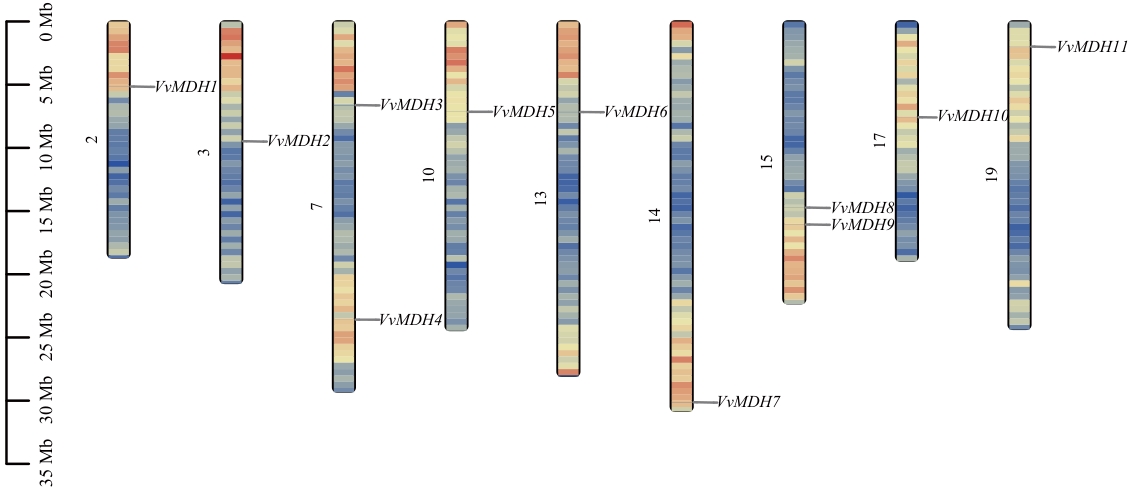
图1 VvMDH基因染色体定位
Fig. 1 Chromosome localization of VvMDH genes in grape
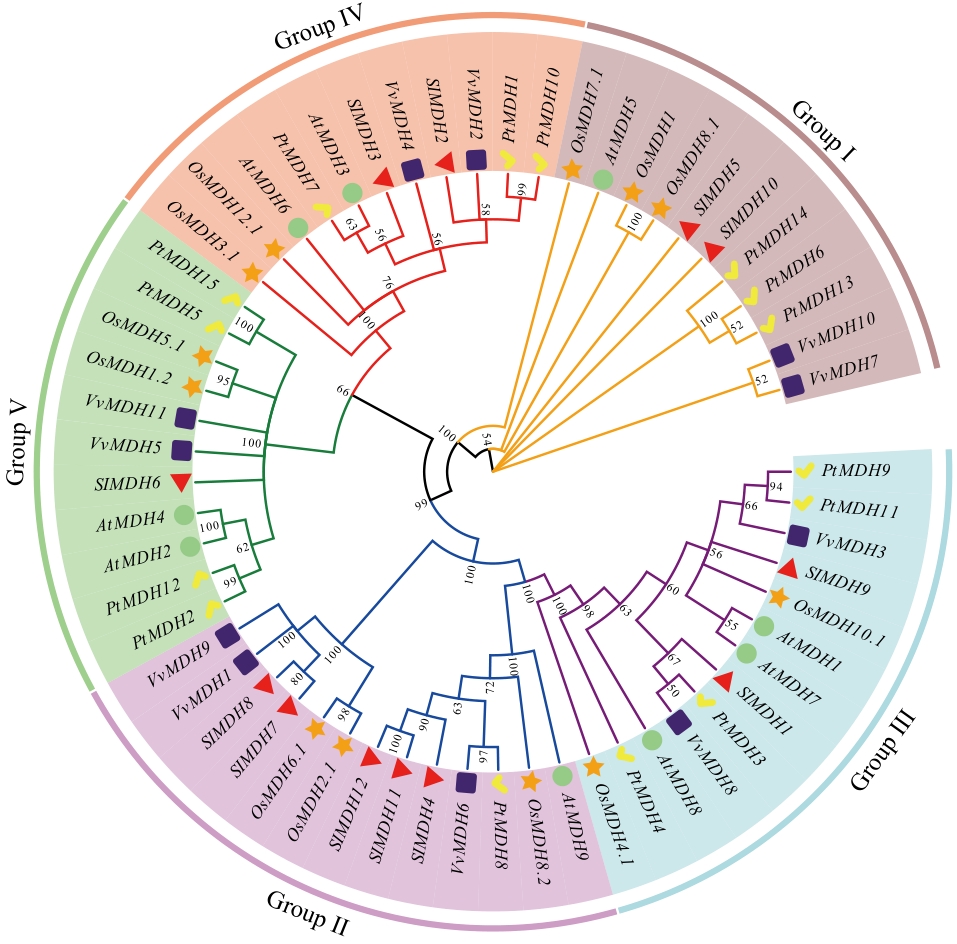
图2 葡萄(Vv)、拟南芥(At)、水稻(Os)、番茄(Sl)和杨树(Pt)MDH蛋白系统进化树
Fig. 2 Phylogenetic tree of MDH proteins in Vitis vinifera (Vv), Arabidopsis thaliana (At), Oryza sativa (Os), Solanum lycopersicum (Sl) and Populus trichocarpa (Pt)
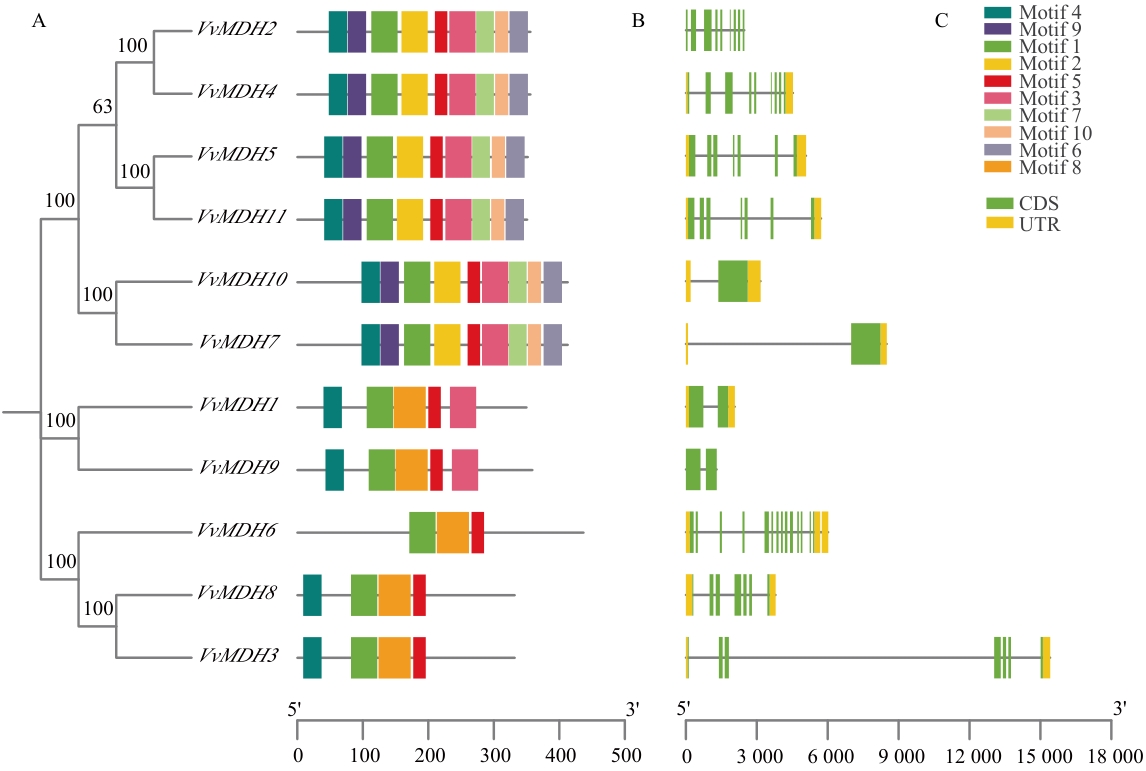
图3 VvMDH基因系统进化树(A)、基因结构(B)和蛋白保守基序(C)
Fig. 3 Phylogenetic tree (A), gene structure (B), and protein conserved motif (C) of VvMDH gene family
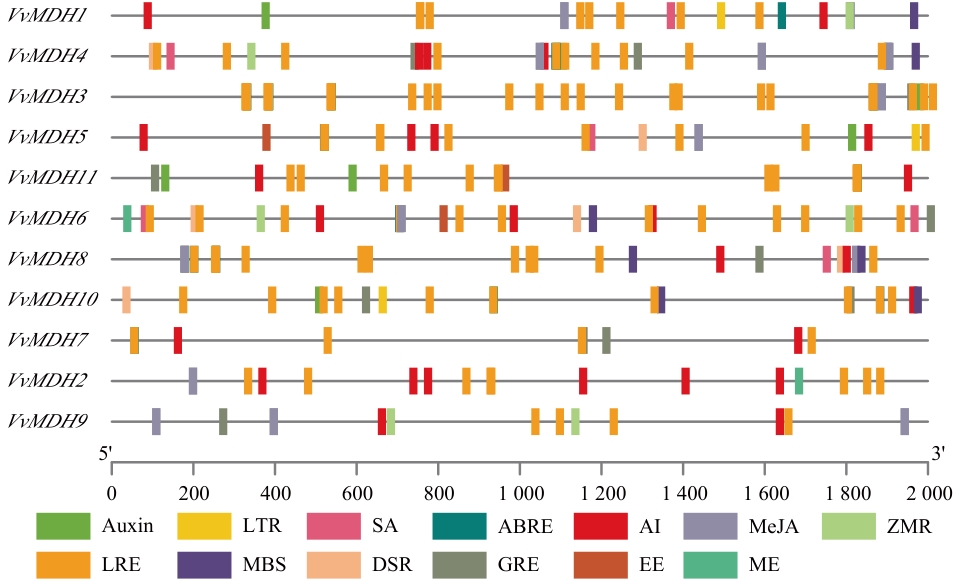
图4 VvMDH启动子区顺式作用元件分析
Fig. 4 Analysis of cis-acting elements in the promoter region of VvMDH
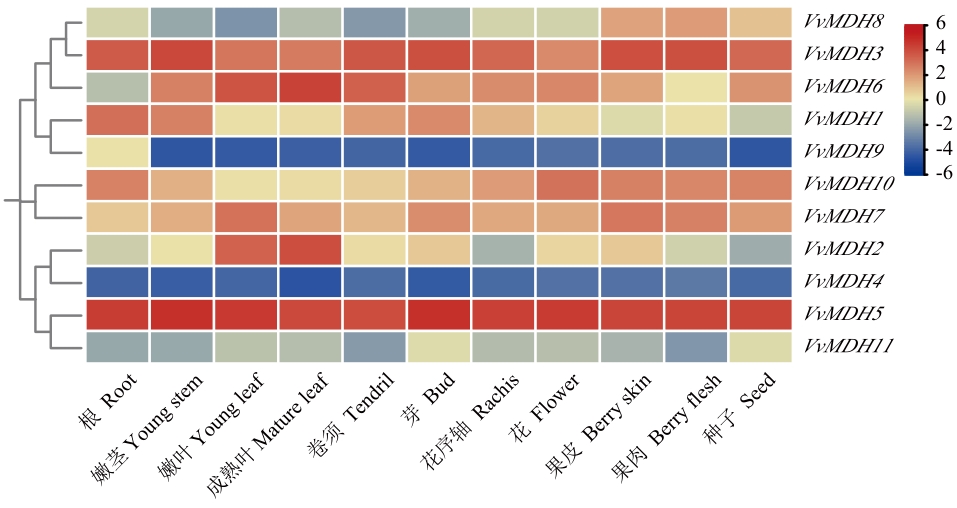
图5 VvMDH基因在不同组织中的表达分析
Fig. 5 Expression analysis of VvMDH in different tissues of grape
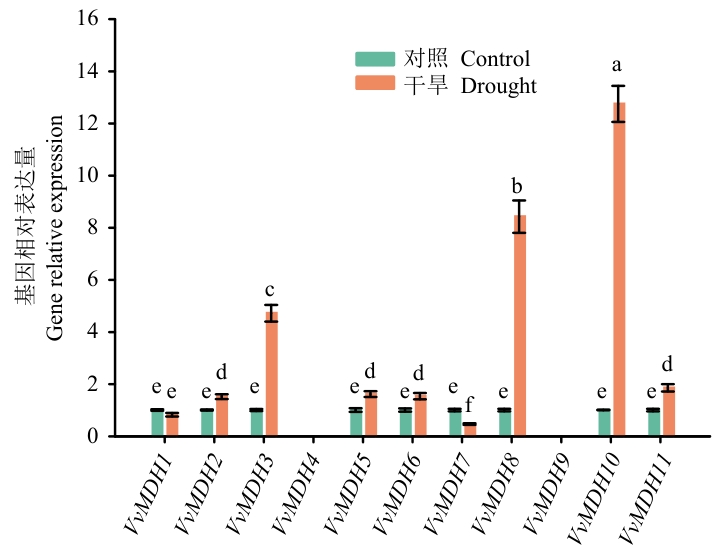
图6 VvMDH基因在干旱处理下的相对表达量不同小写字母表示差异显著(P<0.05)。下同
Fig. 6 Relative expression of VvMDH genes under drought treatmentsDifferent lower letters indicate significant differences (P<0.05). The same below
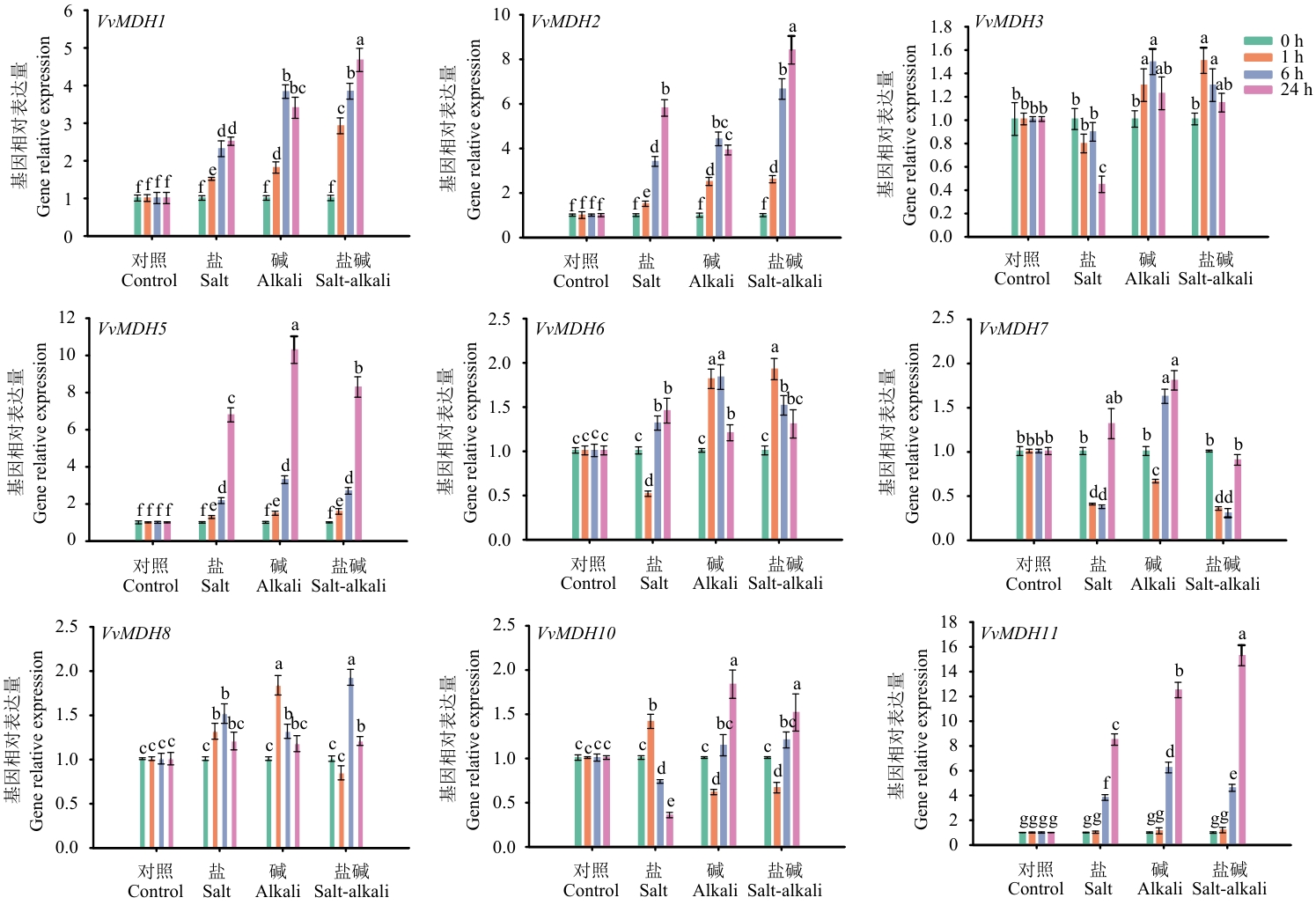
图7 VvMDH基因在盐碱处理下的相对表达量
Fig. 7 Relative expression of VvMDH genes under salt-alkali treatments
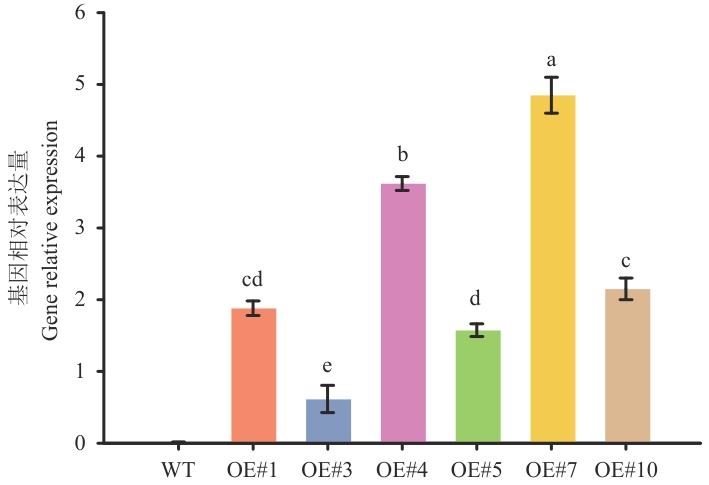
图8 VvMDH10在转基因拟南芥中的相对表达量
Fig. 8 Relative expression of VvMDH10 in transgenic A. thaliana
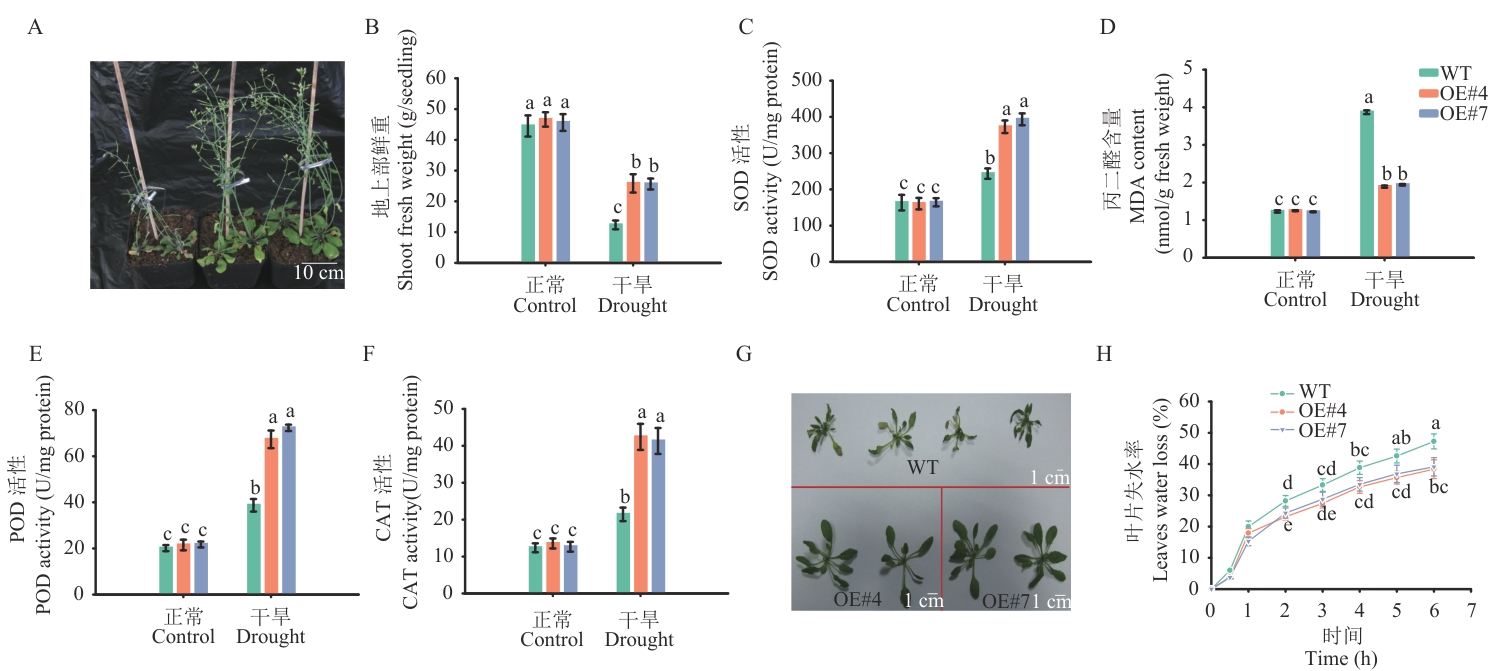
图9 干旱胁迫下VvMDH10异源过表达转基因拟南芥的表型和生理指标比较将拟南芥野生型及过表达株系置于含有泥炭土的营养钵中培养4周,先将整个营养钵充分灌水,然后停止浇水,观测植物干旱处理前后的表型,测定丙二醛含量和多种酶活性。后将拟南芥野生型及过表达株系置于含有泥炭土的营养钵中培养4周,分别剪取其整个莲座叶,置于培养皿中,放入光照培养箱,每隔一段时间称取其鲜重。A:植株表型;B:地上部鲜重;C:SOD活性;D:丙二醛含量;E:POD活性;F:CAT活性;G:叶片失水表型;H:叶片失水率统计;图B‒F、H中数据为平均值±标准差
Fig. 9 Comparisons of phenotype and physiological indices in VvMDH10-overexpressing Arabidopsis under drought stressArabidopsis thaliana wild-type and overexpression lines were grown in pots containing peat soil for 4 weeks. The entire pots were fully watered first, then watering was stopped. The phenotypes of the plants before and after drought treatment were observed, and MDA content and activities of various enzymes were determined. Then the Arabidopsis thaliana wild-type and overexpression lines were grown in pots containing peat soil for 4 weeks, and their entire rosette leaves were cut separately, placed in petri dishes, and put into an illumination incubator. The fresh weight was measured at regular intervals. A: Plant phenotype. B: Shoot fresh weight. C: SOD activity. D: MDA content. E: POD activity. F: CAT activity. G: Leaf water loss phenotype. H: Statistical analysis of leaf water loss rate. Data in Figures B-F and H are presented as mean ± standard deviation
| [1] | Jiao SZ, Zeng FW, Huang YP, et al. Physiological, biochemical and molecular responses associated with drought tolerance in grafted grapevine [J]. BMC Plant Biol, 2023, 23: 110. |
| [2] | Rienth M, Vigneron N, Darriet P, et al. Grape berry secondary metabolites and their modulation by abiotic factors in a climate change scenario-a review [J]. Front Plant Sci, 2021, 12: 643258. |
| [3] | Fernie AR, Malate Martinoia E.. Jack of all trades or master of a few [J]. Phytochemistry, 2009, 70(7): 828-832. |
| [4] | Cosse M, Rehders T, Eirich J, et al. Cysteine oxidation as a regulatory mechanism of Arabidopsis plastidial NAD-dependent malate dehydrogenase [J]. Physiol Plant, 2024, 176(3): e14340. |
| [5] | Baird LM, Berndsen CE, Monroe JD. Malate dehydrogenase in plants: evolution, structure, and a myriad of functions [J]. Essays Biochem, 2024, 68(2): 221-233. |
| [6] | Martinez-Vaz BM, Howard AL, Jamburuthugoda VK, et al. Insights into the regulation of malate dehydrogenase: inhibitors, activators, and allosteric modulation by small molecules [J]. Essays Biochem, 2024, 68(2): 173-181. |
| [7] | Hebbelmann I, Selinski J, Wehmeyer C, et al. Multiple strategies to prevent oxidative stress in Arabidopsis plants lacking the malate valve enzyme NADP-malate dehydrogenase [J]. J Exp Bot, 2012, 63(3): 1445-1459. |
| [8] | Liu J, Wang XC, Guan ZY, et al. The LIKE SEX FOUR 1-malate dehydrogenase complex functions as a scaffold to recruit β-amylase to promote starch degradation [J]. Plant Cell, 2023, 36(1): 194-212. |
| [9] | Yokochi Y, Yoshida K, Hahn F, et al. Redox regulation of NADP-malate dehydrogenase is vital for land plants under fluctuating light environment [J]. Proc Natl Acad Sci U S A, 2021, 118(6): e2016903118. |
| [10] | Talla SK, Sunil B, Rao DE, et al. Redox basis of photosynthesis inhibition at supra-optimal bicarbonate in mesophyll protoplasts of Arabidopsis thaliana [J]. J Plant Physiol, 2023, 287: 154047. |
| [11] | Balparda M, Elsässer M, Badia MB, et al. Acetylation of conserved lysines fine-tunes mitochondrial malate dehydrogenase activity in land plants [J]. Plant J, 2022, 109(1): 92-111. |
| [12] | Selinski J, König N, Wellmeyer B, et al. The plastid-localized NAD-dependent malate dehydrogenase is crucial for energy homeostasis in developing Arabidopsis thaliana seeds [J]. Mol Plant, 2014, 7(1): 170-186. |
| [13] | Beeler S, Liu HC, Stadler M, et al. Plastidial NAD-dependent malate dehydrogenase is critical for embryo development and heterotrophic metabolism in Arabidopsis [J]. Plant Physiol, 2014, 164(3): 1175-1190. |
| [14] | Imran M, Munir MZ, Ialhi S, et al. Identification and characterization of malate dehydrogenases in tomato (Solanum lycopersicum L.) [J]. Int J Mol Sci, 2022, 23(17): 10028. |
| [15] | Kandoi D, Mohanty S, Tripathy BC. Overexpression of plastidic maize NADP-malate dehydrogenase (ZmNADP-MDH) in Arabidopsis thaliana confers tolerance to salt stress [J]. Protoplasma, 2018, 255(2): 547-563. |
| [16] | Ding Y, Ma QH. Characterization of a cytosolic malate dehydrogenase cDNA which encodes an isozyme toward oxaloacetate reduction in wheat [J]. Biochimie, 2004, 86(8): 509-518. |
| [17] | Zhang YH, Wang YL, Sun XM, et al. Genome-wide identification of MDH family genes and their association with salt tolerance in rice [J]. Plants, 2022, 11(11): 1498. |
| [18] | Li ZQ, Shi L, Lin XJ, et al. Genome-wide identification and expression analysis of malate dehydrogenase gene family in sweet potato and its two diploid relatives [J]. Int J Mol Sci, 2023, 24(23): 16549. |
| [19] | Liu Y, Zhao M, Shi JN, et al. Genome-wide identification of AhMDHs and analysis of gene expression under manganese toxicity stress in Arachis hypogaea [J]. Genes, 2023, 14(12): 2109. |
| [20] | Imran M, Tang K, Liu JY. Comparative genome-wide analysis of the malate dehydrogenase gene families in cotton [J]. PLoS One, 2016, 11(11): e0166341. |
| [21] | Imran M, Zhang B, Tang K, et al. Molecular characterization of a cytosolic malate dehydrogenase gene (GhcMDH1) from cotton [J]. Chem Res Chin Univ, 2017, 33(1): 87-93. |
| [22] | Chen XH, Zhang J, Zhang C, et al. Genome-wide investigation of malate dehydrogenase gene family in poplar (Populus trichocarpa) and their expression analysis under salt stress [J]. Acta Physiol Plant, 2021, 43(2): 28. |
| [23] | Lin YW, Chen WT, Yang Q, et al. Genome-wide characterization and gene expression analyses of malate dehydrogenase (MDH) genes in low-phosphorus stress tolerance of Chinese fir (Cunninghamia lanceolata) [J]. Int J Mol Sci, 2023, 24(5): 4414. |
| [24] | Yao YX, Dong QL, Zhai H, et al. The functions of an apple cytosolic malate dehydrogenase gene in growth and tolerance to cold and salt stresses [J]. Plant Physiol Biochem, 2011, 49(3): 257-264. |
| [25] | Wang QJ, Sun H, Dong QL, et al. The enhancement of tolerance to salt and cold stresses by modifying the redox state and salicylic acid content via the cytosolic malate dehydrogenase gene in transgenic apple plants [J]. Plant Biotechnol J, 2016, 14(10): 1986-1997. |
| [26] | Ma BQ, Yuan YY, Gao M, et al. Genome-wide identification, classification, molecular evolution and expression analysis of malate dehydrogenases in apple [J]. Int J Mol Sci, 2018, 19(11): 3312. |
| [27] | Heyno E, Innocenti G, Lemaire SD, et al. Putative role of the malate valve enzyme NADP-malate dehydrogenase in H2O2 signalling in Arabidopsis [J]. Phil Trans R Soc B, 2014, 369(1640): 20130228. |
| [28] | Nan N, Wang J, Shi YJ, et al. Rice plastidial NAD-dependent malate dehydrogenase 1 negatively regulates salt stress response by reducing the vitamin B6 content [J]. Plant Biotechnol J, 2020, 18(1): 172-184. |
| [29] | 朱香豫. mMDH2基因在调控拟南芥缺铁响应中的功能分析 [D]. 合肥: 合肥工业大学, 2021. |
| Zhu XY. Analyzing on the function of mMDH2 in response to iron deficiency in Arabidopsis thaliana [D]. Hefei: Hefei University of Technology, 2021. | |
| [30] | 崔晓慧. 苹果MdmMDH和MdNADP-MDH-like基因的功能分析 [D]. 杨凌: 西北农林科技大学, 2021. |
| Cui XH. Functional analysis of MdmMDH and MdNADP-MDH-like genes in Malus [D]. Yangling: Northwest A & F University, 2021. | |
| [31] | Kumar S, Stecher G, Tamura K. MEGA7: Molecular evolutionary genetics analysis version 7.0 for bigger datasets [J]. Mol Biol Evol, 2016, 33(7): 1870-1874. |
| [32] | Bailey TL, Boden M, Buske FA, et al. MEME SUITE: tools for motif discovery and searching [J]. Nucleic Acids Res, 2009, 37(): W202-W208. |
| [33] | Lescot M, Déhais P, Thijs G, et al. PlantCARE, a database of plant cis-acting regulatory elements and a portal to tools for in silico analysis of promoter sequences [J]. Nucleic Acids Res, 2002, 30(1): 325-327. |
| [34] | Fasoli M, Dal Santo S, Zenoni S, et al. The grapevine expression atlas reveals a deep transcriptome shift driving the entire plant into a maturation program [J]. Plant Cell, 2012, 24(9): 3489-3505. |
| [35] | 付东艳, 汪蕾, 张龙生. 遮阳对马瑟兰葡萄花色苷组分及合成相关基因表达的影响 [J]. 果树学报, 2025, 42(1): 30-47. |
| Fu DY, Wang L, Zhang LS. Effects of sun shading on anthocyanin components and the expression of genes related to anthocyanin synthesis in Marselan grape [J]. J Fruit Sci, 2025, 42(1): 30-47. | |
| [36] | Clough SJ, Bent AF. Floral dip: a simplified method for Agrobacterium-mediated transformation of Arabidopsis thaliana [J]. Plant J, 1998, 16(6): 735-743. |
| [37] | Li JL, Han L, Su YH, et al. Functional identification of Ammopiptanthus mongolicus anion channel AmSLAC1 involved in drought induced stomata closure [J]. Plant Physiol Biochem, 2019, 143: 340-350. |
| [38] | Ludwig M. The roles of organic acids in C4 photosynthesis [J]. Front Plant Sci, 2016, 7: 647. |
| [39] | Reshef N, Karn A, Manns DC, et al. Stable QTL for malate levels in ripe fruit and their transferability across Vitis species [J]. Hortic Res, 2022, 9: uhac009. |
| [40] | Tesfaye M, Temple SJ, Allan DL, et al. Overexpression of malate dehydrogenase in transgenic alfalfa enhances organic acid synthesis and confers tolerance to aluminum [J]. Plant Physiol, 2001, 127(4): 1836-1844. |
| [41] | Wang JY, Li CN, Li L, et al. Exploitation of drought tolerance-related genes for crop improvement [J]. Int J Mol Sci, 2021, 22(19): 10265. |
| [42] | 刘升学, 马爱芳, 秦峰, 等. 植物抗旱性研究进展 [J]. 科学通报, 2025, 70(25): 4297-4314. |
| Liu SX, Ma AF, Qin F, et al. Research advances in plant drought resistance [J]. Chin Sci Bull, 2025, 70(25): 4297-4314. | |
| [43] | van Zelm E, Zhang YX, Testerink C. Salt tolerance mechanisms of plants [J]. Annu Rev Plant Biol, 2020, 71: 403-433. |
| [44] | Zhang HL, Yu FF, Xie P, et al. A Gγ protein regulates alkaline sensitivity in crops [J]. Science, 2023, 379(6638): eade8416. |
| [45] | 刘秀春, 陈丽楠, 王炳华, 等. 锰胁迫对不同砧木苹果幼树锰吸收分配及抗氧化系统的影响 [J]. 园艺学报, 2013, 40(10): 1877-1886. |
| Liu XC, Chen LN, Wang BH, et al. Effects of Mn stress on Mn uptakes and antioxidant system of young apple trees of different rootstocks [J]. Acta Hortic Sin, 2013, 40(10): 1877-1886. | |
| [46] | Zhao YN, Luo LL, Xu JS, et al. Malate transported from chloroplast to mitochondrion triggers production of ROS and PCD in Arabidopsis thaliana [J]. Cell Res, 2018, 28(4): 448-461. |
| [47] | 王福祥, 肖开转, 姜身飞, 等. 干旱胁迫下植物体内活性氧的作用机制 [J]. 科学通报, 2019, 64(17): 1765-1779. |
| Wang FX, Xiao KZ, Jiang SF, et al. Mechanisms of reactive oxygen species in plants under drought stress [J]. Chin Sci Bull, 2019, 64(17): 1765-1779. |
| [1] | 谭澍, 沈红建, 高晓磊, 尹倩, 邹锋. 油茶MYB转录因子家族鉴定及CoMYB107基因在雄蕊发育中的功能分析[J]. 生物技术通报, 2026, 42(9): 196-209. |
| [2] | 秦少敏, 苗晗, 董邵云, 官健涛, 顾兴芳, 李森, 刘小萍, 张圣平. 黄瓜CAD家族基因介导木质素沉积调控叶柄夹角建成[J]. 生物技术通报, 2026, 42(9): 137-146. |
| [3] | 刘娜威, 钱孟英, 张洪映, 王召军, 崔红, 闫筱筱. NtWUN负调控烟草表皮毛发育[J]. 生物技术通报, 2026, 42(9): 128-136. |
| [4] | 何婧婧, 朋毛拉专, 姚晓华, 姚有华, 吴昆仑, 崔永梅. 青稞HvNAC53的克隆及功能分析[J]. 生物技术通报, 2026, 42(8): 142-152. |
| [5] | 刘君良, 袁晓霞, 乔美玲, 杨冰洁, 于秀敏, 穆莎茉莉, 冀照君. 基因aotM与trmD调控根瘤菌盐碱耐受性、抗氧化酶活性及细胞膜氧化损伤[J]. 生物技术通报, 2026, 42(8): 323-330. |
| [6] | 宋子慧, 薛丽, 王森, 孙建昌, 韩冰, 崔迪, 韩龙植, 赵正武, 马小定. 基于全基因组关联分析挖掘水稻抗旱相关基因[J]. 生物技术通报, 2026, 42(8): 97-105. |
| [7] | 陈萃, 兰丽霞, 苏梦雨, 翁年东, 张震. 苹果蛋白磷酸酶基因MdPP2C24的克隆及功能鉴定[J]. 生物技术通报, 2026, 42(8): 153-161. |
| [8] | 辛晴, 郑永杰, 李雨华, 涂白连, 刘新亮, 张月婷, 伍艳芳. 樟树MYC转录因子的全基因组鉴定与表达分析[J]. 生物技术通报, 2026, 42(7): 214-225. |
| [9] | 范帆, 李梦娇, 杨贤鹏, 崔莉莉. 拟南芥耐受磷酸三苯酯毒性突变体的筛选及相关基因的功能分析[J]. 生物技术通报, 2026, 42(7): 226-235. |
| [10] | 苏艳艳, 左强, 宋志双, 穆琳英, 吕佳音, 肖自敏, 卢志军, 谢华. 贝莱斯芽胞杆菌BPC37的鉴定与防病促生效果分析[J]. 生物技术通报, 2026, 42(7): 269-279. |
| [11] | 翟莹, 高双, 计俊杰, 于海伟, 赵艳, 马天意, 张梅娟, 李珊珊. 工业大麻转录因子CsMYB12抗旱功能的研究[J]. 生物技术通报, 2026, 42(6): 294-303. |
| [12] | 王欣悦, 邵庆一, 陈宇姝, 胡昳凡, 赵楠, 王嫱, 王敏丽, 王雪松, 金忠民, 刘丽杰. 冬小麦TaMYBS1-like基因的克隆及功能分析[J]. 生物技术通报, 2026, 42(6): 218-226. |
| [13] | 何莛莛, 李玲娟. 合成微生物群落增强植物抗旱性的研究进展[J]. 生物技术通报, 2026, 42(5): 51-62. |
| [14] | 董亚茹, 聂玉霞, 朱红, 王照红, 刘惠芬, 郭光. 过表达桑树MnERF2增强拟南芥抗旱性[J]. 生物技术通报, 2026, 42(4): 182-189. |
| [15] | 郭道祥, 苏全, 李奥婷, 王燕, 陈清, 王小蓉, 何文. 柚MYB基因家族的鉴定及其在砧穗不亲和叶片黄化中的功能分析[J]. 生物技术通报, 2026, 42(4): 170-181. |
| 阅读次数 | ||||||
|
全文 |
|
|||||
|
摘要 |
|
|||||
