







生物技术通报 ›› 2025, Vol. 41 ›› Issue (5): 42-51.doi: 10.13560/j.cnki.biotech.bull.1985.2024-0872
周倩( ), 唐梦君, 张小燕, 陆俊贤, 唐修君, 杨星星, 高玉时()
收稿日期:2024-09-07
出版日期:2025-05-26
发布日期:2025-06-05
通讯作者:
高玉时,男,博士,研究员,研究方向 :禽产品质量安全与控制;E-mail: gaoys100@sina.com作者简介:周倩,女,硕士,助理研究员,研究方向 :食源性致病微生物耐药性与控制;E-mail: zhouqian_hx@163.com
基金资助:
ZHOU Qian(), TANG Meng-jun, ZHANG Xiao-yan, LU Jun-xian, TANG Xiu-jun, YANG Xing-xing, GAO Yu-shi()
Received:2024-09-07
Published:2025-05-26
Online:2025-06-05
摘要:
动物源细菌耐药性影响动物养殖安全,同时对人类公共卫生和食品安全产生重要威胁。抗生素的滥用加剧了耐药细菌的传播,而新型抗菌药物研发日益困难,动物源细菌耐药污染已成为全球范围内的公共危机,一旦耐药菌从动物向人类扩散,将极大地威胁人类健康,亟须新的方法和策略应对细菌耐药。CRISPR-Cas(clustered regularly interspaced short palindromic repeats, CRISPR-associated)是第三代“基因组定点编辑技术”,该技术能够靶向剪切外源性核酸,保护微生物遗传物质遗传稳定性。与传统的多重耐药菌防治策略相比,CRISPR-Cas系统具备独特的DNA序列的靶向性和灵敏度,通过精准、简便和高效的基因编辑技术,与核酸扩增技术、比色技术等相结合,可以提高灵敏度和检测时效性等性能指标。本文介绍了CRISPR-Cas系统的由来、系统分类、基因编辑的作用机理,在此基础之上,聚焦于该系统在多重耐药菌防治领域的研究进展和应用,在耐药致病菌消除、耐药基因消除以及致病菌诊断检测方面给出案例分析以及目前存在的挑战。总的来说,基于CRISPR-Cas系统的序列特异性抗菌剂能够降低细菌多重耐药性,结合核酸扩增技术和实时监控设备提升检测的精准性和效率,为动物源细菌耐药防控和监测研究提供了新思路。
周倩, 唐梦君, 张小燕, 陆俊贤, 唐修君, 杨星星, 高玉时. 基于CRISPR-Cas系统的多重耐药菌防治技术研究进展[J]. 生物技术通报, 2025, 41(5): 42-51.
ZHOU Qian, TANG Meng-jun, ZHANG Xiao-yan, LU Jun-xian, TANG Xiu-jun, YANG Xing-xing, GAO Yu-shi. Research Progress in the Control of Multidrug Resistant Bacteria Based on in CRISPR-Cas System[J]. Biotechnology Bulletin, 2025, 41(5): 42-51.
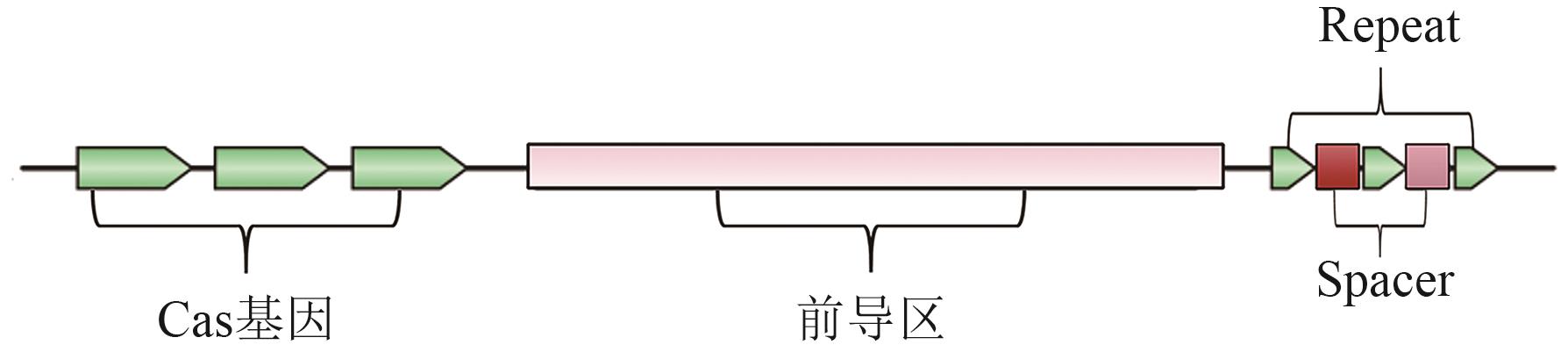
图1 CRISPR结构图
Fig. 1 Structure of CRISPR
类型 Type | 适配 Adaption | 表达 Expression | 干扰 Interference | 辅助 Ancillary | |
|---|---|---|---|---|---|
| Class 1 | Ⅰ type | Cas1-Cas2 | Cas6 | Cas7-Cas5-Cas8-Cas3 | Cas4 |
| Ⅲ type | Cas1-Cas2 | Cas6 | |||
| Ⅳ type | Cas7-Cas5 | ||||
| Class 2 | Ⅱ type | Cas1-Cas2 | RNase Ⅲ | Cas9 | Cas4 |
| V type | Cas1-Cas2 | Cas12 | Cas4 | ||
| Ⅵ type | Cas1-Cas2 | Cas13 | |||
表1 CRISPR分型与Cas蛋白功能
Table 1 CRISPR types and the functions of Cas protein
类型 Type | 适配 Adaption | 表达 Expression | 干扰 Interference | 辅助 Ancillary | |
|---|---|---|---|---|---|
| Class 1 | Ⅰ type | Cas1-Cas2 | Cas6 | Cas7-Cas5-Cas8-Cas3 | Cas4 |
| Ⅲ type | Cas1-Cas2 | Cas6 | |||
| Ⅳ type | Cas7-Cas5 | ||||
| Class 2 | Ⅱ type | Cas1-Cas2 | RNase Ⅲ | Cas9 | Cas4 |
| V type | Cas1-Cas2 | Cas12 | Cas4 | ||
| Ⅵ type | Cas1-Cas2 | Cas13 | |||
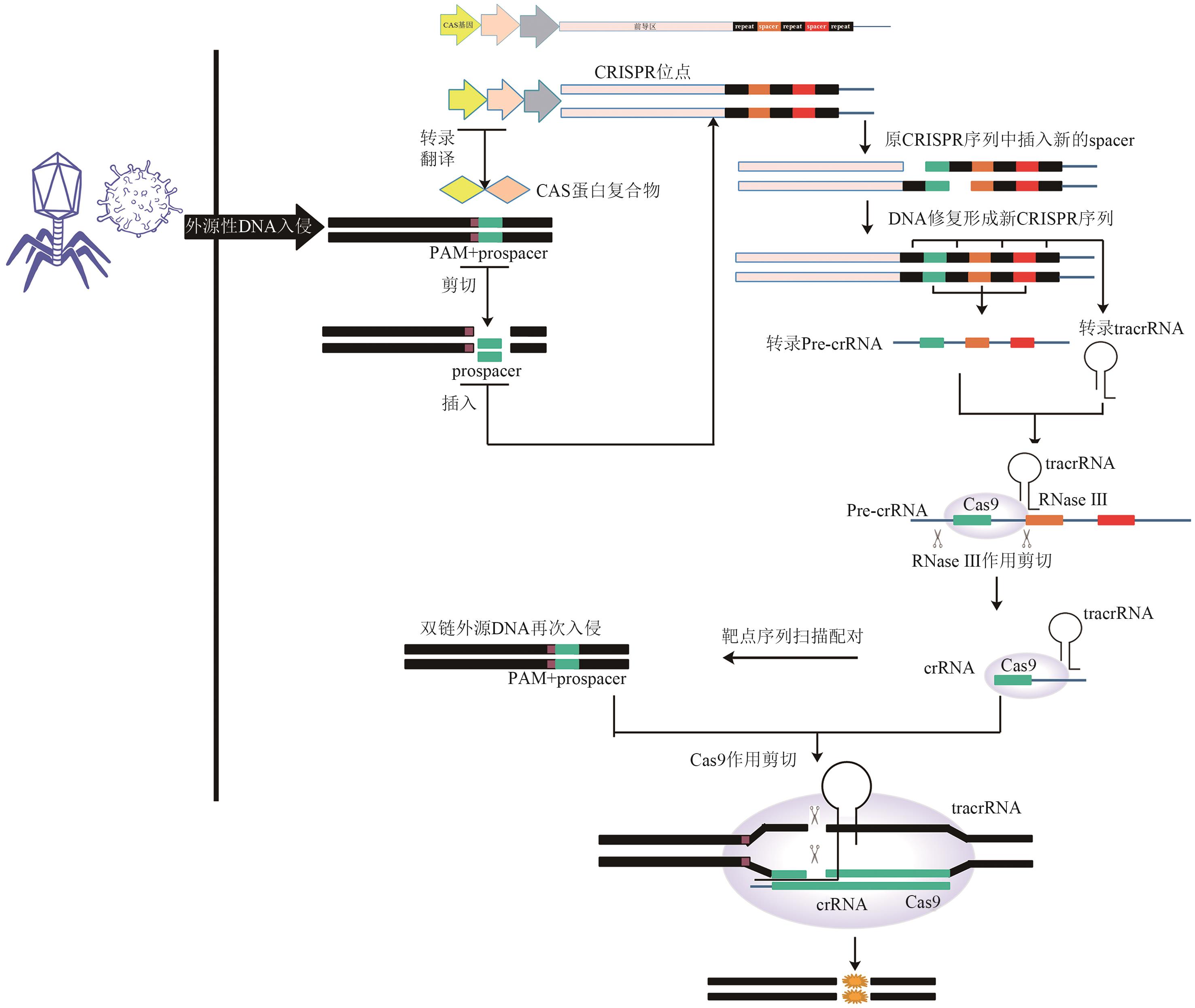
图2 CRISPR-Cas系统作用机理
Fig. 2 Action mechanism of CRISPR-Cas system
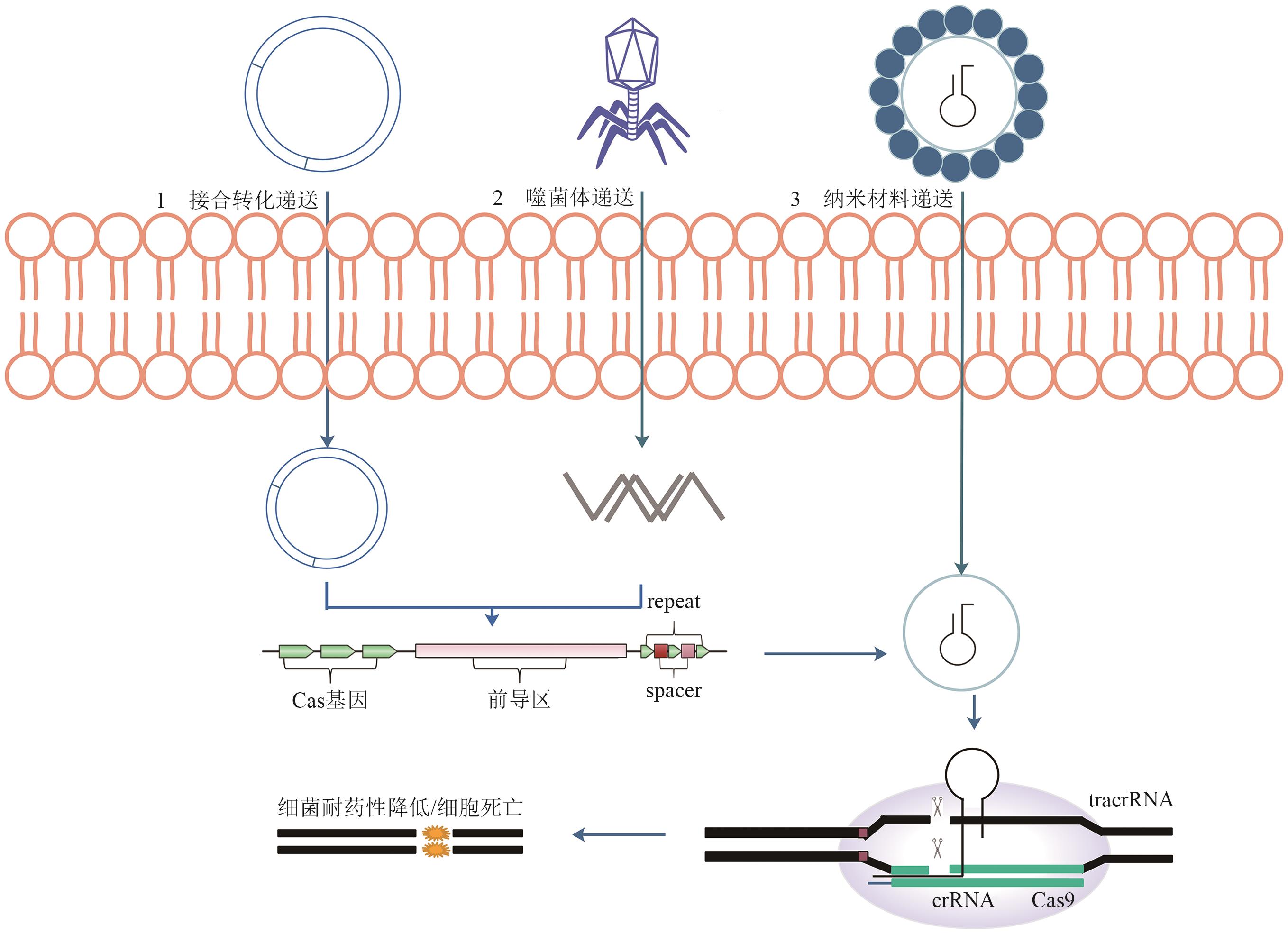
图3 CRISPR-Cas抑菌递送的图形概念模型
Fig. 3 Graphical concepts model of CRISPR-Cas for antibacterial delivery
| 1 | McManus MC. Mechanisms of bacterial resistance to antimicrobial agents [J]. Am J Health Syst Pharm, 1997, 54(12): 1420-1433; quiz 1444-1446. |
| 2 | Aksomaitiene J, Novoslavskij A, Kudirkiene E, et al. Whole genome sequence-based prediction of resistance determinants in high-level multidrug-resistant Campylobacter jejuni isolates in Lithuania [J]. Microorganisms, 2020, 9(1): 66. |
| 3 | Almeida LM, Lebreton F, Gaca A, et al. Transferable resistance gene optrA in Enterococcus faecalis from swine in Brazil [J]. Antimicrob Agents Chemother, 2020, 64(6): e00142-20. |
| 4 | Fioriti S, Morroni G, Coccitto SN, et al. Detection of oxazolidinone resistance genes and characterization of genetic environments in enterococci of swine origin, Italy [J]. Microorganisms, 2020, 8(12): 2021. |
| 5 | Manghwar H, Lindsey K, Zhang XL, et al. CRISPR/cas system: recent advances and future prospects for genome editing [J]. Trends Plant Sci, 2019, 24(12): 1102-1125. |
| 6 | Shahbazi Dastjerdeh M, Kouhpayeh S, Sabzehei F, et al. Zinc finger nuclease: a new approach to overcome beta-lactam antibiotic resistance [J]. Jundishapur J Microbiol, 2016, 9(1): e29384. |
| 7 | Gupta RM, Musunuru K. Expanding the genetic editing tool kit: ZFNs, TALENs, and CRISPR-Cas9 [J]. J Clin Invest, 2014, 124(10): 4154-4161. |
| 8 | Ishino Y, Shinagawa H, Makino K, et al. Nucleotide sequence of the iap gene, responsible for alkaline phosphatase isozyme conversion in Escherichia coli, and identification of the gene product [J]. J Bacteriol, 1987, 169(12): 5429-5433. |
| 9 | Barrangou R, Fremaux C, Deveau H, et al. CRISPR provides acquired resistance against viruses in prokaryotes [J]. Science, 2007, 315(5819): 1709-1712. |
| 10 | Gholizadeh P, Köse Ş, Dao S, et al. How CRISPR-cas system could be used to combat antimicrobial resistance [J]. Infect Drug Resist, 2020, 13: 1111-1121. |
| 11 | Jinek M, Chylinski K, Fonfara I, et al. A programmable dual-RNA-guided DNA endonuclease in adaptive bacterial immunity [J]. Science, 2012, 337(6096): 816-821. |
| 12 | Cong L, Ann Ran F, Cox D, et al. Multiplex genome engineering using CRISPR/Cas systems [J]. Science, 2013, 339(6121): 819-823. |
| 13 | Makarova KS, Wolf YI, Alkhnbashi OS, et al. An updated evolutionary classification of CRISPR-Cas systems [J]. Nat Rev Microbiol, 2015, 13(11): 722-736. |
| 14 | Horvath P, Barrangou R. CRISPR/Cas, the immune system of bacteria and Archaea [J]. Science, 2010, 327(5962): 167-170. |
| 15 | Jiang WY, Bikard D, Cox D, et al. RNA-guided editing of bacterial genomes using CRISPR-Cas systems [J]. Nat Biotechnol, 2013, 31(3): 233-239. |
| 16 | Semenova E, Jore MM, Datsenko KA, et al. Interference by clustered regularly interspaced short palindromic repeat (CRISPR) RNA is governed by a seed sequence [J]. Proc Natl Acad Sci USA, 2011, 108(25): 10098-10103. |
| 17 | van der Oost J, Jore MM, Westra ER, et al. CRISPR-based adaptive and heritable immunity in prokaryotes [J]. Trends Biochem Sci, 2009, 34(8): 401-407. |
| 18 | Makarova KS, Haft DH, Barrangou R, et al. Evolution and classification of the CRISPR-cas systems [J]. Nat Rev Microbiol, 2011, 9(6): 467-477. |
| 19 | Makarova KS, Wolf YI, Iranzo J, et al. Evolutionary classification of CRISPR-cas systems: a burst of class 2 and derived variants [J]. Nat Rev Microbiol, 2020, 18(2): 67-83. |
| 20 | 孙宗倜, 孙琅, 游雪甫. CRISPR/Cas系统在抗细菌感染领域的应用现状与进展 [J]. 药学学报, 2023, 58(9): 2560-2568. |
| Sun ZT, Sun L, You XF. Current advances of CRISPR/Cas system in antibacterial field [J]. Acta Pharm Sin, 2023, 58(9): 2560-2568. | |
| 21 | Hatada I, Morita S, Horii T. CRISPR/cas9 [J]. Methods Mol Biol, 2023, 2637: 41-47. |
| 22 | Yosef I, Manor M, Kiro R, et al. Temperate and lytic bacteriophages programmed to sensitize and kill antibiotic-resistant bacteria [J]. Proc Natl Acad Sci USA, 2015, 112(23): 7267-7272. |
| 23 | Vercoe RB, Chang JT, Dy RL, et al. Cytotoxic chromosomal targeting by CRISPR/Cas systems can reshape bacterial genomes and expel or remodel pathogenicity islands [J]. PLoS Genet, 2013, 9(4): e1003454. |
| 24 | Citorik RJ, Mimee M, Lu TK. Sequence-specific antimicrobials using efficiently delivered RNA-guided nucleases [J]. Nat Biotechnol, 2014, 32(11): 1141-1145. |
| 25 | Gomaa AA, Klumpe HE, Luo ML, et al. Programmable removal of bacterial strains by use of genome-targeting CRISPR-Cas systems [J]. mBio, 2014, 5(1): e00928-13. |
| 26 | Bikard D, Hatoum-Aslan A, Mucida D, et al. CRISPR interference can prevent natural transformation and virulence acquisition during in vivo bacterial infection [J]. Cell Host Microbe, 2012, 12(2): 177-186. |
| 27 | Bikard D, Euler CW, Jiang WY, et al. Exploiting CRISPR-Cas nucleases to produce sequence-specific antimicrobials [J]. Nat Biotechnol, 2014, 32(11): 1146-1150. |
| 28 | Neil K, Allard N, Roy P, et al. High-efficiency delivery of CRISPR-Cas9 by engineered probiotics enables precise microbiome editing [J]. Mol Syst Biol, 2021, 17(10): e10335. |
| 29 | Selle K, Fletcher JR, Tuson H, et al. In vivo targeting of Clostridioides difficile using phage-delivered CRISPR-Cas3 antimicrobials [J]. mBio, 2020, 11(2): e00019-20. |
| 30 | 孙静. 中国不同地区猪和鸡肠道大肠杆菌抗生素耐药基因及耐药表型分析 [D]. 武汉: 华中农业大学, 2022. |
| Sun J. Analysis of antibiotic resistance genes and drug resistance phenotypes of Escherichia coli in pig and chicken intestines in different areas of China [D]. Wuhan: Huazhong Agricultural University, 2022. | |
| 31 | Chen YS, Mukherjee S, Hoffmann M, et al. Whole-genome sequencing of gentamicin-resistant Campylobacter coli isolated from U.S. retail meats reveals novel plasmid-mediated aminoglycoside resistance genes [J]. Antimicrob Agents Chemother, 2013, 57(11): 5398-5405. |
| 32 | Ge BL, White DG, McDermott PF, et al. Antimicrobial-resistant Campylobacter species from retail raw meats [J]. Appl Environ Microbiol, 2003, 69(5): 3005-3007. |
| 33 | Tang YZ, Dai L, Sahin O, et al. Emergence of a plasmid-borne multidrug resistance gene cfr(C) in foodborne pathogen Campylobacter [J]. J Antimicrob Chemother, 2017, 72(6): 1581-1588. |
| 34 | 杨永亚, 刘志欢, 宋雪艳, 等. 携带mcr-1鸡源大肠杆菌耐药性及传播特性的初步分析 [J]. 中国预防兽医学报, 2021, 43(7): 706-710, 733. |
| Yang YY, Liu ZH, Song XY, et al. Preliminary study on the drug resistance and transmission characteristics of chicken-derived Escherichia coli carrying mcr-1 [J]. Chin J Prev Vet Med, 2021, 43(7): 706-710, 733. | |
| 35 | 谢宁, 高源, 马藤菲, 等. 1株产NDM-9和MCR-1的鸡源大肠杆菌的分子及生物学特征 [J]. 中国兽医杂志, 2023, 59(1): 14-19. |
| Xie N, Gao Y, Ma TF, et al. Molecular and biological characteristics of a chicken source Escherichia coli producing NDM-9 and MCR-1 [J]. Chin J Vet Med, 2023, 59(1): 14-19. | |
| 36 | Qin SS, Wu CM, Wang Y, et al. Antimicrobial resistance in Campylobacter coli isolated from pigs in two provinces of China [J]. Int J Food Microbiol, 2011, 146(1): 94-98. |
| 37 | 刘宝玲, 楚品品, 李春玲, 等. 猪链球菌临床分离株对四环素类抗生素的耐药性和耐药基因分析 [J]. 中国畜牧兽医, 2022, 49(7): 2796-2804. |
| Liu BL, Chu PP, Li CL, et al. Analysis of resistance and resistance genes of Streptococcus suis clinical isolates to tetracyclines [J]. China Anim Husb Vet Med, 2022, 49(7): 2796-2804. | |
| 38 | 姜芹, 孙冰清, 顾欣, 等. 动物源大肠埃希菌gyrA基因突变与氟喹诺酮耐药相关性分析 [J]. 动物医学进展, 2020, 41(4): 63-66. |
| Jiang Q, Sun BQ, Gu X, et al. Analysis of mutations in gyrA gene associated with fluoroquinolone resistance in Escherichia coli isolates from animals [J]. Prog Vet Med, 2020, 41(4): 63-66. | |
| 39 | 张小燕, 周倩, 唐梦君, 等. 江苏某肉鸡屠宰场弯曲菌耐药性及aadE-sat4-aphA-3耐药基因簇分布分析 [J]. 中国预防兽医学报, 2020, 42(8): 835-839. |
| Zhang XY, Zhou Q, Tang MJ, et al. Antimicrobial resistance and distribution of aminoglycoside resistance gene cluster aadE-sat4-AphA-3 in Campylobacter isolates from a broiler slaughterhouse in Jiangsu province [J]. Chin J Prev Vet Med, 2020, 42(8): 835-839. | |
| 40 | 周倩, 张小燕, 马尹鹏, 等. 蛋鸡投喂氟苯尼考后大肠杆菌耐药性变化及耐药基因检测 [J]. 中国家禽, 2020, 42(9): 40-46. |
| Zhou Q, Zhang XY, Ma YP, et al. Changes of drug resistance and detection of florfenicol resistance genes in Escherichia coli isolated from laying hens after florfenicol administration [J]. China Poult, 2020, 42(9): 40-46. | |
| 41 | Zhang HJ, Chen B, Wang ZY, et al. Resensitizing tigecycline- and colistin-resistant Escherichia coli using an engineered conjugative CRISPR/Cas9 system [J]. Microbiol Spectr, 2024, 12(4): e03884-23. |
| 42 | Tao S, Chen HM, Li N, et al. Elimination of blaKPC-2-mediated carbapenem resistance in Escherichia coli by CRISPR-Cas9 system [J]. BMC Microbiol, 2023, 23(1): 310. |
| 43 | Kang YK, Kwon K, Ryu JS, et al. Nonviral genome editing based on a polymer-derivatized CRISPR nano complex for targeting bacterial pathogens and antibiotic resistance [J]. Bioconjugate Chem, 2017, 28(4): 957-967. |
| 44 | Zhang H, Cheng QX, Liu AM, et al. A novel and efficient method for bacteria genome editing employing both CRISPR/Cas9 and an antibiotic resistance cassette [J]. Front Microbiol, 2017, 8: 812. |
| 45 | Wang PX, He DM, Li BY, et al. Eliminating mcr-1-harbouring plasmids in clinical isolates using the CRISPR/Cas9 system [J]. J Antimicrob Chemother, 2019, 74(9): 2559-2565. |
| 46 | Hao MJ, He YZ, Zhang HF, et al. CRISPR-Cas9-mediated carbapenemase gene and plasmid curing in carbapenem-resistant Enterobacteriaceae [J]. Antimicrob Agents Chemother, 2020, 64(9): e00843-20. |
| 47 | Reuter A, Hilpert C, Dedieu-Berne A, et al. Targeted-antibacterial-plasmids (TAPs) combining conjugation and CRISPR/Cas systems achieve strain-specific antibacterial activity [J]. Nucleic Acids Res, 2021, 49(6): 3584-3598. |
| 48 | Andrés Valderrama J, Kulkarni SS, Nizet V, et al. A bacterial gene-drive system efficiently edits and inactivates a high copy number antibiotic resistance locus [J]. Nat Commun, 2019, 10(1): 5726. |
| 49 | Huang CY, Guo LW, Wang JG, et al. Efficient long fragment editing technique enables large-scale and scarless bacterial genome engineering [J]. Appl Microbiol Biotechnol, 2020, 104(18): 7943-7956. |
| 50 | Li F, Ye QH, Chen MT, et al. Cas12aFDet: a CRISPR/Cas12a-based fluorescence platform for sensitive and specific detection of Listeria monocytogenes serotype 4c [J]. Anal Chim Acta, 2021, 1151: 338248. |
| 51 | Yang YJ, Kong XX, Yang JL, et al. Rapid nucleic acid detection of Listeria monocytogenes based on RAA-CRISPR Cas12a system [J]. Int J Mol Sci, 2024, 25(6): 3477. |
| 52 | Xiao YR, Ren HL, Wang H, et al. A rapid and inexpensive nucleic acid detection platform for Listeria monocytogenes based on the CRISPR/Cas12a system [J]. Talanta, 2023, 259: 124558. |
| 53 | Cao XY, Chang YB, Tao CQ, et al. Cas12a/guide RNA-based platforms for rapidly and accurately identifying Staphylococcus aureus and methicillin-resistant S. aureus [J]. Microbiol Spectr, 2023, 11(2): e0487022. |
| 54 | Shi YQ, Kang L, Mu RR, et al. CRISPR/Cas12a-enhanced loop-mediated isothermal amplification for the visual detection of Shigella flexneri [J]. Front Bioeng Biotechnol, 2022, 10: 845688. |
| 55 | Zhang KX, Deng RJ, Li Y, et al. Cas9 cleavage assay for pre-screening of sgRNAs using nicking triggered isothermal amplification [J]. Chem Sci, 2016, 7(8): 4951-4957. |
| 56 | Sun X, Wang Y, Zhang L, et al. CRISPR-Cas9 triggered two-step isothermal amplification method for E. coli O157: H7 detection based on a metal-organic framework platform [J]. Anal Chem, 2020, 92(4): 3032-3041. |
| 57 | An BL, Zhang HB, Su X, et al. Rapid and sensitive detection of Salmonella spp. using CRISPR-Cas13a combined with recombinase polymerase amplification [J]. Front Microbiol, 2021, 12: 732426. |
| [1] | 文博霖, 万敏, 胡建军, 王克秀, 景晟林, 王心悦, 朱博, 唐铭霞, 李兵, 何卫, 曾子贤. 马铃薯川芋50遗传转化及基因编辑体系的建立[J]. 生物技术通报, 2025, 41(4): 88-97. |
| [2] | 陈晓军, 惠建, 马洪文, 白海波, 钟楠, 李稼润, 樊云芳. 利用单碱基基因编辑技术创制OsALS抗除草剂水稻种质资源[J]. 生物技术通报, 2025, 41(4): 106-114. |
| [3] | 张文斐, 杨菲, 刘旭霞. 基因编辑食品标识制度的理论证成、国际比较及中国方案[J]. 生物技术通报, 2025, 41(3): 25-34. |
| [4] | 梁丽存, 王克芬, 宋祖洹, 刘梦婷, 李佳玉, 罗会颖, 姚斌, 杨浩萌. 优化sgRNA提高塔宾曲霉基因编辑效率[J]. 生物技术通报, 2025, 41(3): 62-70. |
| [5] | 薛瑞莹, 刘永菊, 姜燕燕, 彭欣雅, 曹东, 李云, 刘宝龙, 包雪梅. 5′UTR区的编辑降低大麦GBSSI基因表达[J]. 生物技术通报, 2025, 41(3): 83-89. |
| [6] | 童玮婧, 罗数, 陆新露, 沈建福, 陆柏益, 李开绵, 马秋香, 张鹏. CRISPR/Cas9编辑MeHNL基因创制低生氰糖苷木薯[J]. 生物技术通报, 2024, 40(9): 11-19. |
| [7] | 侯文婷, 孙琳, 张艳军, 董合忠. 基因编辑技术在棉花种质创新和遗传改良中的应用[J]. 生物技术通报, 2024, 40(7): 68-77. |
| [8] | 田彤彤, 葛家振, 高鹏程, 李学瑞, 宋国栋, 郑福英, 储岳峰. 绵羊肺炎支原体GH3-3株全基因组测序及生物信息学分析[J]. 生物技术通报, 2024, 40(7): 323-334. |
| [9] | 隆静, 陈婧敏, 刘霄, 张一凡, 周利斌, 杜艳. 植物DNA双链断裂修复机制及其在重离子诱变和基因编辑中的作用[J]. 生物技术通报, 2024, 40(7): 55-67. |
| [10] | 王梓, 石金川, 王永强, 孙淼, 孟令浩, 耿超, 刘锴. 牛源荚膜A型、D型多杀性巴氏杆菌的全基因组测序及基因组进化分析[J]. 生物技术通报, 2024, 40(12): 282-290. |
| [11] | 周家伟, 武志强. mitoTALENs植物线粒体基因编辑载体的构建方法[J]. 生物技术通报, 2024, 40(10): 172-180. |
| [12] | 李欣格, 王美霞, 王晨阳, 马桂根, 周常勇, 王亚南, 周焕斌. 基于CRISPR/LanCas9的水稻基因编辑系统的开发和优化[J]. 生物技术通报, 2024, 40(10): 233-242. |
| [13] | 李明坤, 毕美营, 张天航, 吴翔宇, 杨培儒, 应明. UgRNA/Cas9多基因编辑法恢复根际细菌农用功能的研究[J]. 生物技术通报, 2024, 40(10): 275-287. |
| [14] | 张硕, 阚俊虎, 周家伟, 武志强. 植物线粒体基因组编辑研究进展[J]. 生物技术通报, 2024, 40(10): 41-52. |
| [15] | 杨帅朋, 屈子啸, 朱向星, 唐冬生. DNA碱基编辑技术的研究进展及在猪基因修饰中的应用[J]. 生物技术通报, 2024, 40(1): 127-144. |
| 阅读次数 | ||||||
|
全文 |
|
|||||
|
摘要 |
|
|||||
