







Biotechnology Bulletin ›› 2026, Vol. 42 ›› Issue (7): 48-57.doi: 10.13560/j.cnki.biotech.bull.1985.2025-0956
Previous Articles Next Articles
ZHU Mei-wei1,2, ZHANG Jian-feng1, WANG Jia-min1, LIAO Ming1,2( ), DU Shou-wen1,2()
Received:2025-09-08
Online:2026-07-26
Published:2026-07-20
Contact:
LIAO Ming, DU Shou-wen
E-mail:mliao@scau.edu.cn;dushouwen@gdaas.cn
ZHU Mei-wei, ZHANG Jian-feng, WANG Jia-min, LIAO Ming, DU Shou-wen. Strategies for Avian Influenza Mucosal Vaccine Development: Insights from the Avian Mucosal Immune System[J]. Biotechnology Bulletin, 2026, 42(7): 48-57.
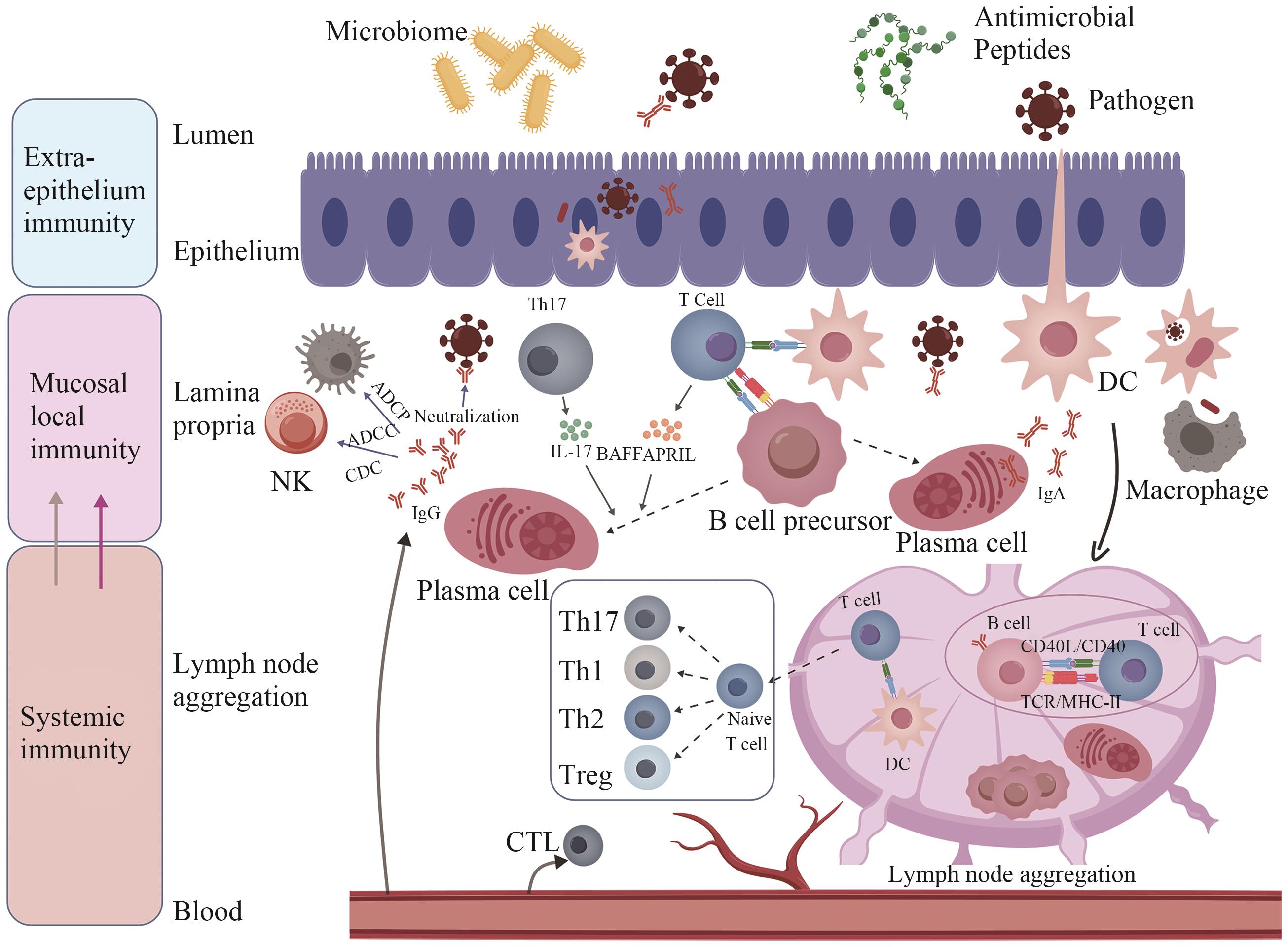
Fig. 1 Mucosal structure and immune mechanism of avian respiratory tract[24]
宿主 Host | 疫苗 Vaccine | 接种方式 Vaccination method | 组份 Composition | 靶病原 Target pathogen | 参考文献 References |
|---|---|---|---|---|---|
| 鸡 | 禽流感、新城疫二联活疫苗(rLH5-8株) | 滴鼻/点眼/饮水/肌肉注射 | 鸡NDV(La Sota株)、禽流感H5亚型 | NDV、AIV | [ |
| 鸡 | 重组HVT活疫苗(rHVT-H9-F) | 肌肉/皮下注射/胚内接种 | H9N2(A/chicken/Israel/1164/2011)、HVT、NDV F蛋白 | AIV、NDV | [ |
| 鸡 | 禽流感重组FPV载体活疫苗(H5亚型) | 皮下注射/肌肉注射/翅蹼穿刺 | AIV鹅体分离株(G5株)、FPV(282E4株) | AIV、FPV | [ |
| 鸭 | 禽流感重组DVE载体二价活疫苗(H5亚型,rDEV-13株+rDEV-14株) | 肌肉注射 | 禽流感重组DEV rDEV-13株和rDEV-14株 | AIV、DEV | [ |
Table 1 Approved virus vector avian influenza vaccine
宿主 Host | 疫苗 Vaccine | 接种方式 Vaccination method | 组份 Composition | 靶病原 Target pathogen | 参考文献 References |
|---|---|---|---|---|---|
| 鸡 | 禽流感、新城疫二联活疫苗(rLH5-8株) | 滴鼻/点眼/饮水/肌肉注射 | 鸡NDV(La Sota株)、禽流感H5亚型 | NDV、AIV | [ |
| 鸡 | 重组HVT活疫苗(rHVT-H9-F) | 肌肉/皮下注射/胚内接种 | H9N2(A/chicken/Israel/1164/2011)、HVT、NDV F蛋白 | AIV、NDV | [ |
| 鸡 | 禽流感重组FPV载体活疫苗(H5亚型) | 皮下注射/肌肉注射/翅蹼穿刺 | AIV鹅体分离株(G5株)、FPV(282E4株) | AIV、FPV | [ |
| 鸭 | 禽流感重组DVE载体二价活疫苗(H5亚型,rDEV-13株+rDEV-14株) | 肌肉注射 | 禽流感重组DEV rDEV-13株和rDEV-14株 | AIV、DEV | [ |
| [1] | World Organisation for Animal Health. High pathogenicity avian influenza (HPAI) - Situation Report 77 [R/OL]. (2025.12.23)[2026.01.09]. . |
| [2] | Centre for Health Protection. Avian influenza report. [R/OL]. (2026.01.06)[2026.01.09]. . |
| [3] | Ford CT, Yasa S, Obeid K, et al. Large-scale computational modelling of H5 influenza variants against HA1-neutralising antibodies [J]. eBioMedicine, 2025, 114: 105632. |
| [4] | Holmgren J, Czerkinsky C. Mucosal immunity and vaccines [J]. Nat Med, 2005, 11(S4): S45-S53. |
| [5] | de Geus ED, Rebel JMJ, Vervelde L. Induction of respiratory immune responses in the chicken; implications for development of mucosal avian influenza virus vaccines [J]. Vet Q, 2012, 32(2): 75-86. |
| [6] | Kaspers B, Schat KA, Göbel T, et al. Avian Immunology [M]. Third Edition. London: Academic Press, 2022: 327-341. |
| [7] | Burns RB. Specific antibody production against a soluble antigen in the Harderian gland of the domestic fowl [J]. Clin Exp Immunol, 1976, 26(2): 371-374. |
| [8] | Andrew S Fix LHA. Quantification of particle uptake by conjunctiva-associated lymphoid tissue (CALT) in chickens [J]. Avian Dis, 1991, 35(1): 174-179. |
| [9] | Bang BG, Bang FB. Localized lymphoid tissues and plasma cells in paraocular and paranasal organ systems in chickens [J]. Am J Pathol, 1968, 53(5): 735-751. |
| [10] | Ohshima K, Hiramatsu K. Distribution of T-cell subsets and immunoglobulin-containing cells in nasal-associated lymphoid tissue (NALT) of chickens [J]. Histol Histopathol, 2000, 15(3): 713-720. |
| [11] | Fagerland JA, Arp LH. A morphologic study of Bronchus-associated lymphoid tissue in turkeys [J]. Am J Anat, 1990, 189(1): 24-34. |
| [12] | Nochi T, Jansen CA, Toyomizu M, et al. The well-developed mucosal immune systems of birds and mammals allow for similar approaches of mucosal vaccination in both types of animals [J]. Front Nutr, 2018, 5: 60. |
| [13] | Arai N, Hashimoto Y, Kitagawa H, et al. Immunohistochemical study on the distribution of lymphoid tissues in the upper alimentary and respiratory tracts of chickens [J]. Nihon Juigaku Zasshi, 1988, 50(1): 183-192. |
| [14] | Parry S, Aitken I. Immunoglobulin A in the respiratory tract of the chicken following exposure to Newcastle disease virus [J]. Vet Rec, 1973, 93(9): 258-260. |
| [15] | Berlin C, Berg EL, Briskin MJ, et al. α4β7 integrin mediates lymphocyte binding to the mucosal vascular addressin MAdCAM-1 [J]. Cell, 1993, 74(1): 185-195. |
| [16] | Schenkel JM, Masopust D. Tissue-resident memory T cells [J]. Immunity, 2014, 41(6): 886-897. |
| [17] | Shanmugasundaram R, Selvaraj RK. In vivo lipopolysaccharide injection alters CD4+CD25+ cell properties in chickens [J]. J Anim Sci, 2012, 90(8): 2498-2504. |
| [18] | Selvaraj RK. Avian CD4+CD25+ regulatory T cells: Properties and therapeutic applications [J]. Dev Comp Immunol, 2013, 41(3): 397-402. |
| [19] | Cheng YQ, Sun YJ, Wang HG, et al. Chicken STING mediates activation of the IFN gene independently of the RIG-I gene [J]. J Immunol, 2015, 195(8): 3922-3936. |
| [20] | Ko KY, Song WS, Park J, et al. Structural analysis of the toll-like receptor 15 TIR domain [J]. IUCrJ, 2023, 10(3): 352-362. |
| [21] | Mora JR, von Andrian UH. Differentiation and homing of IgA-secreting cells [J]. Mucosal Immunol, 2008, 1(2): 96-109. |
| [22] | Dupont A, Heinbockel L, Brandenburg K, et al. Antimicrobial peptides and the enteric mucus layer act in concert to protect the intestinal mucosa [J]. Gut Microbes, 2014, 5(6): 761-765. |
| [23] | Gamblin SJ, Skehel JJ. Influenza hemagglutinin and neuraminidase membrane glycoproteins [J]. J Biol Chem, 2010, 285(37): 28403-28409. |
| [24] | Song YF, Mehl F, Zeichner SL. Vaccine strategies to elicit mucosal immunity [J]. Vaccines, 2024, 12(2): 191. |
| [25] | Śmiałek M, Tykałowski B, Stenzel T, et al. Local immunity of the respiratory mucosal system in chickens and turkeys [J]. Pol J Vet Sci, 2011, 14(2): 291-297. |
| [26] | Brandtzaeg P. Induction of secretory immunity and memory at mucosal surfaces [J]. Vaccine, 2007, 25(30): 5467-5484. |
| [27] | Longet S, Lundahl MLE, Lavelle EC. Targeted strategies for mucosal vaccination [J]. Bioconjugate Chem, 2018, 29(3): 613-623. |
| [28] | Cerutti A. The regulation of IgA class switching [J]. Nat Rev Immunol, 2008, 8(6): 421-434. |
| [29] | Simmons CP, Hussell T, Sparer T, et al. Mucosal delivery of a respiratory syncytial virus CTL peptide with enterotoxin-based adjuvants elicits protective, immunopathogenic, and immunoregulatory antiviral CD8+ T cell responses [J]. J Immunol, 2001, 166(2): 1106-1113. |
| [30] | Bowen JC, Nair SK, Reddy R, et al. Cholera toxin acts as a potent adjuvant for the induction of cytotoxic T-lymphocyte responses with non-replicating antigens [J]. Immunology, 1994, 81(3): 338-342. |
| [31] | Whitacre CC, Gienapp IE, Meyer A, et al. Oral tolerance in experimental autoimmune encephalomyelitis [J]. Ann N Y Acad Sci, 1996, 778(1): 217-227. |
| [32] | Josefowicz SZ, Lu LF, Rudensky AY. Regulatory T cells: mechanisms of differentiation and function [J]. Annu Rev Immunol, 2012, 30: 531-564. |
| [33] | Richert-Spuhler LE, Lund JM. The immune fulcrum: regulatory T cells tip the balance between pro- and anti-inflammatory outcomes upon infection [J]. Prog Mol Biol Transl Sci, 2015, 136: 217-243. |
| [34] | Shanmugasundaram R, Selvaraj RK. Regulatory T cell properties of chicken CD4+CD25+ cells [J]. J Immunol, 2011, 186(4): 1997-2002. |
| [35] | Teng QY, Zhou JY, Wu JJ, et al. Characterization of chicken interleukin 2 receptor α chain, a homolog to mammalian CD25 [J]. FEBS Lett, 2006, 580(17): 4274-4281. |
| [36] | Burkhardt NB, Elleder D, Schusser B, et al. The discovery of chicken Foxp3 demands redefinition of avian regulatory T cells [J]. J Immunol, 2022, 208(5): 1128-1138. |
| [37] | Holmgren J, Harandi AM, Czerkinsky C. Mucosal adjuvants and anti-infection and anti-immunopathology vaccines based on cholera toxin, cholera toxin B subunit and CpG DNA [J]. Expert Rev Vaccines, 2003, 2(2): 205-217. |
| [38] | Lavelle EC, Ward RW. Mucosal vaccines—fortifying the frontiers [J]. Nat Rev Immunol, 2022, 22(4): 236-250. |
| [39] | Zhou XX, Wu YC, Zhu ZP, et al. Mucosal immune response in biology, disease prevention and treatment [J]. Signal Transduct Target Ther, 2025, 10: 7. |
| [40] | Kapczynski DR, Tumpey TM, Hidajat R, et al. Vaccination with virus-like particles containing H5 antigens from three H5N1 clades protects chickens from H5N1 and H5N8 influenza viruses [J]. Vaccine, 2016, 34(13): 1575-1581. |
| [41] | 程宁宁,潘志明,刘蓓蓓,等.H9亚型禽流感病毒黏膜DNA疫苗与灭活油乳苗的联合免疫研究 [J].中国人兽共患病学报,2008,(5):425-429. |
| Cheng NN, Pan ZM, Liu BB, et al. The prime-boost strategy with mucosal DNA vaccine and killed oil-emulsified vaccine against H9 subtype of avian influenza virus [J]. Chinese Journal of Zoonoses, 2008, 24(5): 425-429. | |
| [42] | Liu WZ, Tang WT, Li YX, et al. Construction of two strains of recombinant lactobacilli expressing the HA2 protein of avian influenza virus subtype H9N2 in different ways and study on the effect of immunisation [J]. Poult Sci, 2025, 104(4): 105010. |
| [43] | Frey SE, Lottenbach KR, Hill H, et al. A Phase I, dose-escalation trial in adults of three recombinant attenuated Salmonella Typhi vaccine vectors producing Streptococcus pneumoniae surface protein antigen PspA [J]. Vaccine, 2013, 31(42): 4874-4880. |
| [44] | 韩春梅, 刘居萍, 谢丽, 等. 禽流感灭活疫苗和禽流感-新城疫重组二联活疫苗对比试验 [J]. 动物医学进展, 2007(2): 112-113. |
| Han CM, Liu JP, Xie L, et al. Comparative test of inactivated avian influenza vaccine and recombinant avian influenza-Newcastle disease vaccine [J]. Progress in Animal Medicine, 2007(2): 112-113. | |
| [45] | Wu Q, Wei L, Du X, et al. Development and evaluation of Newcastle disease - avian influenza bivalent vector vaccines in commercial chickens [J]. Int Immunopharmacol, 2023, 120: 110363. |
| [46] | Wei YD, Qi L, Gao HJ, et al. Generation and protective efficacy of a cold-adapted attenuated avian H9N2 influenza vaccine [J]. Sci Rep, 2016, 6: 30382. |
| [47] | Hu Z, Ai H, Wang Z, et al. Impact of inactivated vaccine on transmission and evolution of H9N2 avian influenza virus in chickens [J]. NPJ Vaccines, 2025, 10: 67. |
| [48] | Hajam IA, Senevirathne A, Hewawaduge C, et al. Intranasally administered protein coated chitosan nanoparticles encapsulating influenza H9N2 HA2 and M2e mRNA molecules elicit protective immunity against avian influenza viruses in chickens [J]. Vet Res, 2020, 51(1): 37. |
| [49] | Ingrao F, Ngabirano E, Rauw F, et al. Immunogenicity and protective efficacy of a multivalent herpesvirus vectored vaccine against H9N2 low pathogenic avian influenza in chicken [J]. Vaccine, 2024, 42(15): 3410-3419. |
| [50] | Rauw F, Palya V, Gardin Y, et al. Efficacy of rHVT-AI vector vaccine in broilers with passive immunity against challenge with two antigenically divergent Egyptian clade 2.2.1 HPAI H5N1 strains [J]. Avian Dis, 2012, 56(4s1): 913-922. |
| [51] | 贾立军, 彭大新, 张艳梅, 等. H5亚型禽流感重组鸡痘病毒活载体疫苗的构建及其遗传稳定性与免疫效力 [J]. 微生物学报, 2003(6): 722-727. |
| Jia LJ, Peng DX, Zhang YM, et al. Construction of recombinant fowlpox virus live vector vaccine of H5 subtype avian influenza and its genetic stability and immune efficacy [J]. Acta Microbiol Sin, 2003(6): 722-727. | |
| [52] | 贾立军, 张艳梅, 彭大新, 等. 免疫剂量和母源抗体对禽流感重组鸡痘病毒活载体疫苗免疫效力的影响 [J]. 中国兽医学报, 2004(2): 150-152. |
| Jia LJ, Zhang YM, Peng DX, et al. Effects of immune dose and maternal antibody on immune efficacy of recombinant fowlpox virus vaccine [J]. Chin J Vet Sci, 2004(2): 150-152. | |
| [53] | 张小雨,刘静,赵玉博,等. 表达2.3.4.4b分支H5亚型禽流感病毒HA基因重组鸭瘟病毒的构建及其免疫保护效力的研究 [J].中国预防兽医学报, 2024, 46(10): 1049-1056. |
| Zhang XY, Liu J, Zhao YB, et al. Construction of recombinant duck plague virus expressing HA gene of H5 subtype avian influenza virus 2.3.4.4b and study on its immune protection efficacy [J]. Chinese Journal of Preventive Veterinary Medicine, 2024, 46(10): 1049-1056. | |
| [54] | Mossad SB. Demystifying FluMist, a new intranasal, live influenza vaccine [J]. Cleve Clin J Med, 2003, 70(9): 801-806. |
| [55] | Liu Y, Deng SF, Ren S, et al. Intranasal influenza virus-vectored vaccine offers protection against clade 2.3.4.4b H5N1 infection in small animal models [J]. Nat Commun, 2025, 16: 3133. |
| [1] | BAI Chun-li, YE Qian, JI A-mei, LIU Xu-ping, ZHANG Xu, LIU Zhi-liang, ZHU Ming-long, ZHAO Liang, TAN Wen-song. Stability of Suspended MDCK Cells for Avian Influenza Virus Production [J]. Biotechnology Bulletin, 2020, 36(10): 72-79. |
| [2] | QIU Shu-xing, YIN Xing, SU Shu-juan, YIN Jun-lei, ZHANG Jia-you, LIU Xue-he, JIA Kun-yi, YANG Xiao-ming. Bioinformatics Analysis of the Extracellular Region of NA Protein in Novel H7N9 Avian Influenza Virus and Preparation of Polyclonal Antibodies [J]. Biotechnology Bulletin, 2019, 35(12): 85-93. |
| Viewed | ||||||
|
Full text |
|
|||||
|
Abstract |
|
|||||
