







Biotechnology Bulletin ›› 2026, Vol. 42 ›› Issue (8): 323-330.doi: 10.13560/j.cnki.biotech.bull.1985.2025-1045
LIU Jun-liang1, YUAN Xiao-xia1,2, QIAO Mei-ling1, YANG Bing-jie1, YU Xiu-min1, MU Sha-mo-li1, JI Zhao-jun1,2( )
)
Received:2025-09-28
Online:2026-08-26
Published:2026-08-17
Contact:
JI Zhao-jun
E-mail:jzj808@163.com
LIU Jun-liang, YUAN Xiao-xia, QIAO Mei-ling, YANG Bing-jie, YU Xiu-min, MU Sha-mo-li, JI Zhao-jun. Genes aotM and trmD Regulate Salt-alkali Tolerance, Antioxidase Activity, and Cell Membrane Oxidative Damage in Rhizobia[J]. Biotechnology Bulletin, 2026, 42(8): 323-330.
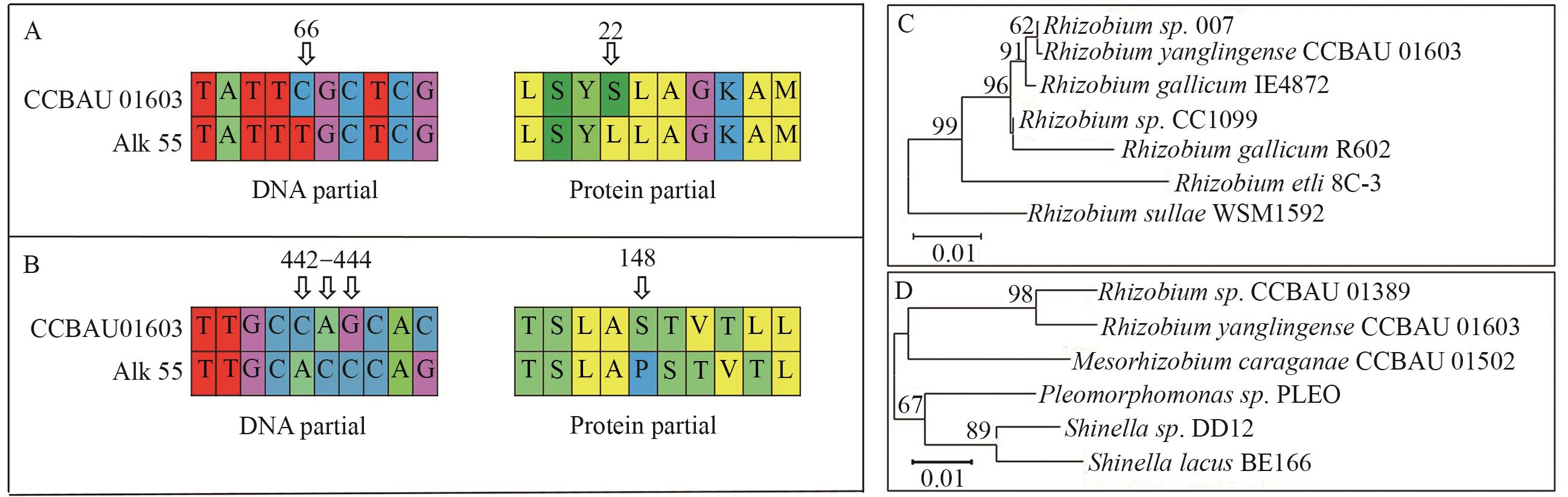
Fig. 1 Alignment analysis and conservation of aotM and trmD gene sequences in evolved isolates Alk_55A: Comparison of gene and amino acid sequences of trmD. B: Comparison of gene and amino acid sequences of aotM. C: Phylogenetic tree of trmD gene. D: Phylogenetic tree of aotM gene
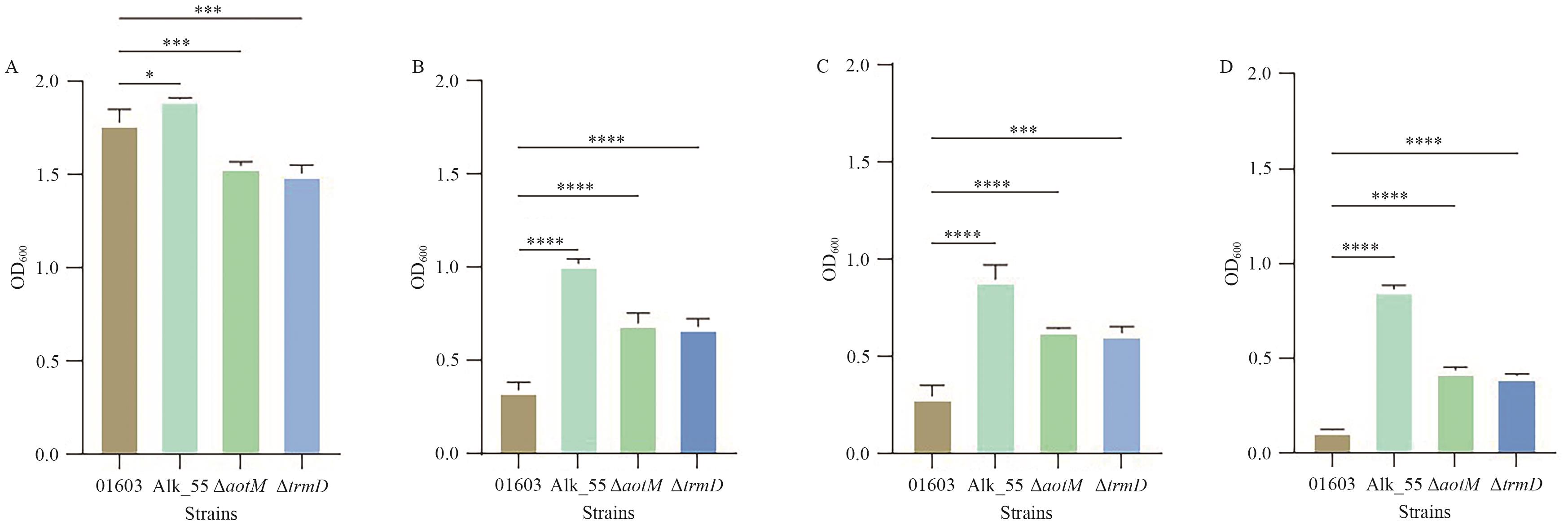
Fig. 2 Growth of rhizobia in YMA liquid medium with different concentrations of NaClA: No NaCl. B: Containing 0.5% NaCl. C: Containing 0.6% NaCl. D: Containing 0.7% NaCl; *P<0.05, **P<0.01, ***P<0.001, ****P<0.000 1. The same below
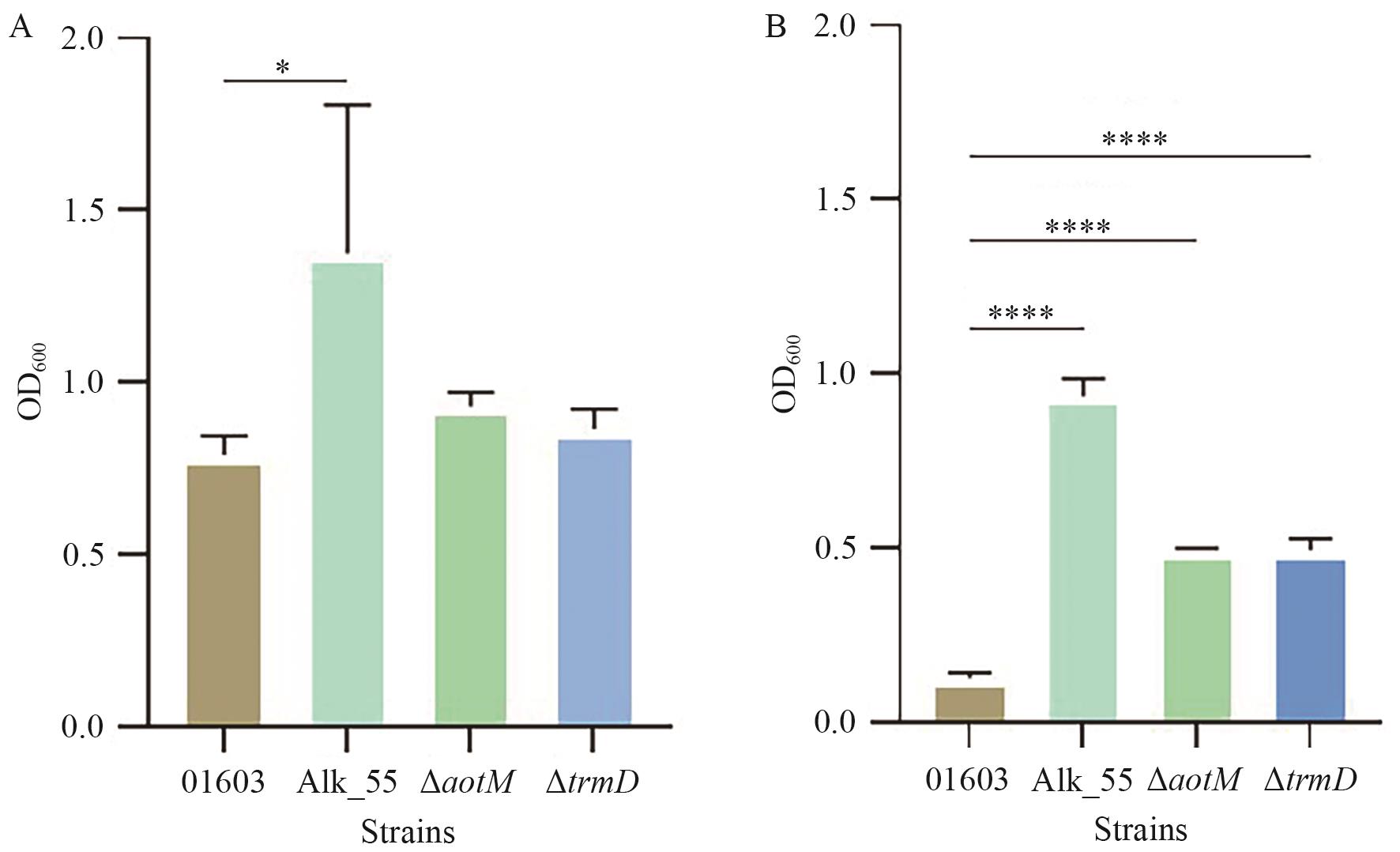
Fig. 3 Growth of rhizobia in YMA liquid medium with different pH valuesA: YMA broth with pH value of 8.12 (containing 100 μL KOH stock solution). B: YMA broth with pH value 8.90 (containing 200 μL KOH stock solution)
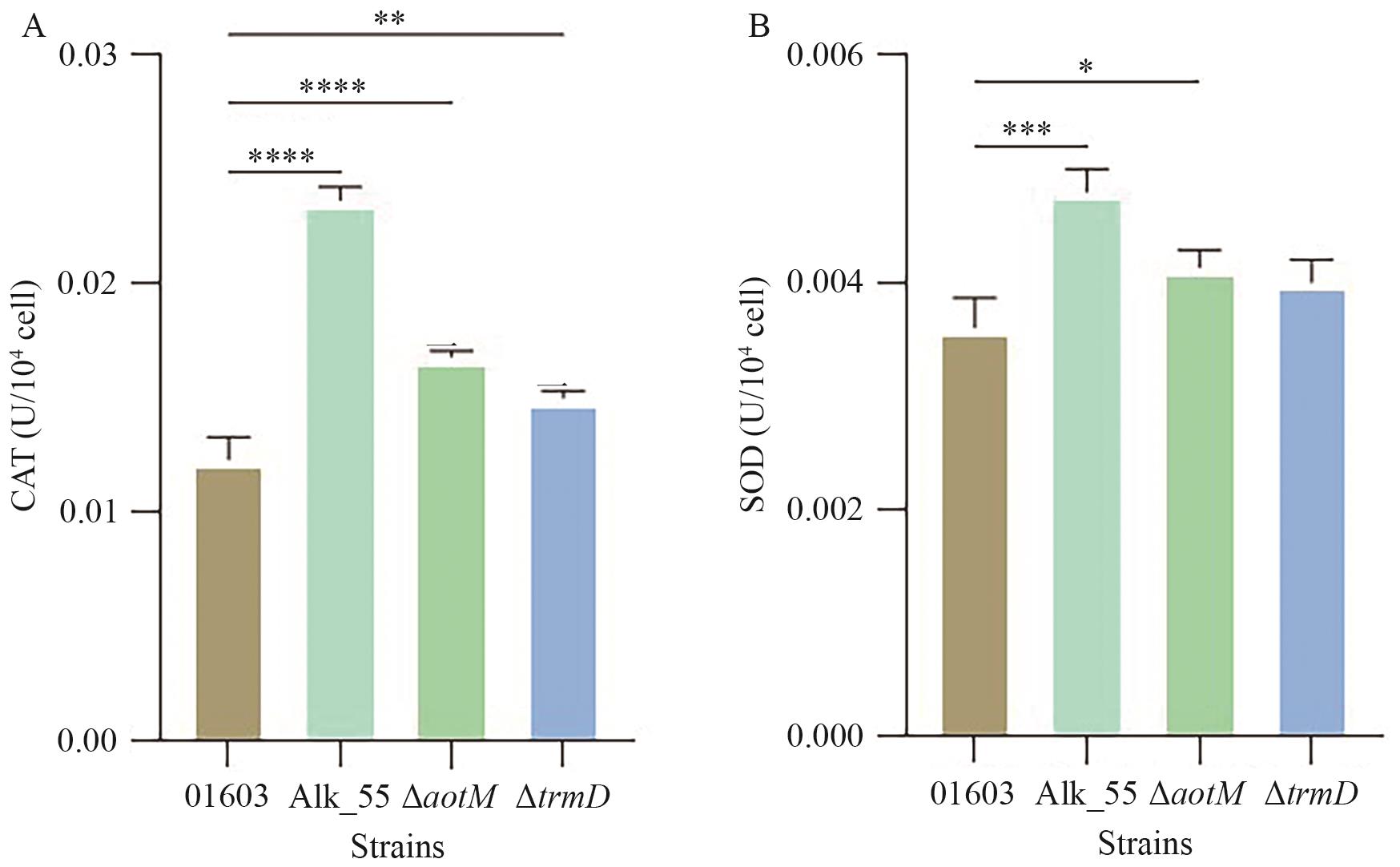
Fig. 4 Antioxidant enzyme activity of rhizobiaA: Catalase (CAT) activity. B: Superoxide dismutase (SOD) activity
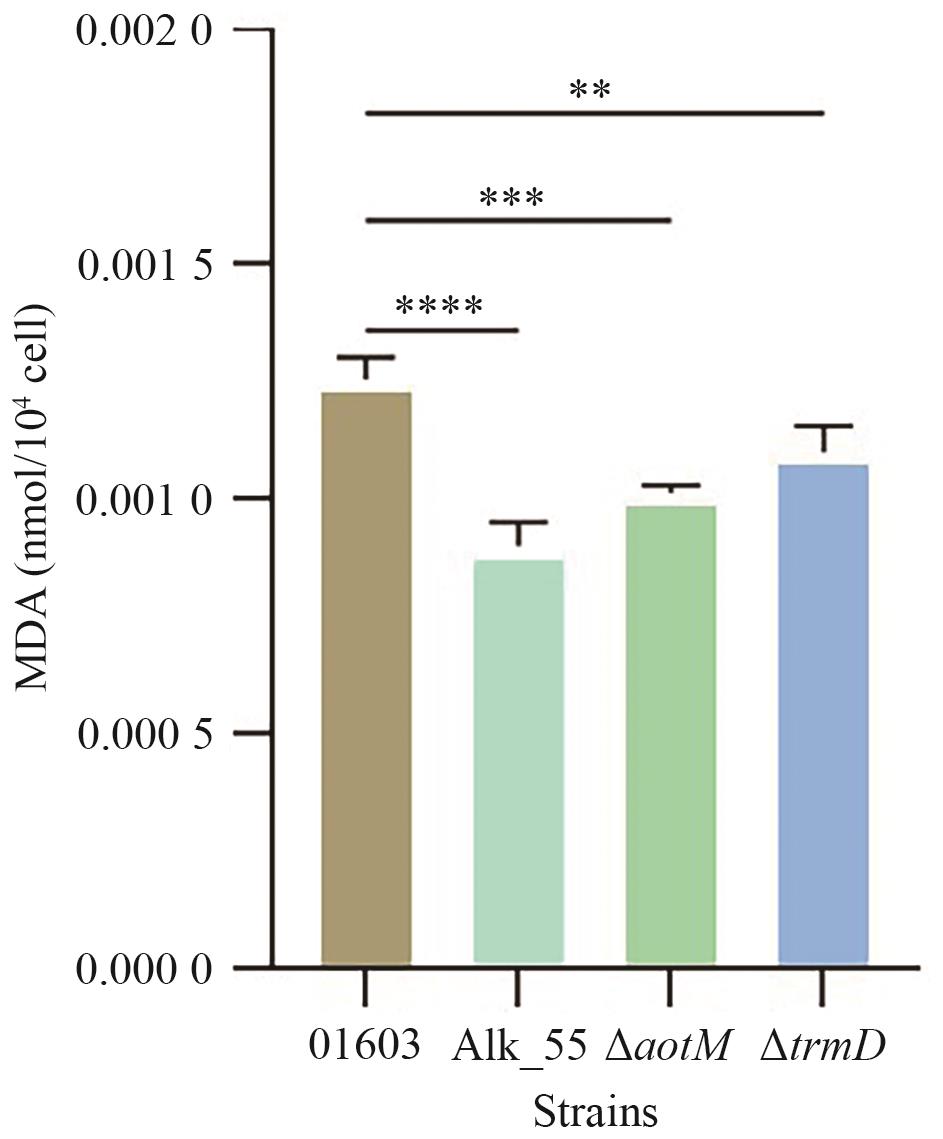
Fig. 5 MDA contents in the membrane of rhizobia
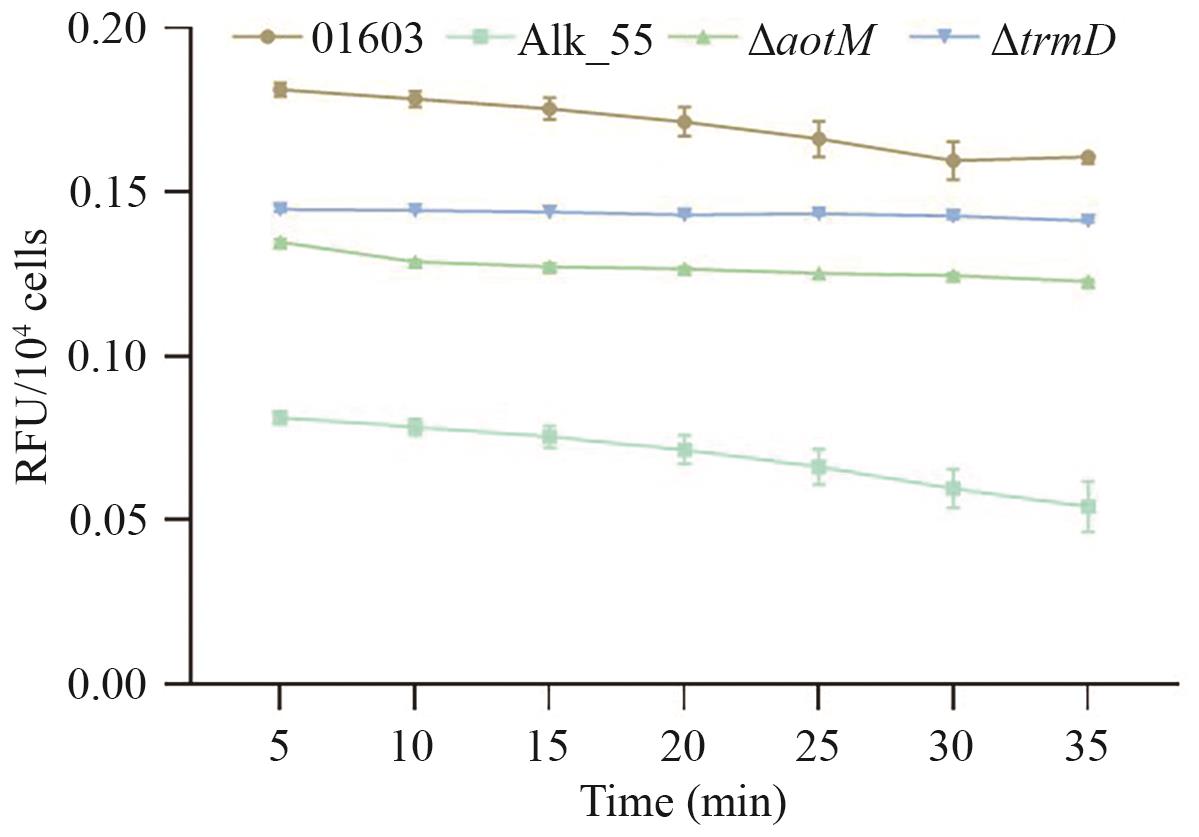
Fig. 6 Intracellular ROS accumulation in rhizobia
| [1] | Qin L, Jiang H, Tian J, et al. Rhizobia enhance acquisition of phosphorus from different sources by soybean plants [J]. Plant Soil, 2011, 349(1/2): 25-36. |
| [2] | Laranjo M, Oliveira S. Tolerance of Mesorhizobium type strains to different environmental stresses [J]. Antonie Van Leeuwenhoek, 2011, 99(3): 651-662. |
| [3] | Wekesa C, Asudi GO, Okoth P, et al. Rhizobia contribute to salinity tolerance in common beans (Phaseolus vulgaris L.) [J]. Cells, 2022, 11(22): 3628. |
| [4] | Wdowiak-Wróbel S, Leszcz A, Małek W. Salt tolerance in Astragalus cicer microsymbionts: the role of Glycine betaine in osmoprotection [J]. Curr Microbiol, 2013, 66(5): 428-436. |
| [5] | Dong RS, Zhang J, Huan HF, et al. High salt tolerance of a Bradyrhizobium Strain and its promotion of the growth of Stylosanthes guianensis [J]. Int J Mol Sci, 2017, 18(8): 1625. |
| [6] | López M, Tejera NA, Iribarne C, et al. Trehalose and trehalase in root nodules of Medicago truncatula and Phaseolus vulgaris in response to salt stress [J]. Physiol Plant, 2008, 134(4): 575-582. |
| [7] | Laranjo M, Alexandre A, Oliveira S. Global transcriptional response to salt shock of the plant microsymbiont Mesorhizobium loti MAFF303099 [J]. Res Microbiol, 2017, 168(1): 55-63. |
| [8] | Gao HL, Ji YR, Chen WF. Selenite resistance and biotransformation to SeNPs in Sinorhizobium meliloti 1 021 and the synthetic promotion on alfalfa growth [J]. Microbiol Res, 2024, 280: 127568. |
| [9] | López-Gómez M, Cobos-Porras L, Hidalgo-Castellanos J, et al. Occurrence of polyamines in root nodules of Phaseolus vulgaris in symbiosis with Rhizobium tropici in response to salt stress [J]. Phytochemistry, 2014, 107: 32-41. |
| [10] | Shahid M, Altaf M, Danish M. The halotolerant exopolysaccharide-producing Rhizobium azibense increases the salt tolerance mechanism in Phaseolus vulgaris (L.) by improving growth, ion homeostasis, and antioxidant defensive enzymes [J]. Chemosphere, 2024, 360: 142431. |
| [11] | Li CY, Huang QY, Sun SL, et al. Preinoculation with Bradyrhizobium japonicum enhances the salt tolerance of Glycine max seedlings by regulating polyamine metabolism in roots [J]. Plant Physiol Biochem, 2024, 216: 109196. |
| [12] | Liu J, Chen XL, Zhan J, et al. The stimulation effect of seaweed polysaccharides on the lower pH of the salt-tolerant bacteria and their mechanism [J]. Curr Microbiol, 2025, 82(11): 508. |
| [13] | Kelly K, Misra R. Insight on the roles of stringent response, stringent-like response, and general stress response in hyperosmotic shock tolerance in Escherichia coli [J]. mBio, 2025, 16(11): e02575-e02525. |
| [14] | 杨冰洁, 袁晓霞, 高梦哲, 等. 基因envZ、iscS、asnC调控根瘤菌胞外多糖产量和环境适应性 [J]. 生物技术通报, 2024, 40(11): 277-284. |
| Yang BJ, Yuan XX, Gao MZ, et al. Exopolysaccharide yield and environmental adaptation of rhizobia regulated by gene envZ, iscS and asnC [J]. Biotechnol Bull, 2024, 40(11): 277-284. | |
| [15] | Ali Q, Shabaan M, Ashraf S, et al. Comparative efficacy of different salt tolerant rhizobial inoculants in improving growth and productivity of Vigna radiata L. under salt stress [J]. Sci Rep, 2023, 13: 17442. |
| [16] | Ben Gaied R, Sbissi I, Tarhouni M, et al. Bacterial endophytes from legumes native to arid environments are promising tools to improve Mesorhizobium-chickpea symbiosis under salinity [J]. Biology, 2024, 13(2): 96. |
| [17] | Ji ZJ, Yan H, Cui QG, et al. Competition between rhizobia under different environmental conditions affects the nodulation of a legume [J]. Syst Appl Microbiol, 2017, 40(2): 114-119. |
| [18] | Ji ZJ, Wu ZY, Chen WF, et al. Physiological and symbiotic variation of a long-term evolved Rhizobium strain under alkaline condition [J]. Syst Appl Microbiol, 2020, 43(5): 126125. |
| [19] | Hou YM, Matsubara R, Takase R, et al. TrmD: A methyl transferase for tRNA methylation with m1G37 [J]. Enzymes, 2017, 41: 89-115. |
| [20] | Clifton BE, Fariz MA, Uechi GI, et al. Evolutionary repair reveals an unexpected role of the tRNA modification m1G37 in aminoacylation [J]. Nucleic Acids Res, 2021, 49(21): 12467-12485. |
| [21] | Masuda I, Matsubara R, Christian T, et al. tRNA methylation is a global determinant of bacterial multi-drug resistance [J]. Cell Syst, 2019, 8(5): 475. |
| [22] | 王金华, 王明月, 张武先, 等. 石漠化地区4株豆科植物根瘤菌与红三叶的共生效应研究 [J]. 西部林业科学, 2014, 43(5): 53-57. |
| Wang JH, Wang MY, Zhang WX, et al. Symbiotic effect of 4 Trifolium pretense and leguminous rhizobia of rocky desertification area [J]. J West China For Sci, 2014, 43(5): 53-57. | |
| [23] | Li B. Identification of genes conferring plant salt tolerance using GWAS current success and perspectives [J]. Plant Cell Physiol, 2020, 61(8): 1419-1426. |
| [24] | Maróti G, Kondorosi Ã. Nitrogen-fixing Rhizobium-legume symbiosis: are polyploidy and host peptide-governed symbiont differentiation general principles of endosymbiosis? [J]. Front Microbiol, 2014, 5: 326. |
| [25] | Xu P, Wang ET. Diversity and regulation of symbiotic nitrogen fixation in plants [J]. Curr Biol, 2023, 33(11): R543-R559. |
| [26] | Pérez-Montaño F, del Cerro P, Jiménez-Guerrero I, et al. RNA-seq analysis of the Rhizobium tropici CIAT 899 transcriptome shows similarities in the activation patterns of symbiotic genes in the presence of apigenin and salt [J]. BMC Genom, 2016, 17: 198. |
| [27] | López-Leal G, Tabche M, Castillo-Ramírez S, et al. RNA-Seq analysis of the multipartite genome of Rhizobium etli CE3 shows different replicon contributions under heat and saline shock [J]. BMC Genom, 2014, 15(1): 770. |
| [28] | Lyu ZH, Wilson C, Ling JQ. Translational fidelity during bacterial stresses and host interactions [J]. Pathogens, 2023, 12(3): 383. |
| [29] | Masuda I, Hwang JY, Christian T, et al. Loss of N1-methylation of G37 in tRNA induces ribosome stalling and reprograms gene expression [J]. eLife, 2021, 10: e70619. |
| [30] | Masuda I, Yamaki Y, Detroja R, et al. tRNA methylation resolves codon usage bias at the limit of cell viability [J]. Cell Rep, 2022, 41(4): 111539. |
| [31] | Hulen C, Racine PJ, Chevalier S, et al. Identification of the PA1113 gene product as an ABC transporter involved in the uptake of carbenicillin in Pseudomonas aeruginosa PAO1 [J]. Antibiotics, 2020, 9(9): 596. |
| [32] | Mhamdi R, Nouairi I, ben Hammouda T, et al. Growth capacity and biochemical mechanisms involved in rhizobia tolerance to salinity and water deficit: Free living rhizobia response to abiotic constraints [J]. J Basic Microbiol, 2015, 55(4): 451-461. |
| [33] | Nie TY, Wang LQ, Liu YL, et al. A halophilic bacterium for bioremediation of saline-alkali land: the triadic and synergetic response mechanism of Oceanobacillus picturae DY09 to salt stress [J]. Microorganisms, 2025, 13(7): 1474. |
| [34] | Mhadhbi H, Jebara M, Limam F, et al. Rhizobial strain involvement in plant growth, nodule protein composition and antioxidant enzyme activities of chickpea-rhizobia symbioses: modulation by salt stress [J]. Plant Physiol Biochem, 2004, 42(9): 717-722. |
| [35] | Fukami J, de la Osa C, Ollero FJ, et al. Co-inoculation of maize with Azospirillum brasilense and Rhizobium tropici as a strategy to mitigate salinity stress [J]. Funct Plant Biol, 2018, 45(3): 328-339. |
| [36] | 盛艳敏, 尹金植, 石德成, 等. 盐碱协同胁迫对向日葵抗氧化酶系统的影响 [J]. 中国生物化学与分子生物学报, 2008, 24(8): 704-711. |
| Sheng YM, Yin JZ, Shi DC, et al. Coordinative effects of salt and alkali stresses on sunflower antioxidative enzymes [J]. Chin J Biochem Mol Biol, 2008, 24(8): 704-711. | |
| [37] | Hou YM, Masuda I, Gamper H. Codon-specific translation by m1G37 methylation of tRNA [J]. Front Genet, 2019, 9: 713. |
| [38] | 靳晓焕. 拟南芥tRNA-m1G37核苷修饰基因AtTrm5a及初生细胞壁合成相关转录因子的功能研究 [D]. 武汉: 华中农业大学, 2019. |
| Jin XH. Function analysis of tRNA m1G37 nucleoside modification gene AtTrm5a and primary cell wall related transcription factors in Arabidopsis thaliana [D]. Wuhan: Huazhong Agricultural University, 2019. | |
| [39] | 刘玉霞, 窦世娟, 王秀伶. 细菌中脯氨酸的生物合成、降解及功能 [J]. 微生物学报, 2021, 61(11): 3351-3362. |
| Liu YX, Dou SJ, Wang XL. Research progress in proline biosynthesis, degradation and function in bacteria [J]. Acta Microbiol Sin, 2021, 61(11): 3351-3362. |
| [1] | CHENG Shan, WANG Hui-wei, CHEN Chen, ZHU Ya-jing, LI Chun-xin, BIE Hai, WANG Shu-feng, CHEN Xian-gong, ZHANG Xiang-ge. Cloning of MYB Transcription Factor Gene CeMYB154 and Analysis of Salt Tolerance Function in Cyperus esculentus [J]. Biotechnology Bulletin, 2025, 41(6): 218-228. |
| [2] | YIN Zi-wei, HONG Yu. Study on the Effect of Rhodococcus rhodochrous NB1 on the Tolerance to Salt and Growth-promoting of Maize and Its Whole Genome [J]. Biotechnology Bulletin, 2024, 40(12): 193-207. |
| [3] | YANG Bing-jie, YUAN Xiao-xia, GAO Meng-zhe, SHEN Ao-long, LI Hua, JI Zhao-jun. Exopolysaccharide Yield and Environmental Adaptation of Rhizobia Regulated by Gene envZ, iscS and asnC [J]. Biotechnology Bulletin, 2024, 40(11): 277-284. |
| [4] | YANG Dan, WANG Gang, WANG Wu-teng, FAN Ya-jun, XIAO Wei-wei, ZHANG Si-qi, LI Qian, JI Jing. Physiological Responses of Soybean to Phenanthrene and Its Tolerance Mechanism [J]. Biotechnology Bulletin, 2020, 36(10): 1-7. |
| [5] | SUN De-zhi, YANG Heng-shan, SONG Gui-yun, FAN Fu, HOU Mi-hong, PENG Jing, HAN Xiao-ri. Remediation of Salt Damage to Tomato Seedlings from Root Application of Salicylic Acid [J]. Biotechnology Bulletin, 2019, 35(11): 30-38. |
| [6] | CHEN Hao-yu, XU Rui-tao, CHENG Zhi-xiang, GAO Qiang, ZHANG Jian. Responses of Asperigillus niger to Oxidative Stress Under H2O2 Exposure [J]. Biotechnology Bulletin, 2018, 34(4): 201-207. |
| Viewed | ||||||
|
Full text |
|
|||||
|
Abstract |
|
|||||
