







Biotechnology Bulletin ›› 2026, Vol. 42 ›› Issue (11): 309-317.doi: 10.13560/j.cnki.biotech.bull.1985.2026-0320
SONG Zi-chuan1,2, REN He1,2, MO Wan-ting1,2, NIE Jian-qi1,2, BAI Zhong-hu1,2,3( )
Received:2026-03-20
Online:2026-11-26
Published:2026-11-03
Contact:
BAI Zhong-hu
E-mail:baizhonghu@jiangnan.edu.cn
SONG Zi-chuan, REN He, MO Wan-ting, NIE Jian-qi, BAI Zhong-hu. Enhancing rAAV Production through Directed Evolution and High-throughput Screening of Rep Protein[J]. Biotechnology Bulletin, 2026, 42(11): 309-317.
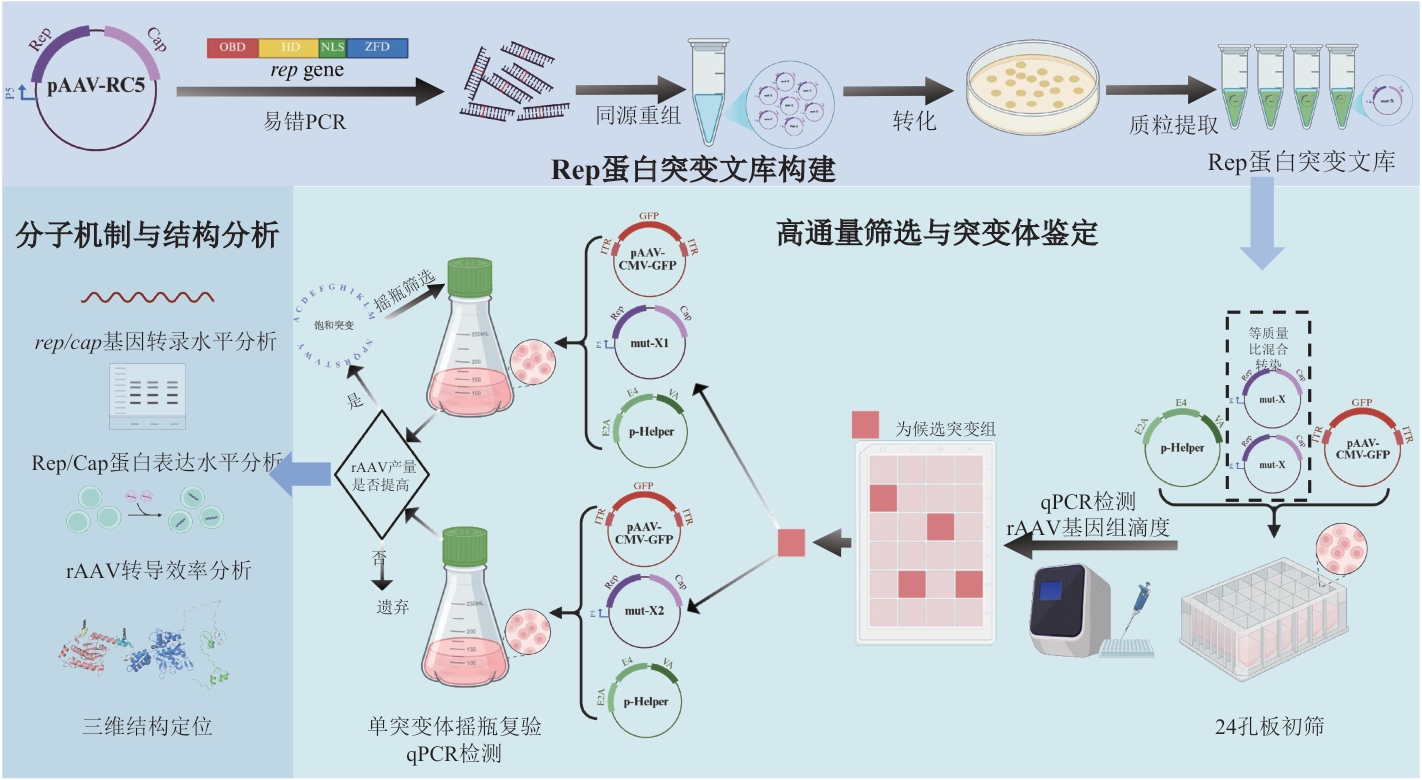
Fig. 1 Schematic workflow of high-throughput screening and functional analysis of Rep protein mutants
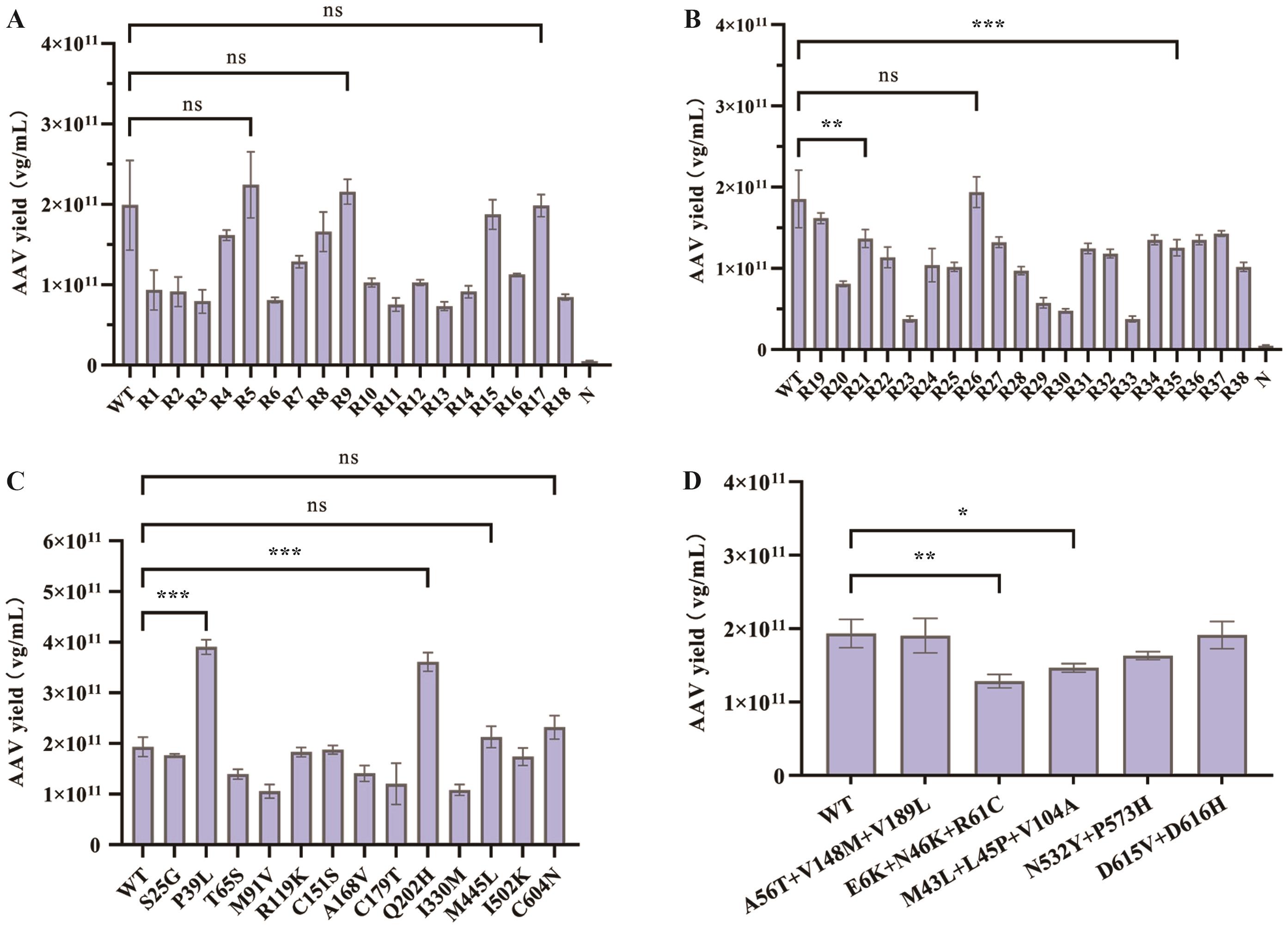
Fig. 2 High-throughput screening and shake-flask validation of Rep protein mutantsA, B: rAAV yields of candidate mutant groups. C: Shake-flask validation results of single-point mutants from candidate mutant groups. D: Shake-flask validation results of multi-point combination mutants from candidate mutant groups. *, **, and *** indicate P<0.05, P<0.01, and P<0.001, respectively; ns indicates no significant difference. The same below
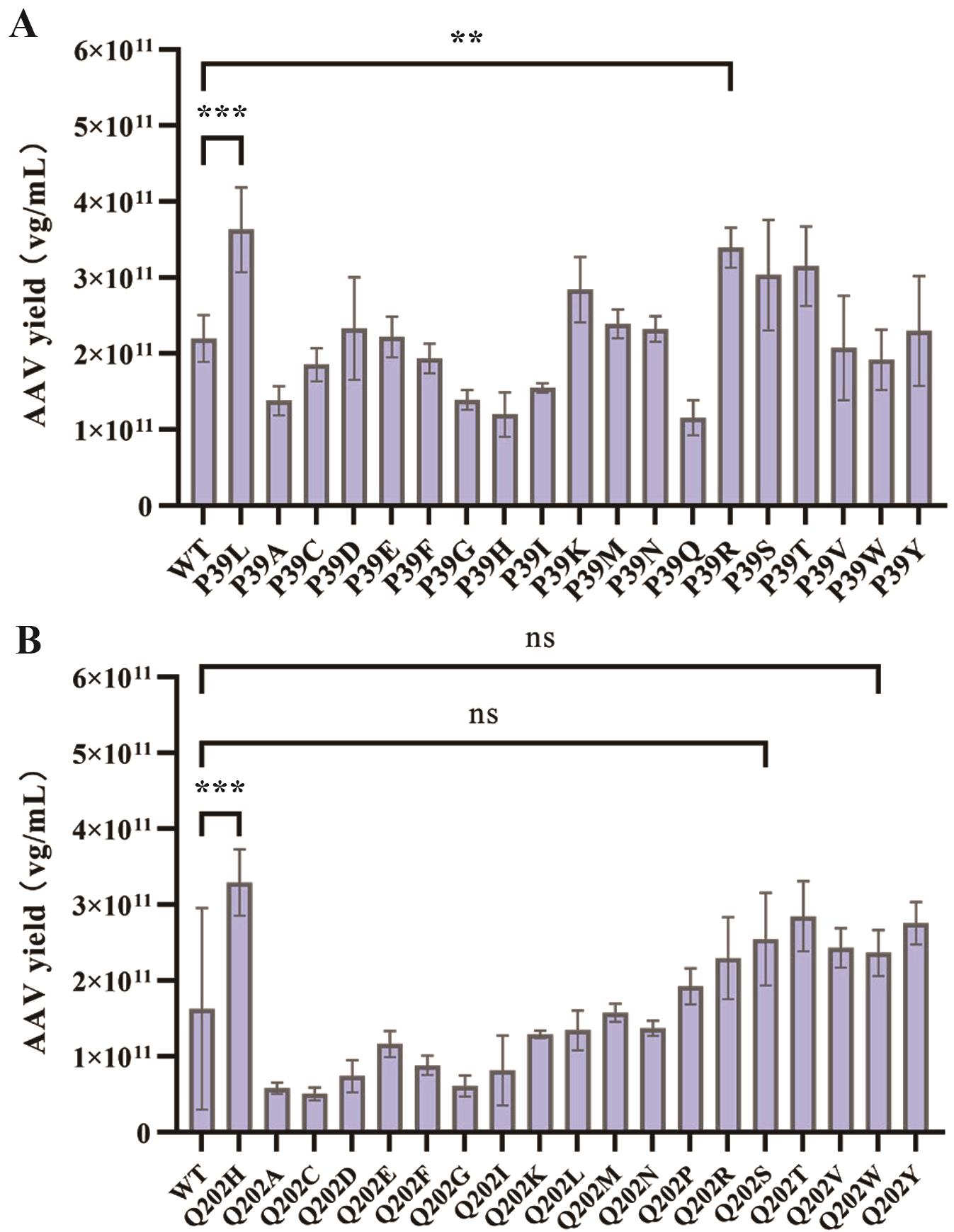
Fig. 3 rAAV yields of saturation mutants at P39 and Q202 sitesA: rAAV yields of saturation mutants at the P39 site. B: rAAV yields of saturation mutants at the Q202 site
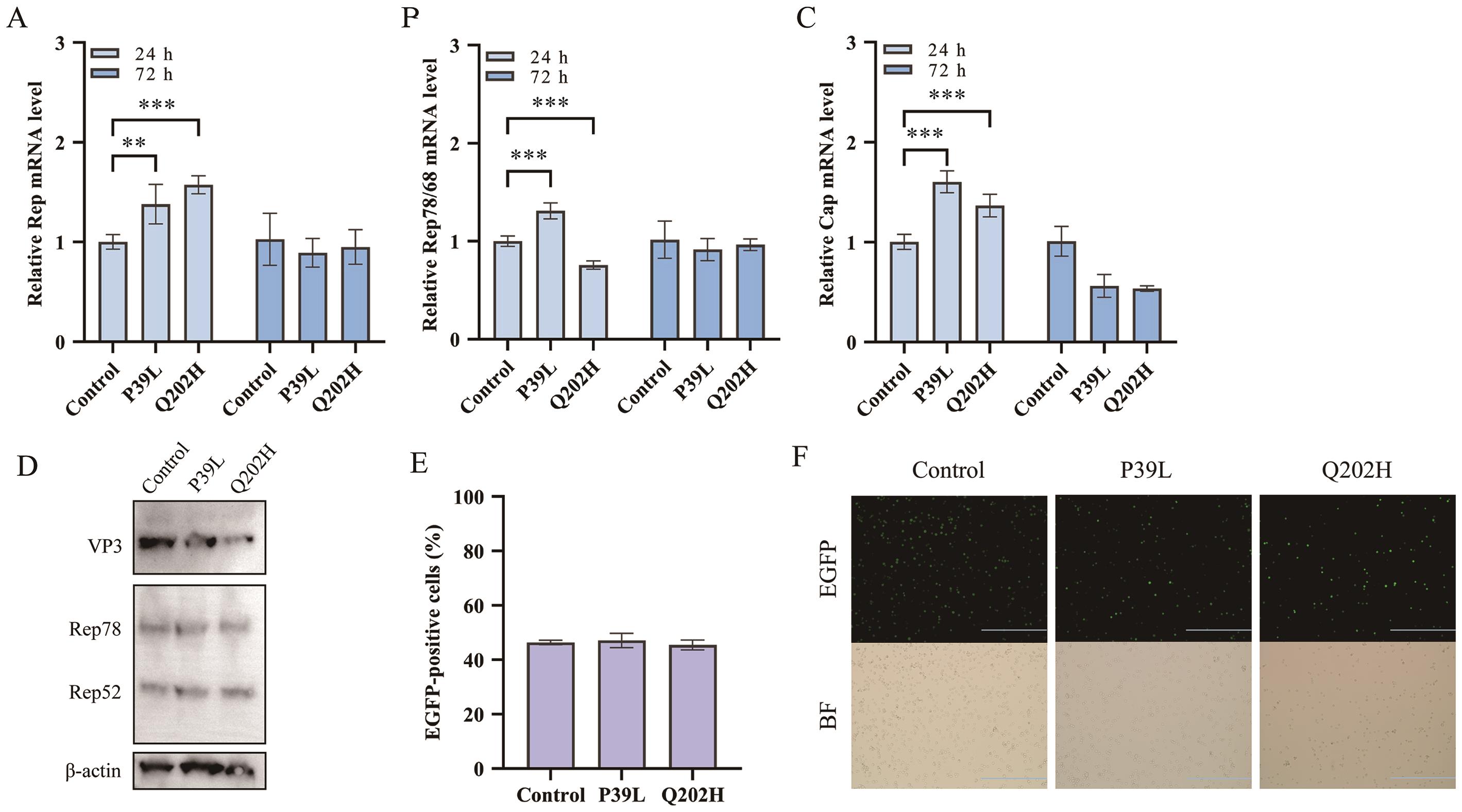
Fig. 4 Effects of P39L and Q202H mutations on rep/cap gene transcription, protein expression and rAAV transduction efficiencyA: rep gene transcription levels at 24 h and 72 h post-transfection. B: Rep78/68 gene transcription levels at 24 h and 72 h post-transfection. C: cap gene transcription levels at 24 h and 72 h post-transfection. D: Western blot analysis of Rep78/68, Rep52/40, and VP1/2/3 protein expression at 72 h post-transfection. E: Percentage of EGFP-positive cells detected by flow cytometry at 48 h post‑infection. F: Representative fluorescence micrographs showing EGFP expression at 48 h post-transduction. Scale bars, 100 μm
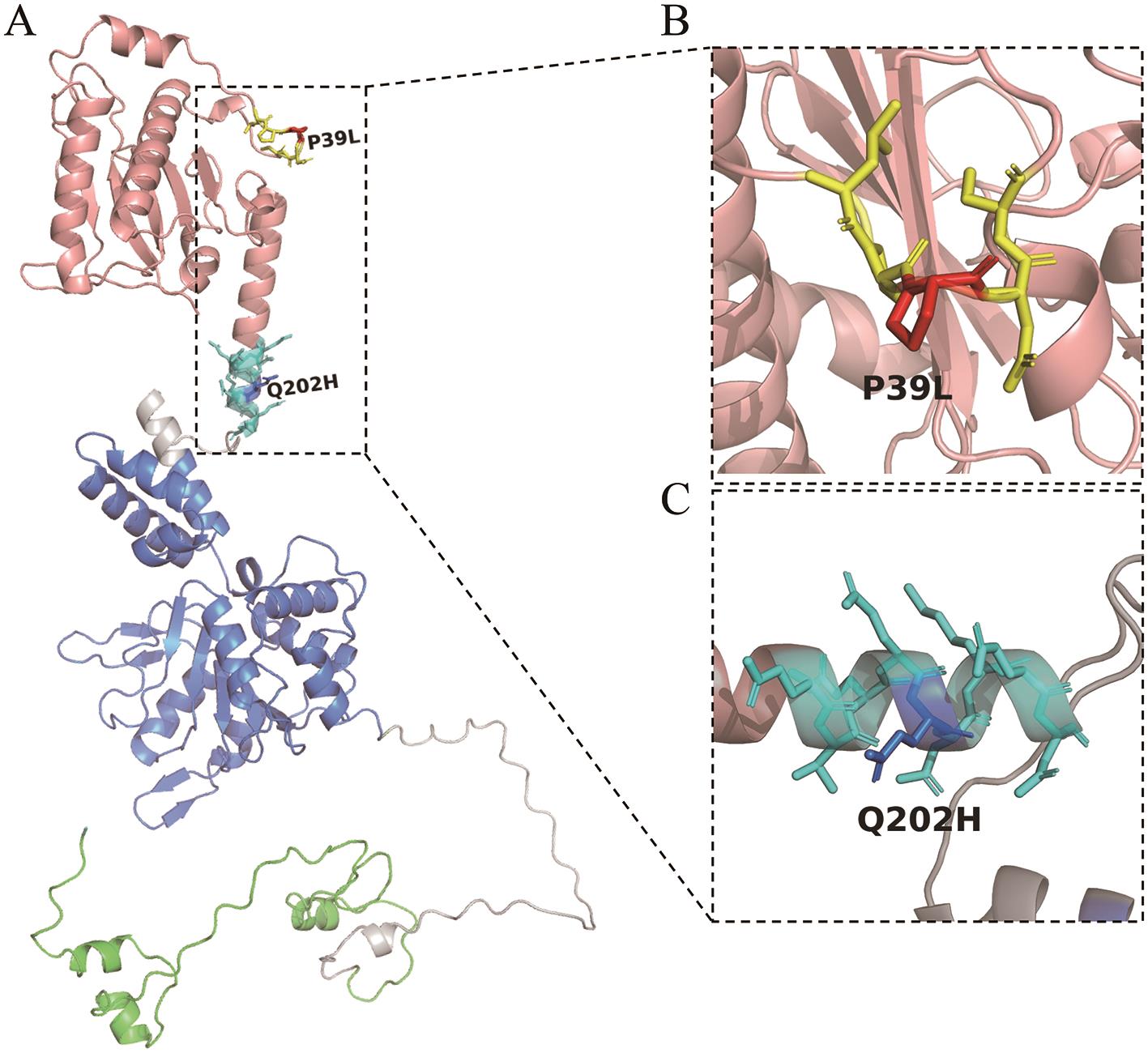
Fig. 5 AlphaFold3‑predicted structure of Rep78 protein and the localization of P39 and Q202A: Predicted structure of Rep78 protein with annotation of major functional regions. B: Spatial localization of P39 in the OBD region. C: Spatial localization of Q202 in the OBD-HD transition region
| [1] | Pupo A, Fernández A, Low SH, et al. AAV vectors: The Rubik’s cube of human gene therapy [J]. Mol Ther, 2022, 30(12): 3515-3541. |
| [2] | Wang JH, Gessler DJ, Zhan W, et al. Adeno-associated virus as a delivery vector for gene therapy of human diseases [J]. Sig Transduct Target Ther, 2024, 9: 78. |
| [3] | Cheng SY, Luo YW, Malachi A, et al. Low-dose recombinant adeno-associated virus-mediated inhibition of vascular endothelial growth factor can treat neovascular pathologies without inducing retinal vasculitis [J]. Hum Gene Ther, 2021, 32(13/14): 649-666. |
| [4] | Keeler AM, Zhan W, Ram S, et al. The curious case of AAV immunology [J]. Mol Ther, 2025, 33(5): 1946-1965. |
| [5] | Samelson-Jones BJ, George LA. Adeno-associated virus gene therapy for hemophilia [J]. Annu Rev Med, 2023, 74: 231-247. |
| [6] | Ren H, Nie JQ, Song ZC, et al. Enhanced AAV production via rational design of a novel pHelper vector integrated with HSV-1 helper genes [J]. Synth Syst Biotechnol, 2026, 12: 352-363. |
| [7] | 沈晓丽, 周群刚, 郑然, 等. 重组腺相关病毒对NK92细胞的转导条件优化 [J]. 中国药科大学学报, 2023, 54(1): 115-121. |
| Shen XL, Zhou QG, Zheng R, et al. Optimization of transduction conditions of recombinant adeno-associated vi-rus into NK92 cells [J]. J China Pharm Univ, 2023, 54(1): 115-121. | |
| [8] | Srivastava A, Mallela KMG, Deorkar N, et al. Manufacturing challenges and rational formulation development for AAV viral vectors [J]. J Pharm Sci, 2021, 110(7): 2609-2624. |
| [9] | Joiner J, Huang ZR, McHugh K, et al. Process modeling of recombinant adeno-associated virus production in HEK293 cells [J]. Curr Opin Chem Eng, 2022, 36: 100823. |
| [10] | Park S, Shin S, Lee H, et al. Enhancing the production of adeno-associated virus (AAV)2 and AAV9 with high full capsid ratio in HEK293 cells through design-of-experiment optimization of triple plasmid ratio [J]. Biotechnol J, 2024, 19(3): 2300667. |
| [11] | Lin YC, Boone M, Meuris L, et al. Genome dynamics of the human embryonic kidney 293 lineage in response to cell biology manipulations [J]. Nat Commun, 2014, 5: 4767. |
| [12] | 李蕊蕊, 那道远, 王洪林, 等. 重组腺相关病毒瞬时表达系统的理性设计及其高效生产工艺的建立 [J]. 生物技术通报, 2024, 40(12): 61-71. |
| Li RR, ( Na/Nuo) DY, Wang HL, et al. Rational design of recombinant adeno-associated virus transient expressing system and establishment of its efficient production process [J]. Biotechnol Bull, 2024, 40(12): 61-71. | |
| [13] | 张峒, 蒋卓含, 吴奕凡, 等. 利用多基因缺失型杆状病毒在昆虫细胞中生产腺相关病毒 [J]. 生物工程学报, 2024(2): 473-484. |
| Zhang T, Jiang ZH, Wu YF, et al. Production of adeno-associated virus in insect cells using multiple gene deleted baculovirus [J]. Chin J Biotechnol, 2024(2): 473-484. | |
| [14] | Quan DN, Shiloach J. rAAV production and titration at the microscale for high-throughput screening [J]. Hum Gene Ther, 2022, 33(1/2): 94-102. |
| [15] | Ren H, Nie JQ, Song ZC, et al. Enhanced adeno-associated virus production in HEK293 cells via dual inducible control of cap and rep proteins [J]. Biotech & Bioengineering, 2025, 122(10): 2862-2873. |
| [16] | Davidsson M, Negrini M, Hauser S, et al. A comparison of AAV-vector production methods for gene therapy and preclinical assessment [J]. Sci Rep, 2020, 10: 21532. |
| [17] | Su WH, Patrício MI, Duffy MR, et al. Self-attenuating adenovirus enables production of recombinant adeno-associated virus for high manufacturing yield without contamination [J]. Nat Commun, 2022, 13: 1182. |
| [18] | Wilmott P, Lisowski L, Alexander IE, et al. A user’s guide to the inverted terminal repeats of adeno-associated virus [J]. Hum Gene Ther Meth, 2019, 30(6): 206-213. |
| [19] | Cassell GD, Weitzman MD. Characterization of a nuclear localization signal in the C-terminus of the adeno-associated virus Rep68/78 proteins [J]. Virology, 2004, 327(2): 206-214. |
| [20] | Patra AT, Tan E, Kok YJ, et al. Temporal insights into molecular and cellular responses during rAAV production in HEK293T cells [J]. Mol Ther Meth Clin Dev, 2024, 32(3): 101278. |
| [21] | Mietzsch M, Eddington C, Jose A, et al. Improved genome packaging efficiency of adeno-associated virus vectors using rep hybrids [J]. J Virol, 2021, 95(19): e00773-e00721. |
| [22] | Jain NK, Ogden PJ, et al. Comprehensive mutagenesis maps the effect of all single-codon mutations in the AAV2 rep gene on AAV production [J]. eLife, 2024, 12: RP87730. |
| [23] | Musayev FN, Zarate-Perez F, Bishop C, et al. Structural insights into the assembly of the adeno-associated virus type 2 Rep68 protein on the integration site AAVS1 [J]. J Biol Chem, 2015, 290(46): 27487-27499. |
| [24] | Jaiswal R, Braud B, Hernandez-Ramirez KC, et al. Cryo-EM structure of AAV2 Rep68 bound to integration site AAVS1: insights into the mechanism of DNA melting [J]. Nucleic Acids Res, 2025, 53(3): gkaf033. |
| [25] | Mahon MJ. Vectors bicistronically linking a gene of interest to the SV40 large T antigen in combination with the SV40 origin of replication enhance transient protein expression and luciferase reporter activity [J]. BioTechniques, 2011, 51(2): 119-126. |
| [26] | Asokan A, Schaffer DV, Jude Samulski R. The AAV vector toolkit: poised at the clinical crossroads [J]. Mol Ther, 2012, 20(4): 699-708. |
| [27] | Davis MD, Wu JW, Owens RA. Mutational analysis of adeno-associated virus type 2 Rep68 protein endonuclease activity on partially single-stranded substrates [J]. J Virol, 2000, 74(6): 2936-2942. |
| [28] | Seyffert M, Glauser DL, Schraner EM, et al. Novel mutant AAV2 rep proteins support AAV2 replication without blocking HSV-1 helpervirus replication [J]. PLoS One, 2017, 12(1): e0170908. |
| [29] | Zarate-Perez F, Bardelli M, Burgner JW, et al. The interdomain linker of AAV-2 Rep68 is an integral part of its oligomerization domain: role of a conserved SF3 helicase residue in oligomerization [J]. PLoS Pathog, 2012, 8(6): e1002764. |
| [30] | Hickman AB, Ronning DR, Perez ZN, et al. The nuclease domain of adeno-associated virus rep coordinates replication initiation using two distinct DNA recognition interfaces [J]. Mol Cell, 2004, 13(3): 403-414. |
| [31] | Chen YX, Hu SL, Lee W, et al. A comprehensive study of the effects by sequence truncation within inverted terminal repeats (ITRs) on the productivity, genome packaging, and potency of AAV vectors [J]. Microorganisms, 2024, 12(2): 310. |
| [1] | TIAN Yun, KONG Chen, YANG Chong, LIU Tong-gao, GAO Hong-rui, LI Jia-hui, MA Yun, CAI Bei. CRISPR-based High-throughput Screening Technology and Its Applications in Livestock Research [J]. Biotechnology Bulletin, 2025, 41(12): 82-94. |
| [2] | LI Rui-rui, NA Dao-yuan, WANG Hong-lin, ZHAO Liang, TAN Wen-Song, YE Qian. Rational Design of Recombinant Adeno-associated Virus Transient Expressing System and Establishment of Its Efficient Production Process [J]. Biotechnology Bulletin, 2024, 40(12): 61-71. |
| [3] | PI Yi-fei, SONG Xin-hui, WANG Xi-lin, LI Jin-jin, SUN Chang-bin, XU Wei. High-throughput Screening System for Functional R-loop Loci Based on R-loop Targeted Editing Technology [J]. Biotechnology Bulletin, 2024, 40(10): 181-190. |
| [4] | XUE Ning, WANG Jin, LI Shi-xin, LIU Ye, CHENG Hai-jiao, ZHANG Yue, MAO Yu-feng, WANG Meng. Construction of L-phenylalanine High-producing Corynebacterium glutamicum Engineered Strains via Multi-gene Simultaneous Regulation Combined with High-throughput Screening [J]. Biotechnology Bulletin, 2023, 39(9): 268-280. |
| [5] | LIU Jin-sheng, CHEN Zhen-ya, HUO Yi-xin, GUO Shu-yuan. Application of FACS Technology in the Directed Evolution of Enzyme [J]. Biotechnology Bulletin, 2023, 39(10): 93-106. |
| [6] | ZHANG Xue, TAN Yu-meng, JIANG Hai-xia, YANG Guang-yu. Directed Evolution of α-1,2-fucosyltransferase by a Single-cell Ultra-high-throughput Screening Method [J]. Biotechnology Bulletin, 2022, 38(1): 289-298. |
| [7] | MA Fu-qiang, YANG Guang-yu. Ultra-high-throughput Screening System Based on Droplet Microfluidics and Its Applications in Synthetic Biology [J]. Biotechnology Bulletin, 2017, 33(1): 83-92. |
| [8] | ZHANG Jing1, 2, SUN Rui-qiu2, TANG Yan-ting2, LIU Xiang2. Establishment and Application of a High-throughput Drug Screening Assay Targeting Macrophage Migration Inhibitory Factor [J]. Biotechnology Bulletin, 2016, 32(9): 253-259. |
| [9] | Yin Zifei, Wang Li’na, Wang Yuan, Ling Chen. Research Advances on Increasing the Transduction Efficiency of Recombinant Adeno-associated Viral Vectors [J]. Biotechnology Bulletin, 2015, 31(9): 49-59. |
| [10] | Qin Xiulin,Qian Jiangchao,Chu Ju. High-error-rate Random Mutagenesis of GAP Promoter in Pichia pastoris Using an Optimited Error Prone PCR [J]. Biotechnology Bulletin, 2014, 30(6): 211-217. |
| [11] | Fang Yueqin, Guo Juanning, Lu Haojie, Zhu Guoqiang,. Construction of a Multipurpose M13KE Phage Display System [J]. Biotechnology Bulletin, 2014, 0(2): 143-147. |
| [12] | Zhang Jie, Liu Changbai. Protein Fragment Complementation Assay(PCA)and the Applications [J]. Biotechnology Bulletin, 2013, 0(2): 67-71. |
| Viewed | ||||||
|
Full text |
|
|||||
|
Abstract |
|
|||||
