







生物技术通报 ›› 2026, Vol. 42 ›› Issue (3): 79-95.doi: 10.13560/j.cnki.biotech.bull.1985.2025-1025
杜连达( ), 魏萌萌, 陈泽, 郭伟, 赵婷婷(), 胡大刚()
收稿日期:2025-09-26
出版日期:2026-03-26
发布日期:2026-04-23
通讯作者:
胡大刚,男,博士,教授,研究方向 :苹果果实品质生物学与营养健康;E-mail: fap_296566@163.com作者简介:杜连达,男,博士,研究方向 :苹果果实品质生物学;E-mail: liandadu@126.com
基金资助:
DU Lian-da(), WEI Meng-meng, CHEN Ze, GUO Wei, ZHAO Ting-ting(), HU Da-gang()
Received:2025-09-26
Published:2026-03-26
Online:2026-04-23
摘要:
糖酸平衡是苹果果实品质评价体系中的关键参数,既综合反映了糖类与有机酸的代谢平衡,又直接决定其风味特征与市场价值。苹果果实糖酸的形成受遗传背景与环境因子双重调控,其代谢机制及调控模式已成为果实品质研究的核心热点之一。目前,光照、温度、水分与土壤养分等环境因子不仅独立影响糖与有机酸的合成、降解及转运过程,更通过复杂的交互网络共同塑造果实代谢格局。本文综述了苹果糖酸代谢与转运的分子调控机制,系统分析了光照、温度、水分与养分供应等环境因子协同调控信号转导途径间接影响碳流分配与酸积累。这些多维度的环境交互作用构成了糖酸代谢调控的核心生态网络,同时探讨了农业管理措施在调节糖酸平衡与提升果实风味中的调控潜力与现存问题。未来研究应结合多组学、单细胞及空间转录组等前沿技术,解析基因型‒环境‒管理互作下的糖酸代谢网络,揭示环境信号整合与表观遗传记忆的分子基础。深入理解这些机制,不仅有助于开展面向环境适应性的苹果育种,还为应对气候变化背景下的果实品质稳定与优质风味形成提供理论支撑与实践方向。
杜连达, 魏萌萌, 陈泽, 郭伟, 赵婷婷, 胡大刚. 环境因子对苹果果实糖酸品质的影响:多因子交互作用与环境适应性育种[J]. 生物技术通报, 2026, 42(3): 79-95.
DU Lian-da, WEI Meng-meng, CHEN Ze, GUO Wei, ZHAO Ting-ting, HU Da-gang. Effects of Environmental Factors on Sugar-acid Quality in Apple Fruits: Multi-factor Interactions and Environmental Adaption Breeding[J]. Biotechnology Bulletin, 2026, 42(3): 79-95.
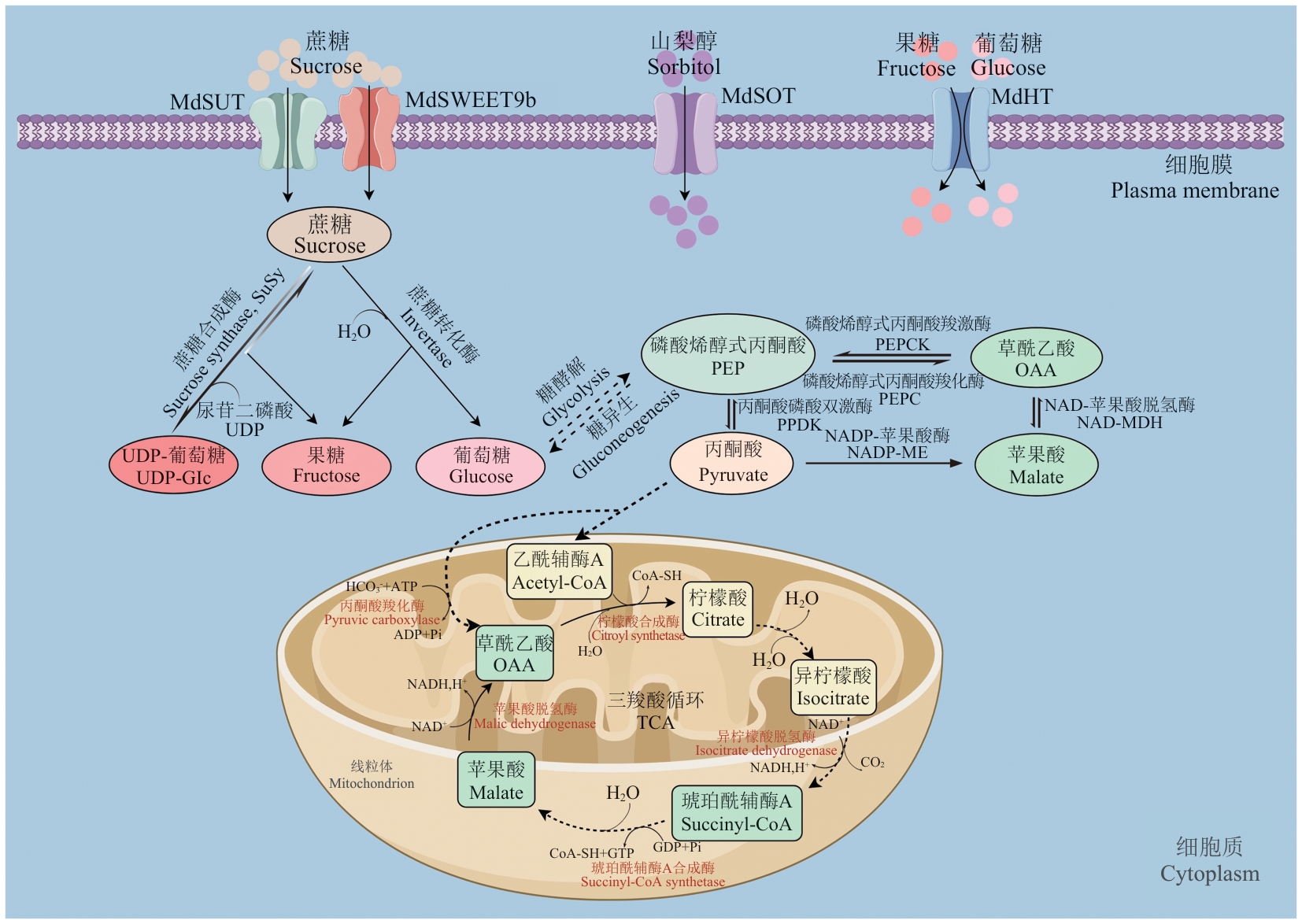
图1 苹果糖酸代谢途径网络(细胞膜-胞质-线粒体)糖经过膜转运蛋白跨膜转运到细胞质中,其中蔗糖通过蔗糖合成酶以及蔗糖转化酶分解为果糖和葡萄糖等,同时在细胞质中葡萄糖发生糖酵解过程产生丙酮酸和苹果酸,丙酮酸进一步通过线粒体的三羧酸循环产生苹果酸等有机酸,同时磷酸烯醇式丙酮酸通过糖异生作用生成葡萄糖。OAA:草酰乙酸;PEP:磷酸烯醇式丙酮酸;PEPCK:磷酸烯醇式丙酮酸羧激酶;PPDK:丙酮酸磷酸双激酶;NADP-ME:NADP-苹果酸酶;NAD-MDH:NAD-苹果酸脱氢酶;TCA:三羧酸循环
Fig. 1 Metabolic pathway network of sugar-acid in apple fruit (Cell membrane-cytoplasm-mitochondria)Sugars are transported across membranes into the cytoplasm via specific membrane transport proteins. Within the cytoplasm, sucrose is hydrolyzed to fructose and glucose by sucrose synthase and invertase. Subsequently, glucose undergoes glycolysis to produce pyruvate and malate. Pyruvate is further metabolized through the mitochondrial TCA cycle to generate malate and other organic acids. Meanwhile, phosphoenolpyruvate regenerate glucose by gluconeogenesis. OAA: Oxaloacetic acid. PEP: Phosphoenolpyruvate. PEPCK: Phosphoenolpyruvate carboxykinase. PPDK: Pyruvate phosphate dikinase. NADP-ME: NADP-malic enzyme. NAD-MDH: NAD-malate dehydrogenase. TCA: Tricarboxylic acid cycle
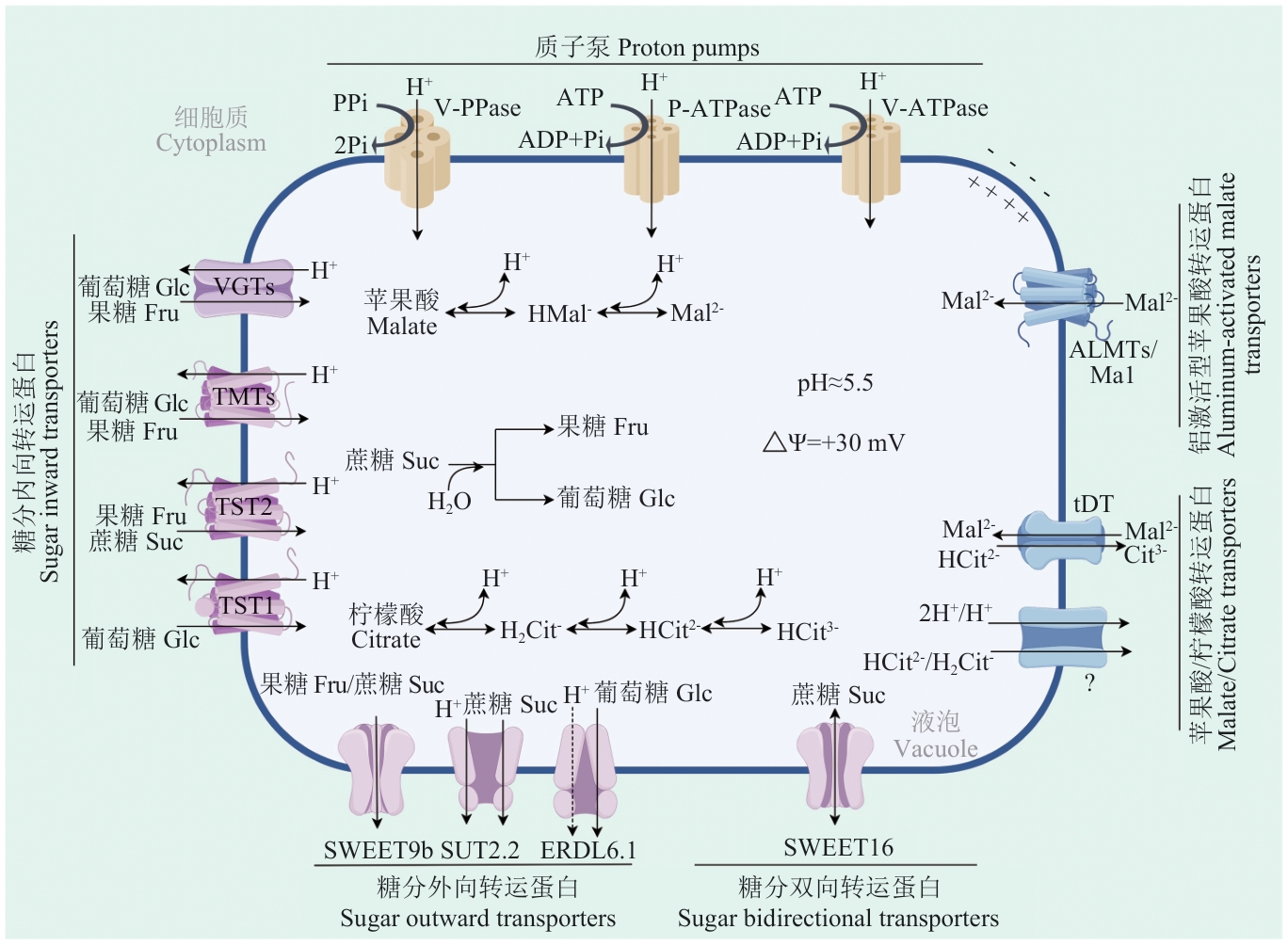
图2 苹果液泡内糖酸转运和“酸陷阱”模型苹果液泡作为重要的糖酸交互场所,其液泡膜承载的多种转运蛋白影响糖酸的储存与外排,包括糖分内向转运蛋白、糖分外向转运蛋白、糖分双向转运蛋白、苹果酸/柠檬酸转运蛋白、铝激活型苹果酸转运蛋白和质子泵。糖一般以葡萄糖、果糖以及蔗糖形式,而酸主要为苹果酸和柠檬酸穿梭于液泡与细胞质间。通过质子泵作用,苹果液泡pH值一般维持在5.5左右,使苹果酸和柠檬酸产生梯度解离储存于液泡中。Fru:果糖;Glc:葡萄糖;Suc:蔗糖
Fig. 2 Sugar and acid transport within the vacuole and the ‘acid trap’ model in appleAs a crucial site for sugar-acid interactions, the vacuole in apple cells hosts multiple transport proteins on its tonoplast that regulate the storage and efflux of these compounds. Transporters include sugar influx transporters, sugar efflux transporters, bidirectional movement of sugars, as well as malate/citrate transporters, aluminum-activated malate transporters, and proton pumps. Sugars are mainly transported in the forms of glucose, fructose, and sucrose, while organic acids such as malate and citrate shuttle between the vacuole and the cytosol. Driven by proton pump activity, the vacuolar pH in apples is typically maintained at around 5.5, which facilitates the gradient-dependent dissociation and accumulation of malate and citrate within the vacuole. Fru: Fructose. Glc: Glucose. Suc: Sucrose
发育阶段 Developmental stages | 温度参数 Temperature parameter | 主要品质影响 Primary effects on quality | 潜在机制 Potential mechanism | 参考文献 Reference |
|---|---|---|---|---|
6月下旬‒7月上旬 Late June to early July | 平均最低温 Average minimum temperature | 可溶性固形物 Soluble solids | 影响糖合成代谢 Influence sugar biosynthesis and metabolism | [ |
日均温 Daily mean temperature | ||||
7月中下旬 Mid-to-late July | 日均温 Daily mean temperature | 调节糖酸比 Regulate the sugar-acid ratio | 协调糖转运与有机酸代谢 Coordination of sugar transport and organic acid metabolism | |
整个生长期 Whole growth period | 昼夜温差 Diurnal temperature variation | 提升总糖含量 Increase the total sugar content | 提高净光合效率,减少夜间呼吸消耗 Enhance net photosynthesis efficiency and minimize nocturnal respiratory consumption | [ |
表1 温度对苹果糖酸品质影响的关键阶段及潜在机制
Table 1 Temperature-sensitive stages and potential mechanisms shaping sugar-acid quality in apple
发育阶段 Developmental stages | 温度参数 Temperature parameter | 主要品质影响 Primary effects on quality | 潜在机制 Potential mechanism | 参考文献 Reference |
|---|---|---|---|---|
6月下旬‒7月上旬 Late June to early July | 平均最低温 Average minimum temperature | 可溶性固形物 Soluble solids | 影响糖合成代谢 Influence sugar biosynthesis and metabolism | [ |
日均温 Daily mean temperature | ||||
7月中下旬 Mid-to-late July | 日均温 Daily mean temperature | 调节糖酸比 Regulate the sugar-acid ratio | 协调糖转运与有机酸代谢 Coordination of sugar transport and organic acid metabolism | |
整个生长期 Whole growth period | 昼夜温差 Diurnal temperature variation | 提升总糖含量 Increase the total sugar content | 提高净光合效率,减少夜间呼吸消耗 Enhance net photosynthesis efficiency and minimize nocturnal respiratory consumption | [ |
品种类型 Varietal type | 光照响应特征 Light response characteristics | 糖代谢影响 Influence on sugar metabolism | 酸代谢影响 Influence on acid metabolism | 外观表现 Phenotypic appearance | 参考文献 Reference |
|---|---|---|---|---|---|
非红色品种(Golden delicious) Non-red cultivar (Golden delicious) | 对光强敏感,光质反应弱 High sensitivity to light intensity but a weak response to light quality | 遮荫显著降低糖含量 Shading treatment leads to a significant decrease in sugar content | 遮荫轻微增加酸含量 Shading treatment leads to a slight increase in organic acid content | 微量花色苷积累,着色变化小 The fruit contains very low anthocyanins, with little coloration development | [ |
浅红色品种(Cripps pink) Light-red cultivar (Cripps pink) | 中等光质敏感性 Moderate sensitivity to light quality | 遮荫降低糖含量 Shading treatment leads to a decrease in sugar content | 遮荫增加酸含量 Shading treatment leads to an increase in organic acid content | 花色苷积累受抑制,着色变浅 The inhibition of anthocyanin accumulation leads to a lighter pigmentation | |
深红色品种(Qinguan) Deep-red cultivar (Qinguan) | 对UV和蓝光高度敏感 High sensitivity to UV and blue light | 遮荫降低糖含量 Shading treatment leads to a decrease in sugar content | 遮荫增加酸含量 Shading treatment leads to an increase in organic acid content | 完全抑制花色苷合成,失去红色 Anthocyanin biosynthesis is completely suppressed, leading to the loss of red pigmentation | |
野生苹果种质 Wild apple germplasm | 普遍适应弱光能力较强 Generally strong ability to adapt to low-light conditions | 糖组成以果糖和葡萄糖为主 The sugar composition is predominantly composed of fructose and glucose | 苹果酸含量显著高于栽培种 The malate content is significantly higher compared with that of cultivated apple varieties | 通常着色较深,果实较小 The fruit generally shows intense pigmentation and a smaller size | [ |
表2 比较光照条件对不同苹果品种糖酸品质的影响
Table 2 Effects of varying light conditions on sugar-acid composition across different apple cultivars
品种类型 Varietal type | 光照响应特征 Light response characteristics | 糖代谢影响 Influence on sugar metabolism | 酸代谢影响 Influence on acid metabolism | 外观表现 Phenotypic appearance | 参考文献 Reference |
|---|---|---|---|---|---|
非红色品种(Golden delicious) Non-red cultivar (Golden delicious) | 对光强敏感,光质反应弱 High sensitivity to light intensity but a weak response to light quality | 遮荫显著降低糖含量 Shading treatment leads to a significant decrease in sugar content | 遮荫轻微增加酸含量 Shading treatment leads to a slight increase in organic acid content | 微量花色苷积累,着色变化小 The fruit contains very low anthocyanins, with little coloration development | [ |
浅红色品种(Cripps pink) Light-red cultivar (Cripps pink) | 中等光质敏感性 Moderate sensitivity to light quality | 遮荫降低糖含量 Shading treatment leads to a decrease in sugar content | 遮荫增加酸含量 Shading treatment leads to an increase in organic acid content | 花色苷积累受抑制,着色变浅 The inhibition of anthocyanin accumulation leads to a lighter pigmentation | |
深红色品种(Qinguan) Deep-red cultivar (Qinguan) | 对UV和蓝光高度敏感 High sensitivity to UV and blue light | 遮荫降低糖含量 Shading treatment leads to a decrease in sugar content | 遮荫增加酸含量 Shading treatment leads to an increase in organic acid content | 完全抑制花色苷合成,失去红色 Anthocyanin biosynthesis is completely suppressed, leading to the loss of red pigmentation | |
野生苹果种质 Wild apple germplasm | 普遍适应弱光能力较强 Generally strong ability to adapt to low-light conditions | 糖组成以果糖和葡萄糖为主 The sugar composition is predominantly composed of fructose and glucose | 苹果酸含量显著高于栽培种 The malate content is significantly higher compared with that of cultivated apple varieties | 通常着色较深,果实较小 The fruit generally shows intense pigmentation and a smaller size | [ |
调控途径 Regulatory pathway | 核心措施 Core practices | 对糖酸品质的主要影响 Primary impacts on sugar-acid quality | 参考文献 Reference |
|---|---|---|---|
主动微环境调控 Active microenvironment regulation | 行间生草/树盘覆盖 | 降低土温,减少蒸发,缓解高温胁迫,促进糖分平稳积累 | [ |
| 架设遮阳网(10%‒20%遮光率) | 避免日灼,防止光抑制,保障光合作用与糖分来源 | [ | |
| 合理树形(高纺锤形等)与夏季修剪(摘叶、转果) | 改善冠层光照,提高光合效能,显著提升果实总糖含量 | [ | |
| 精准水肥一体化(基于传感器监测),成熟期控水(亏缺灌溉)并与增施钾肥协同 | 诱导碳水化合物向果实分配,显著积累糖分;有机酸稳定或略升,增大糖酸比,风味更甜。严重干旱则抑制糖酸积累 | [ | |
品种与砧木选育 Cultivar and rootstock breeding | 选育抗逆(高温、干旱)品种 | 在胁迫条件下仍能维持较高的糖分与特定酸组分(如苹果酸)的积累能力 | [ |
| 选用耐旱、耐瘠薄砧木 | 增强树体抗逆性,稳定水分和养分供应,为糖酸品质形成提供基础 | [ | |
果实负载量调控 Regulation of fruit load | 通过疏花疏果保持适宜负载量 | 避免光合产物被“稀释”,保证单果营养供给,促进糖分和酸度充分积累,形成最佳糖酸比。过高负载量导致糖度、糖酸比下降,风味变差 | [ |
表3 影响苹果果实糖酸品质的栽培措施
Table 3 Cultivation practice influencing sugar-acid quality in apple fruit
调控途径 Regulatory pathway | 核心措施 Core practices | 对糖酸品质的主要影响 Primary impacts on sugar-acid quality | 参考文献 Reference |
|---|---|---|---|
主动微环境调控 Active microenvironment regulation | 行间生草/树盘覆盖 | 降低土温,减少蒸发,缓解高温胁迫,促进糖分平稳积累 | [ |
| 架设遮阳网(10%‒20%遮光率) | 避免日灼,防止光抑制,保障光合作用与糖分来源 | [ | |
| 合理树形(高纺锤形等)与夏季修剪(摘叶、转果) | 改善冠层光照,提高光合效能,显著提升果实总糖含量 | [ | |
| 精准水肥一体化(基于传感器监测),成熟期控水(亏缺灌溉)并与增施钾肥协同 | 诱导碳水化合物向果实分配,显著积累糖分;有机酸稳定或略升,增大糖酸比,风味更甜。严重干旱则抑制糖酸积累 | [ | |
品种与砧木选育 Cultivar and rootstock breeding | 选育抗逆(高温、干旱)品种 | 在胁迫条件下仍能维持较高的糖分与特定酸组分(如苹果酸)的积累能力 | [ |
| 选用耐旱、耐瘠薄砧木 | 增强树体抗逆性,稳定水分和养分供应,为糖酸品质形成提供基础 | [ | |
果实负载量调控 Regulation of fruit load | 通过疏花疏果保持适宜负载量 | 避免光合产物被“稀释”,保证单果营养供给,促进糖分和酸度充分积累,形成最佳糖酸比。过高负载量导致糖度、糖酸比下降,风味变差 | [ |
| [1] | 高建翔, 马志艳, 李英睿, 等. 不同生长调节剂对黄土高原‘烟富3号’果实品质的影响 [J]. 果树学报, 2026, 43(2): 279-293. |
| Gao JX, Ma ZY, Li YR, et al. Effects of different growth regulators on fruit quality of ‘Yanfu 3’ on the Loess Plateau [J]. J Fruit Sci, 2026, 43(2): 279-293. | |
| [2] | 冯建文, 栾北辰, 韩秀梅, 等. 不同苹果种质资源果实糖酸品质特征研究 [J]. 中国南方果树, 2024, 53(5): 169-177. |
| Feng JW, Luan BC, Han XM, et al. Study on fruit sugar and organic acid characteristics in different apple germplasm resources [J]. South China Fruits, 2024, 53(5): 169-177. | |
| [3] | 李娅楠, 闫雷玉, 张波, 等. 不同苹果品种果实糖酸组分特征研究 [J]. 果树学报, 2021, 38(11): 1877-1889. |
| Li YN, Yan LY, Zhang B, et al. A study on sugar and organic acid components in different apple cultivars [J]. J Fruit Sci, 2021, 38(11): 1877-1889. | |
| [4] | 王嘉琪, 卢诗雨, 任玉锋, 等. 宁夏吴忠引进的10个苹果新品种果实品质的综合评价 [J]. 中国果树, 2024(9): 7-13, 29. |
| Wang JQ, Lu SY, Ren YF, et al. Comprehensive evaluation of fruit quality of 10 new apple varieties introduced from Wuzhong, Ningxia [J]. China Fruits, 2024(9): 7-13, 29. | |
| [5] | 孙小惠, 李静, 玛尔哈巴·帕尔哈提, 等. 不同等级阿克苏冰糖心苹果在低温贮藏条件下营养成分变化 [J]. 新疆农业科学, 2023, 60(5): 1181-1189. |
| Sun XH, Li J, Merhaba P, et al. Changes of nutritional composition of different grades of Aksu sugar core apple under low temperature storage [J]. Xinjiang Agric Sci, 2023, 60(5): 1181-1189. | |
| [6] | Kumar P, Sethi S, Sharma RR, et al. Nutritional characterization of apple as a function of genotype [J]. J Food Sci Technol, 2018, 55(7): 2729-2738. |
| [7] | Argenta LC, do Amarante CVT, de Freitas ST, et al. Fruit quality of ‘Gala’ and ‘Fuji’ apples cultivated under different environmental conditions [J]. Sci Hortic, 2022, 303: 111195. |
| [8] | 徐巧英. 鄄城地区红富士与金冠苹果的品质研究 [J]. 果树资源学报, 2023, 4(4): 25-28. |
| Xu QY. Study on the quality of red fuji and golden delicious apple in Juancheng region [J]. J Fruit Resour, 2023, 4(4): 25-28. | |
| [9] | 段乃彬. 栽培苹果起源、演化及驯化机理的基因组学研究 [D]. 泰安: 山东农业大学, 2017. |
| Duan NB. Genomic analyses provide new insights into apple evolution, domestication and genetic diversity [D]. Tai’an: Shandong Agricultural University, 2017. | |
| [10] | 马百全. 苹果资源果实糖酸性状评估及酸度性状的候选基因关联分析 [D]. 武汉: 中国科学院武汉植物园, 2016. |
| Ma BQ. Comparative assessment of sugar and acid characteristics and candidate gene assocaiton analysis for acidity in apple germplasm [D]. Wuhan: Wuhan Botanical Garden, Chinese Academy of Sciences, 2016. | |
| [11] | Xiong C, Wang RS, Dou XY, et al. Soil moisture, nutrients, root distribution, and crop combination benefits at different water and fertilizer levels during the crop replacement period in an apple intercropping system [J]. Agronomy, 2023, 13(11): 2706. |
| [12] | 陈海宁, 高文胜, 郑磊, 等. 硅钙钾镁肥与黄腐酸钾配施对酸化果园土壤化学性质及苹果产量和品质的影响 [J]. 中国土壤与肥料, 2023(3): 82-87. |
| Chen HN, Gao WS, Zheng L, et al. Effects of silicon-calcium-potassium-magnesium fertilizer combined with fulvic acid potassium on soil chemical properties, yield and quality of fruit in apple orchard with acidified soils [J]. Soil Fertil Sci China, 2023(3): 82-87. | |
| [13] | Dalhaus T, Schlenker W, Blanke MM, et al. The effects of extreme weather on apple quality [J]. Sci Rep, 2020, 10(1): 7919. |
| [14] | 罗海平, 黄彦平, 张显未. 新时期中国粮食安全主要挑战及应对策略 [J]. 新疆社会科学, 2023(4): 31-43, 154-155. |
| Luo HP, Huang YP, Zhang XW. Major challenges and coping strategies for food security in China in the New Era [J]. Soc Sci Xinjiang, 2023(4): 31-43, 154-155. | |
| [15] | 李惠敏, 陈子文, 张亦弛, 等. 大食物观视域下耕地“非粮化”治理: 逻辑、挑战与策略 [J]. 自然资源学报, 2025, 40(5): 1194-1211. |
| Li HM, Chen ZW, Zhang YC, et al. The governance of “Non-grain Conversion” of cultivated land from the perspective of the greater food approach: Logic, challenges and strategies [J]. J Nat Resour, 2025, 40(5): 1194-1211. | |
| [16] | Zhou HJ, Su MS, Du JH, et al. Crucial roles of sorbitol metabolism and energy status in the chilling tolerance of yellow peach [J]. Plant Physiol Biochem, 2023, 204: 108092. |
| [17] | Jiang N, Yu PH, Fu WM, et al. Acid invertase confers heat tolerance in rice plants by maintaining energy homoeostasis of spikelets [J]. Plant Cell Environ, 2020, 43(5): 1273-1287. |
| [18] | Tarkowski ŁP, Tsirkone VG, Osipov EM, et al. Crystal structure of Arabidopsis thaliana neutral invertase 2 [J]. Acta Crystallogr Sect F, 2020, 76(3): 152-157. |
| [19] | Li JL, Hu YY, Hu JJ, et al. Sucrose synthase: an enzyme with multiple roles in plant physiology [J]. J Plant Physiol, 2024, 303: 154352. |
| [20] | Dangwal M, Suri GS. Recent finding on sucrose synthase research: not the only key for starch and cellulose synthesis [J]. Physiol Mol Biol Plants, 2023, 29(8): 1081-1084. |
| [21] | Li AM, Liao F, Qin CX, et al. Sucrose phosphate synthase genes in plants: its role and practice for crop improvement [J]. J Agric Food Chem, 2024, 72(33): 18335-18346. |
| [22] | Liu LB, Zheng J. Identification and expression analysis of the sucrose synthase gene family in pomegranate (Punica granatum L.) [J]. PeerJ, 2022, 10: e12814. |
| [23] | Aguilera-Alvarado GP, Sánchez-Nieto S. Plant hexokinases are multifaceted proteins [J]. Plant Cell Physiol, 2017, 58(7): 1151-1160. |
| [24] | Granot D, Kelly G, Stein O, et al. Substantial roles of hexokinase and fructokinase in the effects of sugars on plant physiology and development [J]. J Exp Bot, 2014, 65(3): 809-819. |
| [25] | 于建强, 顾凯迪, 王传增, 等. 苹果磷酸果糖激酶基因MdPFPβ调控果实可溶性糖积累的功能 [J]. 园艺学报, 2022, 49(10): 2223-2235. |
| Yu JQ, Gu KD, Wang CZ, et al. Functional characterization of an apple pyrophosphate-dependent phosphofructokinase gene MdPFPβ in regulating soluble sugar accumulation [J]. Acta Hortic Sin, 2022, 49(10): 2223-2235. | |
| [26] | Yu JQ, Gu KD, Zhang LL, et al. MdbHLH3 modulates apple soluble sugar content by activating phosphofructokinase gene expression [J]. J Integr Plant Biol, 2022, 64(4): 884-900. |
| [27] | Yu JQ, Gu KD, Sun CH, et al. The apple bHLH transcription factor MdbHLH3 functions in determining the fruit carbohydrates and malate [J]. Plant Biotechnol J, 2021, 19(2): 285-299. |
| [28] | Zhu CG, Jing BY, Lin T, et al. Phosphorylation of sugar transporter TST2 by protein kinase CPK27 enhances drought tolerance in tomato [J]. Plant Physiol, 2024, 195(2): 1005-1024. |
| [29] | Aluri S, Büttner M. Identification and functional expression of the Arabidopsis thaliana vacuolar glucose transporter 1 and its role in seed germination and flowering [J]. Proc Natl Acad Sci USA, 2007, 104(7): 2537-2542. |
| [30] | Ma QJ, Sun MH, Lu J, et al. An apple sucrose transporter MdSUT2.2 is a phosphorylation target for protein kinase MdCIPK22 in response to drought [J]. Plant Biotechnol J, 2019, 17(3): 625-637. |
| [31] | Slawinski L, Israel A, Artault C, et al. Responsiveness of early response to dehydration six-like transporter genes to water deficit in Arabidopsis thaliana leaves [J]. Front Plant Sci, 2021, 12: 708876. |
| [32] | Zhen QL, Fang T, Peng Q, et al. Developing gene-tagged molecular markers for evaluation of genetic association of apple SWEET genes with fruit sugar accumulation [J]. Hortic Res, 2018, 5: 14. |
| [33] | Cao YT, Hu JJ, Hou JR, et al. Vacuolar sugar transporter TMT2 plays crucial roles in germination and seedling development in Arabidopsis [J]. Int J Mol Sci, 2023, 24(21): 15852. |
| [34] | Tian XC, Zou H, Xiao Q, et al. Uptake of glucose from the rhizosphere, mediated by apple MdHT1.2, regulates carbohydrate allocation [J]. Plant Physiol, 2023, 193(1): 410-425. |
| [35] | Qin HH, Zhang XY, Tian G, et al. Magnesium alleviates growth inhibition under low potassium by enhancing photosynthesis and carbon-nitrogen metabolism in apple plants [J]. Plant Physiol Biochem, 2024, 214: 108875. |
| [36] | Zhang SH, Wang H, Wang T, et al. Abscisic acid and regulation of the sugar transporter gene MdSWEET9b promote apple sugar accumulation [J]. Plant Physiol, 2023, 192(3): 2081-2101. |
| [37] | Li BY, Qu ST, Kang JY, et al. The MdCBF1/2-MdTST1/2 module regulates sugar accumulation in response to low temperature in apple [J]. Plant J, 2024, 118(3): 787-801. |
| [38] | Zhu LC, Li YZ, Wang CC, et al. The SnRK2.3-AREB1-TST1/2 cascade activated by cytosolic glucose regulates sugar accumulation across tonoplasts in apple and tomato [J]. Nat Plants, 2023, 9(6): 951-964. |
| [39] | Zhu LC, Zhang CX, Yang NX, et al. Apple vacuolar sugar transporters regulated by MdDREB2A enhance drought resistance by promoting accumulation of soluble sugars and activating ABA signaling [J]. Hortic Res, 2024, 11(12): uhae251. |
| [40] | Zhu LC, Li BY, Wu LM, et al. MdERDL6-mediated glucose efflux to the cytosol promotes sugar accumulation in the vacuole through up-regulating TSTs in apple and tomato [J]. Proc Natl Acad Sci USA, 2021, 118(1): e2022788118. |
| [41] | 陈雷, 齐希梁, 石彩云, 等. 园艺作物果实苹果酸代谢与转运及其调控研究进展 [J]. 果树学报, 2023, 40(12): 2598-2609. |
| Chen L, Qi XL, Shi CY, et al. Advances in research of malate metabolism and regulation in fruit of horticultural crops [J]. J Fruit Sci, 2023, 40(12): 2598-2609. | |
| [42] | Etienne A, Génard M, Lobit P, et al. What controls fleshy fruit acidity? A review of malate and citrate accumulation in fruit cells [J]. J Exp Bot, 2013, 64(6): 1451-1469. |
| [43] | 杨光凯, 薛诗怡, 李嘉祯, 等. 红宝石苹果果实有机酸组分及苹果酸代谢酶活性分析 [J]. 果树学报, 2023, 40(5): 884-892. |
| Yang GK, Xue SY, Li JZ, et al. Analysis of organic acid components and malic acid metabolizing enzyme activity in Hongbaoshi apple fruits [J]. J Fruit Sci, 2023, 40(5): 884-892. | |
| [44] | 徐榕, 李娜. 果实采后生理研究进展 [J]. 中国园艺文摘, 2012, 28(2): 38-40. |
| Xu R, Li N. Survey of study progress on fruit postharvest physiology [J]. Chin Hortic Abstr, 2012, 28(2): 38-40. | |
| [45] | Wang JH, Gu KD, Zhang QY, et al. Ethylene inhibits malate accumulation in apple by transcriptional repression of aluminum-activated malate transporter 9 via the WRKY31-ERF72 network [J]. New Phytol, 2023, 239(3): 1014-1034. |
| [46] | Xu FX, Liu SY, Xiao ZG, et al. Effect of ultrasonic treatment combined with 1-methylcyclopropene (1-MCP) on storage quality and ethylene receptors gene expression in harvested apple fruit [J]. J Food Biochem, 2019, 43(8): e12967. |
| [47] | Setién I, Vega-Mas I, Celestino N, et al. Root phosphoenolpyruvate carboxylase and NAD-malic enzymes activity increase the ammonium-assimilating capacity in tomato [J]. J Plant Physiol, 2014, 171(5): 49-63. |
| [48] | Shi J, Li FF, Ma H, et al. Effects of different dwarfing interstocks on key enzyme activities and the expression of genes related to malic acid metabolism in Red Fuji apples [J]. Genet Mol Res, 2015, 14(4): 17673-17683. |
| [49] | Wang HC, Ma FF, Cheng LL. Metabolism of organic acids, nitrogen and amino acids in chlorotic leaves of ‘Honeycrisp’ apple (Malus domestica Borkh) with excessive accumulation of carbohydrates [J]. Planta, 2010, 232(2): 511-522. |
| [50] | Takeya M, Ito S, Sukigara H, et al. Purification and characterisation of malate dehydrogenase from Synechocystis sp. PCC 6803: biochemical barrier of the oxidative tricarboxylic acid cycle [J]. Front Plant Sci, 2018, 9: 947. |
| [51] | Berüter J. Carbohydrate metabolism in two apple genotypes that differ in malate accumulation [J]. J Plant Physiol, 2004, 161(9): 1011-1029. |
| [52] | Anna Halinska CF. Acetaldehyde stimulation of net gluconeogenic carbon movement from applied malic acid in tomato fruit pericarp tissue [J]. Plant Physiol, 1991, 95(3): 954-960. |
| [53] | Li CL, Dougherty L, Coluccio AE, et al. Apple ALMT9 requires a conserved C-terminal domain for malate transport underlying fruit acidity [J]. Plant Physiol, 2020, 182(2): 992-1006. |
| [54] | Ma BQ, Liao L, Fang T, et al. A Ma10 gene encoding P-type ATPase is involved in fruit organic acid accumulation in apple [J]. Plant Biotechnol J, 2019, 17(3): 674-686. |
| [55] | Medeiros DB, Barros KA, Barros JAS, et al. Impaired malate and fumarate accumulation due to the mutation of the tonoplast dicarboxylate transporter has little effects on stomatal behavior [J]. Plant Physiol, 2017, 175(3): 1068-1081. |
| [56] | Wang CK, Xiao F, Wei MM, et al. MdARF2-mediated ABA signaling orchestrates malate biosynthesis and transport via repression of MdcyMDH and MdMATEL1 in apple [J]. New Phytol, 2025, 247(3): 1263-1279. |
| [57] | Huang XY, Xiang Y, Zhao YW, et al. Regulation of a vacuolar proton-pumping P-ATPase MdPH5 by MdMYB73 and its role in malate accumulation and vacuolar acidification [J]. aBIOTECH, 2023, 4(4): 303-314. |
| [58] | Liu SC, Liu XC, Gou BR, et al. The interaction between CitMYB52 and CitbHLH2 negatively regulates citrate accumulation by activating CitALMT in citrus fruit [J]. Front Plant Sci, 2022, 13: 848869. |
| [59] | Yang MY, Song JX, Zhang X, et al. PbWRKY26 positively regulates malate accumulation in pear fruit by activating PbMDH3 [J]. J Plant Physiol, 2023, 288: 154061. |
| [60] | Hu DG, Li YY, Zhang QY, et al. The R2R3-MYB transcription factor MdMYB73 is involved in malate accumulation and vacuolar acidification in apple [J]. Plant J, 2017, 91(3): 443-454. |
| [61] | Hu DG, Zhang MX, Li CL, et al. A linker histone acts as a transcription factor to orchestrate malic acid accumulation in apple in response to sorbitol [J]. Plant Cell, 2024, 37(1): koae328. |
| [62] | Hu DG, Sun CH, Ma QJ, et al. MdMYB1 regulates anthocyanin and malate accumulation by directly facilitating their transport into vacuoles in apples [J]. Plant Physiol, 2016, 170(3): 1315-1330. |
| [63] | Zhang LH, Ma BQ, Wang CZ, et al. MdWRKY126 modulates malate accumulation in apple fruit by regulating cytosolic malate dehydrogenase (MdMDH5) [J]. Plant Physiol, 2022, 188(4): 2059-2072. |
| [64] | Gao M, Zhao HY, Zheng LT, et al. Overexpression of apple Ma12, a mitochondrial pyrophosphatase pump gene, leads to malic acid accumulation and the upregulation of malate dehydrogenase in tomato and apple calli [J]. Hortic Res, 2022, 9: uhab053. |
| [65] | 高萌. ‘蜜脆’ב秦冠’杂交后代果实苹果酸含量QTL定位及遗传调控机制解析 [D]. 杨凌: 西北农林科技大学, 2024. |
| Gao M. QTL mapping on fruit malic acid of the hybrids from ‘Honeycrisp’ × ‘Qinguan’ and genetic regulatory analysis [D]. Yangling: Northwest A & F University, 2024. | |
| [66] | Enrico Martinoia MM. Vacuolar transporters and their essential role in plant metabolism [J]. J Exp Bot, 2007, 58(1): 83-102. |
| [67] | Huang XY, Wang CK, Zhao YW, et al. Mechanisms and regulation of organic acid accumulation in plant vacuoles [J]. Hortic Res, 2021, 8(1): 227. |
| [68] | Xiang Y, Huang XY, Zhao YW, et al. Optimization of apple fruit flavor by MdVHP1-2 via modulation of soluble sugar and organic acid accumulation [J]. Plant Physiol Biochem, 2024, 206: 108227. |
| [69] | Sweetman C, Deluc LG, Cramer GR, et al. Regulation of malate metabolism in grape berry and other developing fruits [J]. Phytochemistry, 2009, 70(11/12): 1329-1344. |
| [70] | Li YY, Mao K, Zhao C, et al. MdCOP1 ubiquitin E3 ligases interact with MdMYB1 to regulate light-induced anthocyanin biosynthesis and red fruit coloration in apple [J]. Plant Physiol, 2012, 160(2): 1011-1022. |
| [71] | Hu DG, Sun CH, Zhang QY, et al. Glucose sensor MdHXK1 phosphorylates and stabilizes MdbHLH3 to promote anthocyanin biosynthesis in apple [J]. PLoS Genet, 2016, 12(8): e1006273. |
| [72] | Hu DG, Yu JQ, Han PL, et al. The regulatory module MdPUB29-MdbHLH3 connects ethylene biosynthesis with fruit quality in apple [J]. New Phytol, 2019, 221(4): 1966-1982. |
| [73] | Jia DJ, Wu P, Shen F, et al. Genetic variation in the promoter of an R2R3-MYB transcription factor determines fruit malate content in apple (Malus domestica Borkh.) [J]. Plant Physiol, 2021, 186(1): 549-568. |
| [74] | Zhang LH, Wang CZ, Jia RP, et al. Malate metabolism mediated by the cytoplasmic malate dehydrogenase gene MdcyMDH affects sucrose synthesis in apple fruit [J]. Hortic Res, 2022, 9: uhac194. |
| [75] | 郑浩, 肇思迪, 于薇, 等. 探析不同生态区苹果品质差异及其与气象因子的关系 [J]. 种子科技, 2020, 38(14): 12, 14. |
| Zheng H, Zhao SD, Yu W, et al. Analysis on the difference of apple quality in different ecological regions and its relationship with meteorological factors [J]. Seed Sci Technol, 2020, 38(14): 12, 14. | |
| [76] | 杨振伟. 气象因子与国光苹果品质关系的研究 [J]. 华北农学报, 2000, 15(S1): 148-152. |
| Yang ZW. Study on the effects of meteorological factors on ‘ralls’ apple quality [J]. Acta Agric Boreali Sin, 2000, 15(S1): 148-152. | |
| [77] | 杨素苗, 董宇航, 马筱建, 等. 气象因子对河北省‘富士’苹果果实品质的影响 [J]. 天津农业科学, 2021, 27(3): 65-71. |
| Yang SM, Dong YH, Ma XJ, et al. The effects of climate factors on fruit quality of ‘Fuji’ apple in Hebei province [J]. Tianjin Agric Sci, 2021, 27(3): 65-71. | |
| [78] | 常振超. 花牛苹果栽培的气候条件分析与气象灾害防控对策 [J]. 果树实用技术与信息, 2025(7): 49-50. |
| Chang ZC. Analysis of climatic conditions of flower cattle and apple cultivation and countermeasures of meteorological disaster prevention and control [J]. Guoshu Shiyong Jishu Yu Xinxi, 2025(7): 49-50. | |
| [79] | 罗文文, 高琛稀, 张东, 等. 不同海拔环境因子对富士苹果叶片和果实品质的影响 [J]. 应用生态学报, 2014, 25(8): 2243-2250. |
| Luo WW, Gao CX, Zhang D, et al. Effects of environmental factors at different altitudes on leaves and fruit quality of Fuji apple [J]. Chin J Appl Ecol, 2014, 25(8): 2243-2250. | |
| [80] | Lobit P, Genard M, Soing P, et al. Modelling malic acid accumulation in fruits: relationships with organic acids, potassium, and temperature [J]. J Exp Bot, 2006, 57(6): 1471-1483. |
| [81] | Nie PX, Xu GX, Yu B, et al. Genome-wide identification and expression profiling reveal the potential functions of the SWEET gene family during the sink organ development period in apple (Malus × domestica borkh.) [J]. Agronomy, 2022, 12(8): 1747. |
| [82] | Zhang QY, Chen T, Wang X, et al. Genome-wide identification and expression analyses of homeodomain-leucine zipper family genes reveal their involvement in stress response in apple (Malus×domestica) [J]. Hortic Plant J, 2022, 8(3): 261-278. |
| [83] | Nie PX, Wang LP, Li M, et al. MdSWEET23, a sucrose transporter from apple (Malus×domestica Borkh.), influences sugar metabolism and enhances cold tolerance in tomato [J]. Front Plant Sci, 2023, 14: 1266194. |
| [84] | Yang JJ, Zhang J, Li C, et al. Response of sugar metabolism in apple leaves subjected to short-term drought stress [J]. Plant Physiol Biochem, 2019, 141: 164-171. |
| [85] | 张振英, 宋来庆, 刘美英, 等. 郁闭果园不同部位光照条件对烟富3号苹果果实品质的影响 [J]. 山东农业科学, 2013, 45(9): 42-44. |
| Zhang ZY, Song LQ, Liu MY, et al. Analysis on apple fruit quality of yanfu 3 under different light conditions in closing orchard [J]. Shandong Agric Sci, 2013, 45(9): 42-44. | |
| [86] | 李白云. 苹果果实发育过程中糖含量的转录调控分析及糖转运蛋白MdTST的功能研究 [D]. 杨凌: 西北农林科技大学, 2022. |
| Li BY. Transcriptional regulation analysis related to sugar content during fruit development and functional analysis of sugar transporter MdTST in apple [D]. Yangling: Northwest A & F University, 2022. | |
| [87] | Mei ZX, Li ZQ, Lu X, et al. Supplementation of natural light duration promotes accumulation of sugar and anthocyanins in apple (Malus domestica Borkh.) fruit [J]. Environ Exp Bot, 2023, 205: 105133. |
| [88] | Jing CJ, Feng DP, Zhao ZY, et al. Effect of environmental factors on skin pigmentation and taste in three apple cultivars [J]. Acta Physiol Plant, 2020, 42(5): 69. |
| [89] | 左力辉. 新疆野苹果光合特性及苹果资源遗传多样性分析 [D]. 保定: 河北农业大学, 2015. |
| Zuo LH. Photosynthetic of Malus sieversii (ledeb.) roem. and genetic diversity analysis of Malus mill [D]. Baoding: Hebei Agricultural University, 2015. | |
| [90] | 贺芬芬, 贺新, 杨爱琴, 等. 不同海拔梯度‘红富士’苹果品质差异及其与气象因子的关系 [J]. 北方园艺, 2024(23): 32-40. |
| He FF, He X, Yang AQ, et al. Differences in quality of ‘red fuji’ apples at different altitude gradients and their relationship with meteorological factors [J]. North Hortic, 2024(23): 32-40. | |
| [91] | 王朱莉, 金喜丽阁, 李文胜, 等. 干旱胁迫对4个苹果砧木幼苗光合特性的影响 [J]. 经济林研究, 2025, 43(1): 203-211. |
| Wang ZL, Jin X, Li WS, et al. Effects of drought stress on photosynthetic characteristics of seedlings of four apple rootstocks [J]. Non Wood For Res, 2025, 43(1): 203-211. | |
| [92] | Tao HX, Sun HQ, Wang YF, et al. Effects of water stress on quality and sugar metabolism in ‘Gala’ apple fruit [J]. Hortic Plant J, 2023, 9(1): 60-72. |
| [93] | Wang YJ, Liu L, Wang Y, et al. Effects of soil water stress on fruit yield, quality and their relationship with sugar metabolism in ‘Gala’ apple [J]. Sci Hortic, 2019, 258: 108753. |
| [94] | 王萍. 苹果MdMYB70转录因子应答干旱胁迫调控苹果酸积累的机理研究 [D]. 兰州: 甘肃农业大学, 2023. |
| Wang P. Molecular mechanisim by which apple MdMYB70 transcription factor mediates malate accumulation in response to drought stress [D]. Lanzhou: Gansu Agricultural University, 2023. | |
| [95] | Zhang W, Zhang X, Wang YF, et al. Potassium fertilization arrests malate accumulation and alters soluble sugar metabolism in apple fruit [J]. Biol Open, 2018, 7(12): bio024745. |
| [96] | Li JY, Cui YQ, Wang TC, et al. MdNAC2 enhances K+ deficiency stress tolerance by maintaining K+ homeostasis in apple [J]. Plant Sci, 2025, 355: 112455. |
| [97] | 沙建川, 陈倩, 王芬, 等. 钾水平对富士苹果果实膨大期13C同化物向果实转运的影响 [J]. 应用生态学报, 2020, 31(6): 1859-1866. |
| Sha JC, Chen Q, Wang F, et al. Effects of potassium levels on translocation of 13C-photoassimilates to fruit in ‘Fuji’ apple during fruit expanding period [J]. Chin J Appl Ecol, 2020, 31(6): 1859-1866. | |
| [98] | Zhang QY, Gu KD, Cheng LL, et al. BTB-TAZ domain protein MdBT2 modulates malate accumulation and vacuolar acidification in response to nitrate [J]. Plant Physiol, 2020, 183(2): 750-764. |
| [99] | 李凡, 魏桦, 戚建国, 等. 成熟期施氮对富士苹果糖含量及相关基因表达的影响 [J]. 西北农林科技大学学报: 自然科学版, 2021, 49(8): 111-119. |
| Li F, Wei H, Qi JG, et al. Effects of nitrogen application at mature stage on sugar contents and related gene expression of Fuji apple [J]. J Northwest A F Univ Nat Sci Ed, 2021, 49(8): 111-119. | |
| [100] | 王春枝, 朱福磊, 刘丽杰, 等. 氮磷钾肥对红富士苹果产量、品质和叶片矿质元素含量的影响 [J]. 中国果树, 2009(2): 14-17. |
| Wang CZ, Zhu FL, Liu LJ, et al. Effects of nitrogen, phosphorus and potassium fertilizers on yield, quality and mineral element content of red Fuji apple leaves [J]. China Fruits, 2009(2): 14-17. | |
| [101] | Couvillon GA, Tan KH, Dobson JW. Energy dispersive X-ray analysis of Ca and K in apple leaves [J]. HortScience, 1988, 23(2): 363-365. |
| [102] | Léchaudel M, Joas J, Caro Y, et al. Leaf: fruit ratio and irrigation supply affect seasonal changes in minerals, organic acids and sugars of mango fruit [J]. J Sci Food Agric, 2005, 85(2): 251-260. |
| [103] | 袁嘉玮, 王璐, 田时敏, 等. 氯化钙结合低温处理对富士苹果采后品质的影响 [J]. 北方园艺, 2023(15): 99-106. |
| Yuan JW, Wang L, Tian SM, et al. Effects of calcium chloride combined with low temperature treatment on postharvest quality of Fuji apple [J]. North Hortic, 2023(15): 99-106. | |
| [104] | 石娟. 肥城市苹果锈病发生原因及防治措施 [J]. 南方农业, 2025, 19(12): 171-174. |
| Shi J. Causes and control measures of apple rust in Feicheng city [J]. South China Agric, 2025, 19(12): 171-174. | |
| [105] | 陆琦, 吴春青, 张小龙, 等. 温度、CO2浓度及降水量增加对高山富士苹果品质的影响 [J]. 应用与环境生物学报, 2025, 31(7): 1145-1156. |
| Lu Q, Wu CQ, Zhang XL, et al. Effects of increasing temperature, CO2, and precipitation on the quality of alpine Fuji apples: Meta-analysis [J]. Chin J Appl Environ Biol, 2025, 31(7): 1145-1156. | |
| [106] | 王瑜, 向青云, 吴亚维, 等. 贵州中部地区苹果的光合特性及其对产量和品质的影响 [J]. 园艺学报, 2010, 37(6): 984-990. |
| Wang Y, Xiang QY, Wu YW, et al. The photosynthetic characteristics of apple and their effects on fruit yield and quality in middle Guizhou province [J]. Acta Hortic Sin, 2010, 37(6): 984-990. | |
| [107] | 陶江, 王宇桃, 柳羽, 等. 行间生草对苹果园土壤养分与果实产量及品质的影响 [J]. 山东农业大学学报: 自然科学版, 2025, 56(1): 133-140. |
| Tao J, Wang YT, Liu Y, et al. Inter-row grass sowing on soil nutrients, fruit yield and quality in apple orchards [J]. J Shandong Agric Univ Nat Sci Ed, 2025, 56(1): 133-140. | |
| [108] | 李会科, 梅立新, 高华. 黄土高原旱地苹果园生草对果园小气候的影响 [J]. 草地学报, 2009, 17(5): 615-620. |
| Li HK, Mei LX, Gao H. Effect of grass planting on the microclimate of apple orchard in the dryland area of Loess Plateau [J]. Acta Agrestia Sin, 2009, 17(5): 615-620. | |
| [109] | 卞青霞. 不同栽培技术对苹果树产量和果实特性的影响 [J]. 种子科技, 2025, 43(9): 201-203. |
| Bian QX. Effects of different cultivation techniques on apple tree yield and fruit characteristics [J]. Seed Sci Technol, 2025, 43(9): 201-203. | |
| [110] | Bhusal N, Han SG, Yoon TM. Summer pruning and reflective film enhance fruit quality in excessively tall spindle apple trees [J]. Hortic Environ Biotechnol, 2017, 58(6): 560-567. |
| [111] | 贾军平, 温有福, 陈鹏, 等. ‘红将军’苹果在甘肃静宁高海拔山地的表现及省力化栽培技术 [J]. 中国果树, 2016(4): 85-89. |
| Jia JP, Wen YF, Chen P, et al. Performance and labor-saving cultivation techniques of ‘red general’ apple in Jingning Mountain area of Gansu province [J]. China Fruits, 2016(4): 85-89. | |
| [112] | 孙光照. 滴灌施肥苹果园的水氮效应及冠层氮素的无人机遥感诊断研究 [D]. 杨凌: 西北农林科技大学, 2024. |
| Sun GZ. Research on the water and nitrogen effects in drip fertigated apple orchards and the canopy nitrogen diagnosis based on UAV multispectral remote sensing [D]. Yangling: Northwest A & F University, 2024. | |
| [113] | 冯涛, 王海月. 四种苹果属植物耐旱性比较研究 [J]. 湖北农业科学, 2018, 57(11): 59-61, 67. |
| Feng T, Wang HY. Comparative analysis on drought tolerance of four Malus species [J]. Hubei Agric Sci, 2018, 57(11): 59-61, 67. | |
| [114] | 王朱莉, 金喜丽阁, 李文胜, 等. 干旱胁迫对4个苹果砧木资源幼苗生理特性的影响 [J]. 西北农林科技大学学报: 自然科学版, 2025, 53(11): 120-132. |
| Wang ZL, Jin X, Li WS, et al. Effects of drought stress on physiological characteristics of seedlings of four apple rootstock resources [J]. J Northwest A F Univ Nat Sci Ed, 2025, 53(11): 120-132. | |
| [115] | 王浦, 豆鑫, 张文军, 等. 不同疏花药剂对苹果疏花效果的影响 [J]. 中国果菜, 2025, 45(7): 57-60, 68. |
| Wang P, Dou X, Zhang WJ, et al. Effects of different flower thinning agents on apple flower thinning [J]. China Fruit Veg, 2025, 45(7): 57-60, 68. | |
| [116] | 王嘉琪, 张洁, 任玉锋, 等. 宁夏不同地域产区嘎啦系苹果果实品质比较分析 [J]. 经济林研究, 2025, 43(3): 242-251. |
| Wang JQ, Zhang J, Ren YF, et al. Comparative analysis of fruit quality of Gala apple strain from different regions of Ningxia [J]. Non Wood For Res, 2025, 43(3): 242-251. | |
| [117] | 巴黑提亚, 冉昪, 朱玲, 等. 伊犁河谷不同矮化中间砧对华硕苹果果实品质的影响 [J]. 安徽农业科学, 2025, 53(6): 25-28, 32. |
| Ba H, Ran B, Zhu L, et al. Effects of different dwarfing intermediate rootstocks in Ili River valley on fruit quality of Huashuo apple [J]. J Anhui Agric Sci, 2025, 53(6): 25-28, 32. | |
| [118] | 李爽, 张洋红, 陈昊炜, 等. 负载量对“冀砧2号” 中间砧“天红2号” 苹果果实品质和矿质营养的影响 [J]. 北方园艺, 2023(12): 37-43. |
| Li S, Zhang YH, Chen HW, et al. Effects of load on fruit quality and mineral nutrition of ‘Jizhen 2’ interstock ‘Tianhong 2’ apple [J]. North Hortic, 2023(12): 37-43. | |
| [119] | 王少敏, 张勇. 不同负载量对套袋新红星苹果果实品质的影响 [J]. 山东农业科学, 2008, 40(4): 41, 44. |
| Wang SM, Zhang Y. Effects of different loads on fruit quality of bagged starkrimson apple [J]. Shandong Agric Sci, 2008, 40(4): 41, 44. |
| [1] | 马莹莹, 游惠婉, 郑积荣, 汪俏梅, 刘丽红. 基于PSY多层级调控的园艺作物品质形成机制研究进展[J]. 生物技术通报, 2026, 42(3): 96-110. |
| [2] | 罗龙鑫, 李智, 李彤, 冯资权, 翟欣悦, 梁成林, 张亚丽, 吴上, 李媛媛, 姜翰. 苹果果实糖分形成的分子基础[J]. 生物技术通报, 2026, 42(3): 156-171. |
| [3] | 杜丹, 郭翔, 胡鑫, 潘宇. 质体发育调控果实成熟与品质的研究进展[J]. 生物技术通报, 2026, 42(3): 48-59. |
| [4] | 王天禧, 杨炳松, 潘荣君, 盖文贤, 梁美霞. 苹果PLATZ基因家族鉴定及MdPLATZ9基因功能研究[J]. 生物技术通报, 2025, 41(4): 176-187. |
| [5] | 李粘前, 李琛, 李淑婷, 马菊花, 景海青, 孙岩, 周雅莉, 薛金爱, 李润植. 油莎豆苹果酸酶(ME)全基因组鉴定及CeNAD-ME2功能分析[J]. 生物技术通报, 2025, 41(10): 210-221. |
| [6] | 杨艳, 胡洋, 刘霓如, 殷璐, 杨锐, 王鹏飞, 穆霄鹏, 张帅, 程春振, 张建成. ‘红满堂’苹果MbbZIP43基因的克隆与功能研究[J]. 生物技术通报, 2024, 40(2): 146-159. |
| [7] | 雷美玲, 饶文华, 胡进锋, 岳琪, 吴祖建, 范国成. 黄龙病发病芦柑根际土壤细菌群落组成与多样性特征[J]. 生物技术通报, 2024, 40(2): 266-276. |
| [8] | 刘书彤, 武胜, 谭奕阳, 王德培, 薛鲜丽. 黑曲霉发酵积累L-苹果酸的关键基因差异分析[J]. 生物技术通报, 2024, 40(12): 227-238. |
| [9] | 蒋晶晶, 周昭旭, 杜蕙, 吕昭龙, 王春明, 郭建国, 张新瑞, 李继平. 甘肃部分地区苹果褐腐病病原分离鉴定及拮抗细菌筛选[J]. 生物技术通报, 2023, 39(10): 209-218. |
| [10] | 孙玉莹, 邱雪梅, 叶芯妤, 李忠光. 植物中硫化氢和一氧化氮信号的交互作用[J]. 生物技术通报, 2020, 36(8): 153-161. |
| [11] | 王茹茹,邓帅,丁瑞瑞,赵荣荣,张元湖. 青香蕉苹果MdAFS基因序列与表达模式分析[J]. 生物技术通报, 2017, 33(7): 75-82. |
| [12] | 周志豪, 王月, 闵雄, 李忠光. 硫化氢信号与其它信号交互作用调控植物的耐旱性[J]. 生物技术通报, 2017, 33(6): 1-9. |
| [13] | 王凤军, 刘莎莎, 冯俊丽. 实时荧光定量PCR快速检测四种蛀果性害虫[J]. 生物技术通报, 2015, 31(2): 78-83. |
| [14] | 王海英, 何媛媛, 黄丽丽, 韩青梅. 苹果树腐烂病菌胞外蛋白提取方法[J]. 生物技术通报, 2014, 30(7): 49-53. |
| [15] | 贾广成,周增强,侯珲,王丽,朱建兰. 苹果轮纹病菌的多基因联合鉴定[J]. 生物技术通报, 2013, 0(7): 161-166. |
| 阅读次数 | ||||||
|
全文 |
|
|||||
|
摘要 |
|
|||||
