







• 综述与专论 • 下一篇
董艺萌1, 王肖塽1, 李嘉琛1, 单晓昳2, 张曦1( )
)
收稿日期:2026-03-12
出版日期:2026-09-07
通讯作者:
张曦zhangxi@bjfu.edu.cn基金资助:
DONG Yi-meng1, WANG Xiao-shuang1, LI Jia-chen1, SHAN Xiao-yi2, ZHANG Xi1()
Received:2026-03-12
Published:2026-09-07
摘要:
植物在与病原微生物的协同演化中形成了复杂的双层先天免疫系统,其中核苷酸结合亮氨酸富集重复受体(nucleotide binding-site leucine-rich repeat, NLR)能够特异性识别病原效应子并激活效应子触发免疫(effector-triggered immunity, ETI),在植物抗病防御中发挥核心作用。相较于一年生模式植物,多年生木本植物世代周期漫长且固着生长,面临更为持久的病原选择压力。为此演化出了由外源理化屏障与胞内高可塑性NLR调控网络深度协同的多层次、长效独特免疫系统。深入解析树木NLR家族的结构变异与进化机制,对于揭示长寿命有机体在缺乏获得性免疫条件下的长期生存策略及抗性重塑规律具有重要科学意义。本文系统综述了植物与病原物互作的分子基础及NLR蛋白的保守识别机制,重点剖析了树木多层次免疫防御体系的独特性,详细讨论了树木NLR家族的结构多样性、基因组分布及进化驱动机制。并针对树木复杂基因组解析、配体靶标鉴定及遗传转化受限等研究瓶颈,提出了引入端粒到端粒无缝组装、AI结构预测及非组培依赖型递送系统等前沿技术方案。本综述旨在为树木特异抗病基因发掘、抗病分子标记开发及精准分子设计育种提供理论支撑。
董艺萌, 王肖塽, 李嘉琛, 单晓昳, 张曦. 树木免疫系统及其NLR家族研究进展[J]. 生物技术通报, doi: 10.13560/j.cnki.biotech.bull.1985.2026-0317.
DONG Yi-meng, WANG Xiao-shuang, LI Jia-chen, SHAN Xiao-yi, ZHANG Xi. Research Progress on the Tree Immune System and Its NLR Family[J]. Biotechnology Bulletin, doi: 10.13560/j.cnki.biotech.bull.1985.2026-0317.
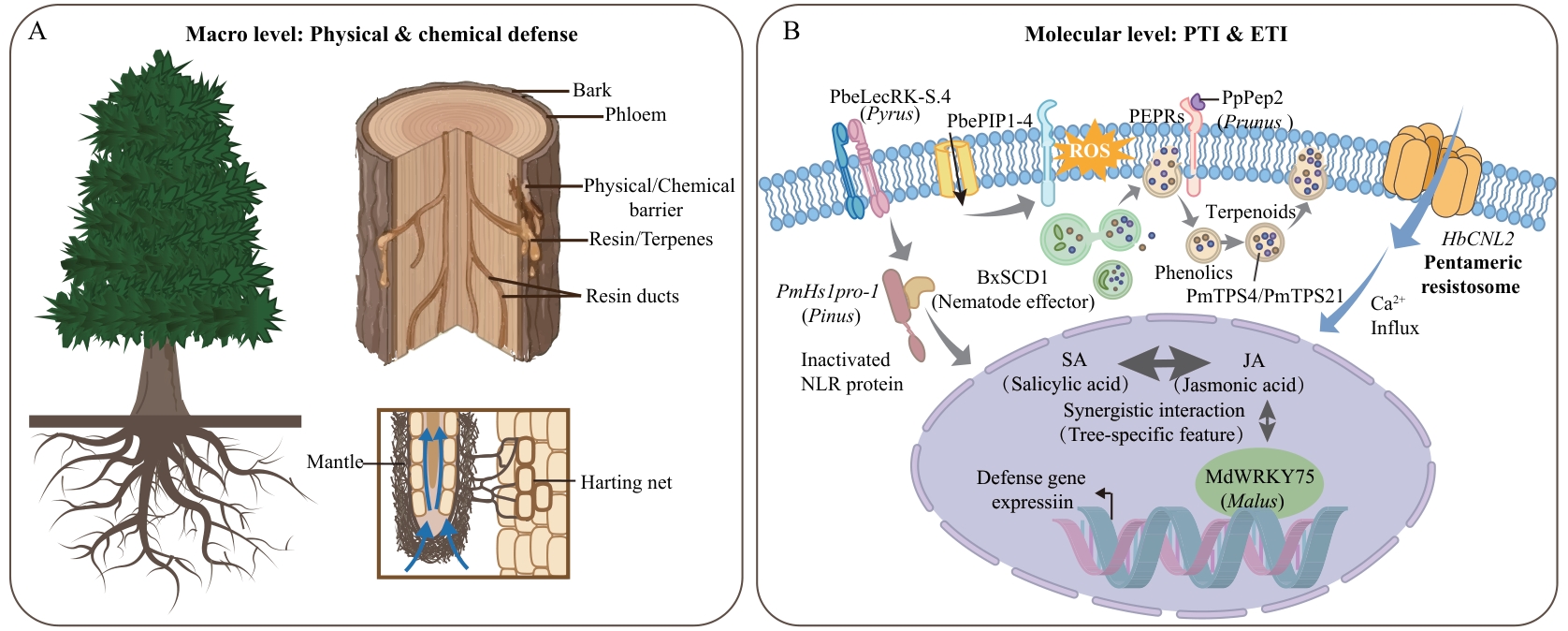
图1 树木免疫系统及多层次防御机制模式图树木免疫系统由组成型防御(如角质层、木质素等物理屏障和萜类等化学防御)和诱导型防御(包括模式触发免疫PTI和效应子触发免疫ETI)构成。水杨酸(SA)和茉莉酸(JA)等激素信号通路以及根际微生态(如菌根真菌)协同参与树木的抗病响应与免疫调控
Fig. 1 Schematic diagram of the tree immune system and multi-layered defense mechanismsThe tree immune system consists of constitutive defenses (e.g., physical barriers like cuticle and lignin, and chemical defenses like terpenoids) and induced defenses (including pattern-triggered immunity, PTI, and effector-triggered immunity, ETI). Hormone signaling pathways such as salicylic acid (SA) and jasmonic acid (JA), as well as rhizosphere microecology (e.g., mycorrhizal fungi), synergistically participate in disease resistance responses and immune regulation in trees
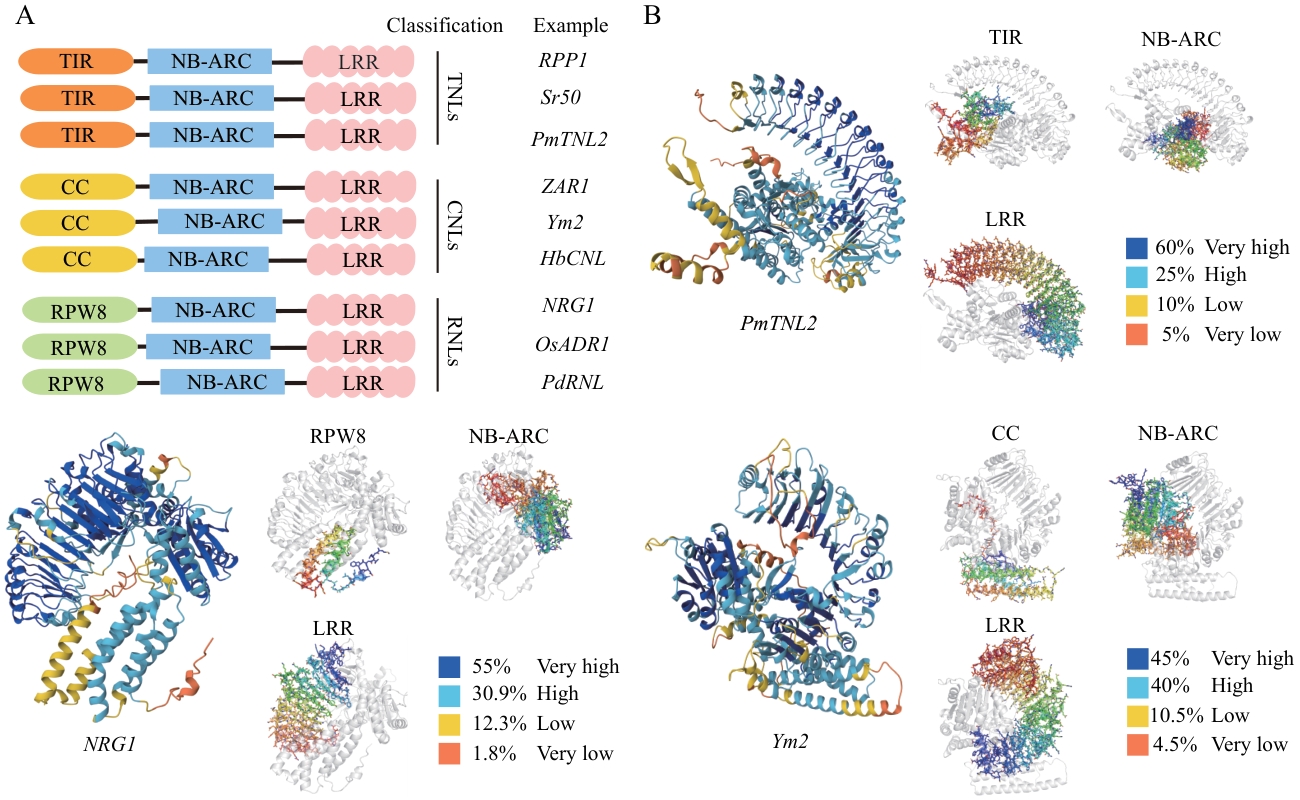
图2 植物NLR结构域及部分NLR蛋白质结构A:植物NLR蛋白的三大主要分类及结构域模式图. B:分别代表 PmTNL2、NRG1和Ym2的三维结构模型及保守结构域空间分布
Fig. 2 Domain architectures of plant NLRs and structures of selected NLR proteinsA: The three main classifications and domain models of plant NLR proteins. B: Three-dimensional structural models and spatial distribution of conserved domains of PmTNL2, NRG1, and Ym2, respectively
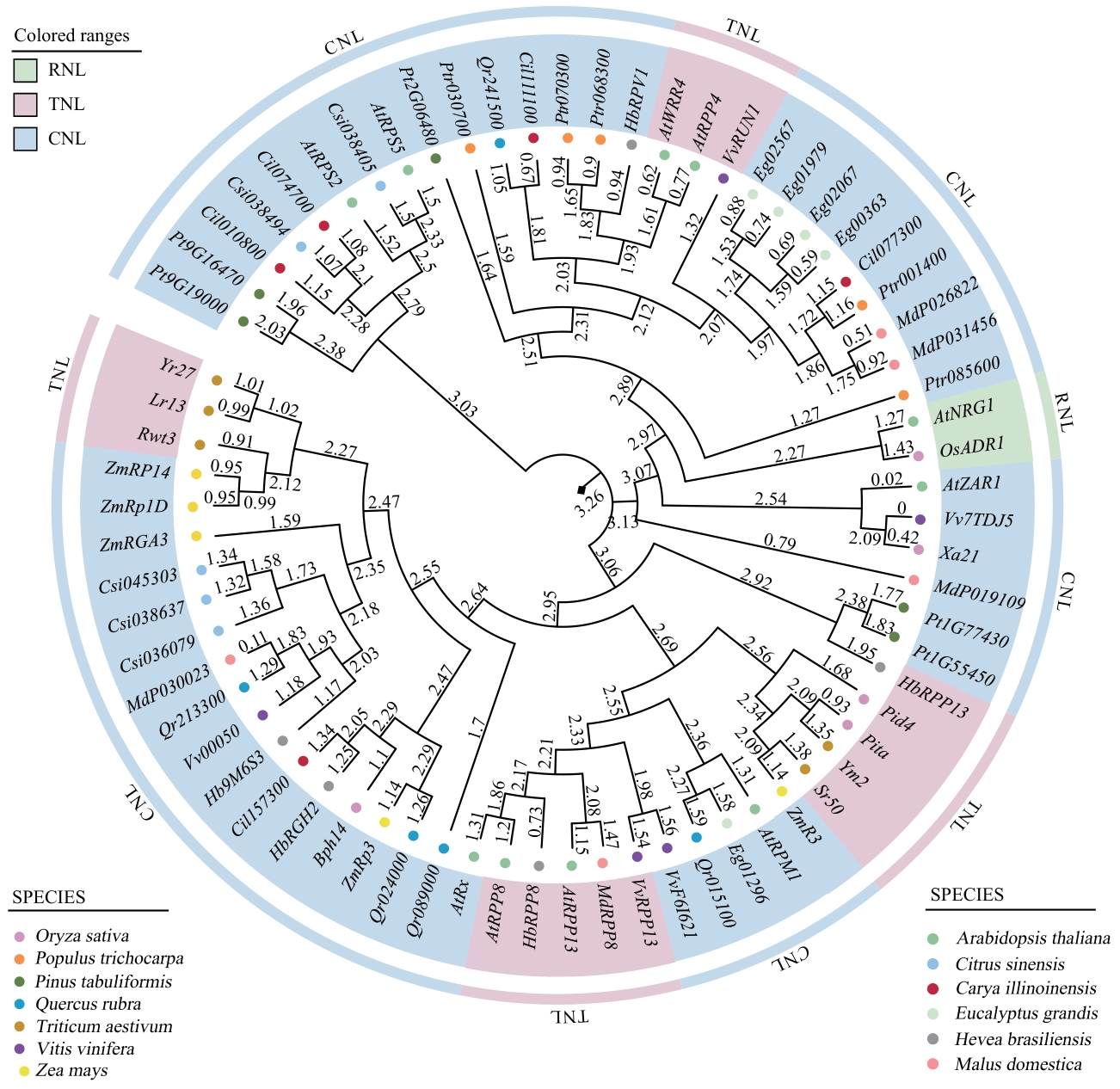
图3 代表性木本与草本NLR基因家族系统发育及进化关系模式图本进化树基于代表性木本植物(毛果杨 Populus trichocarpa、薄壳山核桃 Carya illinoinensis、甜橙 Citrus sinensis、巨桉 Eucalyptus grandis、苹果 Malus domestica、油松 Pinus tabuliformis、葡萄 Vitis vinifera、红栎 Quercus rubra、橡胶树 Hevea brasiliensis)与模式草本植物(拟南芥 Arabidopsis thaliana、水稻 Oryza sativa、小麦 Triticum aestivum、玉米 Zea mays)的NLR蛋白保守NB-ARC结构域序列构建。不同颜色的分支代表不同的NLR亚家族(如TNL、CNL和RNL类)。分支节点上的数字表示系统发育树评估的自举值(Bootstrap值)。比例尺代表每个位点的氨基酸替换率
Fig. 3 Phylogenetic and evolutionary relationships of the NLR gene family in representative woody and herbaceous plantsThis phylogenetic tree was constructed based on the conserved NB-ARC domain sequences of NLR proteins from representative woody plants (Populus trichocarpa, Carya illinoinensis, Citrus sinensis, Eucalyptus grandis, Malus domestica, Pinus tabuliformis, Vitis vinifera, Quercus rubra, and Hevea brasiliensis) and model herbaceous plants (Arabidopsis thaliana, Oryza sativa, Triticum aestivum, and Zea mays).Different colored branches represent distinct NLR subfamilies (e.g., TNL, CNL, and RNL). Numbers at the branch nodes indicate bootstrap values for evaluating the phylogenetic tree. The scale bar represents the amino acid substitution rate per site
| [1] | Dangl JL, Horvath DM, Staskawicz BJ. Pivoting the plant immune system from dissection to deployment [J]. Science, 2013, 341(6147): 746-751. |
| [2] | Flor HH. Current status of the gene-for-gene concept [J]. Annu Rev Phytopathol, 1971, 9: 275-296. |
| [3] | 曾任森, 苏贻娟, 叶茂, 等. 植物的诱导抗性及生化机理 [J]. 华南农业大学学报, 2008, 29(2): 1-6. |
| Zeng RS, Su YJ, Ye M, et al. Plant induced defense and biochemical mechanisms [J]. J South China Agric Univ, 2008, 29(2): 1-6. | |
| [4] | 李白杨, 郑鑫悦, 吴建国, 等. 病原菌效应子与植物免疫操控 [J]. 植物保护, 2025, 51(5): 279-287. |
| Li BY, Zheng XY, Wu JG, et al. Pathogen effectors and their manipulation of plant immunity [J]. Plant Prot, 2025, 51(5): 279-287. | |
| [5] | Hyodo K, Hashimoto K, Kuchitsu K, et al. Harnessing host ROS-generating machinery for the robust genome replication of a plant RNA virus [J]. Proc Natl Acad Sci U S A, 2017, 114(7): E1282-E1290. |
| [6] | Kappagantu M, Collum TD, Dardick C, et al. Viral hacks of the plant vasculature: the role of phloem alterations in systemic virus infection [J]. Annu Rev Virol, 2020, 7: 351-370. |
| [7] | Zhang JR, Liu YM, Li D, et al. Viral proteins resolve the virus-vector conundrum during hemipteran-mediated transmission by subverting salicylic acid signaling pathway [J]. Nat Commun, 2024, 15: 9448. |
| [8] | Couto D, Zipfel C. Regulation of pattern recognition receptor signalling in plants [J]. Nat Rev Immunol, 2016, 16(9): 537-552. |
| [9] | Gao JH, Tang F, Wang YW, et al. Integrated proteomic and transcriptomic analyses reveal that the Rj4-mediated immunity network restricts soybean-rhizobia symbiosis [J]. BMC Genom, 2025, 26: 981. |
| [10] | Zhou JM, Zhang YL. Plant immunity: danger perception and signaling [J]. Cell, 2020, 181(5): 978-989. |
| [11] | Jing YP, Zou XY, Sun CJ, et al. Danger-associate peptide regulates root immunity in Arabidopsis [J]. Biochem Biophys Res Commun, 2023, 663: 163-170. |
| [12] | Jones JDG, Dangl JL. The plant immune system [J]. Nature, 2006, 444(7117): 323-329. |
| [13] | Garzón-Nivia MA, Mártiz Mártiz J, Moya-Elizondo EA, et al. Characterization and identification of Neocosmospora solani and Fusarium oxysporum causing root necrosis and wilting of orange trees in Chile [J]. Plants, 2025, 14(3): 376. |
| [14] | Parke J, Peterson E. Sudden oak death, sudden larch death, and ramorum blight [J]. Plant Health Instr, 2019. |
| [15] | Cannon PF, Damm U, Johnston PR, et al. Colletotrichum-current status and future directions [J]. Stud Mycol, 2012, 73: 181-213. |
| [16] | Chang J, Zhai FY, Zhang YB, et al. Identification and characterization of Colletotrichum fioriniae and C. fructicola that cause anthracnose in pecan [J]. Front Plant Sci, 2022, 13: 1043750. |
| [17] | 贺迎春. 松材线虫病危害及其防治 [J]. 林业科技情报, 2025, 57(2): 133-135. |
| He YC. Damage and control of Bursaphelenchus xylophilus [J]. For Sci Technol Inf, 2025, 57(2): 133-135. | |
| [18] | Zeng Y, Song HF, Xia LC, et al. The responses of poplars to fungal pathogens: a review of the defensive pathway [J]. Front Plant Sci, 2023, 14: 1107583. |
| [19] | Wilson SK, Pretorius T, Naidoo S. Mechanisms of systemic resistance to pathogen infection in plants and their potential application in forestry [J]. BMC Plant Biol, 2023, 23(1): 404. |
| [20] | 冯万艳. 马尾松与粘盖乳牛肝菌共生特征研究 [D]. 贵阳: 贵州大学, 2020. |
| Feng WY. Symbiotic characteristics between Pinus massoniana and Suillus bovinus [D]. Guiyang: Guizhou University, 2020. | |
| [21] | Ullah C, Unsicker SB, Fellenberg C, et al. Flavan-3-ols are an effective chemical defense against rust infection [J]. Plant Physiol, 2017, 175(4): 1560-1578. |
| [22] | 王甜甜. 华山松大小蠹伴生长喙壳类真菌多样性及致病性研究 [D]. 北京: 中国林业科学研究院, 2020. |
| Wang TT. Study on diversity and pathogenicity of ophiostomatoid fungi associated with the Dendroctonus armandi in Pinus armandii [D]. Beijing: Chinese Academy of Forestry, 2020. | |
| [23] | Liu B, Liu QH, Zhou ZC, et al. Two terpene synthases in resistant Pinus massoniana contribute to defence against Bursaphelenchus xylophilus [J]. Plant Cell Environ, 2021, 44(1): 257-274. |
| [24] | Su T, Xu XL, Li X, et al. Functional dissection of the PME and PMEI super families in the protection of Populus pectin during Fusarium wilt [J]. Ind Crops Prod, 2024, 209: 118056. |
| [25] | Gust AA, Pruitt R, Nürnberger T. Sensing danger: key to activating plant immunity [J]. Trends Plant Sci, 2017, 22(9): 779-791. |
| [26] | Tang DZ, Wang GX, Zhou JM. Receptor kinases in plant-pathogen interactions: more than pattern recognition [J]. Plant Cell, 2017, 29(4): 618-637. |
| [27] | 杜成龙. 杜梨PbeLecRK-S.4-PbePI P1-4应答效应子NIS1/2调控腐烂病抗性的机制研究 [D]. 兰州: 甘肃农业大学, 2025. |
| Du CL. Study on the mechanism of PbeLecRK-S.4-PbePI P1-4 response effector NIS1/2 regulating resistance to Valsa canker in Pyrus betulaefolia [D]. Lanzhou: Gansu Agricultural University, 2025. | |
| [28] | Foix L, Pla M, Martín-Mur B, et al. The PpPep2-triggered PTI-like response in peach trees is mediated by miRNAs [J]. Int J Mol Sci, 2024, 25(23): 13099. |
| [29] | Li P, Xie LZ, Li W, et al. An oomycete effector targets host calmodulin to suppress plant immunity [J]. Plant J, 2025, 123(5): e70457. |
| [30] | Chen SS, Tan SX, Jin ZL, et al. The transcriptional landscape of Populus pattern/effector-triggered immunity and how PagWRKY18 involved in it [J]. Plant Cell Environ, 2024, 47(6): 2074-2092. |
| [31] | Malamy J, Carr JP, Klessig DF, et al. Salicylic acid: a likely endogenous signal in the resistance response of tobacco to viral infection [J]. Science, 1990, 250(4983): 1002-1004. |
| [32] | Métraux JP, Signer H, Ryals J, et al. Increase in salicylic acid at the onset of systemic acquired resistance in cucumber [J]. Science, 1990, 250(4983): 1004-1006. |
| [33] | 白晓晶, 许兰珍, 贾瑞瑞, 等. 柑橘黄龙病相关水杨酸羧基甲基转移酶基因CsSAMT-1的克隆与表达分析 [J]. 园艺学报, 2017, 44(12): 2265-2274. |
| Bai XJ, Xu LZ, Jia RR, et al. Cloning and expression analysis of HLB-associated salicylic acid carboxyl methyltransferase gene CsSAMT-1 in Citrus [J]. Acta Hortic Sin, 2017, 44(12): 2265-2274. | |
| [34] | Kong XP, Zhang CL, Zheng HH, et al. Antagonistic interaction between auxin and SA signaling pathways regulates bacterial infection through lateral root in Arabidopsis [J]. Cell Rep, 2020, 32(8): 108060. |
| [35] | Caarls L, Pieterse CMJ, Van Wees SCM. How salicylic acid takes transcriptional control over jasmonic acid signaling [J]. Front Plant Sci, 2015, 6: 170. |
| [36] | Ullah C, Schmidt A, Reichelt M, et al. Lack of antagonism between salicylic acid and jasmonate signalling pathways in poplar [J]. New Phytol, 2022, 235(2): 701-717. |
| [37] | Meng YG, Xiao YZ, Zhu S, et al. VmSpm1: a secretory protein from Valsa mali that targets apple's abscisic acid receptor MdPYL4 to suppress jasmonic acid signaling and enhance infection [J]. New Phytol, 2024, 244(6): 2489-2504. |
| [38] | 郝小娟. MdWRKY75负调控苹果树抗腐烂病免疫反应功能研究 [D]. 杨凌: 西北农林科技大学, 2021. |
| Hao XJ. MdWRKY75 regulates negatively the immunty of apple against Valsa canker [D]. Yangling: Northwest A & F University, 2021. | |
| [39] | Jung SC, Martinez-Medina A, Lopez-Raez JA, et al. Mycorrhiza-induced resistance and priming of plant defenses [J]. J Chem Ecol, 2012, 38(6): 651-664. |
| [40] | Chen XX, Zhang NN, Zheng Z, et al. Effects of root rot disease on the microbiome and metabolites in roots and rhizosphere soil of sweet cherry [J]. Sci Hortic, 2024, 338: 113734. |
| [41] | Liu SL, Wu JD, Cheng Z, et al. Microbe-mediated stress resistance in plants: the roles played by core and stress-specific microbiota [J]. Microbiome, 2025, 13(1): 111. |
| [42] | Bi GZ, Su M, Li N, et al. The ZAR1 resistosome is a calcium-permeable channel triggering plant immune signaling [J]. Cell, 2021, 184(13): 3528-3541.e12. |
| [43] | Collier SM, Hamel LP, Moffett P. Cell death mediated by the N-terminal domains of a unique and highly conserved class of NB-LRR protein [J]. Mol Plant Microbe Interact, 2011, 24(8): 918-931. |
| [44] | Feehan JM, Castel B, Bentham AR, et al. Plant NLRs get by with a little help from their friends [J]. Curr Opin Plant Biol, 2020, 56: 99-108. |
| [45] | Kourelis J, van der Hoorn RAL. Defended to the nines: 25 years of resistance gene cloning identifies nine mechanisms for R protein function [J]. Plant Cell, 2018, 30(2): 285-299. |
| [46] | Wang ZK, Xie JZ, Zhang HJ, et al. Pm6 from Triticum timopheevii encodes an NLR receptor that directly recognizes AvrPm6 to confer powdery mildew resistance in wheat [J]. Mol Plant, 2025, 18(12): 2040-2044. |
| [47] | Shi XT, Xiong YH, Zhang K, et al. The ANIP1-OsWRKY62 module regulates both basal defense and Pi9-mediated immunity against Magnaporthe oryzae in rice [J]. Mol Plant, 2023, 16(4): 739-755. |
| [48] | Zdrzałek R, Kamoun S, Terauchi R, et al. The rice NLR pair Pikp-1/Pikp-2 initiates cell death through receptor cooperation rather than negative regulation [J]. PLoS One, 2020, 15(9): e0238616. |
| [49] | Kourelis J, Marchal C, Posbeyikian A, et al. NLR immune receptor-nanobody fusions confer plant disease resistance [J]. Science, 2023, 379(6635): 934-939. |
| [50] | Wang JZ, Wang J, Hu MJ, et al. Ligand-triggered allosteric ADP release primes a plant NLR complex [J]. Science, 2019, 364(6435): eaav5868. |
| [51] | Plomion C, Aury JM, Amselem J, et al. Oak genome reveals facets of long lifespan [J]. Nat Plants, 2018, 4(7): 440-452. |
| [52] | Woudstra Y, Tumas H, van Ghelder C, et al. Conifers concentrate large numbers of NLR immune receptor genes on one chromosome [J]. Genome Biol Evol, 2024, 16(6): evae113. |
| [53] | Monteiro F, Nishimura MT. Structural, functional, and genomic diversity of plant NLR proteins: an evolved resource for rational engineering of plant immunity [J]. Annu Rev Phytopathol, 2018, 56: 243-267. |
| [54] | 熊志伟. 柑橘NLR基因进化及多样性分析 [D]. 赣州: 赣南师范大学, 2024. |
| Xiong ZW. Evolution and diversity analysis of Citrus NLR genes [D]. Ganzhou: Gannan Normal University, 2024. | |
| [55] | de Lima Santos M, de Resende MLV, Alves GSC, et al. Genome-wide identification, characterization, and comparative analysis of NLR resistance genes in Coffea spp [J]. Front Plant Sci, 2022, 13: 868581. |
| [56] | Wu ZS, Tian L, Liu XR, et al. The N-terminally truncated helper NLR NRG1C antagonizes immunity mediated by its full-length neighbors NRG1A and NRG1B [J]. Plant Cell, 2022, 34(5): 1621-1640. |
| [57] | Cesari S. Multiple strategies for pathogen perception by plant immune receptors [J]. New Phytol, 2018, 219(1): 17-24. |
| [58] | 张建强. 基于Phylogenomics的杨树系统发生关系构建与NLR基因家族分析 [D]. 南昌: 江西农业大学, 2023. |
| Zhang JQ. Phylogenetic relationships construction and NLR gene families analysis of Populus based on phylogenomics [D]. Nanchang: Jiangxi Agricultural University, 2023. | |
| [59] | Batalova AY, Krutovsky KV. Genetic and epigenetic mechanisms of longevity in forest trees [J]. Int J Mol Sci, 2023, 24(12): 10403. |
| [60] | Liu XB, Xu HQ, Li BX, et al. Genome-wide identification and expression analysis of the nucleotide-binding leucine-rich repeat gene families in rubber tree [J]. Phytopathology, 2025, 115(12): 1695-1703. |
| [61] | Scott AD, Zimin AV, Puiu D, et al. A reference genome sequence for giant Sequoia [J]. G3 Genes|Genom|Genet, 2020, 10(11): 3907-3919. |
| [62] | Parvez S, Asif M, Ahmad A, et al. Tracing the path from conservation to expansion evolutionary insights into NLR genes in Oleaceae [J]. BMC Plant Biol, 2025, 25: 259. |
| [63] | Winters NP, Wafula EK, Timilsena PR, et al. Local gene duplications drive extensive NLR copy number variation across multiple genotypes of Theobroma cacao [J]. G3 Genes|Genom|Genet, 2025, 15(9): jkaf147. |
| [64] | Liu JJ, Schoettle AW, Sniezko RA, et al. Limber pine (Pinus flexilis James) genetic map constructed by exome-seq provides insight into the evolution of disease resistance and a genomic resource for genomics-based breeding [J]. Plant J, 2019, 98(4): 745-758. |
| [65] | Van Ghelder C, Parent GJ, Rigault P, et al. The large repertoire of conifer NLR resistance genes includes drought responsive and highly diversified RNLs [J]. Sci Rep, 2019, 9: 11614. |
| [66] | 柯宇航. 橡胶树NLR基因HbRPM1-1抗白粉病功能研究 [D]. 海口: 海南大学, 2022. |
| Ke YH. Study on powdery mildew resistance of rubber tree NLR gene HbRPM1-1 [D]. Haikou: Hainan University, 2022. | |
| [67] | Liang XY, Ma Z, Ke YH, et al. Single-cell transcriptomic analyses reveal cellular and molecular patterns of rubber tree response to early powdery mildew infection [J]. Plant Cell Environ, 2023, 46(7): 2222-2237. |
| [68] | Jang HA, Oo MM, Kim DG, et al. CC-NBS-LRR, a set of VvCRP markers, can distinguish cultivars with ripe rot resistance to Colletotrichum pathogens in grapevine [J]. Hortic Environ Biotechnol, 2020, 61(5): 915-927. |
| [69] | Gao CY, Zhao BS, Zhang J, et al. Adaptive regulation of miRNAs/milRNAs in tissue-specific interaction between apple and Valsa mali [J]. Hortic Res, 2024, 11(5): uhae094. |
| [70] | Xie YN, Liu B, Zhou ZC, et al. PmHs1pro-1 m onitors Bsursaphelenchus xylophilus infection and activates defensive response in resistant Pinus massoniana [J]. Plant Cell Environ, 2024, 47(11): 4369-4382. |
| [71] | Modesto I, Sterck L, Arbona V, et al. Insights into the mechanisms implicated in Pinus pinaster resistance to pinewood nematode [J]. Front Plant Sci, 2021, 12: 690857. |
| [72] | 李英俊. 板栗和猕猴桃NBS-encoding基因家族的全基因组分析 [D]. 南京: 南京农业大学, 2016. |
| Li YJ. Genome-wide analysis of NBS-encoding gene family in chestnut and kiwifruit [D]. Nanjing: Nanjing Agricultural University, 2016. | |
| [73] | Kadota Y, Sklenar J, Derbyshire P, et al. Direct regulation of the NADPH oxidase RBOHD by the PRR-associated kinase BIK1 during plant immunity [J]. Mol Cell, 2014, 54(1): 43-55. |
| [74] | Garg V, Bohra A, Mascher M, et al. Unlocking plant genetics with telomere-to-telomere genome assemblies [J]. Nat Genet, 2024, 56(9): 1788-1799. |
| [75] | Zhao Y, Zheng XY, Tabima JF, et al. Secreted effector proteins of poplar leaf spot and stem canker pathogen Sphaerulina musiva manipulate plant immunity and contribute to virulence in diverse ways [J]. Mol Plant Microbe Interact, 2023, 36(12): 779-795. |
| [76] | Fick A, Fick JLM, Swart V, et al. In silico prediction method for plant Nucleotide-binding leucine-rich repeat- and pathogen effector interactions [J]. Plant J, 2025, 122(2): e70169. |
| [77] | Min T, Hwarari D, Li DA, et al. CRISPR-based genome editing and its applications in woody plants [J]. Int J Mol Sci, 2022, 23(17): 10175. |
| [78] | Poovaiah C, Phillips L, Geddes B, et al. Genome editing with CRISPR/Cas9 in Pinus radiata (D. don) [J]. BMC Plant Biol, 2021, 21: 363. |
| [79] | Demirer GS, Silva TN, Jackson CT, et al. Nanotechnology to advance CRISPR-Cas genetic engineering of plants [J]. Nat Nanotechnol, 2021, 16(3): 243-250. |
| [1] | 李玉岭, 毛欣, 张元帅, 董元夫, 刘翠兰, 段春华, 毛秀红. 辐射诱变技术在木本植物育种中的应用及展望[J]. 生物技术通报, 2023, 39(6): 12-30. |
| [2] | 王瑶;林木兰;沈锡辉;柳晟. 农杆菌介导的木本植物遗传转化[J]. , 1999, 0(06): 23-27. |
| [3] | 孙国凤;. 嗜好大气污染物质 NO_2的木本植物的探索[J]. , 1993, 0(05): 20-20. |
| [4] | 陶冶;. 简单技术阻止培养基变成褐色[J]. , 1992, 0(06): 10-10. |
| [5] | . 《生物技术在农林业上的应用》[J]. , 1990, 0(02): 27-28. |
| [6] | 李思经;. 《木本植物的遗传操作》[J]. , 1990, 0(02): 27-28. |
| [7] | . 体外培养和遗传育种[J]. , 1989, 0(07): 78-86. |
| [8] | . 农业其它[J]. , 1989, 0(07): 91-94. |
| [9] | 柴勇;. 酚类化合物促进微繁殖[J]. , 1988, 0(12): 11-11. |
| 阅读次数 | ||||||
|
全文 |
|
|||||
|
摘要 |
|
|||||
