






生物技术通报 ›› 2026, Vol. 42 ›› Issue (10): 317-327.doi: 10.13560/j.cnki.biotech.bull.1985.2026-0189
• 研究报告 • 上一篇
董旭芳1, 童颖佳1, 刘伟1, 史劲松1, 许正宏2, 李会1( )
收稿日期:2026-02-06
出版日期:2026-10-26
发布日期:2026-10-15
通讯作者:
李会lihui@jiangnan.edu.cn基金资助:
DONG Xu-fang1, TONG Ying-jia1, LIU Wei1, SHI Jin-song1, XU Zheng-hong2, LI Hui1()
Received:2026-02-06
Published:2026-10-26
Online:2026-10-15
摘要:
目的 孕烯醇酮是多种甾体激素药物合成的关键前体,具有重要的应用价值,但其传统化学合成过程复杂、环境负担较重。以酿酒酵母为底盘构建孕烯醇酮的生物合成体系,为其绿色、高效生产提供新的技术路径。 方法 以实验室前期构建的高产菜油甾醇的酿酒酵母重组菌株CY03为研究对象,引入不同来源的P450scc系统,比较其在酿酒酵母中的催化性能,筛选获得最优酶组合;进一步利用酿酒酵母rDNA多拷贝位点实现P450scc系统的多拷贝整合以提高表达水平;同时尝试通过蛋白融合策略增强CYP87A4与其氧化还原伴侣ATR1之间的电子传递效率;并对培养基碳源、氮源及无机盐等关键因素进行优化,以提升孕烯醇酮合成水平。 结果 洋地黄(Digitalis lanata)来源的CYP87A4与拟南芥(Arabidopsis thaliana)来源的ATR1组合表现出最优催化性能,孕烯醇酮产量达3.75 mg/L。通过rDNA位点实现P450scc系统多拷贝整合后,成功筛选到拷贝数为5的工程菌株,将孕烯醇酮产量提升至14.51 mg/L,为单拷贝菌株的3.87倍。蛋白融合策略未能进一步提高孕烯醇酮合成效率。经培养基条件优化,在20 g/L葡萄糖、10 g/L酵母粉、20 g/L蛋白胨并添加0.3 g/L钾离子(K⁺)的条件下,孕烯醇酮产量进一步提高至16.82 mg/L。 结论 成功构建并优化了酿酒酵母从头合成孕烯醇酮的生物合成体系,通过P450scc系统来源筛选、多拷贝整合及发酵条件优化显著提高了产量,为甾体类化合物的微生物绿色制造提供了可行的工程策略和实验依据。
董旭芳, 童颖佳, 刘伟, 史劲松, 许正宏, 李会. 基于P450scc系统的酿酒酵母从头合成孕烯醇酮细胞工厂的构建与优化[J]. 生物技术通报, 2026, 42(10): 317-327.
DONG Xu-fang, TONG Ying-jia, LIU Wei, SHI Jin-song, XU Zheng-hong, LI Hui. Construction and Optimization of de novo Pregnenolone Cell Factory Based on the P450scc System in Saccharomyces cerevisiae[J]. Biotechnology Bulletin, 2026, 42(10): 317-327.
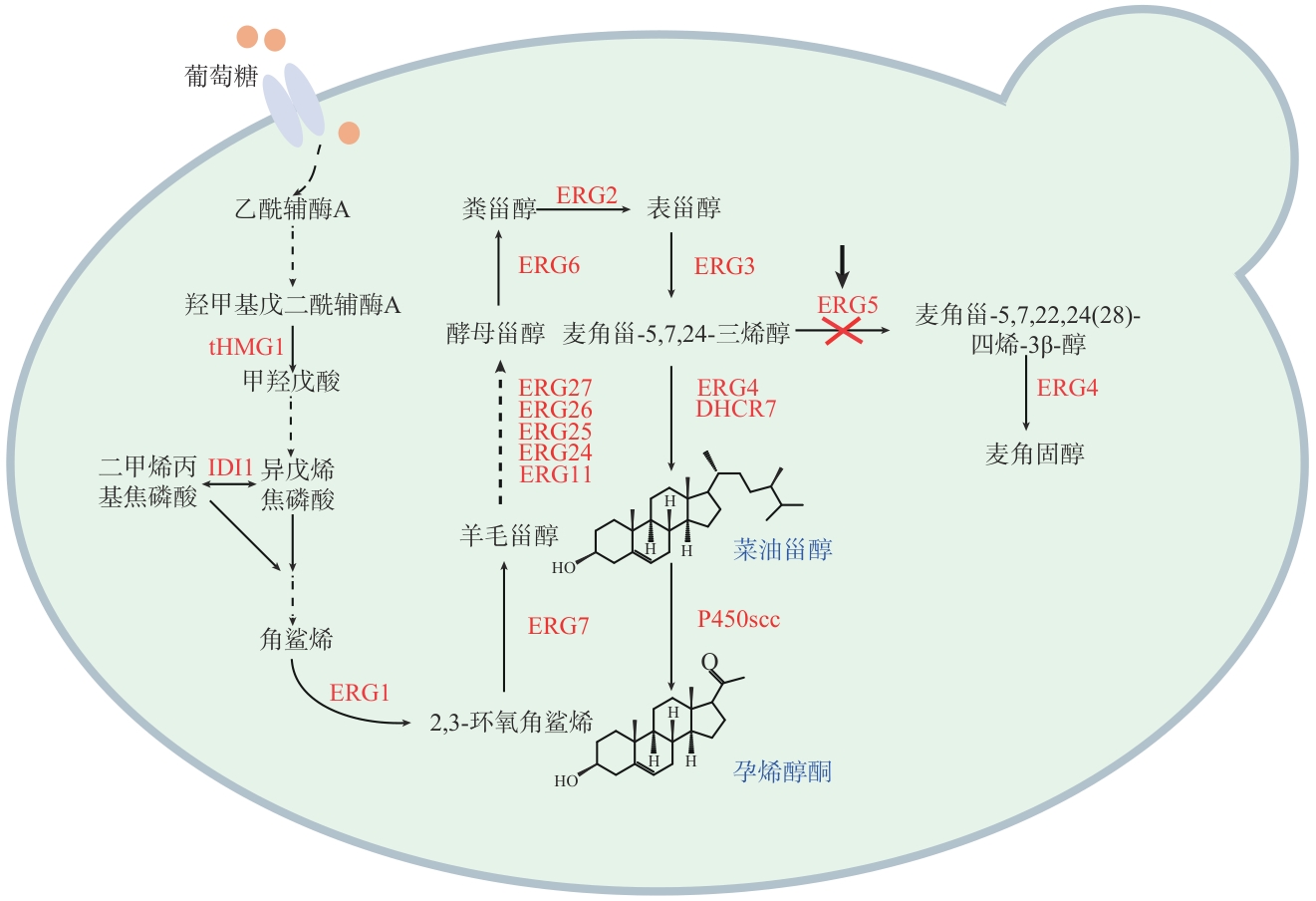
图1 酿酒酵母中孕烯醇酮合成途径
Fig. 1 Pregnenolone synthesis pathway in S. cerevisiae
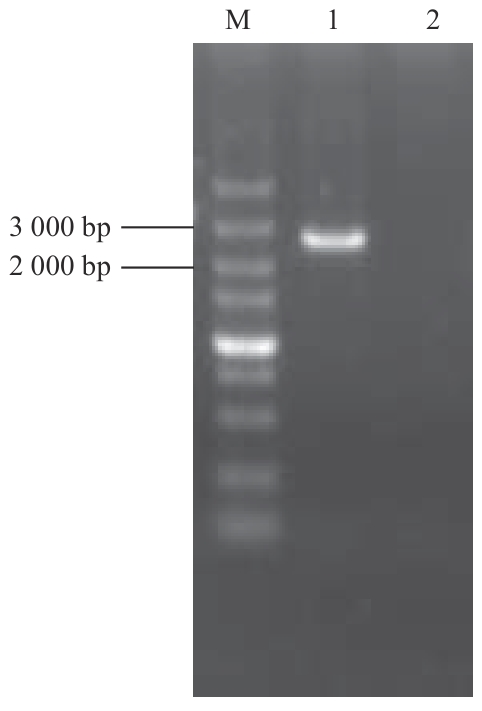
图2 重组菌株CE01的验证M:DNA marker;1:重组菌株CE01;2:对照菌株CY03
Fig. 2 Identification of strain CE01M: DNA marker; 1: recombinant strain CE01; 2: control strain CY03
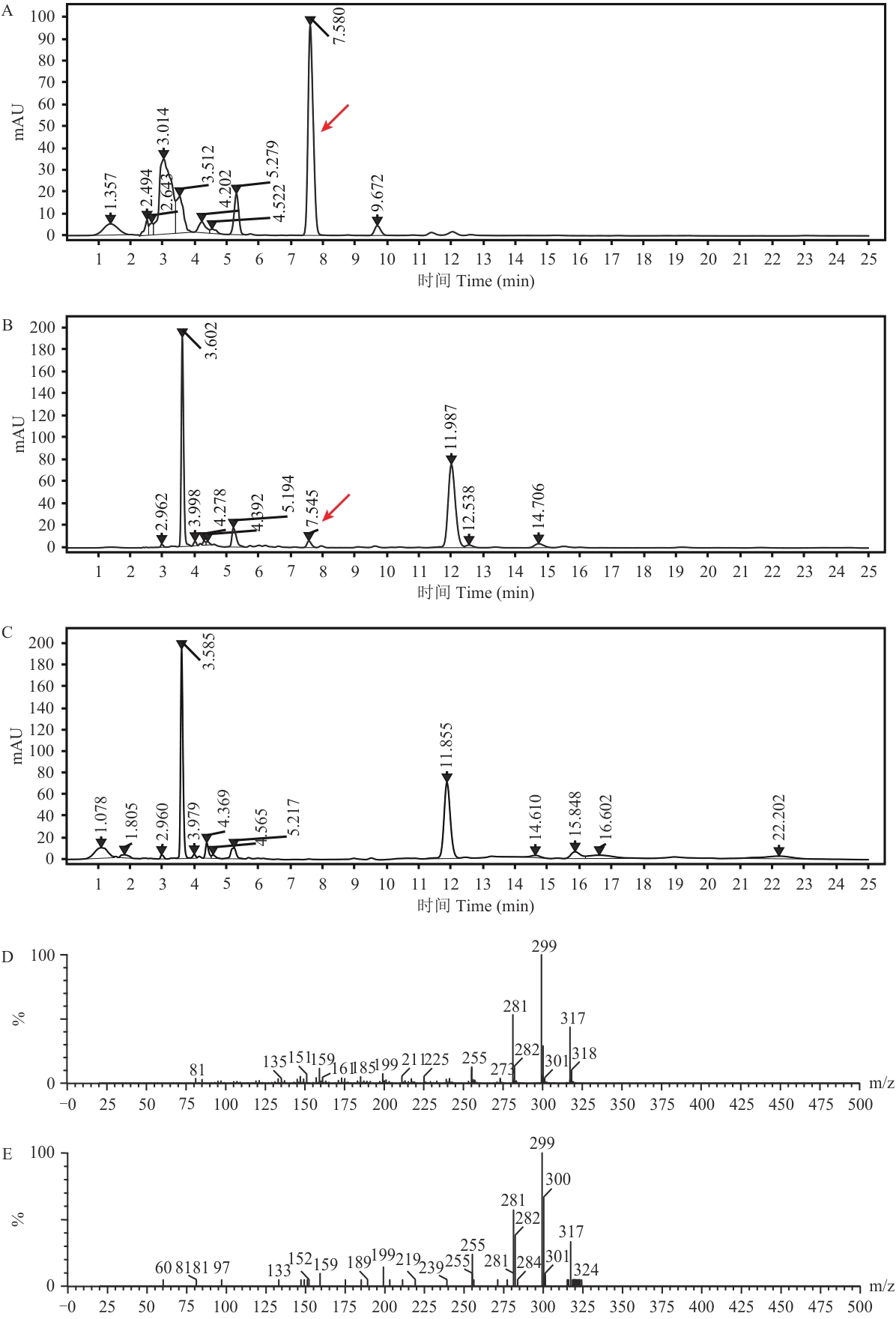
图3 重组菌株发酵产物的结构鉴定A:孕烯醇酮标准品的HPLC图;B:重组菌株CE01发酵样品的HPLC图;C:对照菌株CY03发酵样品的HPLC图;D:孕烯醇酮标准品的MS图;E:重组菌株CE01发酵样品的MS图
Fig. 3 Structural identification of the fermentation products of the recombinant strainsA: HPLC chromatogram of the pregnenolone standard; B: HPLC chromatogram of the fermentation sample from the recombinant strain CE01; C: HPLC chromatogram of the fermentation sample from the control strain CY03; D: MS spectrum of the pregnenolone standard; E: MS spectrum of the fermentation sample from the recombinant strain CE01
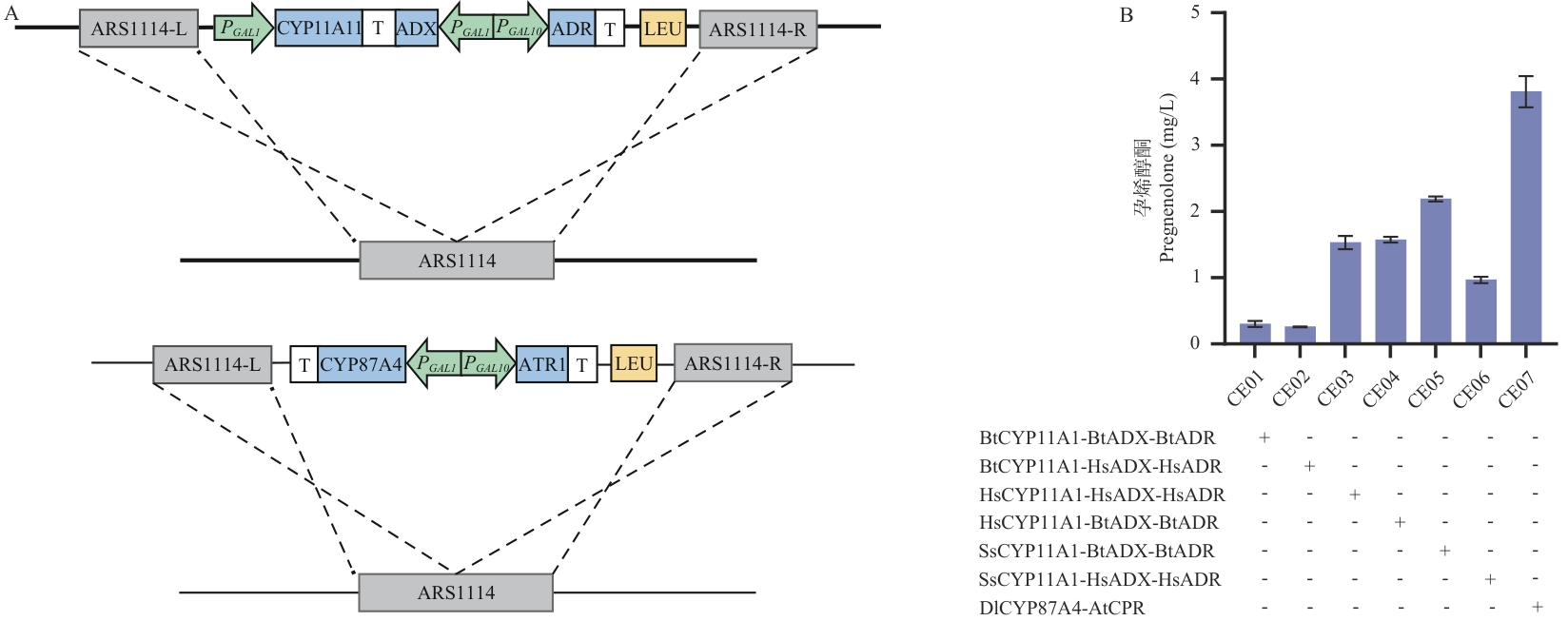
图4 不同来源的P450scc系统的组合对孕烯醇酮产量的影响A:基因表达盒整合示意图;B:不同来源P450scc系统组合配对的孕烯醇酮产量
Fig. 4 Effect of combined of P450scc systems from different sources on the production of pregnenoloneA: Diagram of gene expression cassette integration; B: the production of pregnenolone in different combinations of P450scc systems from different sources
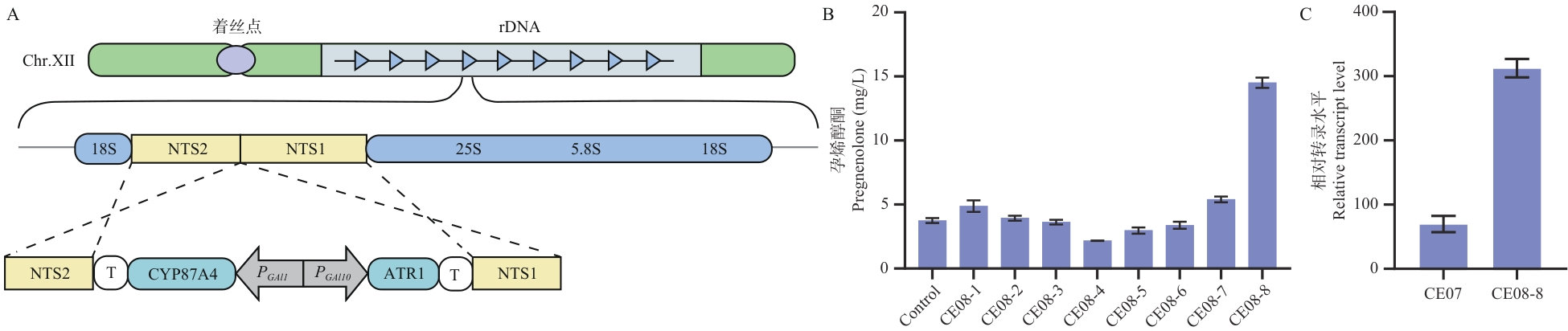
图5 rDNA位点多拷贝整合P450scc系统对孕烯醇酮产量的影响A:rDNA位点多拷贝整合示意图;B:多拷贝整合P450scc系统的孕烯醇酮产量;C:CYP87A4的相对转录水平
Fig. 5 Effect of multi-copy integration of rDNA sites on the P450scc system on the production of pregnenoloneA: Diagram of multi-copy integration of rDNA; B: the production of pregnenolone in the multi-copy integrated P450scc system; C: the relative transcriptional level of CYP87A4
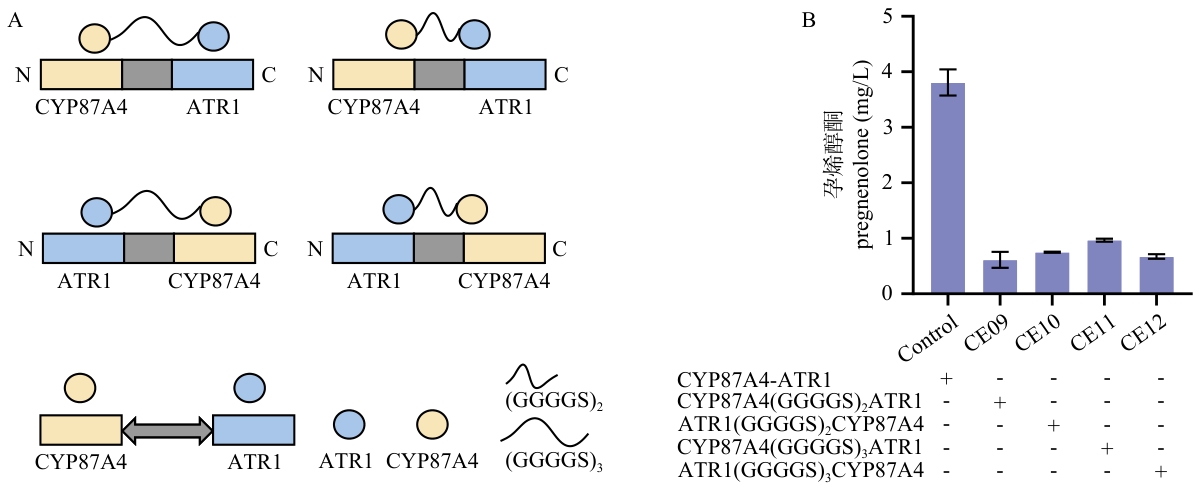
图6 蛋白融合工程对孕烯醇酮生产的影响A:CYP87A4与ATR1蛋白融合示意图;B:蛋白融合孕烯醇酮的产量
Fig. 6 Effect of protein fusion engineering on the production of pregnenoloneA: Diagram of the fusion of CYP87A4 with ATR1 protein; B: production of pregnenolone in the protein fusion strain
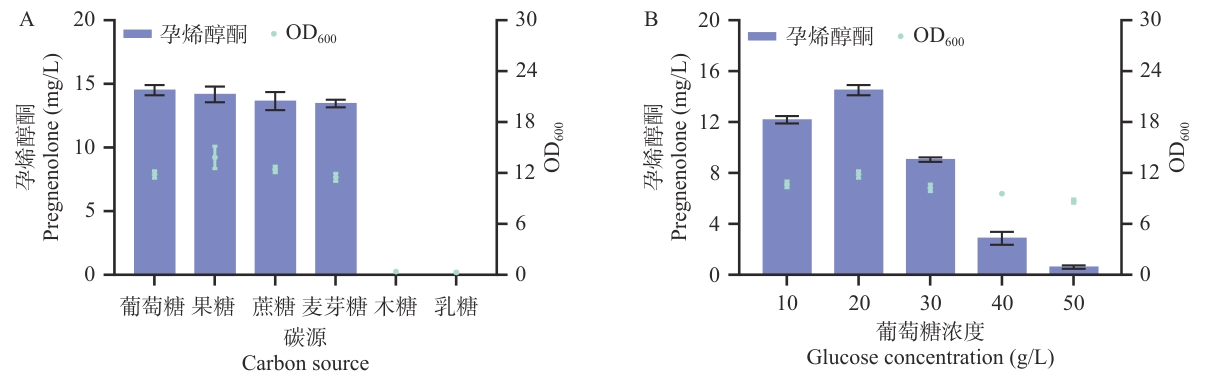
图7 碳源种类(A)和浓度(B)对孕烯醇酮合成的影响
Fig. 7 Effect of carbon sources types (A) and concentration (B) on the production of pregnenolone
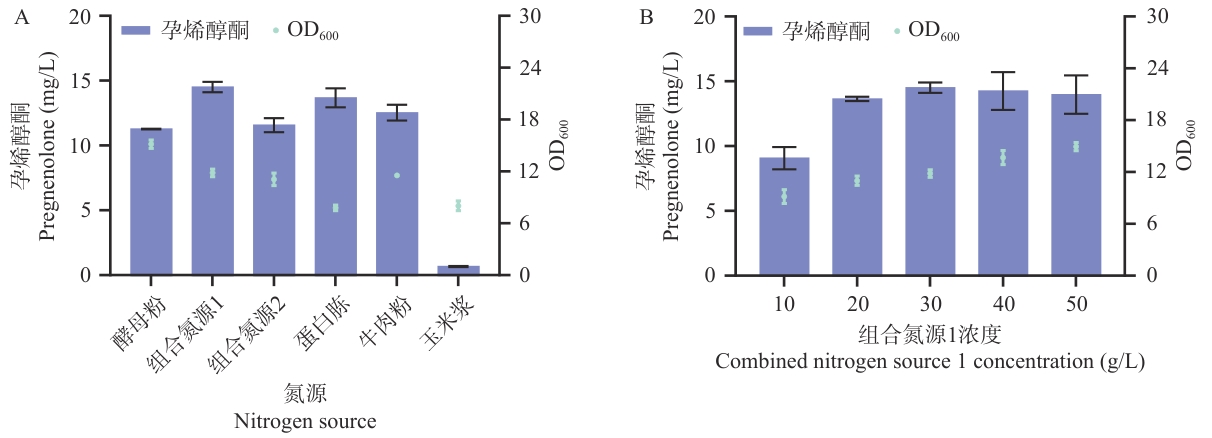
图8 氮源种类(A)和浓度(B)对孕烯醇酮合成的影响
Fig. 8 Effect of nitrogen sources types (A) and concentration (B) on the production of pregnenolone
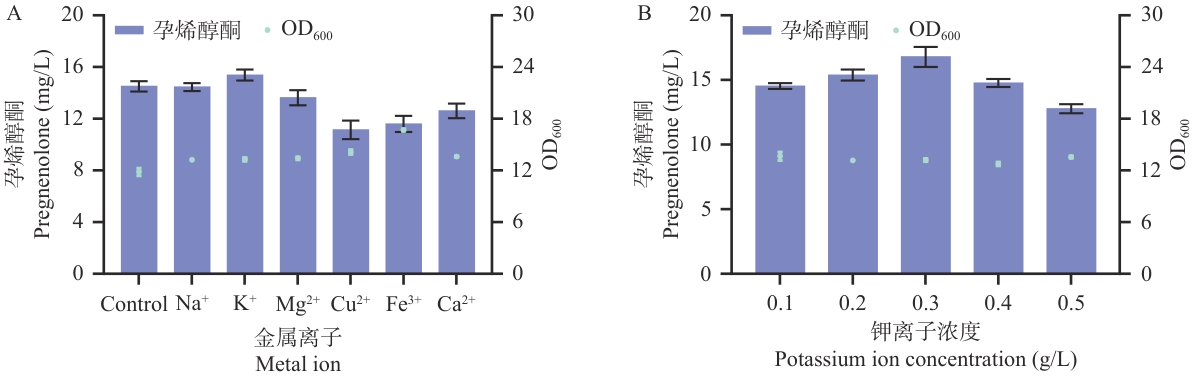
图9 金属离子种类(A)及浓度(B)对孕烯醇酮合成的影响
Fig. 9 Effect of metal ions types (A) and concentrations (B) on the production of pregnenolone
| [1] | Wang Y, Gui JH. Recent advances in the efficient synthesis of steroid natural products: emerging methods and strategies [J]. Chem Soc Rev, 2025, 54(14): 6807-6831. |
| [2] | Chen GH, Li CN, Kou BW, et al. Recent advances in the biosynthesis enzymes of steroidal natural products [J]. Sci Sin-Vitae, 2025, 55(10): 2061-2079. |
| [3] | Chen H, Wang YS, Zhang Y, et al. Reengineering of ergosterol biosynthesis in Saccharomyces cerevisiae and its sustainable application in Citrus peel processing industry [J]. New Biotechnol, 2025, 90: 155-162. |
| [4] | 张羽. 菜油甾醇和孕烯醇酮在耶氏解脂酵母中的合成与优化 [D]. 天津: 天津大学, 2017. |
| Zhang Y. De novo synthesis and optimization of campesterol and pregnenolone in Yarrowia lipolytica [D]. Tianjin: Tianjin University, 2017. | |
| [5] | Mendoza Lara DF, Hernández-Caballero ME, Terán JL, et al. Anticancer activities of natural and synthetic steroids: a review [J]. ACS Omega, 2025, 10(8): 7493-7509. |
| [6] | Ting TY, Li YD, Bunawan H, et al. Current advancements in systems and synthetic biology studies of Saccharomyces cerevisiae [J]. J Biosci Bioeng, 2023, 135(4): 259-265. |
| [7] | Zhang RS, Zhang Y, Wang Y, et al. Pregnenolone overproduction in Yarrowia lipolytica by integrative components pairing of the cytochrome P450scc system [J]. ACS Synth Biol, 2019, 8(12): 2666-2678. |
| [8] | Jiang LH, Huang L, Cai J, et al. Functional expression of eukaryotic cytochrome P450s in yeast [J]. Biotech & Bioengineering, 2021, 118(3): 1050-1065. |
| [9] | Xu SJ, Meng J, Zhang Q, et al. CILF: CRISPR/Cas9 based integration of large DNA fragments in Saccharomyces cerevisiae [J]. Biotech & Bioengineering, 2024, 121(12): 3906-3911. |
| [10] | Mauersberger S, Novikova LA, Shkumatov VM. Cytochrome P450 expression in Yarrowia lipolytica and its use in steroid biotransformation [M]//Barth G. Yarrowia lipolytica: Biotechnological Applications. Berlin, Heidelberg: Springer, 2013: 171-226. |
| [11] | Xie YF, Fan CX, Piao MH, et al. Enhanced ergosterol biosynthesis in Saccharomyces cerevisiae via rational multigenetic modification and two-stage fermentation [J]. Process Biochem, 2026, 161: 18-25. |
| [12] | Duport C, Spagnoli R, Degryse E, et al. Self-sufficient biosynthesis of pregnenolone and progesterone in engineered yeast [J]. Nat Biotechnol, 1998, 16(2): 186-189. |
| [13] | Carroll E, Ravi Gopal B, Raghavan I, et al. A cytochrome P450 CYP87A4 imparts sterol side-chain cleavage in digoxin biosynthesis[J]. Nat Commun, 2023, 14(1): 4042. |
| [14] | 梅世豪, 张嵩林, 邵明龙, 等. 酿酒酵母高效合成孕烯醇酮细胞工厂的构建 [J]. 食品与发酵工业, 2025, 51(17): 11-19. |
| Mei SH, Zhang SL, Shao ML, et al. Construction of a cell factory for efficient pregnenolone synthesis by Saccharomyces cerevisiae [J]. Food Ferment Ind, 2025, 51(17): 11-19. | |
| [15] | Liu W, Dong XF, Li HB, et al. Rewiring metabolism and restoring sterol homeostasis for overproduction of campesterol in Saccharomyces cerevisiae [J]. Chem Eng J, 2025, 515: 163686. |
| [16] | Jiang YQ, Sun ZJ, Lu KX, et al. Manipulation of sterol homeostasis for the production of 24-epi-ergosterol in industrial yeast [J]. Nat Commun, 2023, 14: 437. |
| [17] | Li RS, Guo S, Wang D, et al. Elucidation of the plant progesterone biosynthetic pathway and its application in a yeast cell factory [J]. Metab Eng, 2025, 90: 197-208. |
| [18] | Zheng HH, Wang K, Xu XX, et al. Highly efficient rDNA-mediated multicopy integration based on the dynamic balance of rDNA in Saccharomyces cerevisiae [J]. Microb Biotechnol, 2022, 15(5): 1511-1524. |
| [19] | 曲丽莎. 利用代谢工程改造酿酒酵母高效合成7-脱氢胆固醇 [D]. 无锡: 江南大学, 2022. |
| Qu LS. Engineered yeast for efficient de novo synthesis of 7-dehydrocholesterol [D]. Wuxi: Jiangnan University, 2022. | |
| [20] | Qin ZJ, Zhang YL, Liu S, et al. Combining metabolic engineering and lipid droplet assembly to achieve campesterol overproduction in Saccharomyces cerevisiae [J]. J Agric Food Chem, 2024, 72(9): 4814-4824. |
| [21] | Qu GY, Song YF, Xu XH, et al. De novo biosynthesis of mogroside V by multiplexed engineered yeasts [J]. Metab Eng, 2025, 88: 160-171. |
| [22] | Wang YY, Sun MC, Shen XL, et al. Engineering the cytochrome P450 oxidation system to enhance benzyl glucosinolate production in Saccharomyces cerevisiae [J]. J Agric Food Chem, 2025, 73(38): 24286-24294. |
| [23] | Garcia-Albornoz M, Holman SW, Antonisse T, et al. A proteome-integrated, carbon source dependent genetic regulatory network in Saccharomyces cerevisiae [J]. Mol Omics, 2020, 16(1): 59-72. |
| [24] | Lu XC, Chang MX, Li XY, et al. Metabolic engineering for sustainable xylitol production from diverse carbon sources in Pichia pastoris [J]. Microb Cell Fact, 2025, 24: 59. |
| [25] | Wang YH, Zhu HX, Pan SY, et al. Effect of different nitrogen source and Saccharomyces cerevisiae strain on volatile sulfur compounds and their sensory effects in chardonnay wine [J]. Food Chem X, 2024, 24: 101793. |
| [26] | Chen Y, Li FR, Mao JW, et al. Yeast optimizes metal utilization based on metabolic network and enzyme kinetics [J]. Proc Natl Acad Sci U S A, 2021, 118(12): e2020154118. |
| [27] | Cheng YT, Luo LL, Tang H, et al. Engineering the microenvironment of P450s to enhance the production of diterpenoids in Saccharomyces cerevisiae [J]. Acta Pharm Sin B, 2024, 14(10): 4608-4618. |
| [28] | Tanaka K, Yukawa T, Bamba T, et al. Engineering Saccharomyces cerevisiae for growth on xylose using an oxidative pathway [J]. Appl Microbiol Biotechnol, 2025, 109: 30. |
| [29] | Zou J, Chen XH, Hu YH, et al. Uncoupling glucose sensing from GAL metabolism for heterologous lactose fermentation in Saccharomyces cerevisiae [J]. Biotechnol Lett, 2021, 43(8): 1607-1616. |
| [30] | Guo BY, Li YY, Liu YJ, et al. Reprogramming carbon flux to eliminate crabtree effect-associated ethanol production for high-yieldl-lactic acid biosynthesis in Saccharomyces cerevisiae [J]. J Agric Food Chem, 2025, 73(49): 31274-31285. |
| [31] | Kukovetz K, Cartolano M, Gebhardt M, et al. Yeast complementation assays provide limited information on functional features of K+ channels [J]. Biophys Rep, 2025, 5(2): 100206. |
| [32] | Petrisková L, Kodedová M, Balážová M, et al. Lipid droplets control the negative effect of non-yeast sterols in membranes of Saccharomyces cerevisiae under hypoxic stress [J]. BBA Mol Cell Biol Lipds, 2024, 1869(7): 159523. |
| [33] | Chen QH, Wei WQ, Chao ZK, et al. Electron transfer engineering of artificially designed cell factory for complete biosynthesis of steroids [J]. Nat Commun, 2025, 16: 3740. |
| [34] | Zhu Y, Yan XG, Li WG, et al. Cofactor-coupled cytochrome P450 engineering enables high-level biosynthesis of Asiatic acid in Saccharomyces cerevisiae [J]. Bioresour Technol, 2026, 441: 133558. |
| [1] | 黄旭升, 周雅莉, 柴旭东, 闻婧, 王计平, 贾小云, 李润植. 紫苏质体型PfLPAT1B基因的克隆及其在油脂合成中的功能分析[J]. 生物技术通报, 2025, 41(7): 226-236. |
| [2] | 贾承霖, 郭晓鹏, 陆栋, 张苗苗. 增强酿酒酵母对木质纤维素水解液抑制剂耐受性的研究进展[J]. 生物技术通报, 2025, 41(4): 61-75. |
| [3] | 张严化, 曲文龙, 戴文静, 张睿宁, 刘羽鸿, 王德培, 薛鲜丽. 一株高产维生素B13不动杆菌鉴定及发酵条件优化[J]. 生物技术通报, 2025, 41(11): 153-165. |
| [4] | 何玙冰, 付振浩, 李仁瀚, 刘秀霞, 刘春立, 杨艳坤, 李业, 白仲虎. 利用代谢工程在酿酒酵母中高效合成2-萘乙醇[J]. 生物技术通报, 2024, 40(7): 99-107. |
| [5] | 徐发迪, 徐康, 孙东明, 李萌蕾, 赵建志, 鲍晓明. 基于杨木(Populus sp.)的二代燃料乙醇技术研究进展[J]. 生物技术通报, 2023, 39(9): 27-39. |
| [6] | 成婷, 苑帅, 张晓元, 林良才, 李欣, 张翠英. 酿酒酵母异丁醇合成途径调控的研究进展[J]. 生物技术通报, 2023, 39(7): 80-90. |
| [7] | 祝瑛萱, 李克景, 何敏, 郑道琼. 酵母模型揭示胁迫因子驱动基因组变异的研究进展[J]. 生物技术通报, 2023, 39(11): 191-204. |
| [8] | 孙言秋, 谢采芸, 汤岳琴. 耐高温酿酒酵母的构建与高温耐受机制解析[J]. 生物技术通报, 2023, 39(11): 226-237. |
| [9] | 王文韬, 冯颀, 刘晨光, 白凤武, 赵心清. 氧化还原敏感型基因元件增强酵母木质纤维素水解液抑制物胁迫耐受性[J]. 生物技术通报, 2023, 39(11): 360-372. |
| [10] | 崔新刚, 孙雅欣, 崔晓静, 邓雁文, 孙恩浩, 王俊芳, 崔红晶. 酿酒酵母TAP42基因在细胞壁应激反应中的作用[J]. 生物技术通报, 2021, 37(10): 57-62. |
| [11] | 顾翰琦, 邵玲智, 刘冉, 刘晓光, 李玲, 刘倩, 李洁, 张雅丽. 酿酒酵母酚类抑制物耐受性脂质组学研究[J]. 生物技术通报, 2021, 37(1): 15-23. |
| [12] | 吴宇, 王金华, 赵筱. GLN1基因过表达对提高酿酒酵母糠醛耐受性的研究[J]. 生物技术通报, 2020, 36(8): 69-78. |
| [13] | 顾翰琦, 刘冉, 邵玲智, 徐岩岩, 王东岩, 张冬梅, 李洁. 酿酒酵母对酚类抑制物耐受性研究[J]. 生物技术通报, 2020, 36(6): 136-142. |
| [14] | 陈永灿, 张建志, 司同. 酿酒酵母中基于CRISPR/dCás9的基因转录调控工具的开发与应用[J]. 生物技术通报, 2020, 36(4): 1-12. |
| [15] | 李佳秀, 蔡倩茹, 吴杰群. 萜类化合物在酿酒酵母中的合成生物学研究进展[J]. 生物技术通报, 2020, 36(12): 199-207. |
| 阅读次数 | ||||||
|
全文 |
|
|||||
|
摘要 |
|
|||||
