







生物技术通报 ›› 2026, Vol. 42 ›› Issue (6): 64-76.doi: 10.13560/j.cnki.biotech.bull.1985.2025-1350
董亚瑞( ), 栗锦烨, 崔庆晗, 贾玉鑫()
收稿日期:2025-12-11
出版日期:2026-06-26
发布日期:2026-07-11
通讯作者:
贾玉鑫,男,博士,教授,研究方向 :马铃薯功能基因;E-mail: jiayuxin@caas.cn作者简介:董亚瑞,女,硕士研究生,研究方向 :马铃薯功能基因;E-mail: 18208730591@163.com基金资助:
DONG Ya-rui(), LI Jin-ye, CUI Qing-han, JIA Yu-xin()
Received:2025-12-11
Published:2026-06-26
Online:2026-07-11
摘要:
目的 MADS-box转录因子家族广泛参与植物的生长发育、花器官形成等过程。系统分析51份马铃薯基因组中核心MADS-box转录因子的功能,为马铃薯分子育种提供理论依据与基因资源。 方法 基于33份野生和18份栽培二倍体马铃薯的全基因组数据,鉴定核心MADS-box基因,通过生物信息学分析其理化性质、系统发育关系、染色体分布及保守结构域;通过GO富集并结合转录组数据及RT-qPCR技术解析其表达模式、外源激素处理,与主粮作物中功能明确的同源基因进行比对,推断其生物学功能,最后与近缘物种进行共线性分析。 结果 在51份二倍体马铃薯中鉴定出95个共有MADS-box基因,即核心基因,分为I型 (Mα,Mβ,Mγ)与II型(MIKC*,MIKCc)两大亚家族。理化性质分析显示该家族蛋白普遍为亲水性不稳定蛋白。系统发育与结构分析表明,各亚家族具有特征性基序与结构域。染色体定位发现基因在Chr01、Chr04、Chr05和Chr12染色体上成簇分布。GO富集分析表明该家族参与花器官发育及激素响应等过程。表达模式分析显示多个MIKCc型基因在花芽、匍匐茎等组织中特异性表达。激素响应分析揭示,关键候选基因的表达受GA3抑制而被ABA诱导。与水稻OsMADS29等功能基因的系统发育比较揭示部分基因可能参与块茎发育与产量形成。共线性分析揭示马铃薯与近缘物种之间存在37个共有的MADS-box基因,部分基因出现易位变异。 结论 马铃薯MADS-box基因家族在进化中保持调控花和块茎发育的保守功能。筛选出的候选基因如DM8C02G24490.1、DM8C03G29590.1等种子发育与块茎形成相关基因,为后续功能验证与育种改良提供了重要靶点。
董亚瑞, 栗锦烨, 崔庆晗, 贾玉鑫. 马铃薯核心MADS-box转录因子进化特性与功能预测[J]. 生物技术通报, 2026, 42(6): 64-76.
DONG Ya-rui, LI Jin-ye, CUI Qing-han, JIA Yu-xin. Evolutionary Characteristics and Functional Inferences of Core MADS-box Transcription Factors in Potato[J]. Biotechnology Bulletin, 2026, 42(6): 64-76.
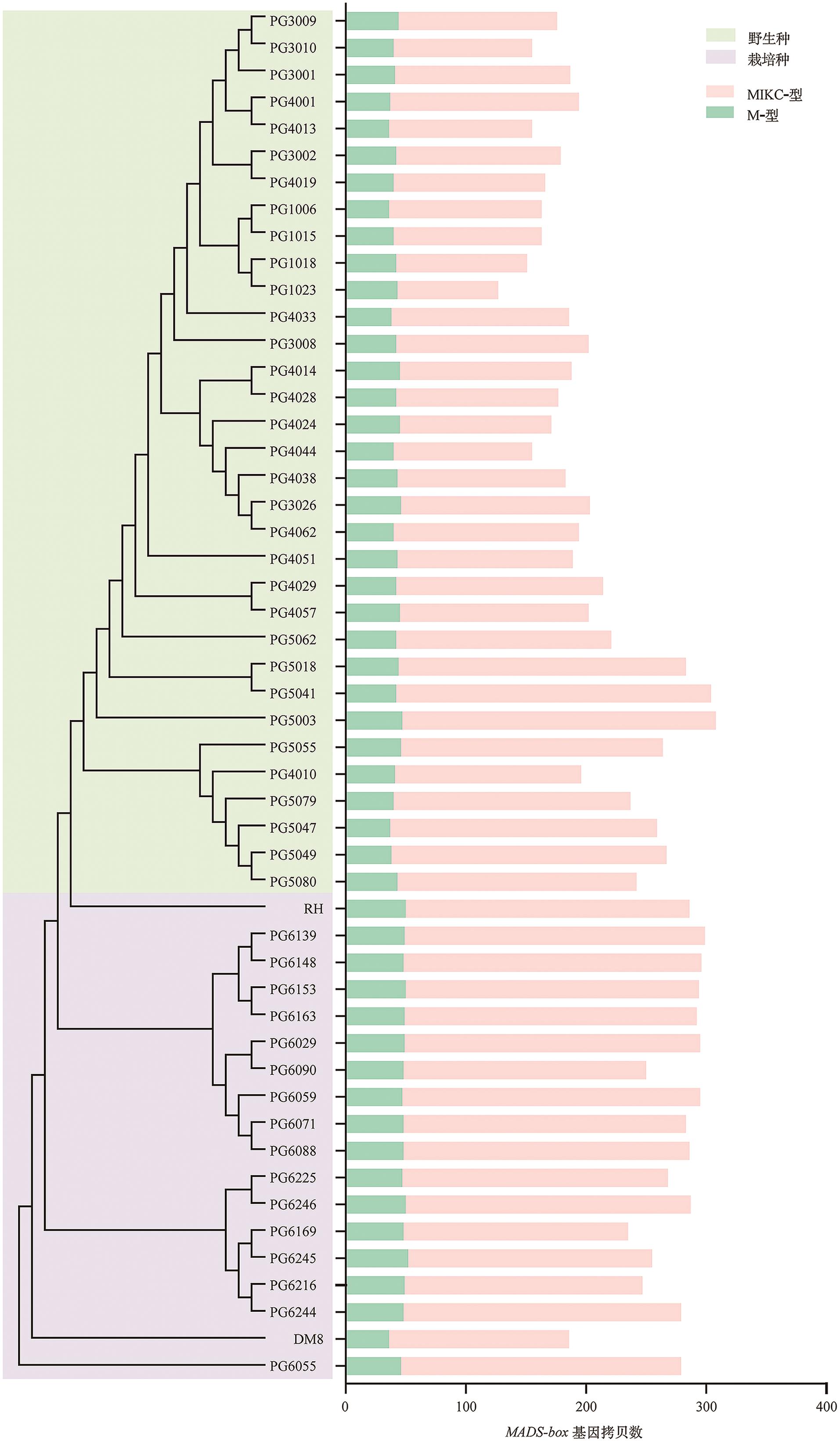
图1 MADS-box基因家族在多种马铃薯种质资源中的分布情况
Fig. 1 Distribution of MADS-box gene family in various potato germplasm resources
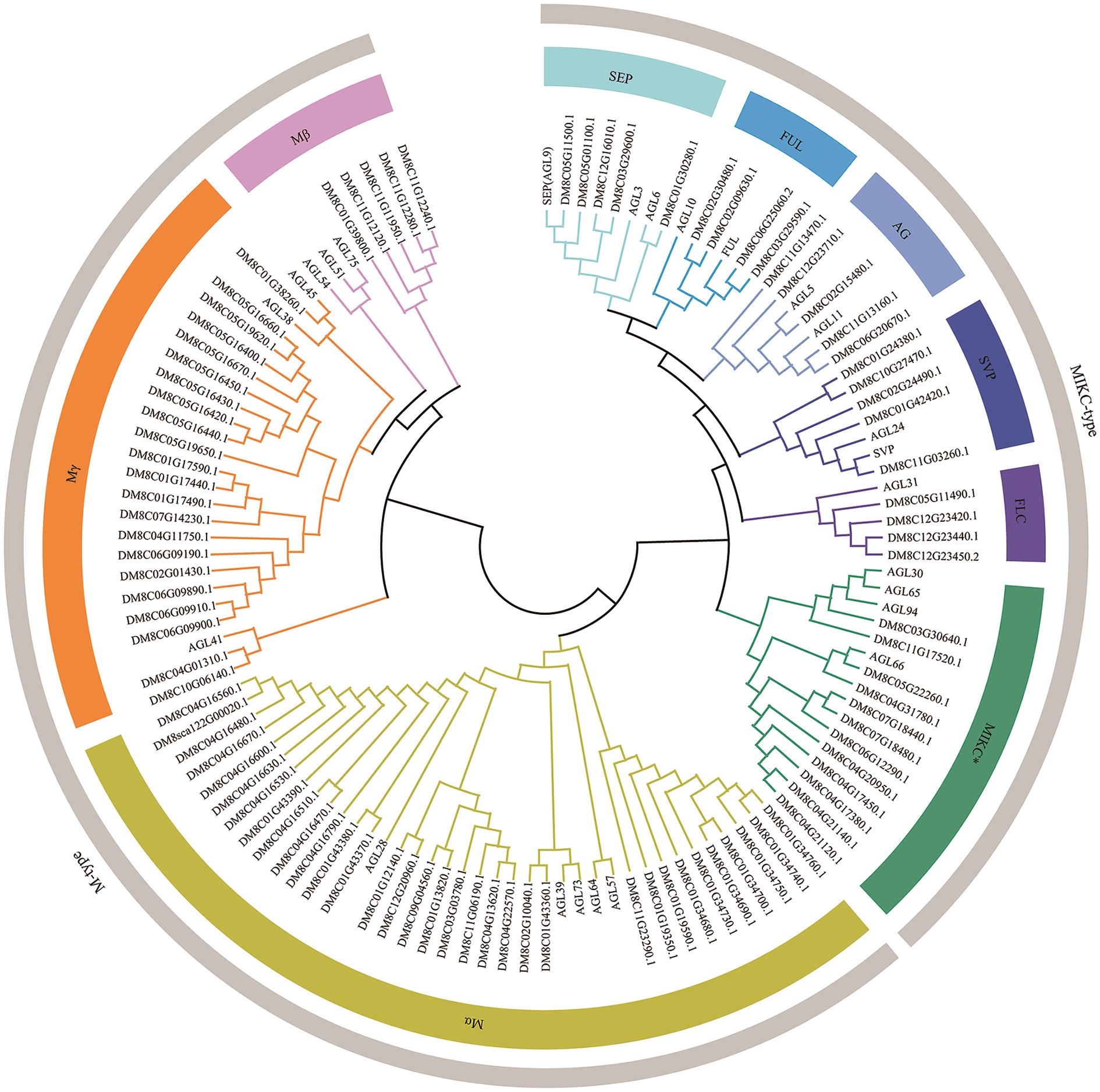
图2 马铃薯核心MADS-box系统发育关系
Fig. 2 Phylogenetic relationship of the core MADS-box in potato
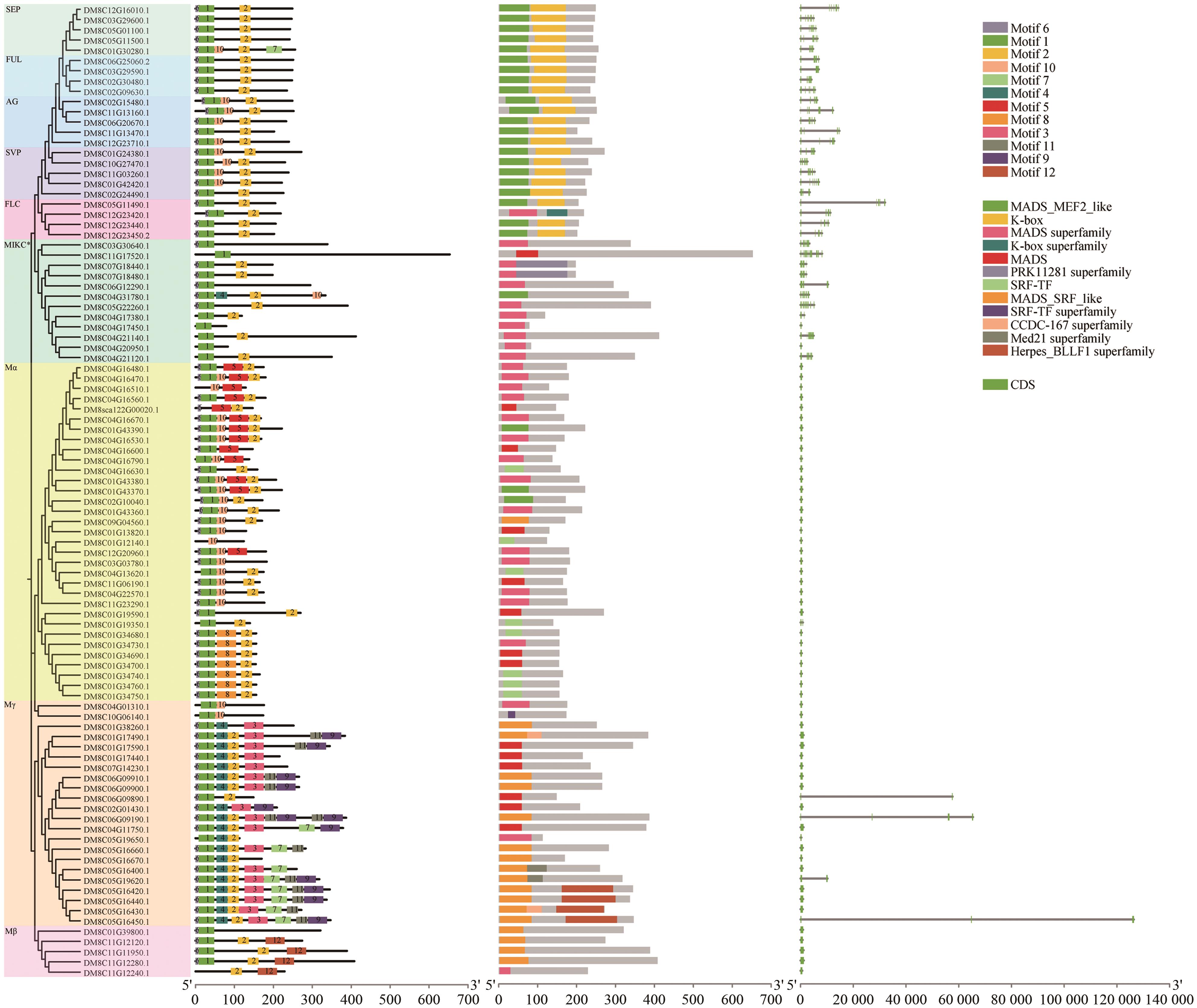
图3 马铃薯核心MADS-box基因的特征
Fig. 3 Characteristics of the core MADS-box genes in potato
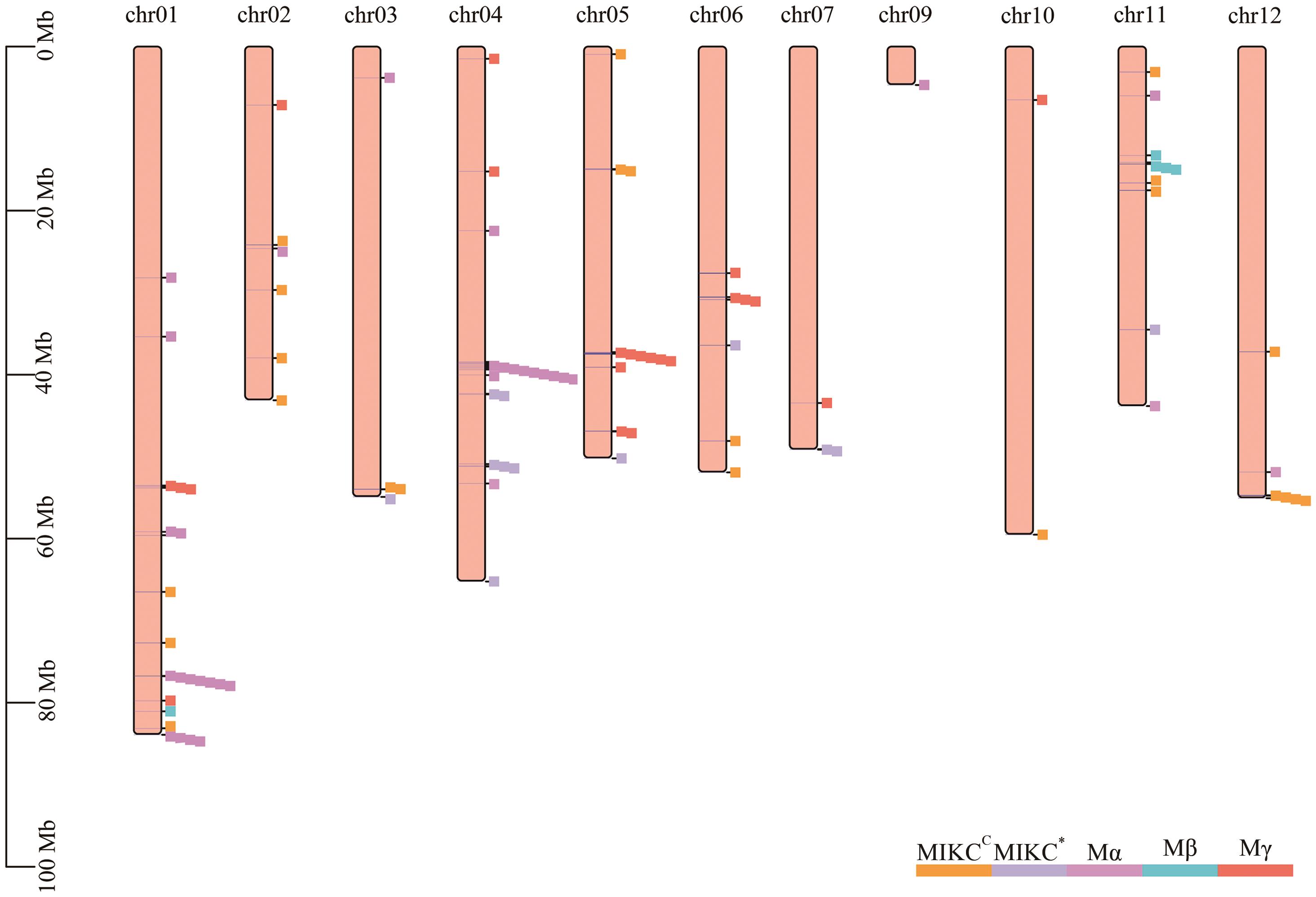
图4 马铃薯核心MADS-box基因的染色体分布
Fig. 4 Chromosomal distribution of core MADS-box genes in potato
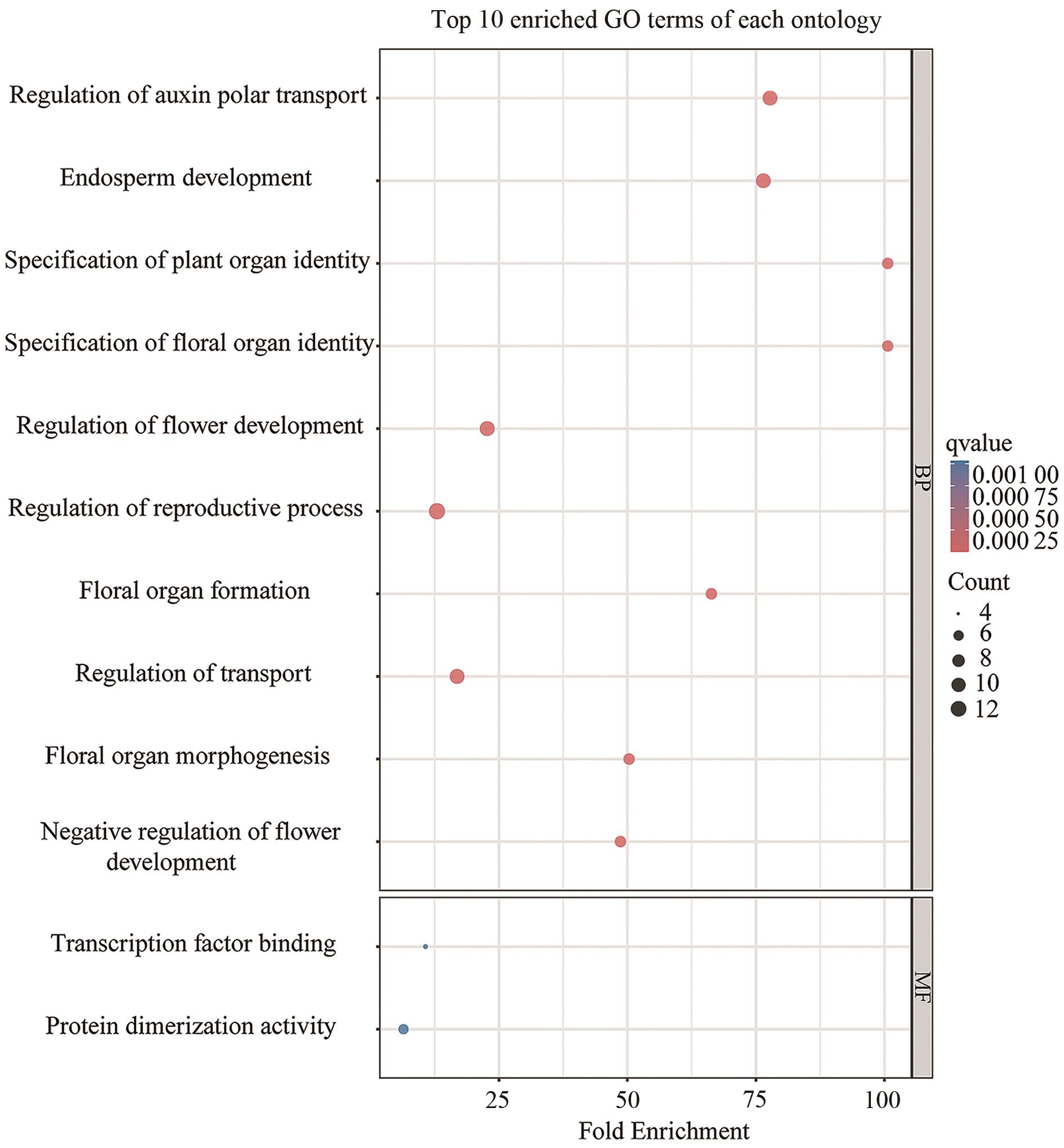
图5 马铃薯核心MADS-box转录因子GO富集分析
Fig. 5 GO enrichment analysis of core MADS-box transcription factors in potato
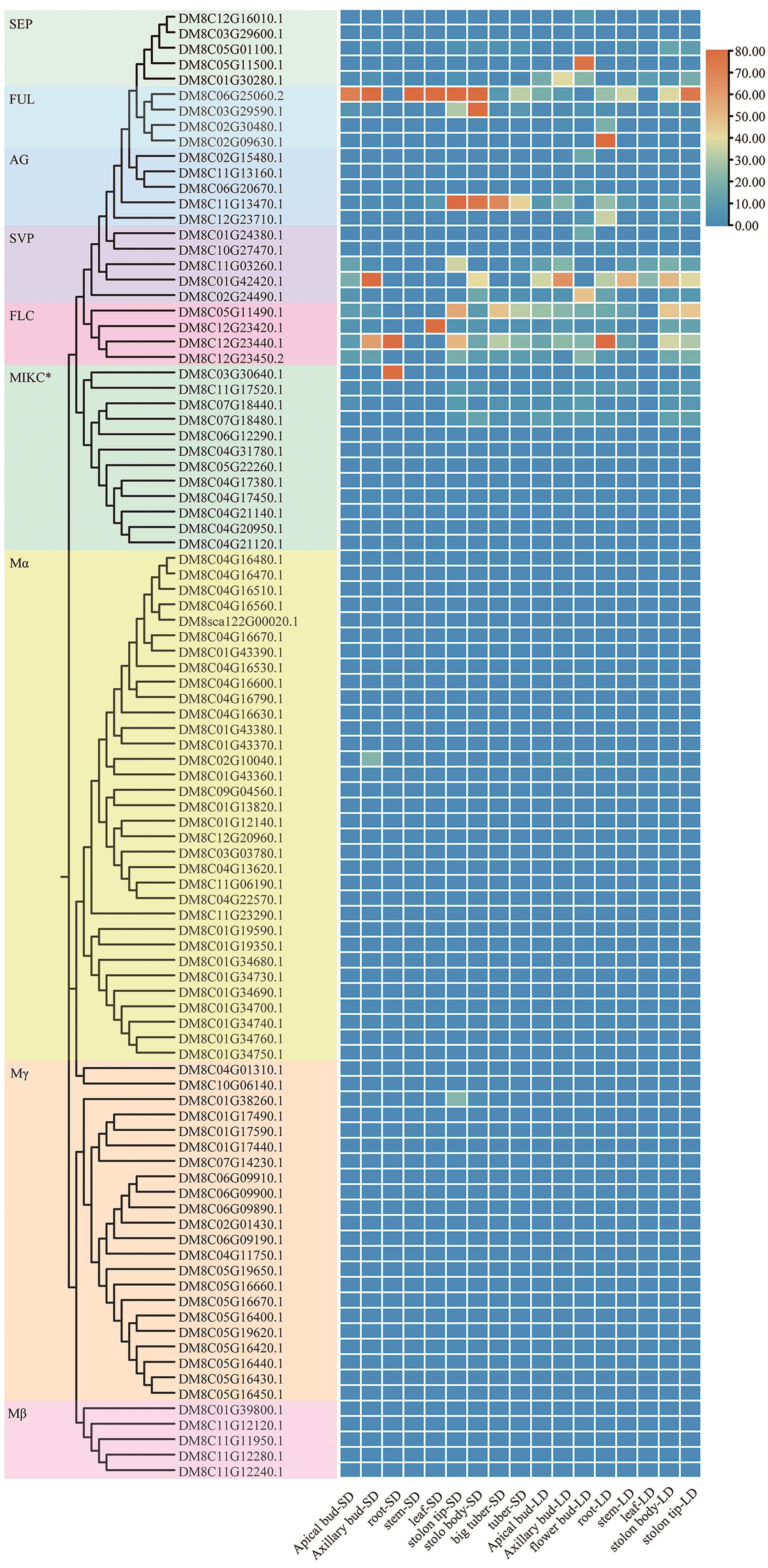
图6 不同光周期条件下马铃薯核心MADS-box基因的组织表达模式
Fig. 6 Tissue expression patterns of core MADS-box genes in potato under different photoperiods
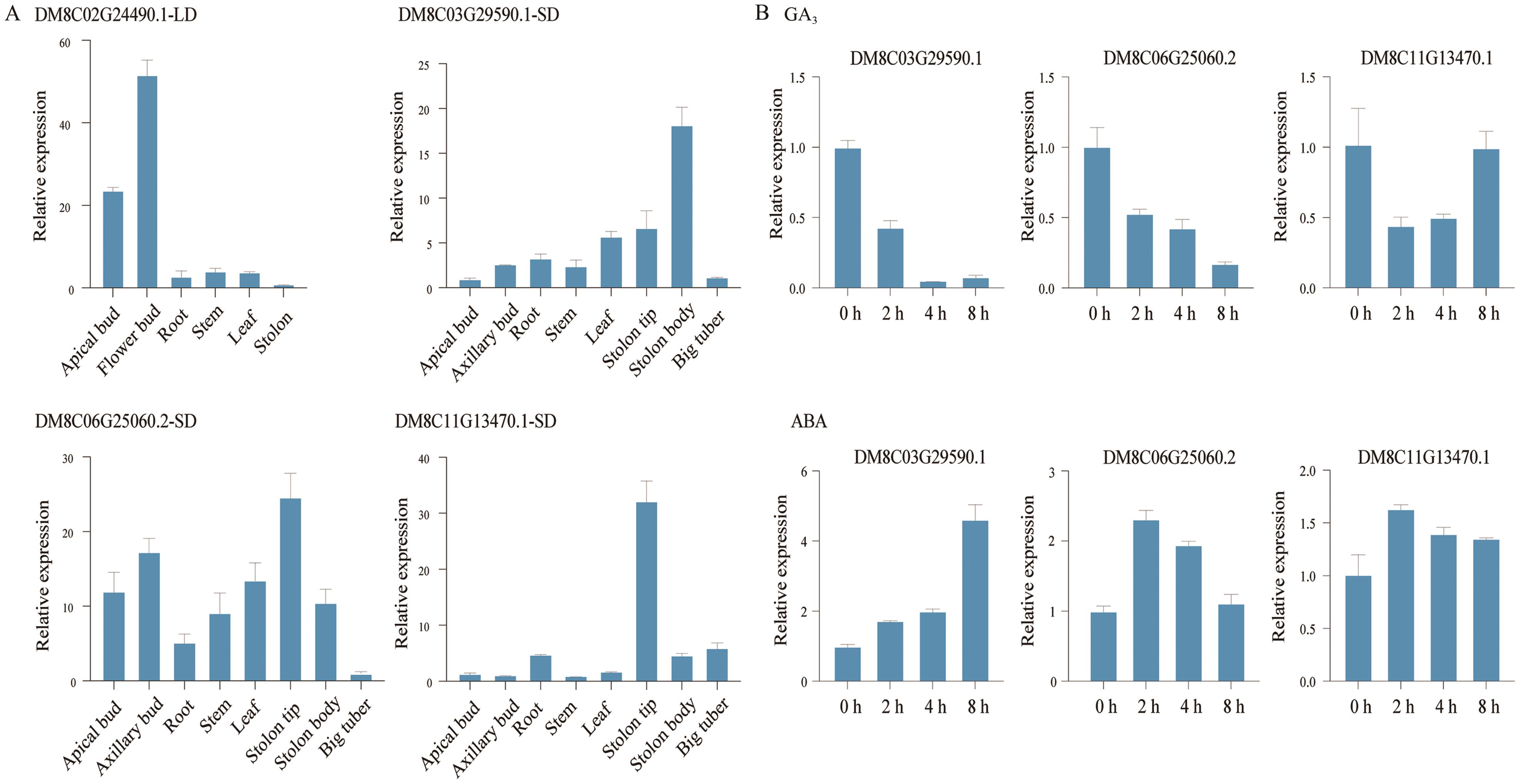
图7 MADS-box基因在特定光照条件下的相对表达水平(A)及响应GA3和ABA处理的表达模式(B)
Fig. 7 Relative expressions of MADS-box genes under specific light conditions (A) and their expression patterns in response to GA3 and ABA treatments (A)
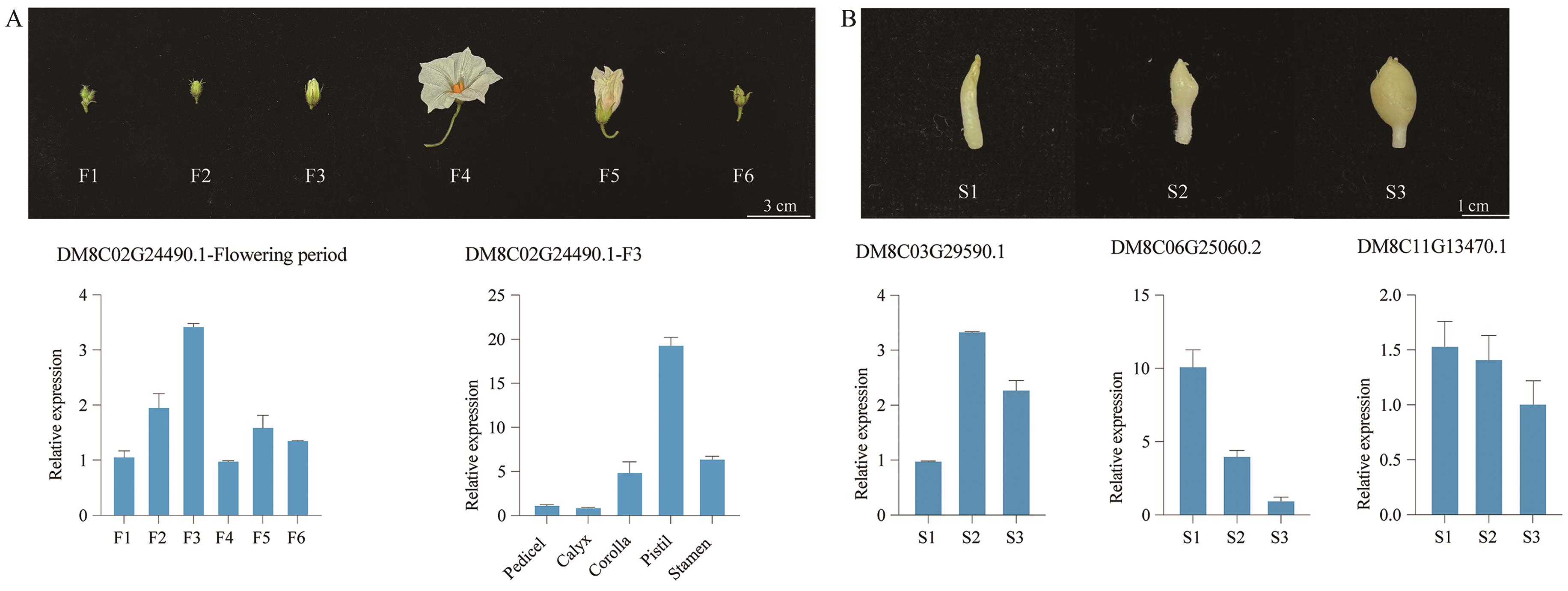
图8 基因在花和块茎发育过程中的相对表达水平F1:花序发育期;F2:花器官形成期;F3:花蕾成熟期;F4:开花期;F5:受精与结实期;F6:落花期;S1:匍匐茎起始期;S2:块茎起始期;S3:块茎器官建成期
Fig. 8 Relative expressions of genes MADS-box during flower and tuber developmentF1: Inflorescence development stage. F2: Flower organ formation stage. F3: Flower bud maturation stage. F4: Flowering stage; F5: Fertilization and fruit-setting stage. F6: Flower abscission stage. S1: Stolon initiation stage. S2: Tuber initiation stage. S3: Tuber organ establishment stage
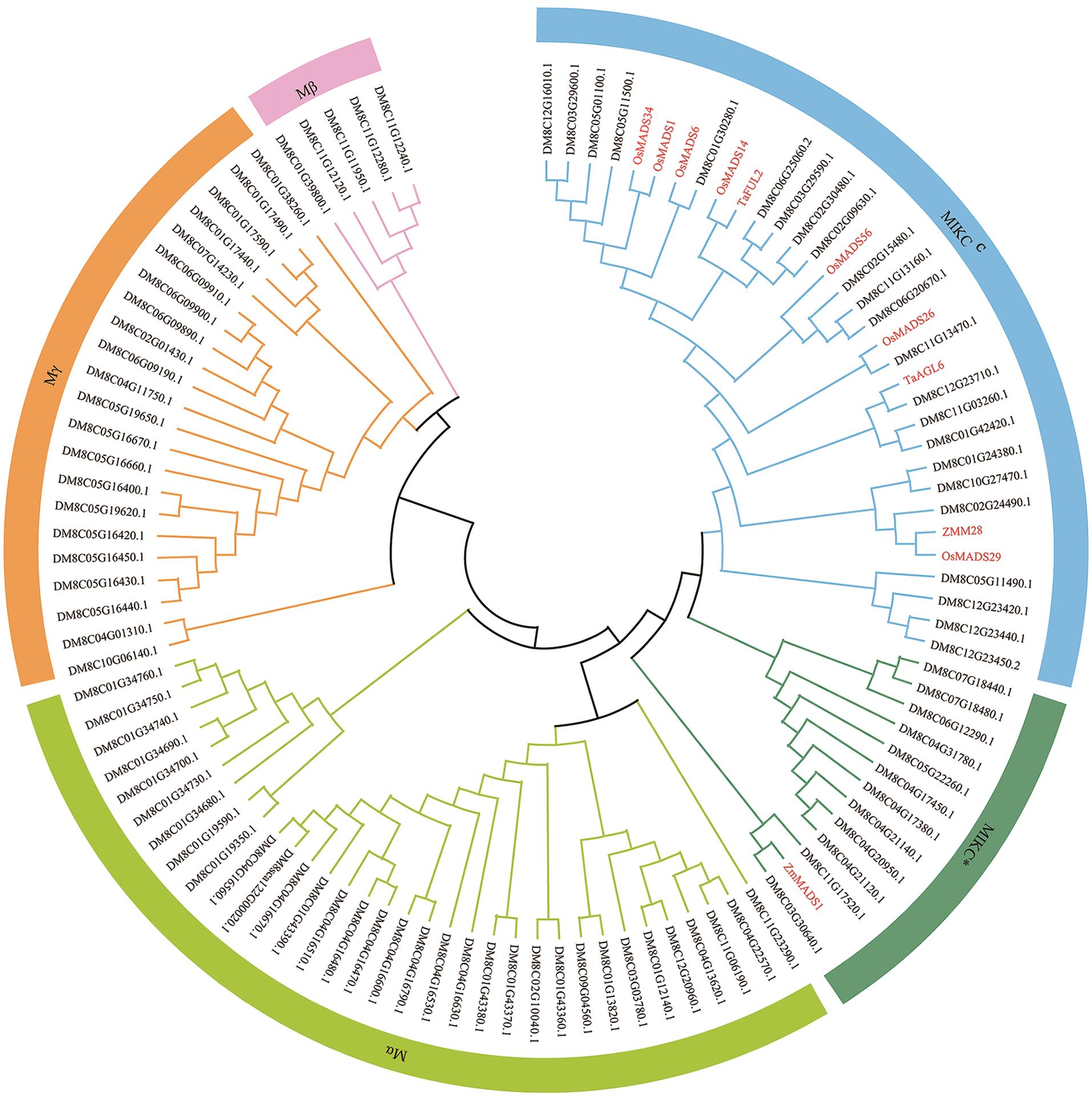
图9 马铃薯核心MADS-box基因与已知功能的水稻、玉米及小麦MADS-box基因的系统发育关系
Fig. 9 Phylogenetic relationship of the core MADS-box genes in potato with the known functional MADS-box genes in rice, corn and wheat
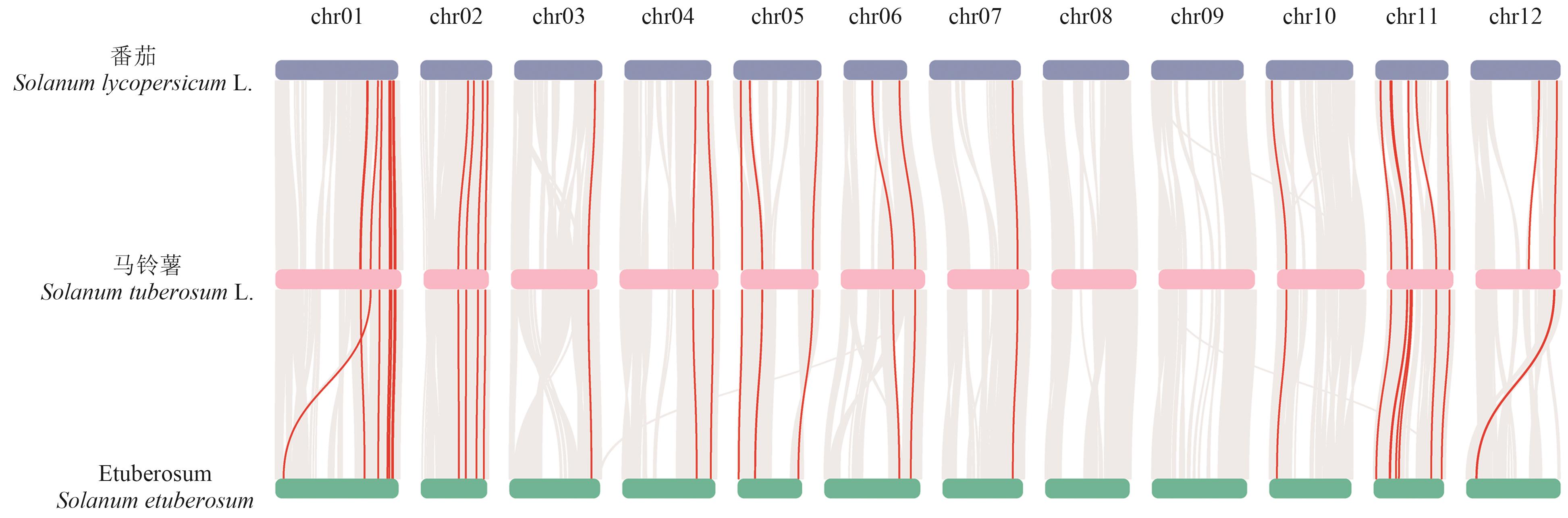
图10 番茄、马铃薯和Etuberosum中核心MADS-box基因的共线性分析
Fig. 10 Co-linearity analysis of core MADS-box genes in tomato, potato and Etuberosum
| [1] | Chen Y, Chu YF, Wang J, et al. Natural allelic variation in the CBF2 transcription factor is a pivotal factor controlling cold resistance in potato [J]. Plant Physiol, 2025, 199(2): kiaf428. |
| [2] | Bao XR, Zhu YK, Li GC, et al. Regulation of storage organ formation by long-distance tuberigen signals in potato [J]. Hortic Res, 2025, 12(4): uhae360. |
| [3] | Kondhare KR, Kumar A, Patil NS, et al. Development of aerial and belowground tubers in potato is governed by photoperiod and epigenetic mechanism [J]. Plant Physiol, 2021, 187(3): 1071-1086. |
| [4] | Dutta M, Mali S, Raturi V, et al. Transcriptional and post-transcriptional regulation of tuberization in potato (Solanum tuberosum L.) [J]. J Plant Growth Regul, 2024, 43(1): 11053. |
| [5] | Kondhare KR, Natarajan B, Banerjee AK. Molecular signals that govern tuber development in potato [J]. Int J Dev Biol, 2020, 64(1/2/3): 133-140. |
| [6] | Riechmann JL, Meyerowitz EM. MADS domain proteins in plant development [J]. Biol Chem, 1997, 378(10): 1079-1101. |
| [7] | Zhang ZH, Zou WH, Lin PX, et al. Evolution and function of MADS-box transcription factors in plants [J]. Int J Mol Sci, 2024, 25(24): 13278. |
| [8] | Hoffmann T, Shi XL, Hsu CY, et al. The identification of type I MADS box genes as the upstream activators of an endosperm-specific invertase inhibitor in Arabidopsis [J]. BMC Plant Biol, 2022, 22: 18. |
| [9] | Zhang XN, Wang QJ, Yang SZ, et al. Identification and characterization of the MADS-box genes and their contribution to flower organ in carnation (Dianthus caryophyllus L.) [J]. Genes, 2018, 9(4): 193. |
| [10] | Liu RJ, Zhao D, Li PB, et al. Natural variation in OsMADS1 transcript splicing affects rice grain thickness and quality by influencing monosaccharide loading to the endosperm [J]. Plant Commun, 2025, 6(1): 101178. |
| [11] | Yang XL, Wu F, Lin XL, et al. Live and let die - the bsister MADS-box gene OsMADS29 controls the degeneration of cells in maternal tissues during seed development of rice (Oryza sativa) [J]. PLoS One, 2012, 7(12): e51435. |
| [12] | Li CX, Lin HQ, Chen A, et al. WheatVRN1, FUL2 and FUL3 play critical and redundant roles in spikelet development and spike determinacy [J]. Development, 2019, 146(14): dev175398. |
| [13] | Su YL, Liu JX, Liang WQ, et al. Wheat AGAMOUS LIKE 6 transcription factors function in stamen development by regulating the expression of TaAPETALA3 [J]. Development, 2019: dev.177527. |
| [14] | Wu JR, Lawit SJ, Weers B, et al. Overexpression of zmm28 increases maize grain yield in the field [J]. Proc Natl Acad Sci U S A, 2019, 116(47): 23850-23858. |
| [15] | Kang SG, Hannapel DJ. A novel MADS-box gene of potato (Solanum tuberosum L.) expressed during the early stages of tuberization [J]. Plant Mol Biol, 1996, 31(2): 379-386. |
| [16] | Kang SC, Kang H. Characterization of potato vegetative MADS-Box gene, POTM1-1, in response to hormone applications [J]. J Plant Biol, 2002, 45(4): 196-200. |
| [17] | Carmona MJ, Ortega N, Garcia-Maroto F. Isolation and molecular characterization of a new vegetative MADS-box gene from Solanum tuberosum L [J]. Planta, 1998, 207(2): 181-188. |
| [18] | García-Maroto F, Ortega N, Lozano R, et al. Characterization of the potato MADS-box gene STMADS16 and expression analysis in tobacco transgenic plants [J]. Plant Mol Biol, 2000, 42(3): 499-513. |
| [19] | Wang YX, Ji XZ, Zhuang ZL, et al. Identification and bioinformatics analysis of MADS-box family genes containing K-box domain in maize [J]. Not Bot Horti Agrobo, 2023, 51(4): 13253. |
| [20] | Bharath SR, Mohan Raju B. Effect of varied levels of gibberellin, anti-gibberellin and cytokinin on growth and tuberization in potato [J]. Madras Agric J, 2024, 111: 35-44. |
| [21] | 柳俊, 谢从华. 马铃薯块茎发育机理及其基因表达 [J]. 植物学通报, 2001, 18(5): 531-539. |
| Liu J, Xie CH. The mechanism of potato (Solanum tuberosum L.) tuber development and related gene expression [J]. Chin Bull Bot, 2001, 18(5): 531-539. | |
| [22] | Chen PL, Yang RX, Bartels D, et al. Roles of abscisic acid and gibberellins in stem/root tuber development [J]. Int J Mol Sci, 2022, 23(9): 4955. |
| [23] | Xu X, van Lammeren AAM, Vermeer E, et al. The role of gibberellin, abscisic acid, and sucrose in the regulation of potato tuber formation in vitro 1 [J]. Plant Physiol, 1998, 117(2): 575-584. |
| [24] | Menzel CM. Tuberization in potato at high temperatures: responses to gibberellin and growth inhibitors [J]. Ann Bot, 1980, 46(3): 259-265. |
| [25] | Machida-Hirano R. Diversity of potato genetic resources [J]. Breed Sci, 2015, 65(1): 26-40. |
| [26] | Gao HH, Wang ZM, Li SL, et al. Genome-wide survey of potato MADS-box genes reveals that StMADS1 and StMADS13 are putative downstream targets of tuberigen StSP6A [J]. BMC Genom, 2018, 19: 726. |
| [27] | Tang dié, Jia YX, Zhang JZ, et al. Genome evolution and diversity of wild and cultivated potatoes [J]. Nature, 2022, 606(7914): 535-541. |
| [28] | van Lieshout N, van der Burgt A, de Vries ME, et al. Solyntus, the new highly contiguous reference genome for potato (Solanum tuberosum) [J]. G3, 2020, 10(10): 3489-3495. |
| [29] | Tang HB, Krishnakumar V, Zeng XF, et al. JCVI: a versatile toolkit for comparative genomics analysis [J]. iMeta, 2024, 3(4): e211. |
| [30] | 刘计涛, 王梦诗, 索海翠, 等. 马铃薯GA2ox家族基因响应赤霉素(GA)和低温胁迫表达分析 [J]. 江苏农业学报, 2023, 39(5): 1110-1119. |
| Liu JT, Wang MS, Suo HC, et al. Expression analysis of GA2ox family genes in response to gibberellin (GA) and cold stress in potato [J]. Jiangsu J Agric Sci, 2023, 39(5): 1110-1119. | |
| [31] | 尉瑞敏, 常燕楠, 庞鹏湘, 等. 马铃薯StZnT11的电子克隆、表达及生物信息学分析 [J]. 生物工程学报, 2020, 36(2): 362-371. |
| Yu RM, Chang YN, Pang PX, et al. In silico cloning, expression and bioinformatics analysis of StZnT11 in Solanum tuberosum [J]. Chin J Biotechnol, 2020, 36(2): 362-371. | |
| [32] | Zhong SF, Tian YF, Guan J, et al. Expression and function analyses of the MIKCC-type MADS-box genes in Akebia trifoliata (Lardizabalaceae) flower development [J]. Acta Physiol Plant, 2024, 46(5): 52. |
| [33] | Ma ZM, Hu LJ, Jiang WZ. Understanding AP2/ERF transcription factor responses and tolerance to various abiotic stresses in plants: a comprehensive review [J]. Int J Mol Sci, 2024, 25(2): 893. |
| [34] | Huo SJ, Li YF, Li RP, et al. Genome-wide analysis of the MADS-box gene family in Rhododendron hainanense Merr. and expression analysis under heat and waterlogging stresses [J]. Ind Crops Prod, 2021, 172: 114007. |
| [35] | Arora R, Agarwal P, Ray S, et al. MADS-box gene family in rice: genome-wide identification, organization and expression profiling during reproductive development and stress [J]. BMC Genom, 2007, 8: 242. |
| [36] | Ren LL, Sun HW, Dai SY, et al. Identification and characterization of MIKCc-type MADS-box genes in the flower organs of Adonis amurensis [J]. Int J Mol Sci, 2021, 22(17): 9362. |
| [37] | Kang SG, Hannapel DJ, Suh SG. Potato MADS-box gene POTM1-1 transcripts are temporally and spatially distributed in floral organs and vegetative meristems [J]. Mol Cells, 2003, 15(1): 48-54. |
| [38] | Kaufmann K, Melzer R, Theißen G. MIKC-type MADS-domain proteins: structural modularity, protein interactions and network evolution in land plants [J]. Gene, 2005, 347(2): 183-198. |
| [39] | Fernandez JA, Habben JE, Schussler JR, et al. zmm28 transgenic maize increases both N uptake- and N utilization-efficiencies [J]. Commun Biol, 2022, 5: 555. |
| [40] | Lee S, Woo YM, Ryu SI, et al. Further characterization of a rice AGL12 group MADS-box gene, OsMADS26 [J]. Plant Physiol, 2008, 147(1): 156-168. |
| [1] | 王江清, 张蝶, 王荟洁, 袁柱东, 付艳鸿, 黄娅楠, 王洪洋. 马铃薯AP2/ERF基因家族鉴定及响应致病疫霉胁迫的表达分析[J]. 生物技术通报, 2026, 42(6): 116-127. |
| [2] | 武小娟, 赵雪雯, 王沛捷, 聂虎帅, 李楠, 马宇, 杨恩泽, 马杰茹, 马艳红. 马铃薯GARP转录因子家族分析及StARR14-X1基因功能验证[J]. 生物技术通报, 2026, 42(6): 22-30. |
| [3] | 安飞飞, 罗秀芹, 蔡杰, 薛晶晶, 朱文丽. 木薯MeMYB106基因克隆及其在叶片花青素合成中的功能[J]. 生物技术通报, 2026, 42(6): 13-21. |
| [4] | 翟莹, 高双, 计俊杰, 于海伟, 赵艳, 马天意, 张梅娟, 李珊珊. 工业大麻转录因子CsMYB12抗旱功能的研究[J]. 生物技术通报, 2026, 42(6): 294-303. |
| [5] | 李旭龙, 徐世强, 张龙, 李静宇, 何伟贤, 陈立凯, 王继华. 巴戟天萜烯合成酶基因家族鉴定、进化及表达模式分析[J]. 生物技术通报, 2026, 42(6): 314-325. |
| [6] | 孟洪玉, 刘亚楠, 武峻新, 申琼. 南瓜NAC转录因子基因家族鉴定及生物信息学分析[J]. 生物技术通报, 2026, 42(6): 237-249. |
| [7] | 张雅宁, 毛春力, 胡志勇, 杨丹, 吴佳海, 王碧娴, 黄琳凯. 象草Dof转录因子的全基因组分析及其对低温胁迫的响应[J]. 生物技术通报, 2026, 42(6): 267-278. |
| [8] | 王冰冰, 朱迪, 杨生龙, 李艺林, 杨琪, 贺苗苗. 外源褪黑素对晚疫病胁迫下马铃薯抗病性的影响[J]. 生物技术通报, 2026, 42(6): 107-115. |
| [9] | 李万, 武亚倩, 吴芳, 赵永平. 马铃薯StDREB4基因响应盐和干旱胁迫的功能研究[J]. 生物技术通报, 2026, 42(6): 53-63. |
| [10] | 段雅馨, 李成晨, 潘玉玲, 王丽, 安康, 李小波, 祝光涛, 刘计涛. 马铃薯LEA_2基因家族鉴定及响应低温与激素功能分析[J]. 生物技术通报, 2026, 42(6): 40-52. |
| [11] | 王荟洁, 刀文静, 张贝妮, 付艳鸿, 黄娅楠, 王洪洋. 致病疫霉效应蛋白Pi07555功能研究及其寄主靶标筛选[J]. 生物技术通报, 2026, 42(6): 139-148. |
| [12] | 阳涛, 曾繁城, 曾宇笑, 陶瑞岩, 薛志红, 陶茜, 仲阳, 江帆, 熊兴耀, 程旭. 复合菌群的构建及其对马铃薯生长的影响[J]. 生物技术通报, 2026, 42(5): 89-100. |
| [13] | 梁慧琪, 陈益存, 汪阳东, 赵耘霄, 高暝. 山苍子PAT1基因亚家族鉴定及其在嫁接愈合过程中的表达分析[J]. 生物技术通报, 2026, 42(5): 302-311. |
| [14] | 苏燕竹, 李达, 张爱爱, 刘永光, 张秀荣, 薛其勤. 大豆CAD基因家族的鉴定及表达分析[J]. 生物技术通报, 2026, 42(4): 101-113. |
| [15] | 倪飞飞, 陈益存, 高暝, 张盛剿, 彭方有, 陈涛梅, 赵耘霄, 汪阳东. 山苍子TCP基因鉴定及其调控萜类合成的研究[J]. 生物技术通报, 2026, 42(4): 227-238. |
| 阅读次数 | ||||||
|
全文 |
|
|||||
|
摘要 |
|
|||||
