







生物技术通报 ›› 2026, Vol. 42 ›› Issue (6): 13-21.doi: 10.13560/j.cnki.biotech.bull.1985.2025-0856
• 薯类生物技术专题 • 下一篇
安飞飞1,2( ), 罗秀芹1,2, 蔡杰1,2, 薛晶晶1,2, 朱文丽1()
收稿日期:2025-08-07
出版日期:2026-06-26
发布日期:2026-07-11
通讯作者:
朱文丽,女,副研究员,研究方向 :木薯种质资源评价与生物育种;E-mail: zhuwenbamboo@126.com作者简介:安飞飞,女,博士,副研究员,研究方向 :木薯生物育种;E-mail: aff85110@163.com
基金资助:
AN Fei-fei1,2(), LUO Xiu-qin1,2, CAI Jie1,2, XUE Jing-jing1,2, ZHU Wen-li1()
Received:2025-08-07
Published:2026-06-26
Online:2026-07-11
摘要:
目的 MYB转录因子可参与植物类黄酮及花青素的生物合成,深入挖掘调控木薯叶片花青素合成的MYB转录因子并验证其功能,为深入解析花青素合成的分子机制及叶色改良提供理论依据。 方法 以华南9号(SC9)木薯叶片cDNA为模板克隆MeMYB106基因,在烟草中瞬时表达该蛋白明确其亚细胞定位,RT-qPCR技术分析MeMYB106在不同组织以及不同颜色叶片中的表达模式。利用病毒诱导的基因沉默技术(virus-induced gene silencing, VIGS)分析该基因在叶片花青素合成中的功能。采用酵母单杂交(yeast one-hybrid, Y1H)及双荧光素酶报告系统(dual luciferase reporter assay, Dual-LUC)检测MeMYB106对花青素还原酶(anthocyanidin reductase, ANR)基因MeANR的调控作用。 结果 从SC9叶片中克隆得到1个MeMYB106基因,其编码区为1 194 bp,编码氨基酸数量为398个。亚细胞定位显示MeMYB106定位于细胞核。组织特异性表达分析发现,MeMYB106在SC9叶片、腋芽、茎和块根中高表达,且在绿叶品种叶片中的表达显著高于紫叶品种。在SC9木薯中沉默MeMYB106发现沉默植株新生叶片颜色变紫,且不同沉默效率植株叶片紫色程度不同,沉默植株叶片中花青素含量显著高于空载体对照。进一步分析发现MeMYB106可结合MeANR启动子区域促进其表达,进而影响叶片花青素的生物合成。 结论 木薯MeMYB106转录因子可调控MeANR基因进而负向调控花青素的生物合成,沉默MeMYB106更有利于花青素积累。
安飞飞, 罗秀芹, 蔡杰, 薛晶晶, 朱文丽. 木薯MeMYB106基因克隆及其在叶片花青素合成中的功能[J]. 生物技术通报, 2026, 42(6): 13-21.
AN Fei-fei, LUO Xiu-qin, CAI Jie, XUE Jing-jing, ZHU Wen-li. Cloning of MeMYB106 in Cassava and Its Function in Anthocyanin Biosynthesis of Leaves[J]. Biotechnology Bulletin, 2026, 42(6): 13-21.
引物名称 Primer name | 引物序列 Primer sequence(5'-3') | 用途 Application |
|---|---|---|
| MeMYB106-F | ATGGGTCGATCGCCATGCTG | 基因克隆 Gene clone |
| MeMYB106-R | TTAGAAGATGGGCGAATCTG | |
| qPCR-MeMYB106-F | AATACTGTCGGTGGTCCTA | 荧光定量PCR RT-qPCR |
| qPCR-MeMYB106-R | CTGAGAATGTTAGAGAAGATGTTG | |
| qPCR-MeActin-F | TGATGAGTCTGGTCCATCCA | |
| qPCR-MeActin-R | CCTCCTACGACCCAATCTCA | |
| SubN-MeMYB106-F | agtggtctctgtccagtcctATGGGTCGATCGCCATGCTG | 亚细胞定位 Subcellular localization |
| SubN-MeMYB106-R | ggtctcagcagaccacaagtTTAGAAGATGGGCGAATCTG | |
| pGreen-SubN-F | CATGGTCCTGCTGGAGTTCGTG | |
| pGreen-SubN-R | ACCGGCAACAGGATTCAATC | |
| VIGS-MeMYB106-F | agtggtctctgtccagtcctGCCGCAGCGGTCTCTTGATG | 基因沉默 Gene silencing |
| VIGS-MeMYB106-R | ggtctcagcagaccacaagtATATGATGATCTGAATTTCC | |
| pCsCMV-F | TGGGCGCTAATTAGTTTACTGCA | |
| pCsCMV-R | GGTCAAGACGGCTCAACTCTTCA | |
| MeANR-promoter-F | agtggtctctgtccagtcctAAAAAGAATGAGAAAATT | 启动子扩增 Promoter amplification |
| MeANR-promoter-R | ggtctcagcagaccacaagtTTGCAATTTTCCTTAAGG | |
| pNC-GADT7-F | TAATACGACTCACTATAGGG | 酵母单杂交 Yeast one-hybrid |
| pNC-GADT7-F | AGATGGTGCACGATGCACAG | |
| pNC-AbAi-F | CCTTCTGTTCGGAGATTACC | |
| pNC-AbAi-R | TGCTACAAAGGACCTAATGT |
表1 载体构建、实时荧光定量PCR及测序引物
Table 1 Primers designed for vector construction, RT-qPCR and sequencing
引物名称 Primer name | 引物序列 Primer sequence(5'-3') | 用途 Application |
|---|---|---|
| MeMYB106-F | ATGGGTCGATCGCCATGCTG | 基因克隆 Gene clone |
| MeMYB106-R | TTAGAAGATGGGCGAATCTG | |
| qPCR-MeMYB106-F | AATACTGTCGGTGGTCCTA | 荧光定量PCR RT-qPCR |
| qPCR-MeMYB106-R | CTGAGAATGTTAGAGAAGATGTTG | |
| qPCR-MeActin-F | TGATGAGTCTGGTCCATCCA | |
| qPCR-MeActin-R | CCTCCTACGACCCAATCTCA | |
| SubN-MeMYB106-F | agtggtctctgtccagtcctATGGGTCGATCGCCATGCTG | 亚细胞定位 Subcellular localization |
| SubN-MeMYB106-R | ggtctcagcagaccacaagtTTAGAAGATGGGCGAATCTG | |
| pGreen-SubN-F | CATGGTCCTGCTGGAGTTCGTG | |
| pGreen-SubN-R | ACCGGCAACAGGATTCAATC | |
| VIGS-MeMYB106-F | agtggtctctgtccagtcctGCCGCAGCGGTCTCTTGATG | 基因沉默 Gene silencing |
| VIGS-MeMYB106-R | ggtctcagcagaccacaagtATATGATGATCTGAATTTCC | |
| pCsCMV-F | TGGGCGCTAATTAGTTTACTGCA | |
| pCsCMV-R | GGTCAAGACGGCTCAACTCTTCA | |
| MeANR-promoter-F | agtggtctctgtccagtcctAAAAAGAATGAGAAAATT | 启动子扩增 Promoter amplification |
| MeANR-promoter-R | ggtctcagcagaccacaagtTTGCAATTTTCCTTAAGG | |
| pNC-GADT7-F | TAATACGACTCACTATAGGG | 酵母单杂交 Yeast one-hybrid |
| pNC-GADT7-F | AGATGGTGCACGATGCACAG | |
| pNC-AbAi-F | CCTTCTGTTCGGAGATTACC | |
| pNC-AbAi-R | TGCTACAAAGGACCTAATGT |
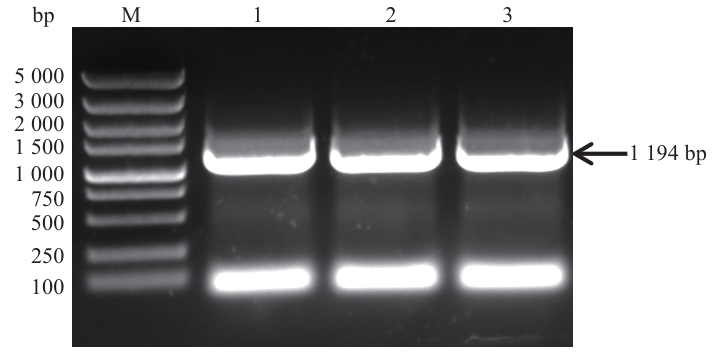
图1 木薯MeMYB106基因PCR扩增结果M:DL5 000 marker,1-3:MeMYB106基因扩增产物
Fig. 1 PCR amplification product of MeMYB106 gene in cassava (Manihot esculenta Crantz)M: DL5 000 marker. 1-3:Amplified product of MeMYB106 gene
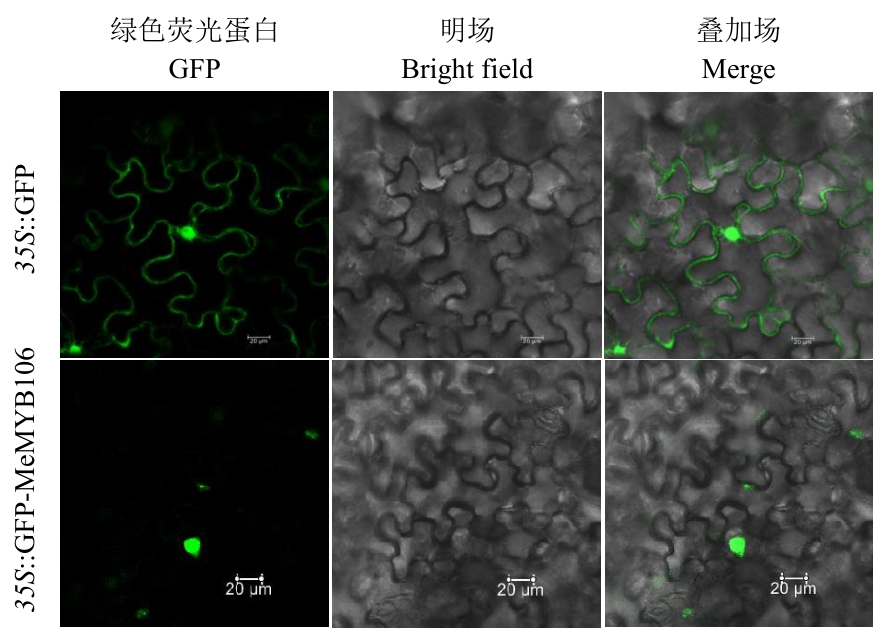
图2 MeMYB106的亚细胞定位
Fig. 2 Subcellular localization of MeMYB106
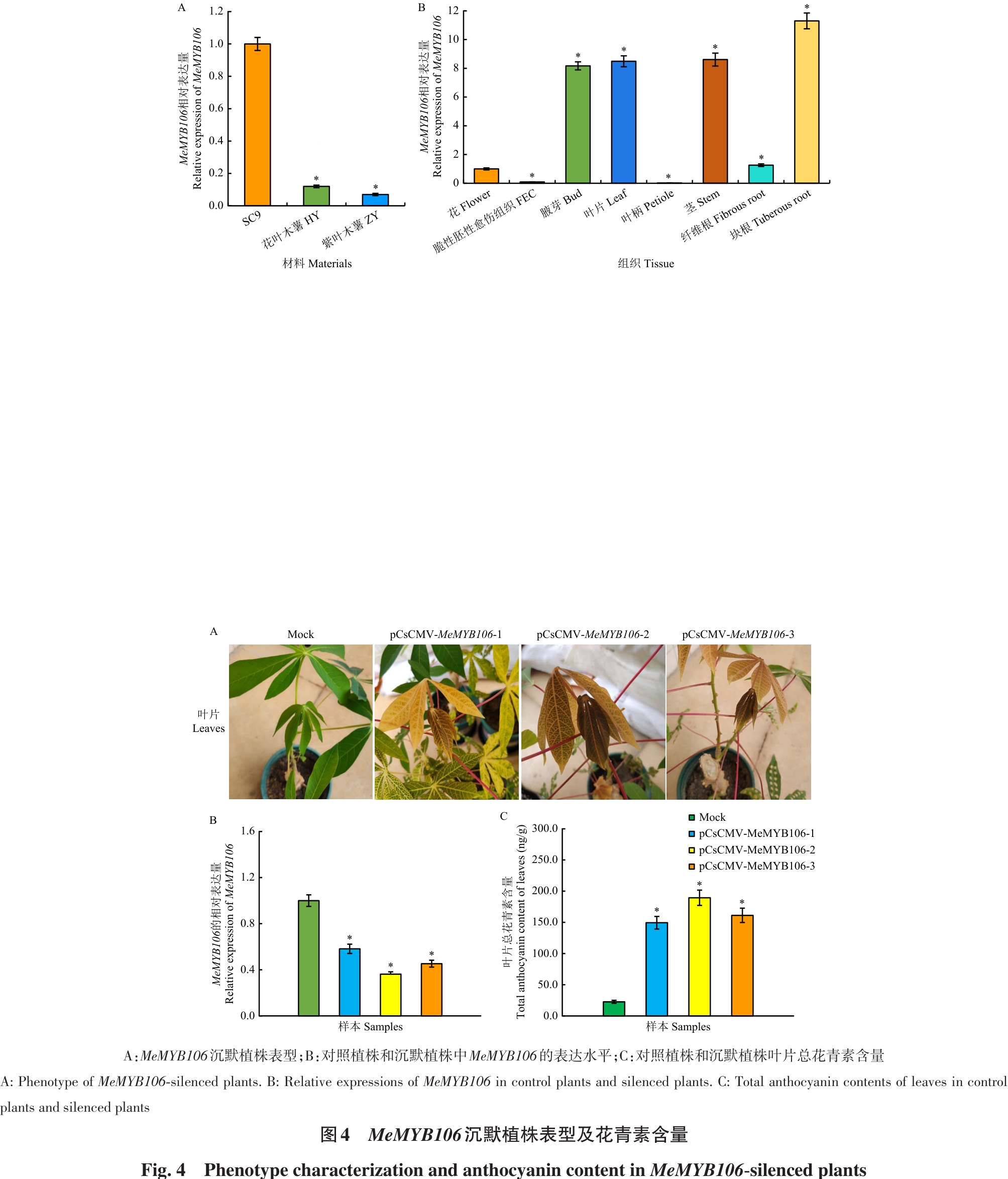
图3 MeMYB106基因的表达模式分析A:MeMYB106在不同颜色木薯叶片中的相对表达量;B:MeMYB106在SC9不同组织中的相对表达量。*P0.05,下同
Fig. 3 Analysis of expression profiles of MeMYB106A: Relative expressions of MeMYB106 in the cassava leaves with different color. B: Relative expressions of MeMYB106 in different tissues of SC9. *P0.05. The same below
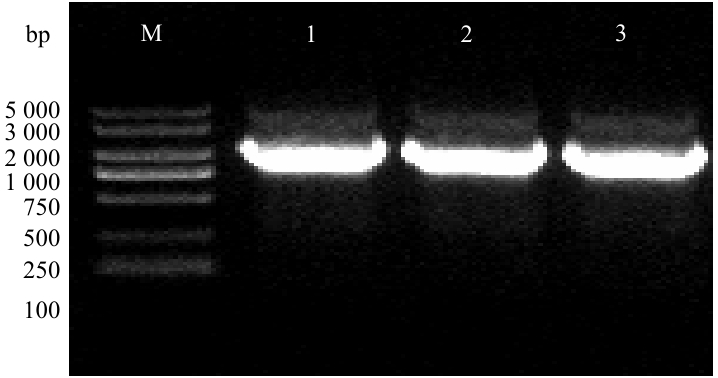
图5 木薯MeANR基因启动子扩增结果M:DL5 000 marker,1-3:MeANR启动子扩增产物
Fig. 5 Amplified results of MeANR gene promoter in cassavaM: DL5 000 marker. 1-3: Promoter of MeANR gene amplification product
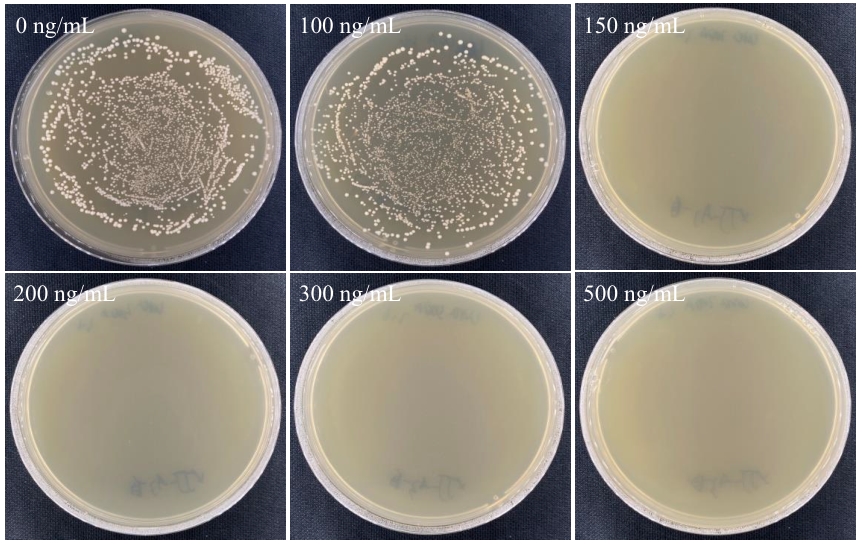
图6 诱饵菌株最低AbA抑制浓度筛选
Fig. 6 Screening of minimal AbA inhibitory concentration of bait yeast strain
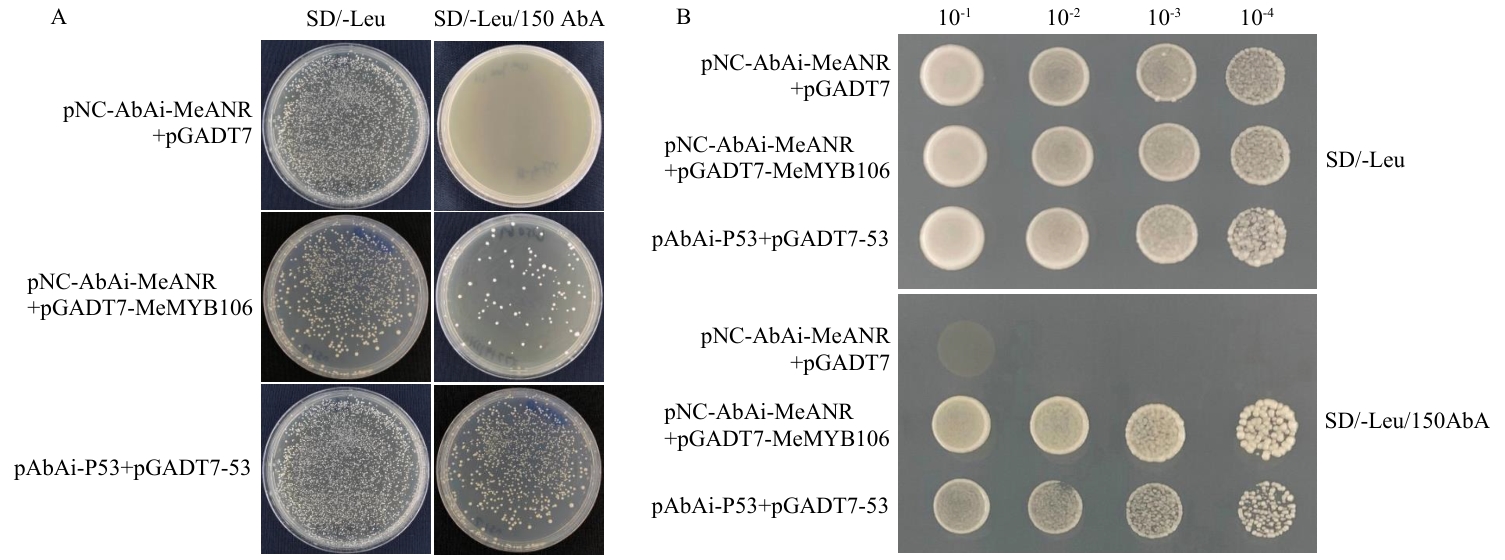
图7 酵母单杂交证明转录因子MeMYB106与MeANR启动子互作
Fig. 7 Y1H demonstrating the interaction of transcription factor MeMYB106 with MeANR promoter
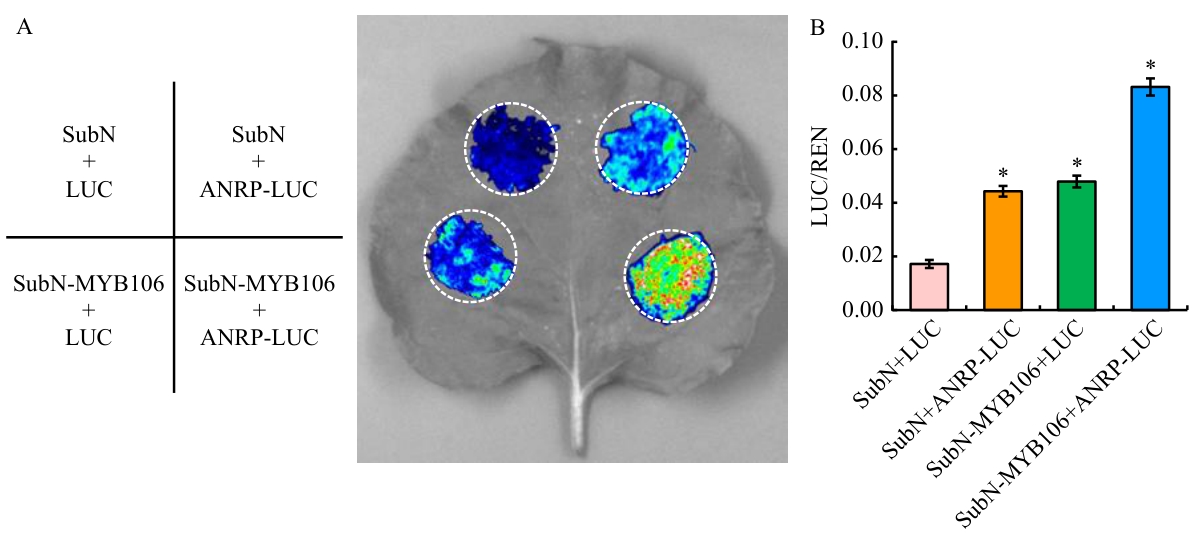
图8 Dual-LUC验证转录因子MeMYB106对MeANR基因的调控关系
Fig. 8 Dual-LUC validating the regulatory relationship between transcription factor MeMYB106 and MeANR
| [1] | Zheng T, Zhang Q, Su KX, et al. Transcriptome and metabolome analyses reveal the regulation of peel coloration in green, red Chinese prickly ash (Zanthoxylum L.) [J]. Food Chem Mol Sci, 2020, 1: 100004. |
| [2] | 张和臣, 袁欣, 高杰, 等. 植物花瓣呈色机理及花色分子育种 [J]. 生物技术通报, 2023, 39(5): 23-31. |
| Zhang HC, Yuan X, Gao J, et al. Color mechanism of plant petals and molecular breeding of flower colors [J]. Biotechnol Bull, 2023, 39(5): 23-31. | |
| [3] | 王鸿雪, 刘天宇, 庄维兵, 等. 花青素苷在植物逆境响应中的功能研究进展 [J]. 农业生物技术学报, 2020, 28(1): 174-183. |
| Wang HX, Liu TY, Zhuang WB, et al. Research advances in the function of anthocyanin in plant stress response [J]. J Agric Biotechnol, 2020, 28(1): 174-183. | |
| [4] | Luo YR, Xu XY, Yang LF, et al. A R2R3-MYB transcription factor, FeR2R3-MYB, positively regulates anthocyanin biosynthesis and drought tolerance in common buckwheat (Fagopyrum esculentum) [J]. Plant Physiol Biochem, 2024, 217: 109254. |
| [5] | Khoo HE, Azlan A, Tang ST, et al. Anthocyanidins and anthocyanins: colored pigments as food, pharmaceutical ingredients, and the potential health benefits [J]. Food Nutr Res, 2017, 61(1): 1361779. |
| [6] | Bars-Cortina D, Sakhawat A, Piñol-Felis C, et al. Chemopreventive effects of anthocyanins on colorectal and breast cancer: a review [J]. Semin Cancer Biol, 2022, 81: 241-258. |
| [7] | Yan HL, Pei XN, Zhang H, et al. MYB-mediated regulation of anthocyanin biosynthesis [J]. Int J Mol Sci, 2021, 22(6): 3103. |
| [8] | 高国应, 伍小方, 张大为, 等. MBW复合体在植物花青素合成途径中的研究进展 [J]. 生物技术通报, 2020, 36(1): 126-134. |
| Gao GY, Wu XF, Zhang DW, et al. Research progress on the MBW complexes in plant anthocyanin biosynthesis pathway [J]. Biotechnol Bull, 2020, 36(1): 126-134. | |
| [9] | Ma RR, Huang WX, Hu Q, et al. Tandemly duplicated MYB genes are functionally diverged in the regulation of anthocyanin biosynthesis in soybean [J]. Plant Physiol, 2024, 194(4): 2549-2563. |
| [10] | 李锐, 胡婷, 陈树溦, 等. 紫苏PfMYB80转录因子正向调控花青素的生物合成 [J]. 生物技术通报, 2025, 41(6): 243-255. |
| Li R, Hu T, Chen SW, et al. Positive regulation of anthocyanin biosynthesis by PfMYB80 transcription factor in Perilla frutescens [J]. Biotechnol Bull, 2025, 41(6): 243-255. | |
| [11] | Zhang YZ, Xu SZ, Ma HP, et al. The R2R3-MYB gene PsMYB58 positively regulates anthocyanin biosynthesis in tree peony flowers [J]. Plant Physiol Biochem, 2021, 164: 279-288. |
| [12] | Wang L, Deng RY, Bai YC, et al. Tartary buckwheat R2R3-MYB gene FtMYB3 negatively regulates anthocyanin and proanthocyanin biosynthesis [J]. Int J Mol Sci, 2022, 23(5): 2775. |
| [13] | Paulsmeyer MN, Juvik JA. R3-MYB repressor Mybr97 is a candidate gene associated with the Anthocyanin3 locus and enhanced anthocyanin accumulation in maize [J]. Theor Appl Genet, 2023, 136(3): 55. |
| [14] | 曹升, 陈江枫, 黄富宇, 等. 广西木薯产业现状分析及其发展建议 [J]. 南方农业学报, 2021, 52(6): 1468-1476. |
| Cao S, Chen JF, Huang FY, et al. Development status and countermeasures of cassava industry in Guangxi [J]. J South Agric, 2021, 52(6): 1468-1476. | |
| [15] | 王琴飞, 吴秋妃, 徐缓, 等. 木薯叶片中黄酮醇类物质的提取与检测 [J]. 西南农业学报, 2018, 31(8): 1694-1699. |
| Wang QF, Wu QF, Xu H, et al. Extraction and detection of flavonols from cassava leaves [J]. Southwest China J Agric Sci, 2018, 31(8): 1694-1699. | |
| [16] | 张振文, 徐缓, 吴秋妃, 等. 木薯叶花青素提取工艺研究 [J]. 热带作物学报, 2018, 39(3): 570-574. |
| Zhang ZW, Xu H, Wu QF, et al. Extraction of anthocyanin from cassava leaves [J]. China J Trop Crops, 2018, 39(3): 570-574. | |
| [17] | Luo XQ, An FF, Xue JJ, et al. Integrative analysis of metabolome and transcriptome reveals the mechanism of color formation in cassava (Manihot esculenta Crantz) leaves [J]. Front Plant Sci, 2023, 14: 1181257. |
| [18] | 邹良平, 郭鑫, 起登凤, 等. 低氮胁迫诱导木薯幼苗花青素积累及其基因表达 [J]. 生物技术通报, 2022, 38(2): 75-82. |
| Zou LP, Guo X, Qi DF, et al. Anthocyanin accumulation and its gene expression induced by low nitrogen stress in cassava seedlings [J]. Biotechnol Bull, 2022, 38(2): 75-82. | |
| [19] | Han YP, Sornkanok V, Ruth ES, et al. Introduction of apple ANR genes into tobacco inhibits expression of both CHI and DFR genes in flowers, leading to loss of anthocyanin [J]. J Exp Bot, 63(7): 2437-2447. |
| [20] | 杨波, 刘海霞, 牛铁泉, 等. TRV介导的葡萄叶片VvANR基因瞬时表达分析 [J]. 核农学报, 2021, 35(4): 826-836. |
| Yang B, Liu HX, Niu TQ, et al. Transient expression analysis of VvANR gene in grape leaves mediated by TRV [J]. J Nucl Agric Sci, 2021, 35(4): 826-836. | |
| [21] | 安飞飞, 罗秀芹, 陈松笔, 等. 不同叶片颜色的木薯MeANR基因克隆及表达分析 [J]. 南方农业学报, 2024, 55(11): 3210-3220. |
| An FF, Luo XQ, Chen SB, et al. Cloning and expression analysis of MeANR gene in cassava (Manihot esculenta Crantz) leaves with different colors [J]. J South Agric, 2024, 55(11): 3210-3220. | |
| [22] | Ruan MB, Guo X, Wang B, et al. Genome-wide characterization and expression analysis enables identification of abiotic stress-responsive MYB transcription factors in cassava (Manihot esculenta) [J]. J Exp Bot, 2017, 68(13): 3657-3672. |
| [23] | Liao WB, Yang YL, Li YY, et al. Genome-wide identification of cassava R2R3 MYB family genes related to abscission zone separation after environmental-stress-induced abscission [J]. Sci Rep, 2016, 6: 32006. |
| [24] | Yan P, Zeng YJ, Shen WT, et al. Nimble cloning: a simple, versatile, and efficient system for standardized molecular cloning [J]. Front Bioeng Biotechnol, 2020, 7: 460. |
| [25] | An FF, Xiao XH, Chen T, et al. Systematic analysis of bHLH transcription factors in cassava uncovers their roles in postharvest physiological deterioration and cyanogenic glycosides biosynthesis [J]. Front Plant Sci, 2022, 13: 901128. |
| [26] | Fernandez-Pozo N, Rosli HG, Martin GB, et al. The SGN VIGS tool: user-friendly software to design virus-induced gene silencing (VIGS) constructs for functional genomics [J]. Mol Plant, 2015, 8(3): 486-488. |
| [27] | Tuo DC, Zhou P, Yan P, et al. A cassava common mosaic virus vector for virus-induced gene silencing in cassava [J]. Plant Meth, 2021, 17(1): 74. |
| [28] | 安飞飞. 过氧化物酶MePOD12在木薯块根采后生理腐烂中的功能及作用机制[D]. 海口:海南大学, 2023. |
| An FF. Function and mechanism of Peroxidase 12 in postharvest physiological deterioration of tuberous roots in cassava [D]. Haikou: Hainan University, 2023. | |
| [29] | 曹萌萌, 杨龙, 陈松笔, 等. 不同木薯叶营养成分对饲养木薯蚕的影响 [J]. 南方农业学报, 2022, 53(6): 1759-1767. |
| Cao MM, Yang L, Chen SB, et al. Effects of cassava leaves’ nutrient components on eri-silkworm breeding [J]. J South Agric, 2022, 53(6): 1759-1767. | |
| [30] | 胡雅丹, 伍国强, 刘晨, 等. MYB转录因子在调控植物响应逆境胁迫中的作用 [J]. 生物技术通报, 2024, 40(6): 5-22. |
| Hu YD, Wu GQ, Liu C, et al. Roles of MYB transcription factor in regulating the responses of plants to stress [J]. Biotechnol Bull, 2024, 40(6): 5-22. | |
| [31] | Yan YH, Zhao JX, Lin SN, et al. Light-mediated anthocyanin biosynthesis in rose petals involves a balanced regulatory module comprising transcription factors RhHY5, RhMYB114a, and RhMYB3b [J]. J Exp Bot, 2023, 74(18): 5783-5804. |
| [32] | 梁卫, 王海, 丰勇青, 等. 草莓MYB基因家族的鉴定及在果实不同着色期的表达分析 [J]. 农业生物技术学报, 2024, 32(6): 1250-1273. |
| Liang W, Wang H, Feng YQ, et al. Identification of MYB gene family in strawberry (Fragaria vesca) and expression analysis at different coloration stages of fruits [J]. J Agric Biotechnol, 2024, 32(6): 1250-1273. | |
| [33] | 陈叶妮. 月季RhMYB114和RhMYB16调控花青素合成及花瓣细胞pH的分子机制 [D]. 杭州: 浙江农林大学, 2024. |
| Chen YN. Molecular mechanism of RhMYB114 and RhMYB16 in rose regulating anthocyanin synthesis and petal cell pH [D]. Hangzhou: Zhejiang A F University, 2024. | |
| [34] | 段泽地. SlMYB7负调控番茄花青素生物合成的分子机制研究 [D]. 沈阳: 沈阳农业大学, 2023. |
| Duan ZD. Molecular mechanism of negative regulation of anthocyanin biosynthesis in tomato fruits by SlMYB7 [D]. Shenyang: Shenyang Agricultural University, 2023. | |
| [35] | Deng GM, Zhang S, Yang QS, et al. MaMYB4, an R2R3-MYB repressor transcription factor, negatively regulates the biosynthesis of anthocyanin in banana [J]. Front Plant Sci, 2021, 11: 600704. |
| [36] | Liu Y, Feng X, Jin HB, et al. BoMYBL2b, an R3-MYB transcription factor, inhibits anthocyanin accumulation via directly repressing BoDFR1 gene transcription in kale [J]. Plant Physiol Biochem, 2024, 216: 109140. |
| [37] | Shi LY, Chen X, Wang K, et al. MrMYB6 from Chinese bayberry (Myrica rubra) negatively regulates anthocyanin and proanthocyanidin accumulation [J]. Front Plant Sci, 2021, 12: 685654. |
| [1] | 郭威, 耿越, 梁晓, 刘迎, 伍春玲, 陈青. 抗、感木薯品种对木薯绵粉蚧蜡质合成基因表达的影响[J]. 生物技术通报, 2026, 42(6): 128-138. |
| [2] | 张欣, 陈骋, 霍元博, 黄仁丽, 张丽, 张凯, 童华荣, 袁连玉. 茶树CsCRD1基因的克隆及其对叶绿素生物合成的影响[J]. 生物技术通报, 2026, 42(5): 280-291. |
| [3] | 金旋, 向芬, 戴翠婷, 杨辉, 李赛君, 刘红艳, 钱思维, 蔺万煌, 李维. 茶树CsTDIFL基因的克隆、表达特性分析及其对氨基酸合成的调控[J]. 生物技术通报, 2026, 42(5): 323-331. |
| [4] | 孙婷, 张艳, 刘玉珊, 冯媛媛, 秦恒山, 张军, 何小岗, 张景荣. 黄秋葵AeF3H基因的克隆与功能分析[J]. 生物技术通报, 2026, 42(4): 153-160. |
| [5] | 刘淼, 林涛, 贾乐松, 胡丰, 李涛, 李志万, 刘美芳, 郑方燕, 崔龙. 从野生到栽培:番茄果实色泽的演化与调控机制[J]. 生物技术通报, 2026, 42(3): 187-202. |
| [6] | 徐泽, 周陈平, 邝瑞彬, 吴夏明, 杨敏, 刘传和, 贺涵, 魏岳荣. 番木瓜PG基因家族鉴定及其在果实软化中的功能[J]. 生物技术通报, 2026, 42(3): 349-361. |
| [7] | 刘梦茹, 夏琳, 刘瑞霞, 闫新可, 杨军, 张菁华, 武明珠. 烟草多酚氧化酶NtPPO1-2基因克隆及功能分析[J]. 生物技术通报, 2026, 42(2): 218-227. |
| [8] | 倪莹, 李雷, 汪进萱, 马波, 孟昕, 冷平生, 吴静, 胡增辉. 紫丁香So4CL的克隆及功能分析[J]. 生物技术通报, 2026, 42(1): 139-149. |
| [9] | 吕呈聪, 衡蒙, 陈思琪, 金雪花. 彩色马蹄莲花青素苷转运相关ZhGSTF的克隆及功能分析[J]. 生物技术通报, 2026, 42(1): 161-169. |
| [10] | 徐小萍, 杨成龙, 和兴, 郭文杰, 吴健, 方少忠. 百合LoAPS1克隆及其在休眠解除过程的功能分析[J]. 生物技术通报, 2025, 41(9): 195-206. |
| [11] | 董向向, 缪百灵, 许贺娟, 陈娟娟, 李亮杰, 龚守富, 朱庆松. 森林草莓FveBBX20基因的生物信息学分析及开花调控功能[J]. 生物技术通报, 2025, 41(9): 115-123. |
| [12] | 张永艳, 郭思健, 李晶, 郝思怡, 李瑞得, 刘嘉鹏, 程春振. 蓝莓花青素相关VcGSTF19基因的克隆及功能研究[J]. 生物技术通报, 2025, 41(9): 139-146. |
| [13] | 康琴, 汪霞, 谌明洋, 徐静天, 陈诗兰, 廖平杨, 许文志, 吴卫, 徐东北. 薄荷UV-B受体基因McUVR8的克隆与表达分析[J]. 生物技术通报, 2025, 41(8): 255-266. |
| [14] | 李开杰, 吴瑶, 李丹丹. 红花CtbHLH128基因克隆及调控干旱胁迫应答功能研究[J]. 生物技术通报, 2025, 41(8): 234-241. |
| [15] | 魏雨佳, 李岩, 康语涵, 弓晓楠, 杜敏, 涂岚, 石鹏, 于子涵, 孙彦, 张昆. 白颖苔草CrMYB4基因的克隆和表达分析[J]. 生物技术通报, 2025, 41(7): 248-260. |
| 阅读次数 | ||||||
|
全文 |
|
|||||
|
摘要 |
|
|||||
