







生物技术通报 ›› 2026, Vol. 42 ›› Issue (7): 328-340.doi: 10.13560/j.cnki.biotech.bull.1985.2025-1456
• 研究报告 • 上一篇
孙贤庆1, 肖嫩群1( ), 谭周进2()
收稿日期:2025-12-31
出版日期:2026-07-26
发布日期:2026-07-20
通讯作者:
肖嫩群xiaonenqun@sohu.com基金资助:
SUN Xian-qing1, XIAO Nen-qun1(), TAN Zhou-jin2()
Received:2025-12-31
Published:2026-07-26
Online:2026-07-20
摘要:
目的 探讨黄精-茯苓联用对脾虚便秘的预防效应及机制,为中医药“治未病”理论提供实验依据。 方法 将30只SPF级昆明(KM)小鼠随机分为正常组、模型组、黄精茯苓组(1∶3)。采用预防性给药方式,黄精茯苓组每日灌胃药液(1.95 g/(kg·d),2次/d),持续29 d;模型组和正常组给予等体积无菌水。造模阶段(持续15 d),模型组和黄精茯苓组通过番泻叶灌胃、限制饮水及喂食低纤维饲料建立脾虚便秘模型。实验结束后,检测粪便含水率、血清胃肠动力激素(MTL、CCK、5-HT、VIP)含量、结肠病理变化、肝脏丙二醛(MDA)含量和超氧化物歧化酶(SOD)活性,以及肠道菌群结构和功能。 结果 黄精茯苓组粪便含水率高于模型组;血清5-HT含量高于模型组(P=0.05),VIP含量显著低于模型组(P=0.013),MTL含量极显著高于模型组(P<0.001),CCK含量显著高于模型组(P=0.018);肝脏MDA含量显著低于模型组(P=0.030),SOD活性极显著高于模型组(P<0.01);结肠黏膜结构完整,杯状细胞数量多于模型组;肠道菌群多样性趋近正常组,Actinobacteriota(P<0.001)、Bifidobacterium等有益菌丰度显著高于模型组,Proteobacteria、Escherichia_Shigella等有害菌丰度显著低于模型组(P=0.040、P=0.037);肠道菌群功能预测显示,氨基酸代谢、能量代谢等通路丰度恢复,环境应激适应相关通路异常激活被抑制。 结论 黄精茯苓(1∶3)联用预防性干预可改善脾虚便秘小鼠的一般状态和粪便性状,增强胃肠动力,减轻氧化应激损伤,保护结肠黏膜结构,并调节肠道菌群失衡,提示其对脾虚便秘具有一定预防作用。
孙贤庆, 肖嫩群, 谭周进. 黄精茯苓联用预防脾虚便秘的肠道微生态机理研究[J]. 生物技术通报, 2026, 42(7): 328-340.
SUN Xian-qing, XIAO Nen-qun, TAN Zhou-jin. A Study on the Gut Microbiome Mechanism of the Combination of Polygonatum sibiricum and Poria cocos for Prevention of Constipation due to ‘Pi’ Deficiency[J]. Biotechnology Bulletin, 2026, 42(7): 328-340.
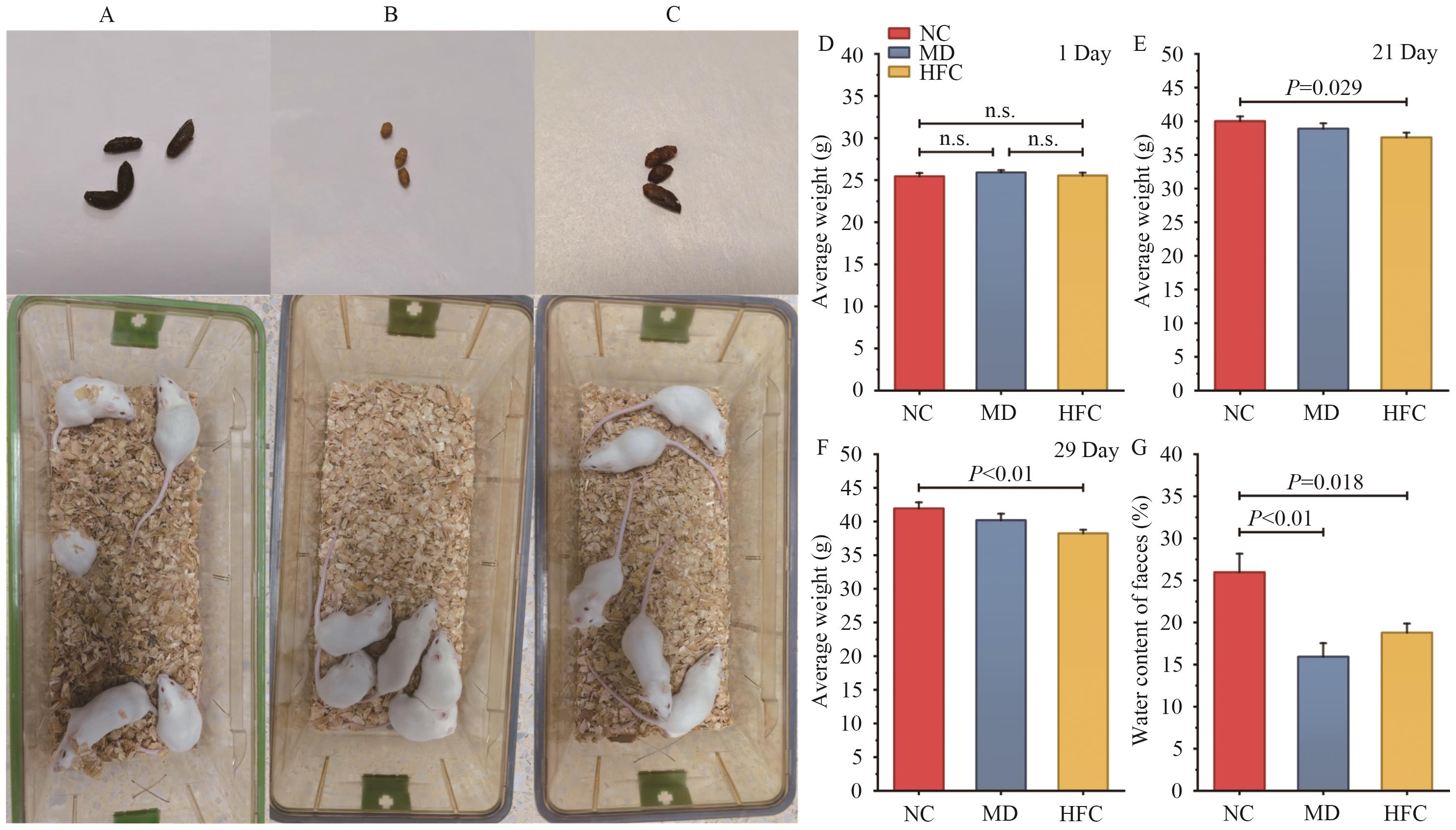
图1 黄精茯苓联用对小鼠一般体征、粪便特征及含水率的影响A-C:造模后小鼠粪便性状及活动状态;D-F:小鼠不同时间点的体重;G:造模后小鼠粪便含水率。NC:正常组;MD:模型组;HFC:黄精茯苓组,下同
Fig. 1 Effects of Polygonatum sibiricum and Poria cocos combination on general signs, fecal characteristics, and water content in miceA-C: Fecal characteristics and general activity status of mice after modeling; D-F: body weight of mice at different time points; G: fecal water content of mice after modeling. NC: Normal control group; MD: model group; HFC: Polygonatum sibiricum and Poria cocos group. The same below
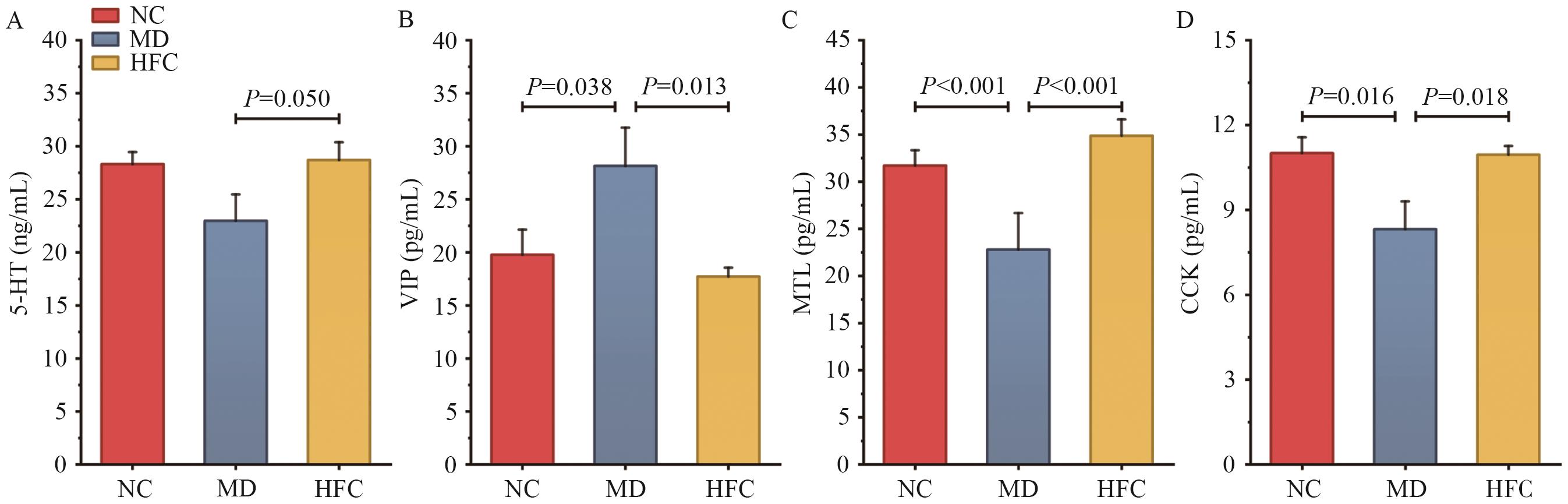
图2 黄精茯苓联用对小鼠血清中5-HT、VIP、MTL、CCK含量的影响
Fig. 2 Effect of Polygonatum sibiricum and Poria cocos combination on serum levels of 5-HT, VIP, MTL, and CCK in mice
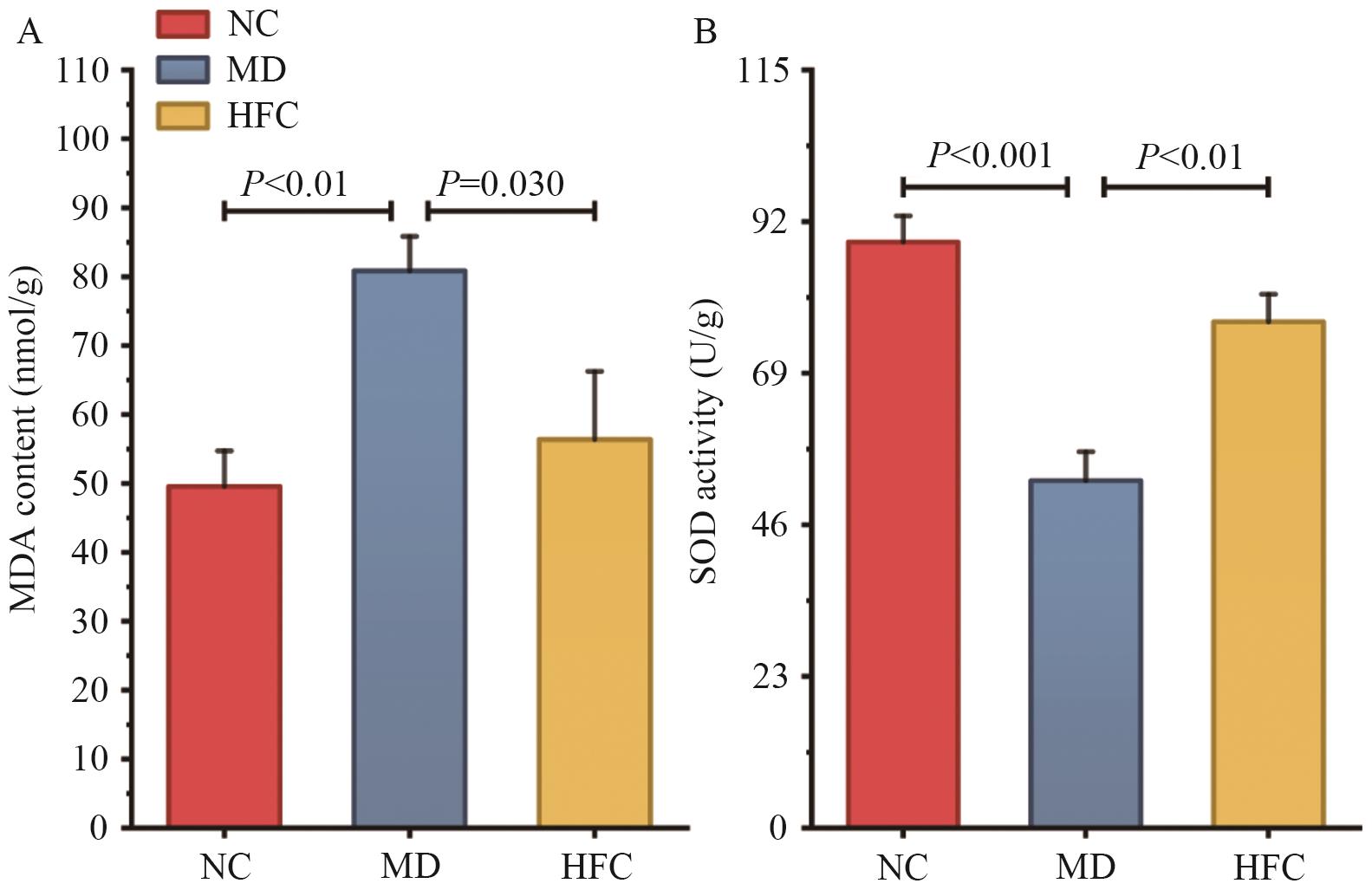
图3 黄精茯苓联用对小鼠肝脏组织中MDA含量、SOD活性的影响
Fig. 3 Effects of Polygonatum sibiricum and Poria cocos combination on MDA content and SOD activity in mouse liver tissue
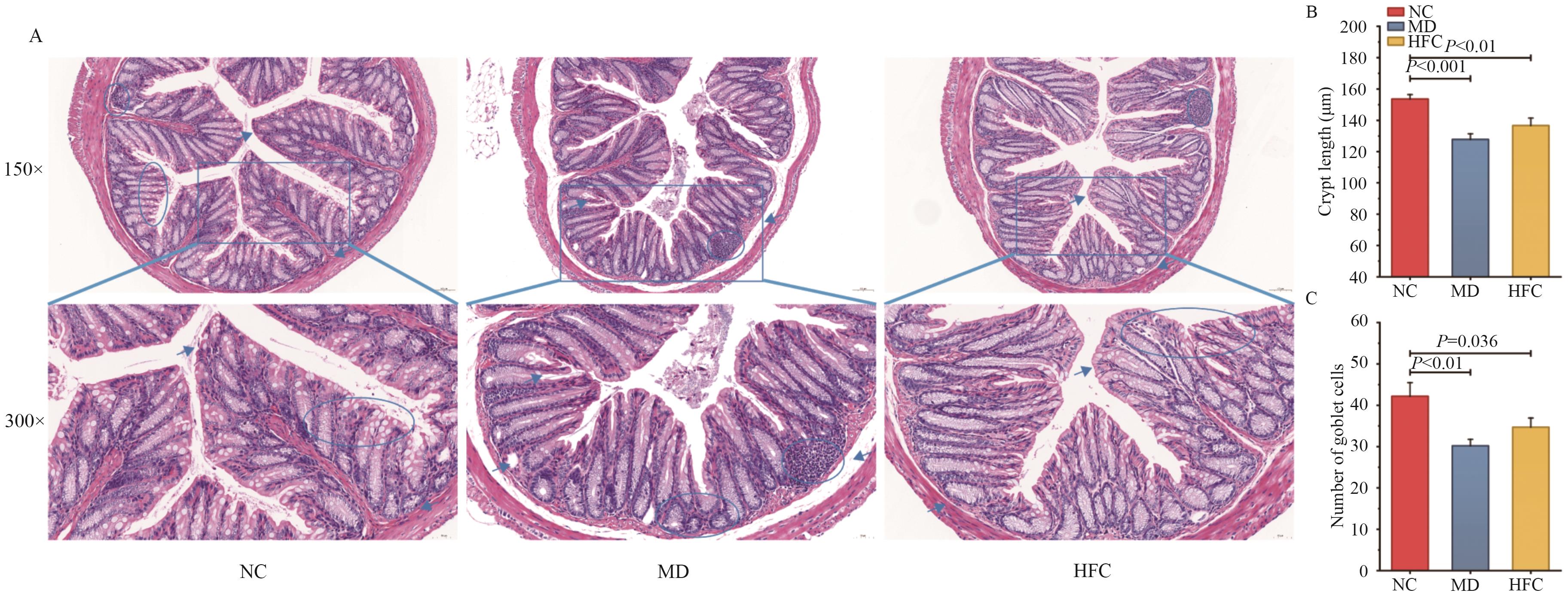
图4 黄精茯苓联用对小鼠肠道组织形态及功能的影响A:各组小鼠肠道病理结构特征;B:小鼠结肠隐窝长度;C:小鼠结肠杯状细胞数量
Fig. 4 Effects of Polygonatum sibiricum and Poria cocos combination on the morphology and function of mouse intestinal tissueA: Histopathological features of the intestine in mice from each group; B: crypt length in the colon of mice; C: number of goblet cells in the colon of mice
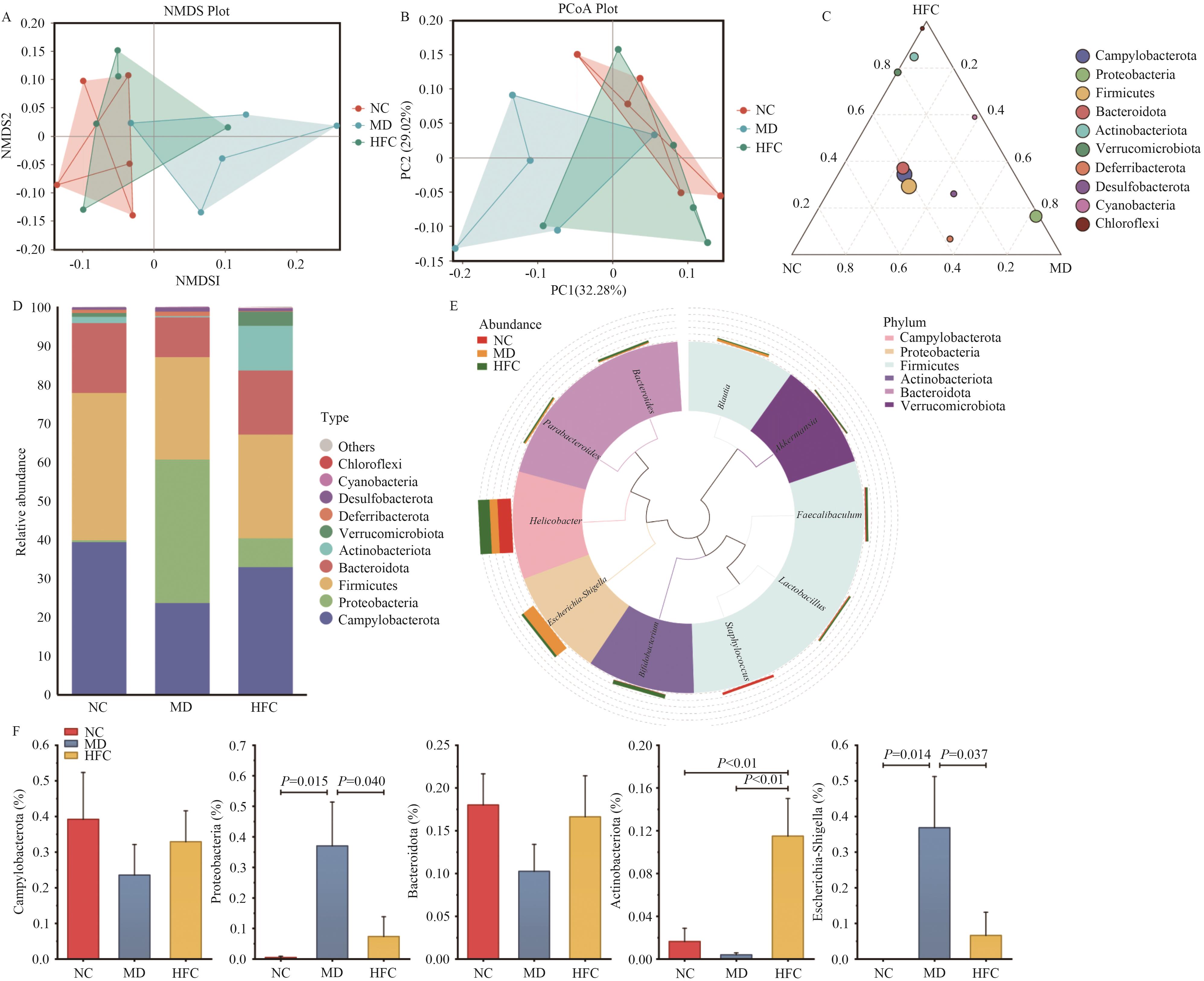
图5 黄精茯苓联用对小鼠肠道菌群组成的影响A:NMDS分析;B:PCoA分析;C:三元相图;D:门水平物种丰度柱形图;E:属水平物种进化树;F:Campylobacterota、Proteobacteria、Bacteroidota、Actinobacteriota、Escherichia_Shigella各组间相对丰度比较
Fig. 5 Effects of Polygonatum sibiricum and Poria cocos combination on the gut microbiota composition of miceA: NMDS analysis; B: PCoA analysis; C: Ternary plot; D: bar plot of species abundance at the phylum level; E: phylogenetic tree at the genus level; F: comparison of the relative abundances of Campylobacterota, Proteobacteria, Bacteroidota, Actinobacteriota, and Escherichia_Shigella among groups
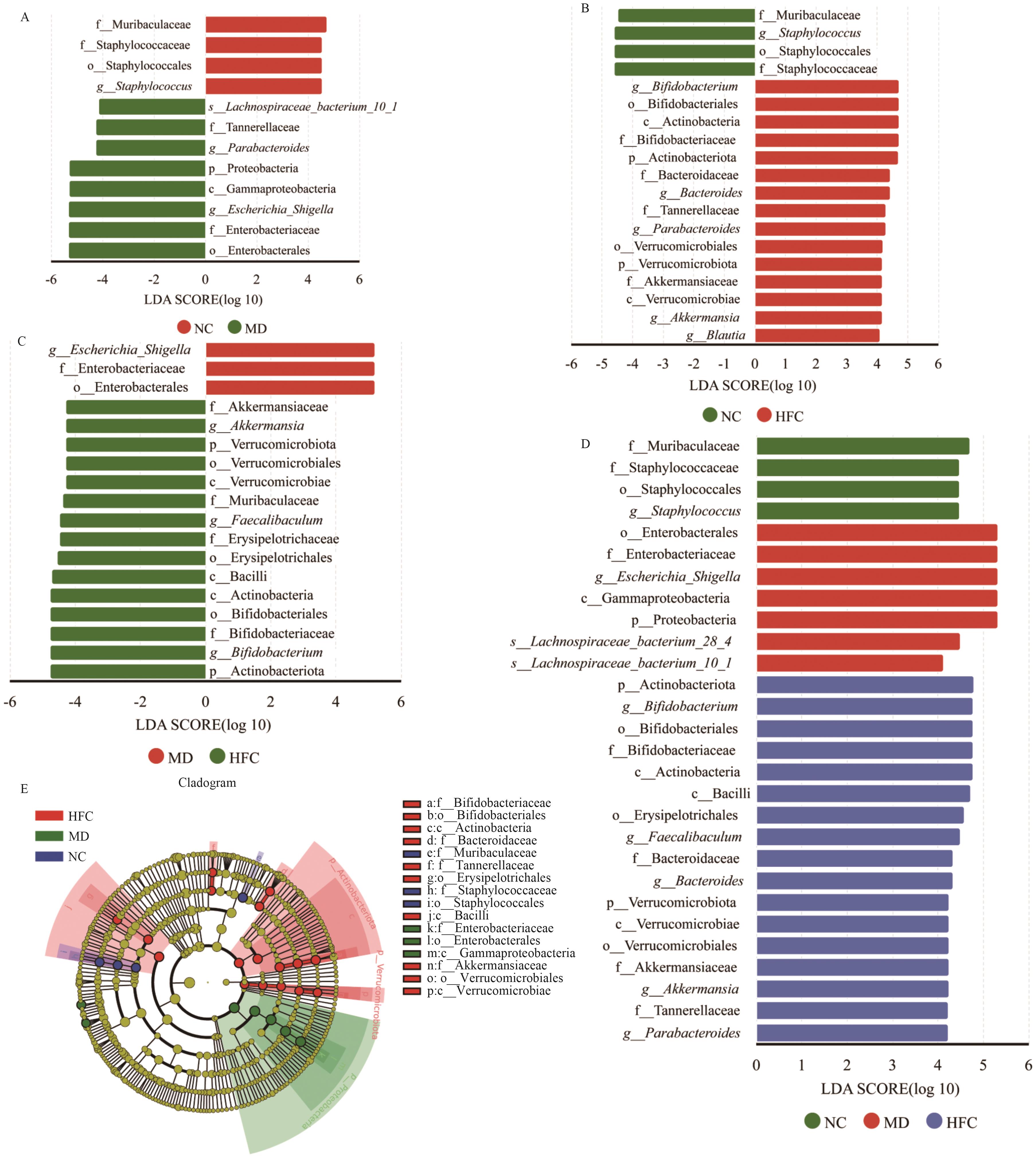
图6 黄精茯苓联用对小鼠肠道特征菌群的影响A:正常组与模型组特征菌群比较分析;B:正常组与黄精茯苓组特征菌群比较分析;C:模型组与黄精茯苓组特征菌群比较分析;D:三组特征菌群比较分析;E:LEfSe进化分支图
Fig. 6 Effects of Polygonatum sibiricum and Poria cocos combination on gut microbial communities in miceA: Comparative analysis of differential bacterial taxa between the normal control group and the model group; B: comparative analysis of differential bacterial taxa between the normal control group and the Polygonatum sibiricum and Poria cocos group; C: comparative analysis of differential bacterial taxa between the model group and the Polygonatum sibiricum and Poria cocos group; D: comparative analysis of differential bacterial taxa among the three groups; E: LEfSe cladogram
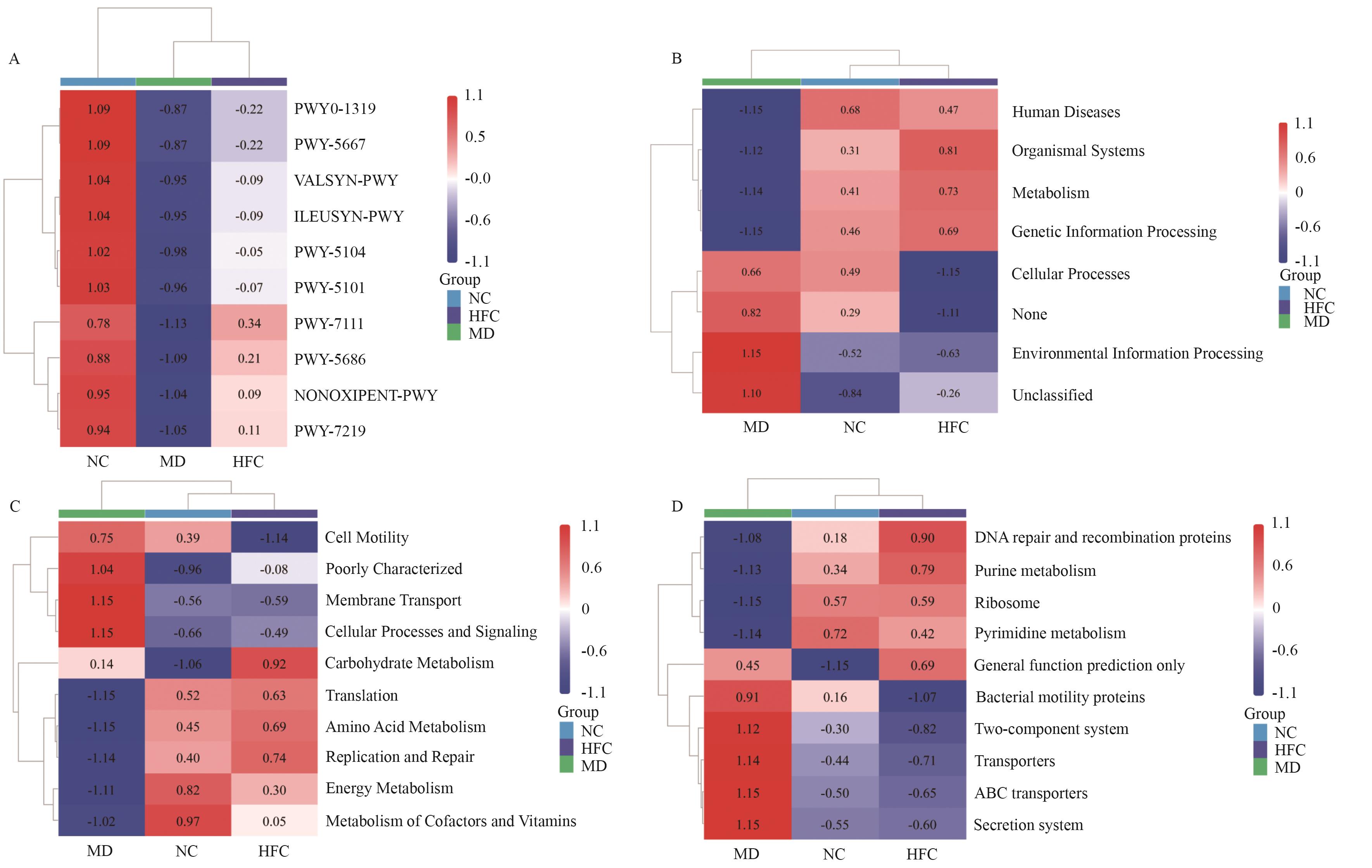
图7 黄精茯苓联用对小鼠肠道菌群功能的影响A:PICRUSt2 pathways;B:KEGG level-1;C:KEGG level-2;D:KEGG level-3
Fig. 7 Effects of Polygonatum sibiricum and Poria cocos combination on gut microbiota function in mice
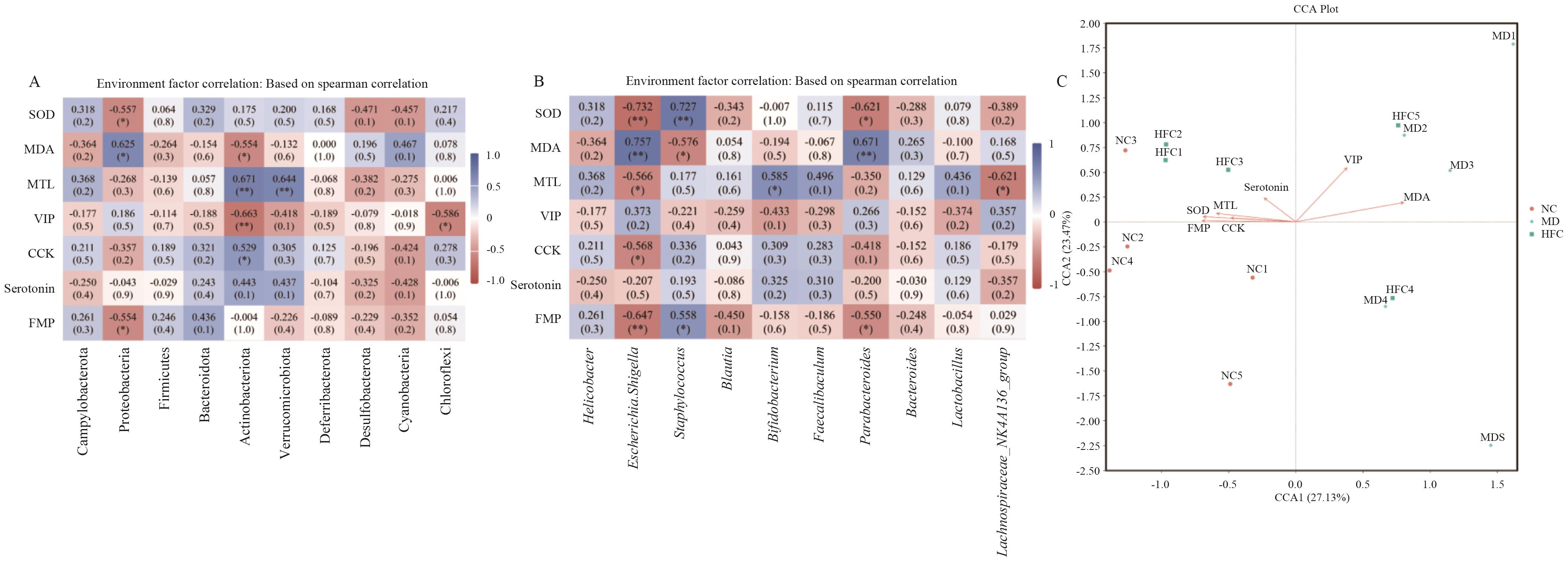
图8 小鼠肠道菌群与脾虚便秘相关因子的相互关系A:门水平相关因子热图;B:属水平相关因子热图;C:CCA Plot图
Fig. 8 Correlation between mouse gut microbiota and constipation due to 'pi' deficiencyA: Heatmap of correlation factors at the phylum level; B: heatmap of correlation factors at the genus level; C: CCA plot
| [1] | 武彦妮, 刘渤麟, 侯蕾, 等. 李廷荃治疗脾虚肠燥型功能性便秘临证经验 [J]. 亚太传统医药, 2025, 21(3): 108-111. |
| Wu YN, Liu BL, Hou L, et al. Li tingquan's experience in treating functional constipation with spleen deficiency and intestinal dryness [J]. Asia Pac Tradit Med, 2025, 21(3): 108-111. | |
| [2] | Masaoka T. Current management of chronic constipation in Japan [J]. Keio J Med, 2023, 72(4): 95-101. |
| [3] | 万雪梅, 李明, 李子龙, 等. 中国老年人慢性便秘患病率的Meta分析 [J]. 牡丹江医学院学报, 2024, 45(6): 112-117, 139. |
| Wan XM, Li M, Li ZL, et al. Meta-analysis of prevalence of chronic constipation in elderly Chinese [J]. J Mudanjiang Med Univ, 2024, 45(6): 112-117, 139. | |
| [4] | 蒲倩薇, 万于, 刘建平, 等. 功能性便秘发病机制的现代研究进展 [J]. 中国肛肠病杂志, 2024, 44(11): 68-72. |
| Pu QW, Wan Y, Liu JP, et al. Modern research progress in pathogenesis of functional constipation [J]. Chin J Coloproctology, 2024, 44(11): 68-72. | |
| [5] | 陈好, 张相安, 冯宇博, 等. 基于内服外治法辨证治疗功能性便秘研究进展 [J]. 内蒙古医科大学学报, 2024, 46(5): 480-484. |
| Chen H, Zhang XA, Feng YB, et al. Research progress of functional constipation treated by syndrome differentiation based on oral and external therapy [J]. J Inn Mong Med Univ, 2024, 46(5): 480-484. | |
| [6] | Gao XY, Li YN, Hu YF, et al. Aqueous extract of Solanum americanum Mill. relieves functional constipation by modulating the enteric nervous system and gut micro-ecosystems [J]. Front Nutr, 2025, 12: 1573516. |
| [7] | Tan SF, Peng CT, Lin X, et al. Clinical efficacy of non-pharmacological treatment of functional constipation: a systematic review and network meta-analysis [J]. Front Cell Infect Microbiol, 2025, 15: 1565801. |
| [8] | 王惠临, 张立平, 刘晶, 等. 张立平治疗功能性便秘经验 [J]. 中华中医药杂志, 2020, 35(4): 1825-1827. |
| Wang HL, Zhang LP, Liu J, et al. ZHANG Li-Ping's experience in the treatment of functional constipation [J]. China J Tradit Chin Med Pharm, 2020, 35(4): 1825-1827. | |
| [9] | Butler TD, Gibbs JE. Circadian host-microbiome interactions in immunity [J]. Front Immunol, 2020, 11: 1783. |
| [10] | Rondanelli M, Borromeo S, Cavioni A, et al. Therapeutic strategies to modulate gut microbial health: approaches for chronic metabolic disorder management [J]. Metabolites, 2025, 15(2): 127. |
| [11] | 陈肖敏, 王煦, 陈苗苗. 牵牛子提取物改善洛哌丁胺所致的大鼠功能性便秘和肠道菌群失调 [J]. 世界华人消化杂志, 2022(5): 223-229. |
| Chen XM, Wang X, Chen MM. Pharbitis nil extract ameliorates functional constipation and intestinal microflora disorder induced by loperamide in rats [J]. World Chin J Dig, 2022(5): 223-229. | |
| [12] | 宋子颛, 刘富林, 张宇娟, 等. 基于16S rDNA测序分析枳术丸水煎液对慢传输型便秘脾虚证模型小鼠肠道菌群的影响 [J]. 中国微生态学杂志, 2023, 35(4): 414-419. |
| Song ZZ, Liu FL, Zhang YJ, et al. Effects of Zhizhuwan Decoction on intestinal flora of rats with slow transit constipation based on 16S rDNA sequencing [J]. Chin J Microecol, 2023, 35(4): 414-419. | |
| [13] | Yi X, Zhou K, Jiang P, et al. Brain-bacteria-gut axis and oxidative stress mediated by intestinal mucosal microbiota might be an important mechanism for constipation in mice [J]. 3 Biotech, 2023, 13(6): 192. |
| [14] | 张宇娟, 夏旭婷, 刘富林, 等. 枳术丸对脾虚证慢传输型便秘小鼠肠道运动及产甲烷菌菌群多样性的影响 [J]. 时珍国医国药, 2023, 34(1): 41-44. |
| Zhang YJ, Xia XT, Liu FL, et al. Effect of Zhizhu pill on intestinal movement and methanogenic bacteria diversity in mice with slow transit constipation of spleen deficiency syndrome [J]. Lishizhen Med Mater Med Res, 2023, 34(1): 41-44. | |
| [15] | Yi X, Zhou K, Deng N, et al. Simo decoction curing spleen deficiency constipation was associated with brain-bacteria-gut axis by intestinal mucosal microbiota [J]. Front Microbiol, 2023, 14: 1090302. |
| [16] | 斯金平, 朱玉贤. 黄精——一种潜力巨大且不占农田的新兴优质杂粮 [J]. 中国科学: 生命科学, 2021, 51(11): 1477-1484. |
| Si JP, Zhu YX. Polygonati rhizoma—a new high-quality crop with great potential and not occupying farmland [J]. Sci Sin Vitae, 2021, 51(11): 1477-1484. | |
| [17] | 路平, 史汶龙, 杨思雨, 等. 茯苓化学成分及药理作用研究进展 [J]. 中成药, 2024, 46(4): 1246-1254. |
| Lu P, Shi WL, Yang SY, et al. Research progress on chemical constituents and pharmacological effects of Poria cocos [J]. Chin Tradit Pat Med, 2024, 46(4): 1246-1254. | |
| [18] | 李慧君, 王天合, 尤朋涛, 等. 不同产地茯苓对肾阳虚下焦水肿大鼠的利水渗湿作用研究 [J]. 中药新药与临床药理, 2021, 32(5): 632-638. |
| Li HJ, Wang TH, You PT, et al. Clearing damp and promoting diuresis effect of Poria cocos from different origins on lower energizer edema of rat with kidney-Yang deficiency [J]. Tradit Chin Drug Res Clin Pharmacol, 2021, 32(5): 632-638. | |
| [19] | Lai Y, Deng HL, Fang Q, et al. Water-insoluble polysaccharide extracted from Poria cocos alleviates antibiotic-associated diarrhea based on regulating the gut microbiota in mice [J]. Foods, 2023, 12(16): 3080. |
| [20] | 范苏苏, 刘石磊, 朱钰珊, 等. 三七黄精膏对正常小鼠免疫功能的影响 [J]. 生物医学, 2023, 13(1): 35-44. |
| Fan SS, Liu SL, Zhu YS, et al. Effect of Sanqi-Huangjing ointment on immune function of normal mice [J]. Hans J Biomed, 2023, 13(1): 35-44. | |
| [21] | 邹颖, 郑学宝, 戴世学, 等. 小鼠脾虚便秘模型的建立 [J]. 北京中医药, 2009, 28(1): 60-62. |
| Zou Y, Zheng XB, Dai SX, et al. Establishment of the model constipation due to spleen deficiency in mice [J]. Beijing J Tradit Chin Med, 2009, 28(1): 60-62. | |
| [22] | 卢梦雄, 薛红, 张北华, 等. 脾虚证动物模型研究述评 [J]. 世界科学技术-中医药现代化, 2024, 26(3): 652-658. |
| Lu MX, Xue H, Zhang BH, et al. A review and comment of animal models of spleen deficiency syndrome [J]. Mod Tradit Chin Med Mater Med World Sci Technol, 2024, 26(3): 652-658. | |
| [23] | 龙承星, 贺璐, 郭艳芳, 等. 铁皮石斛多糖对脾虚便秘小鼠免疫、肠道微生物及酶活性的影响 [J]. 天然产物研究与开发, 2017, 29(6): 1020-1024, 1034. |
| Long CX, He L, Guo YF, et al. Effects of Dendrobium candidum polysaccharide on immunity, intestinal microbiota and enzyme activity in mice with spleen deficiency constipation [J]. Nat Prod Res Dev, 2017, 29(6): 1020-1024, 1034. | |
| [24] | 朱俊锟, 王婧. 关于改善肥胖问题的中医药新思路 [J]. 国际中医药研究, 2024, 4(1): 27-30. |
| Zhu JK, Wang J. New ideas on traditional Chinese medicine to improve obesity [J]. Int Res Chin Med, 2024, 4(1): 27-30. | |
| [25] | He MQ, Shi BY. Gut microbiota as a potential target of metabolic syndrome: the role of probiotics and prebiotics [J]. Cell Biosci, 2017, 7: 54. |
| [26] | Guo JB, Xing XX, Wu JN, et al. Acupuncture for adults with diarrhea-predominant irritable bowel syndrome or functional diarrhea: a systematic review and meta-analysis [J]. Neural Plast, 2020, 2020: 8892184. |
| [27] | Zhu J, Tong HL, Ye XD, et al. The effects of low-dose and high-dose decoctions of fructus aurantii in a rat model of functional dyspepsia [J]. Med Sci Monit, 2020, 26: e919815. |
| [28] | Nässel DR, Williams MJ. Cholecystokinin-like peptide (DSK) in Drosophila, not only for satiety signaling [J]. Front Endocrinol, 2014, 5: 219. |
| [29] | Birchenough GMH, Nyström EEL, Johansson MEV, et al. A sentinel goblet cell guards the colonic crypt by triggering Nlrp6-dependent Muc2 secretion [J]. Science, 2016, 352(6293): 1535-1542. |
| [30] | Wang YH, Wang XP, Qian YF, et al. Naringenin attenuates slow-transit constipation by regulating the AMPK/mTOR/ULK1 signalling pathway: in vivo and in vitro studies [J]. Front Pharmacol, 2025, 16: 1550458. |
| [31] | Sottero B, Rossin D, Poli G, et al. Lipid oxidation products in the pathogenesis of inflammation-related gut diseases [J]. Curr Med Chem, 2018, 25(11): 1311-1326. |
| [32] | Muro P, Zhang L, Li SX, et al. The emerging role of oxidative stress in inflammatory bowel disease [J]. Front Endocrinol, 2024, 15: 1390351. |
| [33] | Azzam MM, Al-Abdullatif A, Akasha M, et al. Effects of protected complex of biofactors and antioxidants on growth performance, serum biochemistry, meat quality, and intestinal antioxidant and immunomodulatory-related gene expressions of broiler chickens [J]. Poult Sci, 2023, 102(6): 102666. |
| [34] | Zhou JF. Potential oxidative stress in children with chronic constipation [J]. World J Gastroenterol, 2005, 11(3): 368. |
| [35] | Zhang JY, Tang Q, Zhu LW. Could the gut microbiota serve as a therapeutic target in ischemic stroke? [J]. Evid Based Complementary Altern Med, 2021, 2021: 1391384. |
| [36] | Prylińska-Jaśkowiak M, Kożuchowski M. The human gastroinstestinal tract microbiota in health-current knowledge summary [J]. J Educ Health Sport, 2022, 12(10): 41-51. |
| [37] | Turroni F, Ribbera A, Foroni E, et al. Human gut microbiota and bifidobacteria: from composition to functionality [J]. Antonie Van Leeuwenhoek, 2008, 94(1): 35-50. |
| [38] | Wang WW, Zhu JQ, Cao QY, et al. Dietary catalase supplementation alleviates deoxynivalenol-induced oxidative stress and gut microbiota dysbiosis in broiler chickens [J]. Toxins, 2022, 14(12): 830. |
| [39] | Rizzatti G, Lopetuso LR, Gibiino G, et al. Proteobacteria: a common factor in human diseases [J]. BioMed Res Int, 2017, 2017: 9351507. |
| [40] | Zhou T, Zhang YF, Li ZY, et al. Research progress of traditional chinese medicine on the treatment of diarrhea by regulating intestinal microbiota and its metabolites based on renal-intestinal axis[J]. Front Cell Infect Microbiol, 2024, 14: 1483550. |
| [41] | Zhang YW, Dong Y, Sun CH, et al. Shouhui Tongbian Capsule ameliorates 5-fluorouracil induced constipation in mice by modulating gut microbiota and activating PI3K/AKT/AQP3 signaling pathway [J]. Front Microbiol, 2025, 16: 1596881. |
| [1] | 康恺, 杨微, 李迎春, 谢为天, 吴海燕, 尤育品, 陈志宝. 桦褐孔菌醇通过激活Nrf2/PGC-1α/线粒体自噬防治AFB1诱导的小鼠肝损伤[J]. 生物技术通报, 2026, 42(1): 338-351. |
| [2] | 杨微, 关海峰, 任欣慧, 彭金菊, 陈志宝. 虾青素对黄曲霉毒素B1诱导肝损伤的缓解作用及机制[J]. 生物技术通报, 2025, 41(10): 334-342. |
| [3] | 潘萍萍, 徐志浩, 张怡雯, 李青, 王忠华. 多花黄精查尔酮合酶PcCHS的原核表达、亚细胞定位及表达分析[J]. 生物技术通报, 2024, 40(5): 280-289. |
| [4] | 雷棋怡, 徐杨, 李鹏飞. 脆弱拟杆菌六型分泌系统对肠道屏障的影响及机制[J]. 生物技术通报, 2024, 40(3): 286-295. |
| [5] | 康凌云, 韩露露, 韩德平, 陈建胜, 甘瀚凌, 邢凯, 马友记, 崔凯. 褪黑素缓解空肠黏膜上皮细胞氧化损伤的效果研究[J]. 生物技术通报, 2023, 39(9): 291-299. |
| [6] | 沙珊珊, 董世荣, 杨玉菊. 肠道菌群及代谢物调控宿主肠道免疫的研究进展[J]. 生物技术通报, 2023, 39(8): 126-136. |
| [7] | 刘保财, 陈菁瑛, 张武君, 黄颖桢, 赵云青, 刘剑超, 危智诚. 多花黄精种子微根茎基因表达特征分析[J]. 生物技术通报, 2023, 39(8): 220-233. |
| [8] | 熊淑琪. 胆汁酸生理功能及其与肠道微生物互作研究进展[J]. 生物技术通报, 2023, 39(4): 187-200. |
| [9] | 朱业胜, 伍国强, 魏明. 质膜Na+/H+逆向转运蛋白SOS1在植物离子稳态平衡中的作用[J]. 生物技术通报, 2023, 39(12): 16-32. |
| [10] | 高晓蓉, 丁尧, 吕军. 芘降解菌Pseudomonas sp. PR3的植物促生特性及其对芘胁迫下水稻生长的影响[J]. 生物技术通报, 2022, 38(9): 226-236. |
| [11] | 王松, 简晓平, 潘婉舒, 张永光, 王涛, 游玲. 玉米小曲酒糟发酵饲料对育肥猪肠道菌群的影响[J]. 生物技术通报, 2022, 38(9): 248-257. |
| [12] | 陈天赐, 武少兰, 杨国辉, 江丹霞, 江玉姬, 陈炳智. 无柄灵芝醇提物对小鼠睡眠及肠道菌群的影响[J]. 生物技术通报, 2022, 38(8): 225-232. |
| [13] | 何亚伦, 曾丽荣, 刘雄, 张铃, 王琼. 高剂量单宁酸对小鼠肠道屏障和肠道菌群的影响[J]. 生物技术通报, 2022, 38(4): 278-287. |
| [14] | 钟明月, 刘春妍, 颜妍, 张晓慧, 原海升, 徐国全, 张和平, 王玉珍. 乳双歧杆菌V9对高脂饮食诱导的NAFLD大鼠的改善作用[J]. 生物技术通报, 2022, 38(3): 181-187. |
| [15] | 杜佳慧, 徐伟芳, 杨晓冬, 谭松, 尹登科, 刘园旭. 多花黄精产吲哚乙酸内生菌的分离筛选及其对黄精种子萌发的影响[J]. 生物技术通报, 2022, 38(12): 223-232. |
| 阅读次数 | ||||||
|
全文 |
|
|||||
|
摘要 |
|
|||||
