







Biotechnology Bulletin ›› 2026, Vol. 42 ›› Issue (2): 278-292.doi: 10.13560/j.cnki.biotech.bull.1985.2025-0585
Previous Articles Next Articles
YANG Zi-han1,2,3( ), LI Kui-xiu1,2,3, LI Jun-liang1,2,3, LYU Wen-hui1,2,3, HE Wen-ting4, LIU Xu-yan5, LIU Guan-ze1,2()
Received:2025-06-06
Online:2026-02-26
Published:2026-03-17
Contact:
LIU Guan-ze
E-mail:1439104670@qq.com;guanzeliu@ynau.edu.cn
YANG Zi-han, LI Kui-xiu, LI Jun-liang, LYU Wen-hui, HE Wen-ting, LIU Xu-yan, LIU Guan-ze. Identification and Expression Analysis of the RALF Gene Family in Panax notoginseng[J]. Biotechnology Bulletin, 2026, 42(2): 278-292.
| 基因 Gene | 上游引物Forward primer (5′-3′) | 下游引物序列Reverse primer (5′-3′) |
|---|---|---|
| PnACT2 | GATTGATCTTGGCACCGGGA | TGACCAACCCACGACCTTTC |
| PnoRALF1 | GCTACATGCAACGGTCTGATC | TGCAGTTGTAGTAGGAGGCTC |
| PnoRALF2 | CCACCTGAACTCTATTGGGT | CGCACCGTAGCTGATGTA |
| PnoRALF3 | AGTGATGCTGATGGACTCGG | CGTCTGTAGGGATTGGCTCT |
| PnoRALF4 | CCACCTGAACTCTATTGGGT | GGGAGTACGGATTTGCCTG |
| PnoRALF5 | CGACATGGATTCAGAGAGC | ACGGTTGTAAGGGTTAGCTT |
| PnoRALF6 | CGCCTCCTACTACAACTGTA | ACCAGCATCCATCACAAATC |
| PnoRALF7 | GCAAACAGTCGGTACATCAG | GGGAGTACGGATTTGCCTG |
| PnoRALF8 | GATTCATGGTCGTTTGTCAC | CTGGCCTCGTTTGTTACATG |
| PnoRALF9 | TGATCTTGCTCCCATTTCCA | GGCTGATCTCCGAATCCATA |
| PnoRALF10 | TGTTTCGACGGTGGTGTTTC | CACACACCTGCTCGTTTCTC |
| PnoRALF11 | ATGATGTTGGATTCGGAGGC | CGTCTGTAGGGATTGGCTCT |
| PnoRALF12 | AGTCCTAATCCTGCTGTGTTTC | CGGTTTATCTCCGAATCCATCA |
| PnoRALF13 | CGGAGGTTTCTTGCAGCAAA | CGGAGGTTTCTTGCAGCAAA |
| pEAQ-HT-PnoRALF9 | cccaaattcgcgaccggtATGGGAAAG TCTACTGGTTTTCTCG | atgaaaccagagttaaaggcctcgagACGCC GGCACCGAGTGAT |
Table 1 Primers for the RT-qPCR analysis of PnoRALFs
| 基因 Gene | 上游引物Forward primer (5′-3′) | 下游引物序列Reverse primer (5′-3′) |
|---|---|---|
| PnACT2 | GATTGATCTTGGCACCGGGA | TGACCAACCCACGACCTTTC |
| PnoRALF1 | GCTACATGCAACGGTCTGATC | TGCAGTTGTAGTAGGAGGCTC |
| PnoRALF2 | CCACCTGAACTCTATTGGGT | CGCACCGTAGCTGATGTA |
| PnoRALF3 | AGTGATGCTGATGGACTCGG | CGTCTGTAGGGATTGGCTCT |
| PnoRALF4 | CCACCTGAACTCTATTGGGT | GGGAGTACGGATTTGCCTG |
| PnoRALF5 | CGACATGGATTCAGAGAGC | ACGGTTGTAAGGGTTAGCTT |
| PnoRALF6 | CGCCTCCTACTACAACTGTA | ACCAGCATCCATCACAAATC |
| PnoRALF7 | GCAAACAGTCGGTACATCAG | GGGAGTACGGATTTGCCTG |
| PnoRALF8 | GATTCATGGTCGTTTGTCAC | CTGGCCTCGTTTGTTACATG |
| PnoRALF9 | TGATCTTGCTCCCATTTCCA | GGCTGATCTCCGAATCCATA |
| PnoRALF10 | TGTTTCGACGGTGGTGTTTC | CACACACCTGCTCGTTTCTC |
| PnoRALF11 | ATGATGTTGGATTCGGAGGC | CGTCTGTAGGGATTGGCTCT |
| PnoRALF12 | AGTCCTAATCCTGCTGTGTTTC | CGGTTTATCTCCGAATCCATCA |
| PnoRALF13 | CGGAGGTTTCTTGCAGCAAA | CGGAGGTTTCTTGCAGCAAA |
| pEAQ-HT-PnoRALF9 | cccaaattcgcgaccggtATGGGAAAG TCTACTGGTTTTCTCG | atgaaaccagagttaaaggcctcgagACGCC GGCACCGAGTGAT |
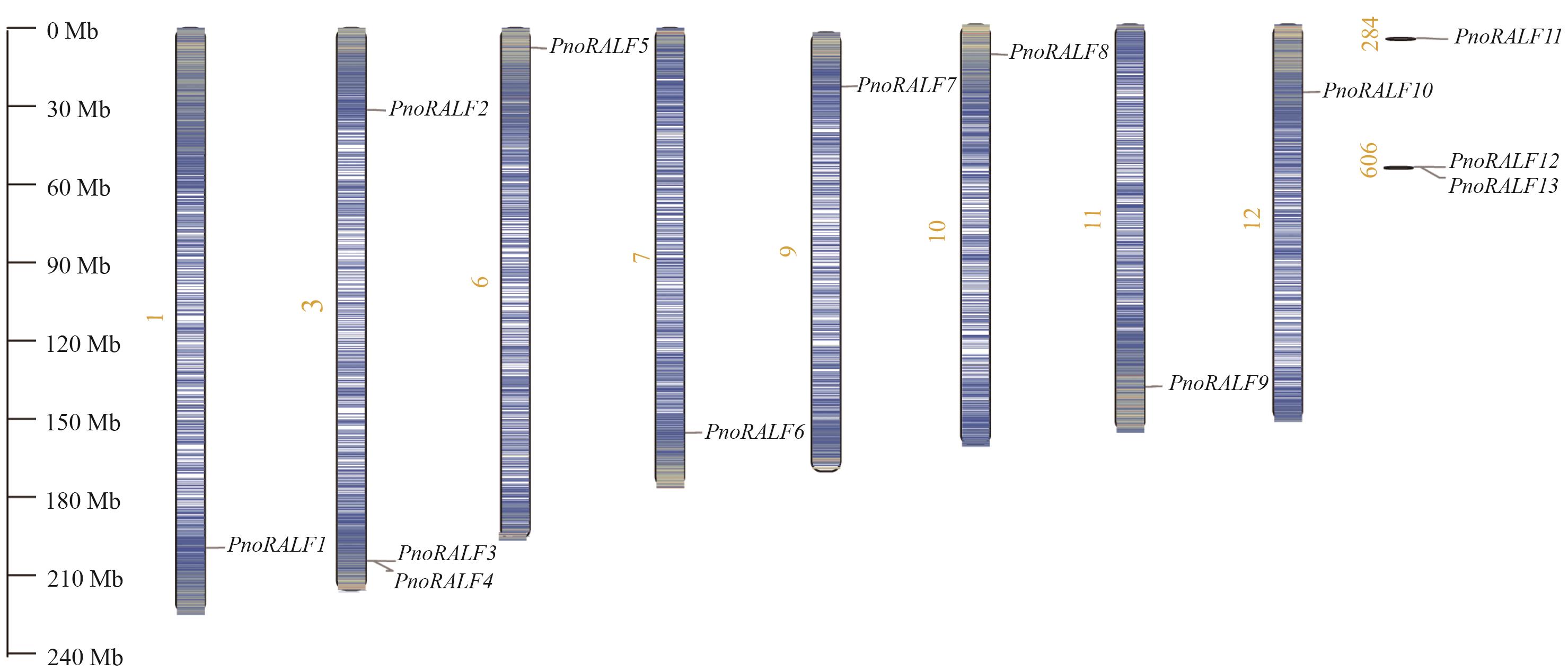
Fig. 1 Chromosomal localization of the PnoRALFs gene family
| 基因 | 基因ID | 氨基酸数 | 分子量 | 等电点 | 亲水性 | 亚细胞定位 | 信号肽 |
|---|---|---|---|---|---|---|---|
| Gene name | Gene ID | Number of amino acids | Molecular weight (kD) | pl | GRAVY | Subcellular localization | Signal peptide |
| PnoRALF1 | Pno01G005926.t1 | 128 | 14.06 | 9.03 | -0.30 | 细胞外Extracellular | Yes |
| PnoRALF2 | Pno03G001289.t1 | 126 | 13.74 | 8.91 | -0.11 | 细胞外Extracellular | Yes |
| PnoRALF3 | Pno03G005478.t1 | 131 | 14.39 | 0.24 | -0.22 | 细胞外Extracellular | Yes |
| PnoRALF4 | Pno03G005479.t1 | 125 | 13.75 | 9.54 | -0.44 | 细胞外Extracellular | Yes |
| PnoRALF5 | Pno06G000518.t1 | 114 | 12.33 | 8.60 | -0.20 | 细胞外Extracellular | Yes |
| PnoRALF6 | Pno07G004032.t1 | 158 | 17.28 | 9.15 | 0.24 | 质膜 Plasma membrane | Yes |
| PnoRALF7 | Pno09G001048.t1 | 109 | 12.07 | 7.50 | -0.35 | 细胞外Extracellular | Yes |
| PnoRALF8 | Pno10G000839.t1 | 123 | 13.77 | 9.83 | -0.19 | 细胞外Extracellular | No |
| PnoRALF9 | Pno11G003888.t1 | 133 | 14.33 | 8.99 | -0.08 | 细胞外Extracellular | Yes |
| PnoRALF10 | Pno12G001525.t1 | 110 | 12.31 | 7.54 | -0.07 | 细胞外Extracellular | Yes |
| PnoRALF11 | Pno284G000001.t1 | 125 | 12.75 | 9.54 | -0.44 | 细胞外Extracellular | Yes |
| PnoRALF12 | Pno606G000002.t1 | 110 | 12.30 | 7.54 | -0.07 | 细胞外Extracellular | Yes |
| PnoRALF13 | Pno606G000003.t1 | 113 | 12.46 | 8.69 | -0.29 | 细胞外Extracellular | Yes |
Table 2 Basic physicochemical properties of PnoRALFs gene family
| 基因 | 基因ID | 氨基酸数 | 分子量 | 等电点 | 亲水性 | 亚细胞定位 | 信号肽 |
|---|---|---|---|---|---|---|---|
| Gene name | Gene ID | Number of amino acids | Molecular weight (kD) | pl | GRAVY | Subcellular localization | Signal peptide |
| PnoRALF1 | Pno01G005926.t1 | 128 | 14.06 | 9.03 | -0.30 | 细胞外Extracellular | Yes |
| PnoRALF2 | Pno03G001289.t1 | 126 | 13.74 | 8.91 | -0.11 | 细胞外Extracellular | Yes |
| PnoRALF3 | Pno03G005478.t1 | 131 | 14.39 | 0.24 | -0.22 | 细胞外Extracellular | Yes |
| PnoRALF4 | Pno03G005479.t1 | 125 | 13.75 | 9.54 | -0.44 | 细胞外Extracellular | Yes |
| PnoRALF5 | Pno06G000518.t1 | 114 | 12.33 | 8.60 | -0.20 | 细胞外Extracellular | Yes |
| PnoRALF6 | Pno07G004032.t1 | 158 | 17.28 | 9.15 | 0.24 | 质膜 Plasma membrane | Yes |
| PnoRALF7 | Pno09G001048.t1 | 109 | 12.07 | 7.50 | -0.35 | 细胞外Extracellular | Yes |
| PnoRALF8 | Pno10G000839.t1 | 123 | 13.77 | 9.83 | -0.19 | 细胞外Extracellular | No |
| PnoRALF9 | Pno11G003888.t1 | 133 | 14.33 | 8.99 | -0.08 | 细胞外Extracellular | Yes |
| PnoRALF10 | Pno12G001525.t1 | 110 | 12.31 | 7.54 | -0.07 | 细胞外Extracellular | Yes |
| PnoRALF11 | Pno284G000001.t1 | 125 | 12.75 | 9.54 | -0.44 | 细胞外Extracellular | Yes |
| PnoRALF12 | Pno606G000002.t1 | 110 | 12.30 | 7.54 | -0.07 | 细胞外Extracellular | Yes |
| PnoRALF13 | Pno606G000003.t1 | 113 | 12.46 | 8.69 | -0.29 | 细胞外Extracellular | Yes |
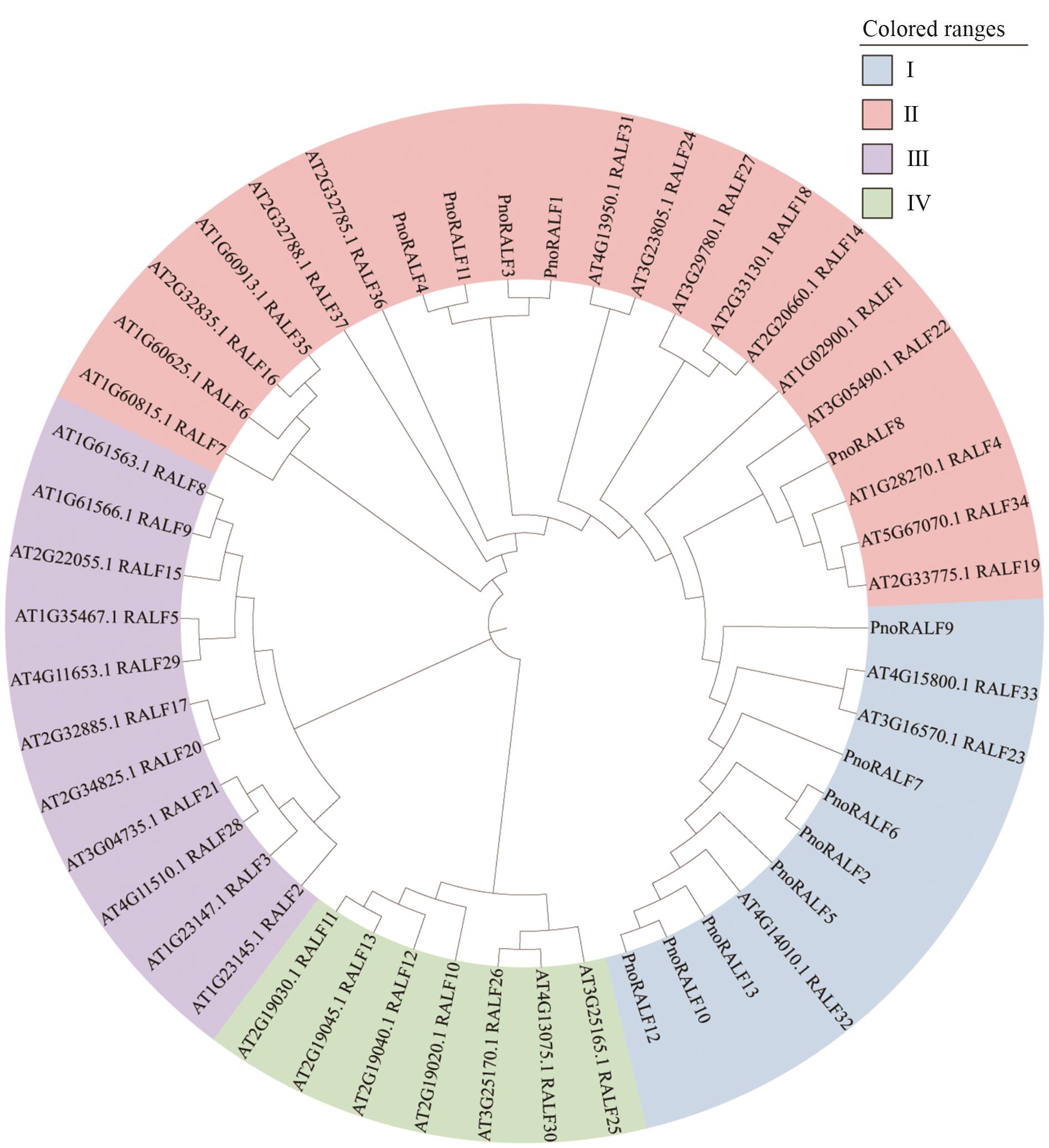
Fig. 2 Phylogenetic tree of RALF gene family in P. notoginseng and Arabidopsisthaliana
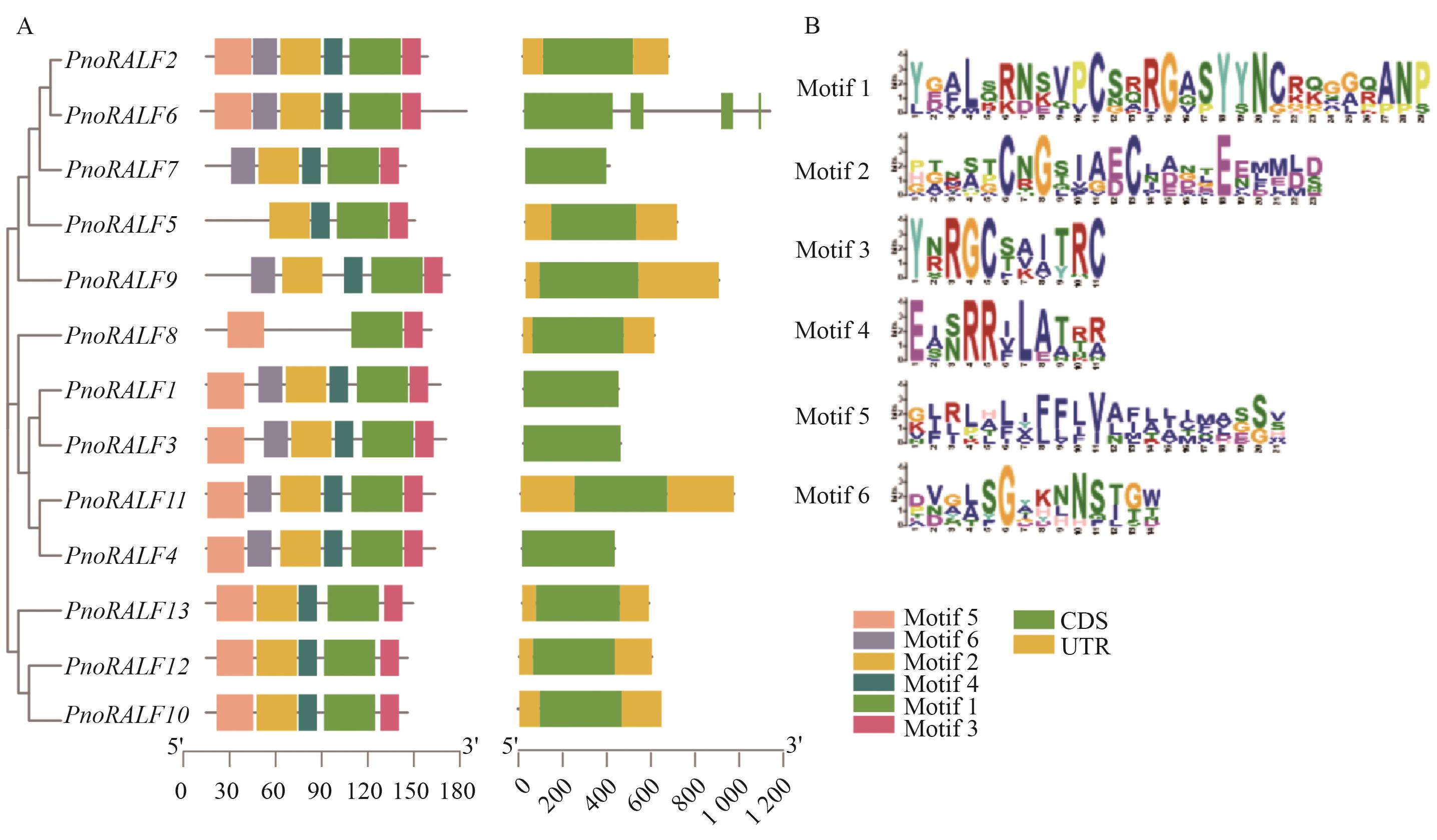
Fig. 3 Analysis of PnoRALFs family conserved motifs and gene structure(A), motif logo of PnoRALFs (B)
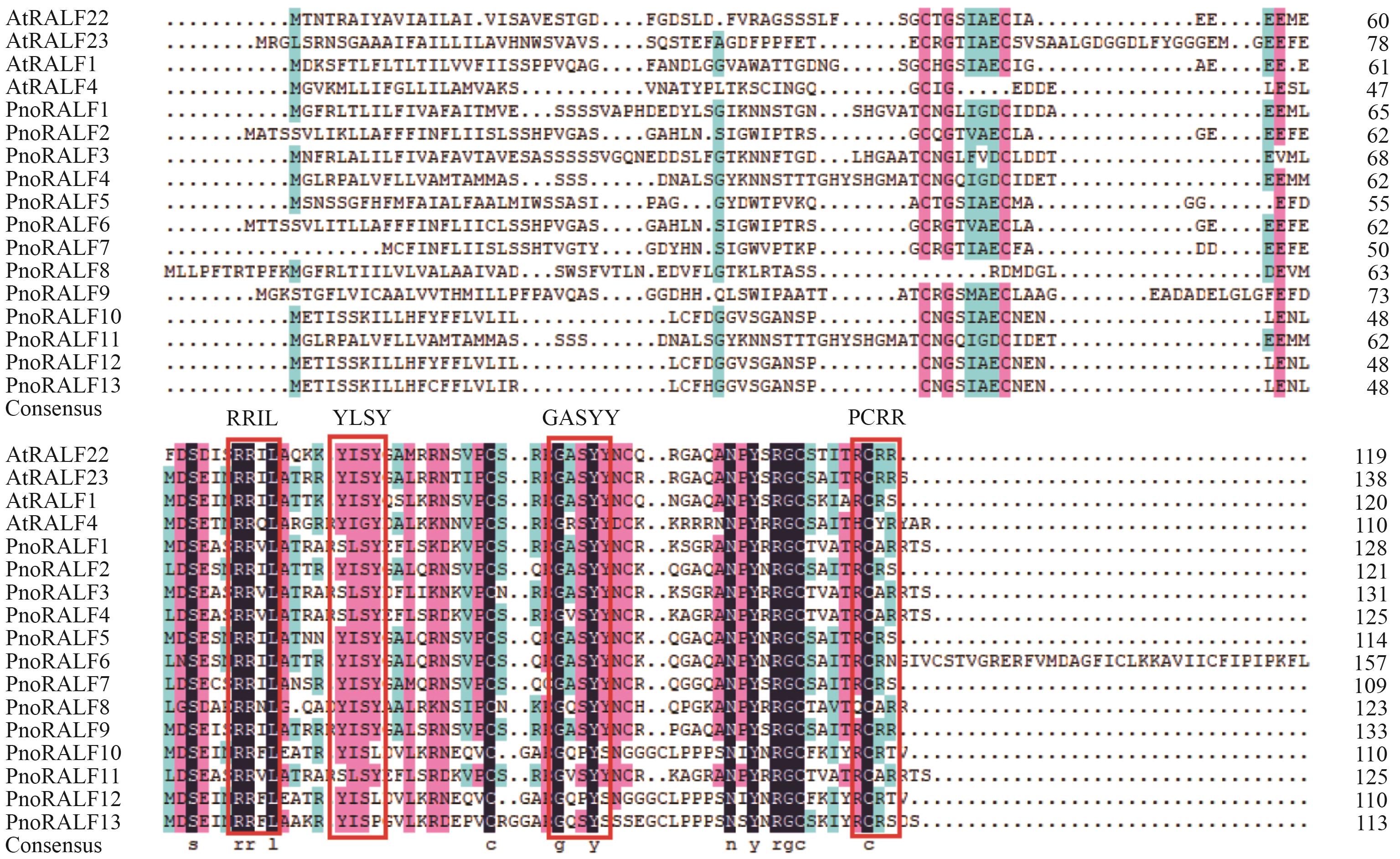
Fig. 4 Multiple sequence alignment of PnoRALF protein and AtRALF protein with known function
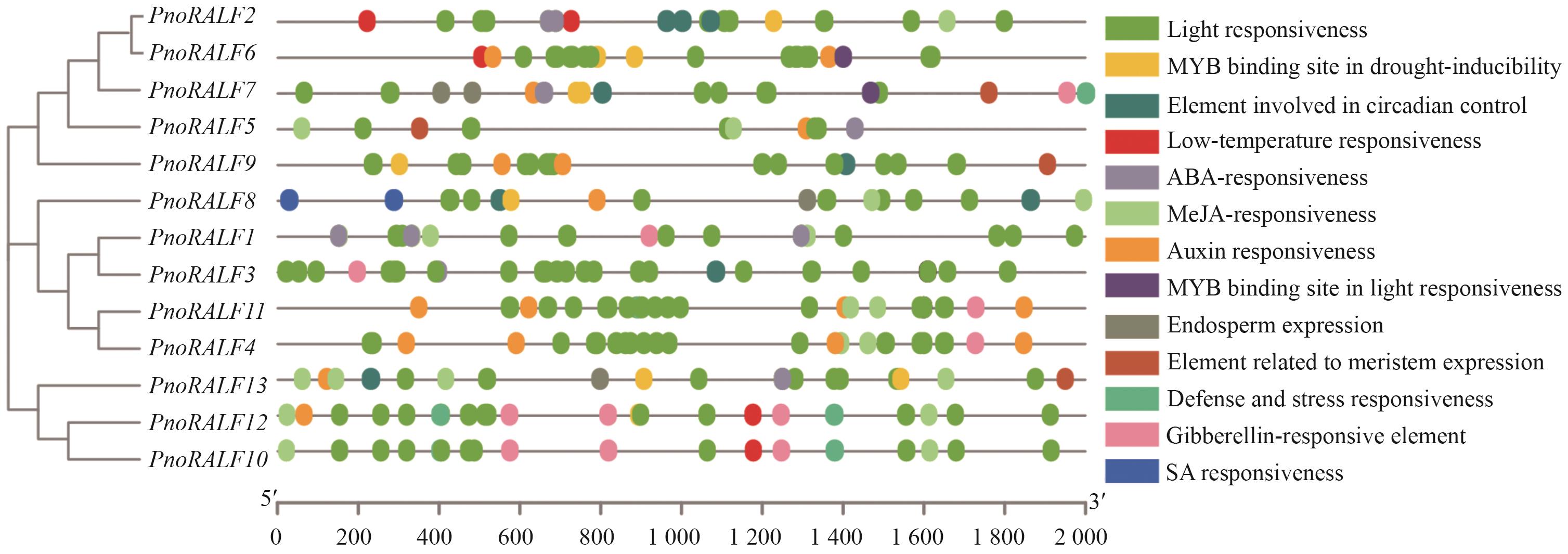
Fig. 5 Analysis of cis-acting elements of gene PnoRALFs
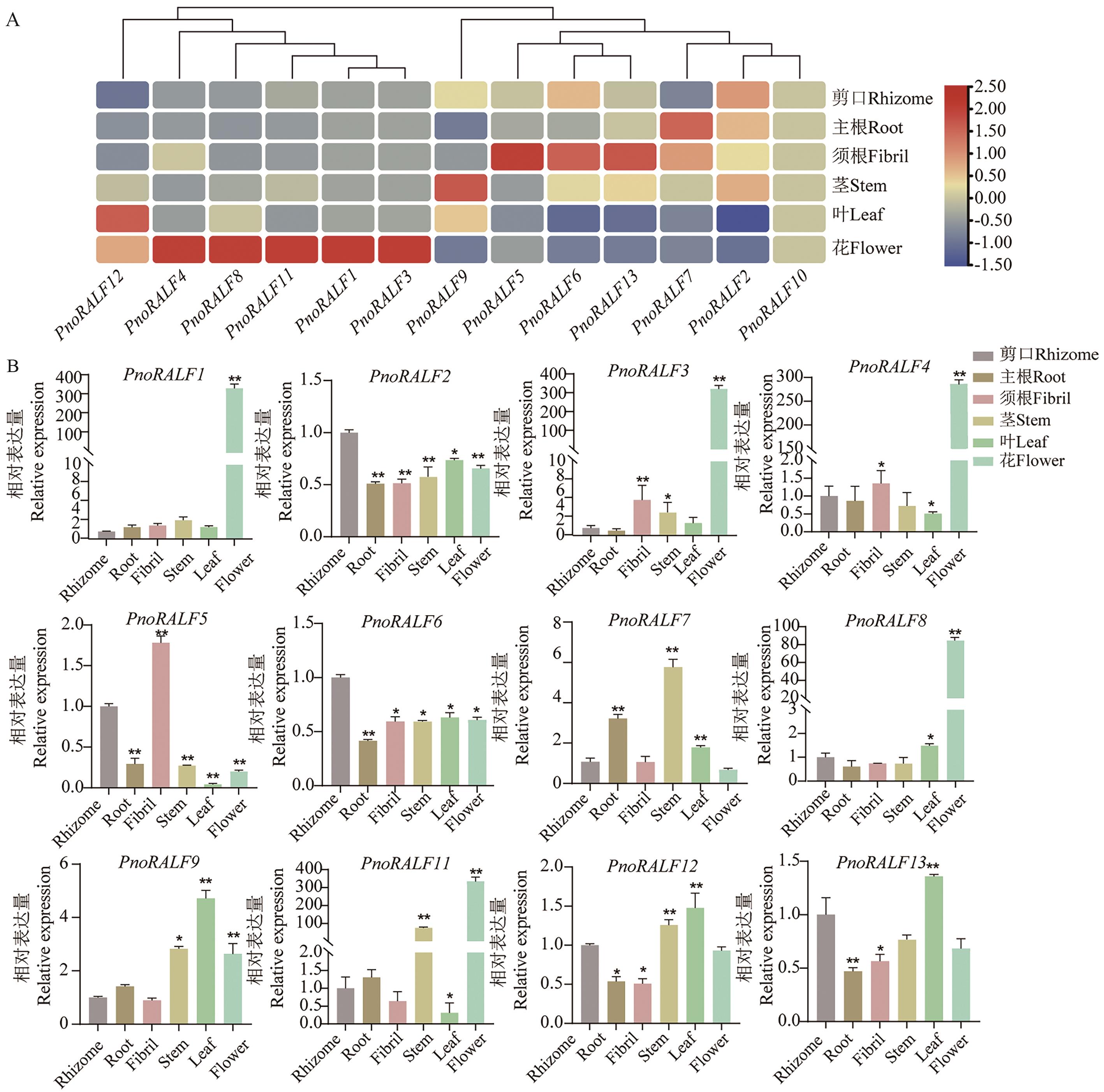
Fig. 6 Expression profiling of PnoRALFs gene in different tissuesA: Transcriptome expression data of PnoRALFs gene in different tissues. B: Relative expressions of PnoRALFs gene in different tissues. *P<0.05, **P<0.01. The same below
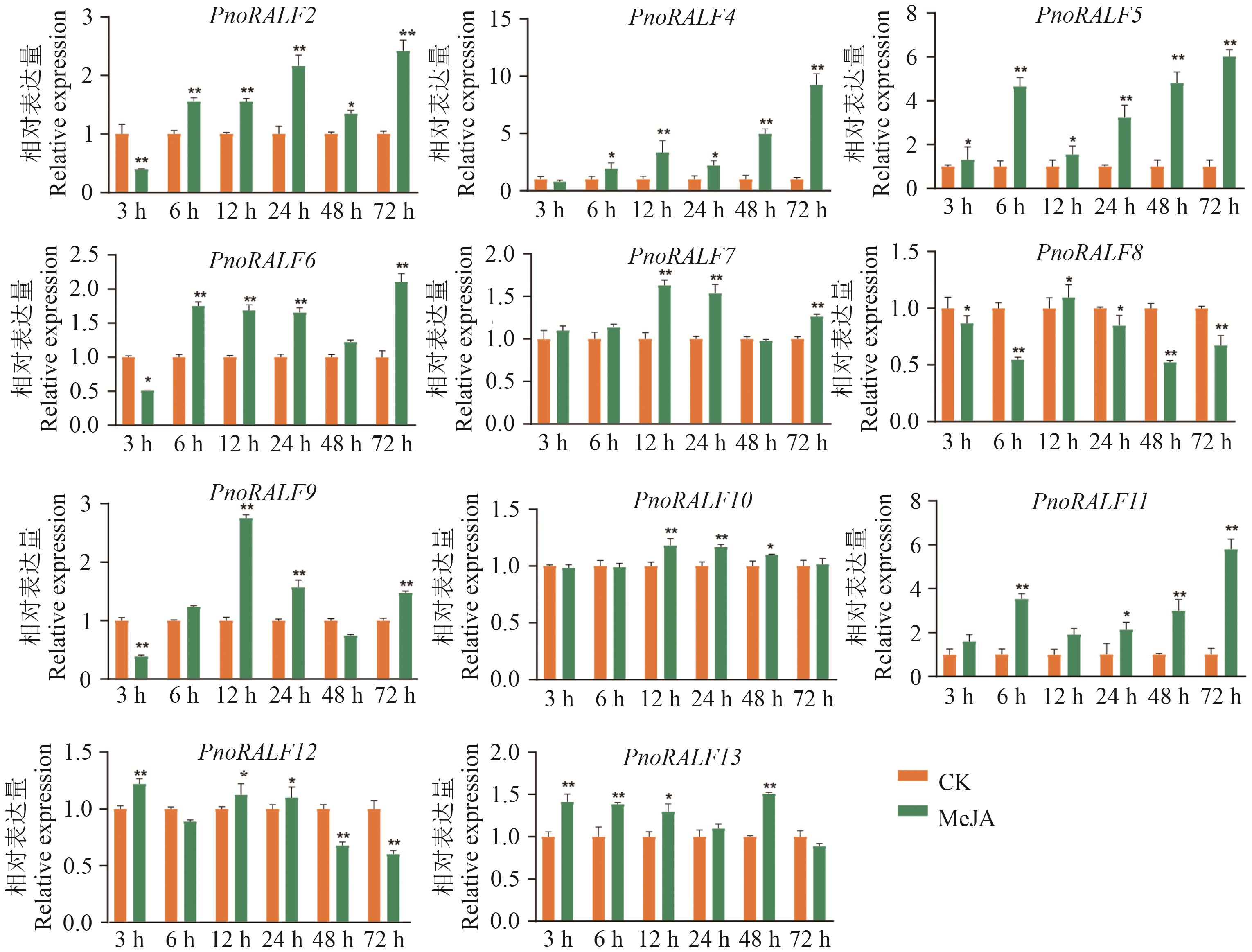
Fig. 7 Analysis of the expression pattern of PnoRALFs gene under different time of MeJA treatment
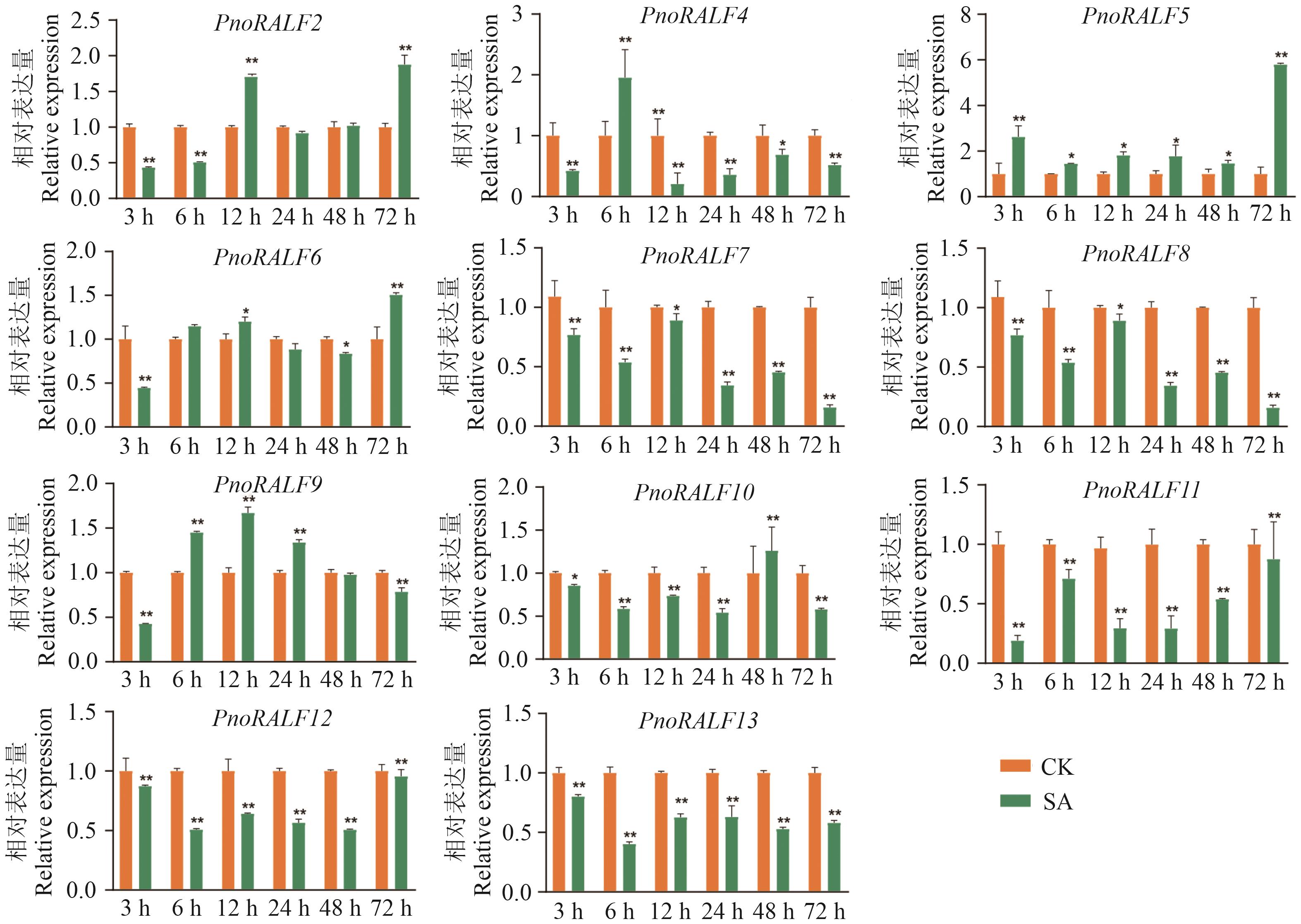
Fig. 8 Analysis of the expression pattern of PnoRALFs gene under different time of SA treatment
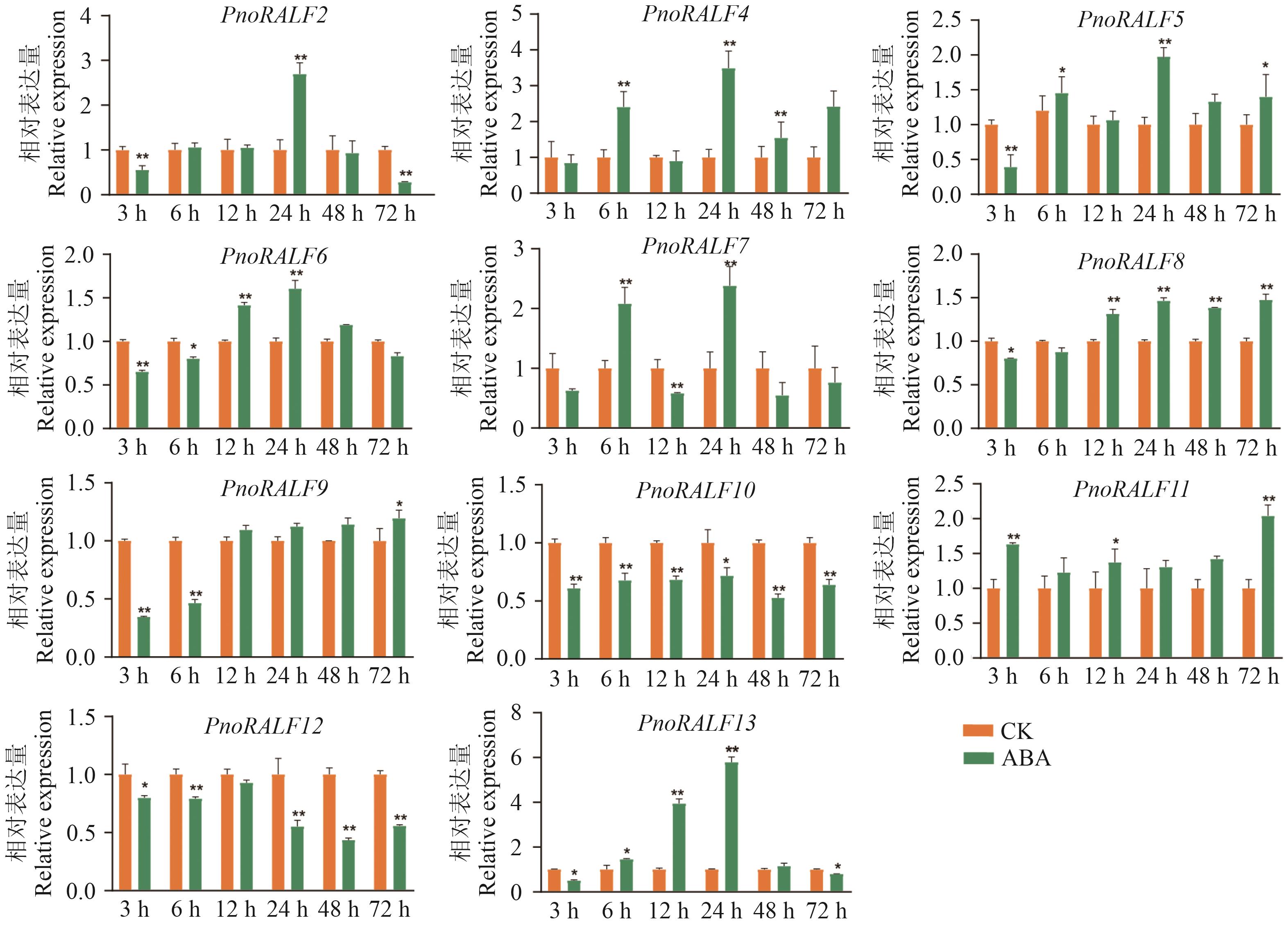
Fig. 9 Analysis of the expression pattern of PnoRALFs gene under different time of ABA treatment
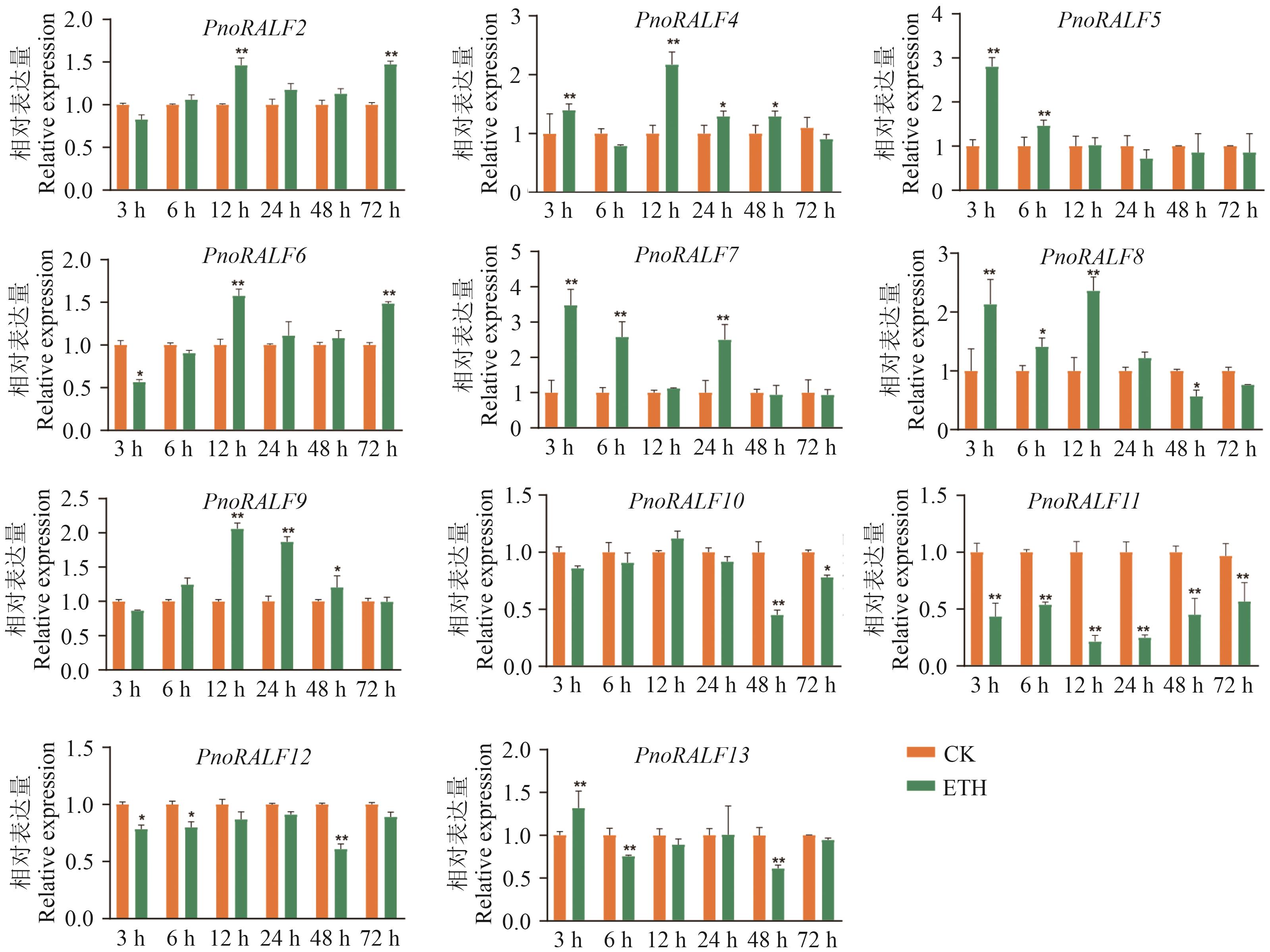
Fig. 10 Analysis of the expression pattern of PnoRALFs gene under different time of ETH treatment
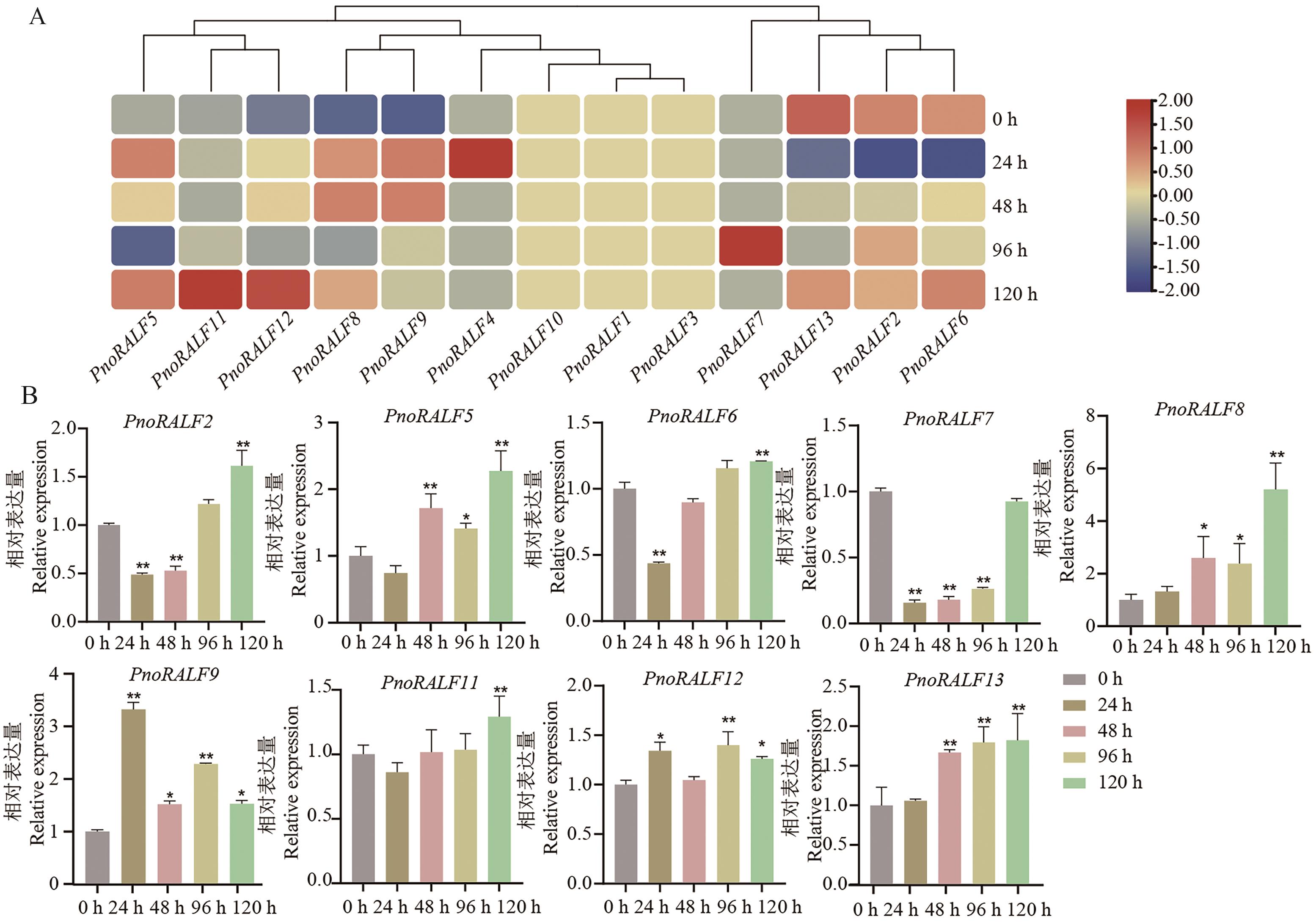
Fig. 11 Expression profiling of PnoRALFs gene in response to C. destructans infectionA: Transcriptomic data of PnoRALFs gene in response to C. destructans infection.B: Relative expression of PnoRALFs gene reponding to C. destructans infection
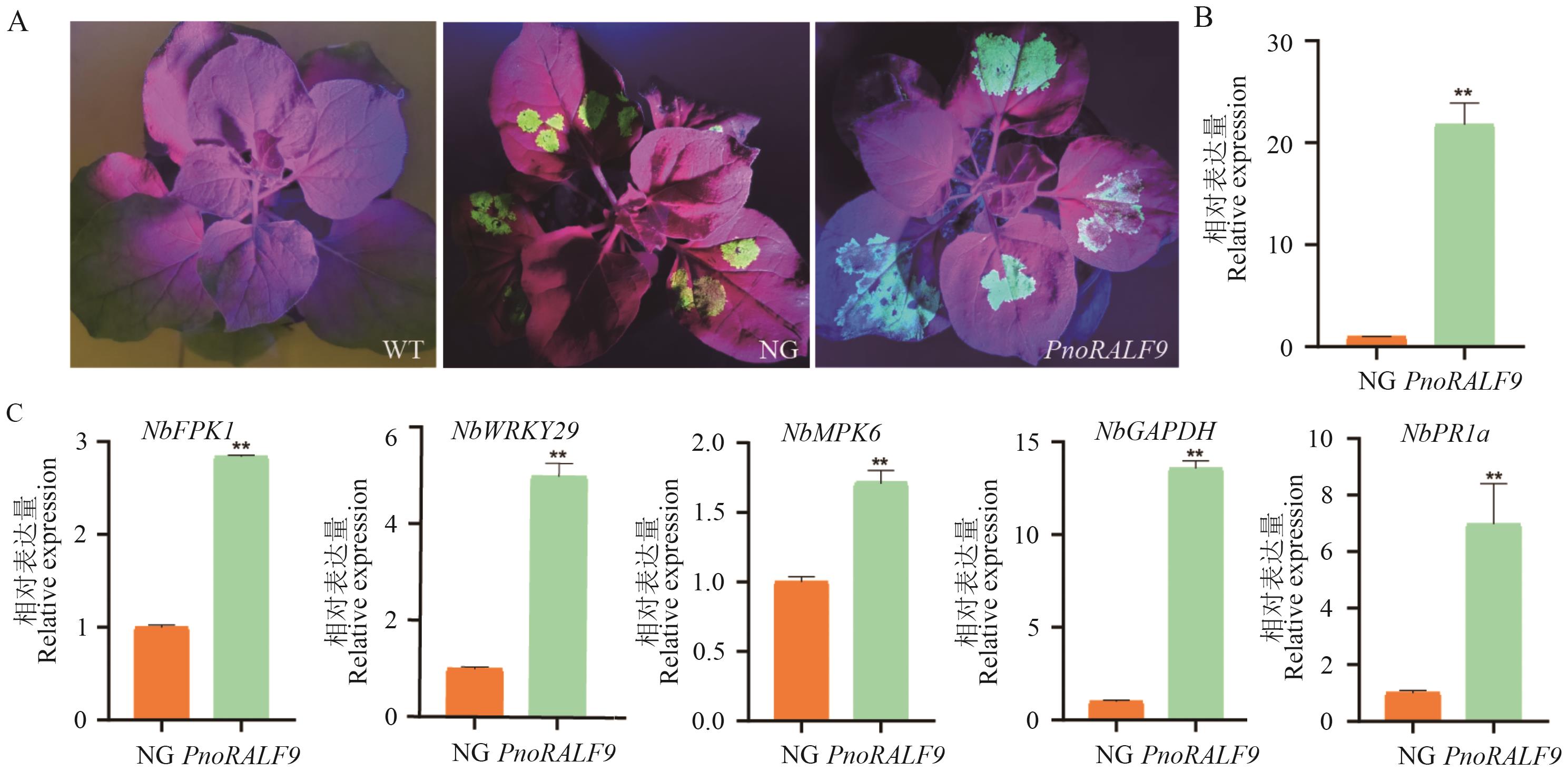
Fig. 12 Analysis of phenotypic and gene expression in N. benthamiana following transient transformation of PnoRALF9A: Phenotype of GFP expression in N. benthamiana following transient expression of PnoRALF9. B: Analysis of PnoRALF9 expression after transient transformation. C: Expression analysis of immune-related genes in N. benthamiana
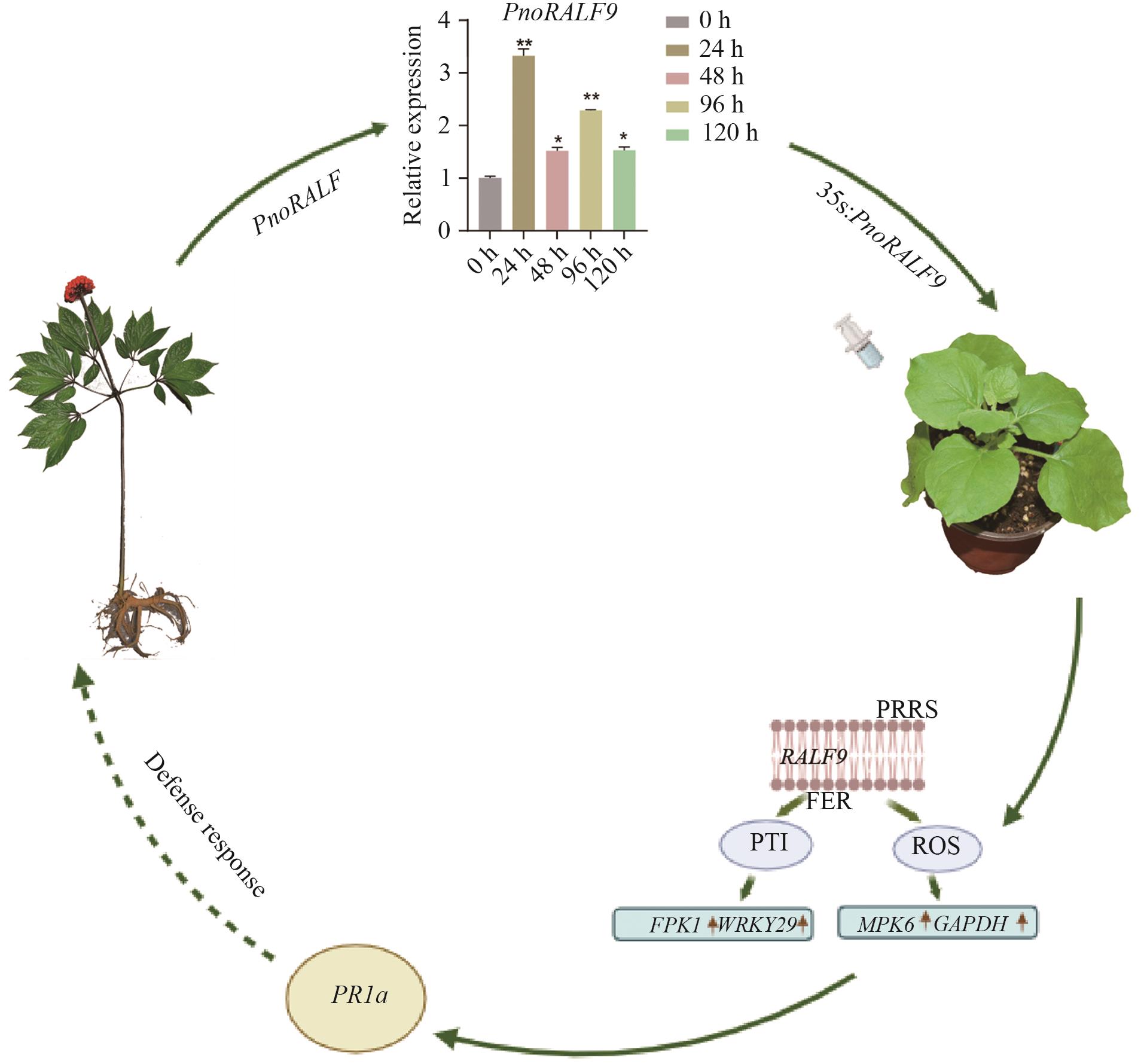
Fig. 13 Selection of key PnoRALFs gene and transient expression patterns of PnoRALF9
| [1] | 李满桥, 梁绮文, 闫静, 等. 三七遗传改良的研究进展 [J]. 中草药, 2022, 53(10): 3241-3250. |
| Li MQ, Liang QW, Yan J, et al. Research progress on genetic improvement of Panax notoginseng [J]. Chin Tradit Herb Drugs, 2022, 53(10): 3241-3250. | |
| [2] | 谭勇, 崔尹赡, 季秀玲, 等. 三七连作的根际、根内微生物变化与生态学研究进展 [J]. 中草药, 2017, 48(2): 391-399. |
| Tan Y, Cui YS, Ji XL, et al. Research progress in microorganism changes of rhizospheric soil and root endogenous and ecology during continuous cropping of Panax notoginseng [J]. Chin Tradit Herb Drugs, 2017, 48(2): 391-399. | |
| [3] | Li JB, Ai MT, Hou JE, et al. Plant-pathogen interaction with root rot of Panax notoginseng as a model: Insight into pathogen pathogenesis, plant defence response and biological control [J]. Mol Plant Pathol, 2024, 25(2): e13427. |
| [4] | 张晋豪, 杨俊, 姬广海, 等. 云南三七根腐病病原细菌的鉴定 [J]. 南方农业学报, 2020, 51(3): 586-592. |
| Zhang JH, Yang J, Ji GH, et al. Bacterial pathogen identification of Panax notoginseng root rot in Yunnan Province [J]. J South Agric, 2020, 51(3): 586-592. | |
| [5] | Pearce G, Moura DS, Stratmann J, et al. RALF, a 5-kDa ubiquitous polypeptide in plants, arrests root growth and development [J]. Proc Natl Acad Sci U S A, 2001, 98(22): 12843-12847. |
| [6] | Blackburn MR, Haruta M, Moura DS. Twenty years of progress in physiological and biochemical investigation of RALF peptides [J]. Plant Physiol, 2020, 182(4): 1657-1666. |
| [7] | Abarca A, Franck CM, Zipfel C. Family-wide evaluation of rapid alkalinization factor peptides [J]. Plant Physiol, 2021, 187(2): 996-1010. |
| [8] | Campbell L, Turner SR. A comprehensive analysis of RALF proteins in green plants suggests there are two distinct functional groups [J]. Front Plant Sci, 2017, 8: 37. |
| [9] | Xiao Y, Stegmann M, Han ZF, et al. Mechanisms of RALF peptide perception by a heterotypic receptor complex [J]. Nature, 2019, 572(7768): 270-274. |
| [10] | 蔺欢, 王俊娟, 孙振婷, 等. 植物小分子肽的研究进展 [J]. 西北植物学报, 2021, 41(1): 168-180. |
| Lin H, Wang JJ, Sun ZT, et al. The research progress of plant small molecular peptides [J]. Acta Bot Boreali Occidentalia Sin, 2021, 41(1): 168-180. | |
| [11] | 何语涵. RALF22的抗核盘菌免疫功能及机制分析 [D]. 杭州: 浙江大学, 2022. |
| He YH. Functions and molecular mechanisms of RALF22 in plant immunity against Sclerotinia sclerotiorum [D]. Hangzhou: Zhejiang University, 2022. | |
| [12] | Zhang R, Shi PT, Zhou M, et al. Rapid alkalinization factor: function, regulation, and potential applications in agriculture [J]. Stress Biol, 2023, 3(1): 16. |
| [13] | Xue BP, Liang ZC, Liu Y, et al. Genome-wide identification of the RALF gene family and expression pattern analysis in Zea mays L. under abiotic stresses [J]. Plants, 2024, 13(20): 2883. |
| [14] | Moussu S, Lee HK, Haas KT, et al. Plant cell wall patterning and expansion mediated by protein-peptide-polysaccharide interaction [J]. Science, 2023, 382(6671): 719-725. |
| [15] | 强晓楠, 李鑫, 陈佳, 等. 拟南芥RALF多肽家族的功能多样性初步分析 [J]. 生物技术通报, 2019, 35(1): 2-10. |
| Qiang XN, Li X, Chen J, et al. Preliminary analysis of functional diversity of RALF peptide family in Arabidopsis thaliana [J]. Biotechnol Bull, 2019, 35(1): 2-10. | |
| [16] | Liu LN, Liu X, Bai ZK, et al. Small but powerful: RALF peptides in plant adaptive and developmental responses [J]. Plant Sci, 2024, 343: 112085. |
| [17] | Galindo-Trigo S, Gray JE, Smith LM. Conserved roles of CrRLK1L receptor-like kinases in cell expansion and reproduction from algae to angiosperms [J]. Front Plant Sci, 2016, 7: 1269. |
| [18] | Gonneau M, Desprez T, Martin M, et al. Receptor kinase THESEUS1 is a rapid alkalinization factor 34 receptor in Arabidopsis [J]. Curr Biol, 2018, 28(15): 2452-2458.e4. |
| [19] | Stegmann M, Monaghan J, Smakowska-Luzan E, et al. The receptor kinase FER is a RALF-regulated scaffold controlling plant immune signaling [J]. Science, 2017, 355(6322): 287-289. |
| [20] | Rui PH, Jia ZX, Fang XX, et al. A plant viral effector subverts FER-RALF1 module-mediated intracellular immunity [J]. Plant Biotechnol J, 2025, 23(7): 2734-2751. |
| [21] | Yang ZJ, Liu GZ, Zhang GH, et al. The chromosome-scale high-quality genome assembly of Panax notoginseng provides insight into dencichine biosynthesis [J]. Plant Biotechnol J, 2021, 19(5): 869-871. |
| [22] | Lu SN, Wang JY, Chitsaz F, et al. CDD/SPARCLE: the conserved domain database in 2020 [J]. Nucleic Acids Res, 2020, 48(D1): D265-D268. |
| [23] | Wilkins MR, Gasteiger E, Bairoch A, et al. Protein identification and analysis tools in the ExPASy server [M]//2-D Proteome Analysis Protocols. New Jersey: Humana Press, 2003: 531-552. |
| [24] | Tamura K, Stecher G, Kumar S. MEGA11: molecular evolutionary genetics analysis version 11 [J]. Mol Biol Evol, 2021, 38(7): 3022-3027. |
| [25] | Lescot M, Déhais P, Thijs G, et al. PlantCARE, a database of plant cis-acting regulatory elements and a portal to tools for in silico analysis of promoter sequences [J]. Nucleic Acids Res, 2002, 30(1): 325-327. |
| [26] | 梁童瑶, 麻鹏达, 夏鹏国, 等. pEAQ载体介导的烟草叶片瞬时遗传转化体系[C]. 陕西安康: 陕西省植物学会, 2016. |
| Liang CY, Ma PD, Xia PG, et al. Transient genetic transformation system of tobacco leaves mediated by pEAQ vector [C]. Ankang, Shanxi: Shanxi Prov Bot Soc, 2016. | |
| [27] | Livak KJ, Schmittgen TD. Analysis of relative gene expression data using real-time quantitative PCR and the 2-ΔΔCT Method [J]. Methods (San Diego, Calif.), 2001, 25(4): 402-408. |
| [28] | Chen XY, Chen J, Xu F, et al. RALF-FER, a master ligand-receptor pair in plant health [J]. Crop Health, 2025, 3(1): 4. |
| [29] | Cao J, Shi F. Evolution of the RALF gene family in plants: gene duplication and selection patterns [J]. Evol Bioinform Online, 2012, 8: EBO.S9652. |
| [30] | Waadt R, Seller CA, Hsu PK, et al. Plant hormone regulation of abiotic stress responses [J]. Nat Rev Mol Cell Biol, 2022, 23(10): 680-694. |
| [31] | Xia JZ, Wang Y, Zhang TT, et al. Genome-wide identification, expression profiling, and functional analysis of ammonium transporter 2 (AMT2) gene family in cassava (Manihot esculenta Crantz) [J]. Front Genet, 2023, 14: 1145735. |
| [32] | Zhao CZ, Jiang W, Zayed O, et al. The LRXs-RALFs-FER module controls plant growth and salt stress responses by modulating multiple plant hormones [J]. Natl Sci Rev, 2021, 8(1): nwaa149. |
| [33] | Iqbal N, Khan NA, Ferrante A, et al. Ethylene role in plant growth, development and senescence: interaction with other phytohormones [J]. Front Plant Sci, 2017, 8: 475. |
| [34] | Hou SG, Liu ZY, Shen HX, et al. Damage-associated molecular pattern-triggered immunity in plants [J]. Front Plant Sci, 2019, 10: 646. |
| [35] | 胡海琳, 徐黎, 李晓旭, 等. 小肽激素调控植物生长发育及逆境生理研究进展 [J]. 生物技术通报, 2023, 39(7): 13-25. |
| Hu HL, Xu L, Li XX, et al. Advances in the regulation of plant growth, development and stress physiology by small peptide hormones [J]. Biotechnol Bull, 2023, 39(7): 13-25. | |
| [36] | Zhao CZ, Zayed O, Yu ZP, et al. Leucine-rich repeat extensin proteins regulate plant salt tolerance in Arabidopsis [J]. Proc Natl Acad Sci U S A, 2018, 115(51): 13123-13128. |
| [37] | He YH, Zhang ZR, Xu YP, et al. Genome-wide identification of rapid alkalinization factor family in Brassica napus and functional analysis of BnRALF10 in immunity to Sclerotinia sclerotiorum [J]. Front Plant Sci, 2022, 13: 877404. |
| [38] | Guo HQ, Nolan TM, Song GY, et al. FERONIA receptor kinase contributes to plant immunity by suppressing jasmonic acid signaling in Arabidopsis thaliana [J]. Curr Biol, 2018, 28(20): 3316-3324.e6. |
| [39] | Li MQ, Che XL, Liang QW, et al. Genome-wide identification and characterization of WRKYs family involved in responses to Cylindrocarpon destructans in Panax notoginseng [J]. BMC Genomics, 2025, 26(1): 104. |
| [40] | Sun H, Li MQ, Liu XY, et al. Isolation and functional characterization of a pathogenesis-related protein 4 gene from Panax notoginseng [J]. Australas Plant Pathol, 2024, 53(6): 539-550. |
| [41] | Tang XY, Frederick RD, Zhou JM, et al. Initiation of plant disease resistance by physical interaction of AvrPto and pto kinase [J]. Science, 1996, 274(5295): 2060-2063. |
| [42] | Islam MM, El-Sappah AH, Ali HM, et al. Pathogenesis-related proteins (PRs) countering environmental stress in plants: a review [J]. S Afr N J Bot, 2023, 160: 414-427. |
| [1] | SU Yan-zhu, LI Da, ZHANG Ai-ai, LIU Yong-guang, ZHANG Xiu-rong, XUE Qi-qin. Identification and Expression Analysis of CAD Gene Family in Soybean(Glycine max (L.) Merr.) [J]. Biotechnology Bulletin, 2026, 42(4): 101-113. |
| [2] | LIU Qing-yuan, WU Hong-qi, CHEN Xiu-e, CHEN Jian, JIANG Yuan-ze, HE Yan-zi, YU Qi-wei, LIU Ren-xiang. Function of Transcription Factor NtMYB96a in Regulating the Tolerance of Tobacco to Drought [J]. Biotechnology Bulletin, 2026, 42(4): 239-250. |
| [3] | CHEN Deng-ke, LAN Gang, XIA Zhi, HOU Bao-guo, YANG Liu-liu, CAO Cai-rong, LI Peng-bo, WU Cui-cui. Identification of ZF-HD Gene Family in Arachis hypogaea and Analysis in Response to Abiotic Stress [J]. Biotechnology Bulletin, 2026, 42(4): 114-128. |
| [4] | REN Yun-er, WU Guo-qiang, CHENG Bin, WEI Ming. Genome-wide Identification of the BvATGs Genes Family in Sugar Beet (Beta vulgaris L.) and Analysis of Their Expression Pattern under Salt Stress [J]. Biotechnology Bulletin, 2026, 42(1): 184-197. |
| [5] | YANG Yue-qin, XING Ying, ZHONG Zi-he, TIAN Wei-jun, YANG Xue-qing, WANG Jian-xu. Expression and Functional Analysis of OsMATE34 in Rice under Mercury Stress [J]. Biotechnology Bulletin, 2026, 42(1): 86-94. |
| [6] | LI Jian-bin, HOU Jia-e, LI Lei-lin, AI Ming-tao, LIU Tian-tai, CUI Xiu-ming, YANG Qian. Genome-wide Identification of Panax notoginseng Lipoxygenases Coupled in Response to Methyl-jasmonate and Wounding [J]. Biotechnology Bulletin, 2026, 42(1): 218-229. |
| [7] | CHEN Jing-huan, FANG Guo-nan, ZHU Wen-hao, YE Guang-ji, SU Wang, HE Miao-miao, YANG Sheng-long, ZHOU Yun. Starch Characterization and Related Gene Expression Analysis of Potato Germplasm Resources [J]. Biotechnology Bulletin, 2026, 42(1): 170-183. |
| [8] | LI Shan, MA Deng-hui, MA Hong-yi, YAO Wen-kong, YIN Xiao. Identification and Expression Analysis of SKP1 Gene Family in Grapevine (Vitis vinifera L.) [J]. Biotechnology Bulletin, 2025, 41(9): 147-158. |
| [9] | GONG Hui-ling, XING Yu-jie, MA Jun-xian, CAI Xia, FENG Zai-ping. Identification of Laccase (LAC) Gene Family in Potato (Solanum tuberosum L.) and Its Expression Analysis under Salt Stresses [J]. Biotechnology Bulletin, 2025, 41(9): 82-93. |
| [10] | CHENG Ting-ting, LIU Jun, WANG Li-li, LIAN Cong-long, WEI Wen-jun, GUO Hui, WU Yao-lin, YANG Jing-fan, LAN Jin-xu, CHEN Sui-qing. Genome-wide Identification of the Chalcone Isomerase Gene Family in Eucommia ulmoides and Analysis of Their Expression Patterns [J]. Biotechnology Bulletin, 2025, 41(9): 242-255. |
| [11] | BAI Yu-guo, LI Wan-di, LIANG Jian-ping, SHI Zhi-yong, LU Geng-long, LIU Hong-jun, NIU Jing-ping. Growth-promoting Mechanism of Trichoderma harzianum T9131 on Astragalus membranaceus Seedlings [J]. Biotechnology Bulletin, 2025, 41(8): 175-185. |
| [12] | REN Rui-bin, SI Er-jing, WAN Guang-you, WANG Jun-cheng, YAO Li-rong, ZHANG Hong, MA Xiao-le, LI Bao-chun, WANG Hua-jun, MENG Ya-xiong. Identification and Expression Analysis of GH17 Gene Family of Pyrenophora graminea [J]. Biotechnology Bulletin, 2025, 41(8): 146-154. |
| [13] | ZENG Dan, HUANG Yuan, WANG Jian, ZHANG Yan, LIU Qing-xia, GU Rong-hui, SUN Qing-wen, CHEN Hong-yu. Genome-wide Identification and Expression Analysis of bZIP Transcription Factor Family in Dendrobium officinale [J]. Biotechnology Bulletin, 2025, 41(8): 197-210. |
| [14] | HUA Wen-ping, LIU Fei, HAO Jia-xin, CHEN Chen. Identification and Expression Patterns Analysis of ADH Gene Family in Salvia miltiorrhiza [J]. Biotechnology Bulletin, 2025, 41(8): 211-219. |
| [15] | LI Kai-yue, DENG Xiao-xia, YIN Yuan, DU Ya-tong, XU Yuan-jing, WANG Jing-hong, YU Song, LIN Ji-xiang. Identification of LEA Gene Family and Analysis on Its Response to Aluminum Stress in Ricinus communis L. [J]. Biotechnology Bulletin, 2025, 41(7): 128-138. |
| Viewed | ||||||
|
Full text |
|
|||||
|
Abstract |
|
|||||
