







Biotechnology Bulletin ›› 2026, Vol. 42 ›› Issue (4): 26-37.doi: 10.13560/j.cnki.biotech.bull.1985.2025-0791
Previous Articles Next Articles
YIN Ya-long1,2( ), ZHANG Ming-yang1,2, WANG Jie-min3,4, MIAO Xue-xue3,4, CHEN Jin3, WANG Wei-ping2,3,4()
Received:2025-07-23
Online:2026-04-26
Published:2026-02-09
Contact:
WANG Wei-ping
E-mail:Yinyalong1997@outlook.com;wangweiping@hhrrc.ac.cn
YIN Ya-long, ZHANG Ming-yang, WANG Jie-min, MIAO Xue-xue, CHEN Jin, WANG Wei-ping. Advances in Coordinated Tolerance Mechanisms to Abiotic Stresses in Rice[J]. Biotechnology Bulletin, 2026, 42(4): 26-37.
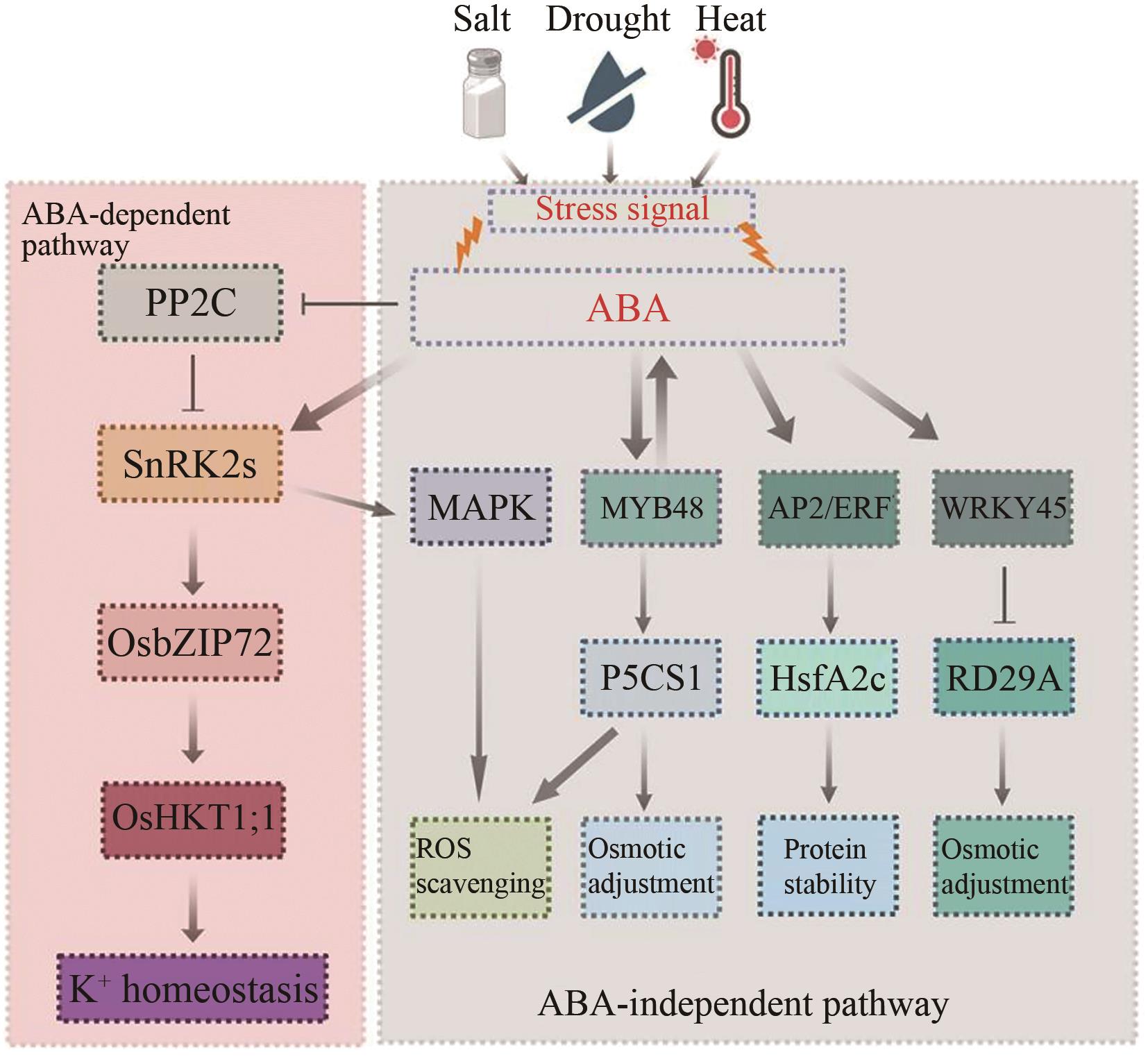
Fig. 1 Schematic representation of the coordinated regulatory mechanism underlying combined salinity, drought and heat stress
| [1] | Lu M. Impact of climate change on rice and adaptation strategies: A review [J]. Advances in Resources Research, 2024, 4(2): 252-262. |
| [2] | Liu CT, Mao BG, Yuan DY, et al. Salt tolerance in rice: Physiological responses and molecular mechanisms [J]. Crop J, 2022, 10(1): 13-25. |
| [3] | Chen K, Li GJ, Bressan RA, et al. Abscisic acid dynamics, signaling, and functions in plants [J]. J Integr Plant Biol, 2020, 62(1): 25-54. |
| [4] | Ohama N, Sato H, Shinozaki K, et al. Transcriptional regulatory network of plant heat stress response [J]. Trends Plant Sci, 2017, 22(1): 53-65. |
| [5] | Fujita M, Fujita Y, Noutoshi Y, et al. Crosstalk between abiotic and biotic stress responses: a current view from the points of convergence in the stress signaling networks [J]. Curr Opin Plant Biol, 2006, 9(4): 436-442. |
| [6] | Chang Y, Liu JH, Guo MR, et al. Drought-responsive dynamics of H3K9ac-marked 3D chromatin interactions are integrated by OsbZIP23-associated super-enhancer-like promoter regions in rice [J]. Genome Biol, 2024, 25: 262. |
| [7] | Wei H, Xu H, Su C, et al. Rice circadian clock associated 1 transcriptionally regulates Aba signaling to confer multiple abiotic stress tolerance [J]. Plant Physiol, 2022, 190(2): 1057-1073. |
| [8] | Quintero FJ, Ohta M, Shi HZ, et al. Reconstitution in yeast of the Arabidopsis SOS signaling pathway for Na+ homeostasis [J]. Proc Natl Acad Sci U S A, 2002, 99(13): 9061-9066. |
| [9] | Ren ZH, Gao JP, Li LG, et al. A rice quantitative trait locus for salt tolerance encodes a sodium transporter [J]. Nat Genet, 2005, 37(10): 1141-1146. |
| [10] | Wang TT, Ren ZJ, Liu ZQ, et al. SbHKT1;4, a member of the high-affinity potassium transporter gene family from Sorghum bicolor, functions to maintain optimal Na+/K+ balance under Na+ stress [J]. J Integr Plant Biol, 2014, 56(3): 315-332. |
| [11] | Suzuki N, Miller G, Morales J, et al. Respiratory burst oxidases: the engines of ROS signaling [J]. Curr Opin Plant Biol, 2011, 14(6): 691-699. |
| [12] | Mittler R, Vanderauwera S, Suzuki N, et al. ROS signaling: the new wave? [J]. Trends Plant Sci, 2011, 16(6): 300-309. |
| [13] | Noctor G, Mhamdi A, Foyer CH. The roles of reactive oxygen metabolism in drought: not so cut and dried [J]. Plant Physiol, 2014, 164(4): 1636-1648. |
| [14] | Apel K, Hirt H. REACTIVE OXYGEN SPECIES: metabolism, oxidative stress, and signal transduction [J]. Annu Rev Plant Biol, 2004, 55: 373-399. |
| [15] | Deinlein U, Stephan AB, Horie T, et al. Plant salt-tolerance mechanisms [J]. Trends Plant Sci, 2014, 19(6): 371-379. |
| [16] | Yang YQ, Guo Y. Elucidating the molecular mechanisms mediating plant salt-stress responses [J]. New Phytol, 2018, 217(2): 523-539. |
| [17] | Zhang MJ, Chen Z, Yuan F, et al. Integrative transcriptome and proteome analyses provide deep insights into the molecular mechanism of salt tolerance in Limonium bicolor [J]. Plant Mol Biol, 2022, 108(1/2): 127-143. |
| [18] | Satrio RD, Fendiyanto MH, Supena EDJ, et al. Mapping and identification of QTL for agro-physiological traits in rice (Oryza sativa L.) under drought stress [J]. Plant Gene, 2023, 33: 100397. |
| [19] | Sakuma Y, Maruyama K, Osakabe Y, et al. Functional analysis of an Arabidopsis transcription factor, DREB2A involved in drought-responsive gene expression [J]. Plant Cell, 2006, 18(5): 1292-1309. |
| [20] | Mallikarjuna G, Mallikarjuna K, Reddy MK, et al. Expression of OsDREB2A transcription factor confers enhanced dehydration and salt stress tolerance in rice (Oryza sativa L.) [J]. Biotechnol Lett, 2011, 33(8): 1689-1697. |
| [21] | Jia HY, Zhang SJ, Ruan MY, et al. Analysis and application of RD29 genes in abiotic stress response [J]. Acta Physiol Plant, 2012, 34(4): 1239-1250. |
| [22] | Dubouzet JG, Sakuma Y, Ito Y, et al. OsDREB genes in rice, Oryza sativa L., encode transcription activators that function in drought-, high-salt- and cold-responsive gene expression [J]. Plant J, 2003, 33(4): 751-763. |
| [23] | Xia H, Ma XS, Xu K, et al. Temporal transcriptomic differences between tolerant and susceptible genotypes contribute to rice drought tolerance [J]. BMC Genom, 2020, 21: 776. |
| [24] | Tiwari P, Srivastava D, Chauhan AS, et al. Root system architecture, physiological analysis and dynamic transcriptomics unravel the drought-responsive traits in rice genotypes [J]. Ecotoxicol Environ Saf, 2021, 207: 111252. |
| [25] | Yoshida R, Hobo T, Ichimura K, et al. ABA-activated SnRK2 protein kinase is required for dehydration stress signaling in Arabidopsis [J]. Plant Cell Physiol, 2002, 43(12): 1473-1483. |
| [26] | Zhong RL, Wang YX, Gai RN, et al. Rice SnRK protein kinase OsSAPK8 acts as a positive regulator in abiotic stress responses [J]. Plant Sci, 2020, 292: 110373. |
| [27] | Hincha DK, Hagemann M. Stabilization of model membranes during drying by compatible solutes involved in the stress tolerance of plants and microorganisms [J]. Biochem J, 2004, 383(2): 277-283. |
| [28] | Huijser C, Kortstee A, Pego J, et al. The Arabidopsis sucrose uncoupled-6 gene is identical to ABSCISIC acid insensitive-4: involvement of abscisic acid in sugar responses [J]. Plant J, 2000, 23(5): 577-585. |
| [29] | Szabados L, Savouré A. Proline: a multifunctional amino acid [J]. Trends Plant Sci, 2010, 15(2): 89-97. |
| [30] | Close TJ. Dehydrins: Emergence of a biochemical role of a family of plant dehydration proteins [J]. Physiol Plant, 1996, 97(4): 795-803. |
| [31] | Ingram J, Bartels D. The molecular basis of dehydration tolerance in plants [J]. Annu Rev Plant Physiol Plant Mol Biol, 1996, 47: 377-403. |
| [32] | Guan QM, Lu XY, Zeng HT, et al. Heat stress induction of miR398 triggers a regulatory loop that is critical for thermotolerance in Arabidopsis [J]. Plant J, 2013, 74(5): 840-851. |
| [33] | Wu HC, Jinn TL. Oscillation regulation of Ca2+/calmodulin and heat-stress related genes in response to heat stress in rice (Oryza sativa L.) [J]. Plant Signal Behav, 2012, 7(9): 1056-1057. |
| [34] | Kim JM, Sasaki T, Ueda M, et al. Chromatin changes in response to drought, salinity, heat, and cold stresses in plants [J]. Front Plant Sci, 2015, 6: 114. |
| [35] | Suzuki N, Bassil E, Hamilton JS, et al. ABA is required for plant acclimation to a combination of salt and heat stress [J]. PLoS One, 2016, 11(1): e0147625. |
| [36] | Chan KX, Phua SY, Crisp P, et al. Learning the languages of the chloroplast: retrograde signaling and beyond [J]. Annu Rev Plant Biol, 2016, 67: 25-53. |
| [37] | Zhang H, Zhou JF, Kan Y, et al. A genetic module at one locus in rice protects chloroplasts to enhance thermotolerance [J]. Science, 2022, 376(6599): 1293-1300. |
| [38] | Cui YM, Lu S, Li Z, et al. CYCLIC NUCLEOTIDE-GATED ION CHANNELs 14 and 16 promote tolerance to heat and chilling in rice [J]. Plant Physiol, 2020, 183(4): 1794-1808. |
| [39] | 邹修为, 岳佳妮, 李志宇, 等. 水稻热激转录因子HsfA2b调控非生物胁迫抗性的功能分析 [J]. 生物技术通报, 2024, 40(2): 90-98. |
| Zou XW, Yue JN, Li ZY, et al. Functional analysis of rice heat shock transcription factor HsfA2b regulating the resistance to abiotic stresses [J]. Biotechnol Bull, 2024, 40(2): 90-98. | |
| [40] | Sarkar NK, Kim YK, Grover A. Rice sHsp genes: genomic organization and expression profiling under stress and development [J]. BMC Genom, 2009, 10: 393. |
| [41] | Liu HC, Liao HT, Charng YY. The role of class A1 heat shock factors (HSFA1s) in response to heat and other stresses in Arabidopsis [J]. Plant Cell Environ, 2011, 34(5): 738-751. |
| [42] | Yokotani N, Ichikawa T, Kondou Y, et al. Expression of rice heat stress transcription factor OsHsfA2e enhances tolerance to environmental stresses in transgenic Arabidopsis [J]. Planta, 2008, 227(5): 957-967. |
| [43] | Mittal D, Madhyastha DA, Grover A. Genome-wide transcriptional profiles during temperature and oxidative stress reveal coordinated expression patterns and overlapping regulons in rice [J]. PLoS One, 2012, 7(7): e40899. |
| [44] | Shi L, Cui XY, Shen Y. The roles of histone methylation in the regulation of abiotic stress responses in plants [J]. Plant Stress, 2024, 11: 100303. |
| [45] | Qiao B, Zhang Q, Liu DL, et al. A calcium-binding protein, rice annexin OsANN1, enhances heat stress tolerance by modulating the production of H2O2 [J]. J Exp Bot, 2015, 66(19): 5853-5866. |
| [46] | Li XM, Chao DY, Wu Y, et al. Natural alleles of a proteasome α2 subunit gene contribute to thermotolerance and adaptation of African rice [J]. Nat Genet, 2015, 47(7): 827-833. |
| [47] | Cao GH, Huang H, Yang YJ, et al. Analysis of drought and heat stress response genes in rice [J]. Plant Molecular Biology, 2024, 108(1): 127-143. |
| [48] | Cabiscol E, Bellı́ G, Tamarit J, et al. Mitochondrial Hsp60, resistance to oxidative stress, and the labile iron pool are closely connected in Saccharomyces cerevisiae [J]. J Biol Chem, 2002, 277(46): 44531-44538. |
| [49] | Kan Y, Lin HX. Molecular regulation and genetic control of rice thermal response [J]. Crop J, 2021, 9(3): 497-505. |
| [50] | Wang P, Qi SJ, Wang XH, et al. The OPEN STOMATA1-SPIRAL1 module regulates microtubule stability during abscisic acid-induced stomatal closure in Arabidopsis [J]. Plant Cell, 2023, 35(1): 260-278. |
| [51] | Shi XX, Wang LY, Wang YC, et al. Building gene regulatory networks to uncover tolerance mechanisms to salt and drought in Tamarix hispida [J]. Plant Physiol Biochem, 2025, 228: 110307. |
| [52] | Koramutla MK, Negi M, Ayele BT. Roles of glutathione in mediating abscisic acid signaling and its regulation of seed dormancy and drought tolerance [J]. Genes, 2021, 12(10): 1620. |
| [53] | Fujita Y, Nakashima K, Yoshida T, et al. Three SnRK2 protein kinases are the main positive regulators of abscisic acid signaling in response to water stress in Arabidopsis [J]. Plant Cell Physiol, 2009, 50(12): 2123-2132. |
| [54] | Umezawa T, Sugiyama N, Mizoguchi M, et al. Type 2C protein phosphatases directly regulate abscisic acid-activated protein kinases in Arabidopsis [J]. Proc Natl Acad Sci U S A, 2009, 106(41): 17588-17593. |
| [55] | Yuan XP, Zhao Y. SnRK2 kinases sense molecular crowding and form condensates to disrupt ABI1 inhibition [J]. Sci Adv, 2025, 11(5): eadr8250. |
| [56] | Yoshida T, Mogami J, Yamaguchi-Shinozaki K. ABA-dependent and ABA-independent signaling in response to osmotic stress in plants [J]. Curr Opin Plant Biol, 2014, 21: 133-139. |
| [57] | Wei SY, Hu W, Deng XM, et al. A rice calcium-dependent protein kinase OsCPK9 positively regulates drought stress tolerance and spikelet fertility [J]. BMC Plant Biol, 2014, 14: 133. |
| [58] | Asano T, Hayashi N, Kobayashi M, et al. A rice calcium-dependent protein kinase OsCPK12 oppositely modulates salt-stress tolerance and blast disease resistance [J]. Plant J, 2012, 69(1): 26-36. |
| [59] | Asano T, Hakata M, Nakamura H, et al. Functional characterisation of OsCPK21, a calcium-dependent protein kinase that confers salt tolerance in rice [J]. Plant Mol Biol, 2011, 75(1/2): 179-191. |
| [60] | Li Y, Zhang F, Chen B, et al. Identification of MFS gene family in tomato and functional characterization of SlZIF1/SlMFS4 under salt stress [J]. Plant Physiol Biochem, 2025, 229: 110554. |
| [61] | Rizhsky L, Liang HJ, Mittler R. The combined effect of drought stress and heat shock on gene expression in tobacco [J]. Plant Physiol, 2002, 130(3): 1143-1151. |
| [62] | Zandalinas SI, Mittler R, Balfagón D, et al. Plant adaptations to the combination of drought and high temperatures [J]. Physiol Plant, 2018, 162(1): 2-12. |
| [63] | Luo AN, Yang C, Yao ZW, et al. Transcription factors ERF74/77/108/125 enhance thermotolerance in rice by regulating common and distinct heat-responsive gene expression [J]. Plant Biotechnol J, 2025, 23(10): 4539-4551. |
| [64] | Slot M, Rifai SW, Eze CE, et al. The stomatal response to vapor pressure deficit drives the apparent temperature response of photosynthesis in tropical forests [J]. New Phytol, 2024, 244(4): 1238-1249. |
| [65] | Caine RS, Yin XJ, Sloan J, et al. Rice with reduced stomatal density conserves water and has improved drought tolerance under future climate conditions [J]. New Phytol, 2019, 221(1): 371-384. |
| [66] | Suzuki N, Miller G, Salazar C, et al. Temporal-spatial interaction between reactive oxygen species and abscisic acid regulates rapid systemic acclimation in plants [J]. Plant Cell, 2013, 25(9): 3553-3569. |
| [67] | Fang Y, Liao HC, Wei YJ, et al. OsCDPK24 and OsCDPK28 phosphorylate heat shock factor OsHSFA4d to orchestrate abiotic and biotic stress responses in rice [J]. Nat Commun, 2025, 16: 6485. |
| [68] | Schramm F, Larkindale J, Kiehlmann E, et al. A cascade of transcription factor DREB2A and heat stress transcription factor HsfA3 regulates the heat stress response of Arabidopsis [J]. Plant J, 2008, 53(2): 264-274. |
| [69] | Jin R, Wang YP, Liu RJ, et al. Physiological and metabolic changes of purslane (Portulaca oleracea L.) in response to drought, heat, and combined stresses [J]. Front Plant Sci, 2016, 6: 1123. |
| [70] | Nahar L, Aycan M, Hanamata S, et al. Impact of single and combined salinity and high-temperature stresses on agro-physiological, biochemical, and transcriptional responses in rice and stress-release [J]. Plants, 2022, 11(4): 501. |
| [71] | Guo SQ, Chen YX, Ju YL, et al. Fine-tuning gibberellin improves rice alkali-thermal tolerance and yield [J]. Nature, 2025, 639(8053): 162-171. |
| [72] | Blumwald E. Sodium transport and salt tolerance in plants [J]. Curr Opin Cell Biol, 2000, 12(4): 431-434. |
| [73] | Benlloch R, Lois LM. Sumoylation in plants: mechanistic insights and its role in drought stress [J]. J Exp Bot, 2018, 69(19): 4539-4554. |
| [74] | Xie W, Liu H, Ren DY, et al. A K+-efflux antiporter is vital for tolerance to salt stress in rice [J]. Rice, 2025, 18: 57. |
| [75] | Fang CY, Fernie AR, Luo J. Exploring the diversity of plant metabolism [J]. Trends Plant Sci, 2019, 24(1): 83-98. |
| [76] | Ahmad Anjum S, Tanveer M, Ashraf U, et al. Effect of progressive drought stress on growth, leaf gas exchange, and antioxidant production in two maize cultivars [J]. Environ Sci Pollut Res, 2016, 23(17): 17132-17141. |
| [77] | Hussain HA, Hussain S, Khaliq A, et al. Chilling and drought stresses in crop plants: implications, cross talk, and potential management opportunities [J]. Front Plant Sci, 2018, 9: 393. |
| [78] | Hussain S, Khan F, Cao WD, et al. Seed priming alters the production and detoxification of reactive oxygen intermediates in rice seedlings grown under sub-optimal temperature and nutrient supply [J]. Front Plant Sci, 2016, 7: 439. |
| [79] | Singh K, Chandra A. DREBs-potential transcription factors involve in combating abiotic stress tolerance in plants [J]. Biologia, 2021, 76(10): 3043-3055. |
| [80] | Liu Q, Kasuga M, Sakuma Y, et al. Two transcription factors, DREB1 and DREB2 with an EREBP/AP2 DNA binding domain separate two cellular signal transduction pathways in drought- and low-temperature-responsive gene expression, respectively, in Arabidopsis [J]. Plant Cell, 1998, 10(8): 1391-1406. |
| [81] | Li MP, Kim C. Chloroplast ROS and stress signaling [J]. Plant Commun, 2022, 3(1): 100264. |
| [82] | Zhang JZ, Lee KP, Liu YL, et al. Temperature-driven changes in membrane fluidity differentially impact FILAMENTATION TEMPERATURE-SENSITIVE H2-mediated photosystem II repair [J]. Plant Cell, 2024, 37(1): koae323. |
| [83] | Golldack D, Li C, Mohan H, et al. Tolerance to drought and salt stress in plants: Unraveling the signaling networks [J]. Front Plant Sci, 2014, 5: 151. |
| [84] | Zhang JH, Peng D, Gao SS, et al. Enhancing rice salt tolerance: Mechanisms of compound functional liquid in alleviating salt stress during the seedling stage [J]. Plant Physiol Biochem, 2025, 229: 110273. |
| [85] | Sato H, Mizoi J, Shinozaki K, et al. Complex plant responses to drought and heat stress under climate change [J]. Plant J, 2024, 117(6): 1873-1892. |
| [86] | 陆海芹, 李娜, 蒋凯旋, 等. NAC转录因子调控植物生长发育和胁迫应答的研究进展 [J]. 植物生理学报, 2024, 60(2): 271-283. |
| Lu HQ, Li N, Jiang KX, et al. Research advances on NAC transcription factors regulating plant development and stress responses [J]. Plant Physiol J, 2024, 60(2): 271-283. | |
| [87] | Bawa G, Kong RW, Chen X, et al. Signalling networks underlying cell wall responses to salinity stress [J]. Plant Cell Environ, 2026, 49(1): 18-31. |
| [88] | Wang B, Zhong ZH, Wang X, et al. Knockout of the OsNAC006 transcription factor causes drought and heat sensitivity in rice [J]. Int J Mol Sci, 2020, 21(7): 2288. |
| [89] | Shen JB, Lv B, Luo LQ, et al. The NAC-type transcription factor OsNAC2 regulates ABA-dependent genes and abiotic stress tolerance in rice [J]. Sci Rep, 2017, 7: 40641. |
| [90] | Wang Q, Zhao LW, Shao TT, et al. Salt-responsive SSN1 condensation in nucleus facilitates PIF4 degradation to regulate Arabidopsis salt tolerance [J]. Plant J, 2025, 123(2): e70389. |
| [91] | Li BS, Sun C, Li JY, et al. Targeted genome-modification tools and their advanced applications in crop breeding [J]. Nat Rev Genet, 2024, 25(9): 603-622. |
| [92] | Sun C, Lei Y, Li BS, et al. Precise integration of large DNA sequences in plant genomes using PrimeRoot editors [J]. Nat Biotechnol, 2024, 42(2): 316-327. |
| [93] | Li XH, Xu SY, Fuhrmann-Aoyagi MB, et al. CRISPR/Cas9 technique for temperature, drought, and salinity stress responses [J]. Curr Issues Mol Biol, 2022, 44(6): 2664-2682. |
| [94] | Angon PB, Mondal S, Akter S, et al. Roles of CRISPR to mitigate drought and salinity stresses on plants [J]. Plant Stress, 2023, 8: 100169. |
| [95] | Kumar M, Prusty MR, Pandey MK, et al. Application of CRISPR/Cas9-mediated gene editing for abiotic stress management in crop plants [J]. Front Plant Sci, 2023, 14: 1157678. |
| [96] | Marè C, Zampieri E, Cavallaro V, et al. Marker-assisted introgression of the salinity tolerance locus saltol in temperate Japonica rice [J]. Rice, 2023, 16: 2. |
| [97] | Vikram P, Swamy BM, Dixit S, et al. qDTY1.1, a major QTL for rice grain yield under reproductive-stage drought stress with a consistent effect in multiple elite genetic backgrounds [J]. BMC Genet, 2011, 12: 89. |
| [98] | Mishra KK, Vikram P, Yadaw RB, et al. qDTY12.1: a locus with a consistent effect on grain yield under drought in rice [J]. BMC Genet, 2013, 14: 12. |
| [99] | Muthu V, Abbai R, Nallathambi J, et al. Pyramiding QTLs controlling tolerance against drought, salinity, and submergence in rice through marker assisted breeding [J]. PLoS One, 2020, 15(1): e0227421. |
| [100] | Biswas PS, Ahmed MME, Afrin W, et al. Enhancing genetic gain through the application of genomic selection in developing irrigated rice for the favorable ecosystem in Bangladesh [J]. Front Genet, 2023, 14: 1083221. |
| [101] | Muvunyi BP, Zou WL, Zhan JH, et al. Multi-trait genomic prediction models enhance the predictive ability of grain trace elements in rice [J]. Front Genet, 2022, 13: 883853. |
| [102] | Suzuki N, Rivero RM, Shulaev V, et al. Abiotic and biotic stress combinations [J]. New Phytol, 2014, 203(1): 32-43. |
| [103] | Atkinson NJ, Lilley CJ, Urwin PE. Identification of genes involved in the response of Arabidopsis to simultaneous biotic and abiotic stresses [J]. Plant Physiol, 2013, 162(4): 2028-2041. |
| [104] | Yang YX, Yu JP, Qian Q, et al. Enhancement of heat and drought stress tolerance in rice by genetic manipulation: a systematic review [J]. Rice, 2022, 15: 67. |
| [105] | Roychowdhury R, Das SP, Gupta A, et al. Multi-omics pipeline and omics-integration approach to decipher plant’s abiotic stress tolerance responses [J]. Genes, 2023, 14(6): 1281. |
| [106] | Huang LY, Wang YX, Wang WS, et al. Characterization of transcription factor gene OsDRAP1 conferring drought tolerance in rice [J]. Front Plant Sci, 2018, 9: 94. |
| [107] | Zaidi SS, Mahas A, Vanderschuren H, et al. Engineering crops of the future: CRISPR approaches to develop climate-resilient and disease-resistant plants [J]. Genome Biol, 2020, 21: 289. |
| [108] | Weckwerth W, Ghatak A, Bellaire A, et al. PANOMICS meets germplasm [J]. Plant Biotechnol J, 2020, 18(7): 1507-1525. |
| [1] | LIU Qing-yuan, WU Hong-qi, CHEN Xiu-e, CHEN Jian, JIANG Yuan-ze, HE Yan-zi, YU Qi-wei, LIU Ren-xiang. Function of Transcription Factor NtMYB96a in Regulating the Tolerance of Tobacco to Drought [J]. Biotechnology Bulletin, 2026, 42(4): 239-250. |
| [2] | DONG Ya-ru, ZHU Hong, WANG Zhao-hong, ZHAO Dong-xiao, LIU Hui-fen. Cloning and Salt-drought Tolerance Analysis of MnDREB6E Gene in Mulberry [J]. Biotechnology Bulletin, 2026, 42(2): 306-316. |
| [3] | ZHANG Dong-ling, ZHANG Yin-sheng, WANG Jian-jun, YE Fei-yu, LU Zi-han, MA Chen-chen, LIU Hua-feng, HU De-sheng, DENG Ya-zhou, CAO Li-ru. Expression Characteristics and Functions of HSFs Transcription Factors Family in Maize under Drought Stress [J]. Biotechnology Bulletin, 2026, 42(2): 178-187. |
| [4] | WANG Cheng-cheng, HUANG Tian-yu, ZHANG Qing, SHI Lai-quan, FANG Hui-min, ZHANG Long. Phenotypic Analysis and Genetic Mapping of a Rice Floury Endosperm Mutant [J]. Biotechnology Bulletin, 2026, 42(2): 169-177. |
| [5] | YANG Yue-qin, XING Ying, ZHONG Zi-he, TIAN Wei-jun, YANG Xue-qing, WANG Jian-xu. Expression and Functional Analysis of OsMATE34 in Rice under Mercury Stress [J]. Biotechnology Bulletin, 2026, 42(1): 86-94. |
| [6] | FEI Si-tian, HOU Ying-xiang, LI Lan, ZHANG Chao. Biological Functions and Regulatory Network of SLR1, a Negative Regulator of Gibberellin Signaling in Rice [J]. Biotechnology Bulletin, 2026, 42(1): 13-30. |
| [7] | ZHANG Yue, DAI Yue-hua, ZHANG Ying-ying, LI Ao-hui, LI Chu-hui, XUE Jin-ai, QIN Hui-bin, CHEN Yan, NIE Meng-en, ZHANG Hai-ping. Cloning and Functional Analysis of the Soybean Enoyl-CoA Reductase ECR14 Gene [J]. Biotechnology Bulletin, 2026, 42(1): 95-104. |
| [8] | DENG Mei-bi, YAN Lang, ZHAN Zhi-tian, ZHU Min, HE Yu-bing. Efficient CRISPR Gene Editing in Rice Assisted by RUBY [J]. Biotechnology Bulletin, 2025, 41(8): 65-73. |
| [9] | CHENG Xue, FU Ying, CHAI Xiao-jiao, WANG Hong-yan, DENG Xin. Identification of LHC Gene Family in Setaria italica and Expression Analysis under Abiotic Stresses [J]. Biotechnology Bulletin, 2025, 41(8): 102-114. |
| [10] | LI Kai-jie, WU Yao, LI Dan-dan. Cloning of Gene CtbHLH128 in Safflower and Response Function Regulating Drought Stress [J]. Biotechnology Bulletin, 2025, 41(8): 234-241. |
| [11] | LI Xin-ni, LI Jun-yi, MA Xue-hua, HE Wei, LI Jia-li, YU Jia, CAO Xiao-ning, QIAO Zhi-jun, LIU Si-chen. Identification of the PMEI Gene Family of Pectin Methylesterase Inhibitor in Foxtail Millet and Analysis of Its Response to Abiotic Stress [J]. Biotechnology Bulletin, 2025, 41(7): 150-163. |
| [12] | ZHANG Ze, YANG Xiu-li, NING Dong-xian. Identification of 4CL Gene Family in Arachis hypogaea L. and Expression Analysis in Response to Drought and Salt Stress [J]. Biotechnology Bulletin, 2025, 41(7): 117-127. |
| [13] | HOU Ying-xiang, FEI Si-tian, LI Ni, LI Lan, SONG Song-quan, WANG Wei-ping, ZHANG Chao. Research Progress in Response of Rice miRNAs to Biotic Stress [J]. Biotechnology Bulletin, 2025, 41(7): 69-80. |
| [14] | WANG Miao-miao, ZHAO Xiang-long, WANG Zhao-ming, LIU Zhi-peng, YAN Long-feng. Identification of TCP Gene Family in Medicago ruthenica and Their Expression Pattern Analysis under Drought Stress [J]. Biotechnology Bulletin, 2025, 41(6): 179-190. |
| [15] | WU Hao, DONG Wei-feng, HE Zi-tian, LI Yan-xiao, XIE Hui, SUN Ming-zhe, SHEN Yang, SUN Xiao-li. Genome-wide Identification and Expression Analysis of the Rice BXL Gene Family [J]. Biotechnology Bulletin, 2025, 41(6): 87-98. |
| Viewed | ||||||
|
Full text |
|
|||||
|
Abstract |
|
|||||
