







Biotechnology Bulletin ›› 2026, Vol. 42 ›› Issue (5): 124-133.doi: 10.13560/j.cnki.biotech.bull.1985.2025-1210
HU Kuo-jun1( ), HUANG Xiao-hui2, HUANG Yi3, ZHANG Yu-yu3, DENG Zheng-yu3, GUO Jun3, ZENG Yin1, YIN Hua-qun1, ZHOU Xiang-ping3, MENG De-long1()
Received:2025-11-10
Online:2026-05-26
Published:2026-06-10
Contact:
MENG De-long
E-mail:245611015@csu.edu.cn;delong.meng@csu.edu.cn
HU Kuo-jun, HUANG Xiao-hui, HUANG Yi, ZHANG Yu-yu, DENG Zheng-yu, GUO Jun, ZENG Yin, YIN Hua-qun, ZHOU Xiang-ping, MENG De-long. Effects of Stropharia rugosoannulata Substrate on Tobacco Bacterial Wilt and Soil Microbial Function[J]. Biotechnology Bulletin, 2026, 42(5): 124-133.
土壤理化性质 Soil physicochemical properties | CK | BK | 显著性 Significance |
|---|---|---|---|
| 速效钾 AK (mg/kg) | 655.00±108.70 | 281.25±34.73 | ** |
| 速效磷 AP (mg/kg) | 308.81±28.00 | 438.73±43.32 | ** |
| 有机质 OM (mg/kg) | 142.60±4.73 | 155.67±2.19 | ** |
| 氮 N (mg/kg) | 661.95±65.68 | 810.9±45.79 | * |
| 含水量 Water (%) | 51.87±2.89 | 50.56±1.75 | |
| 酸碱度 pH | 7.15±0.19 | 7.43±0.1 | |
| 总钾 TK (mg/kg) | 13.36±0.49 | 14.04±0.42 | |
| 总磷 TP (mg/kg) | 2.44±0.18 | 2.4±0.14 | |
| 病情指数 Disease index | 61.1±9.65 | 30.6±2.25 | * |
Table 1 Soil physicochemical properties and disease index in control and S. rugosoannulata substrate-treated groups
土壤理化性质 Soil physicochemical properties | CK | BK | 显著性 Significance |
|---|---|---|---|
| 速效钾 AK (mg/kg) | 655.00±108.70 | 281.25±34.73 | ** |
| 速效磷 AP (mg/kg) | 308.81±28.00 | 438.73±43.32 | ** |
| 有机质 OM (mg/kg) | 142.60±4.73 | 155.67±2.19 | ** |
| 氮 N (mg/kg) | 661.95±65.68 | 810.9±45.79 | * |
| 含水量 Water (%) | 51.87±2.89 | 50.56±1.75 | |
| 酸碱度 pH | 7.15±0.19 | 7.43±0.1 | |
| 总钾 TK (mg/kg) | 13.36±0.49 | 14.04±0.42 | |
| 总磷 TP (mg/kg) | 2.44±0.18 | 2.4±0.14 | |
| 病情指数 Disease index | 61.1±9.65 | 30.6±2.25 | * |
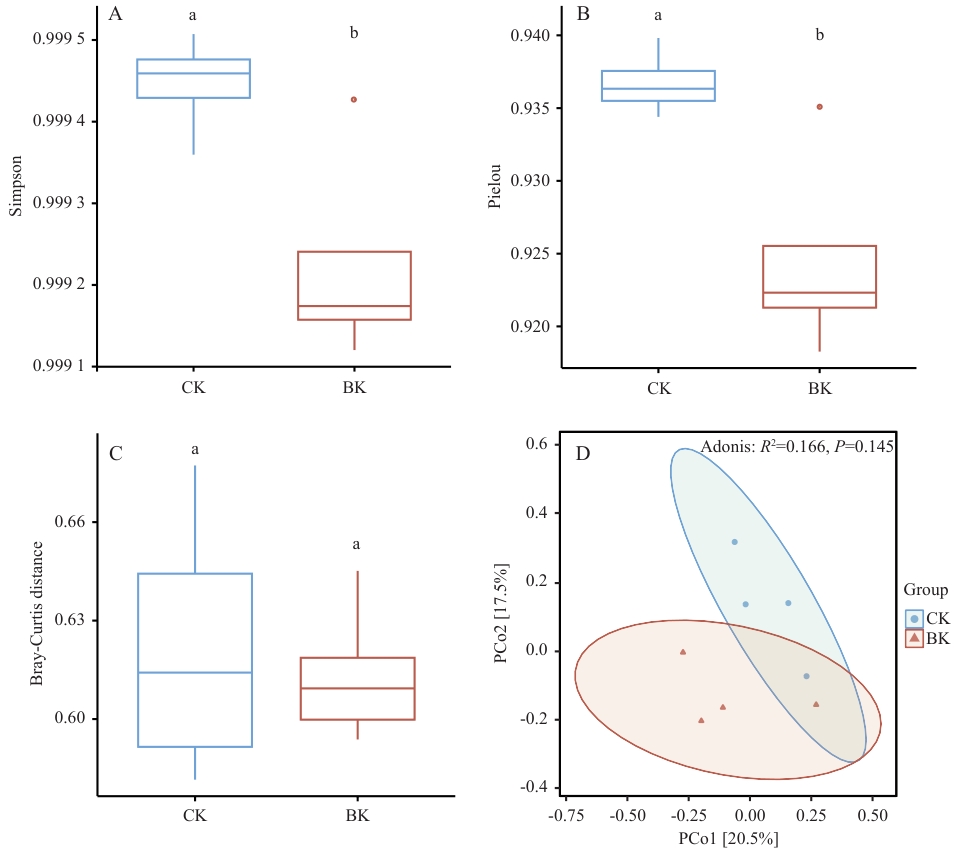
Fig. 1 Diversity indices of the control group and S. rugosoannulata substrate treatment groupA: Simpson diversity index of the rhizosphere microbial community in the control and S. rugosoannulata substrate-treated groups. B: Pielou evenness index of the rhizosphere microbial community in the control and S. rugosoannulata substrate-treated groups. C: Bray-Curtis distance of the rhizosphere microbial community in the control and S. rugosoannulata substrate-treated groups. D: Principal coordinate analysis (PCoA) plot of the rhizosphere microbial community in the control and S. rugosoannulata substrate-treated groups. Different lowercase letters (a, b) indicate significant differences between treatments (P<0.05); the same letter indicates no significant difference. The same below
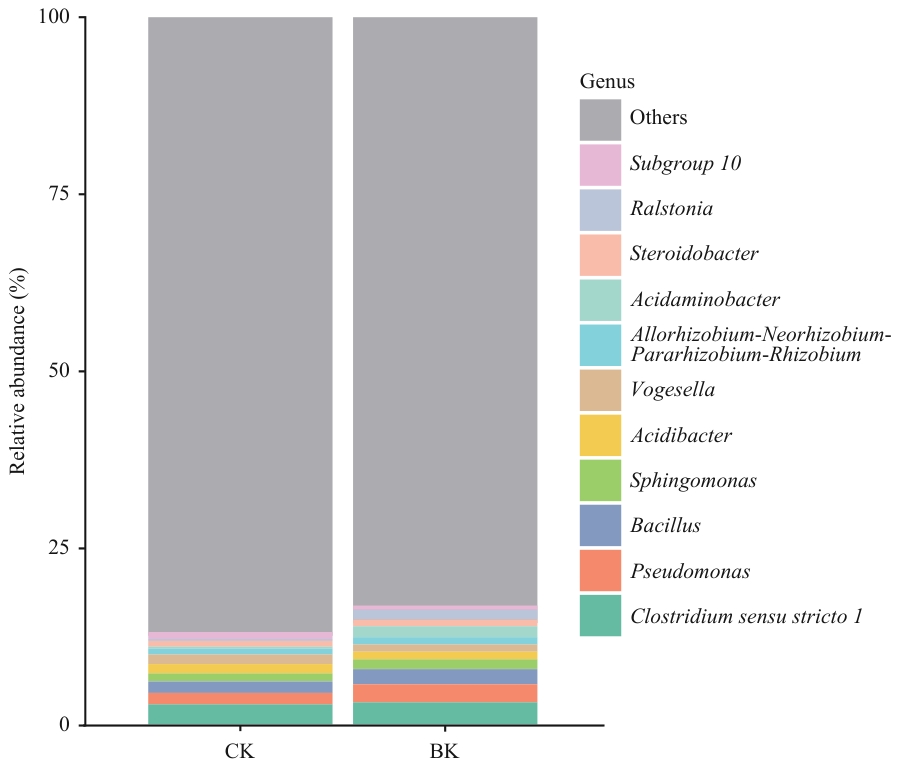
Fig. 2 Stacked bar plot of relative abundance at the genus level of rhizosphere soil microbial communities in control group and S. rugosoannulata substrate treatment group
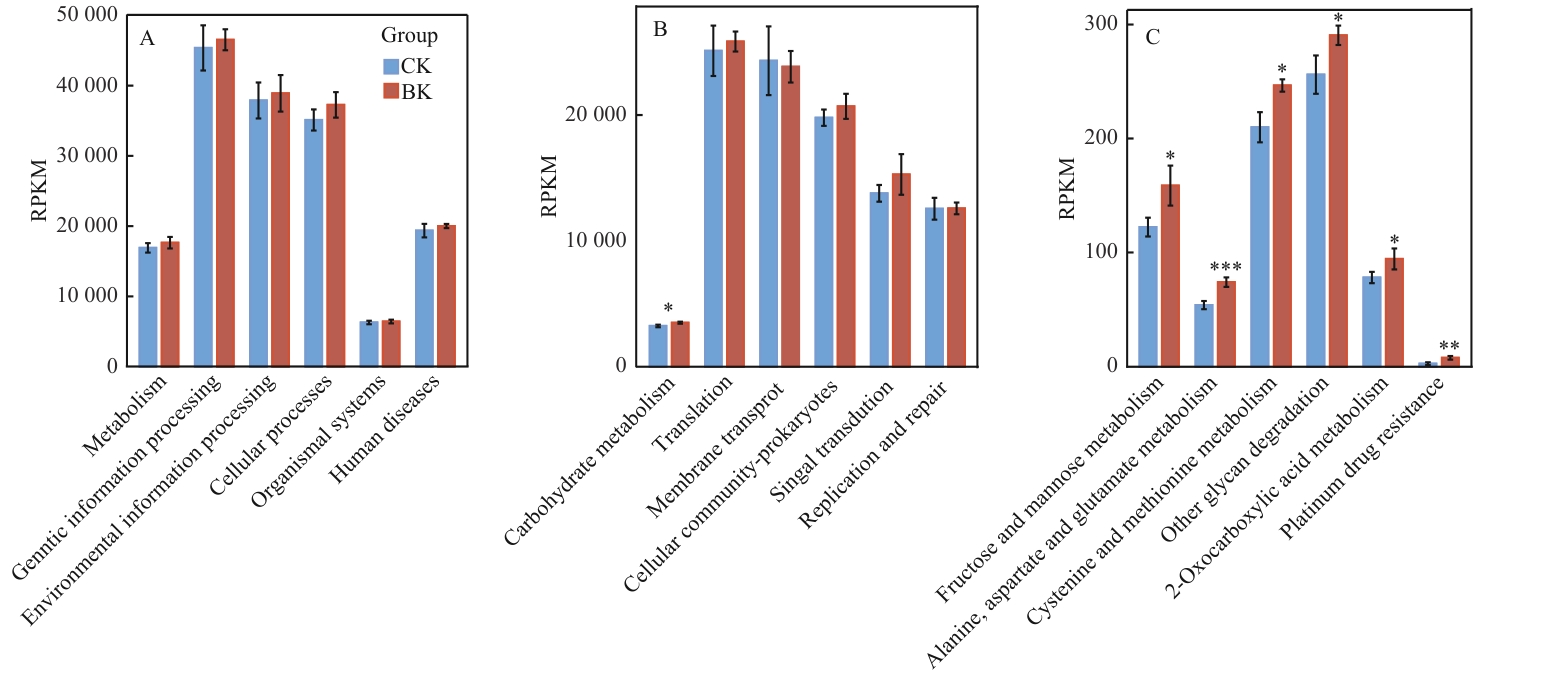
Fig. 3 KEGG pathway abundance summary and pathway differential analysis between the control group and S. rugosoannulata substrate treatment groupA: KEGG Level 1 pathway RPKM summary of control group and S. rugosoannulata substrate treatment group. B: KEGG Level 2 pathway RPKM summary and differences of control group and S. rugosoannulata substrate treatment group. C: KEGG Level 3 pathway RPKM summary and differences of control group and S. rugosoannulata substrate treatment group
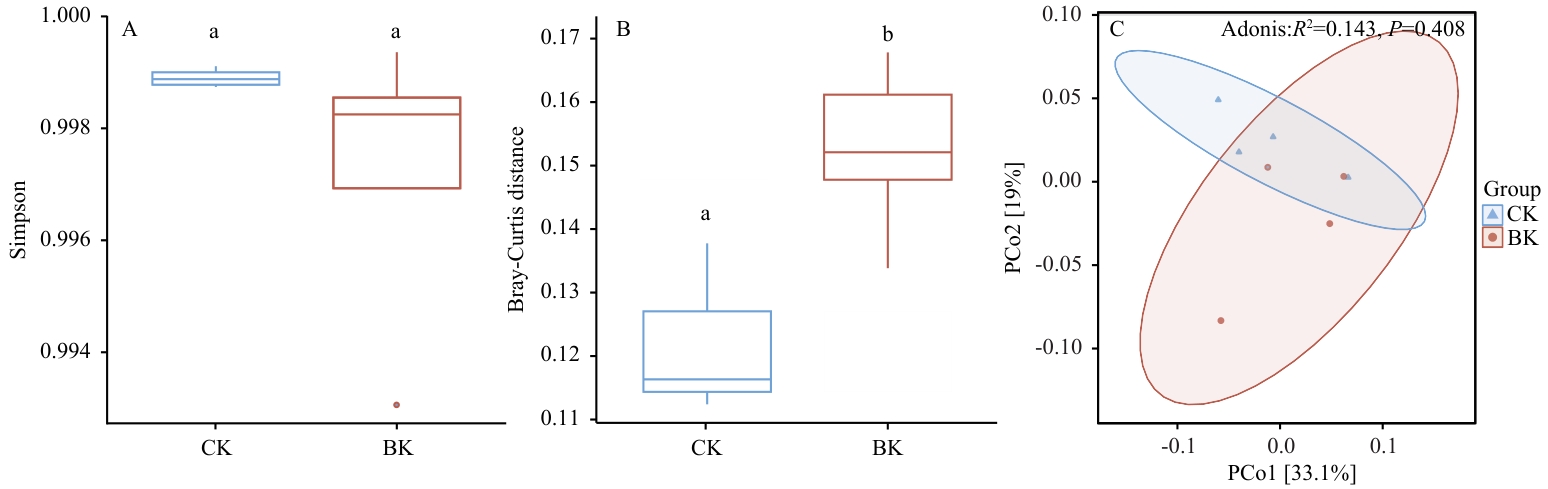
Fig. 4 Community functional diversity of control group and S. rugosoannulata substrate treatment groupA: Community functional Simpson diversity index of the control group and S. rugosoannulata substrate treatment group. B: Community functional Bray-Curtis distance of the control group and S. rugosoannulata substrate treatment group. C: Community functional principal coordinate analysis (PCoA) plot of the control group and S. rugosoannulata substrate treatment group
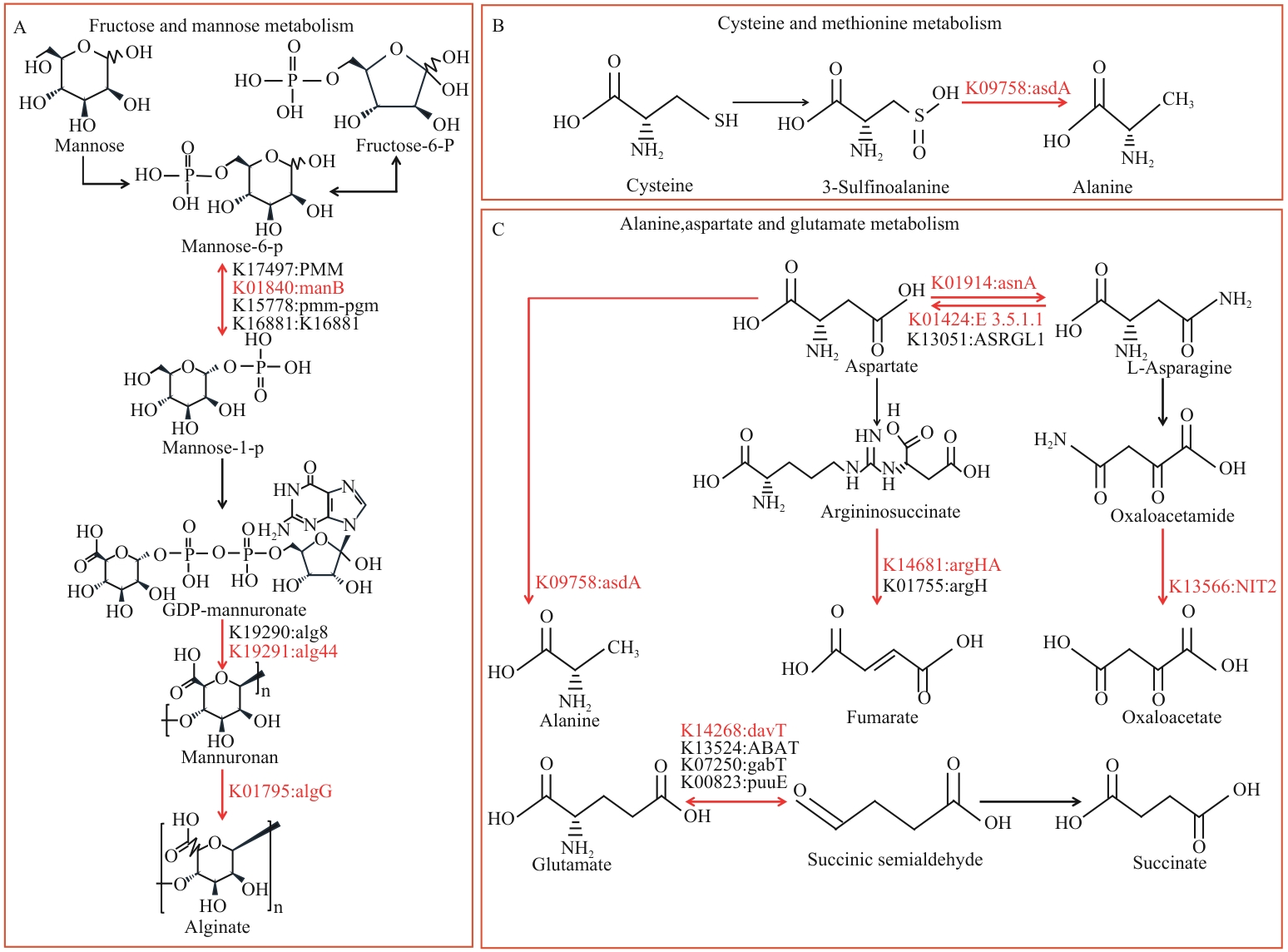
Fig. 5 Fructose and mannose metabolism pathway (A), cysteine and methionine metabolism pathway (B), and alanine, aspartate and glutamate metabolism pathway (C)
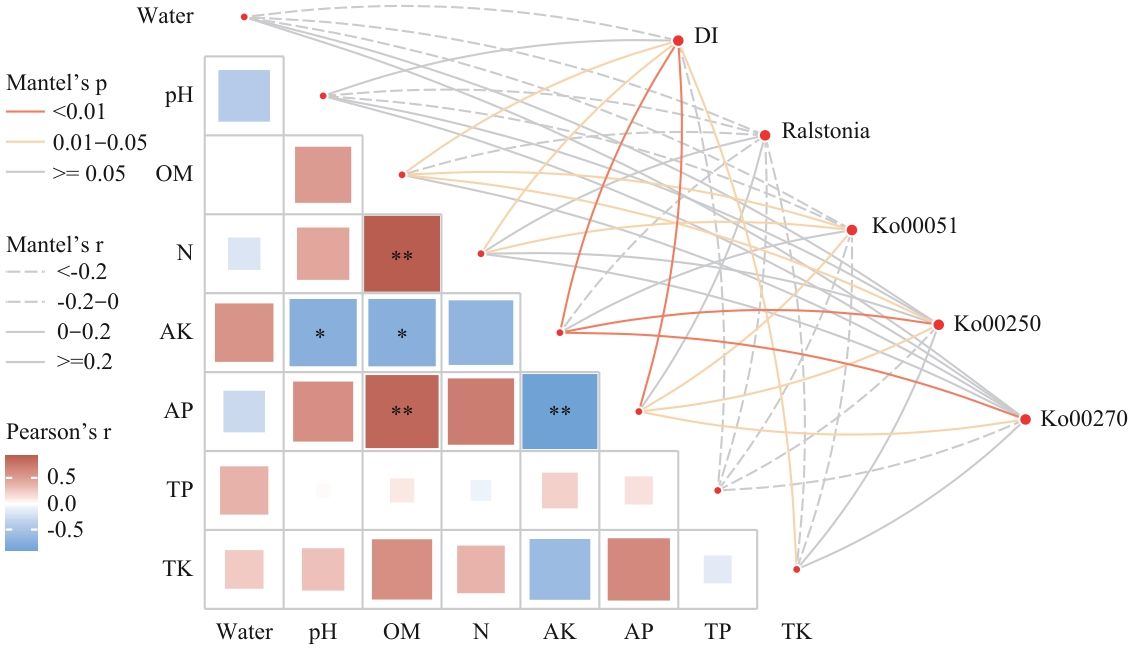
Fig. 6 Mantel test and Pearson correlation heatmapDI: Disease index; Ralstonia: Ralstonia solanacearum; Ko00051: fructose and mannose metabolism pathway; Ko00250: cysteine and methionine metabolism pathway; Ko00270: alanine, aspartate, and glutamate metabolism pathway
| [1] | Yang BY, Feng CC, Jiang H, et al. Effects of long-term continuous cropping on microbial community structure and function in tobacco rhizosphere soil [J]. Front Microbiol, 2025, 16: 1496385. |
| [2] | Chen YD, Yang L, Zhang LM, et al. Autotoxins in continuous tobacco cropping soils and their management [J]. Front Plant Sci, 2023, 14: 1106033. |
| [3] | Gu KY, Liu XL, Liu M, et al. Tobacco intercropping enhances soil fertility by improving synergic interactions between soil physicochemical and microbial properties [J]. Front Microbiol, 2025, 16: 1647493. |
| [4] | Xia H, Jiang CQ, Riaz M, et al. Impacts of continuous cropping on soil fertility, microbial communities, and crop growth under different tobacco varieties in a field study [J]. Environ Sci Eur, 2025, 37(1): 5. |
| [5] | Gong B, He Y, Luo ZB, et al. Response of rhizosphere soil physicochemical properties and microbial community structure to continuous cultivation of tobacco [J]. Ann Microbiol, 2024, 74(1): 4. |
| [6] | Li GT, Gong PF, Zhou J, et al. The succession of rhizosphere microbial community in the continuous cropping soil of tobacco [J]. Front Environ Sci, 2024, 11: 1251938. |
| [7] | Ding MJ, Dai HX, He Y, et al. Continuous cropping system altered soil microbial communities and nutrient cycles [J]. Front Microbiol, 2024, 15: 1374550. |
| [8] | Zhang ZH, Huang WX, Jia W, et al. Combined use of green fertilizer and soil conditioner improves soil physicochemical properties, microbial community structure and tobacco quality in continuous cropping [J]. Ann Microbiol, 2025, 75(1): 14. |
| [9] | Feng JN, Chen LL, Xia TY, et al. Microbial fertilizer regulates C: N: P stoichiometry and alleviates phosphorus limitation in flue-cured tobacco planting soil [J]. Sci Rep, 2023, 13: 10276. |
| [10] | Jiang GF, Wei Z, Xu J, et al. Bacterial wilt in China: history, current status, and future perspectives [J]. Front Plant Sci, 2017, 8: 1549. |
| [11] | Li YY, Feng J, Liu HL, et al. Genetic diversity and pathogenicity of Ralstonia solanacearum causing tobacco bacterial wilt in China [J]. Plant Dis, 2016, 100(7): 1288-1296. |
| [12] | Wang ZJ, Luo WB, Cheng SJ, et al. Ralstonia solanacearum-A soil borne hidden enemy of plants: Research development in management strategies, their action mechanism and challenges [J]. Front Plant Sci, 2023, 14: 1141902. |
| [13] | Wang ZB, Zhang YZ, Bo GD, et al. Ralstonia solanacearum infection disturbed the microbiome structure throughout the whole tobacco crop niche as well as the nitrogen metabolism in soil [J]. Front Bioeng Biotechnol, 2022, 10: 903555. |
| [14] | Yao T, Wang CY, Ren Q, et al. Bacterial wilt alters the microbial community characteristics of tobacco root and rhizosphere soil [J]. Rhizosphere, 2024, 32: 100995. |
| [15] | 苏文英, 纪伟, 刘晓梅, 等. 连云港地区秸秆-大球盖菇-大豆-豆丹种养循环模式 [J]. 农业与技术, 2022, 42(22): 53-56. |
| Su WY, Ji W, Liu XM, et al. Cyclic model of straw-Stropharia rugoso-soybean-Doudan in Lianyungang area [J]. Agric & Technol, 2022, 42(22): 53-56. | |
| [16] | 杨晓波, 郑光耀, 徐丽红, 等. 不同栽培料栽培大球盖菇比较试验 [J]. 食用菌, 2021, 43(2): 32-33, 9. |
| Yang XB, Zheng GY, Xu LH, et al. Comparative test on cultivating Stropharia rugosoannulata with different cultivation materials [J]. Edible Fungi, 2021, 43(2): 32-33, 9. | |
| [17] | He Y, Gong B, Liang TB, et al. Effects of reductive soil disinfestation on microbiological and physicochemical properties of continuous cropping soils in karst areas of Guizhou Province [J]. Ann Microbiol, 2025, 75(1): 6. |
| [18] | Shi HQ, Xu PW, Wu SX, et al. Analysis of rhizosphere bacterial communities of tobacco resistant and non-resistant to bacterial wilt in different regions [J]. Sci Rep, 2022, 12: 18309. |
| [19] | Wang XJ, Li ZH, Jin HG, et al. Effects of mushroom-tobacco rotation on microbial community structure in continuous cropping tobacco soil [J]. J Appl Microbiol, 2023: lxad088. |
| [20] | 国家质量监督检验检疫总局 中国国家标准化管理委员会. 烟草病虫害分级及调查方法: [S]. 北京: 中国标准出版社, 2009. |
| Standardization Administration of the People's Republic of China. Grade and investigation method of tobacco diseases and insect pests: [S]. Beijing: Standards Press of China, 2009. | |
| [21] | Chen SF, Zhou YQ, Chen YR, et al. Fastp: an ultra-fast all-in-one FASTQ preprocessor [J]. Bioinformatics, 2018, 34(17): i884-i890. |
| [22] | Li DH, Liu CM, Luo RB, et al. MEGAHIT: an ultra-fast single-node solution for large and complex metagenomics assembly via succinct de Bruijn graph [J]. Bioinformatics, 2015, 31(10): 1674-1676. |
| [23] | Seemann T. Prokka: rapid prokaryotic genome annotation [J]. Bioinformatics, 2014, 30(14): 2068-2069. |
| [24] | Steinegger M, Söding J. MMseqs2 enables sensitive protein sequence searching for the analysis of massive data sets [J]. Nat Biotechnol, 2017, 35(11): 1026-1028. |
| [25] | Aroney STN, Newell RJP, Nissen JN, et al. CoverM: read alignment statistics for metagenomics [J]. Bioinformatics, 2025, 41(4): btaf147. |
| [26] | Cao YF, Shen ZZ, Zhang N, et al. Phosphorus availability influences disease-suppressive soil microbiome through plant-microbe interactions [J]. Microbiome, 2024, 12(1): 185. |
| [27] | Wu K, Yuan SF, Wang LL, et al. Effects of bio-organic fertilizer plus soil amendment on the control of tobacco bacterial wilt and composition of soil bacterial communities [J]. Biol Fertil Soils, 2014, 50(6): 961-971. |
| [28] | Wang S, Wang L, Li SC, et al. The win-win effects of an invasive plant biochar on a soil-crop system: controlling a bacterial soilborne disease and stabilizing the soil microbial community network [J]. Microorganisms, 2024, 12(3): 447. |
| [29] | Yang BY, Zhang CQ, Guan CW, et al. Analysis of the composition and function of rhizosphere microbial communities in plants with tobacco bacterial wilt disease and healthy plants [J]. Microbiol Spectr, 2024, 12(12): e0055924. |
| [30] | Suresh P, Shanmugaiah V, Rajagopal R, et al. Pseudomonas fluorescens VSMKU3054 mediated induced systemic resistance in tomato against Ralstonia solanacearum [J]. Physiol Mol Plant Pathol, 2022, 119: 101836. |
| [31] | Jiao WL, Wen J, Li N, et al. The biocontrol potentials of rhizospheric bacterium Bacillus velezensis K0T24 against mulberry bacterial wilt disease [J]. Arch Microbiol, 2024, 206(5): 213. |
| [32] | Wang NQ, Ping L, Mei XL, et al. Succinic acid reduces tomato bacterial wilt disease by recruiting Sphingomonas sp. [J]. Environ Microbiome, 2025, 20(1): 85. |
| [33] | Posas MB, Toyota K, Islam TM. Inhibition of bacterial wilt of tomato caused by Ralstonia solanacearum by sugars and amino acids [J]. Microb Environ, 2007, 22(3): 290-296. |
| [34] | Chen Z, Lin EQ, Lin X, et al. Metabolomic profiling of tomato root exudates induced by Ralstonia solanacearum strains of different pathogenicity: screening for metabolites conferring bacterial wilt resistance [J]. J Microbiol Biotechnol, 2025, 35: e2501033. |
| [35] | Wen T, Xie PH, Liu HW, et al. Tapping the rhizosphere metabolites for the prebiotic control of soil-borne bacterial wilt disease [J]. Nat Commun, 2023, 14: 4497. |
| [36] | Asimakis E, Shehata AA, Eisenreich W, et al. Algae and their metabolites as potential bio-pesticides [J]. Microorganisms, 2022, 10(2): 307. |
| [37] | Yang L, Wei ZL, Valls M, et al. Metabolic profiling of resistant and susceptible tobaccos response incited by Ralstonia pseudosolanacearum causing bacterial wilt [J]. Front Plant Sci, 2022, 12: 780429. |
| [38] | Murti RH, Afifah EN, Nuringtyas TR. Metabolomic response of tomatoes (Solanum lycopersicum L.) against Bacterial Wilt (Ralstonia solanacearum) using 1H-NMR spectroscopy [J]. Plants, 2021, 10(6): 1143. |
| [39] | Yang XH, Huang J, Yang HX, et al. Transcriptome and metabolome profiling in different stages of infestation of Eucalyptus urophylla clones by Ralstonia solanacearum [J]. Mol Genet Genom, 2022, 297(4): 1081-1100. |
| [40] | Niu LL, Hu W, Wang FZ, et al. Integrated transcriptomic and metabolomic analyses elucidate the mechanism by which grafting impacts potassium utilization efficiency in tobacco [J]. BMC Plant Biol, 2025, 25(1): 94. |
| [1] | YANG Tao, ZENG Fan-cheng, ZENG Yu-xiao, TAO Rui-yan, XUE Zhi-hong, TAO Qian, ZHONG Yang, JIANG Fan, XIONG Xing-yao, CHENG Xu. Construction of Efficient Microbial Consortia and Their Effects on Potato Growth [J]. Biotechnology Bulletin, 2026, 42(5): 89-100. |
| [2] | ZHANG Jian-xia, JIANG Cheng-ying, WU Wen-jun, JIN Gao-ming, ZHANG Cong-cong, YAO Yu-fang, ZHANG Rong, QI Jian-li. Physicochemical Properties and Bacterial Community Characteristics of Rhizosphere Soil in Olive Orchards under Different Soil Conditions [J]. Biotechnology Bulletin, 2026, 42(4): 287-296. |
| [3] | LIU Miao, LIN Tao, JIA Le-song, HU Feng, LI Tao, LI Zhi-wan, LIU Mei-fang, ZHENG Fang-yan, CUI Long. From Wild to Cultivated: Evolution and Regulatory Mechanisms of Tomato Fruit Color [J]. Biotechnology Bulletin, 2026, 42(3): 187-202. |
| [4] | JIANG Zhe-hui, WANG Xiao-long, WANG Shou-chuang, ZHOU Ke. Advances in the Elucidation of Metabolic Pathways and Molecular Breeding for Tomato Flavor [J]. Biotechnology Bulletin, 2026, 42(3): 60-78. |
| [5] | WANG Ya-nan, WEI Li-min, WANG Feng, CHAO Zhe, REN Yu-wei, LIU Hai-long, HUANG Li-li, SUN Rui-ping. A Comparative Study of Metabolomics-based Screening of Differential Metabolites for Fat Deposition in Wuzhishan and DLY Pigs [J]. Biotechnology Bulletin, 2026, 42(2): 325-337. |
| [6] | ZHANG Jin-hao, DENG Hui, ZHANG Qing-zhuang, TAO Yu, ZHOU Chi, LI Xin. Modulation of the Growth, Quality, and Cadmium Content of Lily Bulbs by Bacillus velezensis XY40-1 [J]. Biotechnology Bulletin, 2025, 41(7): 281-291. |
| [7] | CHEN Cai-ding, SONG Yun-jie, TIAN Meng-qing. Advance on the Changes of Rhizosphere Microbial Communities in the Growth Stages of the Four Major Staple Crops [J]. Biotechnology Bulletin, 2025, 41(6): 49-60. |
| [8] | LIU Yuan, ZHAO Ran, LU Zhen-fang, LI Rui-li. Research Progress in the Biological Metabolic Pathway and Functions of Plant Carotenoids [J]. Biotechnology Bulletin, 2025, 41(5): 23-31. |
| [9] | YE Liu-jian, MENG Jian-zong, QIN Fu-fang, HE Shuang, ZHU Qi-xia, WANG Xiao-hu, WEI Sheng-bo, ZHOU Li-qin. Identification, Enzymatic Characteristics, and Genomic Analysis of Strain D2 from Ancient Tea Forest [J]. Biotechnology Bulletin, 2025, 41(5): 267-279. |
| [10] | TANG You, ZHAO Jun-wei, SUN Lan-xi, LI Xiang. Combined Application of Multi-omics Technologies in Plant Metabolic Pathway Resolution [J]. Biotechnology Bulletin, 2025, 41(4): 76-87. |
| [11] | LI Xu-juan, LI Chun-jia, LIU Hong-bo, XU Chao-hua, LIN Xiu-qin, LU Xin, LIU Xin-long. Transcriptome Analysis of Axillary Bud Formation and Development in Sugarcane [J]. Biotechnology Bulletin, 2025, 41(3): 202-218. |
| [12] | SI Xu-peng, CUI Xiu-wen, OUYANG Li-zhi, FANG Dan-dan, PEI Long-ying, FANG Gui-ping, PU Xi-lei, MA Yi-mian, ZHANG Zheng. Transcriptome Analysis of Different Parts of Ferula Sinkiangensis K. M. Shen and Exploration of Genes Related to Sesquiterpene Synthesis [J]. Biotechnology Bulletin, 2025, 41(12): 280-293. |
| [13] | FENG Xiao-hu, ZHANG Wen-mei, XU Jing, XIONG Shu-bin, WANG Li-bing, SONG Wen-jing. Screening and Biocontrol Efficiency of Phage Cocktail Targeted on a Group of Tobacco Bacterial Wilt [J]. Biotechnology Bulletin, 2025, 41(11): 311-318. |
| [14] | ZHANG Zhi-mei, ZHANG Yan-meng, XIE Dong-ming, YANG Xiu-yun, WANG Lang, ZUO Zi-han, WU Zhi-guo. Enrichment of 1, 2-dichloroethane Degrading Bacterial Consortium, and Isolation and Identification of Ancylobacter sp. BL0 of a Key Degrading Bacterial Strain [J]. Biotechnology Bulletin, 2024, 40(8): 288-298. |
| [15] | YU Li-jun, WANG Qiao-mei, PENG Wen-shu, YAN Liang, YANG Rui-juan. Study on the Microbial Community of Rhizosphere Soil in Ancient Tea Garden and Modern Organic Tea Garden in Jingmai Mountain [J]. Biotechnology Bulletin, 2024, 40(5): 237-247. |
| Viewed | ||||||
|
Full text |
|
|||||
|
Abstract |
|
|||||
