







Biotechnology Bulletin ›› 2026, Vol. 42 ›› Issue (10): 177-187.doi: 10.13560/j.cnki.biotech.bull.1985.2025-1341
NIU Jie, WANG Hong-xia, REN Yi-hua, YI Peng-han, ZHOU Jia, MENG Peng-rui, DENG Qun-xian( ), ZHANG Hui-fen()
Received:2025-12-10
Online:2026-10-26
Published:2026-10-15
Contact:
DENG Qun-xian, ZHANG Hui-fen
E-mail:dengqx@sicau.edu.cn;hfcheung@sicau.edu.cn
NIU Jie, WANG Hong-xia, REN Yi-hua, YI Peng-han, ZHOU Jia, MENG Peng-rui, DENG Qun-xian, ZHANG Hui-fen. Comparison of the Efficiency of Different Transformation Methods for Mediating EjHSFB-2a Overexpression in Loquat Fruit under High-temperature Stress[J]. Biotechnology Bulletin, 2026, 42(10): 177-187.
| 测定指标Measured parameters | 隶属函数值 Membership function value | |||||||
|---|---|---|---|---|---|---|---|---|
| 果皮 Peel | 果肉 Flesh | |||||||
果柄注射法 Fruit stalk injection | 果面注射法 Fruit surface injection | 真空渗透法 Vacuum infiltration | 果柄注射法 Fruit stalk injection | 果面注射法 Fruit surface injection | 真空渗透法 Vacuum infiltration | |||
| 转化成功率 Transformation success rate | 0 | 1.000 0 | 0 | 0 | 1.000 0 | 1.000 0 | ||
| 基因表达水平 Gene expression level | 0 | 1.000 0 | 0.065 4 | 0 | 0.785 7 | 1.000 0 | ||
| 热害发生率 Heat injury incidence | 0.666 7 | 0 | 1 | 0.666 7 | 0 | 1.000 0 | ||
| 热害指数 Heat injury index | 0.166 7 | 0 | 1 | 0.166 7 | 0 | 1.000 0 | ||
| MDA | -3.664 2 | 1.000 0 | 0.214 3 | 0 | 0.578 7 | 1.000 0 | ||
| H2O2 | 0 | 1.000 0 | 0.097 9 | 1.000 0 | 0.792 1 | 0 | ||
| O2- | 0.324 2 | 1.000 0 | 0 | 0.899 6 | 1.000 0 | 0 | ||
| SOD | 0.002 8 | 1.000 0 | 0 | 0.859 1 | 1.000 0 | 0 | ||
| POD | 0 | 1.000 0 | 0.059 6 | 0 | 0.577 7 | 1.000 0 | ||
| CAT | 0.386 3 | 1.000 0 | 0 | 0 | 1.000 0 | 0.507 3 | ||
| 平均值 Average | -0.211 7 | 0.800 0 | 0.243 7 | 0.359 2 | 0.674 3 | 0.650 7 | ||
Table 1 Average membership function values of physiological indicators for the three transformation methods
| 测定指标Measured parameters | 隶属函数值 Membership function value | |||||||
|---|---|---|---|---|---|---|---|---|
| 果皮 Peel | 果肉 Flesh | |||||||
果柄注射法 Fruit stalk injection | 果面注射法 Fruit surface injection | 真空渗透法 Vacuum infiltration | 果柄注射法 Fruit stalk injection | 果面注射法 Fruit surface injection | 真空渗透法 Vacuum infiltration | |||
| 转化成功率 Transformation success rate | 0 | 1.000 0 | 0 | 0 | 1.000 0 | 1.000 0 | ||
| 基因表达水平 Gene expression level | 0 | 1.000 0 | 0.065 4 | 0 | 0.785 7 | 1.000 0 | ||
| 热害发生率 Heat injury incidence | 0.666 7 | 0 | 1 | 0.666 7 | 0 | 1.000 0 | ||
| 热害指数 Heat injury index | 0.166 7 | 0 | 1 | 0.166 7 | 0 | 1.000 0 | ||
| MDA | -3.664 2 | 1.000 0 | 0.214 3 | 0 | 0.578 7 | 1.000 0 | ||
| H2O2 | 0 | 1.000 0 | 0.097 9 | 1.000 0 | 0.792 1 | 0 | ||
| O2- | 0.324 2 | 1.000 0 | 0 | 0.899 6 | 1.000 0 | 0 | ||
| SOD | 0.002 8 | 1.000 0 | 0 | 0.859 1 | 1.000 0 | 0 | ||
| POD | 0 | 1.000 0 | 0.059 6 | 0 | 0.577 7 | 1.000 0 | ||
| CAT | 0.386 3 | 1.000 0 | 0 | 0 | 1.000 0 | 0.507 3 | ||
| 平均值 Average | -0.211 7 | 0.800 0 | 0.243 7 | 0.359 2 | 0.674 3 | 0.650 7 | ||
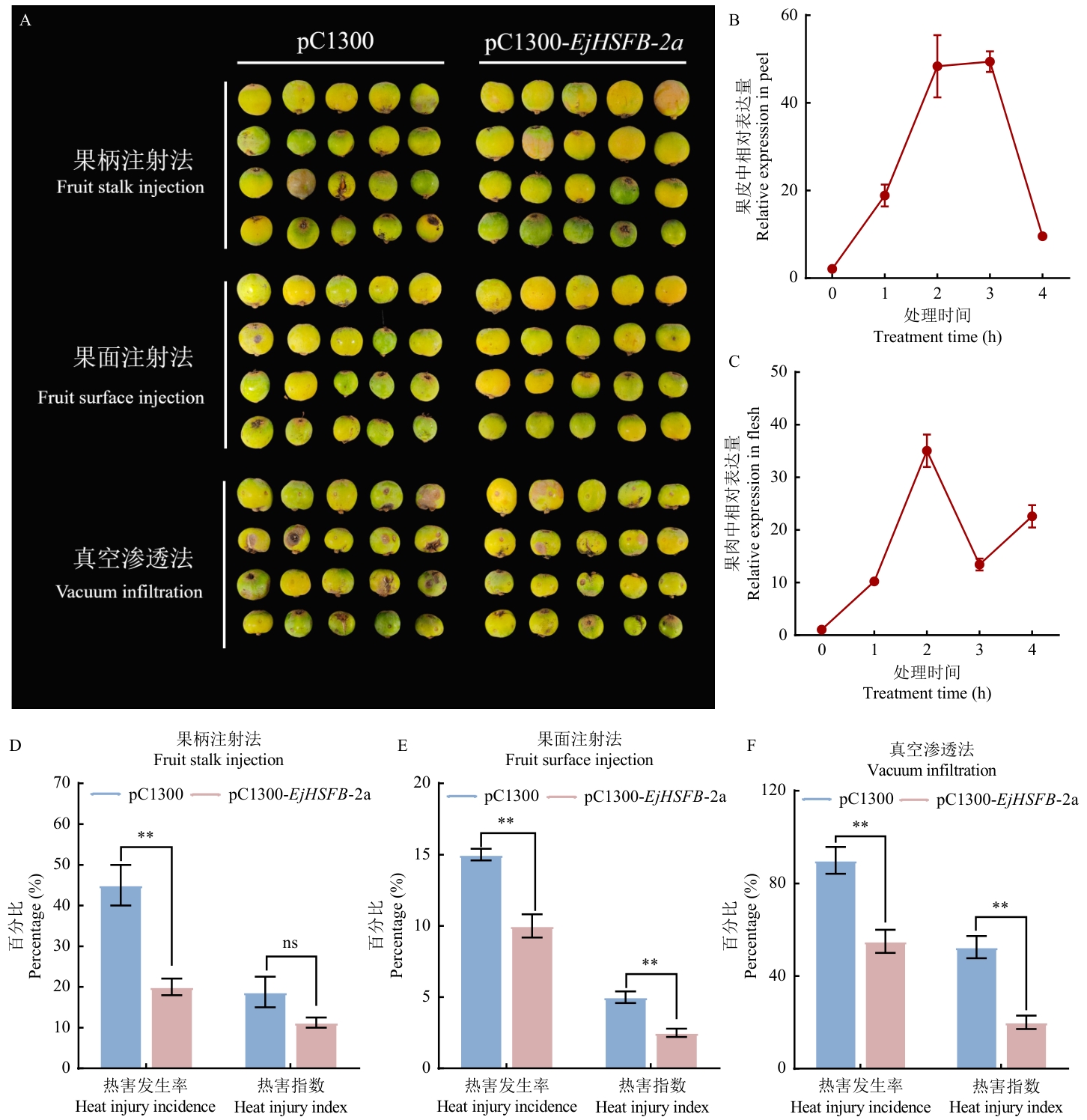
Fig. 1 Effects of different transformation methods on the phenotype of loquat fruits under high temperature stressA: Phenotypic changes after overexpression of EjHSFB-2a via different transformation methods. B: Relative expression level of EjHSFB-2a in peel after 4 h of high-temperature stress at 45 ℃. C: Relative expression level of EjHSFB-2a in flesh after 4 h of high-temperature stress at 45 ℃. D-F: Heat injury incidence and index after overexpression of EjHSFB-2a via fruit stalk injection (D), fruit surface injection (E), and vacuum infiltration (F). * P < 0.05, ** P < 0.01. The same below
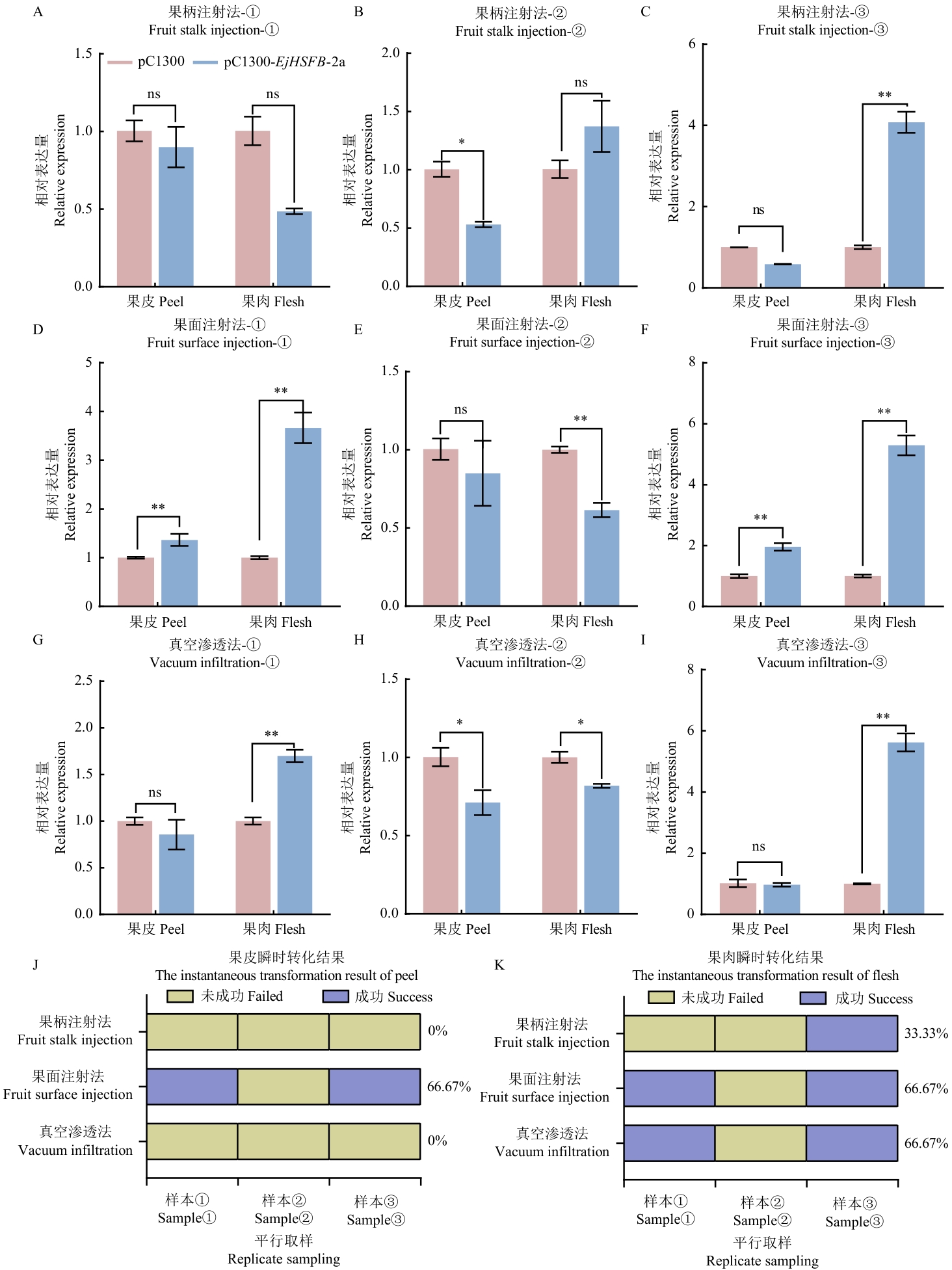
Fig. 2 Relative expression of EjHSFB-2a in loquat fruit after different transformation methodsA-C: RT-qPCR results of three replicate samples after overexpression of EjHSFB-2a via fruit stalk injection. D‒F: RT-qPCR results of three replicate samples after overexpression of EjHSFB-2a via fruit surface injection. G‒I: RT-qPCR results of three replicate samples after overexpression of EjHSFB-2a via vacuum infiltration. J‒K: Transformation success rates in peel (J) and flesh (K) for different transformation methods
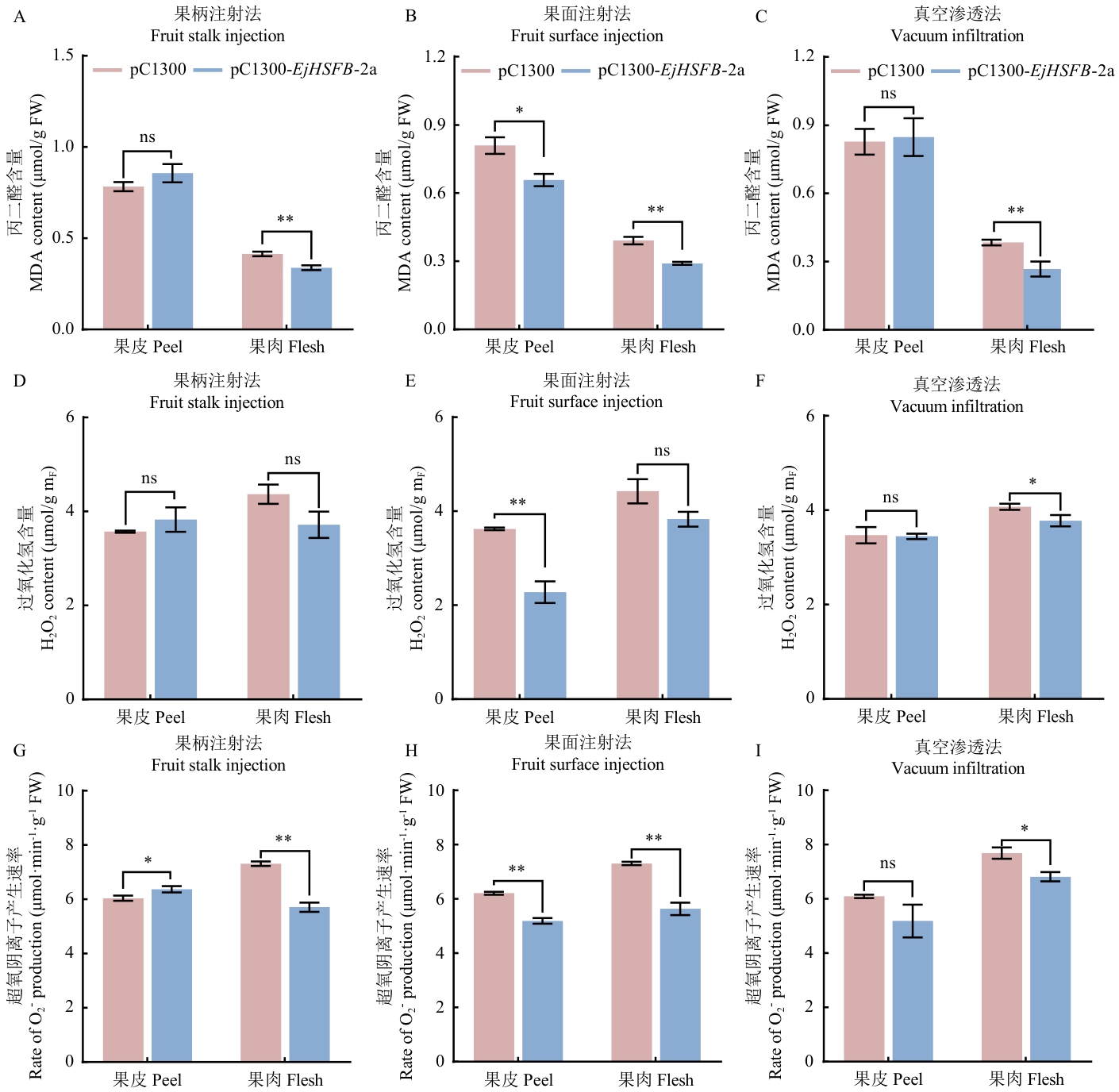
Fig. 3 Effects of different transformation methods on cell membrane damage of loquat fruit under high temperature stress
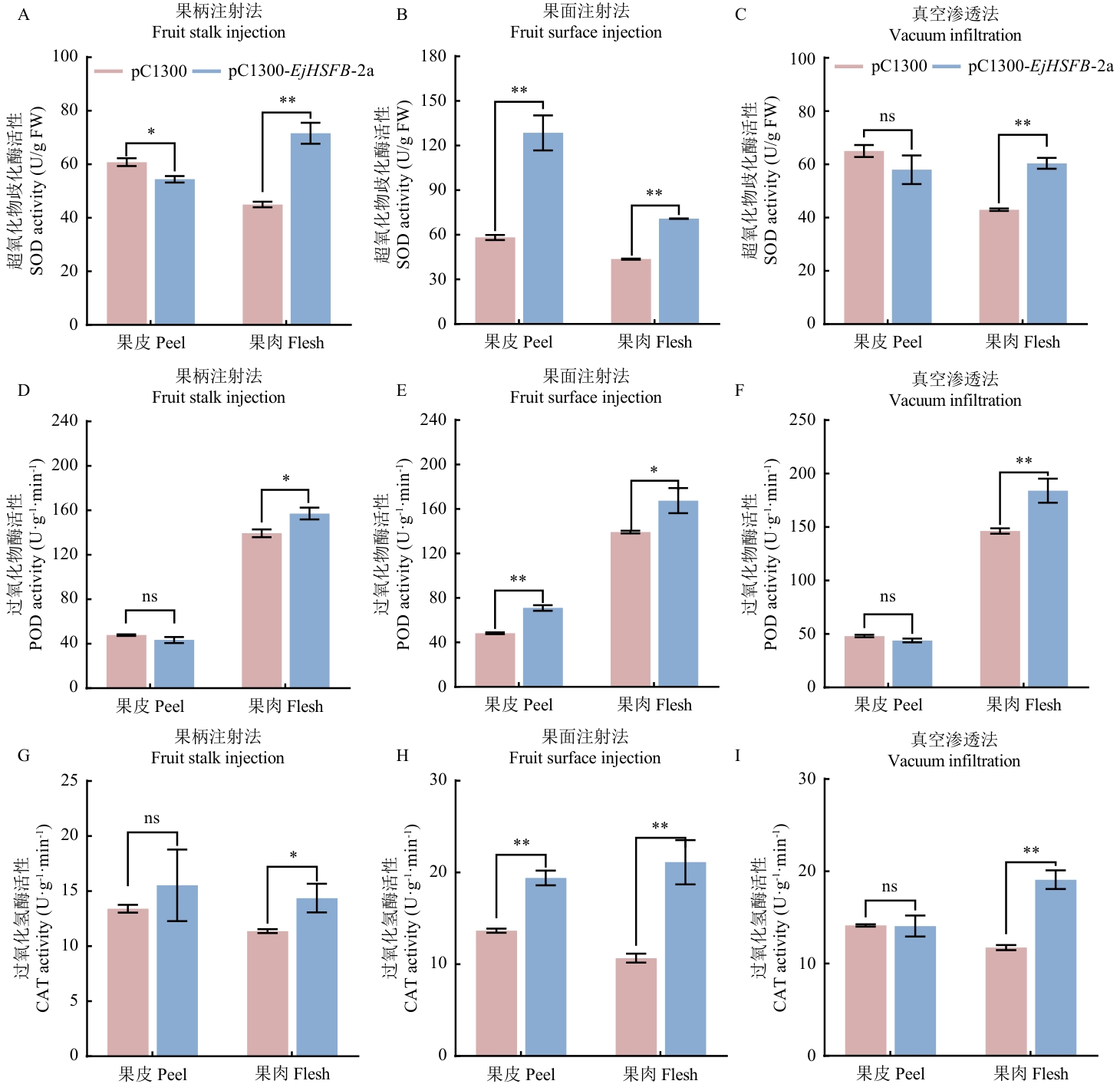
Fig. 4 Effects of different transformation methods on antioxidant enzyme activities in loquat fruit under high temperature stress
| 部位 Tissue | 方法 Methods | 综合隶属函数值 Comprehensive membership function value | 排名 Ranking |
|---|---|---|---|
| 果皮 Peel | 果柄注射法 Fruit stalk injection | -0.211 7 | 3 |
| 果面注射法 Fruit surface injection | 0.800 0 | 1 | |
| 真空渗透法 Vacuum infiltration | 0.243 7 | 2 | |
| 果肉 Flesh | 果柄注射法 Fruit stalk injection | 0.359 2 | 3 |
| 果面注射法 Fruit surface injection | 0.673 4 | 1 | |
| 真空渗透法 Vacuum infiltration | 0.650 7 | 2 |
Table 2 Comprehensive evaluation of the three transformation methods
| 部位 Tissue | 方法 Methods | 综合隶属函数值 Comprehensive membership function value | 排名 Ranking |
|---|---|---|---|
| 果皮 Peel | 果柄注射法 Fruit stalk injection | -0.211 7 | 3 |
| 果面注射法 Fruit surface injection | 0.800 0 | 1 | |
| 真空渗透法 Vacuum infiltration | 0.243 7 | 2 | |
| 果肉 Flesh | 果柄注射法 Fruit stalk injection | 0.359 2 | 3 |
| 果面注射法 Fruit surface injection | 0.673 4 | 1 | |
| 真空渗透法 Vacuum infiltration | 0.650 7 | 2 |
| [1] | 林顺权. 枇杷属野生种种质资源的研究与创新利用进展 [J]. 园艺学报, 2017, 44(9): 1704-1716. |
| Lin SQ. A review on research of the wild species in genus Eriobotrya germplasm and their innovative utilization [J]. Acta Hortic Sin, 2017, 44(9): 1704-1716. | |
| [2] | 刘羿飞, 陈奇凌, 吴翠云. 外源亚精胺对枣树抗高温胁迫的调节机制 [J]. 北方园艺, 2024(4): 14-20. |
| Liu YF, Chen QL, Wu CY. Regulation mechanism of exogenous spermidine on resistance of jujube tree to high temperature stress [J]. North Hortic, 2024(4): 14-20. | |
| [3] | 桑荣生, 吴宝玉. 枇杷果实日灼等非侵染性病害调查与分析 [J]. 农业科技通讯, 2020(2): 173-177. |
| Sang RS, Wu BY. Investigation and analysis of non-infectious diseases such as sunburn in loquat fruits [J]. Bull Agric Sci Technol, 2020(2): 173-177. | |
| [4] | Huang FY, Lei Y, Duan JH, et al. Investigation of heat stress responses and adaptation mechanisms by integrative metabolome and transcriptome analysis in tea plants (Camellia sinensis) [J]. Sci Rep, 2024, 14: 10023. |
| [5] | 邓朝军, 许奇志, 蒋际谋, 等. 高温胁迫对枇杷果皮热伤害的抗氧化特性影响 [J]. 热带亚热带植物学报, 2012, 20(5): 439-444. |
| Deng CJ, Xu QZ, Jiang JM, et al. Changes in antioxidant properties induced by heat injury in loquat peel under high temperature stress [J]. J Trop Subtrop Bot, 2012, 20(5): 439-444. | |
| [6] | 高雨薇, 邓朝军, 许奇志, 等. 外源褪黑素对新白8号枇杷果实日灼和果皮解剖结构的影响 [J]. 果树学报, 2024, 41(7): 1387-1400. |
| Gao YW, Deng CJ, Xu QZ, et al. Effects of exogenous melatonin on the sunburn and peel anatomical structure of Xinbai 8 loquat fruit [J]. J Fruit Sci, 2024, 41(7): 1387-1400. | |
| [7] | 潘德灼, 邓朝军, 吕晓杰, 等. 日灼胁迫对枇杷果皮蛋白质组的影响 [J]. 西北植物学报, 2016, 36(9): 1801-1812. |
| Pan DZ, Deng CJ, Lü XJ, et al. Effect of sunburn stress on pericarp proteomics in loquat fruits [J]. Acta Bot Boreali Occidentalia Sin, 2016, 36(9): 1801-1812. | |
| [8] | 刘洪涛, 黄卫东, 郝燕燕. 果实对高温逆境的响应及其信号转导机理 [J]. 中国食品学报, 2004, 4(2): 95-99. |
| Liu HT, Huang WD, Hao YY. Response of fruit to high temperature stress and its signal transduction mechanism [J]. J Chin Inst Food Sci Technol, 2004, 4(2): 95-99. | |
| [9] | 刘佳, 张国薇. 四川地区果树间套作大豆高温干旱灾害分析及应对措施 [J]. 四川农业科技, 2022(10): 21-23. |
| Liu J, Zhang GW. Analysis and countermeasures of high temperature and drought disaster of intercropping soybean among fruit trees in Sichuan area [J]. Sichuan Agric Sci Technol, 2022(10): 21-23. | |
| [10] | Guo M, Liu JH, Ma X, et al. The plant heat stress transcription factors (HSFs): structure, regulation, and function in response to abiotic stresses [J]. Front Plant Sci, 2016, 7: 114. |
| [11] | Chen YP, Deng CJ, Xu QZ, et al. Integrated analysis of the metabolome, transcriptome and miRNome reveals crucial roles of auxin and heat shock proteins in the heat stress response of loquat fruit [J]. Sci Hortic, 2022, 294: 110764. |
| [12] | Wahid A, Gelani S, Ashraf M, et al. Heat tolerance in plants: an overview [J]. Environ Exp Bot, 2007, 61(3): 199-223. |
| [13] | Wang L, Gao YH, Zhang L, et al. Reduced proteasome degradation of HsfB2a at higher temperatures is responsible for the inhibition of anthocyanin synthesis in pear [J]. Plant Cell, 2025, 37(6): koaf102. |
| [14] | Li T, Xu SJ, Zhang YY, et al. Molecular mechanism analysis of LdHSFB2a in lily thermotolerance [J]. Stress Biol, 2025, 5: 45. |
| [15] | Chi ZH, Zhao ML, Wang LW, et al. EjNAC25, a NAC transcription factor in early-maturing seedless triploid loquat, promotes sugar and malic acid accumulation by activating EjNI and EjtDT2 [J]. Postharvest Biol Technol, 2025, 224: 113474. |
| [16] | Zhang HF, Wang YT, Du Y, et al. Sorbitol source-sink distribution and S6PDH regulation modulate freezing tolerance in young loquat (Eriobotrya japonica) fruits [J]. Plant Physiol Biochem, 2026, 231: 110945. |
| [17] | 吴艳菊, 冷彦儒, 景思荦, 等. 利用真空侵染法在紫花苜蓿中瞬时表达GUS基因 [J]. 分子植物育种, 2022, 20(3): 859-864. |
| Wu YJ, Leng YR, Jing SL, et al. Expression of GUS gene in Medicago sativa L. by vacuum infiltration [J]. Mol Plant Breed, 2022, 20(3): 859-864. | |
| [18] | Fan ZY, Wang Y, Zhai YL, et al. ERF100 regulated by ERF28 and NOR controls pectate lyase 7, modulating fig (Ficus carica L.) fruit softening [J]. Plant Biotechnol J, 2025, 23(7): 2611-2626. |
| [19] | Wang YS. A draft genome, resequencing, and metabolomes reveal the genetic background and molecular basis of the nutritional and medicinal properties of loquat (Eriobotrya japonica (Thunb.) Lindl) [J]. Hortic Res, 2021, 8: 231. |
| [20] | Banin Sogvar O, Razavi F, Rabiei V, et al. Postharvest application of L-cysteine to prevent enzymatic browning of ‘Stanley’ plum fruit during cold storage [J]. J Food Process Preserv, 2020, 44(10): e14788. |
| [21] | Wang ZT, Guo J, Luo WX, et al. Salicylic acid cooperates with lignin and sucrose signals to alleviate waxy maize leaf senescence under heat stress [J]. Plant Cell Environ, 2025, 48(6): 4341-4355. |
| [22] | Gao Y, Dong X, Wang RJ, et al. Exogenous calcium alleviates oxidative stress caused by salt stress in peanut seedling roots by regulating the antioxidant enzyme system and flavonoid biosynthesis [J]. Antioxidants, 2024, 13(2): 233. |
| [23] | Rao MV, Paliyath G, Ormrod DP. Ultraviolet-B- and ozone-induced biochemical changes in antioxidant enzymes of Arabidopsis thaliana [J]. Plant Physiol, 1996, 110(1): 125-136. |
| [24] | Siragusa S, Fontana C, Cappa F, et al. Disruption of the gene encoding glutamate dehydrogenase affects growth, amino acids catabolism and survival of Lactobacillus plantarum UC1001 [J]. Int Dairy J, 2011, 21(2): 59-68. |
| [25] | Aghdam MS, Fard JR. Melatonin treatment attenuates postharvest decay and maintains nutritional quality of strawberry fruits (Fragaria×anannasa cv. Selva) by enhancing GABA shunt activity [J]. Food Chem, 2017, 221: 1650-1657. |
| [26] | 张钰林, 刘亚敏, 刘玉民, 等. 不同品种香榧对高温的生理响应及其耐热性评价 [J]. 森林与环境学报, 2025, 45(2): 192-202. |
| Zhang YL, Liu YM, Liu YM, et al. Physiological responses and heat resistance of Torreya grandis varieties to high temperatures [J]. J For Environ, 2025, 45(2): 192-202. | |
| [27] | Gasic K, Hernandez A, Korban SS. RNA extraction from different apple tissues rich in polyphenols and polysaccharides for cDNA library construction [J]. Plant Mol Biol Rep, 2004, 22(4): 437-438. |
| [28] | 杨丽萍. 植物瞬时表达系统的研究进展 [J]. 现代农业研究, 2019, 25(5): 51-52. |
| Yang LP. Research progress of plant transient expression system [J]. Mod Agric Res, 2019, 25(5): 51-52. | |
| [29] | 李玲, 顾恒, 岳远征, 等. 木本植物瞬时转化体系的研究进展 [J]. 分子植物育种, 2020, 18(23): 7784-7794. |
| Li L, Gu H, Yue YZ, et al. Advances in transient transformation systems of woody plants [J]. Mol Plant Breed, 2020, 18(23): 7784-7794. | |
| [30] | 王碧莹, 谷金芸, 霍春红, 等. 根瘤农杆菌介导的喜树叶片瞬时转化体系的建立 [J]. 分子植物育种, 2018, 16(17): 5624-5630. |
| Wang BY, Gu JY, Huo CH, et al. Establishment of Agrobacterium tumefaciens mediated transient transformation system in Camptotheca acuminata leaves [J]. Mol Plant Breed, 2018, 16(17): 5624-5630. | |
| [31] | Chen HY, Ji HY, Huang WK, et al. Transcription factor CrWRKY42 coregulates chlorophyll degradation and carotenoid biosynthesis in citrus [J]. Plant Physiol, 2024, 195(1): 728-744. |
| [32] | Han YJ, Wu M, Cao LY, et al. Characterization of OfWRKY3, a transcription factor that positively regulates the carotenoid cleavage dioxygenase gene OfCCD4 in Osmanthus fragrans [J]. Plant Mol Biol, 2016, 91(4/5): 485-496. |
| [33] | 王树军, 王果, 李焕苓, 等. 农杆菌注射法瞬时转化荔枝果实组织的研究 [J]. 热带作物学报, 2019, 40(12): 2405-2410. |
| Wang SJ, Wang G, Li HL, et al. Transformation of tissues of litchi fruit with injection of Agrobacterium [J]. Chin J Trop Crops, 2019, 40(12): 2405-2410. | |
| [34] | Zhou LJ, Geng ZQ, Wang YX, et al. A novel transcription factor CmMYB012 inhibits flavone and anthocyanin biosynthesis in response to high temperatures in Chrysanthemum [J]. Hortic Res, 2021, 8: 248. |
| [35] | Zhang ZJ, Yang C, Xi J, et al. The MdHSC70-MdWRKY75 module mediates basal apple thermotolerance by regulating the expression of heat shock factor genes [J]. Plant Cell, 2024, 36(9): 3631-3653. |
| [36] | Li SC, Yuan L, Yu HB, et al. The HSFA2-HSFB2a-WRKY10 transcriptional cascade mediates thermotolerance across grape germplasms [J]. Plant Physiol, 2025: kiaf651. |
| [37] | Sun TX, Wang WL, Chan ZL. How do cool-season turfgrasses respond to high temperature: progress and challenges [J]. Grass Res, 2024, 4: e010. |
| [1] | YU Wen-jie, FAN Si-ran, GAO Wen-li, XING Yu, QIN Ling. Identification and Functional Verification of Key Genes in Riboflavin Synthesis Pathway in Chinese Chestnut [J]. Biotechnology Bulletin, 2025, 41(9): 232-241. |
| [2] | ZHANG Yao-yi, YIN Heng-fu, LIU Jun, HAN Xiao-jiao, FAN Yan-ru, WANG Min-yan, CAO Shou-jin. Establishment and Optimization of Agrobacterium-mediated Transient Transformation System of Toona sinensis Leaves [J]. Biotechnology Bulletin, 2025, 41(11): 221-227. |
| [3] | LI Jing-rui, WANG Yu-bo, XIE Zi-wei, LI Chang, WU Xiao-lei, GONG Bin-bin, GAO Hong-bo. Identification and Expression Analysis of PIN Gene Family in Melon Under High Temperature Stress [J]. Biotechnology Bulletin, 2023, 39(5): 192-204. |
| [4] | DUAN Min-jie, LI Yi-fei, YANG Xiao-miao, WANG Chun-ping, HUANG Qi-zhong, HUANG Ren-zhong, ZHANG Shi-cai. Identification of Zinc Finger Protein DnaJ-Like Gene Family in Capsicum annuum and Its Expression Analysis Responses to High Temperature Stress [J]. Biotechnology Bulletin, 2023, 39(1): 187-198. |
| [5] | ZONG Mei, HAN Shuo, GUO Ning, DUAN Meng-meng, LIU Fan, WANG Gui-xiang. Production of Marker-free Mutants of Brassica campestris Mediated by CRISPR/Cas9 Through Vacuum Infiltration [J]. Biotechnology Bulletin, 2022, 38(10): 159-163. |
| [6] | BI Yuan-kun, LI Li, ZHU Chuan-ying, WANG Yan-qin. Effects of Habitat,Temperature and Exogenous Hormones on the Organ Development of Karelinia caspia [J]. Biotechnology Bulletin, 2021, 37(4): 28-34. |
| [7] | WANG Yan-qin, SHI Xin-jian, LI Zhi-jun. An Evaluation on Heat Tolerance of a Desert Plant Karelinia caspia Seedlings [J]. Biotechnology Bulletin, 2017, 33(4): 157-163. |
| Viewed | ||||||
|
Full text |
|
|||||
|
Abstract |
|
|||||
