






Biotechnology Bulletin ›› 2026, Vol. 42 ›› Issue (11): 340-350.doi: 10.13560/j.cnki.biotech.bull.1985.2026-0059
LIU Jin-ya1,2, ZHANG Ying3, ZHANG Yuan3, CHE Jia-xuan1, GUO Ai-ying1,2( ), QIN Bao-ping4, CAI Ai-jun2, ZHENG Hui-hui3()
Received:2026-01-14
Online:2026-11-26
Published:2026-11-03
Contact:
GUO Ai-ying, ZHENG Hui-hui
E-mail:guoaiying@hevttc.edu.cn;huihui951012@sina.com
LIU Jin-ya, ZHANG Ying, ZHANG Yuan, CHE Jia-xuan, GUO Ai-ying, QIN Bao-ping, CAI Ai-jun, ZHENG Hui-hui. Denitrification Characteristics and Application of Psychrotolerant and Alkali-tolerant Denitrifying Bacterium Stutzerimonas stutzeri Strain 2B[J]. Biotechnology Bulletin, 2026, 42(11): 340-350.
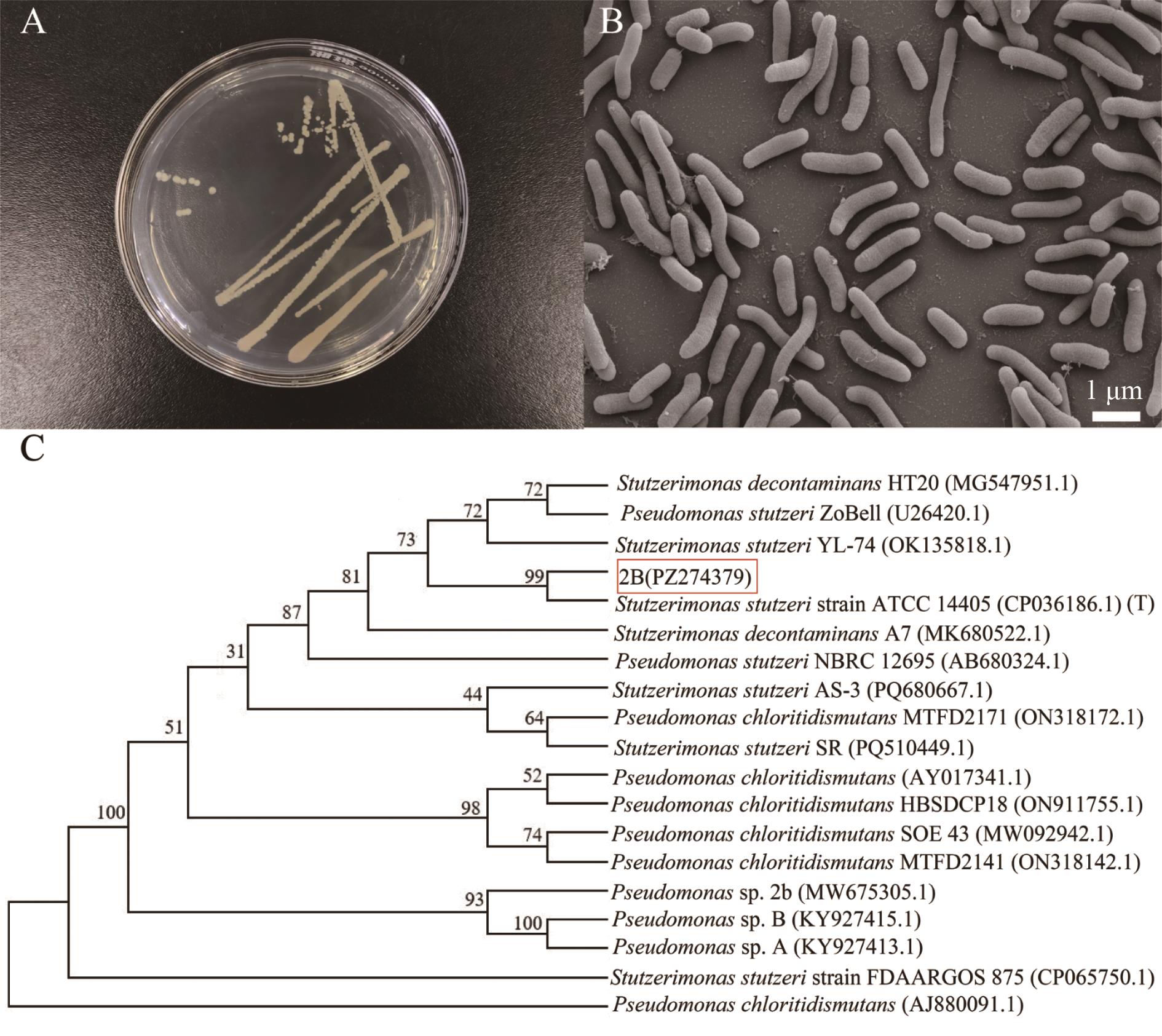
Fig. 1 Morphological observation and identification of strain 2BA: Colony morphology; B: Scanning electron microscope images; C: Phylogenetic tree of strain 2B based on 16S rRNA gene sequences
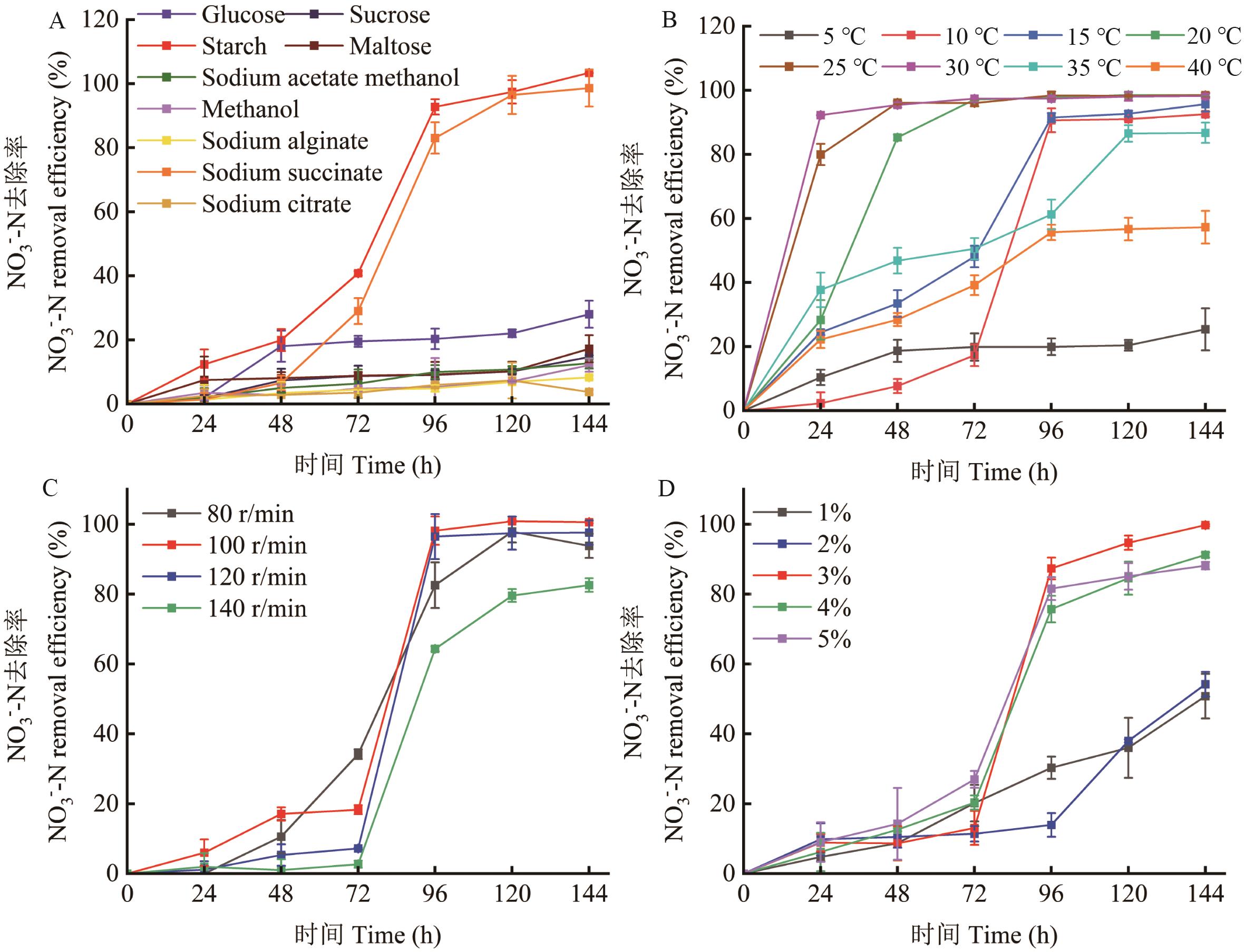
Fig. 2 Denitrification characteristics of the strain under different conditionsA: Carbon sources; B: Temperatures; C: Rotation speeds; D: Inoculum size
氮源 Nitrogen resource | 初始总氮浓度TNi (mg/L) | 培养液总氮浓度TNt (mg/L) | 上清液总氮浓度 TNs (mg/L) | 胞内氮转化率 Rein (%) | 气态氮转化率 Reg (%) |
|---|---|---|---|---|---|
| NO3--N | 100.66±0.21 | 82.19±0.20 | 0.53±0.26 | 81.13±0.11 | 18.34±0.14 |
| NO2--N | 21.05±0.13 | 17.66±0.18 | 5.01±0.18 | 60.09±0.21 | 16.10±0.29 |
| NH4+-N | 74.19±0.17 | 51.2±0.17 | 14.49±0.22 | 49.55±0.16 | 30.92±0.17 |
Table 1 Nitrogen balance of the strain
氮源 Nitrogen resource | 初始总氮浓度TNi (mg/L) | 培养液总氮浓度TNt (mg/L) | 上清液总氮浓度 TNs (mg/L) | 胞内氮转化率 Rein (%) | 气态氮转化率 Reg (%) |
|---|---|---|---|---|---|
| NO3--N | 100.66±0.21 | 82.19±0.20 | 0.53±0.26 | 81.13±0.11 | 18.34±0.14 |
| NO2--N | 21.05±0.13 | 17.66±0.18 | 5.01±0.18 | 60.09±0.21 | 16.10±0.29 |
| NH4+-N | 74.19±0.17 | 51.2±0.17 | 14.49±0.22 | 49.55±0.16 | 30.92±0.17 |
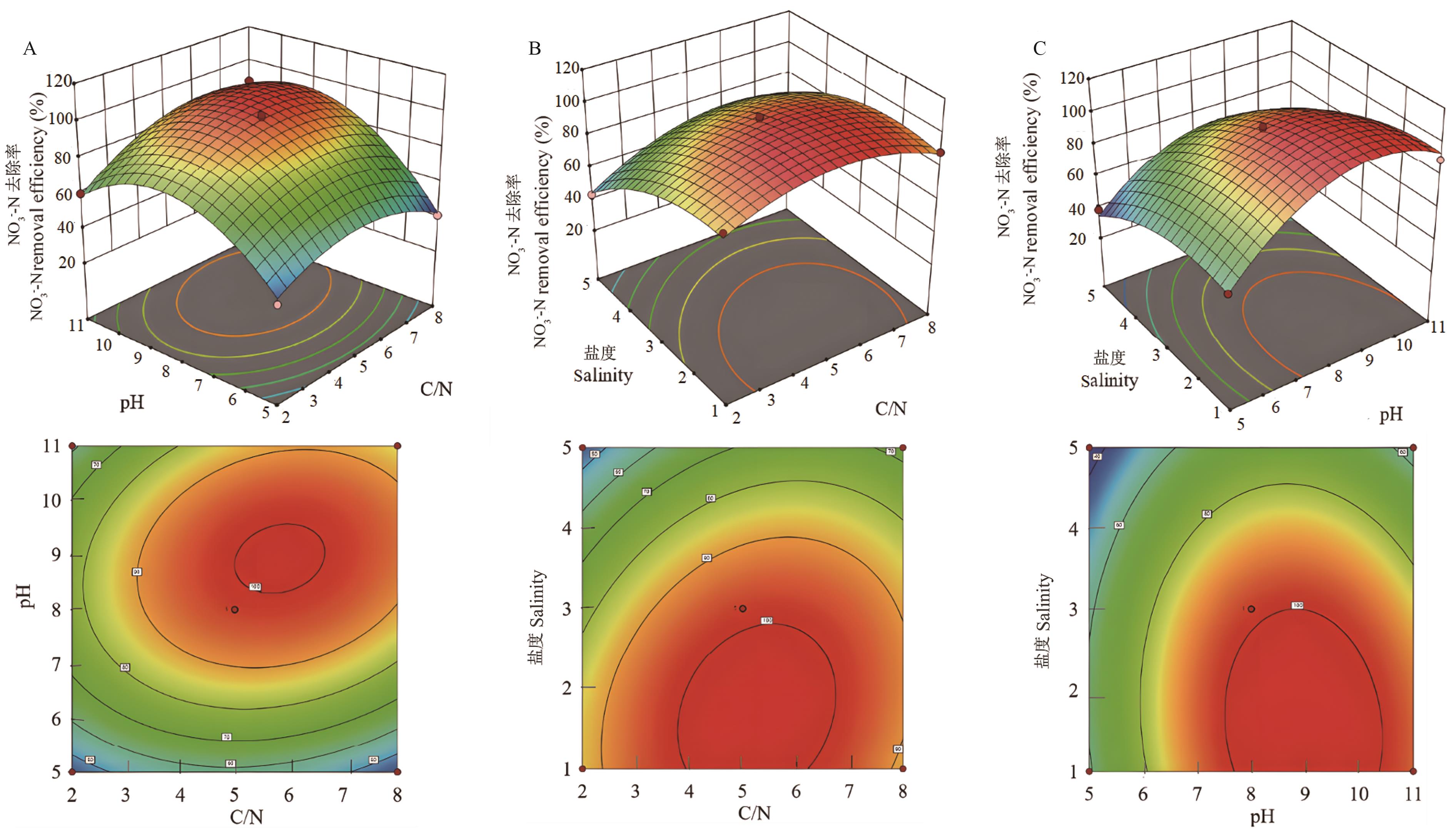
Fig. 3 Response surface analysis of the effects of three-factor interactions on NO3--N removal efficiencyA: C/N and pH; B: C/N and salinity; C: pH and salinity

Fig. 4 Growth and denitrification characteristics of strain 2B on different media
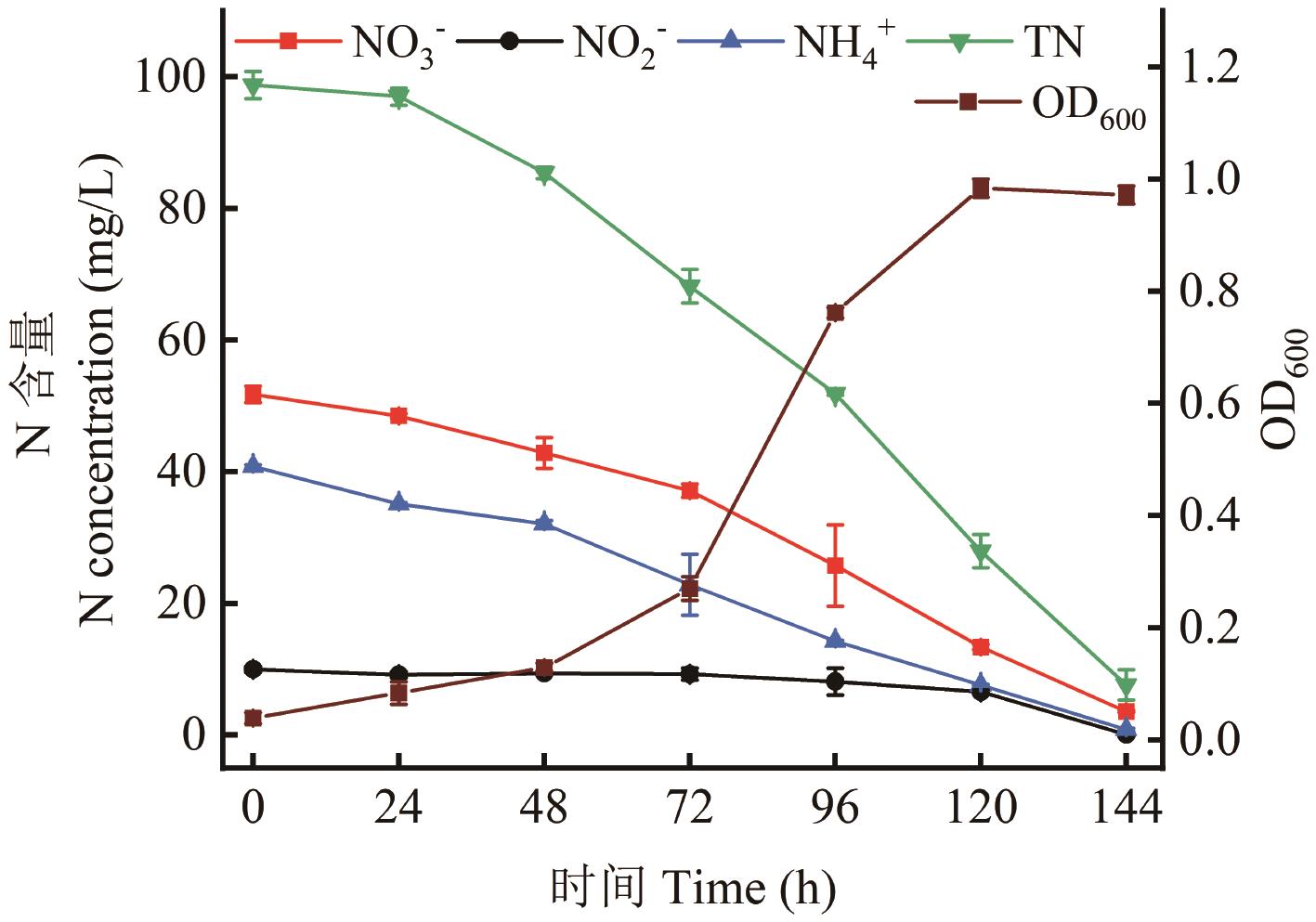
Fig. 5 Growth and simultaneous nitrification and denitrification characteristics of strain 2B
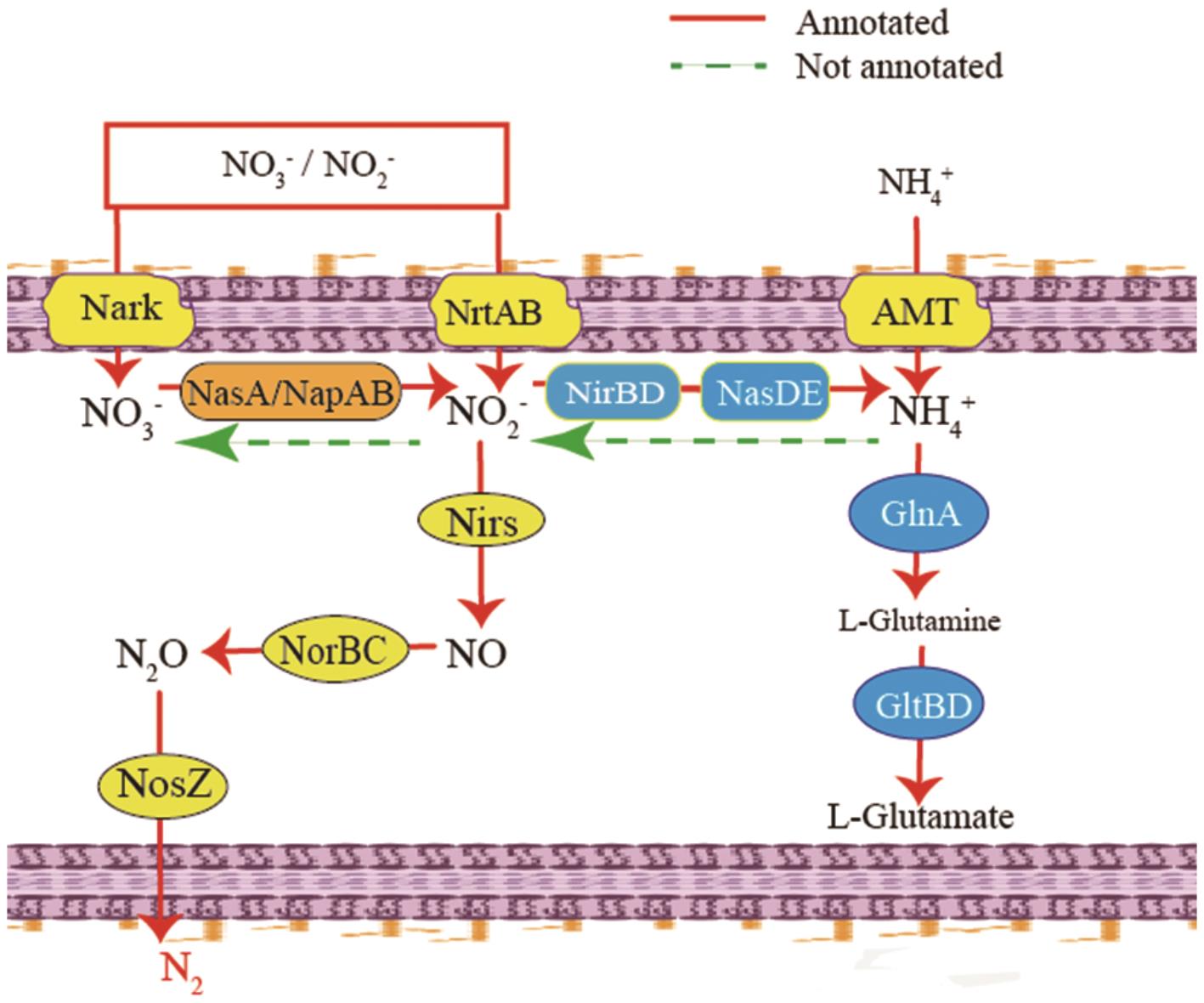
Fig. 6 Nitrogen metabolism pathways of strain 2B
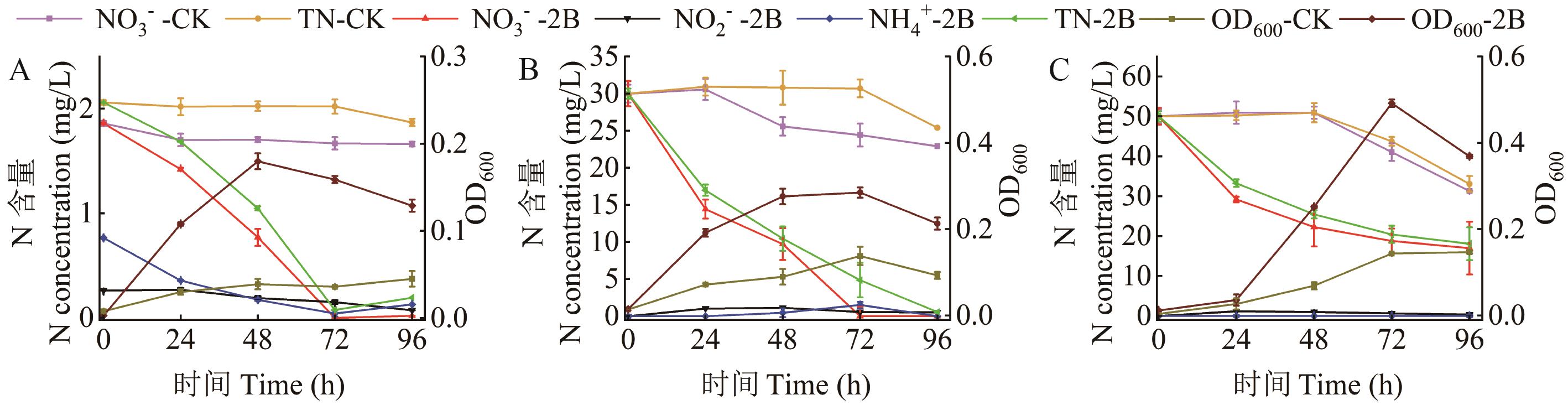
Fig. 7 Nitrogen removal from different turbot effluents by strain 2BA: Without added nitrogen source; B: 30 mg/L NO3--N; C: 50 mg/L NO3--N
| [1] | Shu H, Sun HM, Huang W, et al. Nitrogen removal characteristics and potential application of the heterotrophic nitrifying-aerobic denitrifying bacteria Pseudomonas mendocina S16 and Enterobacter cloacae DS'5 isolated from aquaculture wastewater ponds [J]. Bioresour Technol, 2022, 345: 126541. |
| [2] | Deng ZX, Sun CD, Ma GY, et al. Anaerobic treatment of nitrogenous industrial organic wastewater by carbon-neutral processes integrated with anaerobic digestion and partial nitritation/anammox: Critical review of current advances and future directions [J]. Bioresour Technol, 2025, 415: 131648. |
| [3] | 赵凯杰, 吴磊, 姜娥梅, 等. 紫外活化乙醇工艺还原硝酸盐的影响因素及动力学分析 [J]. 净水技术, 2024, 43(3): 99-109. |
| Zhao KJ, Wu L, Jiang EM, et al. Influence factors and kinetics analysis of nitrate reduction by UV/C2H5OH/N2 process [J]. Water Purif Technol, 2024, 43(3): 99-109. | |
| [4] | 赵远哲, 董伟羊, 王海燕, 等. 芦竹-砾石A∕O生物滤池对农村污水强化脱氮效能的研究 [J]. 环境工程技术学报, 2020, 10(3): 424-432. |
| Zhao YZ, Dong WY, Wang HY, et al. Study on advanced nitrogen removal efficiency of Arundo donax-gravel A∕O biofilter for rural sewage treatment [J]. J Environ Eng Technol, 2020, 10(3): 424-432. | |
| [5] | Robertson LA, Kuenen JG. Aerobic denitrification: a controversy revived [J]. Arch Microbiol, 1984, 139(4): 351-354. |
| [6] | 沈桐, 江进, 李宁, 等. 好氧反硝化细菌及其在微污染水源水修复中的应用研究进展 [J]. 微生物学报, 2023, 63(2): 465-482. |
| Shen T, Jiang J, Li N, et al. Aerobic denitrifiers and the application in remediation of micro-polluted water source [J]. Acta Microbiol Sin, 2023, 63(2): 465-482. | |
| [7] | Feng LJ, Yang JY, Yu H, et al. Response of denitrifying community, denitrification genes and antibiotic resistance genes to oxytetracycline stress in polycaprolactone supported solid-phase denitrification reactor [J]. Bioresour Technol, 2020, 308: 123274. |
| [8] | de Almeida Fernandes L, Pereira AD, Leal CD, et al. Effect of temperature on microbial diversity and nitrogen removal performance of an anammox reactor treating anaerobically pretreated municipal wastewater [J]. Bioresour Technol, 2018, 258: 208-219. |
| [9] | Huang H, Ekama GA, Biswal BK, et al. A new sulfidogenic oxic-settling anaerobic (SOSA) process: The effects of sulfur-cycle bioaugmentation on the operational performance, sludge properties and microbial communities [J]. Water Res, 2019, 162: 30-42. |
| [10] | Ren JL, Cheng XW, Ma HJ, et al. Characteristics of a novel heterotrophic nitrification and aerobic denitrification bacterium and its bioaugmentation performance in a membrane bioreactor [J]. Bioresour Technol, 2021, 342: 125908. |
| [11] | Gao LJ, Wang WY, Huang X, et al. Stage-specific FeS-mediated regulation of Paracoccus denitrificans during carbon consumption by machine learning-assisted comparative proteomics [J]. Environ Res, 2026, 292: 123636. |
| [12] | 许敬轩, 尹鹏, 刘凤坤, 等. 耐盐产酸克雷伯氏菌(Klebsiella oxytoca)WM27的特征、脱氮性能及固定化 [J]. 微生物学通报, 2025, 52(6): 2530-2544. |
| Xu JX, Yin P, Liu FK, et al. Characteristics, denitrification performance, and immobilization of Klebsiella oxytoca WM27 [J]. Microbiol China, 2025, 52(6): 2530-2544. | |
| [13] | 董怡华, 张雪莹, 邹立安, 等. 耐低温好氧反硝化菌Aeromonas sp.的分离鉴定及脱氮条件优化 [J]. 微生物学报, 2022, 62(6): 2038-2052. |
| Dong YH, Zhang XY, Zou LA, et al. Isolation and identification of a cold-tolerant and aerobic denitrifying bacterium Aeromonas sp. and optimization of denitrification conditions [J]. Acta Microbiol Sin, 2022, 62(6): 2038-2052. | |
| [14] | 韩冰, 丁雷, 史沐, 等. 一株高效嗜碱反硝化菌的分离鉴定及其脱氮特性研究 [J]. 环境科学研究, 2020, 33(9): 2129-2137. |
| Han B, Ding L, Shi M, et al. Identification and characterization of an alkalophilic Pseudomonas stutzeri strain with high denitrification capacity [J]. Res Environ Sci, 2020, 33(9): 2129-2137. | |
| [15] | 董文迅, 李俊峰, 滕峪, 等. 一株耐盐耐冷异养硝化-好氧反硝化菌的脱氮特性 [J]. 环境科学与技术, 2023, 46(7): 1-7. |
| Dong WX, Li JF, Teng Y, et al. Nitrogen removal characteristics of a salt-tolerant and cold-tolerant heterotrophic nitrification-aerobic denitrification bacterium WD0301 [J]. Environ Sci Technol, 2023, 46(7): 1-7. | |
| [16] | 别绮雯, 王进, 马丁, 等. 一株耐盐反硝化菌的分离及脱氮特性 [J]. 环境科学与技术, 2025, 48(5): 97-109. |
| Bie QW, Wang J, Ma D, et al. Isolation and denitrification characteristics of a saline-tolerant denitrifying bacterial strain [J]. Environ Sci Technol, 2025, 48(5): 97-109. | |
| [17] | 彭秋瑜, 刘如玲, 李萌, 等. 序批式反应器改良工艺对海水养殖废水中氮和磺胺嘧啶去除及微生物群落分析 [J]. 中国海洋大学学报: 自然科学版, 2023, 53(12): 146-154. |
| Peng QY, Liu RL, Li M, et al. The study of nitrogen and sulfadiazine removal and the microbial community in modified sequencing batch reactor treating mariculture wastewater [J]. Period Ocean Univ China, 2023, 53(12): 146-154. | |
| [18] | Gao Y, Zhu JW, Wang KY, et al. Discovery of a heterotrophic aerobic denitrification Pseudomonas sp. G16 and its unconventional nitrogen metabolic pathway [J]. Bioresour Technol, 2023, 387: 129670. |
| [19] | Yi MM, Wang H, Ma XN, et al. Efficient nitrogen removal of a novel Pseudomonas chengduensis strain BF6 mainly through assimilation in the recirculating aquaculture systems [J]. Bioresour Technol, 2023, 379: 129036. |
| [20] | 蒋慧慧, 王强, 付维来, 等. 一株异养硝化-好氧反硝化细菌的筛选及氮转化特性研究 [J]. 生物技术通报, 2023, 39(12): 250-260. |
| Jiang HH, Wang Q, Fu WL, et al. Screening of a heterotrophic nitrifying-aerobic denitrifying bacterium and its nitrogen transforming characterization [J]. Biotechnol Bull, 2023, 39(12): 250-260. | |
| [21] | 李传龙, 谢骏, 王广军, 等. 一株好氧反硝化菌Citrobacter portucalensis ZS2的分离鉴定及脱氮性能研究 [J/OL]. 甘肃农业大学学报, 2025: 1-10. . |
| Li CL, Xie J, Wang GJ, et al. Isolation and denitrification performance of an aerobic denitrifying bacterium Citrobacter portucalensis ZS2 [J/OL]. J Gansu Agric Univ, 2025: 1-10. . | |
| [22] | Wu QF, He TX, Chen MP, et al. Elucidating the mechanisms underlying heterotrophic nitrification-aerobic denitrification and cold tolerance in Pseudomonas fragi EH-H1 under weakly acidic conditions [J]. Int Biodeterior Biodegrad, 2025, 200: 106046. |
| [23] | Urmersbach S, Aho T, Alter T, et al. Changes in global gene expression of Vibrio parahaemolyticus induced by cold- and heat-stress [J]. BMC Microbiol, 2015, 15: 229. |
| [24] | 陈李维, 张梅梅, 张焦南, 等. sodA、sodB和KatG在嗜水气单胞菌抗氧化胁迫中的协同作用 [J]. 水产学报, 2021, 45(1): 136-146. |
| Chen LW, Zhang MM, Zhang JN, et al. Synergism of sodA, sodB and KatG in Aeromonas hydrophila under antioxidative stress [J]. J Fish China, 2021, 45(1): 136-146. | |
| [25] | Li WY, Huo R, Di YL, et al. Efficient nitrogen removal by the aerobic denitrifying bacterium Pseudomonas stutzeri RAS-L11 under triple stresses of high alkalinity, high salinity, and tetracycline: From performance to mechanism [J]. Bioresour Technol, 2025, 430: 132590. |
| [26] | MacIntyre AM, Barth JX, Pellitteri Hahn MC, et al. Trehalose synthesis contributes to osmotic stress tolerance and virulence of the bacterial wilt pathogen Ralstonia solanacearum [J]. Mol Plant Microbe Interact, 2020, 33(3): 462-473. |
| [27] | Nie TY, Wang LQ, Liu YL, et al. A halophilic bacterium for bioremediation of saline-alkali land: the triadic and synergetic response mechanism of Oceanobacillus picturae DY09 to salt stress [J]. Microorganisms, 2025, 13(7): 1474. |
| [28] | Li X, Wang YZ, Ma F, et al. Chaperone-mediated thermotolerance in hyperthermophilic composting: Molecular-Level protein remodeling of microbial communities [J]. Environ Sci Ecotechnol, 2025, 28: 100630. |
| [29] | 康鹏亮, 陈胜男, 黄廷林, 等. 好/厌氧条件下反硝化细菌脱氮特性与功能基因 [J]. 环境科学, 2018, 39(8): 3789-3796. |
| Kang PL, Chen SN, Huang TL, et al. Denitrification characteristics and functional genes of denitrifying bacteria under aerobic or anaerobic conditions [J]. Environ Sci, 2018, 39(8): 3789-3796. | |
| [30] | 孟红艳, 杨垒, 李玉彩, 等. 异养硝化细菌Pseudomonas stutzeri strain NP3的同步脱氮除磷特性及代谢机制 [J]. 中国环境科学, 2025, 45(4): 1901-1910. |
| Meng HY, Yang L, Li YC, et al. Simultaneous nitrogen and phosphorus removal characteristics and metabolic mechanism of heterotrophic nitriying bacterium Pseudomonas stutzeri strain NP3 [J]. China Environ Sci, 2025, 45(4): 1901-1910. | |
| [31] | Zheng MS, He D, Ma T, et al. Reducing NO and N2O emission during aerobic denitrification by newly isolated Pseudomonas stutzeri PCN-1 [J]. Bioresour Technol, 2014, 162: 80-88. |
| [32] | 李艳丽, 杨垒, 张志昊, 等. 好氧反硝化细菌Burkholderia sp. ZH8的脱氮特性与生物强化作用 [J]. 中国环境科学, 2024, 44(8): 4282-4291. |
| Li YL, Yang L, Zhang ZH, et al. Nitrogen removal characteristics and bioenhancement effects of aerobic denitrifying bacteria Burkholderia sp. ZH8 [J]. China Environ Sci, 2024, 44(8): 4282-4291. | |
| [33] | Li YJ, Zhang LH, Liu WF, et al. Simultaneous removal of urea nitrogen and inorganic nitrogen from high-salinity wastewater by Halomonas sp. H36 [J]. Environ Sci Pollut Res, 2023, 30(2): 2544-2554. |
| [34] | Liu TF, Wang BJ, Liu M, et al. Stutzerimonas frequens strain TF18 with superior heterotrophic nitrification-aerobic denitrification ability for the treatment of aquaculture effluent [J]. Process Biochem, 2023, 130: 156-165. |
| [35] | Zhou XQ, Wang YL, Tan X, et al. Genomics and nitrogen metabolic characteristics of a novel heterotrophic nitrifying-aerobic denitrifying bacterium Acinetobacter oleivorans AHP123 [J]. Bioresour Technol, 2023, 375: 128822 |
| Viewed | ||||||
|
Full text |
|
|||||
|
Abstract |
|
|||||
