







Biotechnology Bulletin ›› 2024, Vol. 40 ›› Issue (12): 1-11.doi: 10.13560/j.cnki.biotech.bull.1985.2024-0494
CHEN Ying-e( ), LIANG Qiao-lan()
Received:2024-05-26
Online:2024-12-26
Published:2025-01-15
Contact:
LIANG Qiao-lan
E-mail:1470857734@qq.com;liangql@gsau.edu.cn
CHEN Ying-e, LIANG Qiao-lan. Research Progress in the Effects of Plant Abscisic Acid and Its Receptor Gene PYL9[J]. Biotechnology Bulletin, 2024, 40(12): 1-11.
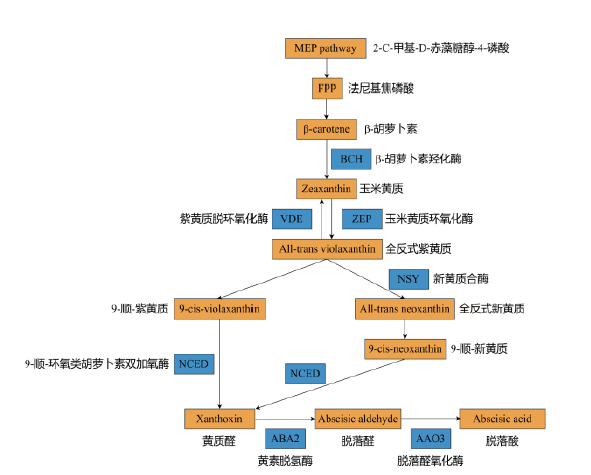
Fig. 1 Biosynthetic pathway of abscisic acid in plants
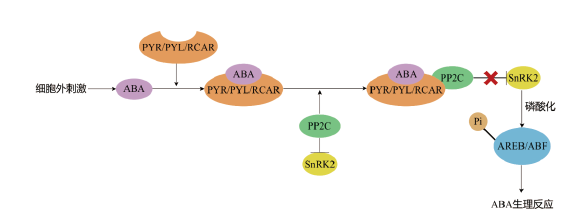
Fig. 2 Abscisic acid signal pathway
| [1] | Ruiz-Partida R, Rosario SM, Lozano-Juste J. An update on crop ABA receptors[J]. Plants, 2021, 10(6): 1087. |
| [2] |
Ohkuma K, Lyon JL, Addicott FT, et al. Abscisin II, an abscission-accelerating substance from young cotton fruit[J]. Science, 1963, 142(3599): 1592-1593.
doi: 10.1126/science.142.3599.1592 pmid: 17741533 |
| [3] | 李长江. 库尔勒香梨花、幼果不同部位内源激素含量的差异分析[D]. 乌鲁木齐: 新疆农业大学, 2016. |
| Li CJ. Difference analysis of endogenous hormone contents in different parts of flowers and young fruits of Korla fragrant pear[D]. Urumqi: Xinjiang Agricultural University, 2016. | |
| [4] | Alferez F, de Carvalho DU, Boakye D. Interplay between abscisic acid and gibberellins, as related to ethylene and sugars, in regulating maturation of non-climacteric fruit[J]. Int J Mol Sci, 2021, 22(2): 669. |
| [5] |
Guo JX, Wang SF, Yu XY, et al. Polyamines regulate strawberry fruit ripening by abscisic acid, auxin, and ethylene[J]. Plant Physiol, 2018, 177(1): 339-351.
doi: 10.1104/pp.18.00245 pmid: 29523717 |
| [6] | Srivastava D, Verma G, Chawda K, et al. Overexpression of Asr6, abscisic acid stress-ripening protein, enhances drought tolerance and modulates gene expression in rice(Oryza sativa L.)[J]. Environ Exp Bot, 2022, 202: 105005. |
| [7] | 刘旭, 林碧英, 李彩霞, 等. 外源脱落酸对盐胁迫下茄子幼苗生理特性的影响[J]. 河南农业大学学报, 2020, 54(2): 231-236, 268. |
| Liu X, Lin BY, Li CX, et al. Effects of exogenous abscisic acid on physiological characteristics of eggplant seedlings under salt stress[J]. J Henan Agric Univ, 2020, 54(2): 231-236, 268. | |
| [8] |
Ahanger MA, Siddique KHM, Ahmad P. Understanding drought tolerance in plants[J]. Physiol Plant, 2021, 172(2): 286-288.
doi: 10.1111/ppl.13442 pmid: 34046912 |
| [9] | 项洪涛, 李琬, 何宁, 等. 外源脱落酸(ABA)调节植物抗旱机制的研究进展[J]. 东北农业科学, 2022, 47(5): 37-41. |
| Xiang HT, Li W, He N, et al. Research progress on exogenous abscisic acid(ABA)regulating plant drought resistance[J]. J Northeast Agric Sci, 2022, 47(5): 37-41. | |
| [10] | 章锦涛, 王华, 王松, 等. 外施脱落酸对低温胁迫下山茶花生理生化指标的影响[J]. 安徽农业大学学报, 2017, 44(1): 142-145. |
| Zhang JT, Wang H, Wang S, et al. The effect of exogenous abscisic acid on physiological and biochemical indexes of Camellia leaves under chilling stress[J]. J Anhui Agric Univ, 2017, 44(1): 142-145. | |
| [11] | 吴鹍伦, 周行, 刘琅, 等. 外源ABA对滨海盐碱地水稻农艺性状与产量构成的调控[J]. 杂交水稻, 2024, 39(5):97-106. |
| Wu KL, Zhou H, Liu L, et al. Regulation of agronomic traits and yield composition of rice in coastal saline-alkali land by exogenous ABA[J]. Hybrid Rice, 2024, 39(5):97-106. | |
| [12] | Sanchez-Olvera M, Martin-Vasquez C, Mayordomo C, et al. ABA-receptor agonist iSB09 decreases soil water consumption and increases tomato CO2 assimilation and water use efficiency under drought stress[J]. Environ Exp Bot, 2024, 225: 105847. |
| [13] | Li X, Huang DM, Lin XF. Interlinked regulator loops of ABA and JA respond to salt and drought stress in Caragana korshinskii[J]. Environ Exp Bot, 2024, 225: 105829. |
| [14] | 胡帅, 王芳展, 刘振宁, 等. PYR/PYL/RCAR 蛋白介导植物ABA 的信号转导[J]. 遗传, 2012, 34(5): 560-572. |
| Hu S, Wang FZ, Liu ZN, et al. ABA signaling mediated by PYR/PYL/RCAR in plants[J]. Hereditas(Beijing), 2012, 34(5): 560-572. | |
| [15] | 孔伟胜, 刘言, 王林娟, 等. 植物SnRK家族的研究进展[J]. 植物生理学报, 2016, 52(4): 413-422. |
| Kong WS, Liu Y, Wang LJ, et al. Research progress of plant family of SnRK[J]. Plant Physiol J, 2016, 52(4): 413-422. | |
| [16] |
张大鹏. 始于质体/叶绿体的ABA信号通路[J]. 植物学报, 2011, 46(4): 361-369.
doi: 10.3724/SP.J.1259.2011.00361 |
| Zhang DP. An abscisic acid signaling pathway starting from plastid/chloroplast[J]. Chin Bull Bot, 2011, 46(4): 361-369. | |
| [17] | You Z, Guo SY, Li Q, et al. The CBL1/9-CIPK1 calcium sensor negatively regulates drought stress by phosphorylating the PYLs ABA receptor[J]. Nat Commun, 2023, 14(1): 5886. |
| [18] | 赵雷. 植物脱落酸受体PYR/PYL/RCAR的研究进展[J]. 湖北农业科学, 2019, 58(18): 14-18. |
| Zhao L. Advances in plant abscisic acid receptor PYR/PYL/RCAR[J]. Hubei Agric Sci, 2019, 58(18): 14-18. | |
| [19] |
Zhao Y, Chan ZL, Gao JH, et al. ABA receptor PYL9 promotes drought resistance and leaf senescence[J]. Proc Natl Acad Sci USA, 2016, 113(7): 1949-1954.
doi: 10.1073/pnas.1522840113 pmid: 26831097 |
| [20] | Zhang FY, Lu X, Lv ZY, et al. Overexpression of the Artemisia orthologue of ABA receptor, AaPYL9, enhances ABA sensitivity and improves artemisinin content in Artemisia annua L[J]. PLoS One, 2013, 8(2): e56697. |
| [21] | Kim H, Hwang H, Hong JW, et al. A rice orthologue of the ABA receptor, OsPYL/RCAR5, is a positive regulator of the ABA signal transduction pathway in seed germination and early seedling growth[J]. J Exp Bot, 2012, 63(2): 1013-1024. |
| [22] | Chai YM, Jia HF, Li CL, et al. FaPYR1 is involved in strawberry fruit ripening[J]. J Exp Bot, 2011, 62(14): 5079-5089. |
| [23] | Karl D. The discovery of abscisic acid: a retrospect[J]. J Plant Growth Regul, 2015, 34(4): 795-808. |
| [24] | 杨秋玲, 季静, 王罡, 等. 类胡萝卜素合成途径终产物脱落酸的合成调控与生物学效应[J]. 天津农业科学, 2011, 17(5): 24-27. |
| Yang QL, Ji J, Wang G, et al. Regulation and biological effects of end-product abscisic acid of carotenoid biosynthetic pathway[J]. Tianjin Agric Sci, 2011, 17(5): 24-27. | |
| [25] |
Darma R, Lutz A, Elliott CE, et al. Identification of a gene cluster for the synthesis of the plant hormone abscisic acid in the plant pathogen Leptosphaeria maculans[J]. Fungal Genet Biol, 2019, 130: 62-71.
doi: S1087-1845(18)30304-9 pmid: 31034868 |
| [26] | Neuman H, Galpaz N, Cunningham FX Jr, et al. The tomato mutation nxd1 reveals a gene necessary for neoxanthin biosynthesis and demonstrates that violaxanthin is a sufficient precursor for abscisic acid biosynthesis[J]. Plant J, 2014, 78(1): 80-93. |
| [27] |
高金柱, 赵东豪, 高乐, 等. 硝酸铈与脱落酸处理对紫花苜蓿种子萌发和幼苗生理特性的影响[J]. 草业学报, 2024, 33(6): 175-186.
doi: 10.11686/cyxb2023281 |
| Gao JZ, Zhao DH, Gao L, et al. Effects of cerium nitrate and abscisic acid treatment on alfalfa seed germination and seedling physiological characteristics[J]. Acta Prataculturae Sinica, 2024, 33(6): 175-186. | |
| [28] | Wu QY, He TJ, Liu H, et al. Cell ultrastructure and physiological changes of potato during cold acclimation[J]. Can J Plant Sci, 2019, 99(6): 873-884. |
| [29] |
李琬婷, 宁朋, 王菲, 等. 外源脱落酸对干旱胁迫下滇润楠幼苗生长及生理特性的影响[J]. 应用生态学报, 2020, 31(5): 1543-1550.
doi: 10.13287/j.1001-9332.202005.009 |
|
Li WT, Ning P, Wang F, et al. Effects of exogenous abscisic acid(ABA)on growth and physiological characteristics of Machilus yunnanensis seedlings under drought stress[J]. Chin J Appl Ecol, 2020, 31(5): 1543-1550.
doi: 10.13287/j.1001-9332.202005.009 |
|
| [30] | Qi KJ, Wu X, Xie ZH, et al. Seed coat removal in pear accelerates embryo germination by down-regulating key genes in ABA biosynthesis[J]. J Hortic Sci Biotechnol, 2019, 94(6): 718-725. |
| [31] |
Huang Y, Guo YM, Liu YT, et al. 9- cis-epoxycarotenoid dioxygenase 3 regulates plant growth and enhances multi-abiotic stress tolerance in rice[J]. Front Plant Sci, 2018, 9: 162.
doi: 10.3389/fpls.2018.00162 pmid: 29559982 |
| [32] |
Assmann SM, Jegla T. Guard cell sensory systems: recent insights on stomatal responses to light, abscisic acid, and CO2[J]. Curr Opin Plant Biol, 2016, 33: 157-167.
doi: S1369-5266(16)30106-6 pmid: 27518594 |
| [33] | 周琳, 申加枝, 段玉, 等. 外源脱落酸对茶树生理指标的影响[J]. 江苏农业科学, 2020, 48(12): 102-108. |
| Zhou L, Shen JZ, Duan Y, et al. Effects of exogenous abscisic acid on physiological indexes of tea plants[J]. Jiangsu Agric Sci, 2020, 48(12): 102-108. | |
| [34] | 费思明. 外源ABA处理的干旱胁迫下甘蓝叶片生理生化及全转录组分析[D]. 杨凌: 西北农林科技大学, 2023. |
| Fei SM. Physiological, biochemical and complete transcriptome analysis of cabbage leaves treated with exogenous ABA under drought stress[D]. Yangling: Northwest A & F University, 2023. | |
| [35] | 吴巧玉, 何天久. 外源脱落酸对低温胁迫下马铃薯野生材料生理特性的影响[J]. 东北农业科学, 2023, 48(5): 88-91. |
| Wu QY, He TJ. Effects of exogenous abscisic acid on physiological characteristics of potato wild materials under low temperature stress[J]. J Northeast Agric Sci, 2023, 48(5): 88-91. | |
| [36] | 张钰, 陈慧, 王改萍. 外源ABA对楸树幼苗NaCl胁迫的缓解效应及其生长生理响应特征[J]. 西北植物学报, 2023, 43(6): 996-1005. |
| Zhang Y, Chen H, Wang GP. Alleviating effects of exogenous ABA on Catalpa bungei seedlings under NaCl stress and growth physiological response characteristics[J]. Acta Bot Boreali Occidentalia Sin, 2023, 43(6): 996-1005. | |
| [37] | Lu X, Chen GP, Ma L, et al. Abscisic acid enhances alkaline stress tolerance in grapevines: physiological and transcriptional profiling[J]. Sci Hortic, 2024, 336: 113368. |
| [38] | 李洋洋. AtCNGC2在茉莉酸信号通路中的作用[D]. 济南: 山东师范大学, 2011. |
| Li YY. The role of AtCNGC2 in jasmonic acid signaling pathway[D]. Jinan: Shandong Normal University, 2011. | |
| [39] |
Sun ZT, He YQ, Li JM, et al. Genome-wide characterization of rice black streaked dwarf virus-responsive microRNAs in rice leaves and roots by small RNA and degradome sequencing[J]. Plant Cell Physiol, 2015, 56(4): 688-699.
doi: 10.1093/pcp/pcu213 pmid: 25535197 |
| [40] |
De Vleesschauwer D, Yang YN, Cruz CV, et al. Abscisic acid-induced resistance against the brown spot pathogen Cochliobolus miyabeanus in rice involves MAP kinase-mediated repression of ethylene signaling[J]. Plant Physiol, 2010, 152(4): 2036-2052.
doi: 10.1104/pp.109.152702 pmid: 20130100 |
| [41] | García-Andrade J, Ramírez V, Flors V, et al. Arabidopsis ocp3 mutant reveals a mechanism linking ABA and JA to pathogen-induced callose deposition[J]. Plant J, 2011, 67(5): 783-794. |
| [42] |
Alazem M, Lin NS. Antiviral roles of abscisic acid in plants[J]. Front Plant Sci, 2017, 8: 1760.
doi: 10.3389/fpls.2017.01760 pmid: 29075279 |
| [43] | Alazem M, Lin KY, Lin NS. The abscisic acid pathway has multifaceted effects on the accumulation of Bamboo mosaic virus[J]. Mol Plant Microbe Interact, 2014, 27(2): 177-189. |
| [44] | Xie KL, Li LL, Zhang HH, et al. Abscisic acid negatively modulates plant defence against rice black-streaked dwarf virus infection by suppressing the jasmonate pathway and regulating reactive oxygen species levels in rice[J]. Plant Cell Environ, 2018, 41(10): 2504-2514. |
| [45] |
Kai WB, Wang J, Liang B, et al. PYL9 is involved in the regulation of ABA signaling during tomato fruit ripening[J]. J Exp Bot, 2019, 70(21): 6305-6319.
doi: 10.1093/jxb/erz396 pmid: 31504753 |
| [46] | Wilmowicz E, Frankowski K, Kućko A, et al. The influence of abscisic acid on the ethylene biosynthesis pathway in the functioning of the flower abscission zone in Lupinus luteus[J]. J Plant Physiol, 2016, 206: 49-58. |
| [47] | 王小冰. 小麦水通道蛋白PIP2;10与拟南芥核输载体IMPβ1调控免疫相关信号传导的研究[D]. 南京: 南京农业大学, 2020. |
| Wang XB. Wheat aquaporin PIP2; Study on regulation of immune-related signal transduction by 10 and Arabidopsis nuclear delivery vector IMPβ1[D]. Nanjing: Nanjing Agricultural University, 2020. | |
| [48] | Guo D, Zhou Y, Li HL, et al. Identification and characterization of the abscisic acid(ABA)receptor gene family and its expression in response to hormones in the rubber tree[J]. Sci Rep, 2017, 7: 45157. |
| [49] | Kućko A, Wilmowicz E, Ostrowski M. Spatio-temporal IAA gradient is determined by interactions with ET and governs flower abscission[J]. J Plant Physiol, 2019, 236: 51-60. |
| [50] |
Meir S, Philosoph-Hadas S, Sundaresan S, et al. Microarray analysis of the abscission-related transcriptome in the tomato flower abscission zone in response to auxin depletion[J]. Plant Physiol, 2010, 154(4): 1929-1956.
doi: 10.1104/pp.110.160697 pmid: 20947671 |
| [51] |
Jin X, Zimmermann J, Polle A, et al. Auxin is a long-range signal that acts independently of ethylene signaling on leaf abscission in Populus[J]. Front Plant Sci, 2015, 6: 634.
doi: 10.3389/fpls.2015.00634 pmid: 26322071 |
| [52] | Mandal D, Datta S, Mitra S, et al. ABI3 promotes auxin signalling by regulating SHY2 expression to control primary root growth in response to dehydration stress[J]. J Exp Bot, 2024: erae237. |
| [53] | Hang JN, Wu BW, Qiu DY, et al. OsNPF3.1, a nitrate, abscisic acid and gibberellin transporter gene, is essential for rice tillering and nitrogen utilization efficiency[J]. J Integr Agric, 2024, 23(4): 1087-1104. |
| [54] | Banerjee A, Roychoudhury A. Melatonin application reduces fluoride uptake and toxicity in rice seedlings by altering abscisic acid, gibberellin, auxin and antioxidant homeostasis[J]. Plant Physiol Biochem, 2019, 145: 164-173. |
| [55] | Wang YW, Nambeesan SU. Ethylene promotes fruit ripening initiation by downregulating photosynthesis, enhancing abscisic acid and suppressing jasmonic acid in blueberry(Vaccinium ashei)[J]. BMC Plant Biol, 2024, 24(1): 418. |
| [56] | Rawat SS, Sandhya S, Laxmi A. Complex genetic interaction between glucose sensor HXK1 and E3 SUMO ligase SIZ1 in regulating plant morphogenesis[J]. Plant Signal Behav, 2024, 19(1): 2341506. |
| [57] | 胡鹏伟, 黄桃鹏, 李媚娟, 等. 脱落酸的生物合成和信号调控进展[J]. 生命科学, 2015, 27(9): 1193-1196. |
| Hu PW, Huang TP, Li MJ, et al. Research progress on abscisic acid biosynthesis and signaling regulation[J]. Chin Bull Life Sci, 2015, 27(9): 1193-1196. | |
| [58] |
Komatsu K, Nishikawa Y, Ohtsuka T, et al. Functional analyses of the ABI1-related protein phosphatase type 2C reveal evolutionarily conserved regulation of abscisic acid signaling between Arabidopsis and the moss Physcomitrella patens[J]. Plant Mol Biol, 2009, 70(3): 327-340.
doi: 10.1007/s11103-009-9476-z pmid: 19266168 |
| [59] |
Sah SK, Reddy KR, Li JX. Abscisic acid and abiotic stress tolerance in crop plants[J]. Front Plant Sci, 2016, 7: 571.
doi: 10.3389/fpls.2016.00571 pmid: 27200044 |
| [60] |
De Diego N, Rodríguez JL, Dodd IC, et al. Pinus radiata[J]. Tree Physiol, 2013, 33(5): 537-549.
doi: 10.1093/treephys/tpt033 pmid: 23677119 |
| [61] | 万小荣, 李玲. 高等植物脱落酸生物合成途径及其酶调控[J]. 植物学通报, 2004, 21(3): 352-359. |
| Wan XR, Li L. Pathways and related enzymes of ABA biosynthesis in higher plants[J]. Chin Bull Bot, 2004, 21(3): 352-359. | |
| [62] |
Inomata M, Hirai N, Yoshida R, et al. The biosynthetic pathway to abscisic acid via ionylideneethane in the fungus Botrytis cinerea[J]. Phytochemistry, 2004, 65(19): 2667-2678.
doi: 10.1016/j.phytochem.2004.08.025 pmid: 15464154 |
| [63] | 李可心, 王颖, 姚明东, 等. 脱落酸生物合成研究进展[J]. 生物工程学报, 2023, 39(6): 2190-2203. |
| Li KX, Wang Y, Yao MD, et al. Research progress of abscisic acid biosynthesis[J]. Chin J Biotechnol, 2023, 39(6): 2190-2203. | |
| [64] | Zdunek-Zastocka E, Michniewska B, Pawlicka A, et al. Cadmium alters the metabolism and perception of abscisic acid in Pisum sativum leaves in a developmentally specific manner[J]. Int J Mol Sci, 2024, 25(12): 6582. |
| [65] | Nurbekova Z, Srivastava S, Standing D, et al. Arabidopsis aldehyde oxidase 3, known to oxidize abscisic aldehyde to abscisic acid, protects leaves from aldehyde toxicity[J]. Plant J, 2021, 108(5): 1439-1455. |
| [66] | Shetty AN, Rao S, Honnale HN, et al. Heterologous expression of SbAP37-transcription factor in Sesamum indicum L. alleviates salt stress and improves antioxidant enzyme activities[J]. Plant Physiol Rep, 2023, 28(3): 418-428. |
| [67] | Wu J, Kamanga BM, Zhang WY, et al. Research progress of aldehyde oxidases in plants[J]. PeerJ, 2022, 10: e13119. |
| [68] | Zhang Q, Liu YL, He CC, et al. Postharvest exogenous application of abscisic acid reduces internal browning in pineapple[J]. J Agric Food Chem, 2015, 63(22): 5313-5320. |
| [69] | 甄梦缘, 王丽芝, 孙超. 脱落酸及其调控植物次生代谢产物生物合成的研究进展[J]. 天津中医药大学学报, 2024, 43(3): 259-267. |
| Zhen MY, Wang LZ, Sun C. Research progress of abscisic acid and its regulation on biosynthesis of plant secondary metabolites[J]. J Tianjin Univ Tradit Chin Med, 2024, 43(3): 259-267. | |
| [70] | Chen TT, Li GY, Islam MR, et al. Abscisic acid synergizes with sucrose to enhance grain yield and quality of rice by improving the source-sink relationship[J]. BMC Plant Biol, 2019, 19(1): 525. |
| [71] | Glennon EKK, Adams LG, Hicks DR, et al. Supplementation with abscisic acid reduces malaria disease severity and parasite transmission[J]. Am J Trop Med Hyg, 2016, 94(6): 1266-1275. |
| [72] |
Fan WQ, Zhao MY, Li SX, et al. Contrasting transcriptional responses of PYR1/PYL/RCAR ABA receptors to ABA or dehydration stress between maize seedling leaves and roots[J]. BMC Plant Biol, 2016, 16: 99.
doi: 10.1186/s12870-016-0764-x pmid: 27101806 |
| [73] | 邢璐. 植物激素脱落酸的受体蛋白PYL8和PYL9通过结合转录因子MYB家族成员调控拟南芥的侧根生长[D]. 合肥: 中国科学技术大学, 2016. |
| Xing L. The receptor proteins PYL8 and PYL9 of plant hormone abscisic acid regulate the lateral root growth of Arabidopsis thaliana by binding members of transcription factor MYB family[D]. Hefei: University of Science and Technology of China, 2016. | |
| [74] |
Fuchs S, Tischer SV, Wunschel C, et al. Abscisic acid sensor RCAR7/PYL13, specific regulator of protein phosphatase coreceptors[J]. Proc Natl Acad Sci USA, 2014, 111(15): 5741-5746.
doi: 10.1073/pnas.1322085111 pmid: 24706923 |
| [75] | 陈慧敏, 郝格非. 脱落酸受体调控剂分子设计的研究进展[J]. 植物保护学报, 2021, 48(6): 1208-1216. |
| Chen HM, Hao GF. Research progress in molecular design of abscisic acid receptor modulators[J]. Journal of Plant Protection, 2021, 48(6): 1208-1216. | |
| [76] |
Zhao Y, Chan ZL, Xing L, et al. The unique mode of action of a divergent member of the ABA-receptor protein family in ABA and stress signaling[J]. Cell Res, 2013, 23(12): 1380-1395.
doi: 10.1038/cr.2013.149 pmid: 24189045 |
| [77] |
Ma Y, Szostkiewicz I, Korte A, et al. Regulators of PP2C phosphatase activity function as abscisic acid sensors[J]. Science, 2009, 324(5930): 1064-1068.
doi: 10.1126/science.1172408 pmid: 19407143 |
| [78] | Park SY, Fung P, Nishimura N, et al. Abscisic acid inhibits type 2C protein phosphatases via the PYR/PYL family of START proteins[J]. Science, 2009, 324(5930): 1068-1071. |
| [79] | Chen Y, Feng L, Wei N, et al. Overexpression of cotton PYL genes in Arabidopsis enhances the transgenic plant tolerance to drought stress[J]. Plant Physiol Biochem, 2017, 115: 229-238. |
| [80] |
Nakagawa M, Kagiyama M, Shibata N, et al. Mechanism of high-affinity abscisic acid binding to PYL9/RCAR1[J]. Genes Cells, 2014, 19(5): 386-404.
doi: 10.1111/gtc.12140 pmid: 24645846 |
| [81] | Yin K, Cheng F, Ren HF, et al. Insights into the PYR/PYL/RCAR gene family in pomegranates(Punica granatum L.): a genome-wide study on identification, evolution, and expression analysis[J]. Horticulturae, 2024, 10(5): 502. |
| [82] |
Zhang XF, Jiang T, Yu YT, et al. Arabidopsis co-chaperonin CPN20 antagonizes Mg-chelatase H subunit to derepress ABA-responsive WRKY40 transcription repressor[J]. Sci China Life Sci, 2014, 57(1): 11-21.
doi: 10.1007/s11427-013-4587-9 pmid: 24369350 |
| [83] |
Bai G, Yang DH, Zhao Y, et al. Interactions between soybean ABA receptors and type 2C protein phosphatases[J]. Plant Mol Biol, 2013, 83(6): 651-664.
doi: 10.1007/s11103-013-0114-4 pmid: 23934343 |
| [84] |
Li DK, Li Y, Zhang L, et al. Arabidopsis ABA receptor RCAR1/PYL9 interacts with an R2R3-type MYB transcription factor, AtMYB44[J]. Int J Mol Sci, 2014, 15(5): 8473-8490.
doi: 10.3390/ijms15058473 pmid: 24828206 |
| [85] | 颜志明, 王全智, 冯英娜, 等. FaPYL9基因调控草莓果实成熟的分子机理[J]. 西北植物学报, 2015, 35(12): 2379-2384. |
| Yan ZM, Wang QZ, Feng YN, et al. Molecular mechanism of FaPYL9 gene regulation in strawberry fruit development[J]. Acta Bot Boreali Occidentalia Sin, 2015, 35(12): 2379-2384. | |
| [86] | Liu J, Zhao FL, Guo Y, et al. The ABA receptor-like gene VyPYL9 from drought-resistance wild grapevine confers drought tolerance and ABA hypersensitivity in Arabidopsis[J]. Plant Cell Tissue Organ Cult, 2019, 138(3): 543-558. |
| [87] | Jia MX, Feng J, Zhang LN, et al. PaPYL9 is involved in the regulation of apricot fruit ripening through ABA signaling pathway[J]. Hortic Plant J, 2022, 8(4): 461-473. |
| [88] | Qi LJ, Liu S, Li C, et al. PHYTOCHROME-INTERACTING FACT-ORS interact with the ABA receptors PYL8 and PYL9 to orchest-rate ABA signaling in darkness[J]. Mol Plant, 2020, 13(3): 414-430. |
| [89] | Wang YB, Zhang GF, Zhou HM, et al. GhPYL9-5D and GhPYR1-3 A positively regulate Arabidopsis and cotton responses to ABA, drought, high salinity and osmotic stress[J]. BMC Plant Biol, 2023, 23(1): 310. |
| [90] | Yang J, Wang M, Zhou SS, et al. The ABA receptor gene MdPYL9 confers tolerance to drought stress in transgenic apple(Malus domestica)[J]. Environ Exp Bot, 2022, 194: 104695. |
| [91] | 王延召, 鲁晓民, 魏良明, 等. 玉米脱落酸受体ZmPYL9基因的克隆及功能探究[J]. 河南农业科学, 2020, 49(1): 18-23. |
| Wang YZ, Lu XM, Wei LM, et al. Cloning and function analysis of maize abscisic acid receptor ZmPYL9 gene[J]. J Henan Agric Sci, 2020, 49(1): 18-23. | |
| [92] |
Yin P, Fan H, Hao Q, et al. Structural insights into the mechanism of abscisic acid signaling by PYL proteins[J]. Nat Struct Mol Biol, 2009, 16(12): 1230-1236.
doi: 10.1038/nsmb.1730 pmid: 19893533 |
| [93] | Razem FA, El-Kereamy A, Abrams SR, et al. The RNA-binding protein FCA is an abscisic acid receptor[J]. Nature, 2006, 439(7074): 290-294. |
| [1] | MA Bo-tao, WU Guo-qiang, WEI Ming. Roles of bZIP Transcription Factor in the Response to Stresses, and Growth and Development in Plants [J]. Biotechnology Bulletin, 2024, 40(9): 148-160. |
| [2] | WU Ding-jie, CHEN Ying-ying, XU Jing, LIU Yuan, ZHANG Hang, LI Rui-li. Research Progress in Plant Gibberellin Oxidase and Its Functions [J]. Biotechnology Bulletin, 2024, 40(7): 43-54. |
| [3] | LIU Rong, TIAN Min-yu, LI Guang-ze, TAN Cheng-fang, RUAN Ying, LIU Chun-lin. Identification and Induced-expression Analysis of REVEILLE Family in Brassica napus L. [J]. Biotechnology Bulletin, 2024, 40(6): 161-171. |
| [4] | YUAN Hai-peng YE Yun-shu SI Hao JI Qiu-yan ZHANG Yu-hong. Effects of Arbuscular Mycorrhizal Fungi on Plant Stress Resistance and Secondary Metabolite Synthesis [J]. Biotechnology Bulletin, 2024, 40(6): 45-56. |
| [5] | HUA Zi-qing, ZHOU Jing-yuan, DONG He-zhong. Development of Hypocotyls and Apical Hooks in Dicotyledons and Their Regulatory Mechanisms for Seedling Emergence [J]. Biotechnology Bulletin, 2024, 40(4): 23-32. |
| [6] | GONG Li-li, YU Hua, YANG Jie, CHEN Tian-chi, ZHAO Shuang-ying, WU Yue-yan. Identification and Analysis of Grape(Vitis vinifera L.)CYP707A Gene Family and Functional Verification to Fruit Ripening [J]. Biotechnology Bulletin, 2024, 40(2): 160-171. |
| [7] | HOU Ying-xiang, FEI Si-tian, SONG Song-quan, LUO Yong, ZHANG Chao. Research Progress in MADS-box Family in Rice [J]. Biotechnology Bulletin, 2024, 40(11): 103-112. |
| [8] | LIN Xin-yan, ZHANG Chuan-zhong, DAI Bing, WANG Xin-heng, LIU Jian-feng, WEN Li, XU Xing-jian, FANG Jun. Advances in Genetic and Molecular Mechanisms of Pre-harvest Sprouting in Rice [J]. Biotechnology Bulletin, 2024, 40(1): 24-31. |
| [9] | LIU Hui, LU Yang, YE Xi-miao, ZHOU Shuai, LI Jun, TANG Jian-bo, CHEN En-fa. Comparative Transcriptome Analysis of Cadmium Stress Response Induced by Exogenous Sulfur in Tartary Buckwheat [J]. Biotechnology Bulletin, 2023, 39(5): 177-191. |
| [10] | HU Ming-yue, YANG Yu, GUO Yang-dong, ZHANG Xi-chun. Functional Analysis of SlMYB96 Gene in Tomato Under Cold Stress [J]. Biotechnology Bulletin, 2023, 39(4): 236-245. |
| [11] | WEI Xin-xin, LAN Hai-yan. Advances in the Regulation of Plant MYB Transcription Factors in Secondary Metabolism and Stress Response [J]. Biotechnology Bulletin, 2022, 38(8): 12-23. |
| [12] | ZHANG Hao, LI Zhe, GUO Kai, HUANG Yan-hua, HAO Yong-ren. Functional Analysis of TvGCN5 Gene Encoding Histone Acetylase from Trichoderma viride Tv-1511 [J]. Biotechnology Bulletin, 2022, 38(5): 136-148. |
| [13] | SUN Man-luan, GE Sai, BU Jia, ZHU Zhuang-yan. Regulation Mechanism of Ribonucleases in Escherichia coli [J]. Biotechnology Bulletin, 2022, 38(3): 234-245. |
| [14] | ZHANG Ze-ying, FAN Qing-feng, DENG Yun-feng, WEI Ting-zhou, ZHOU Zheng-fu, ZHOU Jian, WANG Jin, JIANG Shi-jie. Whole Genome Sequencing and Comparative Genomic Analysis of a High-yield Lipase-producing Strain WCO-9 [J]. Biotechnology Bulletin, 2022, 38(10): 216-225. |
| [15] | SHAN Qi, JIA Hui-shu, YAO Wen-bo, LIU Wei-can, LI Hai-yan. Research Progress in Biological Functions of miR396-GRF Module in Plants and Its Potential Application Values [J]. Biotechnology Bulletin, 2022, 38(10): 34-44. |
| Viewed | ||||||
|
Full text |
|
|||||
|
Abstract |
|
|||||
