







Biotechnology Bulletin ›› 2025, Vol. 41 ›› Issue (8): 34-41.doi: 10.13560/j.cnki.biotech.bull.1985.2024-1083
Previous Articles Next Articles
YU Yong-xia1,2( ), DU Zai-hui1, ZHU Long-jiao1, XU Wen-tao1()
Received:2024-11-07
Online:2025-08-26
Published:2025-08-14
Contact:
XU Wen-tao
E-mail:yuyongxia08@163.com;xuwentao@cau.edu.cn
YU Yong-xia, DU Zai-hui, ZHU Long-jiao, XU Wen-tao. Application and Research Progress of Gene Editing Technology in Bovine[J]. Biotechnology Bulletin, 2025, 41(8): 34-41.
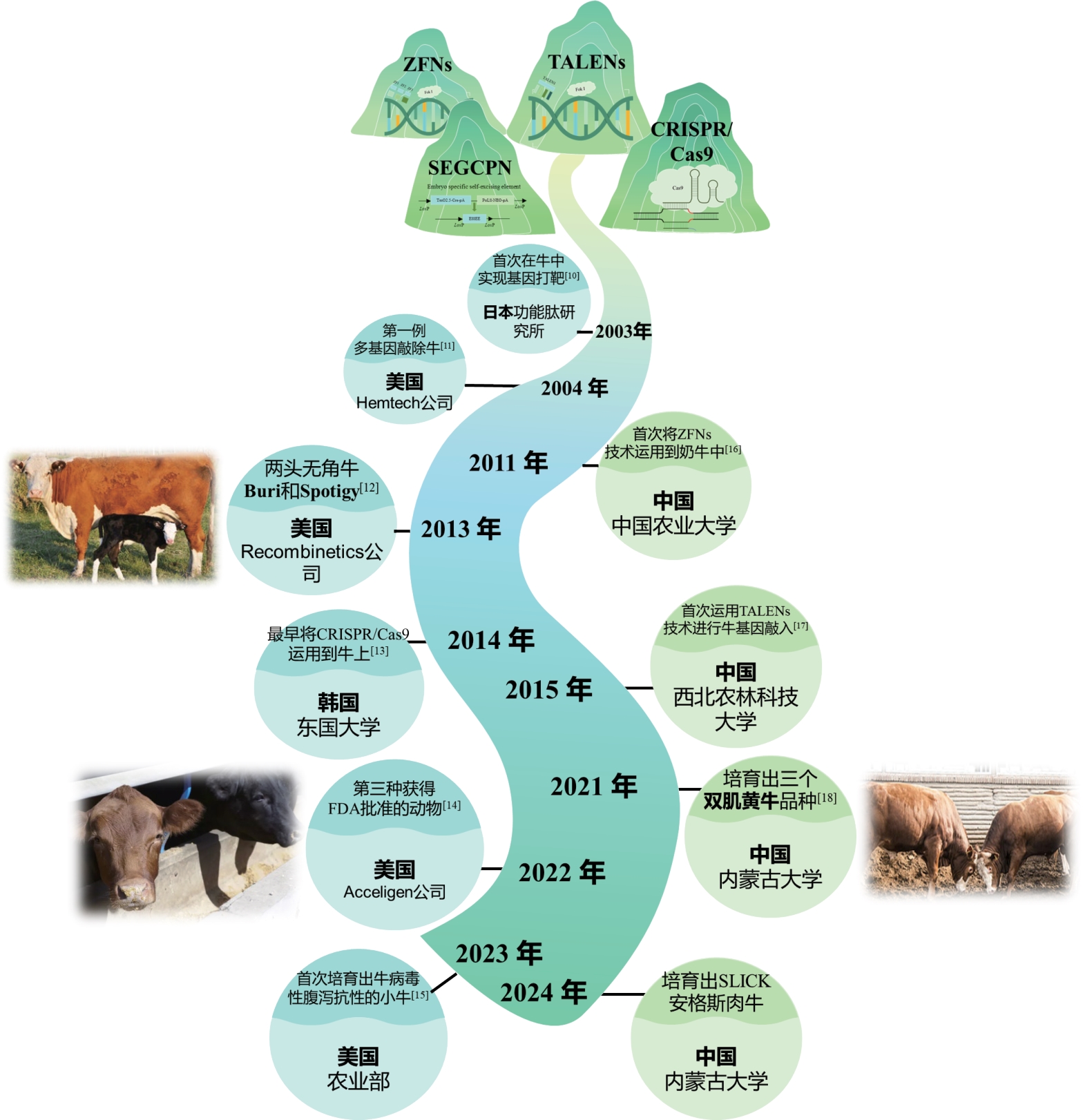
Fig. 1 Typical representative of gene-edited cattle studies
| [1] | Yuan MK, Gao YP, Han J, et al. The development and application of genome editing technology in ruminants: a review [J]. Front Agr Sci Eng, 2020, 7(2): 171. |
| [2] | Kim YG, Cha J, Chandrasegaran S. Hybrid restriction enzymes: zinc finger fusions to Fok I cleavage domain [J]. Proc Natl Acad Sci USA, 1996, 93(3): 1156-1160. |
| [3] | Carroll D. Genome engineering with zinc-finger nucleases [J]. Genetics, 2011, 188(4): 773-782. |
| [4] | Akram F, Sahreen S, Aamir F, et al. An insight into modern targeted genome-editing technologies with a special focus on CRISPR/Cas9 and its applications [J]. Mol Biotechnol, 2023, 65(2): 227-242. |
| [5] | Bibikova M, Carroll D, Segal DJ, et al. Stimulation of homologous recombination through targeted cleavage by chimeric nucleases [J]. Mol Cell Biol, 2001, 21(1): 289-297. |
| [6] | Christian M, Cermak T, Doyle EL, et al. Targeting DNA double-strand breaks with TAL effector nucleases [J]. Genetics, 2010, 186(2): 757-761. |
| [7] | Jinek M, Chylinski K, Fonfara I, et al. A programmable dual-RNA-guided DNA endonuclease in adaptive bacterial immunity [J]. Science, 2012, 337(6096): 816-821. |
| [8] | Khan SH. Genome-editing technologies: concept, pros, and cons of various genome-editing techniques and bioethical concerns for clinical application [J]. Mol Ther Nucleic Acids, 2019, 16: 326-334. |
| [9] | Wang M, Ding FR, Wang HP, et al. Versatile generation of precise gene edits in bovines using SEGCPN [J]. BMC Biol, 2023, 21(1): 226. |
| [10] | Sendai Y, Sawada T, Urakawa M, et al. Heterozygous disruption of the alpha1, 3-galactosyltransferase gene in cattle [J]. Transplantation, 2003, 76(6): 900-902. |
| [11] | Kuroiwa Y, Kasinathan P, Matsushita H, et al. Sequential targeting of the genes encoding immunoglobulin-mu and prion protein in cattle [J]. Nat Genet, 2004, 36(7): 775-780. |
| [12] | Carlson DF, Lancto CA, Zang B, et al. Production of hornless dairy cattle from genome-edited cell lines [J]. Nat Biotechnol, 2016, 34(5): 479-481. |
| [13] | Heo YT, Quan XY, Xu YN, et al. CRISPR/Cas9 nuclease-mediated gene knock-in in bovine-induced pluripotent cells [J]. Stem Cells Dev, 2015, 24(3): 393-402. |
| [49] | Moghaddassi S, Eyestone W, Bishop CE. TALEN-mediated modification of the bovine genome for large-scale production of human serum albumin [J]. PLoS One, 2014, 9(2): e89631. |
| [50] | 谭光万, 王秀东, 王济民, 等. 新形势下国家食物安全战略研究 [J]. 中国工程科学, 2023, 25(4): 1-13. |
| Tan GW, Wang XD, Wang JM, et al. National food security strategy in the new situation [J]. Strateg Study CAE, 2023, 25(4): 1-13. | |
| [51] | Rubin BE, Diamond S, Cress BF, et al. Species- and site-specific genome editing in complex bacterial communities [J]. Nat Microbiol, 2022, 7(1): 34-47. |
| [14] | Harrison C. CRISPR beef cattle get FDA green light [J]. Nat Biotechnol, 2022, 40(4): 448. |
| [15] | Workman AM, Heaton MP, Vander Ley BL, et al. First gene-edited calf with reduced susceptibility to a major viral pathogen [J]. PNAS Nexus, 2023, 2(5): pgad125. |
| [16] | Yu SL, Luo JJ, Song ZY, et al. Highly efficient modification of beta-lactoglobulin (BLG) gene via zinc-finger nucleases in cattle [J]. Cell Res, 2011, 21(11): 1638-1640. |
| [17] | Wu HB, Wang YS, Zhang Y, et al. TALE nickase-mediated SP110 knockin endows cattle with increased resistance to tuberculosis [J]. Proc Natl Acad Sci USA, 2015, 112(13): E1530-E1539. |
| [18] | 魏著英, 白春玲, 杨磊, 等. 肉牛Myostatin基因编辑育种研究 [J]. 中国畜禽种业, 2022, 18(10): 30-33. |
| Wei ZY, Bai CL, Yang L, et al. Research on Myostatin gene editing breeding of beef cattle [J]. The Chinese Livestock and Poultry Breeding, 2022, 18(10): 30-33. | |
| [19] | Shanthalingam S, Srikumaran S. Intact signal peptide of CD18, the beta-subunit of beta2-integrins, renders ruminants susceptible to Mannheimia haemolytica leukotoxin [J]. Proc Natl Acad Sci USA, 2009, 106(36): 15448-15453. |
| [20] | Liu ZG, Wu TW, Xiang GM, et al. Enhancing animal disease resistance, production efficiency, and welfare through precise genome editing [J]. Int J Mol Sci, 2022, 23(13): 7331. |
| [21] | Shanthalingam S, Tibary A, Beever JE, et al. Precise gene editing paves the way for derivation of Mannheimia haemolytica leukotoxin-resistant cattle [J]. Proc Natl Acad Sci USA, 2016, 113(46): 13186-13190. |
| [22] | Gao YP, Wu HB, Wang YS, et al. Single Cas9 nickase induced generation of NRAMP1 knockin cattle with reduced off-target effects [J]. Genome Biol, 2017, 18(1): 13. |
| [23] | Liu X, Wang YS, Tian YC, et al. Generation of mastitis resistance in cows by targeting human lysozyme gene to β-casein locus using zinc-finger nucleases [J]. Proc Biol Sci, 2014, 281(1780): 20133368. |
| [24] | Yuan MK, Zhang JC, Gao YP, et al. HMEJ-based safe-harbor genome editing enables efficient generation of cattle with increased resistance to tuberculosis [J]. J Biol Chem, 2021, 296: 100497. |
| [25] | Bevacqua RJ, Fernandez-Martín R, Savy V, et al. Efficient edition of the bovine PRNP prion gene in somatic cells and IVF embryos using the CRISPR/Cas9 system [J]. Theriogenology, 2016, 86(8): 1886-1896.e1. |
| [26] | Wang M, Sun ZL, Ding FR, et al. Efficient TALEN-mediated gene knockin at the bovine Y chromosome and generation of a sex-reversal bovine [J]. Cell Mol Life Sci, 2021, 78(13): 5415-5425. |
| [27] | Owen JR, Hennig SL, McNabb BR, et al. One-step generation of a targeted knock-in calf using the CRISPR-Cas9 system in bovine zygotes [J]. BMC Genomics, 2021, 22(1): 118. |
| [28] | Zhao XL, Nie JY, Tang YY, et al. Generation of transgenic cloned buffalo embryos harboring the EGFP gene in the Y chromosome using CRISPR/Cas9-mediated targeted integration [J]. Front Vet Sci, 2020, 7: 199. |
| [29] | Tan WF, Carlson DF, Lancto CA, et al. Efficient nonmeiotic allele introgression in livestock using custom endonucleases [J]. Proc Natl Acad Sci USA, 2013, 110(41): 16526-16531. |
| [30] | Berman A, Folman Y, Kaim M, et al. Upper critical temperatures and forced ventilation effects for high-yielding dairy cows in a subtropical climate [J]. J Dairy Sci, 1985, 68(6): 1488-1495. |
| [31] | Liu SH, Yue TT, Ahmad MJ, et al. Transcriptome analysis reveals potential regulatory genes related to heat tolerance in Holstein dairy cattle [J]. Genes, 2020, 11(1): 68. |
| [32] | Bunch H, Calderwood SK. Role of heat shock factors in stress-induced transcription: an update [J]. Methods Mol Biol, 2023, 2693: 25-38. |
| [33] | Wang LY, Gao YP, Wang JP, et al. Selection signature and CRISPR/Cas9-mediated gene knockout analyses reveal ZC3H10 involved in cold adaptation in Chinese native cattle [J]. Genes, 2022, 13(10): 1910. |
| [34] | Shandilya UK, Sharma A, Sodhi M, et al. Editing of HSF-1 and Na/K-ATPase α1 subunit by CRISPR/Cas9 reduces thermal tolerance of bovine skin fibroblasts to heat shock in vitro [J]. Anim Biotechnol, 2023, 34(8): 3626-3636. |
| [35] | Sun ZL, Wang M, Han SW, et al. Production of hypoallergenic milk from DNA-free beta-lactoglobulin (BLG) gene knockout cow using zinc-finger nucleases mRNA [J]. Sci Rep, 2018, 8(1): 15430. |
| [36] | Tara A, Singh P, Gautam D, et al. CRISPR-mediated editing of β-lactoglobulin (BLG) gene in buffalo [J]. Sci Rep, 2024, 14(1): 14822. |
| [37] | Luo JJ, Song ZY, Yu SL, et al. Efficient generation of myostatin (MSTN) biallelic mutations in cattle using zinc finger nucleases [J]. PLoS One, 2014, 9(4): e95225. |
| [38] | Wu X, Ouyang HS, Duan B, et al. Production of cloned transgenic cow expressing omega-3 fatty acids [J]. Transgenic Res, 2012, 21(3): 537-543. |
| [39] | Guo T, Liu XF, Ding XB, et al. Fat-1 transgenic cattle as a model to study the function of ω-3 fatty acids [J]. Lipids Health Dis, 2011, 10: 244. |
| [40] | Liu XF, Bai CL, Ding XB, et al. Microarray analysis of the gene expression profile and lipid metabolism in fat-1 transgenic cattle [J]. PLoS One, 2015, 10(10): e0138874. |
| [41] | Liu XF, Wei ZY, Bai CL, et al. Insights into the function of n-3 PUFAs in fat-1 transgenic cattle [J]. J Lipid Res, 2017, 58(8): 1524-1535. |
| [42] | 孔亮亮, 于建荣. 转基因动物育种产业化现状和发展趋势 [J]. 生物产业技术, 2013(5): 52-58. |
| Kong LL, Yu JR. Present situation and development trend of transgenic animal breeding industrialization [J]. Biotechnol Bus, 2013(5): 52-58. | |
| [43] | Ikeda M, Matsuyama S, Akagi S, et al. Correction of a disease mutation using CRISPR/Cas9-assisted genome editing in Japanese black cattle [J]. Sci Rep, 2017, 7(1): 17827. |
| [44] | de Oliveira VC, Moreira GSA, Bressan FF, et al. Edition of TFAM gene by CRISPR/Cas9 technology in bovine model [J]. PLoS One, 2019, 14(3): e0213376. |
| [45] | de Oliveira VC, Gomes Mariano Junior C, Belizário JE, et al. Characterization of post-edited cells modified in the TFAM gene by CRISPR/Cas9 technology in the bovine model [J]. PLoS One, 2020, 15(7): e0235856. |
| [46] | Key J, Maletzko A, Kohli A, et al. Loss of mitochondrial ClpP, Lonp1, and Tfam triggers transcriptional induction of Rnf213, a susceptibility factor for moyamoya disease [J]. Neurogenetics, 2020, 21(3): 187-203. |
| [47] | Tucker EJ, Rius R, Jaillard S, et al. Genomic sequencing highlights the diverse molecular causes of Perrault syndrome: a peroxisomal disorder (PEX6), metabolic disorders (CLPP, GGPS1), and mtDNA maintenance/translation disorders (LARS2, TFAM) [J]. Hum Genet, 2020, 139(10): 1325-1343. |
| [48] | 付玉华, 周秀梅, 钱其军. 乳腺生物反应器的研究和产业化进展 [J]. 中国畜牧兽医, 2010, 37(8): 45-51. |
| Fu YH, Zhou XM, Qian QJ. The current progress of mammary gland bioreactor for research and industry [J]. China Anim Husb Vet Med, 2010, 37(8): 45-51. |
| [1] | WEN Bo-lin, WAN Min, HU Jian-jun, WANG Ke-xiu, JING Sheng-lin, WANG Xin-yue, ZHU Bo, TANG Ming-xia, LI Bing, HE Wei, ZENG Zi-xian. Establishment of Genetic Transformation and Gene Editing System for a Potato Cultivar Chuanyu 50 [J]. Biotechnology Bulletin, 2025, 41(4): 88-97. |
| [2] | LU Yong-jie, XIA Hai-qian, LI Yong-ling, ZHANG Wen-jian, YU Jing, ZHAO Hui-na, WANG Bing, XU Ben-bo, LEI Bo. Cloning and Expression Analysis of AP2/ERF Transcription Factor NtESR2 in Nicotiana tabacum [J]. Biotechnology Bulletin, 2025, 41(4): 266-277. |
| [3] | CUI Hai-yang, TAN Miao, QUAN Zhuang, CHEN Hong-li, DONG Yan-min, TANG Li-chun. Generation of Virus-free TRAC-knocked-in T Cells Using Cas9TX [J]. Biotechnology Bulletin, 2024, 40(9): 190-197. |
| [4] | HOU Wen-ting, SUN Lin, ZHANG Yan-jun, DONG He-zhong. Application of Gene-editing Technology for Germplasm Innovation and Genetic Improvement in Cotton [J]. Biotechnology Bulletin, 2024, 40(7): 68-77. |
| [5] | ZHU Tian-yi, KONG Gui-mei, JIAO Hong-mei, GUO Ting-ting, WU Ri-han, LIU Cui-cui, GAO Cheng-feng, LI Guo-cai. Establishment of A Bacterial Model of CRISPR/Cas9 Mediated adeG Gene Knockout in Escherichia coli [J]. Biotechnology Bulletin, 2024, 40(2): 55-64. |
| [6] | GAO Deng-ke, MA Bai-rong, GUO Yi-ying, LIU Wei, LIU Tian, JIN Ya-ping, JIANG Zhou, CHEN Hua-tao. Establishment of Quaking Knockout Mouse Embryonic Fibroblast Cell Line Using CRISPR/Cas9 Technology [J]. Biotechnology Bulletin, 2024, 40(2): 65-72. |
| [7] | ZHANG Hong-min, LONG Wen, LAO Xiao-qing, CHEN Wen-yan, SHANG Xue-mei, WANG Hong-lian, WANG Li, SU Hong-wei, SHEN Hong-ping, SHEN Hong-chun. Construction of Pmepa1 Knockout TCMK1 Mouse Renal Tubular Epithelial Cell Line Using CRISPR/Cas9 Technology [J]. Biotechnology Bulletin, 2024, 40(2): 73-79. |
| [8] | ZHOU Jia-wei, WU Zhi-qiang. Construction Method of mitoTALENs Mitochondrial Gene Editing Vector in Plants [J]. Biotechnology Bulletin, 2024, 40(10): 172-180. |
| [9] | CHEN Xiao-ling, LIAO Dong-qing, HUANG Shang-fei, CHEN Ying, LU Zhi-long, CHEN Dong. Advances in CRISPR/Cas9 System Modifying Saccharomycescerevisiae [J]. Biotechnology Bulletin, 2023, 39(8): 148-158. |
| [10] | YANG Yu-mei, ZHANG Kun-xiao. Establishing a Stable Cell Line with Site-specific Integration of ERK Kinase Phase-separated Fluorescent Probe Using CRISPR/Cas9 Technology [J]. Biotechnology Bulletin, 2023, 39(8): 159-164. |
| [11] | SHI Wei-tao, YAO Chun-peng, WEI Wen-Kang, WANG Lei, FANG Yuan-jie, TONG Yu-jie, MA Xiao-jiao, JIANG Wen, ZHANG Xiao-ai, SHAO Wei. Establishment of MDH2 Knockout Cell Line Using CRISPR/Cas9 Technology and Study of Anti-deoxynivalenol Effect [J]. Biotechnology Bulletin, 2023, 39(7): 307-315. |
| [12] | LIU Xiao-yan, ZHU Zhen-liang, SHI Guang-yu, HUA Zi-yu, YANG Chen, ZHANG Yong, LIU Jun. Strategies to Optimize the Expression of Mammary Gland Bioreactor [J]. Biotechnology Bulletin, 2023, 39(5): 77-91. |
| [13] | CHENG Jing-wen, CAO Lei, ZHANG Yan-min, YE Qian, CHEN Min, TAN Wen-song, ZHAO Liang. Establishment and Application of Multigene Engineering Transformation Strategy for CHO Cells [J]. Biotechnology Bulletin, 2023, 39(2): 283-291. |
| [14] | HUANG Wen-li, LI Xiang-xiang, ZHOU Wen-ting, LUO Sha, YAO Wei-jia, MA Jie, ZHANG Fen, SHEN Yu-sen, GU Hong-hui, WANG Jian-sheng, SUN Bo. Targeted Editing of BoZDS in Broccoli by CRISPR/Cas9 Technology [J]. Biotechnology Bulletin, 2023, 39(2): 80-87. |
| [15] | WANG Bing, ZHAO Hui-na, YU Jing, CHEN Jie, LUO Mei, LEI Bo. Regulation of Leaf Bud by REVOLUTA in Tobacco Based on CRISPR/Cas9 System [J]. Biotechnology Bulletin, 2023, 39(10): 197-208. |
| Viewed | ||||||
|
Full text |
|
|||||
|
Abstract |
|
|||||
