







Biotechnology Bulletin ›› 2026, Vol. 42 ›› Issue (7): 193-203.doi: 10.13560/j.cnki.biotech.bull.1985.2025-1191
DONG Ya-ru, XIU Yu, ZHAO Dong-xiao, ZHU Hong, ZHU Lin, LIU Hui-fen( )
)
Received:2025-11-04
Online:2026-07-26
Published:2026-07-20
Contact:
LIU Hui-fen
E-mail:liuhuifen77@163.com
DONG Ya-ru, XIU Yu, ZHAO Dong-xiao, ZHU Hong, ZHU Lin, LIU Hui-fen. Transcriptome-wide Identification of the GRAS Gene Family in Mulberry and Analysis of MnGRAS22 in Response to Salt Stress[J]. Biotechnology Bulletin, 2026, 42(7): 193-203.
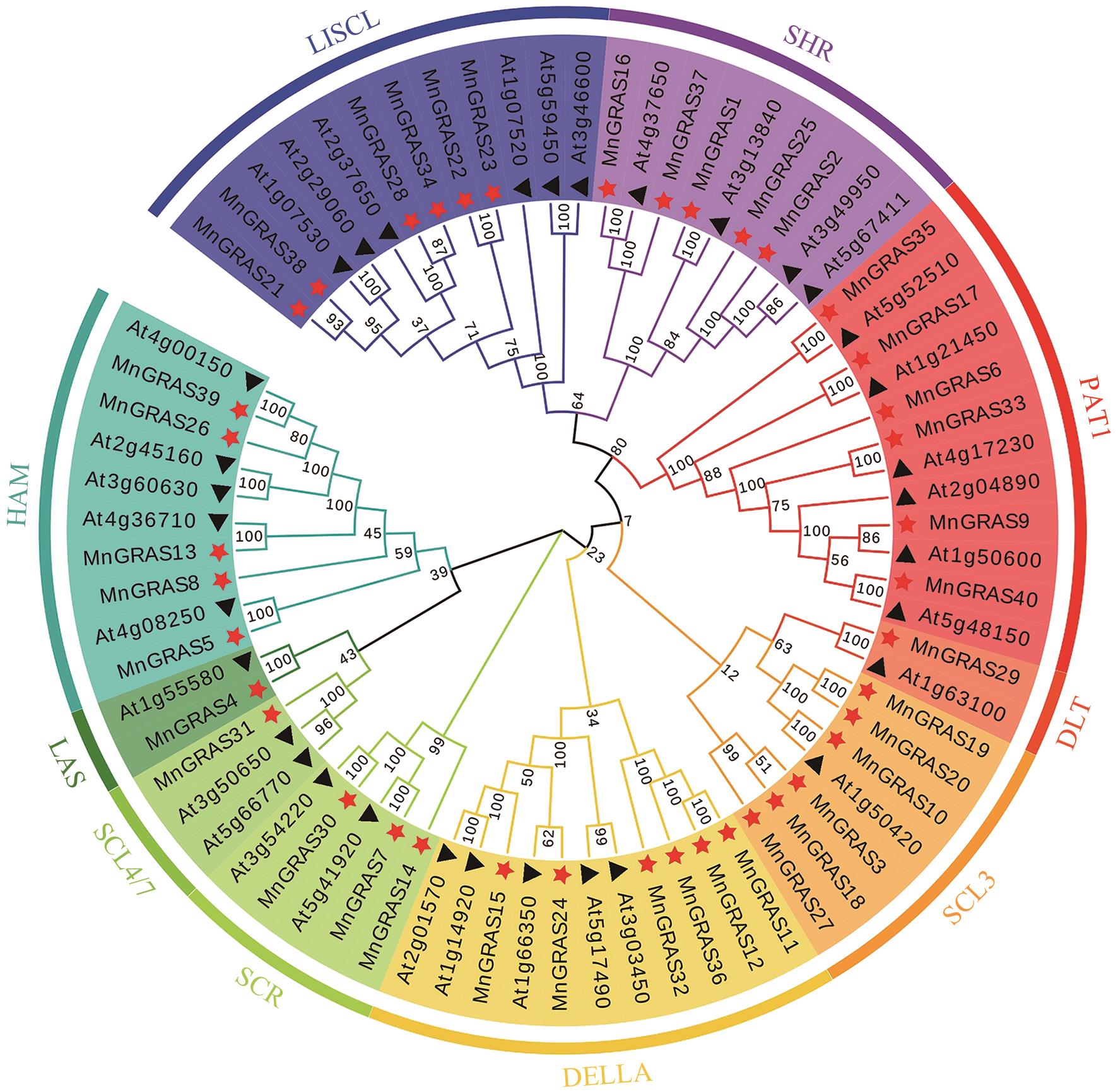
Fig. 1 Phylogenetic analysis of GRAS family members from mulberry and ArabidopsisThe red stars indicates the GRAS of mulberry and black triangle indicates Arabidopsis, respectively
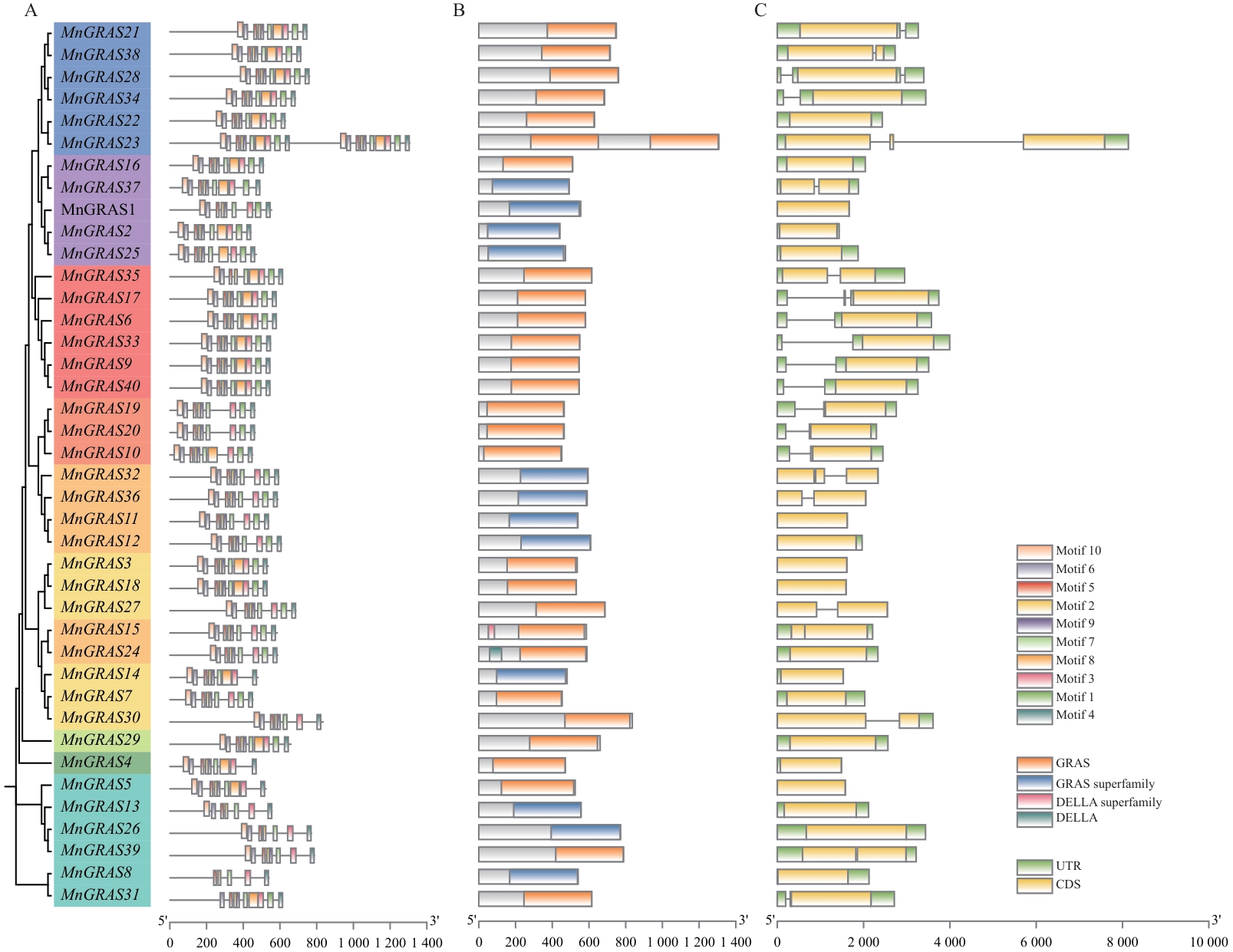
Fig. 2 Conserved motif (A), domains (B), and gene structure (C) analysis of MnGRAS gene family in mulberry
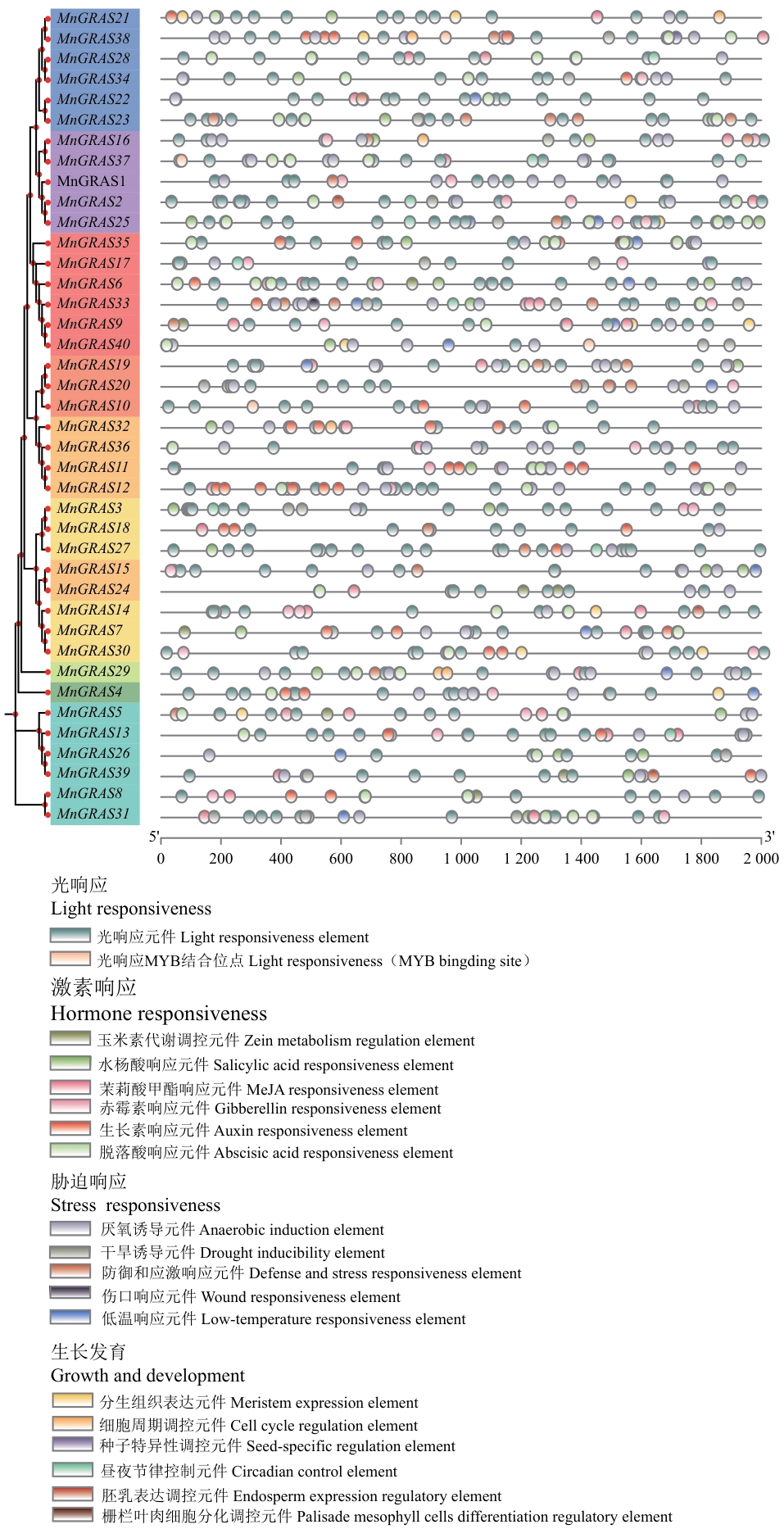
Fig. 3 Distribution of cis-acting elements of GRAS gene promoter in mulberry
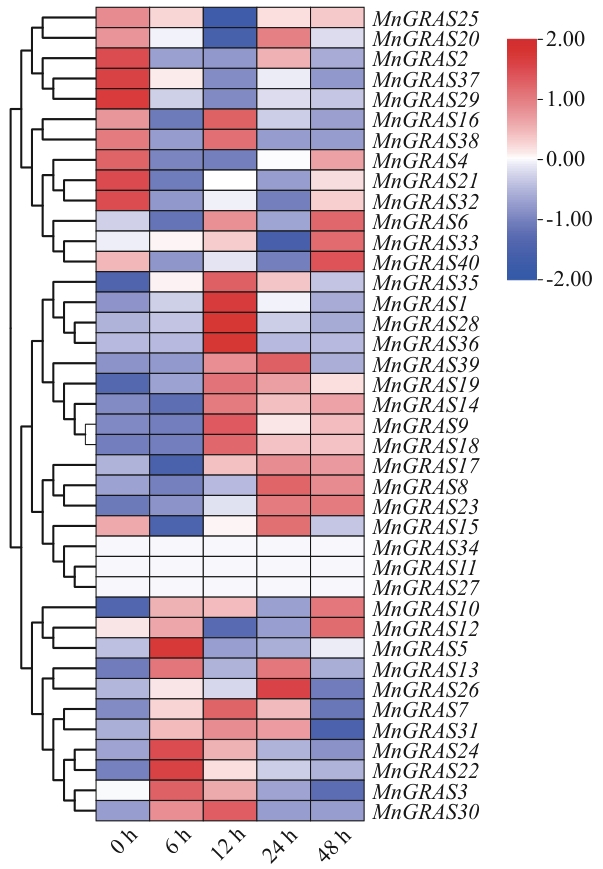
Fig. 4 Expression patterns of GRAS in mulberry in response to salt stressHeatmap showing expressions of GRAS genes in mulberry leaves under 200 mmol/L NaCl treatment. Red indicates high expression, and blue indicates low expression
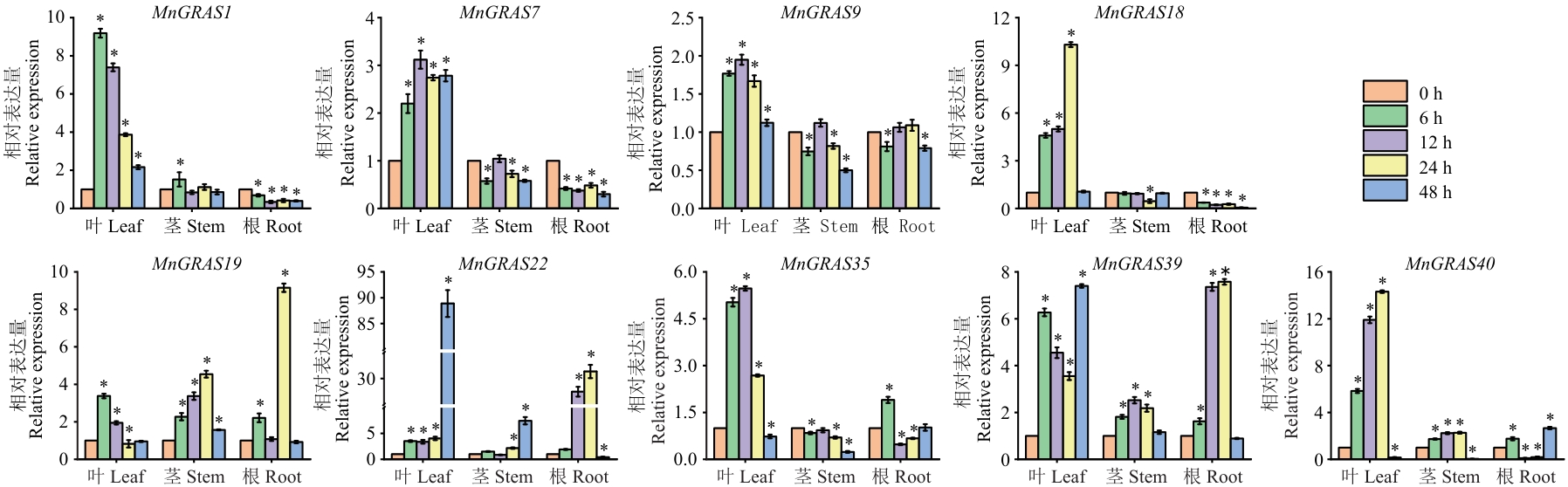
Fig. 5 Tissue-specific expression analysis of GRAS genes in mulberry under salt stress* indicates significant difference at the P<0.05 level between the treatment group and the control group within the same group. The same below
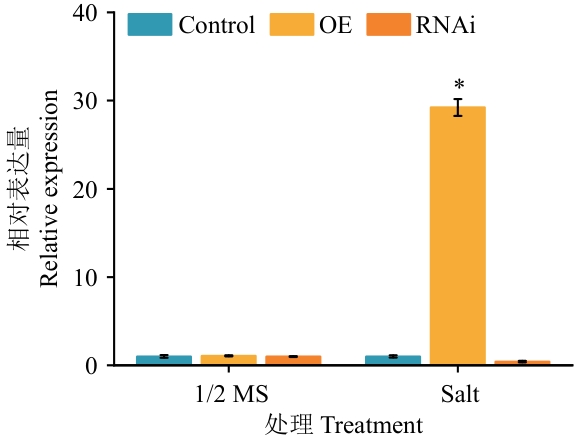
Fig. 6 RT-qPCR detection of mulberry plants transiently transformed with MnGRAS22
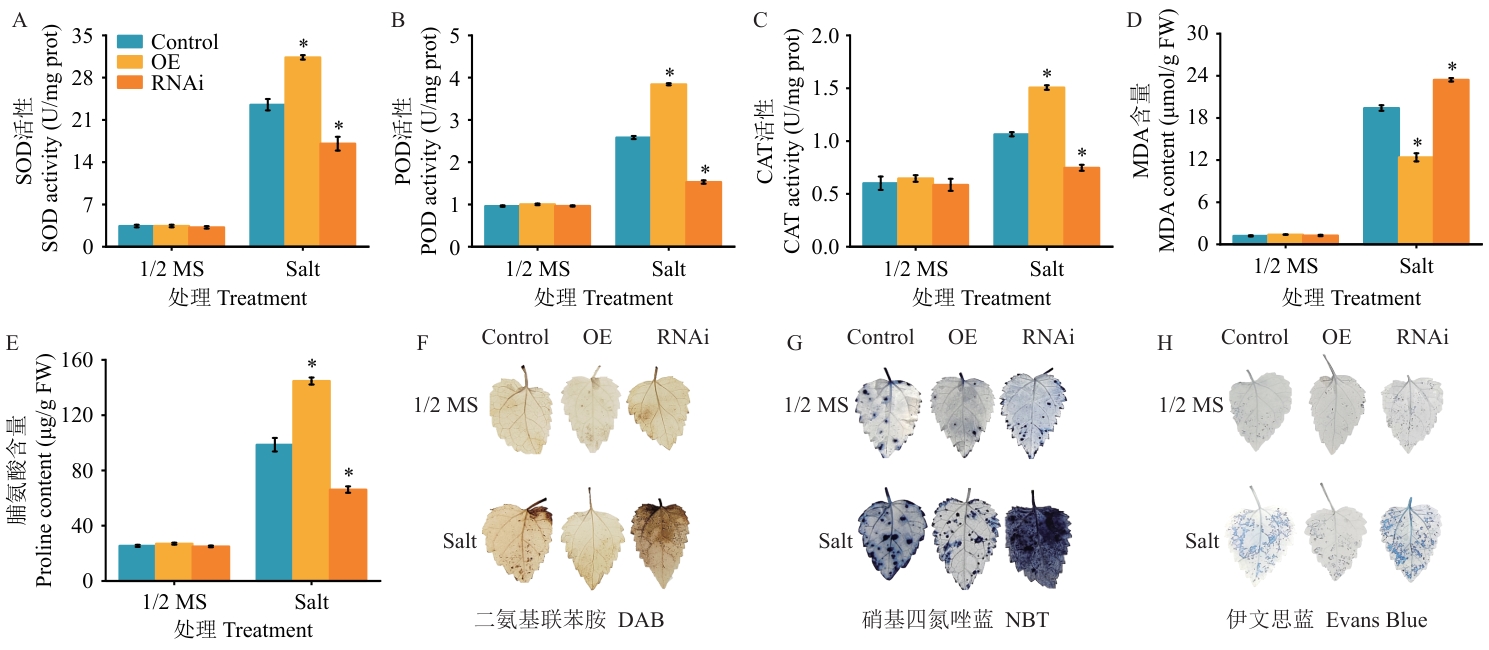
Fig. 7 Salt-tolerance analysis of MnGRAS22 geneA: SOD activity; B: POD activity; C: CAT activity; D: MDA content; E: Proline content; F: DAB histochemical staining; G: NBT histochemical staining; H: Evans blue histochemical staining
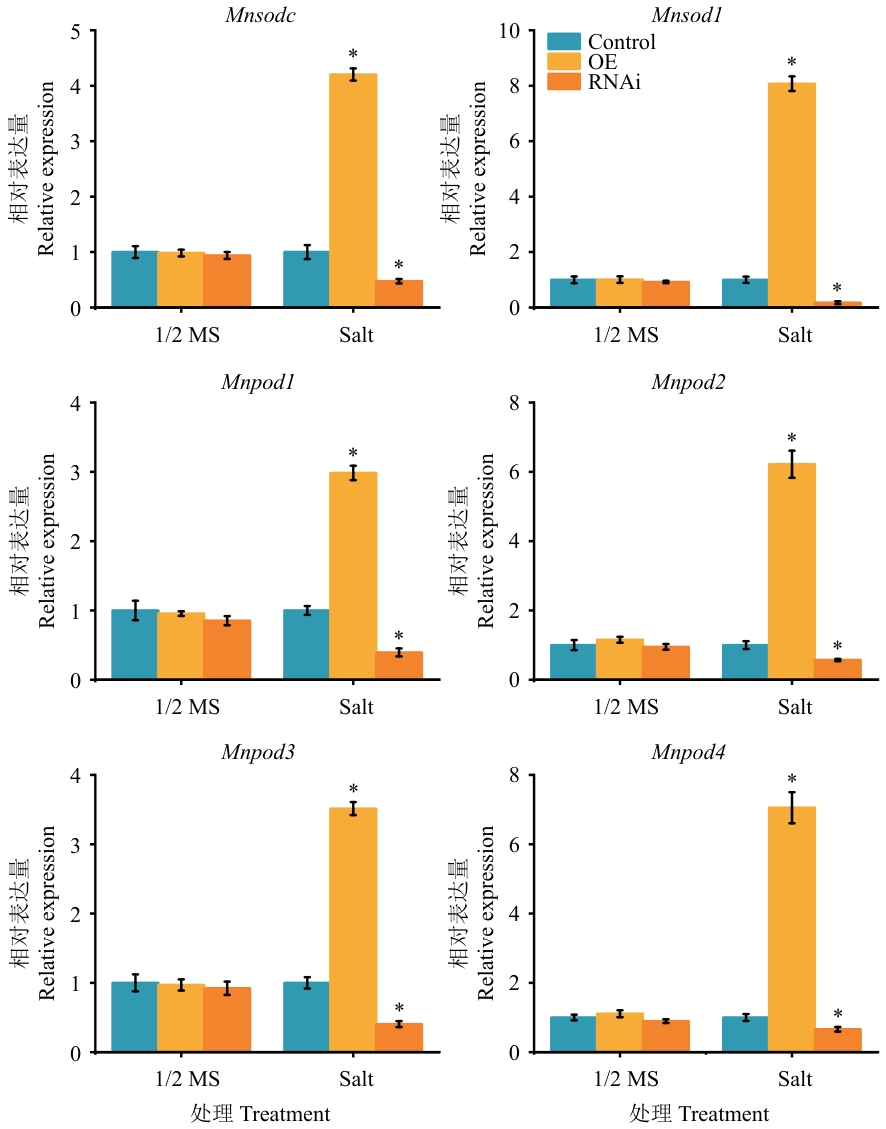
Fig. 8 Expression analysis of antioxidant enzyme genes
| [1] | Chen G, Li D, Yao P, et al. Metabolic and transcriptional analysis reveals flavonoid involvement in the drought stress response of mulberry leaves [J]. Int J Mol Sci, 2024, 25(13): 7417. |
| [2] | Pysh LD, Wysocka-Diller JW, Camilleri C, et al. The GRAS gene family in Arabidopsis: sequence characterization and basic expression analysis of the SCARECROW-LIKE genes [J]. Plant J, 1999, 18(1): 111-119. |
| [3] | Hirsch S, Kim J, Muñoz A, et al. GRAS proteins form a DNA binding complex to induce gene expression during nodulation signaling in Medicago truncatula [J]. Plant Cell, 2009, 21(2): 545-557. |
| [4] | Zhang H, Mi LM, Xu L, et al. Genome-wide identification, characterization, interaction network and expression profile of GRAS gene family in sweet orange (Citrus sinensis) [J]. Sci Rep, 2019, 9: 2156. |
| [5] | Li SP, Zhao YH, Zhao Z, et al. Crystal structure of the GRAS domain of SCARECROW-LIKE7 in Oryza sativa [J]. Plant Cell, 2016, 28(5): 1025-1034. |
| [6] | Sun XL, Jones WT, Harvey D, et al. N-terminal domains of DELLA proteins are intrinsically unstructured in the absence of interaction with GID1/gibberellic acid receptors [J]. J Biol Chem, 2010, 285(15): 11557-11571. |
| [7] | Gao MJ, Parkin I, Lydiate D, et al. An auxin-responsive SCARECROW-like transcriptional activator interacts with histone deacetylase [J]. Plant Mol Biol, 2004, 55(3): 417-431. |
| [8] | Wang Q, Yang YB, Yu YH, et al. Genome-wide characterization of the GRAS gene family in Cyclocarya paliurus and its involvement in heterodichogamy [J]. Agronomy, 2024, 14(10): 2397. |
| [9] | He ZH, Tian ZZ, Zhang Q, et al. Genome-wide identification, expression and salt stress tolerance analysis of the GRAS transcription factor family in Betula platyphylla [J]. Front Plant Sci, 2022, 13: 1022076. |
| [10] | Gao L, Shi AK, Wang M, et al. Genome-wide identification and expression profiling of the GRAS gene family in Taxus cuspidate [J]. Genes, 2025, 16(11): 1345. |
| [11] | 毛可欣, 王海荣, 安淼, 等. 中华猕猴桃GRAS基因家族鉴定及低温胁迫表达分析 [J]. 生物技术通报, 2023, 39(11): 297-307. |
| Mao KX, Wang HR, An M, et al. Identification of GRAS gene family and expression analysis under low temperature stress in Actinidia chinensis [J]. Biotechnol Bull, 2023, 39(11): 297-307. | |
| [12] | Wu R, Liu WH, Liu KQ, et al. Genome-wide identification and expression of the GRAS gene family in oat (Avena sativa L.) [J]. Agronomy, 2023, 13(7): 1807. |
| [13] | Guan YY, Wang KG, Zhao JJ, et al. Genome-wide identification of TaeGRASs responsive to biotic stresses and functional analysis of TaeSCL6 in wheat resistance to powdery mildew [J]. BMC Genomics, 2024, 25(1): 1149. |
| [14] | Greb T, Clarenz O, Schafer E, et al. Molecular analysis of the LATERAL SUPPRESSOR gene in Arabidopsis reveals a conserved control mechanism for axillary meristem formation [J]. Genes Dev, 2003, 17(9): 1175-1187. |
| [15] | Liu YD, Wen L, Shi Y, et al. Stress-responsive tomato gene SlGRAS4 function in drought stress and abscisic acid signaling [J]. Plant Sci, 2021, 304: 110804. |
| [16] | 刁邓超, 李云丽, 孟祥宇, 等. 小麦TaGRAS34-5A的克隆及耐热功能研究 [J]. 中国农业科学, 2025, 58(4): 617-634. |
| Diao DC, Li YL, Meng XY, et al. Cloning and heat tolerance function of wheat TaGRAS34-5A gene [J]. Sci Agric Sin, 2025, 58(4): 617-634. | |
| [17] | Lin JT, Wu JH, Zhang D, et al. The GRAS gene family and its roles in pineapple (Ananas comosus L.) developmental regulation and cold tolerance [J]. BMC Plant Biol, 2024, 24(1): 1204. |
| [18] | Huang JY, Ren HF, Cheng F, et al. Comprehensive genome-wide characterization of the GRAS gene family and their role in salt stress tolerance in Punica granatum L. [J]. Horticulturae, 2025, 11(5): 504. |
| [19] | Ma HS, Liang D, Shuai P, et al. The salt- and drought-inducible poplar GRAS protein SCL7 confers salt and drought tolerance in Arabidopsis thaliana [J]. J Exp Bot, 2010, 61(14): 4011-4019. |
| [20] | She M, Zheng DY, Zhang SP, et al. Functional analysis of maize GRAS transcription factor gene ZmGRAS72 in response to drought and salt stresses [J]. Agric Commun, 2024, 2(3): 100054. |
| [21] | Ni LJ, Wang ZQ, Liu XD, et al. Genome-wide study of the GRAS gene family in Hibiscus hamabo Sieb. et Zucc and analysis of HhGRAS14-induced drought and salt stress tolerance in Arabidopsis [J]. Plant Sci, 2022, 319: 111260. |
| [22] | Li WR, Yu JC, Wang RH, et al. Overexpression of SmGRAS5 enhances tolerance to abiotic stresses in Salvia miltiorrhiza [J]. Plant Physiol Biochem, 2025, 221: 109669. |
| [23] | Ma A, Wang TJ, Wang HR, et al. The GRAS transcription factor OsGRAS2 negatively impacts salt tolerance in rice [J]. Plant Cell Rep, 2024, 44(1): 17. |
| [24] | Khan Y, Xiong Z, Zhang H, et al. Expression and roles of GRAS gene family in plant growth, signal transduction, biotic and abiotic stress resistance and symbiosis formation—a review [J]. Plant Biol, 2022, 24(3): 404-416. |
| [25] | Dong XM, Han BC, Yin XY, et al. Genome-wide identification of the GRAS transcription factor family in autotetraploid cultivated alfalfa (Medicago sativa L.) and expression analysis under drought stress [J]. Ind Crops Prod, 2023, 194: 116379. |
| [26] | Hao XL, Gong YY, Chen SX, et al. Genome-wide identification of GRAS transcription factors and their functional analysis in salt stress response in sugar beet [J]. Int J Mol Sci, 2024, 25(13): 7132. |
| [27] | Sun XL, Xue B, Jones WT, et al. A functionally required unfoldome from the plant Kingdom: intrinsically disordered N-terminal domains of GRAS proteins are involved in molecular recognition during plant development [J]. Plant Mol Biol, 2011, 77(3): 205-223. |
| [28] | Lamesch P, Berardini TZ, Li DH, et al. The Arabidopsis Information Resource (TAIR): improved gene annotation and new tools [J]. Nucleic Acids Res, 2012, 40(Database issue): D1202-D1210. |
| [29] | Letunic I, Khedkar S, Bork P. SMART: recent updates, new developments and status in 2020 [J]. Nucleic Acids Res, 2021, 49(D1): D458-D460. |
| [30] | Chen CJ, Wu Y, Li JW, et al. TBtools-II: a “one for all, all for one” bioinformatics platform for biological big-data mining [J]. Mol Plant, 2023, 16(11): 1733-1742. |
| [31] | Chou KC, Shen HB. Plant-mPLoc: a top-down strategy to augment the power for predicting plant protein subcellular localization [J]. PLoS One, 2010, 5(6): e11335. |
| [32] | Kumar S, Stecher G, Tamura K. MEGA7: molecular evolutionary genetics analysis version 7.0 for bigger datasets [J]. Mol Biol Evol, 2016, 33(7): 1870-1874. |
| [33] | He ZL, Zhang HK, Gao SH, et al. Evolview v2: an online visualization and management tool for customized and annotated phylogenetic trees [J]. Nucleic Acids Res, 2016, 44(W1): W236-W241. |
| [34] | Wang JY, Chitsaz F, Derbyshire MK, et al. The conserved domain database in 2023 [J]. Nucleic Acids Res, 2023, 51(D1): D384-D388. |
| [35] | Lescot M, Déhais P, Thijs G, et al. PlantCARE, a database of plant cis-acting regulatory elements and a portal to tools for in silico analysis of promoter sequences [J]. Nucleic Acids Res, 2002, 30(1): 325-327. |
| [36] | 董亚茹, 李茹霞, 赵东晓, 等. 7个桑树AP2/ERF转录因子的生物信息学及表达分析 [J]. 山东农业科学, 2022, 54(1): 7-13. |
| Dong YR, Li RX, Zhao DX, et al. Bioinformatics and expression analyses of 7 mulberry AP2/ERF transcription factors [J]. Shandong Agric Sci, 2022, 54(1): 7-13. | |
| [37] | Ji XY, Zheng L, Liu YJ, et al. A transient transformation system for the functional characterization of genes involved in stress response [J]. Plant Mol Biol Report, 2014, 32(3): 732-739. |
| [38] | 陈建勋, 王晓峰. 植物生理学实验指导 [M]. 广州: 华南理工大学出版社, 2002. |
| Chen JX, Wang XF. Experimental instruction of plant physiology [M]. Guangzhou: South China University of Technology Press, 2002. | |
| [39] | Allen P, Bennett K, Heritage B. SPSS Statistics Version 22: A Practical Guide [M]. 3rd ed. Sydney: Cengage Learning Australia Pty Limited, 2014. |
| [40] | Corporation OriginLab. Origin 2024 [CP]. Northampton: OriginLab Corporation, 2023. |
| [41] | Inc Adobe. Adobe Illustrator 29.8 [CP]. San Jose: Adobe Inc., 2025. |
| [42] | Sun Y, Yuan T. Genome-wide analysis of GRAS gene family and functional identification of a putative development and maintenance of axillary meristematic tissue gene PlGRAS22 in Paeonia ludlowii [J]. Int J Biol Macromol, 2025, 297: 139879. |
| [43] | 孔青洋, 张晓龙, 李娜, 等. 单叶蔷薇GRAS转录因子家族鉴定及表达分析 [J]. 生物技术通报, 2025, 41(1): 210-220. |
| Kong QY, Zhang XL, Li N, et al. Identification and expression analysis of GRAS transcription factor family in Rosa persica [J]. Biotechnol Bull, 2025, 41(1): 210-220. | |
| [44] | Chen Y, Zhu PP, Wu SY, et al. Identification and expression analysis of GRAS transcription factors in the wild relative of sweet potato Ipomoea trifida [J]. BMC Genomics, 2019, 20(1): 911. |
| [45] | Chen JW, Yan Q, Li JW, et al. The GRAS gene family and its roles in seed development in litchi (Litchi chinensis Sonn) [J]. BMC Plant Biol, 2021, 21(1): 423. |
| [46] | Ming RH, Fang T, Ling W, et al. The GRAS transcription factor PtrPAT1 of Poncirus trifoliata functions in cold tolerance and modulates glycine betaine content by regulating the BADH-like gene [J]. Hortic Res, 2024, 12(1): uhae296. |
| [47] | 刘丽, 武琦, 高婷, 等. 太行菊GRAS基因家族鉴定及其在盐胁迫下的表达分析 [J]. 山西农业大学学报: 自然科学版, 2025, 45(6): 1-11. |
| Liu L, Wu Q, Gao T, et al. Identification of the GRAS gene family in Opisthopappus taihangensis and its analysis expression under salt stress [J]. J Shanxi Agric Univ Nat Sci Ed, 2025, 45(6): 1-11. | |
| [48] | Weng YH, Chen XY, Hao ZD, et al. Genome-wide analysis of the GRAS gene family in Liriodendron chinense reveals the putative function in abiotic stress and plant development [J]. Front Plant Sci, 2023, 14: 1211853. |
| [49] | Zentella R, Zhang ZL, Park M, et al. Global analysis of della direct targets in early gibberellin signaling in Arabidopsis [J]. Plant Cell, 2007, 19(10): 3037-3057. |
| [50] | Tong N, Li D, Zhang ST, et al. Genome-wide identification and expression analysis of the GRAS family under low-temperature stress in bananas [J]. Front Plant Sci, 2023, 14: 1216070. |
| [51] | Li L, Tian ZZ, Zhao ZZ, et al. The GRAS transcription factor BpGRAS34 functions as a positive regulator of salt stress response in Betula platyphylla [J]. Plant Sci, 2025, 358: 112575. |
| [1] | CHEN Yi-yan, ZHANG Dong-er, ZHANG Tao, LIU Yu-hao, TANG Jie, SHENG Xia-bing, HU Yuan-yi, AI Zhi-yong, LI Ying-jiang, LIU Xiao-lin. Analysis on Function of Rice OsSULTR2;2 and Regulation of Seedling Tolerance to Salt [J]. Biotechnology Bulletin, 2026, 42(7): 116-125. |
| [2] | WANG Hong-rui, ZHAO Yi-ru, RAO Shu-pei, CHEN Jin-huan. Research on the Function of LrCYP78A5 Gene from Lycium ruthenicum in Response to Drought and Salt Stress [J]. Biotechnology Bulletin, 2026, 42(7): 182-192. |
| [3] | LI Wan, WU Ya-qian, WU Fang, ZHAO Yong-ping. The Functional Study of StDREB4 Gene in Response to Salt and Drought Stress in Potato [J]. Biotechnology Bulletin, 2026, 42(6): 53-63. |
| [4] | WANG Jia-bin, HU Yue, CHEN Jia-jie, WANG Meng, HE Xiu-yun, LI Zhi-yong, LI Jian, WANG Mei-na. Combined Metabolomic and Transcriptomic Analysis in Different Parts of Paphiopedilum purpuratum [J]. Biotechnology Bulletin, 2026, 42(6): 279-293. |
| [5] | MENG Hong-yu, LIU Ya-nan, WU Jun-xin, SHEN Qiong. Identification and Analysis of the NAC Transcription Factors Gene Family in Cucurbita moschata Duch. [J]. Biotechnology Bulletin, 2026, 42(6): 237-249. |
| [6] | GU Heng, ZHENG Dong, ZAI Zhou-ying, CHEN Gong-wei, YUE Yuan-zheng, WANG Liang-gui, YANG Xiu-lian. Functional Study of Osmanthus fragransOfSVB1 in Response to Salt Stress [J]. Biotechnology Bulletin, 2026, 42(5): 332-339. |
| [7] | LIANG Hui-qi, CHEN Yi-cun, WANG Yang-dong, ZHAO Yun-xiao, GAO Ming. Identification and Expression Analysis of the PAT1 Gene Subfamily in Litsea cubeba during Graft Union Healing [J]. Biotechnology Bulletin, 2026, 42(5): 302-311. |
| [8] | WANG Yu-kun, YUAN Yuan, WANG Bin, ZHU Yun-na, REN Xiao-qiang, REN Fei, YE Hong. Integrated Analysis of Transcriptome and Lipid Metabolome Reveals the Differences in α-Linolenic Acid Synthesis Regulation in Different Perilla frutescens [J]. Biotechnology Bulletin, 2026, 42(4): 129-140. |
| [9] | LIU Qing-yuan, WU Hong-qi, CHEN Xiu-e, CHEN Jian, JIANG Yuan-ze, HE Yan-zi, YU Qi-wei, LIU Ren-xiang. Function of Transcription Factor NtMYB96a in Regulating the Tolerance of Tobacco to Drought [J]. Biotechnology Bulletin, 2026, 42(4): 239-250. |
| [10] | YANG Ting, YANG Zong-tao, AI Jing, WANG Yu-tong, LI Yan-ye, DENG jun, LIU Jia-yong, ZHAO Yong, ZHANG Yue-bin. Analysis of Phenotypic Characteristics and Root Transcriptomics of Sugarcane with Different Genotypes [J]. Biotechnology Bulletin, 2026, 42(4): 190-201. |
| [11] | DONG Ya-ru, NIE Yu-xia, ZHU Hong, WANG Zhao-hong, LIU Hui-fen, GUO Guang. Overexpression of Mulberry MnERF2 Enhances Resistance to Drought in Arabidopsis thaliana [J]. Biotechnology Bulletin, 2026, 42(4): 182-189. |
| [12] | XU Yu-jiao, SUN Yu-shuai, LIU Dao-qi, ZHANG Li, ZHANG Zhi-chang, YAO Yu-xin. Functional Analysis of VvHSP18.2 Overexpression in Regulating Salt-alkali Resistance in Grapevines [J]. Biotechnology Bulletin, 2026, 42(4): 161-169. |
| [13] | WANG Xiao-yi, LI Jin-yan, XING Xing, ZHU Hong-liang. Screening and Functional Analysis of Ethylene-responsive Genes Regulating Tomato Fruit Ripening and Respiration [J]. Biotechnology Bulletin, 2026, 42(3): 275-282. |
| [14] | WANG Shang-feng, CHENG Bin, WANG Ruo-ruo, DING Yan-qing, XU Jian-xia, CAO Ning, GAO Xu, LI Wen-zhen, ZHANG Li-yi. Gene Mapping of Sorghum Flowering Time and Prediction of Candidate Genes Based on BSA-seq [J]. Biotechnology Bulletin, 2026, 42(2): 197-206. |
| [15] | DONG Ya-ru, ZHU Hong, WANG Zhao-hong, ZHAO Dong-xiao, LIU Hui-fen. Cloning and Salt-drought Tolerance Analysis of MnDREB6E Gene in Mulberry [J]. Biotechnology Bulletin, 2026, 42(2): 306-316. |
| Viewed | ||||||
|
Full text |
|
|||||
|
Abstract |
|
|||||
