







Biotechnology Bulletin ›› 2026, Vol. 42 ›› Issue (8): 197-206.doi: 10.13560/j.cnki.biotech.bull.1985.2025-1234
ZHENG Xiao-yu1,2, WANG Yi-xue1,2, ZHAO Xiao-min1, WU Jun-zhang3, REN Jie-xin3, QIAN Ya-xin1,2, XIAO Zhi-liang1, LIU Zheng-wen1, PAN Xiao-wei3( ), LI Yi-ting1()
Received:2025-11-15
Online:2026-08-26
Published:2026-08-17
Contact:
PAN Xiao-wei, LI Yi-ting
E-mail:panxw@gdzygy.com;liyiting@caas.cn
ZHENG Xiao-yu, WANG Yi-xue, ZHAO Xiao-min, WU Jun-zhang, REN Jie-xin, QIAN Ya-xin, XIAO Zhi-liang, LIU Zheng-wen, PAN Xiao-wei, LI Yi-ting. In vitro Functional Identification of Tobacco Sesquiterpene Synthase Gene NtEAS[J]. Biotechnology Bulletin, 2026, 42(8): 197-206.
| 引物 Primer | 引物序列 Primer sequence (5′‒3′) |
|---|---|
| NtEAS-qF | TCTGCCACGGAGCAAGATTT |
| NtEAS-qR | TCTGTAGAGACGGGAGTGGG |
| Actin-qF | CAAGGAAATCACCGCTTTGG |
| Actin-qR | AAGGGATGCGAGGATGGA |
Table 1 RT-qPCR primers for NtEAS
| 引物 Primer | 引物序列 Primer sequence (5′‒3′) |
|---|---|
| NtEAS-qF | TCTGCCACGGAGCAAGATTT |
| NtEAS-qR | TCTGTAGAGACGGGAGTGGG |
| Actin-qF | CAAGGAAATCACCGCTTTGG |
| Actin-qR | AAGGGATGCGAGGATGGA |
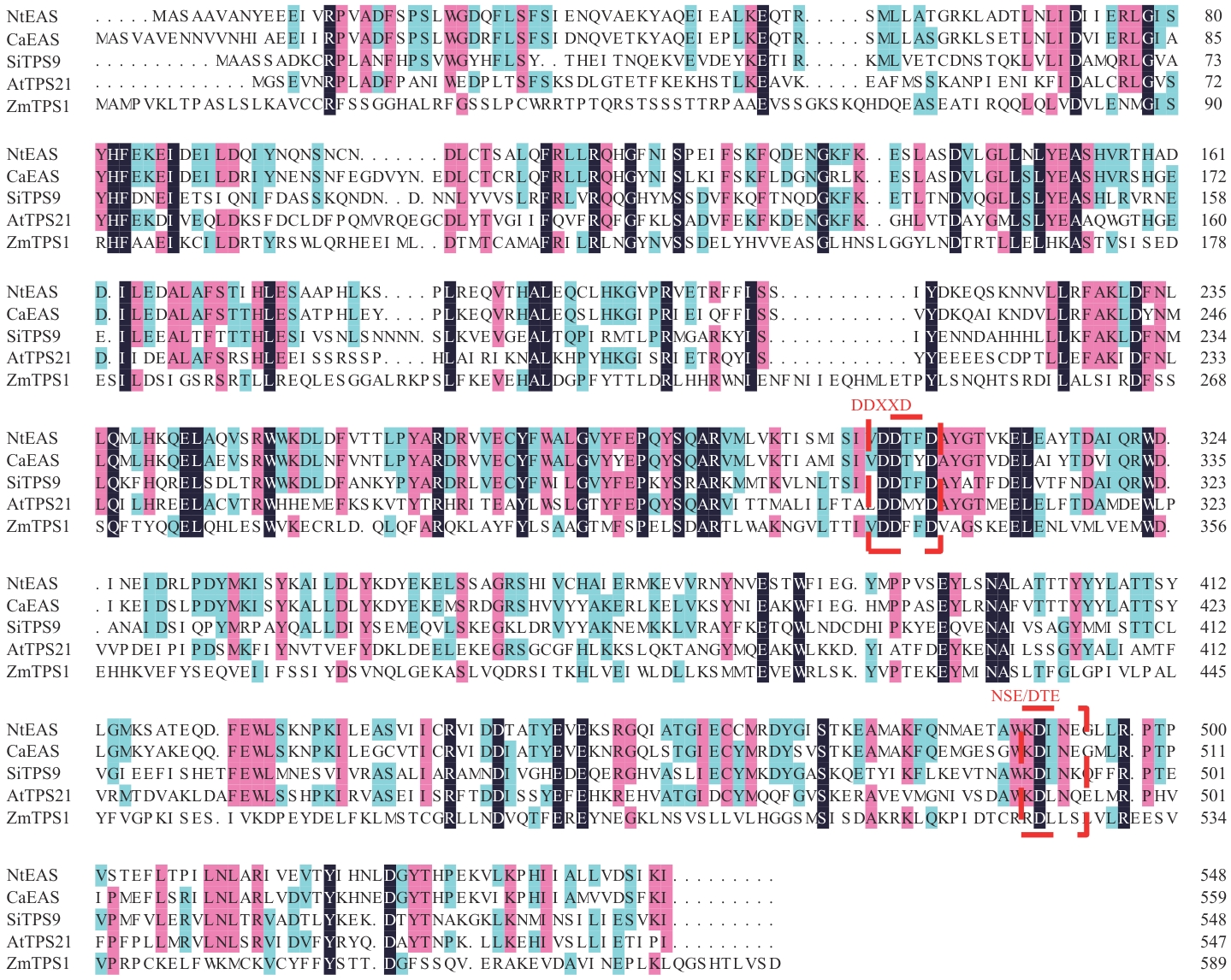
Fig. 1 Conserved domain analysis of NtEAS proteinsConserved domains of terpene synthase “DDXXD” and “NST/DTE” are marked in the box. CaEAS: Aristolochene synthase of bell pepper (Capsicum annuum L.); SiTPS9: Tomato (Solanum lycopersicum L.) β-elemene synthase; AtTPS21: Arabidopsis caryophyllene synthase; ZmTPS1: corn (E)-β-farnesene synthase
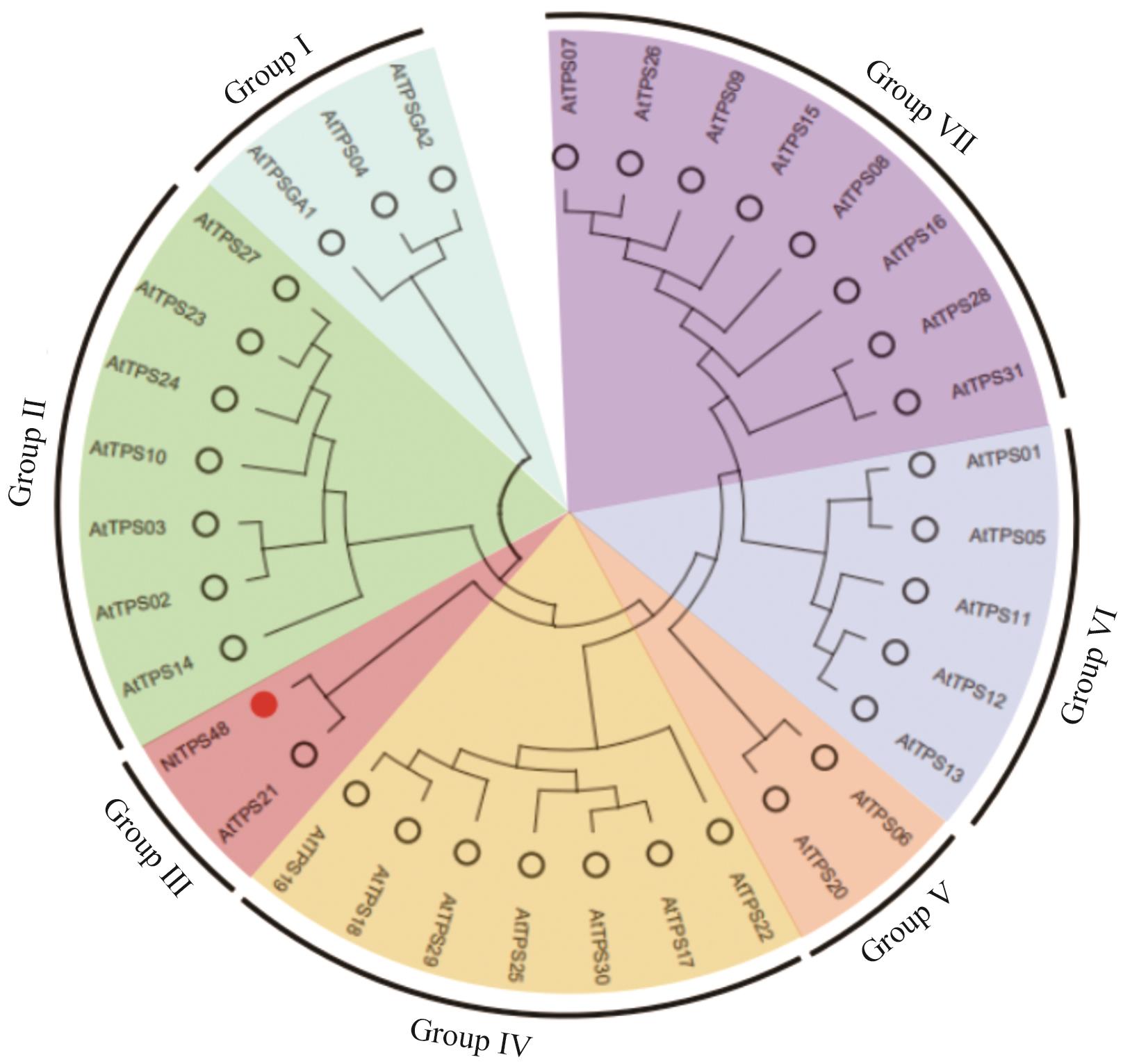
Fig. 2 Phylogenetic analysis of NtEAS and Arabidopsis terpene synthase family
元件 Element | 序列 Sequence (5'‒3') | 功能(响应信号/通路) Function (response signal/pathway) | 可能结合的转录因子 Possible binding transcription factors | 位置 Position |
|---|---|---|---|---|
| W-box | (T)TGAC(C/T) | 响应病原体侵染,参与水杨酸(SA)或茉莉酸(JA)信号通路 | WRKY转录因子家族 | -363 ‒ -367、-605 ‒ -609、-739 ‒ -743、-828 ‒ -832 |
| GCC-box | GCCGCC | 响应乙烯(ET)信号,参与防御基因激活 | ERF/AP2转录因子家族 | -1 784 ‒ -1 789 |
| JERE | CGTCA/TGACG | 响应茉莉酸(JA)信号,激活防御相关基因表达 | MYC、JAM等JA信号通路转录因子 | -311 ‒ -315、-740 ‒ -744 |
| P-box | CCTTTTG | 参与苯丙烷类代谢途径(如植保素合成) | MYB转录因子 | -855 ‒ -861 |
Table 2 Analysis of NtEAS gene promoter cis-acting elements related to disease resistance
元件 Element | 序列 Sequence (5'‒3') | 功能(响应信号/通路) Function (response signal/pathway) | 可能结合的转录因子 Possible binding transcription factors | 位置 Position |
|---|---|---|---|---|
| W-box | (T)TGAC(C/T) | 响应病原体侵染,参与水杨酸(SA)或茉莉酸(JA)信号通路 | WRKY转录因子家族 | -363 ‒ -367、-605 ‒ -609、-739 ‒ -743、-828 ‒ -832 |
| GCC-box | GCCGCC | 响应乙烯(ET)信号,参与防御基因激活 | ERF/AP2转录因子家族 | -1 784 ‒ -1 789 |
| JERE | CGTCA/TGACG | 响应茉莉酸(JA)信号,激活防御相关基因表达 | MYC、JAM等JA信号通路转录因子 | -311 ‒ -315、-740 ‒ -744 |
| P-box | CCTTTTG | 参与苯丙烷类代谢途径(如植保素合成) | MYB转录因子 | -855 ‒ -861 |
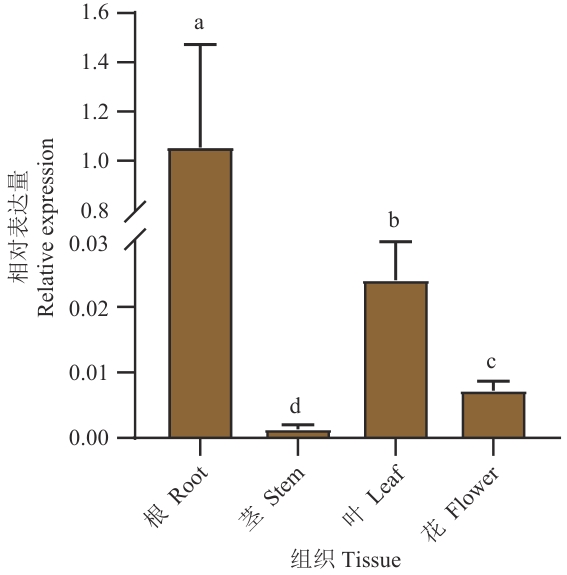
Fig. 3 Tissue expression pattern of NtEASDifferent lowercase letters indicate significant differences at the level of P<0.05. The same below
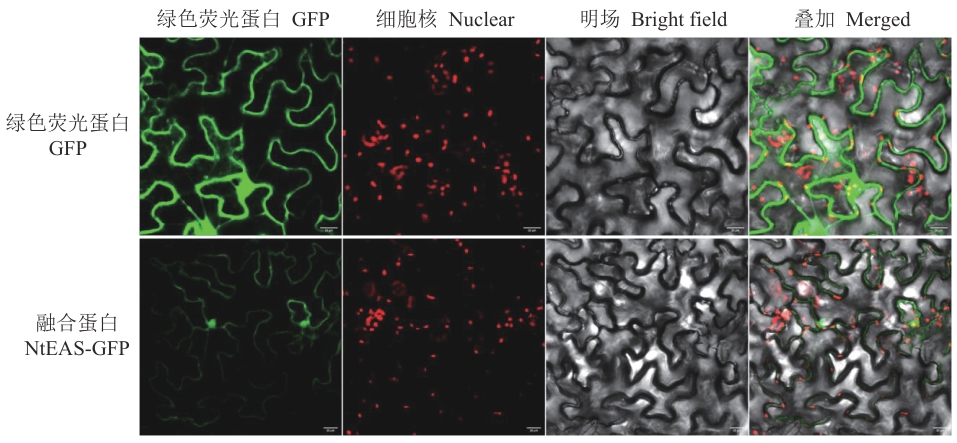
Fig. 4 Subcellular location of NtEAS
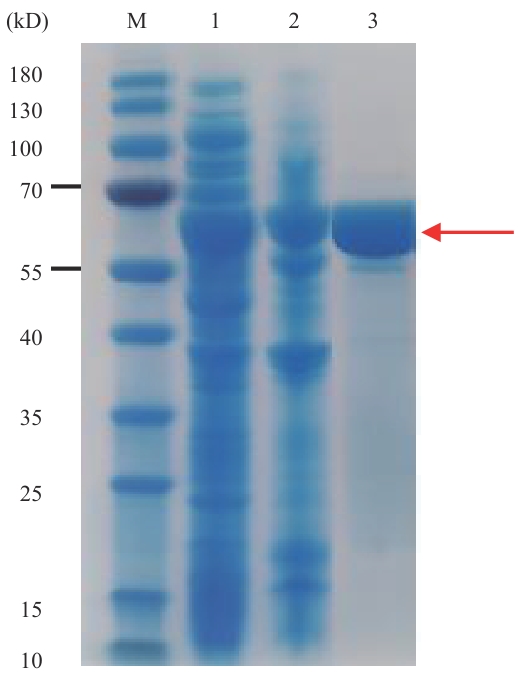
Fig. 5 Prokaryotic expression of NtEASM: Marker; 1‒2: supernatant (1) and precipitation (2) of NtEAS crude enzyme; 3: purified NtEAS protein. The red arrow indicates the NtEAS protein
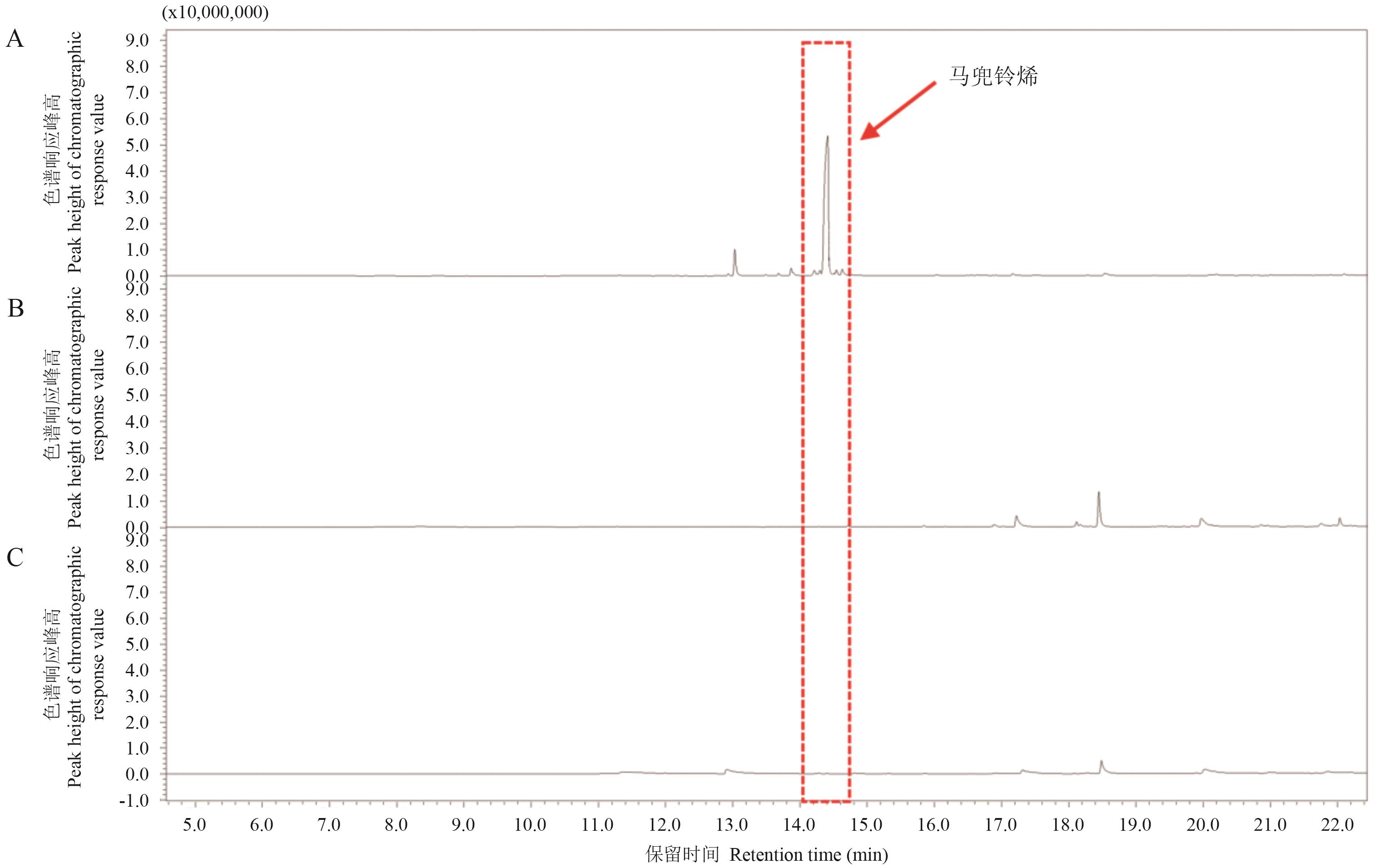
Fig. 6 Enzymatic function identification of NtEASA: GC-MS diagram of the catalytic reaction between purified NtEAS and FPP substrate enzymes; B and C: GC-MS diagrams of substrate-free (B) and enzyme-free (C) reaction systems

Fig. 7 GC-MS molecular fragment mass spectra of purified NtEAS-catalyzed FPP reaction products
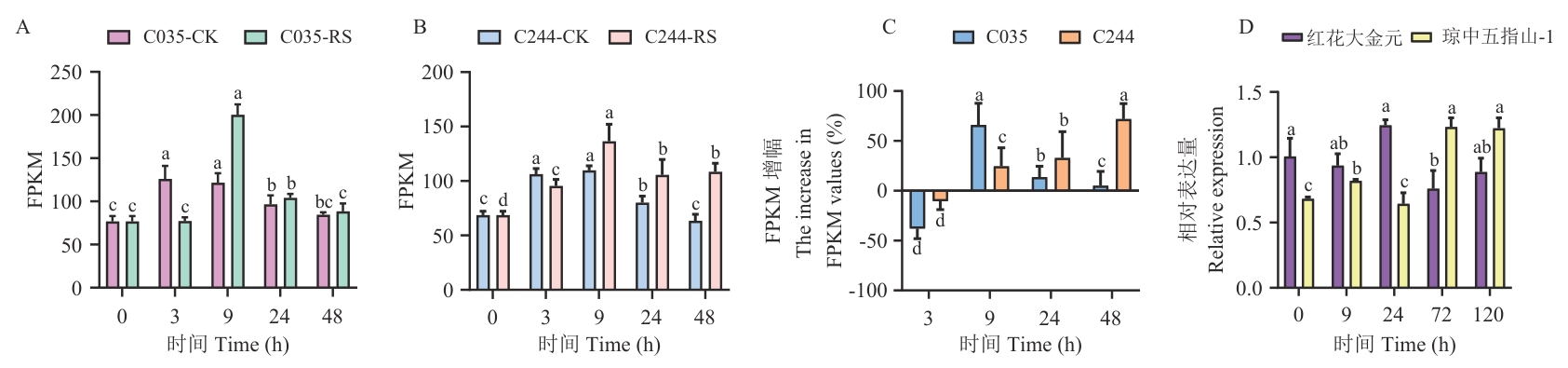
Fig. 8 Expression analysis of NtEAS in response to bacterial wilt stressA: FPKM values of NtEAS gene in C035 in the susceptible germplasm of inoculated (RS) and non-inoculated (CK) granville wilt; B: FPKM value of NtEAS gene in disease resistant germplasm C244 of inoculated (RS) and non-inoculated (CK) granville wilt; C: comparison of FPKM amplification of NtEAS gene in susceptible germplasm C035 and disease-resistant germplasm C244; D: the relative expression of NtEAS in the roots of the susceptible germplasm safflower Dajinyuan and the disease-resistant germplasm Qiongzhong Wuzhishan No. 1 after inoculation granville wilt
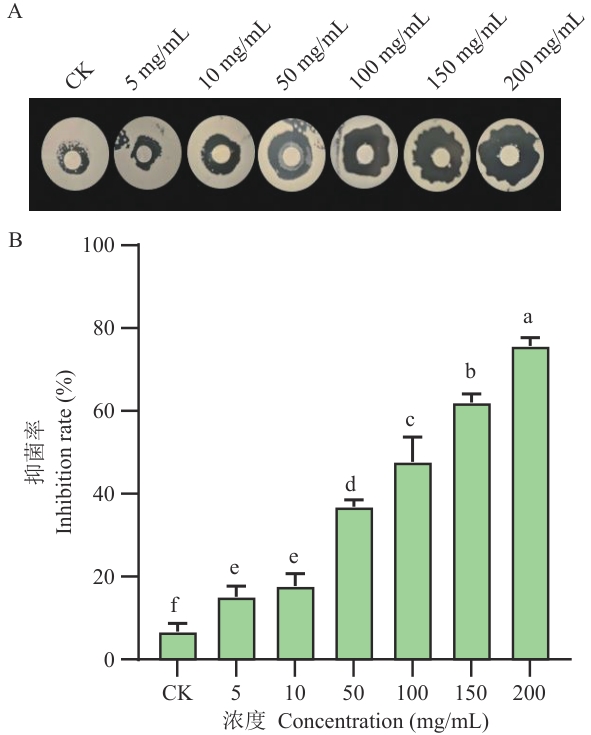
Fig. 9 Analysis of the antibacterial effect of NtEAS catalytic products on bacterial wilt
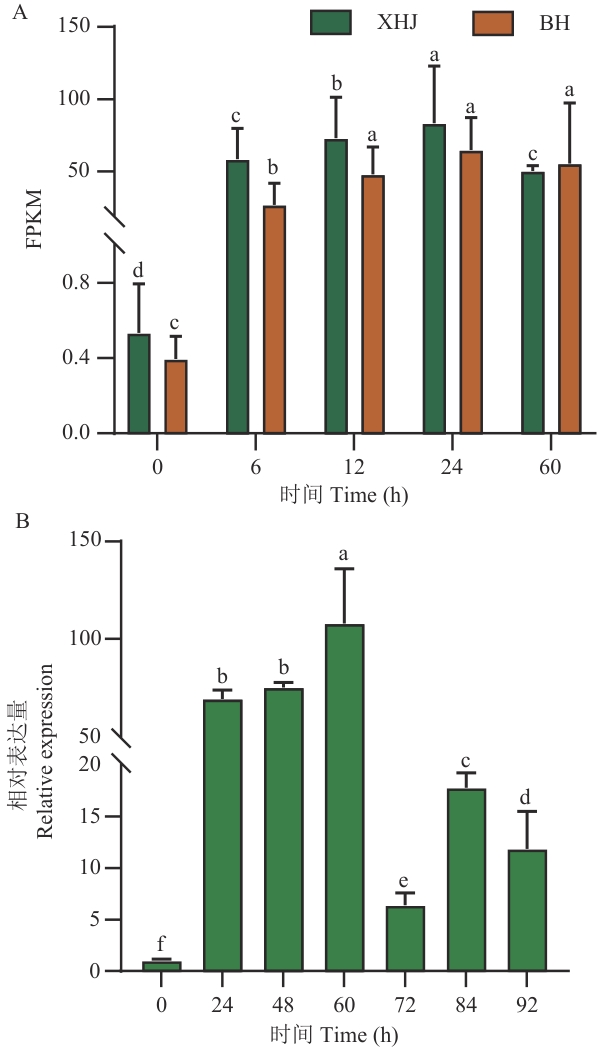
Fig. 10 Expression pattern of NtEAS in response to black shank pathogen stressA: FPKM values of NtEAS in the transcriptome after inoculation with disease-resistant germplasmLittle Gold 1025 (XHJ) and disease-resistant germplasm Beinhart 1000-1 (BH). B: Relative expression of NtEAS in the roots of medium-resistant germplasm K326 after inoculation with black shank
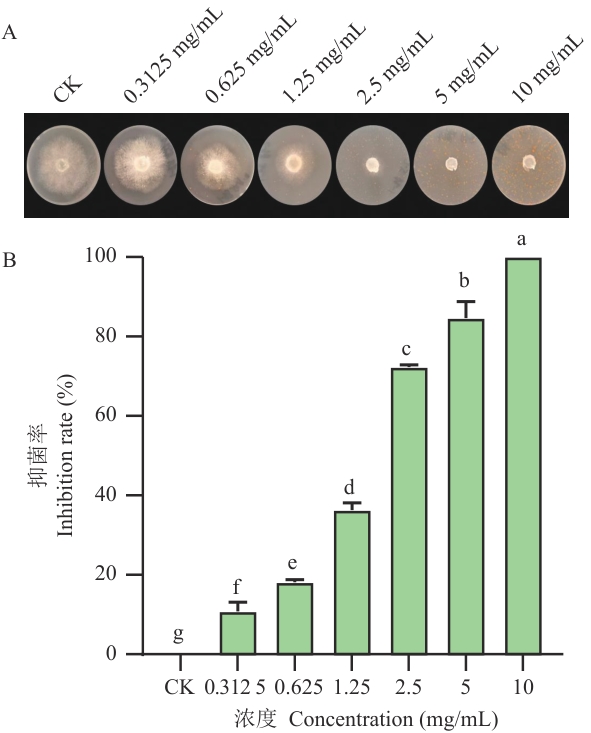
Fig. 11 Analysis of the antibacterial effect of NtEAS catalytic products on black shank pathogen
| [1] | 潘忠梅, 谭燕, 肖慈平, 等. 不同栽培措施及不同品种对烟草青枯病和黑胫病的影响 [J]. 安徽农学通报, 2024, 30(15): 93-96. |
| Pan ZM, Tan Y, Xiao CP, et al. Effects of different cultivation measures and varieties on tobacco bacterial wilt and black shank [J]. Anhui Agric Sci Bull, 2024, 30(15): 93-96. | |
| [2] | Ma QH, Zhu HH, Han JQ. Wheat ROP proteins modulate defense response through lignin metabolism [J]. Plant Sci, 2017, 262: 32-38. |
| [3] | Tang QJ, Liu TB, Teng K, et al. Microbial interactions and metabolisms in response to bacterial wilt and black shank pathogens in the tobacco rhizosphere [J]. Front Plant Sci, 2023, 14: 1200136. |
| [4] | Wen DX, Guo QQ, Zhao W, et al. Effect and mechanism of NaHS on tobacco bacterial wilt caused by Ralstonia solanacearum [J]. Sci Rep, 2023, 13: 2462. |
| [5] | Sun MM, Li L, Wang CD, et al. Naringenin confers defence against Phytophthora nicotianae through antimicrobial activity and induction of pathogen resistance in tobacco [J]. Mol Plant Pathol, 2022, 23(12): 1737-1750. |
| [6] | Singh G, Agrawal H, Bednarek P. Specialized metabolites as versatile tools in shaping plant-microbe associations [J]. Mol Plant, 2023, 16(1): 122-144. |
| [7] | Yu JW, Tu XZ, Huang AC. Functions and biosynthesis of plant signaling metabolites mediating plant-microbe interactions [J]. Nat Prod Rep, 2022, 39(7): 1393-1422. |
| [8] | Bednarek P, Osbourn A. Plant-microbe interactions: chemical diversity in plant defense [J]. Science, 2009, 324(5928): 746-748. |
| [9] | Huang MS, Sanchez-Moreiras AM, Abel C, et al. The major volatile organic compound emitted from Arabidopsis thaliana flowers, the sesquiterpene (E)-β-caryophyllene, is a defense against a bacterial pathogen [J]. New Phytol, 2012, 193(4): 997-1008. |
| [10] | Chen X, Liu FJ, Liu L, et al. Characterization and evolution of gene clusters for terpenoid phytoalexin biosynthesis in tobacco [J]. Planta, 2019, 250(5): 1687-1702. |
| [11] | Ammar AH, Lebrihi A, Mathieu F, et al. Chemical composition and in vitro antimicrobial and antioxidant activities of Citrus aurantium L. flowers essential oil (neroli oil) [J]. Pak J Biol Sci, 2012, 15(21): 1034-1040. |
| [12] | Fajdek-Bieda A, Pawlińska J, Wróblewska A, et al. Evaluation of the antimicrobial activity of geraniol and selected geraniol transformation products against gram-positive bacteria [J]. Molecules, 2024, 29(5): 950. |
| [13] | Moo CL, Yang SK, Osman MA, et al. Antibacterial activity and mode of action of β-caryophyllene on Bacillus cereus [J]. Pol J Microbiol, 2020, 69(1): 49-54. |
| [14] | 杨晴, 刘少华, 杨长青, 等. 烟草倍半萜合酶基因NtTPS21的克隆及功能鉴定 [J]. 中国烟草科学, 2022, 43(3): 39-46. |
| Yang Q, Liu SH, Yang CQ, et al. Cloning and functional characterization of sesquiterpene synthase gene NtTPS21 in tobacco [J]. Chin Tob Sci, 2022, 43(3): 39-46. | |
| [15] | Liu ZW, Xiao ZL, Geng RM, et al. Transcriptome analysis and genome-wide gene family identification enhance insights into bacterial wilt resistance in tobacco [J]. Agronomy, 2024, 14(2): 250. |
| [16] | Meng H, Sun MM, Jiang ZP, et al. Comparative transcriptome analysis reveals resistant and susceptible genes in tobacco cultivars in response to infection by Phytophthora nicotianae [J]. Sci Rep, 2021, 11: 809. |
| [17] | 余纽, 柳帆, 杨锦昌. 油楠SgTPS7的克隆及其在萜类生物合成和非生物胁迫中的功能 [J]. 生物技术通报, 2024, 40(8): 164-173. |
| Yu N, Liu F, Yang JC. Cloning of SgTPS7 in Sindora glabra and its function in terpene synthesis and abiotic stress [J]. Biotechnol Bull, 2024, 40(8): 164-173. | |
| [18] | Chen B, Mao JJ, Xu KW, et al. Mining coral-derived terpene synthases and mechanistic studies of the coral biflorane synthase [J]. Sci Adv, 2025, 11(9): eadv0805. |
| [19] | Starks CM, Back K, Chappell J, et al. Structural basis for cyclic terpene biosynthesis by tobacco 5-epi-aristolochene synthase [J]. Science, 1997, 277(5333): 1815-1820. |
| [20] | O’Maille PE, Chappell J, Noel JP. Biosynthetic potential of sesquiterpene synthases: Alternative products of tobacco 5-epi-aristolochene synthase [J]. Arch Biochem Biophys, 2006, 448(1-2): 73-82. |
| [21] | Zhang CS, Feng C, Zheng YF, et al. Root exudates metabolic profiling suggests distinct defense mechanisms between resistant and susceptible tobacco cultivars against black shank disease [J]. Front Plant Sci, 2020, 11: 559775. |
| [22] | Liu QP, Liu Y, Tang YM, et al. Overexpression of NtWRKY50 increases resistance to Ralstonia solanacearum and alters salicylic acid and jasmonic acid production in tobacco [J]. Front Plant Sci, 2017, 8: 1710. |
| [23] | Kim H, Kim J, Choi DS, et al. Molecular basis for the interference of the Arabidopsis WRKY54-mediated immune response by two sequence-unrelated bacterial effectors [J]. Plant J, 2024, 118(3): 839-855. |
| [24] | Huang JF, Shen L, Yang S, et al. CaASR1 promotes salicylic acid- but represses jasmonic acid-dependent signaling to enhance the resistance of Capsicum annuum to bacterial wilt by modulating CabZIP63 [J]. J Exp Bot, 2020, 71(20): 6538-6554. |
| [25] | Shi FY, Wang XX, Wei MJ, et al. Transcriptome analysis provides new insights into the resistance of pepper to Phytophthora capsici infection [J]. BMC Genom, 2025, 26: 311. |
| [26] | Luo ZY, Jia Y, Guo TM, et al. Tomato MYB transcription factor family gene SlMYB108 is involved in Trichoderma harzianum-induced resistance to root-knot nematodes in Solanum lycopersicum L. [J]. Plant Physiol Biochem, 2025, 225: 110028. |
| [27] | Hu Y, Li YY, Yang XQ, et al. Effects of integrated biocontrol on bacterial wilt and rhizosphere bacterial community of tobacco [J]. Sci Rep, 2021, 11: 2653. |
| [28] | Jing CL, Gou JY, Han XB, et al. In vitro and in vivo activities of eugenol against tobacco black shank caused by Phytophthora nicotianae [J]. Pestic Biochem Physiol, 2017, 142: 148-154. |
| [29] | Cao DJ, Liu C, Zhang WH, et al. Characterization of the DUF868 gene family in Nicotiana and functional analysis of NtDUF868-E5 involved in pigment metabolism [J]. Plant Physiol Biochem, 2024, 208: 108493. |
| [30] | Liu XJ, Zhang ST, Jiang QP, et al. Using community analysis to explore bacterial indicators for disease suppression of tobacco bacterial wilt [J]. Sci Rep, 2016, 6: 36773. |
| [31] | Yu BJ, Li JL, Moussa MG, et al. Molybdenum inhibited the growth of Phytophthora nicotiana and improved the resistance of Nicotiana tabacum L. against tobacco black shank [J]. Pestic Biochem Physiol, 2024, 199: 105803. |
| [32] | Xia H, Jiang CQ, Riaz M, et al. Root exudates mediate tobacco microbial community remodeling and resistance to bacterial wilt disease [J]. Pest Manag Sci, 2025, 81(12): 8269-8282. |
| [1] | HU Kuo-jun, HUANG Xiao-hui, HUANG Yi, ZHANG Yu-yu, DENG Zheng-yu, GUO Jun, ZENG Yin, YIN Hua-qun, ZHOU Xiang-ping, MENG De-long. Effects of Stropharia rugosoannulata Substrate on Tobacco Bacterial Wilt and Soil Microbial Function [J]. Biotechnology Bulletin, 2026, 42(5): 124-133. |
| [2] | WANG Ya-le, LI Xue-jun, SUN Ji-ping, SUN Huan. Physiological Response and Transcriptome Analysis of Tobacco Yunongxiang 201 to Low Temperature Stress [J]. Biotechnology Bulletin, 2026, 42(2): 228-238. |
| [3] | FENG Xiao-hu, ZHANG Wen-mei, XU Jing, XIONG Shu-bin, WANG Li-bing, SONG Wen-jing. Screening and Biocontrol Efficiency of Phage Cocktail Targeted on a Group of Tobacco Bacterial Wilt [J]. Biotechnology Bulletin, 2025, 41(11): 311-318. |
| [4] | DU Zhong-yang, YANG Ze, LIANG Meng-jing, LIU Yi-zhen, CUI Hong-li, SHI Da-ming, XUE Jin-ai, SUN Yan, ZHANG Chun-hui, JI Chun-li, LI Run-zhi. Effect of Nano-selenium(SeNPs)in Alleviating Lead Stress and Promoting Growth of Tobacco Seedlings [J]. Biotechnology Bulletin, 2024, 40(7): 183-196. |
| [5] | YU Jing, YANG Hui, YU Shi-zhou, ZHAO Hui-na, ZHENG Qing-xia, WANG Bing, LEI Bo. Construction of Yeast One-hybrid Bait Vector of Tobacco NtCBT Gene Promoter and Screening of Interacted Proteins [J]. Biotechnology Bulletin, 2022, 38(10): 73-79. |
| [6] | ZHANG Yun-chuan, LIN Yi-xuan, CAO Xin-wen, WANG Hai-nan, YAN Jie. TkDREB2 Clone from Taraxacum kok-saghyz and Drought Tolerance Analysis of Transgenic Nicotiana tabacum [J]. Biotechnology Bulletin, 2021, 37(11): 212-224. |
| [7] | LI Jun-ling, MA Xiao-han, ZHANG Yu-dan, JIA Wei, XU Zi-cheng. Research Progress on the Relationship Between Soil Microorganism and Tobacco Bacterial Wilt [J]. Biotechnology Bulletin, 2020, 36(9): 88-99. |
| [8] | Cai Liuti,Wang Hancheng,Liu Yanxia,Cao Yi,Yuan Saifei,Zhao Zhunbei,Shi Junxiong. Advance of the Classification in Ralstonia solanacearum Species [J]. Biotechnology Bulletin, 2013, 0(7): 20-23. |
| Viewed | ||||||
|
Full text |
|
|||||
|
Abstract |
|
|||||
