







Biotechnology Bulletin ›› 2026, Vol. 42 ›› Issue (5): 340-352.doi: 10.13560/j.cnki.biotech.bull.1985.2025-1300
ZHANG Chu-shu1( ), CAO Shi-ning1, WANG Fa-ming2, ZHOU Hai-xiang1, HU Xiao-jun2, TANG Yue-yi1, ZHOU Xiao-yan2, WANG Mian1, CHEN Jing1, ZHANG Jian-cheng1()
Received:2025-11-29
Online:2026-05-26
Published:2026-06-10
Contact:
ZHANG Jian-cheng
E-mail:peanutzhangchushu@163.com;jianch-zh@hotmail.com
ZHANG Chu-shu, CAO Shi-ning, WANG Fa-ming, ZHOU Hai-xiang, HU Xiao-jun, TANG Yue-yi, ZHOU Xiao-yan, WANG Mian, CHEN Jing, ZHANG Jian-cheng. Analysis of Metabolite Characteristics during Lactic Acid Bacteria Fermentation of Peanut Skin Extract[J]. Biotechnology Bulletin, 2026, 42(5): 340-352.
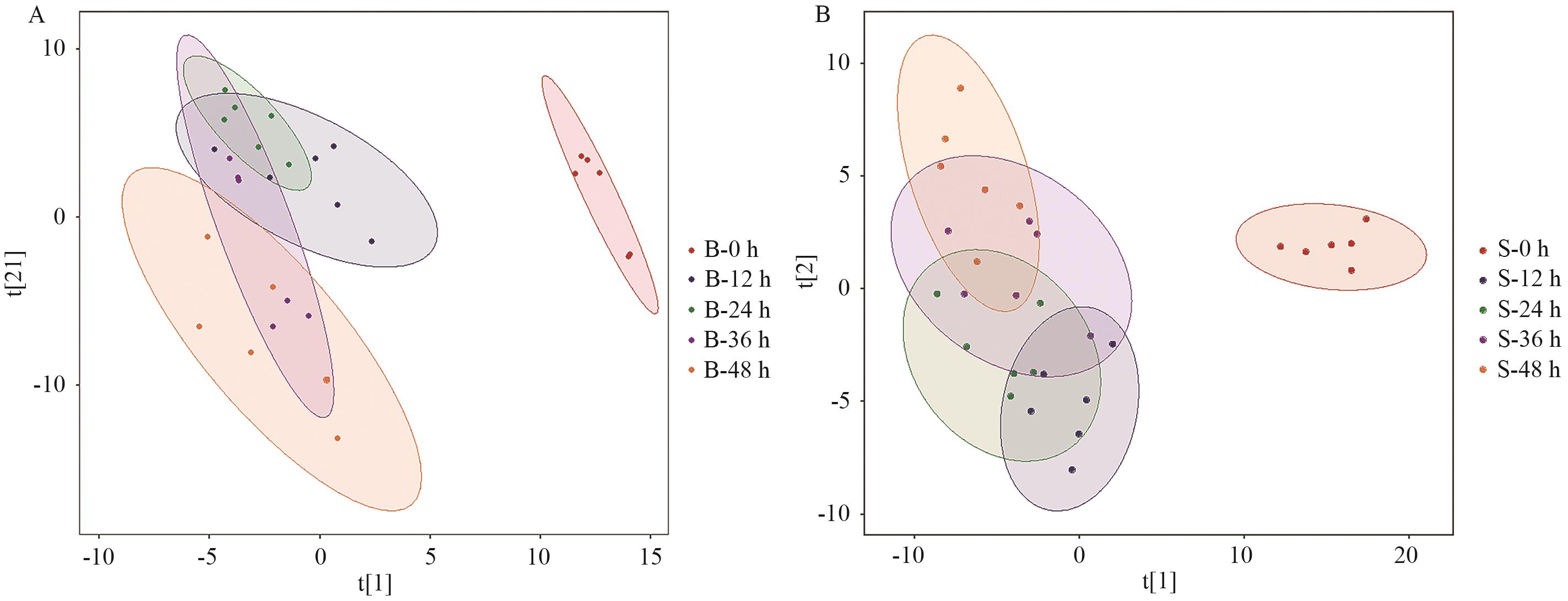
Fig. 1 PLS-DA plot of fermentation broths at different fermentation stagesA: Lactobacillus bulgaricus PS-1. B: Streptococcus thermophilus PS-3;B-0, B-12 h, B-24 h, B-36 h, and B-48 h refer to the fermentation time points (0, 12, 24, 36, and 48 h) of L. bulgaricus PS-1; S-0 h, S-12 h, S-24 h, S-36 h, and S-48 h indicatethe fermentation time points (0, 12, 24, 36, and 48 h) of S. thermophilus PS-3
代谢物类别 Metabolite class (Super class) | 显著差异代谢物 Number of significantly differential metabolites | 占比 Proportion (%) | 代谢物类别 Metabolite class | 上调 Up-regulated | 下调 Down-regulated |
|---|---|---|---|---|---|
| 有机杂环化合物 | 12 | 24.49 | 吲哚及其衍生物 | 3 | 0 |
| 嘌呤核苷 | 0 | 2 | |||
| 哌啶类 | 2 | 0 | |||
| 苯并恶嗪 | 1 | 0 | |||
| 羟基酸及其衍生物 | 0 | 1 | |||
| 喹啉及其衍生物 | 1 | 0 | |||
| 内酯 | 0 | 1 | |||
| 苯丙烷和聚酮 | 9 | 18.37 | 黄酮类化合物 | 1 | 4 |
| 香豆素及其衍生物 | 2 | 0 | |||
| 肉桂酸及其衍生物 | 1 | 0 | |||
| 异黄酮类 | 0 | 1 | |||
| 有机酸及其衍生物 | 8 | 16.33 | 羧酸及其衍生物 | 5 | 1 |
| 鞘磷脂 | 1 | 0 | |||
| 有机膦酸及其衍生物 | 0 | 1 | |||
| 脂质和类脂分子 | 7 | 14.29 | 脂肪酰基 | 0 | 4 |
| 酮酸及其衍生物 | 1 | 1 | |||
| 类固醇和类固醇衍生物 | 0 | 1 | |||
| 苯环型化合物 | 7 | 14.29 | 苯及其取代衍生物 | 2 | 3 |
| 酚类 | 1 | 1 | |||
| 有机含氧化合物 | 5 | 10.20 | 有机氧化合物 | 2 | 3 |
| 核苷、核苷酸和类似物 | 1 | 2.04 | 嘌呤核苷酸 | 1 | 0 |
Table 1 Categories and changes of differential metabolites before and after fermentation with L. bulgaricus PS-1
代谢物类别 Metabolite class (Super class) | 显著差异代谢物 Number of significantly differential metabolites | 占比 Proportion (%) | 代谢物类别 Metabolite class | 上调 Up-regulated | 下调 Down-regulated |
|---|---|---|---|---|---|
| 有机杂环化合物 | 12 | 24.49 | 吲哚及其衍生物 | 3 | 0 |
| 嘌呤核苷 | 0 | 2 | |||
| 哌啶类 | 2 | 0 | |||
| 苯并恶嗪 | 1 | 0 | |||
| 羟基酸及其衍生物 | 0 | 1 | |||
| 喹啉及其衍生物 | 1 | 0 | |||
| 内酯 | 0 | 1 | |||
| 苯丙烷和聚酮 | 9 | 18.37 | 黄酮类化合物 | 1 | 4 |
| 香豆素及其衍生物 | 2 | 0 | |||
| 肉桂酸及其衍生物 | 1 | 0 | |||
| 异黄酮类 | 0 | 1 | |||
| 有机酸及其衍生物 | 8 | 16.33 | 羧酸及其衍生物 | 5 | 1 |
| 鞘磷脂 | 1 | 0 | |||
| 有机膦酸及其衍生物 | 0 | 1 | |||
| 脂质和类脂分子 | 7 | 14.29 | 脂肪酰基 | 0 | 4 |
| 酮酸及其衍生物 | 1 | 1 | |||
| 类固醇和类固醇衍生物 | 0 | 1 | |||
| 苯环型化合物 | 7 | 14.29 | 苯及其取代衍生物 | 2 | 3 |
| 酚类 | 1 | 1 | |||
| 有机含氧化合物 | 5 | 10.20 | 有机氧化合物 | 2 | 3 |
| 核苷、核苷酸和类似物 | 1 | 2.04 | 嘌呤核苷酸 | 1 | 0 |
代谢物类别 Metabolite class (Super class) | 显著差异代谢物 Number of significantly differential metabolites | 占比 Proportion (%) | 代谢物类别 Metabolite class | 上调 Up-regulated | 下调 Down-regulated |
|---|---|---|---|---|---|
| 苯丙烷和聚酮 | 23 | 26.14 | 黄酮类化合物 | 8 | 11 |
| 肉桂酸及其衍生物 | 2 | 0 | |||
| 香豆素及其衍生物 | 0 | 1 | |||
| 芪类 | 0 | 1 | |||
| 有机含氧化合物 | 14 | 15.91 | 有机氧化合物 | 5 | 9 |
| 有机杂环化合物 | 14 | 15.91 | 苯骈吡喃 | 2 | 1 |
| 二氮杂苯 | 1 | 1 | |||
| 吡啶及其衍生物 | 1 | 1 | |||
| 吲哚及其衍生物 | 1 | 0 | |||
| 噻吩 | 0 | 1 | |||
| 内酯 | 0 | 1 | |||
| 咪唑并嘧啶类 | 0 | 1 | |||
| 恶嗪类 | 0 | 1 | |||
| 吡咯吡嗪类 | 0 | 1 | |||
| 苯并噻嗪类 | 0 | 1 | |||
| 有机酸及其衍生物 | 11 | 12.50 | 羧酸及其衍生物 | 1 | 7 |
| 有机硫酸及其衍生物 | 1 | 0 | |||
| 有机硫代磷酸及其衍生物 | 1 | 0 | |||
| 苯环型化合物 | 10 | 11.36 | 酮酸及其衍生物 | 0 | 1 |
| 酚类 | 1 | 1 | |||
| 萘类 | 1 | 0 | |||
| 脂质和类脂分子 | 9 | 10.23 | 脂肪酰基 | 1 | 5 |
| 甘油磷酯 | 0 | 2 | |||
| 类固醇和类固醇衍生物 | 0 | 1 | |||
| 核苷、核苷酸和类似物 | 4 | 4.55 | 嘌呤核苷酸 | 1 | 0 |
| 嘌呤核苷 | 0 | 1 | |||
| 吡啶核苷酸 | 0 | 1 | |||
| (3'->5')-二核苷酸和类似物 | 1 | 0 | |||
| 有机氮化合物 | 2 | 2.27 | 有机氮化合物 | 1 | 1 |
| 生物碱及其衍生物 | 1 | 1.14 | 哈马拉生物碱 | 0 | 1 |
Table 2 Categories and changes of differential metabolites before and after fermentation with S. thermophilus PS-3
代谢物类别 Metabolite class (Super class) | 显著差异代谢物 Number of significantly differential metabolites | 占比 Proportion (%) | 代谢物类别 Metabolite class | 上调 Up-regulated | 下调 Down-regulated |
|---|---|---|---|---|---|
| 苯丙烷和聚酮 | 23 | 26.14 | 黄酮类化合物 | 8 | 11 |
| 肉桂酸及其衍生物 | 2 | 0 | |||
| 香豆素及其衍生物 | 0 | 1 | |||
| 芪类 | 0 | 1 | |||
| 有机含氧化合物 | 14 | 15.91 | 有机氧化合物 | 5 | 9 |
| 有机杂环化合物 | 14 | 15.91 | 苯骈吡喃 | 2 | 1 |
| 二氮杂苯 | 1 | 1 | |||
| 吡啶及其衍生物 | 1 | 1 | |||
| 吲哚及其衍生物 | 1 | 0 | |||
| 噻吩 | 0 | 1 | |||
| 内酯 | 0 | 1 | |||
| 咪唑并嘧啶类 | 0 | 1 | |||
| 恶嗪类 | 0 | 1 | |||
| 吡咯吡嗪类 | 0 | 1 | |||
| 苯并噻嗪类 | 0 | 1 | |||
| 有机酸及其衍生物 | 11 | 12.50 | 羧酸及其衍生物 | 1 | 7 |
| 有机硫酸及其衍生物 | 1 | 0 | |||
| 有机硫代磷酸及其衍生物 | 1 | 0 | |||
| 苯环型化合物 | 10 | 11.36 | 酮酸及其衍生物 | 0 | 1 |
| 酚类 | 1 | 1 | |||
| 萘类 | 1 | 0 | |||
| 脂质和类脂分子 | 9 | 10.23 | 脂肪酰基 | 1 | 5 |
| 甘油磷酯 | 0 | 2 | |||
| 类固醇和类固醇衍生物 | 0 | 1 | |||
| 核苷、核苷酸和类似物 | 4 | 4.55 | 嘌呤核苷酸 | 1 | 0 |
| 嘌呤核苷 | 0 | 1 | |||
| 吡啶核苷酸 | 0 | 1 | |||
| (3'->5')-二核苷酸和类似物 | 1 | 0 | |||
| 有机氮化合物 | 2 | 2.27 | 有机氮化合物 | 1 | 1 |
| 生物碱及其衍生物 | 1 | 1.14 | 哈马拉生物碱 | 0 | 1 |
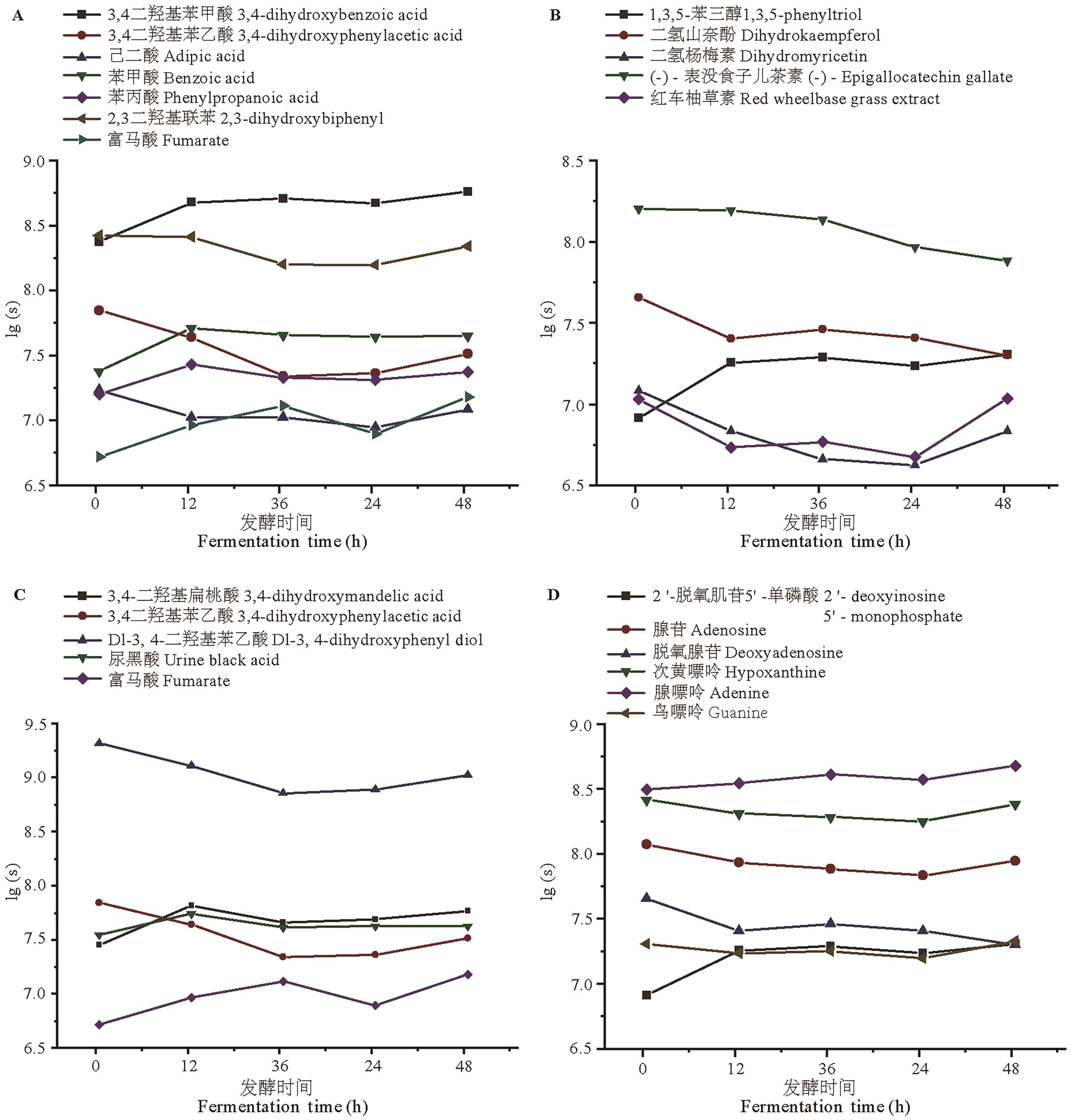
Fig. 2 Change trends of compounds in the key pathways during L. bulgaricus PS-1 fermentationA: Aromatic compound degradation pathway. B: Flavonoid biosynthesis and degradation pathway. C: Tyrosine metabolism pathway. D: Purine metabolism pathway. Lg(S) indicates the logarithm of the peak area (with base 10)

Fig. 3 Change trends of compounds in the key pathways during S. thermophilus PS-3 fermentationA: Nucleotide sugar biosynthesis pathway. B: Flavonoid biosynthesis and degradation pathway. C: Tyrosine metabolism pathway. lg(S) indicates the logarithm of the peak area (with base 10)
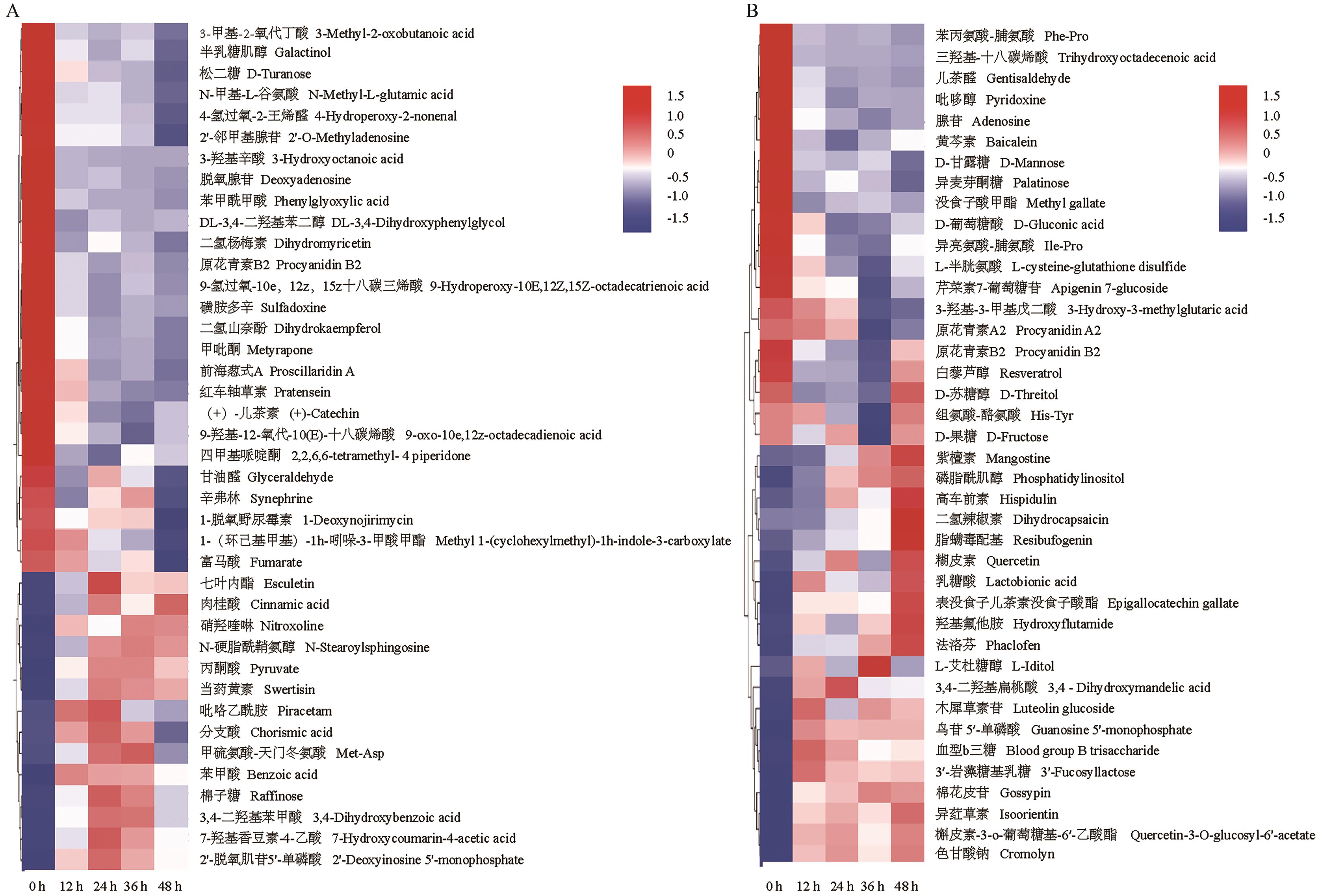
Fig. 4 Heat map of metabolite changes during lactic acid bacteria fermentationA: L. bulgaricus PS-1; B: S. thermophilus PS-3
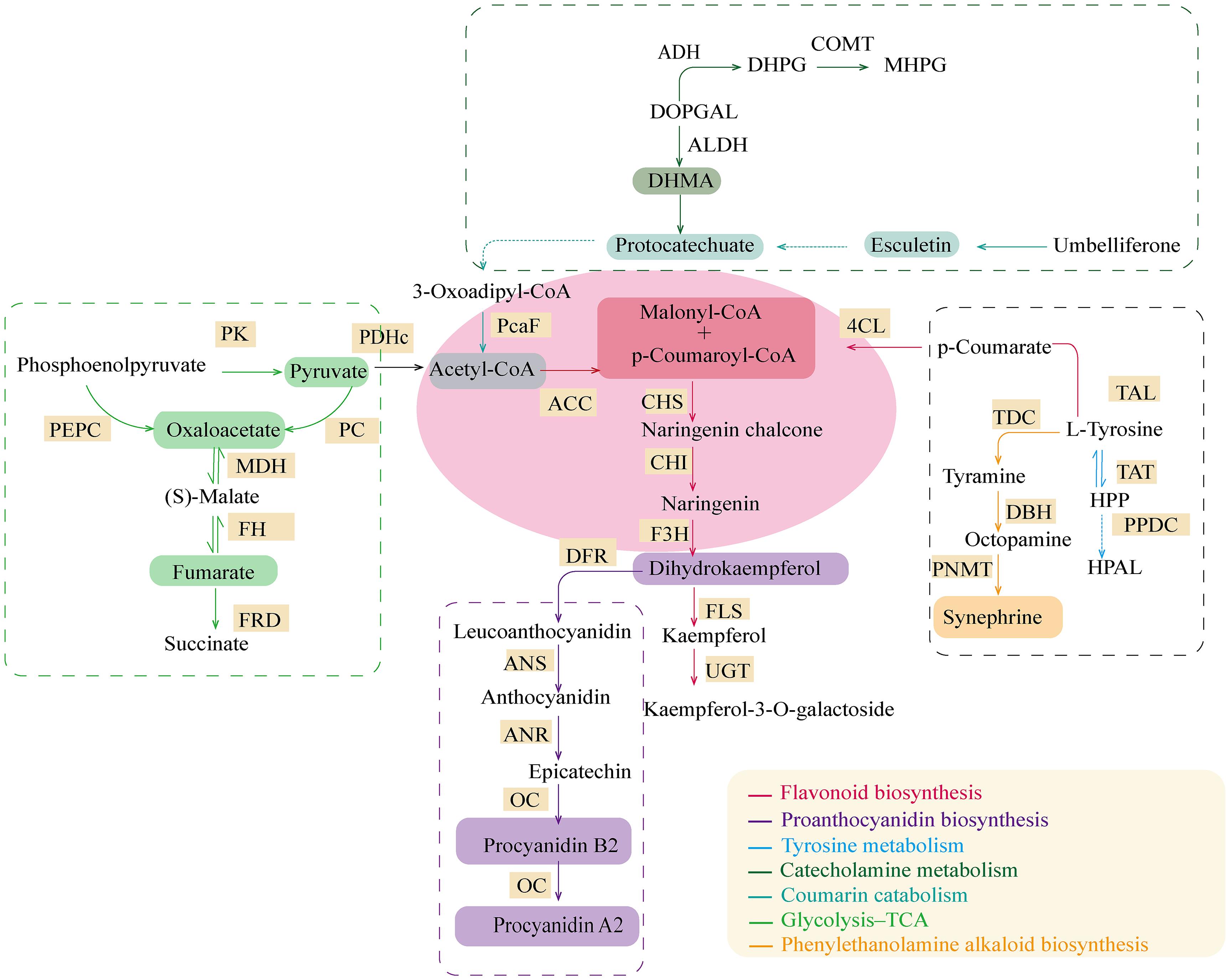
Fig. 5 Metabolic network analysis during the fermentation of peanut skin extract by L. bulgaricus PS-1
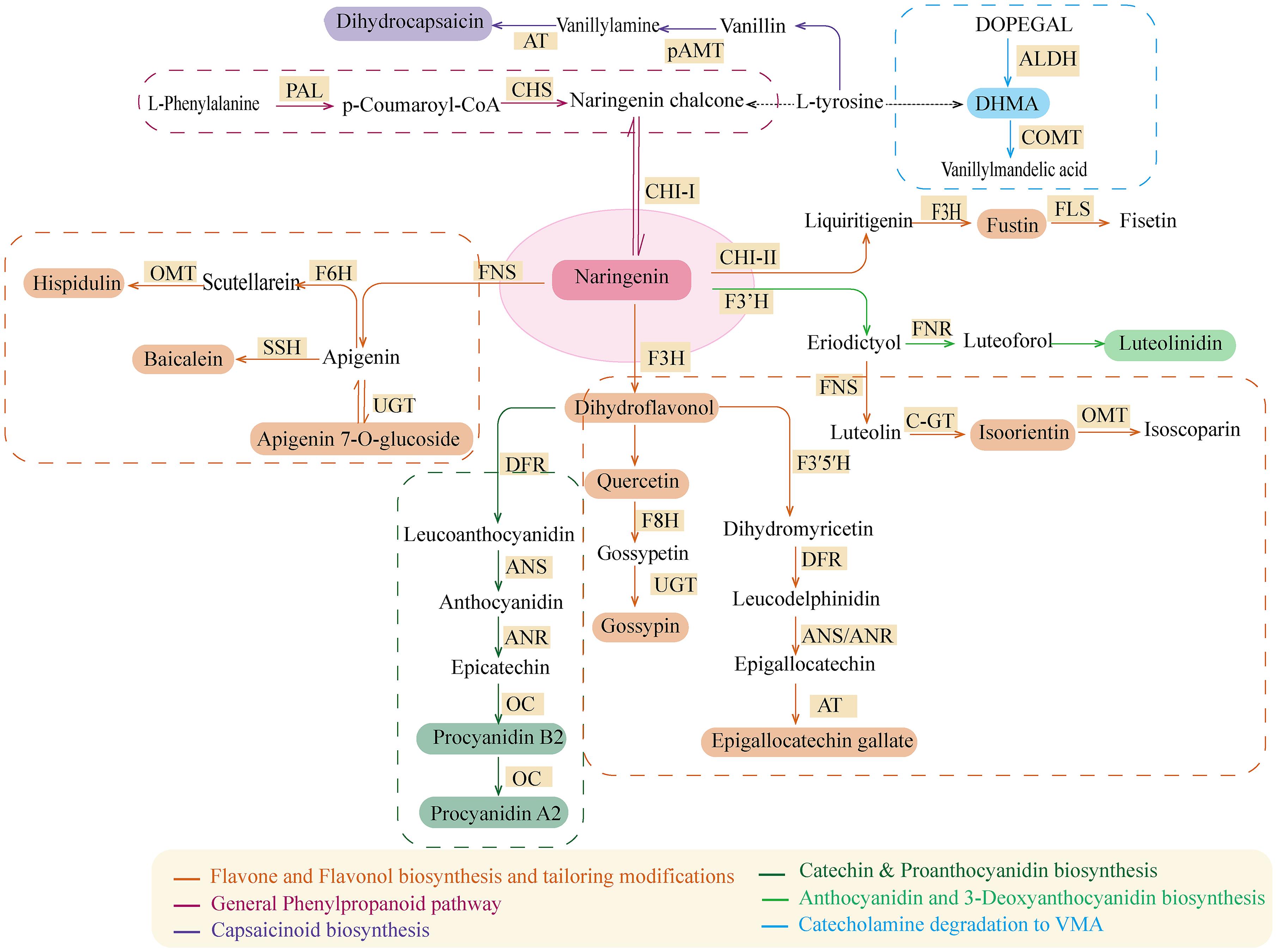
Fig. 6 Metabolic network analysis during the fermentation of peanut skin extract by S. thermophilus PS-3
| [1] | 岳开妍, 毛丙永, 唐鑫, 等. 乳酸菌发酵对花生衣抗糖化缓解皮肤衰老功能的影响 [J]. 上海理工大学学报, 2024, 46(4): 364-374. |
| Yue KY, Mao BY, Tang X, et al. The effects of lactic acid bacteria fermentation on peanut skin’s anti-glycation and alleviation of skin aging functions [J]. J Univ Shanghai Sci Technol, 2024, 46(4): 364-374. | |
| [2] | Bodoira R, Cecilia Cittadini M, Velez A, et al. An overview on extraction, composition, bioactivity and food applications of peanut phenolics [J]. Food Chem, 2022, 381: 132250. |
| [3] | Zhao L, Zhu XL, Yu Y, et al. Comprehensive analysis of the anti-glycation effect of peanut skin extract [J]. Food Chem, 2021, 362: 130169. |
| [4] | 张初署, 王明清, 于丽娜, 等. 单宁酶对花生衣提取液涩味脱除及滋味品质改善研究 [J]. 花生学报, 2021, 50(2): 50-56. |
| Zhang CS, Wang MQ, Yu LN, et al. Study on the removal of astringency and quality improvement of peanut testa extract by tannase [J]. J Peanut Sci, 2021, 50(2): 50-56. | |
| [5] | Chen L, Wang HJ, Ye Y, et al. Structural insight into polyphenol oxidation during black tea fermentation [J]. Food Chem X, 2023, 17: 100615. |
| [6] | 丁嘉伟, 苏新堯, 尹薪项, 等. 微生物发酵青蒿叶和叶渣的研究 [J]. 生物技术通报, 2021, 37(2): 63-70. |
| Ding JW, Su XY, Yin XX, et al. Study on microbial fermentation of Artemisia annua leaves and leaf residues [J]. Biotechnol Bull, 2021, 37(2): 63-70. | |
| [7] | Lv MS, Liu XL, Liu RQ, et al. Untargeted metabolomics reveals flavor and metabolic changes in mixed Lactobacillus-fermented black mulberry juice [J]. Food Chem X, 2025, 27: 102367. |
| [8] | Wang HX, Sakda P, Chen L, et al. Characterizing metabolites and biotransformation in lactic acid bacteria fermented Millennium cherry tomato juice using integrated analytical tools [J]. Food Chem, 2025, 492: 145447. |
| [9] | Liang B, Bai X, Wang YF, et al. Effect of five lactic acid bacteria on the flavor quality of fermented sweet potato juice [J]. Food Chem X, 2024, 24: 102023. |
| [10] | Wang YX, Wang CX, Shi JL, et al. Effects of derivatization and probiotic transformation on the antioxidative activity of fruit polyphenols [J]. Food Chem X, 2024, 23: 101776. |
| [11] | 张初署, 周海翔, 唐月异, 等. 乳酸菌发酵花生红衣饮料研究 [J]. 花生学报, 2023, 52(4): 101-110. |
| Zhang CS, Zhou HX, Tang YY, et al. Study on the fermentation technology of peanut red skin beverage with lactic acid bacteria [J]. J Peanut Sci, 2023, 52(4): 101-110. | |
| [12] | 张初署, 张建成, 曹世宁, 等. 嗜热链球菌PS-3及其在发酵花生红衣脱除涩味、提高功能活性的应用: CN117229947B [P]. 2025-03-25. |
| Zhang CS, Zhang JC, Cao SN, et al. Streptococcus thermophilus PS-3 and its application in fermenting peanut skins to remove astringency and enhance functional activity: CN117229947B [P]. 2025-03-25. | |
| [13] | 张初署, 张建成, 周海翔, 等. 保加利亚乳杆菌PS-1及其在发酵改善花生红衣滋味品质中的应用: CN117004536B [P]. 2025-03-14. |
| Zhang CS, Zhang JC, Zhou HX, et al. Lactobacillus bulgaricus PS-1 and its application in fermentation for improving the taste quality of peanut skins: CN117004536B [P]. 2025-03-14. | |
| [14] | Zhao YS, Wu C, Zhu Y, et al. Metabolomics strategy for revealing the components in fermented barley extracts with Lactobacillus plantarum Dy-1 [J]. Food Res Int, 2021, 139: 109808. |
| [15] | 胡明珍, 刘慧燕, 潘琳, 等. 基于非靶向代谢组学分析副干酪乳杆菌发酵枸杞汁各阶段代谢差异 [J]. 食品科学, 2022, 43(8): 142-149. |
| Hu MZ, Liu HY, Pan L, et al. Non-targeted metabolomics analysis of differential metabolite profiles of Goji juice fermented by Lactobacillus paracasei [J]. Food Sci, 2022, 43(8): 142-149. | |
| [16] | Ji GY, Liu GP, Li B, et al. Influence on the aroma substances and functional ingredients of apple juice by lactic acid bacteria fermentation [J]. Food Biosci, 2023, 51: 102337. |
| [17] | Zhao Y, Jiang CQ, Lu JY, et al. Research progress of proanthocyanidins and anthocyanidins [J]. Phytother Res, 2023, 37(6): 2552-2577. |
| [18] | Liu J, Xie J, Lin JZ, et al. The material basis of astringency and the deastringent effect of polysaccharides: a review [J]. Food Chem, 2023, 405: 134946. |
| [19] | Paliwal P, Dash D, Krishnamurthy S. Pharmacokinetic study of piracetam in focal cerebral ischemic rats [J]. Eur J Drug Metab Pharmacokinet, 2018, 43(2): 205-213. |
| [20] | Zhou FQ. Pyruvate as a potential beneficial anion in resuscitation fluids [J]. Front Med, 2022, 9: 905978. |
| [21] | Sun JH, Wang ZD, Chen L, et al. Hypolipidemic effects and preliminary mechanism of Chrysanthemum flavonoids, its main components luteolin and luteoloside in hyperlipidemia rats [J]. Antioxidants, 2021, 10(8): 1309. |
| [22] | Luo TW, Jiang S, Zhou B, et al. Protective effect of isoorientin on oleic acid-induced oxidative damage and steatosis in rat liver cells [J]. Front Pharmacol, 2022, 13: 818159. |
| [23] | Zhang LS, Li AP, Liu HM, et al. Effects of lactic acid bacteria fermentation on the release and biotransformation of bound phenolics in ma bamboo shoots (Dendrocalamus latiflorus Munro) [J]. Foods, 2025, 14(15): 2573. |
| [24] | 刘晶晶, 邓高文, 胡嘉亮, 等. 基于非靶向代谢组学的不同菌种强化发酵浏阳豆豉的代谢差异分析 [J]. 食品科学, 2024, 45(1): 42-49. |
| Liu JJ, Deng GW, Hu JL, et al. Non-targeted metabolomics analysis of metabolic differences among Liuyang Douchi fermented by different strains [J]. Food Sci, 2024, 45(1): 42-49. | |
| [25] | Li J, Dai QY, Zhu YY, et al. Low-calorie bulk sweeteners: Recent advances in physical benefits, applications, and bioproduction [J]. Crit Rev Food Sci Nutr, 2024, 64(19): 6581-6595. |
| [26] | Ruiz-Moreno C, Del Coso J, Giráldez-Costas V, et al. Effects of p-synephrine during exercise: a brief narrative review [J]. Nutrients, 2021, 13(1): 233. |
| [27] | Wang NN, Zhu FF, Chen KP. 1-deoxynojirimycin: sources, extraction, analysis and biological functions [J]. Nat Prod Commun, 2017, 12(9): 1934578X1701200934. |
| [28] | Chang SC, Lee I, Ting H, et al. Parapyruvate, an impurity in pyruvate supplements, induces senescence in human fibroblastic Hs68 cells via inhibition of the α-ketoglutarate dehydrogenase complex [J]. J Agric Food Chem, 2018, 66(28): 7504-7513. |
| [29] | Wang CM, Li J, Zhou T, et al. Transcriptional regulation of proanthocyanidin biosynthesis pathway genes and transcription factors in Indigofera stachyodes Lindl. roots [J]. BMC Plant Biol, 2022, 22: 438. |
| [30] | Feng J, Jin RY, Cheng SS, et al. Establishing an artificial pathway for the biosynthesis of octopamine and synephrine [J]. ACS Synth Biol, 2024, 13(6): 1762-1772. |
| [31] | Isogai S, Tominaga M, Kondo A, et al. Plant flavonoid production in bacteria and yeasts [J]. Front Chem Eng, 2022, 4: 880694. |
| [32] | Yamamoto E, Watanabe R, Tooyama E, et al. Effect of fumaric acid on the growth of Lactobacillus delbrueckii ssp. bulgaricus during yogurt fermentation [J]. J Dairy Sci, 2021, 104(9): 9617-9626. |
| [33] | Han SI, Lee J, Kim MS, et al. Molecular cloning and characterization of a flavonoid glucosyltransferase from Byungkyool (Citrus platymamma hort. ex Tanaka) [J]. Appl Biol Chem, 2017, 60(1): 49-55. |
| [34] | Jiang XL, Liu YJ, Wu YH, et al. Analysis of accumulation patterns and preliminary study on the condensation mechanism of proanthocyanidins in the tea plant (Camellia sinensis) [J]. Sci Rep, 2015, 5: 8742. |
| [35] | Fu YH, Zhang FC. Changes in isoflavone glucoside and aglycone contents of chickpea yoghurt during fermentation by Lactobacillus Bulgaricus and Streptococcus Thermophilus: isoflavone glucoside and aglycone contents of chickpea yoghurt [J]. J Food Process Preserv, 2013, 37(5): 744-750. |
| [36] | Gao Y, Zhou HZ, Wang Y, et al. Insights into fermentation with lactic acid bacteria on the flavonoids biotransformation of alfalfa silage [J]. Chem Biol Technol Agric, 2024, 11: 73. |
| [37] | Tian T, Cui JD. Microbial phenylalanine ammonia lyase: recent advances and emerging applications [J]. J Agric Food Chem, 2025, 73(52): 32935-32956. |
| [38] | Hiraga Y, Shimada N, Nagashima Y, et al. Identification of a flavin monooxygenase-like flavonoid 8-hydroxylase with gossypetin synthase activity from Lotus japonicus [J]. Plant Cell Physiol, 2021, 62(3): 411-423. |
| [39] | Marchitti SA, Deitrich RA, Vasiliou V. Neurotoxicity and metabolism of the catecholamine-derived 3,4-dihydroxyphenylacetaldehyde and 3,4-dihydroxyphenylglycolaldehyde: the role of aldehyde dehydrogenase [J]. Pharmacol Rev, 2007, 59(2): 125-150. |
| [40] | Nam G, Hong M, Lee J, et al. Multiple reactivities of flavonoids towards pathological elements in Alzheimer’s disease: structure-activity relationship [J]. Chem Sci, 2020, 11(37): 10243-10254. |
| [1] | LI De-hai, YIN Li, ZHOU Cai-xue, WANG Ze-tong, SUN Chang-yan. Screening, Identification and Preservation of Lactic Acid Bacteria Inhibiting the Growth of Rot-causing Fungus Lonicera caerulea L. [J]. Biotechnology Bulletin, 2025, 41(8): 289-299. |
| [2] | ZHAO Jia, ZHAO Fei-yan, SHEN Xin, GAO Guang-qi, SUN Zhi-hong. Advances in the Antioxidant Activities of Lactic Acid Bacteria and Their Applications [J]. Biotechnology Bulletin, 2023, 39(11): 182-190. |
| [3] | TIAN Jing, ZHANG Jian-guo. Research Progress in the Distribution of Lactic Acid Bacteria on the Surface of Plants [J]. Biotechnology Bulletin, 2021, 37(9): 3-10. |
| [4] | XU Jin-yi, NA Bin-bin, LIU Shun, CHEN Chao, SUN Hong, ZHENG Yu-long. Excellent Lactic Acid Bacteria for Silage and Their Application [J]. Biotechnology Bulletin, 2021, 37(9): 39-47. |
| [5] | GUO Zhen-qiang, ZHANG Yong, CAO Yun-qi, LIU Yun-yun, ZHAO Yu, WU Ai-min. Research Progress of Fuel Ethanol Fermentation Technology [J]. Biotechnology Bulletin, 2020, 36(1): 238-244. |
| [6] | LIU Yang-er, GUO Ming-zhang, DU Ruo-xi, HE Xiao-yun, HUANG Kun-lun, XU Wen-tao. Advances and Prospects of Synthetic Biology in Lactic Acid Bacteria [J]. Biotechnology Bulletin, 2019, 35(8): 193-204. |
| [7] | HUANG Xiang-mei, WU Ya-qian, LIU Ying, LIANG Jia-ye, SU Wei-ming. Inhibitory Effects of AI-2 Quorum Sensing Inhibitors from Marine Lactic Acid Bacteria on Listeria monocytogenes [J]. Biotechnology Bulletin, 2019, 35(4): 36-42. |
| [8] | HUA Xiao-yu, TAO Shuang, SUN Sheng-nan, GUO Na, YAN Xiu-feng, LIN Ji-xiang. Research Progress on Phenolic Compounds of Plant Secondary Metabolites [J]. Biotechnology Bulletin, 2017, 33(12): 22-29. |
| [9] | QIAO Neng-hu, ZHANG Jing-jing, LIU De-jian, TANG Xiao-sheng, XI Li-jun, LIU Jian-guo. Study On the Degradation and Mechanism of Phenolic Compounds by the Thauera sp. K11 [J]. Biotechnology Bulletin, 2017, 33(10): 184-190. |
| [10] | Wei Zhiwen,Sun Yong, Wang Fei. The Production of Phenolic Compounds of Inonotus obliquus by Fungal Elicitor Introducing and Its Study of Biochemical Mechanism [J]. Biotechnology Bulletin, 2014, 30(9): 136-141. |
| [11] | Lü Xiaomeng, Hu Tong, Yu Ting, Cui Yanhua. Advances of Heterogeneous Expression of Antimicrobial Peptides in Bacteria [J]. Biotechnology Bulletin, 2014, 30(5): 37-44. |
| [12] | Zhang Mingjie. The Process Optimization of Pichia pastoris GS115LI for Producing Fused Protein of LL-37 and IFN-α2a [J]. Biotechnology Bulletin, 2014, 30(11): 214-218. |
| [13] | He Yiqun, Lei Zhaomin, Wu Run, Wan Xuerui, Diao Xiaolong, Ai Wenna. Isolation and Identification of Excellent Lactic Acid Bacteria from Silage and Its Biological Characteristics Research [J]. Biotechnology Bulletin, 2013, 0(5): 177-183. |
| Viewed | ||||||
|
Full text |
|
|||||
|
Abstract |
|
|||||
