







Biotechnology Bulletin ›› 2026, Vol. 42 ›› Issue (5): 332-339.doi: 10.13560/j.cnki.biotech.bull.1985.2025-0980
GU Heng1,2,3( ), ZHENG Dong1,2, ZAI Zhou-ying1,2, CHEN Gong-wei1,2, YUE Yuan-zheng1,2, WANG Liang-gui1,2,3(), YANG Xiu-lian1,2()
Received:2025-09-11
Online:2026-05-26
Published:2026-06-10
Contact:
WANG Liang-gui, YANG Xiu-lian
E-mail:guheng2021@163.com;wlg@njfu.edu.cn;xly@njfu.edu.cn
GU Heng, ZHENG Dong, ZAI Zhou-ying, CHEN Gong-wei, YUE Yuan-zheng, WANG Liang-gui, YANG Xiu-lian. Functional Study of Osmanthus fragransOfSVB1 in Response to Salt Stress[J]. Biotechnology Bulletin, 2026, 42(5): 332-339.
基因名 Gene name | 引物名 Primer name | 引物序列 Primer sequence (5′‒3′) |
|---|---|---|
| OfSVB1 | OfSVB1-F | caaatcgactcttagaaagcttATGTACAGAAACTCTTTACTCTCTGTACTCC |
| OfSVB1-R | tatttaaatgtcgaccccgggCATCTGATTCAAAGAAGAGAAVACG | |
| pSuper1300 | 1300-F | AACGCTTTACAGCAAGAACGGAATG |
| 1300-R | TAGGTCAGGGTGGTCACGAGGGT | |
| Nbactin | Nbactin-F | ATCCTCACAGAGCGTGGTTAC |
| Nbactin-R | CACTGAGCACTATGTTTCCGT | |
| NbNHX1 | NbNHX1-F | AACTGGGCTCTTTGGGTA |
| NbNHX1-R | AGGGCGGTAATAGACTCA | |
| NbP5CS | NbP5CS-F | ATCTTGATGGCAAGGCTTGTGCTG |
| NbP5CS-R | AAGCTGAGCTGAGGTTACGTCCAA | |
| NbCAT | NbCAT-F | GTATCGTCCGTCAAGTGCCT |
| NbCAT-R | CGGGAGCTCGAAGGAAATCA | |
| NbSOD | NbSOD-F | AAAGGGCACCACAGAATTAAAGTA |
| NbSOD-R | GCTCCAGTGCTCCATAGTCGTA | |
| NbAPX | NbAPX-F | CTCCTCCATATCCACAACAGAACTA |
| NbAPX-R | GCAGAGTGCCATGCTAAACG |
Table 1 Primer sequences of genes
基因名 Gene name | 引物名 Primer name | 引物序列 Primer sequence (5′‒3′) |
|---|---|---|
| OfSVB1 | OfSVB1-F | caaatcgactcttagaaagcttATGTACAGAAACTCTTTACTCTCTGTACTCC |
| OfSVB1-R | tatttaaatgtcgaccccgggCATCTGATTCAAAGAAGAGAAVACG | |
| pSuper1300 | 1300-F | AACGCTTTACAGCAAGAACGGAATG |
| 1300-R | TAGGTCAGGGTGGTCACGAGGGT | |
| Nbactin | Nbactin-F | ATCCTCACAGAGCGTGGTTAC |
| Nbactin-R | CACTGAGCACTATGTTTCCGT | |
| NbNHX1 | NbNHX1-F | AACTGGGCTCTTTGGGTA |
| NbNHX1-R | AGGGCGGTAATAGACTCA | |
| NbP5CS | NbP5CS-F | ATCTTGATGGCAAGGCTTGTGCTG |
| NbP5CS-R | AAGCTGAGCTGAGGTTACGTCCAA | |
| NbCAT | NbCAT-F | GTATCGTCCGTCAAGTGCCT |
| NbCAT-R | CGGGAGCTCGAAGGAAATCA | |
| NbSOD | NbSOD-F | AAAGGGCACCACAGAATTAAAGTA |
| NbSOD-R | GCTCCAGTGCTCCATAGTCGTA | |
| NbAPX | NbAPX-F | CTCCTCCATATCCACAACAGAACTA |
| NbAPX-R | GCAGAGTGCCATGCTAAACG |
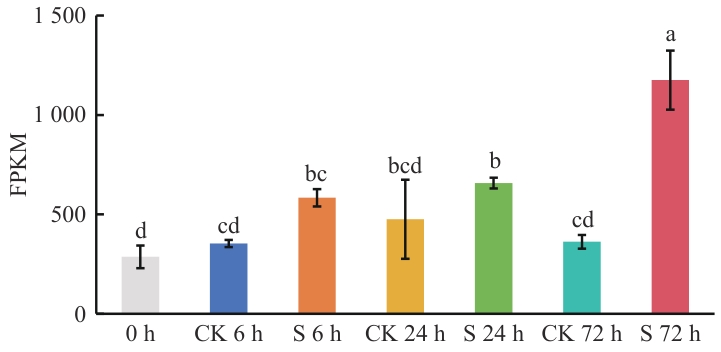
Fig. 1 The level changes of FPKM values for the gene OfSVB1CK indicates the control group, S indicates the NaCl treatment group, and numbers indicate treatment time. Different lowercase letters indicate significant differences(P<0.05). The same below
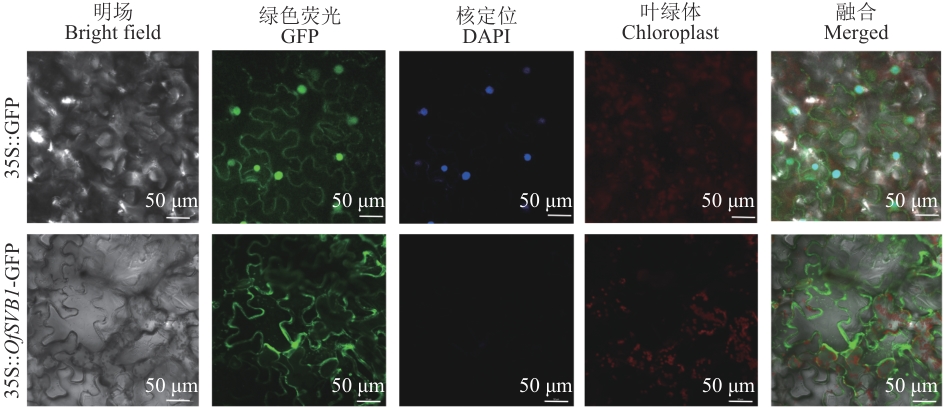
Fig. 2 Subcellular localization of OfSVB1 gene
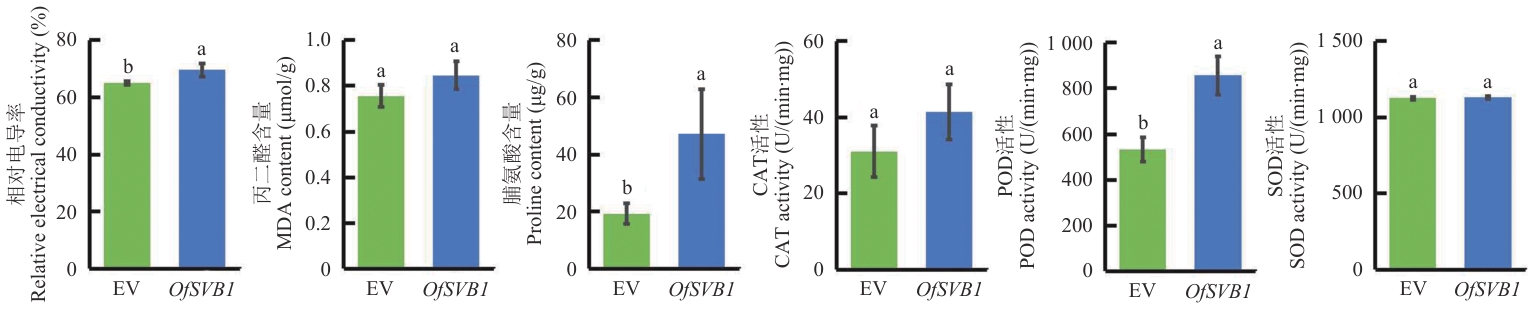
Fig. 3 Related physiological indexes of transgenic tobacco after salt stressEV indicates the instantaneous conversion of N. benthamiana into empty vector, and OfSVB1 indicates the instantaneous transformation OfSVB1 gene of O. fragrans
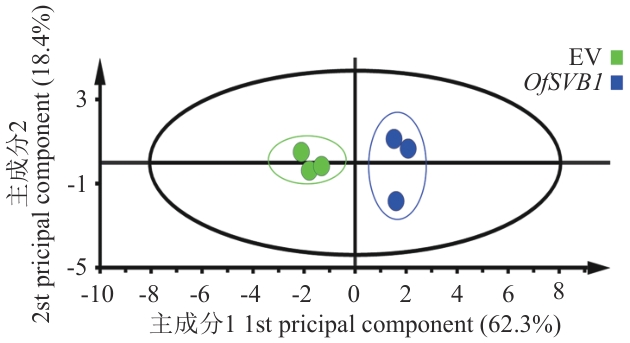
Fig. 4 Orthogonal partial least squares discriminant analysis of 6 physiological indexes of transgenic tobacco after salt stress
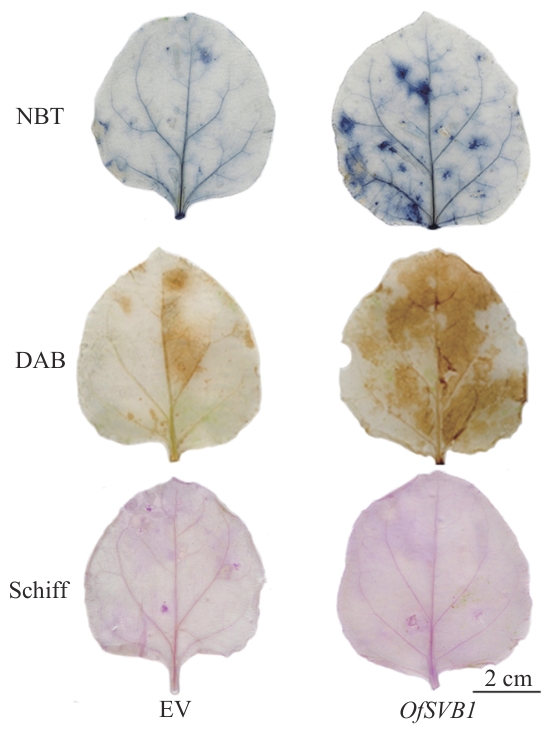
Fig. 5 NBT, DAB, and Schiff solution staining of N. benthamiana leaves after salt treatment
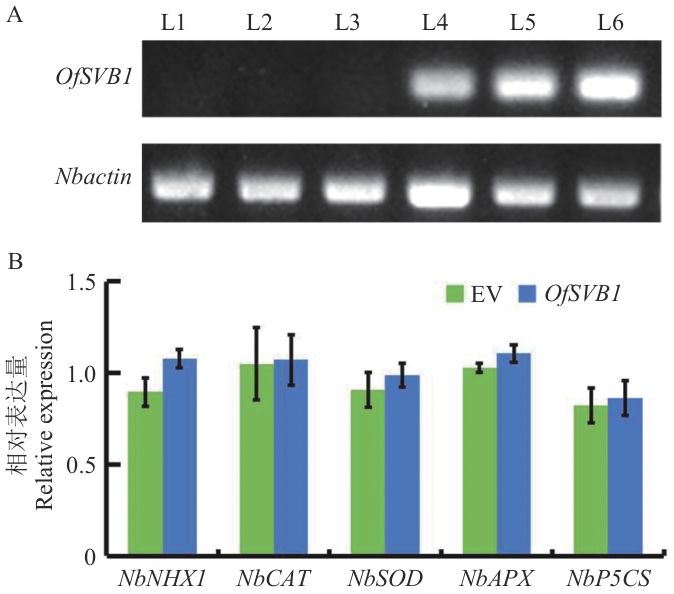
Fig. 6 OfSVB1 transient conversion for tobacco detection (A) and RT-qPCR of five salt stress-related genes (B)The Nbaction is the internal reference gene of N. benthamiana, and the distribution of L1-3 and L4-6 refers to three tobacco plants injected with pSuper1300 empty vector (EV) and pSuper1300-OfSVB1, respectively
| [1] | 宋子荷, 甄艳. 植物干旱和盐胁迫响应相关miRNA研究进展 [J]. 南京林业大学学报: 自然科学版, 2024, 48(4): 1-11. |
| Song ZH, Zhen Y. Advancements in the research of miRNAs associated with plant drought and salt stress responses [J]. J Nanjing For Univ Nat Sci Ed, 2024, 48(4): 1-11. | |
| [2] | Zhang L, Zhang ZJ, Fang SZ, et al. Integrative analysis of metabolome and transcriptome reveals molecular regulatory mechanism of flavonoid biosynthesis in Cyclocarya paliurus under salt stress [J]. Ind Crops Prod, 2021, 170: 113823. |
| [3] | 顾恒, 李玲, 欧阳绮霞, 等. 盐胁迫对3个桂花品种生长和生理特性的影响 [J]. 中国野生植物资源, 2020, 39(10): 28-34. |
| Gu H, Li L, Ouyang QX, et al. Effects of salt stress on the growth and physiological characteristics of three sweet Osmanthus fragrans varieties [J]. Chin Wild Plant Resour, 2020, 39(10): 28-34 | |
| [4] | Liang XY, Li JF, Yang YQ, et al. Designing salt stress-resilient crops: Current progress and future challenges [J]. J Integr Plant Biol, 2024, 66(3): 303-329. |
| [5] | 杜艳霞, 王艺光, 肖政, 等. 桂花OfNCED3调控转基因烟草叶片类胡萝卜素和叶绿素的合成 [J]. 园艺学报, 2023, 50(6): 1284-1294. |
| Du YX, Wang YG, Xiao Z, et al. Ectopic overexpression of OfNCED3 regulates the synthesis of carotenoids and chlorophylls in transgenic tobacco leaves [J]. Acta Hortic Sin, 2023, 50(6): 1284-1294. | |
| [6] | Gu H, Ding WJ, Shi TT, et al. Integrated transcriptome and endogenous hormone analysis provides new insights into callus proliferation in Osmanthus fragrans [J]. Sci Rep, 2022, 12: 7609. |
| [7] | Qin Y, Yu HX, Cheng SY, et al. Genome-wide analysis of the WRKY gene family in Malus domestica and the role of MdWRKY70L in response to drought and salt stresses [J]. Genes, 2022, 13(6): 1068. |
| [8] | Xu HY, Shi XX, He L, et al. Arabidopsis thaliana trihelix transcription factor AST1 mediates salt and osmotic stress tolerance by binding to a novel AGAG-box and some GT motifs [J]. Plant Cell Physiol, 2018, 59(5): 946-965. |
| [9] | Li Q, Wu Q, Wang AH, et al. Tartary buckwheat transcription factor FtbZIP83 improves the drought/salt tolerance of Arabidopsis via an ABA-mediated pathway [J]. Plant Physiol Biochem, 2019, 144: 312-323. |
| [10] | Zhu ML, Bin J, Ding HF, et al. Insights into the trihelix transcription factor responses to salt and other stresses in Osmanthus fragrans [J]. BMC Genomics, 2022, 23(1): 334. |
| [11] | 宰舟颖, 王柳, 丁卉芬, 等. 桂花OfWRKY120基因鉴定及盐胁迫响应功能研究 [J]. 西北农林科技大学学报: 自然科学版, 2024, 52(5): 144-154. |
| Zai ZY, Wang L, Ding HF, et al. Identification and salt stress response of OfWRKY120 gene in Osmanthus fragrans [J]. J Northwest A F Univ Nat Sci Ed, 2024, 52(5): 144-154. | |
| [12] | Hussain S, Zhang N, Wang W, et al. Involvement of ABA responsive SVB genes in the regulation of trichome formation in Arabidopsis [J]. Int J Mol Sci, 2021, 22(13): 6790. |
| [13] | Yu FY, Du Y, Shen YB. Physiological characteristics changes of Aesculus chinensis seeds during natural dehydration [J]. J For Res, 2006, 17(2): 103-106. |
| [14] | Borgohain P, Saha B, Agrahari R, et al. SlNAC2 overexpression in Arabidopsis results in enhanced abiotic stress tolerance with alteration in glutathione metabolism [J]. Protoplasma, 2019, 256(4): 1065-1077. |
| [15] | Nguyen HTT, Das Bhowmik S, Long H, et al. Rapid accumulation of proline enhances salinity tolerance in Australian wild rice Oryza australiensis domin [J]. Plants, 2021, 10(10): 2044. |
| [16] | Ji XY, Tang JL, Zhang JP. Effects of salt stress on the morphology, growth and physiological parameters of Juglansmicrocarpa L. seedlings [J]. Plants, 2022, 11(18): 2381. |
| [17] | Turan M, Ekinci M, Kul R, et al. Mitigation of salinity stress in cucumber seedlings by exogenous hydrogen sulfide [J]. J Plant Res, 2022, 135(3): 517-529. |
| [18] | Chen J, Zhong YM, Zhang HQ, et al. Nitrate reductase-dependent nitric oxide production is involved in microcystin-LR-induced oxidative stress in Brassica rapa [J]. Water Air Soil Pollut, 2012, 223(7): 4141-4152. |
| [19] | Shi J, Fu XZ, Peng T, et al. Spermine pretreatment confers dehydration tolerance of Citrus in vitro plants via modulation of antioxidative capacity and stomatal response [J]. Tree Physiol, 2010, 30(7): 914-922. |
| [20] | Bin J, Zhu ML, Ding HF, et al. New insights into the roles of Osmanthus fragrans heat-shock transcription factors in cold and other stress responses [J]. Horticulturae, 2022, 8(1): 80. |
| [21] | Liu JW, Hu HM, Shen HM, et al. Insights into the cytochrome P450 monooxygenase superfamily in Osmanthus fragrans and the role of OfCYP142 in linalool synthesis [J]. Int J Mol Sci, 2022, 23(20): 12150. |
| [22] | Chen X, Yang XL, Xie J, et al. Biochemical and comparative transcriptome analyses reveal key genes involved in major metabolic regulation related to colored leaf formation in Osmanthus fragrans 'yinbi Shuanghui' during development [J]. Biomolecules, 2020, 10(4): 549. |
| [23] | 燕佳琦, 李萍, 张鹤, 等. 甘蓝型油菜BnaSVB基因的克隆及DUF538基因家族的鉴定 [J]. 分子植物育种, 2022, 20(8): 2437-2447. |
| Yan JQ, Li P, Zhang H, et al. Cloning of BnaSVB gene and identification of DUF538 gene family in Brassica napus L. [J]. Mol Plant Breed, 2022, 20(8): 2437-2447. | |
| [24] | Li YL, Li L, Ding WJ, et al. Genome-wide identification of Osmanthus fragrans bHLH transcription factors and their expression analysis in response to abiotic stress [J]. Environ Exp Bot, 2020, 172: 103990. |
| [25] | Ding WJ, Ouyang QX, Li YL, et al. Genome-wide investigation of WRKY transcription factors in sweet Osmanthus and their potential regulation of aroma synthesis [J]. Tree Physiol, 2020, 40(4): 557-572. |
| [26] | Chen ZL, Galli M, Gallavotti A. Mechanisms of temperature-regulated growth and thermotolerance in crop species [J]. Curr Opin Plant Biol, 2022, 65: 102134. |
| [27] | Choudhury FK, Rivero RM, Blumwald E, et al. Reactive oxygen species, abiotic stress and stress combination [J]. Plant J, 2017, 90(5): 856-867. |
| [28] | Yang JL, La Y, He TC, et al. Variations of salt stress responses and functional identification of TgPYR1-like8 in Tulipa gesneriana [J]. Sci Hortic, 2024, 330: 113104. |
| [29] | Li C, Cui J, Shen YR, et al. BrERF109 positively regulates the tolerances of drought and salt stress in Chinese cabbage [J]. Environ Exp Bot, 2024, 223: 105794. |
| [30] | 罗春燕, 耿红凯, 王秀军, 等. NaCl胁迫下外源水杨酸对银杏生长和光合作用的影响 [J]. 南京林业大学学报: 自然科学版, 2024, 48(6): 91-101. |
| Luo CY, Geng HK, Wang XJ, et al. Effects of exogenous salicylic acid on growth and photosynthesis of Ginkgo biloba under NaCl stress [J]. J Nanjing For Univ Nat Sci Ed, 2024, 48(6): 91-101. | |
| [31] | Sun YM, Jiang CX, Jiang RQ, et al. A novel NAC transcription factor from Eucalyptus, EgNAC141, positively regulates lignin biosynthesis and increases lignin deposition [J]. Front Plant Sci, 2021, 12: 642090. |
| [32] | Zhao SS, Zhang QK, Liu MY, et al. Regulation of plant responses to salt stress [J]. Int J Mol Sci, 2021, 22(9): 4609. |
| [33] | Laxmi, Kamal A, Kumar V, et al. Morphological indicators of salinity stress and their relation with osmolyte associated redox regulation in mango cultivars [J]. J Plant Biochem Biotechnol, 2021, 30(4): 918-929. |
| [34] | Wang XJ, Song ZQ, Ti YJ, et al. Physiological response and transcriptome analysis of Prunus mume to early salt stress [J]. J Plant Biochem Biotechnol, 2022, 31(2): 330-342. |
| [35] | 孙志娟, 刘文杰, 郑晓东, 等. 褪黑素对盐碱胁迫下平邑甜茶幼苗生长的影响及其机制 [J]. 园艺学报, 2023, 50(8): 1697-1710. |
| Sun ZJ, Liu WJ, Zheng XD, et al. Effects and functional mechanism of melatonin on the growth of Malus hupehensis seedlings under saline-alkali stress [J]. Acta Hortic Sin, 2023, 50(8): 1697-1710. | |
| [36] | 彭玲, 冯璐, 宋爱云, 等. 不同浓度盐和氮处理对冬枣果实品质形成的交互作用 [J]. 园艺学报, 2023, 50(10): 2192-2206. |
| Peng L, Feng L, Song AY, et al. Interaction of different concentrations of salt and nitrogen treatment on fruit quality formation of Ziziphus jujuba 'Dongzao' [J]. Acta Hortic Sin, 2023, 50(10): 2192-2206. | |
| [37] | Liu GH, Gu H, Cai HY, et al. Integrated transcriptome and biochemical analysis provides new insights into the leaf color change in Acer fabri [J]. Forests, 2023, 14(8): 1638. |
| [38] | Zhang ZJ, Jin HY, Fang J, et al. Effects of nanoparticle application on Cyclocarya paliurus growth: Mechanisms underlying the particle- and dose-dependent response [J]. Ind Crops Prod, 2024, 209: 117942. |
| [1] | HU Yi-chao, QIN Tian, SUN Jian-sheng, SU Zan, ZHOU Yi, LIU Jin-cang, LIU Zheng-qin, ZHANG Tong-zhuo, GUAN Ming-xin, MA Ting-ting, LI Juan. Screening of Tobacco Leaf Medium for Enriching Functional Microorganisms and Its Effect on Improving Flue-cured Tobacco Quality [J]. Biotechnology Bulletin, 2026, 42(5): 113-123. |
| [2] | ZHU Zhi-yan, SONG Zhi-wei, HE Shan, ZHANG De-qing, HE Yong, TIAN Zhi-hong. Identification and Control Characteristics of Antagonistic Bacteria against Tobacco Target Spot Disease [J]. Biotechnology Bulletin, 2026, 42(4): 310-320. |
| [3] | PENG Chao-feng, XIA Lin, LIU Rui-xia, YAN Xin-ke, MU Yang-wei, LIU Meng-ru, YANG Jun, WU Ming-zhu. Functional Analysis of the Tobacco NtPPO5 Gene Using VIGS and CRISPR/Cas9 Technology [J]. Biotechnology Bulletin, 2026, 42(4): 251-262. |
| [4] | LIU Qing-yuan, WU Hong-qi, CHEN Xiu-e, CHEN Jian, JIANG Yuan-ze, HE Yan-zi, YU Qi-wei, LIU Ren-xiang. Function of Transcription Factor NtMYB96a in Regulating the Tolerance of Tobacco to Drought [J]. Biotechnology Bulletin, 2026, 42(4): 239-250. |
| [5] | XU Yu-jiao, SUN Yu-shuai, LIU Dao-qi, ZHANG Li, ZHANG Zhi-chang, YAO Yu-xin. Functional Analysis of VvHSP18.2 Overexpression in Regulating Salt-alkali Resistance in Grapevines [J]. Biotechnology Bulletin, 2026, 42(4): 161-169. |
| [6] | DONG Ya-ru, ZHU Hong, WANG Zhao-hong, ZHAO Dong-xiao, LIU Hui-fen. Cloning and Salt-drought Tolerance Analysis of MnDREB6E Gene in Mulberry [J]. Biotechnology Bulletin, 2026, 42(2): 306-316. |
| [7] | LIU Bao-cai, HU Xue-bo, ZHANG Wu-jun, ZHAO Yun-qing, HUANG Ying-zhen, CHEN Jing-ying. Screening of Internal Reference Gene for Pholidota chinensis and Their Applications [J]. Biotechnology Bulletin, 2026, 42(2): 158-168. |
| [8] | ZHANG Chi-hao, LIU Jin-nan, DONG Jia-le, CHAO Yue-hui. Construction of Alfalfa Yeast Expression Library and Screening and Identification of Salt-tolerance Genes [J]. Biotechnology Bulletin, 2026, 42(2): 239-249. |
| [9] | LI Le-song, ZHANG Jin-jin, HE Jia-die, LIANG Yan-li, YANG Sheng-chao, LI Meng-fei, ZHAO Yan. Identification and Functional Characterization of the 4-Coumarate∶coenzyme A Ligase Gene Family in Angelica sinensis (Oliv.) Diels [J]. Biotechnology Bulletin, 2026, 42(2): 293-305. |
| [10] | LIU Meng-ru, XIA Lin, LIU Rui-xia, YAN Xin-ke, YANG Jun, ZHANG Jing-hua, WU Ming-zhu. Cloning and Functional Analysis of Tobacco Polyphenol Oxidase NtPPO1-2 Gene [J]. Biotechnology Bulletin, 2026, 42(2): 218-227. |
| [11] | REN Yun-er, WU Guo-qiang, CHENG Bin, WEI Ming. Genome-wide Identification of the BvATGs Genes Family in Sugar Beet (Beta vulgaris L.) and Analysis of Their Expression Pattern under Salt Stress [J]. Biotechnology Bulletin, 2026, 42(1): 184-197. |
| [12] | ZHANG Chi-hao, LIU Jin-nan, CHAO Yue-hui. Cloning and Functional Analysis of a bZIP Transcription Factor MtbZIP29 from Medicago truncatula [J]. Biotechnology Bulletin, 2026, 42(1): 241-250. |
| [13] | ZHANG Yue, DAI Yue-hua, ZHANG Ying-ying, LI Ao-hui, LI Chu-hui, XUE Jin-ai, QIN Hui-bin, CHEN Yan, NIE Meng-en, ZHANG Hai-ping. Cloning and Functional Analysis of the Soybean Enoyl-CoA Reductase ECR14 Gene [J]. Biotechnology Bulletin, 2026, 42(1): 95-104. |
| [14] | CHENG Ting-ting, LIU Jun, WANG Li-li, LIAN Cong-long, WEI Wen-jun, GUO Hui, WU Yao-lin, YANG Jing-fan, LAN Jin-xu, CHEN Sui-qing. Genome-wide Identification of the Chalcone Isomerase Gene Family in Eucommia ulmoides and Analysis of Their Expression Patterns [J]. Biotechnology Bulletin, 2025, 41(9): 242-255. |
| [15] | GONG Hui-ling, XING Yu-jie, MA Jun-xian, CAI Xia, FENG Zai-ping. Identification of Laccase (LAC) Gene Family in Potato (Solanum tuberosum L.) and Its Expression Analysis under Salt Stresses [J]. Biotechnology Bulletin, 2025, 41(9): 82-93. |
| Viewed | ||||||
|
Full text |
|
|||||
|
Abstract |
|
|||||
