







Biotechnology Bulletin ›› 2026, Vol. 42 ›› Issue (11): 58-69.doi: 10.13560/j.cnki.biotech.bull.1985.2025-1417
ZHAO Xin-yue1,2, ZENG Wei1, ZHANG Li-ping1, XIA Ji-qiao2( ), BI Yan-zhen1()
Received:2025-12-25
Online:2026-11-26
Published:2026-11-03
Contact:
XIA Ji-qiao, BI Yan-zhen
E-mail:xiajiqiao365@163.com;sukerbyz@126.com
ZHAO Xin-yue, ZENG Wei, ZHANG Li-ping, XIA Ji-qiao, BI Yan-zhen. Research Progress in CD163 Gene Editing to Develop PRRSV-resistant Pigs[J]. Biotechnology Bulletin, 2026, 42(11): 58-69.
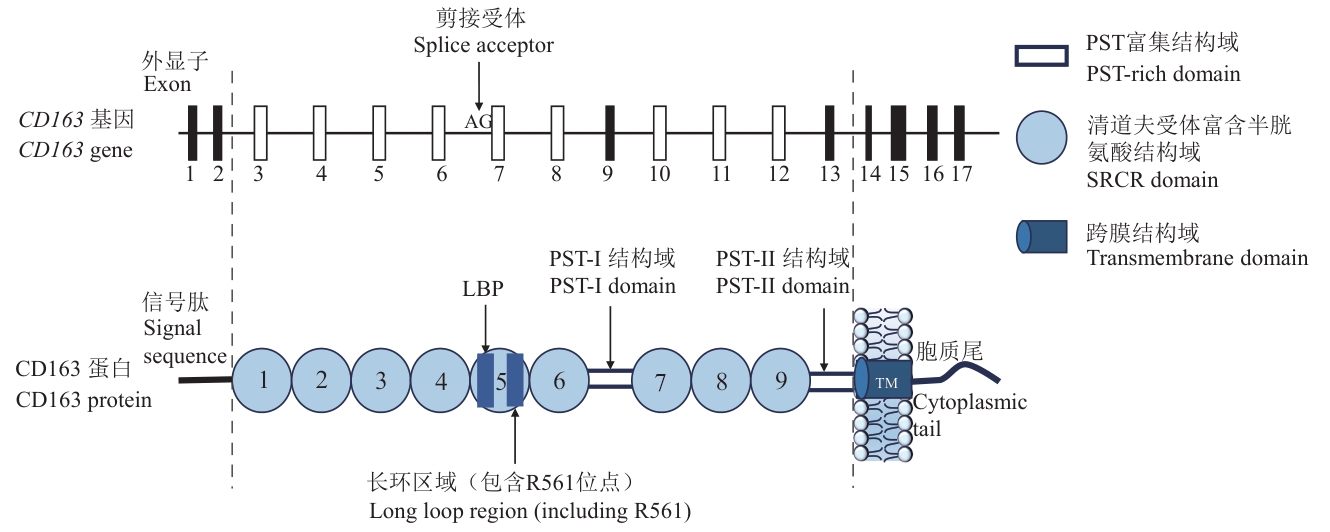
Fig. 1 Schematic of porcine CD163 gene and protein structure, and its editing targets for PRRS-resistanceOpen boxes represent exons that predominantly encode the extracellular SRCR domains (SRCR1-SRCR9) of CD163. Black filled boxes represent exons that predominantly encode non-SRCR regions, including the signal peptide, the PST linkers, the transmembrane domain, and the cytoplasmic tail
基因编辑技术 Gene editing technologies | 编辑靶点 Targeting site | 编辑结果 Editing results | 参考文献 References |
|---|---|---|---|
| CRISPR/Cas9-NHEJ | CD163 | 移码突变,大片段缺失 Frameshift mutation, large fragment deletion | [ |
| 移码突变 Frame shift mutation | [ | ||
| CRISPR/Cas9-HDR | SRCR5 | 人源CD163 SRCR8结构域替换 Replacement with human CD163 SRCR8 | [ |
| 删除 Deletion | [ | ||
| LBP | 含LBP在内的41个氨基酸删除 Deletion of 41 amino acids containing the LBP | [ | |
| Long loop | 含loop 5-6部分区域的40个氨基酸删除 Deletion of 40 amino acids containing part of loop 5-6 | [ | |
| R561 | 第561位的精氨酸(R)替换为丙氨酸(A) An arginine (R) to alanine (A) substitution at position 561 | [ | |
| PSTII | 前12个氨基酸删除 Deletion of the first 12 amino acids | [ | |
单碱基编辑技术 Base editing technology | 外显子7 Exon 7 | 胞嘧啶(C)到胸腺嘧啶(T)的转换 C was converted to T | [ |
| 内含子6 Intron 6 | 剪接受体位点由AG突变为GG The splice acceptor site AG was mutated to GG | [ |
Table 1 Application of gene editing technologies for developing PRRS-resistant pigs via CD163 receptor targeting
基因编辑技术 Gene editing technologies | 编辑靶点 Targeting site | 编辑结果 Editing results | 参考文献 References |
|---|---|---|---|
| CRISPR/Cas9-NHEJ | CD163 | 移码突变,大片段缺失 Frameshift mutation, large fragment deletion | [ |
| 移码突变 Frame shift mutation | [ | ||
| CRISPR/Cas9-HDR | SRCR5 | 人源CD163 SRCR8结构域替换 Replacement with human CD163 SRCR8 | [ |
| 删除 Deletion | [ | ||
| LBP | 含LBP在内的41个氨基酸删除 Deletion of 41 amino acids containing the LBP | [ | |
| Long loop | 含loop 5-6部分区域的40个氨基酸删除 Deletion of 40 amino acids containing part of loop 5-6 | [ | |
| R561 | 第561位的精氨酸(R)替换为丙氨酸(A) An arginine (R) to alanine (A) substitution at position 561 | [ | |
| PSTII | 前12个氨基酸删除 Deletion of the first 12 amino acids | [ | |
单碱基编辑技术 Base editing technology | 外显子7 Exon 7 | 胞嘧啶(C)到胸腺嘧啶(T)的转换 C was converted to T | [ |
| 内含子6 Intron 6 | 剪接受体位点由AG突变为GG The splice acceptor site AG was mutated to GG | [ |
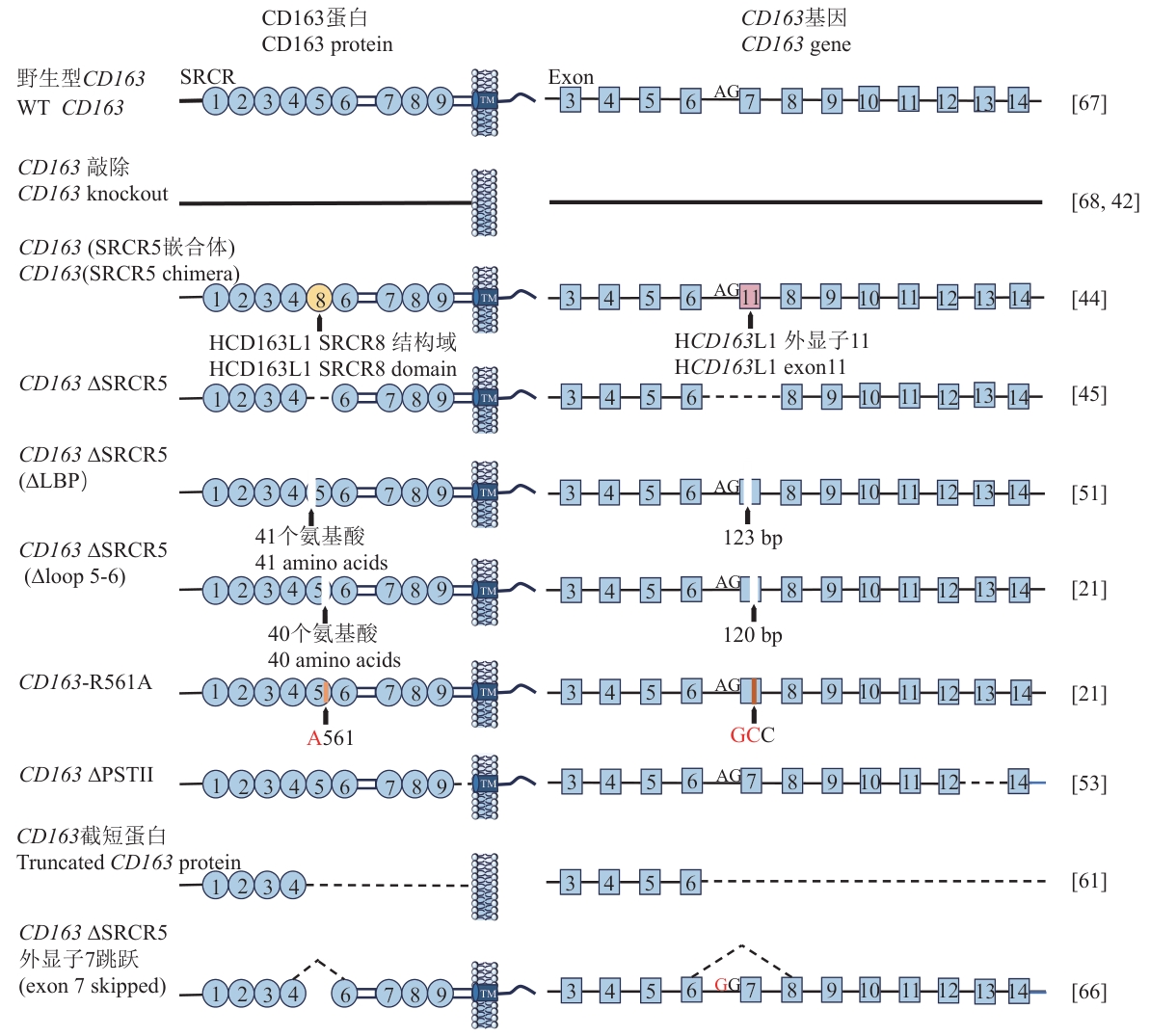
Fig. 2 Schematic of gene-editing strategies for generating PRRS-resistant pigs via CD163 receptor targeting
| [1] | Liu GQ, Huang XY, Yang YB, et al. GP2a I118 and GP4 D43 play critical roles in the attachment of PRRSV to the CD163 receptor: implications for anti-PRRSV infection targets [J]. J Virol, 2025, 99(9): e00963-25. |
| [2] | 郭赛楠, 潘琳, 牛明福. 猪繁殖与呼吸综合征病毒逃逸宿主免疫反应机制的研究进展 [J]. 中国预防兽医学报, 2023, 45(12): 1309-1316. |
| Guo SN, Pan L, Niu MF. Research progress of immune escape mechanism of PRRSV [J]. Chin J Prev Vet Med, 2023, 45(12): 1309-1316. | |
| [3] | Weng CZ, Huang XX, Chen ZA, et al. Genetic evolution, epidemic trends, and recombination dynamics of PRRSV-1 in China [J]. Front Vet Sci, 2025, 12: 1632917. |
| [4] | Nelsen CJ, Murtaugh MP, Faaberg KS. Porcine reproductive and respiratory syndrome virus comparison: divergent evolution on two continents [J]. J Virol, 1999, 73(1): 270-280. |
| [5] | 郭宝清, 陈章水, 刘文兴, 等. 从疑似PRRS流产胎儿分离PRRSV的研究 [J]. 中国畜禽传染病, 1996, 18(2): 1-5. |
| Guo BQ, Chen ZS, Liu WX, et al. Isolation and identification of porcine reproductory and respiratory syndrome (PRRS) virus from aborted fetuses suspected of PRRS [J]. Chin J Prev Vet Med, 1996, 18(2): 1-5. | |
| [6] | Tian KG, Yu XL, Zhao TZ, et al. Emergence of fatal PRRSV variants: unparalleled outbreaks of atypical PRRS in China and molecular dissection of the unique hallmark [J]. PLoS One, 2007, 2(6): e526. |
| [7] | Liu KY, Zhang K, Wang XD, et al. Characterization of a novel, virulent PRRSV-1 subtype 1 strain with intestinal tropism in China [J]. Microb Pathog, 2025, 208: 107951. |
| [8] | Wang HL, Feng WH. Current status of porcine reproductive and respiratory syndrome vaccines [J]. Vaccines, 2024, 12(12): 1387. |
| [9] | Zhao K, Ye C, Chang XB, et al. Importation and recombination are responsible for the latest emergence of highly pathogenic porcine reproductive and respiratory syndrome virus in China [J]. J Virol, 2015, 89(20): 10712-10716. |
| [10] | Ren BH, Liu RY, Huang FB, et al. Isolation and pathogenicity of the novel porcine reproductive and respiratory syndrome virus 1 strain ZJ01 in South China [J]. Front Cell Infect Microbiol, 2025, 15: 1646425. |
| [11] | Chen XX, Zhou XY, Guo TD, et al. Efficacy of a live attenuated highly pathogenic PRRSV vaccine against a NADC30-like strain challenge: implications for ADE of PRRSV [J]. BMC Vet Res, 2021, 17: 260. |
| [12] | Bhatia S, Pooja, Yadav SK. CRISPR-Cas for genome editing: Classification, mechanism, designing and applications [J]. Int J Biol Macromol, 2023, 238: 124054. |
| [13] | Delputte PL, Costers S, Nauwynck HJ. Analysis of porcine reproductive and respiratory syndrome virus attachment and internalization: distinctive roles for heparan sulphate and sialoadhesin [J]. J Gen Virol, 2005, 86(5): 1441-1445. |
| [14] | Van Breedam W, Van Gorp H, Zhang JQ, et al. The M/GP5 glycoprotein complex of porcine reproductive and respiratory syndrome virus binds the sialoadhesin receptor in a sialic acid-dependent manner [J]. PLoS Pathog, 2010, 6(1): e1000730. |
| [15] | Prather RS, Rowland RRR, Ewen C, et al. An intact sialoadhesin (Sn/SIGLEC1/CD169) is not required for attachment/internalization of the porcine reproductive and respiratory syndrome virus [J]. J Virol, 2013, 87(17): 9538-9546. |
| [16] | Wei X, Li R, Qiao SL, et al. Porcine reproductive and respiratory syndrome virus utilizes viral apoptotic mimicry as an alternative pathway to infect host cells [J]. J Virol, 2020, 94(17): e00709-20. |
| [17] | Chen JY, Wang HT, Bai JH, et al. Generation of pigs resistant to highly pathogenic-porcine reproductive and respiratory syndrome virus through gene editing of CD163 [J]. Int J Biol Sci, 2019, 15(2): 481-492. |
| [18] | Burkard C, Lillico SG, Reid E, et al. Precision engineering for PRRSV resistance in pigs: Macrophages from genome edited pigs lacking CD163 SRCR5 domain are fully resistant to both PRRSV genotypes while maintaining biological function [J]. PLoS Pathog, 2017, 13(2): e1006206. |
| [19] | Calvert JG, Slade DE, Shields SL, et al. CD163 expression confers susceptibility to porcine reproductive and respiratory syndrome viruses [J]. J Virol, 2007, 81(14): 7371-7379. |
| [20] | Patton JB, Rowland RR, Yoo D, et al. Modulation of CD163 receptor expression and replication of porcine reproductive and respiratory syndrome virus in porcine macrophages [J]. Virus Res, 2009, 140(1/2): 161-171. |
| [21] | Xu K, Zhou YR, Shang HT, et al. Pig macrophages with site-specific edited CD163 decrease the susceptibility to infection with porcine reproductive and respiratory syndrome virus [J]. J Integr Agric, 2023, 22(7): 2188-2199. |
| [22] | Rowland RRR, Brandariz-Nuñez A. Role of CD163 in PRRSV infection [J]. Virology, 2024, 600: 110262. |
| [23] | Stoian AMM, Rowland RRR, Brandariz-Nuñez A. Mutations within scavenger receptor cysteine-rich (SRCR) protein domain 5 of porcine CD163 involved in infection with porcine reproductive and respiratory syndrome virus (PRRS) [J]. J Gen Virol, 2022, 103: 001740. |
| [24] | 方鑫玉, 周磊, 杨汉春. 猪繁殖与呼吸综合征病毒受体CD163的研究进展 [J]. 中国兽医杂志, 2024, 60(12): 99-105. |
| Fang XY, Zhou L, Yang HC. Research progress on porcine reproductive and respiratory syndrome virus receptor CD163 [J]. Chin J Vet Med, 2024, 60(12): 99-105. | |
| [25] | Xu H, Song XH, Su XD. Calcium-dependent oligomerization of scavenger receptor CD163 facilitates the endocytosis of ligands [J]. Nat Commun, 2025, 16: 6679. |
| [26] | Su CM, Rowland RRR, Yoo D. Recent advances in PRRS virus receptors and the targeting of receptor-ligand for control [J]. Vaccines, 2021, 9(4): 354. |
| [27] | Moreno JA, Muñoz-García B, Martín-Ventura JL, et al. The CD163-expressing macrophages recognize and internalize TWEAK potential consequences in atherosclerosis [J]. Atherosclerosis, 2009, 207(1): 103-110. |
| [28] | Fabriek BO, Polfliet MMJ, Vloet RPM, et al. The macrophage CD163 surface glycoprotein is an erythroblast adhesion receptor [J]. Blood, 2007, 109(12): 5223-5229. |
| [29] | Fabriek BO, van Bruggen R, Deng DM, et al. The macrophage scavenger receptor CD163 functions as an innate immune sensor for bacteria [J]. Blood, 2009, 113(4): 887-892. |
| [30] | Van Gorp H, Van Breedam W, Van Doorsselaere J, et al. Identification of the CD163 protein domains involved in infection of the porcine reproductive and respiratory syndrome virus [J]. J Virol, 2010, 84(6): 3101-3105. |
| [31] | Lee YJ, Park CK, Nam E, et al. Generation of a porcine alveolar macrophage cell line for the growth of porcine reproductive and respiratory syndrome virus [J]. J Virol Meth, 2010, 163(2): 410-415. |
| [32] | Li LL, Wu CY, Hou GP, et al. Generation of murine macrophage-derived cell lines expressing porcine CD163 that support porcine reproductive and respiratory syndrome virus infection [J]. BMC Biotechnol, 2017, 17: 77. |
| [33] | Wang XP, Wei RF, Li QY, et al. PK-15 cells transfected with porcine CD163 by PiggyBac transposon system are susceptible to porcine reproductive and respiratory syndrome virus [J]. J Virol Meth, 2013, 193(2): 383-390. |
| [34] | Wang TY, Liu YG, Li L, et al. Porcine alveolar macrophage CD163 abundance is a pivotal switch for porcine reproductive and respiratory syndrome virus infection [J]. Oncotarget, 2018, 9(15): 12174-12185. |
| [35] | Li N, Huang K, Chen YJ, et al. microRNA ssc-miR-124a exhibits antiviral activity against porcine reproductive and respiratory syndrome virus via suppression of host genes CD163 [J]. Vet Microbiol, 2021, 261: 109216. |
| [36] | Ratner LD, La Motta GE, Briski O, et al. Practical approaches for knock-out gene editing in pigs [J]. Front Genet, 2021, 11: 617850. |
| [37] | Lin QY, Otoi T, Widodo OS, et al. Synergistic enhancement of clustered regularly interspaced short palindromic repeats (CRISPR)/CRISPR-associated protein 9-mediated gene editing in porcine zygotes through combined lipofection and electroporation of cationic lipid-packaged ribonucleoproteins [J]. Vet World, 2025: 3806. |
| [38] | Kim S, Kim D, Cho SW, et al. Highly efficient RNA-guided genome editing in human cells via delivery of purified Cas9 ribonucleoproteins [J]. Genome Res, 2014, 24(6): 1012-1019. |
| [39] | Hirata M, Wittayarat M, Namula Z, et al. Generation of mutant pigs by lipofection-mediated genome editing in embryos [J]. Sci Rep, 2021, 11: 23806. |
| [40] | Peng ZW, Duan WX, Fan YH, et al. PAM-flexible SpCas9 variants expand the targeting scope for porcine genome editing and cellular disease modeling [J]. BMC Biotechnol, 2026, 26(1): 83. |
| [41] | Zhao YJ, Li XY, Liu C, et al. Improving the efficiency of CRISPR ribonucleoprotein-mediated precise gene editing by small molecules in porcine fibroblasts [J]. Animals, 2024, 14(5): 719. |
| [42] | Whitworth KM, Lee K, Benne JA, et al. Use of the CRISPR/Cas9 system to produce genetically engineered pigs from in vitro-derived oocytes and embryos [J]. Biol Reprod, 2014, 91(3): 78. |
| [43] | Whitworth KM, Rowland RRR, Ewen CL, et al. Gene-edited pigs are protected from porcine reproductive and respiratory syndrome virus [J]. Nat Biotechnol, 2016, 34(1): 20-22. |
| [44] | Yang HQ, Zhang J, Zhang XW, et al. CD163 knockout pigs are fully resistant to highly pathogenic porcine reproductive and respiratory syndrome virus [J]. Antivir Res, 2018, 151: 63-70. |
| [45] | Wells KD, Bardot R, Whitworth KM, et al. Replacement of porcine CD163 scavenger receptor cysteine-rich domain 5 with a CD163-like homolog confers resistance of pigs to genotype 1 but not genotype 2 porcine reproductive and respiratory syndrome virus [J]. J Virol, 2017, 91(2): e01521-16. |
| [46] | Xu K, Zhou YR, Mu YL, et al. CD163 and pAPN double-knockout pigs are resistant to PRRSV and TGEV and exhibit decreased susceptibility to PDCoV while maintaining normal production performance [J]. eLife, 2020, 9: e57132. |
| [47] | Nesbitt C, Galina Pantoja L, Beaton B, et al. Pigs lacking the SRCR5 domain of CD163 protein demonstrate heritable resistance to the PRRS virus and no changes in animal performance from birth to maturity [J]. Front Genome Ed, 2024, 6: 1322012. |
| [48] | Burkard C, Opriessnig T, Mileham AJ, et al. Pigs lacking the scavenger receptor cysteine-rich domain 5 of CD163 are resistant to porcine reproductive and respiratory syndrome virus 1 infection [J]. J Virol, 2018, 92(16): e00415-18. |
| [49] | Wang HT, Shen LC, Chen JY, et al. Deletion of CD163 exon 7 confers resistance to highly pathogenic porcine reproductive and respiratory viruses on pigs [J]. Int J Biol Sci, 2019, 15(9): 1993-2005. |
| [50] | Van Gorp H, Delputte PL, Nauwynck HJ. Scavenger receptor CD163, a Jack-of-all-trades and potential target for cell-directed therapy [J]. Mol Immunol, 2010, 47(7/8): 1650-1660. |
| [51] | Ma HF, Jiang LG, Qiao SL, et al. The crystal structure of the fifth scavenger receptor cysteine-rich domain of porcine CD163 reveals an important residue involved in porcine reproductive and respiratory syndrome virus infection [J]. J Virol, 2017, 91(3): e01897-16. |
| [52] | Guo CH, Wang M, Zhu ZB, et al. Highly efficient generation of pigs harboring a partial deletion of the CD163 SRCR5 domain, which are fully resistant to porcine reproductive and respiratory syndrome virus 2 infection [J]. Front Immunol, 2019, 10: 1846. |
| [53] | Stoian AMM, Rowland RRR, Brandariz-Nuñez A. Identification of CD163 regions that are required for porcine reproductive and respiratory syndrome virus (PRRSV) infection but not for binding to viral envelope glycoproteins [J]. Virology, 2022, 574: 71-83. |
| [54] | Salgado B, Rivas RB, Pinto D, et al. Genetically modified pigs lacking CD163 PSTII-domain-coding exon 13 are completely resistant to PRRSV infection [J]. Antivir Res, 2024, 221: 105793. |
| [55] | Rowland RRR, Salgado B, Lowe J, et al. Deletion of maternal CD163 PSTII-domain-coding exon 13 protects fetuses from infection with porcine reproductive and respiratory syndrome virus (PRRSV) [J]. Vet Microbiol, 2024, 298: 110255. |
| [56] | Liang YH, Chen FB, Wang KP, et al. Base editors: development and applications in biomedicine [J]. Front Med, 2023, 17(3): 359-387. |
| [57] | Wang DW, Zhang YZ, Zhang JN, et al. Advances in base editing: a focus on base transversions [J]. Mutat Res Rev Mutat Res, 2024, 794: 108515. |
| [58] | 赵无迪, 黄国斌, 朱向星, 等. 碱基编辑技术在猪遗传改良中的应用研究进展 [J]. 生物工程学报, 2023, 39(10): 3936-3947. |
| Zhao WD, Huang GB, Zhu XX, et al. Application of single base editing technique in pig genetic improvement: a review [J]. Chin J Biotechnol, 2023, 39(10): 3936-3947. | |
| [59] | Ye LJ, Zhao DD, Li J, et al. Glycosylase-based base editors for efficient T-to-G and C-to-G editing in mammalian cells [J]. Nat Biotechnol, 2024, 42(10): 1538-1547. |
| [60] | Tong HW, Wang HQ, Wang XC, et al. Development of deaminase-free T-to-S base editor and C-to-G base editor by engineered human uracil DNA glycosylase [J]. Nat Commun, 2024, 15: 4897. |
| [61] | 高靖静. 胞嘧啶单碱基编辑器编辑结果的分析与建模预测 [D]. 北京: 北京协和医学院, 2022. |
| Gao JJ. Analysis and modeling prediction of cytosine single base editor editing results [D]. Beijing: Peking Union Medical College, 2022. | |
| [62] | 赵为民, 王慧利, 曹少先, 等. 猪CD163基因的单碱基编辑研究 [J]. 畜牧兽医学报, 2022, 53(4): 1041-1050. |
| Zhao WM, Wang HL, Cao SX, et al. The study of base editing of porcine CD163 gene [J]. Acta Vet Zootechnica Sin, 2022, 53(4): 1041-1050. | |
| [63] | Wang Y, Bi DF, Qin GS, et al. Cytosine base editor (hA3A-BE3-NG)-mediated multiple gene editing for pyramid breeding in pigs [J]. Front Genet, 2020, 11: 592623. |
| [64] | Zheng SW, Zhong HW, Zhou XQ, et al. Efficient and safe editing of porcine endogenous retrovirus genomes by multiple-site base-editing editor [J]. Cells, 2022, 11(24): 3975. |
| [65] | Chen M, Manley JL. Mechanisms of alternative splicing regulation: insights from molecular and genomics approaches [J]. Nat Rev Mol Cell Biol, 2009, 10(11): 741-754. |
| [66] | Zhao WD, Zhu XX, Huang GB, et al. Application of multiple base-editing mediated by polycistronic tRNA-gRNA-processing system in pig cells [J]. Biotech & Bioengineering, 2025, 122(4): 779-791. |
| [67] | Bu W, Creighton CJ, Heavener KS, et al. Efficient cancer modeling through CRISPR-Cas9/HDR-based somatic precision gene editing in mice [J]. Sci Adv, 2023, 9(19): eade0059. |
| [68] | Mathew SM. Strategies for generation of mice via CRISPR/HDR-mediated knock-in [J]. Mol Biol Rep, 2023, 50(4): 3189-3204. |
| [69] | Durazo-Martínez K, Chaudhari J, Sherry LM, et al. Modification of the splice acceptor in CD163 exon 7 of pigs is insufficient to confer resistance to PRRSV [J]. Vet Microbiol, 2025, 304: 110450. |
| [70] | Vanderheijden N, Delputte PL, Favoreel HW, et al. Involvement of sialoadhesin in entry of porcine reproductive and respiratory syndrome virus into porcine alveolar macrophages [J]. J Virol, 2003, 77(15): 8207-8215. |
| [71] | Delputte PL, Vanderheijden N, Nauwynck HJ, et al. Involvement of the matrix protein in attachment of porcine reproductive and respiratory syndrome virus to a heparinlike receptor on porcine alveolar macrophages [J]. J Virol, 2002, 76(9): 4312-4320. |
| [72] | Li LL, Xue BY, Sun WY, et al. Recombinant MYH9 protein C-terminal domain blocks porcine reproductive and respiratory syndrome virus internalization by direct interaction with viral glycoprotein 5 [J]. Antivir Res, 2018, 156: 10-20. |
| [73] | Yang K, Dong JR, Li J, et al. The neonatal Fc receptor (FcRn) is required for porcine reproductive and respiratory syndrome virus uncoating [J]. J Virol, 2025, 99: e01218-24. |
| [74] | Xie JX, Christiaens I, Yang B, et al. Molecular cloning of porcine Siglec-3, Siglec-5 and Siglec-10, and identification of Siglec-10 as an alternative receptor for porcine reproductive and respiratory syndrome virus (PRRSV) [J]. J Gen Virol, 2017, 98(8): 2030-2042. |
| [1] | YANG Jia-ni, WU Tao, ZHANG Hong-yang, HUANG Bing-guang, LU Min, HE Jia-jie, RUAN Hai-hua. Design Strategies of sgRNA and Its Expression and Application in Filamentous Fungi [J]. Biotechnology Bulletin, 2026, 42(9): 262-275. |
| [2] | LIU Na-wei, QIAN Meng-ying, ZHANG Hong-ying, WANG Zhao-jun, CUI Hong, YAN Xiao-xiao. NtWUN Negatively Regulates Tobacco Trichome Development [J]. Biotechnology Bulletin, 2026, 42(9): 128-136. |
| [3] | ZHAO Lei, DAI Yang-ming, HE Shu-ying, ZHU Ling, XU Zhi-wen. A Rapid and Visual Detection Method for Porcine Reproductive and Respiratory Syndrome Virus Type II (PRRSV-2) Based on the RAA-CRISPR/EsCas13d [J]. Biotechnology Bulletin, 2026, 42(8): 81-89. |
| [4] | ZENG Ya-dan, BI Jia-jun, LI Xing-long, CHANG Yue, JIAO De-ling, WEI Hong-jiang, ZHAO Heng. Construction and Efficiency Evaluation of the Cas12a-mediated Site-specific Knock-in System in Pig Cells [J]. Biotechnology Bulletin, 2026, 42(8): 72-80. |
| [5] | WANG Wei-yan, CHAI Ye, CHEN Mei-jie, XIAO Zhu-yi, JIN Tai-cheng, YANG Li-ping. Research Progress in Epigenetic Regulatory Mechanisms of Virus-Plant Interactions [J]. Biotechnology Bulletin, 2026, 42(7): 1-10. |
| [6] | LIU Miao, LIN Tao, JIA Le-song, HU Feng, LI Tao, LI Zhi-wan, LIU Mei-fang, ZHENG Fang-yan, CUI Long. From Wild to Cultivated: Evolution and Regulatory Mechanisms of Tomato Fruit Color [J]. Biotechnology Bulletin, 2026, 42(3): 187-202. |
| [7] | LIU Na, ZENG Bao-zhen, JIA Zhao-xing, ZHU Ying-fang. Advances in Epigenetic Regulation of Tomato Fruit Development and Ripening [J]. Biotechnology Bulletin, 2026, 42(3): 37-47. |
| [8] | HU Qiu-ling, CHEN Ling, HUANG Jia-yi, ZHAO Zi-qiao, PAN Lu-yi, LIU Hui-li, LIU Tai-bo. Advances in the Regulation of Fruit Development by Polyamines [J]. Biotechnology Bulletin, 2026, 42(3): 203-212. |
| [9] | YIN Shi-qing, TIAN Tai, HUANG Feng-ting, FENG Long-qiang, WANG Hao, ZHANG Jing, HE Wen, CHEN Qing, WANG Xiao-rong, WANG Yan. Advances in Regulatory Mechanism of Fruit Firmness in Fruit Crops [J]. Biotechnology Bulletin, 2026, 42(3): 213-229. |
| [10] | CHEN Ling-yan, LI Wei-xun, PANG Xin-xin, GAO Xiang, JIAO Xu-yao. Bacteroides Genetic Manipulation Toolbox: From Conventional Methods to the Frontiers of Synthetic Biology [J]. Biotechnology Bulletin, 2026, 42(2): 51-64. |
| [11] | CHEN Si-xu, WU Kun-lun, LI Xin. Research Progress in Grain Color Traits in Cereal Crops [J]. Biotechnology Bulletin, 2026, 42(12): 1-13. |
| [12] | LIU Ni, LI Chen-wan-li, NIU Ying-feng, MAO Chang-li, LIU Jin. Research Progress in Cold-resistant Transcription Factors of Hevea brasiliensis [J]. Biotechnology Bulletin, 2026, 42(11): 35-44. |
| [13] | LI Fu-wei, LI Hong-yu. Research Progress in the Mechanism of Carotenoids Regulating Plant Flower Color and Fruit Color [J]. Biotechnology Bulletin, 2026, 42(10): 13-26. |
| [14] | ZHANG Wan-yu, XING Jun-qiang, SUN Qin-fu, WANG You-ping. Plant Regeneration and Genetic Transformation: From Empirical Exploration to Rational Design [J]. Biotechnology Bulletin, 2026, 42(10): 1-12. |
| [15] | DIAO Chen-yang, CUI You-zhi, LI Bing-zhi. Research Advances in Targeted Mutagenesis-mediated Microbial Evolutionary Engineering [J]. Biotechnology Bulletin, 2025, 41(8): 11-21. |
| Viewed | ||||||
|
Full text |
|
|||||
|
Abstract |
|
|||||
