







Biotechnology Bulletin ›› 2026, Vol. 42 ›› Issue (3): 213-229.doi: 10.13560/j.cnki.biotech.bull.1985.2025-1202
Previous Articles Next Articles
YIN Shi-qing1( ), TIAN Tai1, HUANG Feng-ting1, FENG Long-qiang1, WANG Hao1, ZHANG Jing1, HE Wen1, CHEN Qing1,2, WANG Xiao-rong1,2, WANG Yan1()
Received:2025-11-06
Online:2026-03-26
Published:2026-04-23
Contact:
WANG Yan
E-mail:2024205024@stu.sicau.edu.cn;wangyanwxy@sicau.edu.cn
YIN Shi-qing, TIAN Tai, HUANG Feng-ting, FENG Long-qiang, WANG Hao, ZHANG Jing, HE Wen, CHEN Qing, WANG Xiao-rong, WANG Yan. Advances in Regulatory Mechanism of Fruit Firmness in Fruit Crops[J]. Biotechnology Bulletin, 2026, 42(3): 213-229.
途径 Pathway | 基因 Gene | 物种 Species | 调控 Regulation | 功能 Function | 参考文献 Reference |
|---|---|---|---|---|---|
细胞壁代谢 Cell wall metabolism | PaPME2 | 甜樱桃 Prunus avium | 负向 | 促进可溶性果胶降解和PME活性 | [ |
| PcPME63 | 梨 Pyrus communis | 负向 | 促进PME活性,加速果实成熟,降低果实硬度 | [ | |
| FaPG1 | 草莓 Fragaria × ananassa | 负向 | 促进果胶溶解 | [ | |
| PavPG38 | 甜樱桃 Prunus avium | 负向 | 降解半纤维素和果胶等细胞壁组分 | [ | |
| FvPLA | 草莓 Fragaria vesca | 负向 | 促进果胶降解 | [ | |
| PavSCPL | 甜樱桃 Prunus avium | 负向 | 促进PME和PG总活性从而导致细胞壁降解 | [ | |
| PpsGalAK-like | 中国樱桃 Cerasus pseudocerasus | 正向 | 提高原果胶含量来增强果实硬度 | [ | |
| VvBGAL3 | 葡萄 Vitis vinifera | 正向 | 抑制细胞壁降解相关基因表达,维持果实硬度 | [ | |
| Mdβ-GAL18 | 苹果 Malus domestica | 负向 | 增强β-半乳糖苷酶活性,加速果实成熟软化 | [ | |
| MdXTH2 | 苹果 Malus domestica | 正向 | 过表达MdXTH2显著提高苹果果实硬度 | [ | |
| PavXTH14&15 | 甜樱桃 Prunus avium | 负向 | 促进半纤维素和果胶等细胞壁组分的降解 | [ | |
| MdEXP-A1 | 苹果 Malus domestica | 负向 | 促进细胞壁多糖组分的解聚和果实软化 | [ | |
| VcCOMT38 | 蓝莓 Vaccinium | 正向 | 促进木质素合成,提高果实硬度 | [ | |
| ZjF6H1-3, ZjPOD | 枣 Ziziphus jujuba | 正向 | 促进木质素合成,提高果皮硬度 | [ | |
淀粉降解 Starch degradation | MiBAMX2 | 芒果 Mangifera indica | 负向 | 促进淀粉降解,导致果实软化 | [ |
| MbBMY-6/7 | 香蕉 Musa ABB Pisang Awak | 负向 | 促进淀粉降解 | [ | |
植物激素 Phytohormone | PpACO1&PpACS1 | 桃 Prunus persica | 负向 | 促进乙烯合成 | [ |
| PavNCED1 | 甜樱桃 Prunus avium | 负向 | 参与ABA生物合成 | [ | |
| PaPYL9 | 杏 Prunus armeniaca | 负向 | 参与ABA信号转导 | [ | |
| FaAOC&FaAOS | 草莓 Fragaria × ananassa | 负向 | 参与茉莉酸生物合成,促进果实成熟 | [ | |
| MaBZR1/2 | 香蕉 Musa acuminata | 正向 | 降低细胞壁降解酶活性,保持果实硬度 | [ | |
DKBZR1 DKBZR2 | 柿 Diospyros kaki | 正向 负向 | DKBZR1抑制DkEGase、DkACS1表达,保持果实硬度 DKBZR2促进DkPL1、DkACO2表达,降低果实硬度 | [ | |
| DkGASA4 | 柿 Diospyros kaki | 负向 | 作为柿子成熟的激活剂 | [ | |
| PpePAO1 | 桃 Prunus persica | 负向 | 促进PA分解代谢,促进果实软化 | [ | |
转录因子 Transcription factor | FcERF12 | 无花果 Ficus carica | 正向 | 响应乙烯信号转导,抑制细胞壁修饰基因的表达 | [ |
| FcERF100 | 无花果 Ficus carica | 正向 | 形成FcERF28-FcNOR-FcERF100-FcPL7转录调控网络 | [ | |
| PpeERF113 | 桃 Prunus persica | 负向 | 介导PpePAO1,促进果实成熟,响应乙烯 | [ | |
| PpERF.E2 | 桃 Prunus persica | 负向 | 作为乙烯合成基因的激活剂,调控果实硬度 | [ | |
| AcERF61 | 猕猴桃 Actinidia chinensis | 负向 | 促进细胞壁降解基因AcPME1、AcPL1和AcCEL1表达 | [ | |
| EjERF35 | 枇杷 Eriobotrya japonica | 正向 | 促进果实木质素的积累,从而维持果实硬度 | [ | |
| MaERF96L | 香蕉 Musa acuminata | 负向 | 响应乙烯信号通路,促进果实成熟 | [ | |
| CpEIL1 | 木瓜 Carica papaya | 负向 | 促进乙烯合成基因CpACS1、CpACO1及细胞壁代谢相关基因CpXTH12、CpPE51表达 | [ | |
| CpARF2 | 木瓜 Carica papaya | 负向 | 激活细胞壁代谢基因XTH12、PE51表达 | [ | |
| MdARF5 | 苹果 Malus domestica | 负向 | 诱导乙烯生物合成 | [ | |
| PpARF6 | 桃 Prunus persica | 负向 | 促进乙烯合成转录和果实质地相关基因的表达 | [ | |
| PpIAA13 | 桃 Prunus persica | 负向 | 促进乙烯生物合成,通过ppe-miR393-PpTIR1-PpIAA13-PpACS1网络调控果实硬度 | [ | |
| PavARF8 | 甜樱桃 Prunus avium | 负向 | 受ABA抑制,PavARF8结合PavNCED1启动子,降低果实硬度 | [ | |
| VvARF19 | 葡萄 Vitis vinifera | 正向 | 转录抑制VvLBD13,从而抑制VvXTH10和VvEXPLA1表达,维持果实硬度 | [ | |
| MdAP2-like | 苹果 Malus domestica | 负向 | 促进细胞壁代谢基因Mdβ-GAL18的表达 | [ | |
| PaMADS7 | 甜樱桃 Prunus avium | 负向 | 促进细胞壁代谢基因PaPG1表达 | [ | |
| MaMADS31 | 香蕉 Musa acuminata | 正向 | 下调MaPL15和MaACO13转录,提高果实硬度 | [ | |
| CpMADS47 | 中国樱桃 Cerasus pseudocerasus | 负向 | 促进ABA合成基因CpPP2C12及细胞壁代谢相关基因CpPME3、CpXTH31的表达 | [ | |
| PbAGL7 | 梨 Pyrus L. | 正向 | 与PbNAC47和PbMYB73相互作用形成PbAGL7-PbNAC47-PbMYB73复合物,促进木质素合成基因PbC3H1、PbHCT17的表达 | [ | |
| MaMYB4 | 香蕉 Musa acuminata | 正向 | 转录抑制乙烯生物合成和果实软化相关基因如MaACS1、MaXTH15、MaPG3和MaEXPA15,MaMPK14对MaMYB4的磷酸化增强其介导的转录抑制 | [ | |
| MaMYB44 | 香蕉 Musa acuminata | 正向 | 与MaMYB73互作抑制细胞壁代谢基因MaEXPA15和淀粉降解基因MaBAM3的表达 | [ | |
| FvMYB79 | 草莓 Fragaria vesca | 负向 | 促进FvPME38的表达,加速果实软化 | [ | |
| MaMYB16L | 香蕉 Musa acuminata | 负向 | 通过可变剪接机制调控香蕉果实成熟过程的淀粉降解 | [ | |
| AdKAN2 | 猕猴桃 Actinidia chinensis | 正向 | 抑制AdBAM3L启动子活性,抑制淀粉降解从而延缓果实软化 | [ | |
| MdMYC2 | 苹果 Malus domestica | 负向 | 受JA诱导,MdMYC2转录激活乙烯合成基因MdACS1、MdACO1表达;MdMYC2也转录激活MdERF3,进而促进MdACS1的转录;MdMYC2与MdERF2互作 | [ | |
| AcNAC1&2 | 猕猴桃 Actinidia chinensis | 负向 | 促进细胞壁降解酶基因的表达 | [ | |
| PaNAC64 | 杏 Prunus armeniaca | 负向 | 受乙烯诱导,不受ABA诱导,转录抑制PaCYP707A从而导致内源ABA积累,进而促进乙烯合成和果实成熟 | [ | |
| MdNAC72 | 苹果 Malus domestica | 负向 | 结合MdXTH2的启动子并下调其表达,从而促进果实成熟 | [ | |
| FaRIF | 草莓 Fragaria × ananassa | 负向 | 促进细胞壁代谢基因的表达 | [ | |
| MdNAC1-L | 苹果 Malus domestica | 负向 | 促进细胞壁代谢相关基因MdPL5表达 | [ | |
| MdNAC7 | 苹果 Malus domestica | 负向 | 降低纤维素含量,增加水溶性果胶含量 | [ | |
| MdWRKY31 | 苹果 Malus domestica | 正向 | 下调MdXTH2的表达,维持果实硬度 | [ | |
| FvWRKY48 | 草莓 Fragaria vesca | 负向 | 促进FvPLA的表达 | [ | |
| MdZF-HD11 | 苹果 Malus domestica | 负向 | 与Mdβ-GAL18相互作用,促进果实软化 | [ | |
| MdDof43 | 苹果 Malus domestica | 负向 | 激活细胞壁降解基因Mdβ-Gal2和Mdα-AF3的表达,加速果实软化 | [ | |
PavDof6 PavDof2/15 | 甜樱桃 Prunus avium | 负向 正向 | 响应ABA信号,PavDof6促进细胞壁降解相关基因表达 响应ABA信号,PavDof2/15抑制细胞壁降解基因表达 | [ | |
| PavSPL7 | 甜樱桃 Prunus avium | 负向 | 受乙烯抑制,乙烯与PavSPL7形成负反馈通路调控果实软化 | [ | |
| AdVAL2 | 猕猴桃 Actinidia chinensis | 正向 | 显著抑制AdBAM3启动子活性,抑制淀粉降解从而延缓果实软化 | [ | |
| MaBEL1 | 香蕉 Musa acuminata | 负向 | 与淀粉和细胞壁降解相关基因如MaAMY3、MaXYL32和MaEXP-A8的启动子相互作用,促进果实软化;MaABI5和MaEBF1与MaBEL1相互作用,增强淀粉和细胞壁降解相关基因的启动子活性 | [ | |
翻译后修饰 Post-translational modification | MdPUB24 | 苹果 Malus domestica | 负向 | 泛素化降解MdNAC72,促进MdPG1表达上调,加速果实软化 | [ |
| MdMAPK3 | 苹果 Malus domestica | 负向 | 受乙烯诱导,促进MaMAPK3对MdNAC72的磷酸化,进而促使E3连接酶MdPUB24泛素化降解MdNAC72,加速软化 | [ | |
| MdEAEL1 | 苹果 Malus domestica | 负向 | 泛素化降解MdZFP3,解离MdZFP3-MdTPL4-MdHDA19转录抑制复合体,促进细胞壁降解相关基因的表达,导致果实软化 | [ | |
| CpEBF1 | 木瓜 Carica papaya | 正向 | 泛素化CpEIL1,并通过26S蛋白酶体途径降解 | [ | |
DNA甲基化 DNA methylation | PbZFP1 | 梨 Pyrus L. | 正向 | DNA甲基化修饰该基因启动子后抑制ABA积累,延缓果实成熟 | [ |
DNA去甲基化 DNA demethylation | PpNAC1 | 桃 Prunus persica | 负向 | 与PpDML1启动子结合并激活其表达,降低PpNAC1甲基化水平,促进下游成熟软化基因的表达 | [ |
组蛋白修饰 Histone modification | MdHDA19 | 苹果 Malus domestica | 正向 | 促进H3K9去乙酰化抑制乙烯的生物合成,形成MdERF4-MdTPL4复合物,通过降低乙酰化程度直接抑制MdACS3a的表达,抑制果实软化 | [ |
| CpHDA3 | 木瓜 Carica papaya | 正向 | CpHDA3与CpERF9相互作用,通过促进其下游基因CpPME1、CpPME2和CpPG5的组蛋白去乙酰化来增强CpERF9的转录抑制活性 | [ |
Table 1 Structural genes and transcription factors with experimental validation in regulating fruit firmness of fruit crops
途径 Pathway | 基因 Gene | 物种 Species | 调控 Regulation | 功能 Function | 参考文献 Reference |
|---|---|---|---|---|---|
细胞壁代谢 Cell wall metabolism | PaPME2 | 甜樱桃 Prunus avium | 负向 | 促进可溶性果胶降解和PME活性 | [ |
| PcPME63 | 梨 Pyrus communis | 负向 | 促进PME活性,加速果实成熟,降低果实硬度 | [ | |
| FaPG1 | 草莓 Fragaria × ananassa | 负向 | 促进果胶溶解 | [ | |
| PavPG38 | 甜樱桃 Prunus avium | 负向 | 降解半纤维素和果胶等细胞壁组分 | [ | |
| FvPLA | 草莓 Fragaria vesca | 负向 | 促进果胶降解 | [ | |
| PavSCPL | 甜樱桃 Prunus avium | 负向 | 促进PME和PG总活性从而导致细胞壁降解 | [ | |
| PpsGalAK-like | 中国樱桃 Cerasus pseudocerasus | 正向 | 提高原果胶含量来增强果实硬度 | [ | |
| VvBGAL3 | 葡萄 Vitis vinifera | 正向 | 抑制细胞壁降解相关基因表达,维持果实硬度 | [ | |
| Mdβ-GAL18 | 苹果 Malus domestica | 负向 | 增强β-半乳糖苷酶活性,加速果实成熟软化 | [ | |
| MdXTH2 | 苹果 Malus domestica | 正向 | 过表达MdXTH2显著提高苹果果实硬度 | [ | |
| PavXTH14&15 | 甜樱桃 Prunus avium | 负向 | 促进半纤维素和果胶等细胞壁组分的降解 | [ | |
| MdEXP-A1 | 苹果 Malus domestica | 负向 | 促进细胞壁多糖组分的解聚和果实软化 | [ | |
| VcCOMT38 | 蓝莓 Vaccinium | 正向 | 促进木质素合成,提高果实硬度 | [ | |
| ZjF6H1-3, ZjPOD | 枣 Ziziphus jujuba | 正向 | 促进木质素合成,提高果皮硬度 | [ | |
淀粉降解 Starch degradation | MiBAMX2 | 芒果 Mangifera indica | 负向 | 促进淀粉降解,导致果实软化 | [ |
| MbBMY-6/7 | 香蕉 Musa ABB Pisang Awak | 负向 | 促进淀粉降解 | [ | |
植物激素 Phytohormone | PpACO1&PpACS1 | 桃 Prunus persica | 负向 | 促进乙烯合成 | [ |
| PavNCED1 | 甜樱桃 Prunus avium | 负向 | 参与ABA生物合成 | [ | |
| PaPYL9 | 杏 Prunus armeniaca | 负向 | 参与ABA信号转导 | [ | |
| FaAOC&FaAOS | 草莓 Fragaria × ananassa | 负向 | 参与茉莉酸生物合成,促进果实成熟 | [ | |
| MaBZR1/2 | 香蕉 Musa acuminata | 正向 | 降低细胞壁降解酶活性,保持果实硬度 | [ | |
DKBZR1 DKBZR2 | 柿 Diospyros kaki | 正向 负向 | DKBZR1抑制DkEGase、DkACS1表达,保持果实硬度 DKBZR2促进DkPL1、DkACO2表达,降低果实硬度 | [ | |
| DkGASA4 | 柿 Diospyros kaki | 负向 | 作为柿子成熟的激活剂 | [ | |
| PpePAO1 | 桃 Prunus persica | 负向 | 促进PA分解代谢,促进果实软化 | [ | |
转录因子 Transcription factor | FcERF12 | 无花果 Ficus carica | 正向 | 响应乙烯信号转导,抑制细胞壁修饰基因的表达 | [ |
| FcERF100 | 无花果 Ficus carica | 正向 | 形成FcERF28-FcNOR-FcERF100-FcPL7转录调控网络 | [ | |
| PpeERF113 | 桃 Prunus persica | 负向 | 介导PpePAO1,促进果实成熟,响应乙烯 | [ | |
| PpERF.E2 | 桃 Prunus persica | 负向 | 作为乙烯合成基因的激活剂,调控果实硬度 | [ | |
| AcERF61 | 猕猴桃 Actinidia chinensis | 负向 | 促进细胞壁降解基因AcPME1、AcPL1和AcCEL1表达 | [ | |
| EjERF35 | 枇杷 Eriobotrya japonica | 正向 | 促进果实木质素的积累,从而维持果实硬度 | [ | |
| MaERF96L | 香蕉 Musa acuminata | 负向 | 响应乙烯信号通路,促进果实成熟 | [ | |
| CpEIL1 | 木瓜 Carica papaya | 负向 | 促进乙烯合成基因CpACS1、CpACO1及细胞壁代谢相关基因CpXTH12、CpPE51表达 | [ | |
| CpARF2 | 木瓜 Carica papaya | 负向 | 激活细胞壁代谢基因XTH12、PE51表达 | [ | |
| MdARF5 | 苹果 Malus domestica | 负向 | 诱导乙烯生物合成 | [ | |
| PpARF6 | 桃 Prunus persica | 负向 | 促进乙烯合成转录和果实质地相关基因的表达 | [ | |
| PpIAA13 | 桃 Prunus persica | 负向 | 促进乙烯生物合成,通过ppe-miR393-PpTIR1-PpIAA13-PpACS1网络调控果实硬度 | [ | |
| PavARF8 | 甜樱桃 Prunus avium | 负向 | 受ABA抑制,PavARF8结合PavNCED1启动子,降低果实硬度 | [ | |
| VvARF19 | 葡萄 Vitis vinifera | 正向 | 转录抑制VvLBD13,从而抑制VvXTH10和VvEXPLA1表达,维持果实硬度 | [ | |
| MdAP2-like | 苹果 Malus domestica | 负向 | 促进细胞壁代谢基因Mdβ-GAL18的表达 | [ | |
| PaMADS7 | 甜樱桃 Prunus avium | 负向 | 促进细胞壁代谢基因PaPG1表达 | [ | |
| MaMADS31 | 香蕉 Musa acuminata | 正向 | 下调MaPL15和MaACO13转录,提高果实硬度 | [ | |
| CpMADS47 | 中国樱桃 Cerasus pseudocerasus | 负向 | 促进ABA合成基因CpPP2C12及细胞壁代谢相关基因CpPME3、CpXTH31的表达 | [ | |
| PbAGL7 | 梨 Pyrus L. | 正向 | 与PbNAC47和PbMYB73相互作用形成PbAGL7-PbNAC47-PbMYB73复合物,促进木质素合成基因PbC3H1、PbHCT17的表达 | [ | |
| MaMYB4 | 香蕉 Musa acuminata | 正向 | 转录抑制乙烯生物合成和果实软化相关基因如MaACS1、MaXTH15、MaPG3和MaEXPA15,MaMPK14对MaMYB4的磷酸化增强其介导的转录抑制 | [ | |
| MaMYB44 | 香蕉 Musa acuminata | 正向 | 与MaMYB73互作抑制细胞壁代谢基因MaEXPA15和淀粉降解基因MaBAM3的表达 | [ | |
| FvMYB79 | 草莓 Fragaria vesca | 负向 | 促进FvPME38的表达,加速果实软化 | [ | |
| MaMYB16L | 香蕉 Musa acuminata | 负向 | 通过可变剪接机制调控香蕉果实成熟过程的淀粉降解 | [ | |
| AdKAN2 | 猕猴桃 Actinidia chinensis | 正向 | 抑制AdBAM3L启动子活性,抑制淀粉降解从而延缓果实软化 | [ | |
| MdMYC2 | 苹果 Malus domestica | 负向 | 受JA诱导,MdMYC2转录激活乙烯合成基因MdACS1、MdACO1表达;MdMYC2也转录激活MdERF3,进而促进MdACS1的转录;MdMYC2与MdERF2互作 | [ | |
| AcNAC1&2 | 猕猴桃 Actinidia chinensis | 负向 | 促进细胞壁降解酶基因的表达 | [ | |
| PaNAC64 | 杏 Prunus armeniaca | 负向 | 受乙烯诱导,不受ABA诱导,转录抑制PaCYP707A从而导致内源ABA积累,进而促进乙烯合成和果实成熟 | [ | |
| MdNAC72 | 苹果 Malus domestica | 负向 | 结合MdXTH2的启动子并下调其表达,从而促进果实成熟 | [ | |
| FaRIF | 草莓 Fragaria × ananassa | 负向 | 促进细胞壁代谢基因的表达 | [ | |
| MdNAC1-L | 苹果 Malus domestica | 负向 | 促进细胞壁代谢相关基因MdPL5表达 | [ | |
| MdNAC7 | 苹果 Malus domestica | 负向 | 降低纤维素含量,增加水溶性果胶含量 | [ | |
| MdWRKY31 | 苹果 Malus domestica | 正向 | 下调MdXTH2的表达,维持果实硬度 | [ | |
| FvWRKY48 | 草莓 Fragaria vesca | 负向 | 促进FvPLA的表达 | [ | |
| MdZF-HD11 | 苹果 Malus domestica | 负向 | 与Mdβ-GAL18相互作用,促进果实软化 | [ | |
| MdDof43 | 苹果 Malus domestica | 负向 | 激活细胞壁降解基因Mdβ-Gal2和Mdα-AF3的表达,加速果实软化 | [ | |
PavDof6 PavDof2/15 | 甜樱桃 Prunus avium | 负向 正向 | 响应ABA信号,PavDof6促进细胞壁降解相关基因表达 响应ABA信号,PavDof2/15抑制细胞壁降解基因表达 | [ | |
| PavSPL7 | 甜樱桃 Prunus avium | 负向 | 受乙烯抑制,乙烯与PavSPL7形成负反馈通路调控果实软化 | [ | |
| AdVAL2 | 猕猴桃 Actinidia chinensis | 正向 | 显著抑制AdBAM3启动子活性,抑制淀粉降解从而延缓果实软化 | [ | |
| MaBEL1 | 香蕉 Musa acuminata | 负向 | 与淀粉和细胞壁降解相关基因如MaAMY3、MaXYL32和MaEXP-A8的启动子相互作用,促进果实软化;MaABI5和MaEBF1与MaBEL1相互作用,增强淀粉和细胞壁降解相关基因的启动子活性 | [ | |
翻译后修饰 Post-translational modification | MdPUB24 | 苹果 Malus domestica | 负向 | 泛素化降解MdNAC72,促进MdPG1表达上调,加速果实软化 | [ |
| MdMAPK3 | 苹果 Malus domestica | 负向 | 受乙烯诱导,促进MaMAPK3对MdNAC72的磷酸化,进而促使E3连接酶MdPUB24泛素化降解MdNAC72,加速软化 | [ | |
| MdEAEL1 | 苹果 Malus domestica | 负向 | 泛素化降解MdZFP3,解离MdZFP3-MdTPL4-MdHDA19转录抑制复合体,促进细胞壁降解相关基因的表达,导致果实软化 | [ | |
| CpEBF1 | 木瓜 Carica papaya | 正向 | 泛素化CpEIL1,并通过26S蛋白酶体途径降解 | [ | |
DNA甲基化 DNA methylation | PbZFP1 | 梨 Pyrus L. | 正向 | DNA甲基化修饰该基因启动子后抑制ABA积累,延缓果实成熟 | [ |
DNA去甲基化 DNA demethylation | PpNAC1 | 桃 Prunus persica | 负向 | 与PpDML1启动子结合并激活其表达,降低PpNAC1甲基化水平,促进下游成熟软化基因的表达 | [ |
组蛋白修饰 Histone modification | MdHDA19 | 苹果 Malus domestica | 正向 | 促进H3K9去乙酰化抑制乙烯的生物合成,形成MdERF4-MdTPL4复合物,通过降低乙酰化程度直接抑制MdACS3a的表达,抑制果实软化 | [ |
| CpHDA3 | 木瓜 Carica papaya | 正向 | CpHDA3与CpERF9相互作用,通过促进其下游基因CpPME1、CpPME2和CpPG5的组蛋白去乙酰化来增强CpERF9的转录抑制活性 | [ |
物种 Species | 位点 QTLs/GWAS | 染色体(位置) Chr. (position) | 候选基因/关联标记 Candidate gene/Cofactor marker | 参考文献 References |
|---|---|---|---|---|
| 草莓Fragaria × ananassa | FIR_1A | 1 | FaRGlyase1*/SSRFaRGLAB+ | [ |
| FIRM_6-1a | 6-1 (5.5‒9.4 Mb) | pgi, EXPA3, At1g30350, PAL1, 4CLL7, PIP2-1 | [ | |
| FIR_7C | 7C (27.17‒29.93 Mb) | FaEXP2; FaPG1&2/Affx-88900969 | [ | |
| 甜樱桃 Prunus avium | qP-FF1.1m | 1 (12.61‒23.08 Mb) | ss490546599 | [ |
| qP-FF1.2m | 1 (15.25‒24.18 Mb) | ss490546679 | [ | |
| ff5.2 | 5 (16.50‒17.74 Mb) | —/Rsweet_5_16416089; Rsweet_5_16741368 | [ | |
| qP-FF4.1 | 4 (10.41‒12.57 Mb) | PcEXP4, PavNAC56*, Pavsc0002828.1_g410.1.mk / ss490552928; ss490552906 | [ | |
| q-FF6.1 | 6 (6.5 Mb) | PavSCPL* (Pav_sc0000480.1_g920.1.mk); PavXTH14*/SNP-7.418778, SNP-7.891914 | [ | |
| 苹果 Malus domestica | GWAS | 3 (30.696‒30.701 Mb) | NAC18.1*/SNP-1,545, SNP-2,002, InDel-58 | [ |
| QTLs | 10 | Md-PG1*/Md_PG1_SSR_10 kd | [ | |
| GWAS | 10 | MD10G1006400, MD10G1015800, MD10G1015900, MD10G1029800/SNP_FB_0003490 | [ | |
| QTL | 16 (0‒16 Mb) | MdEXP-A1*/TE-1166 | [ | |
| Z16.1 | 16 (9.9‒11.2 Mb) | MdPAE10*/SNP2, SNPP3, InDel2 | [ | |
| F-F03.1/C-F03.2, F-Z16.2 | 3, 16 | MdERF3* (MD03G1194300); MdERF118* (MD16G1043500) | [ | |
| H16.1 | 3, 16 | MdNAC83*, MdBPM2*, MdRGLG3* | [ | |
| 蓝莓Vaccinium corymbosum | Bin27, Bin18-Bin29 | 5 | — | [ |
| Bin4-Bin10 | 6 | — | [ | |
| QTLs | 7, 8 | FRUITFULL/AGL8; AGL15/SNP-12-11134097; SNP12_9191799; SNP13-14221092 | [ | |
| 桃 Prunus persica | QTLs | 1 | endoPG* (Prupe6G155200.1) | [ |
| QTL | 4 (47.9 kb) | PpTHE1* : 类受体蛋白激酶THESEUSI同源基因; InDel-1004 | [ | |
| 梨 Pyrus bretschneideri | GWAS | 15 (3 Mb) | PbTIC55* | [ |
Table 2 Major QTL/GWAS loci related to fruit firmness of fruit crops
物种 Species | 位点 QTLs/GWAS | 染色体(位置) Chr. (position) | 候选基因/关联标记 Candidate gene/Cofactor marker | 参考文献 References |
|---|---|---|---|---|
| 草莓Fragaria × ananassa | FIR_1A | 1 | FaRGlyase1*/SSRFaRGLAB+ | [ |
| FIRM_6-1a | 6-1 (5.5‒9.4 Mb) | pgi, EXPA3, At1g30350, PAL1, 4CLL7, PIP2-1 | [ | |
| FIR_7C | 7C (27.17‒29.93 Mb) | FaEXP2; FaPG1&2/Affx-88900969 | [ | |
| 甜樱桃 Prunus avium | qP-FF1.1m | 1 (12.61‒23.08 Mb) | ss490546599 | [ |
| qP-FF1.2m | 1 (15.25‒24.18 Mb) | ss490546679 | [ | |
| ff5.2 | 5 (16.50‒17.74 Mb) | —/Rsweet_5_16416089; Rsweet_5_16741368 | [ | |
| qP-FF4.1 | 4 (10.41‒12.57 Mb) | PcEXP4, PavNAC56*, Pavsc0002828.1_g410.1.mk / ss490552928; ss490552906 | [ | |
| q-FF6.1 | 6 (6.5 Mb) | PavSCPL* (Pav_sc0000480.1_g920.1.mk); PavXTH14*/SNP-7.418778, SNP-7.891914 | [ | |
| 苹果 Malus domestica | GWAS | 3 (30.696‒30.701 Mb) | NAC18.1*/SNP-1,545, SNP-2,002, InDel-58 | [ |
| QTLs | 10 | Md-PG1*/Md_PG1_SSR_10 kd | [ | |
| GWAS | 10 | MD10G1006400, MD10G1015800, MD10G1015900, MD10G1029800/SNP_FB_0003490 | [ | |
| QTL | 16 (0‒16 Mb) | MdEXP-A1*/TE-1166 | [ | |
| Z16.1 | 16 (9.9‒11.2 Mb) | MdPAE10*/SNP2, SNPP3, InDel2 | [ | |
| F-F03.1/C-F03.2, F-Z16.2 | 3, 16 | MdERF3* (MD03G1194300); MdERF118* (MD16G1043500) | [ | |
| H16.1 | 3, 16 | MdNAC83*, MdBPM2*, MdRGLG3* | [ | |
| 蓝莓Vaccinium corymbosum | Bin27, Bin18-Bin29 | 5 | — | [ |
| Bin4-Bin10 | 6 | — | [ | |
| QTLs | 7, 8 | FRUITFULL/AGL8; AGL15/SNP-12-11134097; SNP12_9191799; SNP13-14221092 | [ | |
| 桃 Prunus persica | QTLs | 1 | endoPG* (Prupe6G155200.1) | [ |
| QTL | 4 (47.9 kb) | PpTHE1* : 类受体蛋白激酶THESEUSI同源基因; InDel-1004 | [ | |
| 梨 Pyrus bretschneideri | GWAS | 15 (3 Mb) | PbTIC55* | [ |
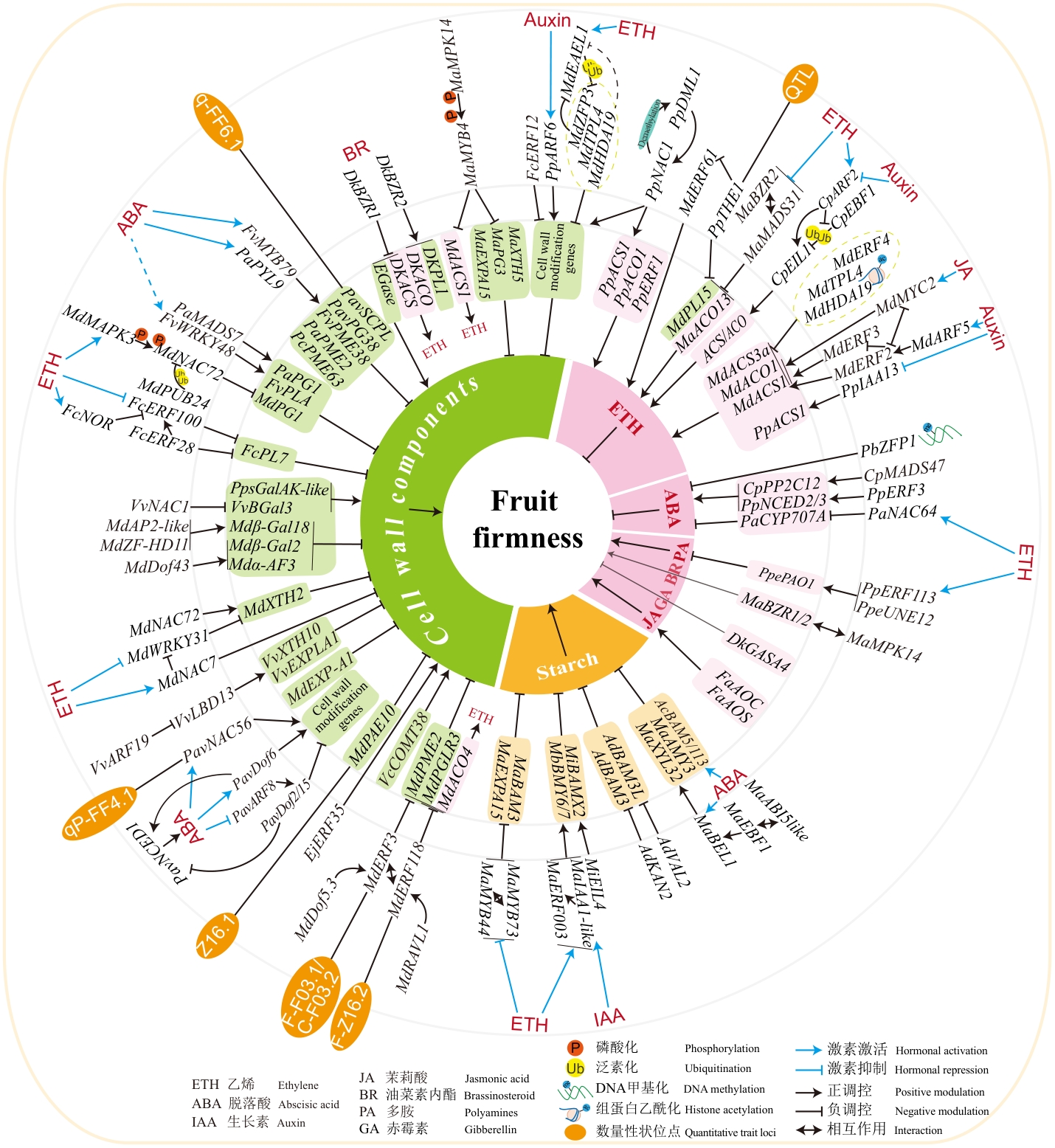
Fig. 1 Regulatory network involved in fruit firmness of fruit crops
| [1] | Shi YN, Li BJ, Su GQ, et al. Transcriptional regulation of fleshy fruit texture [J]. J Integr Plant Biol, 2022, 64(9): 1649-1672. |
| [2] | Yang CP, Ying SY, Tang BB, et al. The mechanistic insights into fruit ripening: integrating phytohormones, transcription factors, and epigenetic modification [J]. J Genet Genom, 2025, 52(12): 1475-1489. |
| [3] | 齐希梁, 李明, 刘聪利, 等. 甜樱桃PaPME1与PaPME2在果实成熟软化中的功能分析 [J]. 果树学报, 2020, 37(10): 1455-1463. |
| Qi XL, Li M, Liu CL, et al. Functional characterization of sweet cherry PaPME1 and PaPME2 during fruit ripening and softening [J]. J Fruit Sci, 2020, 37(10): 1455-1463. | |
| [4] | Cao BB, Zhu RX, Sun MY, et al. PcPME63 is involved in fruit softening during post-cold storage process of European pear (Pyrus communis L.) [J]. Postharvest Biol Technol, 2024, 211: 112811. |
| [5] | López-Casado G, Sánchez-Raya C, Ric-Varas PD, et al. CRISPR/Cas9 editing of the polygalacturonase FaPG1 gene improves strawberry fruit firmness [J]. Hortic Res, 2023, 10(3): uhad011. |
| [6] | Zhai ZF, Feng C, Wang YY, et al. Genome-wide identification of the xyloglucan endotransglucosylase/hydrolase (XTH) and polygalacturonase (PG) genes and characterization of their role in fruit softening of sweet cherry [J]. Int J Mol Sci, 2021, 22(22): 12331. |
| [7] | Zhang WW, Zhao SQ, Gu S, et al. FvWRKY48 binds to the pectate lyase FvPLA promoter to control fruit softening in Fragaria vesca [J]. Plant Physiol, 2022, 189(2): 1037-1049. |
| [8] | Qi XL, Dong YX, Liu CL, et al. A 5.2-kb insertion in the coding sequence of PavSCPL, a serine carboxypeptidase-like enhances fruit firmness in Prunus avium [J]. Plant Biotechnol J, 2024, 22(6): 1622-1635. |
| [9] | Jiu ST, Lv ZX, Liu MY, et al. Haplotype-resolved genome assembly for tetraploid Chinese cherry (Prunus pseudocerasus) offers insights into fruit firmness [J]. Hortic Res, 2024, 11(7): uhae142. |
| [10] | He SS, Wei HL, Xue ZR, et al. Overexpression of the grape β-galactosidase gene VvBGAL3 delays the softening and extends the shelf life of tomato fruits [J]. Postharvest Biol Technol, 2024, 213: 112973. |
| [11] | Wang MM, Wu Y, Zhan WD, et al. The apple transcription factor MdZF-HD11 regulates fruit softening by promoting Mdβ-GAL18 expression [J]. J Exp Bot, 2024, 75(3): 819-836. |
| [12] | Liu L, Feng YF, Han ZQ, et al. Functional analysis of the xyloglucan endotransglycosylase/hydrolase gene MdXTH2 in apple fruit firmness formation [J]. J Integr Agric, 2025, 24(9): 3418-3434. |
| [13] | Su QF, Feng YF, Li XL, et al. Allelic variation in an expansin, MdEXP-A1, contributes to flesh firmness at harvest in apples [J]. Mol Horticulture, 2025, 5: 3. |
| [14] | Liu YS, Fan RY, Chen L, et al. Unveiling the role of VcCOMT38 as a specific O-methyltransferase for enhancing lignin biosynthesis: insights from blueberry and cross-species analysis [J]. Hortic Plant J, 2026, 12(1): 85-98. |
| [15] | Mao XY, Zhao X, Luo Z, et al. Transcriptome-based analysis of lignin accumulation in the regulation of fruit stone development and endocarp hardening in Chinese jujube [J]. J Integr Agric, 2025, 24(6): 2217-2228. |
| [16] | Zhou ZL, Li BJ, Lin ZX, et al. Mango MiEIL4 modulates starch degradation during fruit ripening by upregulating the expression of β-amylase and α-amylase genes [J]. Postharvest Biol Technol, 2025, 229: 113721. |
| [17] | Song ZY, Chen HC, Zhao YJ, et al. The regulatory MaIAA1-like-MaERF003 module modulates the ripening of “Fenjiao” bananas [J]. Plant Physiol, 2025, 199(4): kiaf595. |
| [18] | Zhou H, Zhao L, Yang QR, et al. Identification of EIL and ERF genes related to fruit ripening in peach [J]. Int J Mol Sci, 2020, 21(8): 2846. |
| [19] | Zhai ZF, Xiao YQ, Wang YY, et al. Abscisic acid-responsive transcription factors PavDof2/6/15 mediate fruit softening in sweet cherry [J]. Plant Physiol, 2022, 190(4): 2501-2518. |
| [20] | Jia MX, Feng J, Zhang LN, et al. PaPYL9 is involved in the regulation of apricot fruit ripening through ABA signaling pathway [J]. Hortic Plant J, 2022, 8(4): 461-473. |
| [21] | Han YL, Chen C, Yan ZM, et al. The methyl jasmonate accelerates the strawberry fruits ripening process [J]. Sci Hortic, 2019, 249: 250-256. |
| [22] | Shan W, Guo YF, Wei W, et al. Banana MaBZR1/2 associate with MaMPK14 to modulate cell wall modifying genes during fruit ripening [J]. Plant Cell Rep, 2020, 39(1): 35-46. |
| [23] | He YH, Liu H, Li H, et al. Transcription factors DkBZR1/2 regulate cell wall degradation genes and ethylene biosynthesis genes during persimmon fruit ripening [J]. J Exp Bot, 2021, 72(18): 6437-6446. |
| [24] | Xiong CX, Zhang YH, Wang YM, et al. DkGASA4 plays a role in the postharvest softening of persimmon fruit regulated by gibberellin [J]. Plant Physiol Biochem, 2025, 220: 109509. |
| [25] | Wang W, Chen Y, Jiang YB, et al. The basic helix-loop-helix transcription factor PpeUNE12 regulates peach ripening by promoting polyamine catabolism and anthocyanin synthesis [J]. Plant Physiol Biochem, 2025, 220: 109537. |
| [26] | Zhai YL, Cui YY, Fan ZY, et al. Ficus carica ERF12 improves fruit firmness at ripening [J]. Hortic Plant J, 2026, 12(1): 114-126. |
| [27] | Fan ZY, Wang Y, Zhai YL, et al. ERF100 regulated by ERF28 and NOR controls pectate lyase 7, modulating fig (Ficus carica L.) fruit softening [J]. Plant Biotechnol J, 2025, 23(7): 2611-2626. |
| [28] | Wang W, Liu SH, Cheng X, et al. Ethylene and polyamines form a negative feedback loop to regulate peach fruit ripening via the transcription factor PpeERF113 by regulating the expression of PpePAO1 [J]. Postharvest Biol Technol, 2022, 190: 111958. |
| [29] | Wang LF, Mao JX, Zhang SY, et al. AcERF61 transcription factor mediates ethylene-induced kiwifruit softening through directly regulating cell wall degradation genes [J]. Postharvest Biol Technol, 2026, 234: 114077. |
| [30] | Hu QK, Chi ZH, Wen SQ, et al. Exogenous strigolactone maintains fruit quality and delays lignin accumulation in loquat during cold storage [J]. Postharvest Biol Technol, 2025, 230: 113825. |
| [31] | Xie WS, Xiao YY, Liu ZL, et al. The EDLL motif-containing transcription factor MaERF96L positively regulates starch degradation during banana fruit ripening [J]. Postharvest Biol Technol, 2024, 212: 112848. |
| [32] | Zhang T, Li WJ, Xie RX, et al. CpARF2 and CpEIL1 interact to mediate auxin-ethylene interaction and regulate fruit ripening in papaya [J]. Plant J, 2020, 103(4): 1318-1337. |
| [33] | Yue PT, Lu Q, Liu Z, et al. Auxin-activated MdARF5 induces the expression of ethylene biosynthetic genes to initiate apple fruit ripening [J]. New Phytol, 2020, 226(6): 1781-1795. |
| [34] | Chen XM, Liu YD, Zhang X, et al. PpARF6 acts as an integrator of auxin and ethylene signaling to promote fruit ripening in peach [J]. Hortic Res, 2023, 10(9): uhad158. |
| [35] | Ma L, Zhao YJ, Chen MJ, et al. The microRNA ppe-miR393 mediates auxin-induced peach fruit softening by promoting ethylene production [J]. Plant Physiol, 2023, 192(2): 1638-1655. |
| [36] | Li M, Nie CJ, He SS, et al. VvARF19 represses VvLBD13-mediated cell wall degradation to delay softening of grape berries [J]. Hortic Res, 2025, 12(2): uhae322. |
| [37] | Wang MM, Zhan WD, Chen M, et al. MdAP2-like, a new regulator in apple, simultaneously modulates fruit softening and size [J]. Postharvest Biol Technol, 2024, 217: 113123. |
| [38] | Qi XL, Liu CL, Song LL, et al. PaMADS7, a MADS-box transcription factor, regulates sweet cherry fruit ripening and softening [J]. Plant Sci, 2020, 301: 110634. |
| [39] | Wu CJ, Wei W, Cai DL, et al. A novel module of MaMADS31-MaBZR2 confers negative regulation of banana fruit ripening [J]. Hortic Plant J, 2025, 11(2): 633-644. |
| [40] | Tian T, Yin SQ, Huang FT, et al. Genome-wide characterization and comparative transcriptomics unravel CpMADS47 as a positive regulator during fruit ripening and softening in Chinese cherry [J]. Postharvest Biol Technol, 2025, 219: 113287. |
| [41] | Gong X, Qi KJ, Zhao LY, et al. PbAGL7-PbNAC47-PbMYB73 complex coordinately regulates PbC3H1 and PbHCT17 to promote the lignin biosynthesis in stone cells of pear fruit [J]. Plant J, 2024, 120(5): 1933-1953. |
| [42] | Yang YY, Wu CJ, Shan W, et al. Mitogen-activated protein kinase 14-mediated phosphorylation of MaMYB4 negatively regulates banana fruit ripening [J]. Hortic Res, 2023, 10(1): uhac243. |
| [43] | Luo TT, Zhang H, Tan HK, et al. Two MYB transcription factors interact to inhibit the expression of cell wall metabolism and starch degradation genes in banana [J]. Plant Physiol, 2025, 198(4): kiaf239. |
| [44] | Cai JF, Mo XL, Wen CJ, et al. FvMYB79 positively regulates strawberry fruit softening via transcriptional activation of FvPME38 [J]. Int J Mol Sci, 2022, 23(1): 101. |
| [45] | Jiang GX, Zhang DD, Li ZW, et al. Alternative splicing of MaMYB16L regulates starch degradation in banana fruit during ripening [J]. J Integr Plant Biol, 2021, 63(7): 1341-1352. |
| [46] | Tong Y, Su WY, Chen YT, et al. Two ethylene-responsive transcription factors, AdVAL2 and AdKAN2, regulate early steps in kiwifruit starch degradation [J]. Postharvest Biol Technol, 2024, 216: 113058. |
| [47] | Li T, Xu YX, Zhang LC, et al. The jasmonate-activated transcription factor MdMYC2 regulates ETHYLENE RESPONSE FACTOR and ethylene biosynthetic genes to promote ethylene biosynthesis during apple fruit ripening [J]. Plant Cell, 2017, 29(6): 1316-1334. |
| [48] | Fu CC, Han C, Wei YX, et al. Two NAC transcription factors regulated fruit softening through activating xyloglucan endotransglucosylase/hydrolase genes during kiwifruit ripening [J]. Int J Biol Macromol, 2024, 263: 130678. |
| [49] | Zhang JY, Pan HY, Fang K, et al. Transcription factor NAC64 regulates abscisic acid metabolism and fruit ripening in apricot fruit (Prunus armeniaca L.) [J]. Plant J, 2026, 125: e70670. |
| [50] | Martín-Pizarro C, Vallarino JG, Osorio S, et al. The NAC transcription factor FaRIF controls fruit ripening in strawberry [J]. Plant Cell, 2021, 33(5): 1574-1593. |
| [51] | Su QF, Yang HJ, Li XL, et al. Upregulation of PECTATE LYASE5 by a NAC transcription factor promotes fruit softening in apple [J]. Plant Physiol, 2024, 196(3): 1887-1907. |
| [52] | Wang JH, Sun Q, Ma CN, et al. MdWRKY31-MdNAC7 regulatory network: orchestrating fruit softening by modulating cell wall-modifying enzyme MdXTH2 in response to ethylene signalling [J]. Plant Biotechnol J, 2024, 22(12): 3244-3261. |
| [53] | Yang HJ, Liu XW, Hu WZ, et al. Apple transcription factor MdDof43 promotes fruit softening by regulating cell wall-modifying genes Mdβ-Gal2 and Mdα-AF3 [J]. Hortic Plant J, 2025. . |
| [54] | Sun YT, Xiao YQ, Zhang X, et al. Ethylene promotes pectin degradation and fruit softening by negatively regulating PavSPL7 in sweet cherry (Prunus avium) [J]. Hortic Adv, 2026, 4: 1. |
| [55] | Song ZY, Zhu XY, Lai XH, et al. MaBEL1 regulates banana fruit ripening by activating cell wall and starch degradation-related genes [J]. J Integr Plant Biol, 2023, 65(9): 2036-2055. |
| [56] | Wei Y, Liu Z, Lv TX, et al. Ethylene enhances MdMAPK3-mediated phosphorylation of MdNAC72 to promote apple fruit softening [J]. Plant Cell, 2023, 35(8): 2887-2909. |
| [57] | Li T, Liu L, Yang GX, et al. Ethylene-activated E3 ubiquitin ligase MdEAEL1 promotes apple fruit softening by facilitating the dissociation of transcriptional repressor complexes [J]. Adv Sci, 2025, 12(22): 2417393. |
| [58] | Gu C, Pei MS, Guo ZH, et al. Multi-omics provide insights into the regulation of DNA methylation in pear fruit metabolism [J]. Genome Biol, 2024, 25: 70. |
| [59] | Cao XM, Li XZ, Su YK, et al. Transcription factor PpNAC1 and DNA demethylase PpDML1 synergistically regulate peach fruit ripening [J]. Plant Physiol, 2024, 194(4): 2049-2068. |
| [60] | Hu YN, Han ZY, Wang T, et al. Ethylene response factor MdERF4 and histone deacetylase MdHDA19 suppress apple fruit ripening through histone deacetylation of ripening-related genes [J]. Plant Physiol, 2022, 188(4): 2166-2181. |
| [61] | Fu CC, Chen HJ, Gao HY, et al. Histone deacetylase CpHDA3 is functionally associated with CpERF9 in suppression of CpPME1/2 and CpPG5 genes during papaya fruit ripening [J]. J Agric Food Chem, 2019, 67(32): 8919-8925. |
| [62] | Martins V, Garcia A, Alhinho AT, et al. Vineyard calcium sprays induce changes in grape berry skin, firmness, cell wall composition and expression of cell wall-related genes [J]. Plant Physiol Biochem, 2020, 150: 49-55. |
| [63] | Xu Z, Dai JY, Liang LP, et al. Chitinase-like protein PpCTL1 contributes to maintaining fruit firmness by affecting cellulose biosynthesis during peach development [J]. Foods, 2023, 12(13): 2503. |
| [64] | Xu JY, Zhao YH, Zhang X, et al. Transcriptome analysis and ultrastructure observation reveal that hawthorn fruit softening is due to cellulose/hemicellulose degradation [J]. Front Plant Sci, 2016, 7: 1524. |
| [65] | Zhu N, Zhao CN, Wei YQ, et al. Biosynthetic labeling with 3-O-propargylcaffeyl alcohol reveals in vivo cell-specific patterned lignification in loquat fruits during development and postharvest storage [J]. Hortic Res, 2021, 8: 61. |
| [66] | Zhao YW, Zhao TT, Sun Q, et al. Enrichment of two important metabolites D-galacturonic acid and D-glucuronic acid inhibits MdHb1-mediated fruit softening in apple [J]. Nat Plants, 2025, 11(4): 891-908. |
| [67] | Gunaseelan K, Schröder R, Rebstock R, et al. Constitutive expression of apple endo-POLYGALACTURONASE1 in fruit induces early maturation, alters skin structure and accelerates softening [J]. Plant J, 2024, 117(5): 1413-1431. |
| [68] | Posé S, Kirby AR, Paniagua C, et al. The nanostructural characterization of strawberry pectins in pectate lyase or polygalacturonase silenced fruits elucidates their role in softening [J]. Carbohydr Polym, 2015, 132: 134-145. |
| [69] | Li R, Ma JH, Gu H, et al. 1-Methylcyclopropene counteracts ethylene promotion of fruit softening and roles of MiERF2/8 and MiPG in postharvest mangoes [J]. Front Plant Sci, 2022, 13: 971050. |
| [70] | Witasari LD, Huang FC, Hoffmann T, et al. Higher expression of the strawberry xyloglucan endotransglucosylase/hydrolase genes FvXTH9 and FvXTH6 accelerates fruit ripening [J]. Plant J, 2019, 100(6): 1237-1253. |
| [71] | Han Y, Han SK, Ban QY, et al. Overexpression of persimmon DkXTH1 enhanced tolerance to abiotic stress and delayed fruit softening in transgenic plants [J]. Plant Cell Rep, 2017, 36(4): 583-596. |
| [72] | Xu M, Zhang MX, Shi YN, et al. EjHAT1 participates in heat alleviation of loquat fruit lignification by suppressing the promoter activity of key lignin monomer synthesis gene EjCAD5 [J]. J Agric Food Chem, 2019, 67(18): 5204-5211. |
| [73] | Liu JH, Liu MT, Jia CH, et al. Elucidating the mechanism of MaGWD1-mediated starch degradation cooperatively regulated by MaMADS36 and MaMADS55 in banana [J]. Postharvest Biol Technol, 2021, 179: 111587. |
| [74] | Brumos J. Gene regulation in climacteric fruit ripening [J]. Curr Opin Plant Biol, 2021, 63: 102042. |
| [75] | Xiao X, Shi LY, Dong WQ, et al. Ethylene promotes carotenoid accumulation in peach pulp after harvest [J]. Sci Hortic, 2022, 304: 111347. |
| [76] | Feng J, Wang MY, Chen XY, et al. EIL (ethylene-insensitive 3-like) transcription factors in apple affect both ethylene- and cold response-dependent fruit ripening [J]. Plant J, 2025, 121(5): e70059. |
| [77] | Ye X, Zheng XB, Zhai DH, et al. Expression patterns of ACS and ACO gene families and ethylene production in rachis and berry of grapes [J]. HortScience, 2017, 52(3): 413-422. |
| [78] | Villarreal NM, Marina M, Nardi CF, et al. Novel insights of ethylene role in strawberry cell wall metabolism [J]. Plant Sci, 2016, 252: 1-11. |
| [79] | Lefebvre V, North H, Frey A, et al. Functional analysis of Arabidopsis NCED6 and NCED9 genes indicates that ABA synthesized in the endosperm is involved in the induction of seed dormancy [J]. Plant J, 2006, 45(3): 309-319. |
| [80] | Li CL, Jia HF, Chai YM, et al. Abscisic acid perception and signaling transduction in strawberry: a model for non-climacteric fruit ripening [J]. Plant Signal Behav, 2011, 6(12): 1950-1953. |
| [81] | Li BJ, Grierson D, Shi YN, et al. Roles of abscisic acid in regulating ripening and quality of strawberry, a model non-climacteric fruit [J]. Hortic Res, 2022, 9: uhac089. |
| [82] | Wang PF, Lu SY, Zhang XY, et al. Double NCED isozymes control ABA biosynthesis for ripening and senescent regulation in peach fruits [J]. Plant Sci, 2021, 304: 110739. |
| [83] | Wang XB, Zeng WF, Ding YF, et al. PpERF3 positively regulates ABA biosynthesis by activating PpNCED2/3 transcription during fruit ripening in peach [J]. Hortic Res, 2019, 6: 19. |
| [84] | Gong XC, Lin MF, Song J, et al. Genome-wide identification of the AcBAM family in kiwifruit (Actinidia chinensis cv. Hongyang) and the expression profiling analysis of AcBAMs reveal their role in starch metabolism [J]. BMC Plant Biol, 2025, 25: 415. |
| [85] | Guan WH, Cao MZ, Chen W, et al. Indole-3-acetic acid treatment promotes postharvest kiwifruit softening by regulating starch and cell wall metabolism [J]. Front Plant Sci, 2024, 15: 1485678. |
| [86] | Castro RI, González-Feliu A, Muñoz-Vera M, et al. Effect of exogenous auxin treatment on cell wall polymers of strawberry fruit [J]. Int J Mol Sci, 2021, 22(12): 6294. |
| [87] | Wang JH, Su WJ, Liu K, et al. PpSAUR43, an auxin-responsive gene, is involved in the post-ripening and softening of peaches [J]. Horticulturae, 2022, 8(5): 379. |
| [88] | Wu W, Bao ZY, Xiong CX, et al. The softening of persimmon fruit was inhibited by gibberellin via DkDELLA1/2 [J]. J Agric Food Chem, 2025, 73(2): 1159-1166. |
| [89] | Guo YK, Song CH, Gao F, et al. Exploring the PpEXPs family in peach: insights into their role in fruit texture development through identification and transcriptional analysis [J]. Horticulturae, 2024, 10(4): 332. |
| [90] | Ding XY, Wang B, Gong YB, et al. Exogenous methyl jasmonate (MeJA) improves ‘Ruixue’ apple fruit quality by regulating cell wall metabolism [J]. Foods, 2024, 13(11): 1594. |
| [91] | Zhu W, He W, Wang K, et al. Phytohormone cross-talk during fruit ripening: linked biosynthesis and signaling [J]. Plant Hormones, 2025, 1: e010. |
| [92] | Li JZ, Guo TT, Guo ML, et al. Exogenous BR delayed peach fruit softening by inhibiting pectin degradation enzyme genes [J]. Front Plant Sci, 2023, 14: 1226921. |
| [93] | Li YL, He H, Hou YY, et al. Salicylic acid treatment delays apricot (Prunus armeniaca L.) fruit softening by inhibiting ethylene biosynthesis and cell wall degradation [J]. Sci Hortic, 2022, 300: 111061. |
| [94] | Huang Y, Gao JH, Ji GM, et al. COP9 SIGNALOSOME SUBUNIT 5A facilitates POLYAMINE OXIDASE 5 degradation to regulate strawberry plant growth and fruit ripening [J]. Plant Cell, 2025, 37(2): koaf022. |
| [95] | Qiao H, Zhang H, Wang Z, et al. Fig fruit ripening is regulated by the interaction between ethylene and abscisic acid [J]. J Integr Plant Biol, 2021, 63(3): 553-569. |
| [96] | Sun L, Zhang M, Ren J, et al. Reciprocity between abscisic acid and ethylene at the onset of berry ripening and after harvest [J]. BMC Plant Biol, 2010, 10: 257. |
| [97] | Li YK, Song Z, Zhan X, et al. AaEIL2 and AaERF059 are involved in fruit coloration and ripening by crossly regulating ethylene and auxin signal pathway in Actinidia arguta [J]. Hortic Plant J, 2025. . |
| [98] | Zhou QH, Bao ZY, Yu Y, et al. IAA regulated levels of endogenous phytohormones in relation to chilling tolerance in cold-stored peaches after harvest [J]. Postharvest Biol Technol, 2023, 205: 112490. |
| [99] | He H, Yamamuro C. Interplays between auxin and GA signaling coordinate early fruit development [J]. Hortic Res, 2022, 9: uhab078. |
| [100] | Fu CC, Chen HJ, Gao HY, et al. Two papaya MYB proteins function in fruit ripening by regulating some genes involved in cell-wall degradation and carotenoid biosynthesis [J]. J Sci Food Agric, 2020, 100(12): 4442-4448. |
| [101] | Hu YN, Han ZY, Sun YQ, et al. ERF4 affects fruit firmness through TPL4 by reducing ethylene production [J]. Plant J, 2020, 103(3): 937-950. |
| [102] | Qi XL, Dong YX, Liu CL, et al. The PavNAC56 transcription factor positively regulates fruit ripening and softening in sweet cherry (Prunus avium) [J]. Physiol Plant, 2022, 174(6): e13834. |
| [103] | Hu YN, Sun HL, Han ZY, et al. ERF4 affects fruit ripening by acting as a JAZ interactor between ethylene and jasmonic acid hormone signaling pathways [J]. Hortic Plant J, 2022, 8(6): 689-699. |
| [104] | Guo YF, Shan W, Liang SM, et al. MaBZR1/2 act as transcriptional repressors of ethylene biosynthetic genes in banana fruit [J]. Physiol Plant, 2019, 165(3): 555-568. |
| [105] | Zhang SL, Dong RZ, Wang YW, et al. NAC domain gene VvNAC26 interacts with VvMADS9 and influences seed and fruit development [J]. Plant Physiol Biochem, 2021, 164: 63-72. |
| [106] | Cao SH, Guo ZH, Liu H, et al. The Aux/IAA factor PbIAA.C3 positively regulates ethylene biosynthesis during pear fruit ripening by activating the PbACS1b transcription [J]. J Plant Growth Regul, 2025, 44(3): 1152-1164. |
| [107] | Li BJ, Shi YN, Xiao YN, et al. AUXIN RESPONSE FACTOR 2 mediates repression of strawberry receptacle ripening via auxin-ABA interplay [J]. Plant Physiol, 2024, 196(4): 2638-2653. |
| [108] | Wang XB, Pan L, Wang Y, et al. PpIAA1 and PpERF4 form a positive feedback loop to regulate peach fruit ripening by integrating auxin and ethylene signals [J]. Plant Sci, 2021, 313: 111084. |
| [109] | Wang WH, Wang YY, Chen T, et al. Current insights into posttranscriptional regulation of fleshy fruit ripening [J]. Plant Physiol, 2023, 192(3): 1785-1798. |
| [110] | Li XJ, Martín-Pizarro C, Zhou LL, et al. Deciphering the regulatory network of the NAC transcription factor FvRIF, a key regulator of strawberry (Fragaria vesca) fruit ripening [J]. Plant Cell, 2023, 35(11): 4020-4045. |
| [111] | Cheng JF, Niu QF, Zhang B, et al. Downregulation of RdDM during strawberry fruit ripening [J]. Genome Biol, 2018, 19: 212. |
| [112] | Sun YF, Yang XF, Wu RR, et al. DNA methylation controlling abscisic acid catabolism responds to light to mediate strawberry fruit ripening [J]. J Integr Plant Biol, 2024, 66(8): 1718-1734. |
| [113] | An CT, Liu ZS, Pan XJ, et al. Effect of histone modifications on fruit ripening [J]. Physiol Plant, 2024, 176(6): e14639. |
| [114] | Han YC, Kuang JF, Chen JY, et al. Banana transcription factor MaERF11 recruits histone deacetylase MaHDA1 and represses the expression of MaACO1 and expansins during fruit ripening [J]. Plant Physiol, 2016, 171(2): 1070-1084. |
| [115] | Pan QW, Guo SP, Ding J, et al. Dynamic histone modification signatures coordinate developmental programs in strawberry fruit ripening [J]. Hortic Res, 2024, 11(8): uhae158. |
| [116] | Yang M, Lin YX, Zhang YT, et al. Acetylated FaGAPC2 modulates citrate metabolism in strawberry fruit and participates in tapetum degradation to affect pollen development [J]. Sci Hortic, 2025, 352: 114436. |
| [117] | Molina-Hidalgo FJ, Franco AR, Villatoro C, et al. The strawberry (Fragaria × ananassa) fruit-specific rhamnogalacturonate lyase 1 (FaRGLyase1) gene encodes an enzyme involved in the degradation of cell-wall middle lamellae [J]. J Exp Bot, 2013, 64(6): 1471-1483. |
| [118] | Lee HE, Manivannan A, Lee SY, et al. Chromosome level assembly of homozygous inbred line ‘wongyo 3115’ facilitates the construction of a high-density linkage map and identification of QTLs associated with fruit firmness in octoploid strawberry (Fragaria × ananassa) [J]. Front Plant Sci, 2021, 12: 696229. |
| [119] | Rey-Serra P, Mnejja M, Monfort A. Shape, firmness and fruit quality QTLs shared in two non-related strawberry populations [J]. Plant Sci, 2021, 311: 111010. |
| [120] | Calle A, Balas F, Cai LC, et al. Fruit size and firmness QTL alleles of breeding interest identified in a sweet cherry ‘Ambrunés’ × ‘Sweetheart’ population [J]. Mol Breeding, 2020, 40(9): 86. |
| [121] | Campoy JA, Le Dantec L, Barreneche T, et al. New insights into fruit firmness and weight control in sweet cherry [J]. Plant Mol Biol Rep, 2015, 33(4): 783-796. |
| [122] | Cai LC, Quero-García J, Barreneche T, et al. A fruit firmness QTL identified on linkage group 4 in sweet cherry (Prunus avium L.) is associated with domesticated and bred germplasm [J]. Sci Rep, 2019, 9: 5008. |
| [123] | Calle A, Wünsch A. Multiple-population QTL mapping of maturity and fruit-quality traits reveals LG4 region as a breeding target in sweet cherry (Prunus avium L.) [J]. Hortic Res, 2020, 7: 127. |
| [124] | Yue QY, Xie YP, Yang XY, et al. An InDel variant in the promoter of the NAC transcription factor MdNAC18.1 plays a major role in apple fruit ripening [J]. Plant Cell, 2024, 37(1): koaf007. |
| [125] | Longhi S, Hamblin MT, Trainotti L, et al. A candidate gene based approach validates Md-PG1 as the main responsible for a QTL impacting fruit texture in apple (Malus × domestica Borkh) [J]. BMC Plant Biol, 2013, 13: 37. |
| [126] | Gilpin L, Costa F, Howard NP, et al. Multiple genetic analyses disclose the QTL dynamic for fruit texture and storability in Norwegian apples (Malus domestica Borkh.) [J]. Postharvest Biol Technol, 2025, 219: 113276. |
| [127] | Wu B, Shen F, Chen CJ, et al. Natural variations in a pectin acetylesterase gene, MdPAE10, contribute to prolonged apple fruit shelf life [J]. Plant Genome, 2021, 14: e20084. |
| [128] | Wu B, Shen F, Wang X, et al. Role of MdERF3 and MdERF118 natural variations in apple flesh firmness/crispness retainability and development of QTL-based genomics-assisted prediction [J]. Plant Biotechnol J, 2021, 19(5): 1022-1037. |
| [129] | Wu B, Shen F, Zhou ZY, et al. Natural variations in MdBPM2/MdRGLG3-MdNAC83 network controlling the quantitative segregation of apple fruit storability [J]. J Integr Plant Biol, 2026, 68(1): 169-190. |
| [130] | Qi XP, Ogden EL, Bostan H, et al. High-density linkage map construction and QTL identification in a diploid blueberry mapping population [J]. Front Plant Sci, 2021, 12: 692628. |
| [131] | Cappai F, Amadeu RR, Benevenuto J, et al. High-resolution linkage map and QTL analyses of fruit firmness in autotetraploid blueberry [J]. Front Plant Sci, 2020, 11: 562171. |
| [132] | Verde I, Jenkins J, Dondini L, et al. The Peach v2.0 release: high-resolution linkage mapping and deep resequencing improve chromosome-scale assembly and contiguity [J]. BMC Genom, 2017, 18: 225. |
| [133] | Meng JR, Sun SH, Li A, et al. Identification of PpTHE1, a cell wall integrity sensor regulating the increased duration of harvest window in slow-melting flesh peach, through the assembly of a chromosome-level reference genome of Prunus persica [J]. Plant Biotechnol J, 2025, 23(10): 4228-4245. |
| [134] | Song BB, Li XL, Cao BB, et al. An identical-by-descent segment harbors a 12-bp insertion determining fruit softening during domestication and speciation in Pyrus [J]. BMC Biol, 2022, 20: 215. |
| [135] | Chapman NH, Bonnet J, Grivet L, et al. High-resolution mapping of a fruit firmness-related quantitative trait locus in tomato reveals epistatic interactions associated with a complex combinatorial locus [J]. Plant Physiol, 2012, 159(4): 1644-1657. |
| [136] | Li R, Sun S, Wang HJ, et al. FIS1 encodes a GA2-oxidase that regulates fruit firmness in tomato [J]. Nat Commun, 2020, 11: 5844. |
| [137] | Costa F, Peace CP, Stella S, et al. QTL dynamics for fruit firmness and softening around an ethylene-dependent polygalacturonase gene in apple (Malus × domestica Borkh.) [J]. J Exp Bot, 2010, 61(11): 3029-3039. |
| [138] | Yoo SD, Gao ZF, Cantini C, et al. Fruit ripening in sour cherry: changes in expression of genes encoding expansins and other cell-wall-modifying enzymes [J]. Jashs, 2003, 128(1): 16-22. |
| [1] | LIU Na, ZENG Bao-zhen, JIA Zhao-xing, ZHU Ying-fang. Advances in Epigenetic Regulation of Tomato Fruit Development and Ripening [J]. Biotechnology Bulletin, 2026, 42(3): 37-47. |
| [2] | DU Dan, GUO Xiang, HU Xin, PAN Yu. Advances in the Regulatory Mechanisms of Plastid Development on Fruit Ripening and Quality [J]. Biotechnology Bulletin, 2026, 42(3): 48-59. |
| [3] | CHEN Qiang, YU Ying-fei, ZHANG Ying, ZHANG Chong. Regulatory Effect of Methyl Jasmonate on Postharvest Chilling Injury in Oriental Melon ‘Emerald’ [J]. Biotechnology Bulletin, 2025, 41(9): 105-114. |
| [4] | LIU Yuan-yuan, CHEN Xi-feng, QIAN Qian, GAO Zhen-yu. Advances in Molecular Mechanisms Regulating Panicle Development in Rice [J]. Biotechnology Bulletin, 2025, 41(5): 1-13. |
| [5] | KUANG Jian-hua, CHENG Zhi-peng, ZHAO Yong-jing, YANG Jie, CHEN Run-qiao, CHEN Long-qing, HU Hui-zhen. Expression Analysis of the GH3 Gene Family in Nelumbo nucifera underHormonal and Abiotic Stresses [J]. Biotechnology Bulletin, 2025, 41(2): 221-233. |
| [6] | DUAN Ruo-xin, CHEN Ying-ying, LIN Jin-xing, LI Rui-li. Advance on Seed Dormancy and Its Regulation Mechanism [J]. Biotechnology Bulletin, 2025, 41(12): 16-26. |
| [7] | WANG Ya-ping, JIN Lan, HAO Jin-feng, CHANG Ming, WANG Yan-dan, GAO Feng. Identification and Expression Characteristics Analysis of CmRGLG Gene Family in Melon [J]. Biotechnology Bulletin, 2025, 41(12): 156-167. |
| [8] | LIU Rong, TIAN Min-yu, LI Guang-ze, TAN Cheng-fang, RUAN Ying, LIU Chun-lin. Identification and Induced-expression Analysis of REVEILLE Family in Brassica napus L. [J]. Biotechnology Bulletin, 2024, 40(6): 161-171. |
| [9] | CHEN Yan-mei. Crosstalk Between Different Post-translational Modifications and Its Regulatory Mechanisms in Plant Growth and Development [J]. Biotechnology Bulletin, 2024, 40(2): 1-8. |
| [10] | GENG Ruo-han, WANG Bing-he, XU Chang-wen, QIAN Hong-ping, LIN Jin-xing, CUI Ya-ning. Research Progress in the Regulation of Protein Post-translational Modification in Plant Vesicle Transport [J]. Biotechnology Bulletin, 2024, 40(10): 139-148. |
| [11] | LI Ying, YUE Xiang-hua. Application of DNA Methylation in Interpreting Natural Variation in Moso Bamboo [J]. Biotechnology Bulletin, 2023, 39(7): 48-55. |
| [12] | LI Yuan-hong, GUO Yu-hao, CAO Yan, ZHU Zhen-zhou, WANG Fei-fei. Research Progress in the Microalgal Growth and Accumulation of Target Products Regulated by Exogenous Phytohormone [J]. Biotechnology Bulletin, 2023, 39(6): 61-72. |
| [13] | YANG Yan, MO Yu-xing, ZHOU Yi, CHEN Hui-ming, XIAO Lang-tao, WANG Ruo-zhong. Effects of Cucumber Endocarp Juice on Seed Germination [J]. Biotechnology Bulletin, 2023, 39(12): 158-168. |
| [14] | ZHANG Xiao-yan, YANG Shu-hua, DING Yang-lin. Molecular Mechanism of Cold Signal Perception and Transduction in Plants [J]. Biotechnology Bulletin, 2023, 39(11): 28-35. |
| [15] | ZHOU Heng, XIE Yan-jie. Recent Progress in Oxidative Stress Signaling and Response in Plants [J]. Biotechnology Bulletin, 2023, 39(11): 36-43. |
| Viewed | ||||||
|
Full text |
|
|||||
|
Abstract |
|
|||||
