







生物技术通报 ›› 2026, Vol. 42 ›› Issue (5): 323-331.doi: 10.13560/j.cnki.biotech.bull.1985.2025-0918
• 研究报告 • 上一篇
金旋1,2,3( ), 向芬2,3, 戴翠婷2,3, 杨辉2,3, 李赛君2,3, 刘红艳2,3, 钱思维1,2,3, 蔺万煌1(), 李维2,3()
收稿日期:2025-08-24
出版日期:2026-05-26
发布日期:2026-06-10
通讯作者:
蔺万煌,男,博士,教授,研究方向 :植物激素与生长发育;E-mail: linwhat@hunau.edu.cn作者简介:金旋,女,硕士研究生,研究方向 :植物激素与生长发育;E-mail: 15770670351@163.com
基金资助:
JIN Xuan1,2,3(), XIANG Fen2,3, DAI Cui-ting2,3, YANG Hui2,3, LI Sai-jun2,3, LIU Hong-yan2,3, QIAN Si-wei1,2,3, LIN Wan-huang1(), LI Wei2,3()
Received:2025-08-24
Published:2026-05-26
Online:2026-06-10
摘要:
目的 探究茶树TDIF信号肽对茶树氮代谢及氨基酸积累的调控作用,为进一步研究TDIF多肽影响茶树生理品质和氨基酸代谢的分子机制奠定基础。 方法 以茶树品种‘保靖黄金茶2号’为材料,克隆CsTDIFL基因并进行生物信息学分析;利用实时荧光定量PCR(RT-qPCR)检测CsTDIFL及其受体基因CsTDR在不同组织中的表达模式及外源TDIF多肽处理下的表达动态。结合HPLC和酶活性测定分析TDIF对氨基酸含量及氮代谢酶活性的影响。通过反义寡核苷酸(asODN)抑制CsTDIFL表达,验证其功能。 结果 CsTDIFL编码1个含典型CLE基序和信号肽的胞外蛋白,在嫩叶中高表达,其受体基因CsTDR在茎中富集。外源TDIF处理可在4 h内诱导CsTDIFL和CsTDR基因显著上调,随后二者相对表达量显著下调并逐渐趋于处理前水平。10 μmol/L TDIF处理显著抑制茶氨酸与谷氨酸积累,并降低GS/GOGAT活性。经asODN处理24 h后,CsTDIFL转录水平较对照组下调约78.24%,而茶氨酸、谷氨酸含量显著升高约23.19%和34.53%,GS/GOGAT活性也显著升高。 结论 外源TDIF处理显著抑制GS/GOGAT活性及茶氨酸与谷氨酸积累,而瞬时沉默CsTDIFL则显著提升上述氨基酸含量与氮代谢关键酶活性,推测茶树TDIF信号可能通过抑制GS和GOGAT活性,减少谷氨酸供应,从而抑制茶氨酸等氨基酸的积累。
金旋, 向芬, 戴翠婷, 杨辉, 李赛君, 刘红艳, 钱思维, 蔺万煌, 李维. 茶树CsTDIFL基因的克隆、表达特性分析及其对氨基酸合成的调控[J]. 生物技术通报, 2026, 42(5): 323-331.
JIN Xuan, XIANG Fen, DAI Cui-ting, YANG Hui, LI Sai-jun, LIU Hong-yan, QIAN Si-wei, LIN Wan-huang, LI Wei. Cloning and Expression Analysis of CsTDIFL and Its Regulation on Amino Acid Synthesis in Tea Plants (Camellia sinensis)[J]. Biotechnology Bulletin, 2026, 42(5): 323-331.
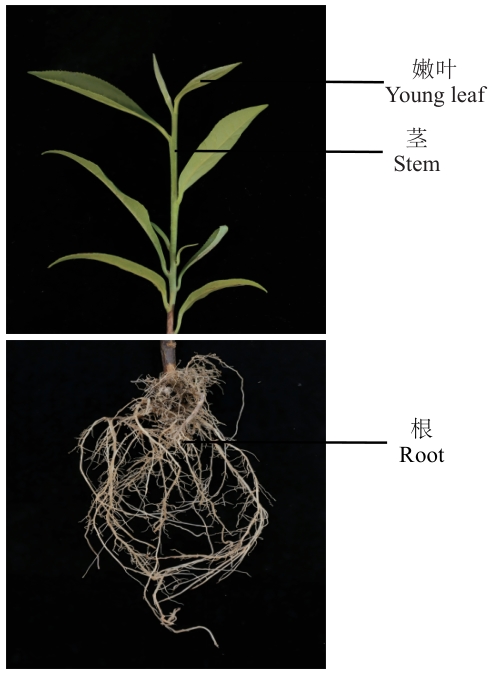
图1 茶树根、茎、叶
Fig. 1 Root, stem, and leaf of the tea plant (Camellia sinensis L.)
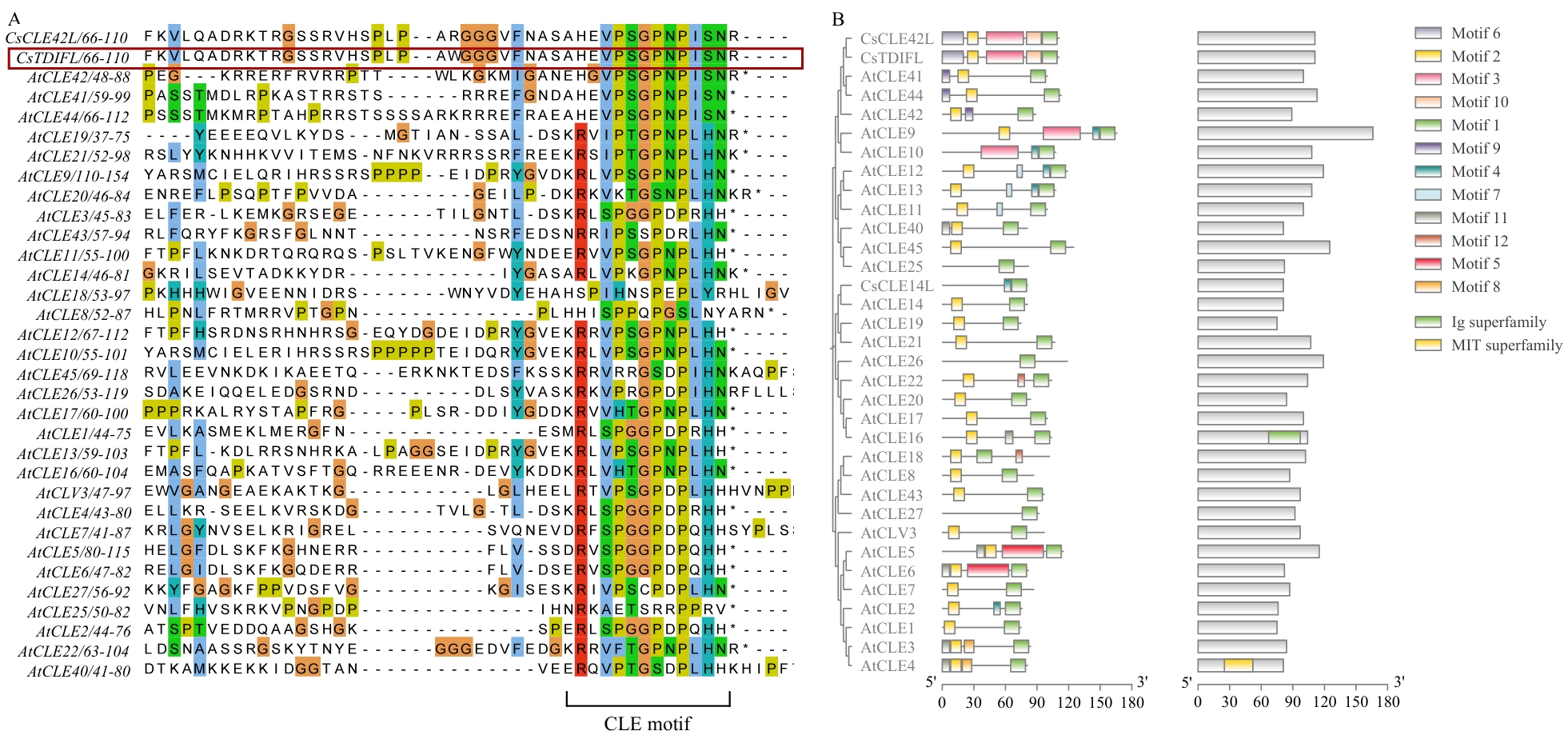
图2 CsTDIFL基因的克隆及同源性和系统进化分析A:CsTDIFL蛋白与拟南芥CLE家族氨基酸序列比对分析;B:CsTDIFL蛋白与拟南芥CLE家族蛋白系统发育树及motif分析
Fig. 2 Cloning, sequence homology and phylogenetic analysis of the CsTDIFL geneA:Amino acid sequence alignment analysis of CsTDIFL protein with the Arabidopsis CLE family. B:Phylogenetic tree and motif analysis of CsTDIFL protein and the Arabidopsis CLE family proteins
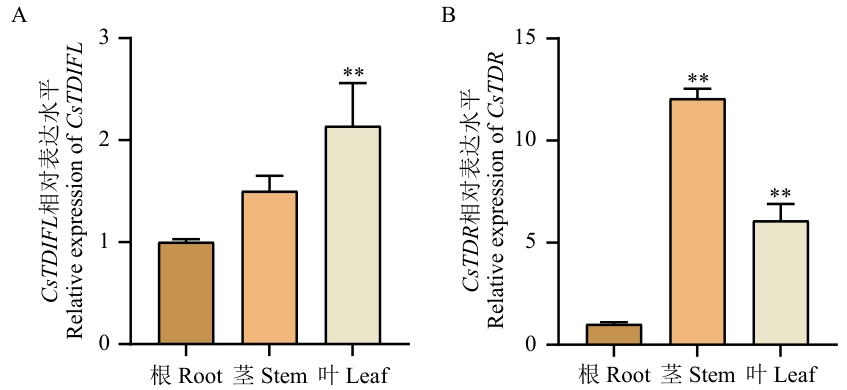
图3 CsTDIFL和CsTDR在茶树不同组织间的表达水平**表示极显著差异(P<0.01)
Fig. 3 Expressions of CsTDIFL and CsTDR in different tissues of tea plant** indicates extremely significant difference (P<0.01)
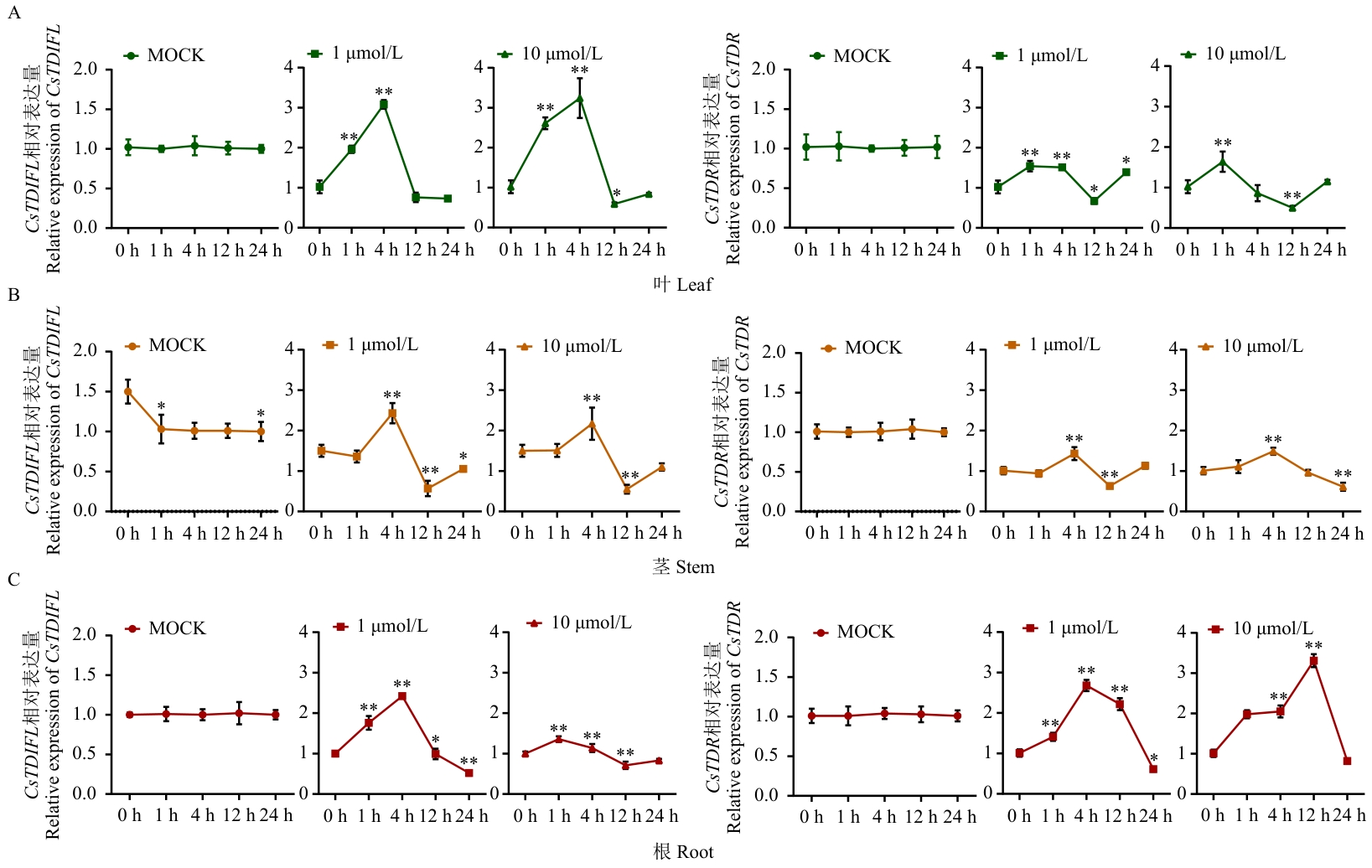
图4 茶树CsTDIFL及CsTDR对外源TDIF多肽激素的响应A‒C分别表示茶树叶、茎、根样品在TDIF多肽激素0 μmol/L(MOCK)、1 μmol/L和10 μmol/L处理下CsTDIFL和CsTDR的相对表达量;横坐标1‒24 h表示取样时间,处理前记为0 h;图中数据(A‒C)表示3个生物重复的平均值±SD。*表示显著性差异(P<0.05),**表示极显著性差异(P<0.01)。下同
Fig. 4 Responses of CsTDIFL and CsTDR to exogenous TDIF peptide in tea plantA‒C refer to the relative expressions of CsTDIFL and CsTDR in tea tree leaf, stem, and root samples, respectively, under treatments of 0 μmol/L (MOCK), 1 μmol/L, and 10 μmol/L TDIF polypeptide hormone. The horizontal axis (1‒24 h) indicates the sampling time, with the pre-treatment time denoted as 0 h. The data in the figure (Panel A‒C) are the mean±SD of three biological replicates. * indicates a significant difference (P<0.05), and ** indicates a highly significant difference (P<0.01). The same below
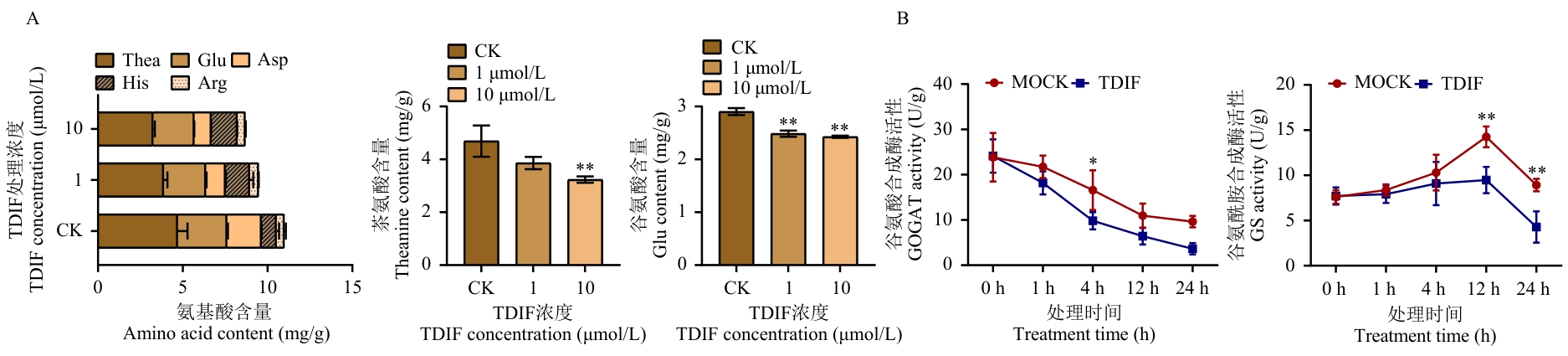
图5 TDIF处理期间氨基酸含量及氮代谢关键酶活的动态变化A:TDIF处理24 h主要游离氨基酸的积累情况;B:TDIF处理0、1、4、12和24 h氮代谢关键酶活的动态变化
Fig. 5 Dynamics of amino acid contents and key nitrogen metabolic enzyme activities under TDIF treatmentA: Accumulation of major free amino acids after 24 h of TDIF treatment. B: Dynamic changes in key nitrogen metabolism enzyme activities under TDIF treatment at 0, 1, 4, 12, and 24 h
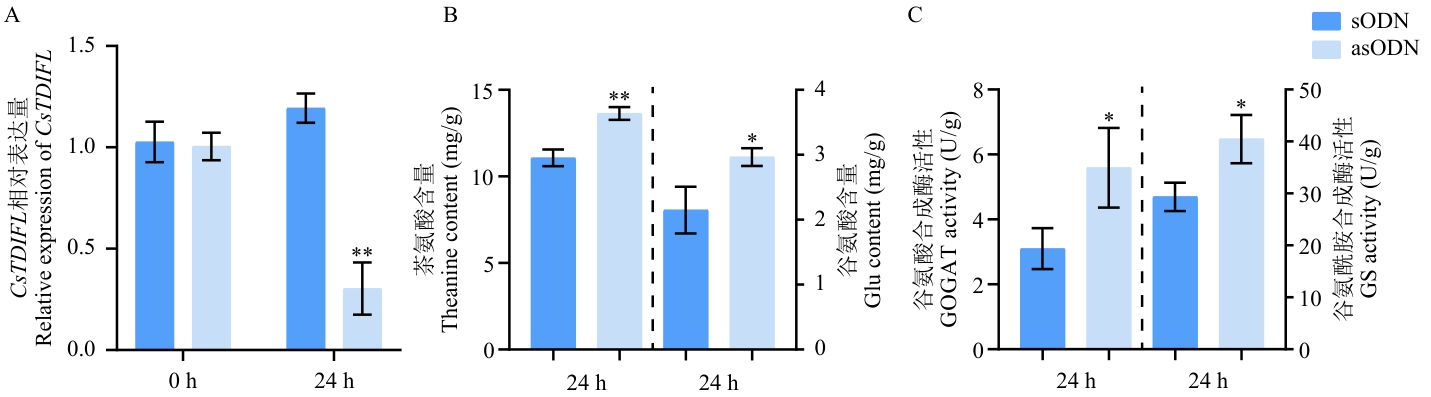
图6 反义寡核苷酸抑制CsTDIFL对茶氨酸含量的影响A:asODN处理24 h CsTDIFL表达量;B:asODN处理24 h茶氨酸和谷氨酸含量;C:asODN处理24 h GOGAT/GS酶活性
Fig. 6 Effects of antisense oligonucleotide inhibiting CsTDIFL on theanine contentA: CsTDIFL expressions after 24 h of asODN treatment. B: Theanine and glutamate contents after 24 h of asODN treatment. C: GOGAT/GS enzyme activity after 24 h of asODN treatment
| [1] | Khan SU, Khan MHU, Ahmar S, et al. Comprehensive study and multipurpose role of the CLV3/ESR-related (CLE) genes family in plant growth and development [J]. J Cell Physiol, 2021, 236(4): 2298-2317. |
| [2] | Song XF, Hou XL, Liu CM. CLE peptides: critical regulators for stem cell maintenance in plants [J]. Planta, 2021, 255(1): 5. |
| [3] | Fletcher JC. Recent advances in Arabidopsis CLE peptide signaling [J]. Trends Plant Sci, 2020, 25(10): 1005-1016. |
| [4] | Liu J, Li WJ, Wu G, et al. An update on evolutionary, structural, and functional studies of receptor-like kinases in plants [J]. Front Plant Sci, 2024, 15: 1305599. |
| [5] | Gao XM, Guo YF. CLE peptides in plants: proteolytic processing, structure-activity relationship, and ligand-receptor interaction [J]. J Integr Plant Biol, 2012, 54(10): 738-745. |
| [6] | Fletcher JC. CLAVATA3 signaling buffers Arabidopsis shoot apical meristem activity in response to photoperiod [J]. Int J Mol Sci, 2024, 25(17): 9357. |
| [7] | Kondo Y, Fukuda H. The TDIF signaling network [J]. Curr Opin Plant Biol, 2015, 28: 106-110. |
| [8] | Ito Y, Nakanomyo I, Motose H, et al. Dodeca-CLE peptides as suppressors of plant stem cell differentiation [J]. Science, 2006, 313(5788): 842-845. |
| [9] | Fisher K, Turner S. PXY, a receptor-like kinase essential for maintaining polarity during plant vascular-tissue development [J]. Curr Biol, 2007, 17(12): 1061-1066. |
| [10] | Xiao F, Zhou HP, Lin HH. Decoding small peptides: Regulators of plant growth and stress resilience [J]. J Integr Plant Biol, 2025, 67(3): 596-631. |
| [11] | Yaginuma H, Hirakawa Y, Kondo Y, et al. A novel function of TDIF-related peptides: promotion of axillary bud formation [J]. Plant Cell Physiol, 2011, 52(8): 1354-1364. |
| [12] | Zhang Y, Tan SY, Gao YH, et al. CLE42 delays leaf senescence by antagonizing ethylene pathway in Arabidopsis [J]. New Phytol, 2022, 235(2): 550-562. |
| [13] | Yue J, Yang HY, Yang SH, et al. TDIF overexpression in poplars retards internodal elongation and enhances leaf venation through interaction with other phytohormones [J]. Tree Physiol, 2020, 40(1): 60-72. |
| [14] | Yue J, Yang HY, Yang SH, et al. TDIF regulates auxin accumulation and modulates auxin sensitivity to enhance both adventitious root and lateral root formation in poplar trees [J]. Tree Physiol, 2020, 40(11): 1534-1547. |
| [15] | Kondo Y, Ito T, Nakagami H, et al. Plant GSK3 proteins regulate xylem cell differentiation downstream of TDIF-TDR signalling [J]. Nat Commun, 2014, 5: 3504. |
| [16] | 白婧平. TDIF多肽与生长素在拟南芥根发育中的相互作用机制研究 [D]. 天津: 天津大学, 2020. |
| Bai JP. Interactions between TDIF peptide and auxin in regulating Arabidopsis root development [D]. Tianjin: Tianjin University, 2020. | |
| [17] | 巩陶婉. CLEs多肽对植物外植体生长与发育的影响 [D]. 天津: 天津大学, 2019. |
| Gong TW. Effects of CLEs peptide on the growth and development of plant explants [D]. Tianjin: Tianjin University, 2019. | |
| [18] | Hu J, Hu XT, Yang Y, et al. Strigolactone signaling regulates cambial activity through repression of WOX4 by transcription factor BES1 [J]. Plant Physiol, 2022, 188(1): 255-267. |
| [19] | Ahammed GJ, Li X. Hormonal regulation of health-promoting compounds in tea (Camellia sinensis L.) [J]. Plant Physiol Biochem, 2022, 185: 390-400. |
| [20] | Xiang F, Su Y, Zhou LY, et al. Gibberellin promotes theanine synthesis by relieving the inhibition of CsWRKY71 on CsTSI in tea plant (Camellia sinensis) [J]. Hortic Res, 2025, 12(2): uhae317. |
| [21] | Di TM, Zhao L, Chen HM, et al. Transcriptomic and metabolic insights into the distinctive effects of exogenous melatonin and gibberellin on terpenoid synthesis and plant hormone signal transduction pathway in Camellia sinensis [J]. J Agric Food Chem, 2019, 67(16): 4689-4699. |
| [22] | Li ZX, Yang WJ, Ahammed GJ, et al. Developmental changes in carbon and nitrogen metabolism affect tea quality in different leaf position [J]. Plant Physiol Biochem, 2016, 106: 327-335. |
| [23] | Li W, Xiang F, Su Y, et al. Gibberellin increases the bud yield and theanine accumulation in Camellia sinensis (L.) Kuntze [J]. Molecules, 2021, 26(11): 3290. |
| [24] | Chen H, Song YJ, Li H, et al. Enhancing the adaptability of tea plants (Camellia sinensis L.) to high-temperature stress with small peptides and biosurfactants [J]. Plants, 2023, 12(15): 2817. |
| [25] | 李文凤, 兰平. 植物小肽研究进展Ⅰ: 来源、鉴定和调控 [J]. 土壤, 2019, 51(6): 1049-1056. |
| Li WF, Lan P. Research progress of plant signal peptide: origin, identification and regulation [J]. Soils, 2019, 51(6): 1049-1056. | |
| [26] | Bassiony A, Sun SJ, Yan KN, et al. Integrative approaches unravelling tea drought alleviation mechanisms primed by carbonyl volatiles and signal peptide [J]. Plant Physiol Biochem, 2025, 223: 109802. |
| [27] | Wei CL, Yang H, Wang SB, et al. Draft genome sequence of Camellia sinensis var. sinensis provides insights into the evolution of the tea genome and tea quality [J]. Proc Natl Acad Sci USA, 2018, 115(18): E4151-E4158. |
| [28] | 陈璐瑶, 李琴, 尹杰, 等. 不同加工工艺对贵州绿茶干茶色泽及品质成分的影响分析 [J]. 有机化学研究, 2023, 11(1): 26-35. |
| Chen LY, Li Q, Yin J, et al. Effect of different processing techniques on color and quality components of Guizhou green tea dry tea [J]. J Org Chem Res, 2023, 11(1): 26-35. | |
| [29] | Huang J, Wang YL, Yu J, et al. Evolutionary landscape of tea circular RNAs and its contribution to chilling tolerance of tea plant [J]. Int J Mol Sci, 2023, 24(2): 1478. |
| [30] | Li PH, Fu JM, Xu YJ, et al. CsMYB1 integrates the regulation of trichome development and catechins biosynthesis in tea plant domestication [J]. New Phytol, 2022, 234(3): 902-917. |
| [31] | Wan K, Lu KN, Gao MT, et al. Functional analysis of the cotton CLE polypeptide signaling gene family in plant growth and development [J]. Sci Rep, 2021, 11(1): 5060. |
| [32] | Fatima S, Zeb SZ, Tariq M, et al. Role of CLE peptide signaling in root-knot nematode parasitism of plants [J]. Planta, 2024, 261(1): 3. |
| [33] | Liu YS, Yang SH, Song YJ, et al. Gain-of-function analysis of poplar CLE genes in Arabidopsis by exogenous application and over-expression assays [J]. J Exp Bot, 67(8): 2309-2324. |
| [34] | Feng L, Yu YC, Lin SJ, et al. Tonoplast-localized theanine transporter CsCAT2 may mediate theanine storage in the root of tea plants (Camellia sinensis L.) [J]. Front Plant Sci, 2021, 12: 797854. |
| [35] | Hu SK, Zhang M, Yang YQ, et al. A novel insight into nitrogen and auxin signaling in lateral root formation in tea plant [Camellia sinensis (L.) O. Kuntze [J]. BMC Plant Biol, 2020, 20(1): 232. |
| [36] | Li X, Wei JP, Ahammed GJ, et al. Brassinosteroids attenuate moderate high temperature-caused decline in tea quality by enhancing theanine biosynthesis in Camellia sinensis L [J]. Front Plant Sci, 2018, 9: 1016. |
| [37] | Stührwohldt N, Scholl S, Lang LS, et al. The biogenesis of CLEL peptides involves several processing events in consecutive compartments of the secretory pathway [J]. eLife, 2020, 9: e55580. |
| [38] | Brück S, Pfannstiel J, Ingram G, et al. Analysis of peptide hormone maturation and processing specificity using isotope-labeled peptides [J]. Methods Mol Biol, 2023, 2581: 323-335. |
| [39] | Lin SJ, Chen ZP, Chen TT, et al. Theanine metabolism and transport in tea plants (Camellia sinensis L.): advances and perspectives [J]. Crit Rev Biotechnol, 2023, 43(3): 327-341. |
| [40] | Liu ML, Zhao MZ, Yang G, et al. Root morphology, nitrogen metabolism and amino acid metabolism in soybean under low phosphorus stress [J]. Sci Rep, 2024, 14(1): 28583. |
| [1] | 张欣, 陈骋, 霍元博, 黄仁丽, 张丽, 张凯, 童华荣, 袁连玉. 茶树CsCRD1基因的克隆及其对叶绿素生物合成的影响[J]. 生物技术通报, 2026, 42(5): 280-291. |
| [2] | 郭苗, 许家佳, 孙天国, 蔡璨, 曹婉笛, 包纪星, 沙伟, 张梅娟, 彭疑芳, 马天意. 过表达砂藓RcOLEO1基因增强拟南芥的耐旱性及耐高温性[J]. 生物技术通报, 2026, 42(5): 312-322. |
| [3] | 孙婷, 张艳, 刘玉珊, 冯媛媛, 秦恒山, 张军, 何小岗, 张景荣. 黄秋葵AeF3H基因的克隆与功能分析[J]. 生物技术通报, 2026, 42(4): 153-160. |
| [4] | 杨婷, 杨宗桃, 艾静, 王禹童, 李燕烨, 邓军, 刘家勇, 赵勇, 张跃彬. 不同基因型甘蔗表型特征及根部转录组学分析[J]. 生物技术通报, 2026, 42(4): 190-201. |
| [5] | 刘梦茹, 夏琳, 刘瑞霞, 闫新可, 杨军, 张菁华, 武明珠. 烟草多酚氧化酶NtPPO1-2基因克隆及功能分析[J]. 生物技术通报, 2026, 42(2): 218-227. |
| [6] | 杨娟, 冯慧, 吉乃喆, 孙丽萍, 王赟, 张佳楠, 赵世伟. 月季AP2/ERF转录因子RcERF4和RcRAP2-12的克隆及功能分析[J]. 生物技术通报, 2026, 42(1): 150-160. |
| [7] | 吴翠翠, 陈登科, 兰刚, 夏芝, 李朋波. 花生转录因子AhHDZ70的生物信息学分析及耐盐耐旱性研究[J]. 生物技术通报, 2026, 42(1): 198-207. |
| [8] | 倪莹, 李雷, 汪进萱, 马波, 孟昕, 冷平生, 吴静, 胡增辉. 紫丁香So4CL的克隆及功能分析[J]. 生物技术通报, 2026, 42(1): 139-149. |
| [9] | 吕呈聪, 衡蒙, 陈思琪, 金雪花. 彩色马蹄莲花青素苷转运相关ZhGSTF的克隆及功能分析[J]. 生物技术通报, 2026, 42(1): 161-169. |
| [10] | 张永艳, 郭思健, 李晶, 郝思怡, 李瑞得, 刘嘉鹏, 程春振. 蓝莓花青素相关VcGSTF19基因的克隆及功能研究[J]. 生物技术通报, 2025, 41(9): 139-146. |
| [11] | 程婷婷, 刘俊, 王利丽, 练从龙, 魏文君, 郭辉, 吴尧琳, 杨晶凡, 兰金旭, 陈随清. 杜仲查尔酮异构酶基因家族全基因组鉴定及其表达模式分析[J]. 生物技术通报, 2025, 41(9): 242-255. |
| [12] | 徐小萍, 杨成龙, 和兴, 郭文杰, 吴健, 方少忠. 百合LoAPS1克隆及其在休眠解除过程的功能分析[J]. 生物技术通报, 2025, 41(9): 195-206. |
| [13] | 董向向, 缪百灵, 许贺娟, 陈娟娟, 李亮杰, 龚守富, 朱庆松. 森林草莓FveBBX20基因的生物信息学分析及开花调控功能[J]. 生物技术通报, 2025, 41(9): 115-123. |
| [14] | 李珊, 马登辉, 马红义, 姚文孔, 尹晓. 葡萄SKP1基因家族鉴定与表达分析[J]. 生物技术通报, 2025, 41(9): 147-158. |
| [15] | 巩慧玲, 邢玉洁, 马俊贤, 蔡霞, 冯再平. 马铃薯LAC基因家族的鉴定及盐胁迫下表达分析[J]. 生物技术通报, 2025, 41(9): 82-93. |
| 阅读次数 | ||||||
|
全文 |
|
|||||
|
摘要 |
|
|||||
