







生物技术通报 ›› 2025, Vol. 41 ›› Issue (9): 335-344.doi: 10.13560/j.cnki.biotech.bull.1985.2025-0418
• 研究报告 • 上一篇
张雅祺1( ), 王芹芹1, 沈夏1, 李旭苗1, 高敏1, 李军2, 李辰1(), 王慧1()
收稿日期:2025-04-21
出版日期:2025-09-26
发布日期:2025-09-24
通讯作者:
王慧,女,教授,研究方向 :肿瘤分子靶点的应用基础研究;E-mail: huiwang@shsmu.edu.cn;作者简介:张雅祺,女,硕士研究生,研究方向 :消化道肿瘤代谢组学;E-mail: zhangyaqimiao@sjtu.edu.cn基金资助:
ZHANG Ya-qi1(), WANG Qin-qin1, SHEN Xia1, LI Xu-miao1, GAO Min1, LI Jun2, LI Chen1(), WANG Hui1()
Received:2025-04-21
Published:2025-09-26
Online:2025-09-24
摘要:
目的 基于代谢组学构建食管鳞状细胞癌(esophageal squamous cell carcinoma, ESCC)早期风险预警模型,精准识别高风险人群。 方法 纳入84例低级别上皮内瘤变患者,采集基线期血清,根据随访期间是否进展为高级别上皮内瘤变或ESCC分为进展组(N=28)和无进展组(N=56)。采用反相液相色谱和亲水相互作用液相色谱联合高分辨质谱开展非靶向代谢组学分析。结合单变量与多变量分析评估组间代谢特征差异,对差异代谢物进行通路富集分析。将样本按7∶3比例分为训练集与测试集,在训练集中采用单变量逻辑回归联合最小绝对收缩与选择算子回归筛选与病程进展相关的关键代谢物,基于回归系数构建风险预警模型。通过受试者工作特征曲线和曲线下面积(area under the curve, AUC)评估模型性能。 结果 共鉴定10类1 431种代谢物,差异代谢物在类固醇激素生物合成、初级胆汁酸合成及亚油酸代谢通路显著富集。最终筛选出18个与病程进展密切相关的关键代谢物,包括甘油-3-磷脂胆碱、棕榈酸、黄尿酸及N-脒基天冬氨酸等。风险预警模型在测试集中表现出良好的预测能力(AUC=0.812)。 结论 基于前瞻性随访队列,识别出多个关键代谢物及代谢通路,构建ESCC早期进展风险的代谢物预警模型。模型具有良好的预测鲁棒性和泛化能力,可为ESCC高风险人群的早期风险评估与干预策略优化提供理论支持。
张雅祺, 王芹芹, 沈夏, 李旭苗, 高敏, 李军, 李辰, 王慧. 食管鳞状细胞癌早期进展风险的代谢物预警模型[J]. 生物技术通报, 2025, 41(9): 335-344.
ZHANG Ya-qi, WANG Qin-qin, SHEN Xia, LI Xu-miao, GAO Min, LI Jun, LI Chen, WANG Hui. Metabolite Early Warning Model for the Risk of Early Progression in Esophageal Squamous Cell Carcinoma[J]. Biotechnology Bulletin, 2025, 41(9): 335-344.
指标 Index | 无进展组 Non-progress group (N=56) | 进展组 Progress group (N=28) | P值 P value |
|---|---|---|---|
| 年龄(岁) Age (years) | 60.02 ± 6.31 | 61.32 ± 6.21 | 0.372 |
| 性别 Sex | 1 | ||
| 男 Male | 36 (64.3%) | 18 (64.3%) | |
| 女 Female | 20 (35.7%) | 10 (35.7%) | |
| 身体质量指数 BMI (kg/m2) | 23.86 ± 2.16 | 23.34 ± 1.87 | 0.279 |
表1 研究对象基线特征
Table 1 Baseline characteristics of the subjects in this study
指标 Index | 无进展组 Non-progress group (N=56) | 进展组 Progress group (N=28) | P值 P value |
|---|---|---|---|
| 年龄(岁) Age (years) | 60.02 ± 6.31 | 61.32 ± 6.21 | 0.372 |
| 性别 Sex | 1 | ||
| 男 Male | 36 (64.3%) | 18 (64.3%) | |
| 女 Female | 20 (35.7%) | 10 (35.7%) | |
| 身体质量指数 BMI (kg/m2) | 23.86 ± 2.16 | 23.34 ± 1.87 | 0.279 |

图1 样品代谢轮廓的主成分分析得分图
Fig. 1 Plot of PCA scores for metabolic profiles of samples
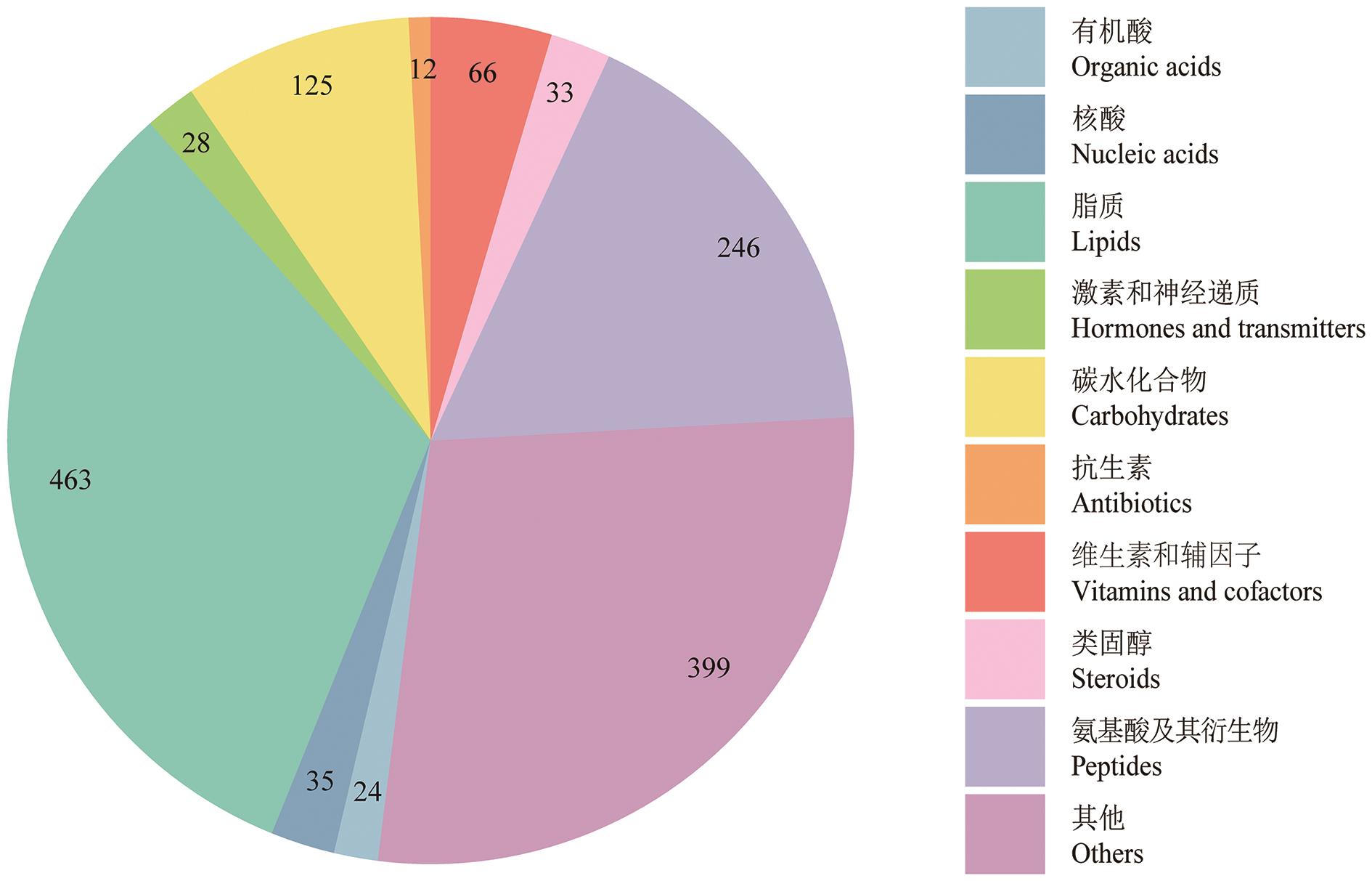
图2 代谢物种类分布
Fig. 2 Distribution of metabolite species

图3 进展组与无进展组代谢谱的PLS-DA得分图
Fig. 3 PLS-DA score plot of metabolic profiles between progress and non-progress groups
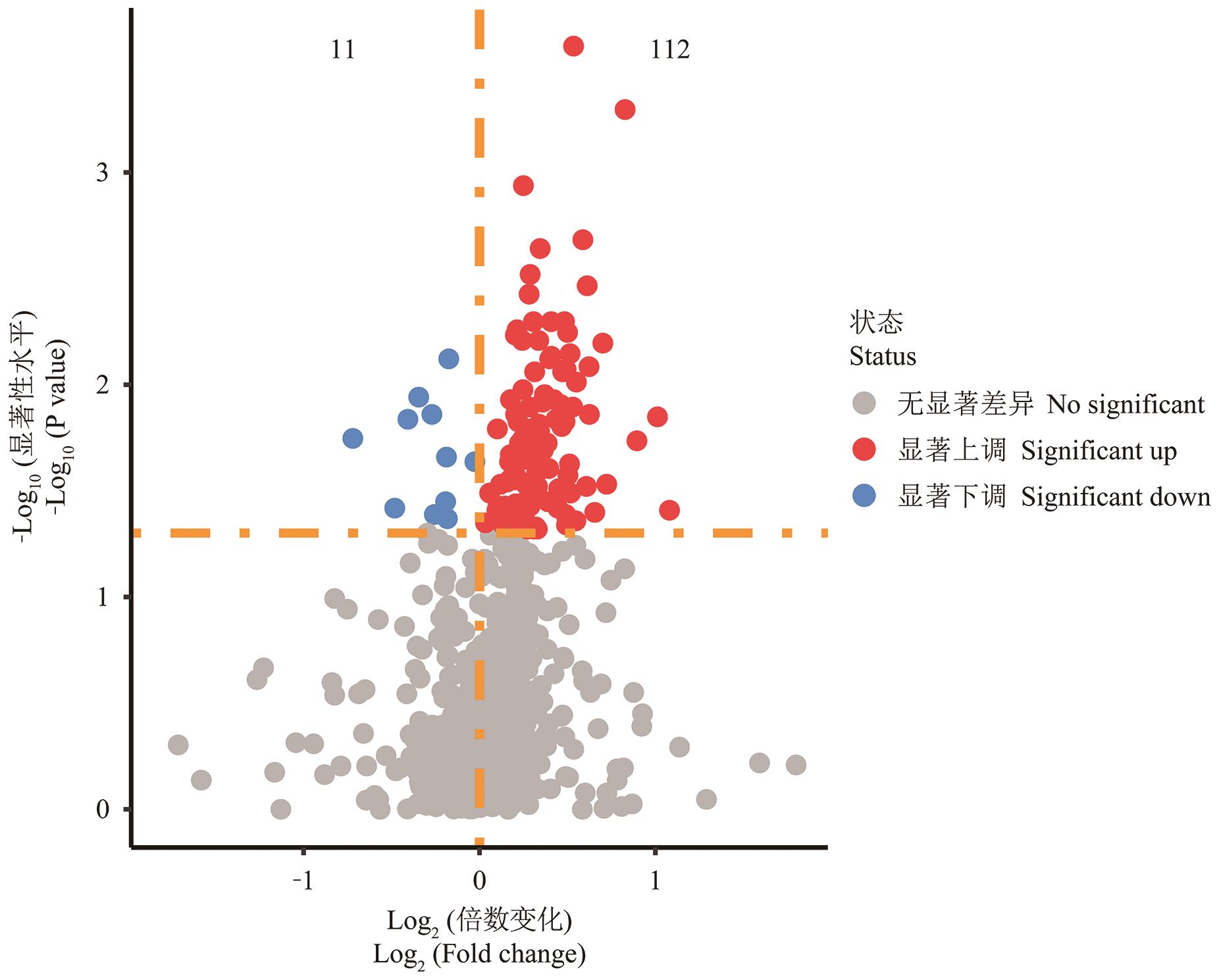
图4 进展组与无进展组差异代谢物的火山图
Fig. 4 Volcano plot of differential metabolites between progress and non-progress groups
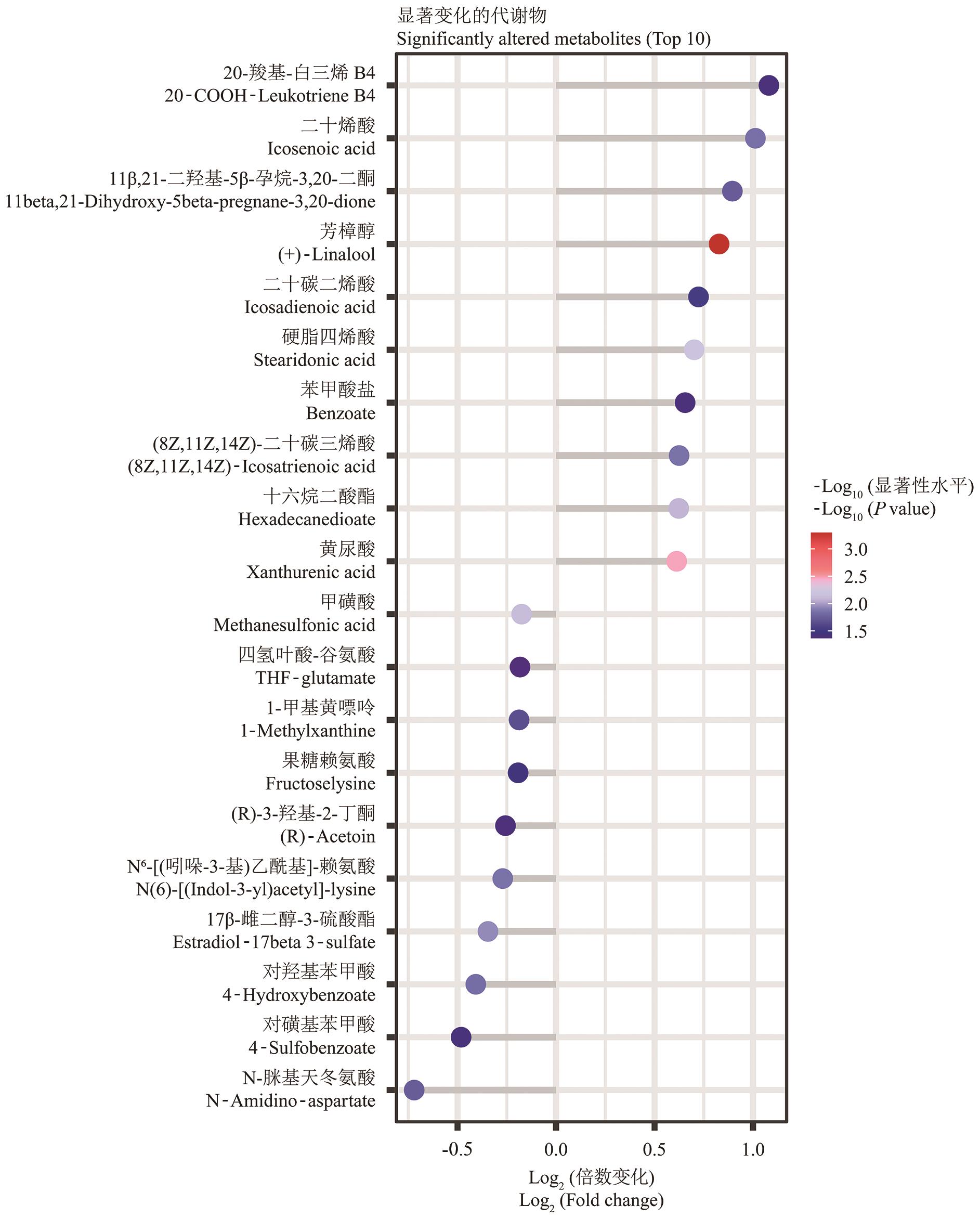
图5 最显著上调与下调的10个代谢物
Fig. 5 Top 10 most significantly upregulated and downregulated metabolites
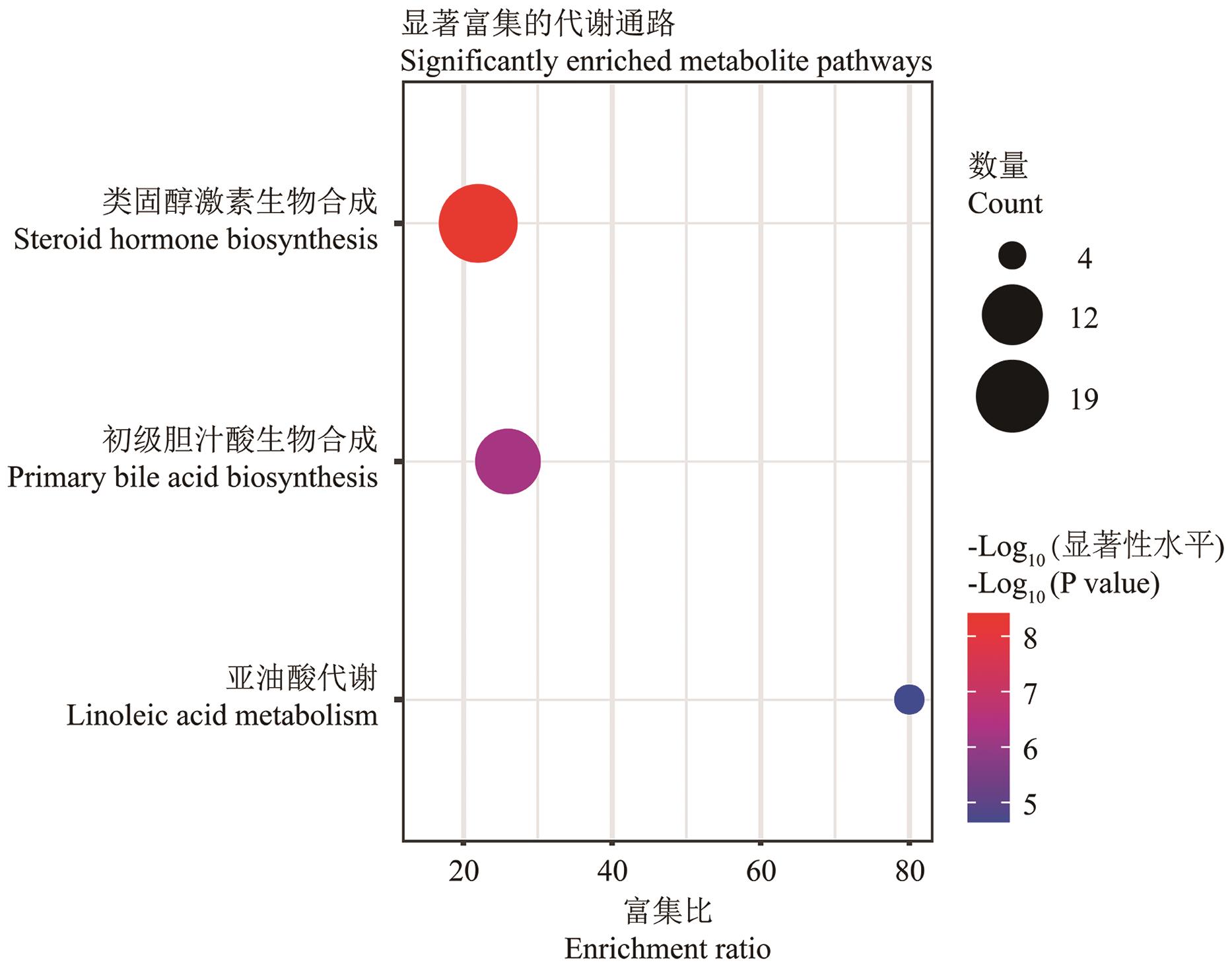
图6 差异代谢物通路富集分析
Fig. 6 Pathway enrichment analysis of differential metabolites

图7 LASSO交叉验证误差曲线
Fig. 7 LASSO cross-validation error curve

图8 疾病进展预测关键代谢物的LASSO回归权重热图
Fig. 8 Heatmap of metabolite weights from LASSO regression for disease progression prediction

图9 风险评分模型的测试集ROC曲线
Fig. 9 Test set ROC curves for risk scoring models
| [1] | Abnet CC, Arnold M, Wei WQ. Epidemiology of esophageal squamous cell carcinoma [J]. Gastroenterology, 2018, 154(2): 360-373. |
| [2] | Morgan E, Soerjomataram I, Rumgay H, et al. The global landscape of esophageal squamous cell carcinoma and esophageal adenocarcinoma incidence and mortality in 2020 and projections to 2040: new estimates from GLOBOCAN 2020 [J]. Gastroenterology, 2022, 163(3): 649-658.e2. |
| [3] | National Health Commission Of The People's Republic Of China. Chinese guidelines for diagnosis and treatment of esophageal carcinoma 2018 (English version) [J]. Chin J Cancer Res, 2019, 31(2): 223-258. |
| [4] | Lagergren J, Smyth E, Cunningham D, et al. Oesophageal cancer [J]. Lancet, 2017, 390(10110): 2383-2396. |
| [5] | Mashimo H, Gordon SR, Singh SK. Advanced endoscopic imaging for detecting and guiding therapy of early neoplasias of the esophagus [J]. Ann N Y Acad Sci, 2020, 1482(1): 61-76. |
| [6] | Wang GQ, Jiao GG, Chang FB, et al. Long-term results of operation for 420 patients with early squamous cell esophageal carcinoma discovered by screening [J]. Ann Thorac Surg, 2004, 77(5): 1740-1744. |
| [7] | Siegel RL, Miller KD, Fuchs HE, et al. Cancer statistics, 2021 [J]. CA A Cancer J Clinicians, 2021, 71(1): 7-33. |
| [8] | Nagtegaal ID, Odze RD, Klimstra D, et al. The 2019 WHO classification of tumours of the digestive system [J]. Histopathology, 2020, 76(2): 182-188. |
| [9] | Wei WQ, Hao CQ, Guan CT, et al. Esophageal histological precursor lesions and subsequent 8.5-year cancer risk in a population-based prospective study in China [J]. Am J Gastroenterol, 2020, 115(7): 1036-1044. |
| [10] | 赫捷, 陈万青, 李兆申, 等. 中国食管癌筛查与早诊早治指南(2022,北京) [J]. 中国肿瘤, 2022, 31(6): 401-436. |
| He J, Chen WQ, Li ZS, et al. China guideline for the screening, early detection and early treatment of esophageal cancer (2022, Beijing) [J]. China Cancer, 2022, 31(6): 401-436. | |
| [11] | 朱林林, 董培雯, 粟兴, 等. 食管黏膜低级别上皮内瘤变内镜特点及病理转归分析 [J]. 四川大学学报: 医学版, 2018, 49(6): 849-853. |
| Zhu LL, Dong PW, Su X, et al. Endoscopic characteristics and pathological analysis of esophageal low-grade intraepithelial neoplasm [J]. J Sichuan Univ Med Sci Ed, 2018, 49(6): 849-853. | |
| [12] | Rinschen MM, Ivanisevic J, Giera M, et al. Identification of bioactive metabolites using activity metabolomics [J]. Nat Rev Mol Cell Biol, 2019, 20(6): 353-367. |
| [13] | Wishart DS. Metabolomics for investigating physiological and pathophysiological processes [J]. Physiol Rev, 2019, 99(4): 1819-1875. |
| [14] | Huang K, Han Y, Chen YH, et al. Tumor metabolic regulators: key drivers of metabolic reprogramming and the promising targets in cancer therapy [J]. Mol Cancer, 2025, 24(1): 7. |
| [15] | Zhang HL, Chen P, Yan HX, et al. Targeting mTORC2/HDAC3 inhibits stemness of liver cancer cells against glutamine starvation [J]. Adv Sci, 2022, 9(20): e2103887. |
| [16] | Dong SH, Liang S, Cheng ZQ, et al. ROS/PI3K/Akt and Wnt/β- catenin signalings activate HIF-1α-induced metabolic reprogramming to impart 5-fluorouracil resistance in colorectal cancer [J]. J Exp Clin Cancer Res, 2022, 41(1): 15. |
| [17] | Yang K, Wang XK, Song CH, et al. The role of lipid metabolic reprogramming in tumor microenvironment [J]. Theranostics, 2023, 13(6): 1774-1808. |
| [18] | Coloff JL, Murphy JP, Braun CR, et al. Differential glutamate metabolism in proliferating and quiescent mammary epithelial cells [J]. Cell Metab, 2016, 23(5): 867-880. |
| [19] | Ge TX, Gu X, Jia RB, et al. Crosstalk between metabolic reprogramming and epigenetics in cancer: updates on mechanisms and therapeutic opportunities [J]. Cancer Commun, 2022, 42(11): 1049-1082. |
| [20] | Lv JL, Wang JL, Shen XT, et al. A serum metabolomics analysis reveals a panel of screening metabolic biomarkers for esophageal squamous cell carcinoma [J]. Clin Transl Med, 2021, 11(5): e419. |
| [21] | Taherizadeh M, Khoshnia M, Shams S, et al. Plasma changes of branched-chain amino acid in patients with esophageal cancer [J]. Middle East J Dig Dis, 2021, 13(1): 49-53. |
| [22] | Yu JY, Zhao JH, Zhang MJ, et al. Metabolomics studies in gastrointestinal cancer: a systematic review [J]. Expert Rev Gastroenterol Hepatol, 2020, 14(1): 9-25. |
| [23] | Zang B, Wang W, Wang YQ, et al. Metabolomic characterization reveals ILF2 and ILF3 affected metabolic adaptions in esophageal squamous cell carcinoma [J]. Front Mol Biosci, 2021, 8: 721990. |
| [24] | Liu XS, Hong RX, Du PN, et al. The metabolic genomic atlas reveals potential drivers and clinically relevant insights into the etiology of esophageal squamous cell carcinoma [J]. Theranostics, 2022, 12(14): 6160-6178. |
| [25] | Guo ZX, Ma JL, Zhang JQ, et al. Metabolic reprogramming and immunological changes in the microenvironment of esophageal cancer: future directions and prospects [J]. Front Immunol, 2025, 16: 1524801. |
| [26] | Wang ZY, Sun XY, Li ZH, et al. Metabolic reprogramming in esophageal squamous cell carcinoma [J]. Front Pharmacol, 2024, 15: 1423629. |
| [27] | Yang T, Hui RT, Nouws J, et al. Untargeted metabolomics analysis of esophageal squamous cell cancer progression [J]. J Transl Med, 2022, 20(1): 127. |
| [28] | Shen X, Guo SY, Liang NN, et al. Biomarker discovery and metabolic profiling in serum of cardiovascular disease patients with untargeted metabolomics and machine learning [J]. Clin Transl Med, 2024, 14(6): e1722. |
| [29] | Shen X, Wang C, Liang NN, et al. Serum metabolomics identifies dysregulated pathways and potential metabolic biomarkers for hyperuricemia and gout [J]. Arthritis Rheumatol, 2021, 73(9): 1738-1748. |
| [30] | Che JJ, Zhao YB, Gu BB, et al. Untargeted serum metabolomics reveals potential biomarkers and metabolic pathways associated with the progression of gastroesophageal cancer [J]. BMC Cancer, 2023, 23(1): 1238. |
| [31] | Zhao YX, Zhao HP, Zhao MY, et al. Latest insights into the global epidemiological features, screening, early diagnosis and prognosis prediction of esophageal squamous cell carcinoma [J]. World J Gastroenterol, 2024, 30(20): 2638-2656. |
| [32] | Wani S, Drahos J, Cook MB, et al. Comparison of endoscopic therapies and surgical resection in patients with early esophageal cancer: a population-based study [J]. Gastrointest Endosc, 2014, 79(2): 224-232.e1. |
| [33] | Wang GQ, Abnet CC, Shen Q, et al. Histological precursors of oesophageal squamous cell carcinoma: results from a 13 year prospective follow up study in a high risk population [J]. Gut, 2005, 54(2): 187-192. |
| [34] | Bray F, Laversanne M, Sung H, et al. Global cancer statistics 2022: GLOBOCAN estimates of incidence and mortality worldwide for 36 cancers in 185 countries [J]. CA Cancer J Clin, 2024, 74(3): 229-263. |
| [35] | Han BF, Zheng RS, Zeng HM, et al. Cancer incidence and mortality in China, 2022 [J]. J Natl Cancer Cent, 2024, 4(1): 47-53. |
| [36] | Glunde K, Bhujwalla ZM, Ronen SM. Choline metabolism in malignant transformation [J]. Nat Rev Cancer, 2011, 11(12): 835-848. |
| [37] | Pascual G, Avgustinova A, Mejetta S, et al. Targeting metastasis-initiating cells through the fatty acid receptor CD36 [J]. Nature, 2017, 541(7635): 41-45. |
| [38] | Guerrero-Rodríguez SL, Mata-Cruz C, Pérez-Tapia SM, et al. Role of CD36 in cancer progression, stemness, and targeting [J]. Front Cell Dev Biol, 2022, 10: 1079076. |
| [39] | Platten M, Nollen EAA, Röhrig UF, et al. Tryptophan metabolism as a common therapeutic target in cancer, neurodegeneration and beyond [J]. Nat Rev Drug Discov, 2019, 18(5): 379-401. |
| [40] | Tanaka M, Szabó Á, Vécsei L. Redefining roles: a paradigm shift in tryptophan-kynurenine metabolism for innovative clinical applications [J]. Int J Mol Sci, 2024, 25(23): 12767. |
| [41] | Zhao Y, Ma CC, Cai RZ, et al. NMR and MS reveal characteristic metabolome atlas and optimize esophageal squamous cell carcinoma early detection [J]. Nat Commun, 2024, 15(1): 2463. |
| [42] | Baek AE, Yu YA, He SS, et al. The cholesterol metabolite 27 hydroxycholesterol facilitates breast cancer metastasis through its actions on immune cells [J]. Nat Commun, 2017, 8(1): 864. |
| [43] | Chang CY, McDonnell DP. Molecular pathways: the metabolic regulator estrogen-related receptor α as a therapeutic target in cancer [J]. Clin Cancer Res, 2012, 18(22): 6089-6095. |
| [44] | Cai CM, Chen S, Ng P, et al. Intratumoral de novo steroid synthesis activates androgen receptor in castration-resistant prostate cancer and is upregulated by treatment with CYP17A1 inhibitors [J]. Cancer Res, 2011, 71(20): 6503-6513. |
| [45] | Jia W, Xie GX, Jia WP. Bile acid-microbiota crosstalk in gastrointestinal inflammation and carcinogenesis [J]. Nat Rev Gastroenterol Hepatol, 2018, 15(2): 111-128. |
| [46] | Cong JJ, Liu PP, Han ZL, et al. Bile acids modified by the intestinal microbiota promote colorectal cancer growth by suppressing CD8+ T cell effector functions [J]. Immunity, 2024, 57(4): 876-889.e11. |
| [47] | Varanasi SK, Chen D, Liu YL, et al. Bile acid synthesis impedes tumor-specific T cell responses during liver cancer [J]. Science, 2025, 387(6730): 192-201. |
| [48] | Wang PP, Song X, Zhao XK, et al. Serum metabolomic profiling reveals biomarkers for early detection and prognosis of esophageal squamous cell carcinoma [J]. Front Oncol, 2022, 12: 790933. |
| [49] | Danzi F, Pacchiana R, Mafficini A, et al. To metabolomics and beyond: a technological portfolio to investigate cancer metabolism [J]. Signal Transduct Target Ther, 2023, 8(1): 137. |
| [50] | Chen C, Zheng T, Chen Y, et al. A systematic evaluation of quenching, extraction and analysis procedures for metabolomics study of the mechanism of QYSLD intervention in A549 cells [J]. Anal Bioanal Chem, 2024, 416(28): 6621-6638. |
| [51] | Ye W, Lin Y, Bezabeh T, et al. 1H NMR-based metabolomics of paired esophageal tumor tissues and serum samples identifies specific serum biomarkers for esophageal cancer [J]. NMR Biomed, 2021, 34(6): e4505. |
| [52] | Zhang S, Lu X, Hu CX, et al. Serum metabolomics for biomarker screening of esophageal squamous cell carcinoma and esophageal squamous dysplasia using gas chromatography-mass spectrometry [J]. ACS Omega, 2020, 5(41): 26402-26412. |
| [1] | 刘语诗, 李镇, 邹宇琛, 汤维维, 李彬. 药用植物空间代谢组学研究进展[J]. 生物技术通报, 2025, 41(9): 22-31. |
| [2] | 蒋天威, 马培杰, 李亚娇, 陈才俊, 刘晓霞, 王小利. 二穗短柄草对光周期的代谢响应分析[J]. 生物技术通报, 2025, 41(7): 237-247. |
| [3] | 虞昕磊, 何结望, 林国平, 李金海, 王大爱, 袁跃斌, 刘圣高, 李志豪, 陶德欣. 夏冬两季发酵雪茄烟叶的代谢组差异分析[J]. 生物技术通报, 2024, 40(6): 260-270. |
| [4] | 许沛冬, 易剑锋, 陈迪, 陈浩, 谢丙炎, 赵文军. 组学技术在生防芽胞杆菌的应用进展[J]. 生物技术通报, 2024, 40(10): 208-220. |
| [5] | 韩乐乐, 宋文迪, 边嘉珅, 李阳, 杨双胜, 陈紫怡, 李晓薇. 转录组与代谢组联合分析揭示大豆GmERD15c参与盐胁迫下类黄酮的生物合成[J]. 生物技术通报, 2024, 40(10): 243-252. |
| [6] | 姜宇舢, 兰倩, 王芳, 姜亮, 裴成成. 一个影响酪氨酸代谢藜麦突变体的鉴定[J]. 生物技术通报, 2024, 40(10): 253-261. |
| [7] | 何诗瑜, 曾仲大, 李博岩. 空间分辨代谢组学在疾病诊断研究中的应用进展[J]. 生物技术通报, 2024, 40(1): 145-159. |
| [8] | 周嫒婷, 彭睿琦, 王芳, 伍建榕, 马焕成. 生防菌株DZY6715在不同生长期的代谢差异分析[J]. 生物技术通报, 2023, 39(9): 225-235. |
| [9] | 韩华蕊, 杨宇琭, 门艺涵, 韩尚玲, 韩渊怀, 霍轶琼, 侯思宇. 基于代谢组学研究谷子SiYABBYs参与花发育过程中鼠李糖苷的生物合成[J]. 生物技术通报, 2023, 39(6): 189-198. |
| [10] | 徐扬, 丁红, 张冠初, 郭庆, 张智猛, 戴良香. 盐胁迫下花生种子萌发期代谢组学分析[J]. 生物技术通报, 2023, 39(1): 199-213. |
| [11] | 古丽加马力·艾萨, 邢军, 李安, 张瑞. 开菲尔粒中微生物对苯并(α)芘的非靶向代谢组学分析[J]. 生物技术通报, 2022, 38(5): 123-135. |
| [12] | 杨玉萍, 张霞, 王翀翀, 王晓艳. 不同年龄大鼠尿液代谢组学研究[J]. 生物技术通报, 2022, 38(2): 166-172. |
| [13] | 吴玉苹, 周勇, 蒲娟, 李会, 章金刚, 朱艳平. 代谢组学在肿瘤药物靶点筛选中的应用进展[J]. 生物技术通报, 2022, 38(1): 311-318. |
| [14] | 张凤, 陈伟. 代谢组学在植物逆境生物学中的研究进展[J]. 生物技术通报, 2021, 37(8): 1-11. |
| [15] | 陈倩, 张露源, 陈伯昌, 吴海燕. 大豆孢囊线虫生防菌株Myrothecium verrucaria ZW-2发酵条件优化及活性物质分析[J]. 生物技术通报, 2021, 37(7): 127-136. |
| 阅读次数 | ||||||
|
全文 |
|
|||||
|
摘要 |
|
|||||
