







生物技术通报 ›› 2026, Vol. 42 ›› Issue (5): 158-173.doi: 10.13560/j.cnki.biotech.bull.1985.2025-0823
• 微生物组学专题 • 上一篇
王宇1( ), 王毅敏2, 高晗2, 陈邦清1, 彭刚志1, 谭艳1, 郑思怡1, 高本旺1()
收稿日期:2025-07-30
出版日期:2026-05-26
发布日期:2026-06-10
通讯作者:
高本旺,男,正高级工程师,研究方向:林木育种及种质资源保护;E-mail: 953146673@qq.com作者简介:王宇,男,硕士,研究方向:资源利用与植物保护;E-mail: 864336034@qq.com
基金资助:
WANG Yu1(), WANG Yi-min2, GAO Han2, CHEN Bang-qing1, PENG Gang-zhi1, TAN Yan1, ZHENG Si-yi1, GAO Ben-wang1()
Received:2025-07-30
Published:2026-05-26
Online:2026-06-10
摘要:
目的 揭示不同树龄珙桐(Davidia involucrata)根际与根内微生物群落组成、代谢功能及组装机制的动态变化规律。 方法 基于16S rRNA基因和ITS序列扩增子测序技术,分析了不同树龄珙桐(树龄小于50年、50-100年及100年以上)根际和根内微生物群落组成、多样性、与土壤理化因子的相关性、代谢功能特点及群落组成机制。 结果 不同树龄珙桐根际和根内微生物群落α多样性均不存在显著性差异,但根际和根内细菌群落β多样性存在显著性差异。通过LEfSe分析,确定了芽单胞菌门(Gemmatimonadota)、疣微菌门(Verrucomicrobiota)、拟锁瑚菌属(Clavulinopsis)、湿伞属(Gliophorus)、纺锤孢属(Atractospora)等标志性分类单元。不同树龄珙桐根际和根内微生物群落存在一定差异,但优势细菌类群主要为变形菌门(Proteobacteria)、放线菌门(Actinobacteriota),真菌则以子囊菌门(Ascomycota)和担子菌门(Basidiomycota)为主。功能预测表明,细菌核心功能集中于新陈代谢和遗传信息处理,真菌群落则以腐生营养型为主。在二级功能中,根际细菌在异源物质代谢、脂代谢存在显著性差异,根内细菌仅糖链的生物合成与代谢存在显著性差异;根际真菌在植物病原菌和叶腐生菌功能类群差异显著,根内真菌无显著性差异。Mantel test显示,土壤理化因子与微生物群落整体无显著相关性,但酸杆菌门(Acidobacteriota)、绿弯菌门(Chloroflexi)等优势类群与理化因子显著相关。PLS-PM揭示树龄对根内微生物群落的多样性影响更强。群落组装分析证实,根际细菌群落由随机性过程主导,根内细菌群落以确定性过程为主,根际与根内真菌群落均受确定性过程支配。 结论 树龄会对珙桐根际和根内微生物群落及功能产生一定影响,且群落的组装机制会随着树龄的增加呈现动态变化。
王宇, 王毅敏, 高晗, 陈邦清, 彭刚志, 谭艳, 郑思怡, 高本旺. 不同树龄珙桐根际和根内微生物的群落特征及构建机制[J]. 生物技术通报, 2026, 42(5): 158-173.
WANG Yu, WANG Yi-min, GAO Han, CHEN Bang-qing, PENG Gang-zhi, TAN Yan, ZHENG Si-yi, GAO Ben-wang. Characteristics and Assembly Mechanisms of Rhizosphere and Root Endosphere Microbial Communities in Davidia involucrata of Different Ages[J]. Biotechnology Bulletin, 2026, 42(5): 158-173.
| 样本 Sample | 酸碱度 pH | 有机碳 SOC (g/kg) | 总氮 TN (g/kg) | 有效磷 AP (mg/kg) | 速效钾 AK (mg/kg) |
|---|---|---|---|---|---|
| A | 6.09±0.31a | 82.16±7.59b | 4.56±0.62b | 7.50±0.38c | 244.66±29.09a |
| B | 5.97±0.22a | 165.64±58.77a | 5.72±0.94a | 12.52±1.40a | 264.46±22.32a |
| C | 5.75±0.30a | 158.22±70.75a | 6.02±0.76a | 9.10±0.81b | 248.25±35.25a |
表1 珙桐根际土壤理化性质
Table 1 Physical and chemical properties of soil in Davidia involucrata
| 样本 Sample | 酸碱度 pH | 有机碳 SOC (g/kg) | 总氮 TN (g/kg) | 有效磷 AP (mg/kg) | 速效钾 AK (mg/kg) |
|---|---|---|---|---|---|
| A | 6.09±0.31a | 82.16±7.59b | 4.56±0.62b | 7.50±0.38c | 244.66±29.09a |
| B | 5.97±0.22a | 165.64±58.77a | 5.72±0.94a | 12.52±1.40a | 264.46±22.32a |
| C | 5.75±0.30a | 158.22±70.75a | 6.02±0.76a | 9.10±0.81b | 248.25±35.25a |
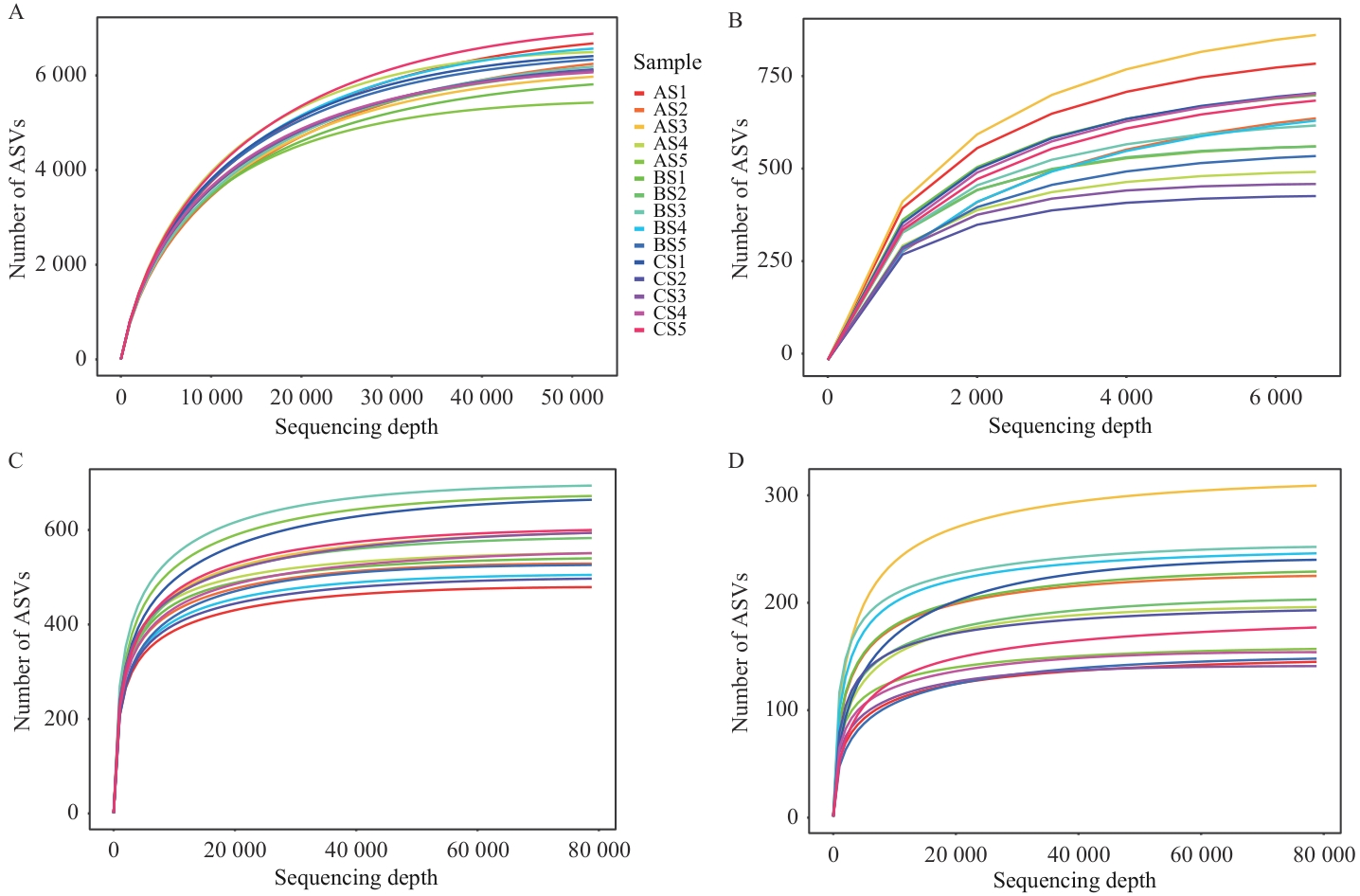
图1 珙桐微生物群落稀疏曲线A:根际细菌;B:根内细菌;C:根际真菌;D:根内真菌。AS:近成熟林根际土壤;BS:成熟林根际土壤;CS:古树林根际土壤;AR:近成熟林根系组织;BR:成熟林根系组织;CR:古树林根系组织。下同
Fig. 1 Rarefaction curves of microbial communities of D. involucrataA: Rhizosphere bacteria. B: Root endosphere bacteria. C: Rhizosphere fungi. D: Root endosphere fungi. AS: Rhizosphere soil of near-mature forest. BS: Rhizosphere soil of mature forest. CS: Rhizosphere soil of old ancient forest. AR: Root tissue of near-mature forest. BR: Root tissue of mature forest. CR: Root tissue of ancient forest. The same below
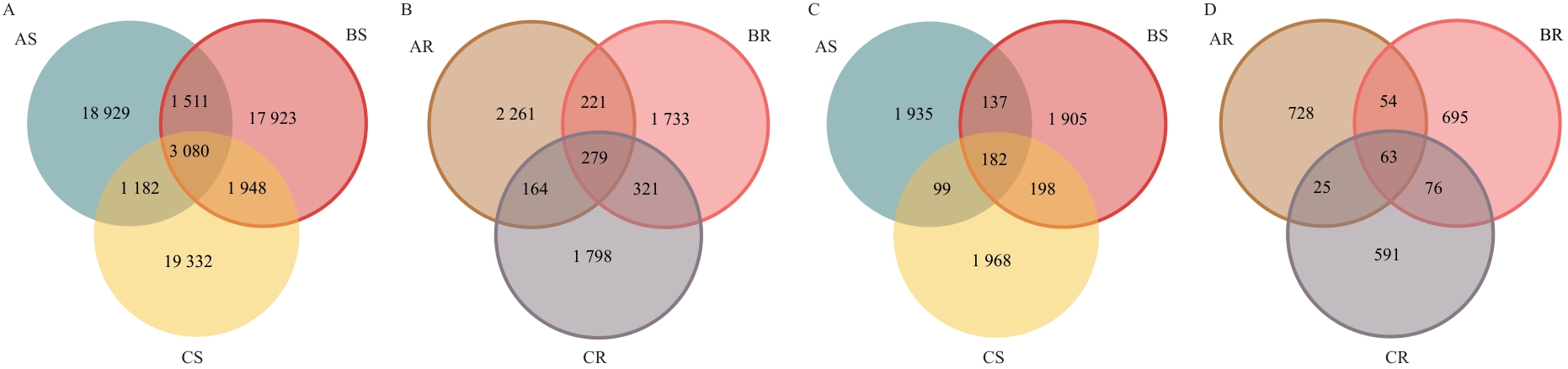
图2 珙桐根际和根内微生物群落ASVs韦恩图A:根际细菌;B:根内细菌;C:根际真菌;D:根内真菌
Fig. 2 Venn diagram of ASVs in microbial communities in the rhizosphere and root endosphere of D. involucrataA: Rhizosphere bacteria. B: Root endosphere bacteria. C: Rhizosphere fungi. D: Root endosphere fungi
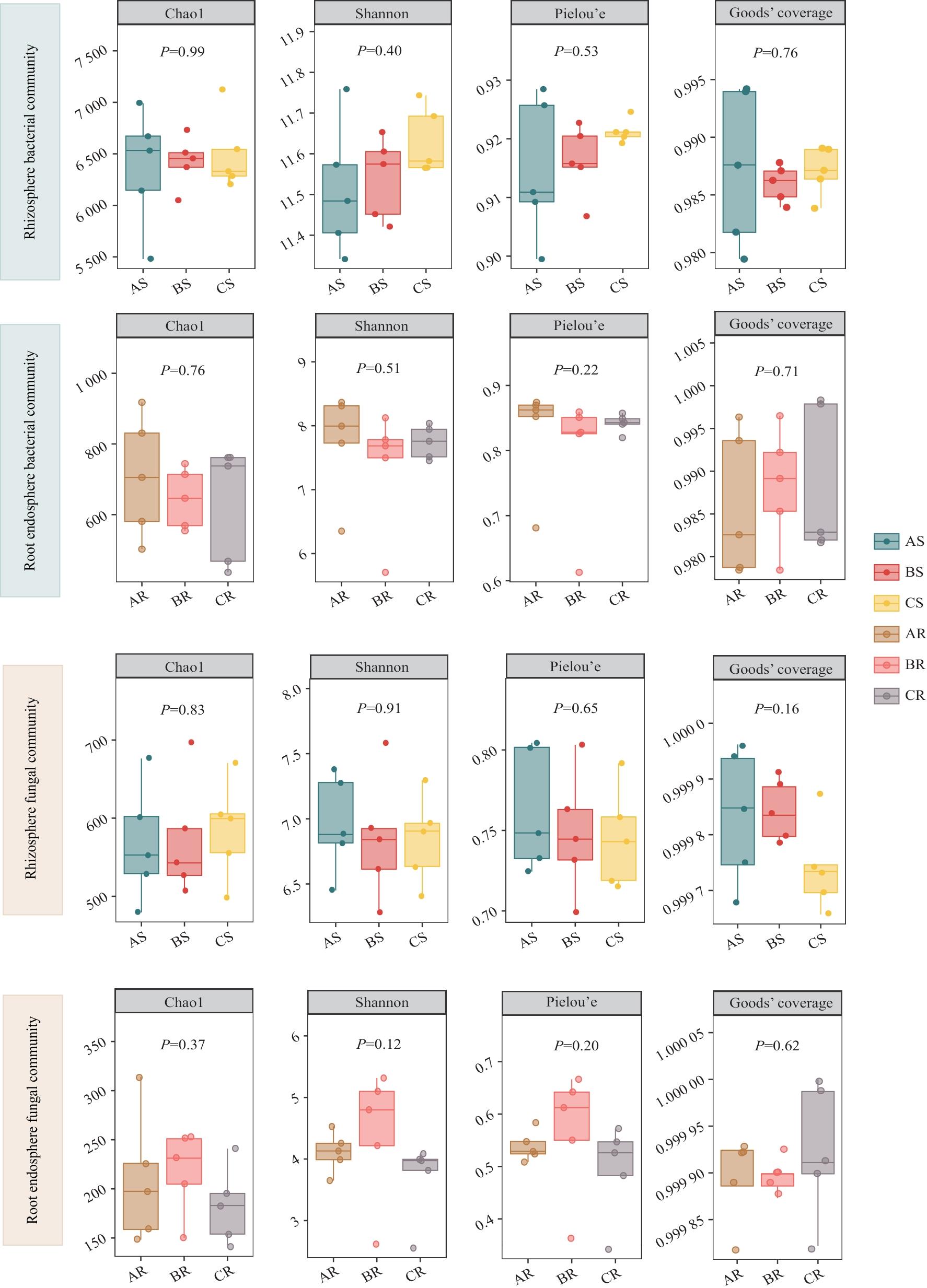
图3 珙桐根际和根内微生物群落α多样性指数
Fig. 3 Alpha-diversity indices of microbial communities in the rhizosphere and root endosphere of D. involucrata
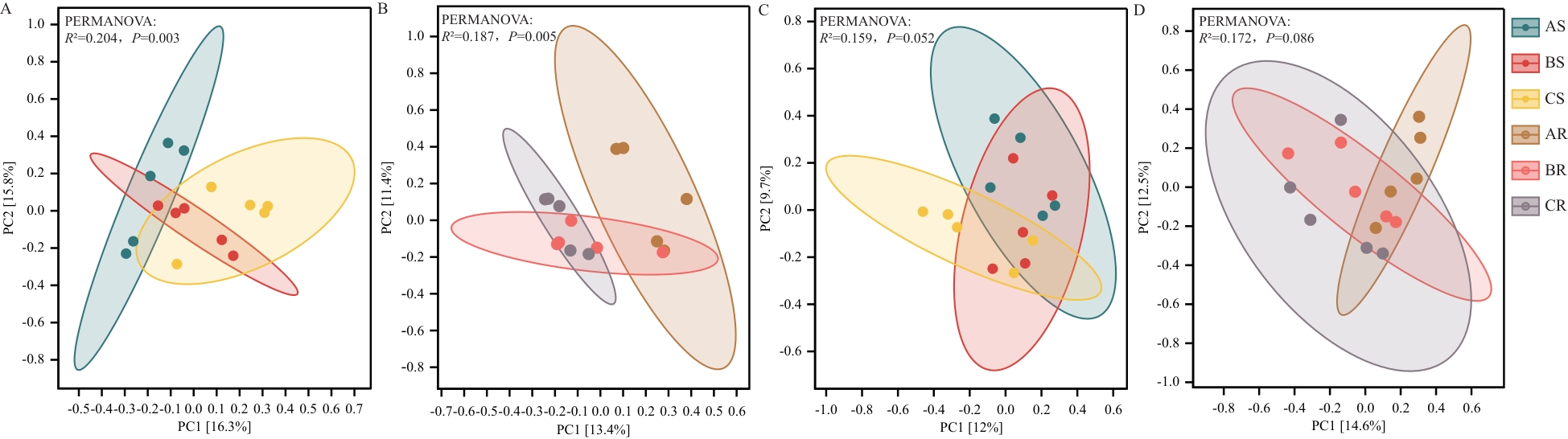
图4 珙桐根际和根内微生物群落β多样性指数A:根际细菌;B:根内细菌;C:根际真菌;D:根内真菌
Fig. 4 Beta-diversity indices of microbial communities in the rhizosphere and root endosphere of D. involucrataA: Rhizosphere bacteria. B: Root endosphere bacteria. C: Rhizosphere fungi. D: Root endosphere fungi
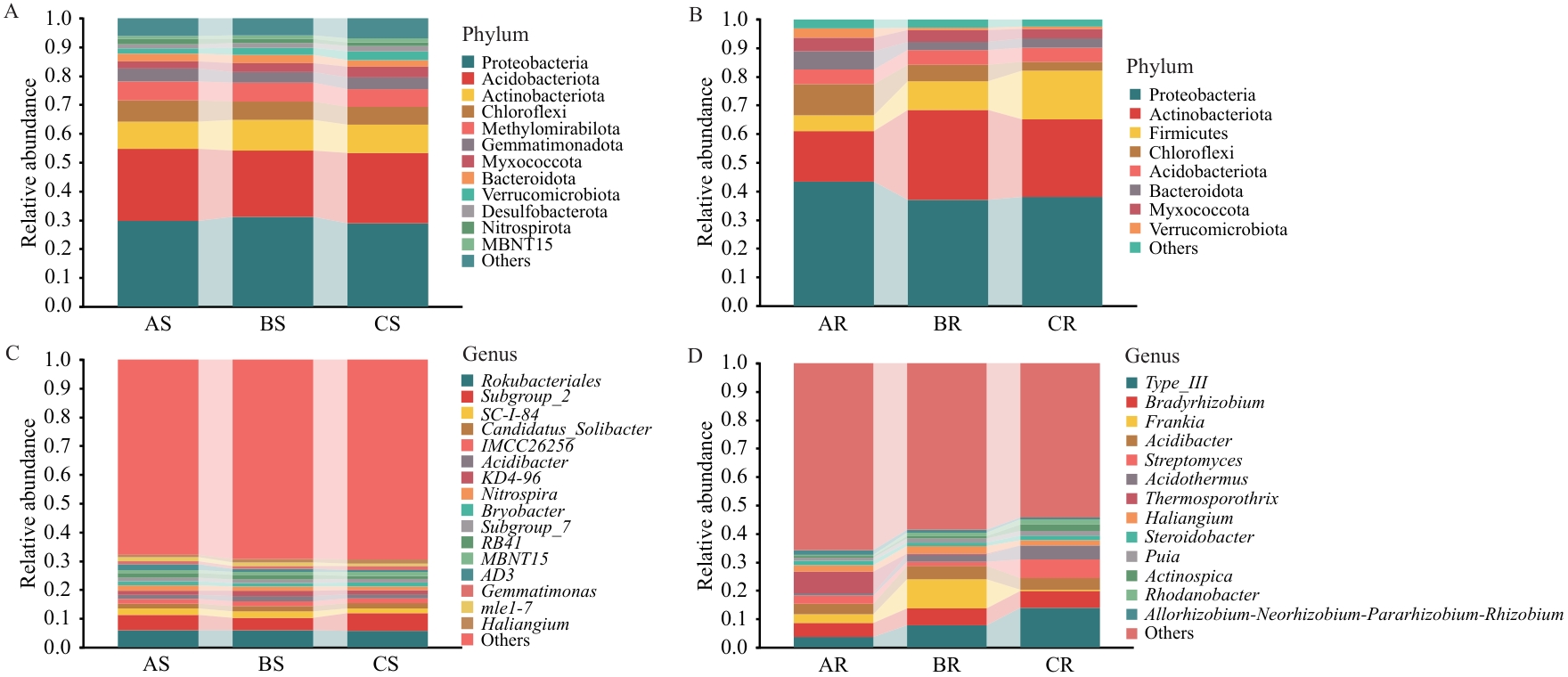
图5 珙桐根际和根内细菌相对丰度A:根际细菌门水平;B:根内细菌门水平;C:根际细菌属水平;D:根内细菌属水平
Fig. 5 Relative abundance of bacteria in the rhizosphere and root endosphere of Davidia involucrateA: Rhizosphere bacteria at phylum level. B: Root endosphere bacteria at phylum level. C: Rhizosphere bacteria at genus level. D: Root endosphere bacteria at genus level
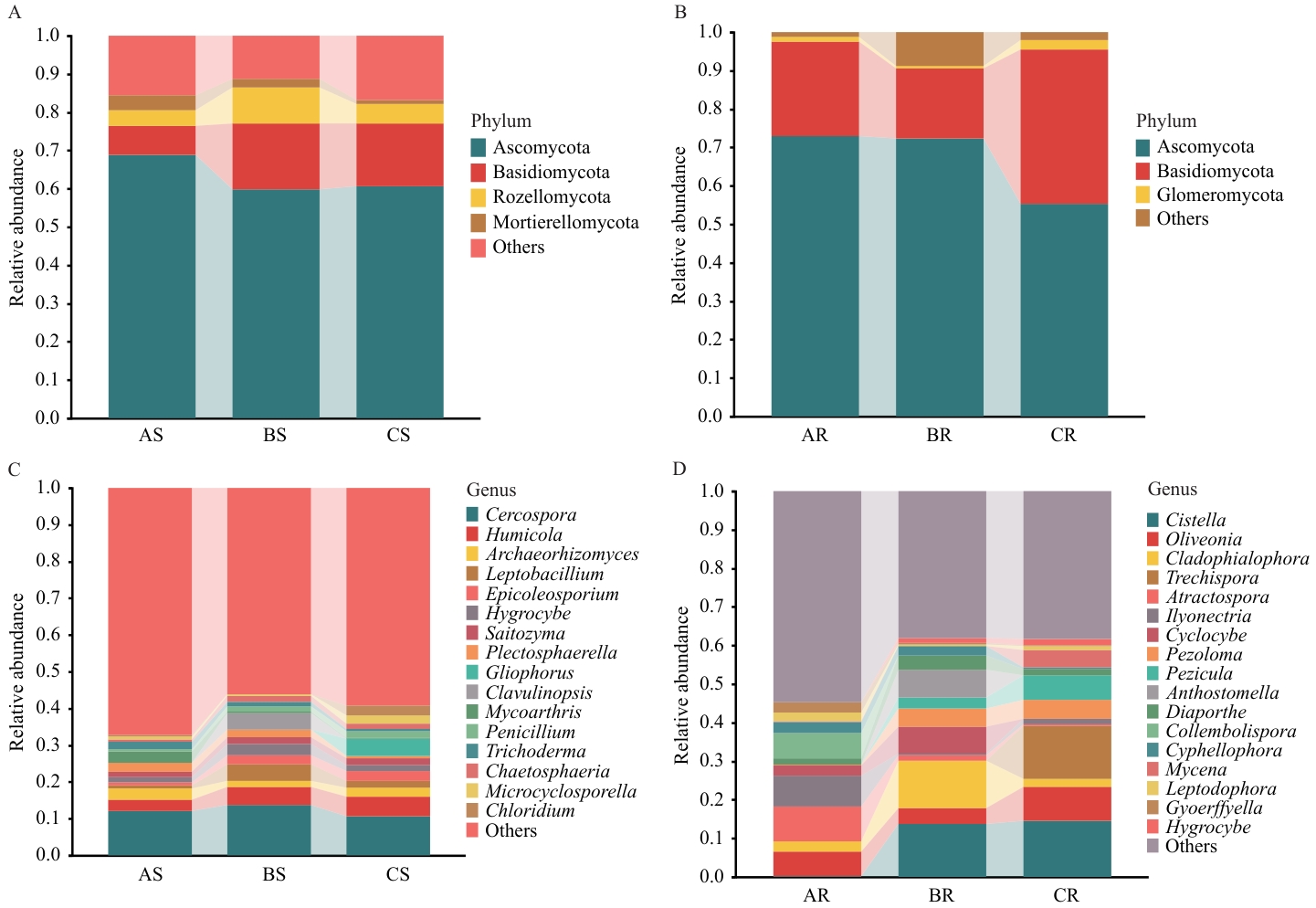
图6 珙桐根际和根内真菌相对丰度A:根际真菌门水平;B:根内真菌门水平;C:根际真菌属水平;D:根内真菌属水平
Fig. 6 Relative abundance of fungi in the rhizosphere and root endosphere of D. involucrateA: Rhizosphere fungi at phylum level. B: Root endosphere fungi at phylum level. C: Rhizosphere fungi at genus level. D: Root endosphere fungi at genus level
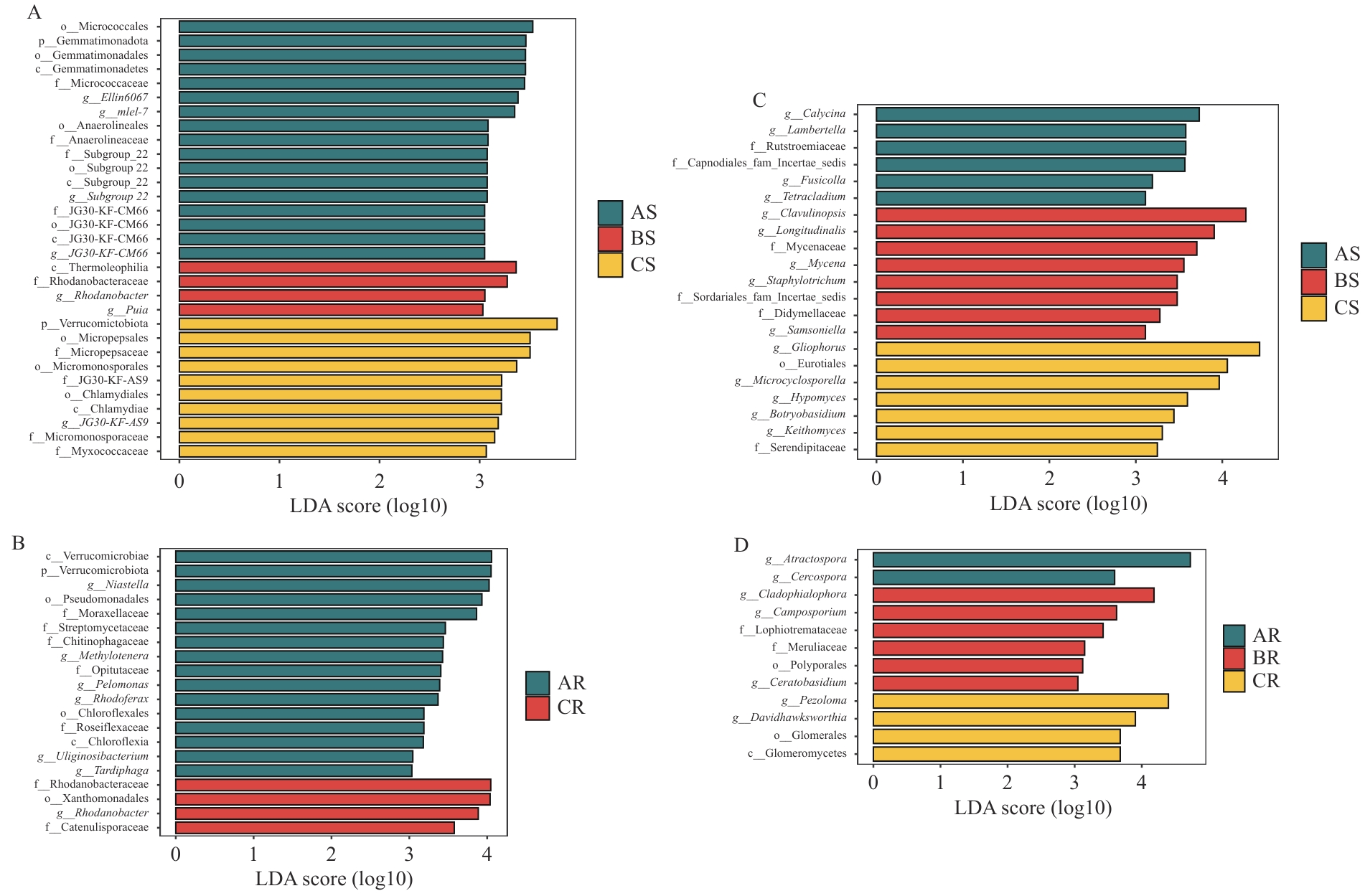
图7 不同树龄珙桐组间差异物种LEfSe分析A:根际细菌;B:根内细菌;C:根际真菌;D:根内真菌
Fig. 7 LEfSe analysis of differential species among different tree ages of D. involucrataA: Rhizosphere bacteria. B: Root endosphere bacteria. C: Rhizosphere fungi. D: Root endosphere fungi
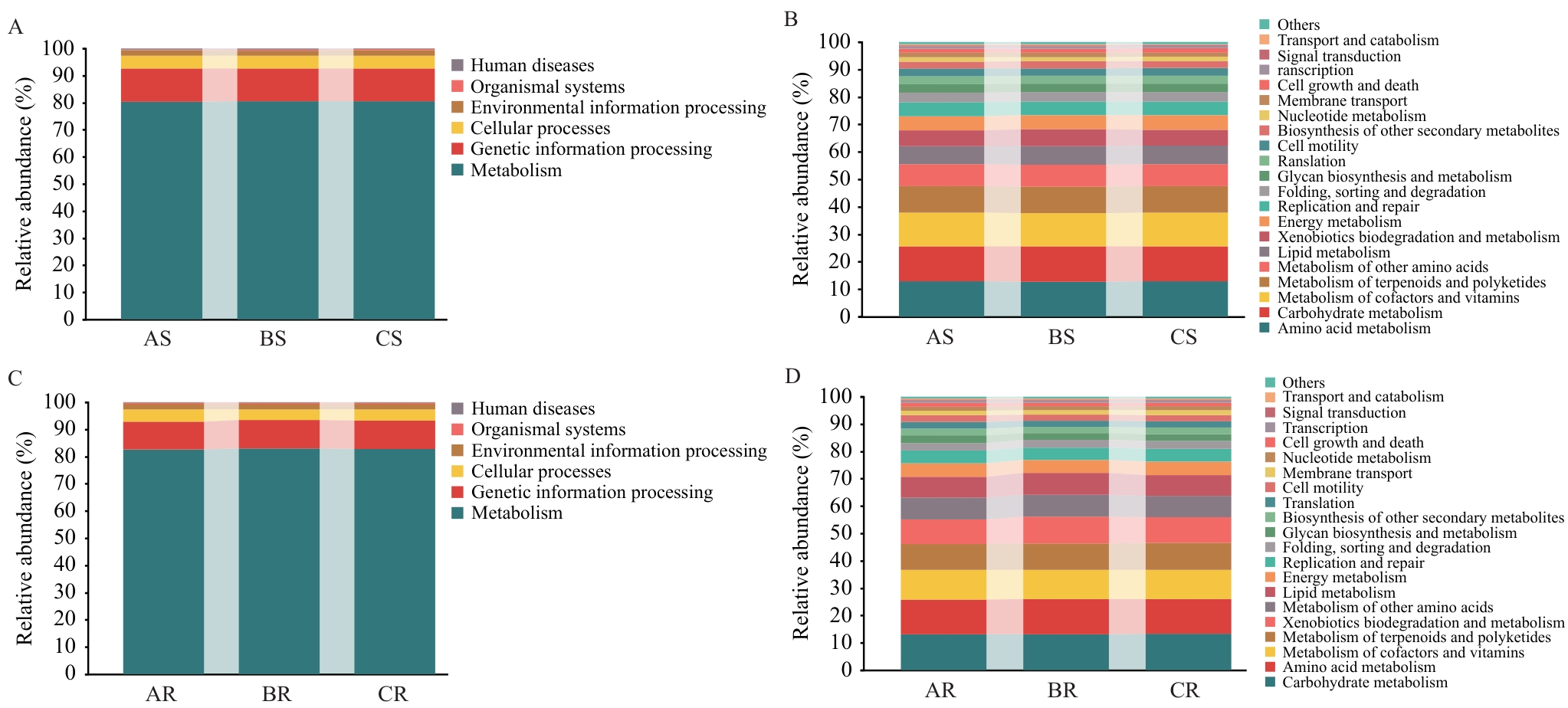
图8 珙桐根际和根内细菌功能预测A:根际细菌一级功能;B:根际细菌二级功能;C:根内细菌一级功能;D:根内细菌二级功能
Fig. 8 Functional prediction of bacteria in the rhizosphere and root endosphere of D. involucrataA: L1 functions of rhizosphere bacteria. B: L2 functions of rhizosphere bacteria. C: L1 functions of root endosphere bacteria. D: L2 functions of root endosphere bacteria
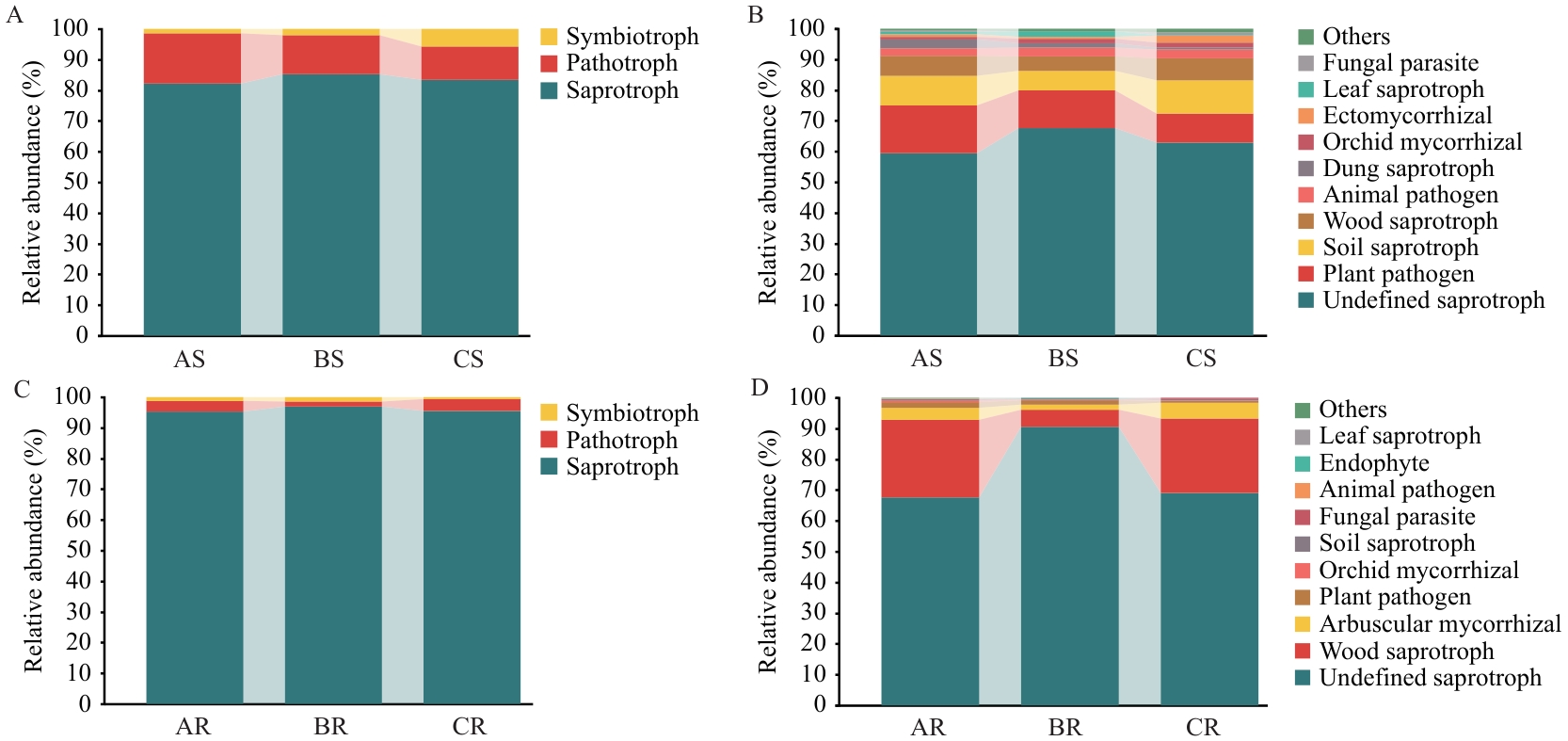
图9 珙桐根际和根内真菌功能预测A:根际真菌基于Trophic mode分类;B:根际真菌基于Guild分类;C:根内真菌基于Trophic mode分类;D:根内真菌基于Guild分类
Fig. 9 Functional prediction of fungi in the rhizosphere and root endosphere of D. involucrataA: Rhizosphere fungi classified based on Trophic mode; B: Rhizosphere fungi classified based on Guild; C: Root endosphere fungi classified based on Trophic mode; D: Root endosphere fungi classified based on Guild
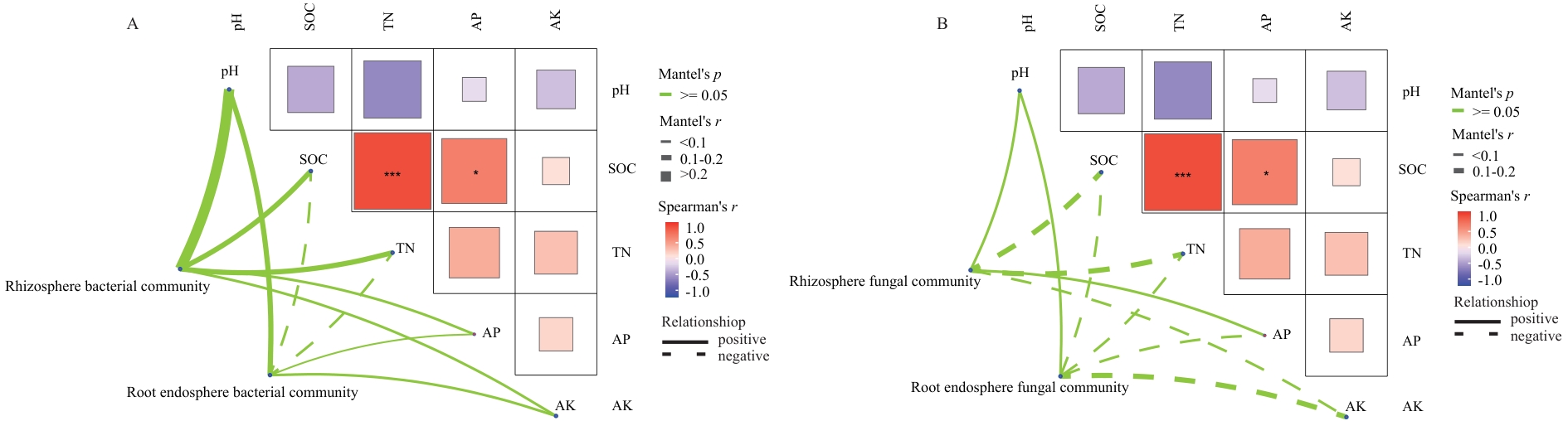
图10 珙桐根际和根内微生物与理化因子间的相关性A:细菌;B:真菌。*P<0.05;**P<0.01;***P<0.001,下同
Fig. 10 Correlation between physicochemical factors and microbial communities in the rhizosphere and root endosphere of D.involucrataA: Bacteria. B: Fungi. *P<0.05; **P<0.01; ***P<0.001, the same below
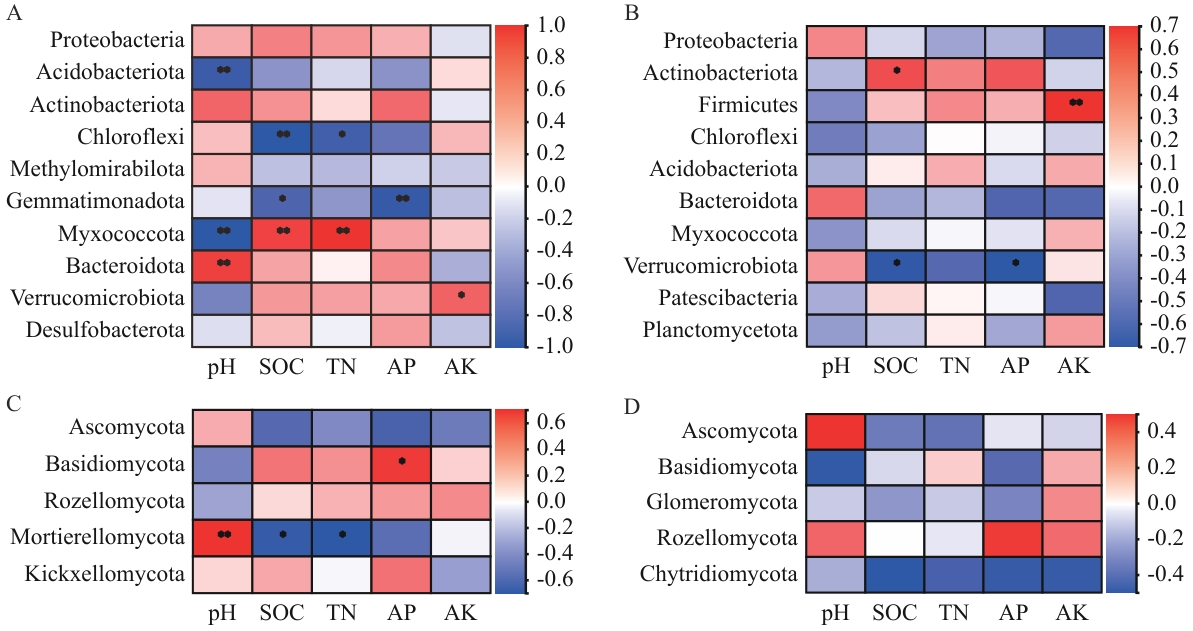
图11 珙桐根际和根内微生物优势菌门与理化因子间的相关性A:根际细菌;B:根内细菌;C:根际真菌;D:根内真菌
Fig. 11 Correlation of dominant bacterial phyla with soil physicochemical factors in rhizosphere and root endosphere communities of D. involucrataA: Rhizosphere bacteria. B: Root endosphere bacteria. C: Rhizosphere fungi. D: Root endosphere fungi
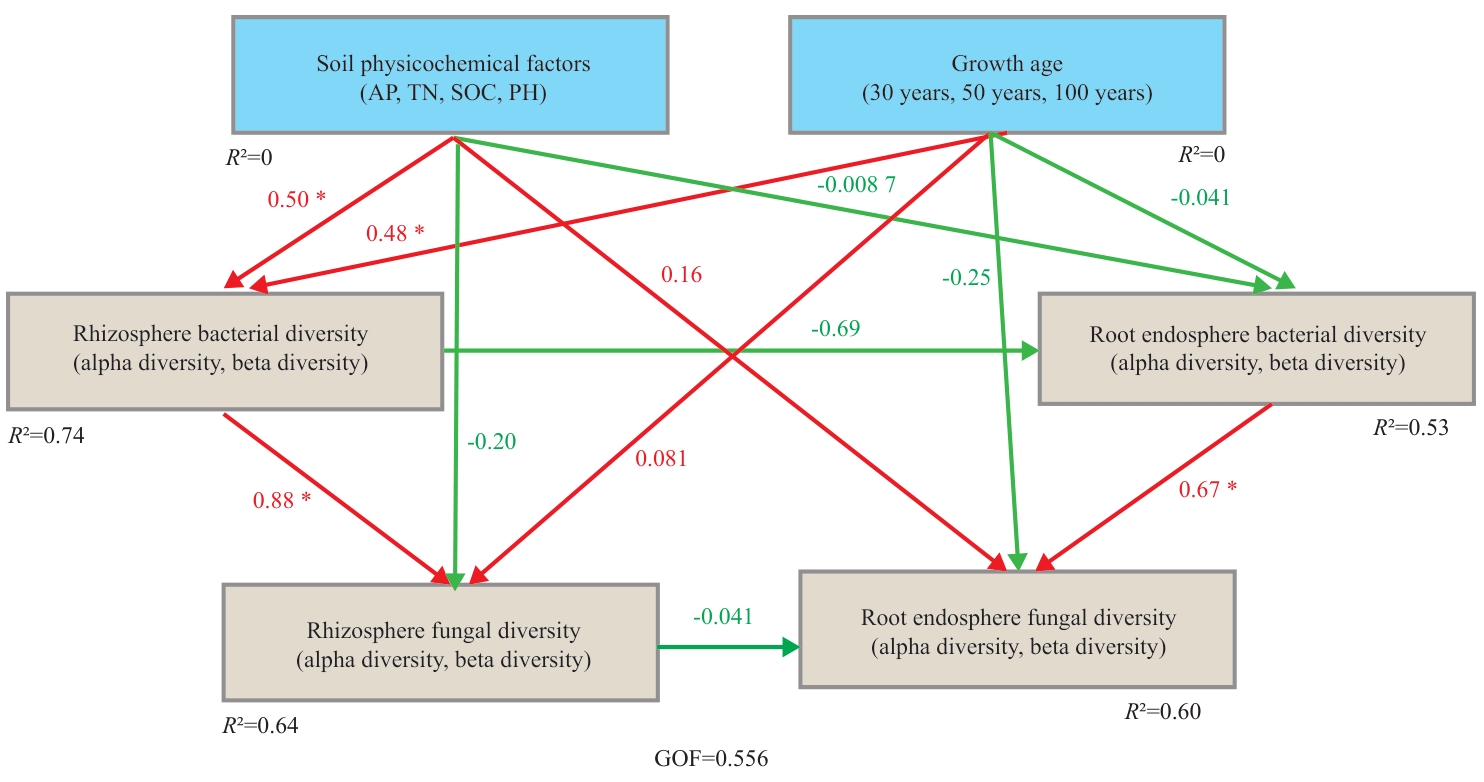
图12 理化因子对珙桐根际和根内微生物群落多样性的直接与间接效应
Fig. 12 Direct and indirect effects of soil factors on diversity of microbial communities in rhizosphere and root endosphere of D. involucrata
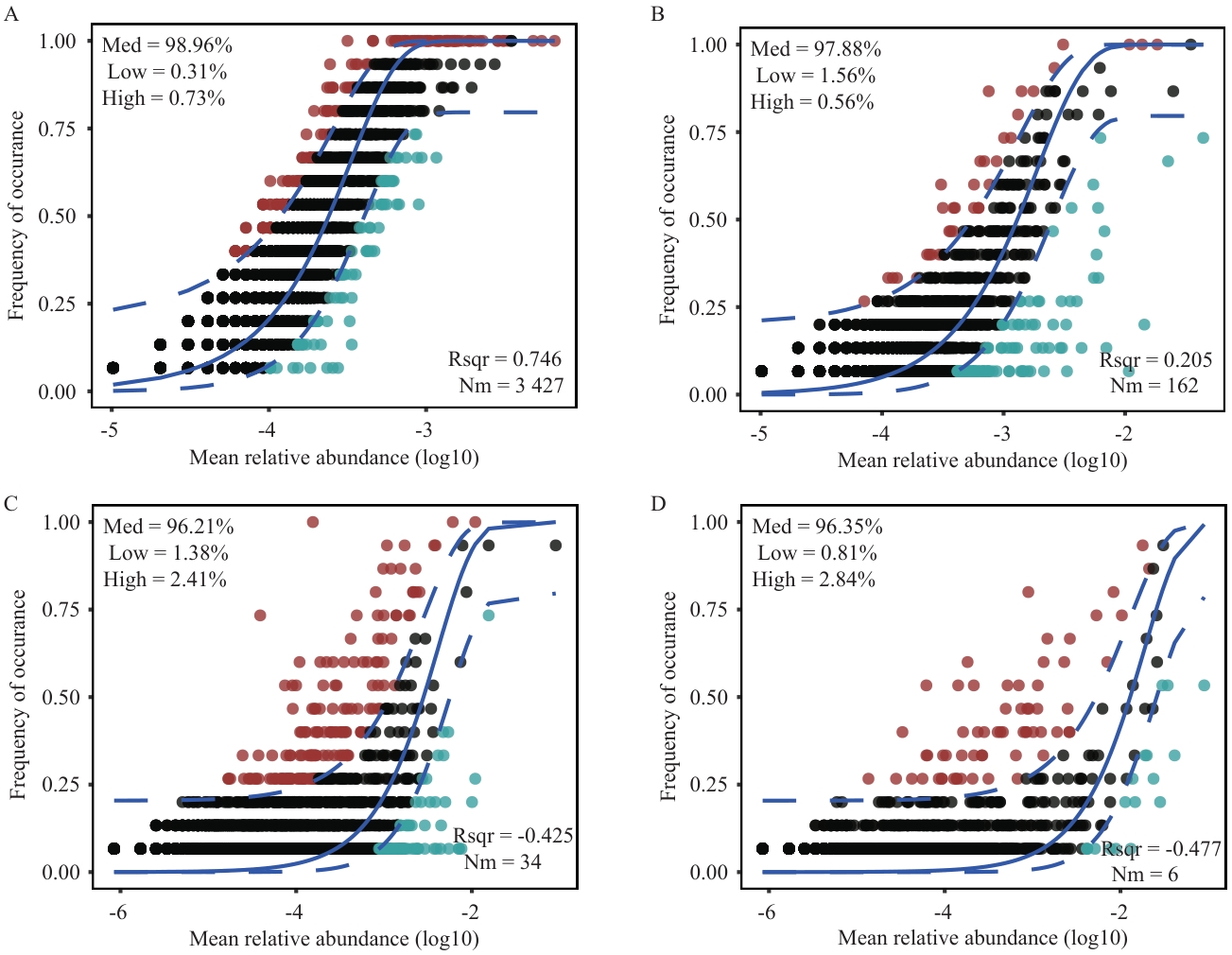
图13 珙桐根际和根内微生物群落组装过程(基于中性群落模型)A:根际细菌;B:根内细菌;C:根际真菌;D:根内真菌
Fig. 13 Assembly processes of microbial communities in the rhizosphere and root endosphere of D. involucrata (based on neutral community model)A: Rhizosphere bacteria. B: Root endosphere bacteria. C: Rhizosphere fungi. D: Root endosphere fungi

图14 珙桐根际和根内微生物群落标准化随机性比率(MST)分析A:根际细菌;B:根内细菌;C:根际真菌;D:根内真菌
Fig. 14 Analysis of modified stochasticity ratio for microbial communities in the rhizosphere and root endosphere of D. involucrataA: Rhizosphere bacteria. B: Root endosphere bacteria. C: Rhizosphere fungi. D: Root endosphere fungi
| [1] | He GD, Zhang ZM, Zhang JC, et al. Stoichiometric characteristics of nutrients in a soil-vegetation system of the rare plant Davidia involucrata Baill [J]. Glob Ecol Conserv, 2020, 24: e01266. |
| [2] | Li M, Dong XJ, Peng JQ, et al. De novo transcriptome sequencing and gene expression analysis reveal potential mechanisms of seed abortion in dove tree (Davidia involucrata Baill.) [J]. BMC Plant Biol, 2016, 16(1): 82. |
| [3] | Wang TX, Li WT, Cui HX, et al. Predicting the potential habitat distribution of relict plant Davidia involucrata in China based on the MaxEnt model [J]. Forests, 2024, 15(2): 272. |
| [4] | Liang ZC, Xie G, Ren YH, et al. Young dove trees tend to invest more biomass in vegetative and reproductive organs than old trees at the twig level [J]. Glob Ecol Conserv, 2024, 54: e03127. |
| [5] | Jin Y, Li X, Hu Y, et al. Diversity patterns of bacteria in the root zone of Davidia involucrata along an altitudinal gradient [J]. Forests, 2024, 15(11): 1920. |
| [6] | Berendsen RL, Pieterse CMJ, Bakker PAHM. The rhizosphere microbiome and plant health [J]. Trends Plant Sci, 2012, 17(8): 478-486. |
| [7] | Philippot SH L. Biochemical cycling in the rhizosphere having an impact on global change [J]. Plant Soil, 2009, 321(1/2): 61-81. |
| [8] | Philippot L, Raaijmakers JM, Lemanceau P, et al. Going back to the roots: the microbial ecology of the rhizosphere [J]. Nat Rev Microbiol, 2013, 11(11): 789-799. |
| [9] | Ling N, Wang TT, Kuzyakov Y. Rhizosphere bacteriome structure and functions [J]. Nat Commun, 2022, 13: 836. |
| [10] | Benson DR, Silvester WB. Biology of Frankia strains, actinomycete symbionts of actinorhizal plants [J]. Microbiol Rev, 1993, 57(2): 293-319. |
| [11] | Hamilton CE, Bauerle TL. A new currency for mutualism? Fungal endophytes alter antioxidant activity in hosts responding to drought [J]. Fungal Divers, 2012, 54(1): 39-49. |
| [12] | Luo JQ, Liu T, Diao FW, et al. Shift in rhizospheric and endophytic microbial communities of dominant plants around Sunit Alkaline Lake [J]. Sci Total Environ, 2023, 867: 161503. |
| [13] | Vellend M. Conceptual synthesis in community ecology [J]. Q Rev Biol, 2010, 85(2): 183-206. |
| [14] | Jiao S, Yang YF, Xu YQ, et al. Balance between community assembly processes mediates species coexistence in agricultural soil microbiomes across Eastern China [J]. ISME J, 2020, 14(1): 202-216. |
| [15] | Nemergut DR, Schmidt SK, Fukami T, et al. Patterns and processes of microbial community assembly [J]. Microbiol Mol Biol Rev, 2013, 77(3): 342-356. |
| [16] | Zhou JZ, Ning DL. Stochastic community assembly: does it matter in microbial ecology? [J]. Microbiol Mol Biol Rev, 2017, 81(4): e00002-17. |
| [17] | Gilbert B, Levine JM. Ecological drift and the distribution of species diversity [J]. Proc R Soc B, 2017, 284(1855): 20170507. |
| [18] | Pang XM, Chen MH, Miao PY, et al. Effects of different planting years on soil physicochemical indexes, microbial functional diversity and fruit quality of pear trees [J]. Agriculture, 2024, 14(2): 226. |
| [19] | Ma FF, Liu Y, Qi YX, et al. Tree age affects carbon sequestration potential via altering soil bacterial community composition and function [J]. Front Microbiol, 2024, 15: 1379409. |
| [20] | Lv JY, Huo CY, Zhang JL, et al. Host genotype and age shape the microbial community in the rhizosphere soils of Camellia forests [J]. Front Microbiol, 2024, 15: 1440255. |
| [21] | Wang Y, Dong LG, Zhang M, et al. Dynamic microbial community composition, co-occurrence pattern and assembly in rhizosphere and bulk soils along a coniferous plantation chronosequence [J]. Catena, 2023, 223: 106914. |
| [22] | Wang B, Huang SY, Li ZC, et al. Factors driving the assembly of prokaryotic communities in bulk soil and rhizosphere of Torreya grandis along a 900-year age gradient [J]. Sci Total Environ, 2022, 837: 155573. |
| [23] | Sparks DL, Page AL, Helmke PA, et al. Methods of Soil Analysis: Part 3 Chemical Methods [M]. Madison, WI, USA: Soil Science Society of America, American Society of Agronomy, 1996 |
| [24] | Cui XS, Meng TT, Zhu N, et al. Composition, function and driving factors of microbial communities in rhizosphere soil and root endophyte of Codonopsis pilosula in different years [J]. Rhizosphere, 2023, 27: 100712. |
| [25] | Bolyen E, Rideout JR, Dillon MR, et al. Author Correction: Reproducible, interactive, scalable and extensible microbiome data science using QIIME 2 [J]. Nat Biotechnol, 2019, 37(9): 1091. |
| [26] | Callahan BJ, McMurdie PJ, Rosen MJ, et al. DADA2: High-resolution sample inference from Illumina amplicon data [J]. Nat Meth, 2016, 13(7): 581-583. |
| [27] | Quast C, Pruesse E, Yilmaz P, et al. The SILVA ribosomal RNA gene database project: improved data processing and web-based tools [J]. Nucleic Acids Res, 2013, 41(D1): D590-D596. |
| [28] | Nilsson RH, Larsson KH, Taylor AFS, et al. The UNITE database for molecular identification of fungi: handling dark taxa and parallel taxonomic classifications [J]. Nucleic Acids Res, 2019, 47(D1): D259-D264. |
| [29] | Liu C, Cui YM, Li XZ, et al. Microeco: an R package for data mining in microbial community ecology [J]. FEMS Microbiol Ecol, 2021, 97(2): fiaa255. |
| [30] | Bray JR, Curtis JT. An ordination of the upland forest communities of southern Wisconsin [J]. Ecol Monogr, 1957, 27(4): 325-349. |
| [31] | Ramette A. Multivariate analyses in microbial ecology: Multivariate analyses in microbial ecology [J]. FEMS Microbiol Ecol, 2007, 62(2): 142-160. |
| [32] | McArdle BH, Anderson MJ. Fitting multivariate models to community data: a comment on distance-based redundancy analysis [J]. Ecology, 2001, 82(1): 290-297. |
| [33] | Segata N, Izard J, Waldron L, et al. Metagenomic biomarker discovery and explanation [J]. Genome Biol, 2011, 12(6): R60. |
| [34] | Zaura E, Keijser BJ, Huse SM, et al. Defining the healthy “core microbiome” of oral microbial communities [J]. BMC Microbiol, 2009, 9(1): 259. |
| [35] | Xiaofan Na CM. Monocropping decouples plant-bacteria interaction and strengthens phytopathogenic fungi colonization in the rhizosphere of a perennial plant species [J]. Plant Soil, 2019, 445(1/2): 549-564. |
| [36] | Gao XF, Chen HH, Govaert L, et al. Responses of zooplankton body size and community trophic structure to temperature change in a subtropical reservoir [J]. Ecol Evol, 2019, 9(22): 12544-12555. |
| [37] | Douglas GM, Maffei VJ, Zaneveld JR, et al. PICRUSt2 for prediction of metagenome functions [J]. Nat Biotechnol, 2020, 38(6): 685-688. |
| [38] | Nguyen NH, Song ZW, Bates ST, et al. FUNGuild: an open annotation tool for parsing fungal community datasets by ecological guild [J]. Fungal Ecol, 2016, 20: 241-248. |
| [39] | Sloan WT, Lunn M, Woodcock S, et al. Quantifying the roles of immigration and chance in shaping prokaryote community structure [J]. Environ Microbiol, 2006, 8(4): 732-740. |
| [40] | Ning DL, Deng Y, Tiedje JM, et al. A general framework for quantitatively assessing ecological stochasticity [J]. Proc Natl Acad Sci USA, 2019, 116(34): 16892-16898. |
| [41] | Liu JL, Ngoc Ha V, Shen Z, et al. Response of the rhizosphere microbial community to fine root and soil parameters following Robinia pseudoacacia L. afforestation [J]. Appl Soil Ecol, 2018, 132: 11-19. |
| [42] | Xu MP, Gao DX, Fu SY, et al. Long-term effects of vegetation and soil on the microbial communities following afforestation of farmland with Robinia pseudoacacia plantations [J]. Geoderma, 2020, 367: 114263. |
| [43] | Hong-bang Niu WL. An invasive Aster (Ageratina adenophora) invades and dominates forest understories in China: altered soil microbial communities facilitate the invader and inhibit natives [J]. Plant Soil, 2007, 294(1/2): 73-85. |
| [44] | Urbanová M, Šnajdr J, Baldrian P. Composition of fungal and bacterial communities in forest litter and soil is largely determined by dominant trees [J]. Soil Biol Biochem, 2015, 84: 53-64. |
| [45] | Langenfeld A, Prado S, Nay B, et al. Geographic locality greatly influences fungal endophyte communities in Cephalotaxus harringtonia [J]. Fungal Biol, 2013, 117(2): 124-136. |
| [46] | Wei Z, Gu YA, Friman VP, et al. Initial soil microbiome composition and functioning predetermine future plant health [J]. Sci Adv, 2019, 5(9): eaaw0759. |
| [47] | Xu MP, Jian JN, Wang JY, et al. Response of root nutrient resorption strategies to rhizosphere soil microbial nutrient utilization along Robinia pseudoacacia plantation chronosequence [J]. For Ecol Manag, 2021, 489: 119053. |
| [48] | Kong X, Han ZF, Tai X, et al. Maize (Zea mays L. Sp.) varieties significantly influence bacterial and fungal community in bulk soil, rhizosphere soil and phyllosphere [J]. FEMS Microbiol Ecol, 2020, 96(3): fiaa020. |
| [49] | Wu QH, Chen DW, Zhou WL, et al. Long-term fertilization has different impacts on bacterial communities and phosphorus forms in sugarcane rhizosphere and bulk soils under low-P stress [J]. Front Plant Sci, 2022, 13: 1019042. |
| [50] | 吕晶花, 李聪, 杨志东, 等. 纳帕海高原湿地土壤微生物群落对土地利用方式改变的响应 [J]. 土壤通报, 2023, 54(3): 682-694. |
| Lv JH, Li C, Yang ZD, et al. Responses of soil microbial communities to land use changes in the napahai plateau wetlands [J]. Chin J Soil Sci, 2023, 54(3): 682-694. | |
| [51] | Yang XW, Huang XX, Hu X, et al. Changes in rhizosphere and bulk soil microbial communities of tableland tea garden and ancient tea plantation in southwest China [J]. Agronomy, 2024, 14(7): 1388. |
| [52] | Yang YZ, Li Y, Hao K, et al. Microbial community composition and co-occurrence network analysis of the rhizosphere soil of the main constructive tree species in Helan Mountain of Northwest China [J]. Sci Rep, 2024, 14: 24557. |
| [53] | Dai ZM, Su WQ, Chen HH, et al. Long-term nitrogen fertilization decreases bacterial diversity and favors the growth of Actinobacteria and Proteobacteria in agro-ecosystems across the globe [J]. Glob Change Biol, 2018, 24(8): 3452-3461. |
| [54] | Leff JW, Jones SE, Prober SM, et al. Consistent responses of soil microbial communities to elevated nutrient inputs in grasslands across the globe [J]. Proc Natl Acad Sci U S A, 2015, 112(35): 10967-10972. |
| [55] | Jin Q, Zhang YY, Ma YY, et al. The composition and function of the soil microbial community and its driving factors before and after cultivation of Panax ginseng in farmland of different ages [J]. Ecol Indic, 2022, 145: 109748. |
| [56] | Guo JJ, Liu WB, Zhu C, et al. Bacterial rather than fungal community composition is associated with microbial activities and nutrient-use efficiencies in a paddy soil with short-term organic amendments [J]. Plant Soil, 2018, 424(1): 335-349. |
| [57] | Chen DW, Wang YH, Shi WJ, et al. Analysis of endophyte diversity of Rheum palmatum among different tissues and ages [J]. Arch Microbiol, 2022, 205(1): 14. |
| [58] | Tripathi BM, Stegen JC, Kim M, et al. Soil pH mediates the balance between stochastic and deterministic assembly of bacteria [J]. ISME J, 2018, 12(4): 1072-1083. |
| [59] | Fierer N. Embracing the unknown: disentangling the complexities of the soil microbiome [J]. Nat Rev Microbiol, 2017, 15(10): 579-590. |
| [60] | Ku YL, Han XT, Lei YT, et al. Different sensitivities and assembly mechanisms of the root-associated microbial communities of Robinia pseudoacacia to spatial variation at the regional scale [J]. Plant Soil, 2023, 486(1): 621-637. |
| [61] | Li J, Ai JM, Liu XD, et al. Environmental filtering drives the establishment of the distinctive rhizosphere, bulk, and root nodule bacterial communities of Sophora davidii in hilly and Gully Regions of the Loess Plateau of China [J]. Front Microbiol, 2022, 13: 945127. |
| [62] | Hu AY, Wang HJ, Cao MX, et al. Environmental filtering drives the assembly of habitat generalists and specialists in the coastal sand microbial communities of Southern China [J]. Microorganisms, 2019, 7(12): 598. |
| [63] | Zhong Y, Sorensen PO, Zhu GY, et al. Differential microbial assembly processes and co-occurrence networks in the soil-root continuum along an environmental gradient [J]. iMeta, 2022, 1(2): e18. |
| [64] | 吴林坤, 林向民, 林文雄. 根系分泌物介导下植物-土壤-微生物互作关系研究进展与展望 [J]. 植物生态学报, 2014, 38(3): 298-310. |
| Wu LK, Lin XM, Lin WX. Advances and perspective in research on plant-soil-microbe interactions mediated by root exudates [J]. Chin J Plant Ecol, 2014, 38(3): 298-310. | |
| [65] | Shu DT, Guo YQ, Zhang BG, et al. Rare prokaryotic sub-communities dominate the complexity of ecological networks and soil multinutrient cycling during long-term secondary succession in China's Loess Plateau [J]. Sci Total Environ, 2021, 774: 145737. |
| [66] | 曾青, 熊超, 尹梅, 等. 植物微生物组生态功能与群落构建过程研究进展 [J]. 生物多样性, 2023, 31(4): 186-202. |
| Zeng Q, Xiong C, Yin M, et al. Research progress on ecological functions and community assembly of plant microbiomes [J]. Biodivers Sci, 2023, 31(4): 186-202. | |
| [67] | Dini-Andreote F, Stegen JC, van Elsas JD, et al. Disentangling mechanisms that mediate the balance between stochastic and deterministic processes in microbial succession [J]. Proc Natl Acad Sci U S A, 2015, 112(11). |
| [68] | Zhao PY, Bao JB, Wang X, et al. Deterministic processes dominate soil microbial community assembly in subalpine coniferous forests on the Loess Plateau [J]. PeerJ, 2019, 7: e6746. |
| [1] | 彭善麟, 廖卓诚, 王涛, 刘志宇, 刘海忆, 王婷婷, 杨琴, 王哲, 邰欢欢. 不同玉米茎腐病抗性品种根际微生物群落多样性及功能差异[J]. 生物技术通报, 2026, 42(5): 76-88. |
| [2] | 胡阔均, 黄晓辉, 黄谊, 张宇宇, 邓征宇, 郭军, 曾银, 尹华群, 周向平, 孟德龙. 大球盖菇基质对烟草青枯病和土壤微生物功能的影响[J]. 生物技术通报, 2026, 42(5): 124-133. |
| [3] | 张理, 李凯旋, 马志远, 姜美彤, 张佳宝, 梁玉婷. 合成微生物组在农田土壤健康调控中的研究进展[J]. 生物技术通报, 2026, 42(5): 16-26. |
| [4] | 阳涛, 曾繁城, 曾宇笑, 陶瑞岩, 薛志红, 陶茜, 仲阳, 江帆, 熊兴耀, 程旭. 复合菌群的构建及其对马铃薯生长的影响[J]. 生物技术通报, 2026, 42(5): 89-100. |
| [5] | 何莛莛, 李玲娟. 合成微生物群落增强植物抗旱性的研究进展[J]. 生物技术通报, 2026, 42(5): 51-62. |
| [6] | 孙卓, 雷梦苑, 林红梅, 吕泽良, 韩忠明, 杨利民. 根际微生物组防控药用植物病害研究进展[J]. 生物技术通报, 2026, 42(5): 37-50. |
| [7] | 张建霞, 姜成英, 吴文俊, 金高明, 张聪聪, 姚玉芳, 张荣, 戚建莉. 不同土壤条件下油橄榄园根际土壤理化性质及细菌群落特征[J]. 生物技术通报, 2026, 42(4): 287-296. |
| [8] | 朱志炎, 宋芷薇, 何珊, 张德清, 何勇, 田志宏. 烟草靶斑病拮抗菌的鉴定及其防治特性[J]. 生物技术通报, 2026, 42(4): 310-320. |
| [9] | 赵强, 陈思宇, 彭方丽, 汪灿, 高杰, 周棱波, 张国兵, 姜昱雯, 邵明波. 间作与施氮对高粱根际土壤细菌多样性及功能的影响[J]. 生物技术通报, 2025, 41(6): 307-316. |
| [10] | 弥春霞, 许澍, 王守现, 刘宇, 宋庆港, 宋爽. 糙皮侧耳覆土栽培对土壤中抗生素抗性基因的影响[J]. 生物技术通报, 2025, 41(6): 335-343. |
| [11] | 陈才锭, 宋云洁, 田梦青. 四大主粮作物不同生育期根际微生物菌群变化研究进展[J]. 生物技术通报, 2025, 41(6): 49-60. |
| [12] | 叶柳健, 蒙健宗, 覃福方, 何双, 朱绮霞, 王小虎, 韦圣博, 周礼芹. 古茶树林菌株D2的鉴定、酶学特性及基因组学分析[J]. 生物技术通报, 2025, 41(5): 267-279. |
| [13] | 夏馨媛, 薛道晟, 李鑫静, 龙俊杰, 陆开形, 丁沃娜, 李梦莎. 稻油轮作土壤多功能促生菌的鉴定及其对油菜生长和根际细菌群落的影响[J]. 生物技术通报, 2025, 41(4): 289-301. |
| [14] | 宋奋奋, 段艳雪, 桑愉, 王继朋, 彭锐, 孙年喜, 李勇. 患病和健康羊肚菌菌丝际土壤微生物群落特征[J]. 生物技术通报, 2025, 41(4): 323-334. |
| [15] | 马耀武, 张麒宇, 杨淼, 蒋诚, 张振宇, 张伊琳, 李梦莎, 许嘉阳, 张斌, 崔光周, 姜瑛. 烟草根际促生菌的筛选鉴定及促生性能研究[J]. 生物技术通报, 2025, 41(3): 271-281. |
| 阅读次数 | ||||||
|
全文 |
|
|||||
|
摘要 |
|
|||||
