







生物技术通报 ›› 2026, Vol. 42 ›› Issue (5): 51-62.doi: 10.13560/j.cnki.biotech.bull.1985.2025-1446
• 微生物组学专题 • 上一篇
何莛莛( ), 李玲娟()
收稿日期:2025-12-24
出版日期:2026-05-26
发布日期:2026-06-10
通讯作者:
李玲娟,女,博士,研究员,研究方向 :植物和微生物互作;E-mail: li.lingjuan@cdut.edu.cn作者简介:何莛莛,女,硕士研究生,研究方向 :根际环境合成微生物;E-mail: 17709035219@163.com
基金资助:
HE Ting-ting(), LI Ling-juan()
Received:2025-12-24
Published:2026-05-26
Online:2026-06-10
摘要:
在全球气候变暖的背景下,干旱范围的扩大、强度的加剧以及发生频次的增加,导致植物生产力下降,对农业生产构成严重威胁。植物通过自身生理调节应对干旱胁迫,根际微生物作为重要的中间信号传递体,其所分泌的信号分子能够调控植物表型,以增强植物抵御干旱的能力。然而,自然界中天然根际微生物群落的物种多样性和功能复杂性为深入研究根际信号传导机制带来巨大挑战。相比之下,合成微生物群落(synthetic microbial communities, SynComs)因组成的明确性和功能的可定制性,在精准调控根际信号传导和系统性增强植物抗旱能力方面展现出显著潜力与独特优势。本文综述了根际微生物尤其是SynComs协助植物增强抗旱性的优势,重点聚焦于设计SynComs,强化植物-微生物及微生物-微生物之间的根际正效应信号流,从群体感应、交叉喂养等角度深入解析其传导机制,为建立可预测、高效的农业微生态调控新路径提供理论依据与实践策略。
何莛莛, 李玲娟. 合成微生物群落增强植物抗旱性的研究进展[J]. 生物技术通报, 2026, 42(5): 51-62.
HE Ting-ting, LI Ling-juan. Research Progress in the Enhancement of Plant Resistance to Drought by Synthetic Microbial Communities[J]. Biotechnology Bulletin, 2026, 42(5): 51-62.
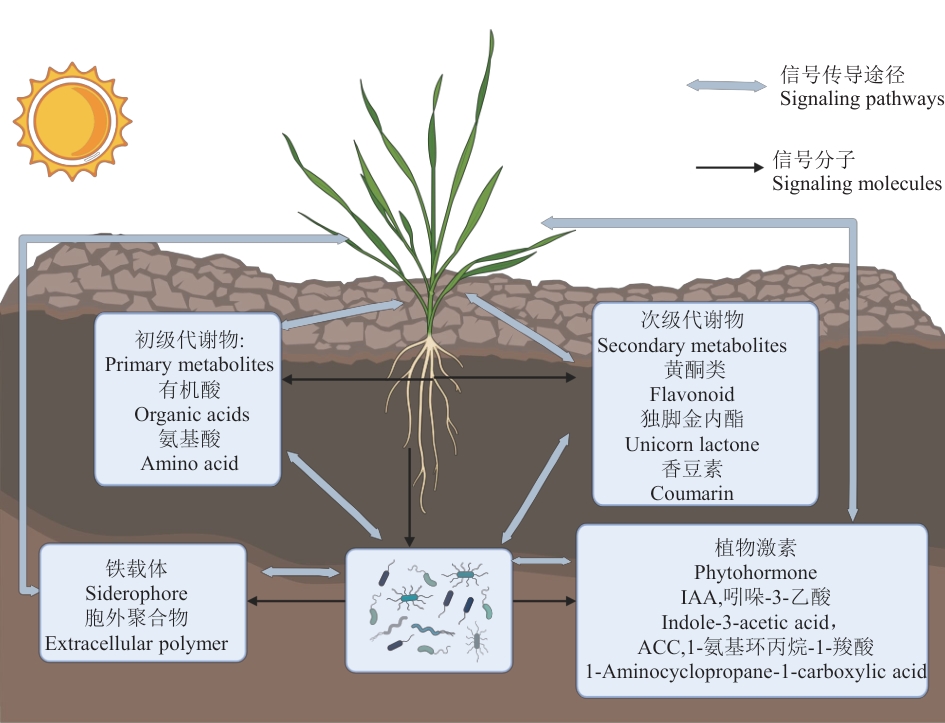
图1 植物-微生物信号传导系统干旱条件下,植物与根际微生物以整体为单位共同对抗极端条件。植物感应到环境变化,其根部产生根系分泌物,主要包括初级代谢物(有机酸、氨基酸等)和次级代谢物(黄酮类、独脚金内酯、香豆素等)。根际微生物感受到土壤根际环境的变化,也产生该环境下特有的分泌物(铁载体、胞外聚合物、植物激素等),最终改变植物的生理状态。此时,植物作为感受器,而根系分泌的特殊物质作为信号分子向根际微生物传递“危险”信号,根际微生物分泌特定的物质,再次将信息反馈给植物,最终促进植物调整自身生理状态,以响应干旱胁迫
Fig. 1 Plant-microbe signaling transduction systemUnder drought conditions, plants and rhizosphere microorganisms work together as a whole to combat extreme conditions. Plants sense environmental changes, and their roots produce root exudates, mainly including primary metabolites (organic acids, amino acids, etc.) and secondary metabolites (flavonoids, strigolactones, coumarins, etc.). Rhizosphere microorganisms sense the changes in the soil rhizosphere environment, and also produce specific exudates (siderophores, extracellular polymers, phytohormones, etc.) in this environment, which ultimately changes the physiological state of plants. At this time, plants act as receptors, and special substances secreted by roots act as signal molecules to transmit “dangerous” signals to rhizosphere microorganisms, which secrete specific substances and feed back information to plants again, ultimately promoting plants to adjust their physiological state in response to drought stress
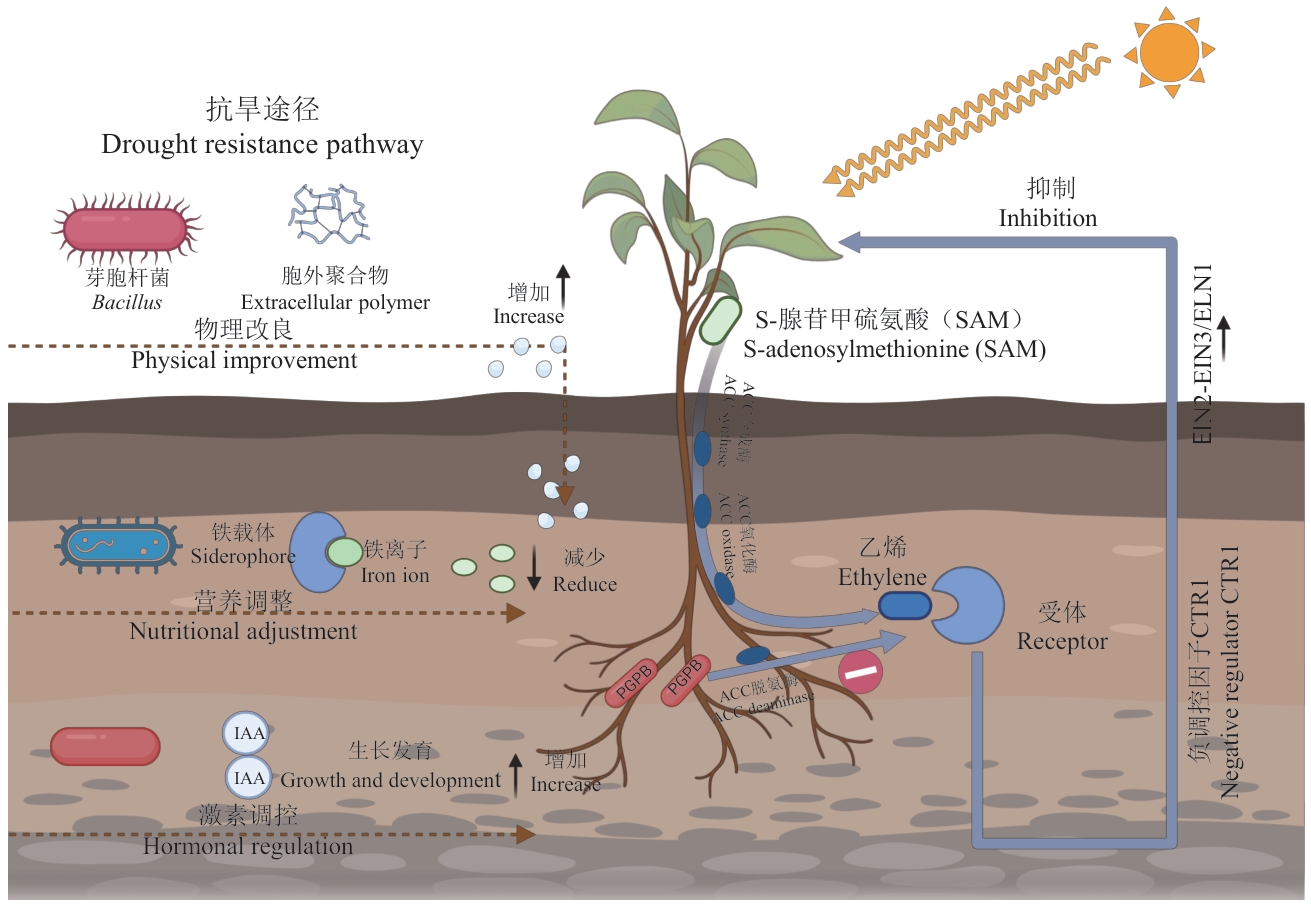
图2 根际微生物协助植物抵御干旱
Fig. 2 Rhizosphere microbes assist plants in drought-tolerance
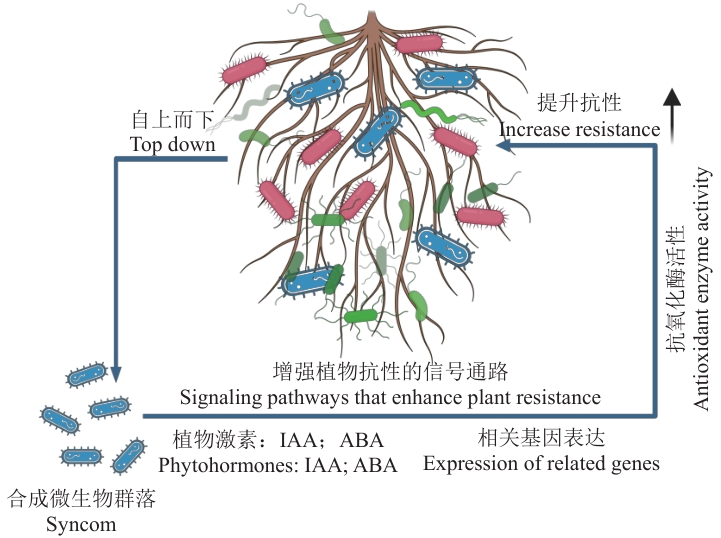
图3 合成微生物群落增强途径
Fig. 3 Enhancement pathways in synthetic microbial community
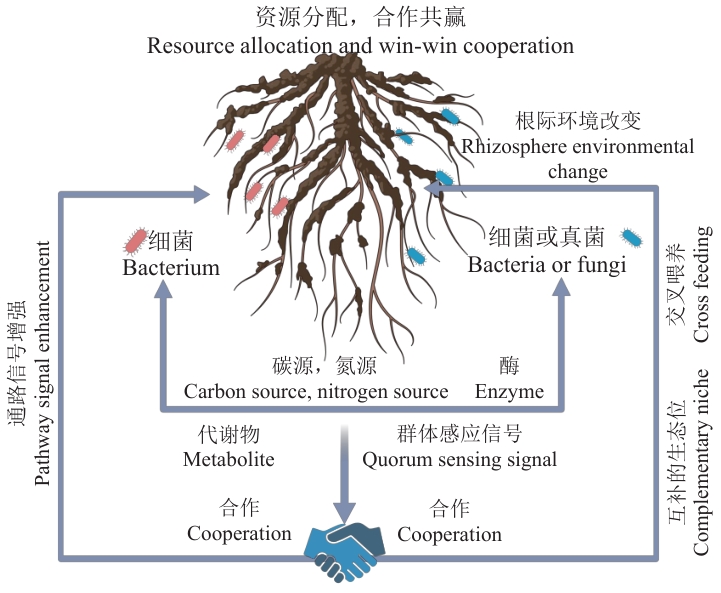
图4 微生物互作增强途径根际环境中,筛选发挥功能的关键菌株,它们可能是细菌和细菌的搭配,或者细菌和真菌这样的跨界合作,分泌碳源、氮源、酶、代谢物等,或者为彼此提供营养。通过构建这样相互作用,协同共进的合成微生物群落,能够放大群体感应信号,发生级联反应,放大关键菌株的功能。这样通过交叉喂养、生态位互补、增强信号通路改变根际环境,最终实现资源分配,合作共赢
Fig. 4 Pathways to enhance microbial interactionsIn the rhizosphere environment, screening the key strains that play a role may be the combination of bacteria and bacteria or the cross-border cooperation of bacteria and fungi, secreting carbon or nitrogen sources, enzymes, metabolites, etc. or providing nutrients for each other. By constructing a synthetic microbial community that interacts and cooperates with each other, quorum sensing signals can be amplified, cascade reactions occur, and the functions of key strains can be enhanced. In this way, through cross-feeding, niche complementation, enhancing signaling pathways to change the rhizosphere environment, and ultimately resource allocation and win-win cooperation can be achieved
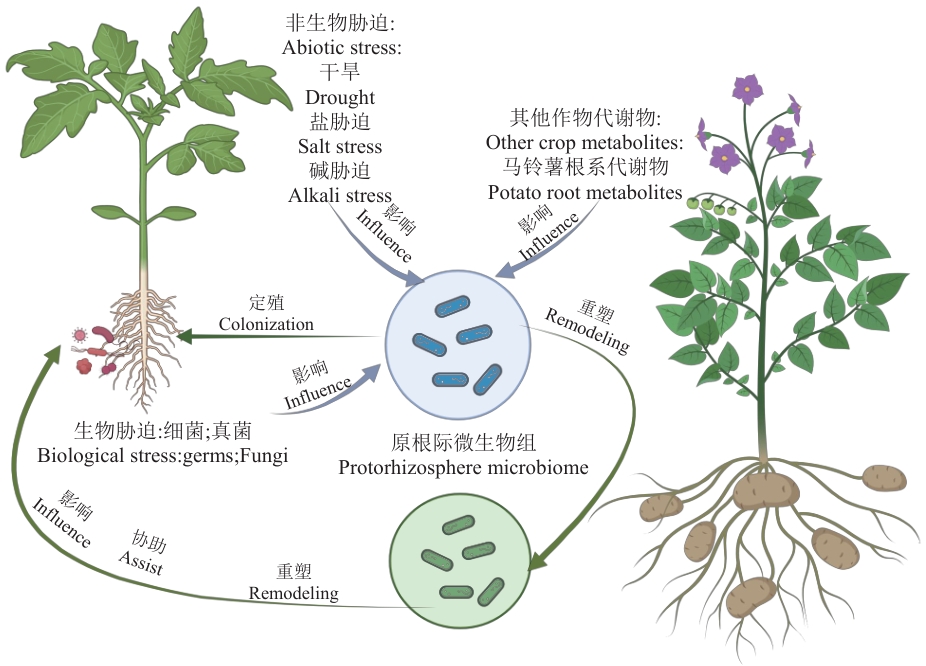
图5 根际微生物组影响与改变生物胁迫、非生物胁迫和其他植物的根系代谢物对植物根际环境产生影响,定殖于植物根部的原根际微生物组重塑,调整为适应该环境下的微生物组,继续协助植物抵御各种胁迫
Fig. 5 Effects and changes of rhizosphere microbiomeBiotic and abiotic stresses, together with root metabolites from surrounding plants, alter the rhizosphere environment. The native rhizosphere microbiome colonizing plant roots consequently restructures, adapting to the changed conditions and continuing to help plants withstand multiple stresses
| [1] | Li JH, Muhammad Aslam M, Gao YY, et al. Microbiome-mediated signal transduction within the plant holobiont [J]. Trends Microbiol, 2023, 31(6): 616-628. |
| [2] | 陈志钢, 胡霜. 气候变化对全球粮食安全的影响与应对策略 [J]. 农业经济问题, 2024(10): 44-56. |
| Chen ZG, Hu S. Impact of climate change on global food security and coping measures [J]. Issues Agric Econ, 2024(10): 44-56. | |
| [3] | Chen ZL, Debernardi JM, Dubcovsky J, et al. Recent advances in crop transformation technologies [J]. Nat Plants, 2022, 8(12): 1343-1351. |
| [4] | Grassini P, Eskridge KM, Cassman KG. Distinguishing between yield advances and yield plateaus in historical crop production trends [J]. Nat Commun, 2013, 4: 2918. |
| [5] | Gupta A, Rico-Medina A, Caño-Delgado AI. The physiology of plant responses to drought [J]. Science, 2020, 368(6488): 266-269. |
| [6] | 李莹, 段俊枝, 齐学礼. WRKY转录因子在植物抗旱基因工程中的应用进展 [J]. 分子植物育种, 2022, 20(22): 7474-7481. |
| Li Y, Duan JZ, Qi XL. Progress on application of WRKY transcription factors in plant drought tolerance genetic engineering [J]. Mol Plant Breed, 2022, 20(22): 7474-7481. | |
| [7] | 樊利华, 周星梅, 吴淑兰, 等. 干旱胁迫对植物根际环境影响的研究进展 [J]. 应用与环境生物学报, 2019, 25(5): 1244-1251. |
| Fan LH, Zhou XM, Wu SL, et al. Research advances on the effects of drought stress in plant rhizosphere environments [J]. Chin J Appl Environ Biol, 2019, 25(5): 1244-1251. | |
| [8] | Chen CQ, Zhan J, Du WZ, et al. The mechanisms of plant-associated microbes in regulating plant drought adaptation [J]. J Plant Ecol, 2025, 18(4): rtaf047. |
| [9] | Ge JQ, Li D, Ding JX, et al. Microbial coexistence in the rhizosphere and the promotion of plant stress resistance: a review [J]. Environ Res, 2023, 222: 115298. |
| [10] | Bitterlich M, Jansa J, Graefe J, et al. Drought accentuates the role of mycorrhiza in phosphorus uptake, part II-The intraradical enzymatic response [J]. Soil Biol Biochem, 2024, 193: 109414. |
| [11] | He JD, Zou YN, Wu QS, et al. Mycorrhizas enhance drought tolerance of trifoliate orange by enhancing activities and gene expression of antioxidant enzymes [J]. Sci Hortic, 2020, 262: 108745. |
| [12] | Bublitz TA, Kost E, Kundel D, et al. Soil extracellular polymeric substances and microbial biomass react differently to field induced drought stress in contrasting cropping systems at different wheat developmental stages [J]. Biol Fertil Soils, 2025, 61(6): 1063-1075. |
| [13] | 白钰, 高同国, 陈波, 等. 植物促生微生物产生植物激素相关研究进展 [J]. 江苏农业科学, 2025, 53(1): 9-19. |
| Bai Y, Gao TG, Chen B, et al. Research progress on production of plant hormones by plant growth-promoting microorganisms [J]. Jiangsu Agric Sci, 2025, 53(1): 9-19. | |
| [14] | Glick BR. Bacteria with ACC deaminase can promote plant growth and help to feed the world [J]. Microbiol Res, 2014, 169(1): 30-39. |
| [15] | Duan BB, Li L, Chen GQ, et al. 1-aminocyclopropane-1-carboxylate deaminase-producing plant growth-promoting rhizobacteria improve drought stress tolerance in grapevine (Vitis vinifera L.) [J]. Front Plant Sci, 2021, 12: 706990. |
| [16] | Li NH, Li J, Xie JM, et al. Glycine betaine and plant abiotic stresses: Unravelling physiological and molecular responses [J]. Plant Sci, 2025, 355: 112479. |
| [17] | Yasmeen T, Arif MS, Tariq M, et al. Biofilm producing plant growth promoting bacteria in combination with Glycine betaine uplift drought stress tolerance of maize plant [J]. Front Plant Sci, 2024, 15: 1327552. |
| [18] | Vorholt JA, Vogel C, Carlström CI, et al. Establishing causality: opportunities of synthetic communities for plant microbiome research [J]. Cell Host Microbe, 2017, 22(2): 142-155. |
| [19] | Zhang YX, Jing MY, Lyu LH, et al. Principles for rigorous design and application of synthetic microbial communities [J]. Adv Sci, 2026, 13(10): e14750. |
| [20] | Bordenstein SR, Theis KR. Host biology in light of the microbiome: ten principles of holobionts and hologenomes [J]. PLoS Biol, 2015, 13(8): e1002226. |
| [21] | Pantigoso HA, Ossowicki A, Stringlis IA, et al. Hub metabolites at the root-microbiome interface: unlocking plant drought resilience [J]. Trends Plant Sci, 2025, 30(9): 1046-1059. |
| [22] | Yagmur Koca B, Akan OB. Bacterial communications and computing in Internet of everything (IoE) [J]. IEEE Commun Surv Tutor, 2025, 27(3): 1839-1866. |
| [23] | Middleton H, Yergeau É, Monard C, et al. Rhizospheric plant-microbe interactions: miRNAs as a key mediator [J]. Trends Plant Sci, 2021, 26(2): 132-141. |
| [24] | 李佳佳, 樊妙春, 上官周平. 植物根系分泌物主要生态功能研究进展 [J]. 植物学报, 2020, 55(6): 788-796. |
| Li JJ, Fan MC, Shangguan ZP. Research advances in the main ecological functions of root exudates [J]. Bull Bot, 2020, 55(6): 788-796. | |
| [25] | Sharma M, Saleh D, Charron JB, et al. A crosstalk between Brachypodium root exudates, organic acids, and Bacillus velezensis B26, a growth promoting bacterium [J]. Front Microbiol, 2020, 11: 575578. |
| [26] | Canarini A, Kaiser C, Merchant A, et al. Root exudation of primary metabolites: Mechanisms and their roles in plant responses to environmental stimuli [J]. Front Plant Sci, 2019, 10: 157. |
| [27] | Venturi V, Keel C. Signaling in the rhizosphere [J]. Trends Plant Sci, 2016, 21(3): 187-198. |
| [28] | Begum N, Xiao YT, Wang L, et al. Arbuscular mycorrhizal fungus Rhizophagus irregularis alleviates drought stress in soybean with overexpressing the GmSPL9d gene by promoting photosynthetic apparatus and regulating the antioxidant system [J]. Microbiol Res, 2023, 273: 127398. |
| [29] | Arif I, Batool M, Schenk PM. Plant microbiome engineering: expected benefits for improved crop growth and resilience [J]. Trends Biotechnol, 2020, 38(12): 1385-1396. |
| [30] | Visentin I, Vitali M, Ferrero M, et al. Low levels of strigolactones in roots as a component of the systemic signal of drought stress in tomato [J]. New Phytol, 2016, 212(4): 954-963. |
| [31] | Zhang DH, He JQ, Cheng PD, et al. 4-methylumbelliferone (4-MU) enhances drought tolerance of apple by regulating rhizosphere microbial diversity and root architecture [J]. Hortic Res, 2023, 10(7): uhad099. |
| [32] | Fan XY, Ge AH, Qi SS, et al. Root exudates and microbial metabolites: signals and nutrients in plant-microbe interactions [J]. Sci China Life Sci, 2025, 68(8): 2290-2302. |
| [33] | Flemming HC, van Hullebusch ED, Little BJ, et al. Microbial extracellular polymeric substances in the environment, technology and medicine [J]. Nat Rev Microbiol, 2025, 23(2): 87-105. |
| [34] | Xu L, Naylor D, Dong ZB, et al. Drought delays development of the sorghum root microbiome and enriches for monoderm bacteria [J]. Proc Natl Acad Sci U S A, 2018, 115(18): E4284-E4293. |
| [35] | Spaepen S, Vanderleyden J. Auxin and plant-microbe interactions [J]. Cold Spring Harb Perspect Biol, 2011, 3(4): a001438. |
| [36] | Kudoyarova G, Arkhipova T, Korshunova T, et al. Phytohormone mediation of interactions between plants and non-symbiotic growth promoting bacteria under edaphic stresses [J]. Front Plant Sci, 2019, 10: 1368. |
| [37] | Ravanbakhsh M, Sasidharan R, Voesenek LACJ, et al. Microbial modulation of plant ethylene signaling: ecological and evolutionary consequences [J]. Microbiome, 2018, 6: 52. |
| [38] | Chesneau G, Herpell J, Garrido-Oter R, et al. From synthetic communities to synthetic ecosystems: exploring causalities in plant-microbe-environment interactions [J]. New Phytol, 2025, 245(2): 496-502. |
| [39] | Ma HM, Zhang HC, Zheng CC, et al. Synthetic microbial community isolated from intercropping system enhances P uptake in rice [J]. Int J Mol Sci, 2024, 25(23): 12819. |
| [40] | Yang N, Nesme J, Røder HL, et al. Emergent bacterial community properties induce enhanced drought tolerance in Arabidopsis [J]. NPJ Biofilms Microbiomes, 2021, 7: 82. |
| [41] | Tang M, Yao XY, Xu JY, et al. Auxin signaling activated by endophytic Cross-Kingdom synthetic microbiota improves the quality of Atractylodes chinensis [J]. Microbiol Res, 2025, 301: 128312. |
| [42] | Li L, Ye ZQ, Chen Q, et al. A cross-Kingdom synthetic community promotes bamboo growth and suppresses soilborne pathogens via microbiome modulation and plant immunity priming [J]. Ind Crops Prod, 2025, 236: 121923. |
| [43] | Schmitz L, Yan ZC, Schneijderberg M, et al. Synthetic bacterial community derived from a desert rhizosphere confers salt stress resilience to tomato in the presence of a soil microbiome [J]. ISME J, 2022, 16(8): 1907-1920. |
| [44] | Lin XY, Liu JH, Yang WG, et al. Autoinducer-2 mediated quorum sensing stabilizes cooperation between Pantoea alhagi and synthetic bacterial communities, synergistically improving drought tolerance in wheat [J]. J Agric Food Chem, 2025, 73(32): 20043-20058. |
| [45] | Flores-Duarte NJ, Navarro-Torre S, Mateos-Naranjo E, et al. Nodule synthetic bacterial community as legume biofertilizer under abiotic stress in estuarine soils [J]. Plants, 2023, 12(11): 2083. |
| [46] | Jiang YJ, Wu RF, Zhang WM, et al. Construction of stable microbial consortia for effective biochemical synthesis [J]. Trends Biotechnol, 2023, 41(11): 1430-1441. |
| [47] | Shu X, Liu YP. Collaboration promotes stability: insights from SynComs study [J]. Trends Microbiol, 2025, 33(10): 1046-1047. |
| [48] | Sharma S, Araujo ASF. Microbial crosstalk: decoding interactions to generate efficient SynComs [J]. Trends Plant Sci, 2025, 30(5): 445-447. |
| [49] | Mukherjee S, Bassler BL. Bacterial quorum sensing in complex and dynamically changing environments [J]. Nat Rev Microbiol, 2019, 17(6): 371-382. |
| [50] | Waters CM, Bassler BL. QUORUM SENSING: cell-to-cell communication in bacteria [J]. Annu Rev Cell Dev Biol, 2005, 21: 319-346. |
| [51] | Liu SX, Feng XJ, Zhang HJ, et al. Decoding bacterial communication: Intracellular signal transduction, quorum sensing, and cross-Kingdom interactions [J]. Microbiol Res, 2025, 292: 127995. |
| [52] | Konai MM, Dhanda G, Haldar J. Talking through chemical languages: quorum sensing and bacterial communication [M]//Kalia VC. Quorum Sensing and its Biotechnological Applications. Singapore: Springer Singapore, 2018: 17-42. |
| [53] | Wang X, Xu YF, Teng Y, et al. A nitrogen-fixing synthetic microbial community as soil bioengineer: Simultaneously boosting pyrene degradation and diazotrophy in soils [J]. Chem Eng J, 2025, 526: 171015. |
| [54] | Wang JJ, Li RC, Zhang H, et al. Beneficial bacteria activate nutrients and promote wheat growth under conditions of reduced fertilizer application [J]. BMC Microbiol, 2020, 20: 38. |
| [55] | Ma ZY, Jiang MT, Liu CY, et al. Quinolone-mediated metabolic cross-feeding develops aluminium tolerance in soil microbial consortia [J]. Nat Commun, 2024, 15: 10148. |
| [56] | Jing JY, Garbeva P, Raaijmakers JM, et al. Strategies for tailoring functional microbial synthetic communities [J]. ISME J, 2024, 18(1): wrae049. |
| [57] | Koprivova A, Kopriva S. Plant secondary metabolites altering root microbiome composition and function [J]. Curr Opin Plant Biol, 2022, 67: 102227. |
| [58] | 张文香, 赵丹, 刘蕊, 等. 作物干旱响应机制: 根系分泌物和微生物研究进展 [J]. 江苏农业科学, 2025, 53(9): 1-8. |
| Zhang WX, Zhao D Liu R, et al. Crop drought response mechanism: research progress on root exudates and rhizosphere microorganisms [J]. Jiangsu Agric Sci, 2025, 53(9): 1-8. | |
| [59] | Torsvik V, Øvreås L. Microbial diversity and function in soil: from genes to ecosystems [J]. Curr Opin Microbiol, 2002, 5(3): 240-245. |
| [60] | 秦永梅, 杨慧, 李杰, 等. 干旱对樱桃幼苗根际微生物及生理指标的影响 [J]. 西部林业科学, 2019, 48(4): 44-49. |
| Qin YM, Yang H, Li J, et al. Effects of drought stress on rhizosphere microorganisms and physiological indexes of Cerasus pseudocerasus G. Don [J]. J West China For Sci, 2019, 48(4): 44-49. | |
| [61] | Vandenkoornhuyse P, Quaiser A, Duhamel M, et al. The importance of the microbiome of the plant holobiont [J]. New Phytol, 2015, 206(4): 1196-1206. |
| [62] | Ruan ZP, Chen K, Cao WM, et al. Engineering natural microbiomes toward enhanced bioremediation by microbiome modeling [J]. Nat Commun, 2024, 15: 4694. |
| [63] | Xiang Q, Yang K, Cui L, et al. Global exploration of drought-tolerant bacteria in the wheat rhizosphere reveals microbiota shifts and functional taxa enhancing plant resilience [J]. Nat Food, 2025, 6(11): 1054-1067. |
| [64] | Widder S, Allen RJ, Pfeiffer T, et al. Challenges in microbial ecology: building predictive understanding of community function and dynamics [J]. ISME J, 2016, 10(11): 2557-2568. |
| [65] | Bouwmeester H, Dong LM, Wippel K, et al. The chemical interaction between plants and the rhizosphere microbiome [J]. Trends Plant Sci, 2025, 30(9): 1002-1019. |
| [66] | Wang XL, Wang MX, Xie XG, et al. An amplification-selection model for quantified rhizosphere microbiota assembly [J]. Sci Bull, 2020, 65(12): 983-986. |
| [67] | Zhang JY, Liu YX, Zhang N, et al. NRT1.1B is associated with root microbiota composition and nitrogen use in field-grown rice [J]. Nat Biotechnol, 2019, 37(6): 676-684. |
| [68] | Li JY, Liu HW, Wang JT, et al. Drought-induced plant microbiome and metabolic enrichments improve drought resistance [J]. Cell Host Microbe, 2025, 33(6): 882-900.e7. |
| [69] | Zheng YF, Cao XW, Zhou YN, et al. Purines enrich root-associated Pseudomonas and improve wild soybean growth under salt stress [J]. Nat Commun, 2024, 15: 3520. |
| [70] | Ma SQ, Chen QR, Zheng YF, et al. A tale for two roles: Root-secreted methyl ferulate inhibits P. nicotianae and enriches the rhizosphere Bacillus against black shank disease in tobacco [J]. Microbiome, 2025, 13: 33. |
| [71] | Rolfe SA, Griffiths J, Ton J. Crying out for help with root exudates: adaptive mechanisms by which stressed plants assemble health-promoting soil microbiomes [J]. Curr Opin Microbiol, 2019, 49: 73-82. |
| [72] | Zhou XG, Zhang JY, Khashi u Rahman M, et al. Interspecific plant interaction via root exudates structures the disease suppressiveness of rhizosphere microbiomes [J]. Mol Plant, 2023, 16(5): 849-864. |
| [73] | de Vries FT, Griffiths RI, Knight CG, et al. Harnessing rhizosphere microbiomes for drought-resilient crop production [J]. Science, 2020, 368(6488): 270-274. |
| [74] | Xu XM, Dinesen C, Pioppi A, et al. Composing a microbial symphony: synthetic communities for promoting plant growth [J]. Trends Microbiol, 2025, 33(7): 738-751. |
| [75] | Durán P, Thiergart T, Garrido-Oter R, et al. Microbial interkingdom interactions in roots promote Arabidopsis survival [J]. Cell, 2018, 175(4): 973-983.e14. |
| [76] | Qiao YZ, Wang ZD, Sun H, et al. Synthetic community derived from grafted watermelon rhizosphere provides protection for ungrafted watermelon against Fusarium oxysporum via microbial synergistic effects [J]. Microbiome, 2024, 12: 101. |
| [77] | Xun WB, Ren Y, Yan H, et al. Sustained inhibition of maize seed-borne Fusarium using a Bacillus-dominated rhizospheric stable core microbiota with unique cooperative patterns [J]. Adv Sci, 2023, 10(5): 2205215. |
| [78] | Lawson CE, Harcombe WR, Hatzenpichler R, et al. Common principles and best practices for engineering microbiomes [J]. Nat Rev Microbiol, 2019, 17(12): 725-741. |
| [1] | 孙卓, 雷梦苑, 林红梅, 吕泽良, 韩忠明, 杨利民. 根际微生物组防控药用植物病害研究进展[J]. 生物技术通报, 2026, 42(5): 37-50. |
| [2] | 蔡志成, 王媛媛, 桑晓涵, 曾丽仙, 邓文韬, 王佳媚. 低温等离子体活化溶液在抑菌及清除生物被膜中的研究进展[J]. 生物技术通报, 2024, 40(6): 95-104. |
| [3] | 黄亚宁, 张海娇, 韩玉谦, 刘尊英. 超临界CO2与姜精油协同对副溶血弧菌杀菌效果的影响与机制研究[J]. 生物技术通报, 2023, 39(5): 297-305. |
| [4] | 王宁, 李蕙秀, 李季, 丁国春. 堆肥调控作物根际微生物组抑制植物病害的研究进展[J]. 生物技术通报, 2022, 38(5): 4-12. |
| [5] | 陆玉芳, 施卫明. 根际化学信号物质与土壤养分转化[J]. 生物技术通报, 2020, 36(9): 14-24. |
| [6] | 孙雨, 常晶晶, 田春杰. 作物根际微生物组重组构建技术体系探讨[J]. 生物技术通报, 2020, 36(9): 25-30. |
| [7] | 黄湘湄, 吴雅茜, 刘颖, 梁嘉烨, 苏伟明. 海洋源乳酸菌AI-2类群体感应抑制剂对单增李斯特菌抑制效果研究[J]. 生物技术通报, 2019, 35(4): 36-42. |
| [8] | 周恒, 姜芸, 许叶祥, 钱生辉, 缪莉. 一株海洋微小链霉菌群体感应抑制活性及培养条件的研究[J]. 生物技术通报, 2019, 35(10): 137-143. |
| [9] | 陈少威, 吴程, 苏月华, 蔡斌斌, 谢盼盼, 杨梅. 苏云金芽胞杆菌aiiA的5'端侧翼序列的克隆与功能鉴定[J]. 生物技术通报, 2018, 34(11): 136-143. |
| [10] | 毛雯, 田露, 龚国利. 细菌素及其潜在新应用的研究进展[J]. 生物技术通报, 2018, 34(10): 35-40. |
| [11] | 潘玉荣, 张彩丽, 朱素芹, 曾名湧. 溴化呋喃酮对鳗弧菌群体感应调控行为的抑制研究[J]. 生物技术通报, 2017, 33(4): 231-237. |
| [12] | 范兴辉, 王惠杉, 何杰华, 叶田, 阳芳, 陈少华. 细菌群体感应淬灭酶及其病害防治研究进展[J]. 生物技术通报, 2017, 33(10): 80-87. |
| [13] | 潘玉荣,张彩丽,朱素芹,孙秀娇,曾名湧. 一株凡纳滨对虾源鳗弧菌群体感应信号分子的检测[J]. 生物技术通报, 2016, 32(3): 142-147. |
| [14] | 张曙梅,徐向荣,徐浩. 细菌生物膜群体感应系统研究进展[J]. 生物技术通报, 2016, 32(12): 19-22. |
| [15] | 艾秋实, 张哲, 屈凌波, 刘方, 赵芊, 宋水山. 拟南芥GCR2参与感应N-丁酰基高丝氨酸内酯过程的初步研究[J]. 生物技术通报, 2015, 31(8): 94-101. |
| 阅读次数 | ||||||
|
全文 |
|
|||||
|
摘要 |
|
|||||
