







生物技术通报 ›› 2026, Vol. 42 ›› Issue (6): 31-39.doi: 10.13560/j.cnki.biotech.bull.1985.2025-0857
薛晶晶( ), 安飞飞, 罗秀芹, 蔡杰()
收稿日期:2025-08-07
出版日期:2026-06-26
发布日期:2026-07-11
通讯作者:
蔡杰,男,博士,副研究员,研究方向 :木薯-菌根共生机理;E-mail: caijie@catas.cn作者简介:薛晶晶,女,博士,副研究员,研究方向 :木薯糖代谢;E-mail: xuetao608@163.com
基金资助:
XUE Jing-jing(), AN Fei-fei, LUO Xiu-qin, CAI Jie()
Received:2025-08-07
Published:2026-06-26
Online:2026-07-11
摘要:
目的 研究木薯MeSWEET2b基因在低温胁迫下的功能,为探讨木薯耐寒性的分子机制及选育耐低温新品种提供理论依据。 方法 利用生物信息学方法分析MeSWEET2b的序列特性、系统进化关系,在烟草中瞬时表达该蛋白以明确其亚细胞定位。利用RT-qPCR分析不同发育期、不同糖黑暗处理及低温胁迫下MeSWEET2b基因的表达水平。利用病毒诱导的基因沉默技术(VIGS)分析该基因在低温胁迫下的功能。 结果 MeSWEET2b蛋白含有7个跨膜结构域,系统进化树分析表明该蛋白属于SWEETs Clade Ⅰ家族,与拟南芥AtSWEET2亲缘关系最近。亚细胞定位显示MeSWEET2b定位于细胞质膜上。RT-qPCR分析表明MeSWEET2b在膨大期(7个月)的叶片中表达水平最高;利用不同糖且在黑暗条件下处理木薯水培苗,发现MeSWEET2b在葡萄糖和果糖中的表达趋势一致;随着胁迫温度降低和时间延长,木薯MeSWEET2b基因的表达水平呈显著上升趋势。利用VIGS技术沉默MeSWEET2b的表达,4 ℃低温胁迫下,与对照相比,MeSWEET2b沉默植株叶片出现明显萎蔫,其葡萄糖和果糖含量显著减少。 结论 MeSWEET2b基因沉默导致木薯对低温不耐受,推测该基因在木薯耐低温中发挥重要作用。
薛晶晶, 安飞飞, 罗秀芹, 蔡杰. 木薯糖转运蛋白基因MeSWEET2b的克隆及其低温胁迫下的功能研究[J]. 生物技术通报, 2026, 42(6): 31-39.
XUE Jing-jing, AN Fei-fei, LUO Xiu-qin, CAI Jie. Cloning of Sugar Transporter MeSWEET2b in Cassava and Its Function Analysis Under Low Temperature Stress[J]. Biotechnology Bulletin, 2026, 42(6): 31-39.
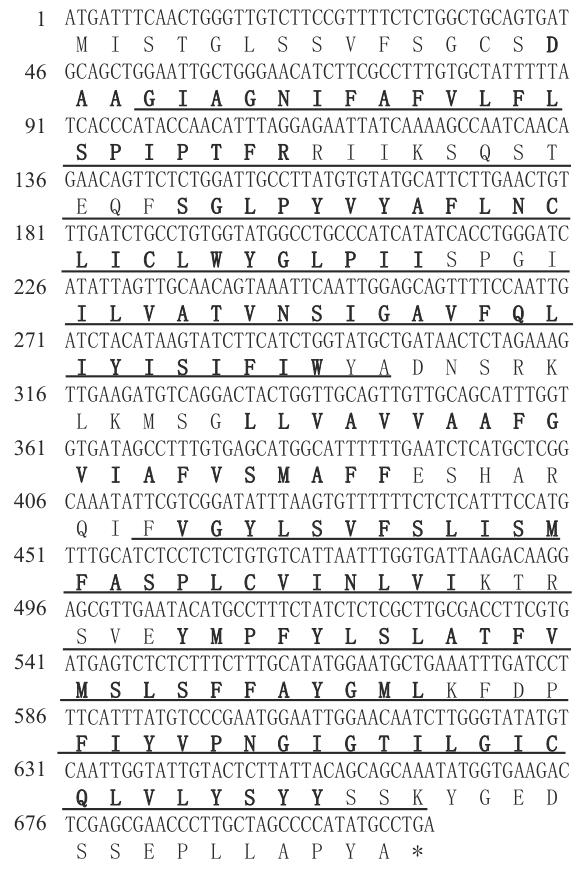
图1 MeSWEET2b的CDS序列和氨基酸序列*表示终止密码子,下划线表示保守结构域MtN3_slv super family,加粗字体表示跨膜序列
Fig. 1 CDS sequences and amino acid sequences of MeSWEET2b* indicates stop codon, underline indicates conserved domains MtN3_slv super family, bold font indicates transmembrane sequence
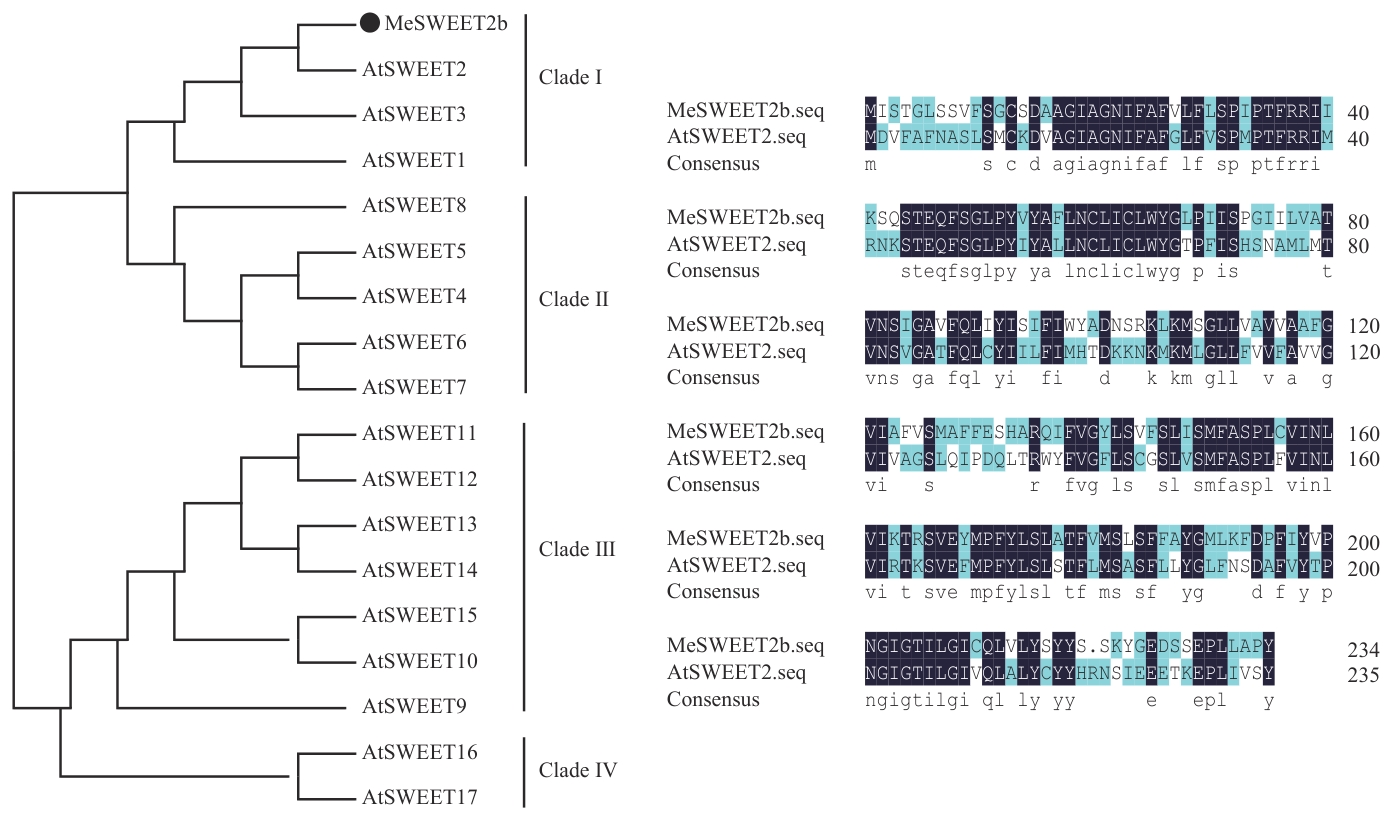
图2 MeSWEET2b的系统进化树分析和氨基酸序列比对
Fig. 2 Phylogenetic analysis and acid sequence alignment of MeSWEET2b
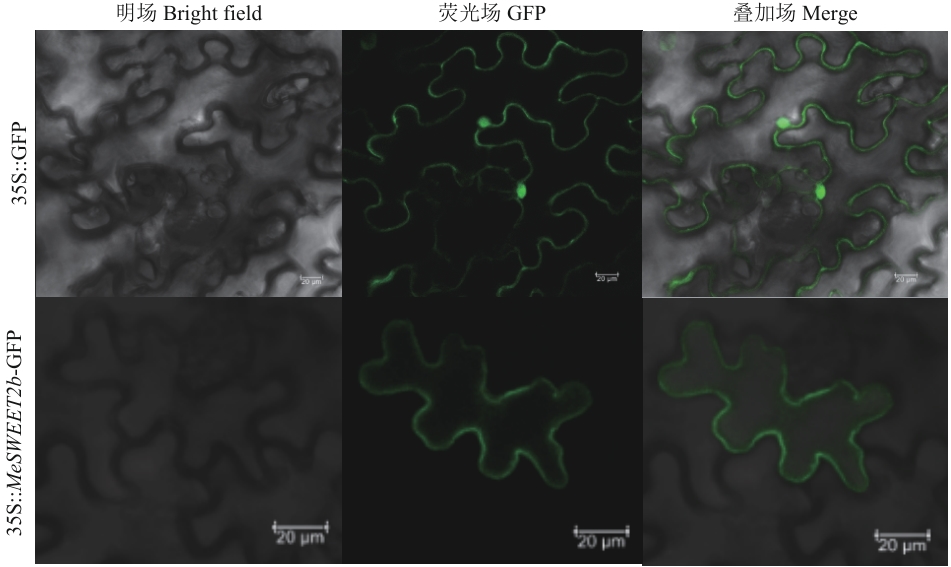
图3 MeSWEET2b的亚细胞定位
Fig. 3 Subcellular localization of MeSWEET2b
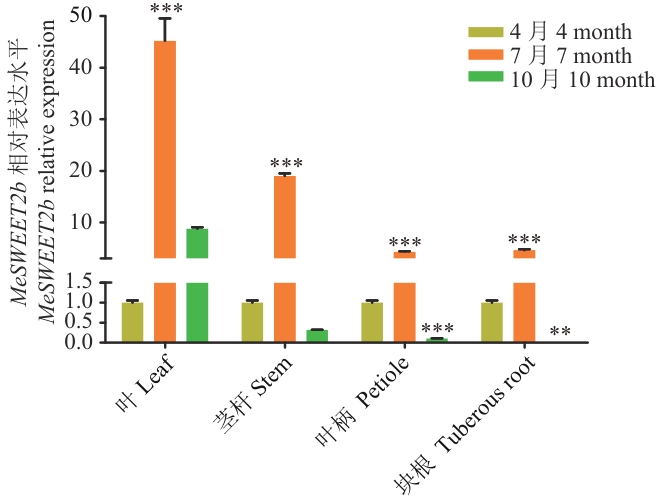
图4 MeSWEET2b在不同发育期的表达分析*P0.05,**P0.01,***P0.001, the same below
Fig. 4 Expression analysis of MeSWEET2b at different developmental stages
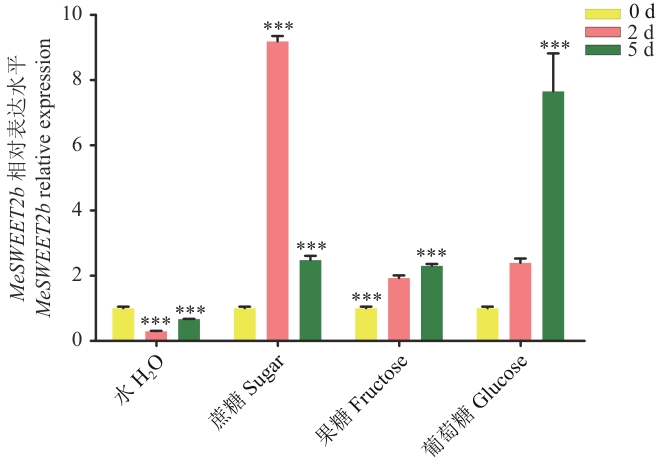
图5 MeSWEET2b在添加不同糖溶液的黑暗处理下的表达分析
Fig. 5 Expression analysis of MeSWEET2b in dark treatment with different sugar solutions
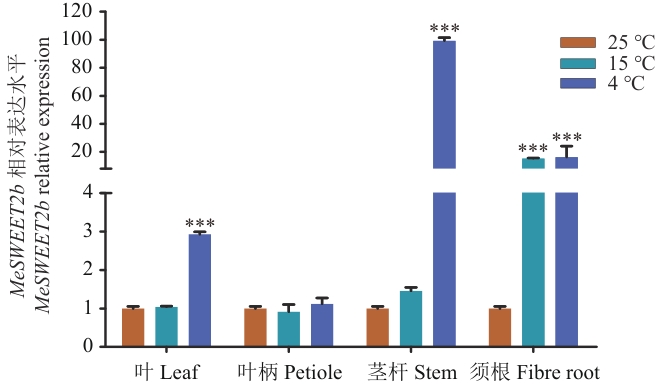
图6 MeSWEET2b在低温胁迫下的表达分析
Fig. 6 Expression analysis of MeSWEET2b under low temperature stress
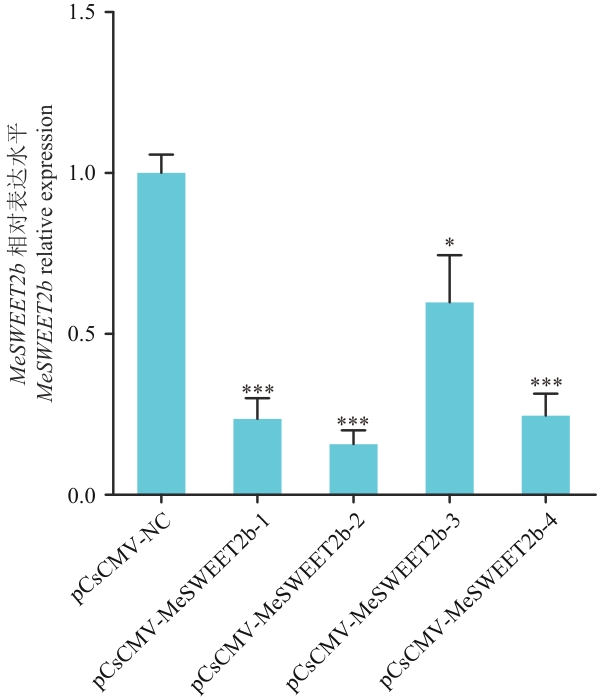
图7 木薯 MeSWEET2b沉默植株的表达水平分析
Fig. 7 Expression level analysis of cassava MeSWEET2b silenced plants
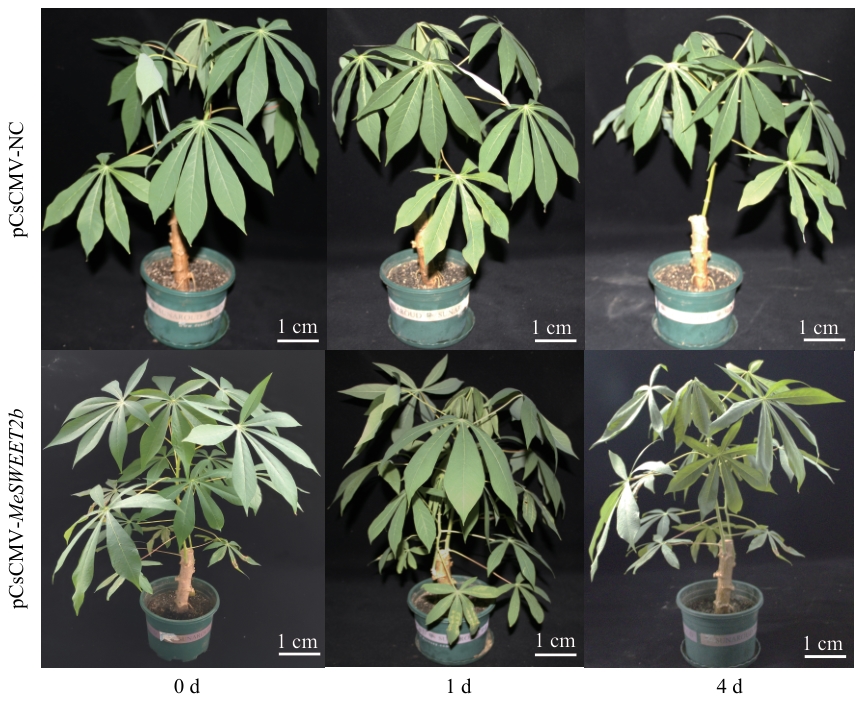
图8 木薯MeSWEET2b沉默植株低温胁迫下的表型特征
Fig. 8 Phenotypic characteristics of cassava MeSWEET2b silenced plants under low-temperature stress
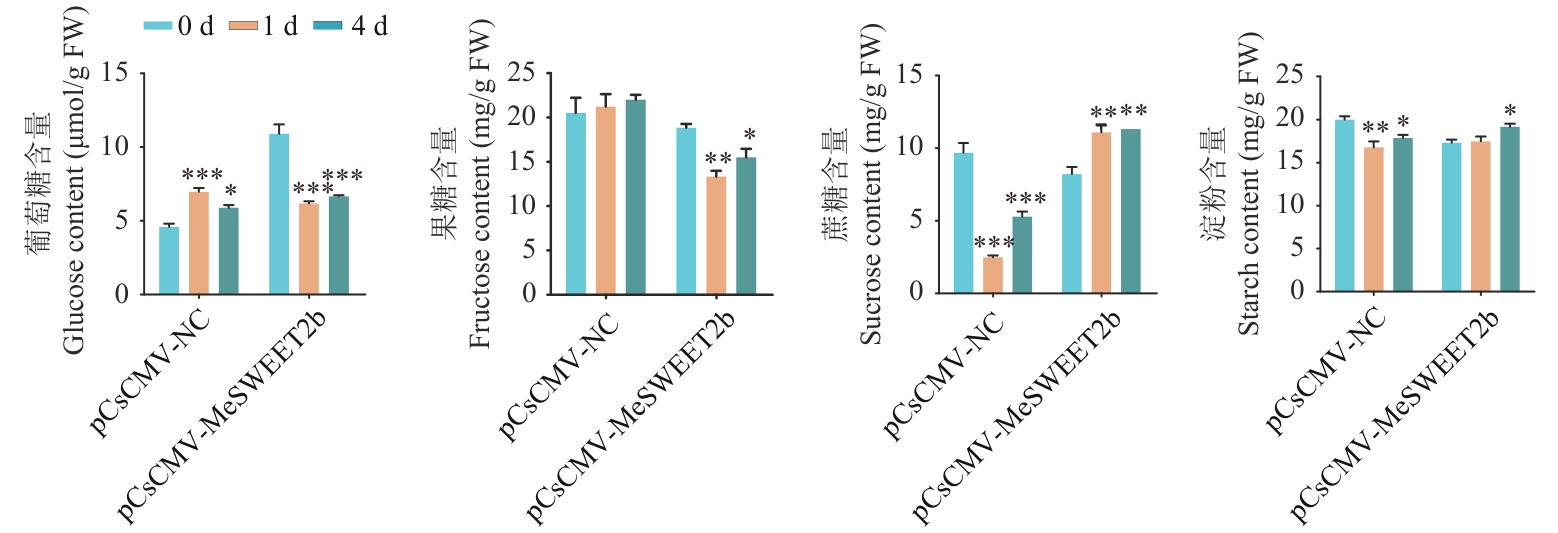
图9 木薯MeSWEET2b沉默植株低温胁迫下的糖含量
Fig. 9 Sugar content of cassava MeSWEET2b silenced plants under low-temperature stress
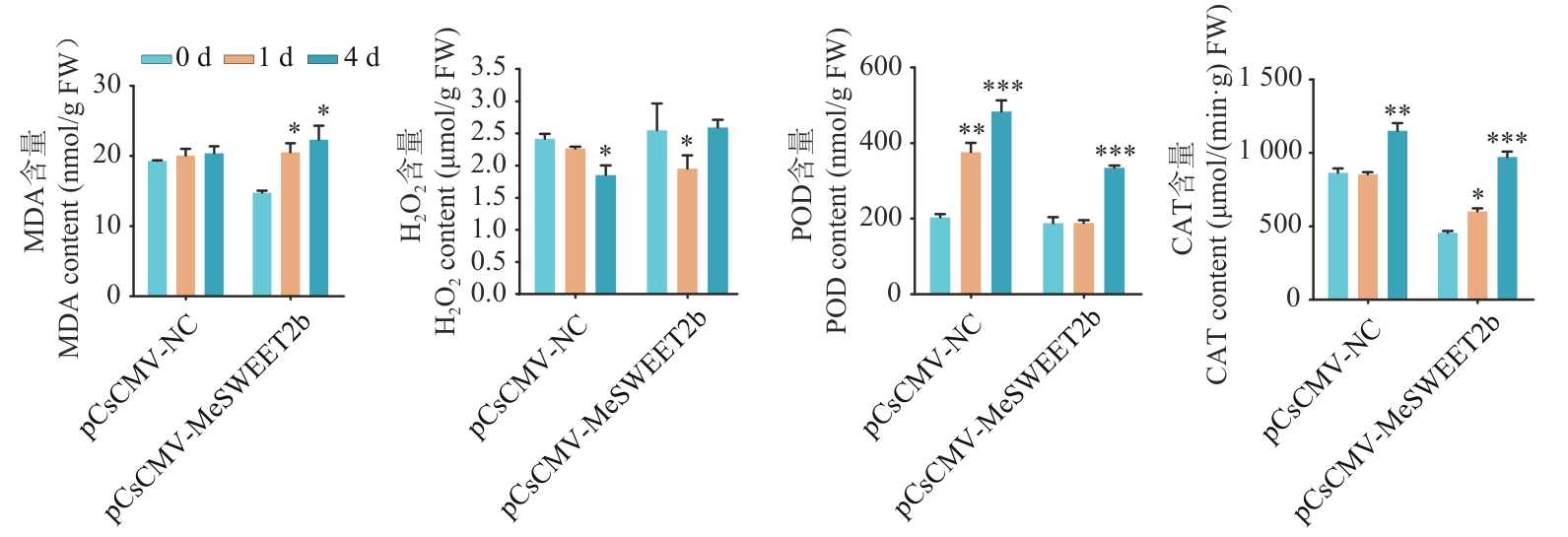
图10 木薯MeSWEET2b沉默植株低温胁迫下的生理指标测定
Fig. 10 Analysis of physiological indicators in cassava MeSWEET2b silenced plants under low-temperature stress
| [1] | Williams LE, Lemoine R, Sauer N. Sugar transporters in higher plants—a diversity of roles and complex regulation [J]. Trends Plant Sci, 2000, 5(7): 283-290. |
| [2] | Wormit A, Trentmann O, Feifer I, et al. Molecular identification and physiological characterization of a novel monosaccharide transporter from Arabidopsis involved in vacuolar sugar transport [J]. Plant Cell, 2006, 18(12): 3476-3490. |
| [3] | Rosa M, Prado C, Podazza G, et al. Soluble sugars: Metabolism, sensing and abiotic stress: a complex network in the life of plants [J]. Plant Signal Behav, 2009, 4(5): 388-393. |
| [4] | Ruan YL, Jin Y, Yang YJ, et al. Sugar input, metabolism, and signaling mediated by invertase: roles in development, yield potential, and response to drought and heat [J]. Mol Plant, 2010, 3(6): 942-955. |
| [5] | Sami F, Yusuf M, Faizan M, et al. Role of sugars under abiotic stress [J]. Plant Physiol Biochem, 2016, 109: 54-61. |
| [6] | Zhu JK. Abiotic stress signaling and responses in plants [J]. Cell, 2016, 167(2): 313-324. |
| [7] | Jeena GS, Kumar S, Shukla RK. Structure, evolution and diverse physiological roles of SWEET sugar transporters in plants [J]. Plant Mol Biol, 2019, 100(4/5): 351-365. |
| [8] | Pil Joon Seo JP. An Arabidopsis senescence-associated protein SAG29 regulates cell viability under high salinity [J]. Planta, 2011, 233(1): 189-200. |
| [9] | Klemens PAW, Patzke K, Deitmer J, et al. Overexpression of the vacuolar sugar carrier AtSWEET16 modifies germination, growth, and stress tolerance in Arabidopsis [J]. Plant Physiol, 2013, 163(3): 1338-1352. |
| [10] | Wang L, Yao LN, Hao XY, et al. Tea plant SWEET transporters: expression profiling, sugar transport, and the involvement of CsSWEET16 in modifying cold tolerance in Arabidopsis [J]. Plant Mol Biol, 2018, 96(6): 577-592. |
| [11] | Zhou AM, Ma HP, Feng S, et al. A novel sugar transporter from Dianthus spiculifolius, DsSWEET12, affects sugar metabolism and confers osmotic and oxidative stress tolerance in Arabidopsis [J]. Int J Mol Sci, 2018, 19(2): 497. |
| [12] | Zhou AM, Ma HP, Feng S, et al. DsSWEET17, a tonoplast-localized sugar transporter from Dianthus spiculifolius, affects sugar metabolism and confers multiple stress tolerance in Arabidopsis [J]. Int J Mol Sci, 2018, 19(6): 1564. |
| [13] | Hu LP, Zhang F, Song SH, et al. CsSWEET2, a hexose transporter from cucumber (Cucumis sativus L.), affects sugar metabolism and improves cold tolerance in Arabidopsis [J]. Int J Mol Sci, 2022, 23(7): 3886. |
| [14] | Zeng CY, Chen Z, Xia J, et al. Chilling acclimation provides immunity to stress by altering regulatory networks and inducing genes with protective functions in cassava [J]. BMC Plant Biol, 2014, 14(1): 207. |
| [15] | An D, Yang J, Zhang P. Transcriptome profiling of low temperature-treated cassava apical shoots showed dynamic responses of tropical plant to cold stress [J]. BMC Genom, 2012, 13(1): 64. |
| [16] | Li SX, Yu X, Cheng ZH, et al. Global gene expression analysis reveals crosstalk between response mechanisms to cold and drought stresses in cassava seedlings [J]. Front Plant Sci, 2017, 8: 1259. |
| [17] | 胡梅珍. 木薯叶片蔗糖质外体装载模式 [D]. 海口: 海南大学, 2016. |
| Hu MZ. Sucrose apoplastic loading pattern in cassava leaf [D]. Haikou: Hainan University, 2016. | |
| [18] | 薛蓓蓓, 覃丽芳, 董明右, 等. 木薯SWEETs基因家族生物信息学及表达特性研究 [J]. 基因组学与应用生物学, 2019, 38(1): 260-268. |
| Xue BB, Qin LF, Dong MY, et al. Bioinformatics analysis and expressional characteristics of cassava SWEETs gene family [J]. Genom Appl Biol, 2019, 38(1): 260-268. | |
| [19] | Cohn M, Bart RS, Shybut M, et al. Xanthomonas axonopodis virulence is promoted by a transcription activator-like effector-mediated induction of a SWEET sugar transporter in cassava [J]. Mol Plant Microbe Interact, 2014, 27(11): 1186-1198. |
| [20] | 刘秦, 马畅, 冯世鹏, 等. 木薯SWEET1基因的分子克隆、亚细胞定位与功能分析 [J]. 分子植物育种, 2017, 15(7): 2502-2509. |
| Liu Q, Ma C, Feng SP, et al. Molecular cloning, subcellular localization and function analysis of a MeSWEET1 gene from Manihot esculenta [J]. Mol Plant Breed, 2017, 15(7): 2502-2509. | |
| [21] | 朱柏光, 李闯, 张雪娇, 等. 木薯MeSWEET3b的基因克隆及功能分析 [J]. 分子植物育种, 2022, 20(3): 733-741. |
| Zhu BG, Li C, Zhang XJ, et al. Molecular cloning and function analysis of a MeSWEET3b gene from Manihot esculenta [J]. Mol Plant Breed, 2022, 20(3): 733-741. | |
| [22] | Fan XW, Sun JL, Cai Z, et al. MeSWEET15a/b genes play a role in the resistance of cassava (Manihot esculenta Crantz) to water and salt stress by modulating sugar distribution [J]. Plant Physiol Biochem, 2023, 194: 394-405. |
| [23] | 薛晶晶, 安飞飞, 罗秀芹, 等. VIGS技术鉴定木薯糖转运蛋白Mesweet18的功能研究 [J]. 生物技术进展, 2022, 12(6): 888-893. |
| Xue JJ, An FF, Luo XQ, et al. Study on the function of cassava sugar transporter Mesweet18 by VIGS [J]. Curr Biotechnol, 2022, 12(6): 888-893. | |
| [24] | 薛晶晶, 安飞飞, 朱文丽, 等. 木薯糖转运蛋白MeSWEET18的克隆与功能分析 [J]. 热带作物学报, 2023, 44(6): 1083-1090. |
| Xue JJ, An FF, Zhu WL, et al. Cloning and functional analysis of sugar transporter MeSWEET18 in cassava [J]. Chin J Trop Crops, 2023, 44(6): 1083-1090. | |
| [25] | 薛晶晶, 韦卓文, 罗秀芹, 等. 木薯糖转运蛋白基因MeSWEET17b的克隆及表达分析 [J]. 广西植物, 2024, 44(12): 2212-2221. |
| Xue JJ, Wei ZW, Luo XQ, et al. Cloning and expression analysis of sugar transporter protein gene MeSWEET17b in cassava [J]. Guihaia, 2024, 44(12): 2212-2221. | |
| [26] | Rabbi IY, Kayondo SI, Bauchet G, et al. Genome-wide association analysis reveals new insights into the genetic architecture of defensive, agro-morphological and quality-related traits in cassava [J]. Plant Mol Biol, 2022, 109(3): 195-213. |
| [27] | Fernandez-Pozo N, Rosli HG, Martin GB, et al. The SGN VIGS tool: user-friendly software to design virus-induced gene silencing (VIGS) constructs for functional genomics [J]. Mol Plant, 2015, 8(3): 486-488. |
| [28] | Tuo DC, Zhou P, Yan P, et al. A cassava common mosaic virus vector for virus-induced gene silencing in cassava [J]. Plant Meth, 2021, 17(1): 74. |
| [29] | Lin IW, Sosso D, Chen LQ, et al. Nectar secretion requires sucrose phosphate synthases and the sugar transporter SWEET9 [J]. Nature, 2014, 508(7497): 546-549. |
| [30] | Durand M, Mainson D, Porcheron B, et al. Carbon source-sink relationship in Arabidopsis thaliana: the role of sucrose transporters [J]. Planta, 2018, 247(3): 587-611. |
| [31] | Gwon S, Park J, Huque AM, et al. The Arabidopsis SWEET1 and SWEET2 uniporters recognize similar substrates while differing in subcellular localization [J]. J Biol Chem, 2023, 299(12): 105389. |
| [32] | Ho LH, Klemens PAW, Neuhaus HE, et al. SlSWEET1a is involved in glucose import to young leaves in tomato plants [J]. J Exp Bot, 2019, 70(12): 3241-3254. |
| [33] | Wilson MC, Mutka AM, Hummel AW, et al. Gene expression atlas for the food security crop cassava [J]. New Phytol, 2017, 213(4): 1632-1641. |
| [34] | Eom JS, Chen LQ, Sosso D, et al. SWEETs, transporters for intracellular and intercellular sugar translocation [J]. Curr Opin Plant Biol, 2015, 25: 53-62. |
| [35] | Morii M, Sugihara A, Takehara S, et al. The dual function of OsSWEET3a as a gibberellin and glucose transporter is important for young shoot development in rice [J]. Plant Cell Physiol, 2020, 61(11): 1935-1945. |
| [36] | Zhou YN, Cui XY, Hu AN, et al. Characterization and functional analysis of pollen-specific PwSWEET1 in Picea wilsonii [J]. J For Res, 2020, 31(5): 1913-1922. |
| [37] | Geng YQ, Wu MJ, Zhang CM. Sugar transporter ZjSWEET2.2 mediates sugar loading in leaves of Ziziphus jujuba mill [J]. Front Plant Sci, 2020, 11: 1081. |
| [38] | Yao LN, Ding CQ, Hao XY, et al. CsSWEET1a and CsSWEET17 mediate growth and freezing tolerance by promoting sugar transport across the plasma membrane [J]. Plant Cell Physiol, 2020, 61(9): 1669-1682. |
| [39] | Fang T, Rao Y, Wang MZ, et al. Characterization of the SWEET gene family in Longan (Dimocarpus longan) and the role of DlSWEET1 in cold tolerance [J]. Int J Mol Sci, 2022, 23(16): 8914. |
| [40] | Liu XZ, Zhang Y, Yang C, et al. AtSWEET4, a hexose facilitator, mediates sugar transport to axial sinks and affects plant development [J]. Sci Rep, 2016, 6: 24563. |
| [41] | Yang GX, Xu HF, Zou Q, et al. The vacuolar membrane sucrose transporter MdSWEET16 plays essential roles in the cold tolerance of apple [J]. Plant Cell Tissue Organ Cult, 2020, 140(1): 129-142. |
| [1] | 安飞飞, 罗秀芹, 蔡杰, 薛晶晶, 朱文丽. 木薯MeMYB106基因克隆及其在叶片花青素合成中的功能[J]. 生物技术通报, 2026, 42(6): 13-21. |
| [2] | 张雅宁, 毛春力, 胡志勇, 杨丹, 吴佳海, 王碧娴, 黄琳凯. 象草Dof转录因子的全基因组分析及其对低温胁迫的响应[J]. 生物技术通报, 2026, 42(6): 267-278. |
| [3] | 郭威, 耿越, 梁晓, 刘迎, 伍春玲, 陈青. 抗、感木薯品种对木薯绵粉蚧蜡质合成基因表达的影响[J]. 生物技术通报, 2026, 42(6): 128-138. |
| [4] | 彭朝凤, 夏琳, 刘瑞霞, 闫新可, 牧杨威, 刘梦茹, 杨军, 武明珠. 基于VIGS和CRISPR/Cas9技术的烟草NtPPO5基因功能分析[J]. 生物技术通报, 2026, 42(4): 251-262. |
| [5] | 王潇奕, 李金焱, 邢醒, 朱鸿亮. 基于乙烯响应筛选调控番茄成熟且影响呼吸的基因及其功能分析[J]. 生物技术通报, 2026, 42(3): 275-282. |
| [6] | 王亚乐, 李雪君, 孙计平, 孙焕. 烟草豫浓香201对低温胁迫的生理响应及转录组分析[J]. 生物技术通报, 2026, 42(2): 228-238. |
| [7] | 吕呈聪, 衡蒙, 陈思琪, 金雪花. 彩色马蹄莲花青素苷转运相关ZhGSTF的克隆及功能分析[J]. 生物技术通报, 2026, 42(1): 161-169. |
| [8] | 杨丹, 靳雅荣, 毛春力, 王碧娴, 张雅宁, 杨智怡, 周芷瑶, 杨锐鸣, 范恒睿, 黄琳凯, 严海东. 象草C2H2基因家族鉴定及表达分析[J]. 生物技术通报, 2026, 42(1): 251-261. |
| [9] | 林佳怡, 陈强, 张磊, 刘宏鑫, 郑晓明, 逄洪波. 褪黑素在植物低温胁迫中的研究进展[J]. 生物技术通报, 2025, 41(7): 37-48. |
| [10] | 李新妮, 李俊怡, 马雪华, 何卫, 李佳丽, 于佳, 曹晓宁, 乔治军, 刘思辰. 谷子果胶甲酯酶抑制子PMEI基因家族鉴定及其对非生物胁迫的响应分析[J]. 生物技术通报, 2025, 41(7): 150-163. |
| [11] | 张勇, 宋盛龙, 李永泰, 张新宇, 李艳军. 陆地棉GhSWEET9基因的克隆及抗黄萎病功能分析[J]. 生物技术通报, 2025, 41(6): 144-154. |
| [12] | 何卫, 李俊怡, 李新妮, 马雪华, 邢媛, 曹晓宁, 乔治军, 刘思辰. 谷子泛素连接酶U-box E3基因家族的鉴定及响应非生物胁迫分析[J]. 生物技术通报, 2025, 41(5): 104-118. |
| [13] | 马利花, 侯梦娟, 朱新霞. 陆地棉GhNFD4在棉花干旱响应中的功能[J]. 生物技术通报, 2025, 41(3): 104-111. |
| [14] | 吕若彤, 孙晶, 李新颖, 王旭晶, 艾鹏飞, 王雁伟. 植物中光合产物运输相关蛋白研究进展[J]. 生物技术通报, 2025, 41(10): 43-53. |
| [15] | 孔青洋, 张晓龙, 李娜, 张晨洁, 张雪云, 于超, 张启翔, 罗乐. 单叶蔷薇GRAS转录因子家族鉴定及表达分析[J]. 生物技术通报, 2025, 41(1): 210-220. |
| 阅读次数 | ||||||
|
全文 |
|
|||||
|
摘要 |
|
|||||
