







生物技术通报 ›› 2026, Vol. 42 ›› Issue (9): 107-119.doi: 10.13560/j.cnki.biotech.bull.1985.2025-1203
• 植物发育生物学专题 • 上一篇
赵雄伟1,2, 邵莉桃3, 李梦晴1, 梁逸萱1, 张洁如1, 曹艳花1,2( )
)
收稿日期:2025-11-10
出版日期:2026-09-26
发布日期:2026-09-16
通讯作者:
曹艳花caoyh@sxau.edu.cn基金资助:
ZHAO Xiong-wei1,2, SHAO Li-tao3, LI Meng-qing1, LIANG Yi-xuan1, ZHANG Jie-ru1, CAO Yan-hua1,2()
Received:2025-11-10
Published:2026-09-26
Online:2026-09-16
摘要:
目的 赖氨酸是人类与牲畜营养中的第一限制性必需氨基酸,其含量低制约谷子营养价值的提升。解析谷子赖氨酸合成代谢的分子机制,可为谷物营养品质改良提供重要的基因资源。 方法 通过生物信息学鉴定谷子赖氨酸生物合成途径基因,并结合系统发育关系、染色体定位、共线性关系、表达谱分析、候选基因关联分析和单倍型分析,挖掘调控籽粒赖氨酸积累的关键候选基因。 结果 谷子籽粒赖氨酸含量随发育阶段(青熟期S1‒完熟期S4)呈下降趋势,且自然群体中赖氨酸含量变异系数为36.5%。基于KEGG(kyoto encyclopedia of genes and genomes)数据库注释及谷子基因组信息,共鉴定出15个编码赖氨酸合成相关酶的基因,分属7个基因家族。LBPG(lysine biosynthesis pathway genes)基因表现出组织与发育阶段特异性表达,多数基因在穗部S1‒S4期表达量逐渐下降。候选基因关联分析显示,仅天冬氨酸激酶AK(aspartate kinase)基因的4个家族成员(AK1、AK3、AK4、AK5)存在30个SNP(single nucleotide polymorphism)位点与赖氨酸含量显著关联(P<0.01)。其中,携带AK3基因的单倍型Hap1种质赖氨酸含量比Hap2高17.22%,而携带AK5基因的单倍型Hap1种质比Hap2高12.96%。蛋白互作网络预测及表达相关性分析表明,高丝氨酸激酶HSK(homoserine kinase)基因与AK3存在互作及显著正表达相关(P<0.01),可能通过调控AK3基因表达影响谷子赖氨酸合成。 结论 谷子籽粒赖氨酸含量随发育时期呈下降趋势,AK家族基因的SNP与赖氨酸含量存在显著关联。AK3和AK5的Hap1单倍型种质赖氨酸含量均显著高于Hap2。此外,高丝氨酸激酶HSK基因与AK3存在显著表达正相关及蛋白互作,可能协同调控谷子籽粒赖氨酸的合成。
赵雄伟, 邵莉桃, 李梦晴, 梁逸萱, 张洁如, 曹艳花. 谷子赖氨酸合成通路基因的鉴定及AK基因变异调控作用分析[J]. 生物技术通报, 2026, 42(9): 107-119.
ZHAO Xiong-wei, SHAO Li-tao, LI Meng-qing, LIANG Yi-xuan, ZHANG Jie-ru, CAO Yan-hua. Identification of Lysine Synthesis Pathway Genes and Analysis of the Regulation of AK Gene Variations in Foxtail Millet[J]. Biotechnology Bulletin, 2026, 42(9): 107-119.
基因家族 Gene family | 基因名称 Gene name | EC 编号 EC number | 基因ID Gene ID | 氨基酸 Amino acid (aa) | 编码区长度 CDS length (bp) | 等电点 Isoelectric point |
|---|---|---|---|---|---|---|
| AK | AK1 | 2.7.2.4 | Si6g12370 | 939 | 2 820 | 7.07 |
| AK2 | Si5g43640 | 554 | 1 665 | 6.13 | ||
| AK3 | Si2g11670 | 568 | 1 707 | 6.62 | ||
| AK4 | Si9g02030 | 565 | 1 698 | 6.54 | ||
| AK5 | Si2g17120 | 918 | 2 757 | 6.35 | ||
| ASD | ASD | 1.2.1.11 | Si9g08540 | 372 | 1 119 | 7.66 |
| DapB | DapB1 | 1.17.1.8 | Si9g46060 | 326 | 981 | 5.55 |
| DapB2 | Si1g15210 | 342 | 1 029 | 6.21 | ||
| DapF | DapF | 5.1.1.7 | Si3g32590 | 357 | 1 074 | 5.95 |
| DHDPS | DHDPS1 | 4.3.3.7 | Si4g14890 | 368 | 1 107 | 6.87 |
| DHDPS2 | Si7g21820 | 377 | 1 134 | 6.27 | ||
| LL-DAP | LL-DAP1-AT | 2.6.1.83 | Si9g42730 | 463 | 1 392 | 7.57 |
| LL-DAP2-AT | Si9g49300 | 436 | 1 311 | 6.49 | ||
| LL-DAP3-AT | Si2g38880 | 464 | 1 395 | 6.20 | ||
| LysA | LysA | 4.1.1 .20 | Si3g36730 | 493 | 1 482 | 6.29 |
表1 谷子赖氨酸代谢生物合成酶基因及其序列特征
Table 1 Lysine biosynthesis pathway enzyme genes in foxtail millet and their sequence characteristics
基因家族 Gene family | 基因名称 Gene name | EC 编号 EC number | 基因ID Gene ID | 氨基酸 Amino acid (aa) | 编码区长度 CDS length (bp) | 等电点 Isoelectric point |
|---|---|---|---|---|---|---|
| AK | AK1 | 2.7.2.4 | Si6g12370 | 939 | 2 820 | 7.07 |
| AK2 | Si5g43640 | 554 | 1 665 | 6.13 | ||
| AK3 | Si2g11670 | 568 | 1 707 | 6.62 | ||
| AK4 | Si9g02030 | 565 | 1 698 | 6.54 | ||
| AK5 | Si2g17120 | 918 | 2 757 | 6.35 | ||
| ASD | ASD | 1.2.1.11 | Si9g08540 | 372 | 1 119 | 7.66 |
| DapB | DapB1 | 1.17.1.8 | Si9g46060 | 326 | 981 | 5.55 |
| DapB2 | Si1g15210 | 342 | 1 029 | 6.21 | ||
| DapF | DapF | 5.1.1.7 | Si3g32590 | 357 | 1 074 | 5.95 |
| DHDPS | DHDPS1 | 4.3.3.7 | Si4g14890 | 368 | 1 107 | 6.87 |
| DHDPS2 | Si7g21820 | 377 | 1 134 | 6.27 | ||
| LL-DAP | LL-DAP1-AT | 2.6.1.83 | Si9g42730 | 463 | 1 392 | 7.57 |
| LL-DAP2-AT | Si9g49300 | 436 | 1 311 | 6.49 | ||
| LL-DAP3-AT | Si2g38880 | 464 | 1 395 | 6.20 | ||
| LysA | LysA | 4.1.1 .20 | Si3g36730 | 493 | 1 482 | 6.29 |
基因 Gene | 染色体 Chromosome | 基因长度 Gene length (bp) | SNP总数 Total SNPs | 关联性状 Associated trait | 显著SNP数 No. of sig. SNP | -log10 (P) | R2 (%) |
|---|---|---|---|---|---|---|---|
| AK1 | 6 | 12 423 | 26 | DT_2019 | 7 | 2.29 | 6.08 |
| AK3 | 2 | 6 027 | 93 | JC_2019, DT_2019, TG_2019, TG_2020 | 3 | 2.67 | 9.03 |
| AK4 | 9 | 4 486 | 45 | JC_2019, DT_2019 | 6 | 2.23 | 6.96 |
| AK5 | 2 | 10 811 | 31 | DT_2019, TG_2019 | 14 | 2.25 | 7.06 |
表2 谷子AK基因自然变异与籽粒赖氨酸含量的显著关联SNP位点
Table 2 Significantly associated SNP loci from natural variations in AK genes for lysine content in foxtail millet
基因 Gene | 染色体 Chromosome | 基因长度 Gene length (bp) | SNP总数 Total SNPs | 关联性状 Associated trait | 显著SNP数 No. of sig. SNP | -log10 (P) | R2 (%) |
|---|---|---|---|---|---|---|---|
| AK1 | 6 | 12 423 | 26 | DT_2019 | 7 | 2.29 | 6.08 |
| AK3 | 2 | 6 027 | 93 | JC_2019, DT_2019, TG_2019, TG_2020 | 3 | 2.67 | 9.03 |
| AK4 | 9 | 4 486 | 45 | JC_2019, DT_2019 | 6 | 2.23 | 6.96 |
| AK5 | 2 | 10 811 | 31 | DT_2019, TG_2019 | 14 | 2.25 | 7.06 |
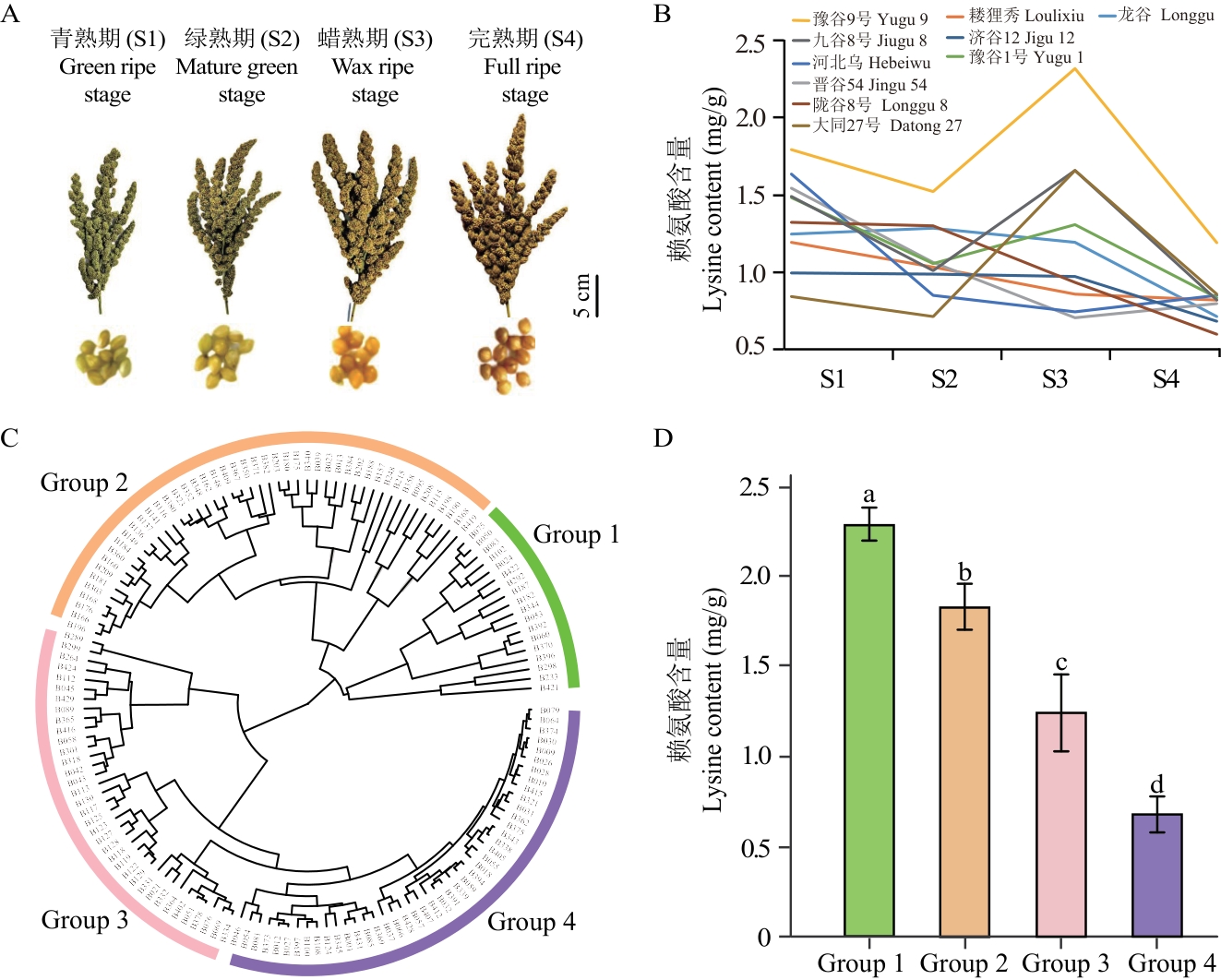
图1 不同穗发育阶段谷子赖氨酸含量及自然群体赖氨酸直方图聚类分析A:谷子籽粒发育时期;B:在4个发育时期的谷子籽粒赖氨酸含量;C:谷子不同品种的籽粒赖氨酸含量聚类图;D:谷子不同亚群的籽粒赖氨酸含量柱形图;S1:青熟期;S2:绿熟期;S3:蜡熟期;S4:完熟期;不同的小写字母表示在P<0.05水平上有显著差异。下同
Fig. 1 Lysine content in foxtail millet at different panicle developmental stages and cluster analysis with a histogram of lysine content in a natural populationA: Developmental stages of foxtail millet grains. B: Lysine content in seeds of foxtail millet at four developmental stages. C: Cluster diagram of seed lysine content across different varieties of foxtail millet. D: Bar chart of grain lysine content in different subgroups. S1: Green ripe stage. S2: Mature green stage. S3: Wax ripe stage. S4: Full ripe stage. The different lowercase letters indicate significant differences at P<0.05 level. The same below
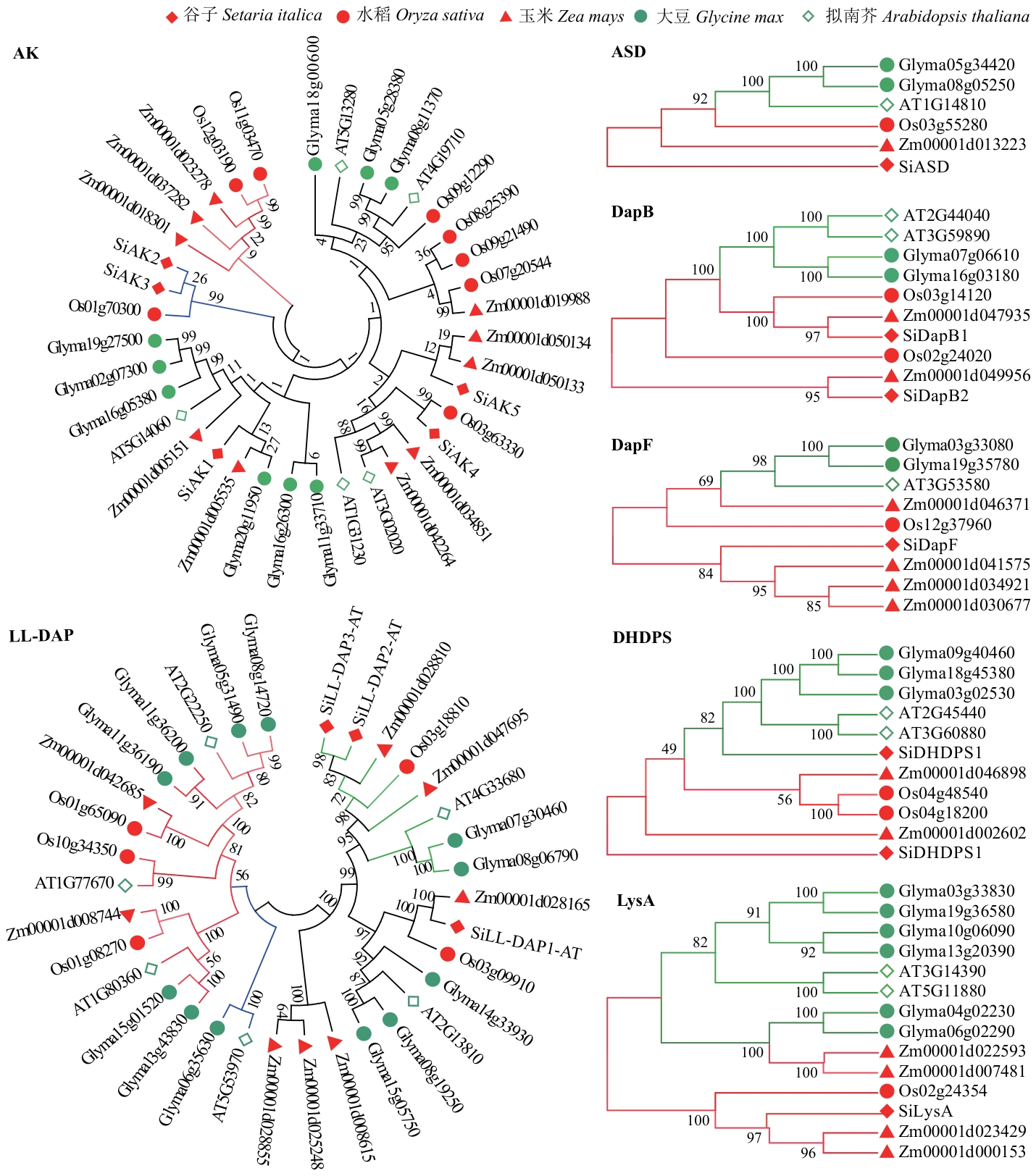
图2 谷子与其他4种植物的赖氨酸合成代谢通路LBPG基因的系统发育树不同颜色的分支线代表不同的进化亚群;枝末端的形状及颜色代表不同的物种来源
Fig. 2 Phylogenetic tree of lysine metabolic pathway LBPG genes in foxtail millet and four other plant speciesDifferent colored branch lines represent distinct phylogenetic subgroups. The shapes and colors at the tips of the branches indicate different species
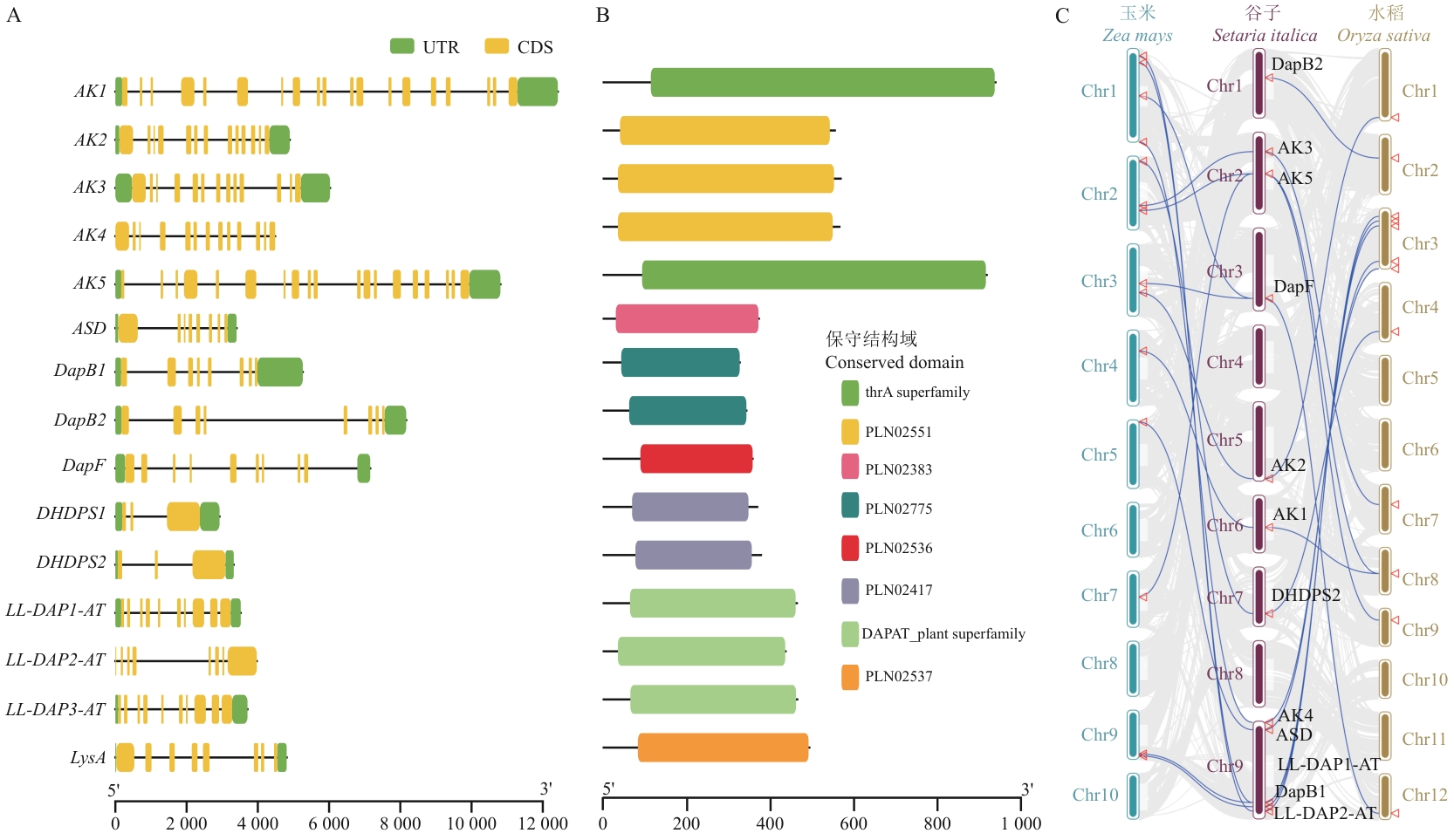
图3 谷子LBPG的基因结构(A)、保守结构域(B)及与水稻和玉米的共线性分析(C)
Fig. 3 Gene structure (A), conserved domains (B), and collinearity analysis with rice and maize (C) of LBPG in foxtail millet
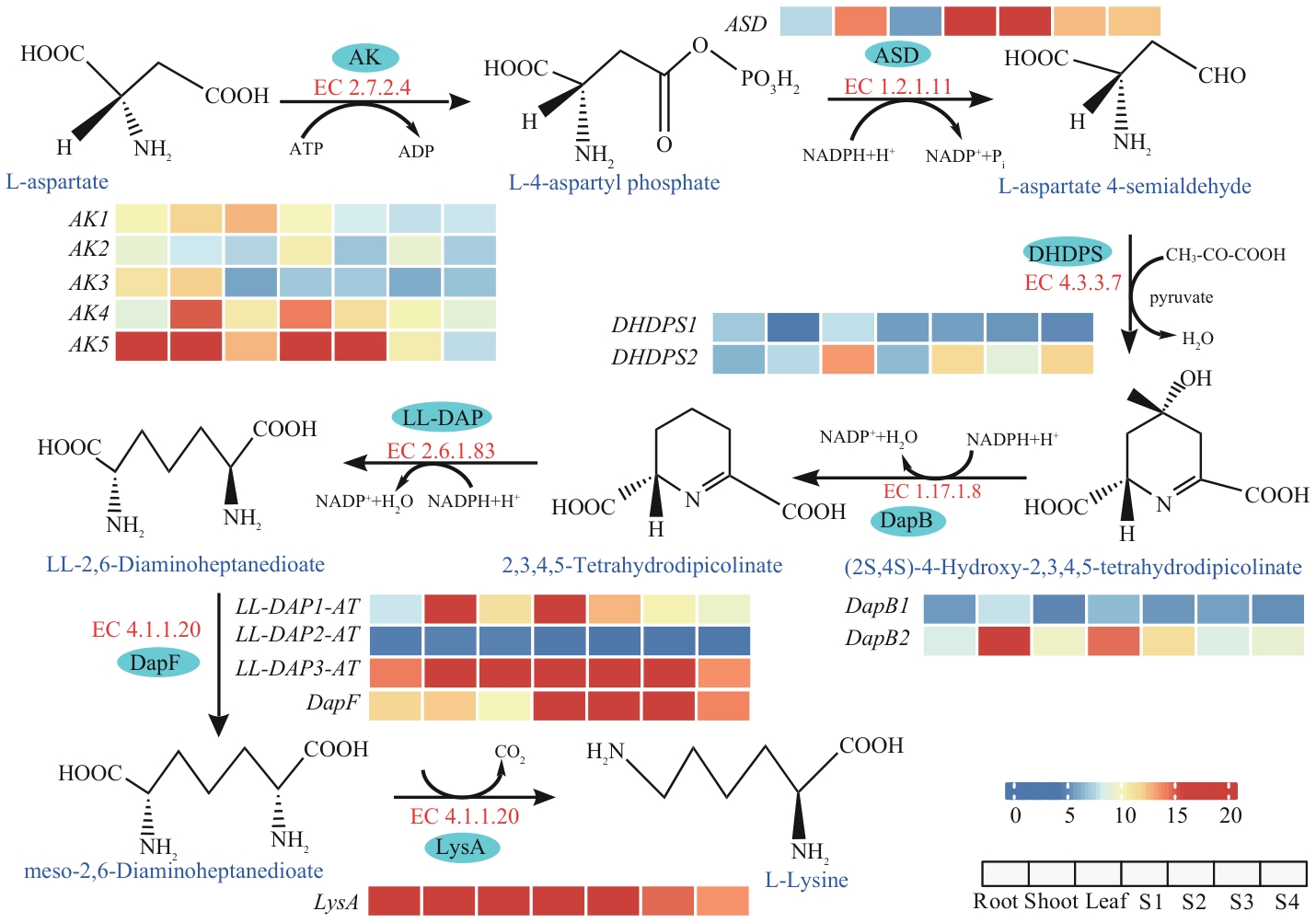
图4 谷子赖氨酸代谢通路及LBPG基因在不同生长阶段的表达模式热图中的列从左至右依次代表成熟期的根系、茎干和叶片组织,以及籽粒发育过程中青熟期(S1)、绿熟期(S2)、蜡熟期(S3)和完熟期(S4)
Fig. 4 Lysine metabolism pathway and expression patterns of LBPG genes in foxtail millet at different growth stagesFrom left to right, the columns in the heatmaps represent roots, stems, and leaves at the mature stage, followed by the green ripe stage (S1), mature green stage (S2), wax ripe stage (S3), and full ripe stage (S4) during grain development
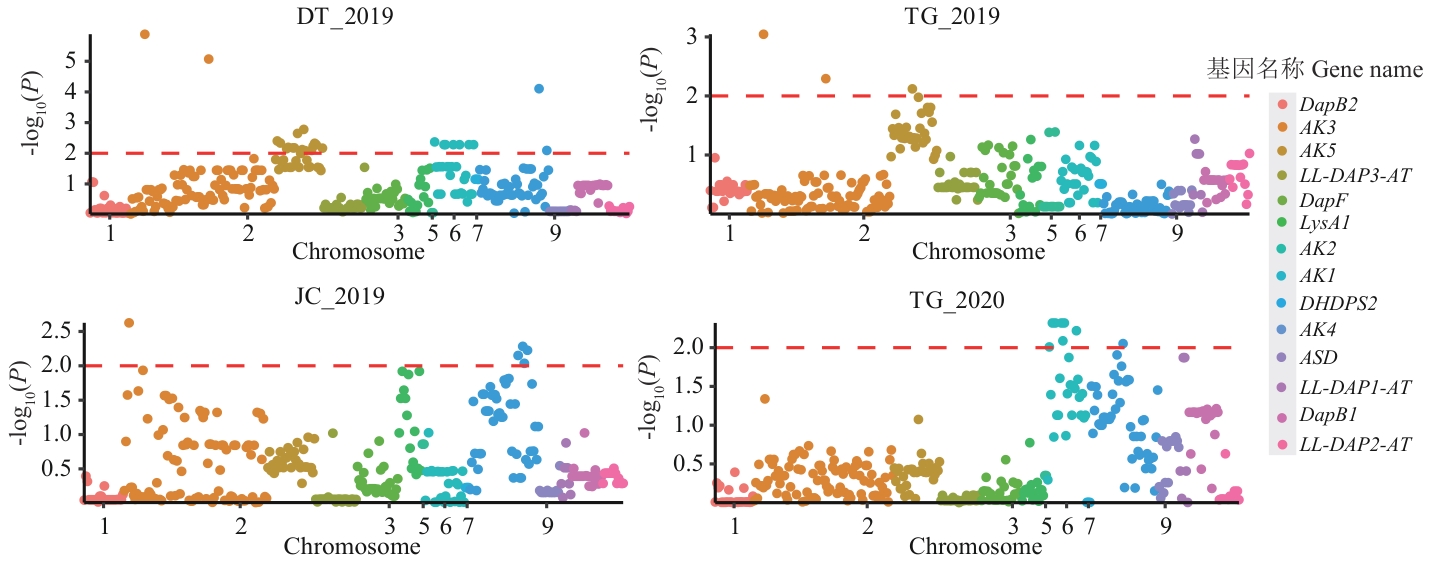
图5 谷子LBPG基因SNP与籽粒赖氨酸含量关联的曼哈顿图
Fig. 5 Manhattan plot of the association between SNPs of LBPG genes and seed lysine content in foxtail millet
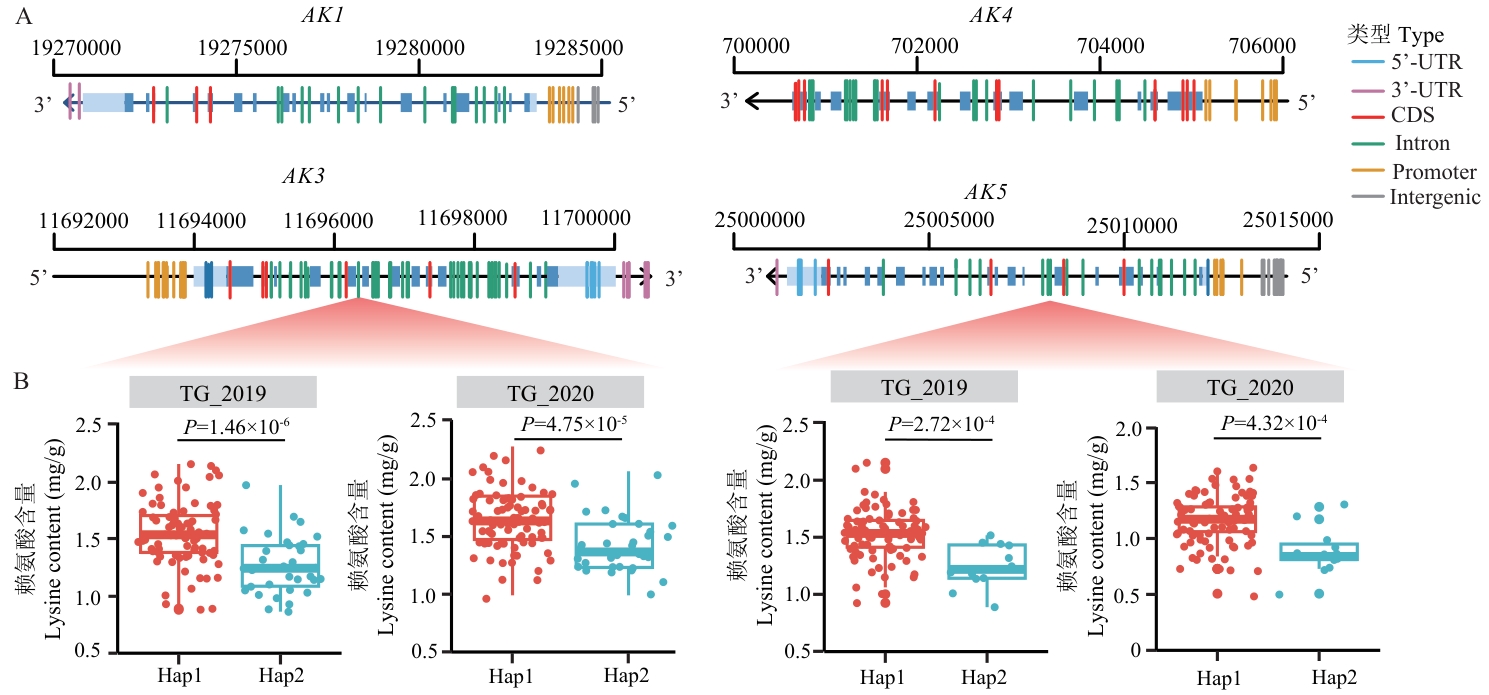
图6 AK基因多态性位点分布(A)及不同单倍型种质赖氨酸含量的显著性差异分析(B)
Fig. 6 Distribution of polymorphic sites in AK genes (A) and significant difference analysis of lysine content in germplasms with different haplotypes (B)
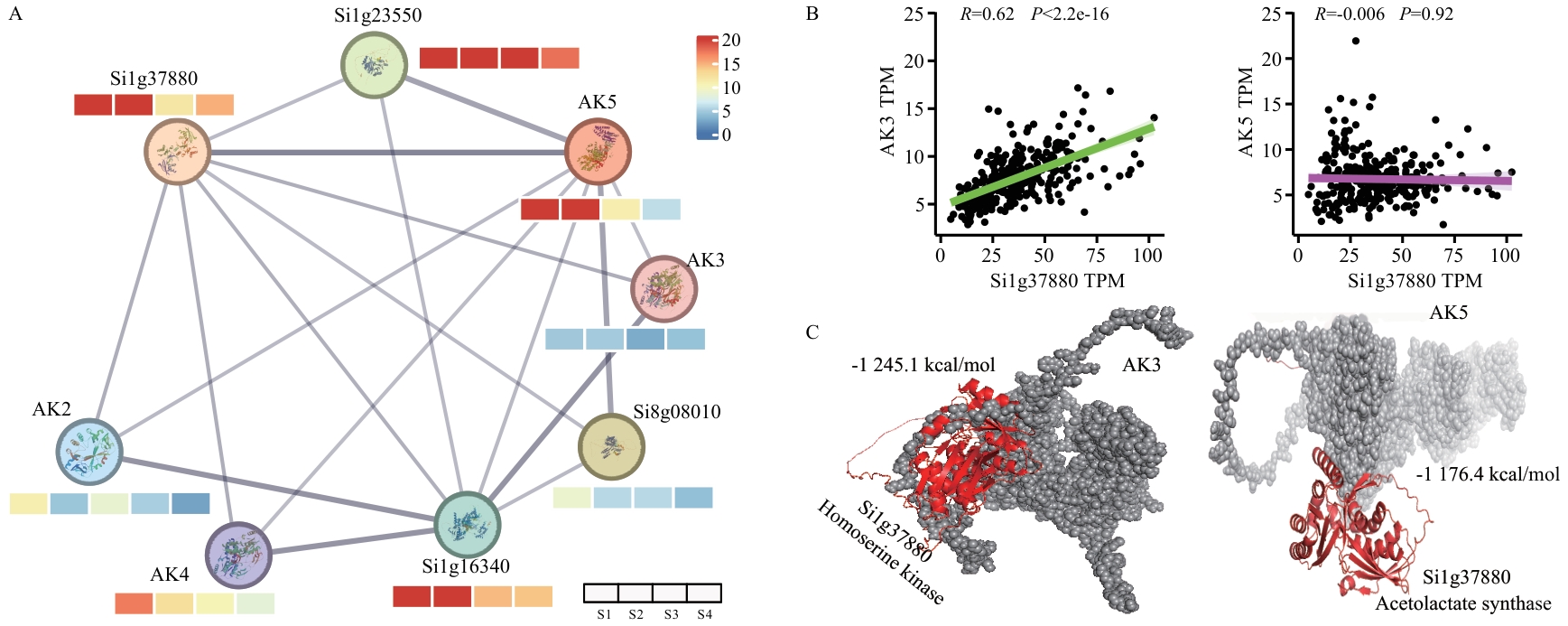
图7 谷子AK3和AK5蛋白与其他蛋白的互作网络预测模型和蛋白质互作复合体预测A:谷子AK3和AK5蛋白与其他蛋白的互作网络;B:谷子籽粒S3时期Si1g37880分别与AK3、AK5基因的表达量相关性;C:Si1g37880与AK3、AK5的蛋白互作复合体模型
Fig. 7 Prediction of interaction networks of AK3 and AK5 proteins and their protein interaction complexes in foxtail milletA: Interaction network of AK3 and AK5 proteins with other proteins in foxtail millet. B: Expression correlations of Si1g37880 with AK3 and AK5 genes in foxtail millet grains at the S3 stage. C: Model of the protein interaction complex formed by Si1g37880 with AK3 and AK5
| [1] | Trovato M, Funck D, Forlani G, et al. Editorial: amino acids in plants: regulation and functions in development and stress defense [J]. Front Plant Sci, 2021, 12: 772810. |
| [2] | 李暮男, 兰凤英. 小米的营养成分及保健功能研究进展 [J]. 河北北方学院学报: 自然科学版, 2017, 33(7): 56-60. |
| Li MN, Lan FY. Research progress on nutritional components and health care functions of millet [J]. J Hebei N Univ Nat Sci Ed, 2017, 33(7): 56-60. | |
| [3] | Amir R, Galili G, Cohen H. The metabolic roles of free amino acids during seed development [J]. Plant Sci, 2018, 275: 11-18. |
| [4] | Bouchereau J, Schiff M. Inherited disorders of lysine metabolism: a review [J]. J Nutr, 2020, 150: 2556S-2560S. |
| [5] | Jiang W, Zhao Y, Wu X, et al. Health inequalities of global protein-energy malnutrition from 1990 to 2019 and forecast prevalence for 2044: data from the Global Burden of Disease Study 2019 [J]. Public Health, 2023, 225: 102-109. |
| [6] | Arruda P, Barreto P. Lysine catabolism through the saccharopine pathway: enzymes and intermediates involved in plant responses to abiotic and biotic stress [J]. Front Plant Sci, 2020, 11: 587. |
| [7] | Wang WY, Xu MY, Wang GP, et al. New insights into the metabolism of aspartate-family amino acids in plant seeds [J]. Plant Reprod, 2018, 31(3): 203-211. |
| [8] | Yang QQ, Zhao DS, Liu QQ. Connections between amino acid metabolisms in plants: lysine as an example [J]. Front Plant Sci, 2020, 11: 928. |
| [9] | Torruella G, Suga H, Riutort M, et al. The evolutionary history of lysine biosynthesis pathways within eukaryotes [J]. J Mol Evol, 2009, 69(3): 240-248. |
| [10] | Hudson AO, Singh BK, Leustek T, et al. An LL-diaminopimelate aminotransferase defines a novel variant of the lysine biosynthesis pathway in plants [J]. Plant Physiol, 2006, 140(1): 292-301. |
| [11] | Arruda P, Kemper EL, Papes F, et al. Regulation of lysine catabolism in higher plants [J]. Trends Plant Sci, 2000, 5(8): 324-330. |
| [12] | Zhu XH, Galili G. Lysine metabolism is concurrently regulated by synthesis and catabolism in both reproductive and vegetative tissues [J]. Plant Physiol, 2004, 135(1): 129-136. |
| [13] | Reyes AR, Bonin CP, Houmard NM, et al. Genetic manipulation of lysine catabolism in maize kernels [J]. Plant Mol Biol, 2009, 69(1/2): 81-89. |
| [14] | Yang QQ, Yu WH, Wu HY, et al. Lysine biofortification in rice by modulating feedback inhibition of aspartate kinase and dihydrodipicolinate synthase [J]. Plant Biotechnol J, 2021, 19(3): 490-501. |
| [15] | 舒军, 王啸旗, 郭宁馨, 等. 谷子不同核心种质的小米氨基酸组分积累特性分析及其评价 [J]. 山西农业科学, 2022, 50(12): 1622-1630. |
| Shu J, Wang XQ, Guo NX, et al. Analysis and evaluation of the accumulation characteristics of amino acid components in different core germplasms of foxtail millet [J]. J Shanxi Agric Sci, 2022, 50(12): 1622-1630. | |
| [16] | 刘美池, 邓歆, 刘新春, 等. 青稞种质资源籽粒赖氨酸含量的评价 [J]. 大麦与谷类科学, 2023, 40(5): 8-17. |
| Liu MC, Deng X, Liu XC, et al. Evaluation of lysine content in grains of highland barley germplasm resources [J]. Barley Cereal Sci, 2023, 40(5): 8-17. | |
| [17] | Liu YW, Xie SJ, Yu JJ. Genome-wide analysis of the lysine biosynthesis pathway network during maize seed development [J]. PLoS One, 2016, 11(2): e0148287. |
| [18] | Bailey TL, Boden M, Buske FA, et al. MEME Suite: tools for motif discovery and searching [J]. Nucleic Acids Res, 2009, 37(): W202-W208. |
| [19] | Kumar S, Stecher G, Tamura K. MEGA7: molecular evolutionary genetics analysis version 7.0 for bigger datasets [J]. Mol Biol Evol, 2016, 33(7): 1870-1874. |
| [20] | Chen CJ, Chen H, Zhang Y, et al. TBtools: an integrative toolkit developed for interactive analyses of big biological data [J]. Mol Plant, 2020, 13(8): 1194-1202. |
| [21] | Yang ZR, Zhang HS, Li XK, et al. A mini foxtail millet with an Arabidopsis-like life cycle as a C4 model system [J]. Nat Plants, 2020, 6(9): 1167-1178. |
| [22] | Li XK, Gao JH, Song JY, et al. Multi-omics analyses of 398 foxtail millet accessions reveal genomic regions associated with domestication, metabolite traits, and anti-inflammatory effects [J]. Mol Plant, 2022, 15(8): 1367-1383. |
| [23] | Zhao XW, Cao YH, Shao LT, et al. Integration of genome-wide association and genomic prediction for dissecting seed protein and amino acid in foxtail millet [J]. Field Crops Res, 2024, 310: 109344. |
| [24] | Bradbury PJ, Zhang ZW, Kroon DE, et al. TASSEL: software for association mapping of complex traits in diverse samples [J]. Bioinformatics, 2007, 23(19): 2633-2635. |
| [25] | Szklarczyk D, Kirsch R, Koutrouli M, et al. The STRING database in 2023: protein-protein association networks and functional enrichment analyses for any sequenced genome of interest [J]. Nucleic Acids Res, 2023, 51(D1): D638-D646. |
| [26] | Kozakov D, Hall DR, Xia B, et al. The ClusPro web server for protein-protein docking [J]. Nat Protoc, 2017, 12(2): 255-278. |
| [27] | Saleh ASM, Zhang Q, Chen J, et al. Millet grains: nutritional quality, processing, and potential health benefits [J]. Comp Rev Food Sci Food Safe, 2013, 12(3): 281-295. |
| [28] | Sachdev N, Goomer S, Singh LR. Foxtail millet: a potential crop to meet future demand scenario for alternative sustainable protein [J]. J Sci Food Agric, 2021, 101(3): 831-842. |
| [29] | 刘慧, 王朝辉, 李富翠, 等. 不同麦区小麦籽粒蛋白质与氨基酸含量及评价 [J]. 作物学报, 2016, 42(5): 768-777. |
| Liu H, Wang ZH, Li FC, et al. Contents of protein and amino acids of wheat grain in different wheat production regions and their evaluation [J]. Acta Agron Sin, 2016, 42(5): 768-777. | |
| [30] | Zhong M, Wang LQ, Yuan DJ, et al. Identification of QTL affecting protein and amino acid contents in rice [J]. Rice Sci, 2011, 18(3): 187-195. |
| [31] | 杨建昌, 李超卿, 江贻. 稻米氨基酸含量和组分及其调控 [J]. 作物学报, 2022, 48(5): 1037-1050. |
| Yang JC, Li CQ, Jiang Y. Contents and compositions of amino acids in rice grains and their regulation: a review [J]. Acta Agron Sin, 2022, 48(5): 1037-1050. | |
| [32] | Ishimaru T, Parween S, Saito Y, et al. Laser microdissection-based tissue-specific transcriptome analysis reveals a novel regulatory network of genes involved in heat-induced grain chalk in rice endosperm [J]. Plant Cell Physiol, 2019, 60(3): 626-642. |
| [33] | Huang A, Coutu C, Harrington M, et al. Engineering a feedback inhibition-insensitive plant dihydrodipicolinate synthase to increase lysine content in Camelina sativa seeds [J]. Transgenic Res, 2022, 31(1): 131-148. |
| [34] | He Q, Wang CC, He Q, et al. A complete reference genome assembly for foxtail millet and Setaria-db, a comprehensive database for Setaria [J]. Mol Plant, 2024, 17(2): 219-222. |
| [35] | Panchal A, Singh RK, Prasad M. Recent advancements and future perspectives of foxtail millet genomics [J]. Plant Growth Regul, 2023, 99(1): 11-23. |
| [36] | Galili G, Amir R, Fernie AR. The regulation of essential amino acid synthesis and accumulation in plants [J]. Annu Rev Plant Biol, 2016, 67: 153-178. |
| [37] | Ufaz S, Shukla V, Soloveichik Y, et al. Transcriptional control of aspartate kinase expression during darkness and sugar depletion in Arabidopsis: involvement of bZIP transcription factors [J]. Planta, 2011, 233(5): 1025-1040. |
| [38] | Duo H, Chhabra R, Muthusamy V, et al. Assessing sequence variation, haplotype analysis and molecular characterisation of aspartate kinase2 (ask2) gene regulating methionine biosynthesis in diverse maize inbreds [J]. Mol Genet Genomics, 2024, 299: 7. |
| [1] | 刘倩, 王宗燕, 罗浚豪, 吴张璋, 胡振, 吕建珍, 姜亮. 基于BSA-Seq谷子落粒主效基因的定位与候选基因分析[J]. 生物技术通报, 2026, 42(7): 138-147. |
| [2] | 程雪, 付颖, 柴晓娇, 王红艳, 邓欣. 谷子LHC基因家族鉴定及非生物胁迫表达分析[J]. 生物技术通报, 2025, 41(8): 102-114. |
| [3] | 李新妮, 李俊怡, 马雪华, 何卫, 李佳丽, 于佳, 曹晓宁, 乔治军, 刘思辰. 谷子果胶甲酯酶抑制子PMEI基因家族鉴定及其对非生物胁迫的响应分析[J]. 生物技术通报, 2025, 41(7): 150-163. |
| [4] | 何卫, 李俊怡, 李新妮, 马雪华, 邢媛, 曹晓宁, 乔治军, 刘思辰. 谷子泛素连接酶U-box E3基因家族的鉴定及响应非生物胁迫分析[J]. 生物技术通报, 2025, 41(5): 104-118. |
| [5] | 郭浩杰, 王成, 杨馥熔, 杜冰, 孟超敏. 谷子SiSPX9基因的克隆及耐低磷分析[J]. 生物技术通报, 2025, 41(12): 114-123. |
| [6] | 李禹欣, 李苗, 杜晓芬, 韩康妮, 连世超, 王军. 谷子SiSAP基因家族的鉴定与表达分析[J]. 生物技术通报, 2025, 41(1): 143-156. |
| [7] | 韩华蕊, 杨宇琭, 门艺涵, 韩尚玲, 韩渊怀, 霍轶琼, 侯思宇. 基于代谢组学研究谷子SiYABBYs参与花发育过程中鼠李糖苷的生物合成[J]. 生物技术通报, 2023, 39(6): 189-198. |
| [8] | 王海龙, 李雨倩, 王勃, 邢国芳, 张杰伟. 谷子SiMAPK3基因的克隆和表达特性分析[J]. 生物技术通报, 2023, 39(3): 123-132. |
| [9] | 邢媛, 宋健, 李俊怡, 郑婷婷, 刘思辰, 乔治军. 谷子AP基因家族鉴定及其对非生物胁迫的响应分析[J]. 生物技术通报, 2023, 39(11): 238-251. |
| [10] | 郭永博, 蔡原. 西藏藏猪遗传多样性研究[J]. 生物技术通报, 2015, 31(5): 224-230. |
| [11] | 袁进成,刘颖慧,董志平. 谷子成熟胚诱导愈伤组织及植株再生的研究和条件的优化[J]. 生物技术通报, 2013, 0(3): 77-82. |
| [12] | 谢夏青;李志勇;马继芳;刘磊;董志平;董金皋;. 谷子弯孢菌海藻糖酶基因(ClTRE)及其启动子的克隆和序列分析[J]. , 2011, 0(07): 154-159. |
| [13] | 祝静静;靳亮;李新征;彭卫东;王泽立;. 玉米杂种优势分子基础研究进展[J]. , 2006, 0(S1): 53-57. |
| 阅读次数 | ||||||
|
全文 |
|
|||||
|
摘要 |
|
|||||
