







生物技术通报 ›› 2026, Vol. 42 ›› Issue (9): 248-261.doi: 10.13560/j.cnki.biotech.bull.1985.2026-0017
• 植物发育生物学专题 • 上一篇
赵丫1, 菲若拉·帕力哈提1, 温欣荣1, 马伟3, 孙可心1, 覃书伟1, 孙宝明1, 刘悦1, 曹爱萍1,2( )
)
收稿日期:2026-01-07
出版日期:2026-09-26
发布日期:2026-09-16
通讯作者:
曹爱萍caoaiping@shzu.edu.cn作者简介:第一联系人:同等贡献
基金资助:
ZHAO Ya1, FEIRUOLA Palihati1, WEN Xin-rong1, MA Wei3, SUN Ke-xin1, QIN Shu-wei1, SUN Bao-ming1, LIU Yue1, CAO Ai-ping1,2()
Received:2026-01-07
Published:2026-09-26
Online:2026-09-16
摘要:
目的 探究红花根际土壤中高效解磷细菌的溶磷特性及其对红花生长、有效成分积累和根际微环境的调控机制,为提升红花绿色高效栽培提供依据。 方法 以红花根际土壤为研究对象,通过无机磷选择培养基筛选优势解磷菌株C9,利用抗性菌株评估定殖能力;进一步通过生理生化特性分析、溶磷能力测定、生长曲线拟合及16S rDNA分子鉴定明确菌株特性。采用盆栽试验,以白、黄、红3种花色的红花为材料,通过灌根法施加菌肥,动态监测植株生物量、花丝主要活性成分、根际土壤理化性质及菌株促生指标。 结果 从红花根际土壤中筛选获得一株高效解磷菌株C9,经鉴定为革兰氏阴性荧光假单胞菌(Pseudomonas fluorescens)。该菌株对磷酸钙和磷酸锌表现出较强的溶解能力,其溶磷量与培养基pH值降低呈负相关。盆栽试验表明,Rif-C9菌株可稳定定殖于红花根际,显著促进白、黄、红3种花色红花的生长,其中单株有效果球数分别提高28.24%、37.36%、26.98%,并同步使3种花色花丝中羟基红花黄色素A(HSYA)和山柰酚(KF)含量分别提升51.5%、34.7%、13.4%和183.3%、300.0%、133.3%。施用Rif-C9菌肥后,根际土壤pH值降低,土壤全氮、有机质和有效磷含量分别显著增加7.64%‒18.56%、15.74%‒29.94%和4.34%‒8.32%,且菌株能够分泌生长素(IAA),协同改善根际微生态,从而驱动红花生长与有效成分的积累。 结论 荧光假单胞菌Rif-C9具有高效溶磷能力,可通过酸化根际微环境、释放可溶性磷及分泌IAA,显著促进红花生长发育、提升药用成分含量并改良土壤肥力。
赵丫, 菲若拉·帕力哈提, 温欣荣, 马伟, 孙可心, 覃书伟, 孙宝明, 刘悦, 曹爱萍. 解磷菌C9对红花生长发育和药用成分的影响[J]. 生物技术通报, 2026, 42(9): 248-261.
ZHAO Ya, FEIRUOLA Palihati, WEN Xin-rong, MA Wei, SUN Ke-xin, QIN Shu-wei, SUN Bao-ming, LIU Yue, CAO Ai-ping. Effects of Phosphate-solubilizing Bacterium C9 on the Growth, Development, and Medicinal Components of Safflower[J]. Biotechnology Bulletin, 2026, 42(9): 248-261.
| 菌株 Strain | D (cm) | d (cm) | D/d |
|---|---|---|---|
| C1 | 1.750 | 1.033 | 1.705±0.161cde |
| C2 | 2.15 | 0.783 | 2.748±0.163b |
| C3 | 1.367 | 1.133 | 1.206±0.028h |
| C4 | 1.283 | 1.117 | 1.150±0.028h |
| C5 | 1.700 | 0.950 | 1.792±0.084c |
| C6 | 1.683 | 1.000 | 1.704±0.179cde |
| C7 | 1.817 | 1.033 | 1.761±0.068cd |
| C8 | 1.883 | 1.117 | 1.691±0.095de |
| C9 | 2.183 | 0.683 | 3.198±0.095a |
| C10 | 1.250 | 0.933 | 1.341±0.045gh |
| C11 | 1.800 | 1.167 | 1.544±0.046ef |
| C12 | 1.717 | 1.150 | 1.495±0.069fg |
| C13 | 1.850 | 1.133 | 1.634±0.049de |
| C15 | 1.250 | 0.967 | 1.293±0.027gh |
表1 解磷菌可溶性指数
Table 1 Solubility index of phosphate solubilizing bacteria
| 菌株 Strain | D (cm) | d (cm) | D/d |
|---|---|---|---|
| C1 | 1.750 | 1.033 | 1.705±0.161cde |
| C2 | 2.15 | 0.783 | 2.748±0.163b |
| C3 | 1.367 | 1.133 | 1.206±0.028h |
| C4 | 1.283 | 1.117 | 1.150±0.028h |
| C5 | 1.700 | 0.950 | 1.792±0.084c |
| C6 | 1.683 | 1.000 | 1.704±0.179cde |
| C7 | 1.817 | 1.033 | 1.761±0.068cd |
| C8 | 1.883 | 1.117 | 1.691±0.095de |
| C9 | 2.183 | 0.683 | 3.198±0.095a |
| C10 | 1.250 | 0.933 | 1.341±0.045gh |
| C11 | 1.800 | 1.167 | 1.544±0.046ef |
| C12 | 1.717 | 1.150 | 1.495±0.069fg |
| C13 | 1.850 | 1.133 | 1.634±0.049de |
| C15 | 1.250 | 0.967 | 1.293±0.027gh |
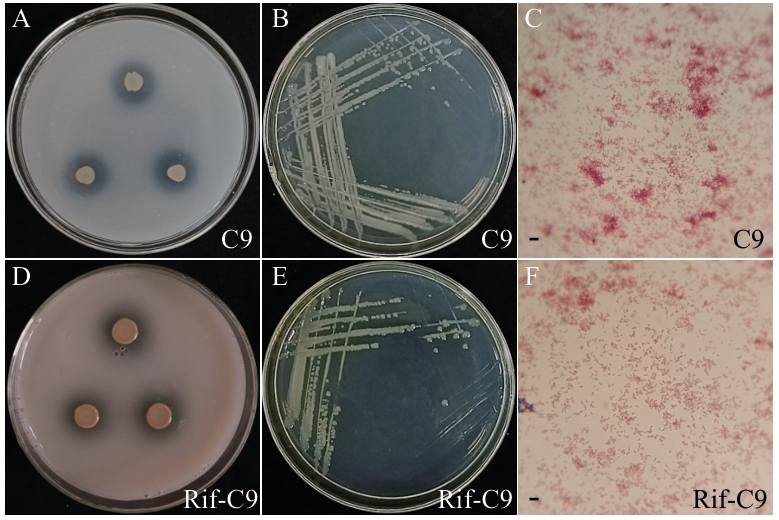
图1 菌株C9和Rif-C9的形态特征A、D:解磷圈;B、E:菌落形态;C、F:革兰氏染色(100×)
Fig. 1 Morphological characteristics of strains C9 and Rif-C9A, D: Phosphate-solubilizing halo. B, E: Colony morphology. C, F: Gram staining (100×)
| 项目 Item | C9 | Rif-C9 |
|---|---|---|
| 兼性需氧 Facultative aerobic | + | + |
| 革兰氏染色 Gram staining | - | - |
| 接触酶试验 Catalase test | + | + |
| 甲基红试验 Methyl red test | - | - |
| V-P试验 V-P test | - | - |
| 脲酶试验Urease test | - | - |
| 产IAA试验 IAA production test | + | + |
| 产吲哚试验 Indole production test | - | - |
| 色氨酸脱氨酶 Tryptophan deaminase | - | - |
| 淀粉水解 Hydrolysis of starch | - | - |
| 明胶液化 Gelatin liquefaction | - | - |
| 产H2S试验 H2S production test | - | - |
表2 解磷菌株的生理生化特性
Table 2 Physiological and biochemical characteristics of phosphate-solubilizing strains
| 项目 Item | C9 | Rif-C9 |
|---|---|---|
| 兼性需氧 Facultative aerobic | + | + |
| 革兰氏染色 Gram staining | - | - |
| 接触酶试验 Catalase test | + | + |
| 甲基红试验 Methyl red test | - | - |
| V-P试验 V-P test | - | - |
| 脲酶试验Urease test | - | - |
| 产IAA试验 IAA production test | + | + |
| 产吲哚试验 Indole production test | - | - |
| 色氨酸脱氨酶 Tryptophan deaminase | - | - |
| 淀粉水解 Hydrolysis of starch | - | - |
| 明胶液化 Gelatin liquefaction | - | - |
| 产H2S试验 H2S production test | - | - |
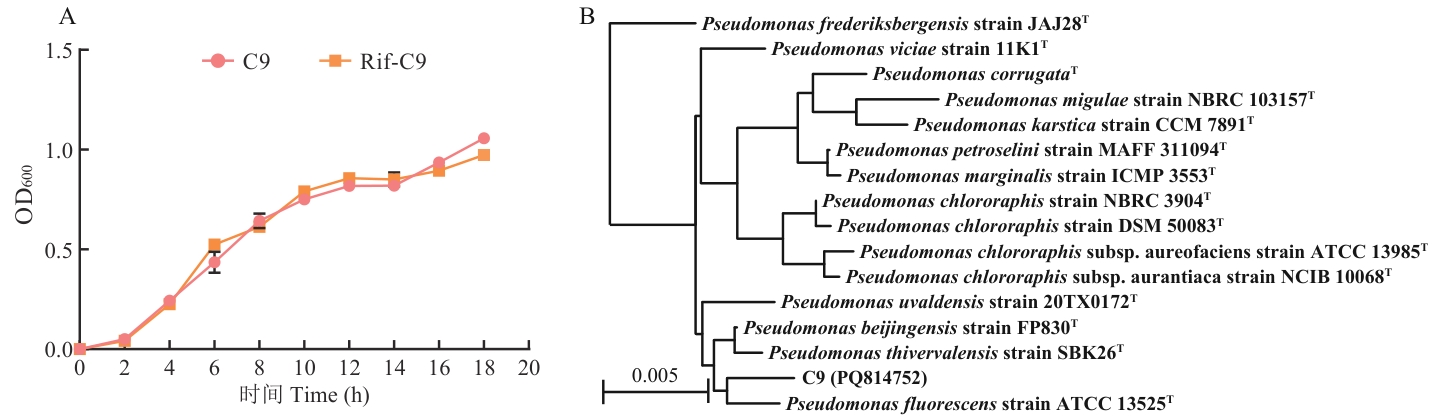
图2 菌株C9和Rif-C9生长特征与系统发育分析A:菌株C9、Rif-C9的生长曲线;B:菌株C9系统发育树;分支节点处显示基于1 000次重复抽样、自举值>50%的支持率
Fig. 2 Growth characteristics and phylogenetic analysis of strains C9 and Rif-C9A: Growth curves of strains C9 and Rif-C9. B: Phylogenetic tree of strain C9. Bootstrap values (based on 1 000 replicates) greater than 50% are shown at the nodes
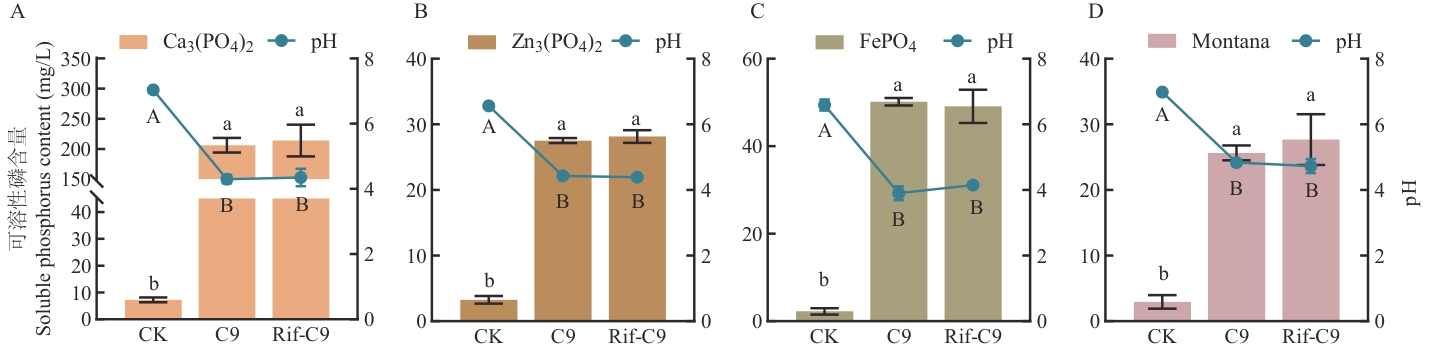
图3 不同难溶磷化合物培养液中可溶性磷含量及pH值显著性差异通过Duncan新复极差法确定;不同字母表示差异显著(P<0.05),下同
Fig. 3 Soluble phosphorus content and pH value in different insoluble phosphorus compound culture mediaSignificant differences were determined by Duncan’s new multiple range test. Different letters indicate significant differences at P<0.05. The same below
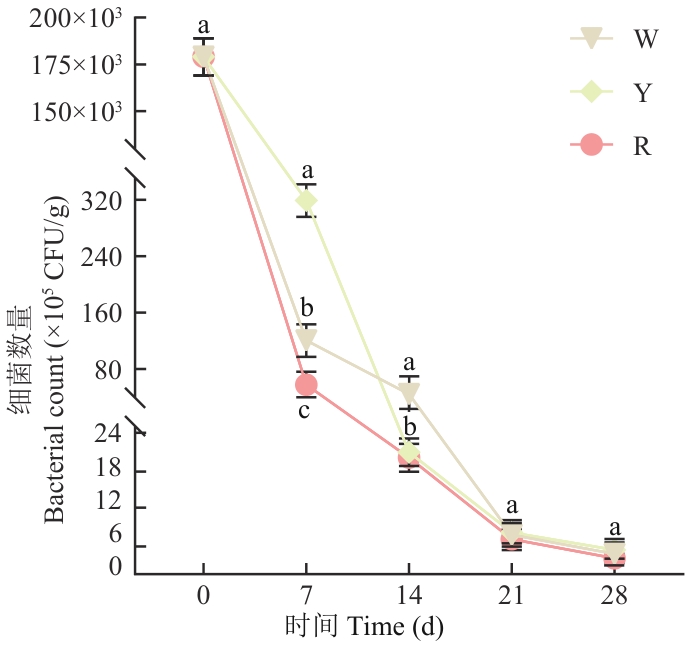
图4 菌株Rif-C9在不同花色红花根际的定殖能力W:白色;Y:黄色;R:红色。下同
Fig. 4 Colonization ability of strain Rif-C9 in the rhizosphere of safflower with different flower colorsW: White; Y: yellow; R: red. The same below
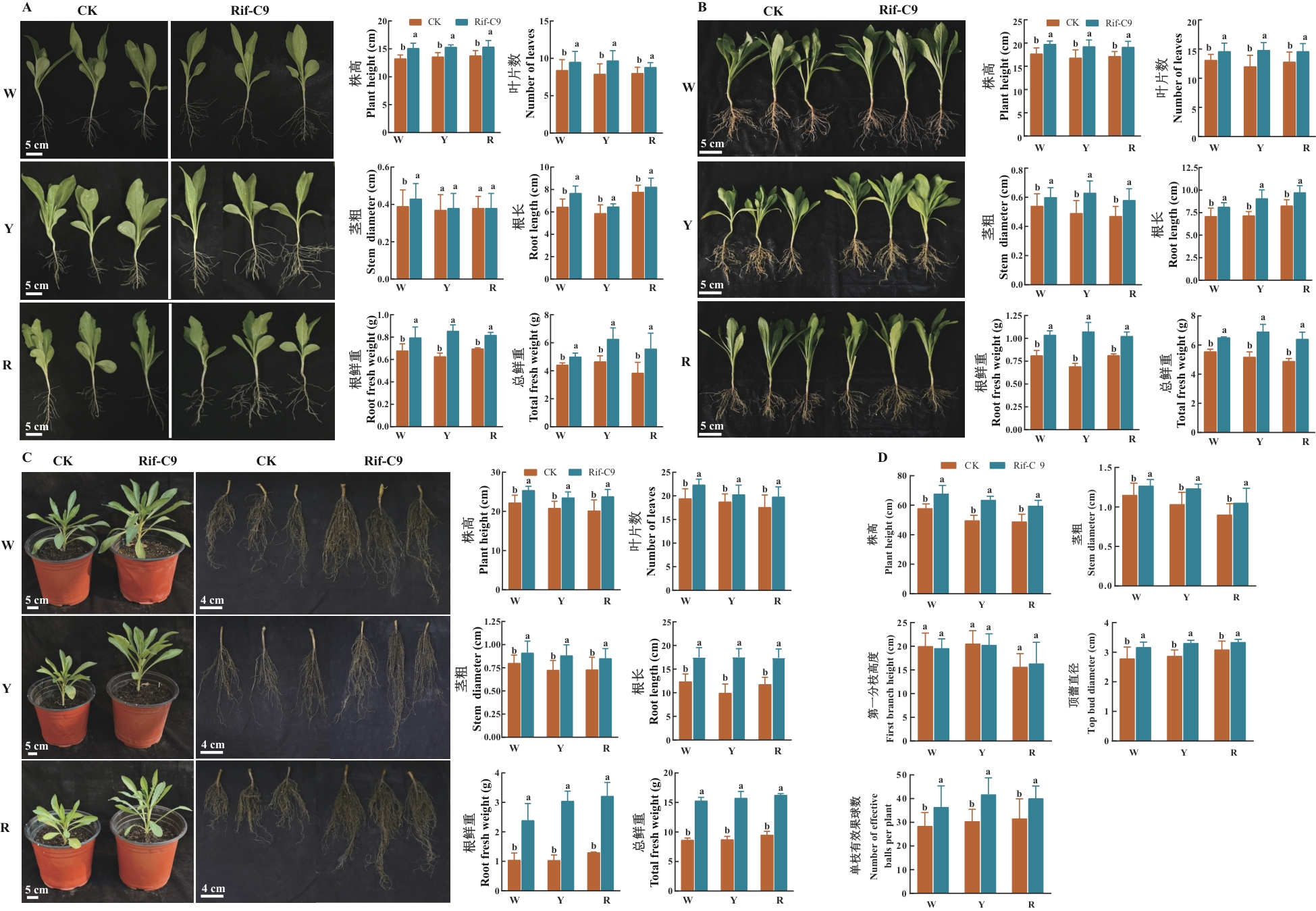
图5 菌株Rif-C9对红花生长发育的影响A‒D:分别为Rif-C9菌株接种14、28、80 d和盛花期农艺性状
Fig. 5 Impact of strain Rif-C9 on the growth and development of safflowerA‒D: Agronomic traits of safflower at 14, 28, 80 d and flowering stage after inoculation with strain Rif-C9
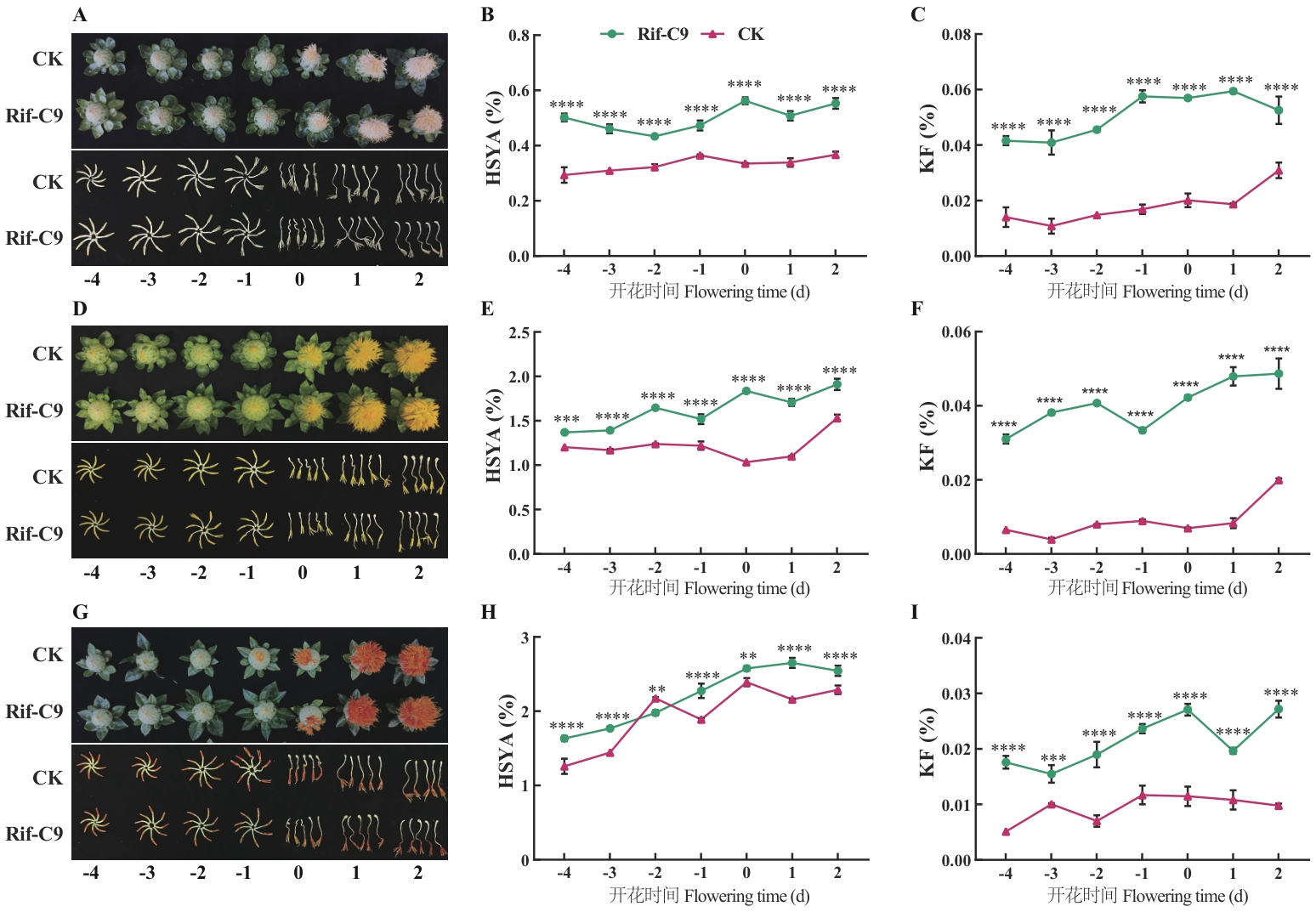
图6 Rif-C9菌株对3种花色红花花丝有效成分的影响A‒C:白色红花花丝形态、羟基红花黄色素A(HSYA)含量及山萘酚(KF)含量;D‒F:黄色红花花丝形态、HSYA含量及KF含量;G‒I:红色红花花丝形态、HSYA含量及KF含量;*表示显著相关(* P<0.05,** P <0.01,*** P <0.001,**** P <0.000 1)
Fig. 6 Effect of strain Rif-C9 on the active components of safflower filaments with three flower colorsA‒C: Filament morphology, hydroxysafflor yellow A (HSYA) and kaempferol (KF) contents of white safflower. D‒F: Filament morphology, HSYA and KF contents of yellow safflower. G‒I: Filament morphology, HSYA and KF contents of red safflower. * indicates significant correlation (* P<0.05, ** P<0.01, *** P<0.001, **** P<0.000 1)
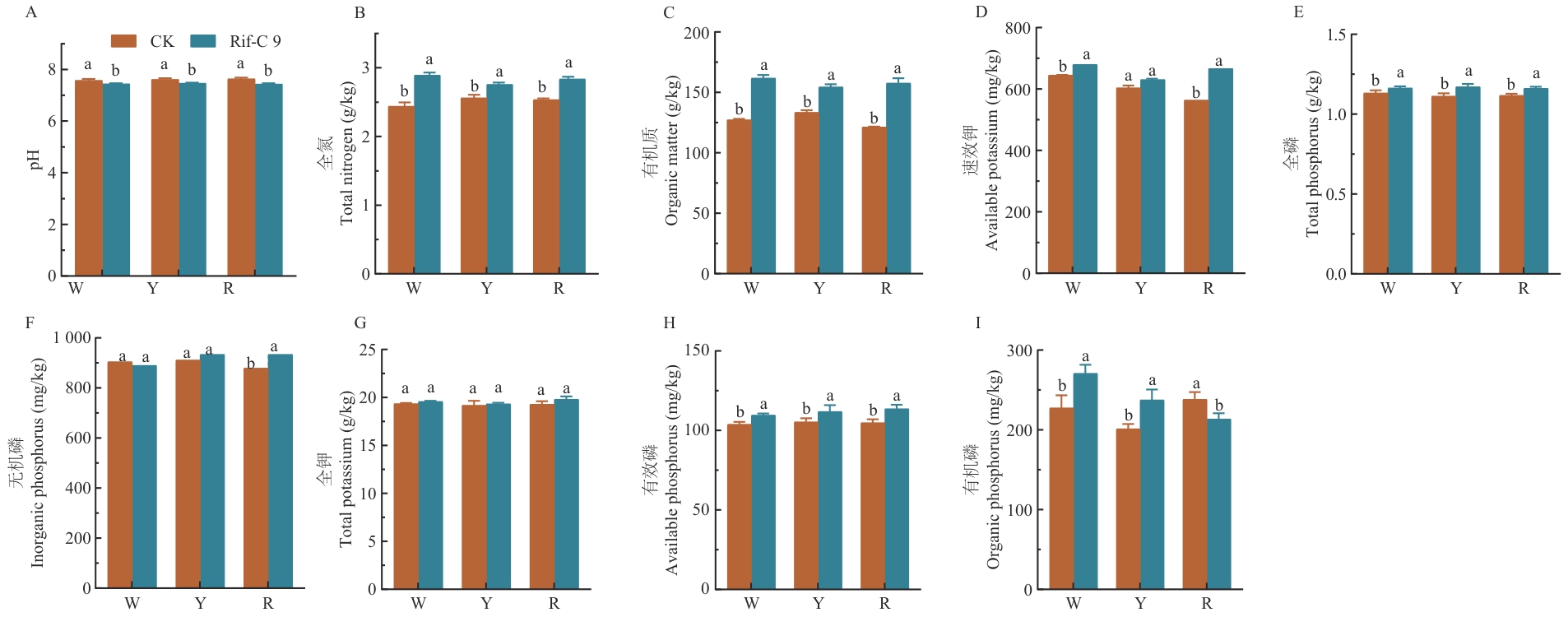
图7 Rif-C9菌株对3种花色红花根际土壤理化性质的影响
Fig. 7 Effect of strain Rif-C9 on the physicochemical properties of rhizosphere soil of safflower with three flower colors
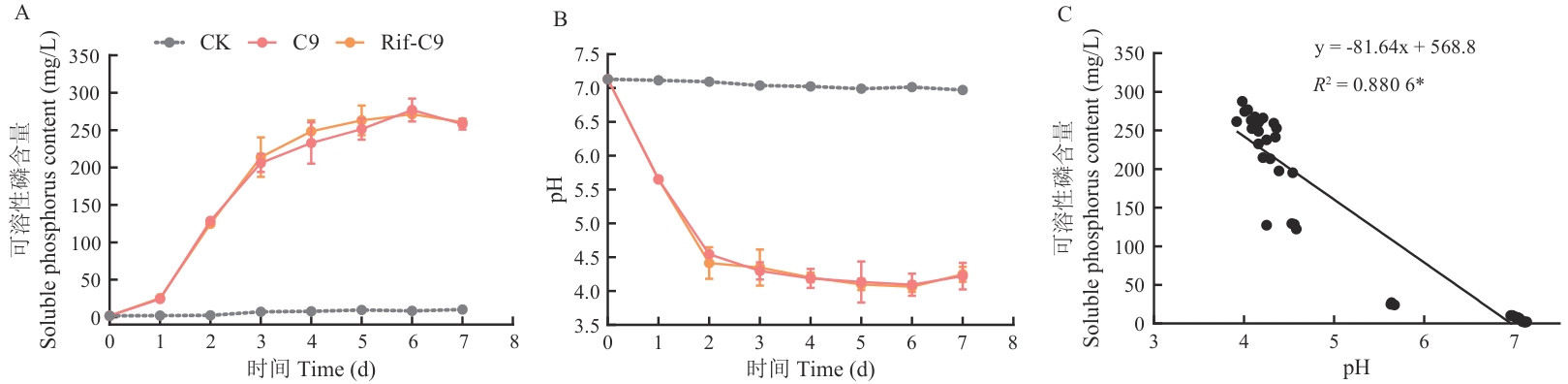
图8 解磷菌菌株培养液中可溶性磷含量及pH动态变化A:解磷菌株NBRIP培养液中可溶性磷含量动态变化;B:解磷菌株NBRIP培养液中pH动态变化;C:NBRIP培养液中可溶性磷含量与pH的线性关系;*表示显著相关(P<0.000 1)
Fig. 8 Dynamic changes in soluble phosphorus content and pH in the culture medium of phosphate-solubilizing bacterial strainsA: Dynamic changes in soluble phosphorus content in NBRIP culture medium of a phosphate-solubilizing bacterial strain. B: Dynamic changes in pH in NBRIP culture medium of a phosphate-solubilizing bacterial strain. C: Linear relationship between soluble phosphorus content and pH in NBRIP culture medium. * indicated significant correlation (P<0.000 1)
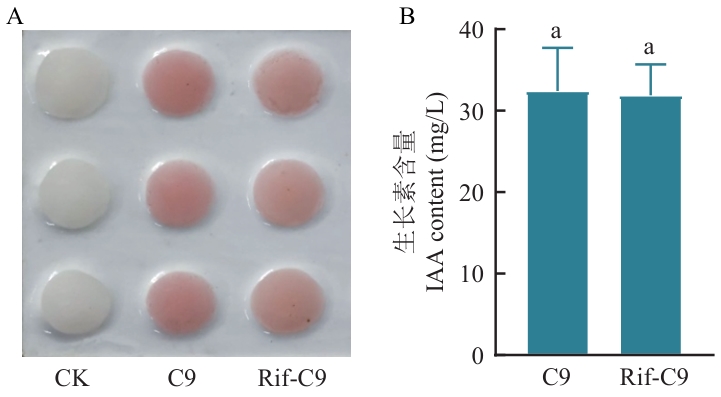
图9 菌株C9及Rif-C9的生长素(IAA)分泌情况
Fig. 9 IAA secretion of strain C9 and Rif-C9
| [1] | 张喜妹, 肖江鸿, 王玉, 等. 中药红花的化学成分及色素提取工艺研究进展 [J]. 中国中药杂志, 2024, 49(7): 1725-1740. |
| Zhang XM, Xiao JH, Wang Y, et al. Research progress in chemical constituents and pigment extraction process of Carthami Flos [J]. China J Chin Mater Med, 2024, 49(7): 1725-1740. | |
| [2] | Qin Z, Fang X, Fei JL, et al. Impact of microwave treatment on polyphenols in safflower seeds and oil [J]. Food Chem, 2025, 474: 143116. |
| [3] | Nogales-Delgado S, Encinar JM, González Cortés Á. High oleic safflower oil as a feedstock for stable biodiesel and biolubricant production [J]. Ind Crops Prod, 2021, 170: 113701. |
| [4] | 王利平, 聂文山, 缪其桁, 等. 天然染料红花黄色素的提取工艺及其稳定性 [J]. 毛纺科技, 2023, 51(10): 61-65. |
| Wang LP, Nie WS, Miu QH, et al. Extraction technology and stability of natural dye safflower yellow [J]. Wool Text J, 2023, 51(10): 61-65. | |
| [5] | 龚细远, 刘丽仙, 李想, 等. 不同比例红花秸秆饲粮对肉牛生长性能、血液生理及生化指标的影响 [J]. 饲料研究, 2025, 48(8): 1-6. |
| Gong XY, Liu LX, Li X, et al. Effects of different proportions of safflower straw diet on growth performance, blood physiological, and biochemical indexes of beef cattle [J]. Feed Res, 2025, 48(8): 1-6. | |
| [6] | 周洁. 红花红色素研究进展 [J]. 粮食与油脂, 2011, 24(4): 46-47. |
| Zhou J. Research advance of red pigment from safflower [J]. J Cereals Oils, 2011, 24(4): 46-47. | |
| [7] | Wang SS, Cao JL, Deng JG, et al. Chemical characterization of flavonoids and alkaloids in safflower (Carthamus tinctorius L.) by comprehensive two-dimensional hydrophilic interaction chromatography coupled with hybrid linear ion trap Orbitrap mass spectrometry [J]. Food Chem X, 2021, 12: 100143. |
| [8] | 李钰, 杨晓, 叶霄, 等. 超声辅助提取红花中主要活性成分的工艺优化 [J]. 植物研究, 2021, 41(5): 824-835. |
| Li Y, Yang X, Ye X, et al. Optimization on the main active components extraction using ultrasonic-assisted method from safflower [J]. Bull Bot Res, 2021, 41(5): 824-835. | |
| [9] | 李娅兰, 白皓天, 梁霄, 等. 红花中抗氧化活性成分及其作用机制的研究进展 [J]. 现代药物与临床, 2022, 37(8): 1879-1885. |
| Li YL, Bai HT, Liang X, et al. Research progress on antioxidant active components in Carthami Flos and its mechanism [J]. Drugs Clin, 2022, 37(8): 1879-1885. | |
| [10] | 吴明先, 杨曦, 廖蔚林, 等. 羟基红花黄色素A防治肺部疾病的药理作用研究进展 [J]. 现代药物与临床, 2025, 40(8): 2127-2133. |
| Wu MX, Yang X, Liao WL, et al. Research progress on pharmacological effects of hydroxysafflor yellow A in preventing and treating pulmonary diseases [J]. Drugs Clin, 2025, 40(8): 2127-2133. | |
| [11] | Zeng ML, Zhou HF, Zeng L, et al. Hydroxysafflor yellow A protects against ischemic stroke-associated Weber syndrome by inhibiting oxidative stress and alleviating DNA damage [J]. Brain Res Bull, 2026, 235: 111747. |
| [12] | 艾楠, 刘星宇, 王馨晨, 等. 红花化学成分和药理作用的研究进展 [J]. 华西药学杂志, 2025, 40(4): 461-465. |
| Ai N, Liu XY, Wang XC, et al. Research progress on chemical components and pharmacological effects of Carthami Flos [J]. West China J Pharm Sci, 2025, 40(4): 461-465. | |
| [13] | Ma YC, Feng CL, Wang JJ, et al. Hydroxyl safflower yellow A regulates the tumor immune microenvironment to produce an anticancer effect in a mouse model of hepatocellular carcinoma [J]. Oncol Lett, 2019,17(3):3503-3510. |
| [14] | Wang R, Ren CX, Dong S, et al. Integrated metabolomics and transcriptome analysis of flavonoid biosynthesis in safflower (Carthamus tinctorius L.) with different colors [J]. Front Plant Sci, 2021, 12: 712038. |
| [15] | 郭继娜, 刘圣红. 不同产地红花主要成分比较研究 [J]. 特产研究, 2022, 44(4): 116-120. |
| Guo JN, Liu SH. The comparative study on the main components of Carthamus tinctorius L. from different habitats [J]. Spec Wild Econ Anim Plant Res, 2022, 44(4): 116-120. | |
| [16] | Solangi F, Zhu XY, Khan S, et al. The global dilemma of soil legacy phosphorus and its improvement strategies under recent changes in agro-ecosystem sustainability [J]. ACS Omega, 2023, 8(26): 23271-23282. |
| [17] | 陈延华. 我国农田土壤有效磷变化的影响因素及机制 [D]. 北京: 中国农业科学院, 2024. |
| Chen YH. The influencing factors and mechanisms of changes in available phosphorus of Chinese farmland soil [D]. Beijing: Chinese Academy of Agricultural Sciences, 2024. | |
| [18] | 郑东方, 赵文, 孟雪, 等. 秸秆还田配施菌肥对红花土壤氮磷钾化学计量特征及产量的影响 [J]. 华北农学报, 2025, 40(5): 153-160. |
| Zheng DF, Zhao W, Meng X, et al. Effects of straw combined with bacterial fertilizer on soil nitrogen, phosphorus and potassium stoichiometry and safflower yield [J]. Acta Agric Boreali Sin, 2025, 40(5): 153-160. | |
| [19] | 刘双凤, 杨德志, 王凤, 等. 施肥对我国农田土壤磷素形态影响的Meta分析 [J]. 中国土壤与肥料, 2024(8): 43-51. |
| Liu SF, Yang DZ, Wang F, et al. Meta-analysis of the effect of fertilizer application on phosphorus forms in agricultural soils in China [J]. Soil Fertil Sci China, 2024(8): 43-51. | |
| [20] | 窦丽, 颜士平. 过度施肥对土壤的污染及化肥减量增效技术分析 [J]. 农业开发与装备, 2024(2): 169-171. |
| Dou L, Yan SP. Analysis of soil pollution caused by excessive fertilization and the technology of reducing fertilizer and increasing efficiency [J]. Agric Dev Equip, 2024(2): 169-171. | |
| [21] | Wang MJ, Deng BW, Fu X, et al. Characterizations of microbial diversity and machine oil degrading microbes in machine oil contaminated soil [J]. Environ Pollut, 2019, 255: 113190. |
| [22] | 随曌一, 周超, 王泰誉, 等. 溶磷菌的筛选、抗逆能力及溶磷条件优化 [J]. 微生物学通报, 2025, 52(8): 3735-3752. |
| Sui ZY, Zhou C, Wang TY, et al. Screening, stress tolerance examination, and phosphate-solubilizing condition optimization of phosphate-solubilizing bacteria [J]. Microbiol China, 2025, 52(8): 3735-3752. | |
| [23] | 马雪晴, 冀傲冉, 郑娇莉, 等. 植物根际促生菌促生机制及其应用研究进展 [J]. 中国农业科技导报, 2025, 27(2): 13-23. |
| Ma XQ, Ji AR, Zheng JL, et al. Research progress on growth-promoting mechanism and application of plant growth-promoting rhizobacteria [J]. J Agric Sci Technol, 2025, 27(2): 13-23. | |
| [24] | Kaushal P, Pati AM. Unleashing rhizobacteria for sustainable soil remediation: PGPR roles in heavy metal tolerance, detoxification, and plant productivity [J]. Front Microbiol, 2025, 16: 1662000. |
| [25] | Gray EJ, Smith DL. Intracellular and extracellular PGPR: commonalities and distinctions in the plant-bacterium signaling processes [J]. Soil Biol Biochem, 2005, 37(3): 395-412. |
| [26] | Fadiji AE, Babalola OO, Santoyo G, et al. The potential role of microbial biostimulants in the amelioration of climate change-associated abiotic stresses on crops [J]. Front Microbiol, 2022, 12: 829099. |
| [27] | Liu XX, Jiang XX, He XY, et al. Phosphate-solubilizing Pseudomonas sp. strain P34-L promotes wheat growth by colonizing the wheat rhizosphere and improving the wheat root system and soil phosphorus nutritional status [J]. J Plant Growth Regul, 2019, 38(4): 1314-1324. |
| [28] | Peix A, Rivas-Boyero AA, Mateos PF, et al. Growth promotion of chickpea and barley by a phosphate solubilizing strain of Mesorhizobium mediterraneum under growth chamber conditions [J]. Soil Biol Biochem, 2001, 33(1): 103-110. |
| [29] | Gulati A, Sharma N, Vyas P, et al. Organic acid production and plant growth promotion as a function of phosphate solubilization by Acinetobacter rhizosphaerae strain BIHB 723 isolated from the cold deserts of the trans-Himalayas [J]. Arch Microbiol, 2010, 192(11): 975-983. |
| [30] | 吕俊, 于存. 一株高效溶磷伯克霍尔德菌的筛选鉴定及对马尾松幼苗的促生作用 [J]. 应用生态学报, 2020, 31(9): 2923-2934. |
| Lyu J, Yu C. Screening and identification of an efficient phosphate-solubilizing Burkholderia sp. and its growth-promoting effect on Pinus massoniana seedling [J]. Chin J Appl Ecol, 2020, 31(9): 2923-2934. | |
| [31] | 陈岩岩, 叶项宇, 常肖锐, 等. 板栗根际高效解磷菌的筛选 [J]. 经济林研究, 2021, 39(2): 132-139. |
| Chen YY, Ye XY, Chang XR, et al. Screening of highly efficient phosphate-solubilizing bacteria of Castanea mollissima rhizosphere [J]. Non Wood For Res, 2021, 39(2): 132-139. | |
| [32] | Montalbán B, Croes S, Weyens N, et al. Characterization of bacterial communities associated with Brassica napus L. growing on a Zn-contaminated soil and their effects on root growth [J]. Int J Phytorem, 2016, 18(10): 985-993. |
| [33] | Sperandio D, Decoin V, Latour X, et al. Virulence of the Pseudomonas fluorescens clinical strain MFN1032 towards Dictyostelium discoideum and macrophages in relation with type III secretion system [J]. BMC Microbiol, 2012, 12: 223. |
| [34] | Chen Q, Liu SJ. Identification and characterization of the phosphate-solubilizing bacterium Pantoea sp. S32 in reclamation soil in Shanxi, China [J]. Front Microbiol, 2019, 10: 2171. |
| [35] | Liu Y, Zhang X, Yang ML, et al. Study on the correlation between soil microbial diversity and ambient environmental factors influencing the safflower distribution in Xinjiang [J]. J Basic Microbiol, 2020, 60(6): 517-531. |
| [36] | 覃书伟, 黄美卉, 杨光, 等. 不同水肥管理对红花生长的影响及红花根际解磷菌的筛选和鉴定 [J]. 微生物学报, 2024, 64(2): 548-564. |
| Qin SW, Huang MH, Yang G, et al. Effects of different water and fertilizer management measures on the growth of safflower and screening and identification of phosphorus-solubilizing bacteria in safflower rhizosphere [J]. Acta Microbiol Sin, 2024, 64(2): 548-564. | |
| [37] | 东秀珠, 蔡妙英. 常见细菌系统鉴定手册 [M]. 北京: 科学出版社, 2001. |
| Dong XZ, Cai MY. Handbook of identification of common bacterial systems [M]. Beijing: Science Press, 2001. | |
| [38] | 吴小花. 解磷细菌的分离筛选及其对盆栽樟树苗生长的影响分析 [D]. 南昌: 江西农业大学, 2022. |
| Wu XH. Isolation and screening of phosphate-solubilizing bacteria and its effect on growth of potted camphor seedlings [D]. Nanchang: Jiangxi Agricultural University, 2022. | |
| [39] | 周皓, 范永斌, 姚楠, 等. 混合菌剂施用对加工番茄生长及根际功能性微生物 群落的影响 [J]. 微生物学通报, 2023, 50(12): 5363-5375. |
| Zhou H, Fan YB, Yao N, et al. Effects of a microbial mixture on the growth and rhizosphere functional microbial community of processing tomatoes [J]. Microbiol China, 2023, 50(12): 5363-5375. | |
| [40] | 宋根, 张宝海, 郭丁鑫, 等. 复合菌剂生物肥对甘薯茎线虫病的防治和增产效果研究 [J]. 安徽农学通报, 2024, 30(3): 67-71. |
| Song G, Zhang BH, Guo DX, et al. Effects of microbial organic fertilizer on the control and yield increase of sweet potato root knot nematode disease [J]. Anhui Agric Sci Bull, 2024, 30(3): 67-71. | |
| [41] | 李畅, 刘锐, 于运凯, 等. 黑土高效解磷菌的筛选及其对玉米的促生效果 [J]. 微生物学通报, 2025, 52(3): 1101-1117. |
| Li C, Liu R, Yu YK, et al. Screening of efficient phosphate-solubilizing bacteria capable of promoting maize growth from black soil [J]. Microbiol China, 2025, 52(3): 1101-1117. | |
| [42] | 国家林业局. 森林土壤磷的测定: [S]. 北京: 中国标准出版社, 2016. |
| State Forestry Administration of the People’s Republic of China. Determination of total phosphorus in forest soil: [S]. Beijing: Standards Press of China, 2016. | |
| [43] | 张英利, 许安民, 尚浩博, 等. AA3型连续流动分析仪测定土壤和植物全氮的方法研究 [J]. 西北农林科技大学学报: 自然科学版, 2006, 34(10): 128-132. |
| Zhang YL, Xu AM, Shang HB, et al. Determination study of total nitrogen in soil and plant by continuous flow analytical system [J]. J Northwest A&F Univ Nat Sci Ed, 2006, 34(10): 128-132. | |
| [44] | 鲍士旦. 土壤农化分析 [M]. 3版. 北京: 中国农业出版社, 2000. |
| Bao SD. Soil and agricultural chemistry analysis [M]. 3rd ed. Beijing: China Agriculture Press, 2000. | |
| [45] | 白娟娈. 苏北海岸带典型盐生植物根际放线菌多样性及其耐盐促生作用研究 [D]. 徐州: 江苏师范大学, 2017. |
| Bai JL. Study on the diversity of rhizosphere actinomycetes from the typical halophytes in coastal zone of northern Jiangsu and their plant growth-promoting effect under salt stress [D]. Xuzhou: Jiangsu Normal University, 2017. | |
| [46] | Liang H, Sun H, Shao C, et al. Regulation of nitrogen and phosphorus content and terpenoid metabolite accumulation in P. ginseng by exogenous strigolactone [J]. Curr Plant Biol, 2025, 41: 100425. |
| [47] | Adnan M, Fahad S, et al. Sustainable phosphorus management in calcareous soils: problems and prospects [J]. J Plant Nutr, 2025, 48(13): 2179-2200. |
| [48] | 李忠婷, 胡杰, 陈钰秦, 等. 基于5年定位试验的新疆滴灌棉田土壤有效磷农学阈值及磷肥适宜用量 [J]. 植物营养与肥料学报, 2024, 30(11): 2063-2071. |
| Li ZT, Hu J, Chen YQ, et al. Agronomic threshold of soil available phosphorus and the appropriate rate of phosphate fertilizer for drip-irrigated cotton fields in Xinjiang based on a 5-year field experiment [J]. Plant Nutr Fert Sci, 2024, 30(11): 2063-2071. | |
| [49] | 孙艳, 洪婉婷, 韩阳, 等. 植物内部磷循环利用提高磷效率的研究进展 [J]. 植物营养与肥料学报, 2021, 27(12): 2216-2228. |
| Sun Y, Hong WT, Han Y, et al. Targeting internal phosphorus re-utilization to improve plant phosphorus use efficiency [J]. J Plant Nutr Fertil, 2021, 27(12): 2216-2228. | |
| [50] | 吴安琪, 张扬, 万松泽, 等. 一株金黄蓝状菌解磷特性及其对毛竹的促生效应 [J]. 应用生态学报, 2019, 30(1): 173-179. |
| Wu AQ, Zhang Y, Wan SZ, et al. Phosphate solubilizing characteristics of Talaromyces aurantiacus and its growth-promoting effect on Phyllostachys edulis seedlings [J]. Chin J Appl Ecol, 2019, 30(1): 173-179. | |
| [51] | Tang YH, Wang LL, Fu J, et al. Unraveling the microecological mechanisms of phosphate-solubilizing Pseudomonas asiatica JP233 through metagenomics: insights into the roles of rhizosphere microbiota and predatory bacteria [J]. Front Microbiol, 2025, 16: 1538117. |
| [52] | Khalid R, Khalid A, Shabaan M, et al. Phosphorous (P)- solubilizing rhizobacteria improve P availability to mung bean via enhanced soil phosphatase activity and improve its growth [J]. J Soil Sci Plant Nutr, 2023, 23(4): 6155-6166. |
| [53] | 林英, 司春灿, 韩文华, 等. 解磷微生物研究进展 [J]. 江西农业学报, 2017, 29(2): 99-103. |
| Lin Y, Si CC, Han WH, et al. Research progress in phosphate-solubilizing microorganisms [J]. Acta Agric Jiangxi, 2017, 29(2): 99-103. | |
| [54] | 段迪瀚, 刘情宇, 荣梦瑶, 等. 微生物菌肥的特点及其作用机制研究进展 [J]. 农业技术与装备, 2022(8): 98-99, 103. |
| Duan DH, Liu QY, Rong MY, et al. Research progress on the characteristics and mechanism of microbial fertilizer [J]. Agric Technol Equip, 2022(8): 98-99, 103. | |
| [55] | 高鹤, 亓玉昆. 荧光假单胞菌对东北山樱幼苗光合特性及生长的影响 [J]. 黑龙江农业科学, 2021(4): 25-28, 43. |
| Gao H, Qi YK. Effects of Pseudomonas fluorescens on photosynthetic characteristics and growth of Cerasus suchulanensas Kom. seedlings [J]. Heilongjiang Agric Sci, 2021(4): 25-28, 43. | |
| [56] | 焦金铖, 安晓虎, 徐晨曦, 等. 有机肥配施荧光假单胞菌肥对玉米产量与复垦土壤磷素有效性的影响 [J]. 农业工程学报, 2024, 40(9): 79-87. |
| Jiao JC, An XH, Xu CX, et al. Effects of organic fertilizer combined with Pseudomonas fluorescein on maize yield and phosphorus activity in reclaimed soil [J]. Trans Chin Soc Agric Eng, 2024, 40(9): 79-87. | |
| [57] | Ai WF, Qiu YP, Hua JJ, et al. Pseudomonas fluorescens P34 colonization impacts expression changes in wheat roots, reshapes rhizosphere microbial communities and promotes wheat plant growth [J]. Microbiol Res, 2025, 301: 128306. |
| [58] | 冯璞阳, 赵艳妮, 陈卫锋, 等. 药用植物根系分泌物与根际微生物互作研究进展 [J]. 现代农业科技, 2024(17): 159-162, 167. |
| Feng PY, Zhao YN, Chen WF, et al. Research progress on interaction between root exudates of medicinal plants and rhizosphere microorganisms [J]. XianDai NongYe KeJi, 2024(17): 159-162, 167. | |
| [59] | 高宁, 邢意警, 熊瑞, 等. 丛枝菌根真菌和溶磷细菌协调植物获取磷素的机制 [J]. 浙江农林大学学报, 2023, 40(6): 1167-1180. |
| Gao N, Xing YJ, Xiong R, et al. Mechanisms of plant P acquisition coordinated by arbuscular mycorrhizal fungi and phosphate-solubilizing bacteria [J]. J Zhejiang A&F Univ, 2023, 40(6): 1167-1180. | |
| [60] | 庞红霞, 祝长青, 覃建兵. 植物花青素生物合成相关基因研究进展 [J]. 种子, 2010, 29(3): 60-64. |
| Pang HX, Zhu CQ, Qin JB. Advancement of plant genes related with anthocyanins synthetic biology [J]. Seed, 2010, 29(3): 60-64. | |
| [61] | Xian B, Zhou YX, Hu YY,et al. Genome-wide screen and multi-omics analysis reveal OGT1 participate in the biosynthesis of safflower flavonoid glycosides [J]. Hortic Res, 2024, 11(12): uhae261. |
| [62] | Wang SL, Ruan YH, Du MX, et al. Optimization of phosphate fertilizer application strategies to improve phosphorus availability and utilization in maize [J]. Agron J, 2024, 116(2): 453-464. |
| [63] | 吕柏辰, 孙海, 钱佳奇, 等. 药用植物根系分泌物与根际微生物相互作用及其在中药材生态种植中的应用 [J]. 中国中药杂志, 2024, 49(8): 2128-2137. |
| Lyu BC, Sun H, Qian JQ, et al. Interaction between root exudates of medicinal plants and rhizosphere microorganisms and its application in ecological planting of Chinese medicinal materials [J]. China J Chin Mater Med, 2024, 49(8): 2128-2137. | |
| [64] | Cheng YY, Narayanan M, Shi XJ, et al. Phosphate-solubilizing bacteria: Their agroecological function and optimistic application for enhancing agro-productivity [J]. Sci Total Environ, 2023, 901: 166468. |
| [65] | Etesami H, Glick BR. Bacterial indole-3-acetic acid: a key regulator for plant growth, plant-microbe interactions, and agricultural adaptive resilience [J]. Microbiol Res, 2024, 281: 127602. |
| [66] | Chen J, Guo S, Hu XL, et al. Whole-genome and genome-wide association studies improve key agricultural traits of safflower for industrial and medicinal use [J]. Hortic Res, 2023, 10(11): uhad197. |
| [67] | Fan SP, Chen W, Wei JC, et al. Molecular cloning and characterization of three phenylalanine ammonia-lyase genes from Schisandra chinensis [J]. Chin J Nat Med, 2022, 20(7): 527-536. |
| [1] | 秦娟, 卢蔚雯, 李佳徽, 李晨, 李斌, 王治业. 红花2个G6PDH基因的克隆与表达特征分析[J]. 生物技术通报, 2026, 42(8): 217-228. |
| [2] | 何浩迪, 梁振普, 张国只, 房世杰, 张小霞. 一株耐盐碱卡氏芽胞杆菌的分离及其促生功能鉴定[J]. 生物技术通报, 2026, 42(8): 312-322. |
| [3] | 迪丽拜尔·吐尔逊, 祖丽胡玛尔·亚库普, 包慧芳, 詹发强, 杨蓉, 史应武, 杨红梅, 楚敏, 房世杰, 王宁. 番茄根际放线菌GNLJ-7菌株的生物功能及全基因组分析[J]. 生物技术通报, 2026, 42(8): 276-286. |
| [4] | 吕红珍, 徐莉莉, 张琳, 高敏, 谭镇炜, 王亚雯, 张秀格, 王硕, 马爱军, 王承民. 高效解磷菌筛选优化及其对弱碱土小麦促生效应[J]. 生物技术通报, 2026, 42(8): 263-275. |
| [5] | 徐焱, 陈玲, 黄灵琳, 常小丽. 大豆转录因子GmWRKY23a对有益绿针假单胞菌根系定殖的调控[J]. 生物技术通报, 2026, 42(8): 287-297. |
| [6] | 郭家鑫, 王梦霞, 马耀武, 张麒宇, 张振宇, 柳海涛, 裴久渤, 姜瑛. 一株耐镉促生菌的筛选、鉴定及全基因组分析[J]. 生物技术通报, 2026, 42(7): 257-268. |
| [7] | 游欣, 王淅, 张新妤, 魏绪英, 程华, 蔡军火. 基于非靶向代谢组解析红花石蒜叶片对高温胁迫的响应[J]. 生物技术通报, 2026, 42(7): 173-181. |
| [8] | 苏艳艳, 左强, 宋志双, 穆琳英, 吕佳音, 肖自敏, 卢志军, 谢华. 贝莱斯芽胞杆菌BPC37的鉴定与防病促生效果分析[J]. 生物技术通报, 2026, 42(7): 269-279. |
| [9] | 孔兵兵, 王清, 蒋标, 韩丽珍. 根际促生菌共发酵菌液育苗基质对辣椒育苗的影响[J]. 生物技术通报, 2026, 42(6): 326-339. |
| [10] | 阳涛, 曾繁城, 曾宇笑, 陶瑞岩, 薛志红, 陶茜, 仲阳, 江帆, 熊兴耀, 程旭. 复合菌群的构建及其对马铃薯生长的影响[J]. 生物技术通报, 2026, 42(5): 89-100. |
| [11] | 李琼瑶, 鲍瑞, 雷海涛, 杨苑姁, 韩丽珍. 抗逆促生菌恶臭假单胞菌对辣椒种子萌发及幼苗生长的影响[J]. 生物技术通报, 2026, 42(5): 257-271. |
| [12] | 林宝妹, 李珊珊, 李海明, 洪佳敏, 张帅, 吴妙鸿, 吴维坚, 吴水金. 香蕉枯萎病拮抗菌的筛选鉴定与生防作用[J]. 生物技术通报, 2026, 42(4): 272-286. |
| [13] | 董宇韬, 包慧芳, 何苗, 侯鹏, 李烽, 王之西, 秦瑶, 罗青红. 沙枣根际耐盐促生复合菌剂发酵工艺优化及其促生效果研究[J]. 生物技术通报, 2026, 42(4): 297-309. |
| [14] | 何启露, 田卓, 邓静, 李俊杨, 杨汶霖, 刘湘, 余秀梅. 产铁载体细菌对石灰性紫色土壤中花生的影响[J]. 生物技术通报, 2026, 42(2): 188-196. |
| [15] | 白雨果, 李婉迪, 梁建萍, 石志勇, 卢庚龙, 刘红军, 牛景萍. 哈茨木霉T9131对黄芪幼苗的促生机理[J]. 生物技术通报, 2025, 41(8): 175-185. |
| 阅读次数 | ||||||
|
全文 |
|
|||||
|
摘要 |
|
|||||
