







Biotechnology Bulletin ›› 2025, Vol. 41 ›› Issue (2): 257-269.doi: 10.13560/j.cnki.biotech.bull.1985.2024-0700
YANG Yong( ), YUAN Guo-mei(), KANG Xiao-xiao, LIU Ya-ming, WANG Dong-sheng, ZHANG Hai-e()
Received:2024-07-21
Online:2025-02-26
Published:2025-02-28
Contact:
ZHANG Hai-e
E-mail:1725722566@qq.com;zhang33haie4@163.com
YANG Yong, YUAN Guo-mei, KANG Xiao-xiao, LIU Ya-ming, WANG Dong-sheng, ZHANG Hai-e. Identification and Expression Analysis of Members of the SWEET Gene Family in Chinese Chestnut[J]. Biotechnology Bulletin, 2025, 41(2): 257-269.
| 基因Gene | 上游引物Forward primer(5′-3′) | 下游引物Reverse primer(5′-3′) |
|---|---|---|
| CmSWEET1 | CTGCATGGTGTGGGCCTT | GATACCAGTGCCTGCCCC |
| CmSWEET2 | GCGCTGTTTGTGTCACCC | AGCAGCTGAAGAAGGCGT |
| CmSWEET3 | CAAAGGAAGCAGCCTCCCA | TGGGGCCAACTAGGGTGT |
| CmSWEET9 | ATGCAGCTGGAGTCGCAG | CGGCAGCCCTGAGAACTG |
| CmSWEET14 | GCTTTGCTGCTGCCGTTT | CAGGAAGTGCCGCACAGA |
| CmSWEET15 | TCGCGTTTGTGCTCACCT | AAACGGCAGCAGCAAAGC |
| CmSWEET16 | CAGCCGGGAGAGCTAGGA | AGCAGGGAGGTGCAAAGC |
| CmSWEET17 | GCACCCGGGAGAGTTAGG | AGCAGGGAGGTGCAAAGC |
| CmSWEET19 | CCTGGCAAAAGGCTCCCA | TGGCATGTACTCCACGCTC |
| CmActin | ATTCACGAGACCACCTACA | TGCCACAACCTTAATCTTCAT |
Table 1 Primer sequences
| 基因Gene | 上游引物Forward primer(5′-3′) | 下游引物Reverse primer(5′-3′) |
|---|---|---|
| CmSWEET1 | CTGCATGGTGTGGGCCTT | GATACCAGTGCCTGCCCC |
| CmSWEET2 | GCGCTGTTTGTGTCACCC | AGCAGCTGAAGAAGGCGT |
| CmSWEET3 | CAAAGGAAGCAGCCTCCCA | TGGGGCCAACTAGGGTGT |
| CmSWEET9 | ATGCAGCTGGAGTCGCAG | CGGCAGCCCTGAGAACTG |
| CmSWEET14 | GCTTTGCTGCTGCCGTTT | CAGGAAGTGCCGCACAGA |
| CmSWEET15 | TCGCGTTTGTGCTCACCT | AAACGGCAGCAGCAAAGC |
| CmSWEET16 | CAGCCGGGAGAGCTAGGA | AGCAGGGAGGTGCAAAGC |
| CmSWEET17 | GCACCCGGGAGAGTTAGG | AGCAGGGAGGTGCAAAGC |
| CmSWEET19 | CCTGGCAAAAGGCTCCCA | TGGCATGTACTCCACGCTC |
| CmActin | ATTCACGAGACCACCTACA | TGCCACAACCTTAATCTTCAT |

Fig. 1 Phylogenetic tree of SWEET gene family of 12 speciesDifferent branch colors in the figure indicate different groups; different colors of gene names indicate different orthogroups
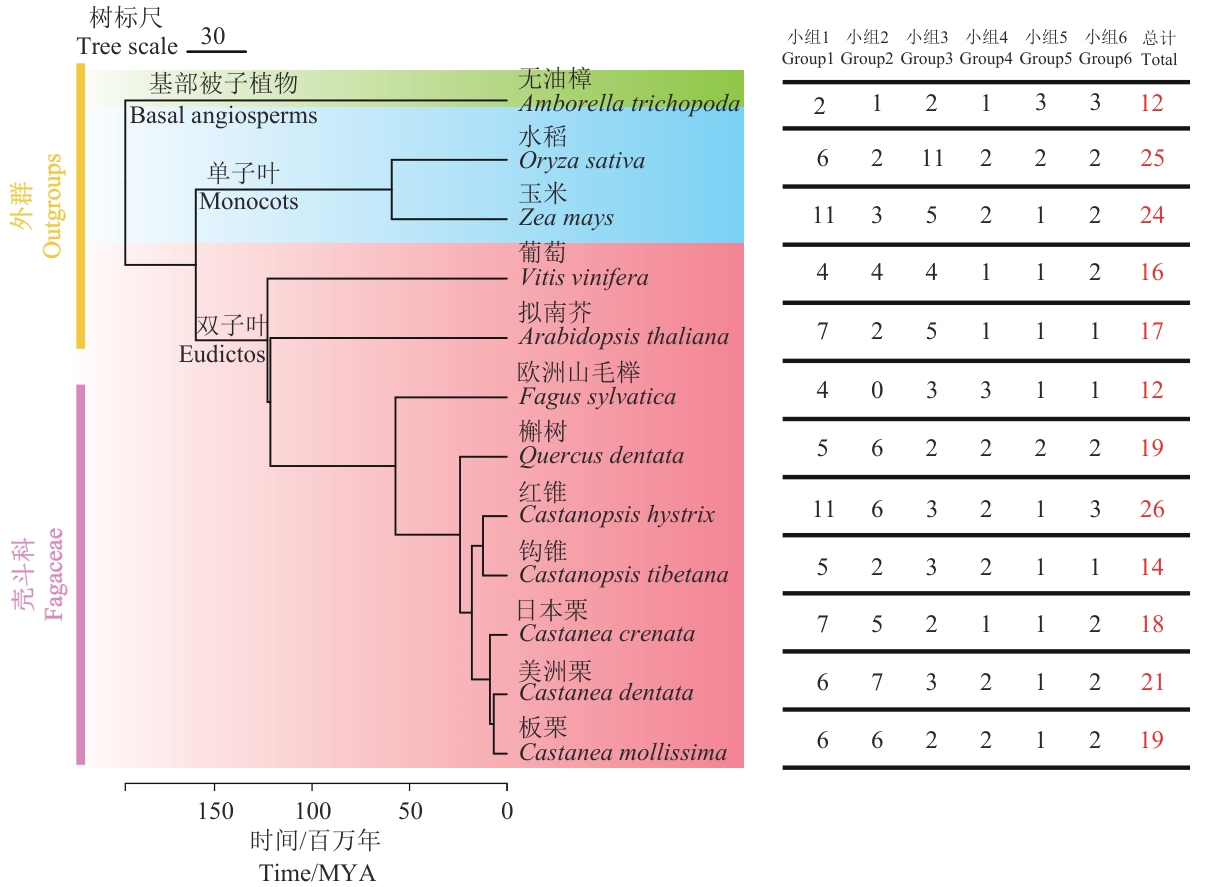
Fig. 2 Statistics of the number of SWEET gene family members for each species
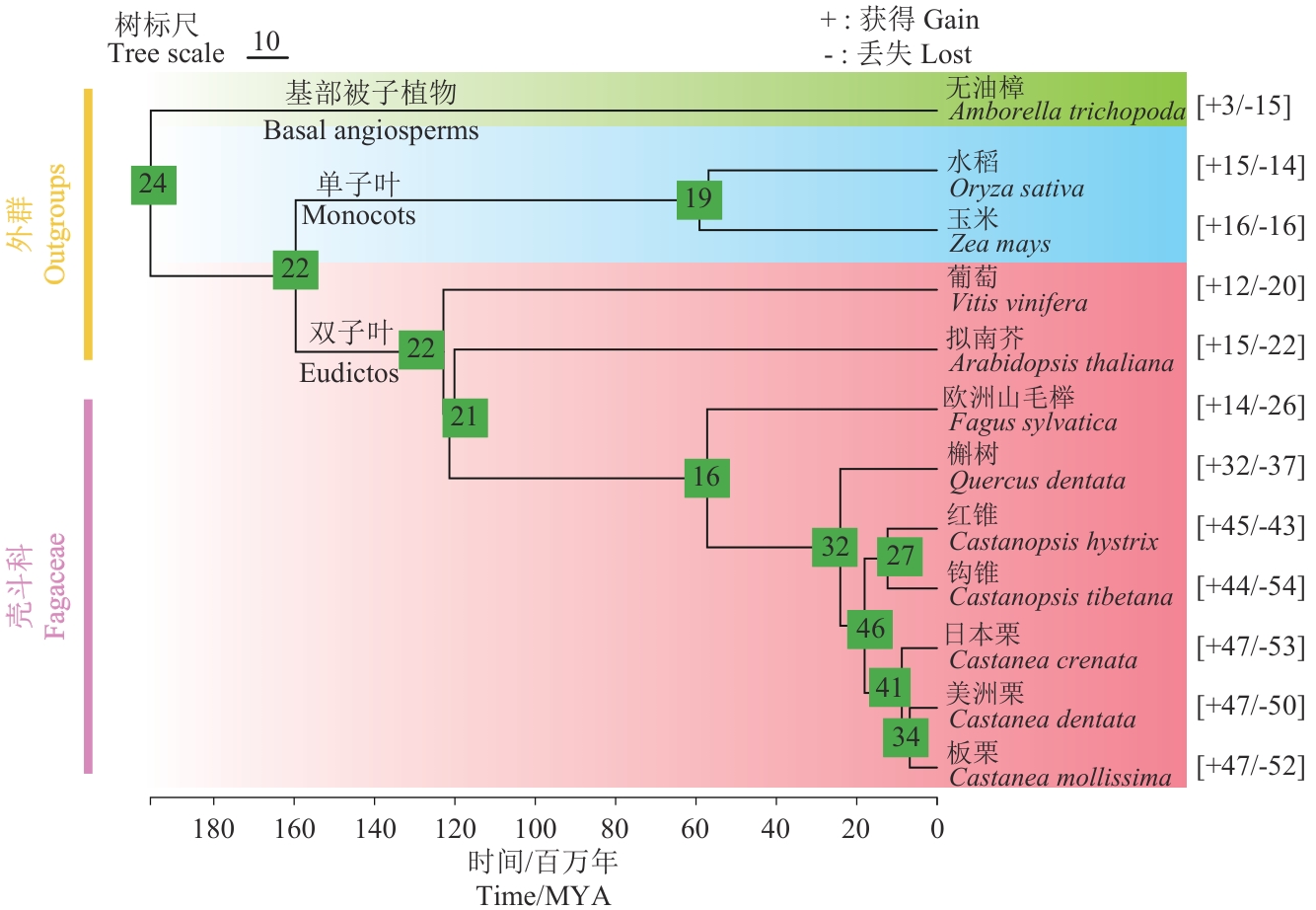
Fig. 3 Statistics of the number of gene family members at each evolutionary nodeThe green boxes indicate the number of members of the SWEET gene family in each node. Numbers after “+, -” indicate the number of gained or lost genes

Fig. 4 Chromosomal localization of the CmSWEET gene family
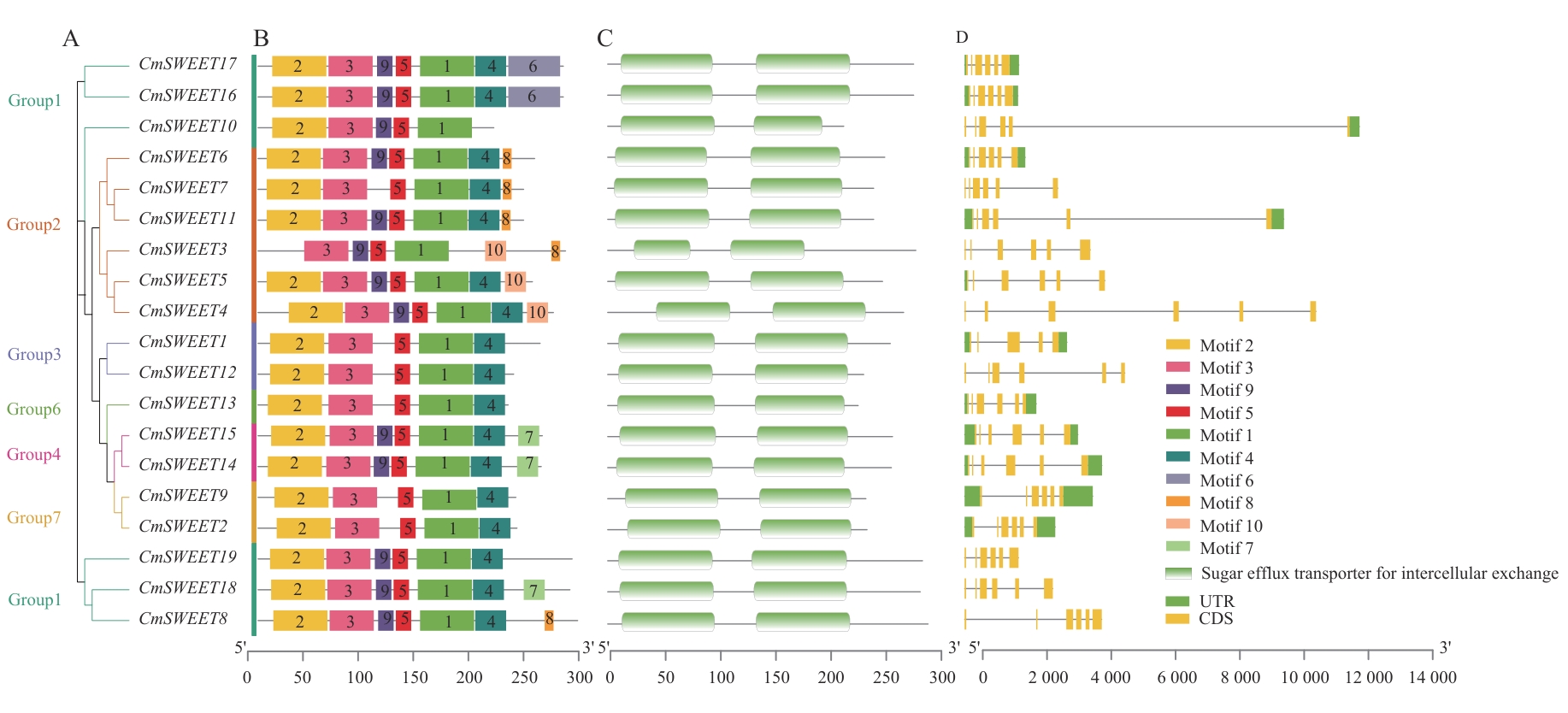
Fig. 5 Phylogenic tree (A), motif distribution (B), domain distribution (C), and gene structure (D) of CmSWEET gene family
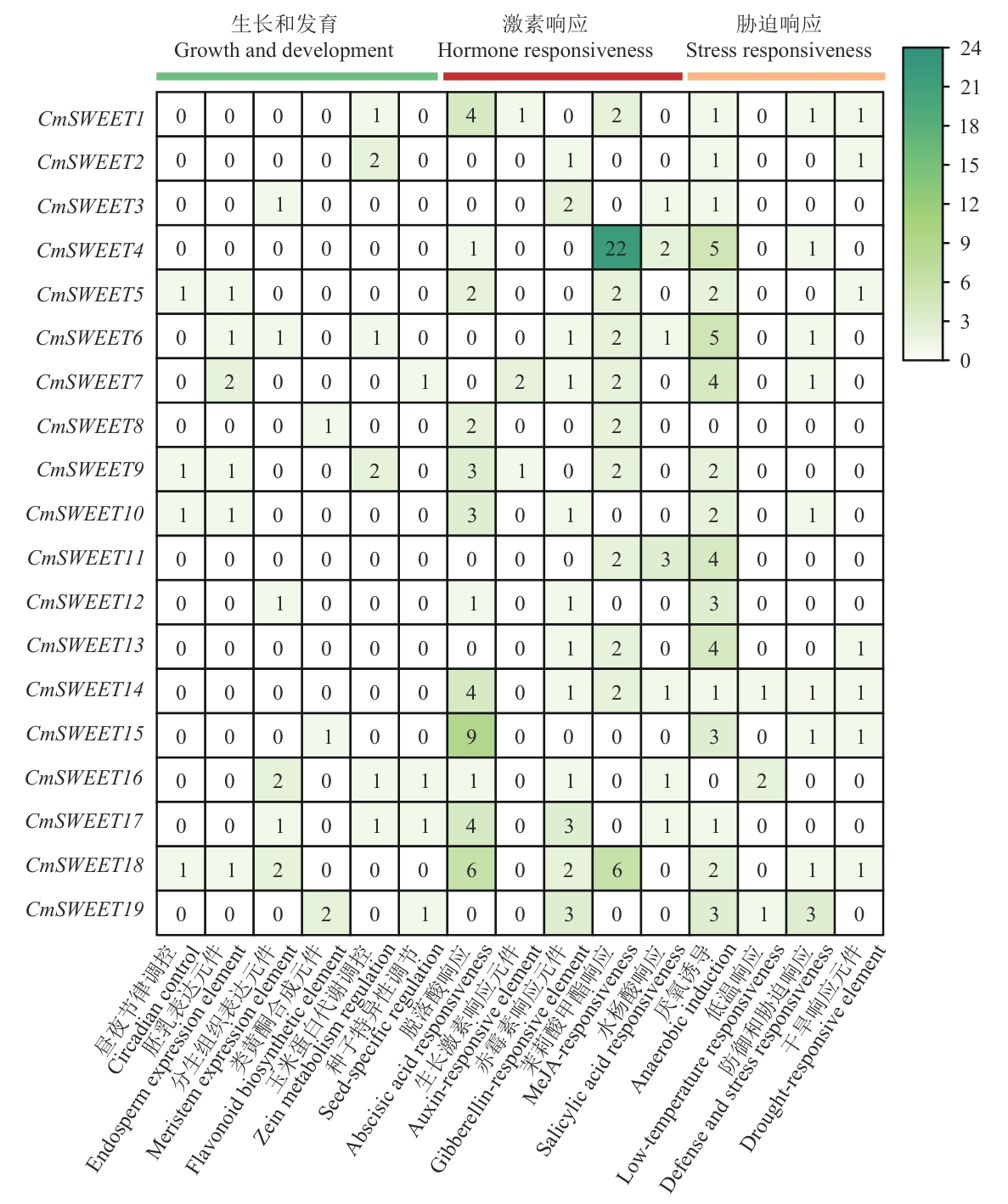
Fig. 6 Statistics of cis-acting elements of CmSWEET gene family
| 物种 Species | 全基因组复制 WGD | 串联复制 TD | 近端复制 PD | 分散复制 DSD | 转座子复制 TRD | 总数 Total |
|---|---|---|---|---|---|---|
| 欧洲山毛榉 Fagus sylvatica | 1 | 0 | 2 | 1 | 2 | 6 |
| 槲树 Quercus dentata | 3 | 2 | 1 | 1 | 3 | 10 |
| 红锥 Castanopsis hystrix | 2 | 4 | 3 | 0 | 5 | 14 |
| 钩椎 Castanopsis tibetana | 1 | 1 | 2 | 0 | 4 | 8 |
| 日本栗 Castanea crenata | 1 | 1 | 2 | 3 | 4 | 11 |
| 美洲栗 Castanea dentata | 3 | 5 | 1 | 0 | 2 | 11 |
| 板栗 Castanea mollissima | 0 | 5 | 1 | 3 | 3 | 12 |
Table 2 SWEET gene family duplication types in seven Fagaceae species
| 物种 Species | 全基因组复制 WGD | 串联复制 TD | 近端复制 PD | 分散复制 DSD | 转座子复制 TRD | 总数 Total |
|---|---|---|---|---|---|---|
| 欧洲山毛榉 Fagus sylvatica | 1 | 0 | 2 | 1 | 2 | 6 |
| 槲树 Quercus dentata | 3 | 2 | 1 | 1 | 3 | 10 |
| 红锥 Castanopsis hystrix | 2 | 4 | 3 | 0 | 5 | 14 |
| 钩椎 Castanopsis tibetana | 1 | 1 | 2 | 0 | 4 | 8 |
| 日本栗 Castanea crenata | 1 | 1 | 2 | 3 | 4 | 11 |
| 美洲栗 Castanea dentata | 3 | 5 | 1 | 0 | 2 | 11 |
| 板栗 Castanea mollissima | 0 | 5 | 1 | 3 | 3 | 12 |
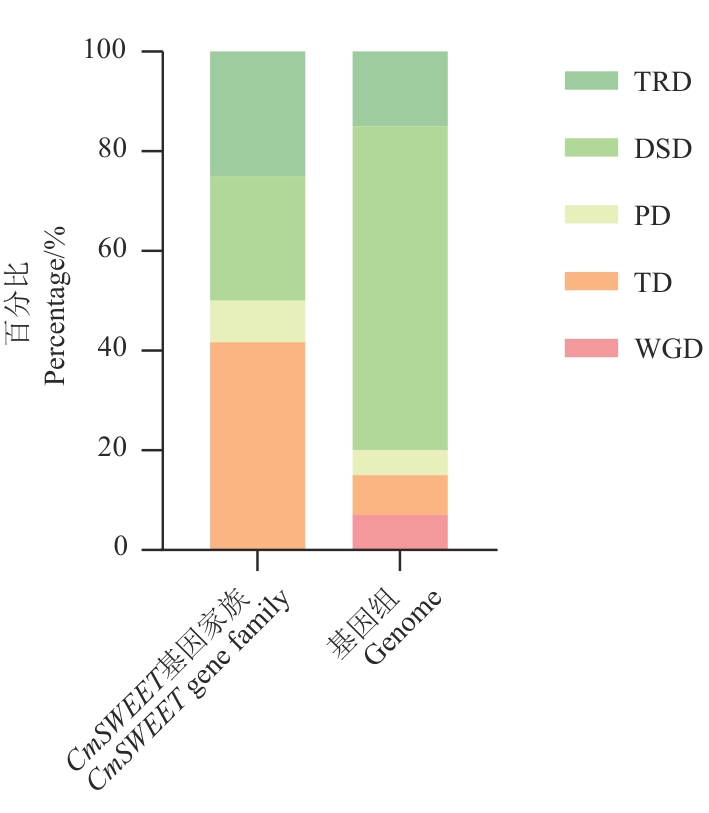
Fig. 7 Comparison of the proportion of CmSWEET gene family and genome replication typesTRD, DSD, PD, TD and WGD indicate transposon duplication, dispersed duplication, proximal duplication, tandem duplication and whole genome duplication in the figure. The same below
| 复制类型Duplication type | 基因对Gene pair | 非同义替换率Ka | 同义替换率Ks | 非同义替换率/同义替换率Ka/Ks | |
|---|---|---|---|---|---|
| TD | CmSWEET5 | CmSWEET6 | 0.44 | 4.81 | 0.09 |
| TD | CmSWEET18 | CmSWEET19 | 0.34 | 1.77 | 0.19 |
| TD | CmSWEET6 | CmSWEET7 | 0.37 | 1.07 | 0.34 |
| TD | CmSWEET14 | CmSWEET15 | 0.04 | 0.12 | 0.37 |
| TD | CmSWEET4 | CmSWEET5 | 0.22 | 0.45 | 0.49 |
| PD | CmSWEET16 | CmSWEET17 | 0.02 | 0.06 | 0.28 |
| DSD | CmSWEET8 | CmSWEET11 | 0.64 | 1.69 | 0.38 |
| DSD | CmSWEET13 | CmSWEET11 | 0.57 | 3.47 | 0.16 |
| DSD | CmSWEET11 | CmSWEET3 | 0.45 | 2.14 | 0.21 |
| TRD | CmSWEET9 | CmSWEET2 | 0.23 | 0.98 | 0.23 |
| TRD | CmSWEET1 | CmSWEET12 | 0.42 | 3.06 | 0.14 |
| TRD | CmSWEET10 | CmSWEET17 | 0.33 | 1.73 | 0.19 |
Table 3 Calculations of the gene-pairs Ka/Ks values
| 复制类型Duplication type | 基因对Gene pair | 非同义替换率Ka | 同义替换率Ks | 非同义替换率/同义替换率Ka/Ks | |
|---|---|---|---|---|---|
| TD | CmSWEET5 | CmSWEET6 | 0.44 | 4.81 | 0.09 |
| TD | CmSWEET18 | CmSWEET19 | 0.34 | 1.77 | 0.19 |
| TD | CmSWEET6 | CmSWEET7 | 0.37 | 1.07 | 0.34 |
| TD | CmSWEET14 | CmSWEET15 | 0.04 | 0.12 | 0.37 |
| TD | CmSWEET4 | CmSWEET5 | 0.22 | 0.45 | 0.49 |
| PD | CmSWEET16 | CmSWEET17 | 0.02 | 0.06 | 0.28 |
| DSD | CmSWEET8 | CmSWEET11 | 0.64 | 1.69 | 0.38 |
| DSD | CmSWEET13 | CmSWEET11 | 0.57 | 3.47 | 0.16 |
| DSD | CmSWEET11 | CmSWEET3 | 0.45 | 2.14 | 0.21 |
| TRD | CmSWEET9 | CmSWEET2 | 0.23 | 0.98 | 0.23 |
| TRD | CmSWEET1 | CmSWEET12 | 0.42 | 3.06 | 0.14 |
| TRD | CmSWEET10 | CmSWEET17 | 0.33 | 1.73 | 0.19 |
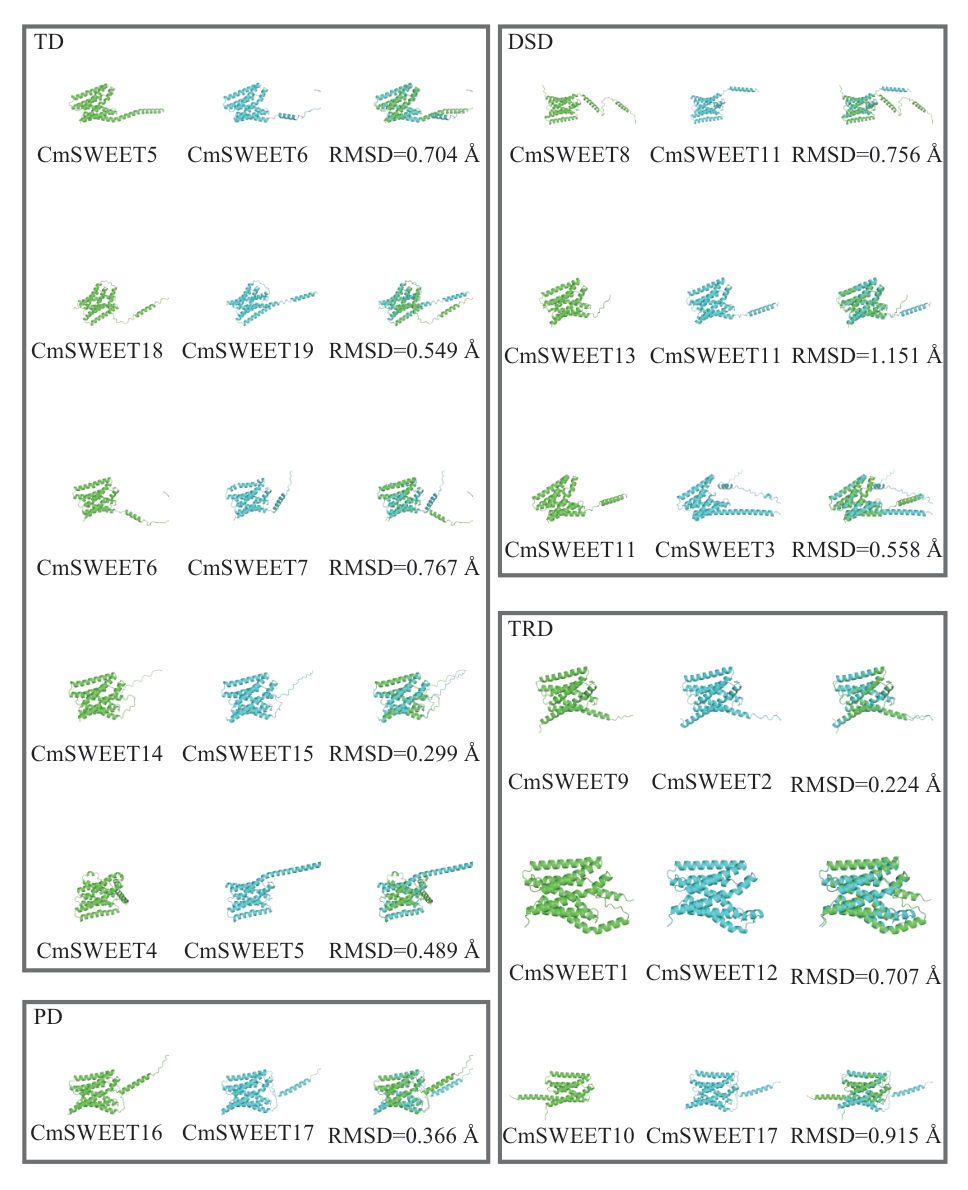
Fig. 8 Comparison of protein structures with different replication types of the CmSWEET gene family
| 蛋白编号Protein ID | 预测模型得分pTM scores |
|---|---|
| CmSWEET1 | 0.84 |
| CmSWEET2 | 0.86 |
| CmSWEET3 | 0.62 |
| CmSWEET4 | 0.75 |
| CmSWEET5 | 0.81 |
| CmSWEET6 | 0.77 |
| CmSWEET7 | 0.75 |
| CmSWEET8 | 0.69 |
| CmSWEET9 | 0.87 |
| CmSWEET10 | 0.70 |
| CmSWEET11 | 0.81 |
| CmSWEET12 | 0.87 |
| CmSWEET13 | 0.85 |
| CmSWEET14 | 0.79 |
| CmSWEET15 | 0.79 |
| CmSWEET16 | 0.73 |
| CmSWEET17 | 0.72 |
| CmSWEET18 | 0.70 |
| CmSWEET19 | 0.72 |
Table 4 Prediction model scores of CmSWEET gene family proteins
| 蛋白编号Protein ID | 预测模型得分pTM scores |
|---|---|
| CmSWEET1 | 0.84 |
| CmSWEET2 | 0.86 |
| CmSWEET3 | 0.62 |
| CmSWEET4 | 0.75 |
| CmSWEET5 | 0.81 |
| CmSWEET6 | 0.77 |
| CmSWEET7 | 0.75 |
| CmSWEET8 | 0.69 |
| CmSWEET9 | 0.87 |
| CmSWEET10 | 0.70 |
| CmSWEET11 | 0.81 |
| CmSWEET12 | 0.87 |
| CmSWEET13 | 0.85 |
| CmSWEET14 | 0.79 |
| CmSWEET15 | 0.79 |
| CmSWEET16 | 0.73 |
| CmSWEET17 | 0.72 |
| CmSWEET18 | 0.70 |
| CmSWEET19 | 0.72 |
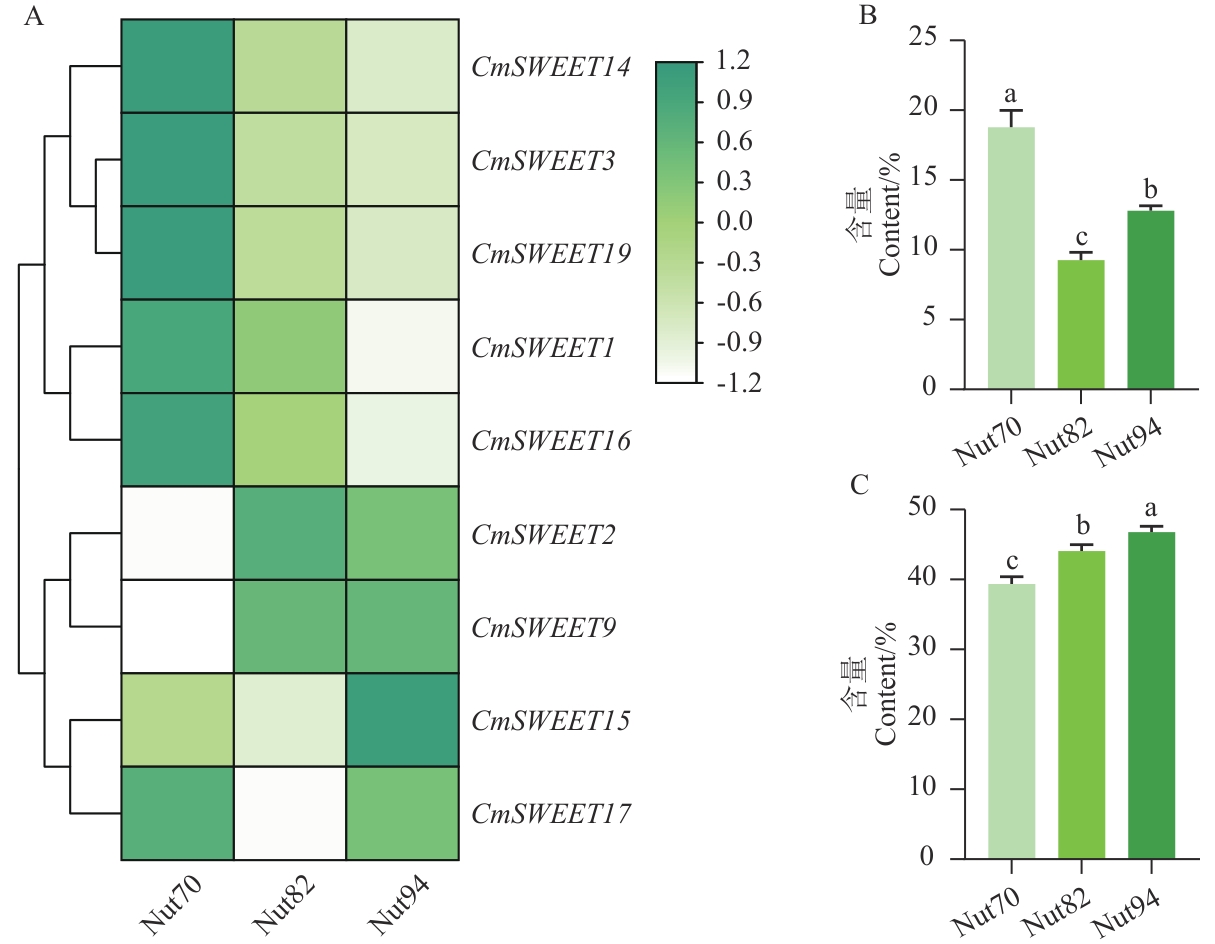
Fig. 9 Heatmap of the CmSWEET gene family expression patterns (A), the changing trend of soluble sugar content (B) and the starch content (C)Nut 70 indicates the early ripening period; Nut 82 indicates the middle ripening stage and Nut 94 indicates the late ripening stage. Different lower letters indicate significantly difference at the 0.05 level. The same below
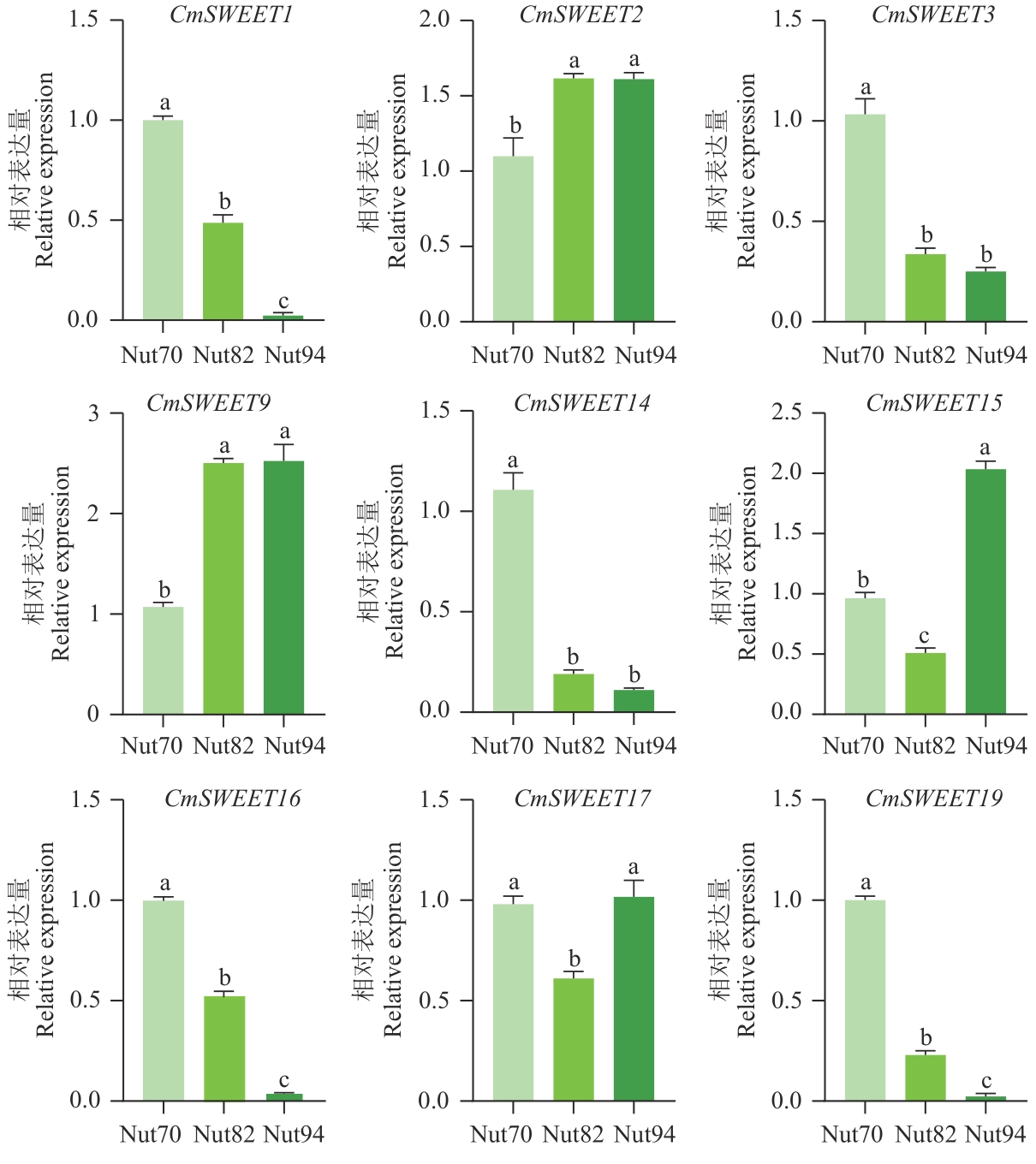
Fig. 10 Relative expressions of the CmSWEET gene family during different fruit ripening periods
| 1 | Yamada K, Osakabe Y. Sugar compartmentation as an environmental stress adaptation strategy in plants [J]. Semin Cell Dev Biol, 2018, 83: 106-114. |
| 2 | Pommerrenig B, Ludewig F, Cvetkovic J, et al. In concert: orchestrated changes in carbohydrate homeostasis are critical for plant abiotic stress tolerance [J]. Plant Cell Physiol, 2018, 59(7): 1290-1299. |
| 3 | Chen LQ, Cheung LS, Feng L, et al. Transport of sugars [J]. Annu Rev Biochem, 2015, 84: 865-894. |
| 4 | Eom JS, Chen LQ, Sosso D, et al. SWEETs, transporters for intracellular and intercellular sugar translocation [J]. Curr Opin Plant Biol, 2015, 25: 53-62. |
| 5 | Xie HH, Wang D, Qin YQ, et al. Genome-wide identification and expression analysis of SWEET gene family in Litchi chinensis reveal the involvement of LcSWEET2a/3b in early seed development [J]. BMC Plant Biol, 2019, 19(1): 499. |
| 6 | Chen LQ, Qu XQ, Hou BH, et al. Sucrose efflux mediated by SWEET proteins as a key step for phloem transport [J]. Science, 2012, 335(6065): 207-211. |
| 7 | Zhu JL, Zhou L, Li TF, et al. Genome-wide investigation and characterization of SWEET gene family with focus on their evolution and expression during hormone and abiotic stress response in maize [J]. Genes, 2022, 13(10): 1682. |
| 8 | Li M, Xie HJ, He MM, et al. Genome-wide identification and expression analysis of the StSWEET family genes in potato (Solanum tuberosum L.) [J]. Genes Genomics, 2020, 42(2): 135-153. |
| 9 | Hao L, Shi X, Qin SW, et al. Genome-wide identification, characterization and transcriptional profile of the SWEET gene family in Dendrobium officinale [J]. BMC Genomics, 2023, 24(1): 378. |
| 10 | Han XW, Han S, Zhu YX, et al. Genome-wide identification and expression analysis of the SWEET gene family in Capsicum annuum L [J]. Int J Mol Sci, 2023, 24(24): 17408. |
| 11 | Zhang XH, Wang S, Ren Y, et al. Identification, analysis and gene cloning of the SWEET gene family provide insights into sugar transport in pomegranate (Punica granatum) [J]. Int J Mol Sci, 2022, 23(5): 2471. |
| 12 | Li P, Wang LH, Liu HB, et al. Impaired SWEET-mediated sugar transportation impacts starch metabolism in developing rice seeds [J]. Crop J, 2022, 10(1): 98-108. |
| 13 | Radchuk V, Belew ZM, Gündel A, et al. SWEET11b transports both sugar and cytokinin in developing barley grains [J]. Plant Cell, 2023, 35(6): 2186-2207. |
| 14 | Zhang XS, Feng CY, Wang MN, et al. Plasma membrane-localized SlSWEET7a and SlSWEET14 regulate sugar transport and storage in tomato fruits [J]. Hortic Res, 2021, 8(1): 186. |
| 15 | Wang SD, Yokosho K, Guo RZ, et al. The soybean sugar transporter GmSWEET15 mediates sucrose export from endosperm to early embryo [J]. Plant Physiol, 2019, 180(4): 2133-2141. |
| 16 | Zhang SH, Wang H, Wang T, et al. Abscisic acid and regulation of the sugar transporter gene MdSWEET9b promote apple sugar accumulation [J]. Plant Physiol, 2023, 192(3): 2081-2101. |
| 17 | Massantini R, Moscetti R, Frangipane MT. Evaluating progress of chestnut quality: a review of recent developments [J]. Trends Food Sci Technol, 2021, 113: 245-254. |
| 18 | Warmund MR. Chinese chestnut (Castanea mollissima) as a niche crop in the central region of the United States [J]. HortScience, 2011, 46(3): 345-347. |
| 19 | Haytowitz D, Ahuja J, Wu X, et al. USDA National Nutrient Database for standard reference, legacy [EB/OL] . . |
| 20 | Huang RM, Peng F, Wang DS, et al. Transcriptome analysis of differential sugar accumulation in the developing embryo of contrasting two Castanea mollissima cultivars [J]. Front Plant Sci, 2023, 14: 1206585. |
| 21 | Rozewicki J, Li SL, Amada KM, et al. MAFFT-DASH: integrated protein sequence and structural alignment [J]. Nucleic Acids Res, 2019, 47(W1): W5-W10. |
| 22 | Price MN, Dehal PS, Arkin AP. FastTree 2—approximately maximum-likelihood trees for large alignments [J]. PLoS One, 2010, 5(3): e9490. |
| 23 | Emms DM, Kelly S. OrthoFinder: phylogenetic orthology inference for comparative genomics [J]. Genome Biol, 2019, 20(1): 238. |
| 24 | Xie JM, Chen YR, Cai GJ, et al. Tree Visualization By One Table (tvBOT): a web application for visualizing, modifying and annotating phylogenetic trees [J]. Nucleic Acids Res, 2023, 51(W1): W587-W592. |
| 25 | Chen K, Durand D, Farach-Colton M. NOTUNG: a program for dating gene duplications and optimizing gene family trees [J]. J Comput Biol, 2000, 7(3/4): 429-447. |
| 26 | Chen CJ, Wu Y, Li JW, et al. TBtools-II: a “one for all, all for one” bioinformatics platform for biological big-data mining [J]. Mol Plant, 2023, 16(11): 1733-1742. |
| 27 | Wang YP, Tang HB, Debarry JD, et al. MCScanX: a toolkit for detection and evolutionary analysis of gene synteny and collinearity [J]. Nucleic Acids Res, 2012, 40(7): e49. |
| 28 | Qiao X, Li QH, Yin H, et al. Gene duplication and evolution in recurring polyploidization-diploidization cycles in plants [J]. Genome Biol, 2019, 20(1): 38. |
| 29 | Abramson J, Adler J, Dunger J, et al. Accurate structure prediction of biomolecular interactions with AlphaFold 3 [J]. Nature, 2024, 630(8016): 493-500. |
| 30 | Li SX, Shi ZG, Zhu QR, et al. Transcriptome sequencing and differential expression analysis of seed starch accumulation in Chinese chestnut Metaxenia [J]. BMC Genomics, 2021, 22(1): 617. |
| 31 | Singh J, Das S, Jagadis Gupta K, et al. Physiological implications of SWEETs in plants and their potential applications in improving source-sink relationships for enhanced yield [J]. Plant Biotechnol J, 2023, 21(8): 1528-1541. |
| 32 | 杜兵帅, 邹昕蕙, 王子豪, 等. 油茶SWEET基因家族的全基因组鉴定及表达分析 [J]. 生物技术通报, 2024, 40(5): 179-190. |
| Du BS, Zou XH, Wang ZH, et al. Genome-wide identification and expression analysis of the SWEET gene family in Camellia oleifera [J]. Biotechnol Bull, 2024, 40(5): 179-190. | |
| 33 | 赵奇, 茹京娜, 李宜统, 等. 小麦Lhc基因家族鉴定与表达模式分析 [J]. 植物遗传资源学报, 2022, 23(6): 1766-1781. |
| Zhao Q, Ru JN, Li YT, et al. Identification and expression pattern analysis of Lhc gene family members in wheat [J]. J Plant Genet Resour, 2022, 23(6): 1766-1781. | |
| 34 | Qu JJ, Liu LL, Guo ZX, et al. The ubiquitous position effect, synergistic effect of recent generated tandem duplicated genes in grapevine, and their co-response and overactivity to biotic stress [J]. Fruit Res, 2023, 3(1). |
| 35 | Yu LY, Fei C, Wang DS, et al. Genome-wide identification, evolution and expression profiles analysis of bHLH gene family in Castanea mollissima [J]. Front Genet, 2023, 14: 1193953. |
| [1] | JIA Zi-jian, WANG Bao-qiang, CHEN Li-fei, WANG Yi-zhen, WEI Xiao-hong, ZHAO Ying. Expression Patterns of CHX Gene Family in Quinoa in Response to NO under Saline-alkali Stress [J]. Biotechnology Bulletin, 2025, 41(2): 163-174. |
| [2] | YAN Wei, CHEN Hui-ting, YE Qing, LIU Guang-chao, LIU Xin, HOU Li-xia. Identification of the Grape HCT Gene Family and Their Responses to Low-temperature Stress [J]. Biotechnology Bulletin, 2025, 41(2): 175-186. |
| [3] | KUANG Jian-hua, CHENG Zhi-peng, ZHAO Yong-jing, YANG Jie, CHEN Run-qiao, CHEN Long-qing, HU Hui-zhen. Expression Analysis of the GH3 Gene Family in Nelumbo nucifera underHormonal and Abiotic Stresses [J]. Biotechnology Bulletin, 2025, 41(2): 221-233. |
| [4] | HUANG Ying, YU Wen-jing, LIU Xue-feng, DIAO Gui-ping. Bioinformatics and Expression Pattern Analysis of Glutathione S-transferase in Populus davidiana × P. bolleana [J]. Biotechnology Bulletin, 2025, 41(2): 248-256. |
| [5] | DU Pin-ting, WU Guo-jiang, WANG Zhen-guo, LI Yan, ZHOU Wei, ZHOU Ya-xing. Identification and Expression Analysis of CPP Gene Family in Sorghum [J]. Biotechnology Bulletin, 2025, 41(1): 132-142. |
| [6] | LI Yu-xin, LI Miao, DU Xiao-fen, HAN Kang-ni, LIAN Shi-chao, WANG Jun. Identification and Expression Analysis of SiSAP Gene Family in Foxtail Millet(Setaria italica) [J]. Biotechnology Bulletin, 2025, 41(1): 143-156. |
| [7] | WANG Zi-ao, TIAN Rui, CUI Yong-mei, BAI Yi-xiong, YAO Xiao-hua, AN Li-kun, WU Kun-lun. Bioinformatics and Expression Pattern Analysis of HvnJAZ4 Gene in Hulless Barley [J]. Biotechnology Bulletin, 2025, 41(1): 173-185. |
| [8] | KONG Qing-yang, ZHANG Xiao-long, LI Na, ZHANG Chen-jie, ZHANG Xue-yun, YU Chao, ZHANG Qi-xiang, LUO Le. Identification and Expression Analysis of GRAS Transcription Factor Family in Rosa persica [J]. Biotechnology Bulletin, 2025, 41(1): 210-220. |
| [9] | SONG Bing-fang, LIU Ning, CHENG Xin-yan, XU Xiao-bin, TIAN Wen-mao, GAO Yue, BI Yang, WANG Yi. Identification of Potato G6PDH Gene Family and Its Expression Analysis in Damaged Tubers [J]. Biotechnology Bulletin, 2024, 40(9): 104-112. |
| [10] | WU Hui-qin, WANG Yan-hong, LIU Han, SI Zheng, LIU Xue-qing, WANG Jing, YANG Yi, CHENG Yan. Identification and Expression Analysis of UGT Gene Family in Pepper [J]. Biotechnology Bulletin, 2024, 40(9): 198-211. |
| [11] | TAN Bo-wen, ZHANG Yi, ZHANG Peng, WANG Zhen-yu, MA Qiu-xiang. Identification and Bioinformatics Analysis of Gene in the Magnesium Transporter Family in Cassava [J]. Biotechnology Bulletin, 2024, 40(9): 20-32. |
| [12] | MAN Quan-cai, MENG Zi-nuo, LI Wei, CAI Xin-ru, SU Run-dong, FU Chang-qing, GAO Shun-juan, CUI Jiang-hui. Identification and Expression Analysis of AQP Gene Family in Potato [J]. Biotechnology Bulletin, 2024, 40(9): 51-63. |
| [13] | WU Juan, WU Xiao-juan, WANG Pei-jie, XIE Rui, NIE Hu-shuai, LI Nan, MA Yan-hong. Screening and Expression Analysis of ERF Gene Related to Anthocyanin Synthesis in Colored Potato [J]. Biotechnology Bulletin, 2024, 40(9): 82-91. |
| [14] | YANG Wei, ZHAO Li-fen, TANG Bing, ZHOU Lin-bi, YANG Juan, MO Chuan-yuan, ZHANG Bao-hui, LI Fei, RUAN Song-lin, DENG Ying. Genome-wide Identification and Expression Analysis of the SRO Gene Family in Brassica juncea L. [J]. Biotechnology Bulletin, 2024, 40(8): 129-141. |
| [15] | ZHOU Lin, HUANG Shun-man, SU Wen-kun, YAO Xiang, QU Yan. Identification of the bHLH Gene Family and Selection of Genes Related to Color Formation in Camellia reticulata [J]. Biotechnology Bulletin, 2024, 40(8): 142-151. |
| Viewed | ||||||
|
Full text |
|
|||||
|
Abstract |
|
|||||
